
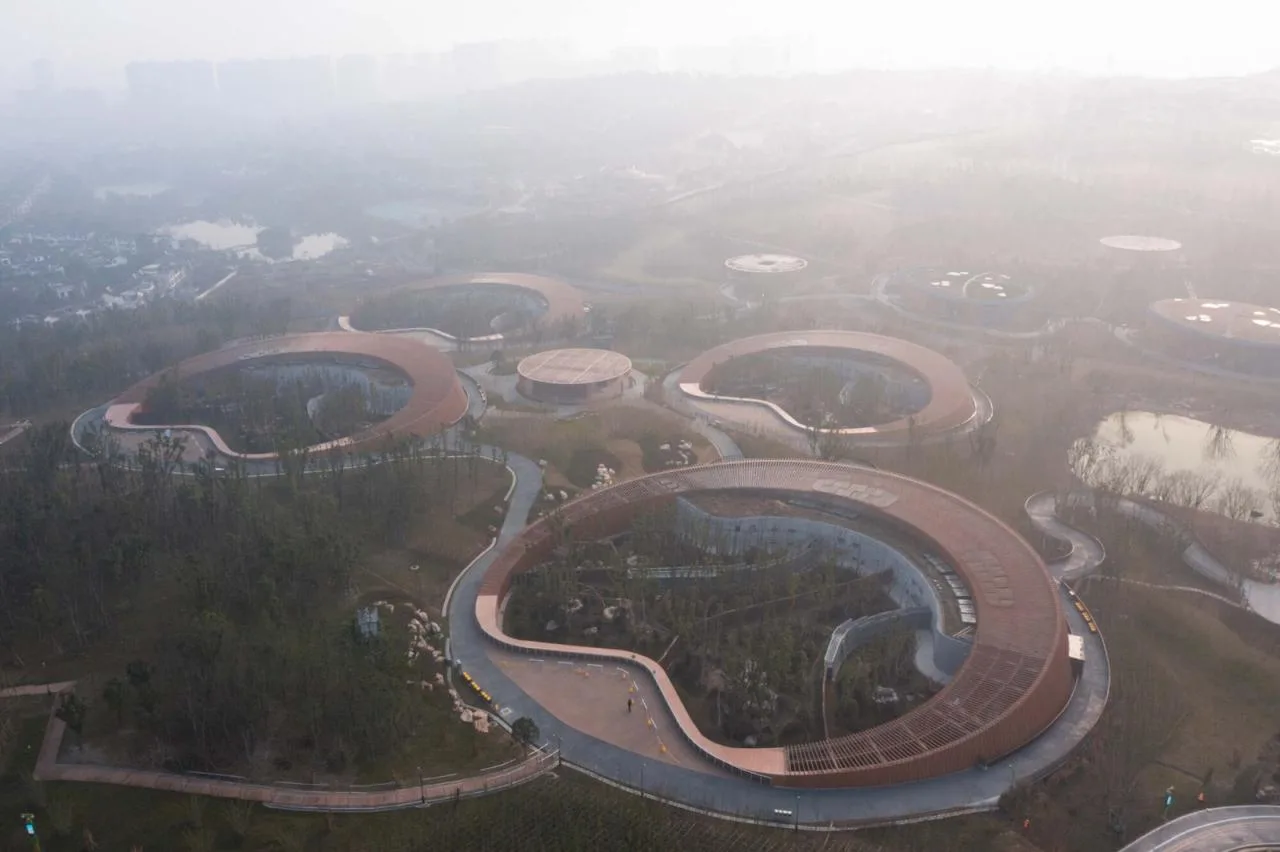
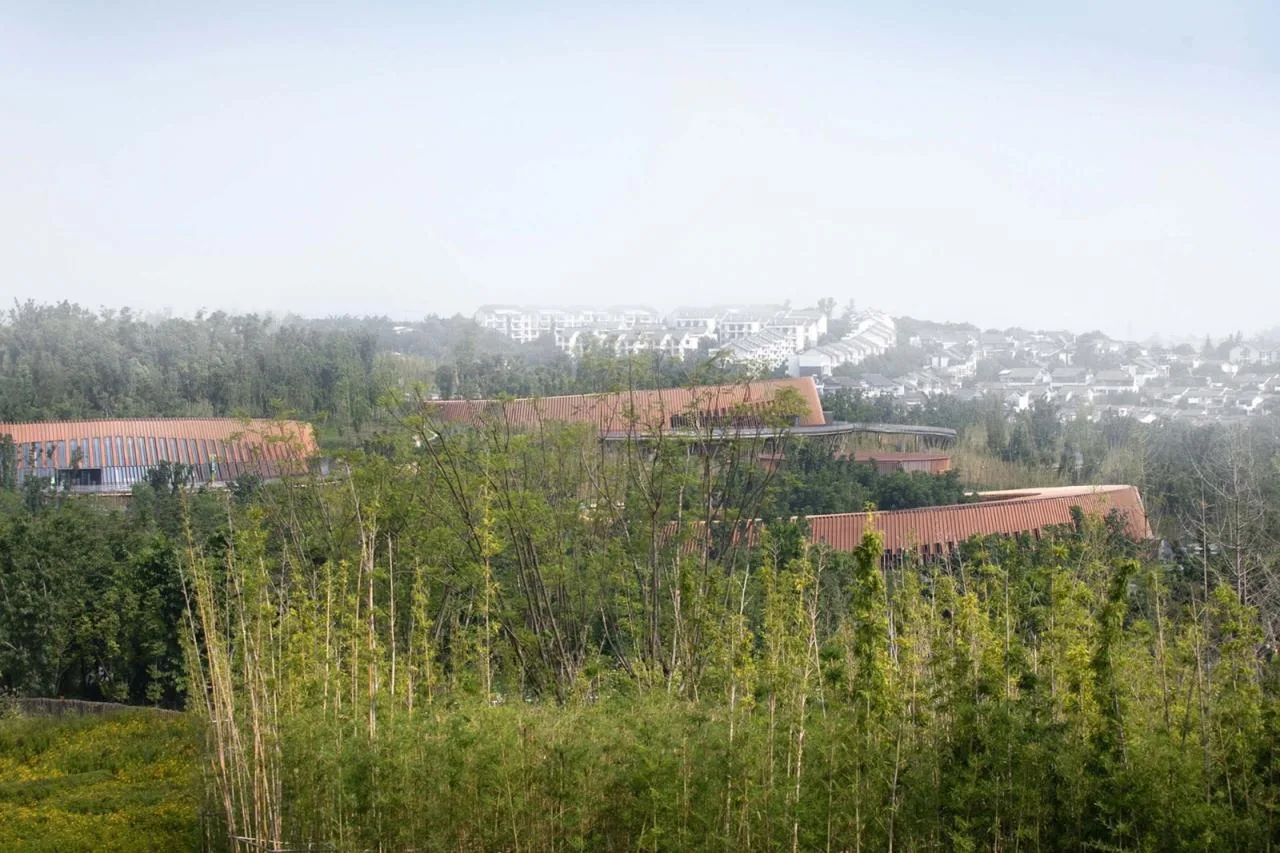
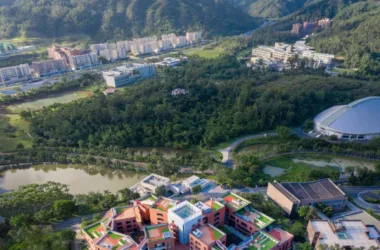
The new panda house at the Chengdu Research Base of Giant Panda Breeding is situated in the Maolin Xiuzhu area on the northern outskirts of Chengdu. It borders Beihu Ecological Park and the Chengdu Botanical Garden, offering a pristine natural environment. This expansion project within the Chengdu National Giant Panda Research and Breeding Base Park spans 12,809 square meters and hosts a variety of functions including animal behavior research, science education, and tourism.
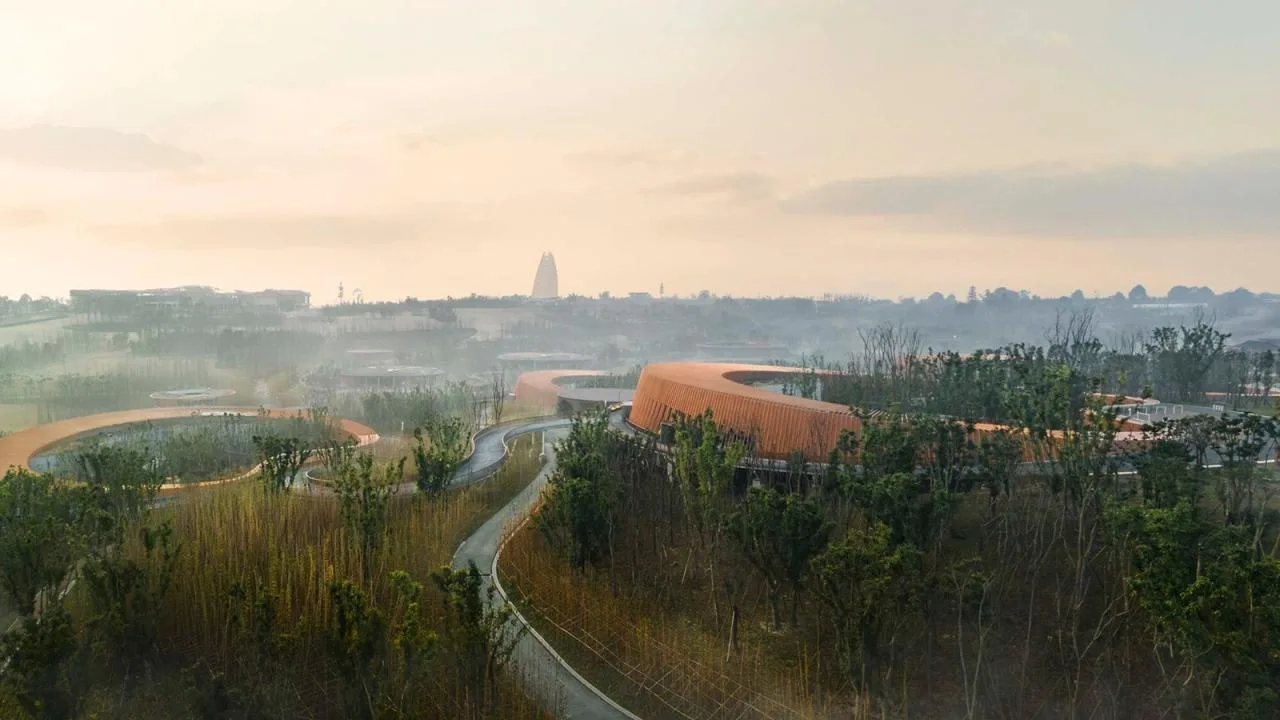
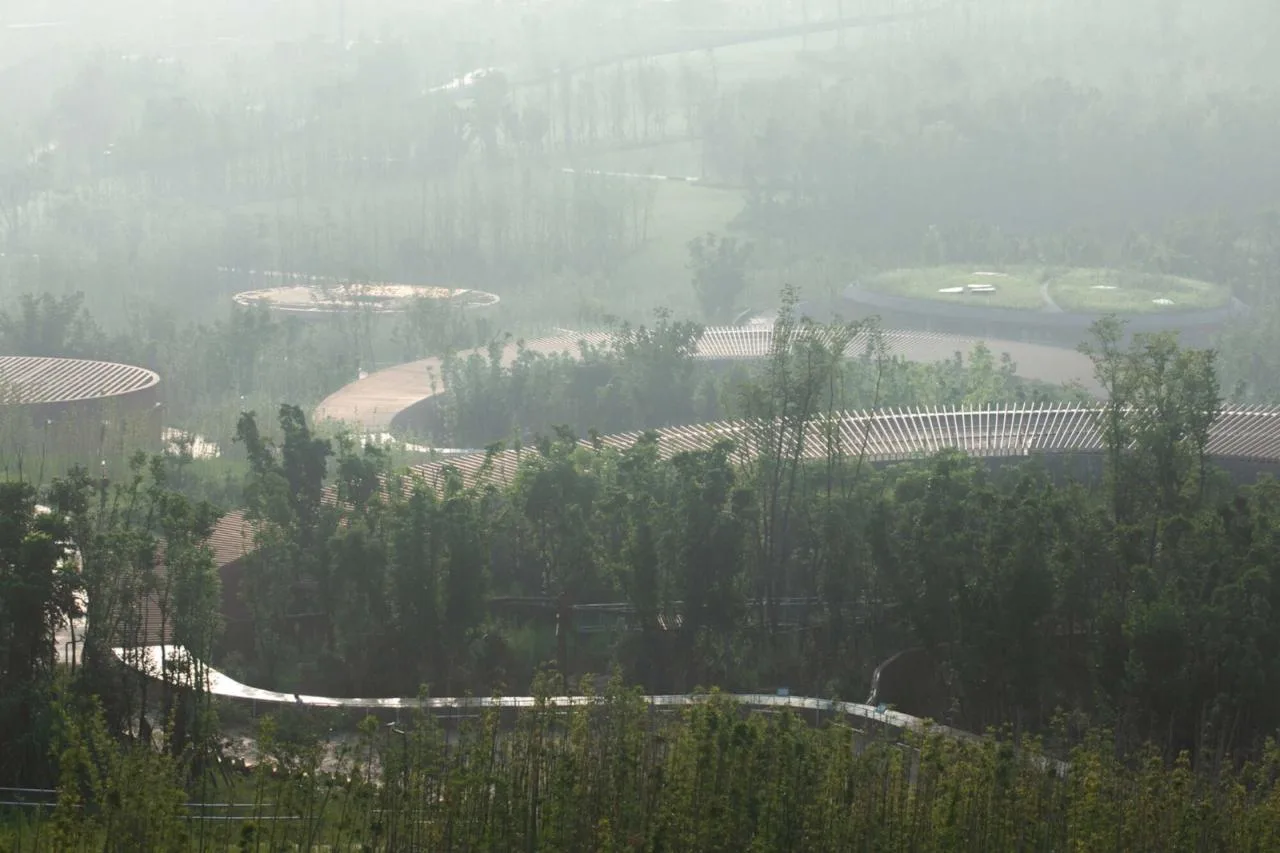
Commissioned in 2019, EID Arch Jiang Ping Studio designed the new panda house with a strong focus on environmental friendliness and animal welfare. Their approach explores the relationship between humans and animals, as well as between architecture and the natural environment. The design leverages the site’s undulating terrain by integrating four circular geometric motifs into the valleys, establishing an innovative interactive model that promotes harmonious coexistence among humans, nature, architecture, and environment. Completed in two and a half years, the new panda house now welcomes visitors nationwide.
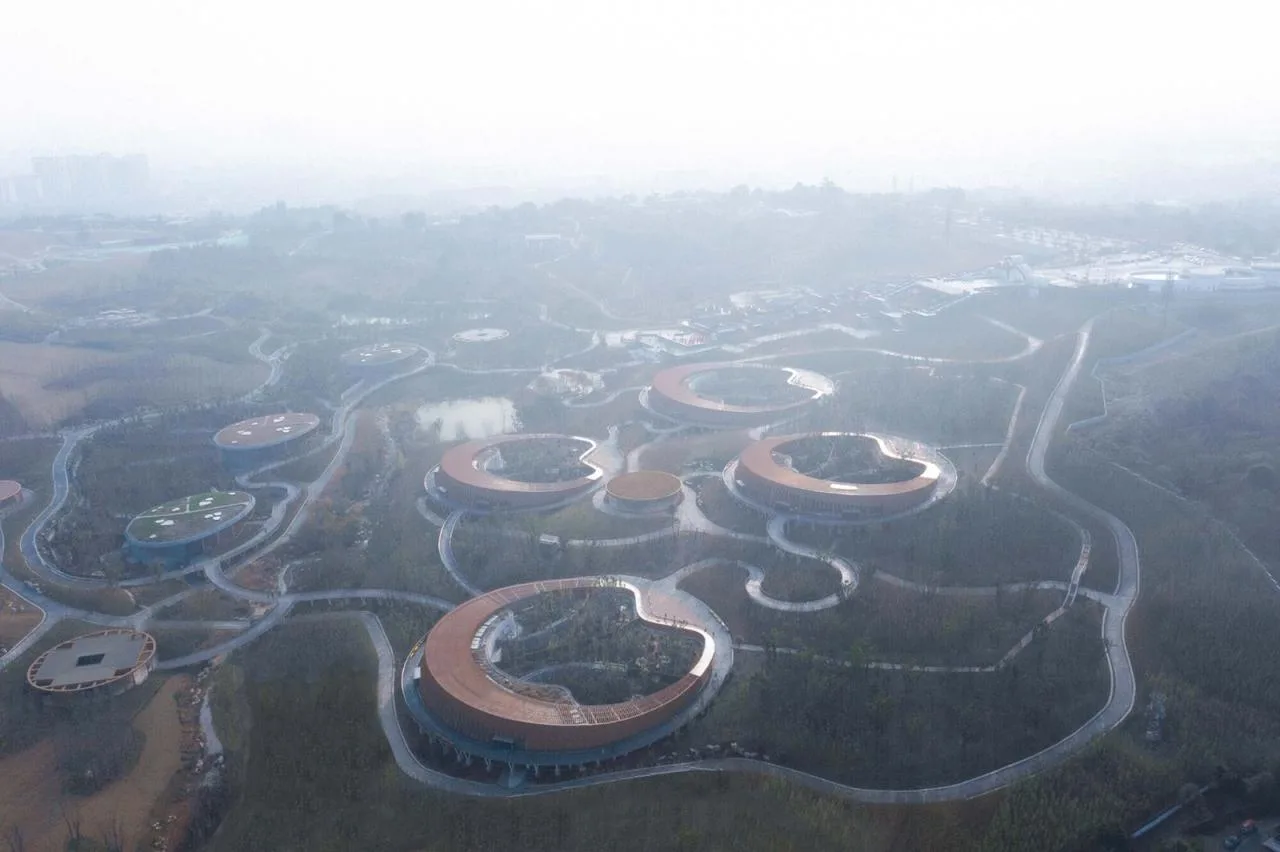
The design concept of the Panda New House emerges from the seamless integration of landscape, architecture, and earth art. It not only provides convenient pathways for visitors and staff but also prioritizes an eco-friendly experience for the animals, aiming to minimize ecological detachment wherever possible.
— Jiang Ping, Chief Architect of FAIA, EID Architectural Firm
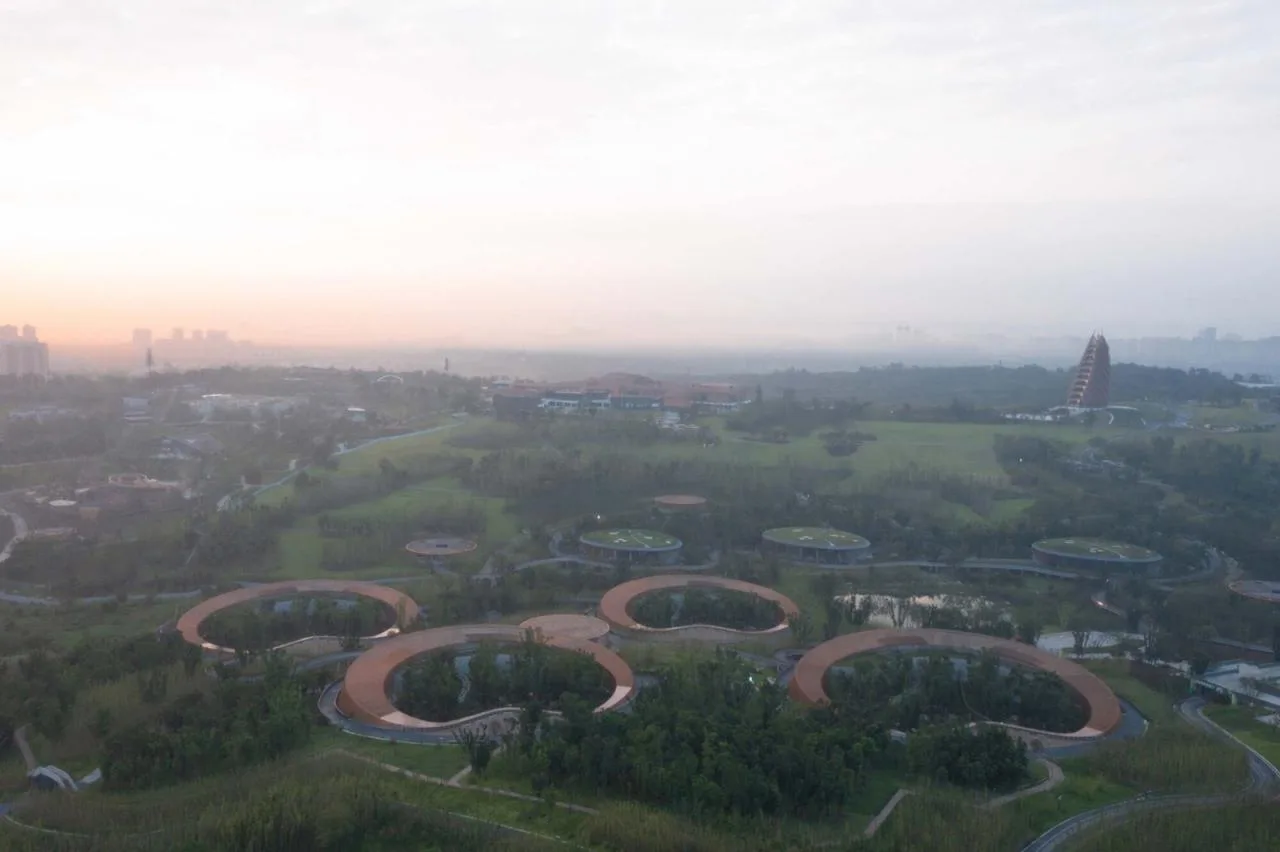
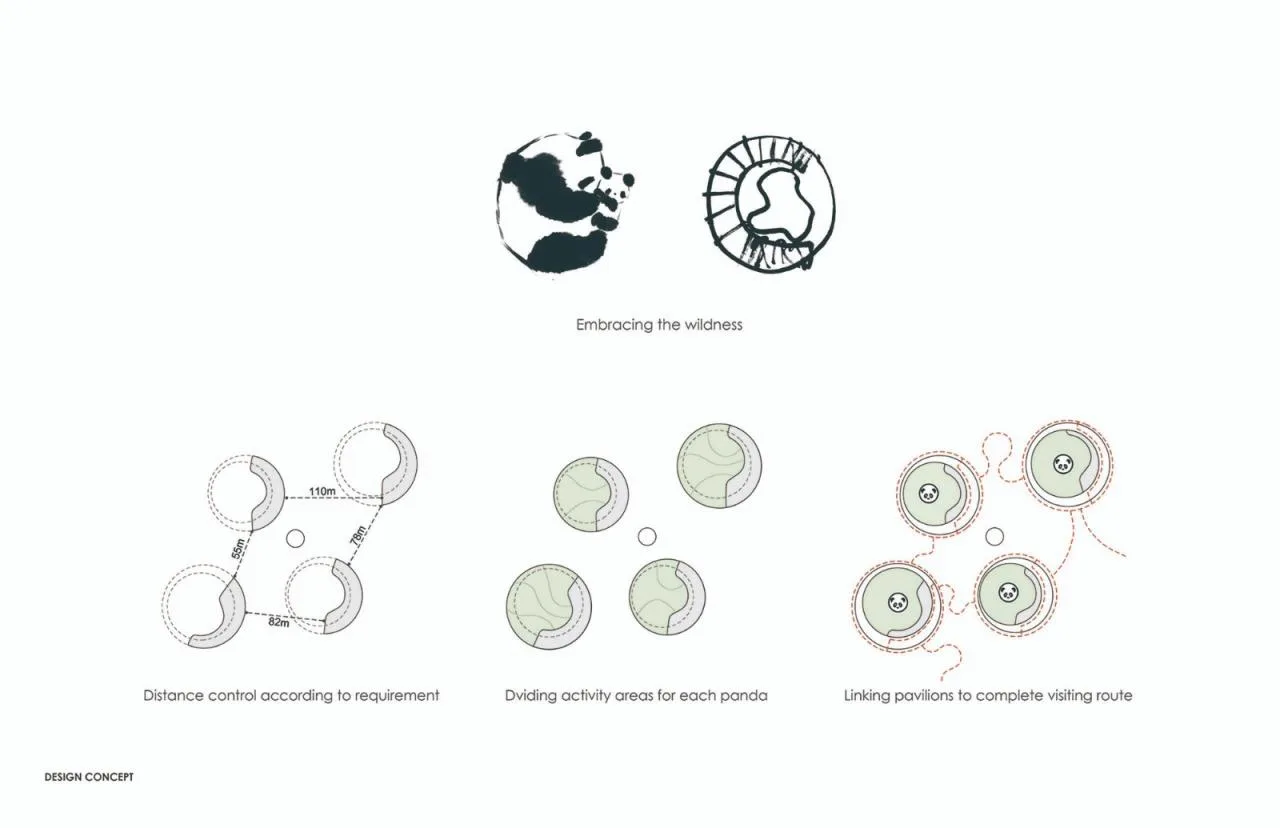
Respecting the natural landscape is fundamental in this land art project that coexists with nature. EID Arch Jiang Ping Studio employed an adaptive strategy tailored to climate conditions, shaping the form and layout in harmony with the landscape. Inspired by the Chengdu Plain’s natural environment, extensive research on architectural form, volume, and environmental elements led to the selection of circular shapes as the most suitable and flexible design language.
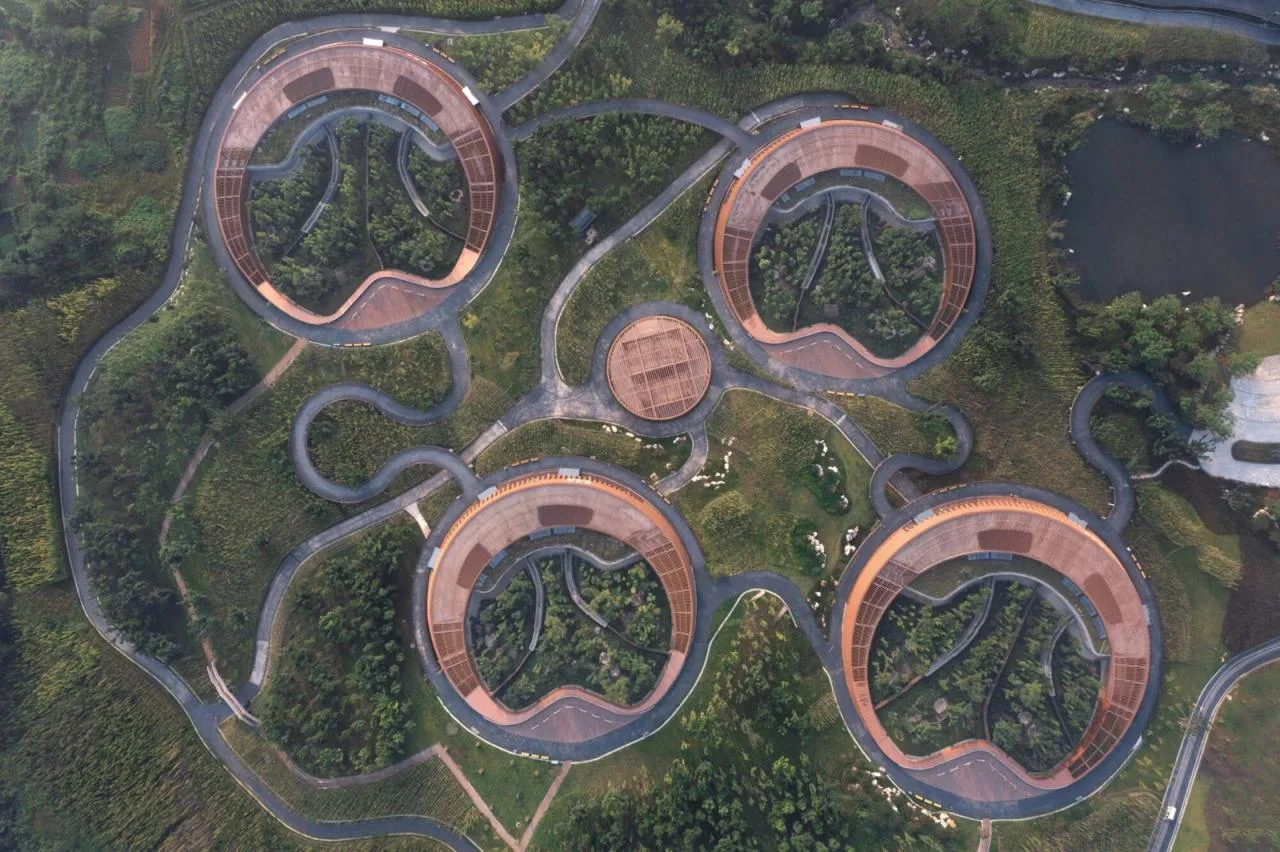
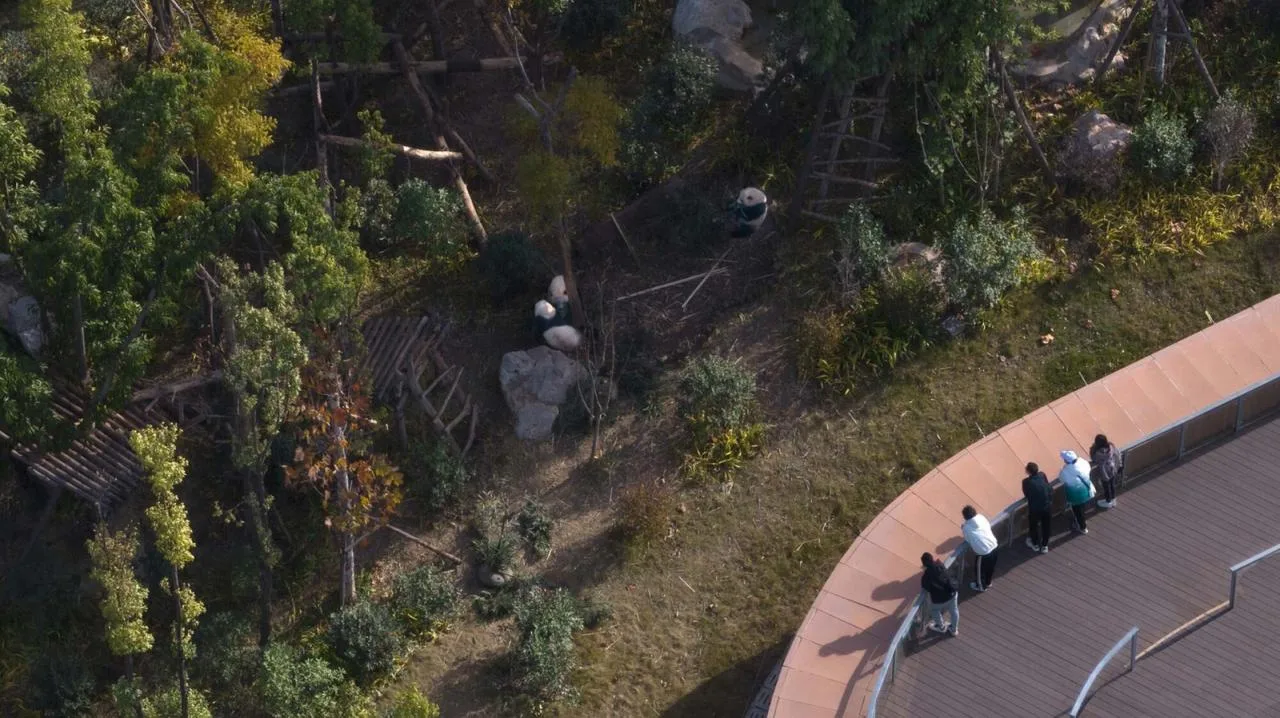
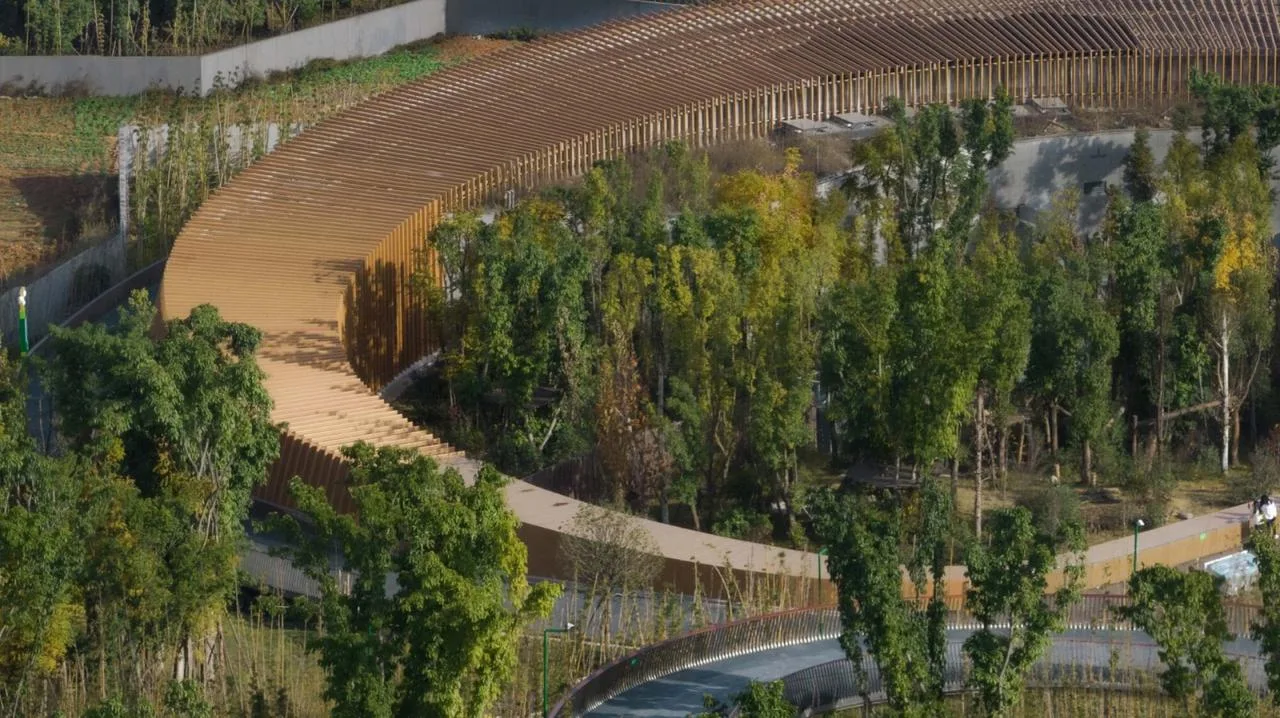
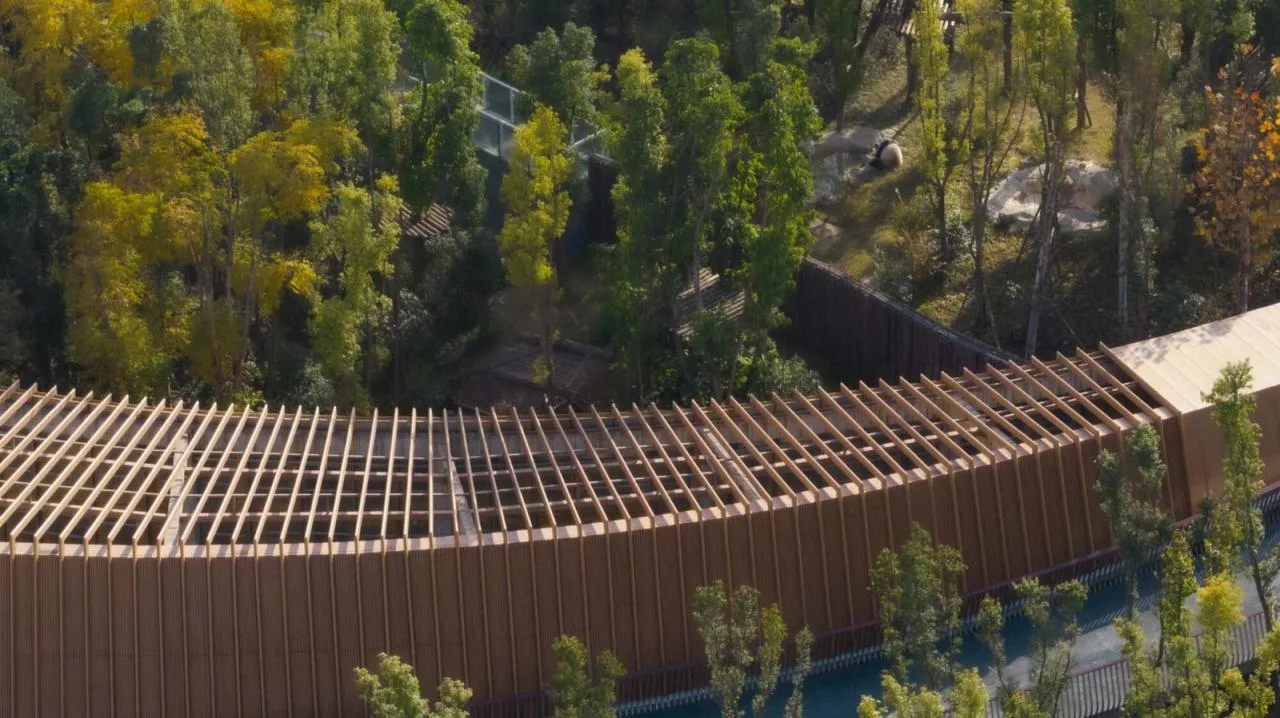
The overall plan follows a low-impact intervention strategy, minimizing soil erosion and environmental disturbance. The panda house incorporates diverse functions such as indoor exhibits, panda enclosures, logistics areas, and outdoor activity zones. Centered on the circular motifs, the design encloses four panda habitats that combine animal research, science education, tourism, and nature viewing, seamlessly blending indoor and outdoor spaces and blurring the boundary between architecture and landscape.
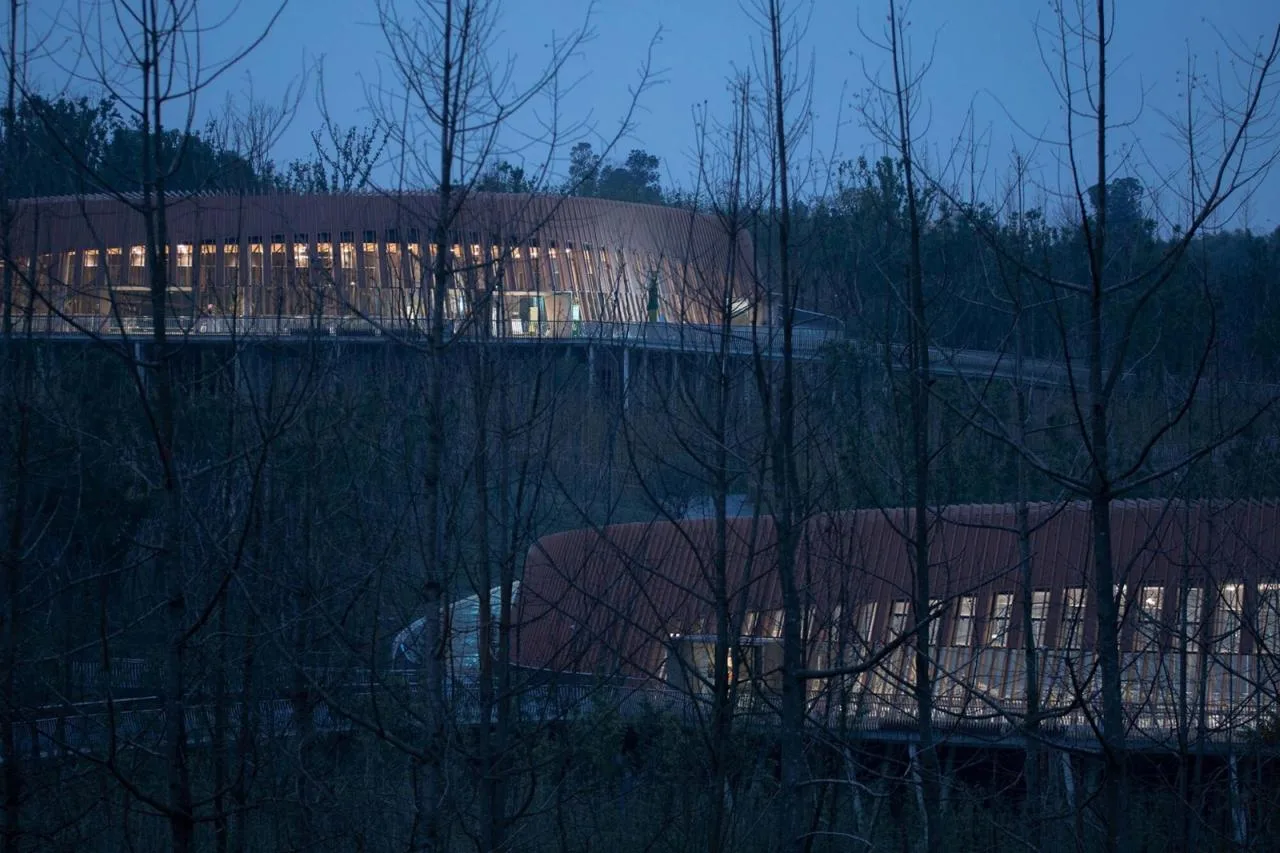
The central courtyard serves as the primary outdoor activity area, offering giant pandas intimate access to nature. Indoor areas use a constant temperature air conditioning system that simulates their natural ecological climate, providing a comfortable living environment. The circular corridor-style architecture nestles into the natural terrain, offering varied visual perspectives and immersive experiences for visitors. This design organically integrates architecture and landscape across valleys and forests, extending into a continuous earth art landscape that follows the terrain’s undulations.
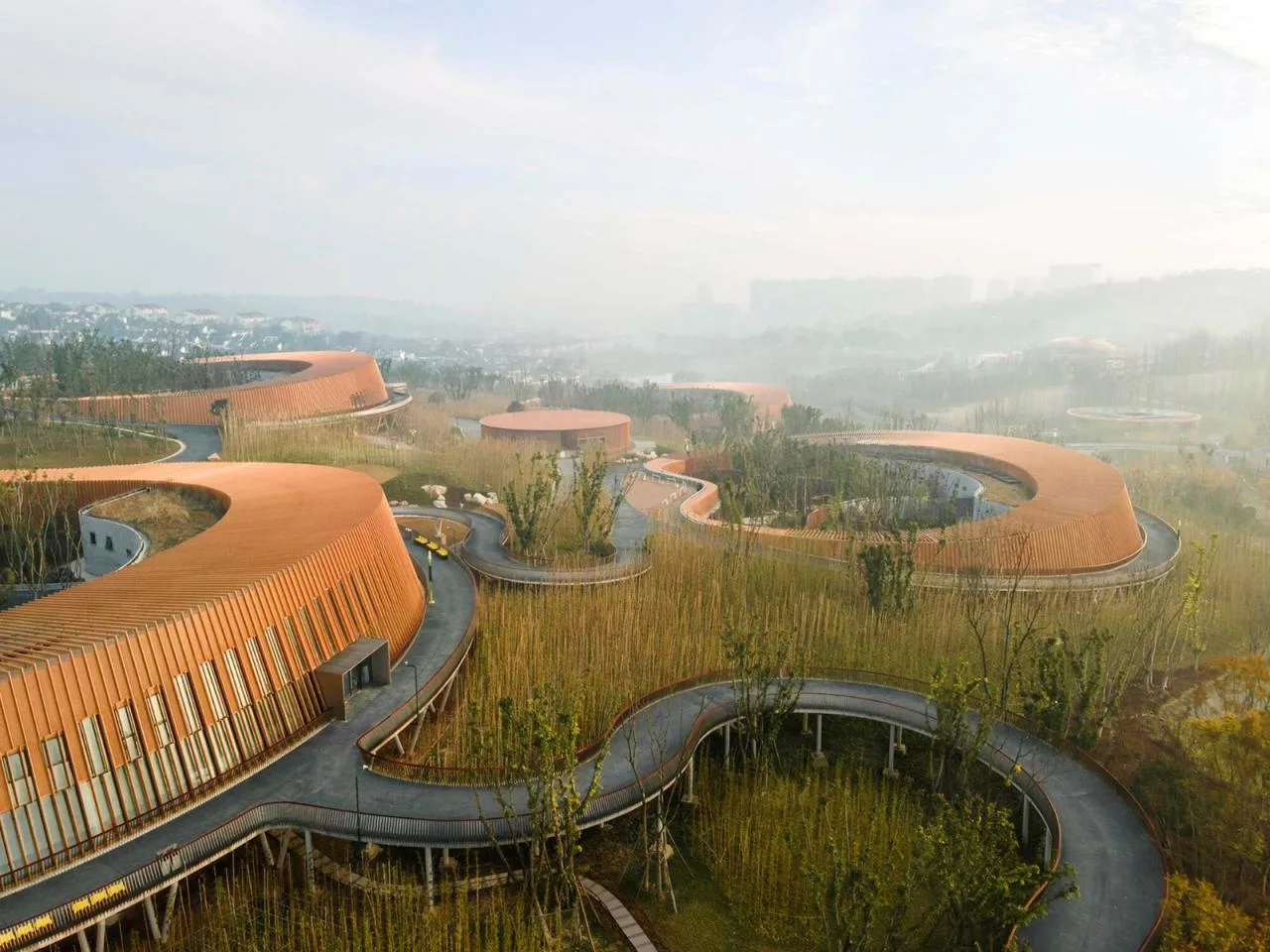
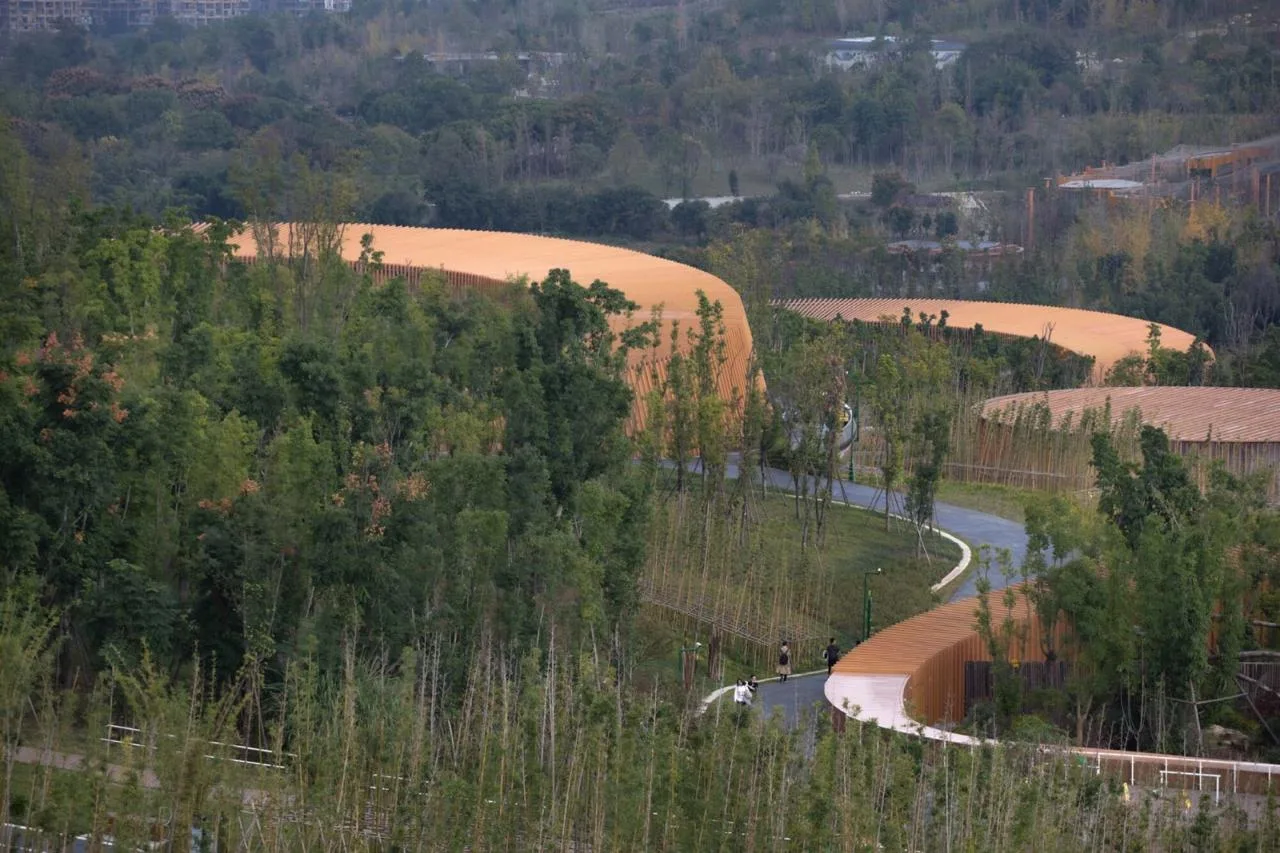
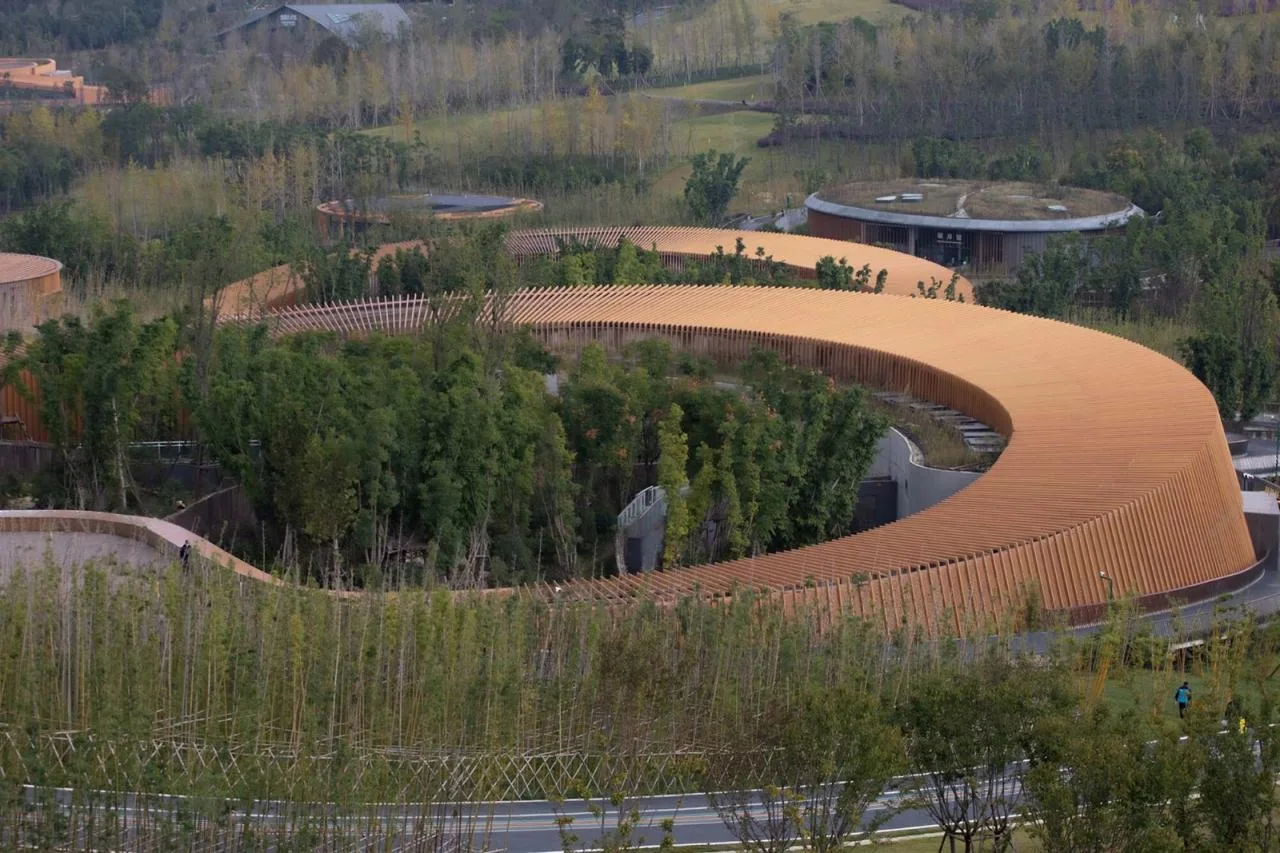
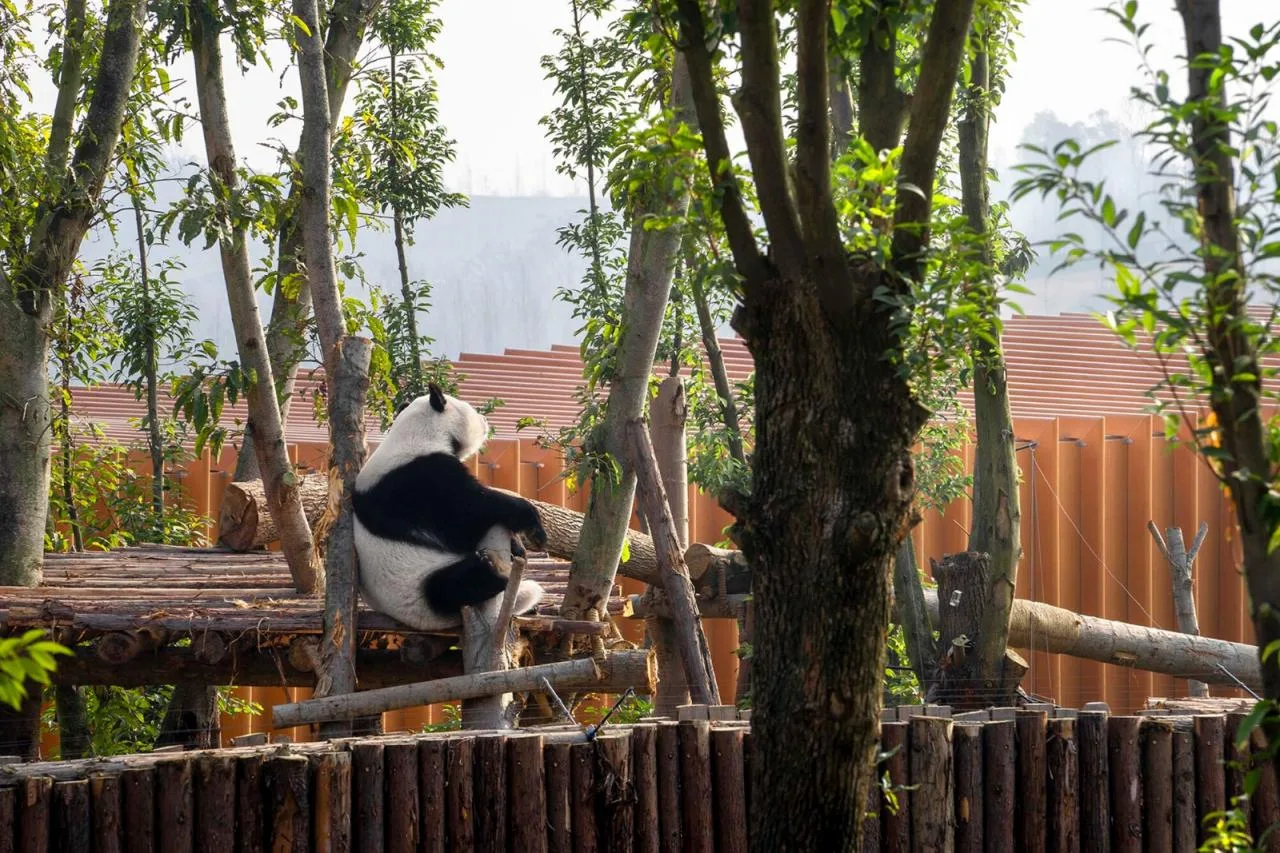
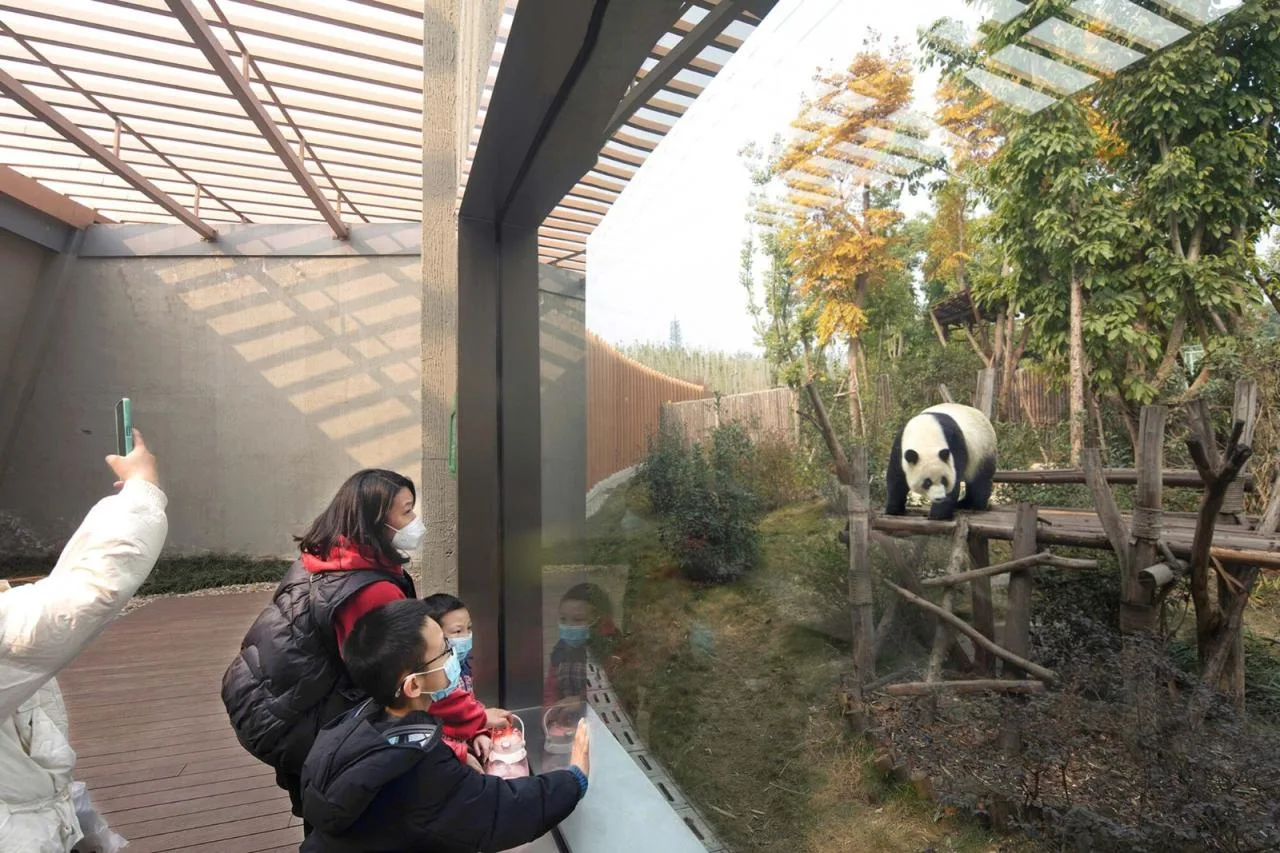
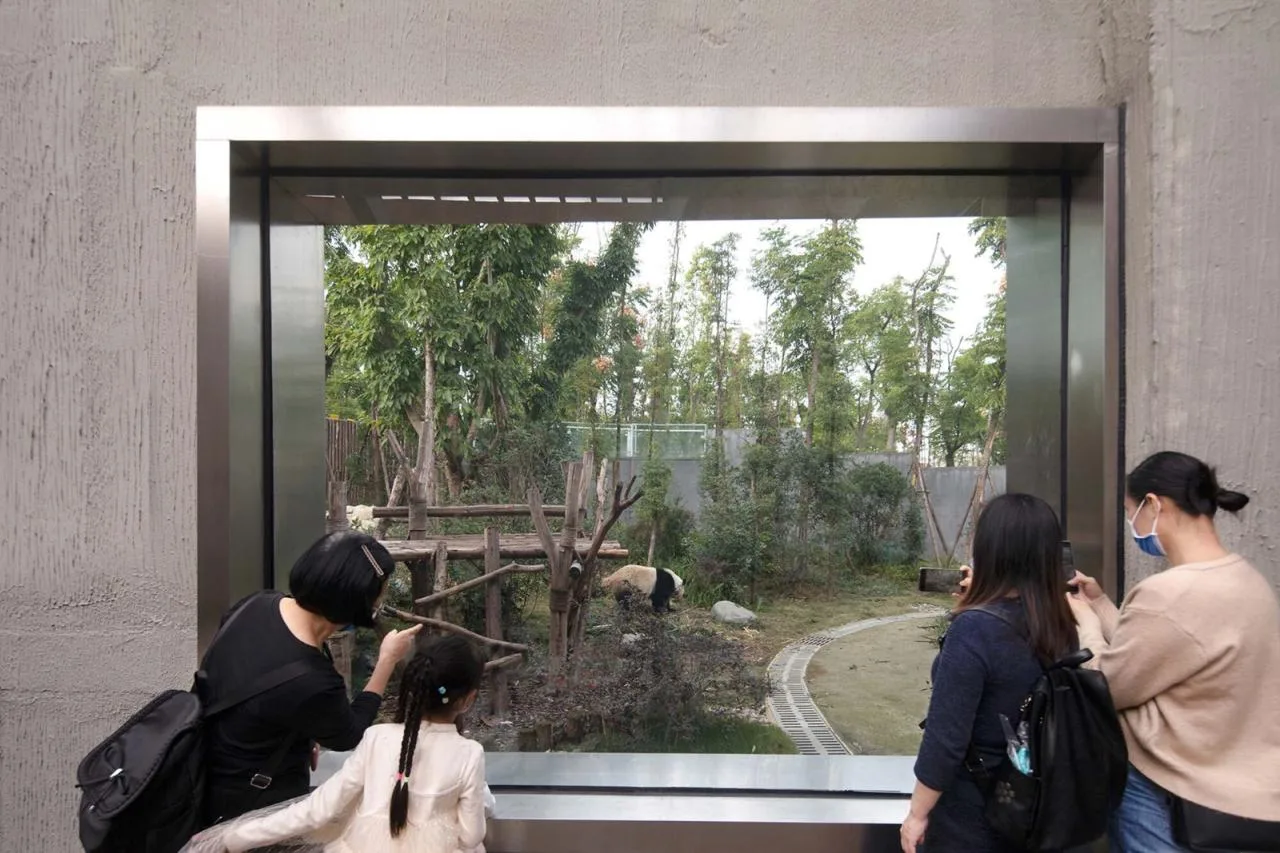
The animal-friendly habitat of the new panda house emphasizes environmental sustainability and meets the protection requirements for endangered wildlife, while prioritizing animal welfare. The architects carefully considered the giant pandas’ living habits and psychological characteristics during animal behavior research, making timely adjustments to visitor pathways and sightlines.
Ample living space is preserved, alongside diverse and engaging viewing areas. The boardwalk system clearly guides visitors along the terrain, winding through both indoor and outdoor areas. The activity zones provide a safe, comfortable environment supported by appropriate vegetation and facilities.
The design incorporates various visitor experiences including bunkers, sunken platforms, and exploration trails to meet diverse needs and foster a closer connection between humans and nature. Service routes are organized in three dimensions, with researchers, logistics, and animal care staff primarily accessing the site from the ground level. Multi-level platforms efficiently manage drainage during peak times and prevent crossing of different circulation paths.
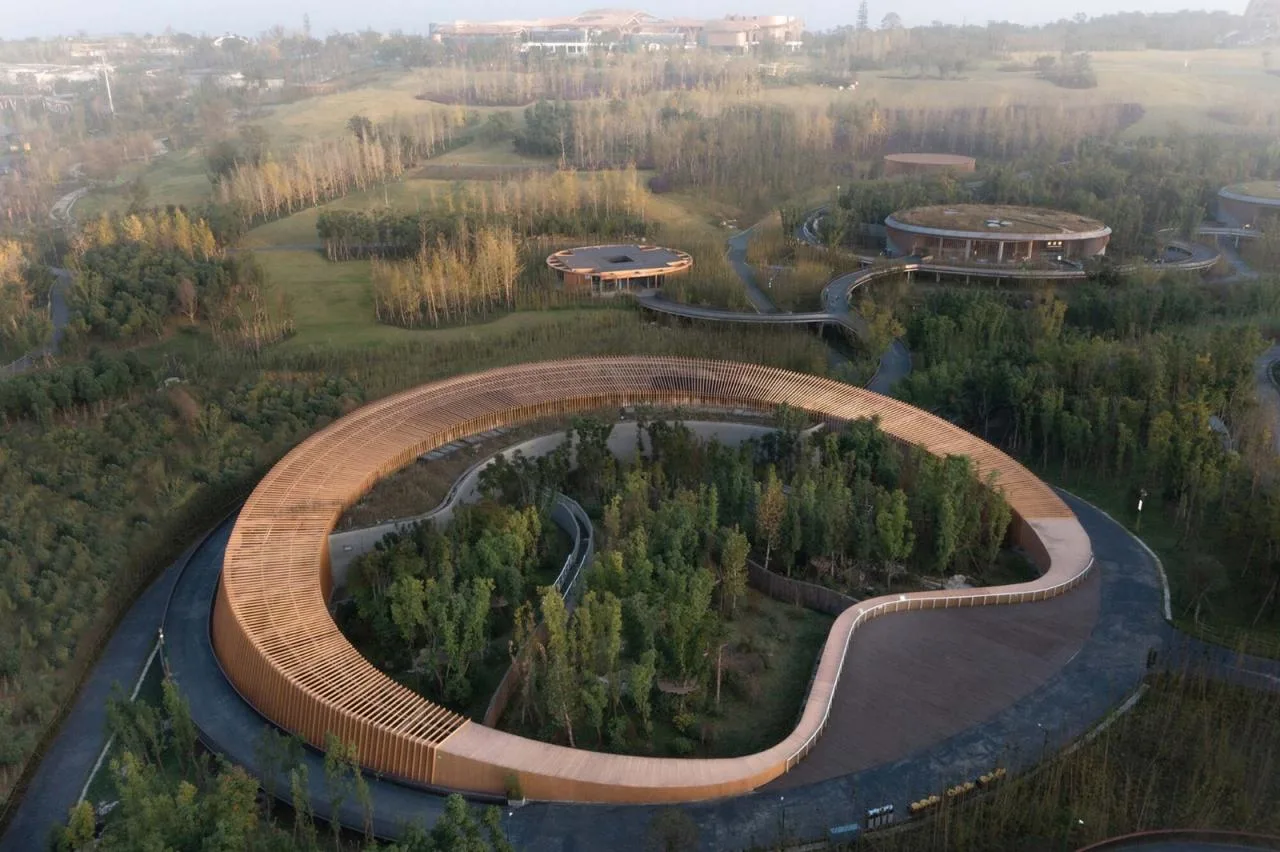
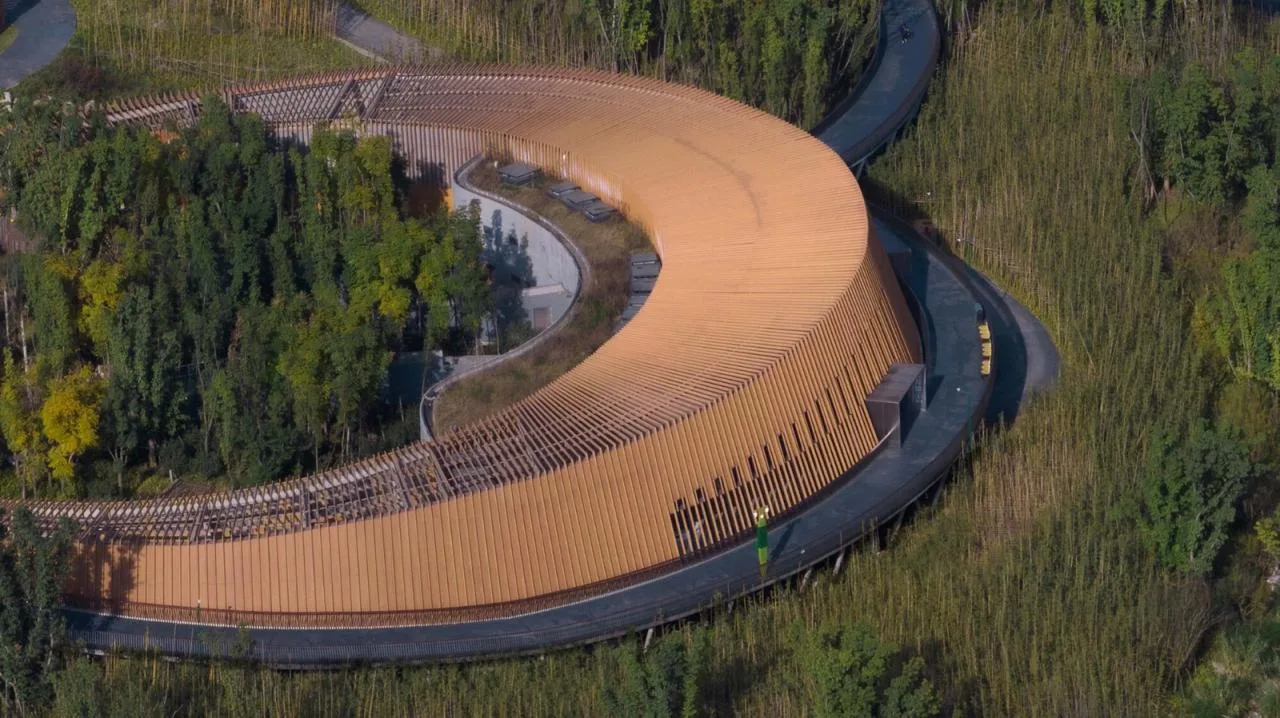
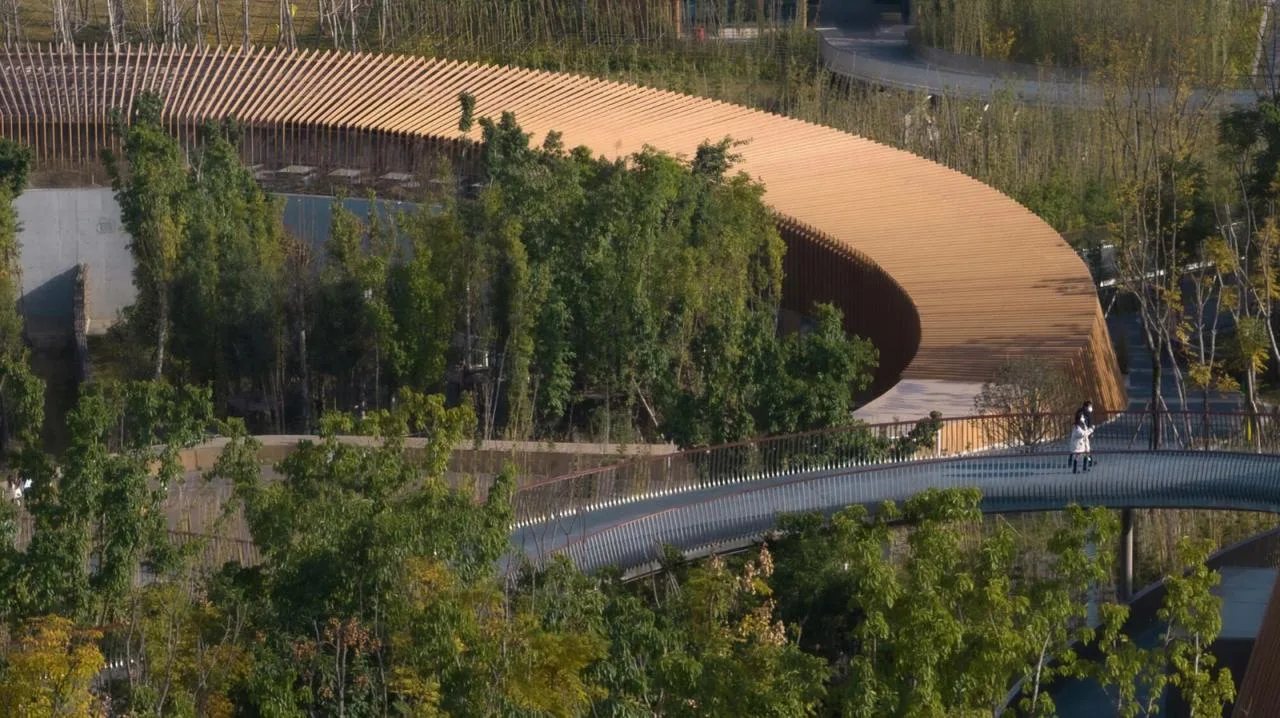
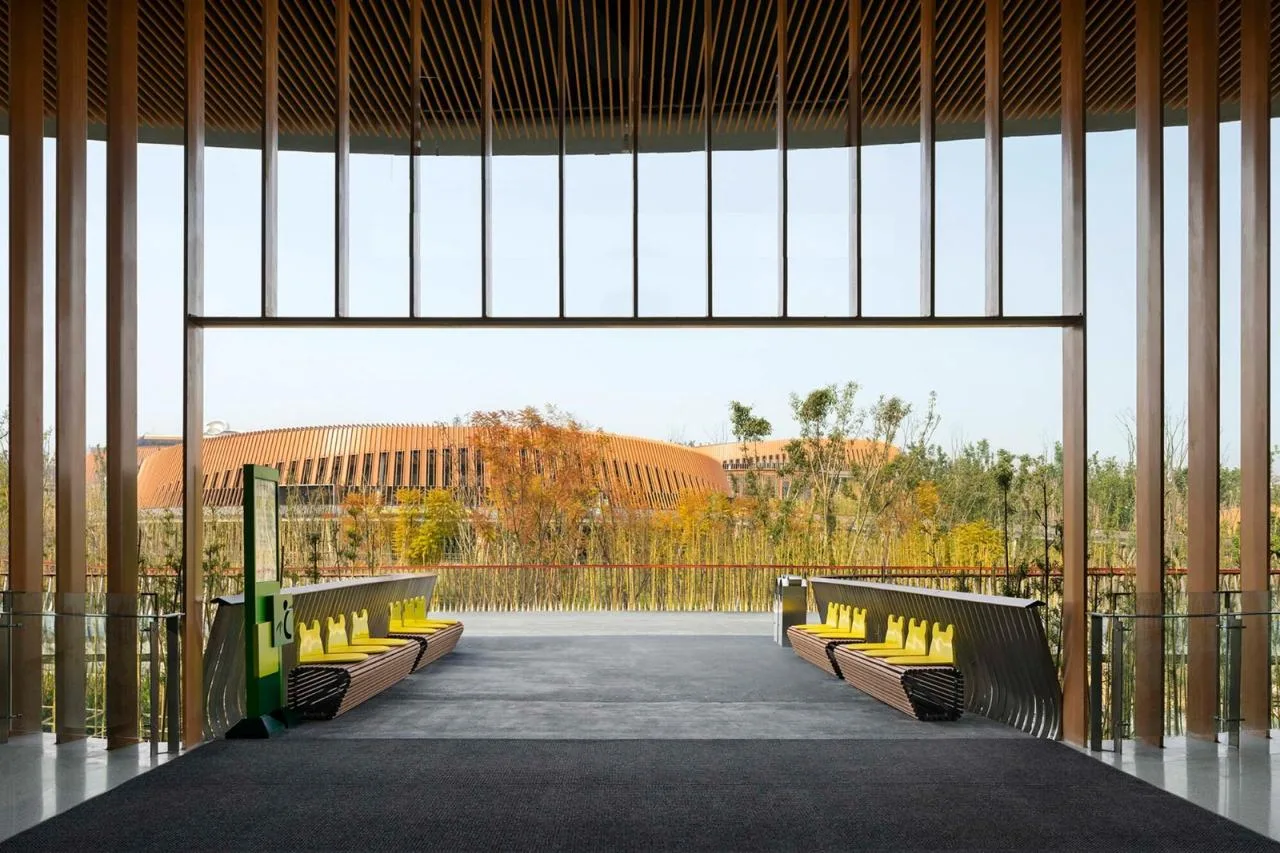
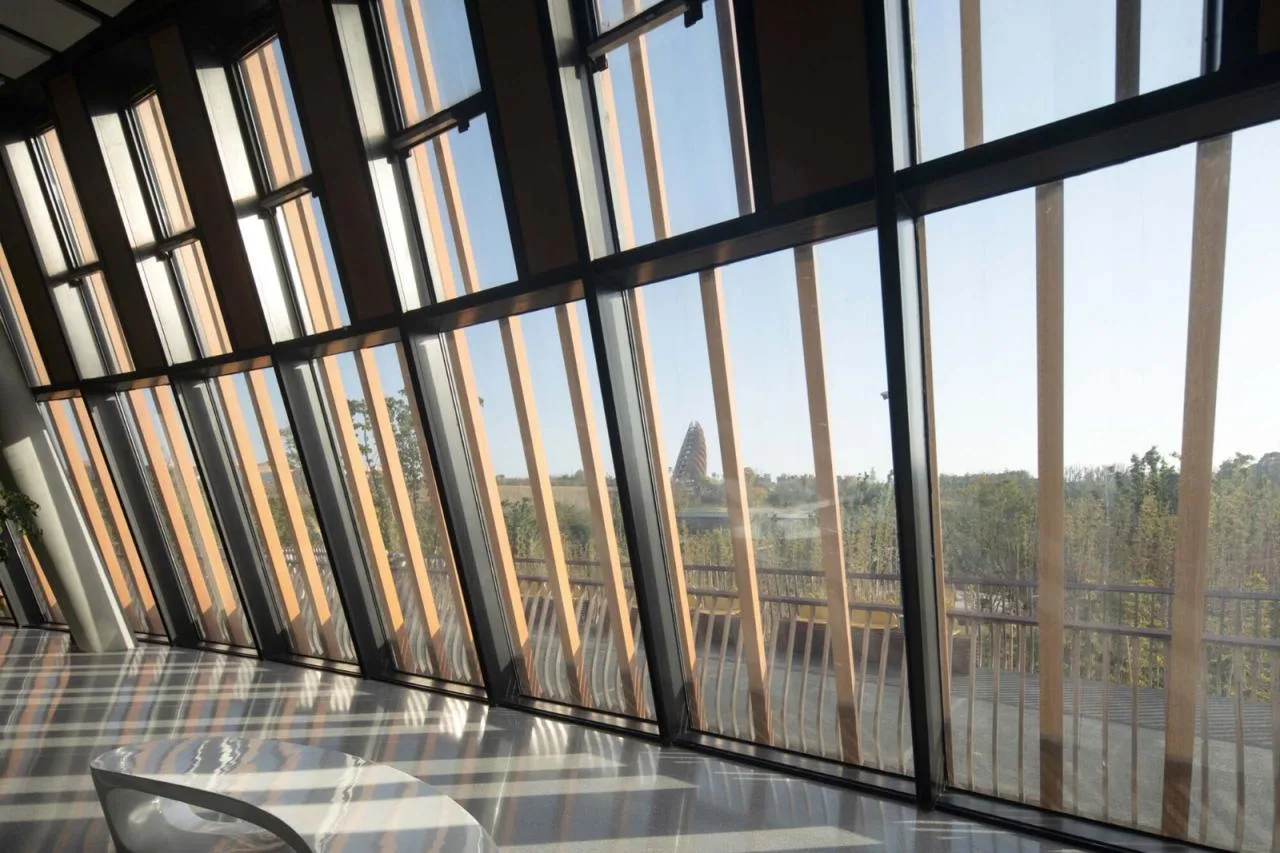
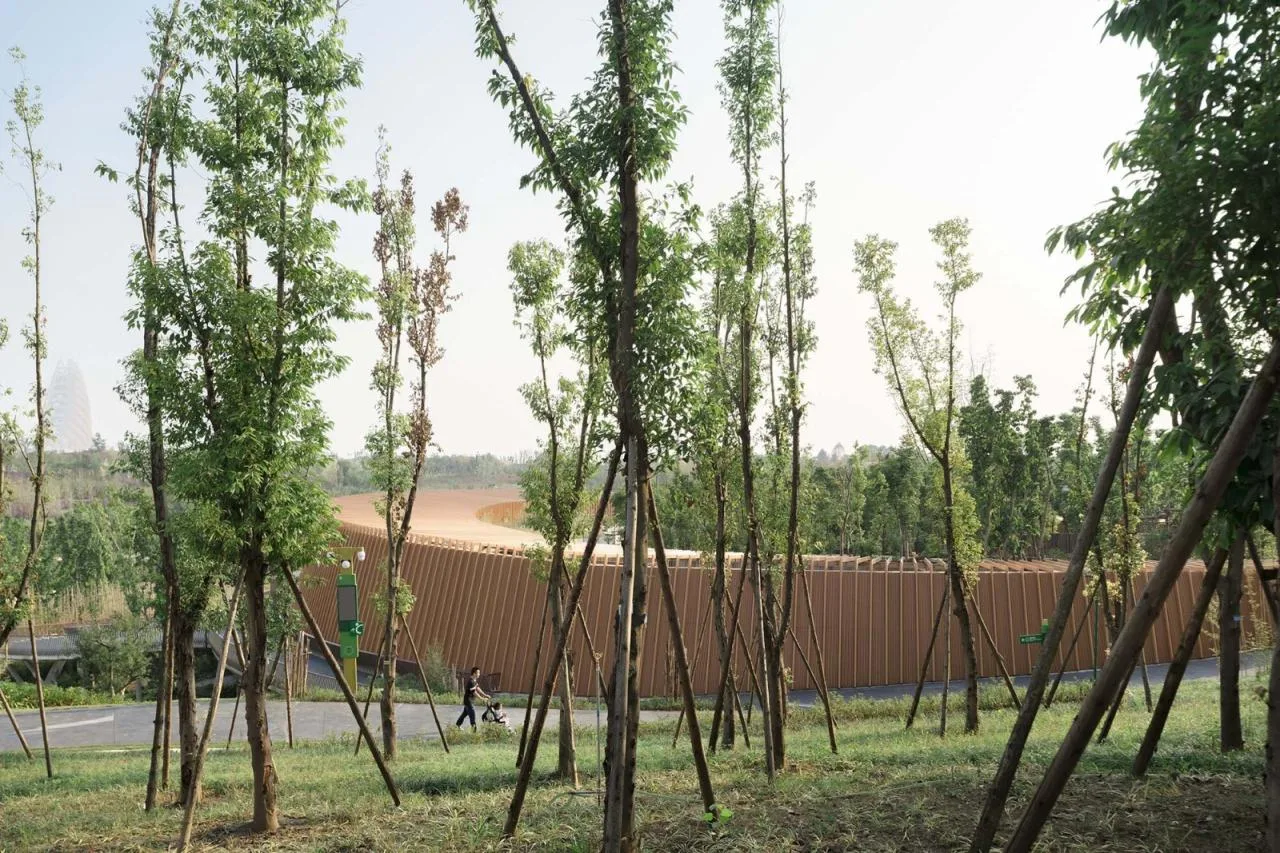
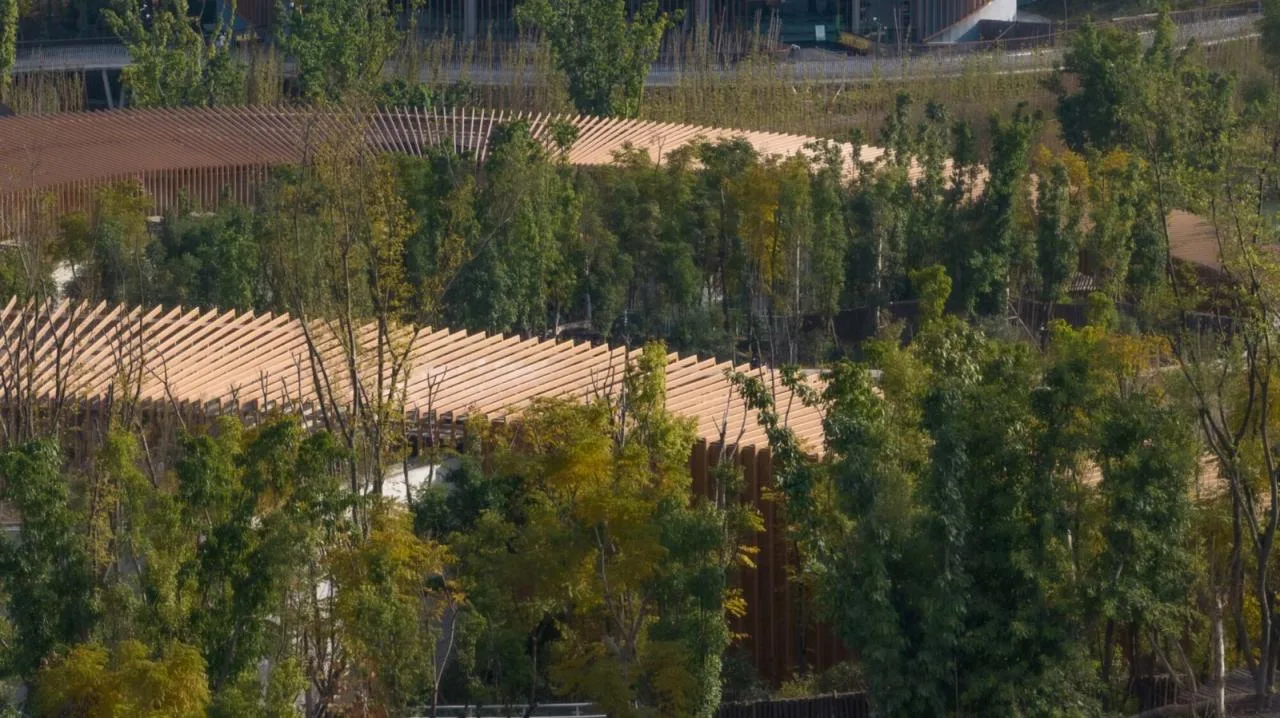
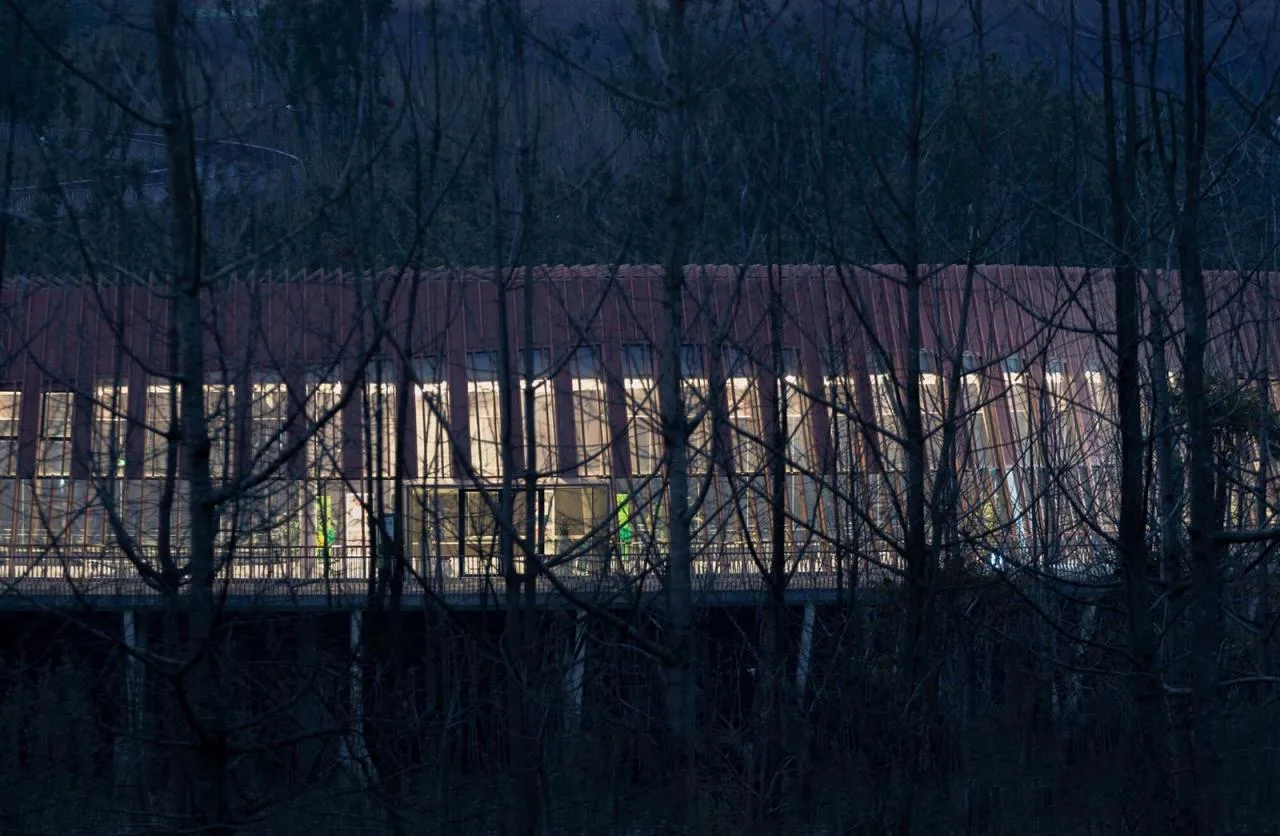
Inspired by the dense bamboo forests, the design of building facades and walkways incorporates vertical rhythms. Under all weather conditions, the wood grain grilles arranged vertically and diagonally create dynamic patterns of light and shadow.
Exterior walls utilize locally produced sustainable materials such as wood grain grilles and aluminum, combined with regional construction techniques, to create a green, low-carbon building throughout its lifecycle. Cast-in-place concrete walls evoke a wild living atmosphere with panda imagery, blending naturally in materials and colors while softening the building’s mass.
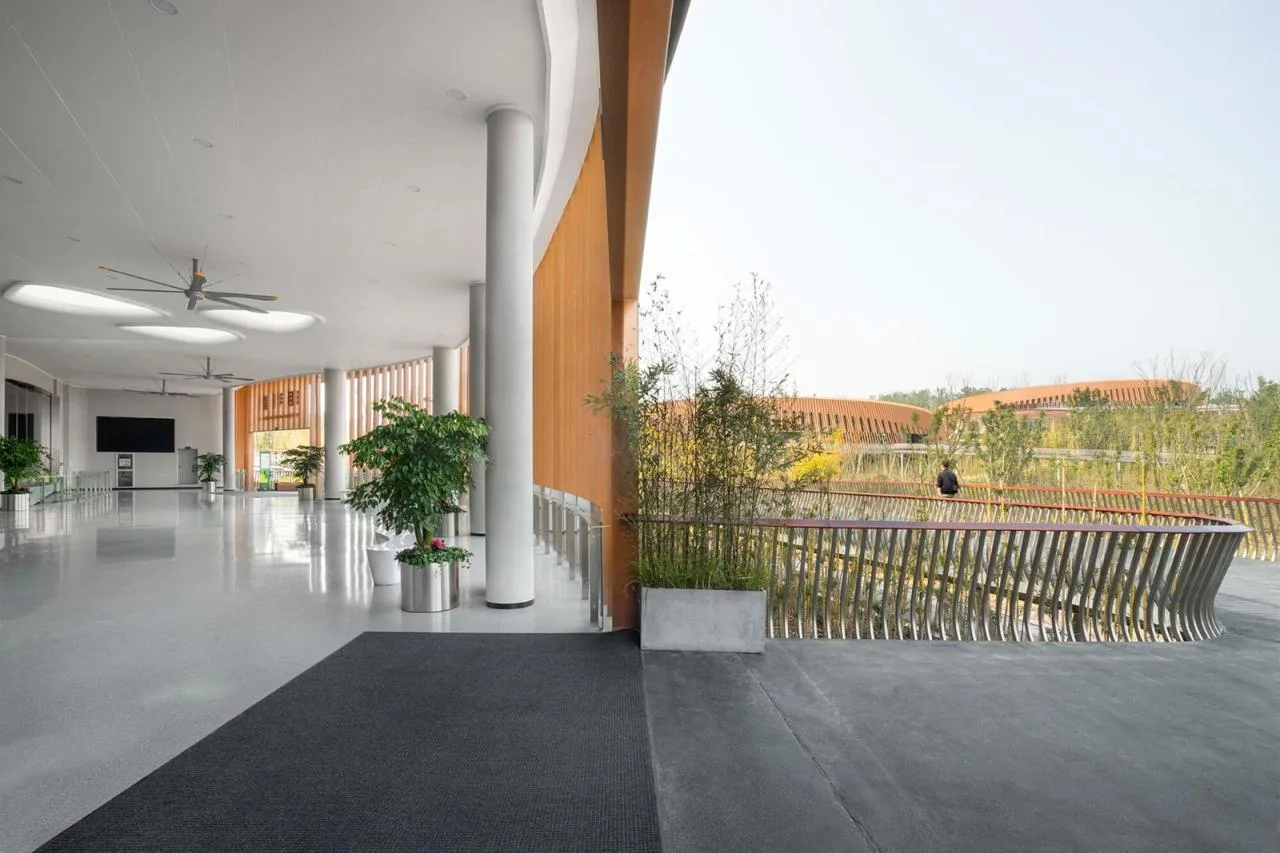
As a climate-adaptive architectural approach, the design features innovative treatments for facades and roofs. Public visitor and transition spaces in two venues use semi-open designs with natural ventilation, complemented by high-efficiency, low-energy zoning measures. Indoor public areas combine fully air-conditioned, semi-open, and fully open natural ventilation spaces. Non-enclosed spaces make up 55% of the four venues, significantly reducing energy consumption and carbon emissions.
This breathable architecture allows visitors immersive interaction while deeply experiencing the valley’s natural scenery.
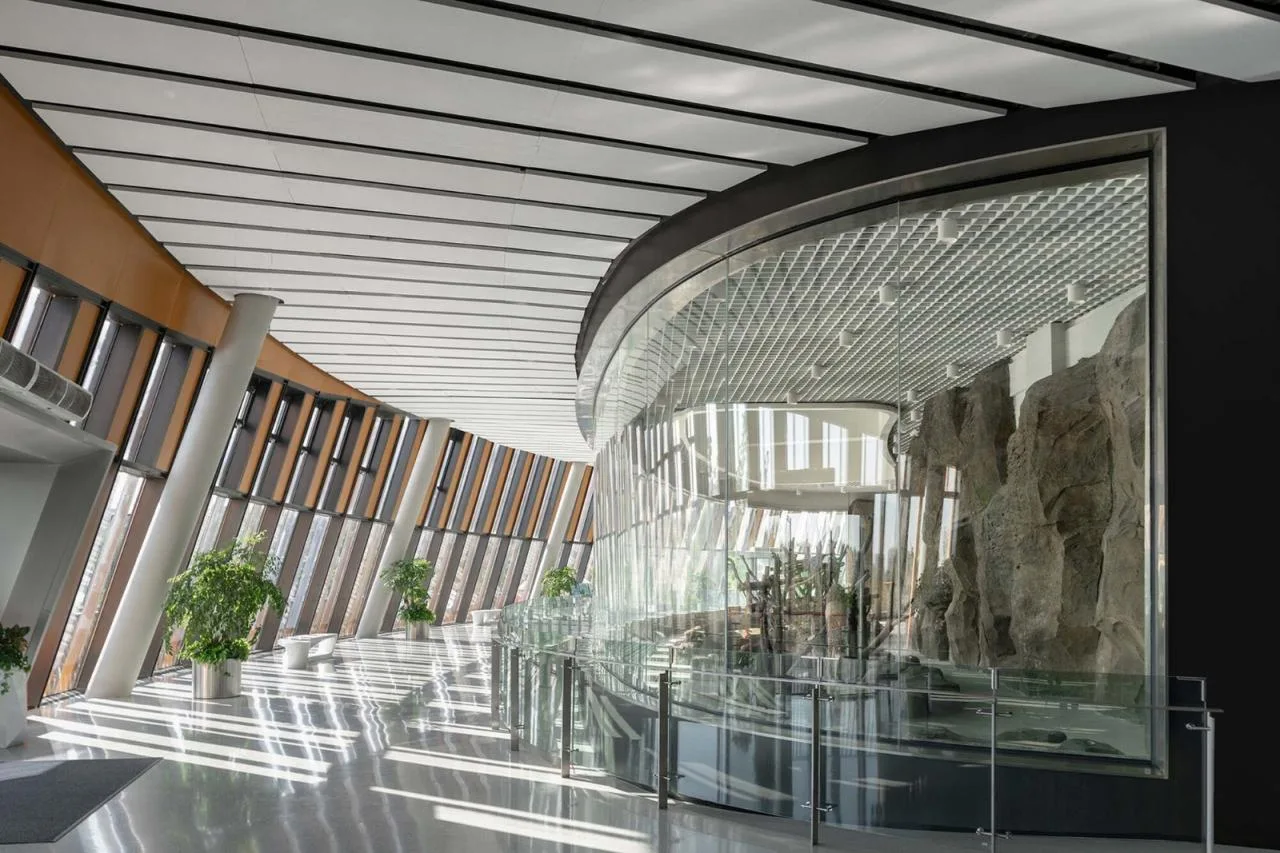
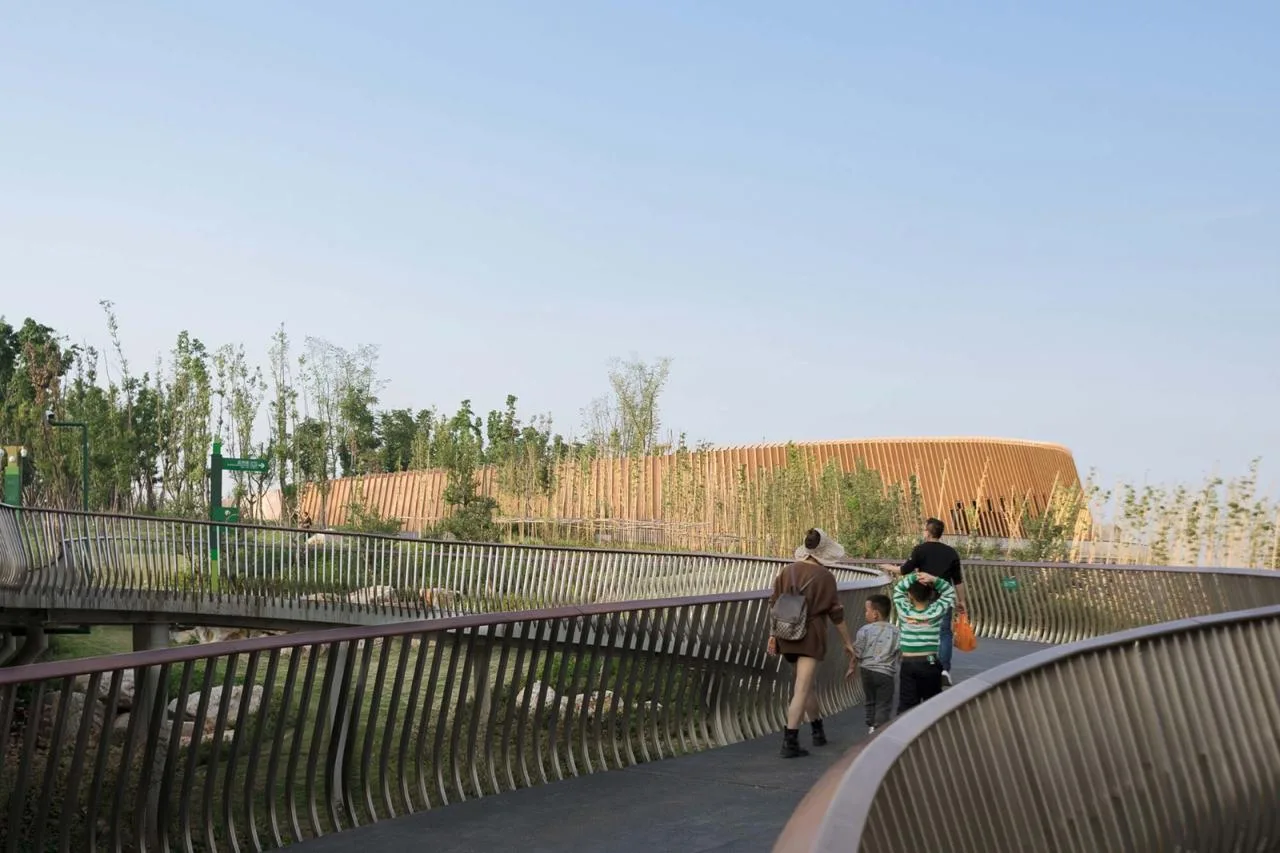
The Panda New House design emphasizes the relationship between architecture, landscape, and environment. The building itself becomes a part of the landscape, serving as a bridge connecting nature and its surroundings. This design approach combines environmental sustainability with building longevity, addressing current ecological challenges.
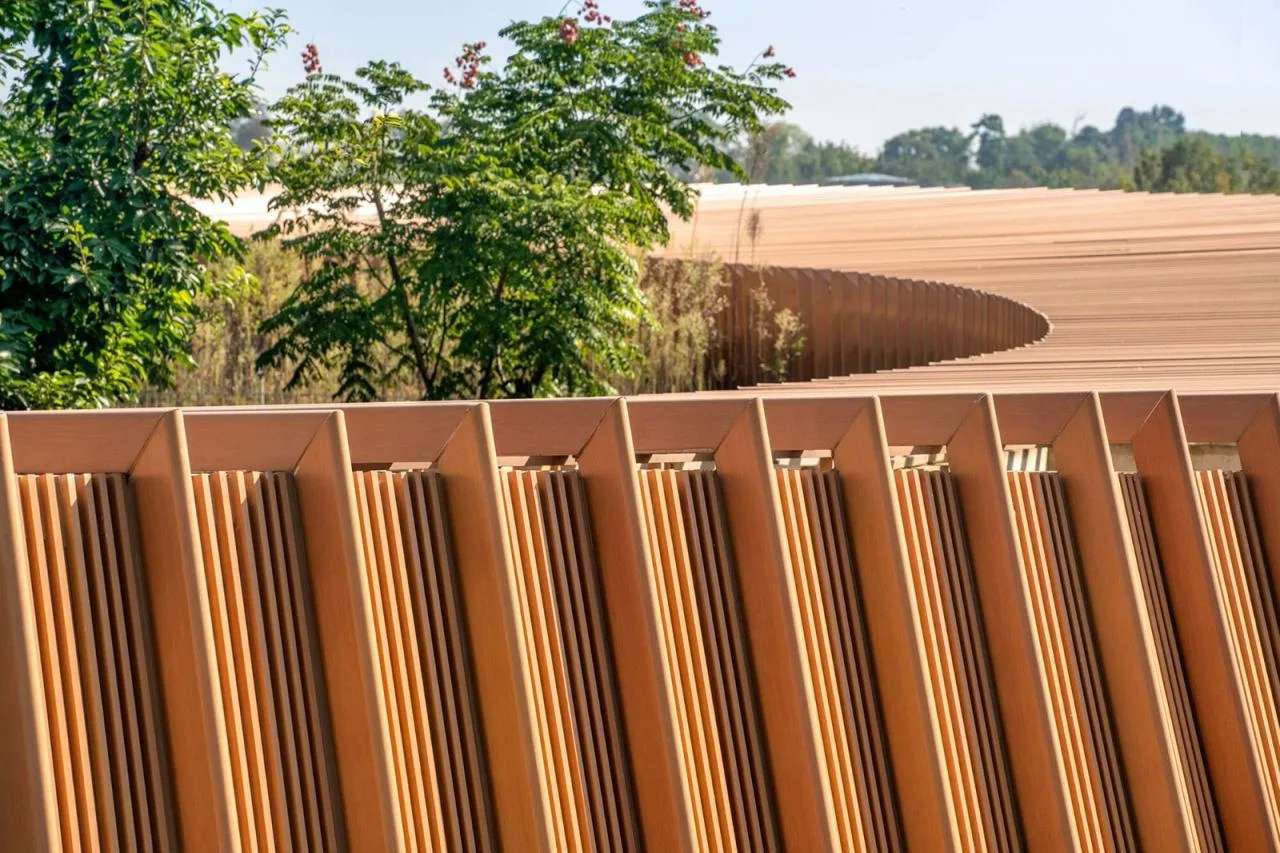
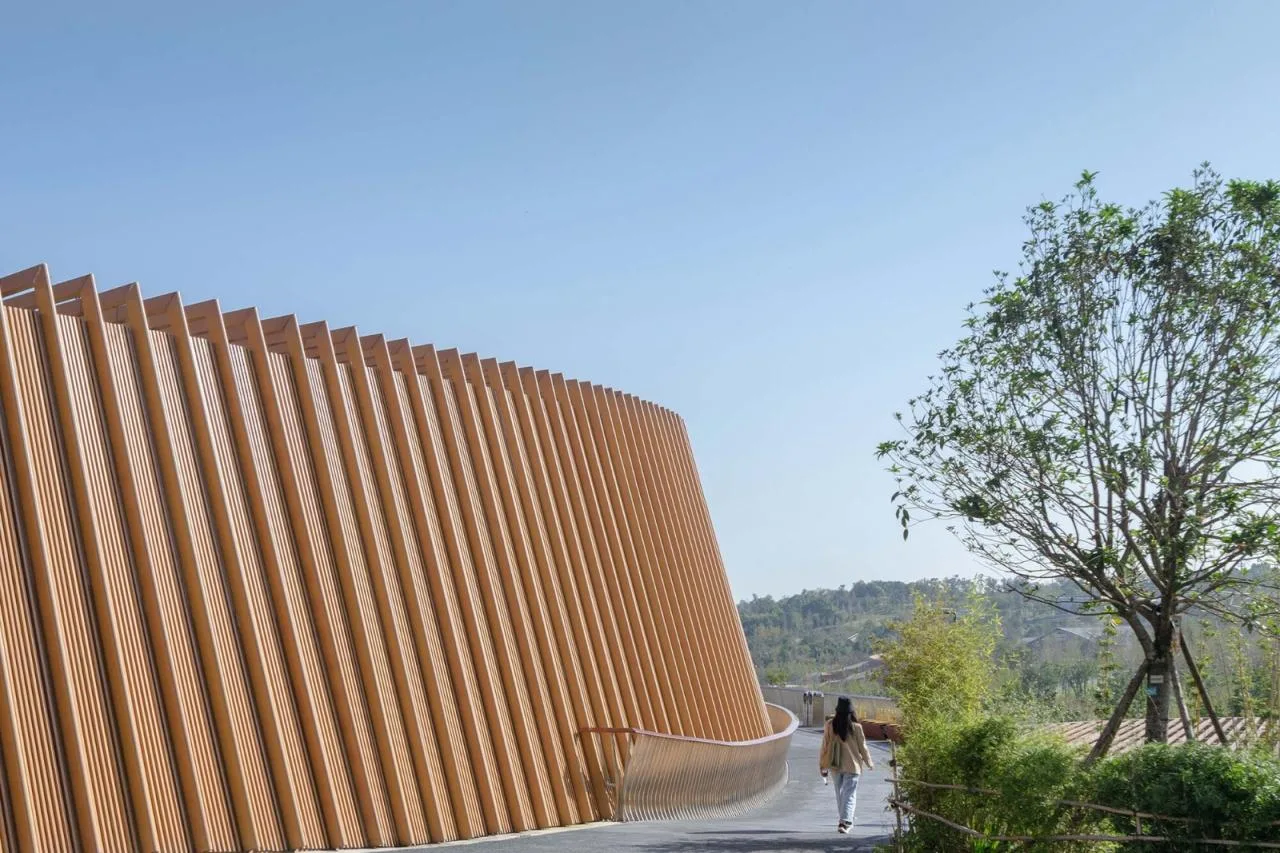
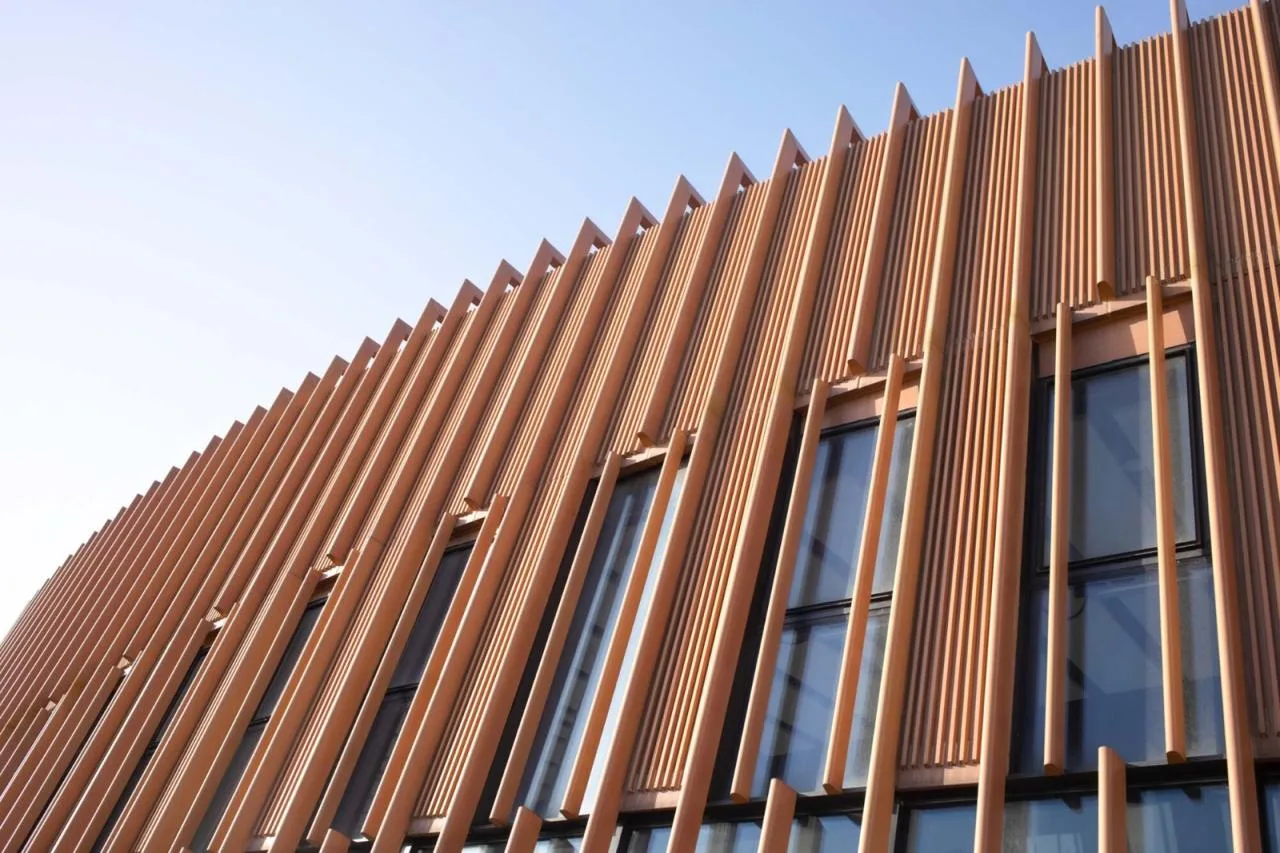
The Panda New House represents an interdisciplinary design practice blending architecture, landscape, and earth art. The architects use the natural environment as a creative medium, transforming the building into a public space that interacts dynamically with the landscape.
Guided by principles of environmental responsibility and animal welfare, this project reevaluates the connections among animals, humans, and the environment. The new panda house supports efforts to rejuvenate the giant panda population and advance breeding research, while raising public awareness of biodiversity conservation for rare and endangered species like the giant panda.
Project Drawings
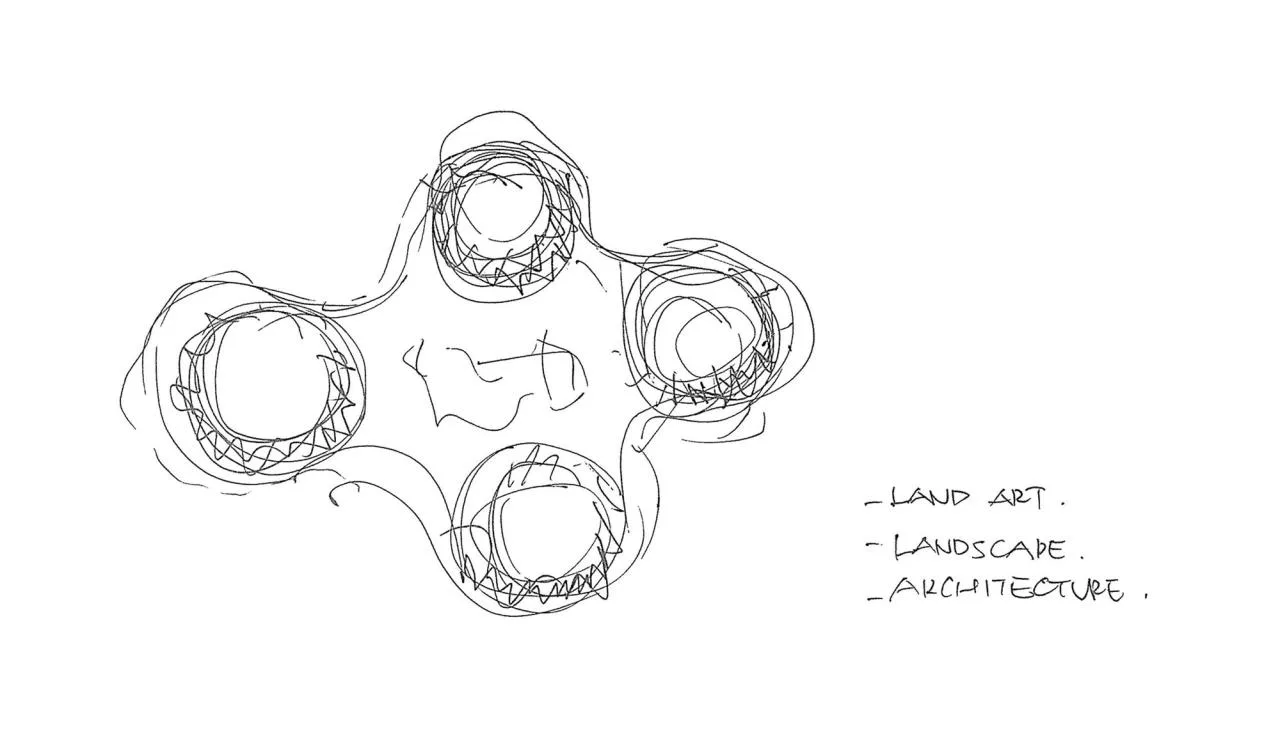
△ Hand-drawn sketch
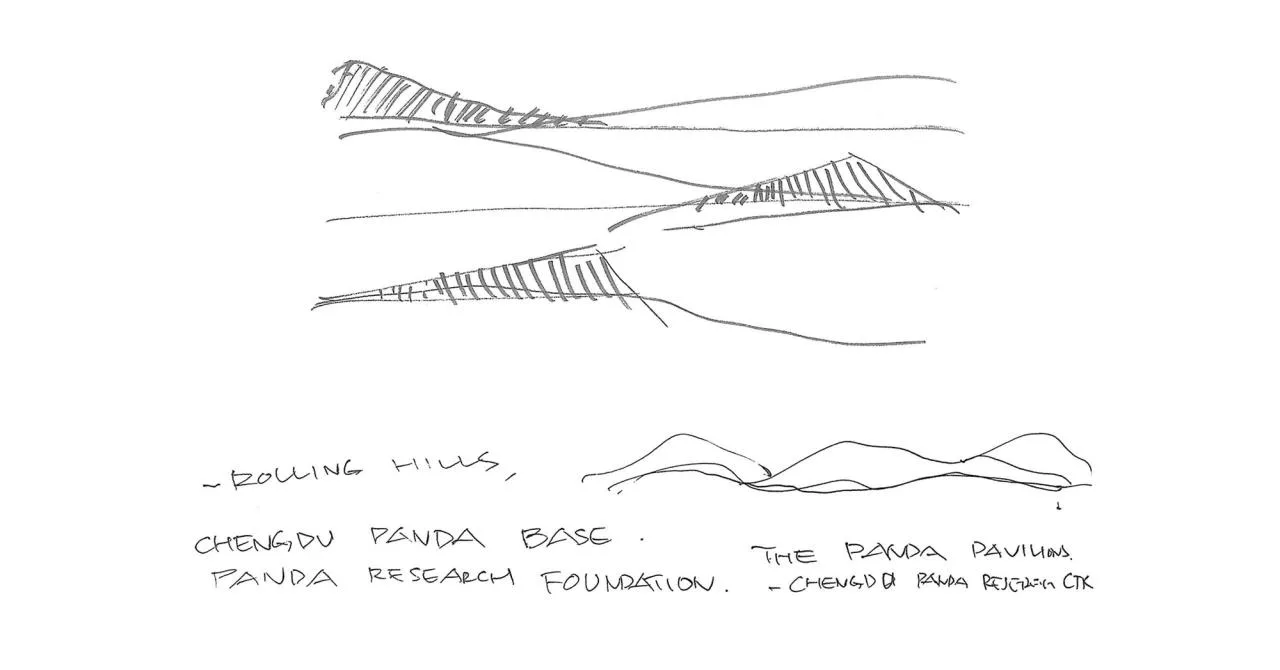
△ Hand-drawn sketch
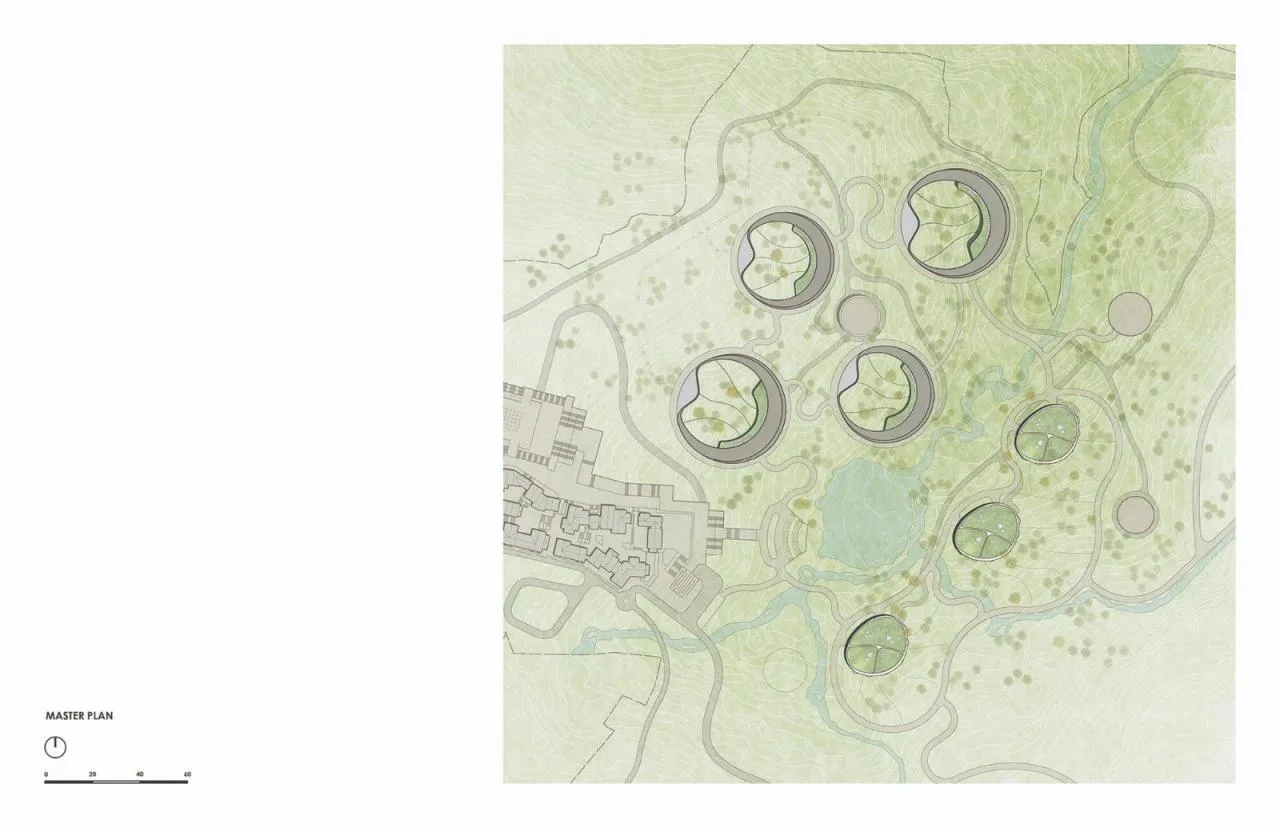
△ General layout plan
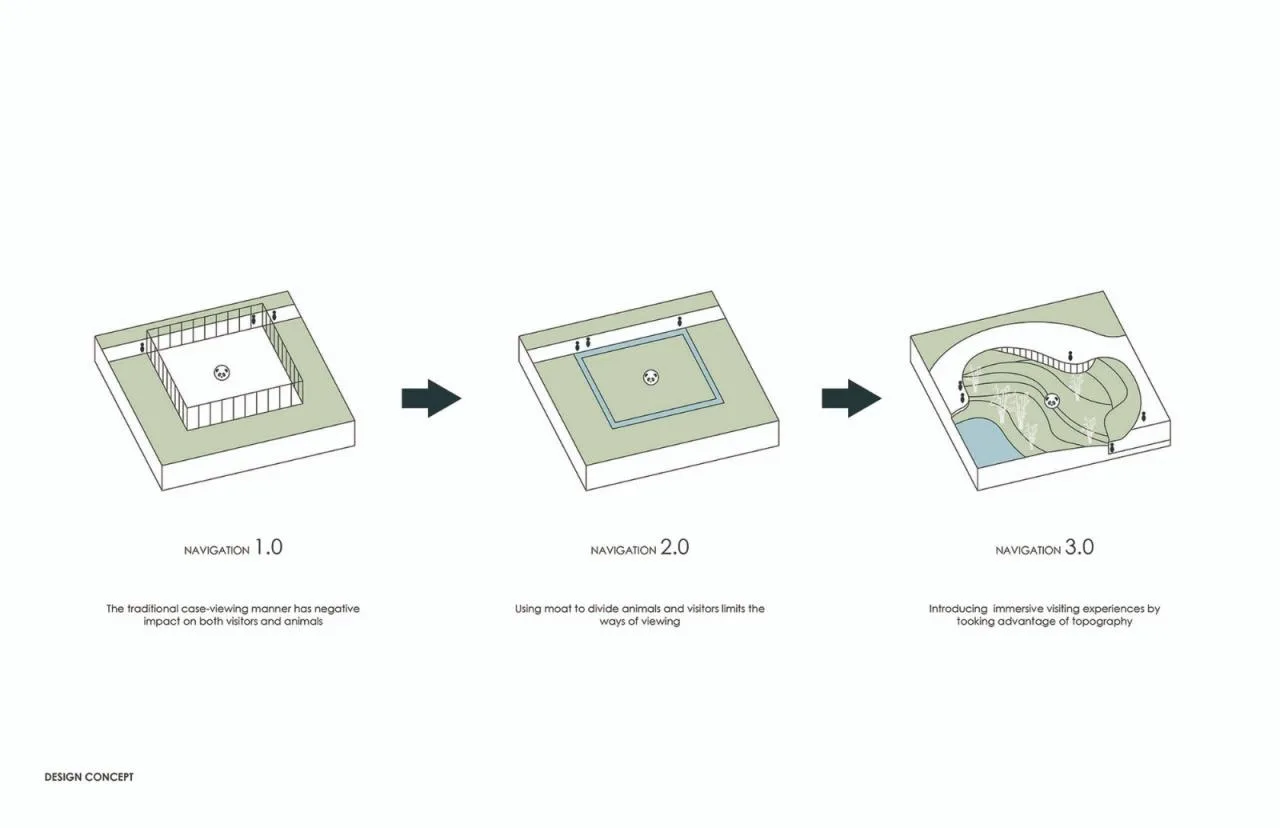
△ Analysis chart
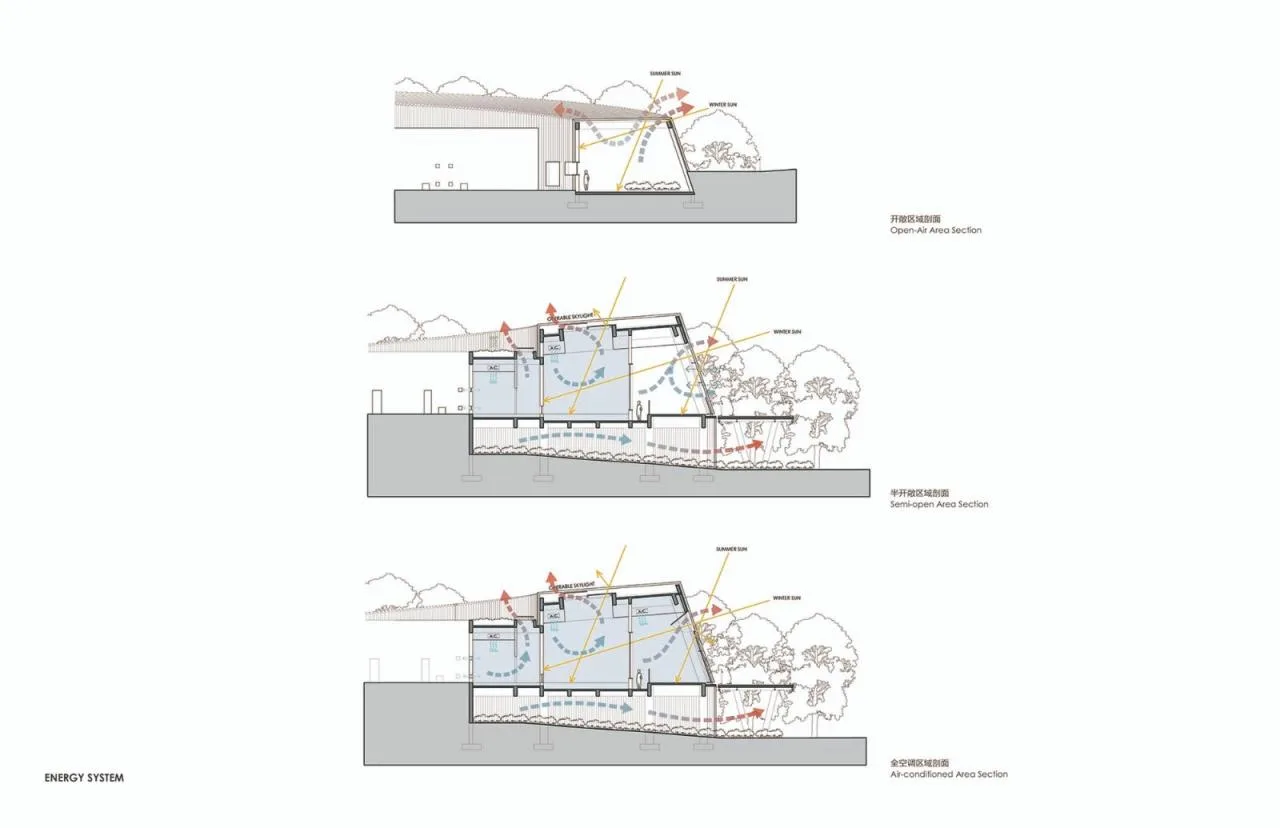
△ Analysis chart
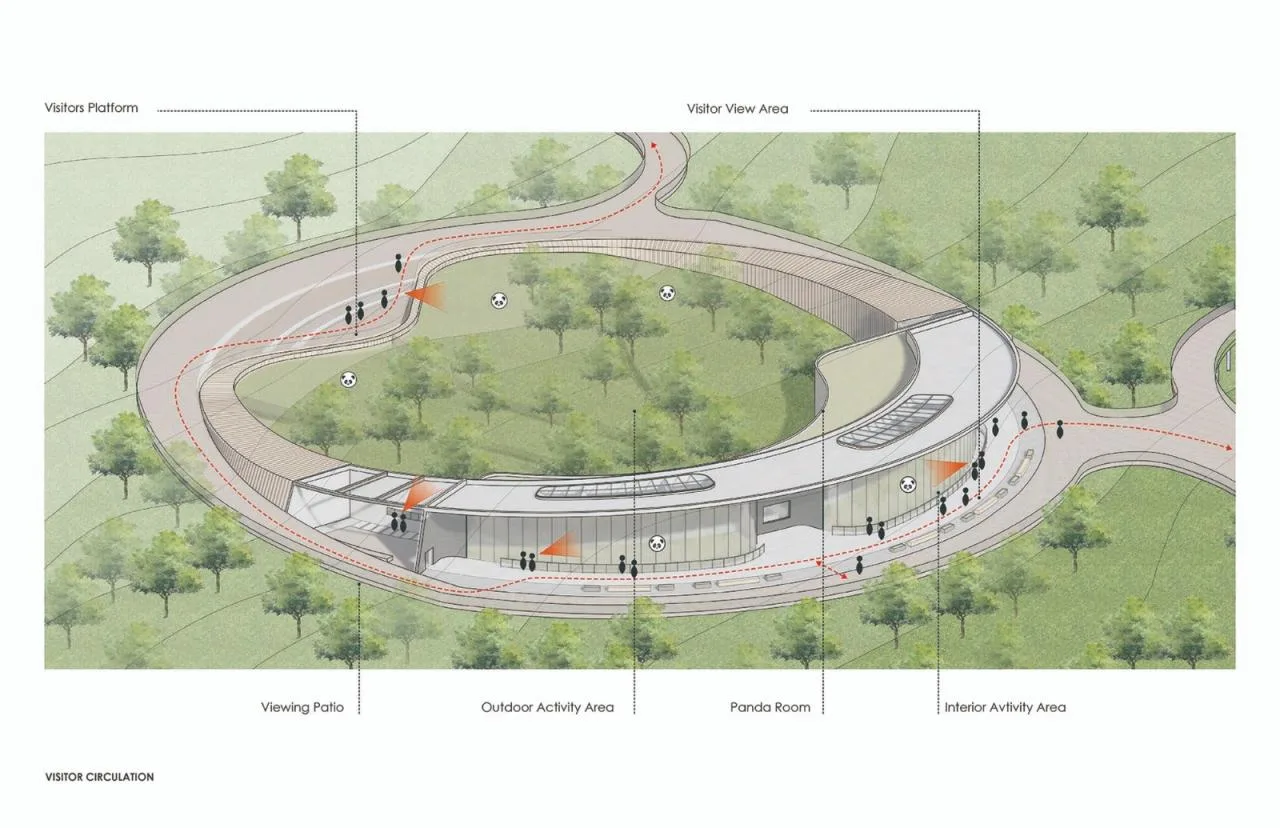
△ Functional zoning diagram
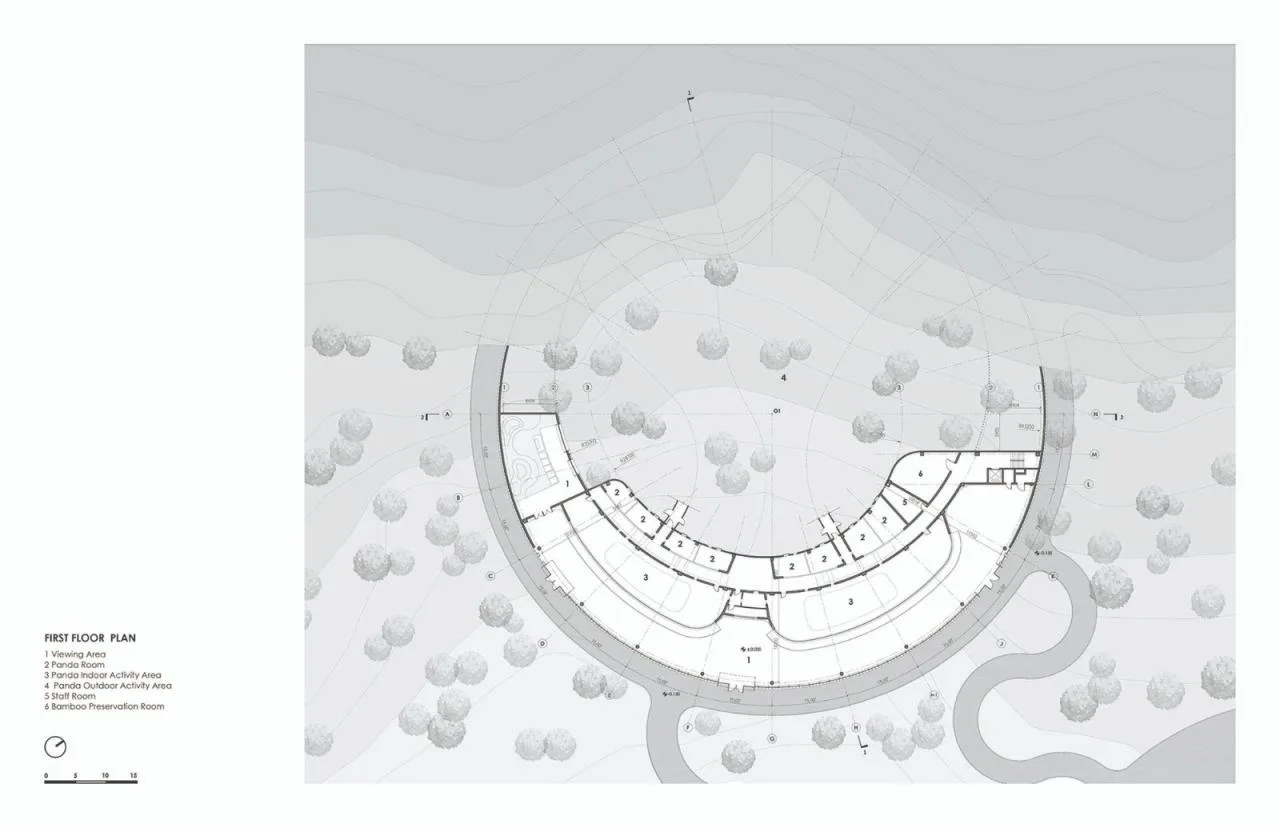
△ First floor plan
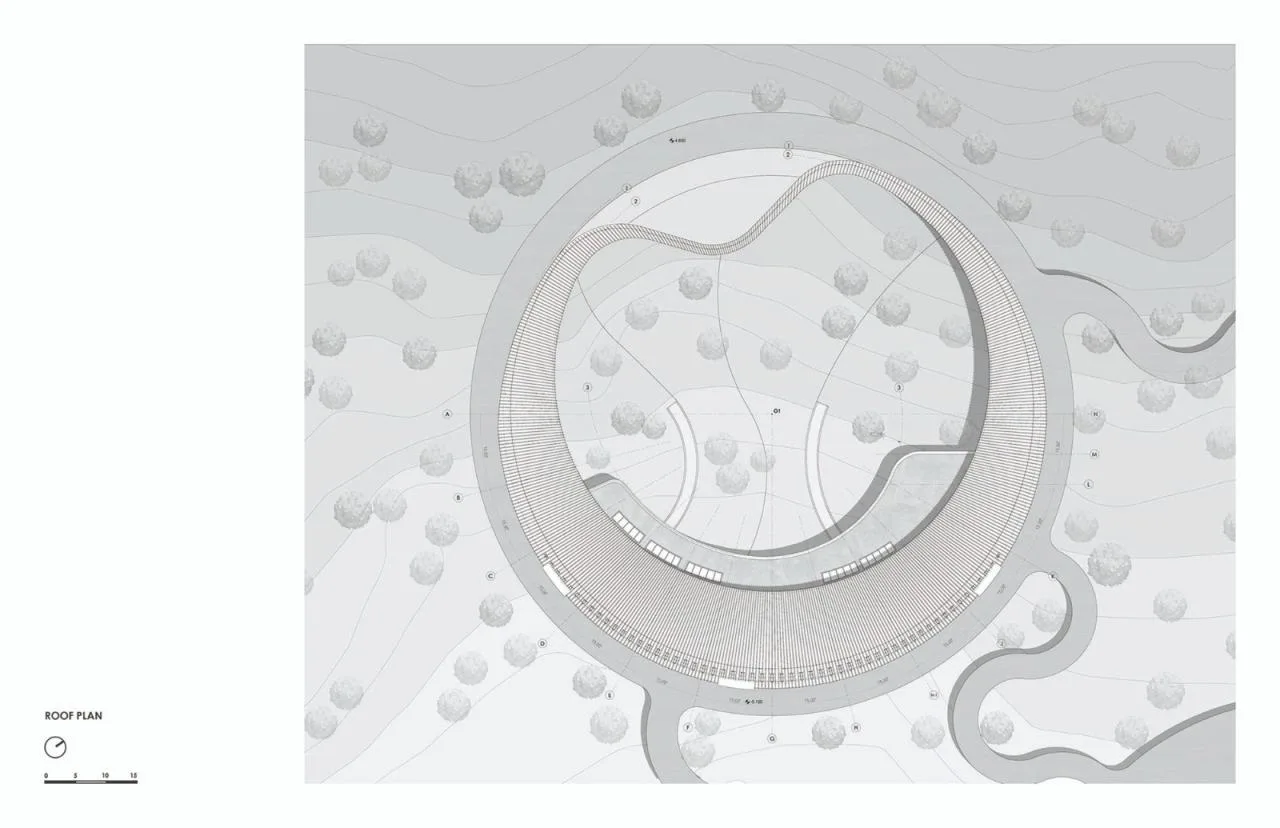
△ Roof plan
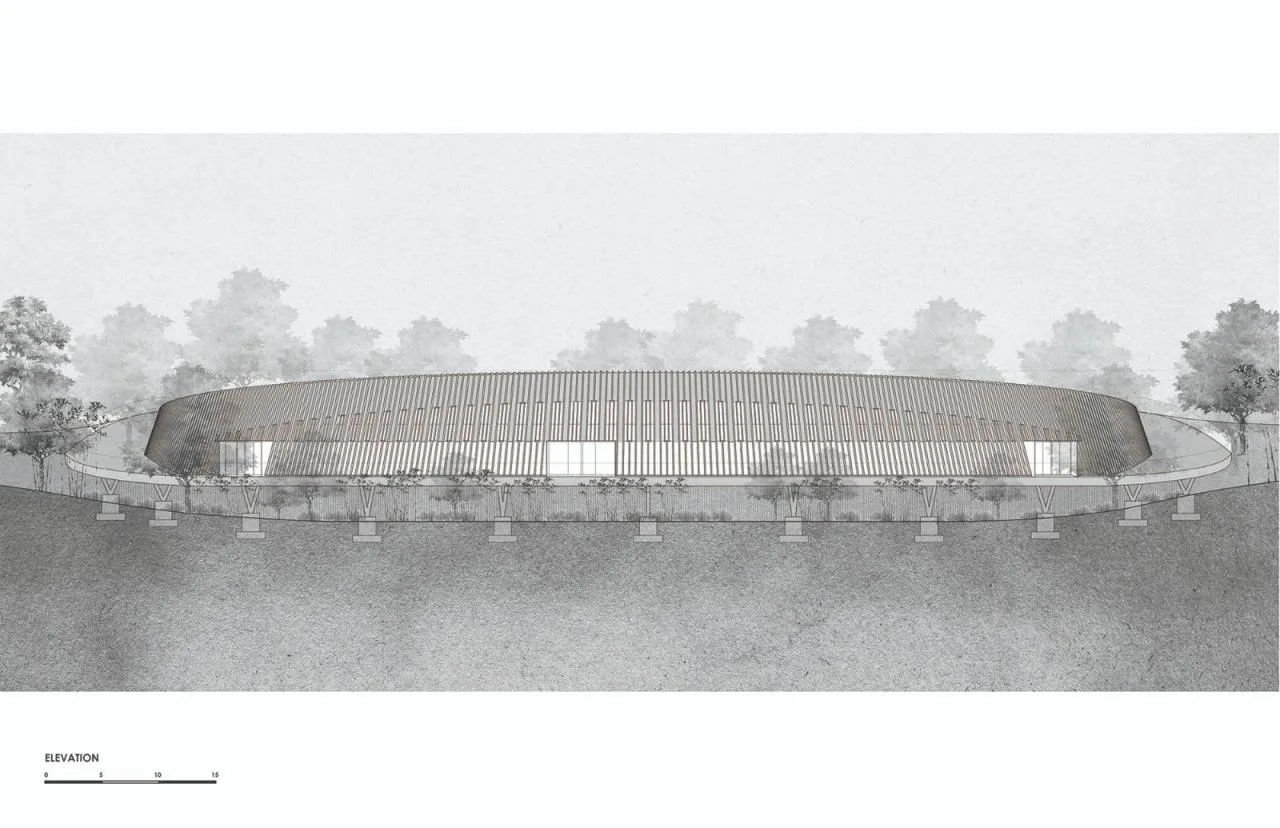
△ Elevation drawing
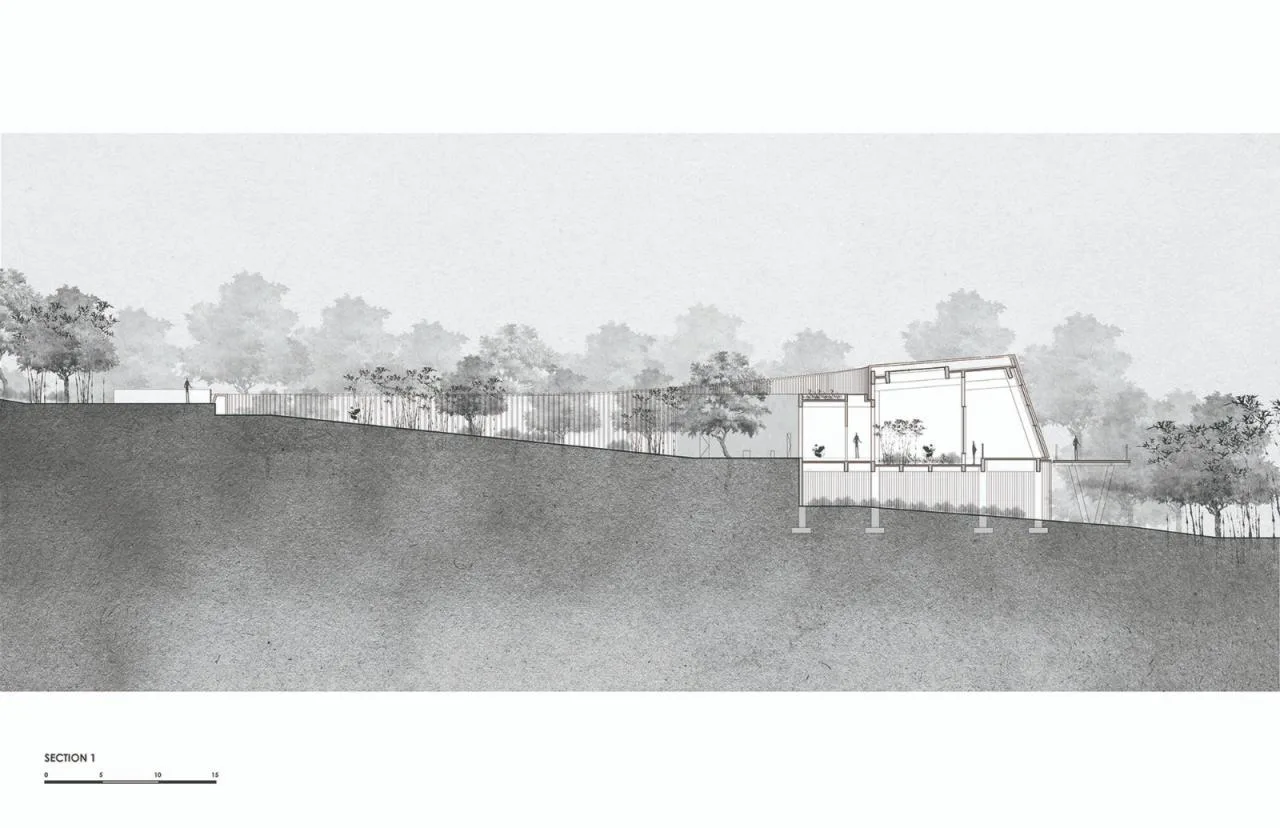
△ Section diagram
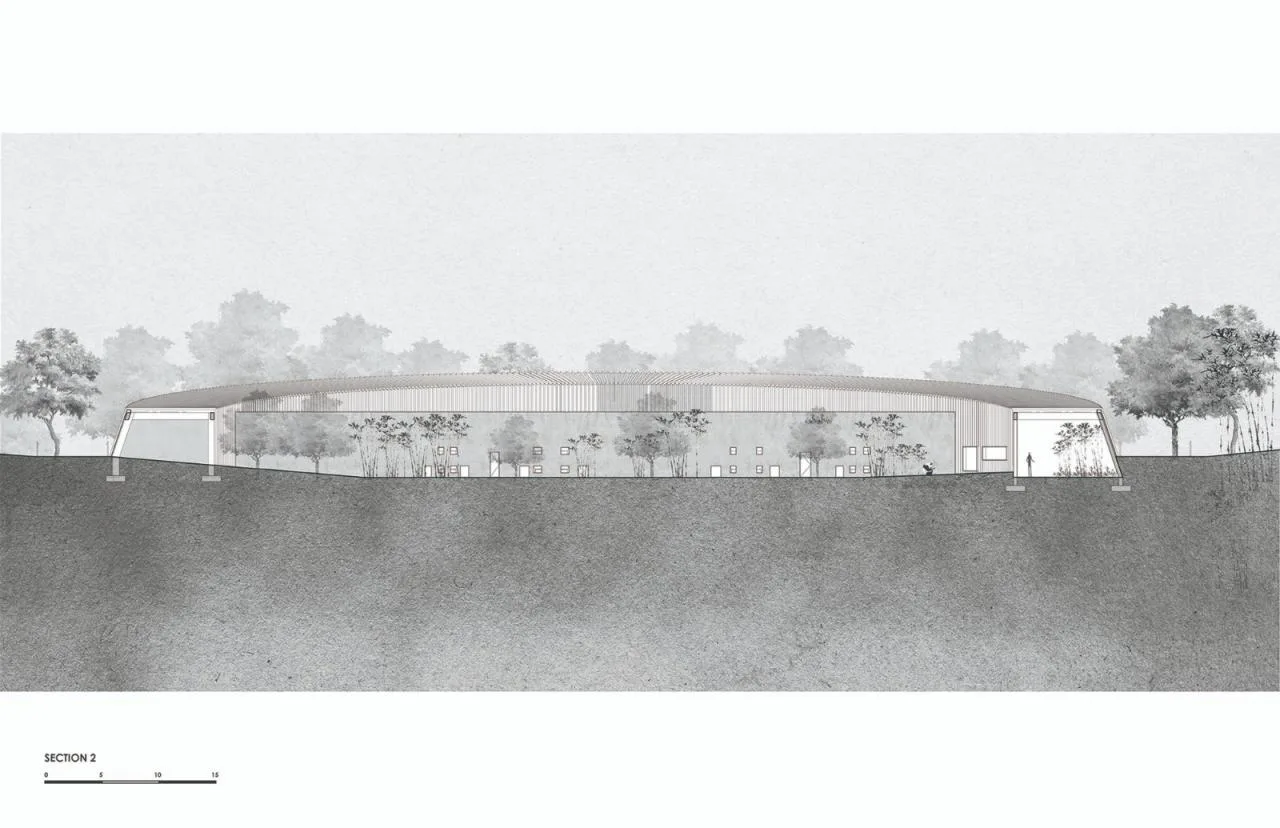
△ Section diagram
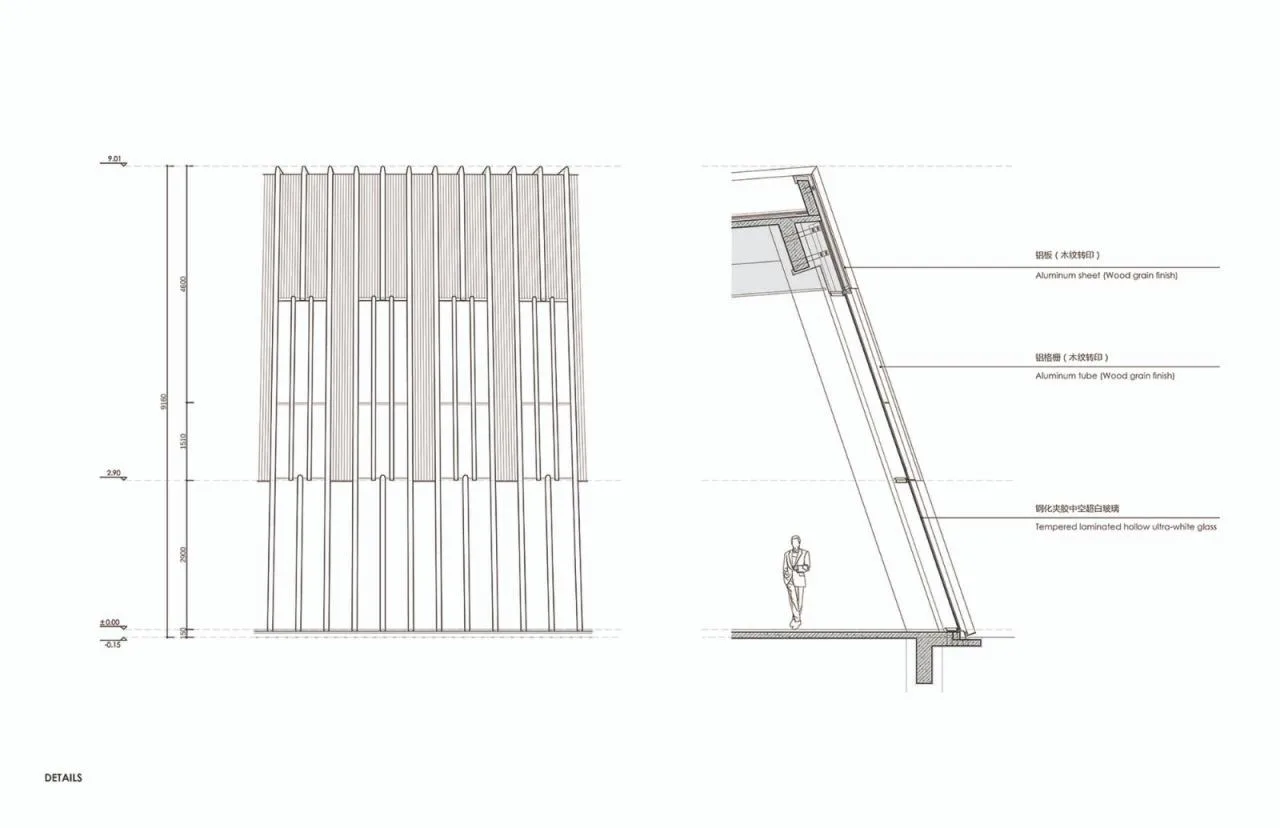
△ Partial detailed drawing
Project Information
Architect: EID Arch Jiang Ping Studio
Area: 12,809 m²
Project Year: 2021
Photographers: There are buildings, Kuratnik Nikolai, XIMUImage
Manufacturers: Sichuan Nanbo Energy Saving Glass Co., Ltd., Sichuan Tianhong Stainless Steel Co., Ltd., Sichuan Shengxin Tengda Industrial Co., Ltd.
Principal Architect: Jiang Ping
Design Team: Bao Jialu, Lu Shengyun, Zhang Shuang, Sun Xiaoxu, Ma Yunpeng, He Chendi
Local Design Institute: Chengdu Architectural Design and Research Institute
Planning Consultants: Tianhua Planning; Chapman Taylor
Landscape Consultant: Chengdu Landscape Architecture Planning and Design Institute
Curtain Wall Consultants: Kaituo Design; Chengdu Architectural Design and Research Institute
Project Principals: Chengdu Tianfu Greenway Construction Investment Co., Ltd; Chengdu Research Base of Giant Panda Breeding
Location: Chengdu















Must log in before commenting!
Sign Up