
The core of urban competition hinges on the rivalry among leading enterprises and technological innovation. The headquarters base effectively integrates top-tier companies, high-end talent, and advanced technologies, forming an indispensable industrial chain and a robust industrial cluster. As a physical embodiment, the corporate headquarters park reflects the city’s charm and spirit, supporting the continuous advancement of the urban ideal!
△ Video Introduction
01 Project Introduction
The headquarters office park for Zhongdian Hikvision Group is situated in Yuhang Future Science and Technology City, Hangzhou, adjacent to Xixi Wetland on its eastern side. Covering approximately 100 acres, the project boasts a total construction area of around 240,000 square meters—comprising roughly 140,000 square meters above ground and 100,000 square meters underground. The park serves three primary functions: corporate offices, pilot research and development, and Internet Plus office spaces.
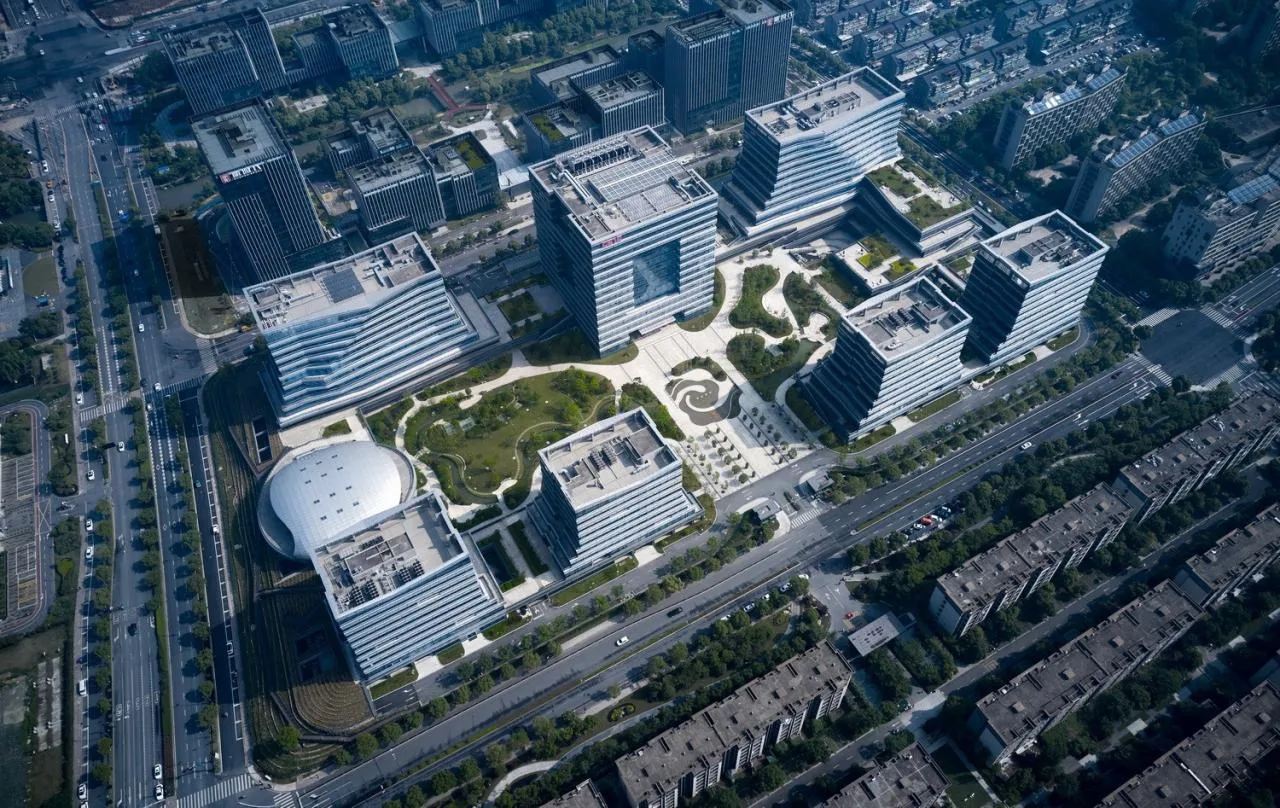
△ Aerial view of Zhongdian Hikvision Park
As a pioneer of the digital economy and innovation in Yuhang District, Hangzhou, Future Technology City hosts renowned enterprises such as Alibaba Group headquarters and Zhijiang Laboratory. Zhongdian Hikvision Group Co., Ltd., the park’s owner, positions itself in “intelligence and security,” focusing on social security, national defense, information security, and production safety. The company is dedicated to researching key technologies in the Internet of Things, cloud computing, and big data, continuously driving the comprehensive digital transformation and development strategy of the IoT.
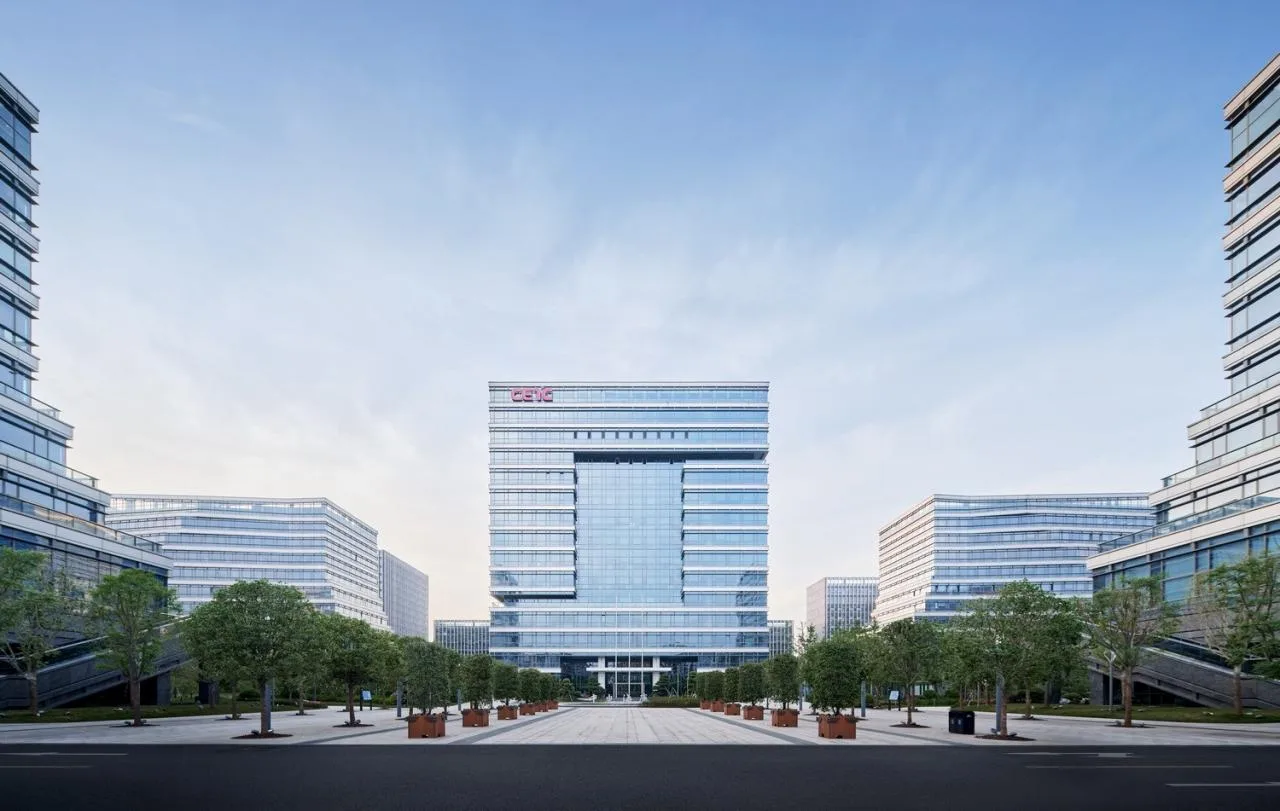
△ South entrance of Zhongdian Hikvision Park
Designing office industries is a vast and complex endeavor, involving multiple layers and diverse fields. Urban development trends and evolving enterprise needs have introduced highly challenging and innovative design requirements for this project. Therefore, our design concept focuses on creating a multi-interface, multi-level office environment that supports full lifecycle office production and fosters a sustainable office ecosystem.
02 Project Philosophy
[Momentum: Shaping Hikvision Smart Valley to Cultivate High-End Tech Talent]
In today’s world, wisdom seekers are found across the globe—in valleys, secluded retreats, and tranquil places. Historically, valleys have nurtured wisdom and accumulated spiritual energy and vitality. Similarly, Zhongdian Hikvision stands as a leader in China’s high-tech sector. We sought to merge the site’s narrow, elongated shape by arranging individual buildings along its edges, forming a valley-like shape with lower center and higher sides. Through organically varied building forms and a dynamic, accessible blue-green system, we aimed to breathe life into the valley—harmonizing spirit and form to create Hikvision Smart Valley, a haven for cultivating high-end technological talent.
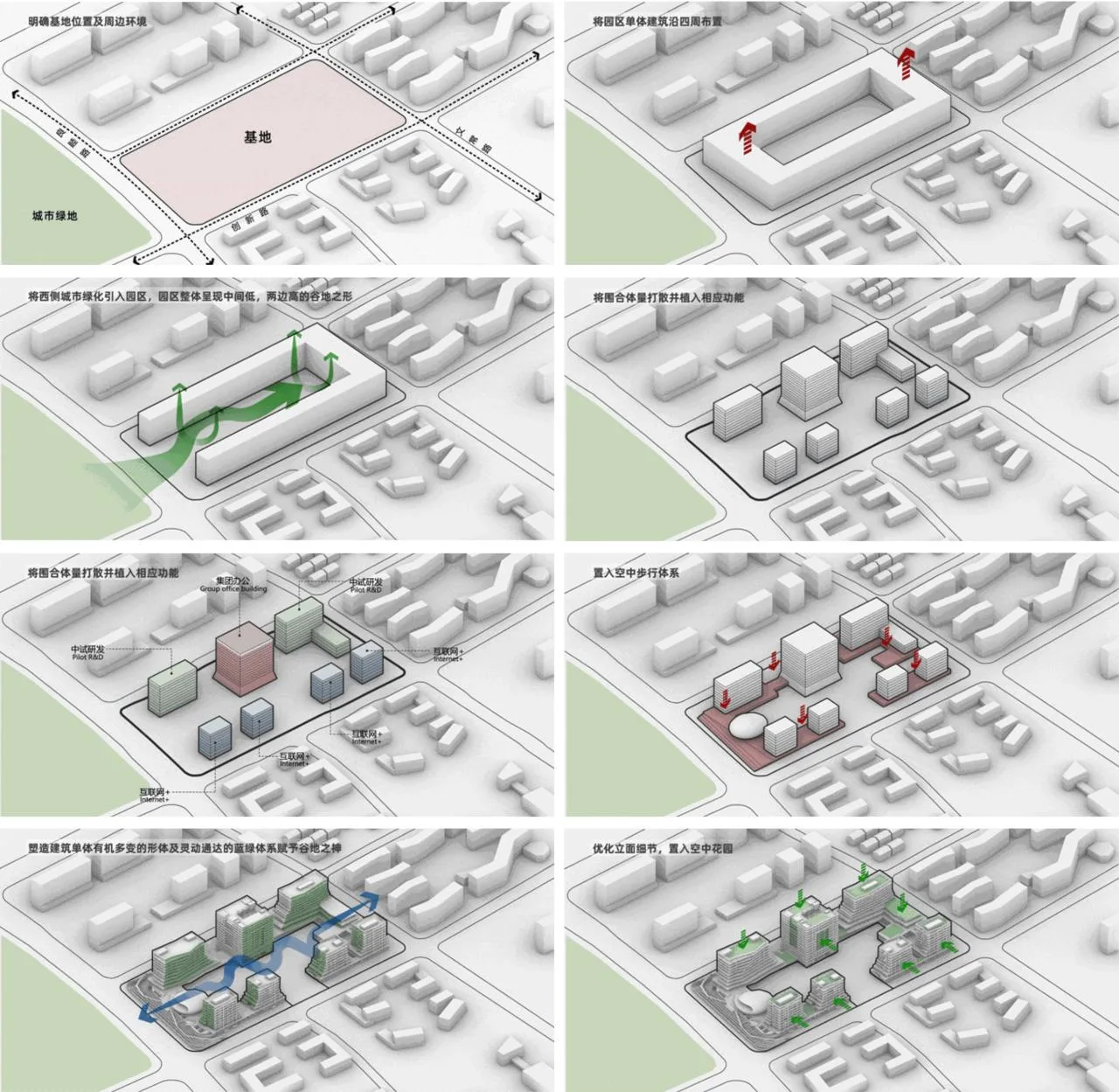
△ Scheme block generation
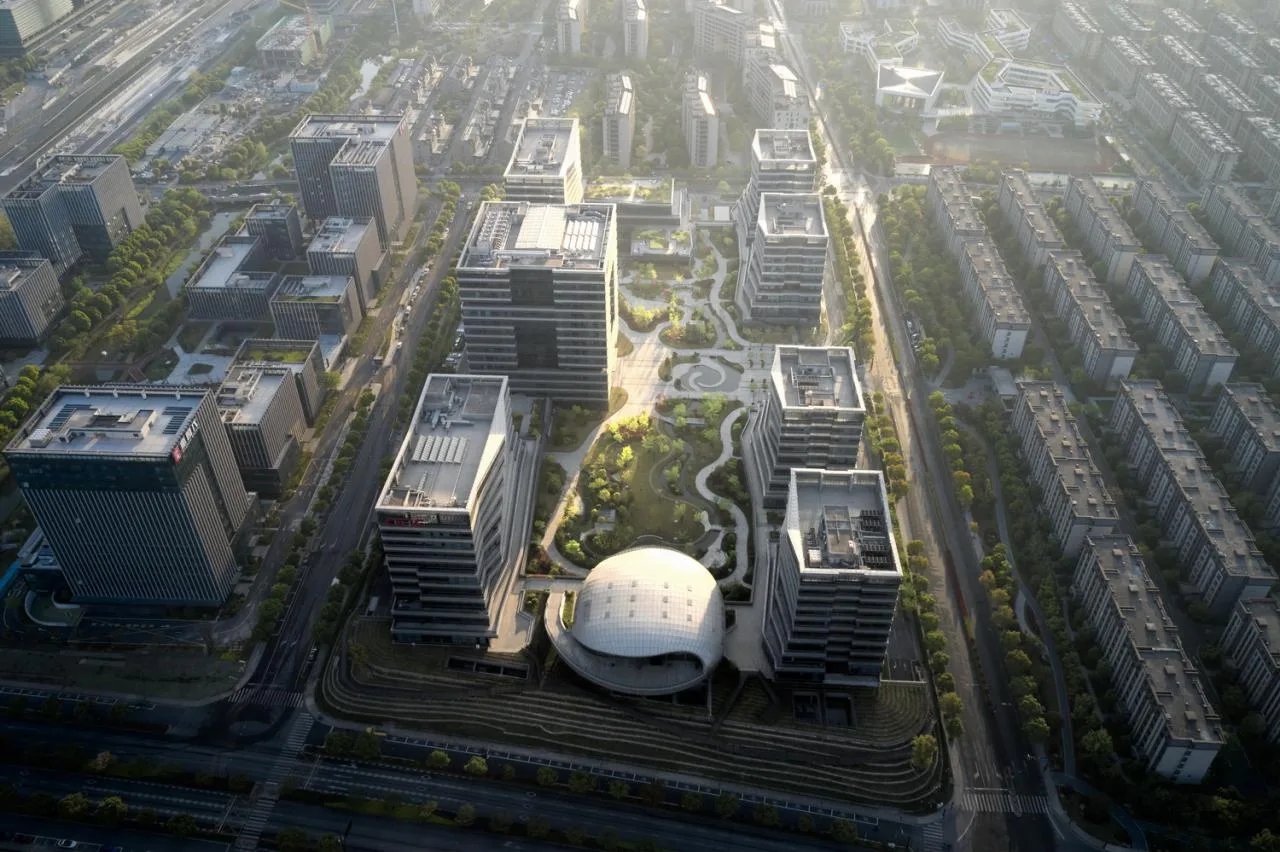
The Zhongdian Hikvision Park draws inspiration from valley terrain.
[Anchoring: Creating a Multi-Interface Spatial System]
The park’s overall layout is symmetrical, centering on group offices, flanked by R&D and conference centers. A core landscape sits at the center, imparting a dignified and cohesive atmosphere. Along the street, a clean, efficient urban interface combines the features of a central garden and valley style. Facade treatments such as horizontal cuts and vertical divisions generate a dynamic internal enclosure interface. The park’s base layer blurs boundaries of the central garden through a flexible overhead layer interface, extending the garden indoors and fostering an inviting public space. On the west side, a stepped tea garden restores the site’s original wetland landscape and creates a three-dimensional natural dialogue with the adjacent urban park. This multi-interface spatial system anchors the buildings firmly within their context.
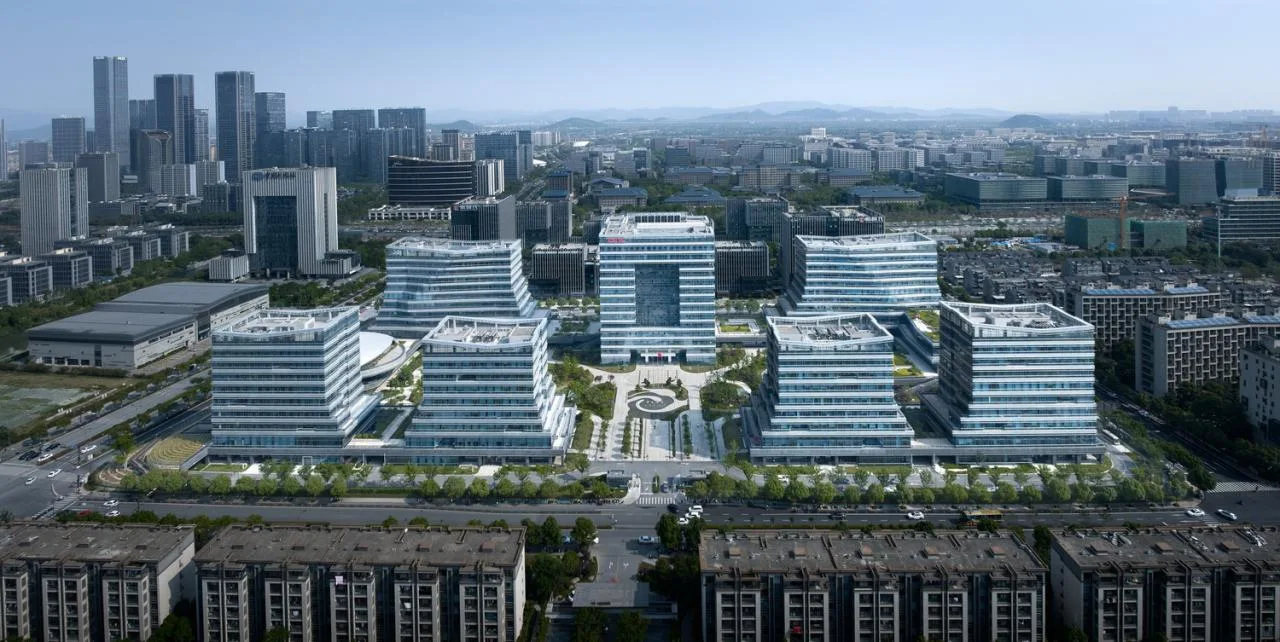
△ Zhongdian Hikvision Park showcases a symmetrical layout
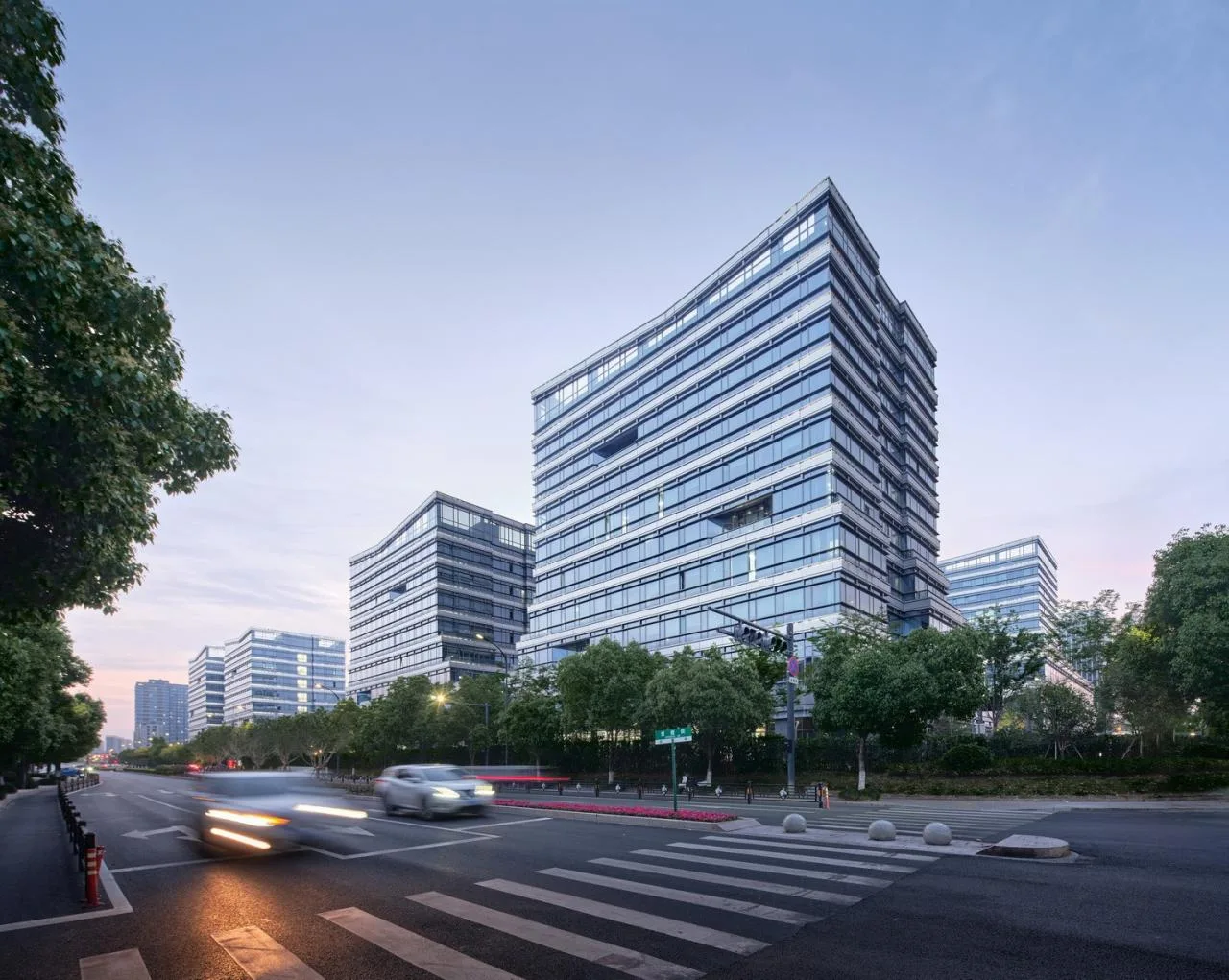
△ A concise and organized interface for urban parks
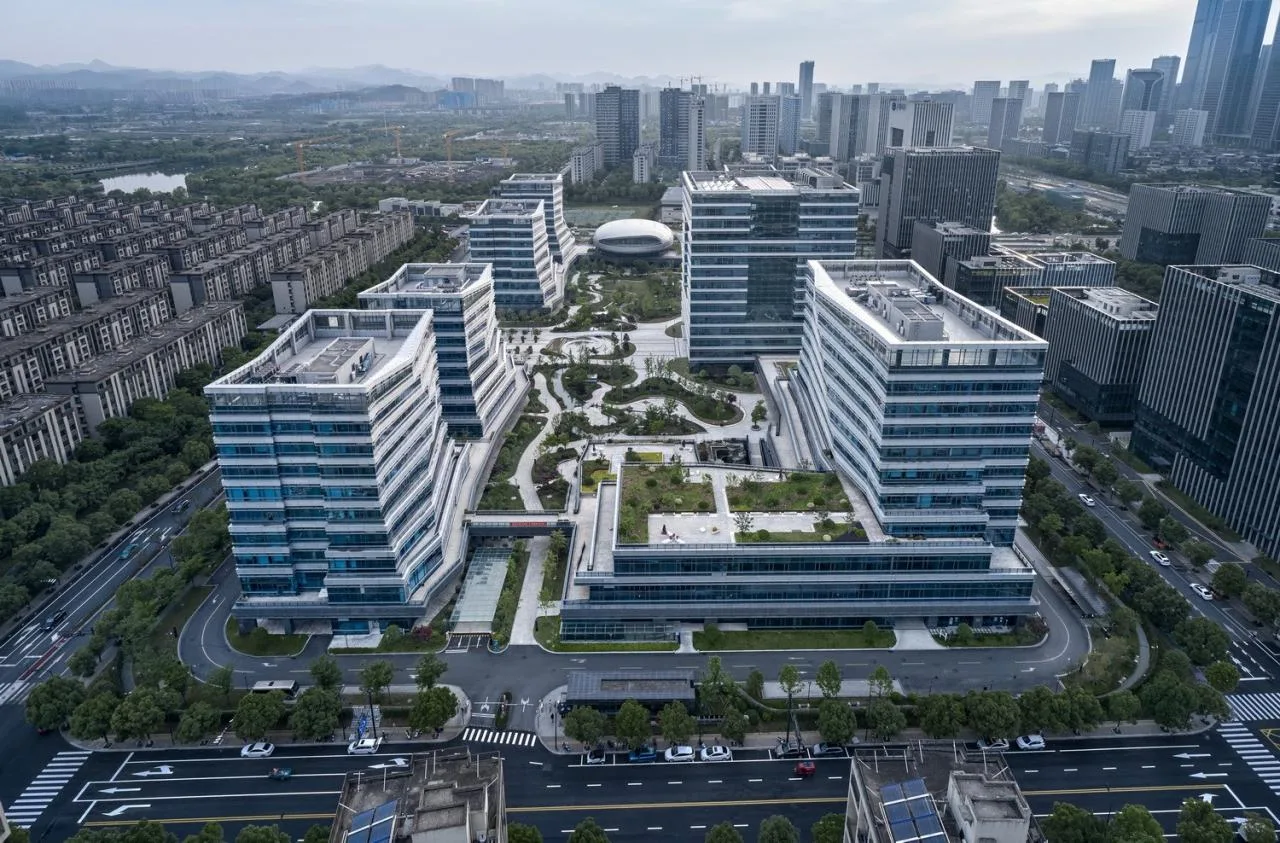
△ Park facade with rich variations facing the interior
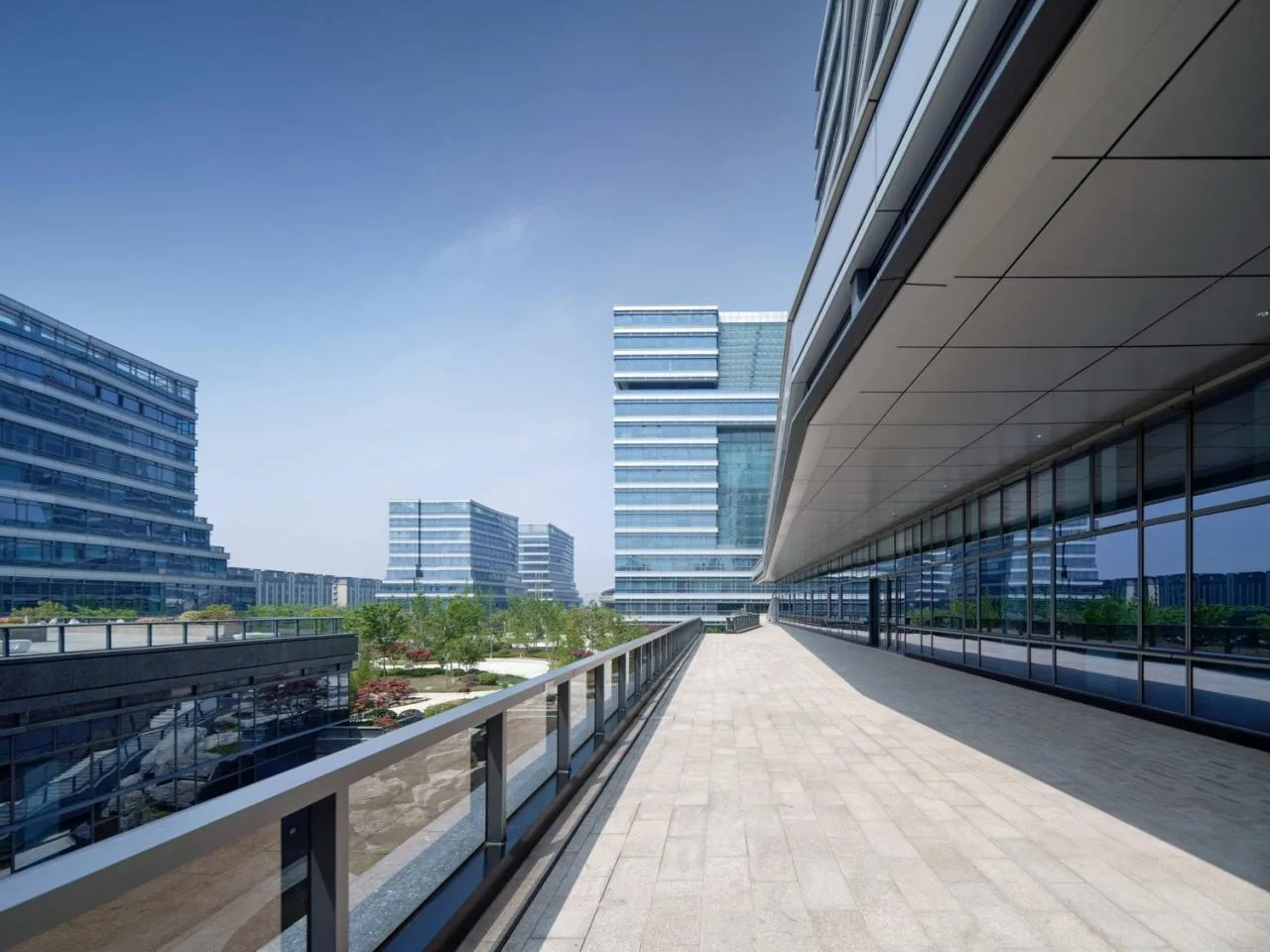
△ Flexible elevated layer interface at the park’s base
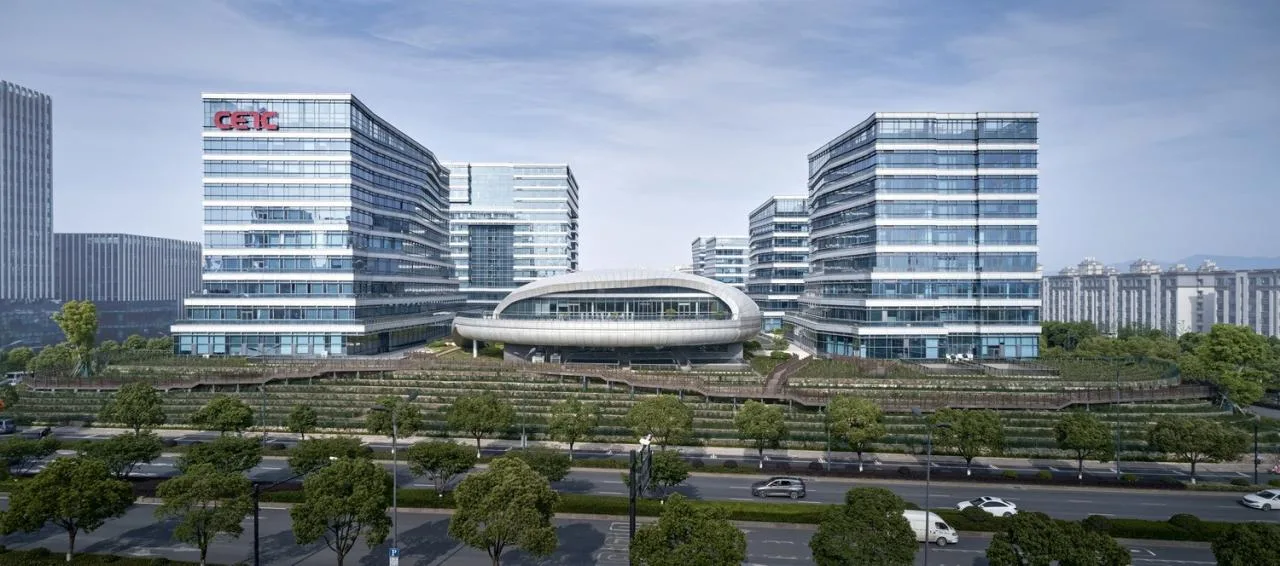
Stepped tea garden landscape on the park’s west side.
[Folding: Creating Rich, Multi-Layered Garden-Style Social Spaces]
The central park is encircled by water flowing from the east and west, forming an undulating “floating island” core landscape. Surrounding areas feature diverse plants and waterfront amenities, fostering a vibrant ecology. The park’s landscape plays with building heights—staggered, separated, or enclosed—to craft a diverse folding garden within a limited footprint. A sunken plaza and double-layered underground courtyards allow greenery to thrive below ground. Small courtyards nestled between buildings are filled with plants, while rooftop gardens provide pleasant walking spaces. A 50-meter-high sky garden crowns the fourth floor of the main building, complemented by a 50-meter-high open cable curtain wall on the east side, enabling indoor offices to breathe freely. All buildings open onto the park landscape, ensuring both visual and physical accessibility, thereby encouraging lively social interactions. This multi-level landscape design offers comfortable public spaces for office workers, enhancing efficiency and delivering a garden-style office experience.
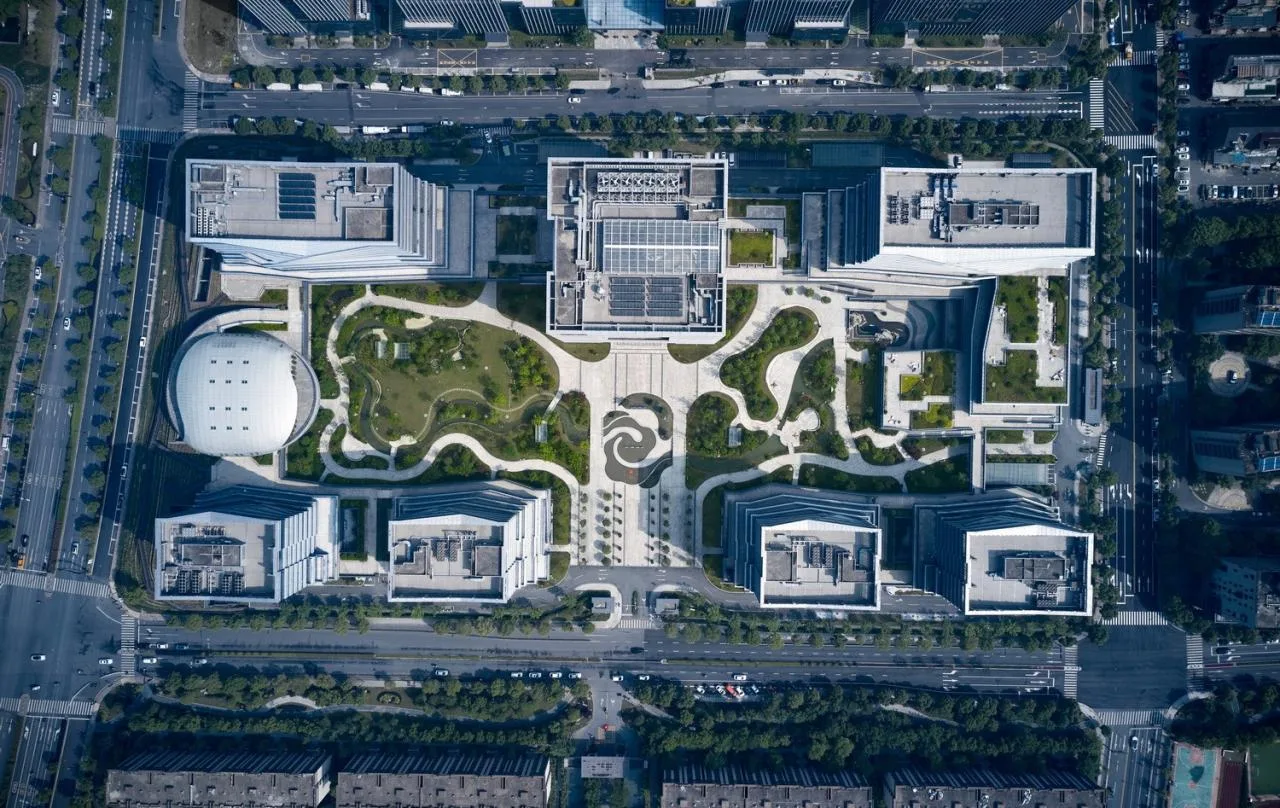
△ Floating island-style central landscape in the park
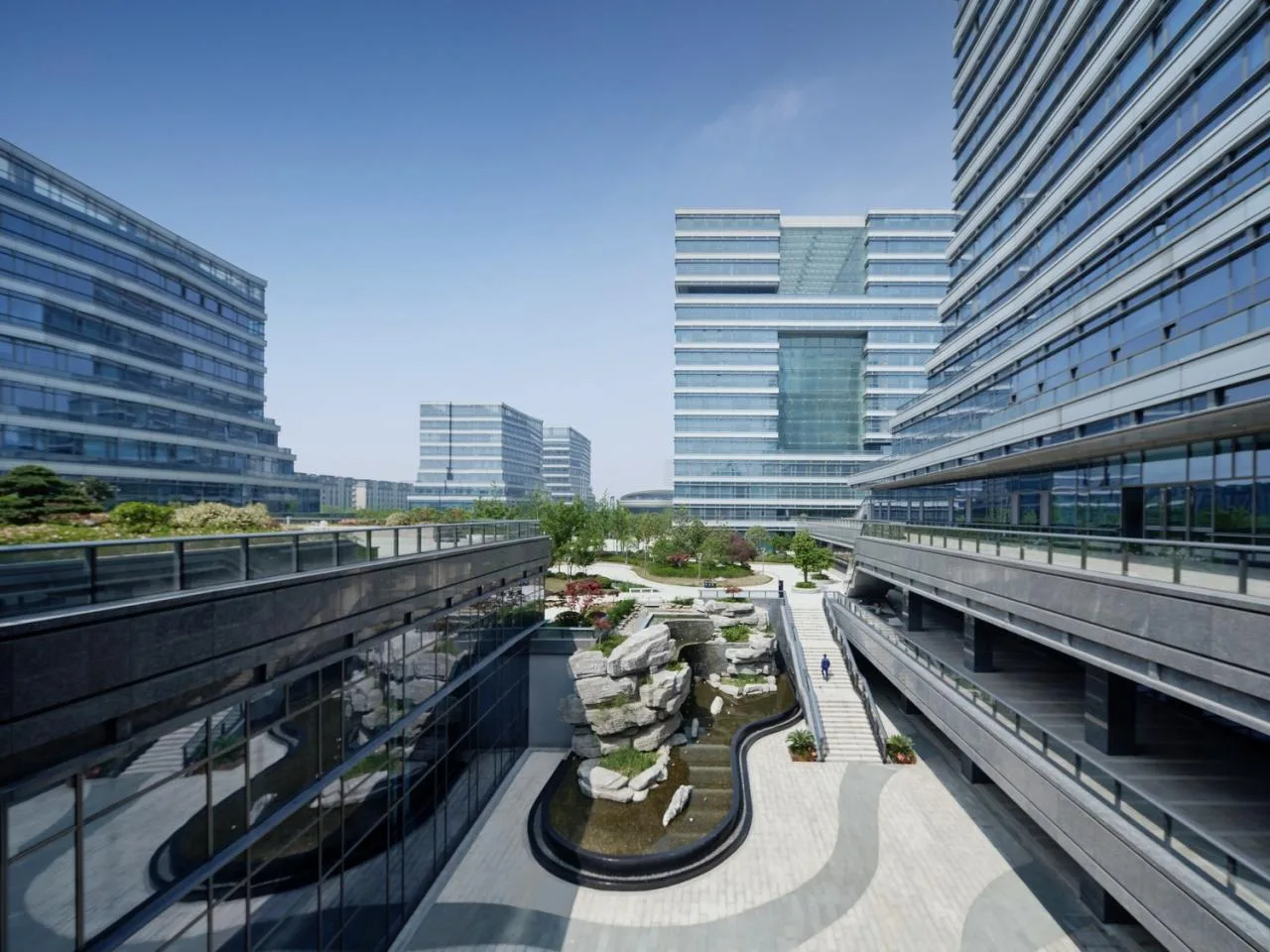
△ Sunken courtyard
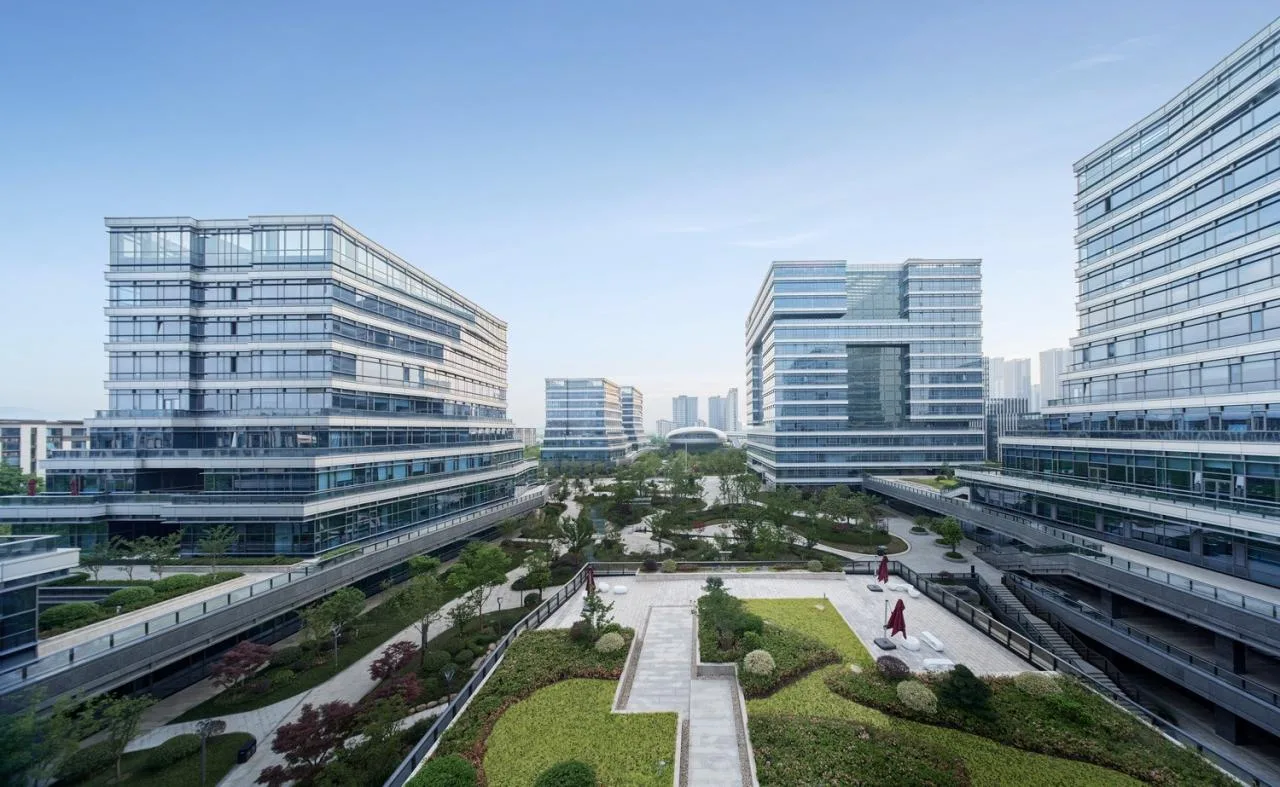
△ Roof garden
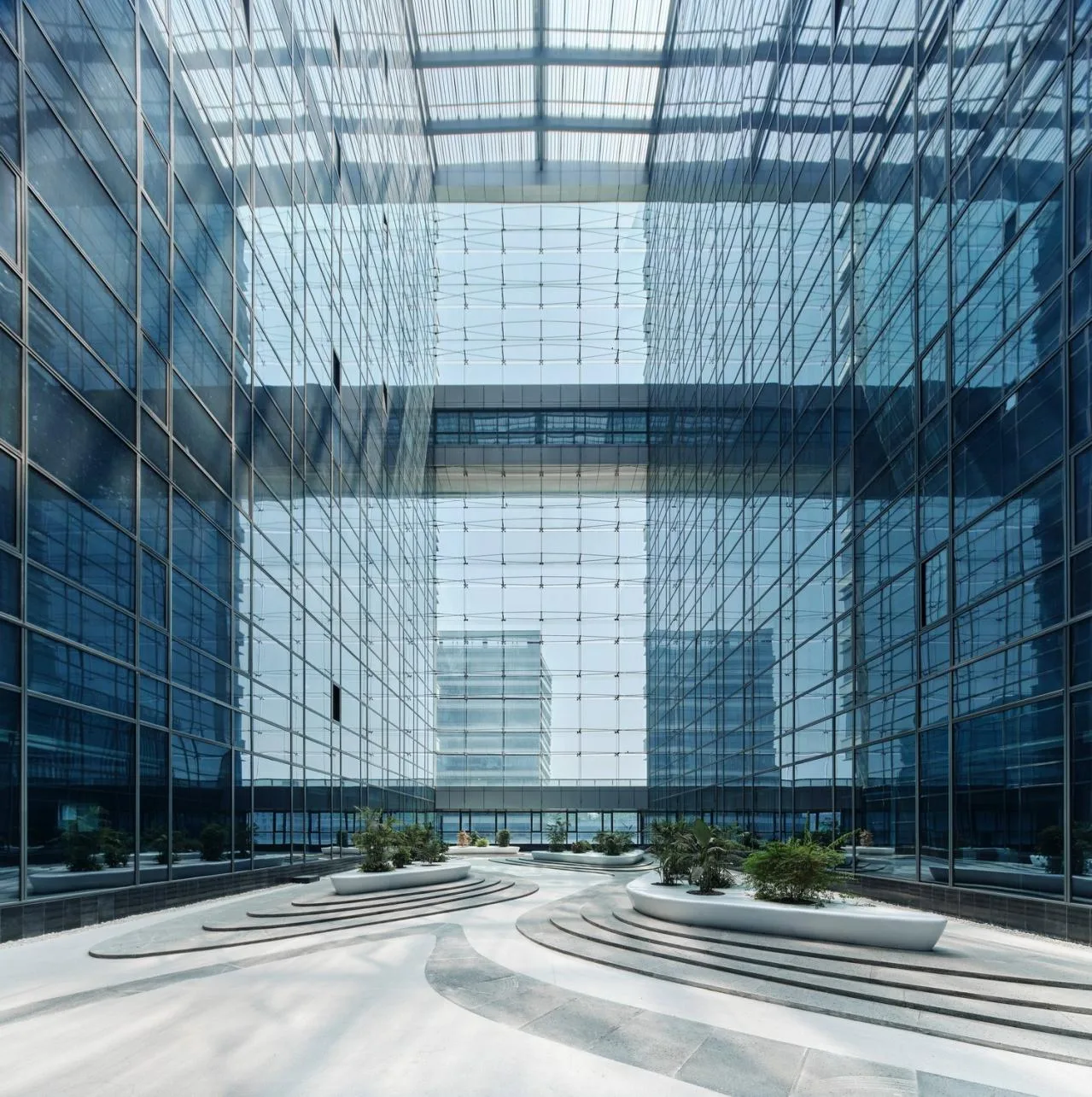
△ Aerial garden in the headquarters building
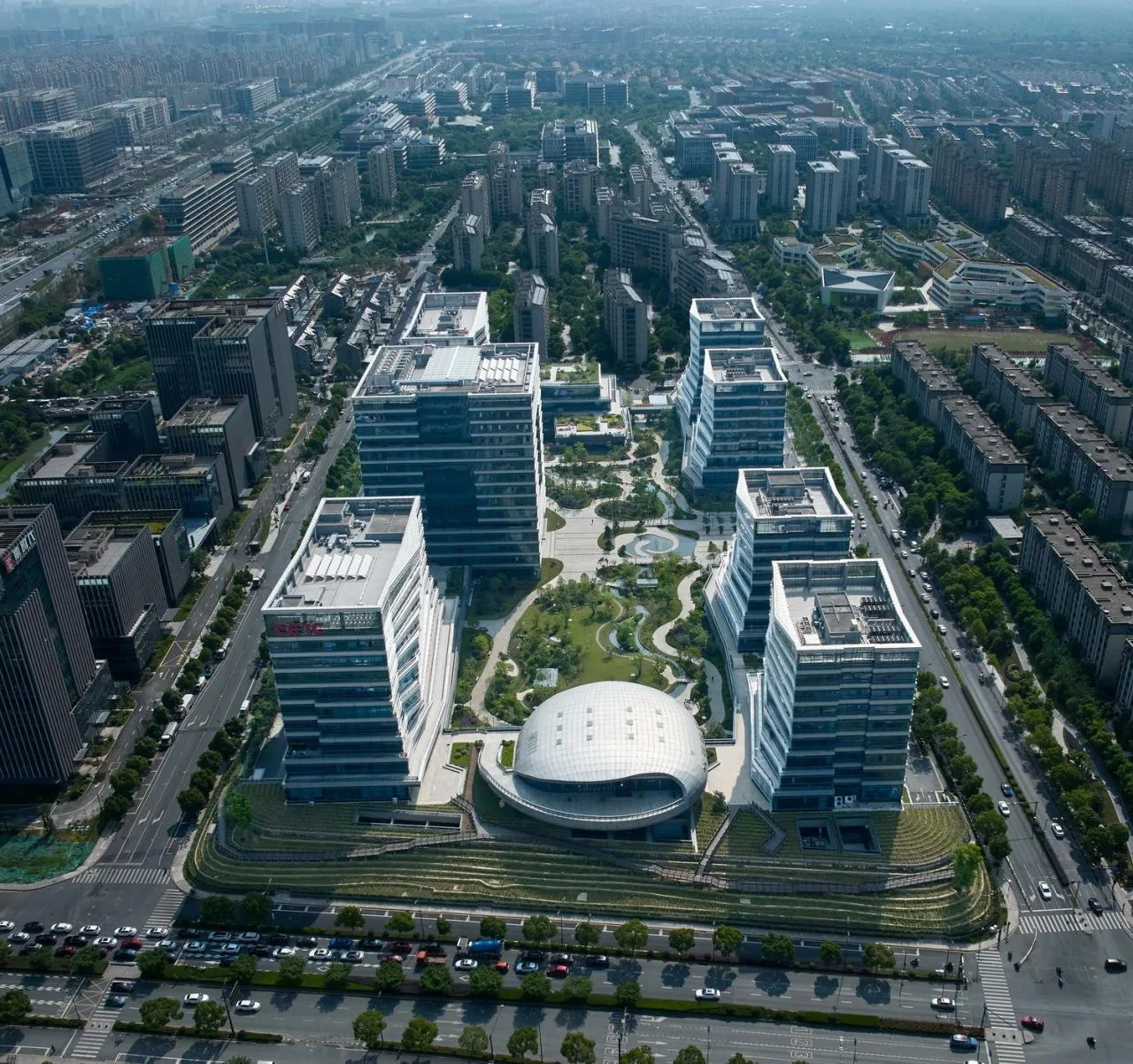
Multidimensional interactive landscape system
[Creation: Establishing a Full Lifecycle Office Development Space]
Factors like industrial transformation and the pandemic are reshaping our understanding of future office models. The traditional, uniform office building no longer meets evolving needs. Complex functions, flexible organizational structures, and cost-effective spaces are now essential. We combine large corporate headquarters with smaller research centers, integrating diverse functional modules such as large conference centers, sports and fitness facilities, and restaurants to foster industrial ecology incubation. This full lifecycle office space builds a robust industrial ecosystem for leading companies, research institutions, and startups, providing multi-level support for healthy industrial cluster growth.
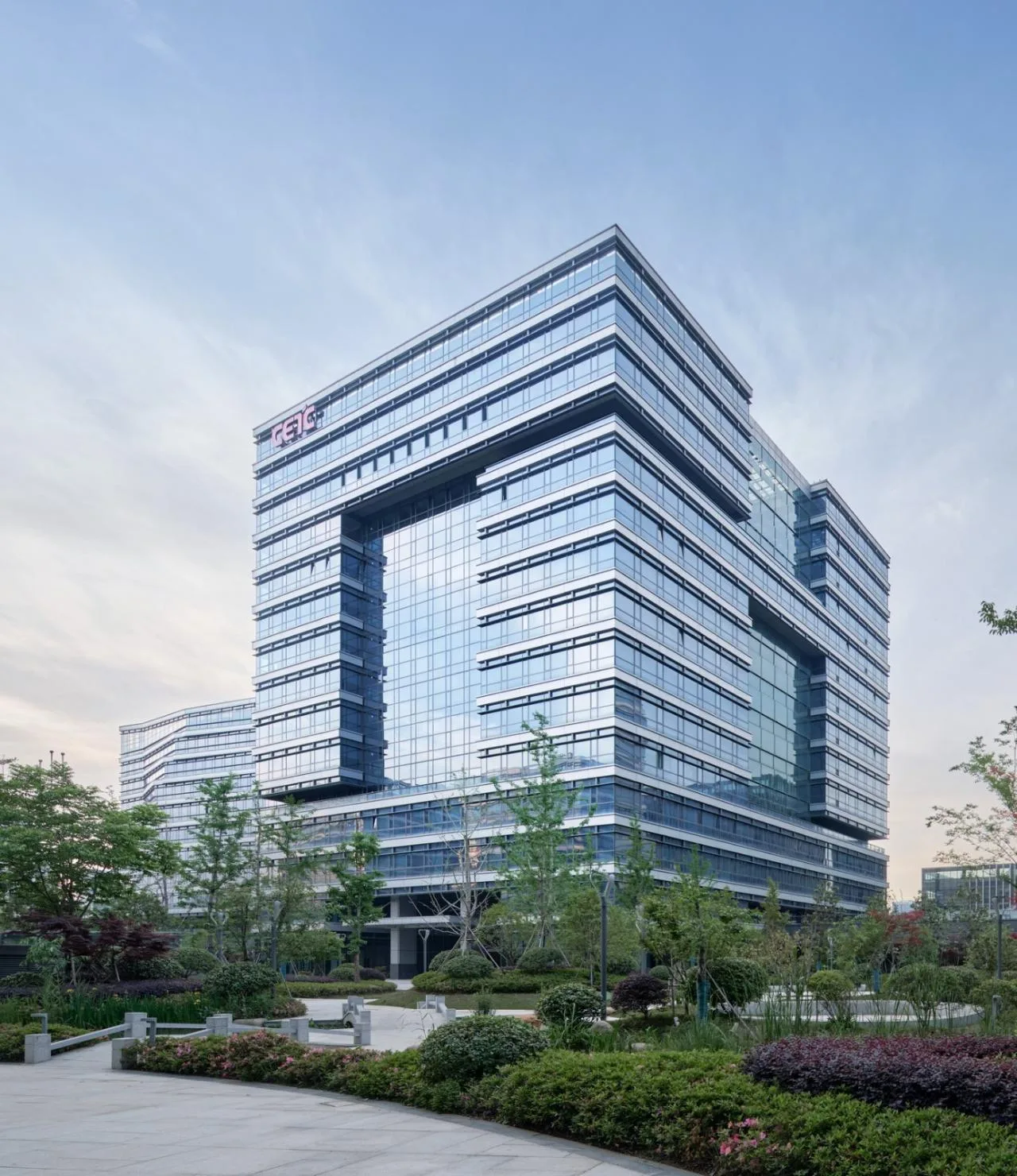
△ Corporate headquarters building
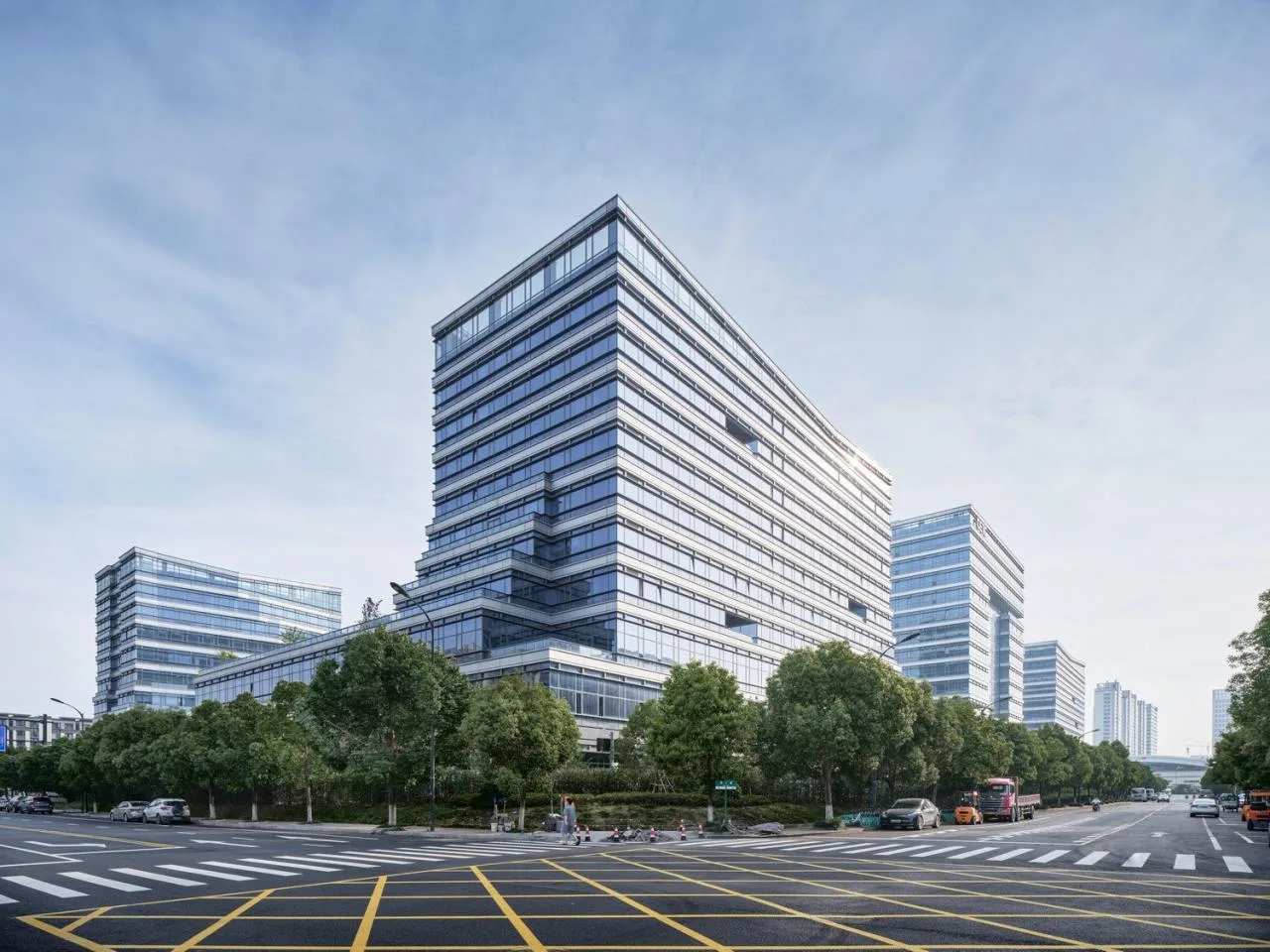
△ Research center
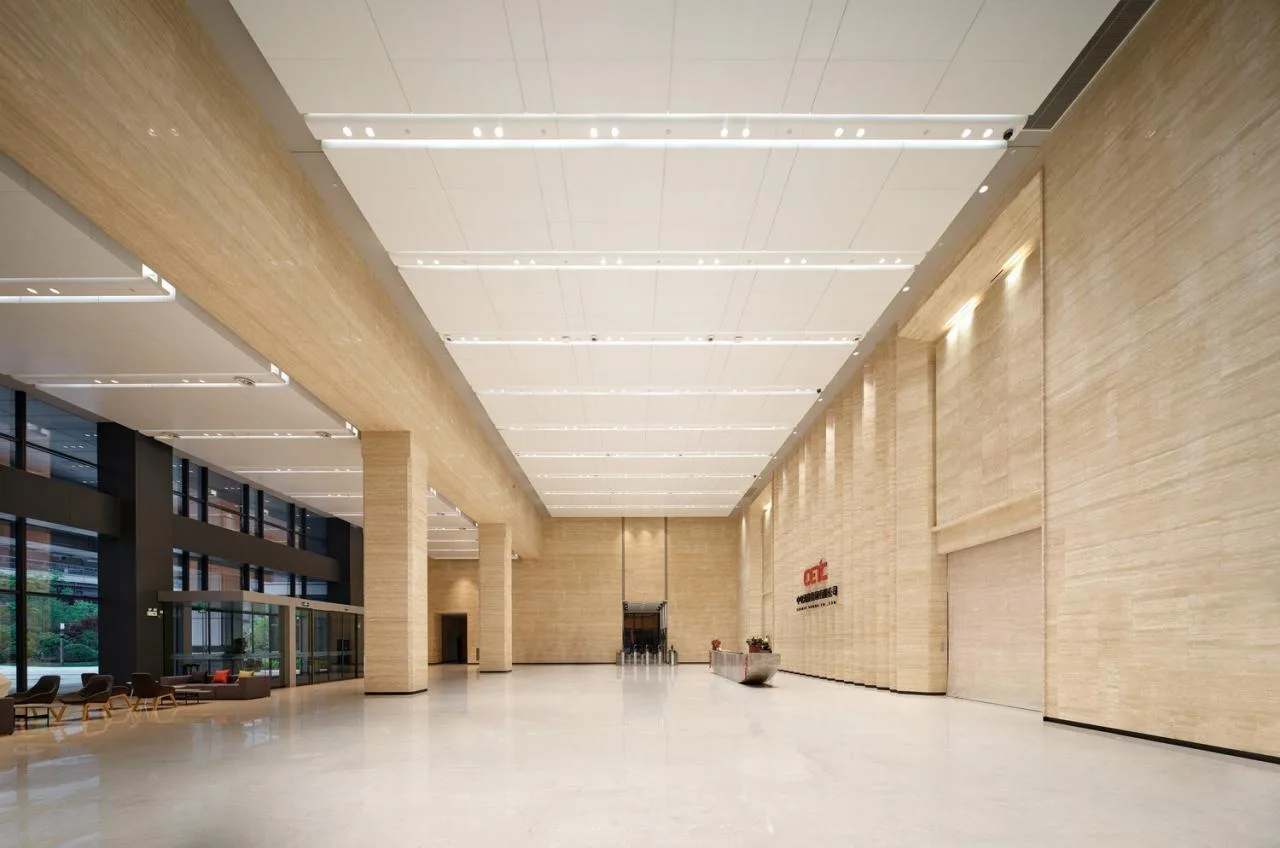
△ Office hall of the enterprise headquarters building
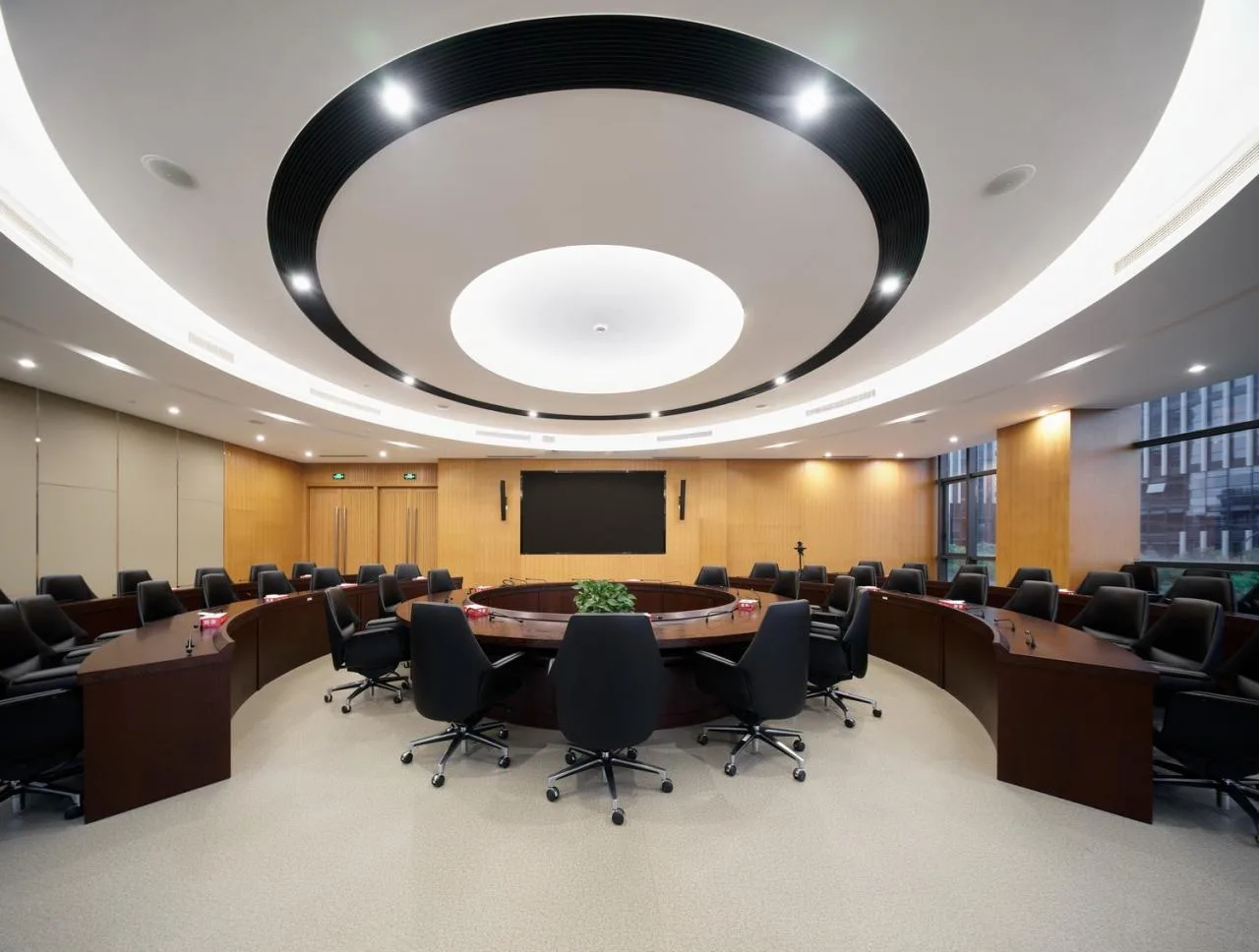
△ Conference room in the park
[Systematization: Implementing Green and Sustainable Design Strategies]
Our design consistently reflects a strong commitment to ecological responsibility, prioritizing green and sustainable development in both spatial planning and technology. Project A won the 2018 Hangzhou Excellent Green Building Award. Building A achieved a two-star green building design certification, while Buildings B through H received one-star certifications.
At the spatial level, the courtyard-style layout maximizes natural light and ventilation surfaces, creating a comfortable microclimate. Alternating density layouts allow natural landscapes to permeate while enhancing summer ventilation. Elevated colonnades on the ground floor create air gaps for effective natural ventilation, reducing solar heat gain and surface temperatures under the roof, thereby saving energy and improving insulation.
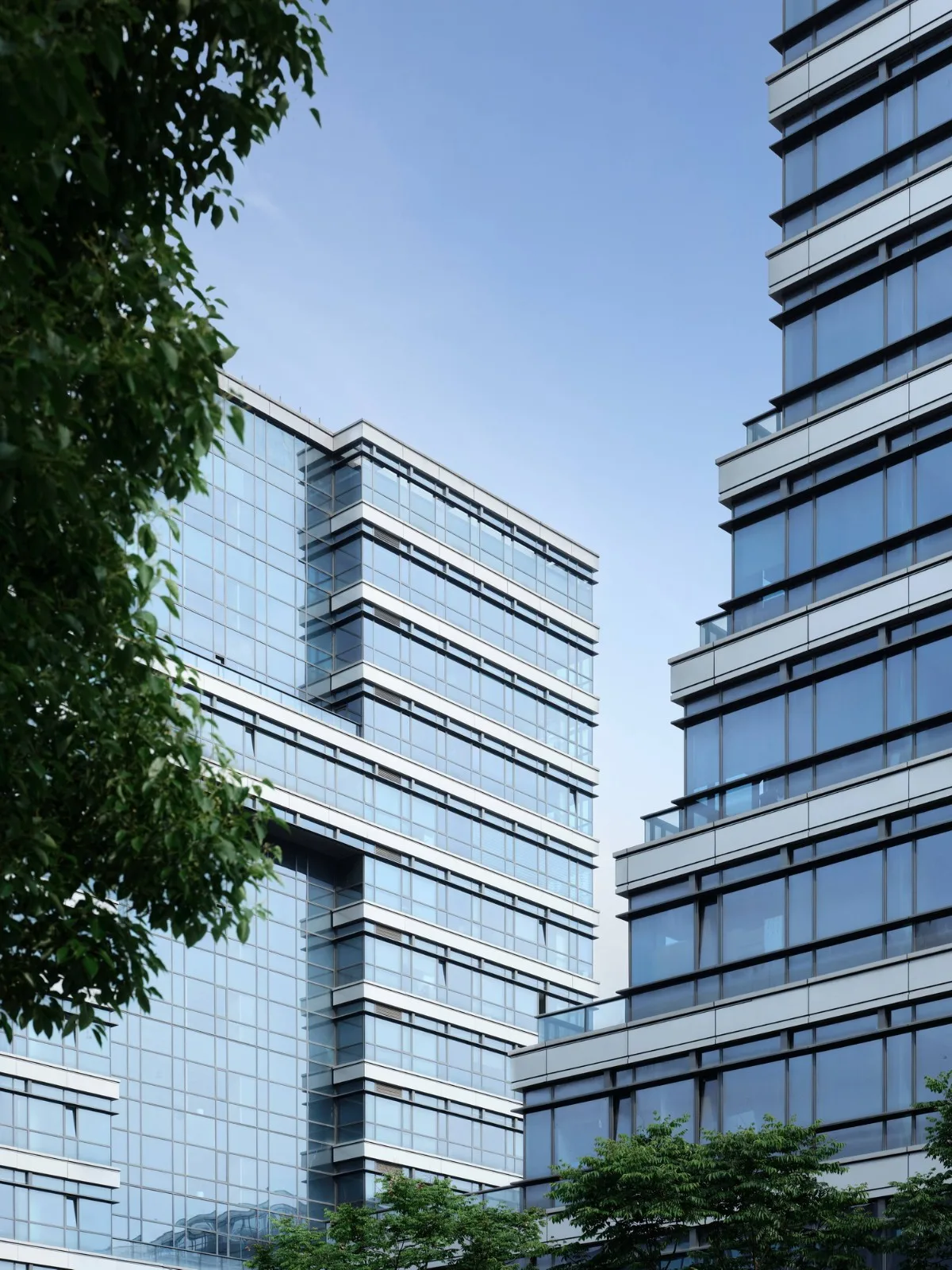
△ Interinfiltration of park layout
On the technology front, the main building’s upper atrium features an open cable-stayed curtain wall, seamlessly integrating interior and exterior environments with a breathable facade. The main building’s bathrooms utilize solar hot water systems, while the staff canteen and fitness center rely on air source hot water units combined with HVAC boilers for daily hot water, optimizing energy use and comfort. The underground parking garage employs a light guide lighting system rather than traditional electric lighting, creating softer, natural illumination. Rooftop and floor rainwater is treated through initial disposal and a full coagulation, sedimentation, and disinfection system before reuse in water features and landscaping. Energy consumption is monitored and managed to reduce usage without compromising operational needs. Electrical systems use PWM interleaving technology to minimize space, increase capacity, reduce losses, and purify the power grid. Efficient variable frequency chillers enhance energy performance, supported by fan operation linkage detection devices. Large spaces operate with fresh air circulation during transitional seasons.
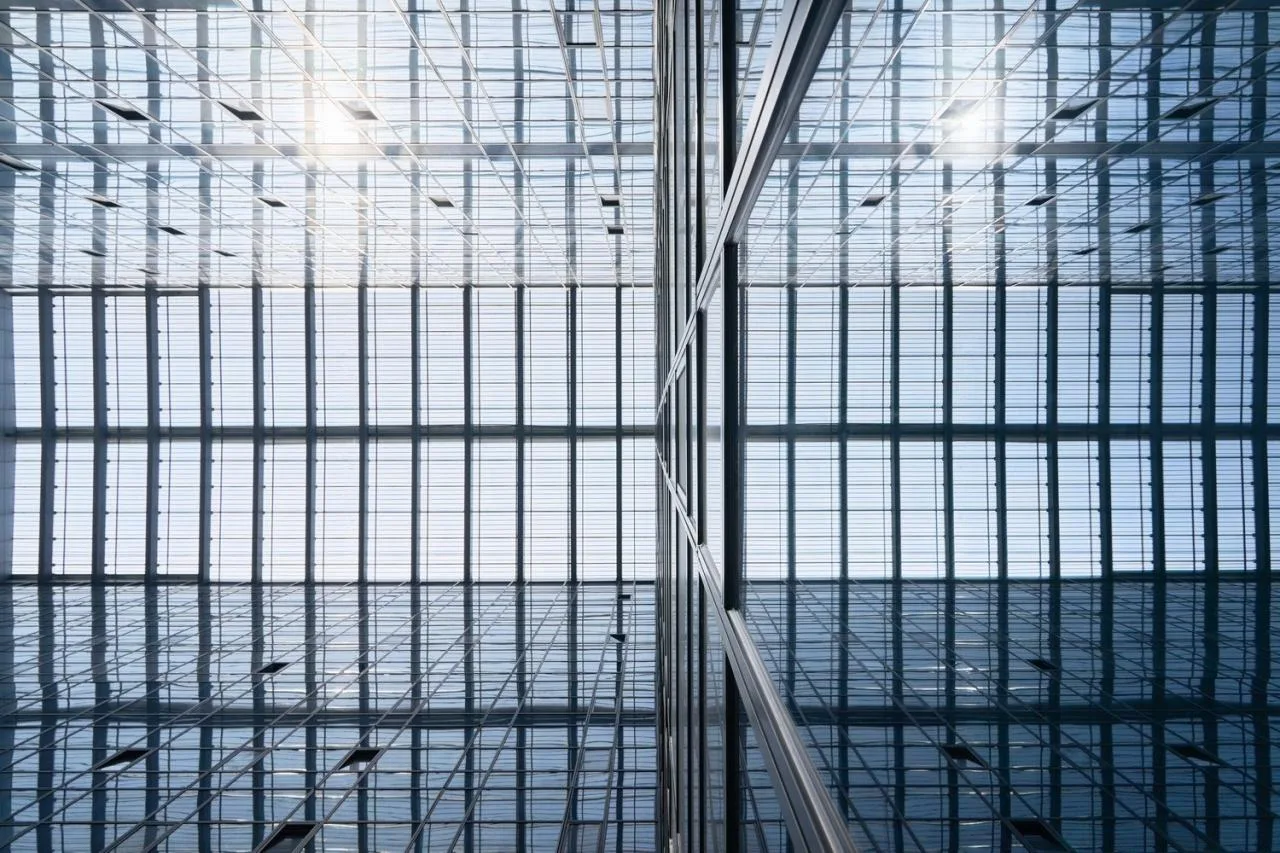
△ Energy-saving atrium of headquarters building
03 Social Impact
[High Recognition and Esteem]
The headquarters of China Electronics Hikvision Group serves as the central base for both China Electronics Hikvision Group and the China Electronics Technology Group Safety Electronics Industry Subgroup. It plays a crucial role in integrating and leading the development of various business sectors to achieve the group’s strategic goal of “domestic excellence and international first-class.”
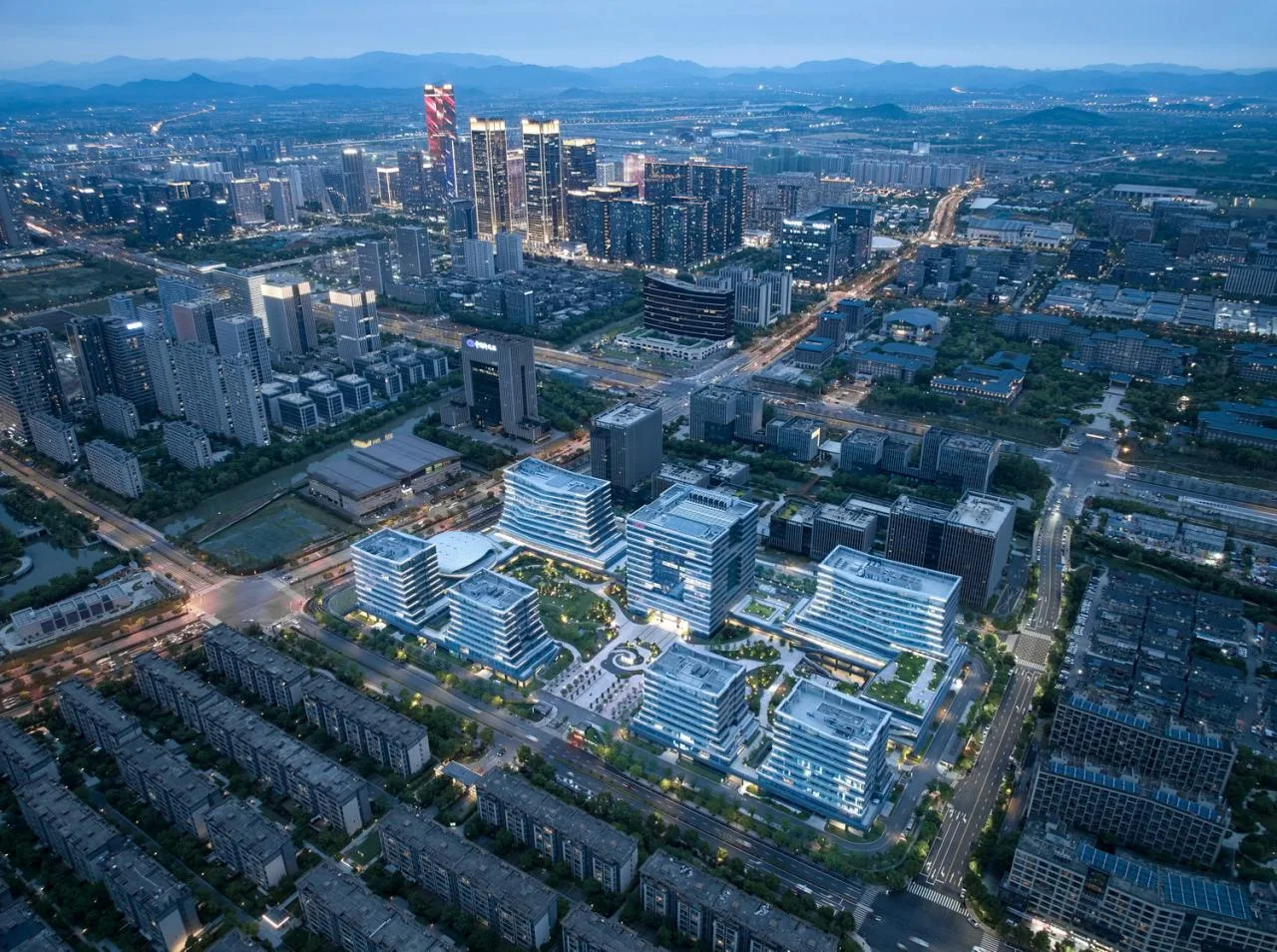
△ Aerial night view of the park
Since its inception, the park has received significant attention and respect. The establishment of the China Electronics Hikvision Group headquarters has brought a nationally recognized campus brand to Future Science and Technology City. It has fostered, cultivated, and delivered cutting-edge technology enterprises to the region, optimizing the park’s organizational structure and driving regional economic transformation and upgrading. As a result, the project was a key industrial investment in the “411” expansion plan for Future Science and Technology City in 2015, with a total investment of 1.1 billion yuan. Hikvision Smart Valley has successfully launched and earned multiple accolades, including the 2018 Hangzhou Excellent Green Building Award, the 2021 China United Engineering Co., Ltd. Excellent Engineering Survey and Design Project First Prize, and the 2022 Qianjiang Cup Quality Engineering Award Second Prize.
Project Information
Location: Yuhang Future Science and Technology City, Hangzhou
Owner: China Electronics Hikvision Group Co., Ltd
Total Land Area: Approximately 69,000 square meters
Total Construction Area: Approximately 235,000 square meters
Design Year: 2014
Year of Construction: 2021
Design Firm: China United Engineering Co., Ltd
Lead Architects: Guo Ye, Wang Jicheng
Project Architects: Wu Hao, Cha Bin
Architectural Design Team: Qin Xiujuan, Zhang Yanxi, Zhang Hongxia, Teng Yijun, Huang Weiwei
Structural Design: Fang Xiaojun, Duanmu Xuefeng, Gao Shangfeng, Li Xin, Yu Mingjie, Cui Wenqing, Zhao Fenglei
Water Supply and Drainage Design: Tao Lijuan, Zhou Zhanhao, Ni Shujun
HVAC Design: Lin Xin, Ding Zhengliao, He Jun, Xia Chongzhong
Electrical Design: Ying Ming, Jin Chi Zhong
Interior Design: Shi Xin, Zheng Shuwen, Wang Tingting
Curtain Wall Design: Chen Hao, Jiang Yang, Tang Minghang
Landscape Design: Wang Bin, Yang Yuan, Zeng Rong, Yu Yanwen
Intelligent Systems Design: Zhu Zhigang, Huang Zhen, Wang Lei
Floodlight Design: Tian Dong
Excavation Design: Cheng Xiangdong
Image credit: Aoguan Architectural Vision
Text by: Tan Yaqiu
















Must log in before commenting!
Sign Up