
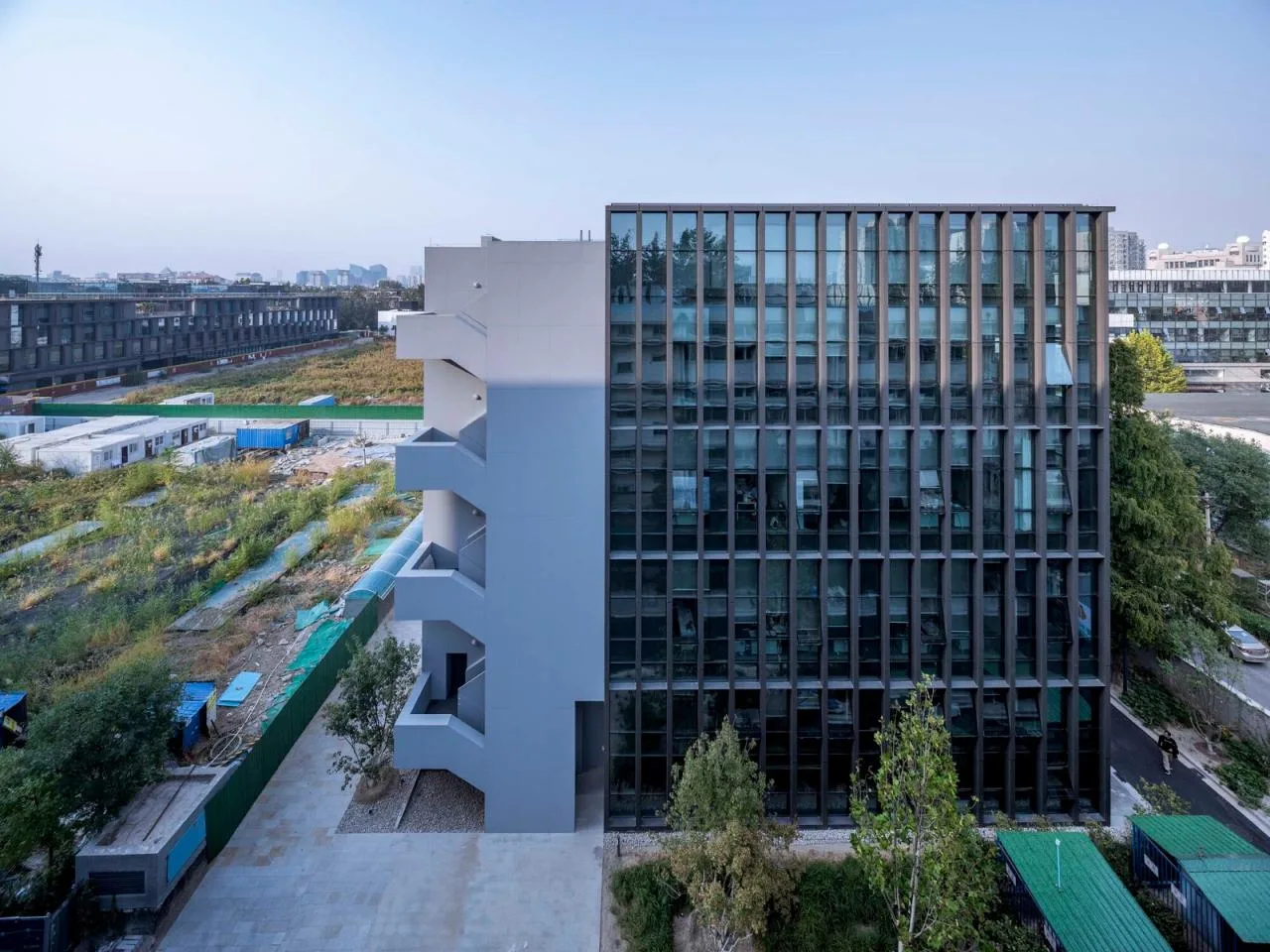
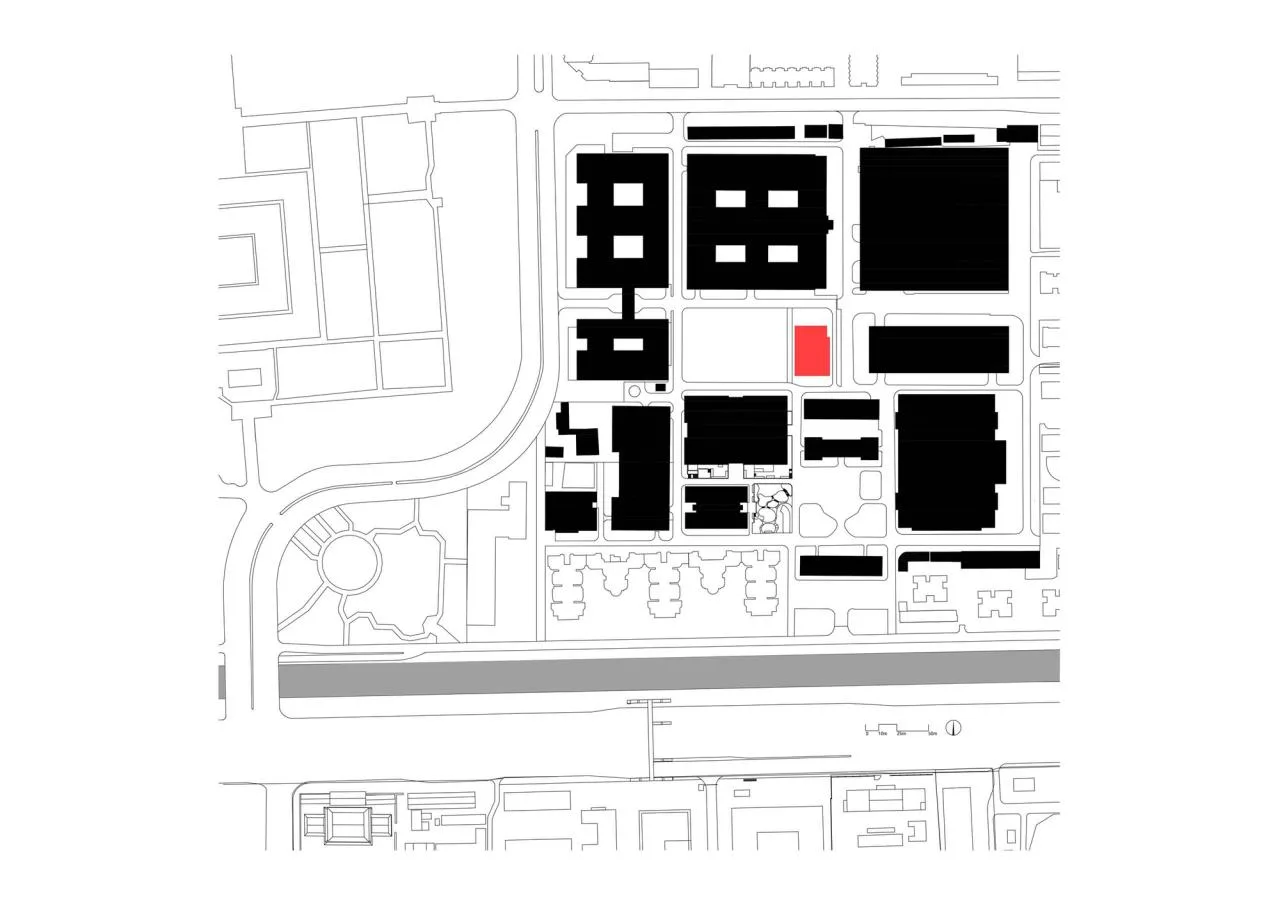
The Urban Culture Navigation Star Park is situated on the northern side of Beijing’s Second Ring Road. To the south and west lie significant historical and cultural landmarks such as Yonghe Temple, the North Moat, and Ditan Park. The northern and eastern boundaries are defined by neighborhood-style communities constructed in the late 1950s under Soviet planning principles, known as the Hepingli Neighborhood.
Hangxing Park sits at the intersection of the Capital Modern Style Control Zone and the Ancient Capital Style Protection Zone, where modern and traditional city styles harmoniously coexist. This park represents a key urban renewal project within Beijing’s Dongcheng District. Following the enactment of the “Beijing Central Axis Cultural Heritage Protection Regulations,” revitalizing the northern moat area and adjacent open spaces has gained particular importance.
Originally an aerospace science and industry enterprise founded after the establishment of the People’s Republic of China, much of Hangxing Park’s territory has since been transformed into a modern enterprise park. The development strategy focuses on “integration of technology and culture” and “innovation-driven growth,” aiming to create an “open, innovative, intelligent, capable, and growth-oriented” ecological park.
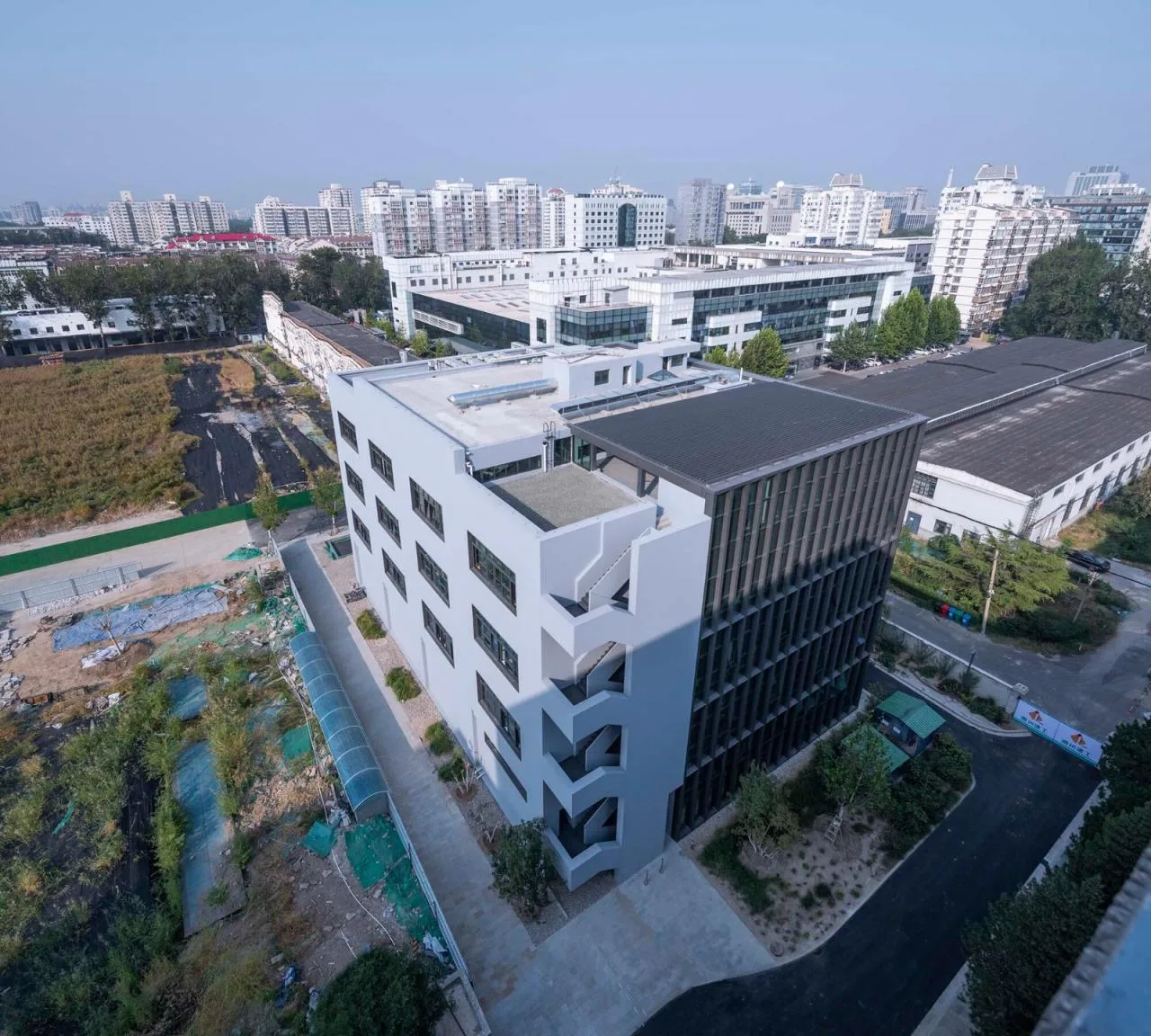
The old factory building is located on the east side of Hangxing Park’s central green space. Constructed in the 1980s as an industrial facility, it is flanked by historic buildings to the south and east, while recent office developments occupy the west and north sides. The park is organized roughly in a nine-grid layout, with the old factory site positioned slightly right of center. Together with the central open area, it forms the park’s landmark and main landscape feature.
Covering approximately 3,625 square meters, the renovation encompasses site roads and landscaping, facade and interior upgrades, seismic reinforcement, as well as comprehensive updates to water, drainage, electrical, heating, and communication systems. Post-renovation, the total constructed area will be about 5,000 square meters, with the main building’s north side featuring 4 floors and certain southern sections reaching 6 floors.
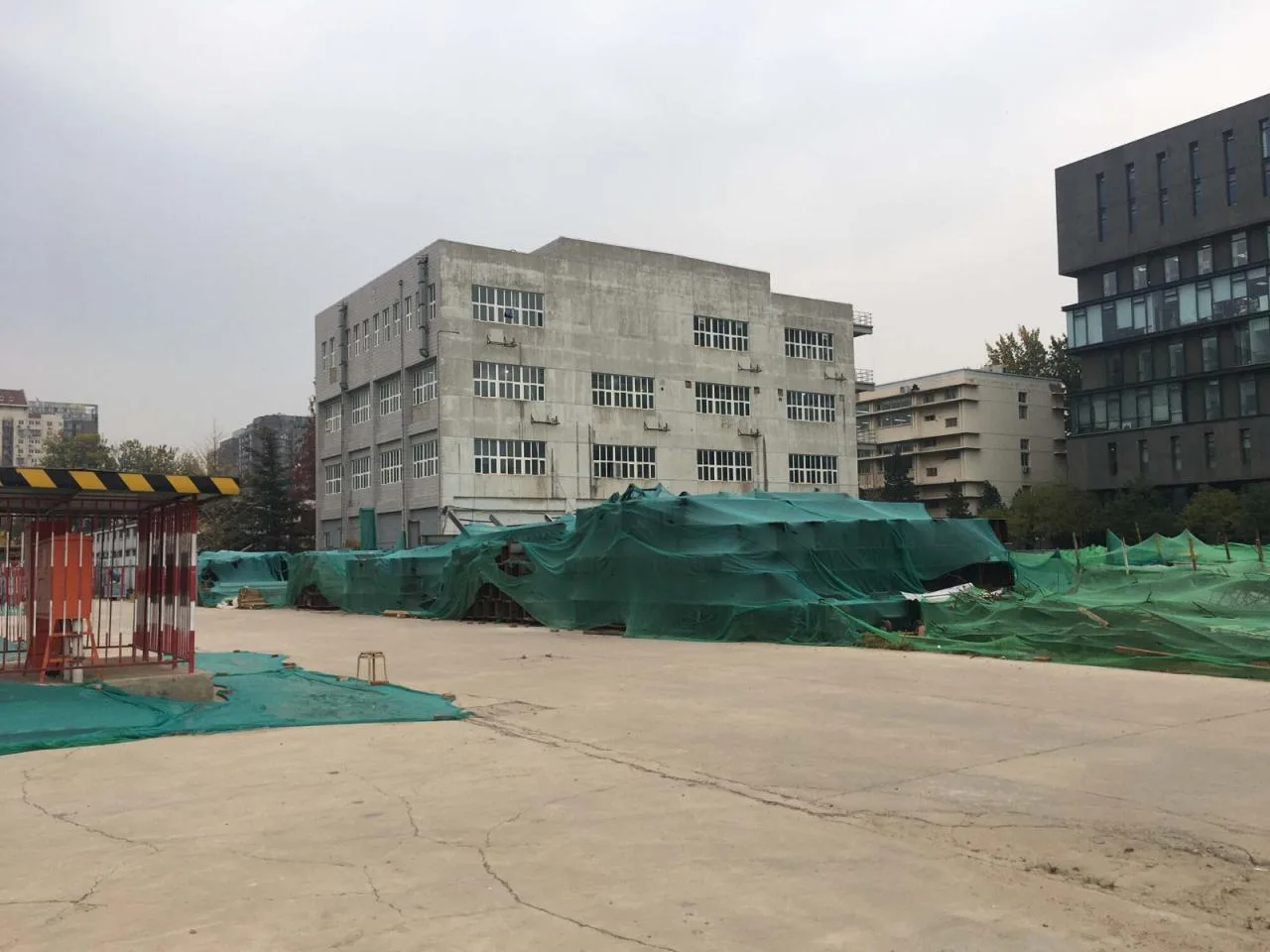
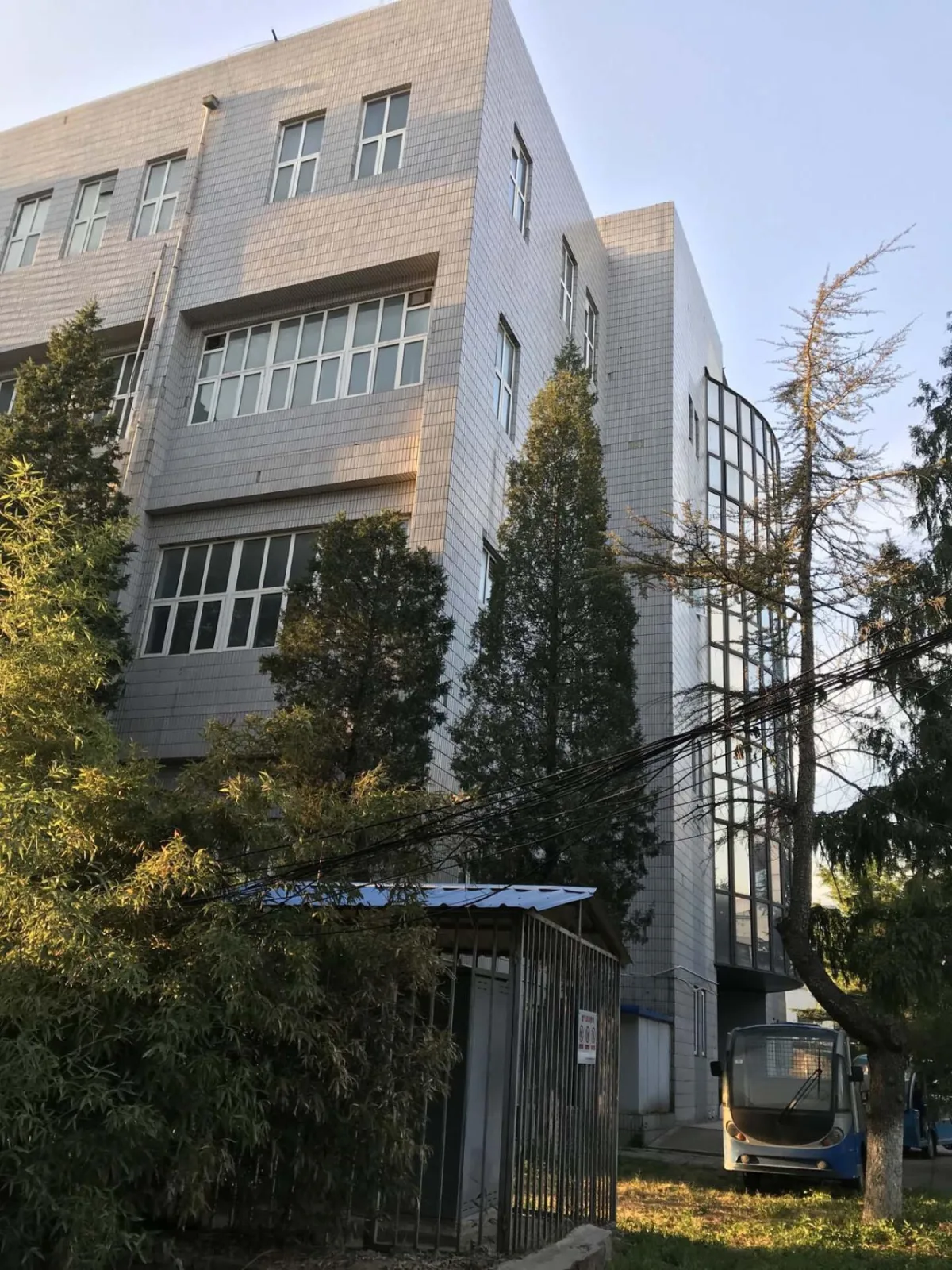
As a central landmark within the park, the old factory building’s main entrance was originally on the east side. This design highlighted the entrance with partial overhangs and glass curtain walls from the second floor upward. The east and south exterior walls are clad in ceramic tiles, while the west and north walls are painted, reflecting the building’s dual identity: appearing as an office building from the east and south, and as an industrial factory from the west and north.
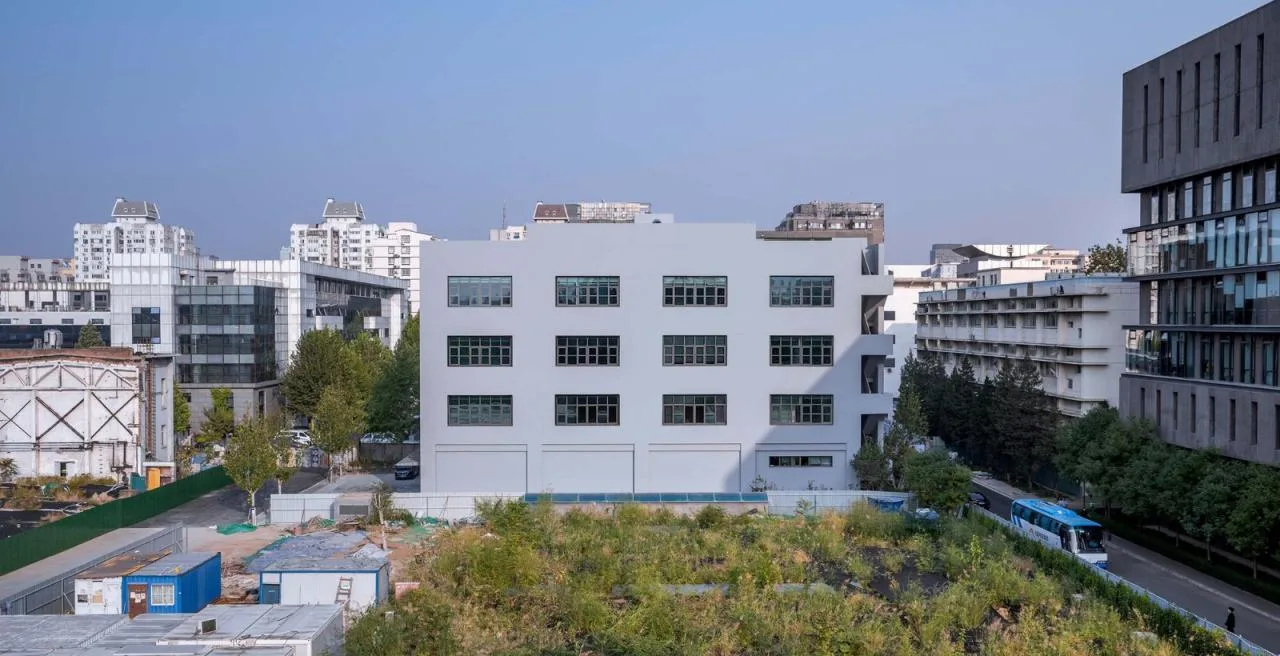
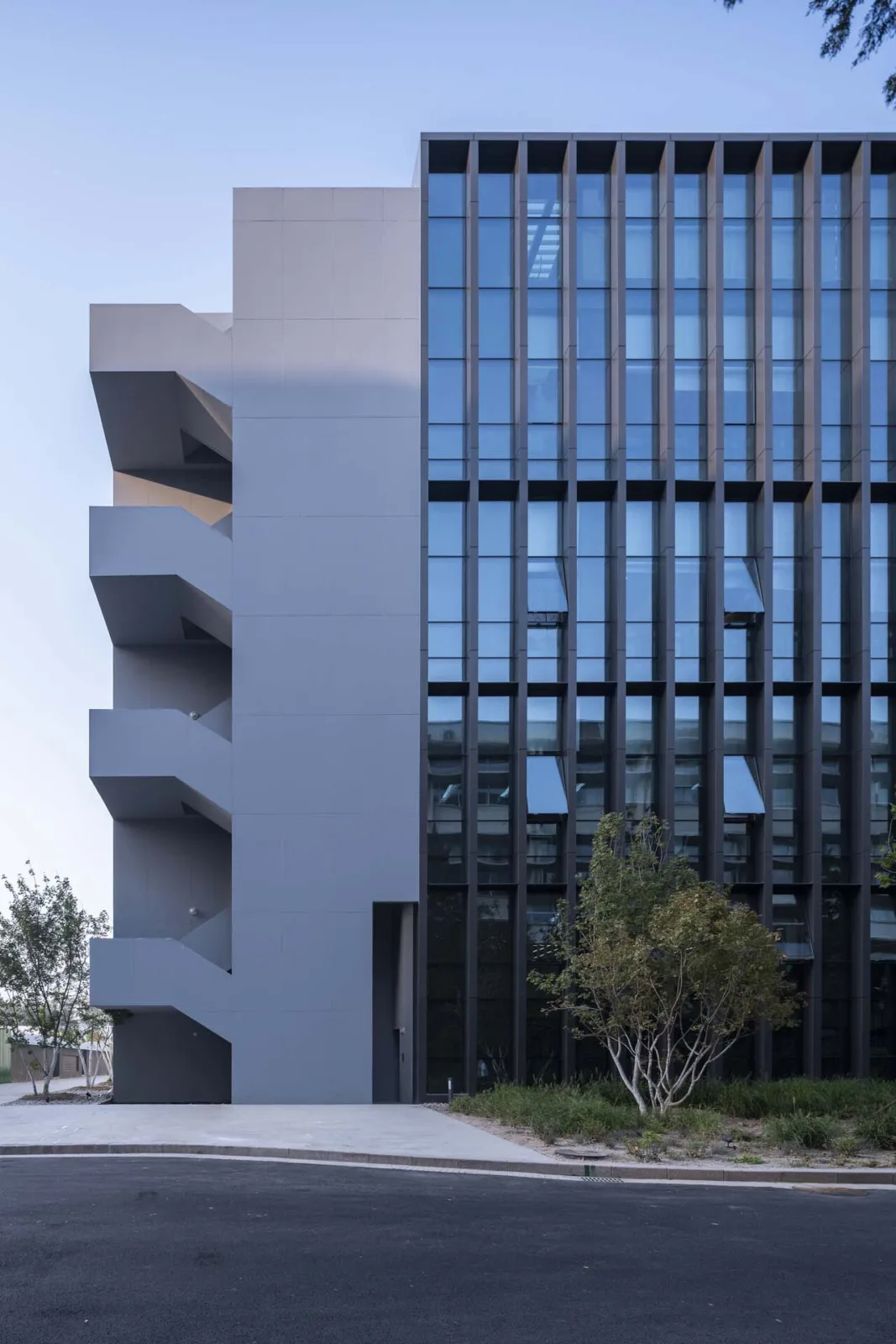
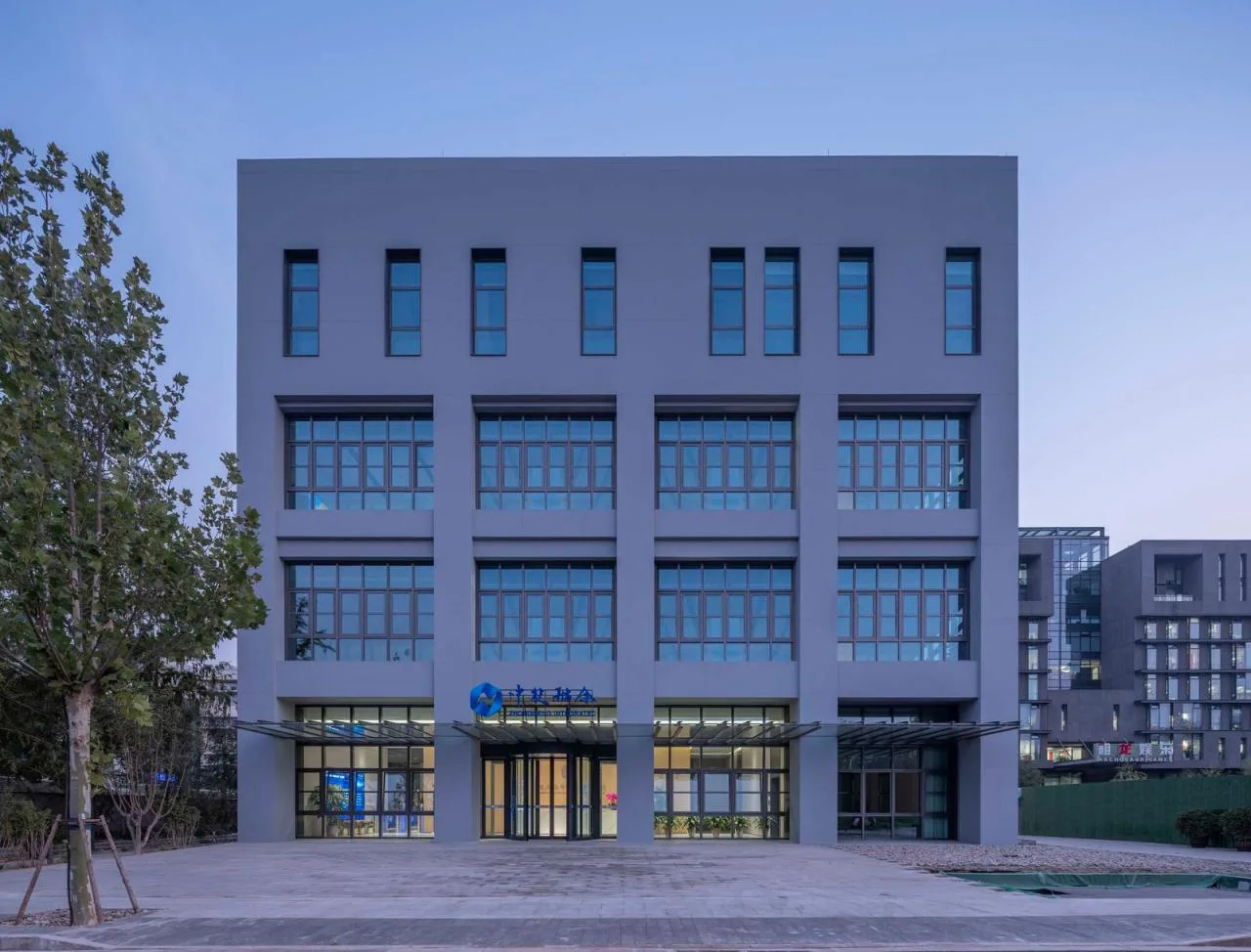
Since the park’s main entrance is on the west side, the original west facade—previously behind the main entrance—has become the primary front facade for accessing the park’s interior. Accordingly, the building’s main entrance was relocated to the north side in line with the park’s overall renewal plan.
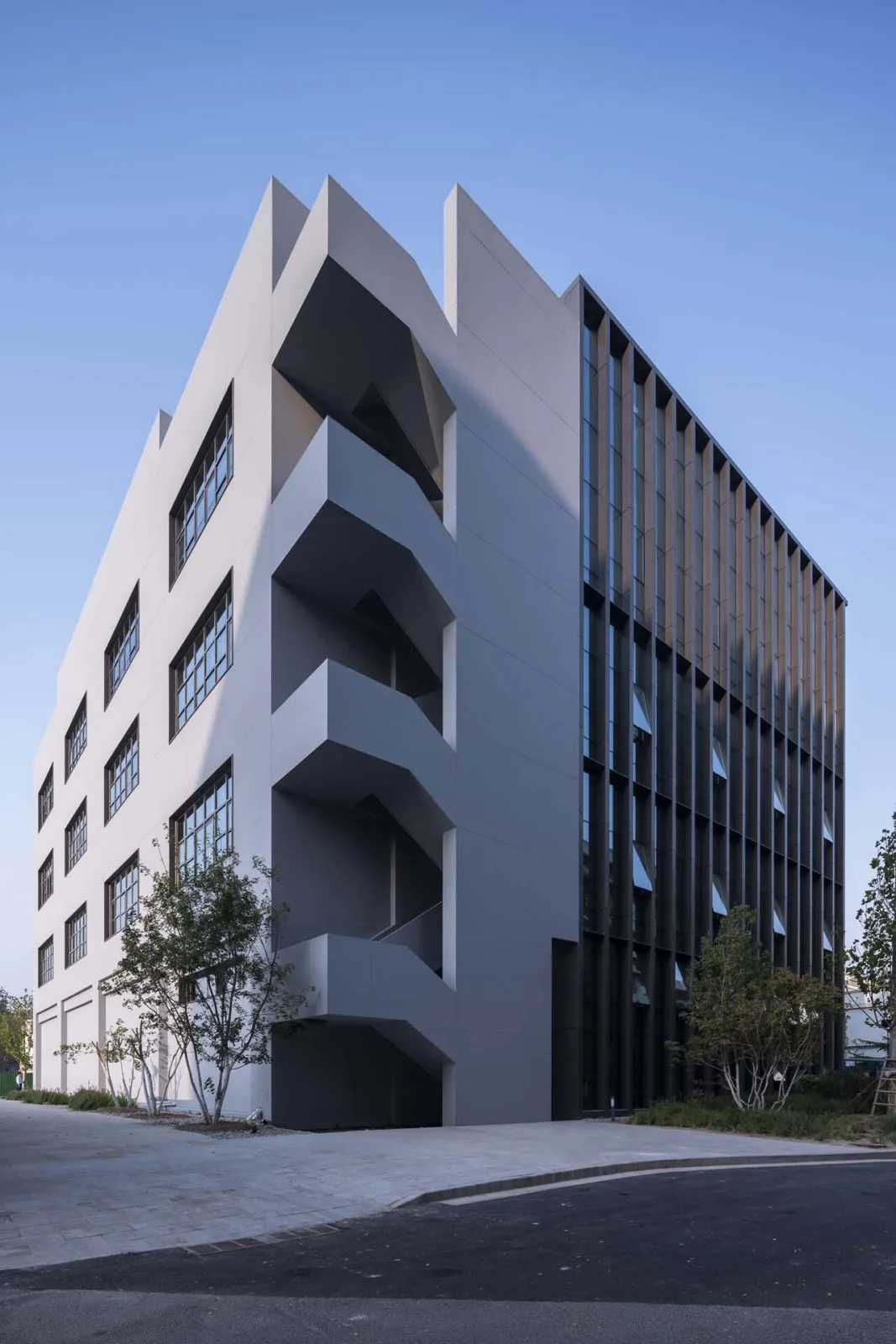
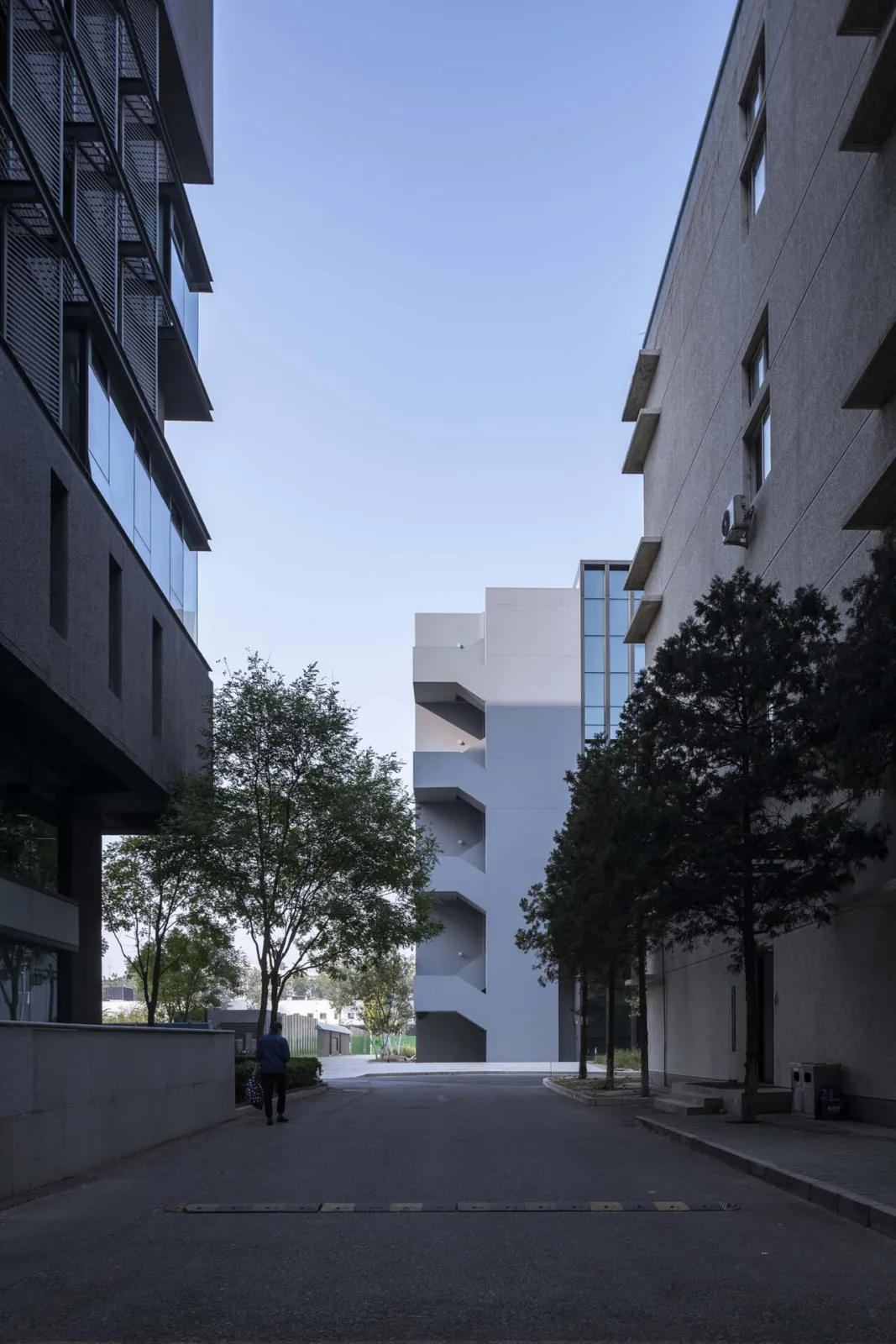
The renovation respects the original design intent by preserving the architectural character of the west and north facades. Simple cement boards and gray coatings were chosen for these exterior walls to maintain the building’s historical memory and provide a clear identity for the central open space in front of the west facade. This approach embodies the hardworking, straightforward, and rigorous spirit of Hangxing Park.
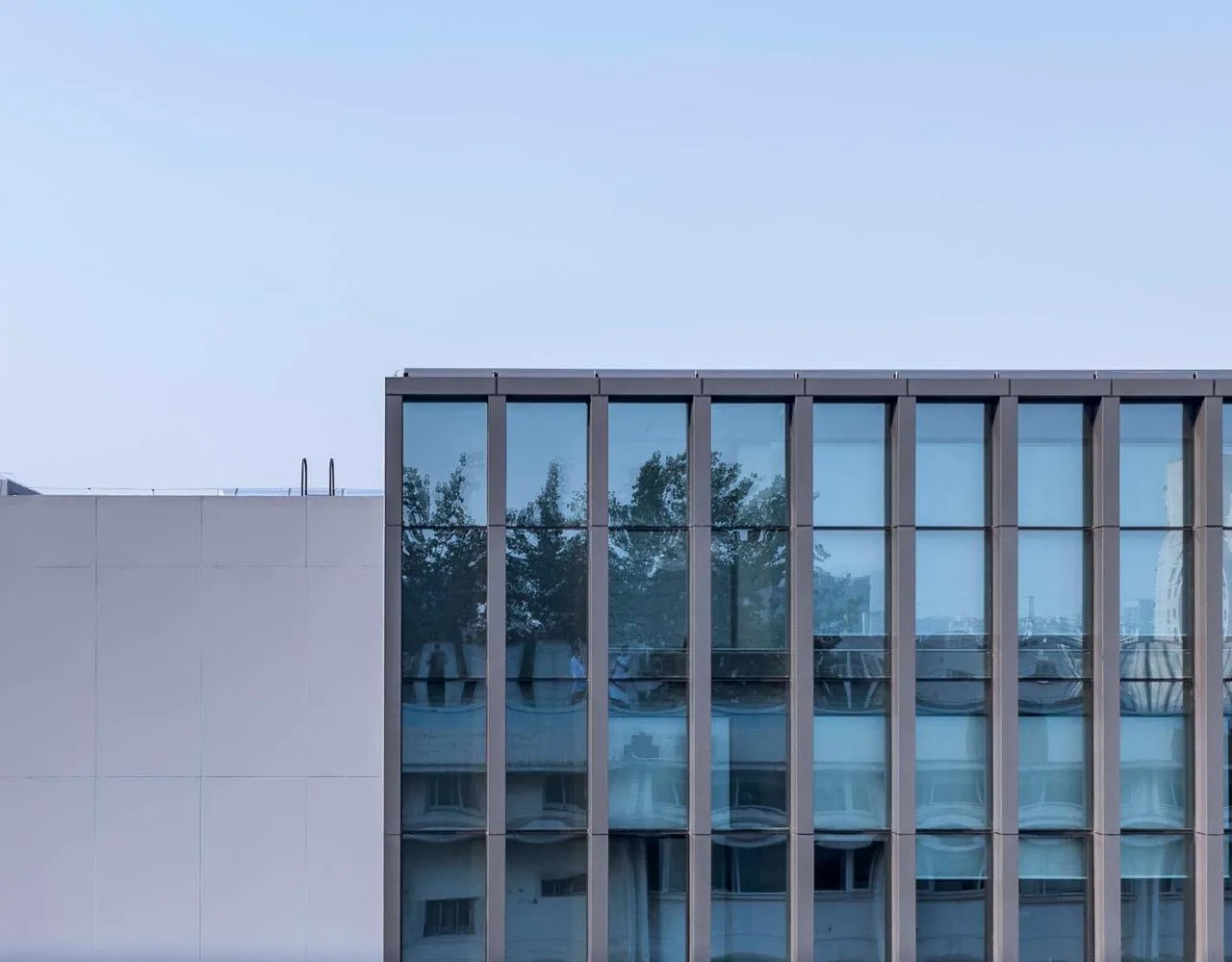
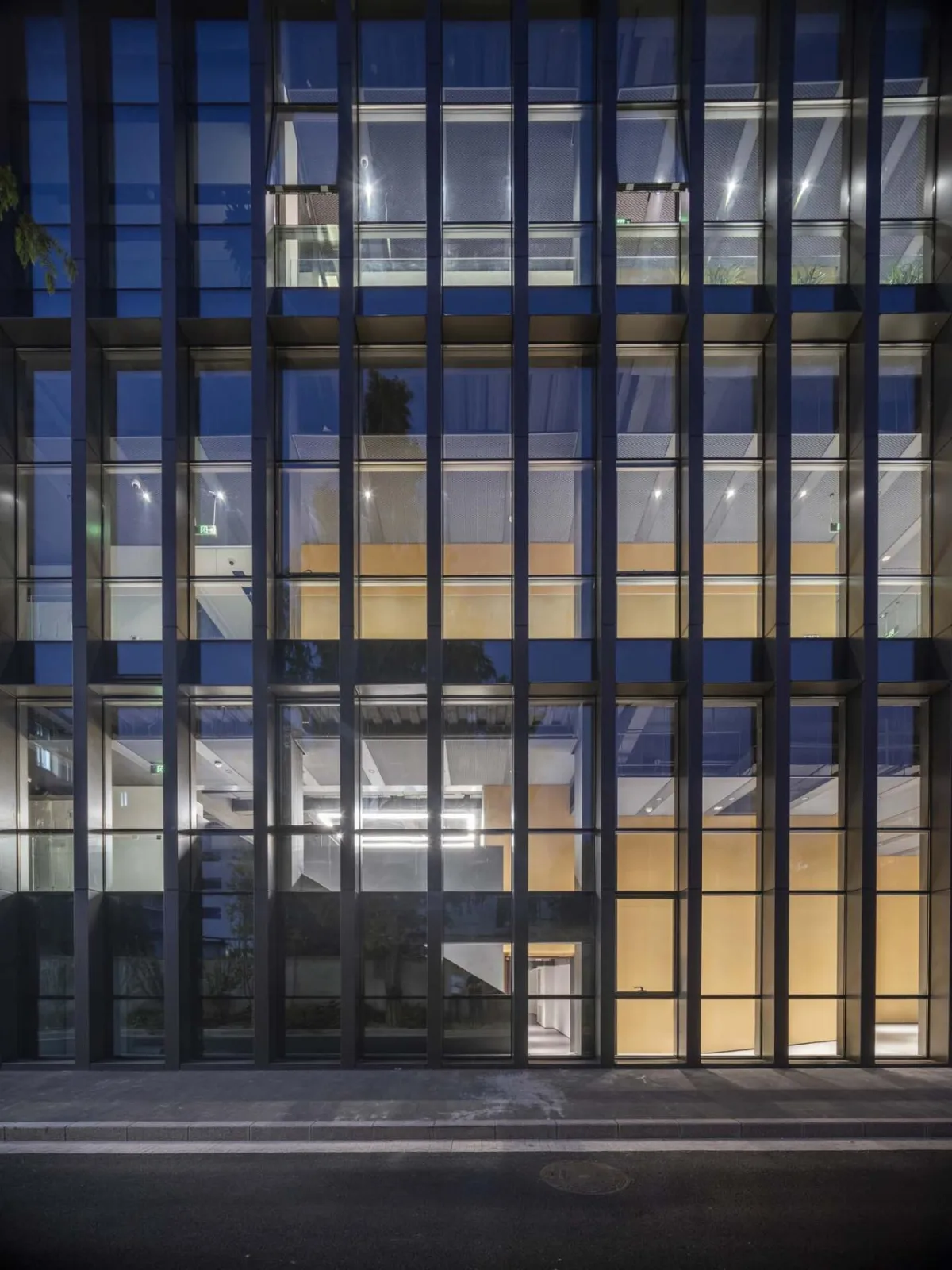
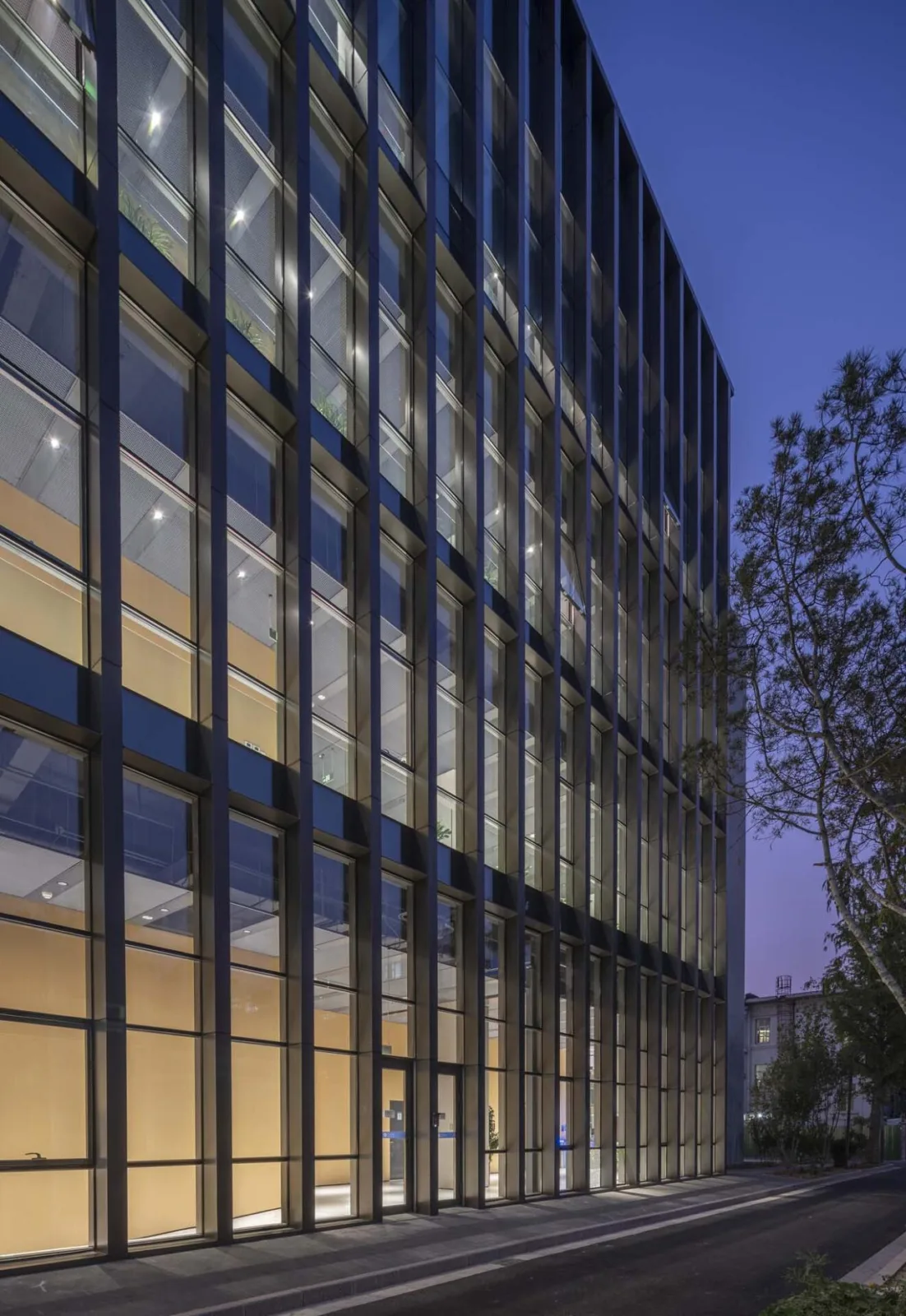
The south and east facades were updated with modern glass curtain walls, emphasizing the building’s office function within the contemporary technology park. The protruding section on the original east facade was carefully removed to create a clean, uninterrupted glass surface on the south and east sides. An external staircase at the southwest corner was demolished and rebuilt to meet current fire safety standards.
This area, where the southeast glass box intersects with the northwest cement box, forms a transitional and dynamic space. It serves as a dramatic architectural corner facing North Second Ring Road and the North Moat, becoming a distinctive landmark within the park.
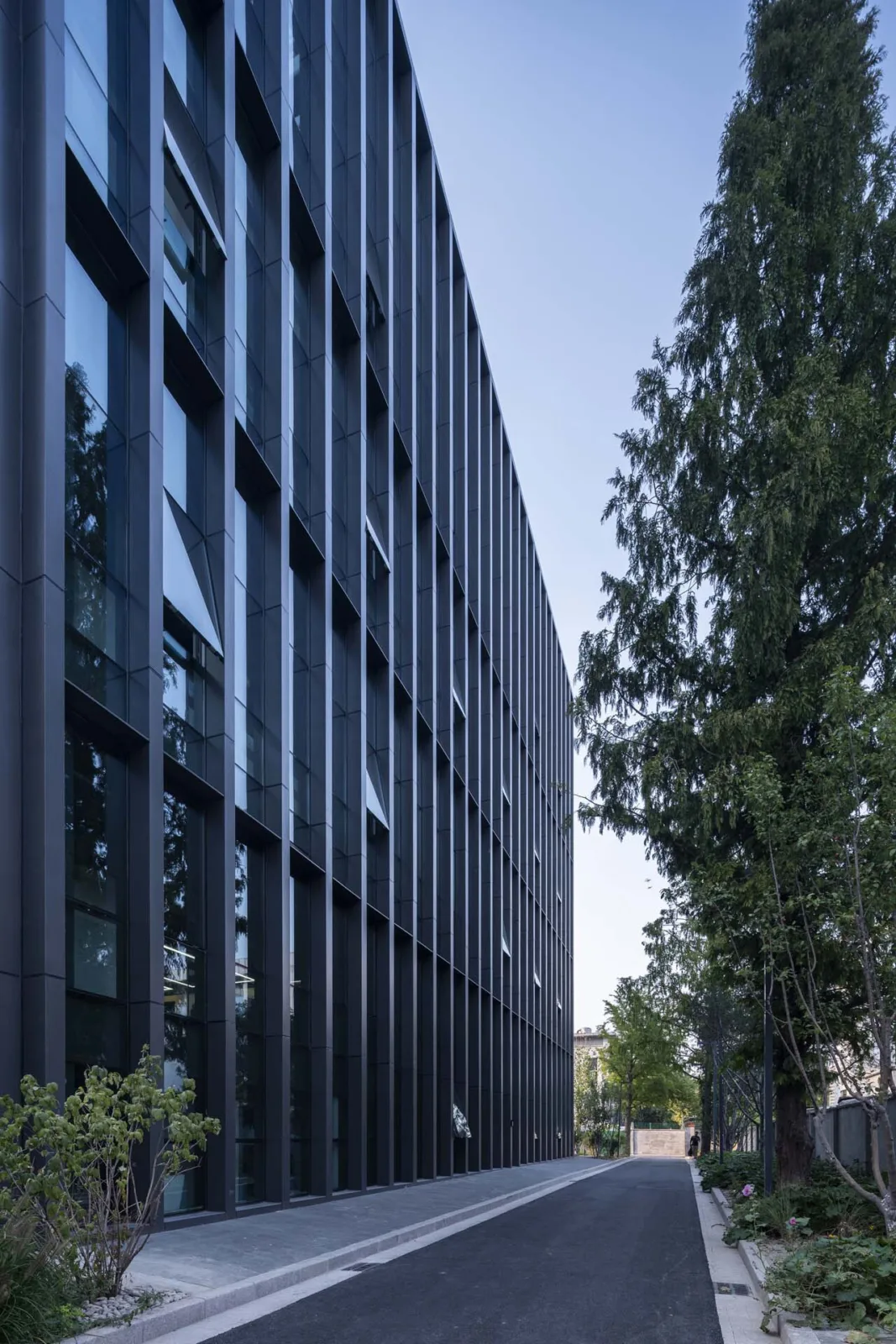
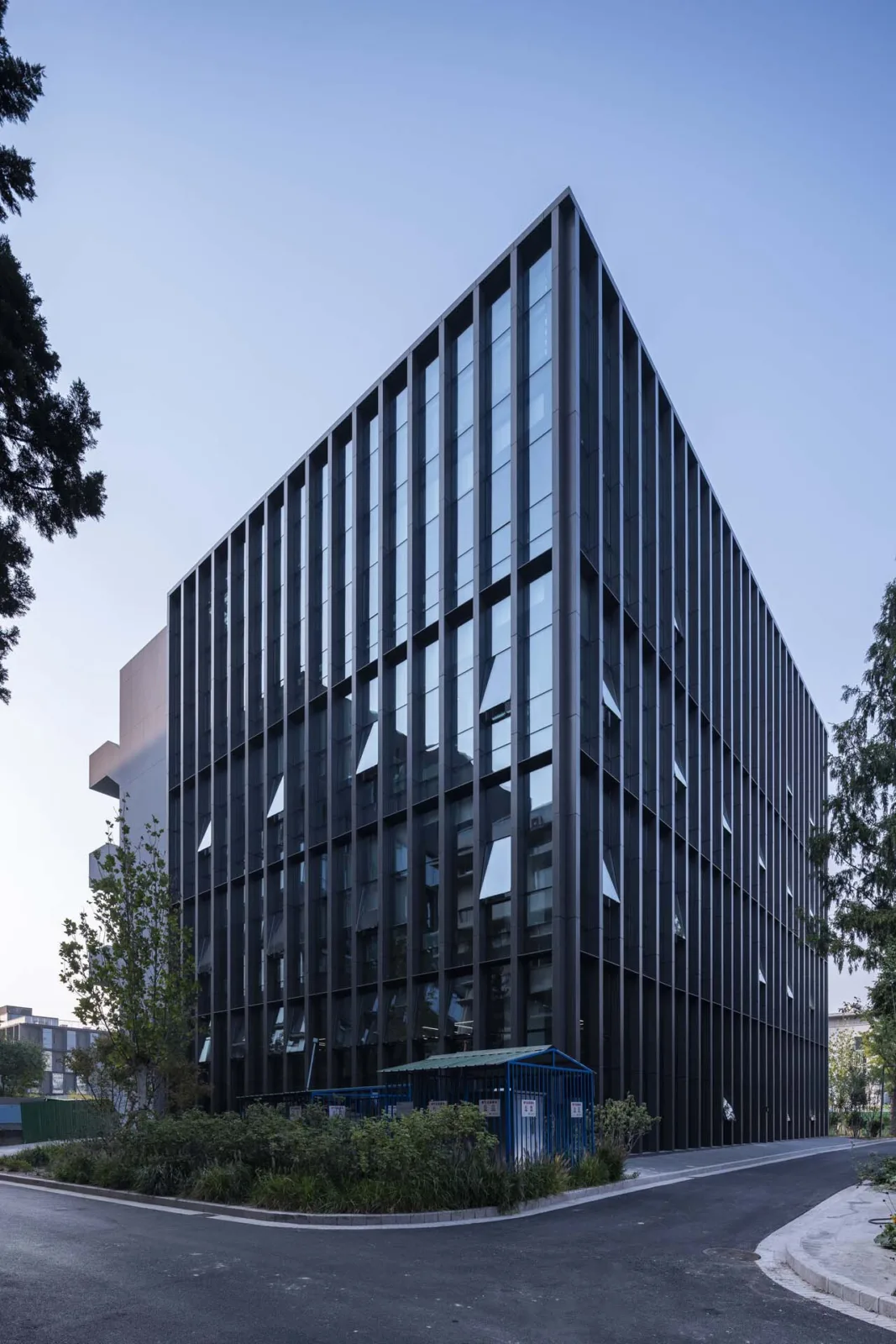
The surrounding landscape was adapted to align with the new main entrance on the north side and the park’s overall traffic plan. A small plaza was designed adjacent to the building’s northern entrance. The original north motor vehicle road and the east one-way road were connected and updated to improve circulation.
To preserve the mature trees on the east side, the road layout was carefully planned. Additionally, new trees, ground cover, and grasses were planted in the narrow green space alongside the road, creating a linear garden that seamlessly integrates with the greenery to the south.
The fire lane’s paving on the west side uses the same materials as the north plaza, linking these spaces visually and physically, and connecting smoothly with the future open space of Hangxing Garden to the west of the building.
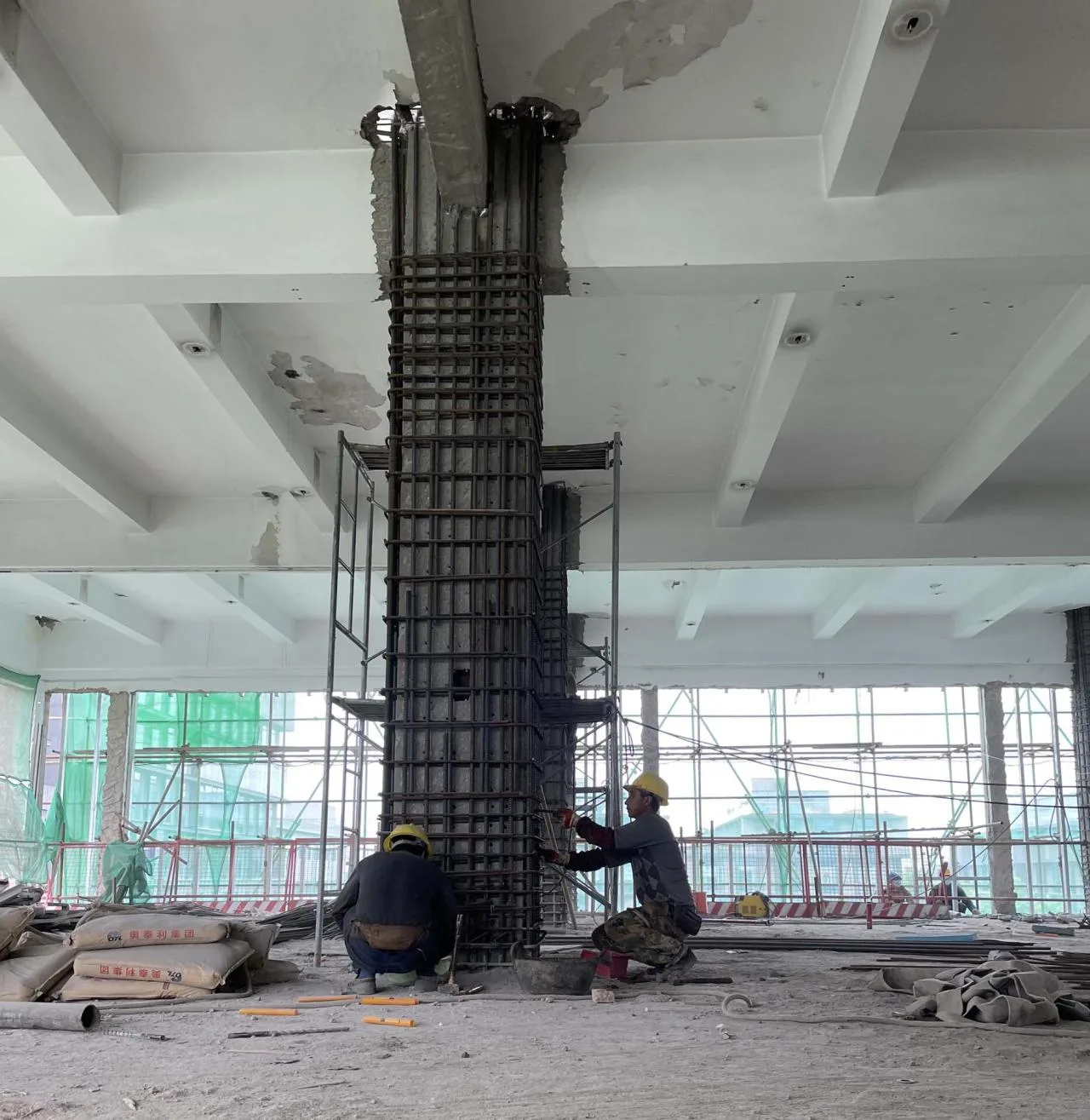
The building’s main structure consists of a reinforced concrete frame, with some mezzanine levels separated by masonry walls. Testing revealed the original concrete columns have a strength grade of C25. The columns measure 500×700 millimeters, supporting a nearly 24-meter-high structure with a partial semi-basement on the first floor. The first-floor slab sits at approximately 6 meters high, with relatively small column cross-sections.
Seismic analysis indicated significant structural displacement, with inter-story drift ratios exceeding the code limit of 1/550. Reinforcement needs for first and second-floor columns exceed code limits, and current column cross-sections are insufficient for seismic requirements.
To address this, the renovation plan includes enlarging columns to between 700×700 and 800×800 millimeters, embedding main reinforcements into foundations, beams, and slabs. Some frame beams will be strengthened using adhesive carbon fiber or steel plates, optimizing structural stiffness and force distribution.
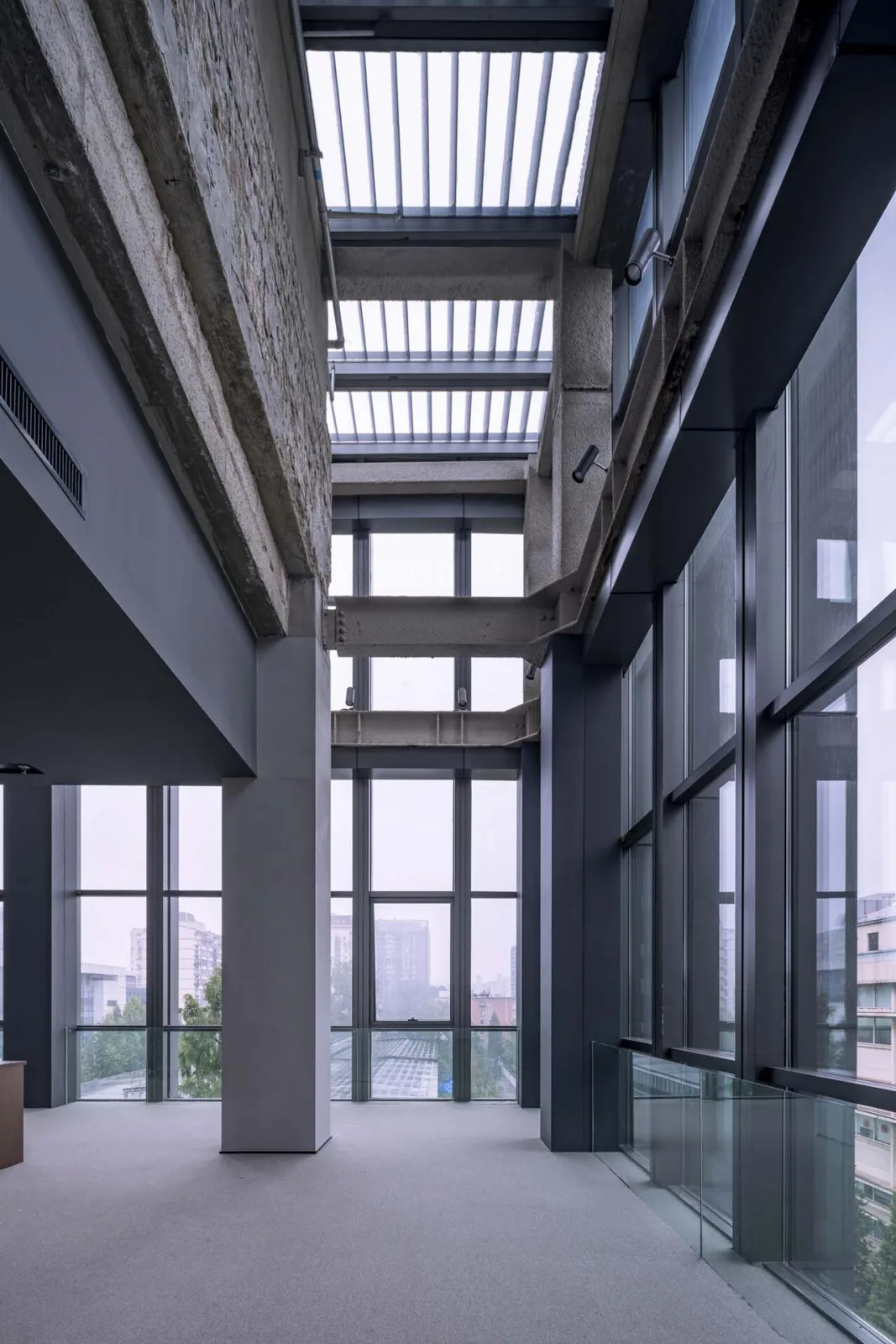
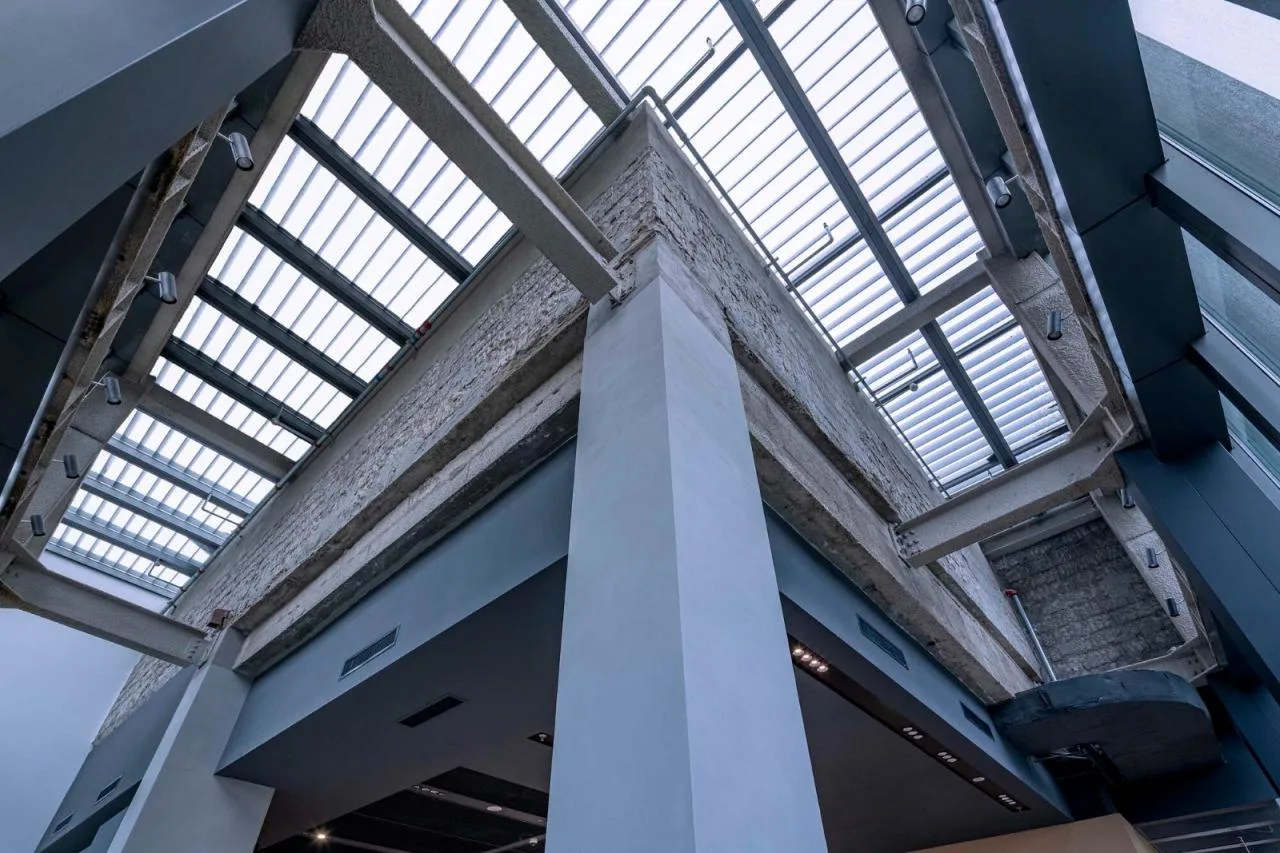
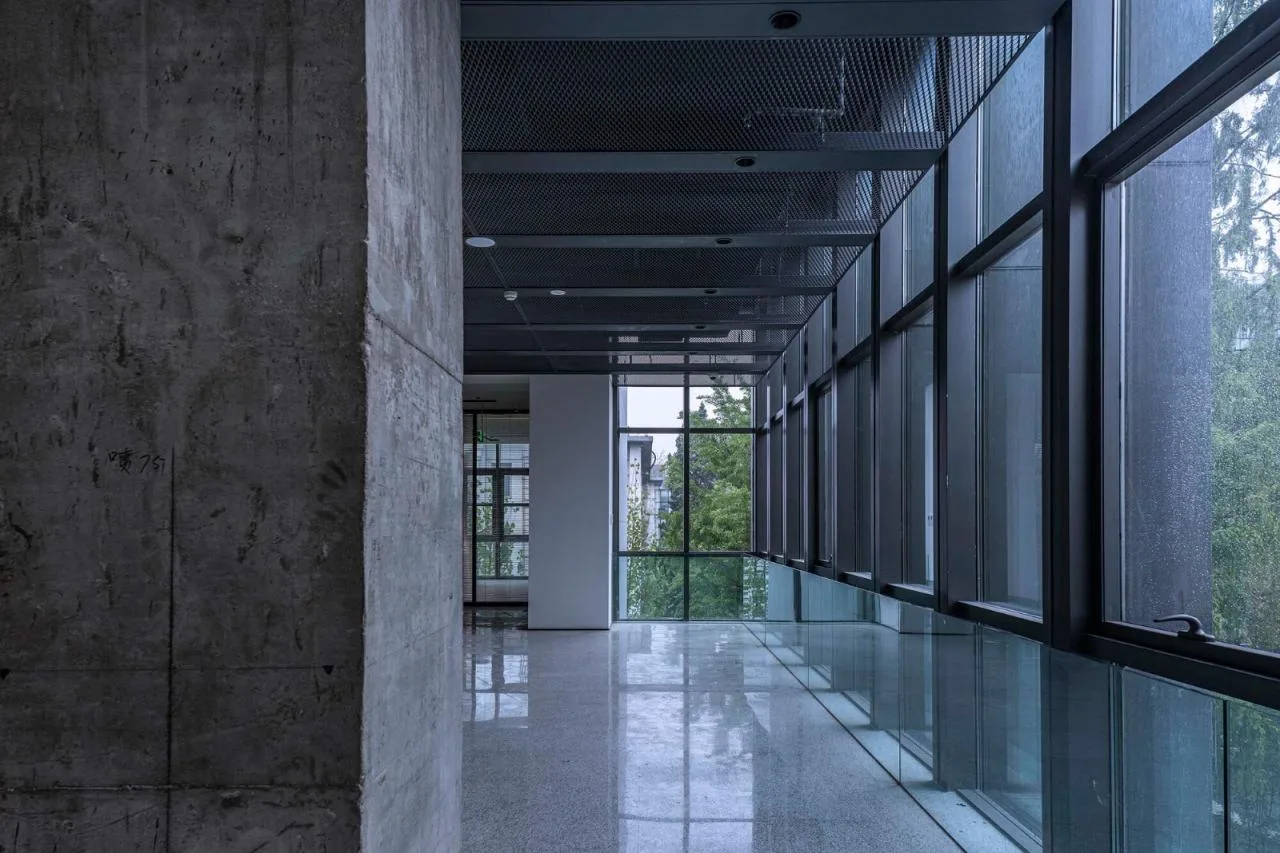
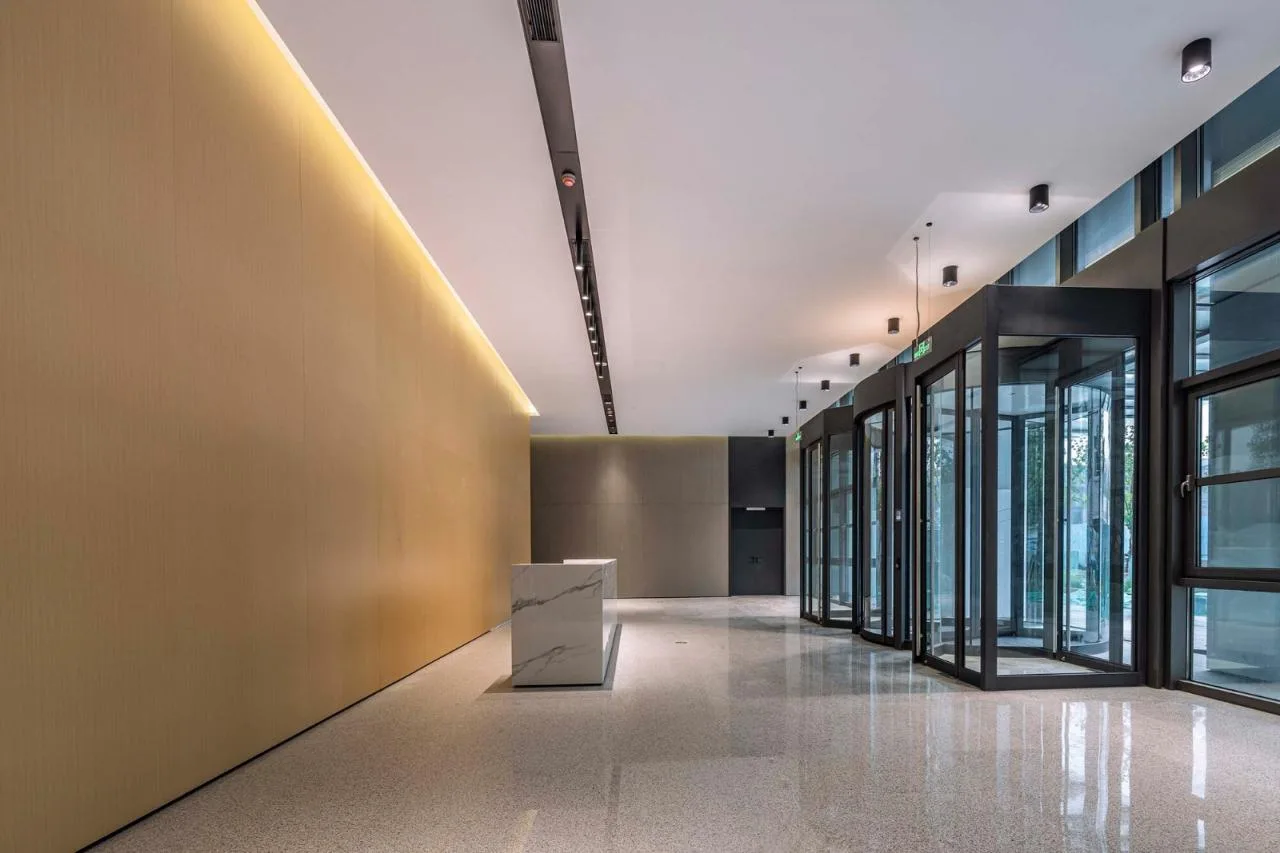
The building’s interior has been transformed from a production facility into an office space. The renovation preserves the original spatial qualities while reorganizing the layout to meet new functional needs. With the main entrance relocated from east to north, internal circulation has been carefully redesigned.
Originally equipped with only a freight elevator, the building now includes an added passenger elevator. Bathroom facilities have been enlarged and relocated to meet modern standards.
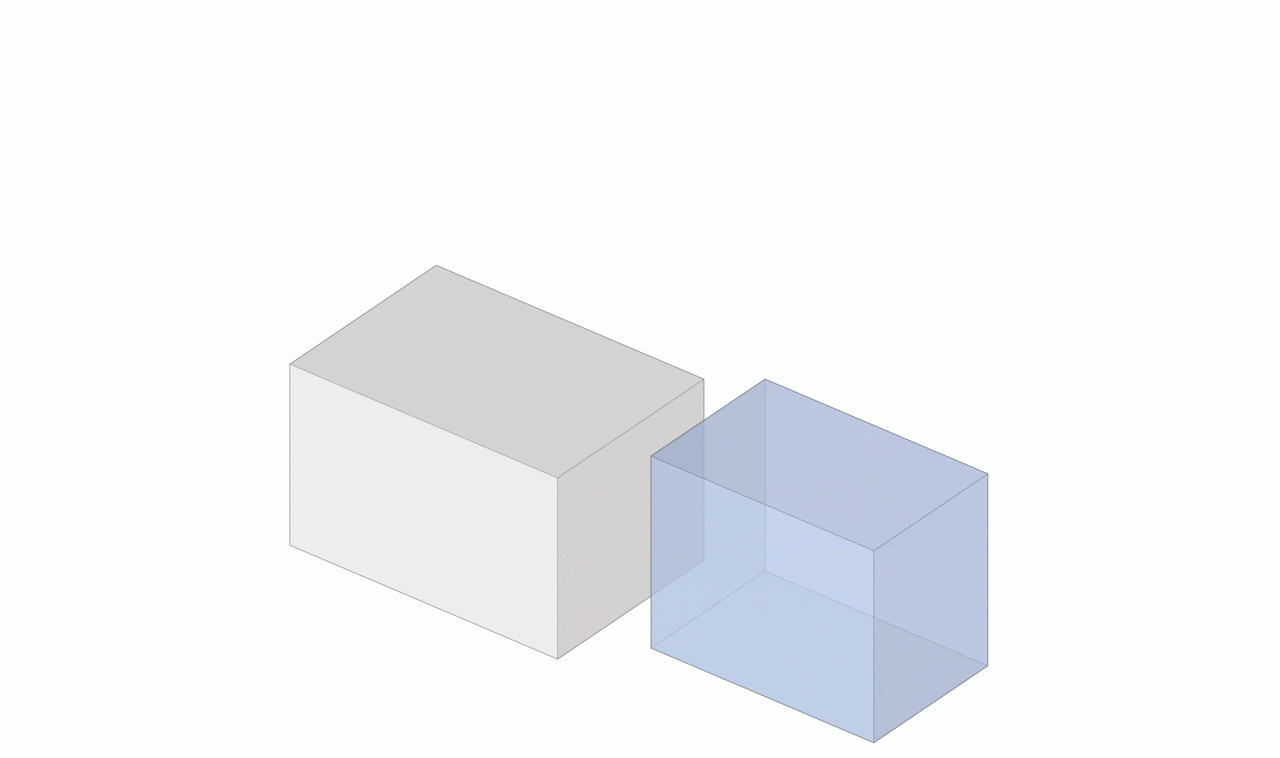
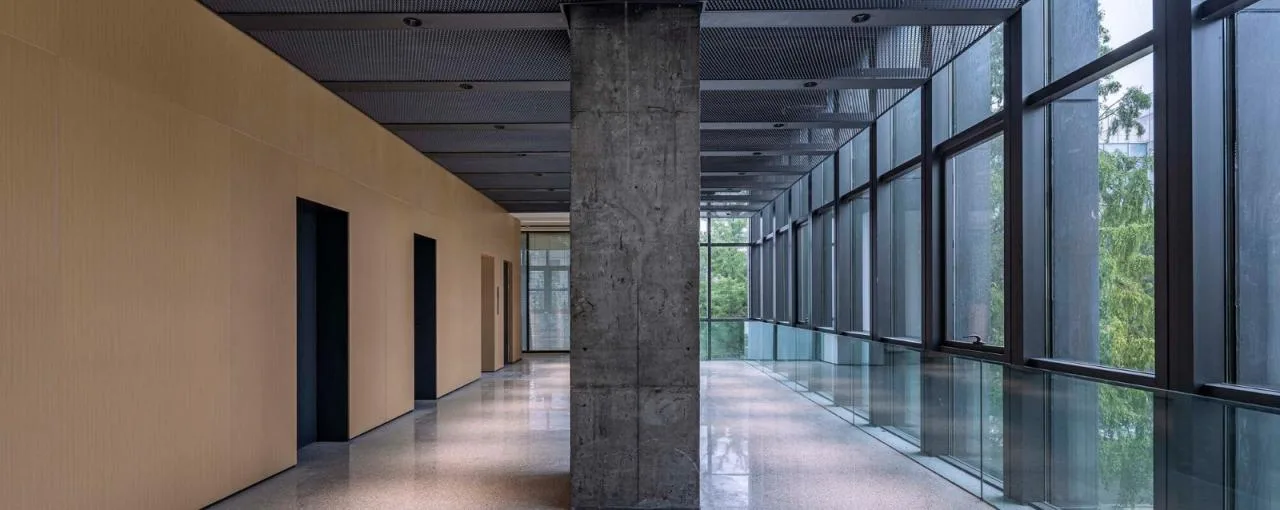
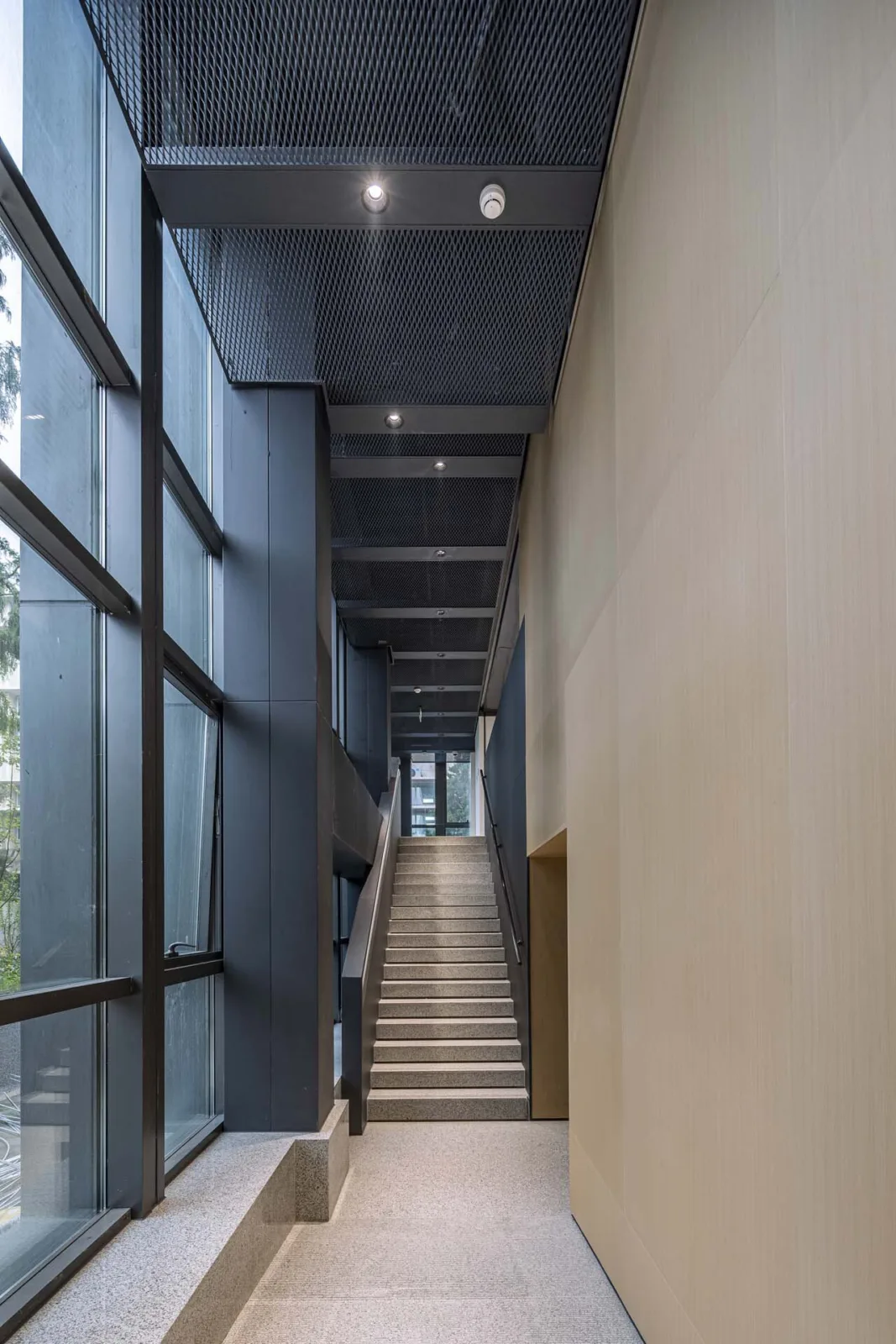
The spatial concept features a nested arrangement of cement boxes to the northwest and glass boxes to the southeast, with the intersection forming a vertical core housing freight and passenger elevators, staircases, restrooms, pipe wells, and equipment rooms.
The first floor serves as the entrance and exhibition hall, while the semi-basement on the south side accommodates fitness facilities and restrooms. The preserved mezzanine on the south side forms the second floor, used for offices. The third and fourth floors are primarily open office spaces with small conference rooms, and the fifth floor contains small offices, large conference rooms, and shared halls. A partial mezzanine acts as the sixth floor for additional conference rooms.
The original building’s high ceilings—around 6 meters on the first floor, over 7 meters in the upper middle sections, and approximately 5 meters on other floors—have been retained to maintain spaciousness. New fire sprinklers, HVAC systems, smoke exhaust, and cable trays were carefully integrated into the ceiling to minimize ceiling height loss and maximize usable interior height.
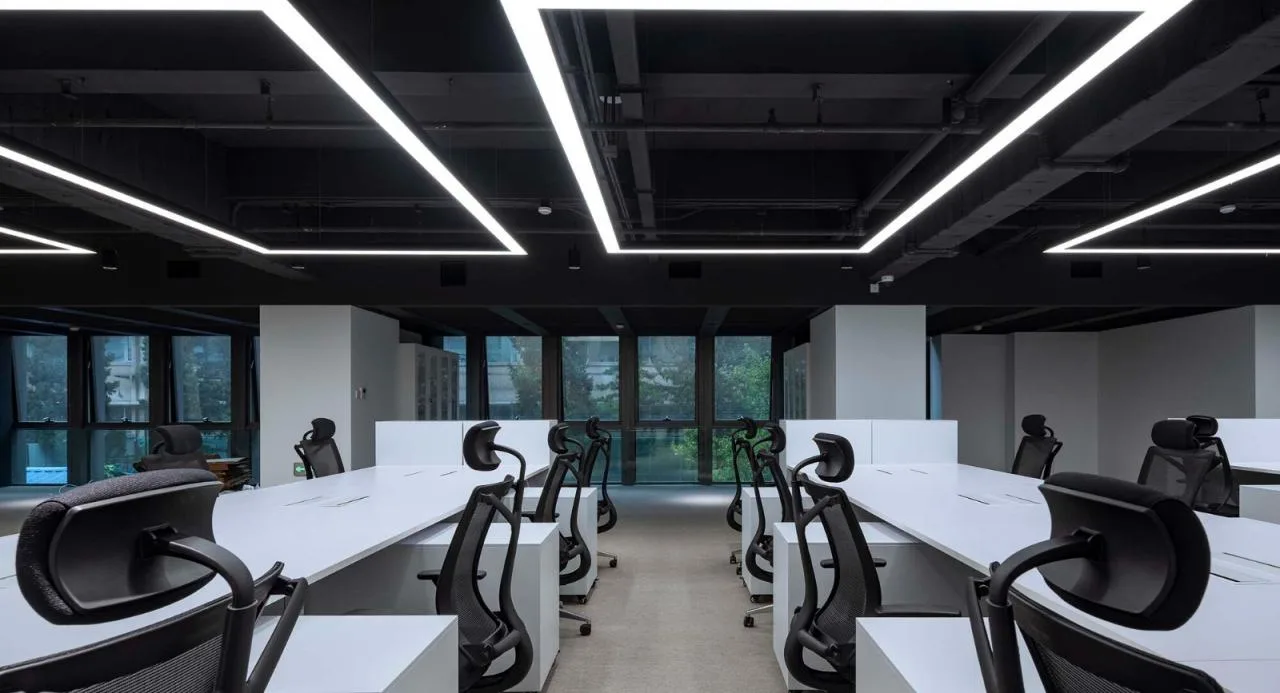
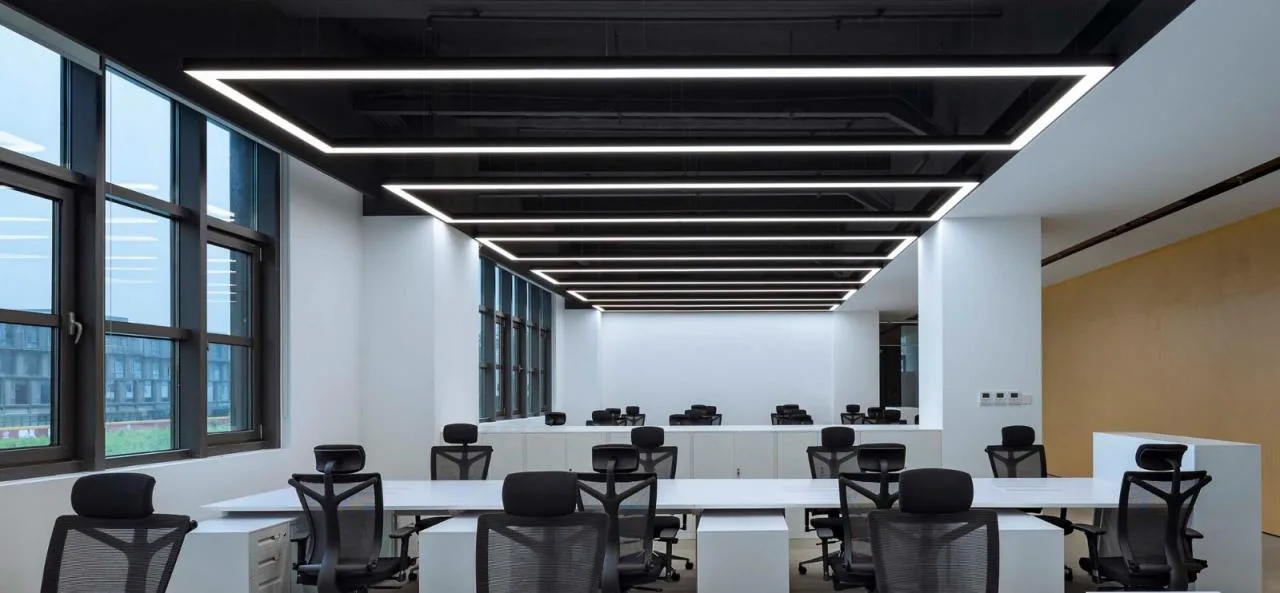
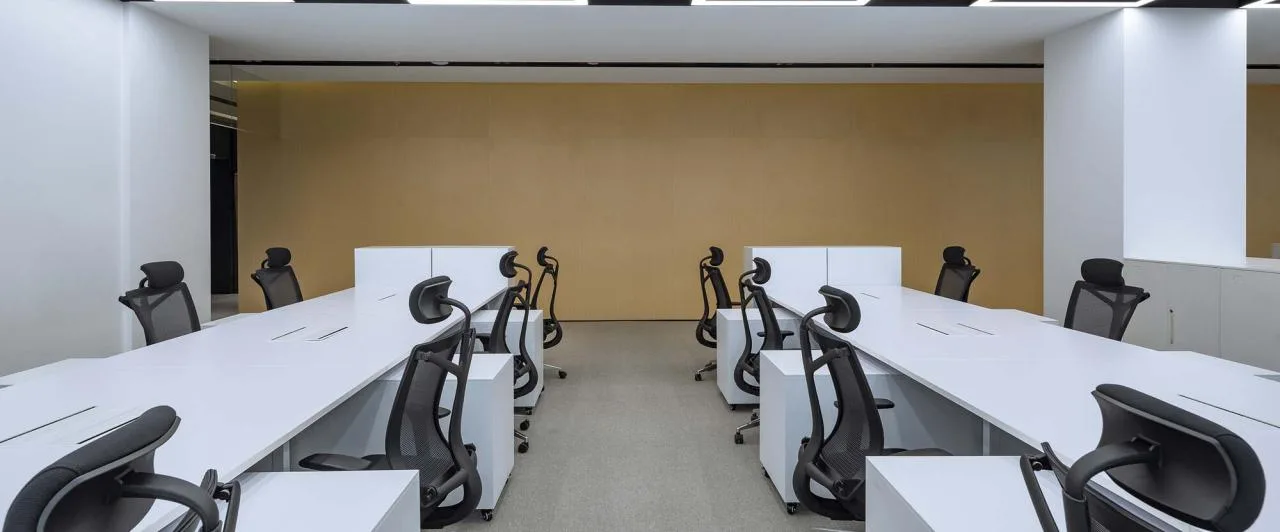
While not classified as an important industrial heritage building, the old factory holds a unique historical significance for Hangxing Park. The renovation not only respects this memory externally but also preserves reinforced sections of original interior walls as historical artifacts.
After installing glass curtain walls on the fifth floor’s east and south sides, non-structural old walls were removed and juxtaposed with new structures. Some elevated original walls were carefully retained, blending old and new to revitalize the Hangxing Garden and the factory buildings.
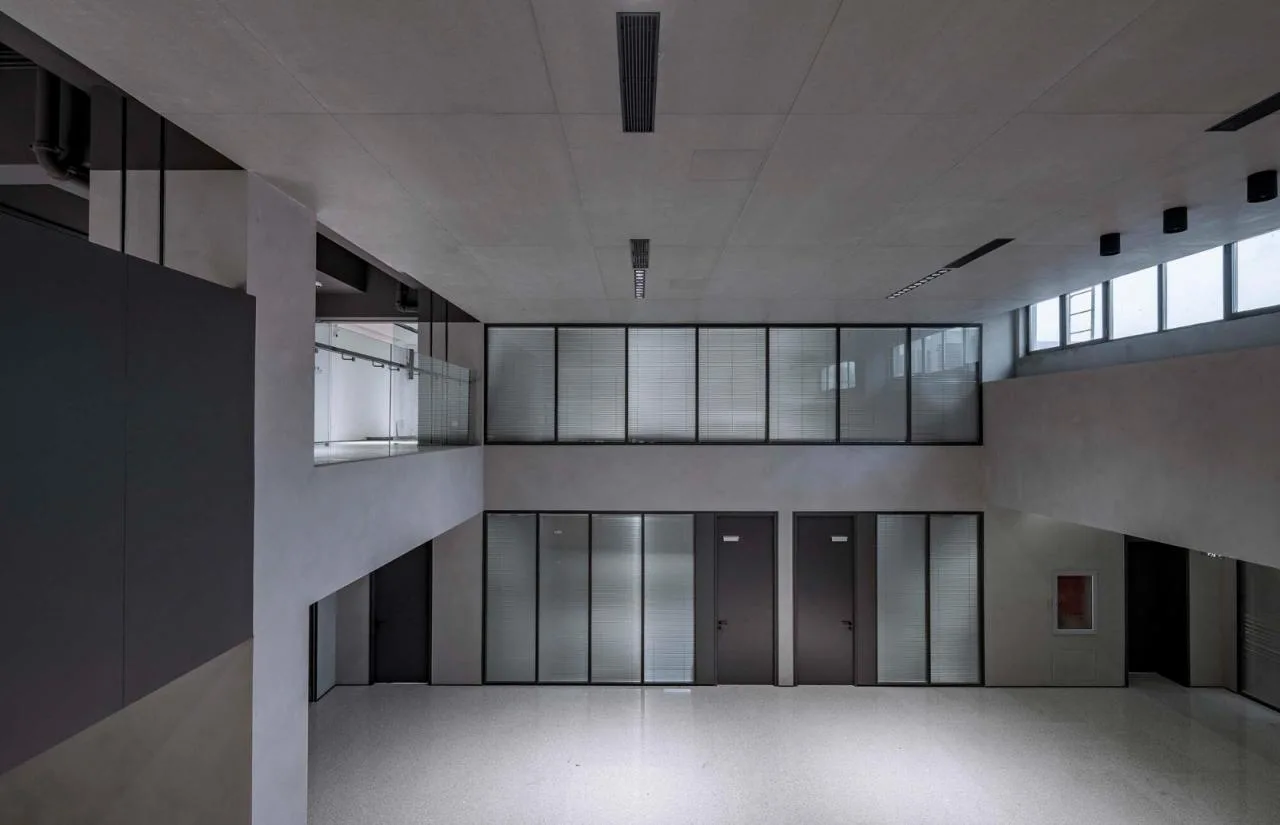
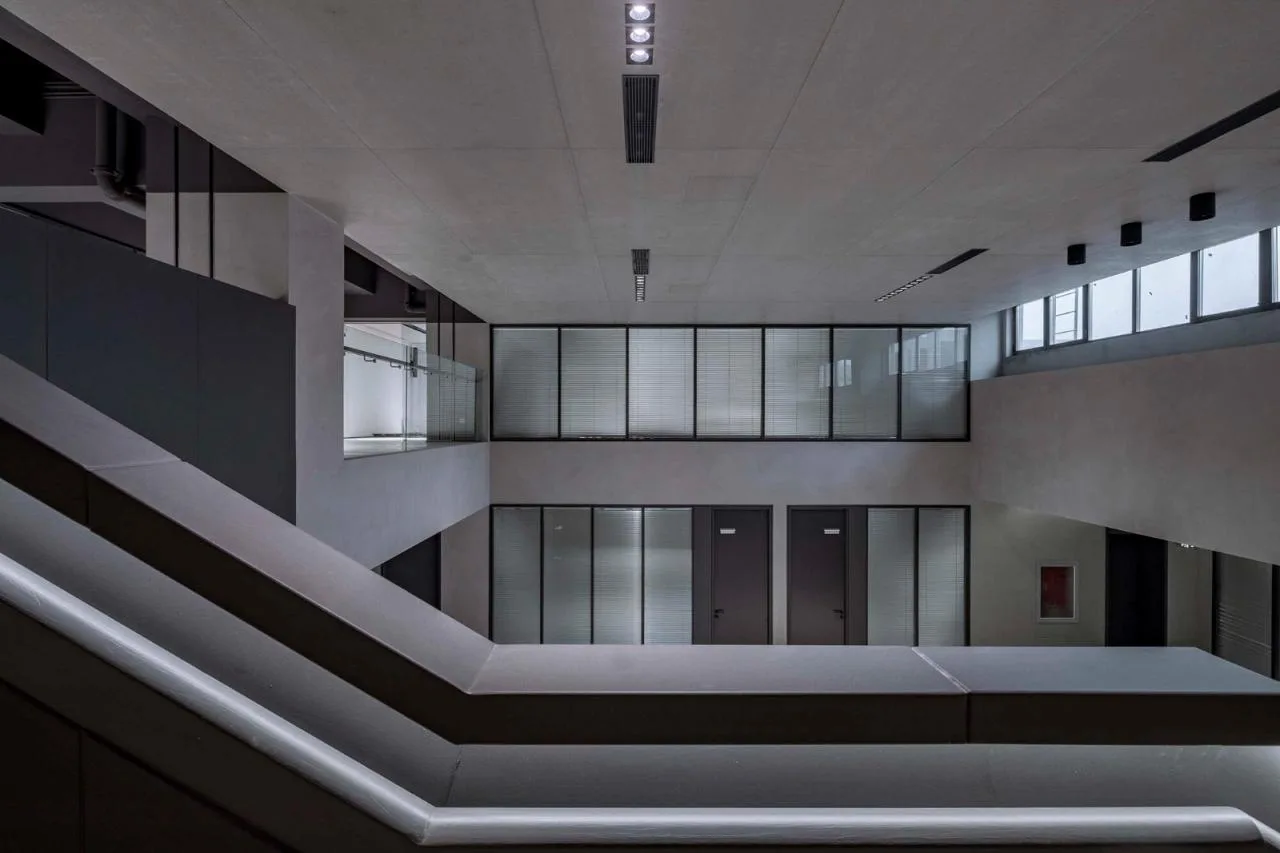
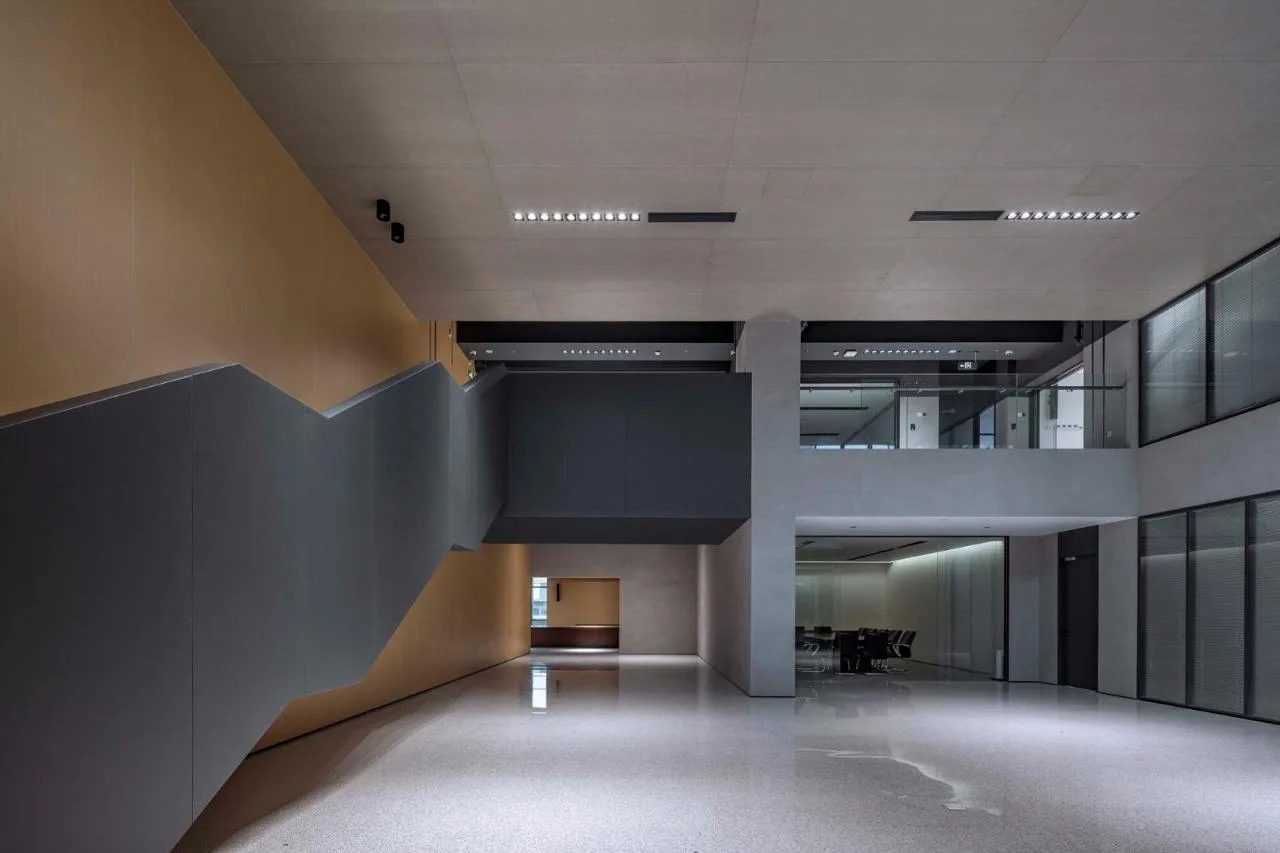
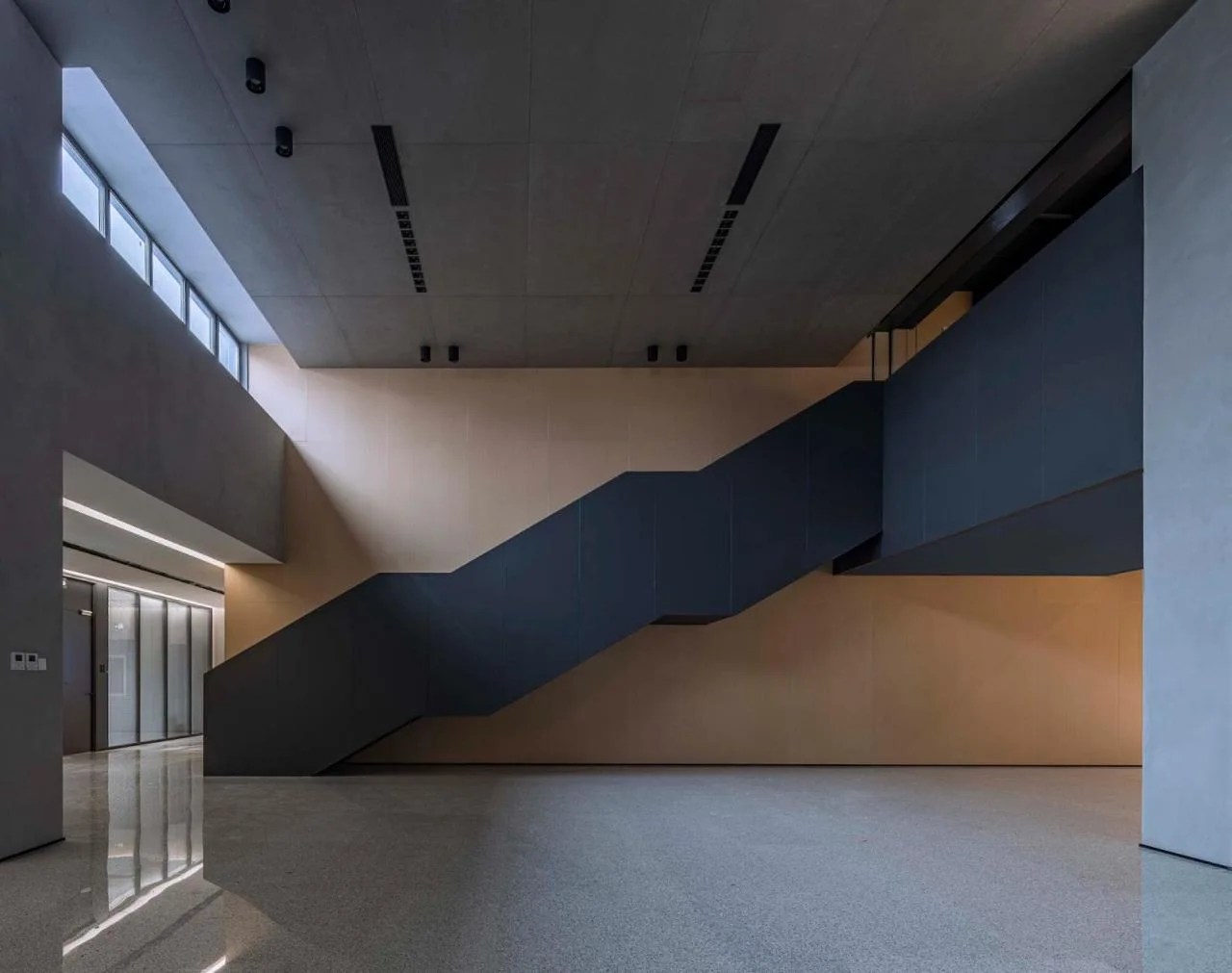
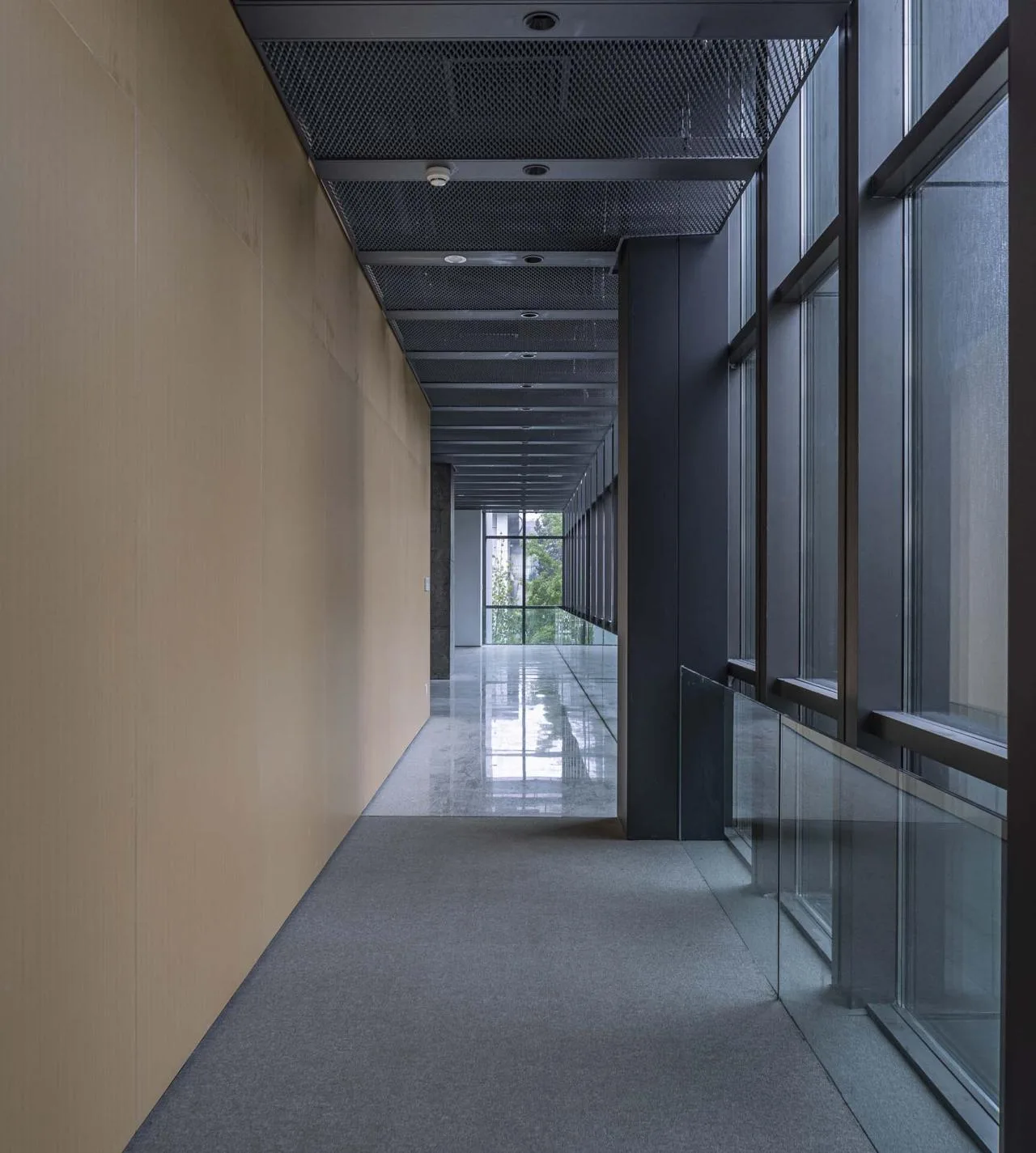
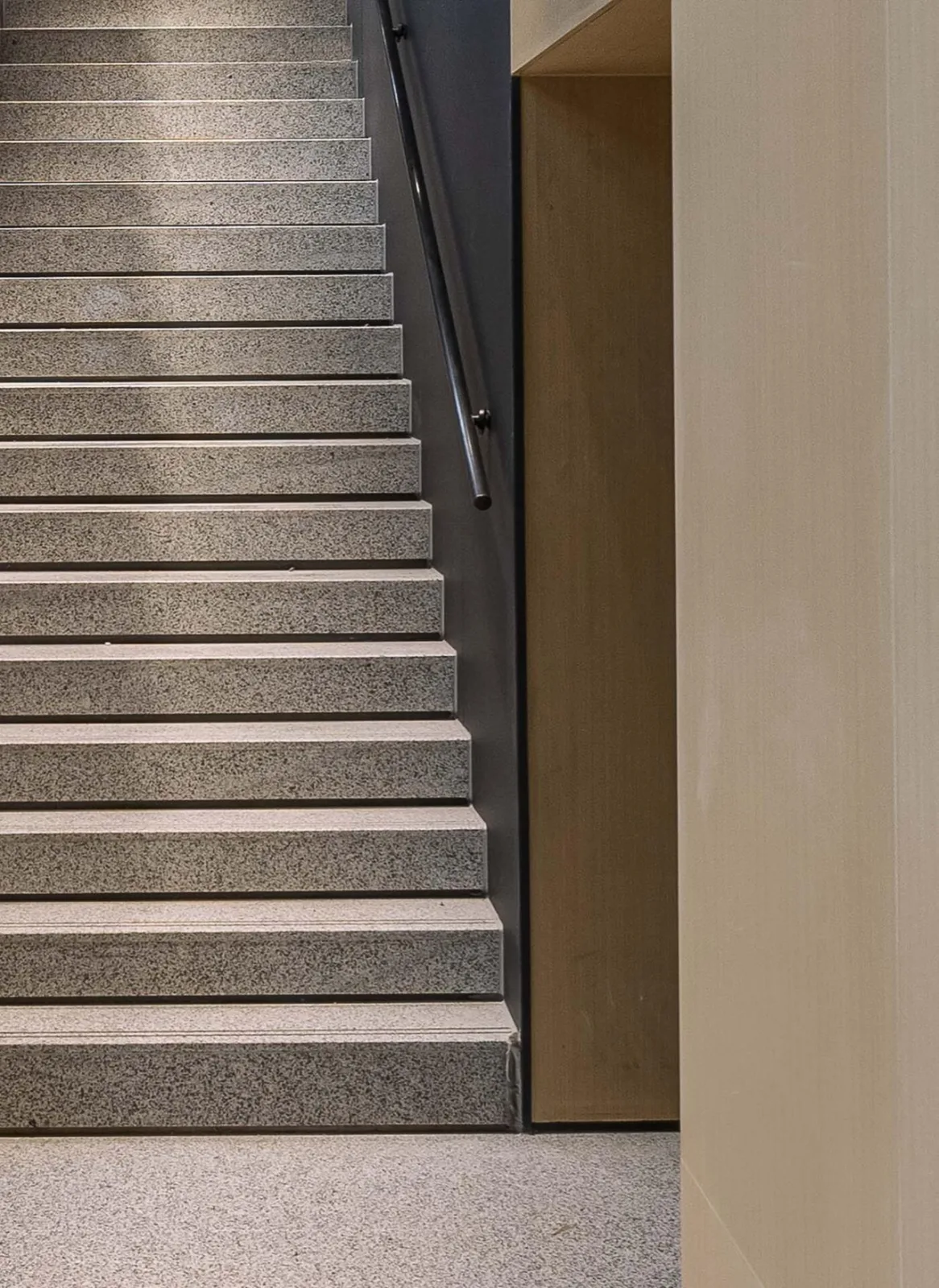
Regarding interior materials, the glass box continues the curtain wall aesthetic using metal and glass, while the cement box maintains the gray-white exterior wall style. The vertical traffic core bridging the two boxes primarily features wood-grain aluminum panels, with some multifunctional spaces using perforated sound-absorbing panels of the same material for acoustic control.
This core embodies the nested architectural concept by integrating materials from both the glass and cement boxes, symbolizing the renewal and blending of architectural spaces.
Project Drawings
△ Base schematic diagram
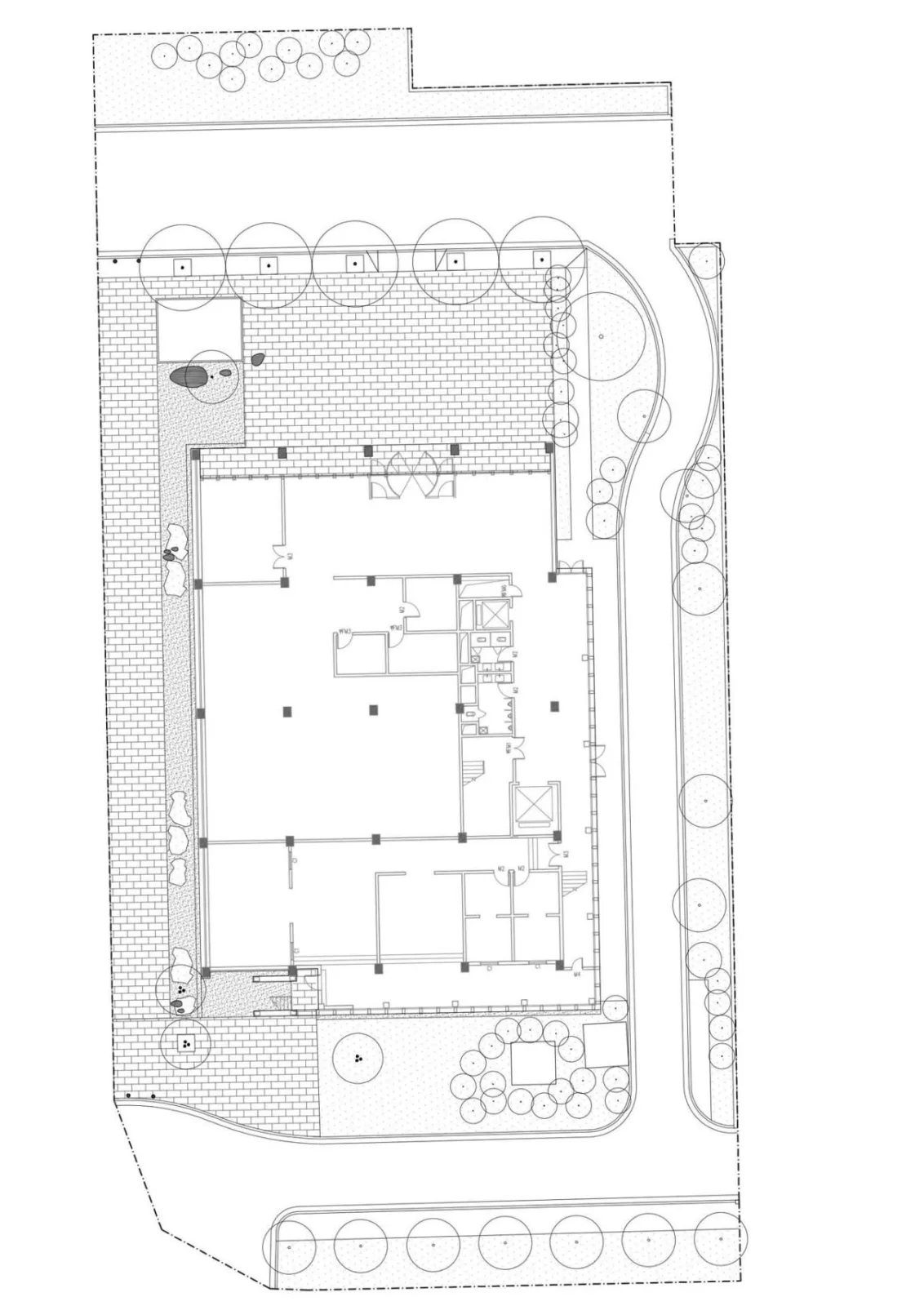
△ First floor plan
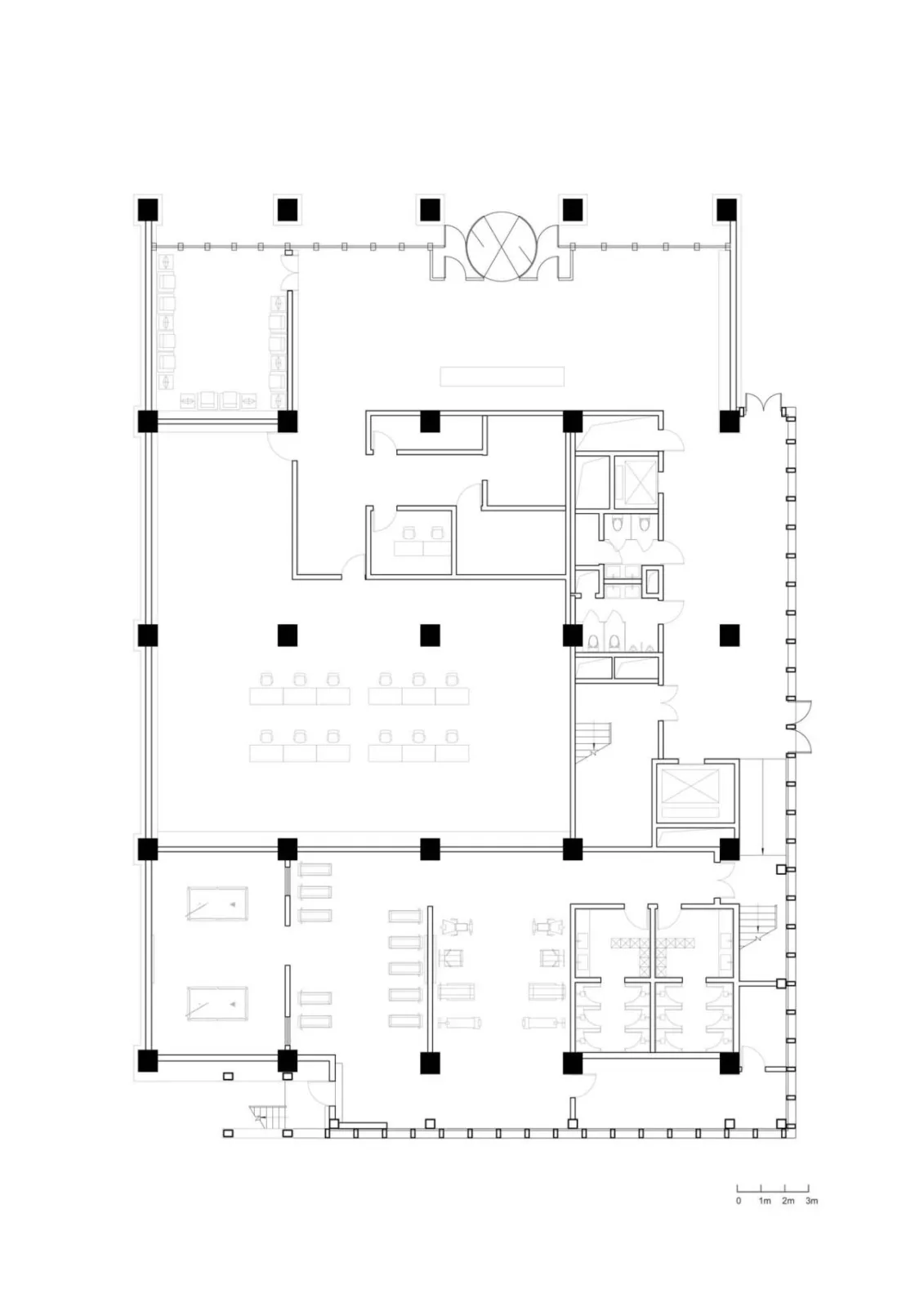
△ Second floor plan
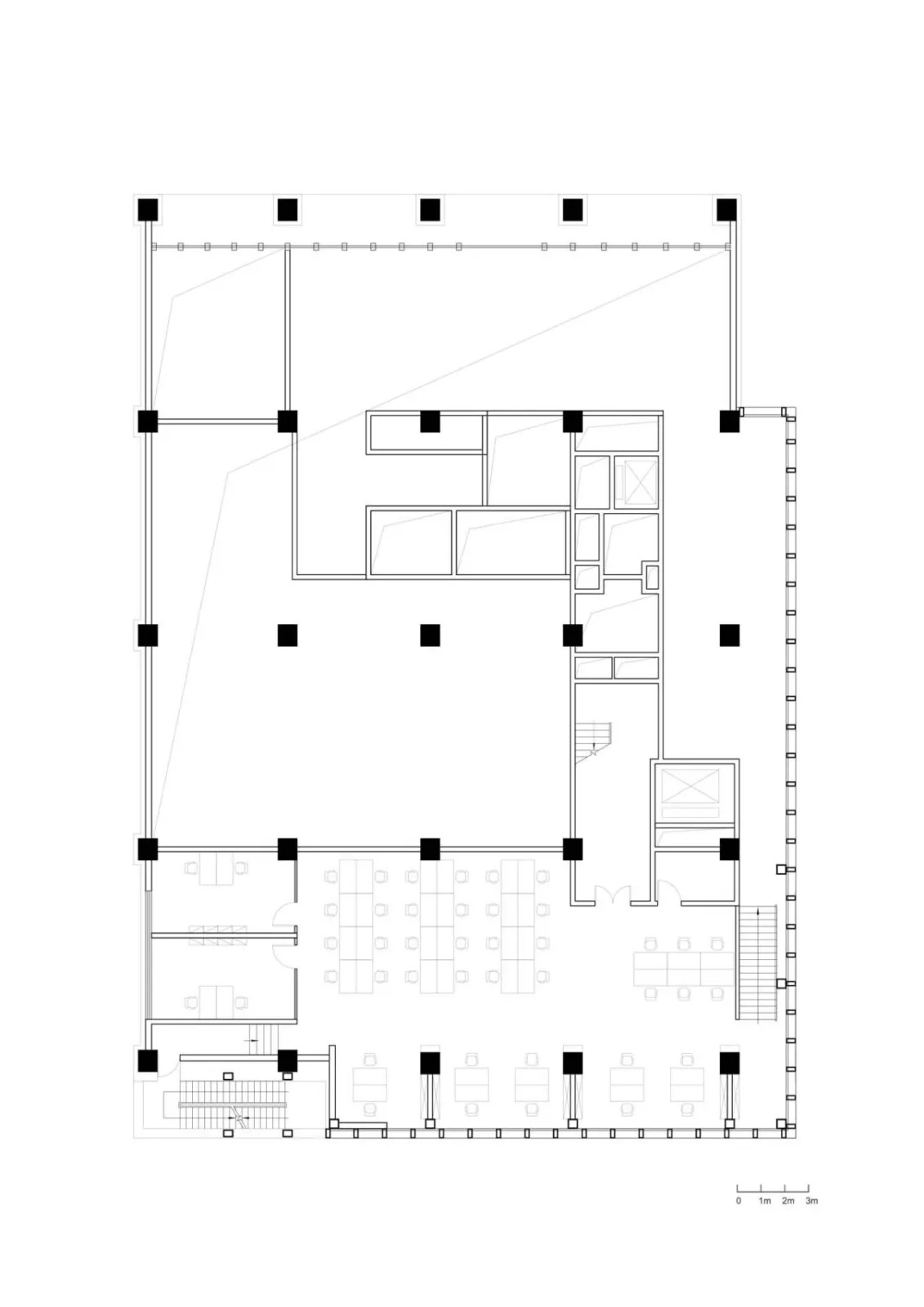
△ Third floor plan
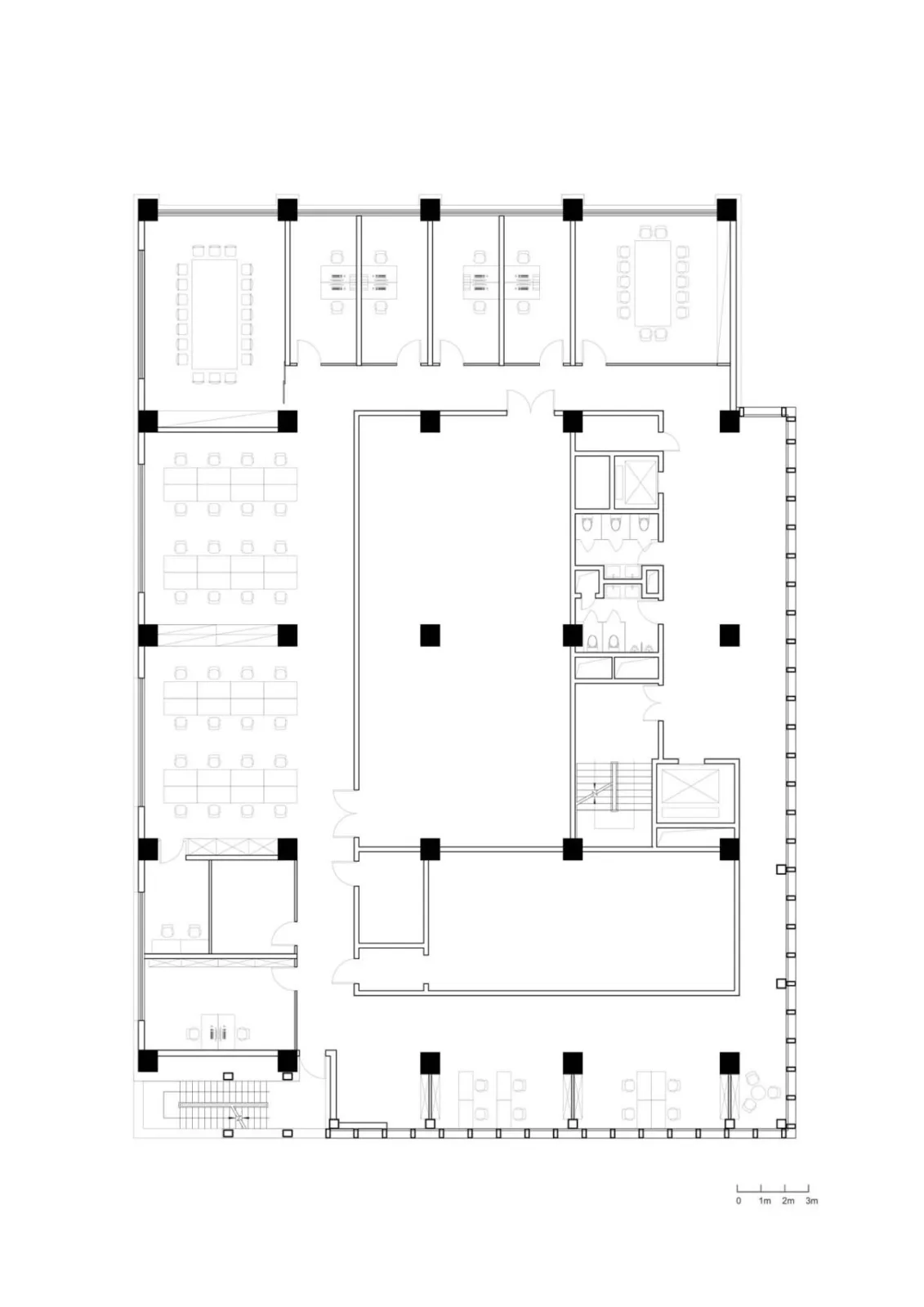
△ Fourth floor plan
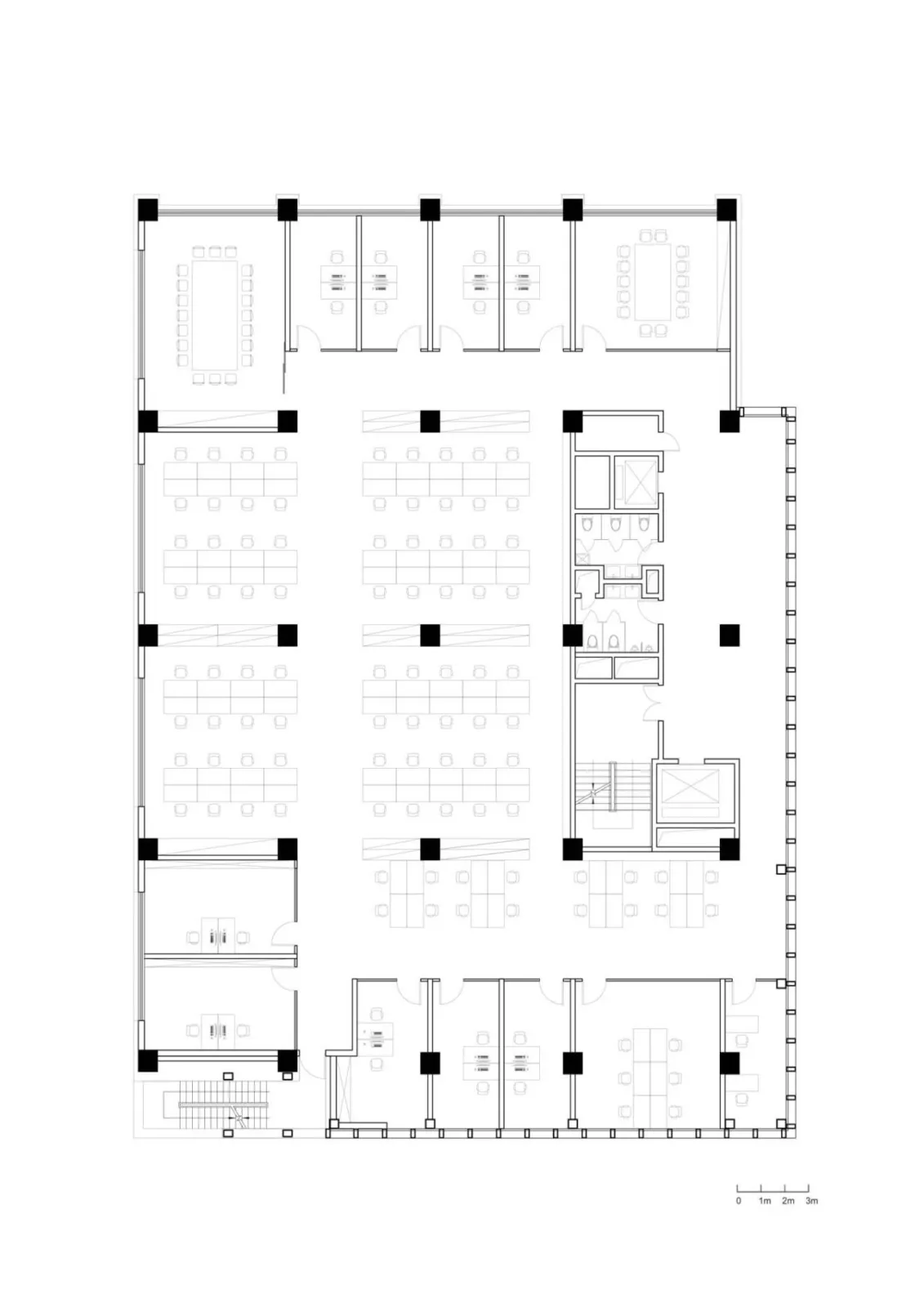
△ Fifth floor plan
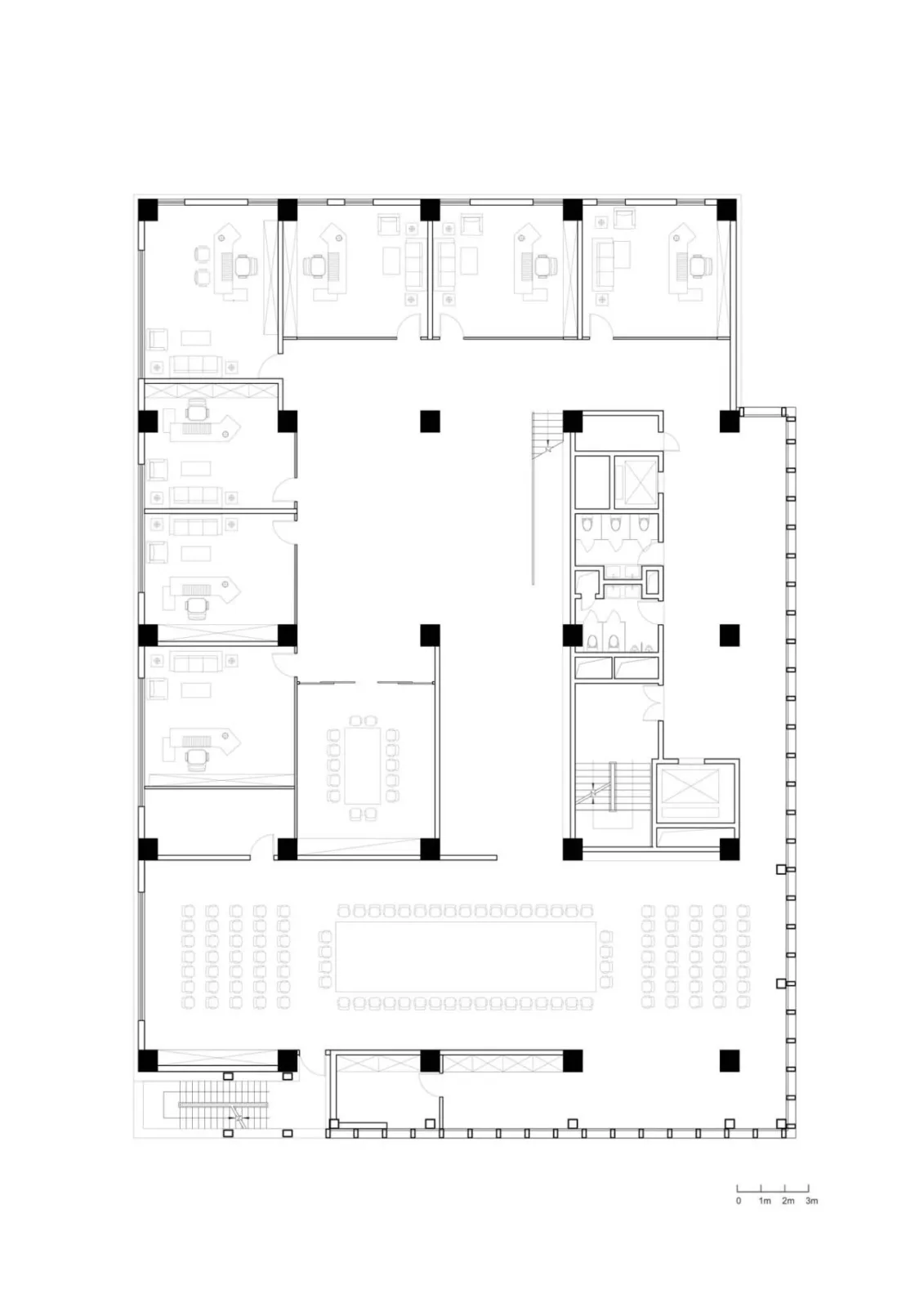
△ Sixth floor plan
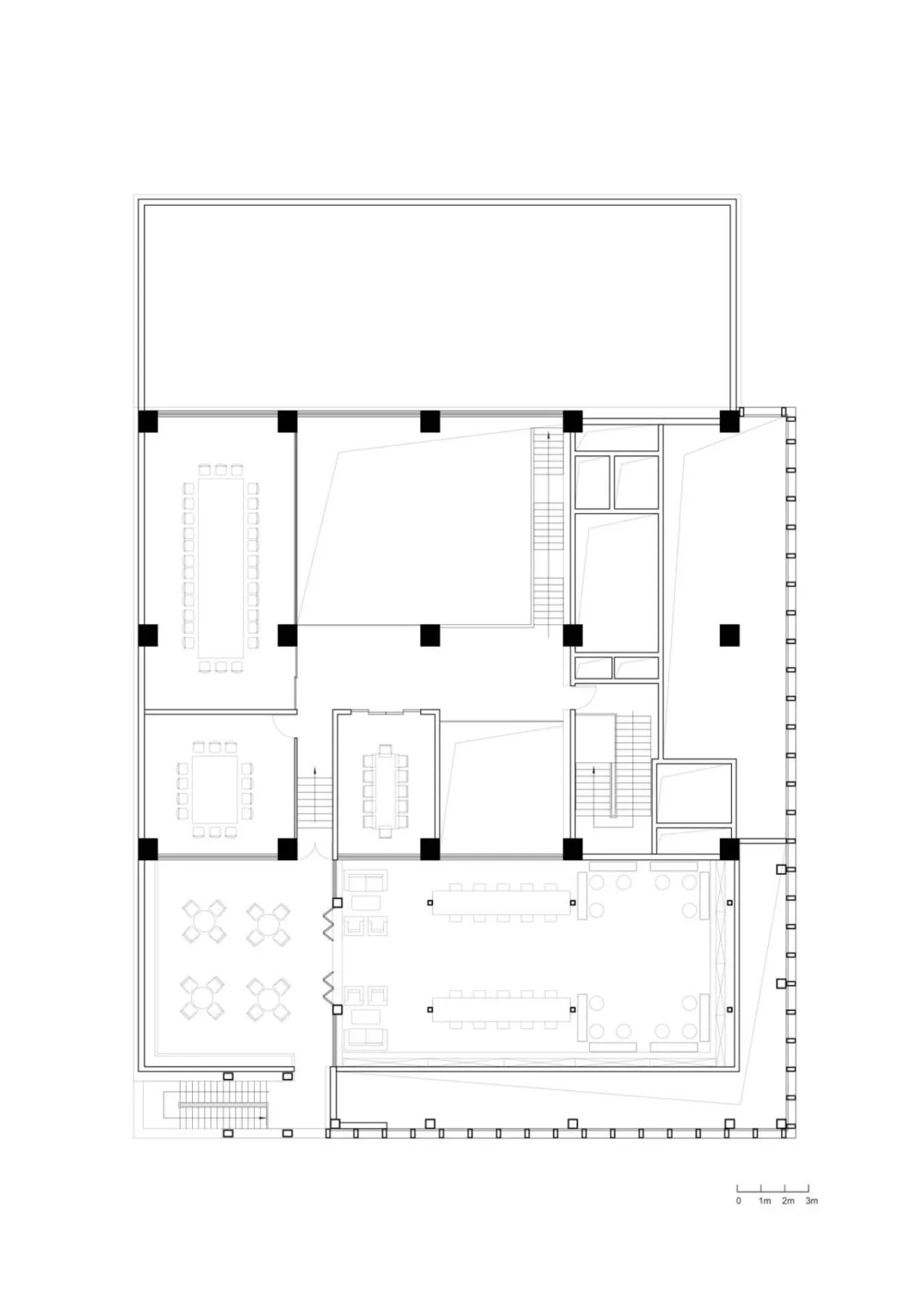
△ Seventh floor plan
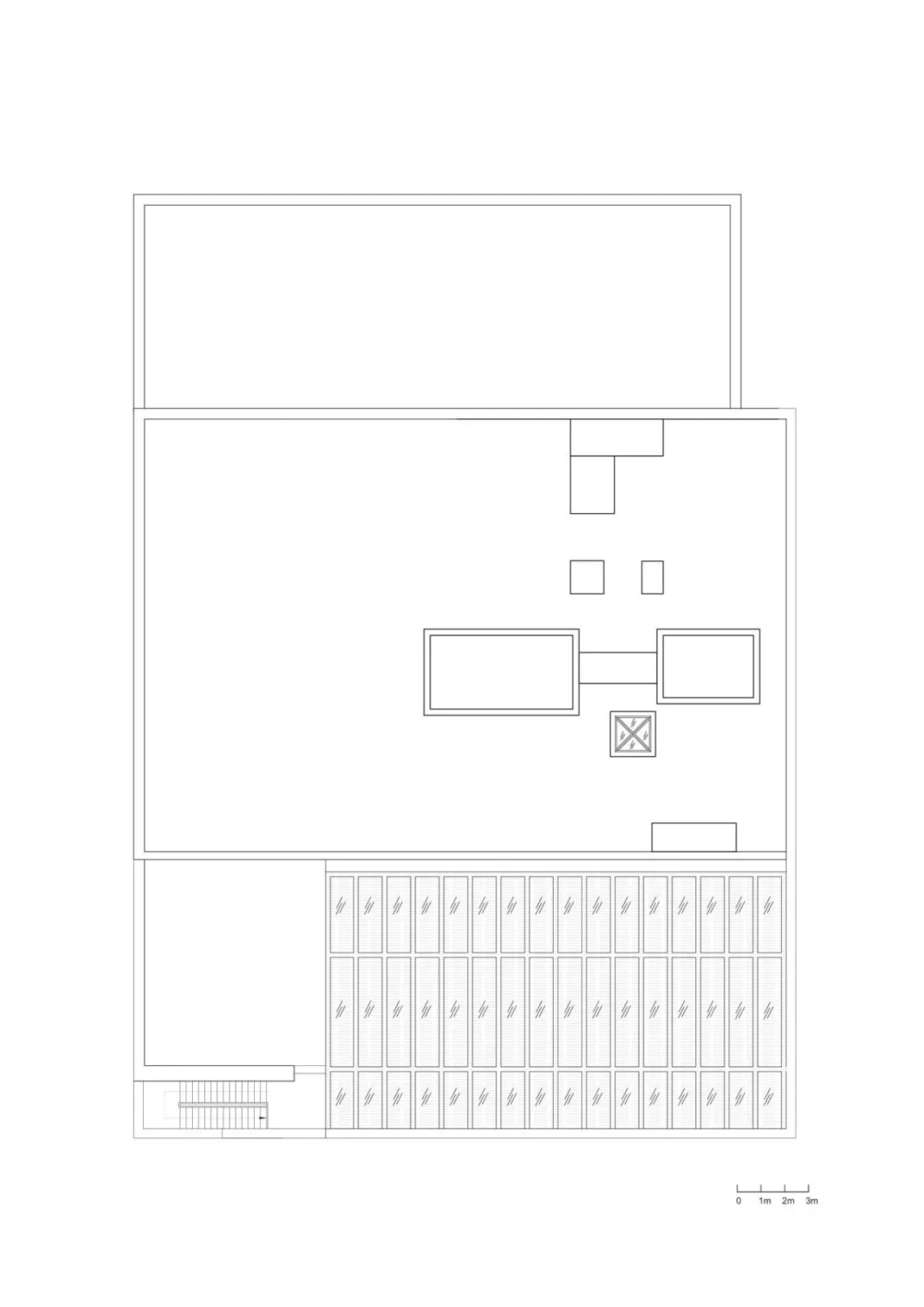
△ Roof Plan
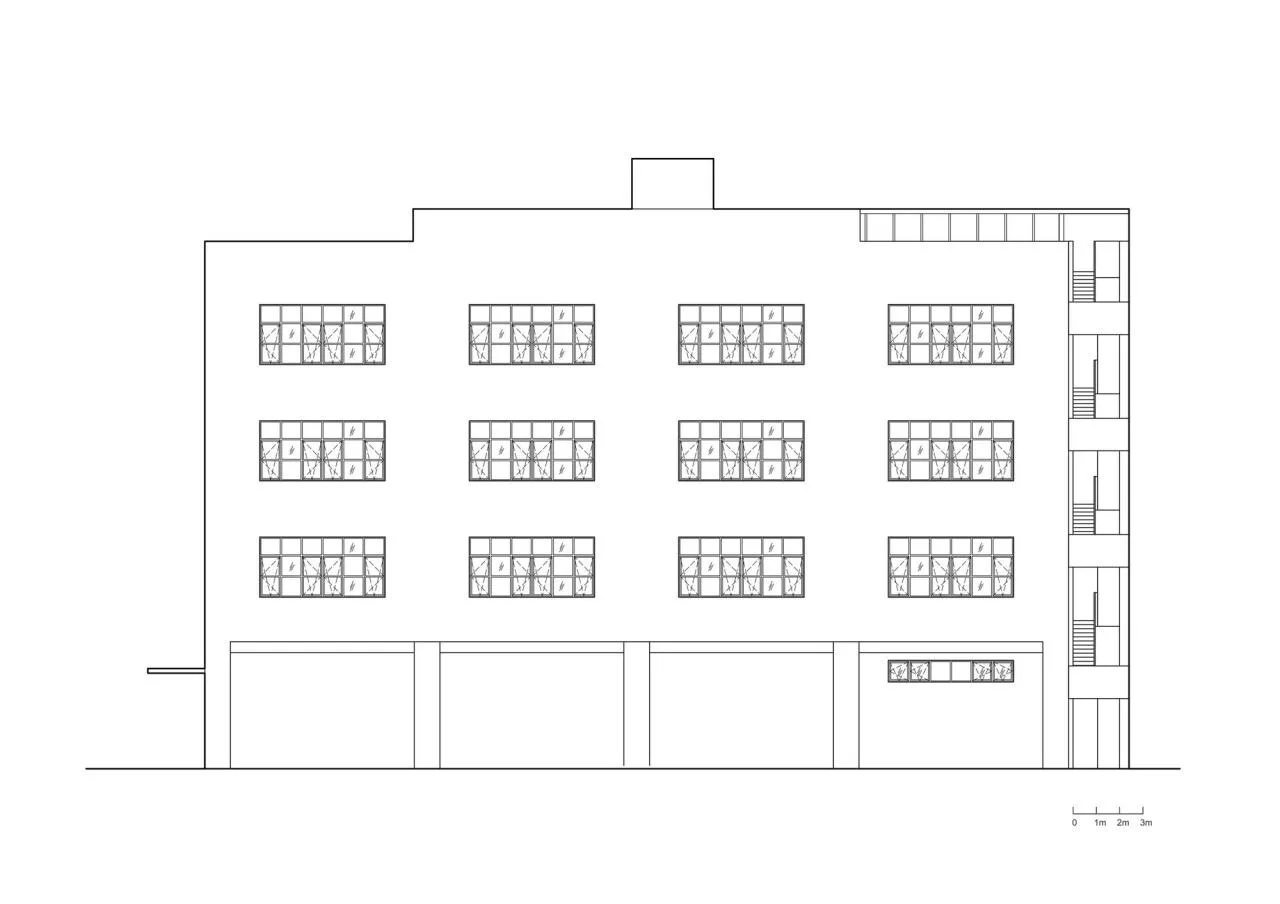
△ Elevation drawing
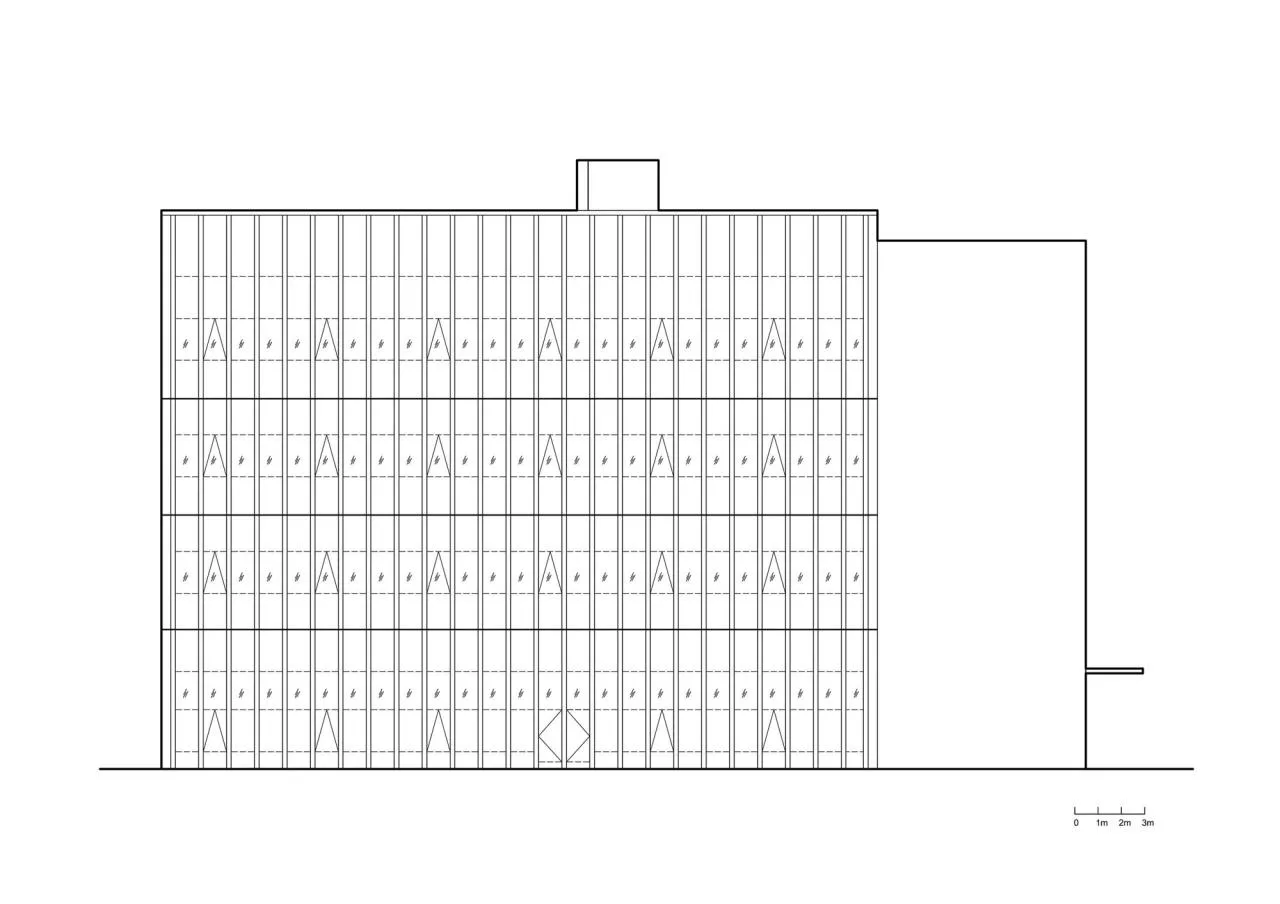
△ Elevation drawing
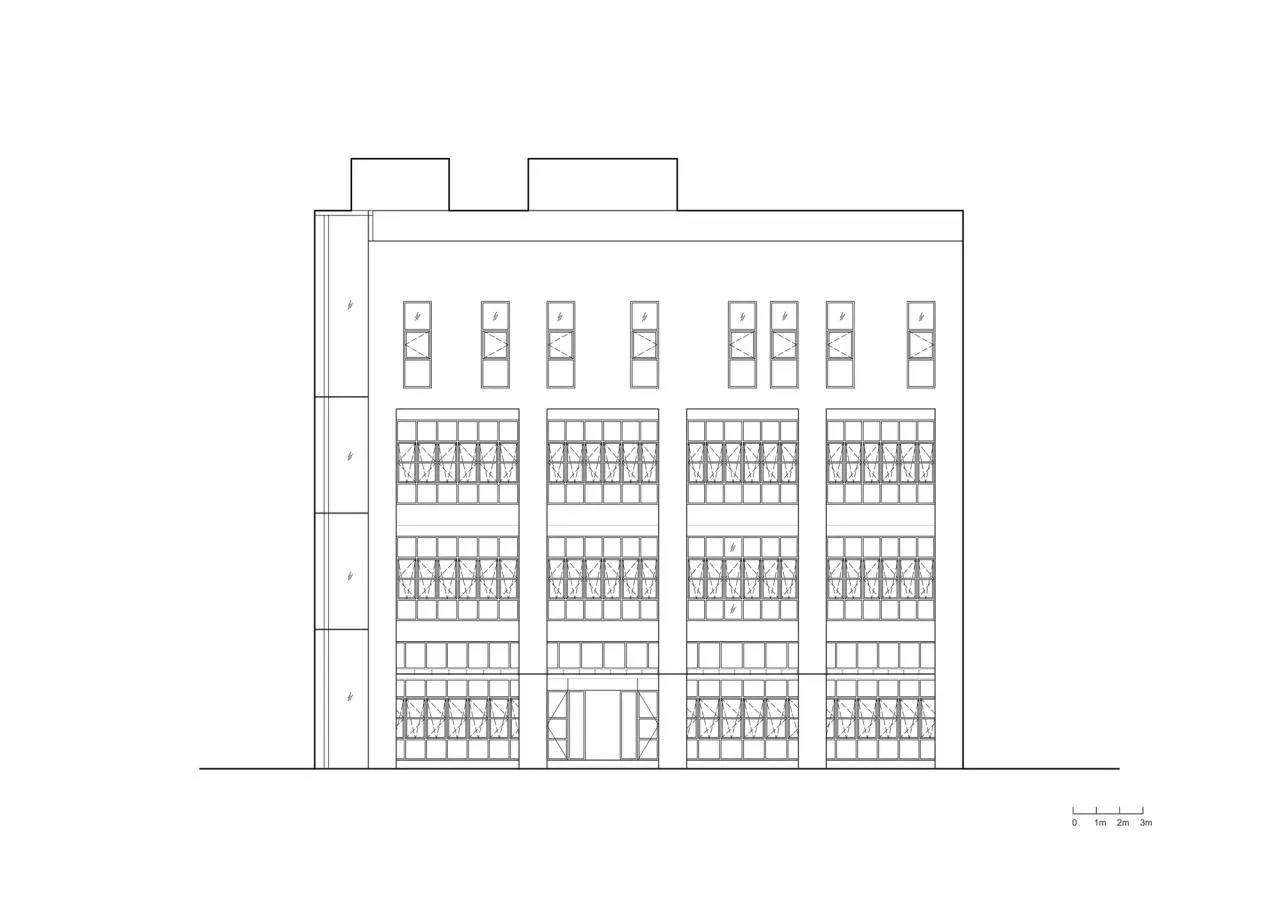
△ Elevation drawing
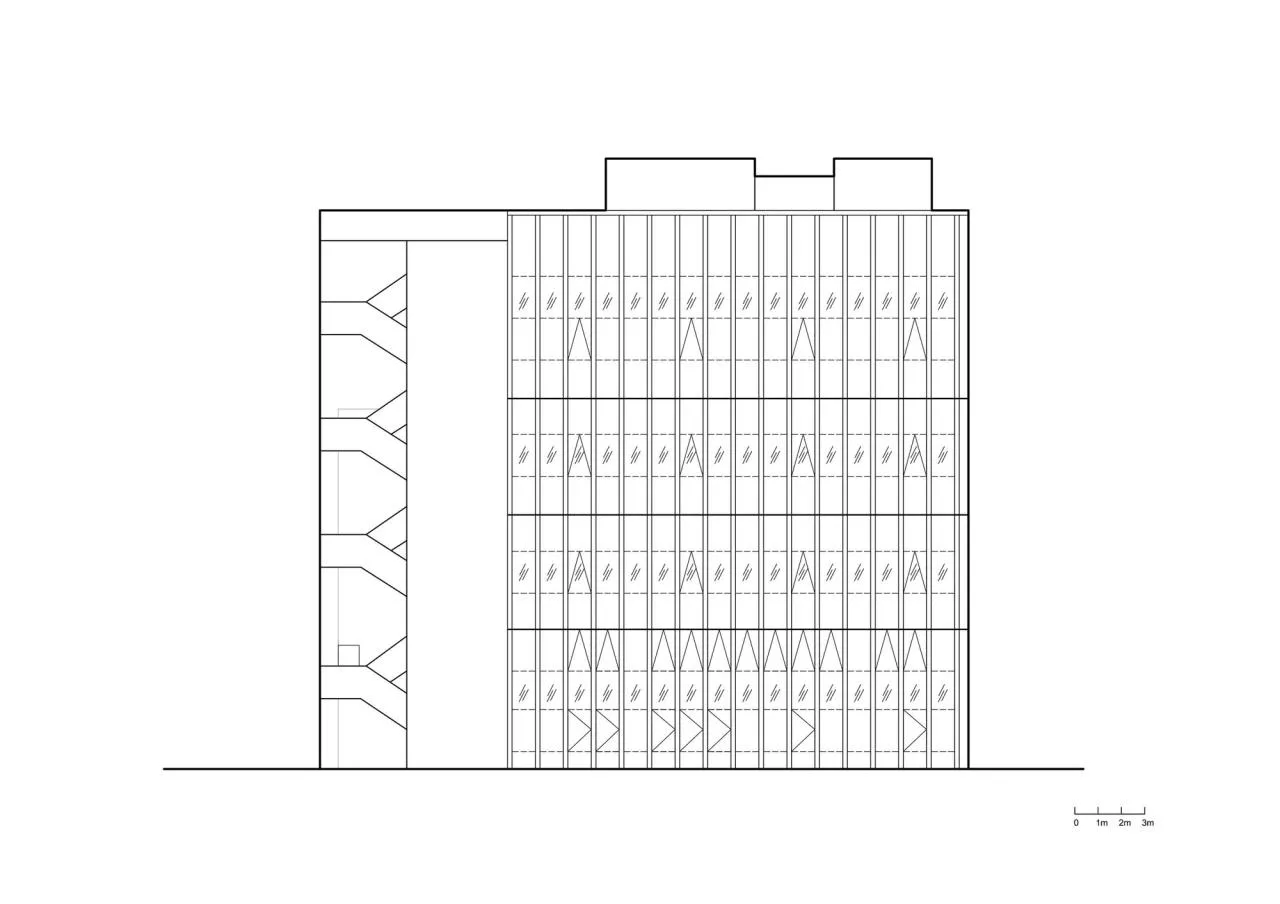
△ Elevation drawing
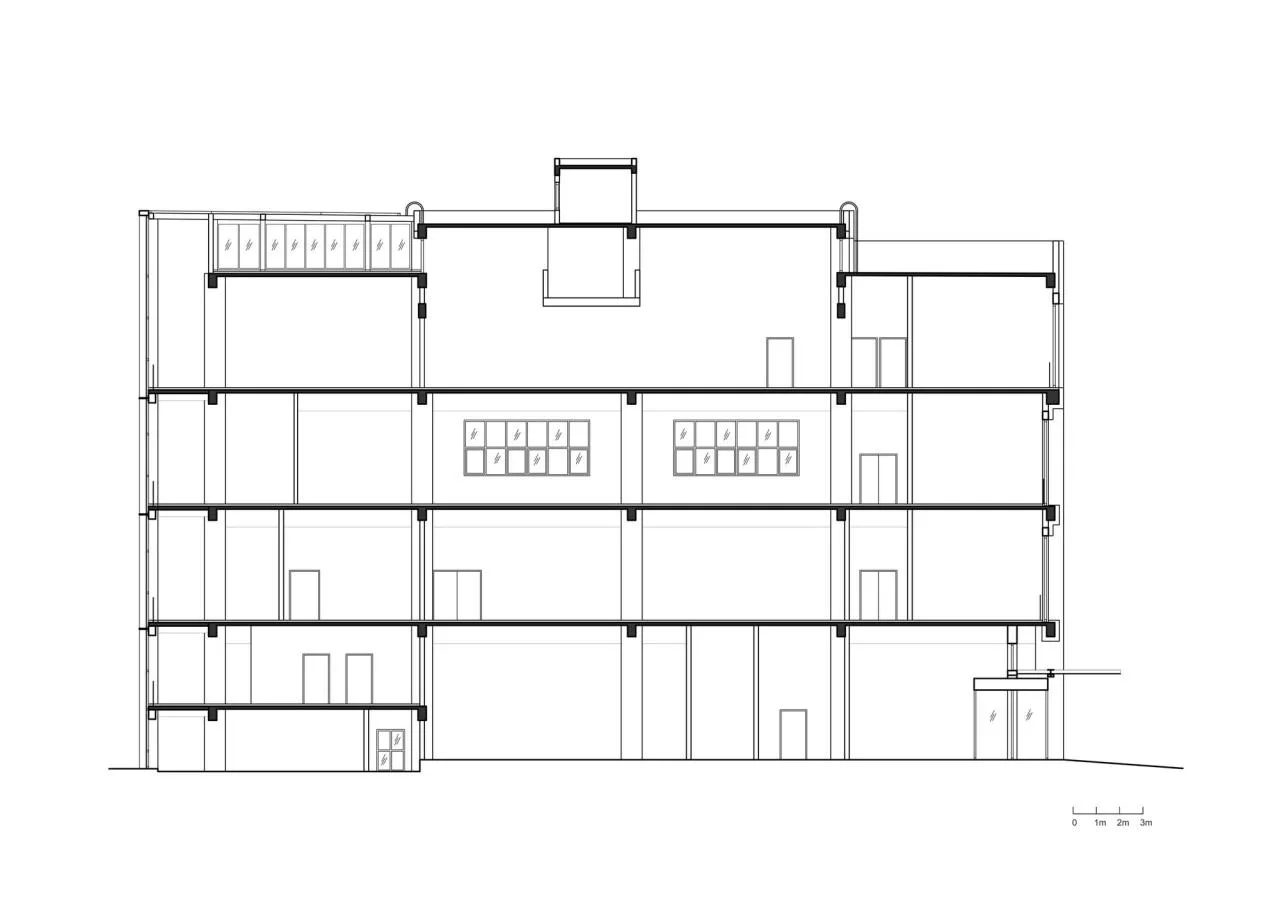
△ Section diagram
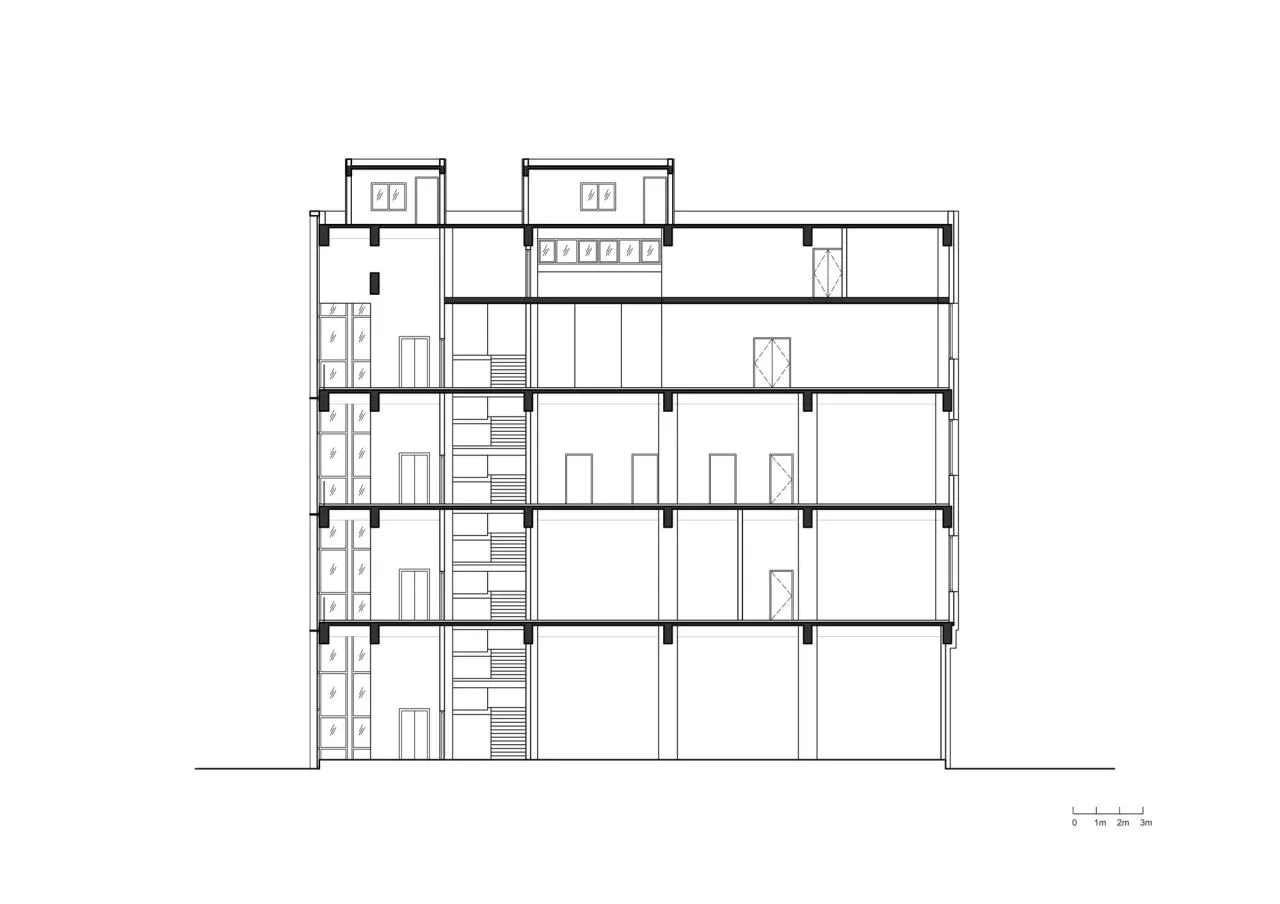
△ Section diagram
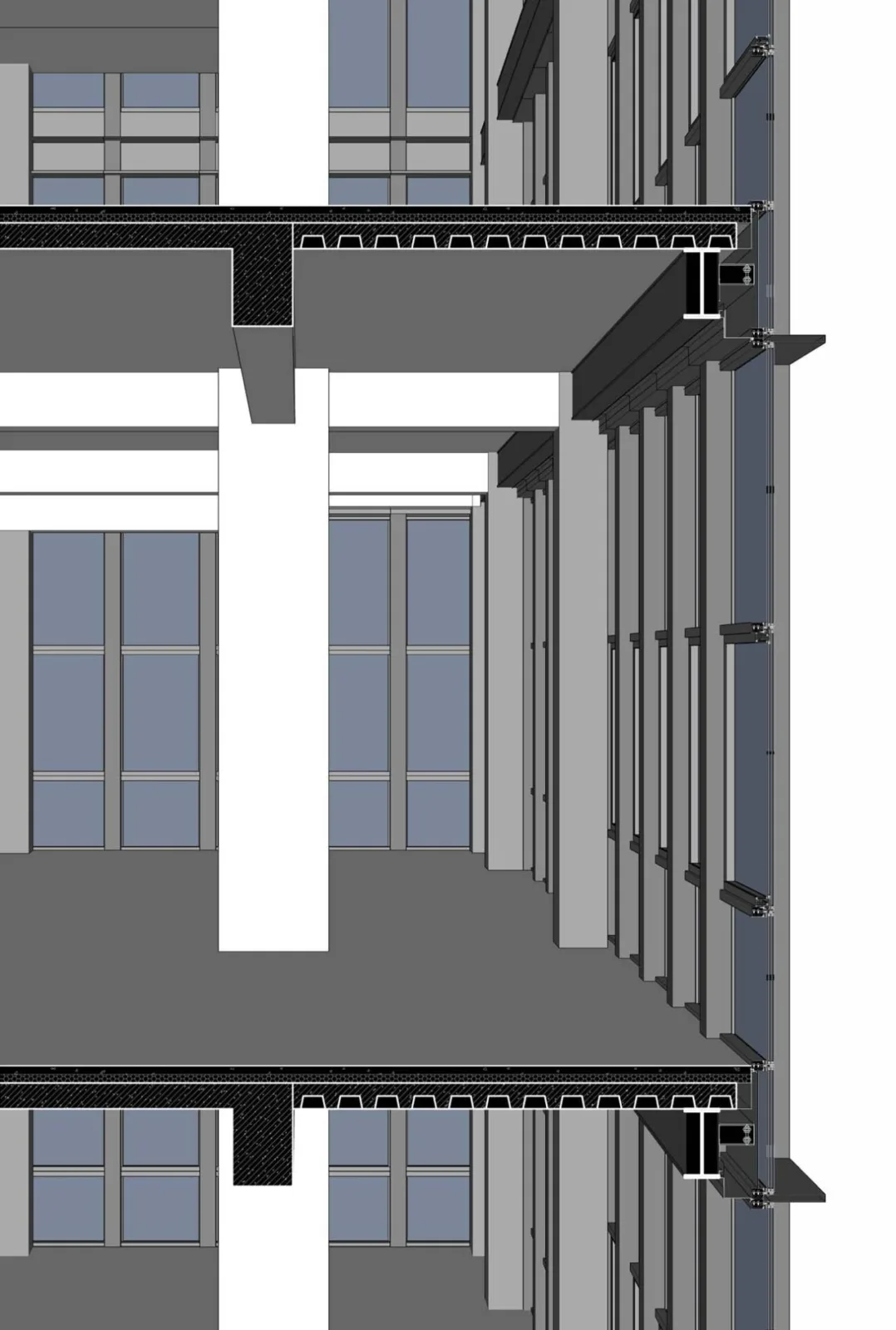
△ Partial sectional view
Project Information
Architect: Super City Architecture
Area: 5000 m²
Project Year: 2022
Photographer: Jin Weiqi
Manufacturers: Deti, Oubuys, Fapim
Lead Architects: Che Fei, Zhang Xuefeng
Design Team: Mu Gaojie, Jie Yitong, Zhang Yaowen (Architecture); Chen Haifeng, Yu Huiming (Interior); Huo Jinlong, Sui Ying, Li Yang (Electrical); Shi Yuanfang, Li Jingjing (HVAC); Li Ping, Sun Qing (Structural); Zhang Qiaohong (Water Supply and Drainage); Huang Xiaoyang (Landscape)
Construction Drawing Collaborative Design: Zhongke Ruicheng Design Co., Ltd
Owner: Beijing Hangxing Machinery Manufacturing Co., Ltd
Location: Beijing














Must log in before commenting!
Sign Up