
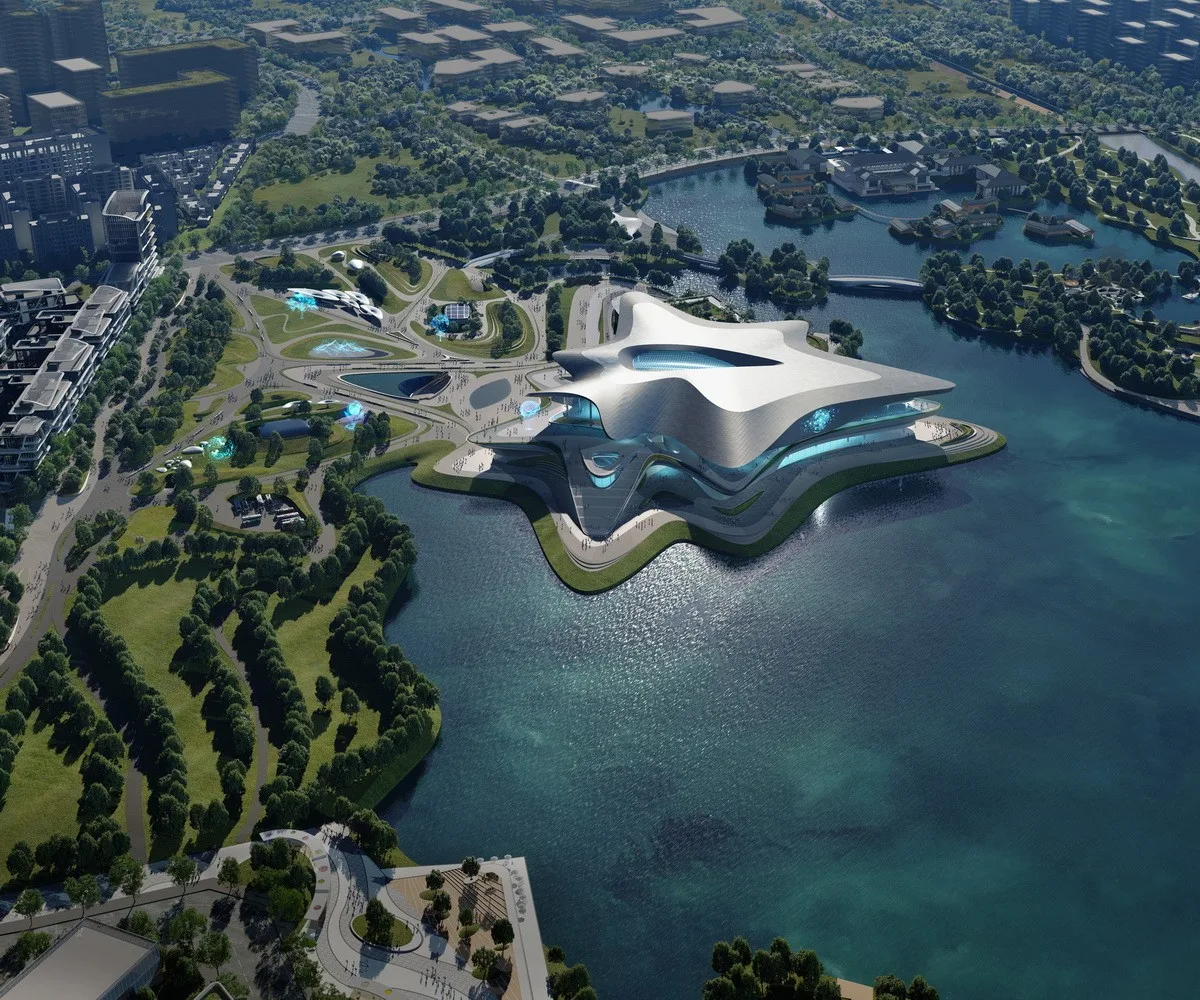
The Chengdu Science Fiction Museum, designed by Zaha Hadid Architects, is set to host Worldcon — the world’s largest science fiction event. This 59,000-square-meter venue, currently under construction, will welcome the 81st Annual World Science Fiction Conference and the Hugo Awards. Beyond being an event space, it will serve as a dynamic innovation hub and a gathering place for China’s leading science fiction writers.
Chengdu, a city with over 20 million residents, is rapidly emerging as a global center for scientific innovation and research.
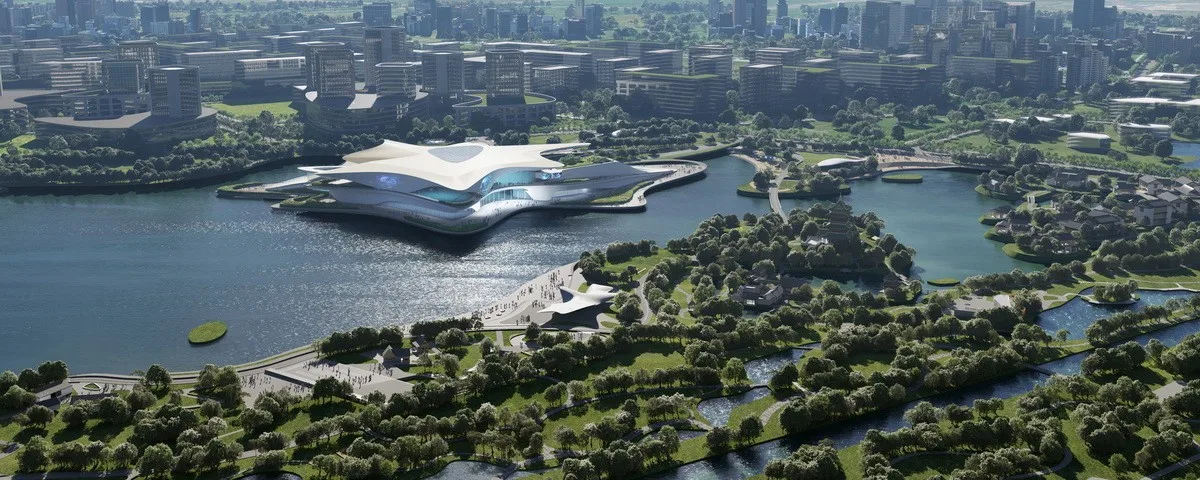
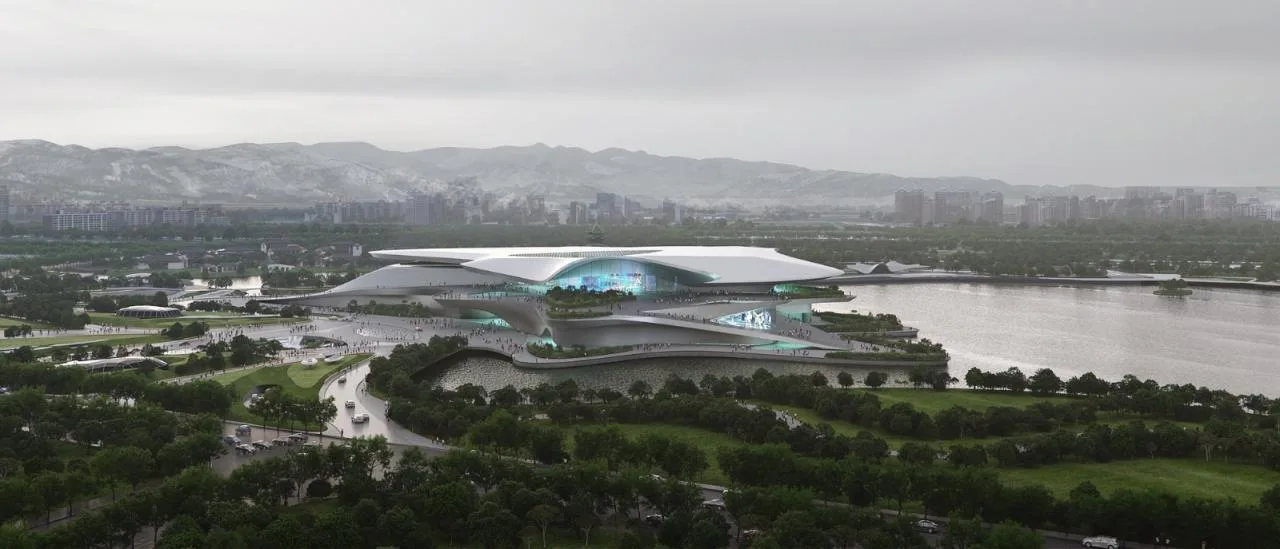
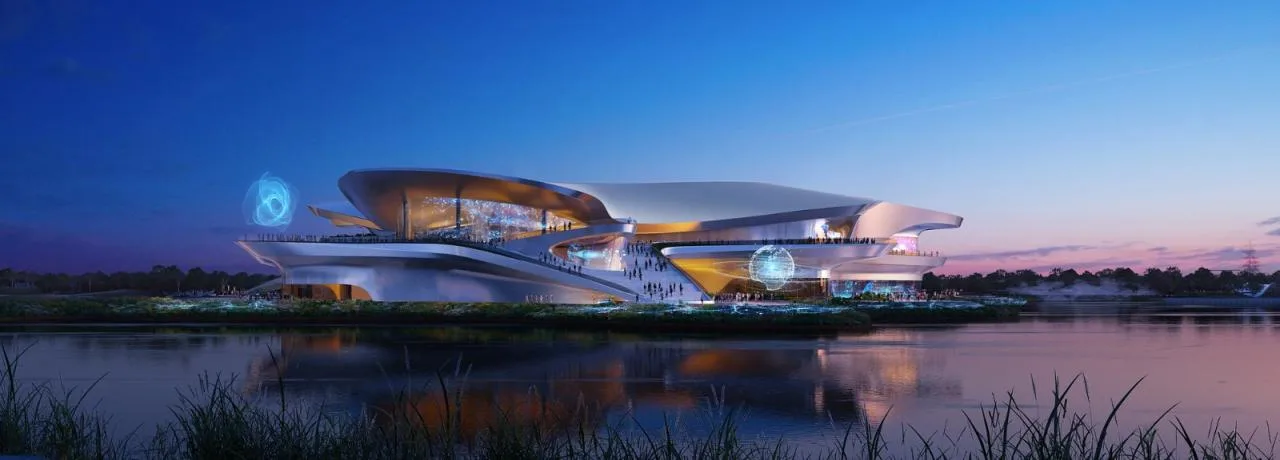
Situated by Jingrong Lake in Chengdu’s Science and Technology Innovation City, within the Pidu District, the museum is designed for high flexibility. It accommodates a variety of exhibitions, conferences, and events. Nestled in its unique natural setting, the museum appears to be “floating on a lake.”
The fluid architectural design, developed through advanced digital modeling and analysis, optimizes functional layout, site conditions, solar exposure, and structural efficiency. These efforts enable the building to meet China’s three-star green building standards.
Sustainable features include natural mixed ventilation, photovoltaic panels integrated into the ceiling, and thoughtfully designed roofing, all contributing to the museum’s energy efficiency and environmental responsibility.
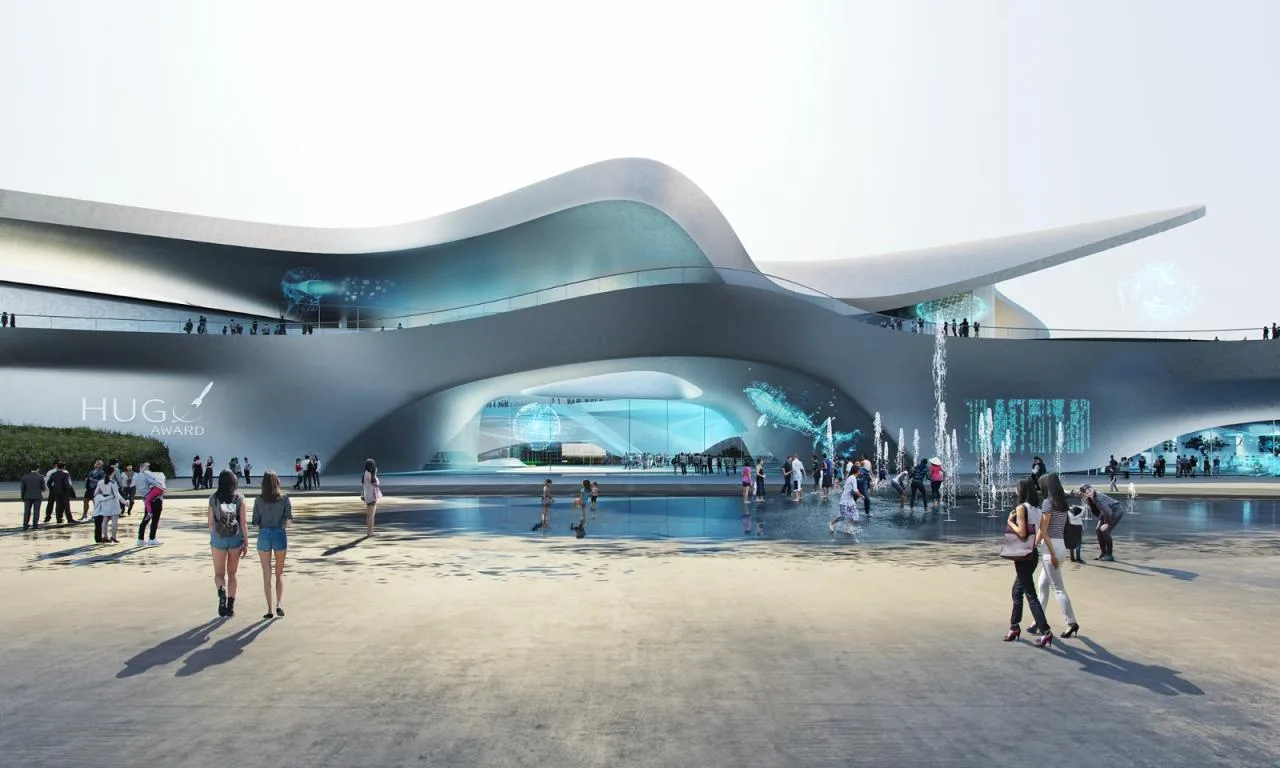
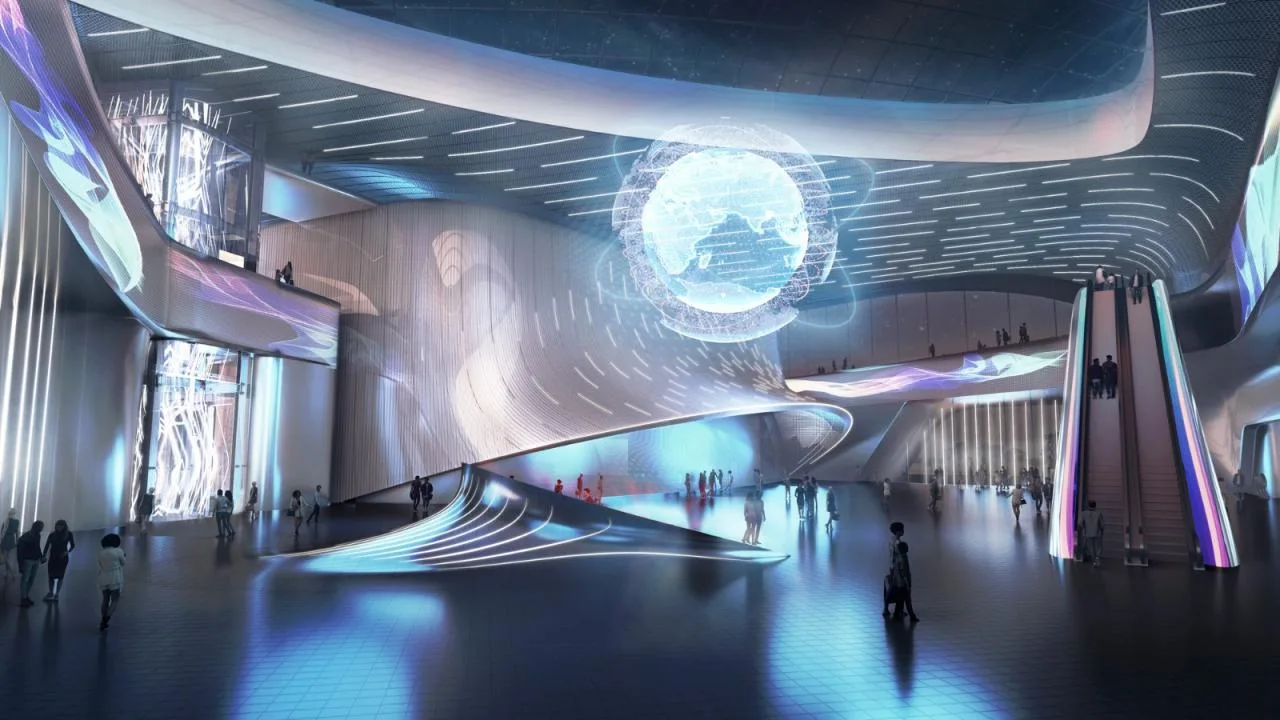
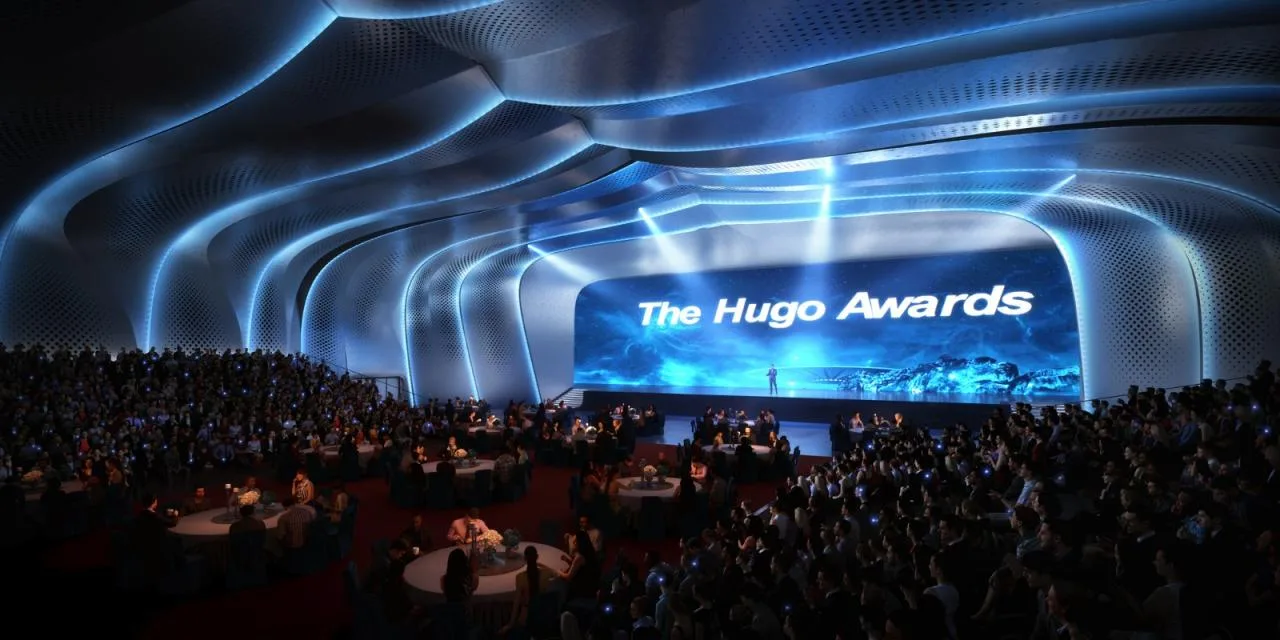
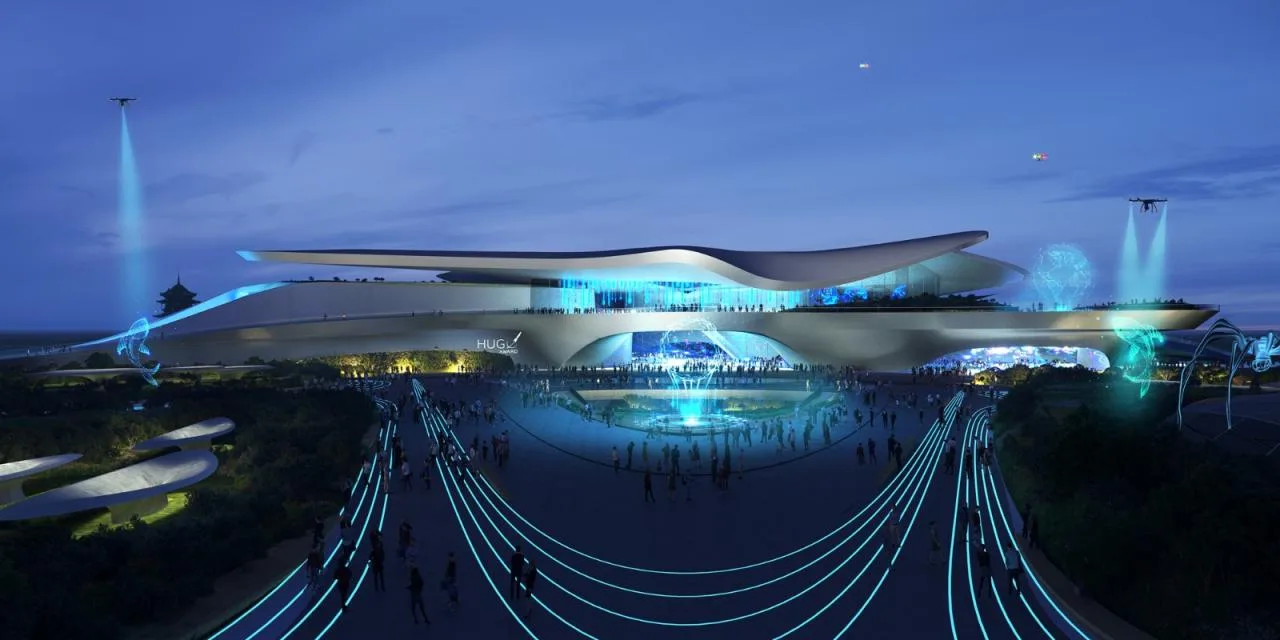
The museum’s activity hubs include exhibition halls, theaters, conference rooms, and supporting auxiliary spaces. It integrates seamlessly with the city’s infrastructure, creating a flow that alternates between multi-level indoor and outdoor areas.
This connectivity links exhibition spaces, educational facilities, cafes, and other amenities, providing visitors with a rich, immersive experience.
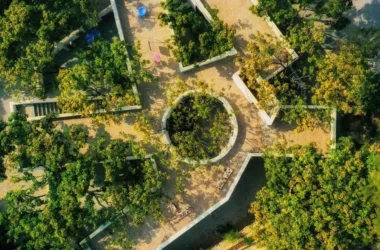
Surrounding the museum, native shrubs have been planted, and the landscape design incorporates systems for rainwater collection, natural filtration, and reuse, promoting environmental sustainability.
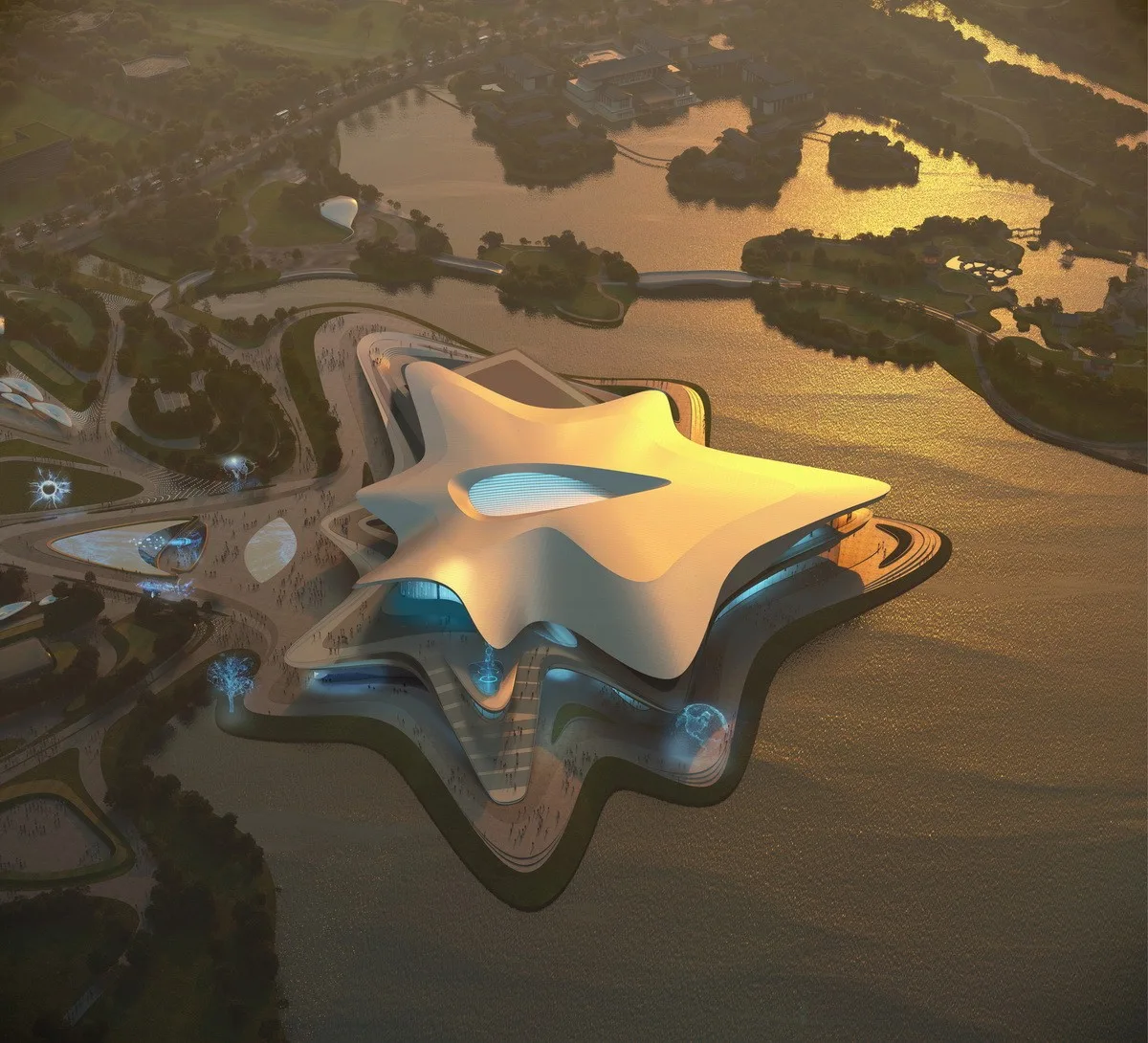
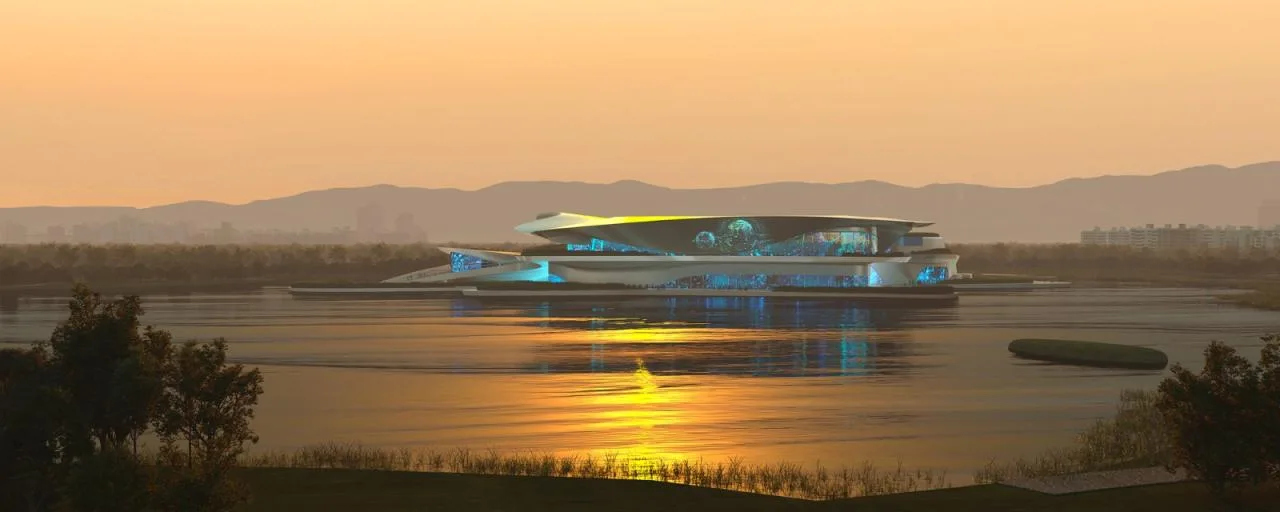
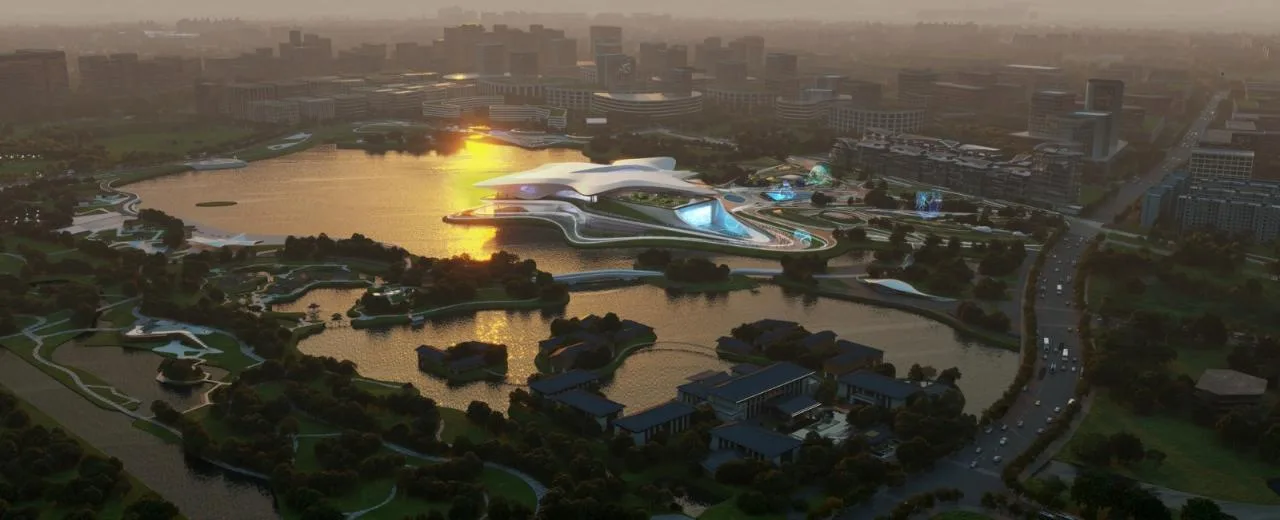
The roof’s fluid form radiates from a central point into seven angles, mimicking a vast nebula focused around a star. This design transforms the museum into a “stellar cloud” — dispersing an energy field across multiple zones.
Visitors are guided through a portal that bridges real-life experiences with the realm of imagination. — Zaha Hadid Architects
Project Team
Architect: Zaha Hadid Architects (ZHA)
Design Lead: Patrik Schumacher
ZHA Project Directors: Satoshi Ohashi, Paulo Flores
ZHA Project Assistant: Yang Jingwen
ZHA Project Architects: Juan Liu, Magda Smolinska
ZHA Project Leader: Sven Torres
ZHA Venue Team: Meng Zhao
ZHA Project Team Members: Andrei-Ciprian Cojocaru, Berkin Islam, Chu Zhou, Hao Wen, Jillian Nishi, Lianyuan Ye, Meng Zhao, Shang Li, Stefan Manousof, Sven Torres, Yang Liu, Yuling Ma, Xiaoying Li
ZHA Competition Project Directors: Satoshi Ohashi, Paulo Flores
ZHA Competition Assistant: Yang Jingwen
ZHA Competition Architects: Juan Liu, Magda Smolinska
ZHA Competition Team Members: Andrei-Ciprian Cojocaru, Enoch Kolo, Jillian Nishi, Juan Montiel, Lianyuan Ye, Meng Zhao, Nan Jiang, Nastasja Mitrovic, Stefan Manousof, Yanran Lu, Yimeng Zhao, Yuling Ma
ZHA Competition Sustainable Development Team: Aleksander Mastalski, Carlos Bausa Martinez
Competition Rendering and Visuals: ATCHAIN
Exhibition Design Consultant: Chengdu Science Fiction Association














Must log in before commenting!
Sign Up