
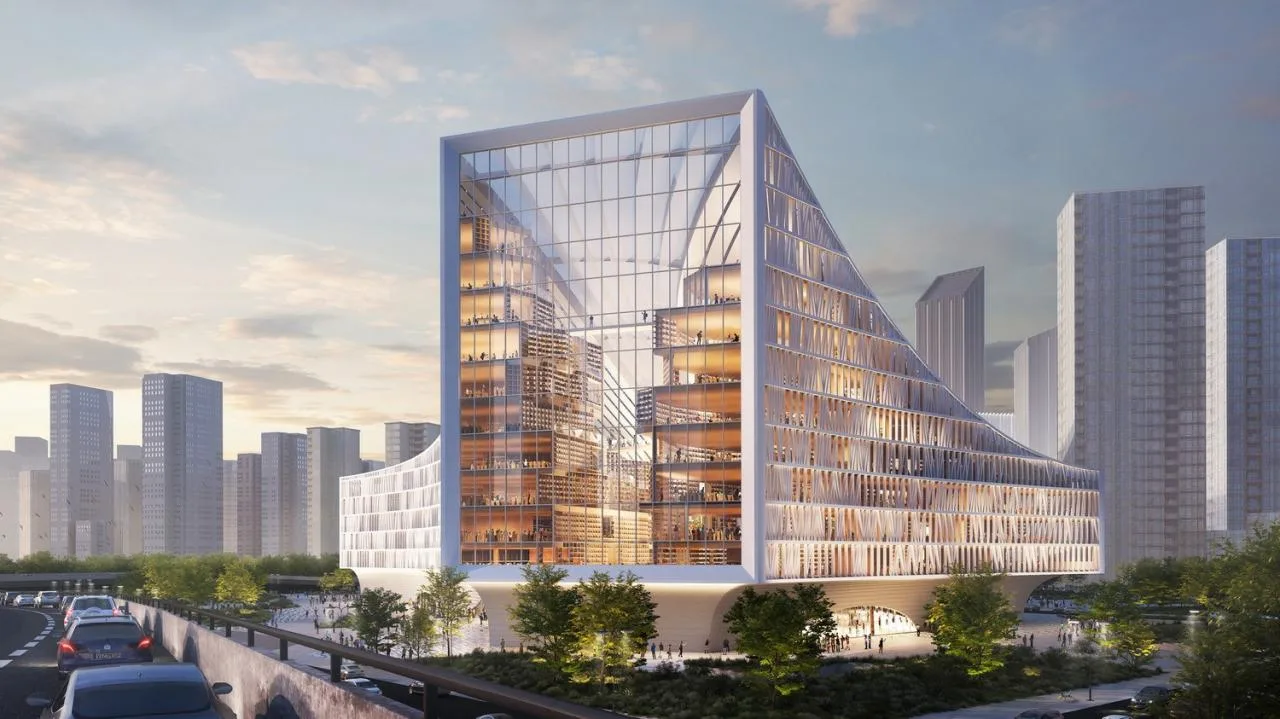
MVRDV, in collaboration with Zhejiang University Architectural Design and Research Institute Co., Ltd., won the conceptual design competition for the new Wuhan Library building. Covering approximately 140,000 square meters, this library will rank among the largest in China. It will blend traditional and modern functions, offering diverse spaces for learning, cultural exchange, reading, and creative studios.
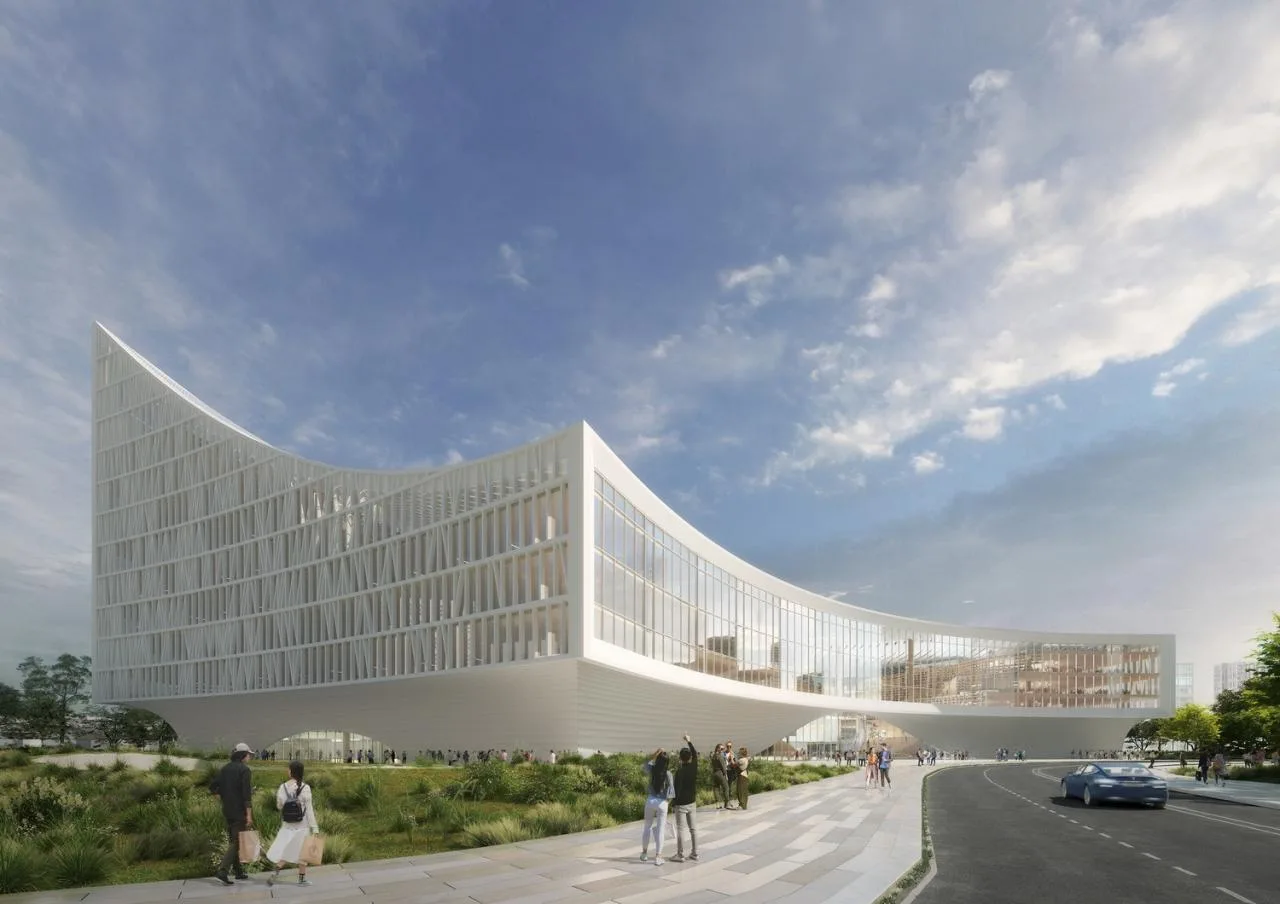
The building features three expansive observation windows that visually connect the interior with the surrounding environment, offering clear views of the library’s dynamic activities and sparking visitors’ curiosity. Its distinctive three-sided streamlined design emphasizes Wuhan’s unique location at the confluence of two rivers, making it a striking new landmark in the City of Hundred Lakes.
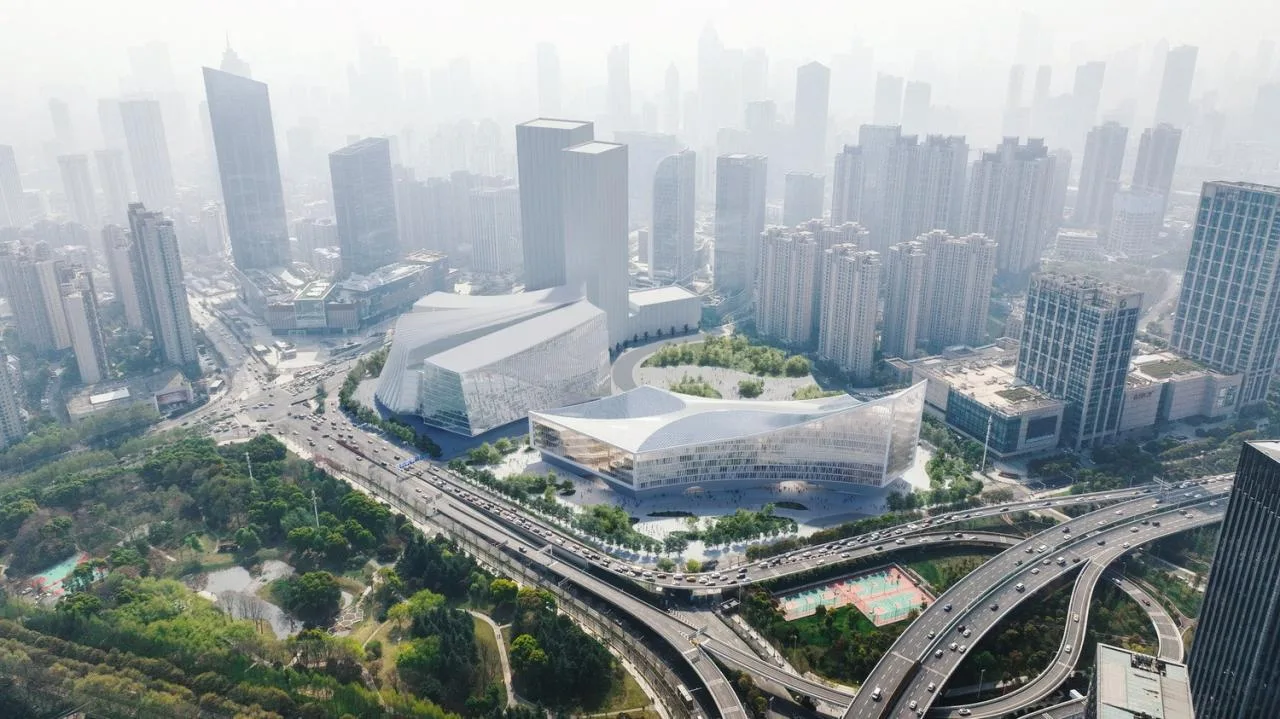
Situated in the heart of Wuhan’s Wangjiadun Central Business District, at the intersection of Changqing Road and Yunyun Road, the Wuhan Library New Building enjoys a prime location adjacent to the Baofeng Road viaduct.
Once completed, the library will integrate literature, information services, technological innovation, and research resources. It aims to enhance Wuhan’s public information service system and support functions related to reading, learning, communication, and innovation, thereby contributing to the city’s social and economic growth.
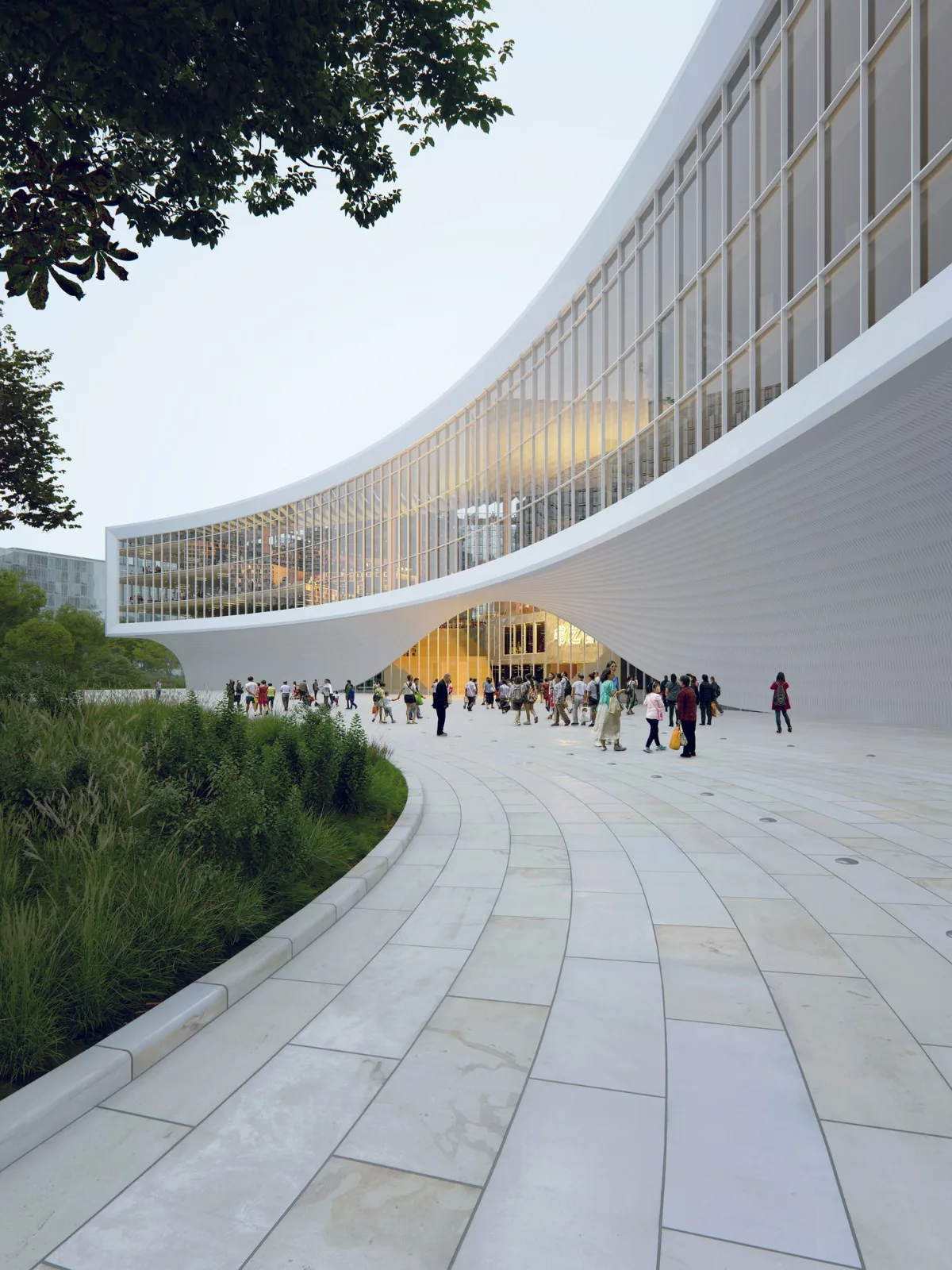
The design concept draws inspiration from Wuhan’s geography, expressing the invisible flow of the city’s rivers through architectural form, interior design, spatial quality, and materials. The three large observation windows mirror the height of nearby buildings and frame distinct city views: the tallest offers a view of the central business district skyline, the wider lower window overlooks a nearby park, and the long curved window opens toward an adjacent square, inviting passersby to glimpse the lively interior.
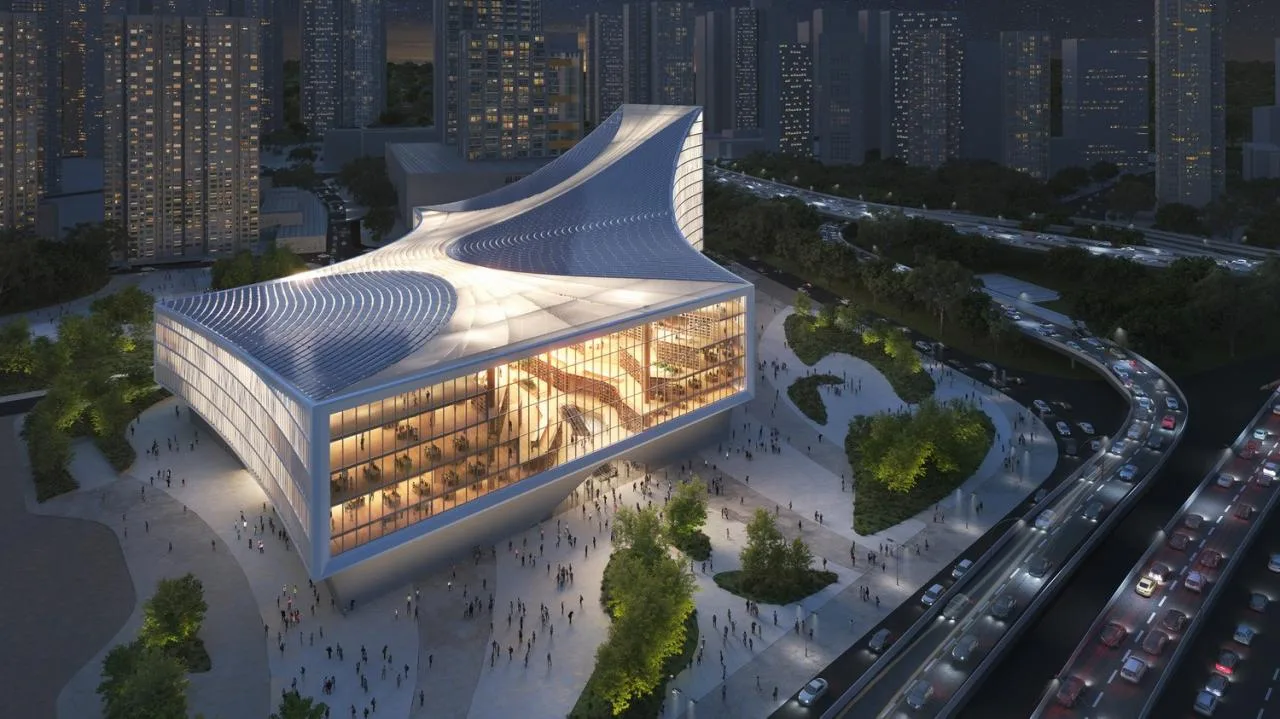
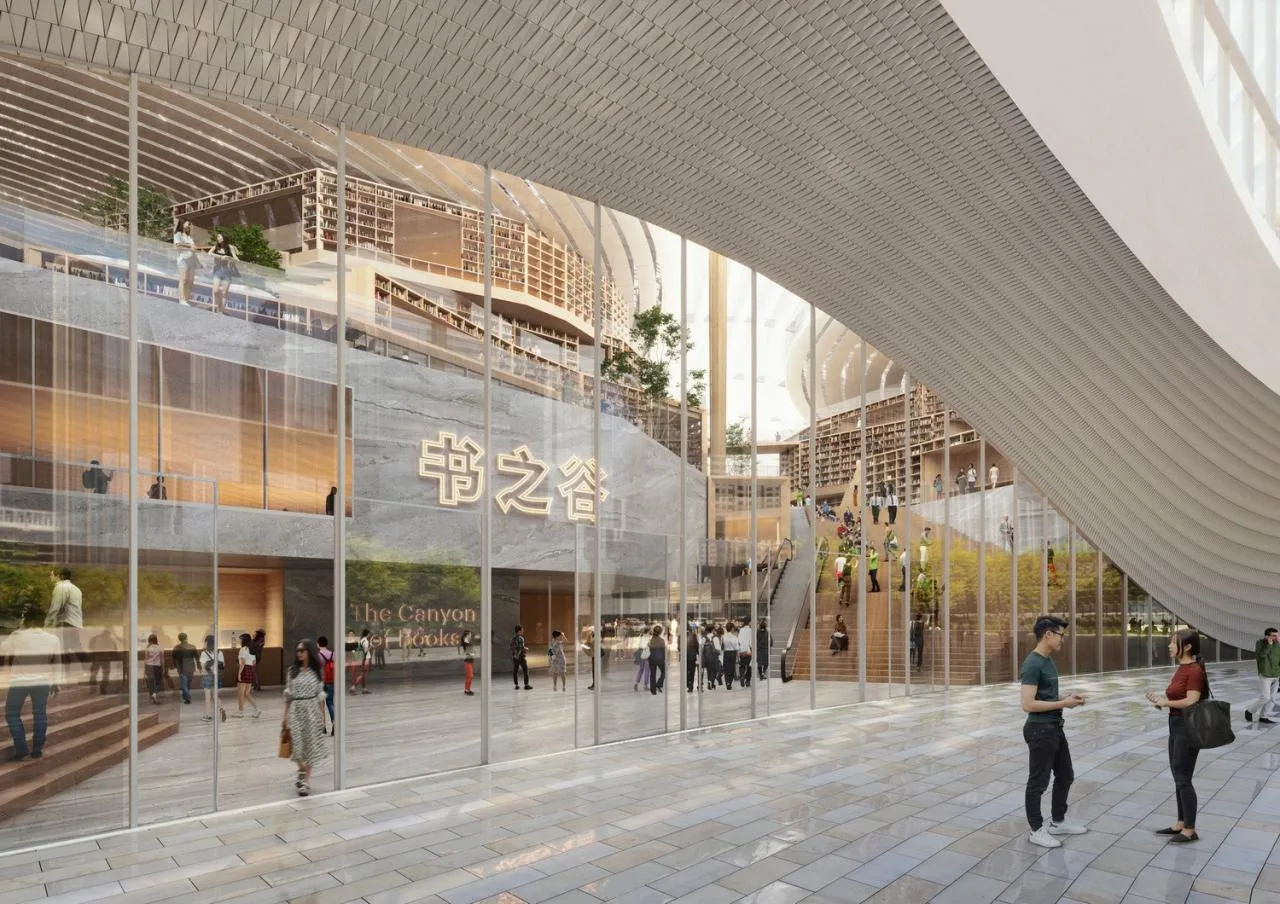
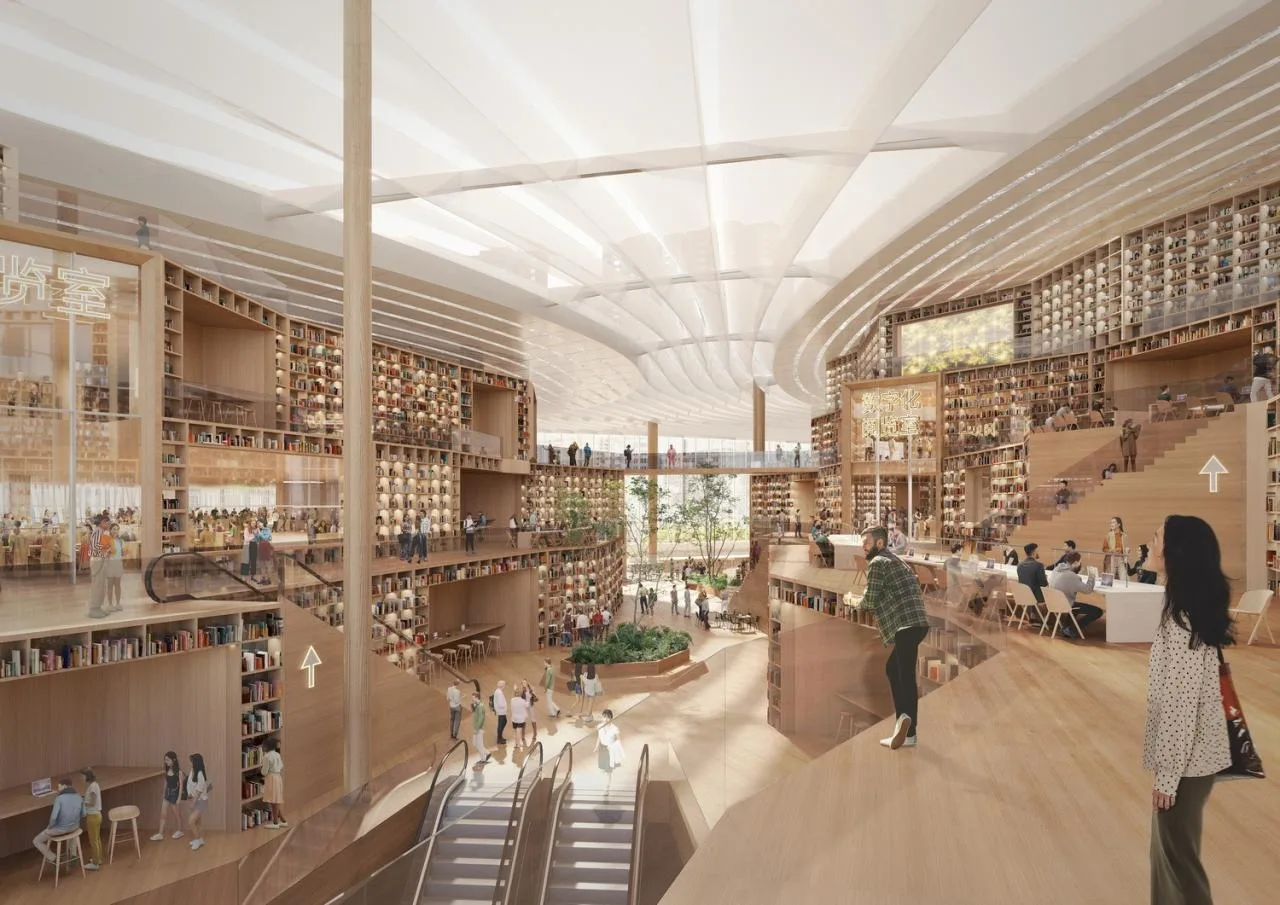
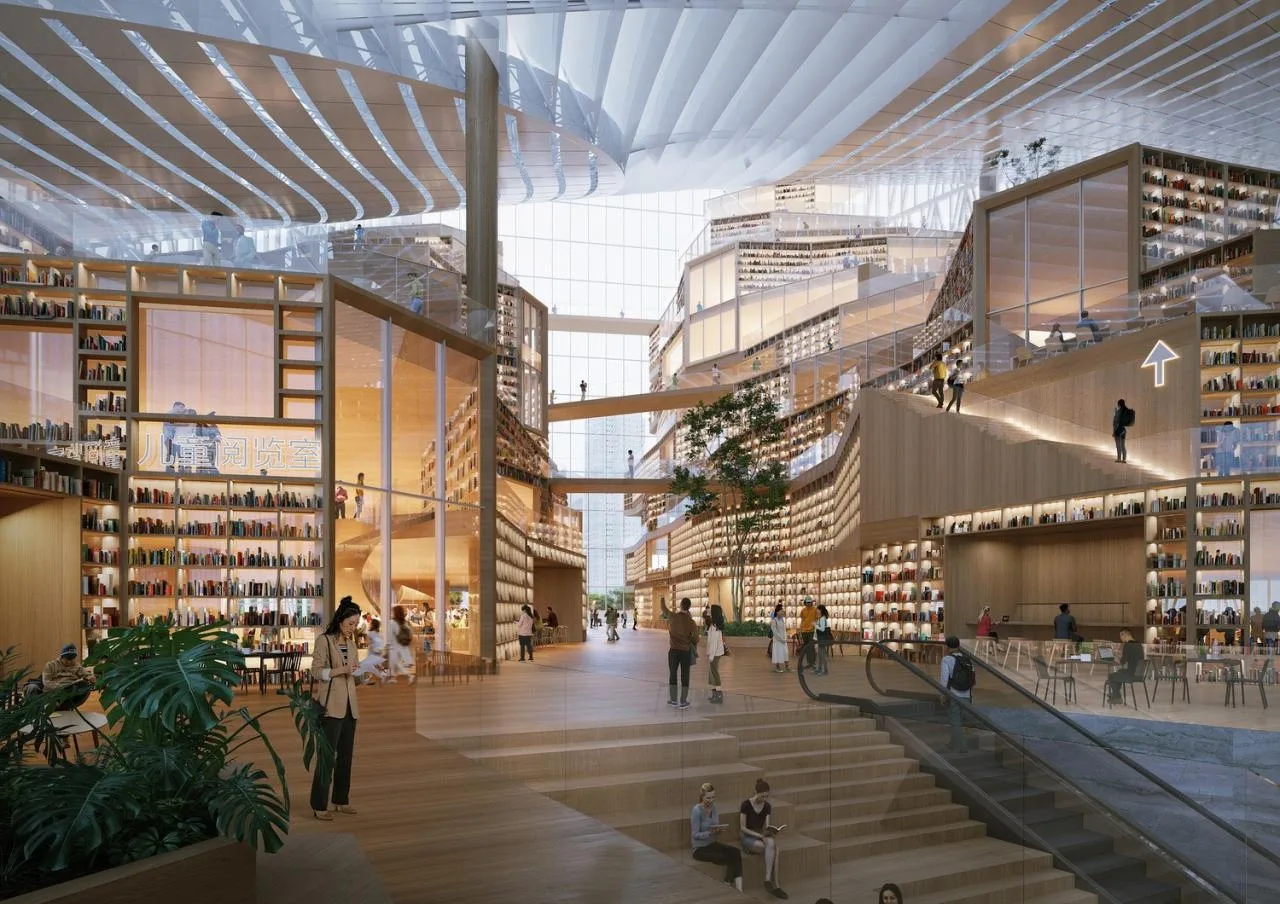
The interior spatial concept reinforces Wuhan’s significance as a city at the confluence of two rivers and rich in urban landscape. Inside, a canyon-like stepped bookshelf terrace creates a dramatic focal point, while a spacious public area on the ground floor remains open to visitors throughout the day.
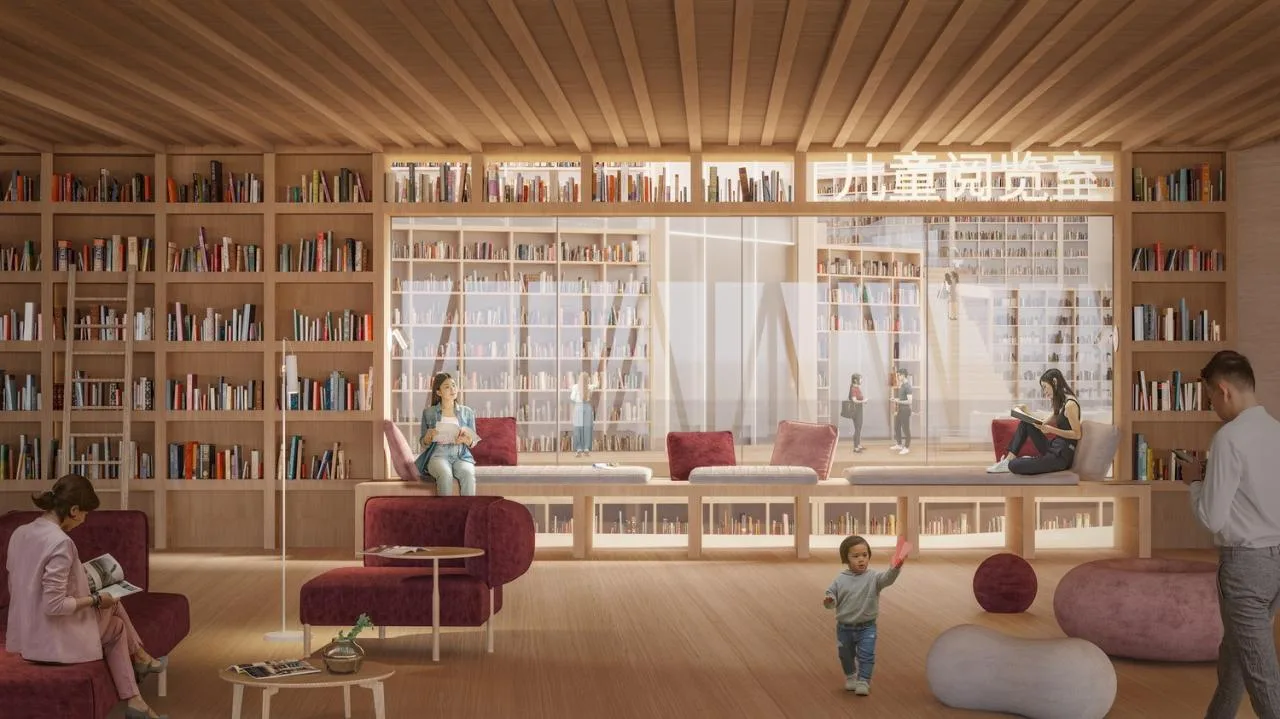
The staircase space, resembling an exhibition hall, hosts various library functions. The “canyon” design divides the interior into distinct zones, including quiet reading areas, shared workspaces, and bookshelves that become part of the canyon landscape itself. The “Reading Valley” stands as a core space within the library, serving as a hub for knowledge and content.
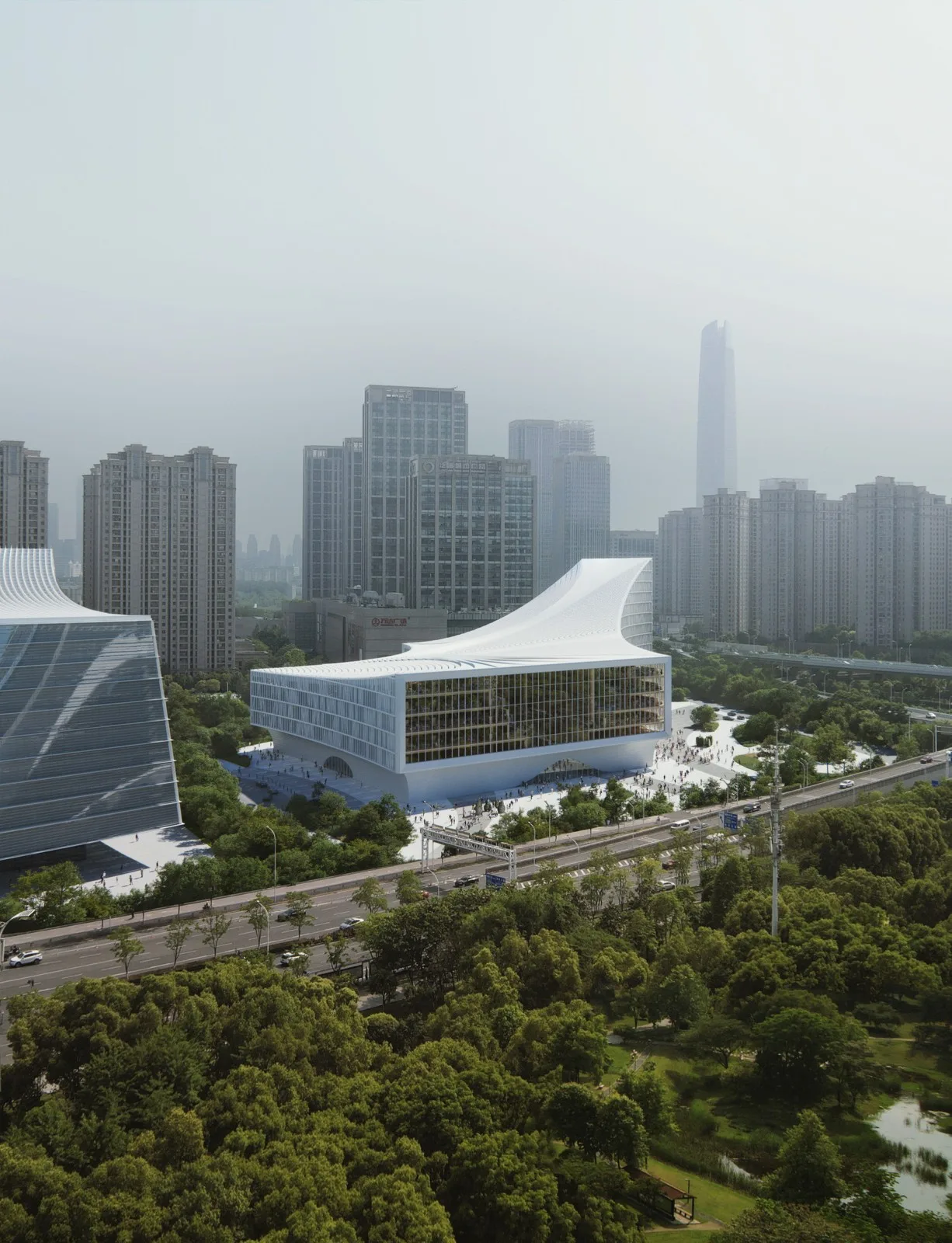
From the city’s perspective, the impressive canyon-like interior will draw visitors to pause and admire the space. Surrounding parks are planted with greenery suited to Wuhan’s local climate, serving as sustainable landscape elements. Tall trees provide shade in sun-exposed areas, and the main public zones are located in the building’s shaded northwest corner.
The native plants maintain year-round vitality with minimal upkeep and help filter water during rainy seasons, mitigating the urban heat island effect during hot summers.
MVRDV’s design thoughtfully addresses Wuhan’s hot climate with multiple energy-saving measures. Bookshelf-shaped louver panels cover the building exterior, providing shading while symbolizing the library’s function. Denser louvers are placed on sun-exposed facades, and a cantilevered base structure acts as an additional sunshade.
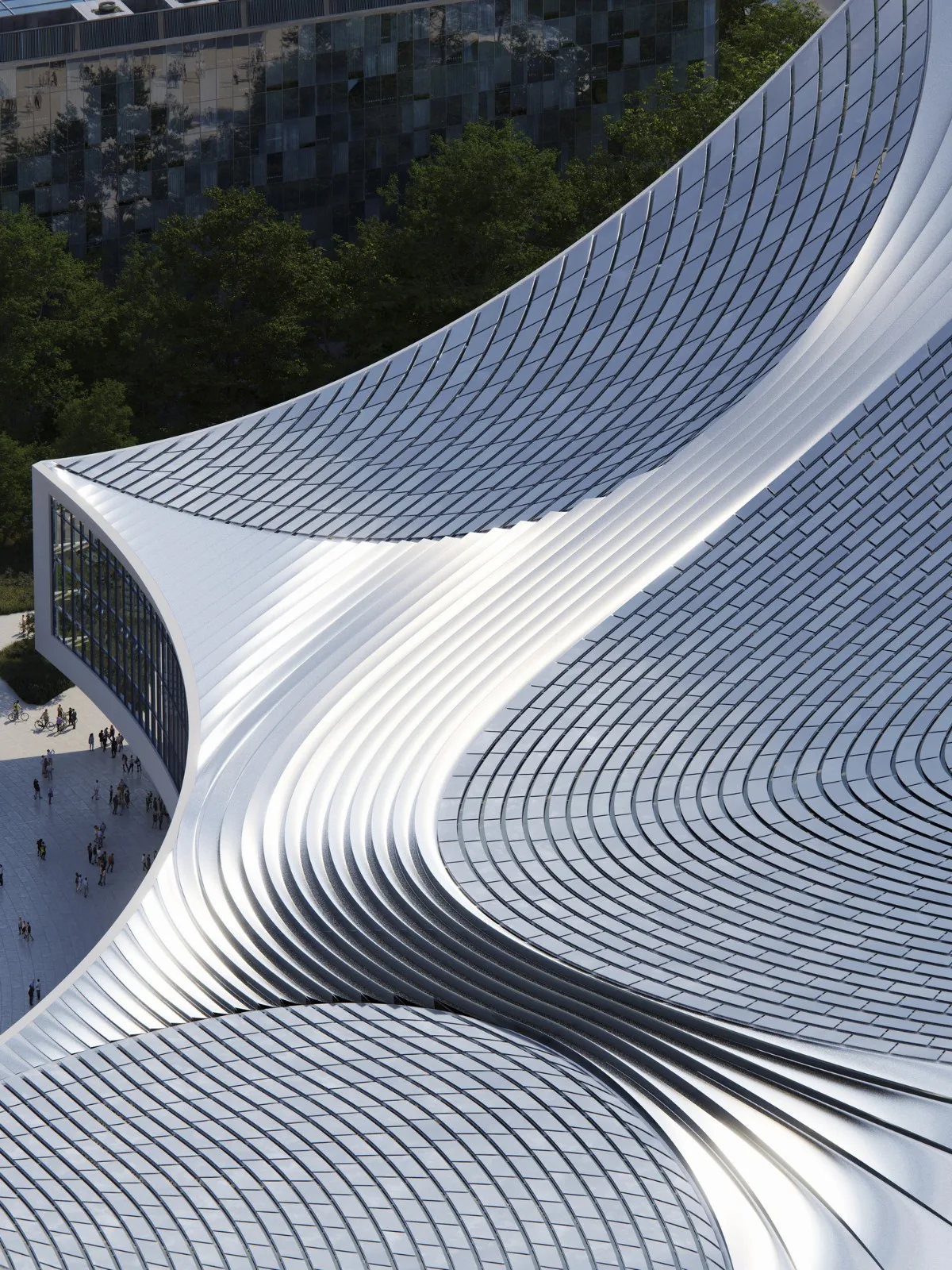
Natural ventilation is ensured through operable doors and windows. Combined with smart technology and efficient lighting systems, these features reduce the building’s overall energy consumption. Solar panels integrated into the flowing roof design supply renewable energy, further enhancing sustainability.
Inside the new Wuhan Library, visitors will encounter a variety of landscape-inspired elements. The library features continuous platform-like areas designed for learning, with the largest platform being the most popular gathering spot. As visitors ascend, the spaces become quieter, catering to readers seeking focus and tranquility.
Jacob van Rijs, Founding Partner of MVRDV, explains that the architectural design draws inspiration from Wuhan’s terrain: the building’s horizontal axis faces the lake, while its vertical axis faces the city’s skyline, reflecting a dialogue between nature and urban life. This duality is central to the design and makes the library an exciting place for community gathering.
The Wuhan Library is not MVRDV’s first library project in China. In 2017, MVRDV designed the Tianjin Binhai Library, a 33,700-square-meter cultural center featuring a luminous spherical auditorium and floor-standing stacked bookshelves. Like the Wuhan Library, Tianjin Binhai serves as both an educational hub and a social space connecting the park with the city’s cultural district.
In 2021, MVRDV also completed the renovation of an old factory building in Nantou City Village, Shenzhen, known as the “Creative Factory.” This project preserved and enhanced the existing structure rather than opting for demolition and rebuilding, showcasing MVRDV’s commitment to sustainable and adaptive reuse.
















Must log in before commenting!
Sign Up