
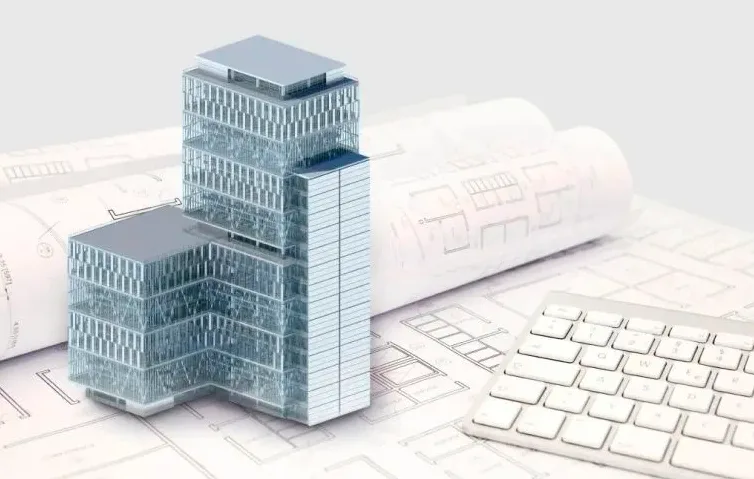
In the field of architecture in China, Building Information Modeling (BIM) technology is an emerging and foundational tool for 3D modeling. Creating 3D design models requires integrating various building system components into a complete architectural model. This approach enhances construction quality, significantly reduces errors, lowers risk, and ultimately improves project outcomes. Moreover, the scientific and effective application of BIM technology not only boosts design efficiency but also drives continuous innovation within the architectural industry.
1. Scientific and Effective Space Planning
Space planning is a crucial aspect of architectural design. When analyzing residential landscapes and shapes, it is essential to leverage 3D visualization and terrain analysis techniques to fully utilize BIM’s advantages. Terrain analysis should serve as the foundation for understanding the relationship between building volumes and topographical changes. Specialized analysis software provides reliable data support for the model, while geographic information systems (GIS) have streamlined terrain mapping, making it faster and more efficient. This significantly enhances the overall use of foundational data.
2. Conducting Preliminary Simulations
Early-stage simulation design plays a vital role in thoroughly reviewing construction content and methods, ensuring smooth and orderly project progress. Simulation scenarios allow for the identification and analysis of potential problems, enabling accurate prediction of issues and their causes before construction begins. This also facilitates the development of effective contingency plans. Preliminary simulations provide construction teams with a strong scientific basis, helping optimize design schemes and meet overall construction requirements. Additionally, BIM supports transportation planning within projects, simplifying logistics and improving efficiency.
3. Strengthening Dynamic Control
Dynamic control is key to managing architectural projects and ensuring timely progress. BIM technology should be used to gather and organize environmental data from construction sites and apply simulation models for comprehensive planning and analysis. Building a robust database system allows for effective management and updating of diverse data sets to reflect ongoing changes, supporting dynamic design requirements. Project schedules must clearly define technical responsibilities, with continuous refinement of construction planning. Scene analysis and observation help detect issues in technology and scheduling, ensuring alignment with real-world conditions. Dynamic progress monitoring also helps prevent losses caused by construction delays.
4. Energy Conservation and Utilization
Green building practices are an essential trend in the construction industry, aimed at maximizing resource efficiency while minimizing environmental impact. To assess the energy-saving quality of a design, it is necessary to define thermal standards and design values for the building’s enclosure. Calculating energy consumption ensures the design meets these benchmarks. Designers must evaluate the building’s energy needs and compare air conditioning use with annual heating demands to maintain thermal performance. This balancing method is widely used in design validation. Additionally, building form, orientation, and size must be carefully considered, ensuring thermal parameters comply with industry standards. These thermal characteristics are typically detailed in construction drawings, requiring precise energy calculations and clear documentation. BIM technology facilitates comprehensive data processing and analysis, making it easier to compare energy-saving standards and enclosure parameters visually. This reduces design workload, enhances data accuracy, and minimizes calculation errors.
The above summarizes key applications of BIM technology in architectural design. Everyone may have different perspectives, but I hope this article provides valuable insights to all readers!
















Must log in before commenting!
Sign Up