
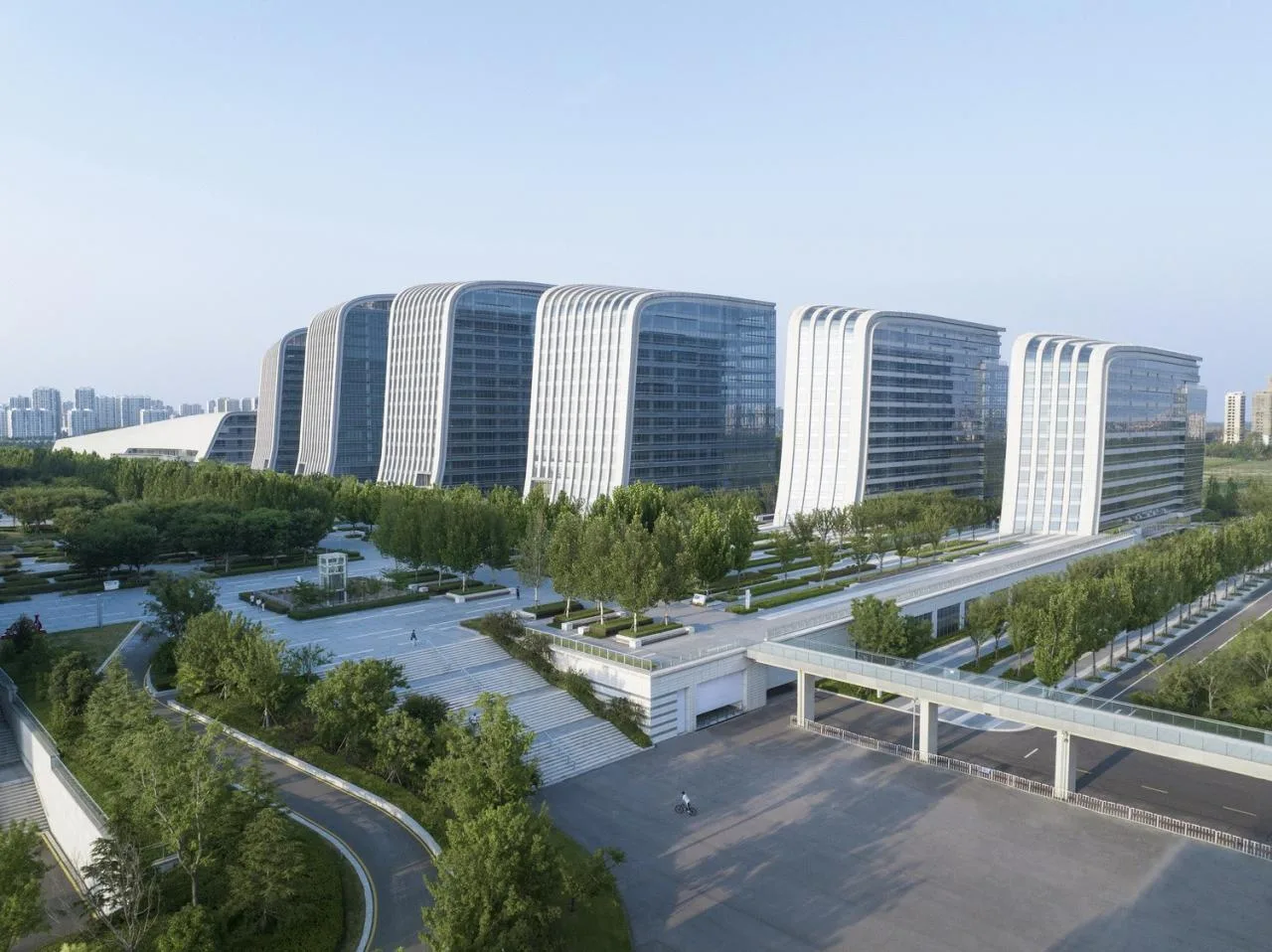
Jining Cultural Industry Park represents the third phase of the Jining Cultural Center, situated in the picturesque Taibai Lake New District of Jining City, Shandong Province. The overall master plan and architectural design were developed by LAGUARDA.LOW ARCHITECTS (LLA Architectural Design Company). This phase features a commercial complex alongside a highland park area, where the towering mountainous terrain complements the entire cultural center project. The tower’s facade cascades downward like a waterfall from the peak of a high mountain, exuding a majestic and commanding presence. The Highland Park and the tower are seamlessly integrated into the landscape, flowing like water to unify four cultural and artistic venues, harmonizing with the distant Taibai Lake and enhancing the overall setting.
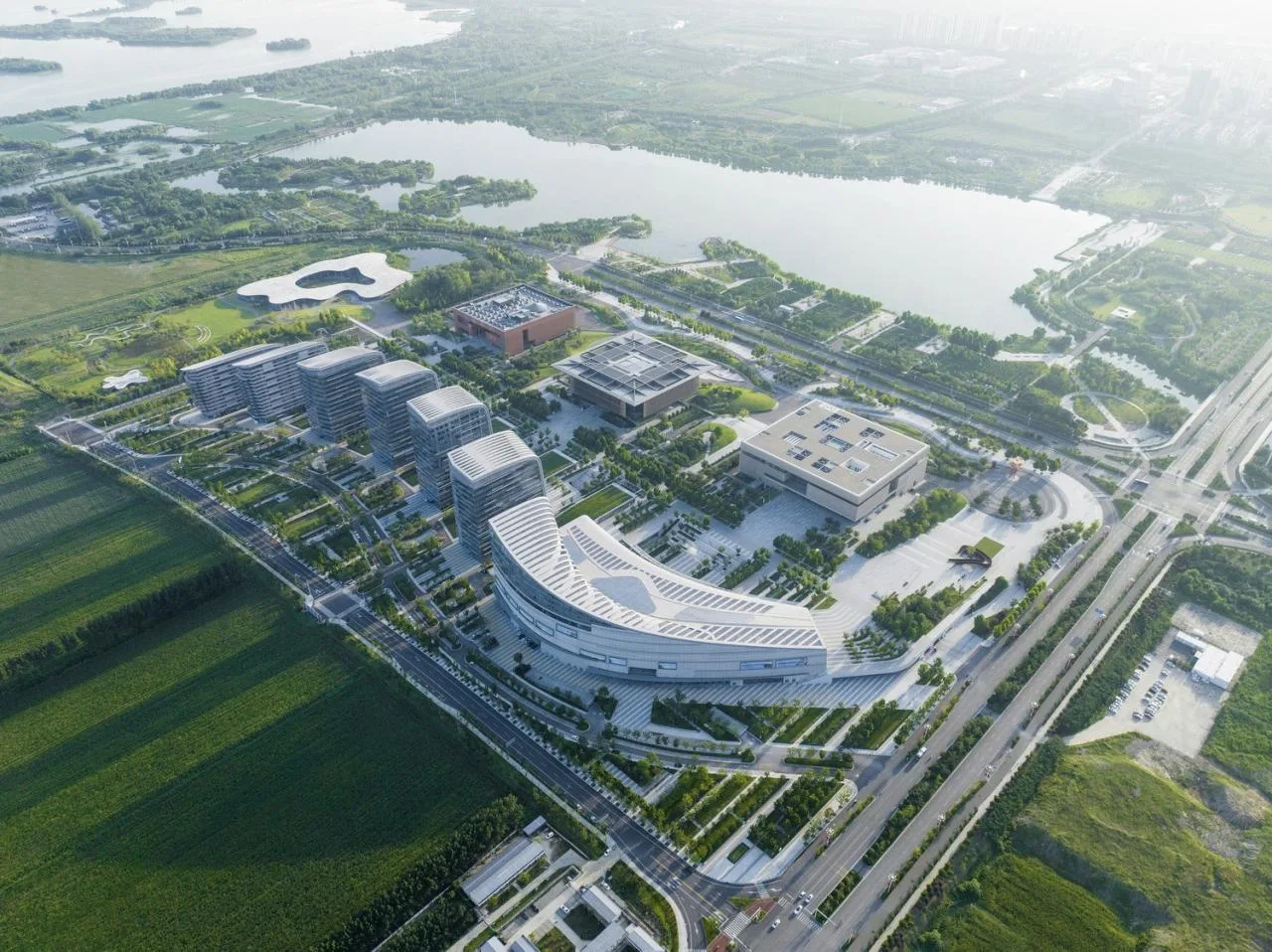
The Jining Cultural Center is a major undertaking in Shandong Province, developed in three phases. The first phase includes the Group Art Museum designed by Tianjin Urban Planning Research Institute, the Jining Museum by Mario Botta, and the Jining Library by He Jingtang. The second phase features the art museum designed by Xize Liwei. In 2015, LAGUARDA.LOW Architects were invited to participate in the design competition for the third phase. After thoroughly understanding the project, they proposed the concept of “high mountains and flowing water” and were commissioned to design the cultural, commercial, and business complex for Phase III.
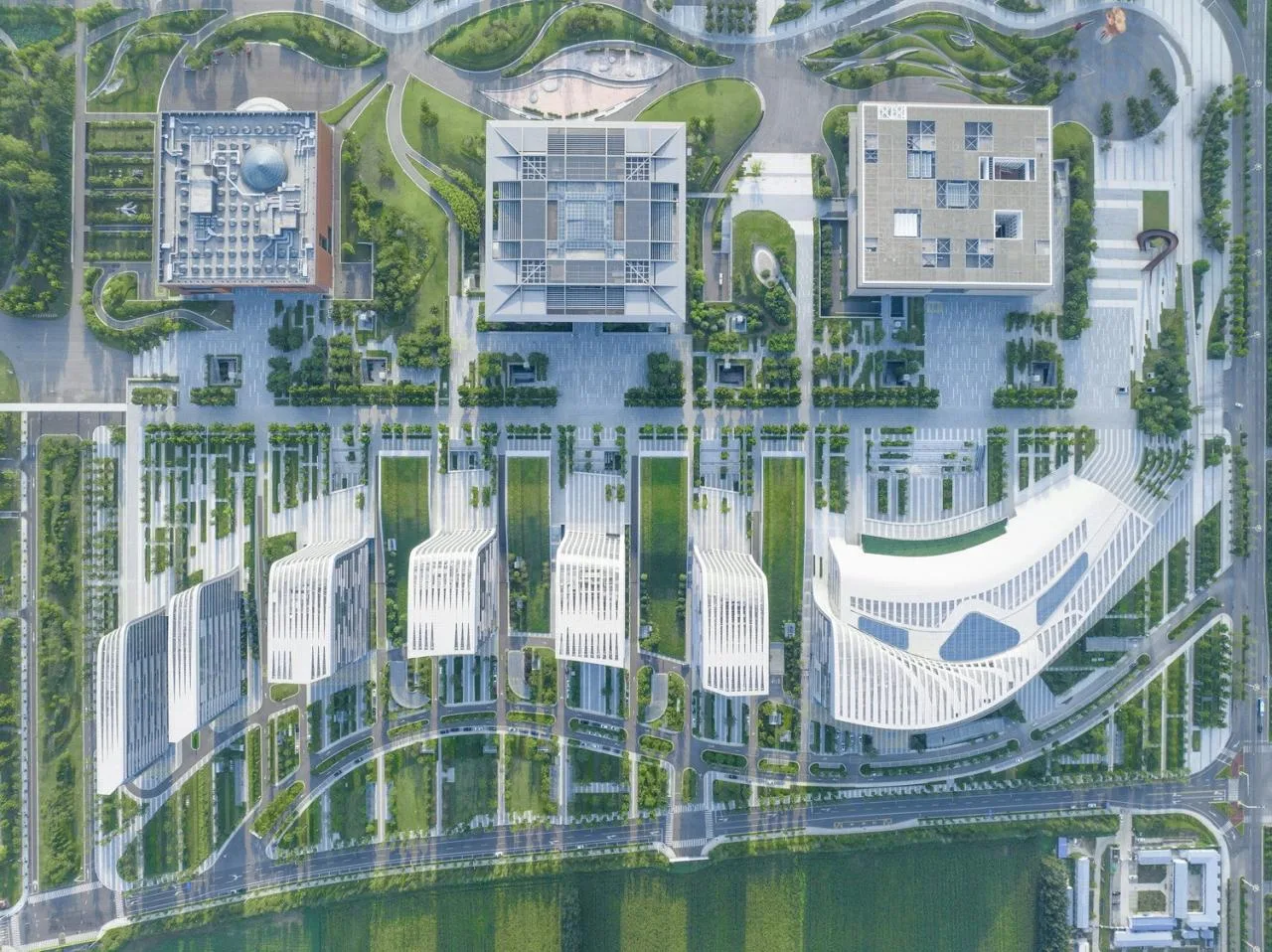
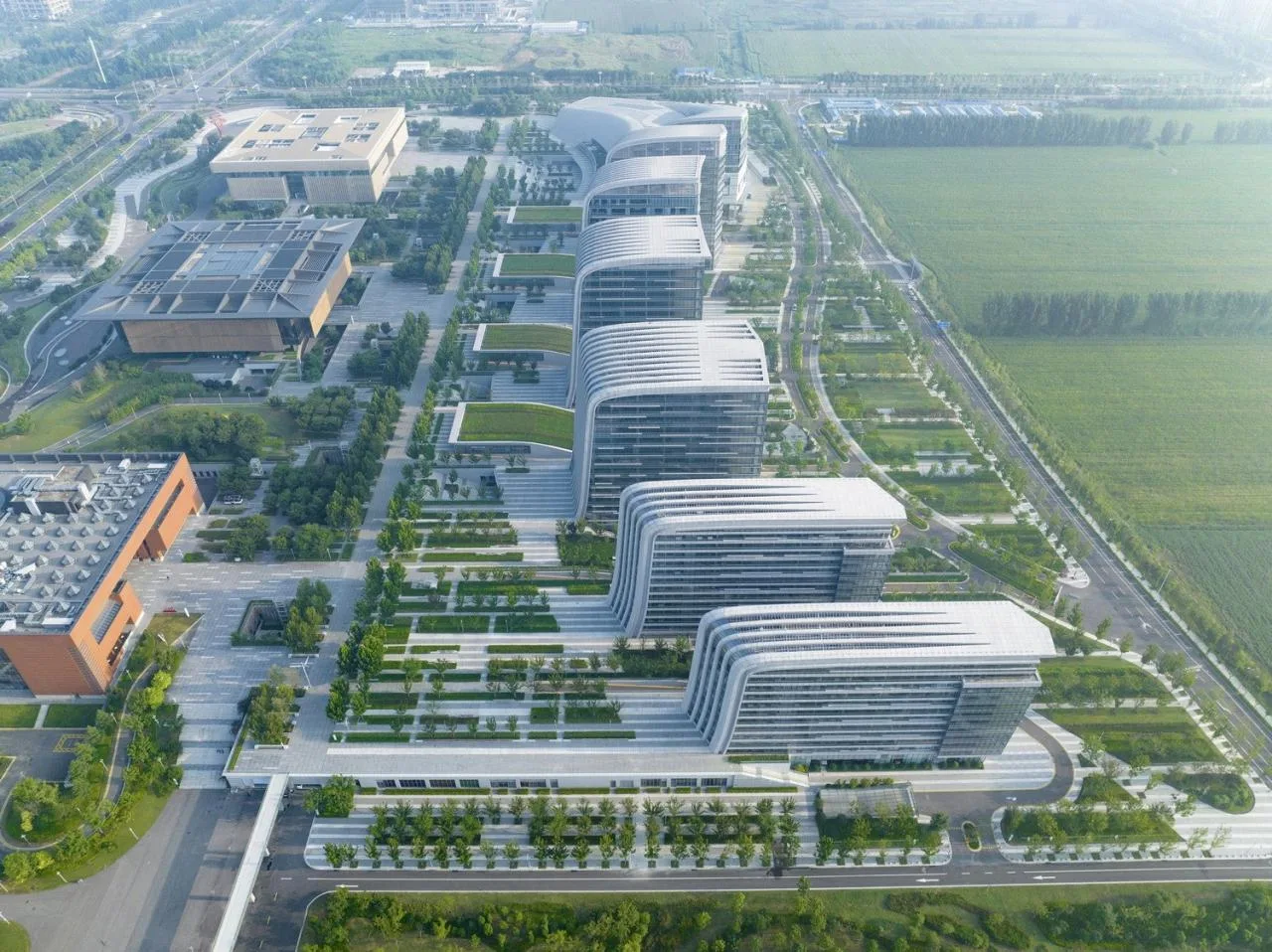
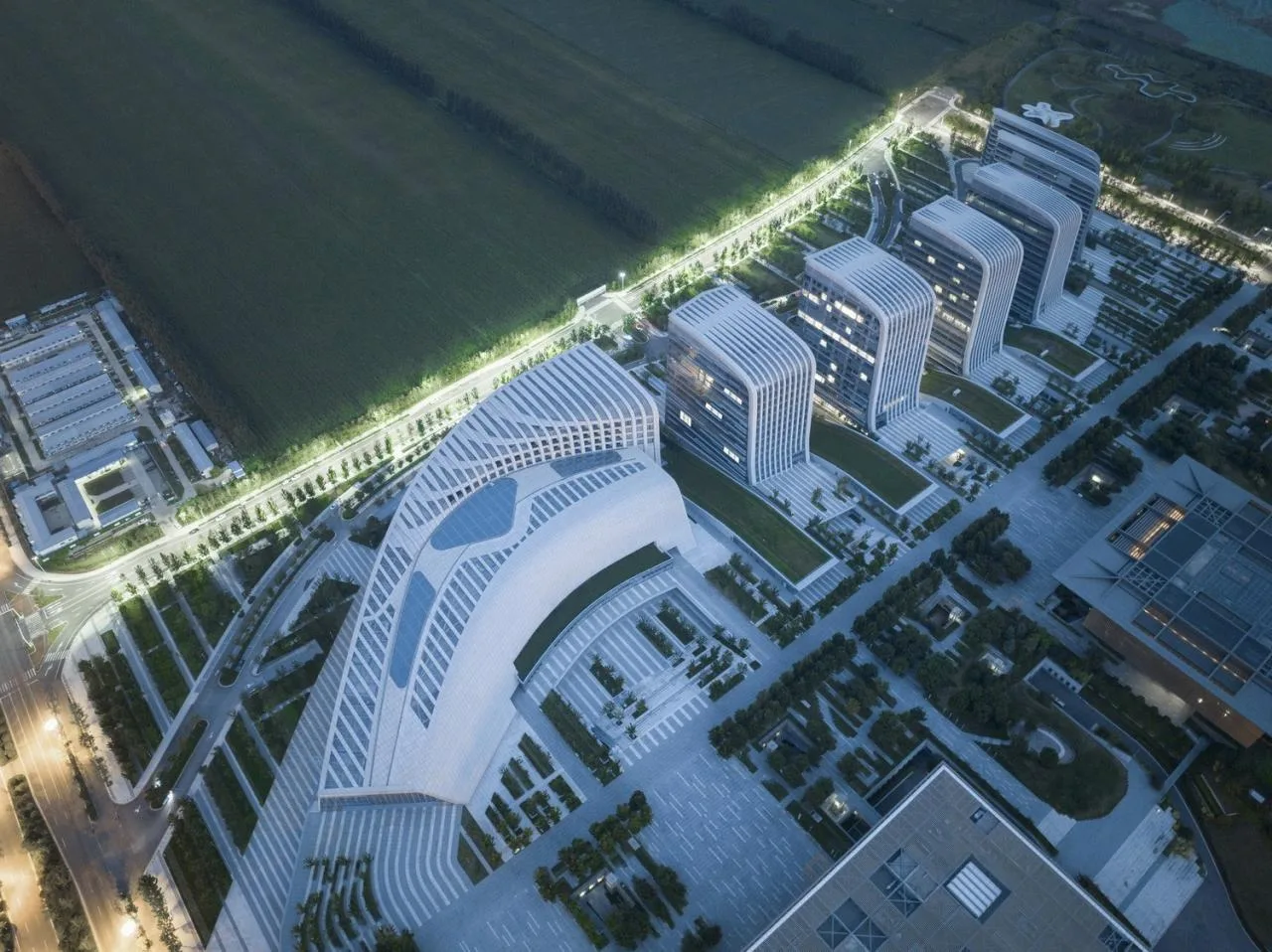
The third phase introduces four cultural and creative office buildings, two SOHO apartment towers, a boutique hotel with commercial podiums, four block commercial units, and an affiliated highland park, covering a total construction area of 360,000 square meters. The design connects seven high-rise buildings by controlling the overall contour from north to south, creating a seamless architectural language. The highland park platform between the towers and cultural buildings forms a continuous west-to-east platform, maintaining spatial accessibility with smooth, dynamic curves. This integration complements the buildings from the first and second phases, creating a harmonious cultural complex. The project offers a multi-layered experience combining culture, office, retail, entertainment, and nature for both residents and visitors, establishing a distinguished new landmark for the “hometown of Confucius and Mencius.”
Overall Planning and Landscape Design
The master plan goes beyond simply assembling individual buildings; it aims to create an engaging environment that encourages exploration, sparks inspiration, and fosters communication.
From the project’s inception, the LLA design team conducted a comprehensive analysis of the site, considering multiple possibilities and exploring various solutions. The site overlooks Weishan Lake and borders the Taibai Lake Scenic Area, surrounded by stunning natural landscapes and already hosting four independent cultural buildings. The key challenge was to design a cohesive cultural center master plan that integrates diverse business functions without isolating the cultural buildings, commercial complexes, or natural surroundings. The design needed to connect public spaces and commercial complexes with the four cultural buildings harmoniously. The relationship between cultural architecture, urban commercial complexes, and landscape became the focal point, leading to the emergence of the “high mountains and flowing water” concept.
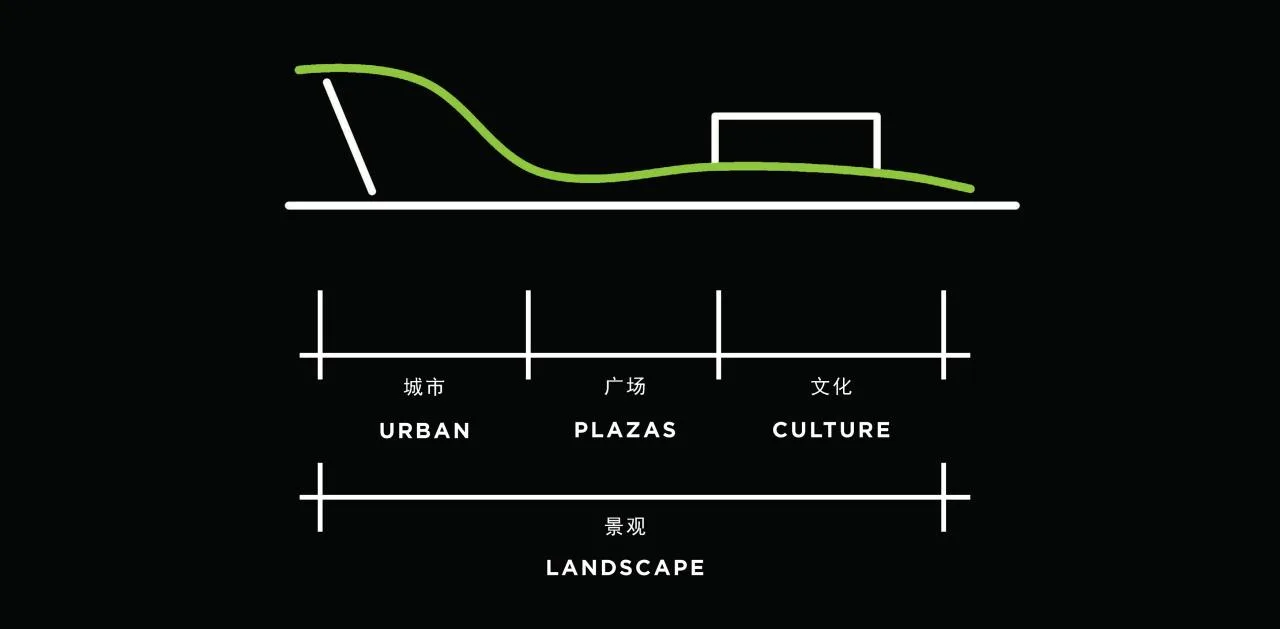
Initial Conceptual Diagram © LLA
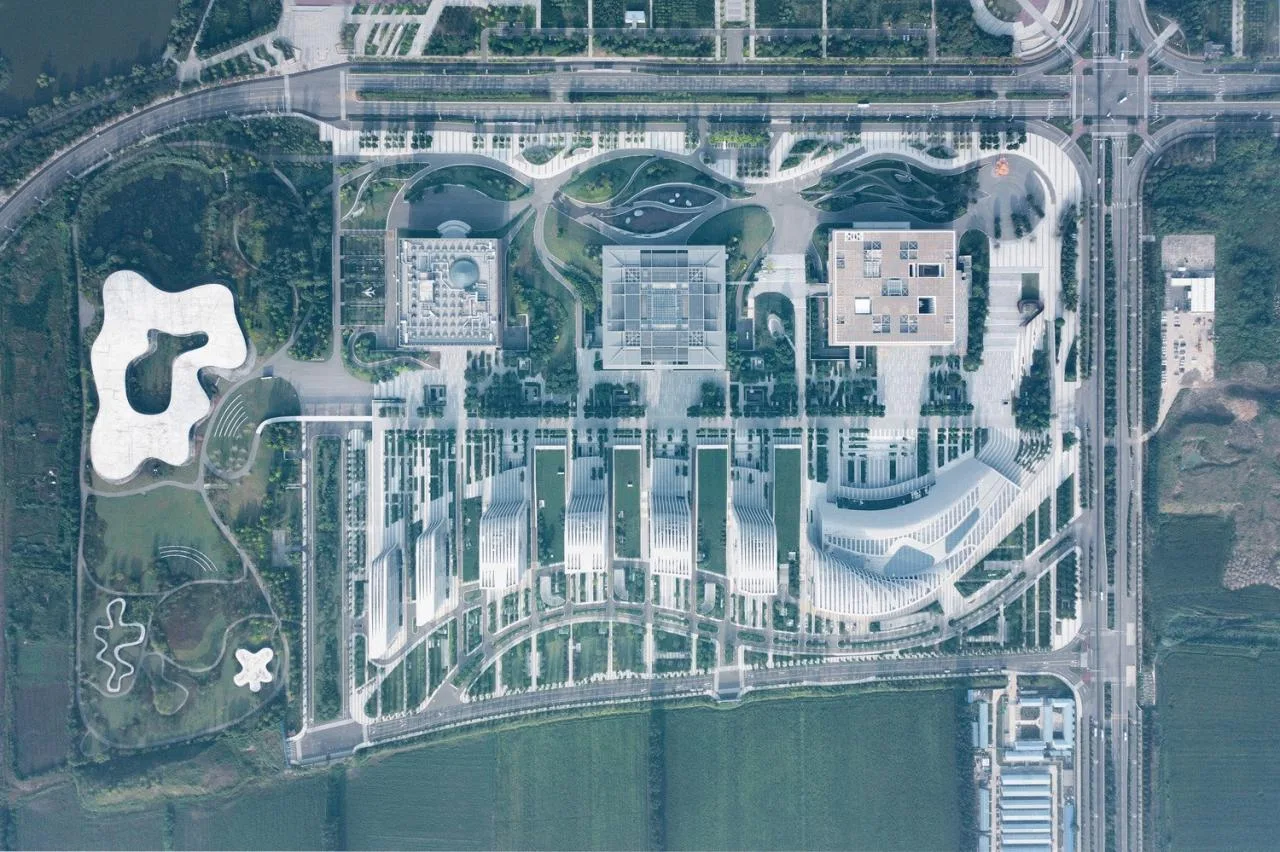
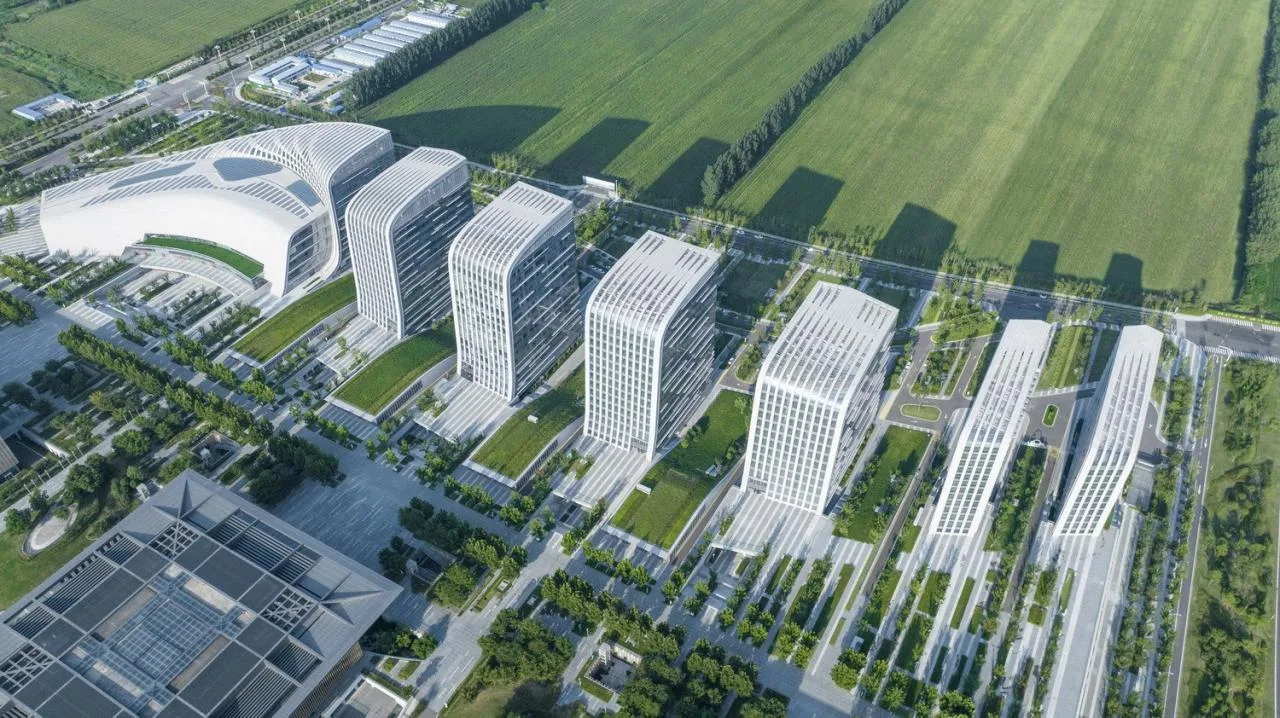
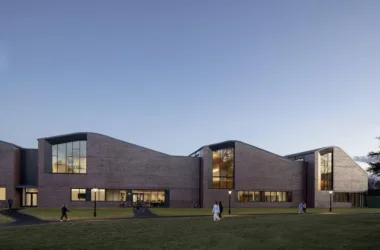
Recognizing the unique significance of each cultural building, the design treats all four structures equally, representing the future vision of the project. To preserve their prominence, the third phase’s retail, residential, hotel, and office towers serve as a subtle backdrop, complementing and supporting the cultural buildings without overshadowing them.
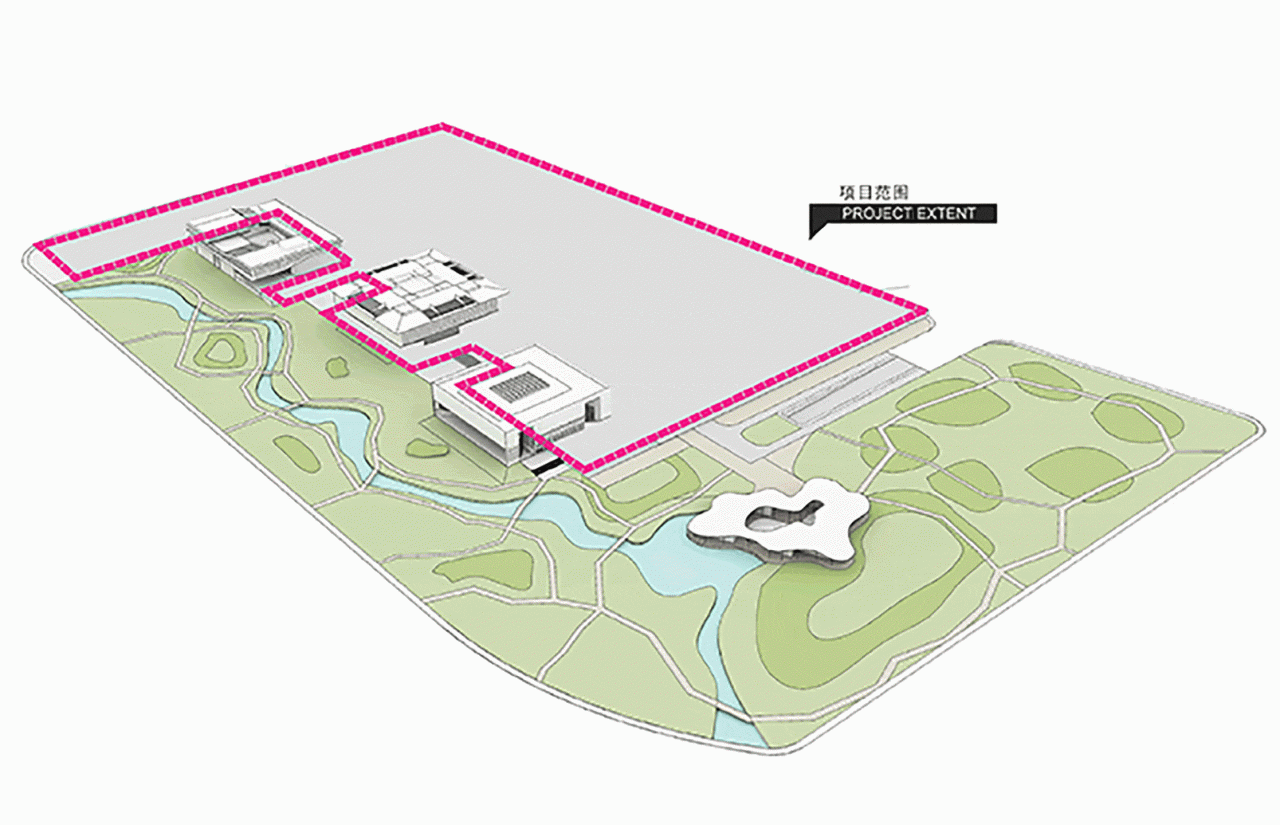
△ Volume Evolution Diagram © LLA
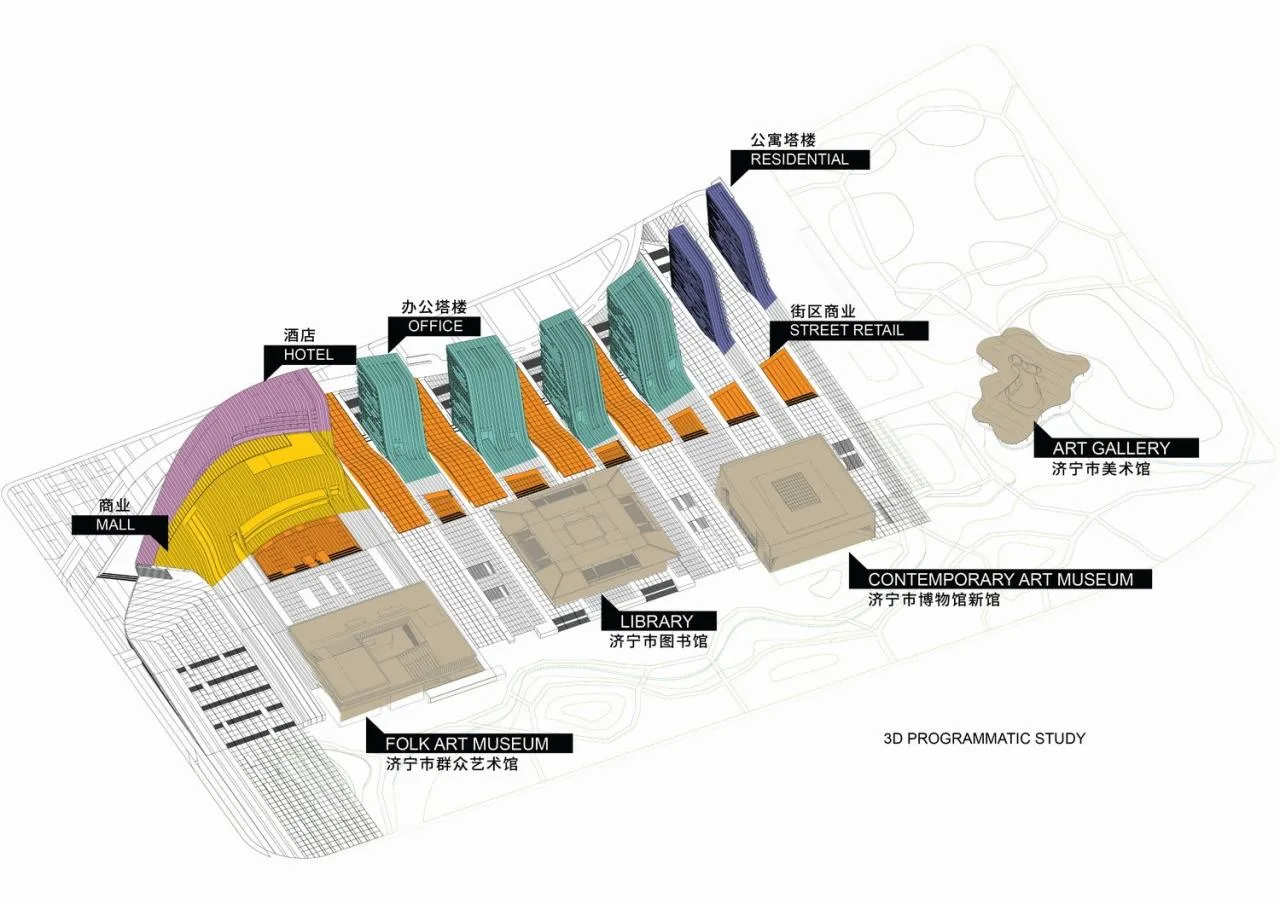
△ Functional Zoning Diagram © LLA
The design concept begins by extending the water surface of Taibai Lake across the site, creating a “flowing texture” that defines the main axis platform horizontally. This platform is elevated above the “water” to form the highland park. A streamlined landscape belt runs vertically from east to west, with the eastern edge rising into a towering architectural form resembling a mountain. This axis links Taibai Lake, the lakeside cultural complex, the highland park, and the commercial complex, creating a fluid spatial progression.
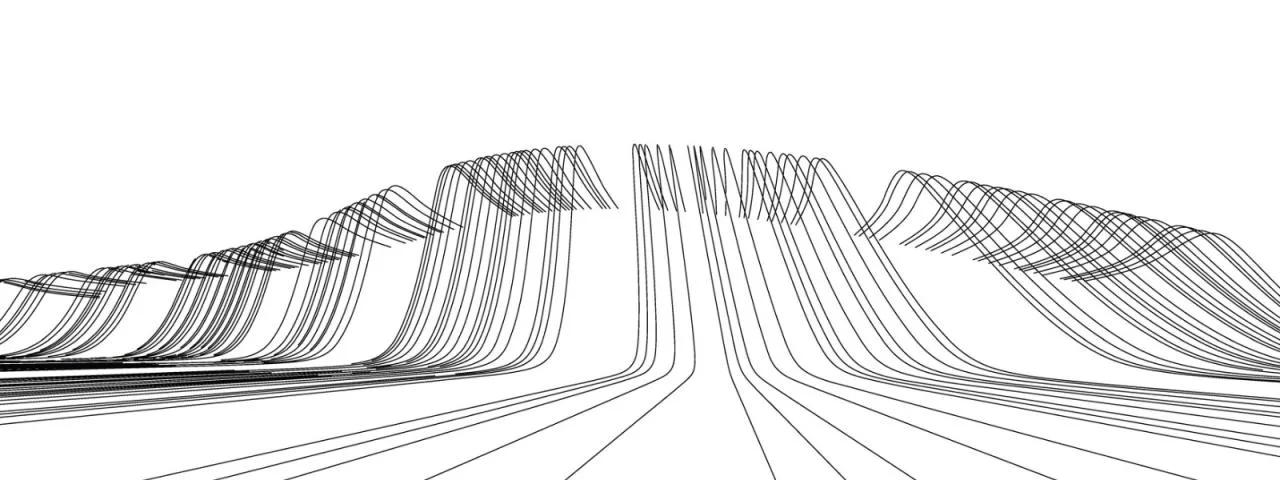
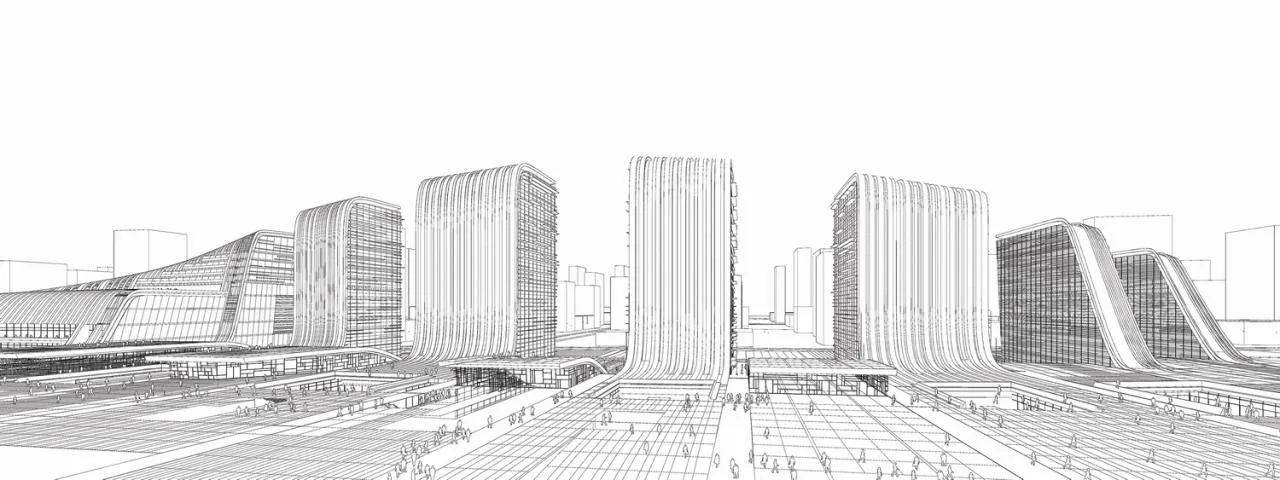
△ Draft of High Mountains and Flowing Water Concept Line © LLA
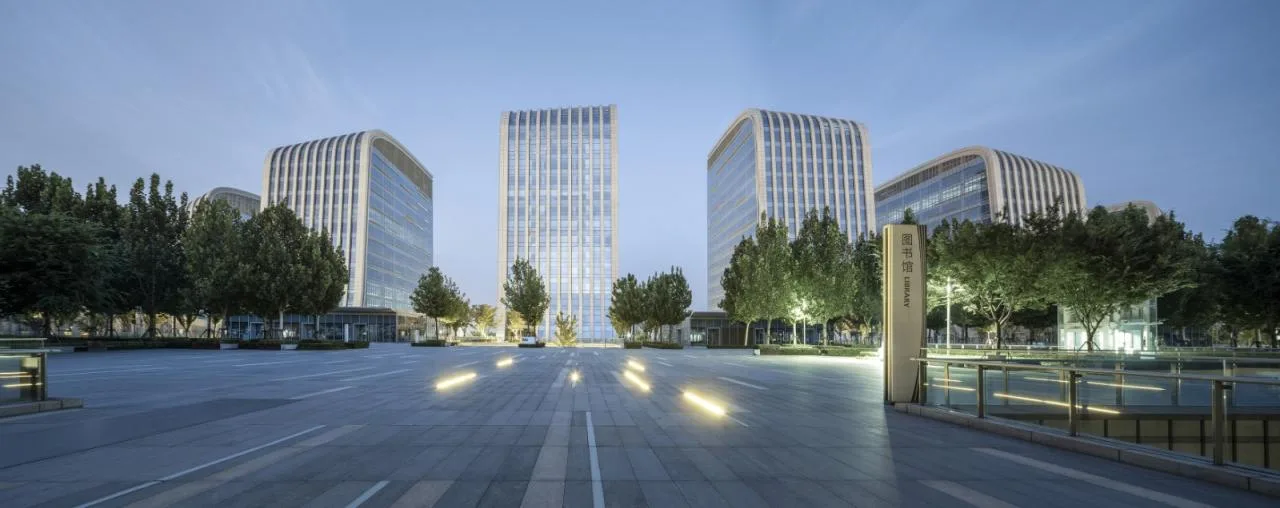
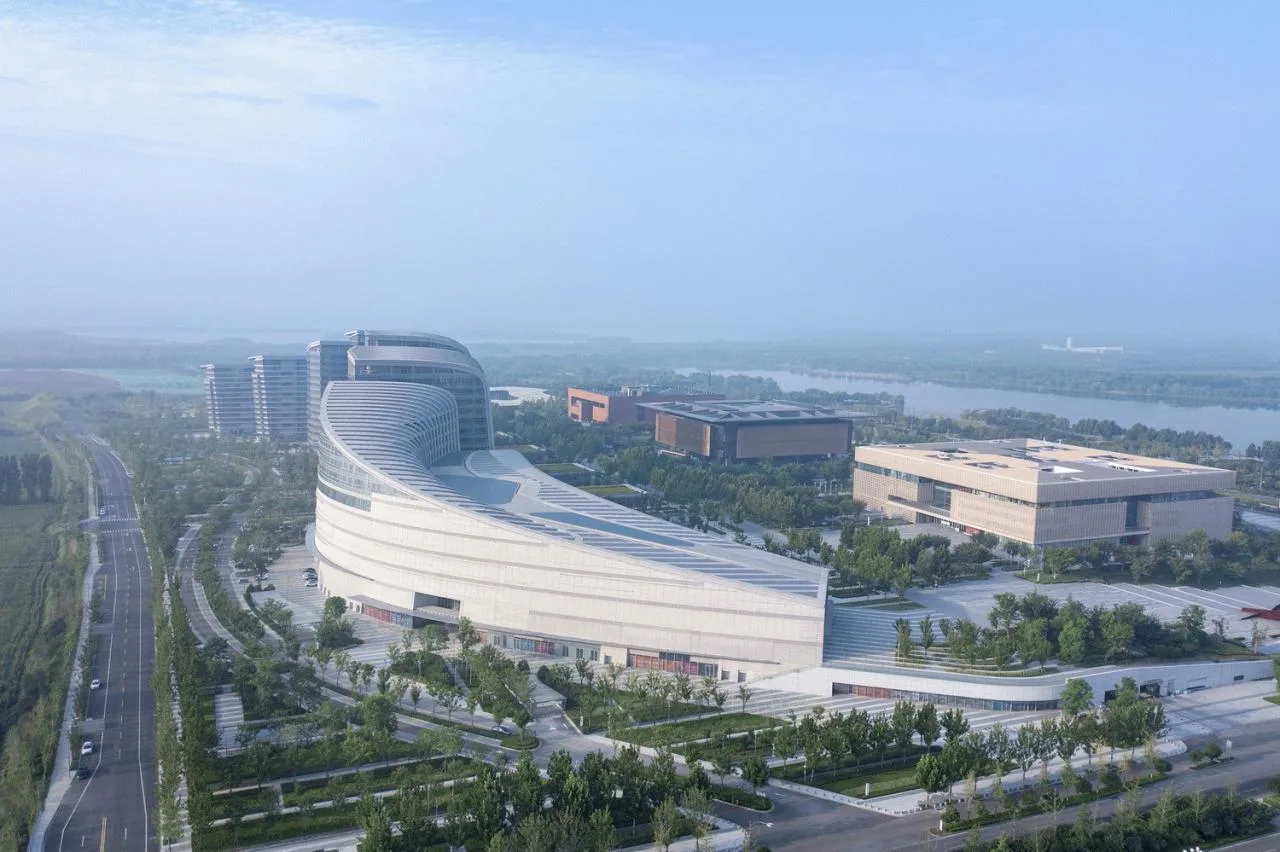
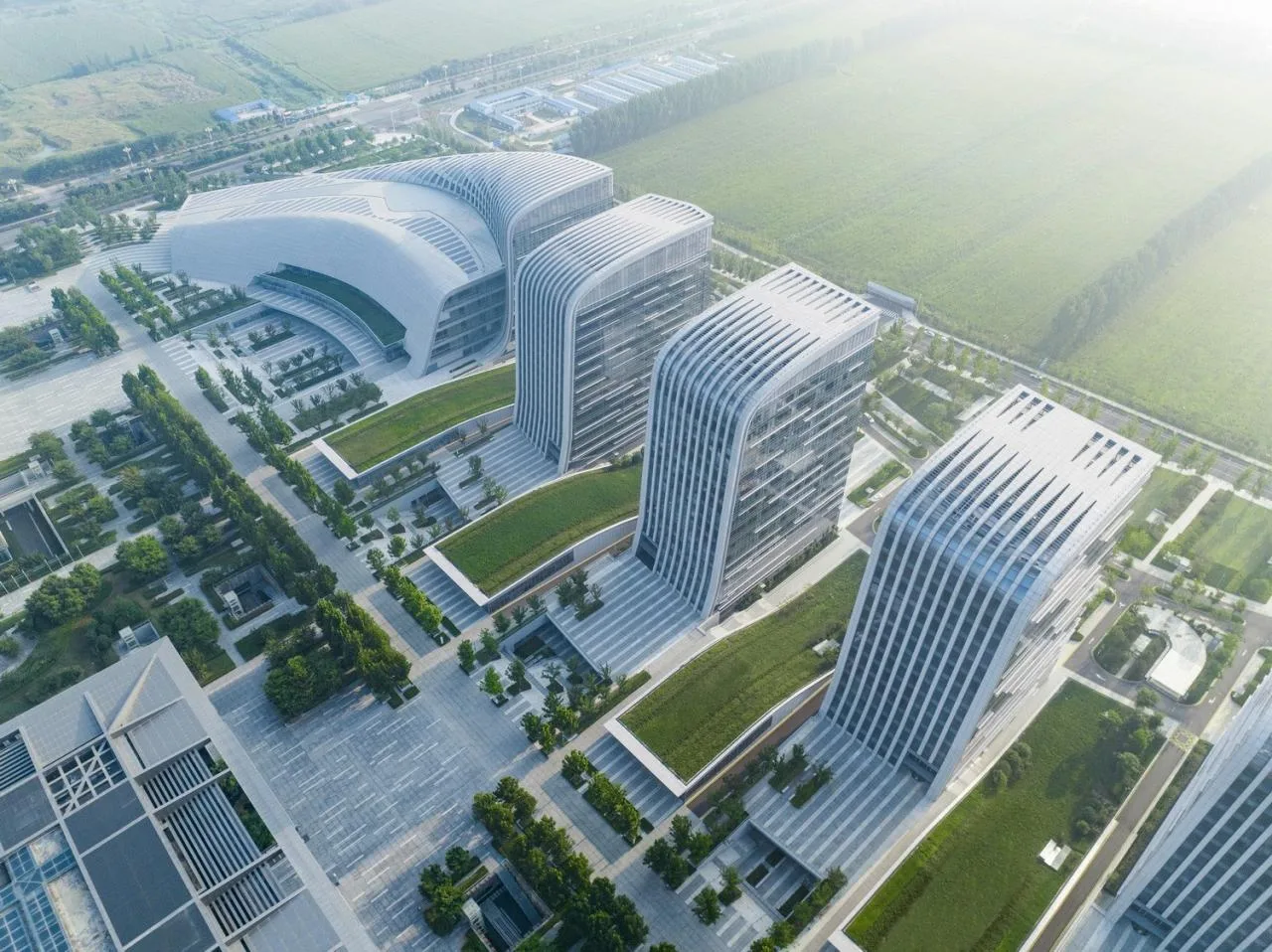
Integrating all new functional zones in Phase III while minimizing disruption to the “water surface” was essential. The landscape belt was carefully laid out to ensure even distribution of space among cultural buildings, while balancing commercial volumes. The designer carved major public spaces and building relationships by slicing through the conceptual “water surface,” with subtle adjustments creating engaging spatial elements. A primary north-south pedestrian axis and other key public spaces guide visitors through the site. Small blocks and plazas, like islands scattered across a lake, offer intimate, human-scale spaces for visitors.
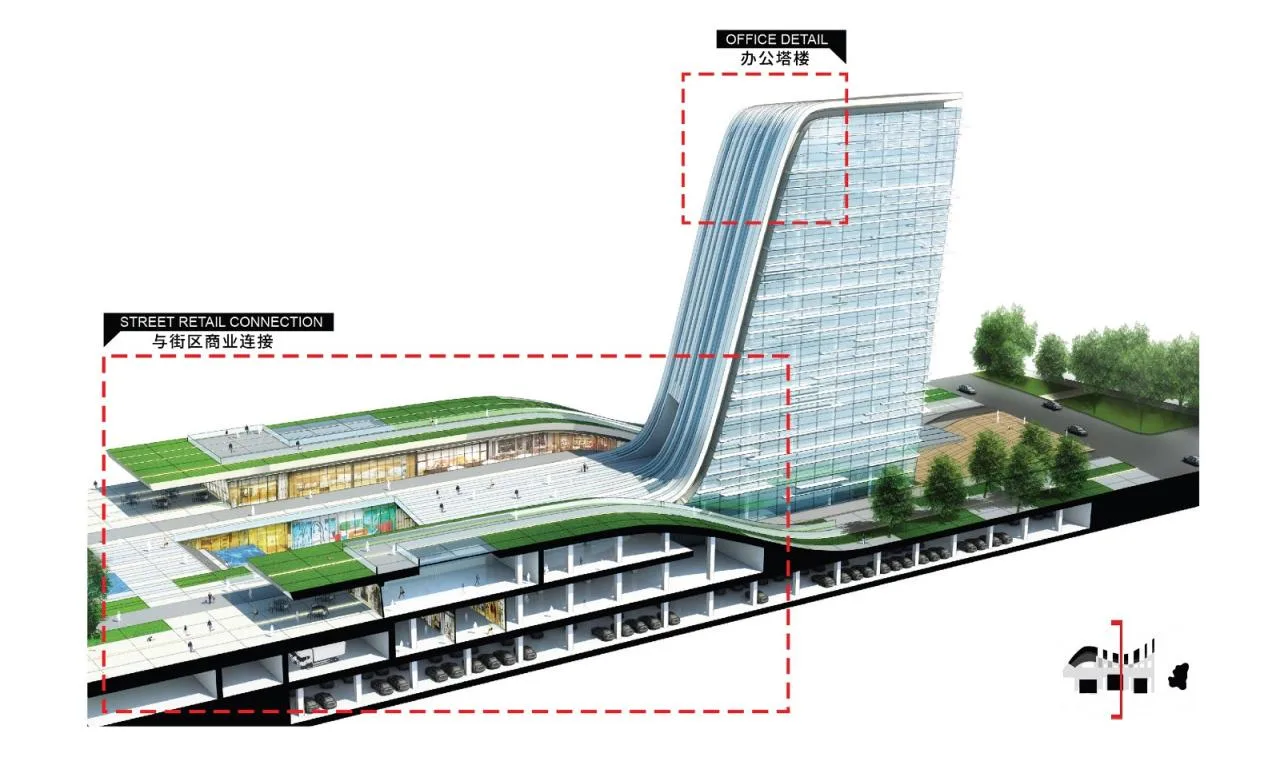
△ Sectional Perspective Diagram © LLA
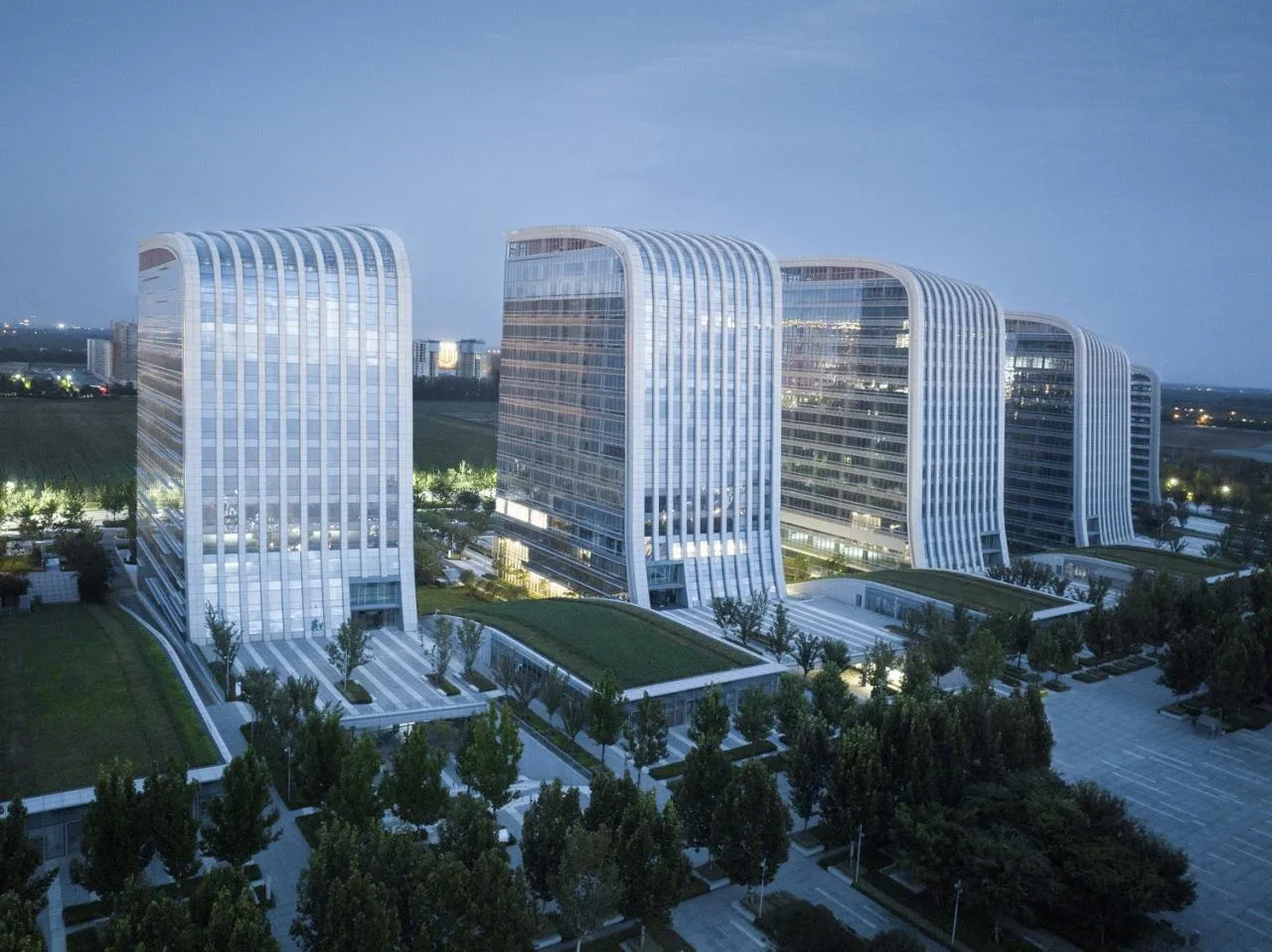
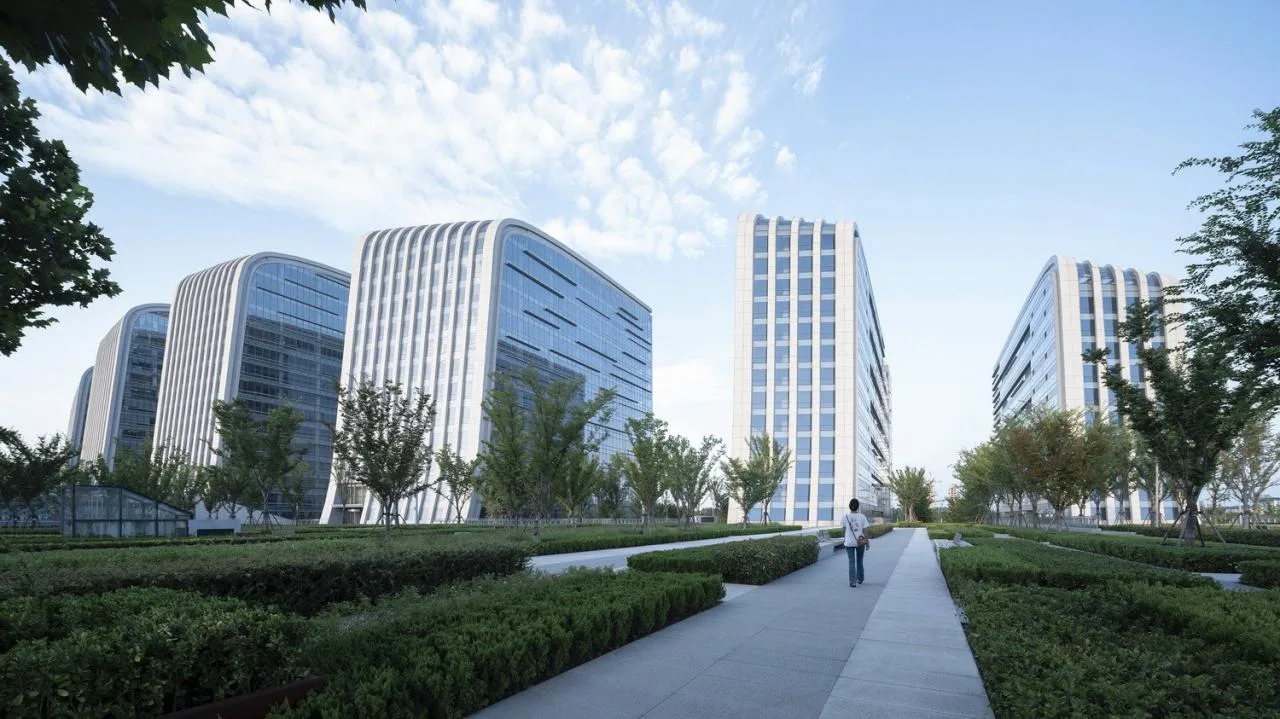
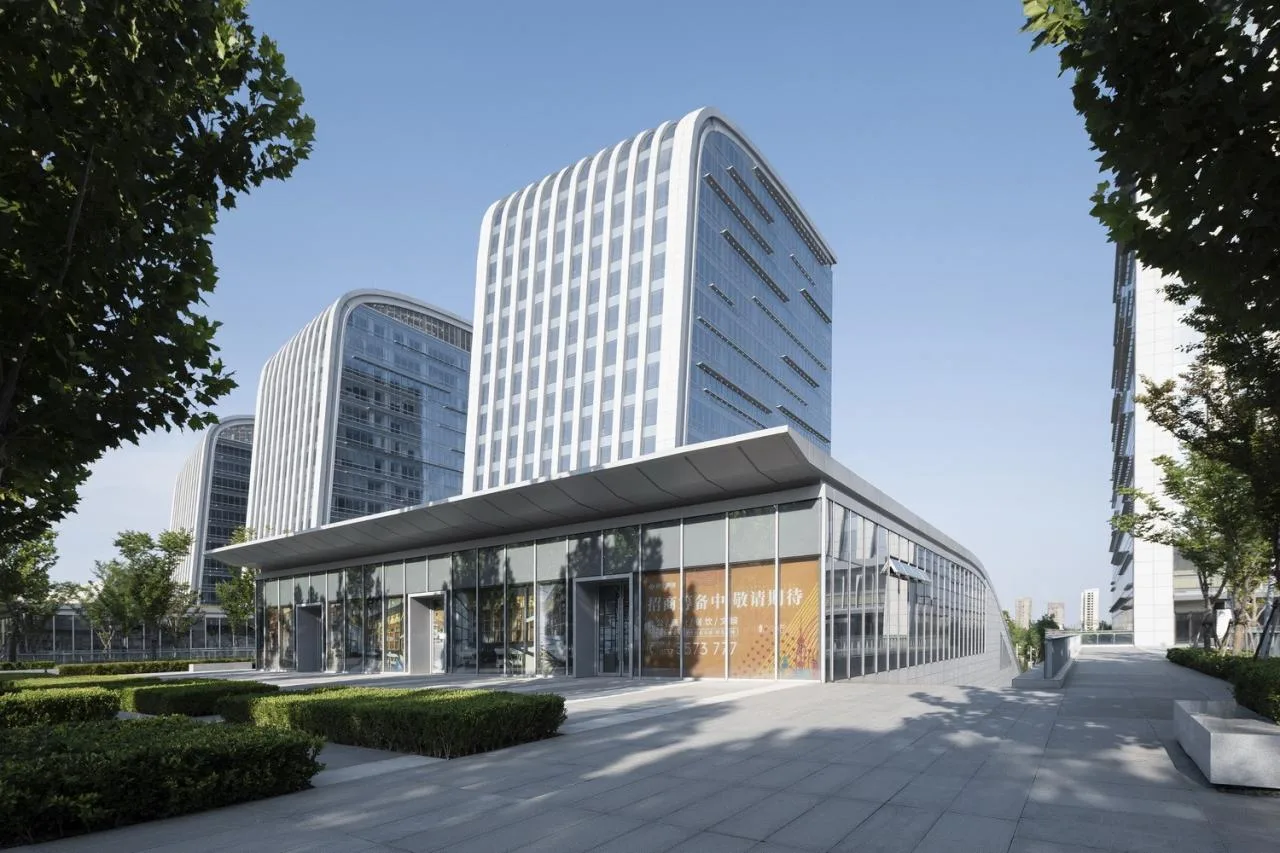
LLA’s theme of “high mountains and flowing water” unifies the landscape design across all three phases, creating a dynamic water system that connects the entire site. Landscape design acts as the adhesive binding cultural architecture and commercial complexes, fully integrating diverse functional zones into a cohesive and harmonious whole.
The Highland Park and public landscapes introduce natural beauty into the commercial and business areas. The elegant, streamlined design of each Phase III building reduces the imposing scale of the towers, making the project more accessible and human-scaled.
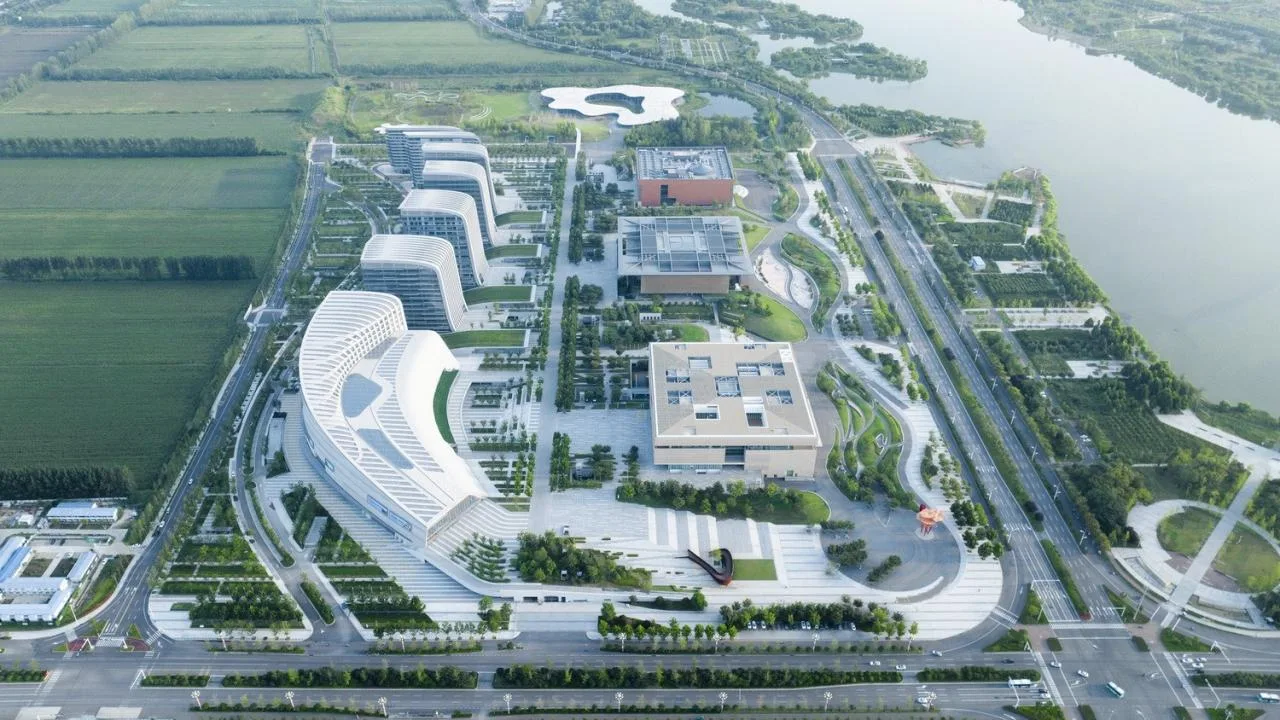
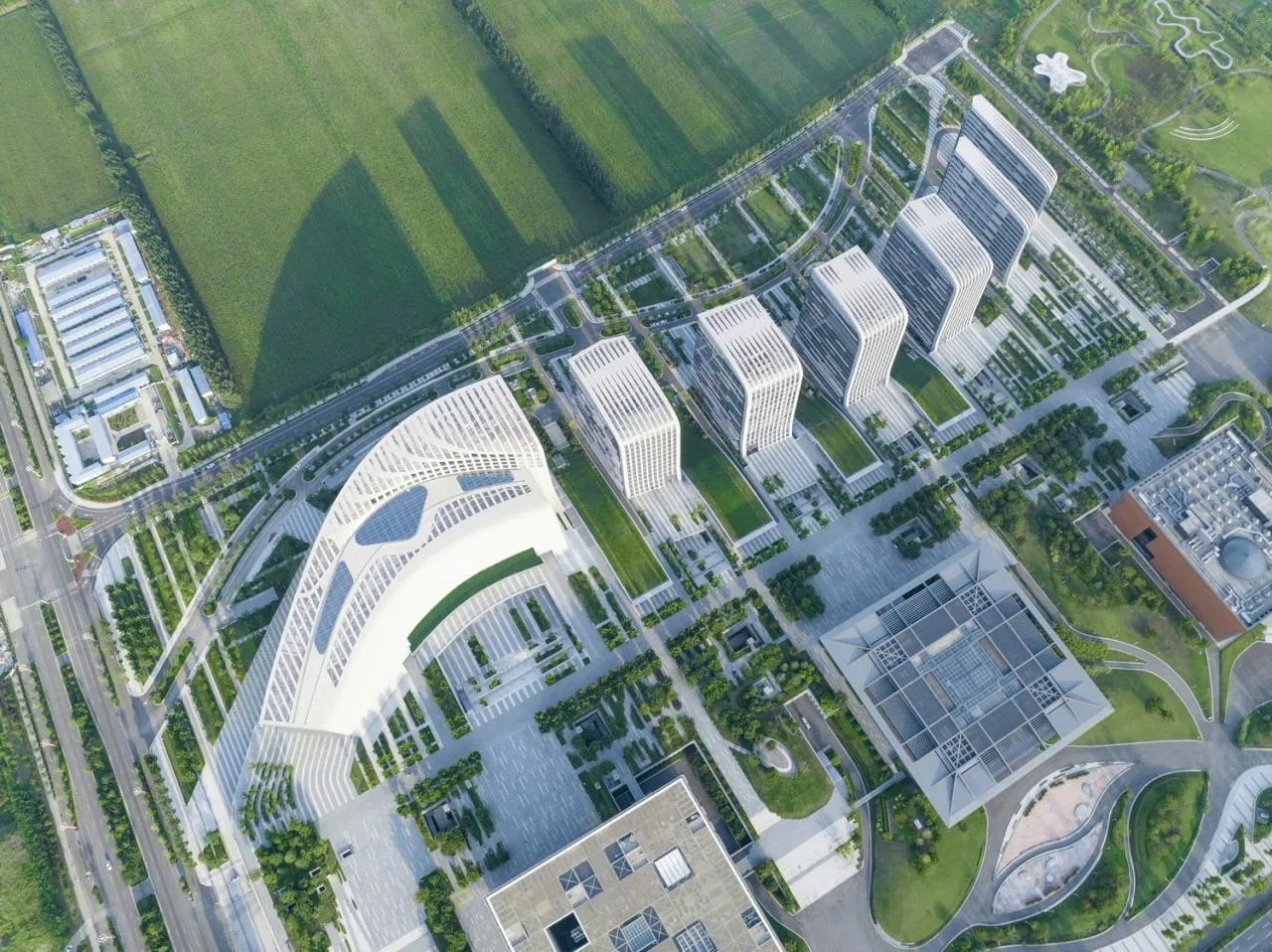
Architectural Design Concept
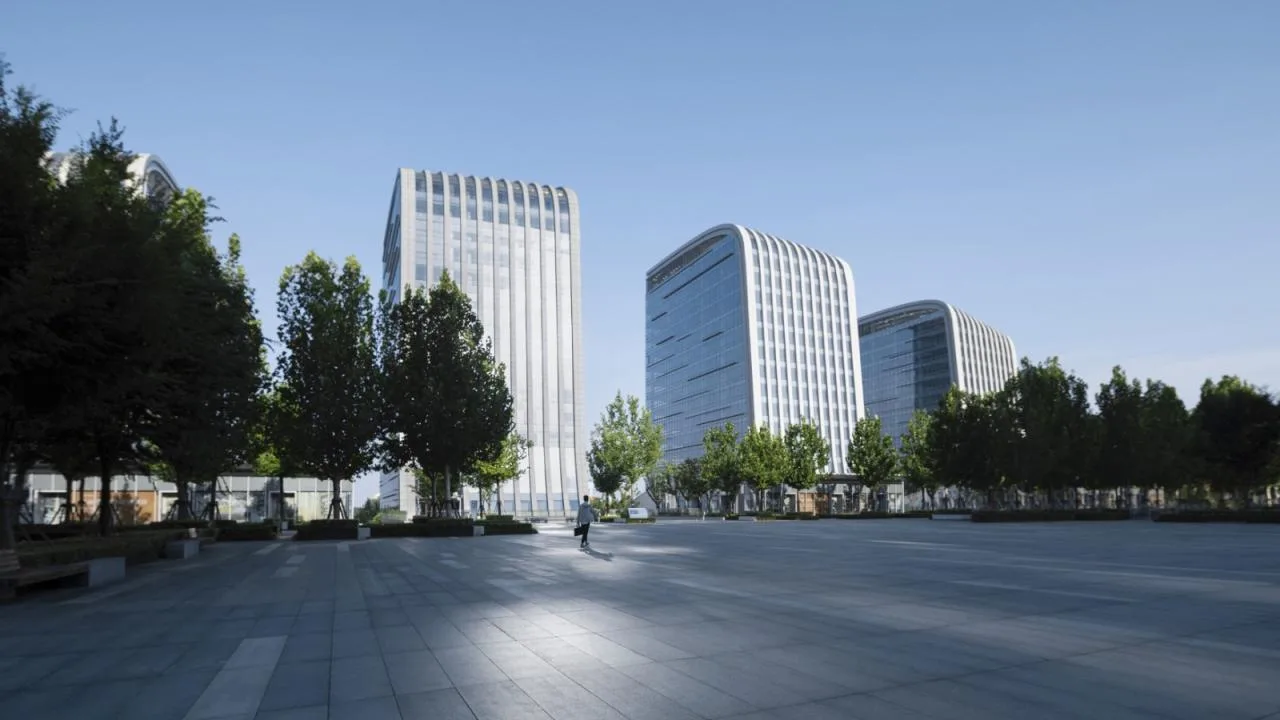
The architectural design of Jining Cultural Industry Park emphasizes an impressive overall appearance, spatial continuity, and easy public access. The site’s elevation forms a curved skyline symbolizing a “high mountain,” dividing the project into seven main building clusters. From north to south, these include the Cultural and Creative Expo City and boutique hotel, four high-rise Cultural and Creative Base towers (A, B, C, D), and two Incubation Bases (A and B). Small commercial units are interspersed across four blocks, all sharing a unified architectural vocabulary in form and facade.
An east-west landscape belt serves as a ramp connecting the eastern road to the Highland Park, acting as a transitional outdoor space and linking entrances of buildings on the east side. This creates an organic integration of architecture, landscape ramp, and pedestrian corridor. The landscape and the western facades of the towers are unified by vertical lines, producing a smooth, simple architectural expression.
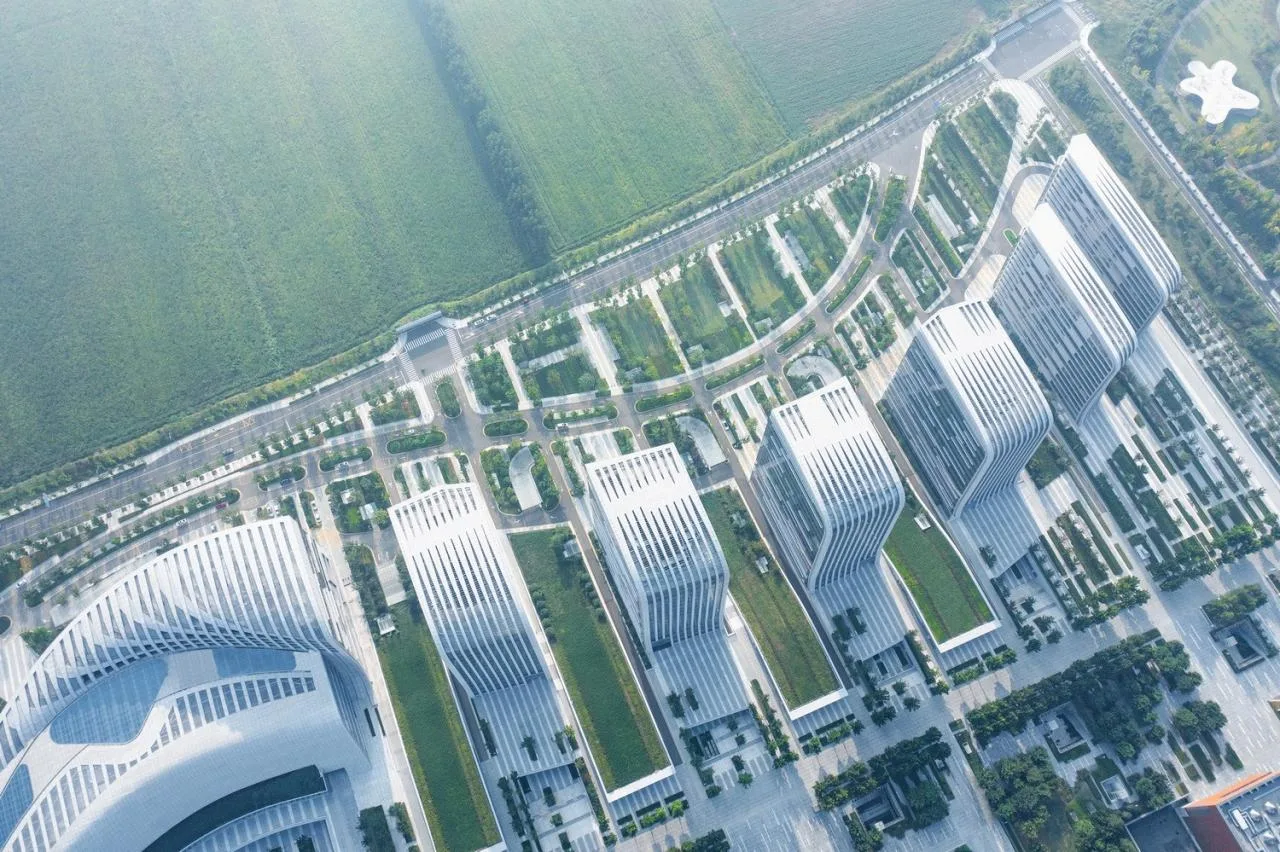
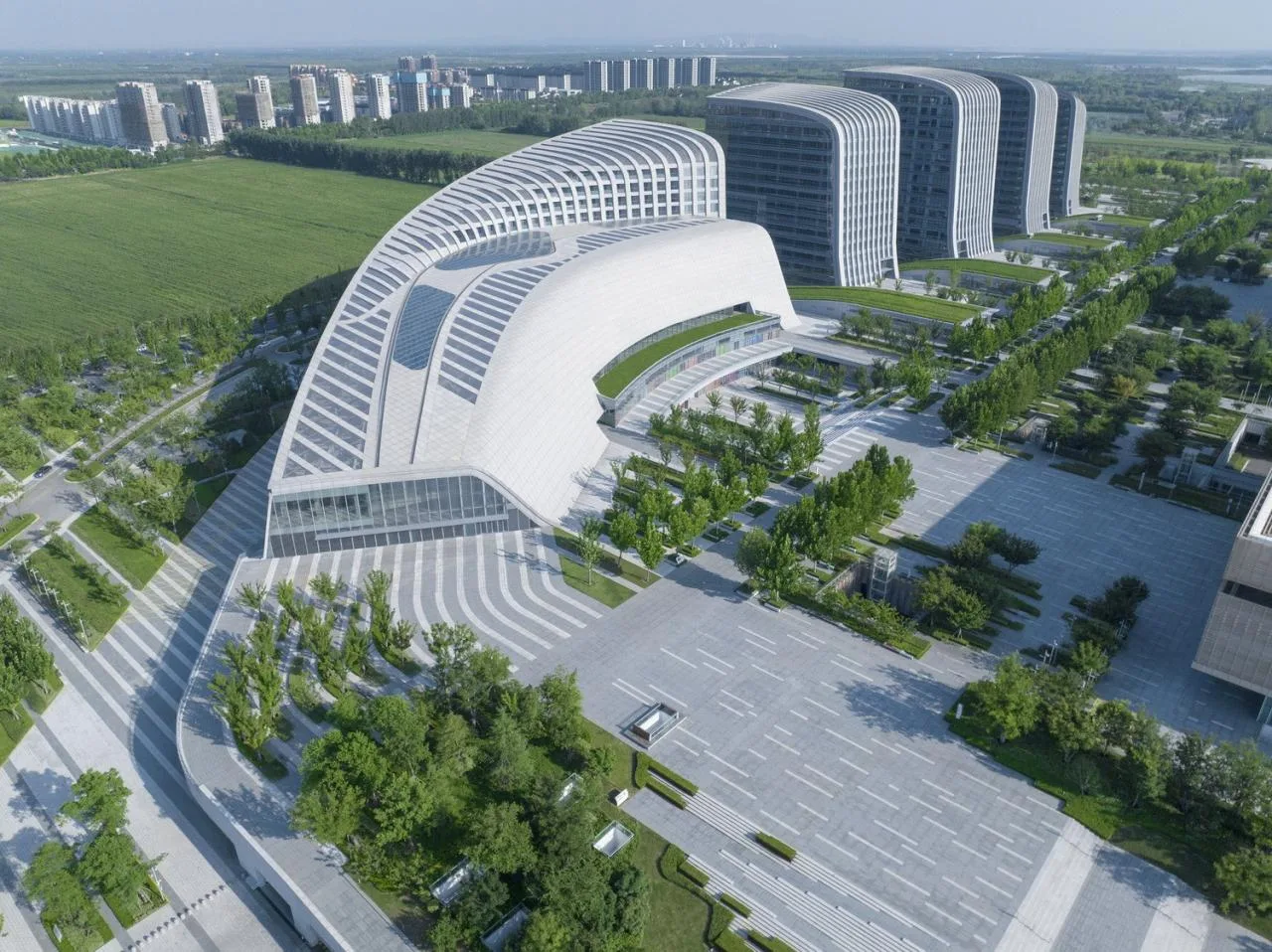
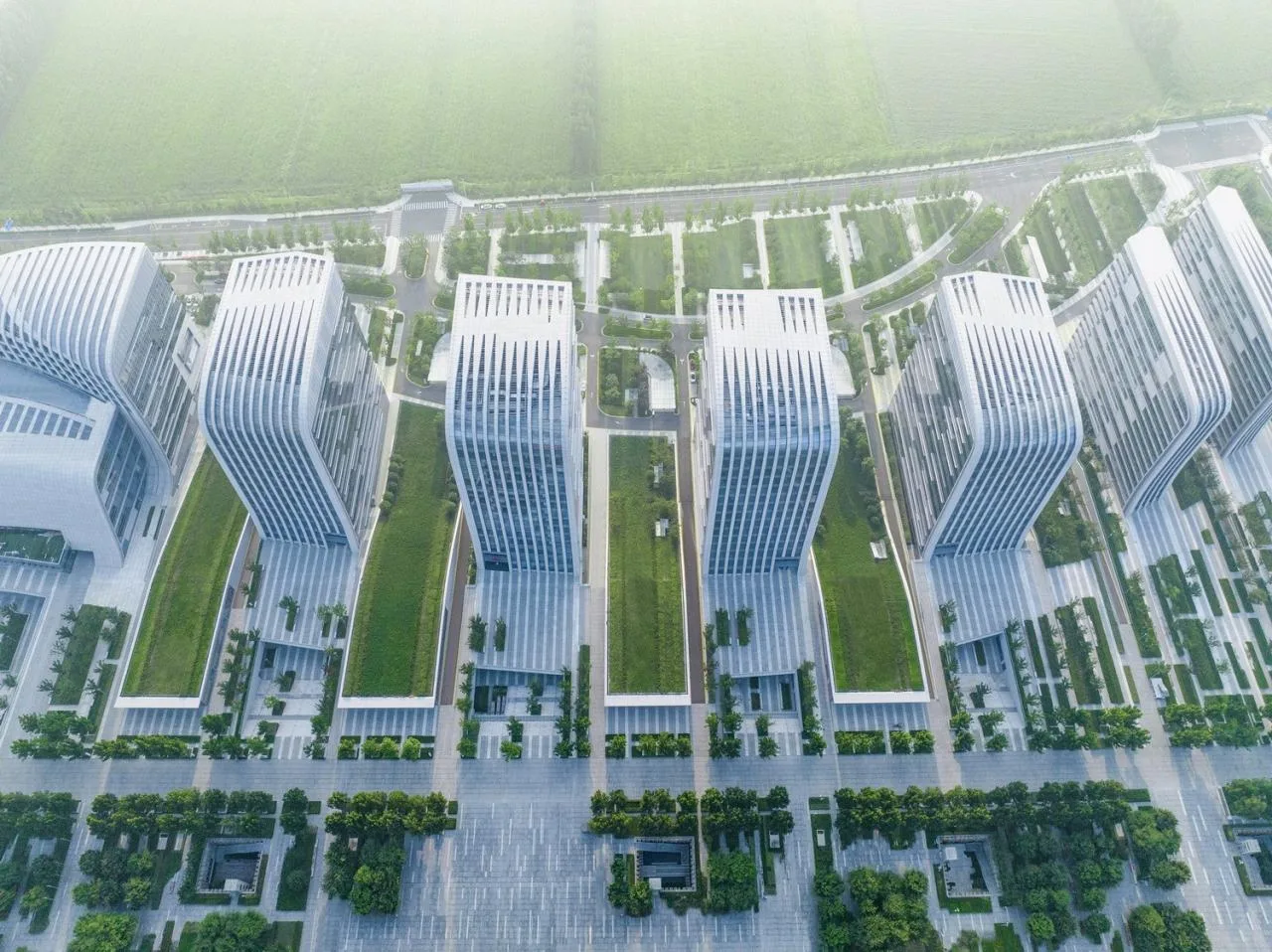
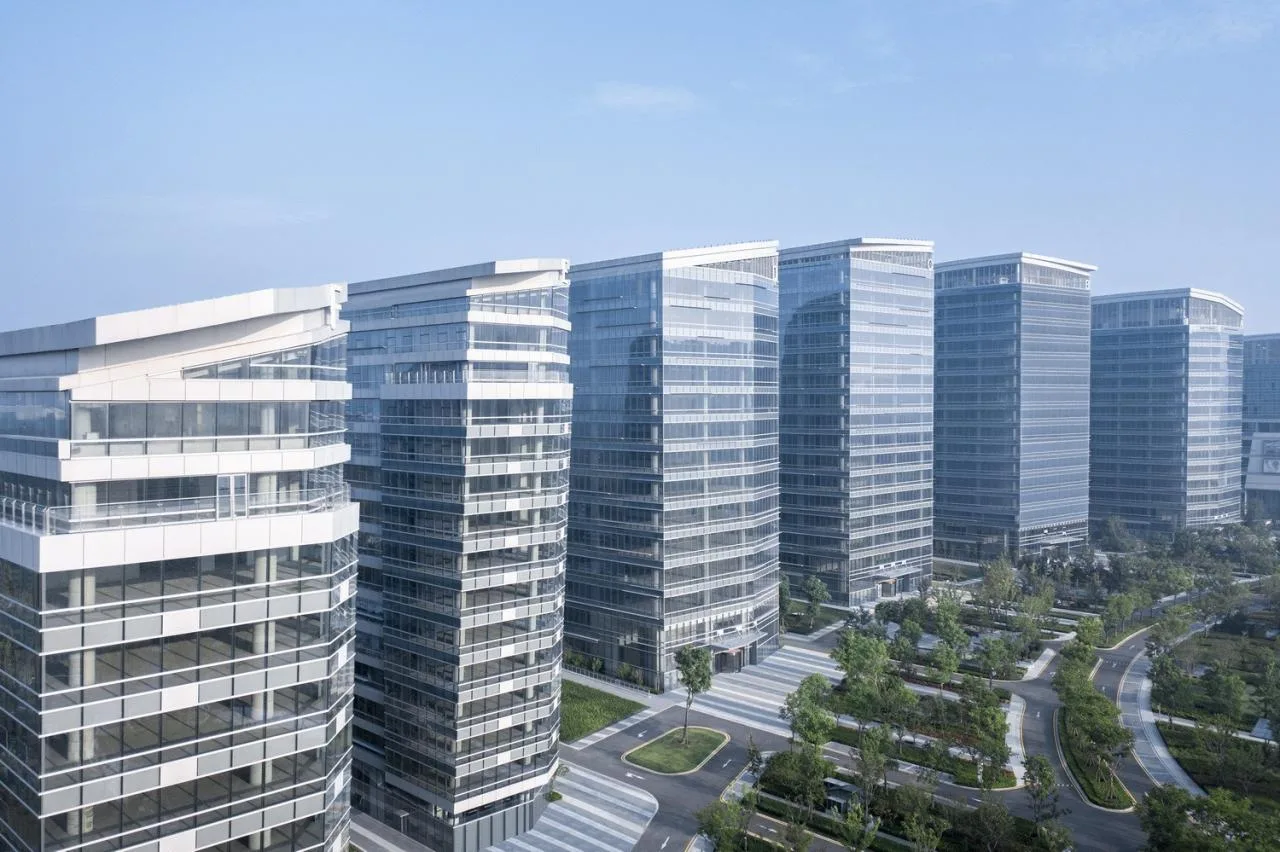
Traffic flows enter parking beneath the Highland Park from city roads on the east and west sides, reducing excavation and separating vehicle circulation from pedestrian areas. The cultural and creative base towers, talent apartments, and the expo city with hotel each have dedicated drop-off zones and underground parking access. Highland Park acts as the main spine running north-south through the site, with entrances at both ends, pedestrian ramps east-west, and vertical connections from the parking level, enabling smooth, pedestrian-friendly movement throughout the project.
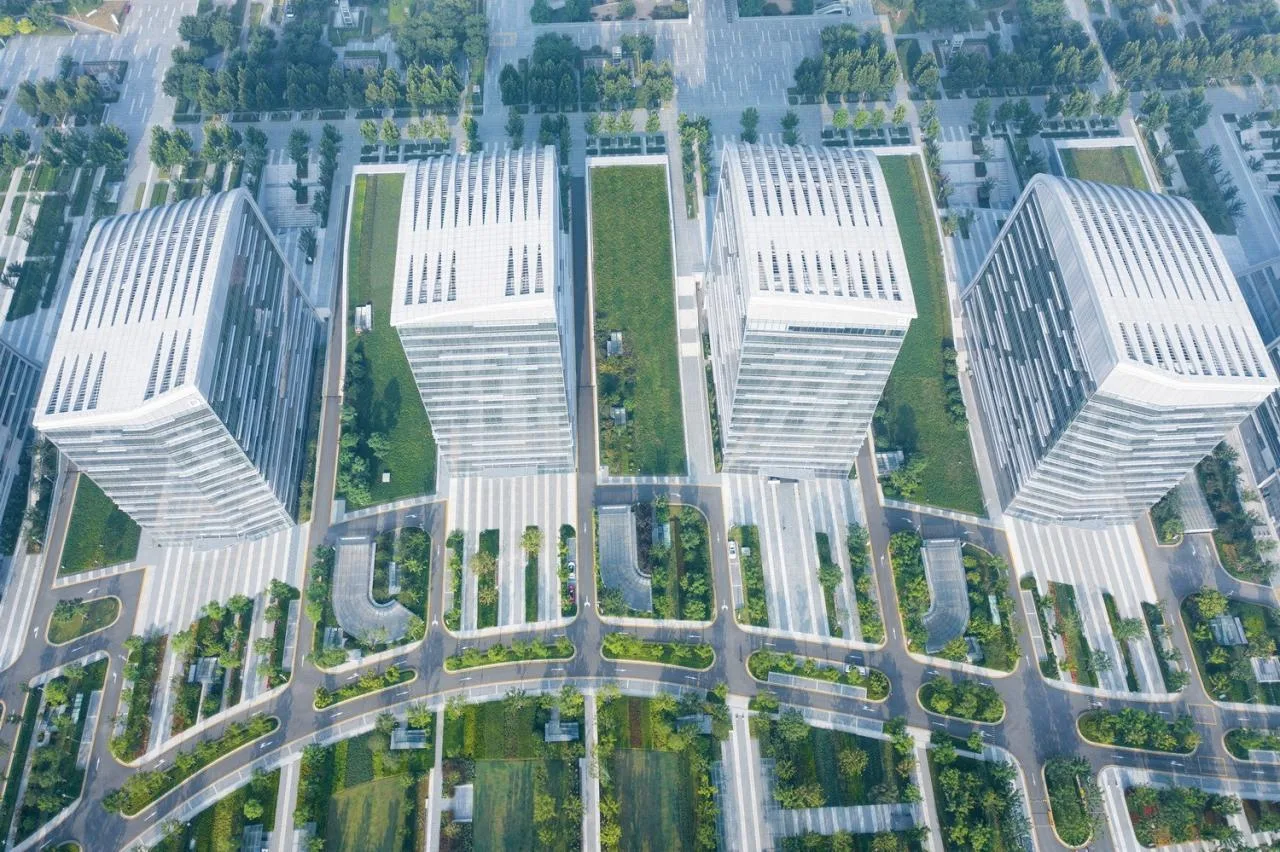
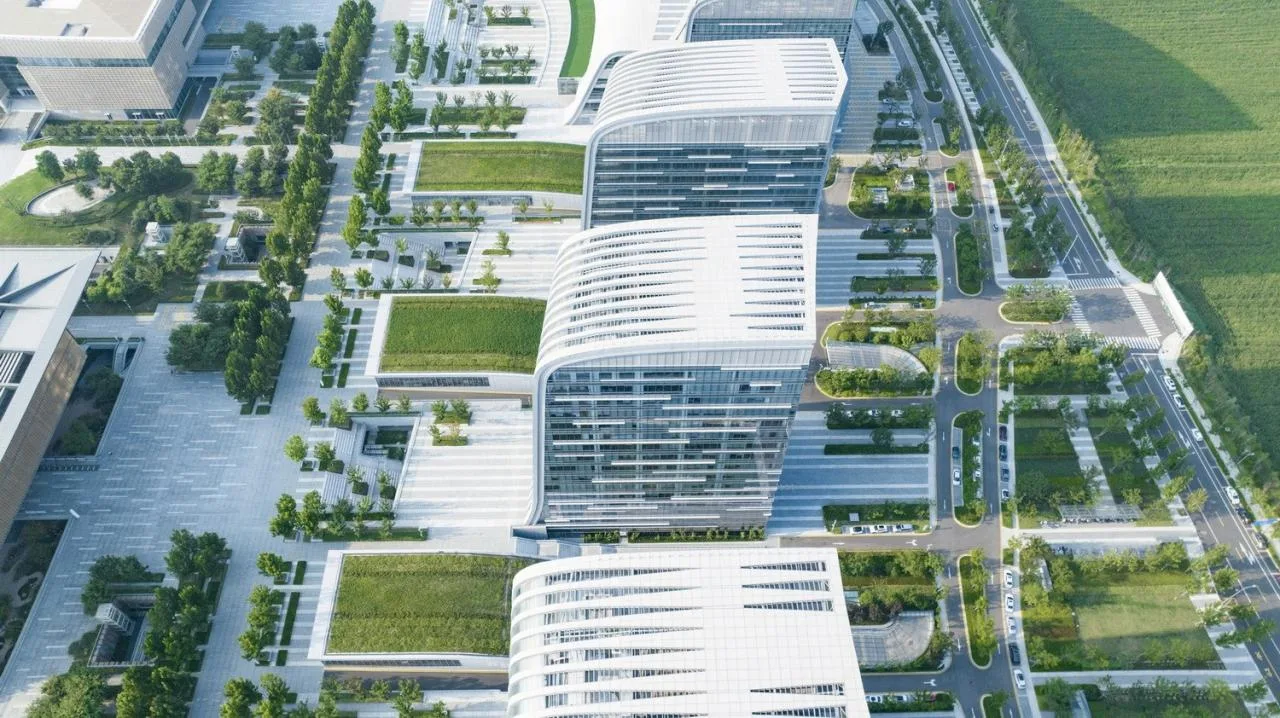
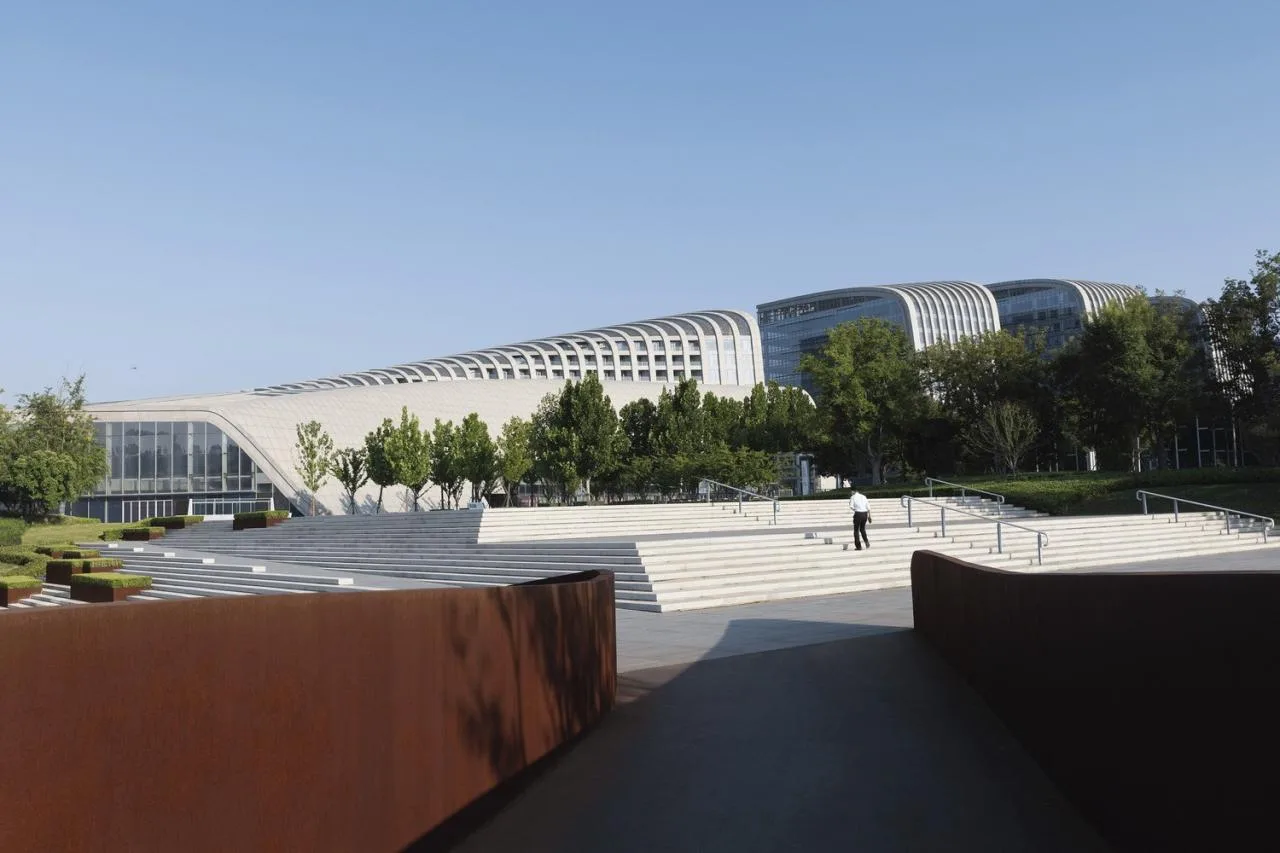
Highland Park sets the tone for the landscape with five sunken plazas, including the main sunken square west of the Cultural and Creative Expo City, and four smaller sunken plazas in front of the cultural and creative base towers. Together with the park’s landscaping, these plazas provide diverse urban spaces for residents and visitors. The ground-level green space ratio is approximately 28.8%, comprising urban corridors, street greenery, and plaza landscaping. These green areas infuse vitality and natural charm into the project’s core, offering inviting settings for relaxation and enjoyment.
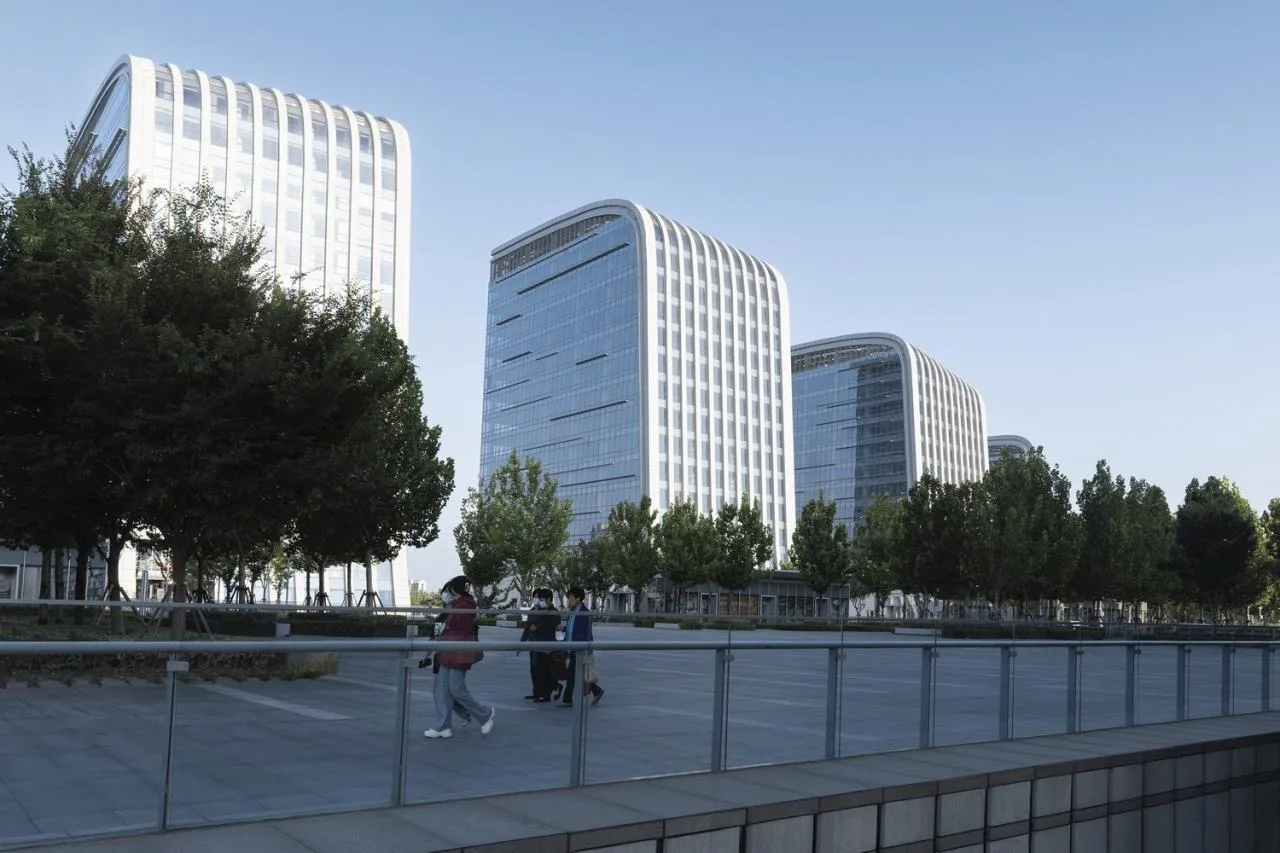
Humanistic Architecture: Honoring the Past and Embracing the Future
The Jining Cultural Industry Park seamlessly blends landscape, cultural architecture, and commercial complexes to create a comprehensive cultural, tourism, and business experience throughout the center. It encourages visitors to explore, relax, and return, ensuring the project’s long-term vitality. This development provides Taibai New District in Jining City with a vibrant cultural landmark and abundant public spaces, making the Jining Cultural Center a hub for cultural and artistic exploration, inspiration, and social gatherings.
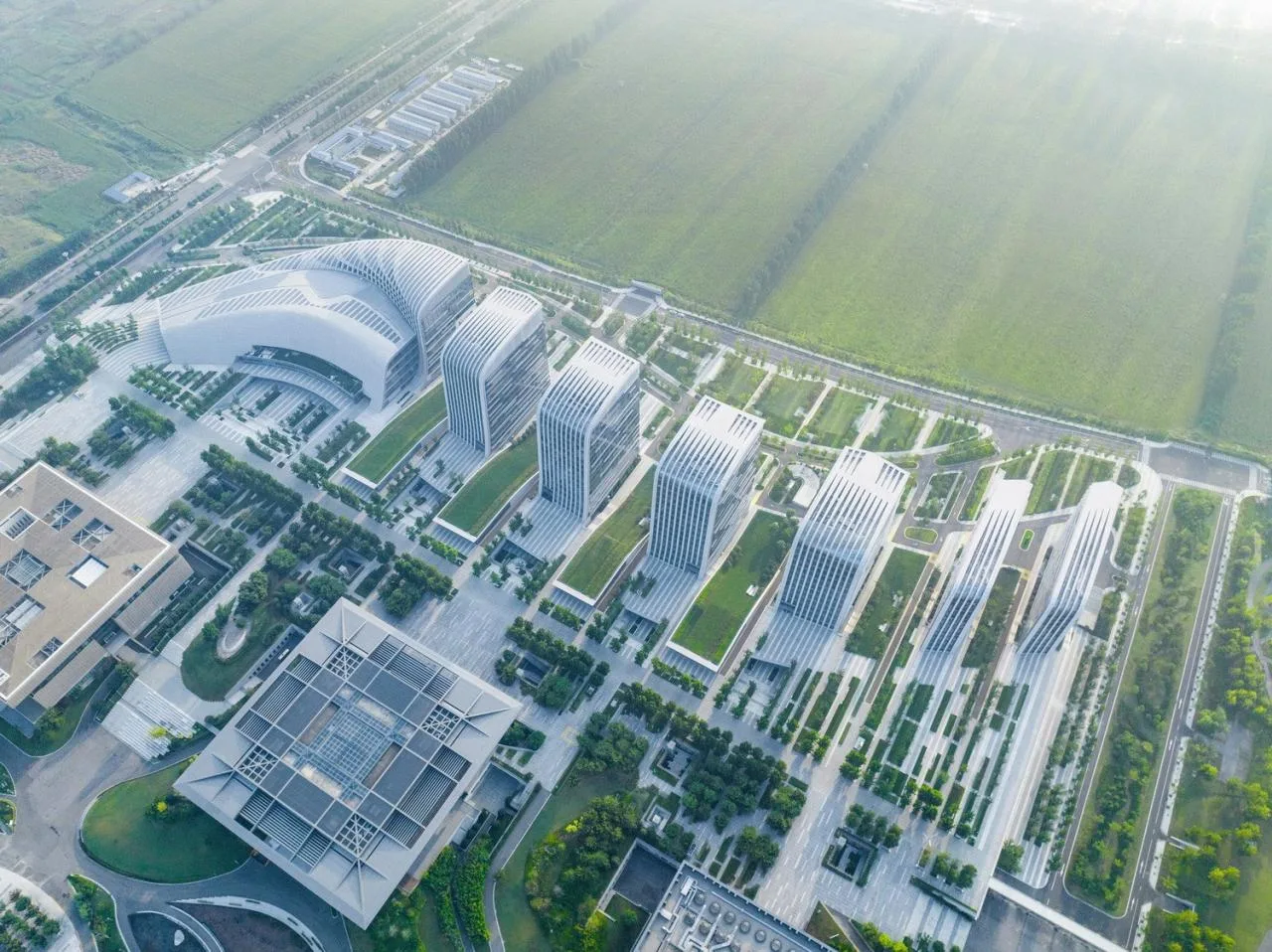
Successful projects are grounded in thorough analysis and sound planning principles. LLA is committed to creating a beautiful, harmonious living environment combined with a lively commercial experience. Our planning and architectural designs are the product of comprehensive commercial and urban planning strategies, refined through years of practice and proven effective. Upon completion, the project will stand as a culturally rich and cohesive landmark that reflects the city’s historical and cultural development while setting a fresh direction for contemporary urban life.
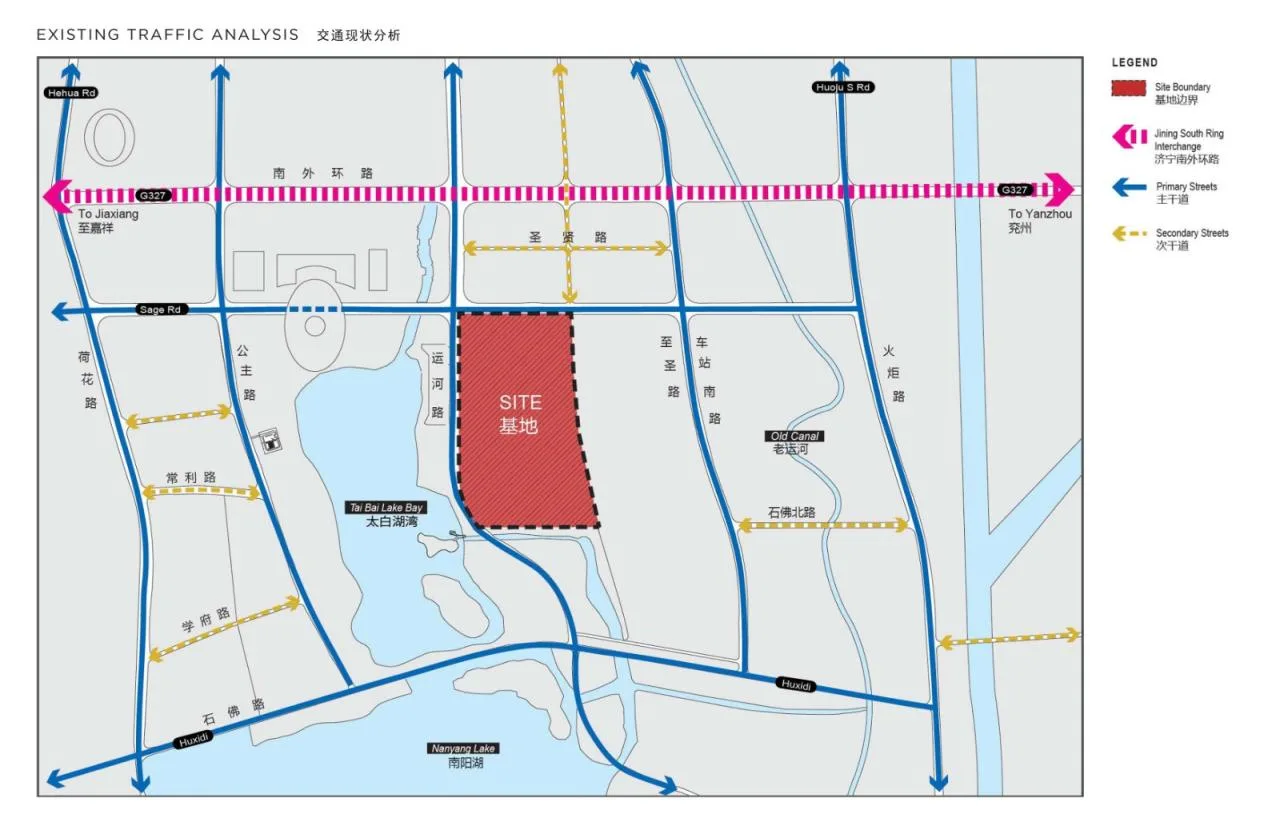
Analysis of Current Traffic Situation © LLA
Project Information
Project Name: Jining Cultural Industry Park (Jining Cultural Center Phase III)
Owner: Jining Chengtou Cultural Tourism Industry Co., Ltd
Location: No. 140 Yunhe Road, Taibai Lake New District, Jining City, Shandong Province, China
Planned Land Area: 182,000 square meters
Building Area: 360,000 square meters
Status: Completed in 2022
Design Firm: LLA Architectural Design Company / Laguarda. Low Architects (LLA)
Design Scope: Overall Planning and Architectural Design of Jining Cultural Industry Park
Project Controller: Pablo Laguarda, FAIA
Chief Planner and Architect: Pablo Laguarda, FAIA
Project Coordination: Wu Jun
LLA Design Team: Sebastian Grogaard, Christopher Powers AIA, Wang Qi LEED AP, Huang Yiji AIA, Liu Jinbao
Third-Party Collaborators:
Architectural Design Development and Construction Drawings: East China Architectural Design and Research Institute Co., Ltd. (ECADI)
Architectural Design Development and Construction Drawings (Talent Apartment Section): Tianjin Urban Planning and Design Research Institute
Landscape Design: Shanghai Lanscape Urban Landscape Design Co., Ltd
Interior Hard Decoration Design: Suzhou Golden Mantis Building Decoration Co., Ltd
Interior Soft Decoration Design: Beijing Architectural Design and Research Institute Co., Ltd. and Suzhou Golden Mantis Cultural Development Co., Ltd
Lighting Design: Tongshen Lighting Design (Shanghai) Co., Ltd
Curtain Wall Design: Warner Engineering Consulting (Beijing) Co., Ltd
Phase I and II Design Units:
Jining Mass Art Museum Architectural Design: Tianjin Urban Planning and Design Institute; Dege Architectural Design Consulting (Beijing) Co., Ltd
Jining Museum Architectural Design: Mario Botta Architecture Firm; Shanghai Fudan Planning and Design Institute Co., Ltd
Jining Library Architectural Design: He Jingtang Architectural Creation and Research Institute; South China University of Technology Architectural Design and Research Institute
Jining Art Museum Architectural Design: Xize Liwei Architectural Firm; East China Architectural Design and Research Institute Co., Ltd
Photography: Literal translation of architectural photography















Must log in before commenting!
Sign Up