
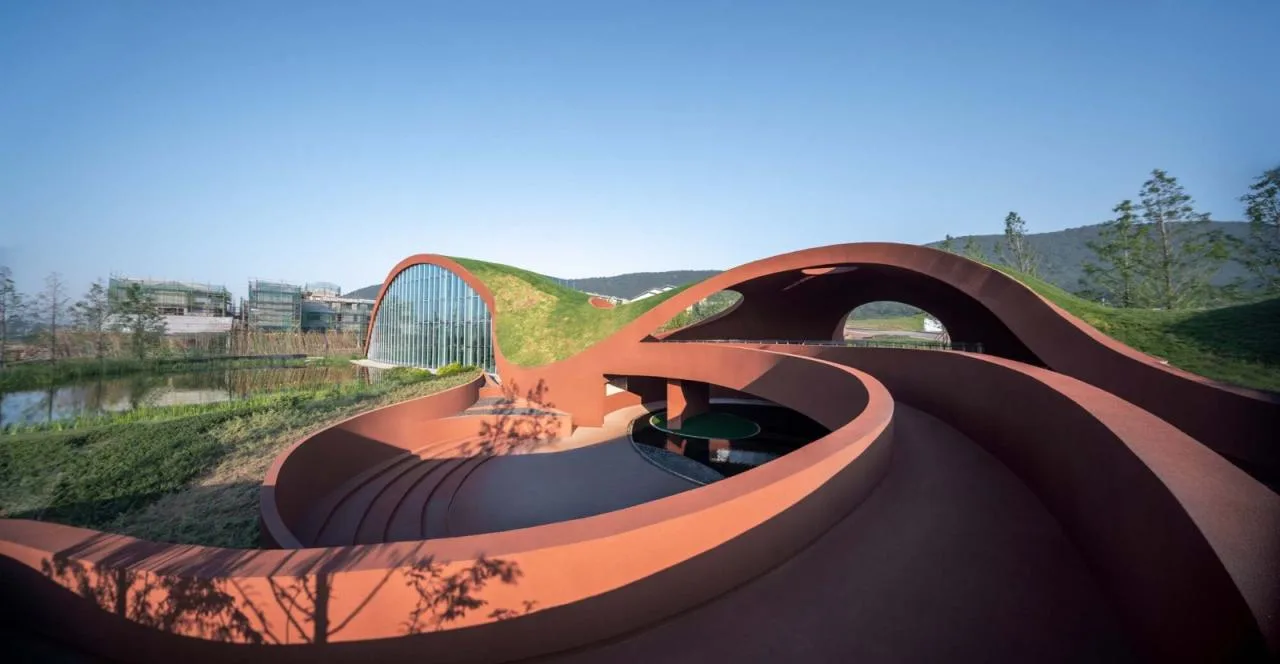
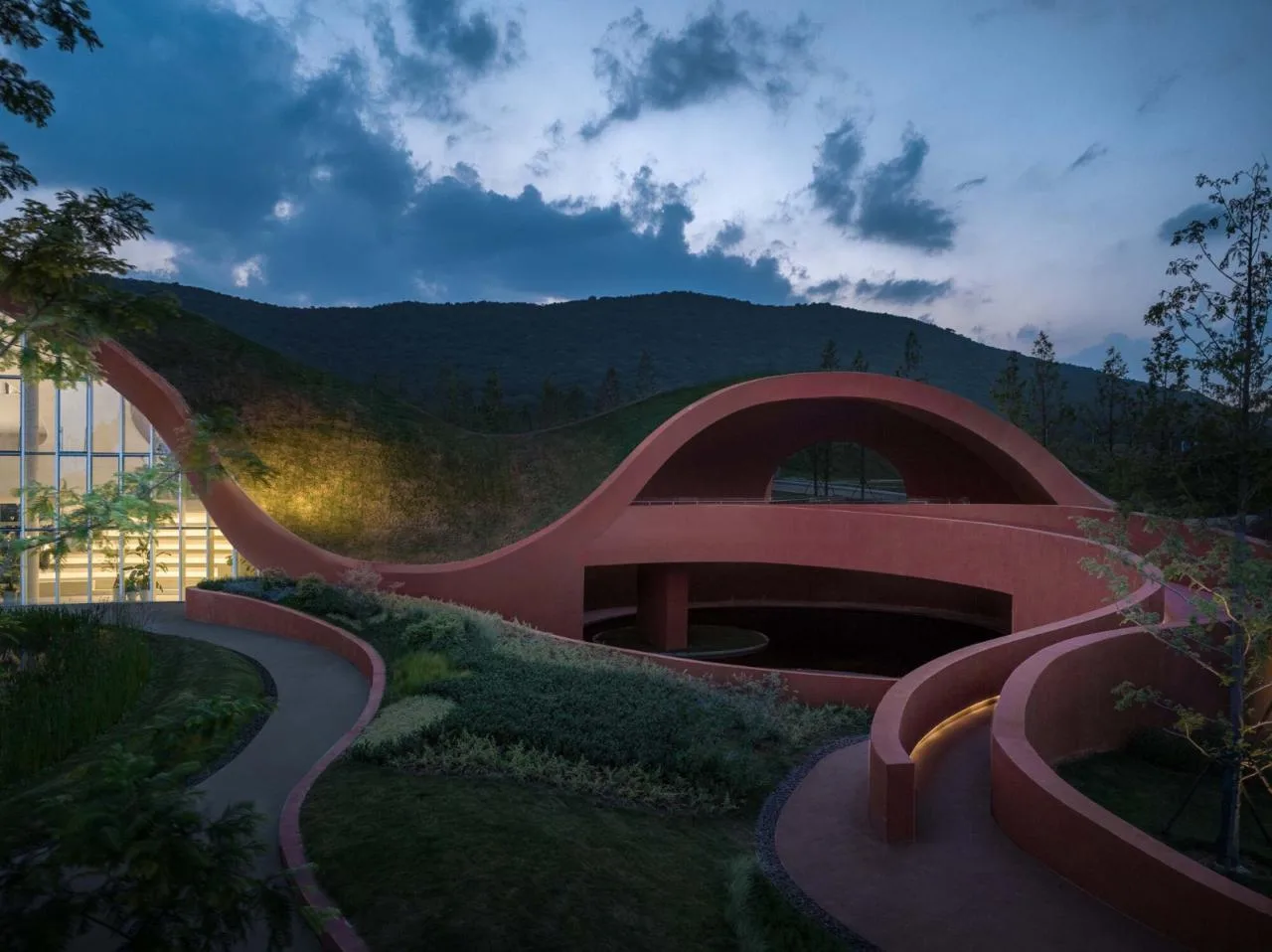
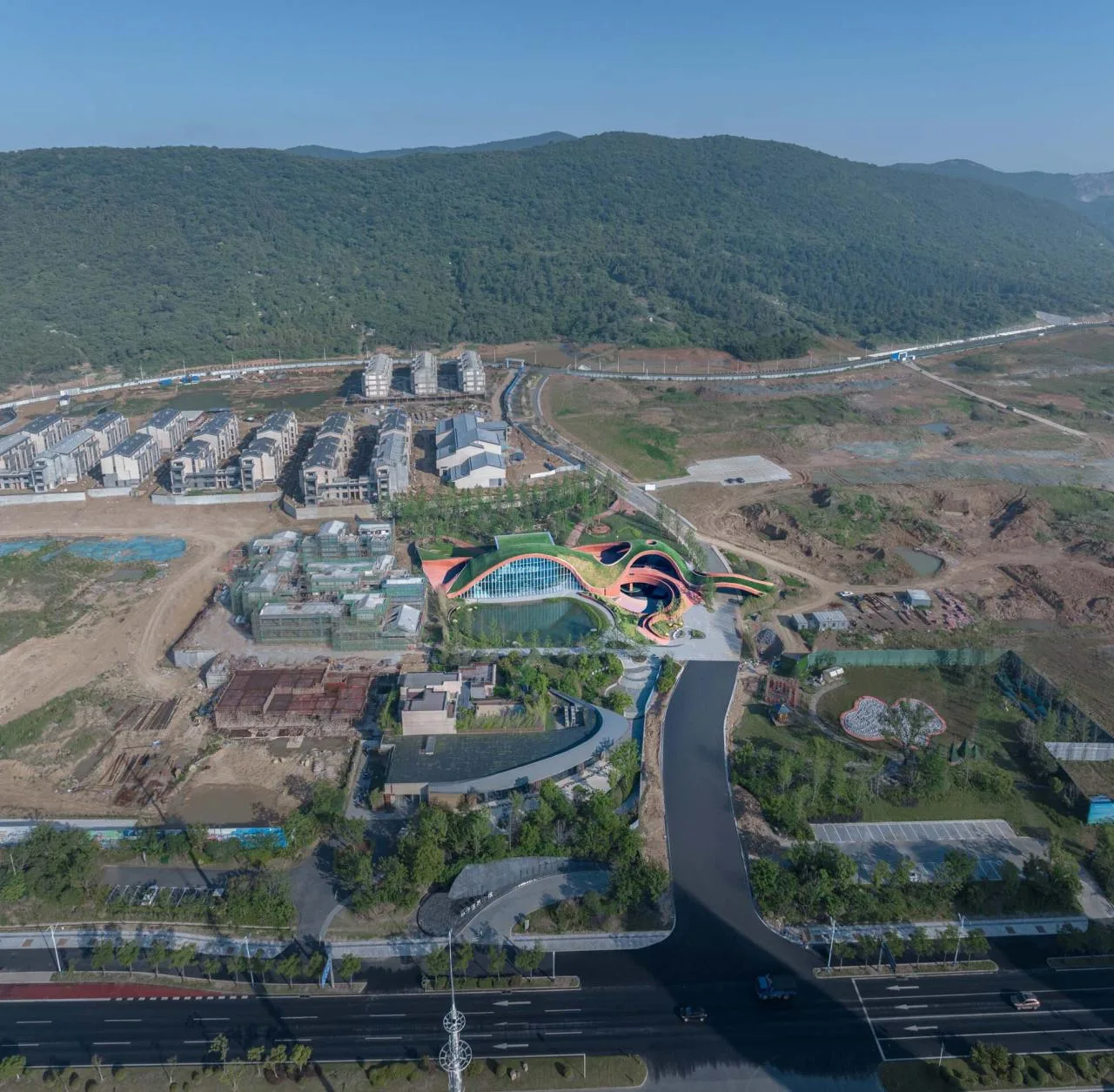
Situated at the foot of a natural mountain range stretching tens of kilometers from northeast to southwest, north of Chaohu City and adjacent to Dongzhang Mountain, this building project integrates seamlessly into its natural surroundings. It serves as the core public facility supporting Chaohu Bantang Hot Spring Town within Overseas Chinese Town, bridging the city and mountains east to west, and connecting the town’s public spaces north to south.
This ecological landscape landmark exists at the intersection of grand natural scenery and urban cultural life, acting as a living showcase of the geological context and a vision of future urban living.
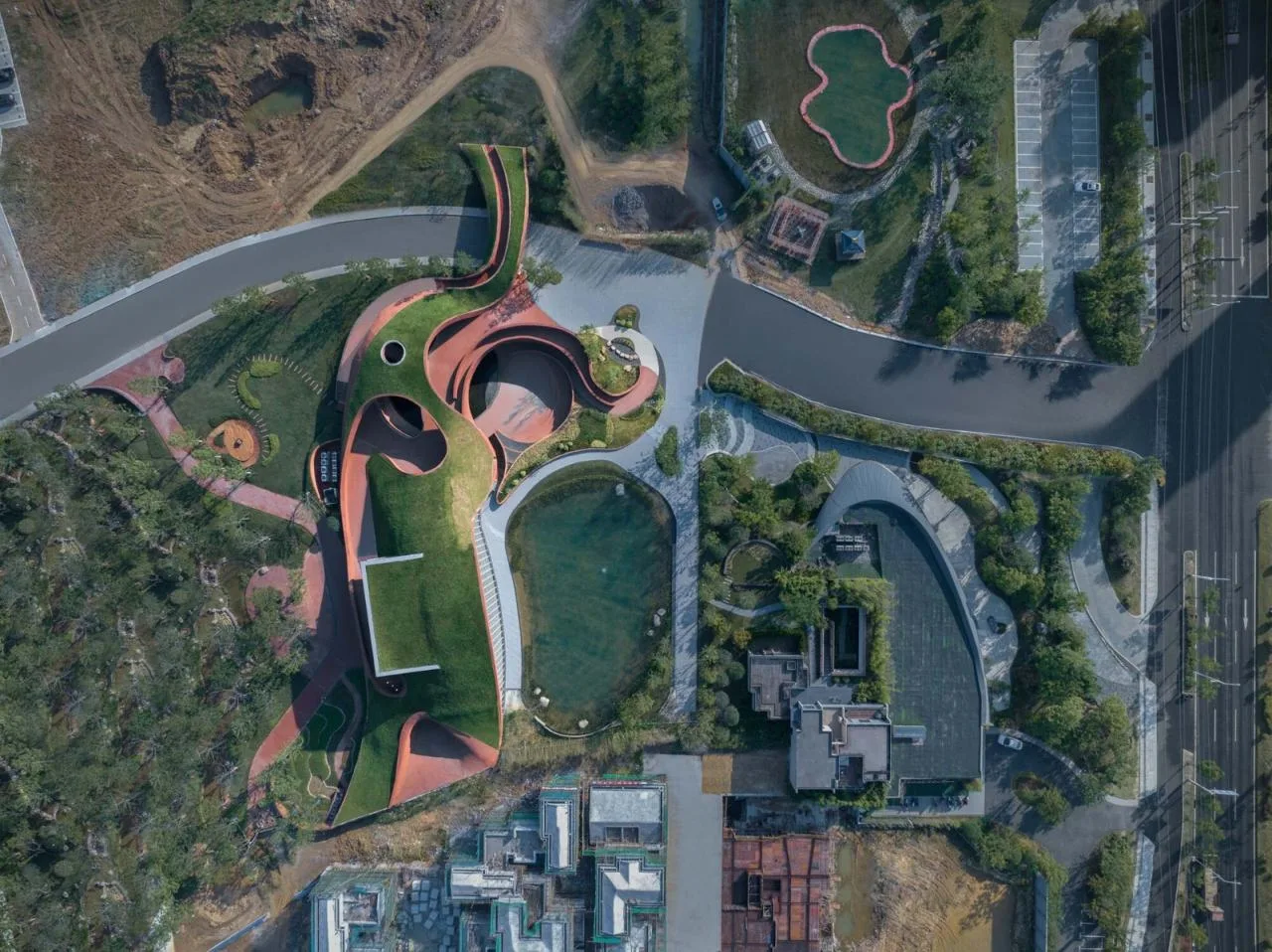
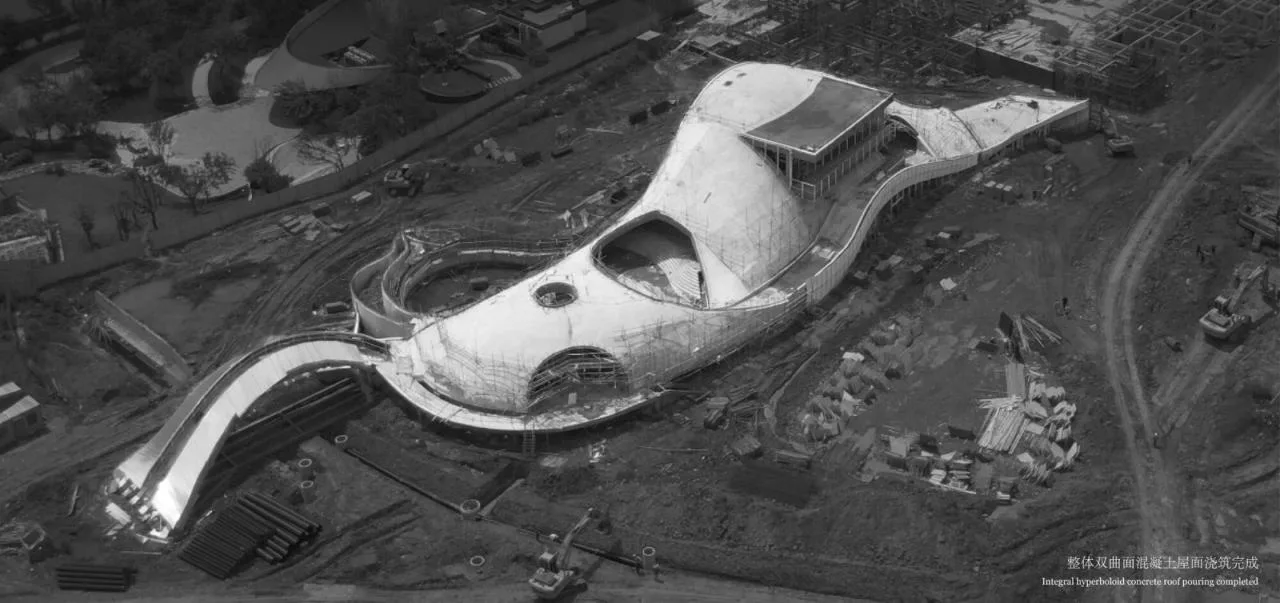
The architectural concept draws inspiration from natural forms, beginning with the projection of mountain and earth contour lines. Mimicking the wriggling path of a worm, the geological forces shaping the earth’s topography are interpreted as the movement of a ‘shell’ enveloping the structure. The worm’s trajectory defines the boundary between the interior and exterior surfaces of the shell.
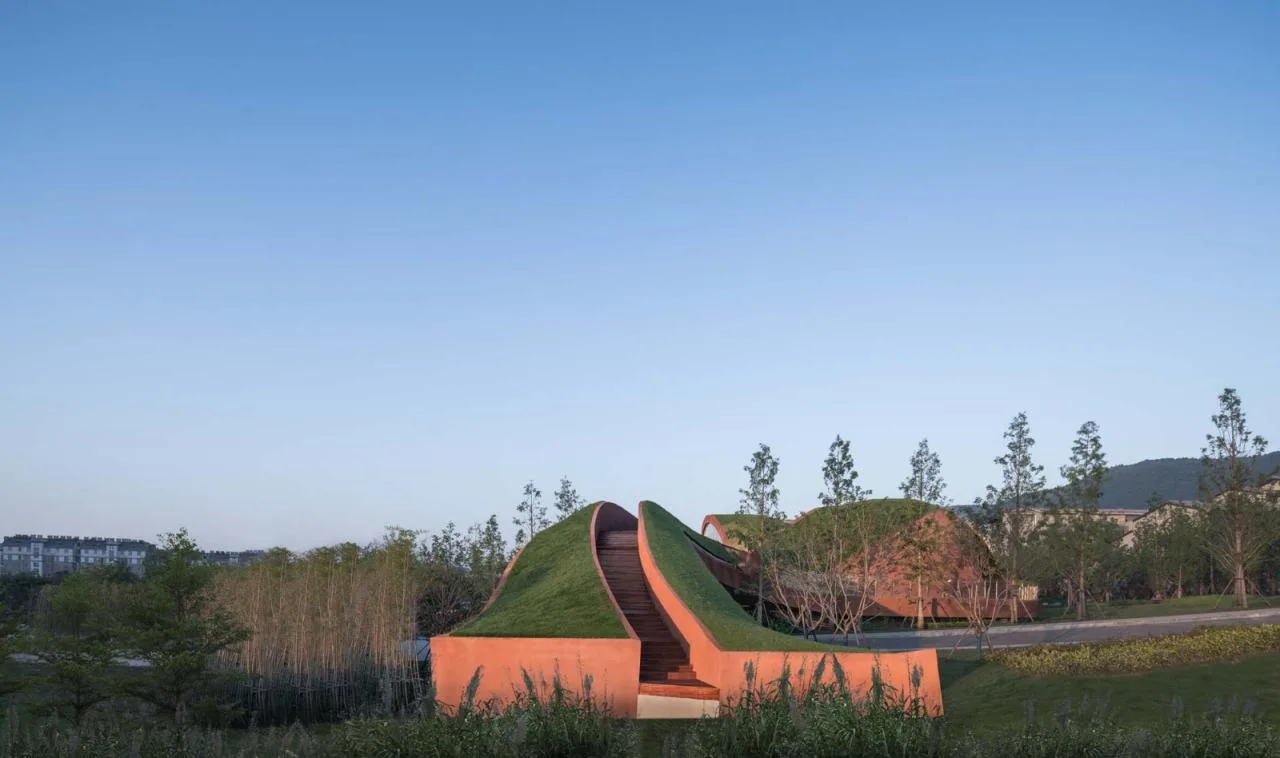
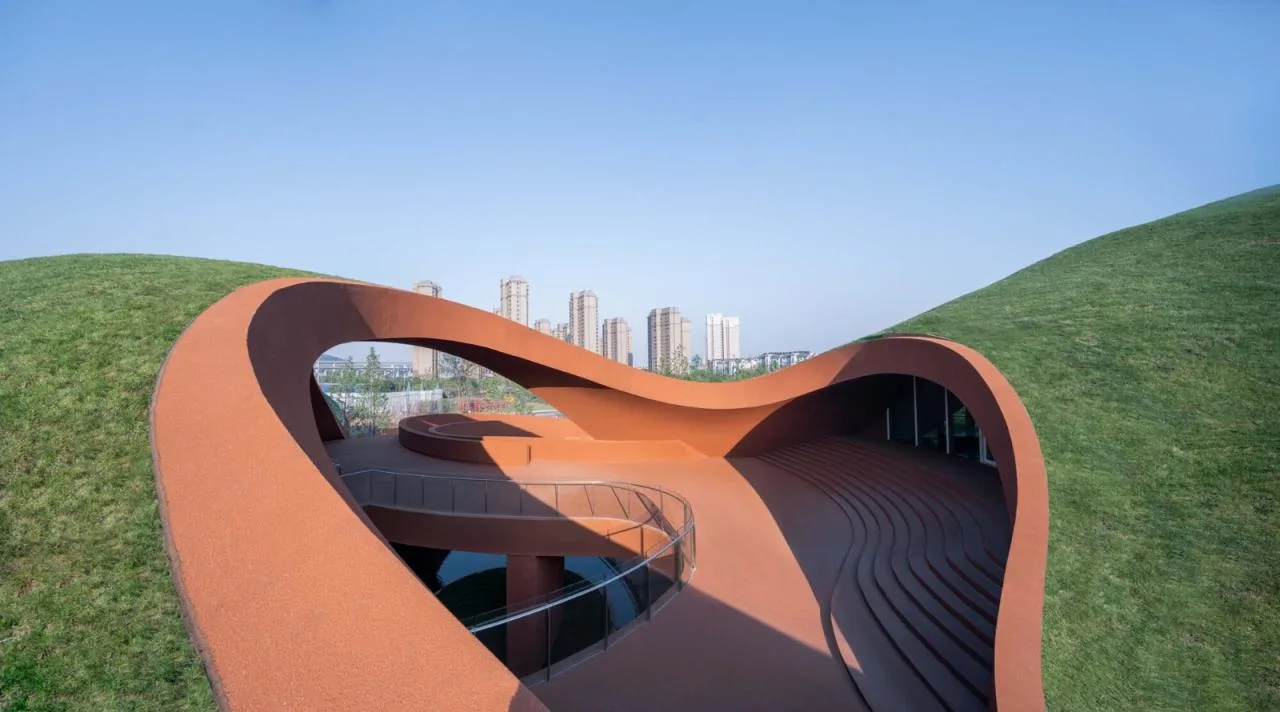
At the ‘wormhole’ locations, viewing boxes are embedded, allowing natural elements to flow through. The building’s soft curves evoke the mountain’s external shape, while rigid yet flexible lines hint at the powerful subterranean forces beneath. The structure resembles a three-dimensional geological cross-section, seemingly squeezed out by natural mountain-building forces from beneath the earth’s crust. A green roof planted with vegetation enhances this effect, making the building appear as if it has naturally grown from the landscape rather than being artificially placed.
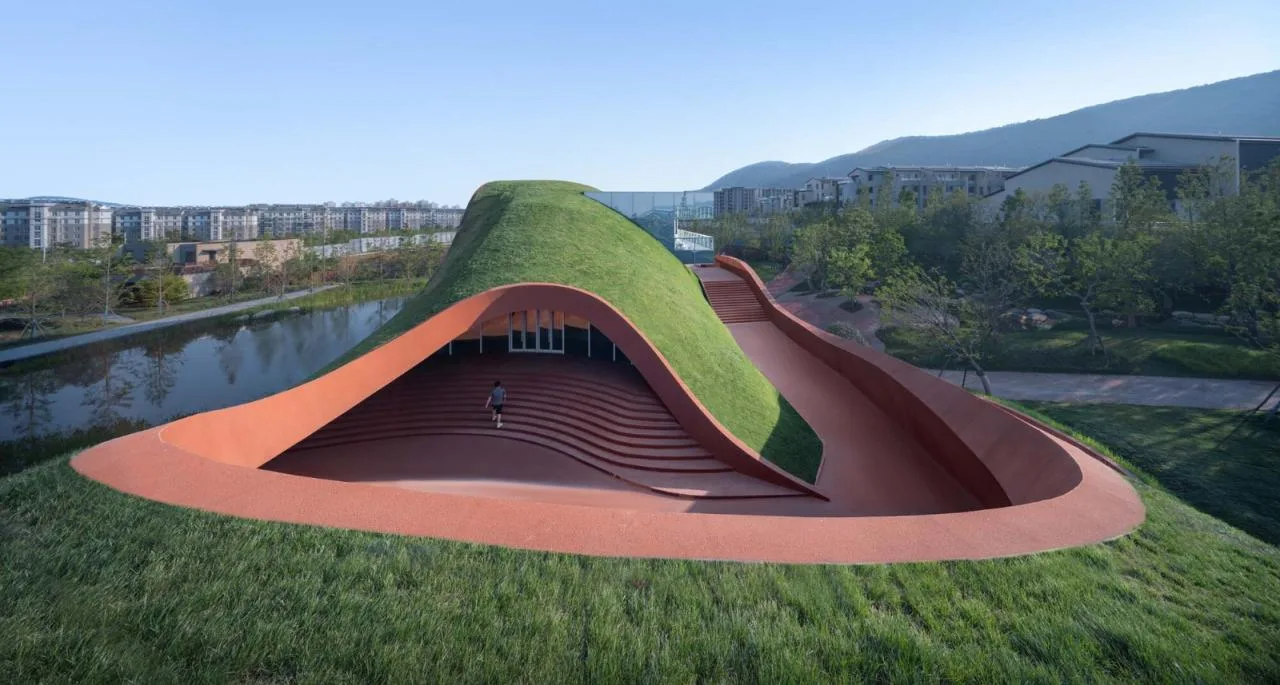
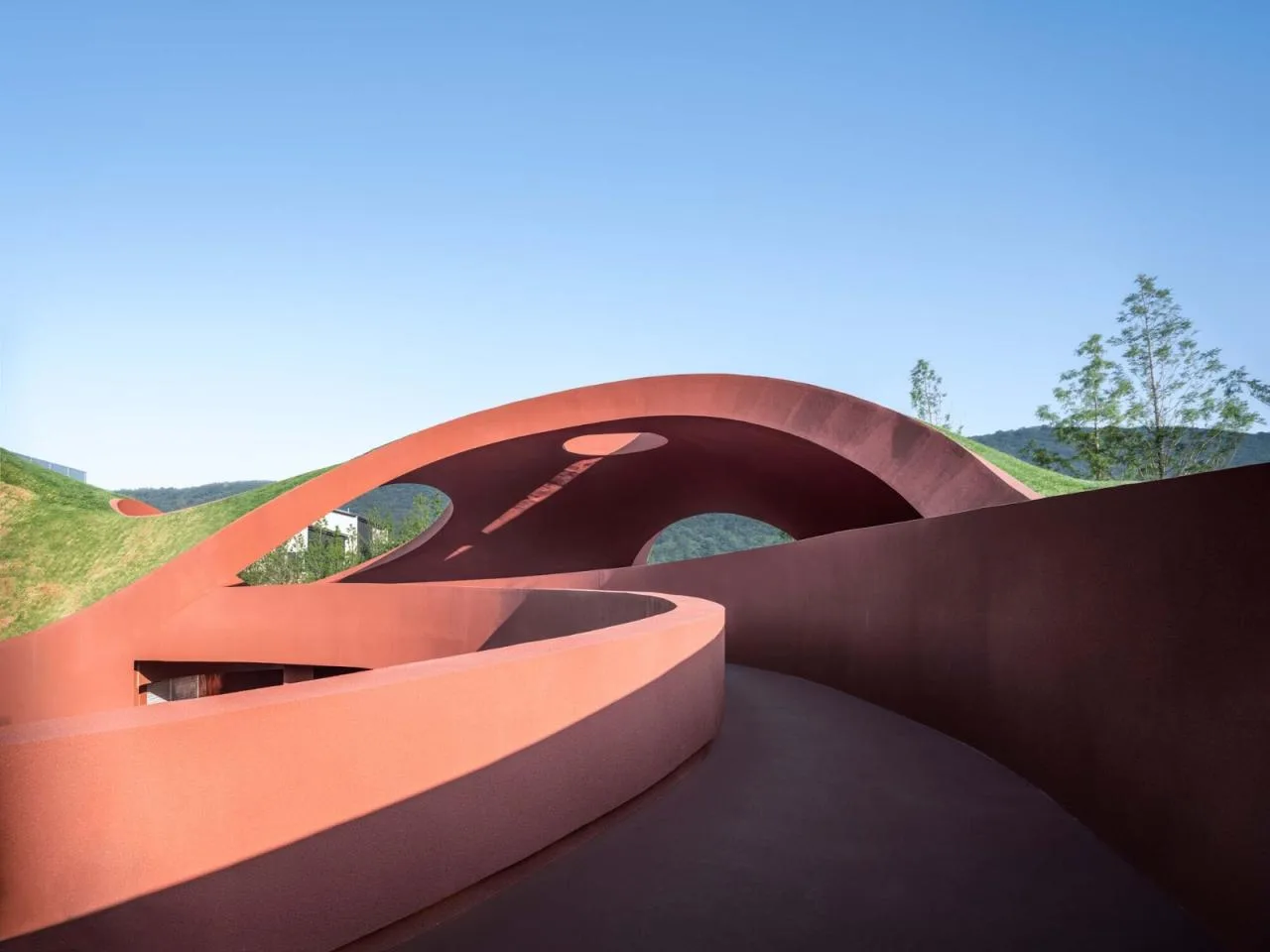
The building’s outline dissolves into the nearly 100-meter-long silhouette of the mountains, presenting an undulating skyline shaped by the dual forces of mountain ranges above and tectonic plate movements below. This dynamic process appears ongoing, as if the building is subtly growing, imperceptible to the naked eye.
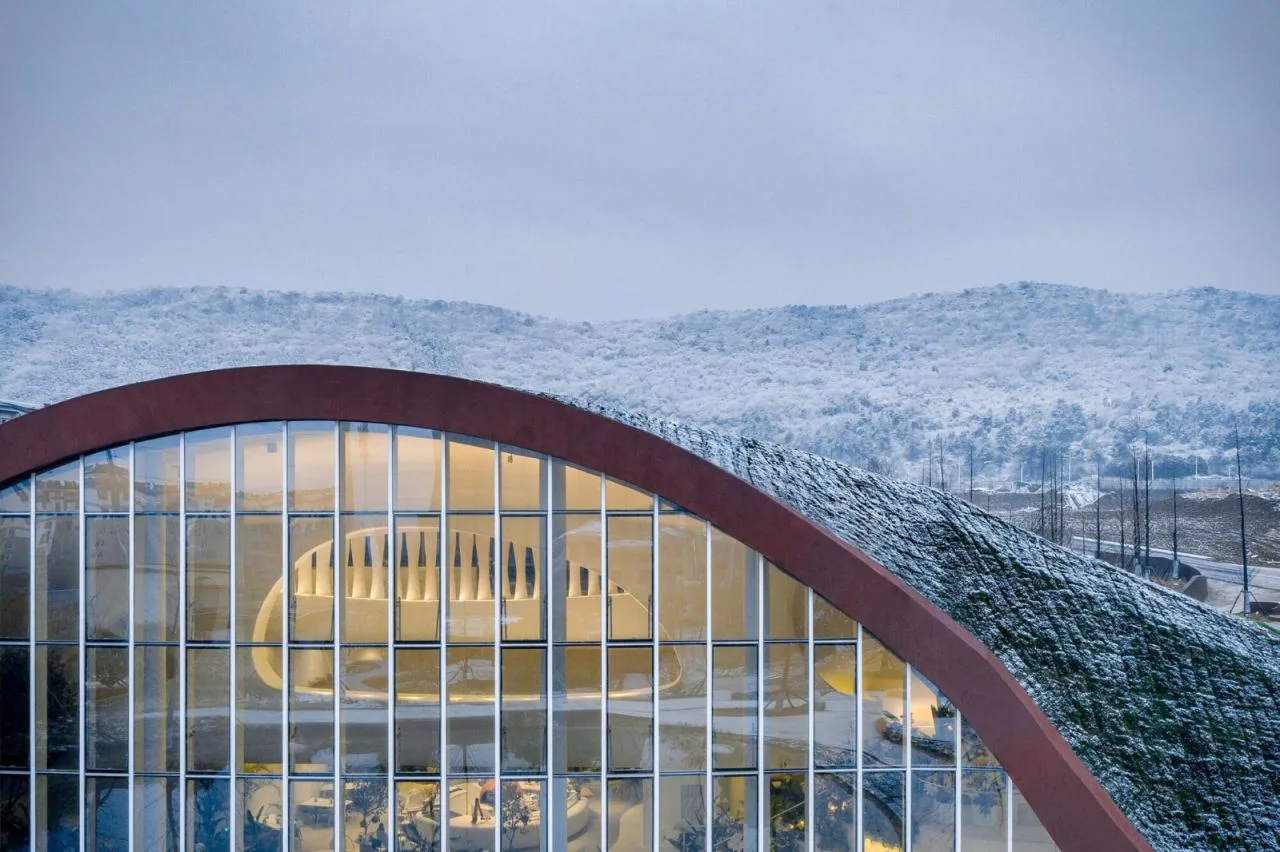
Native mountains and wild ponds already inhabit the site, and this architectural intervention gains significance by reshaping the environment with a sense of drama. The roof serves as the ground, and the ground as the roof; the boundaries between inside and outside blur. The building does not assert itself as a distinct structure but rather integrates as a natural extension of its surroundings. In winter, snow-covered roofs reveal the temperature; in summer nights, the lush greenery is alive with the chirping of insects.
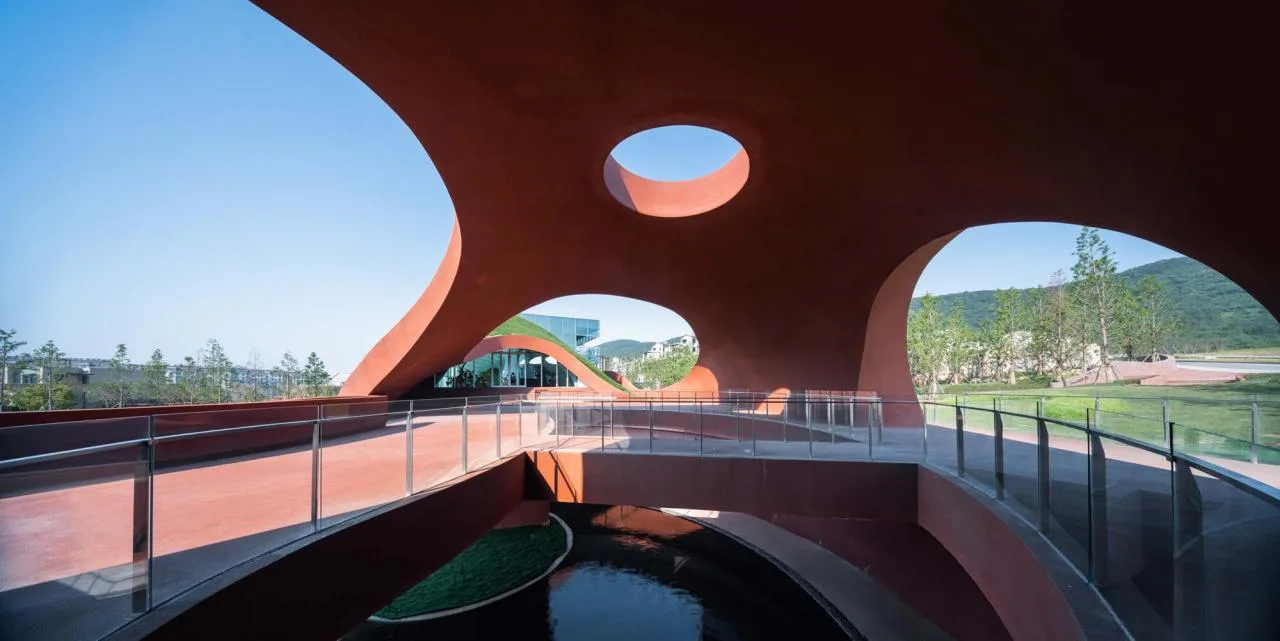
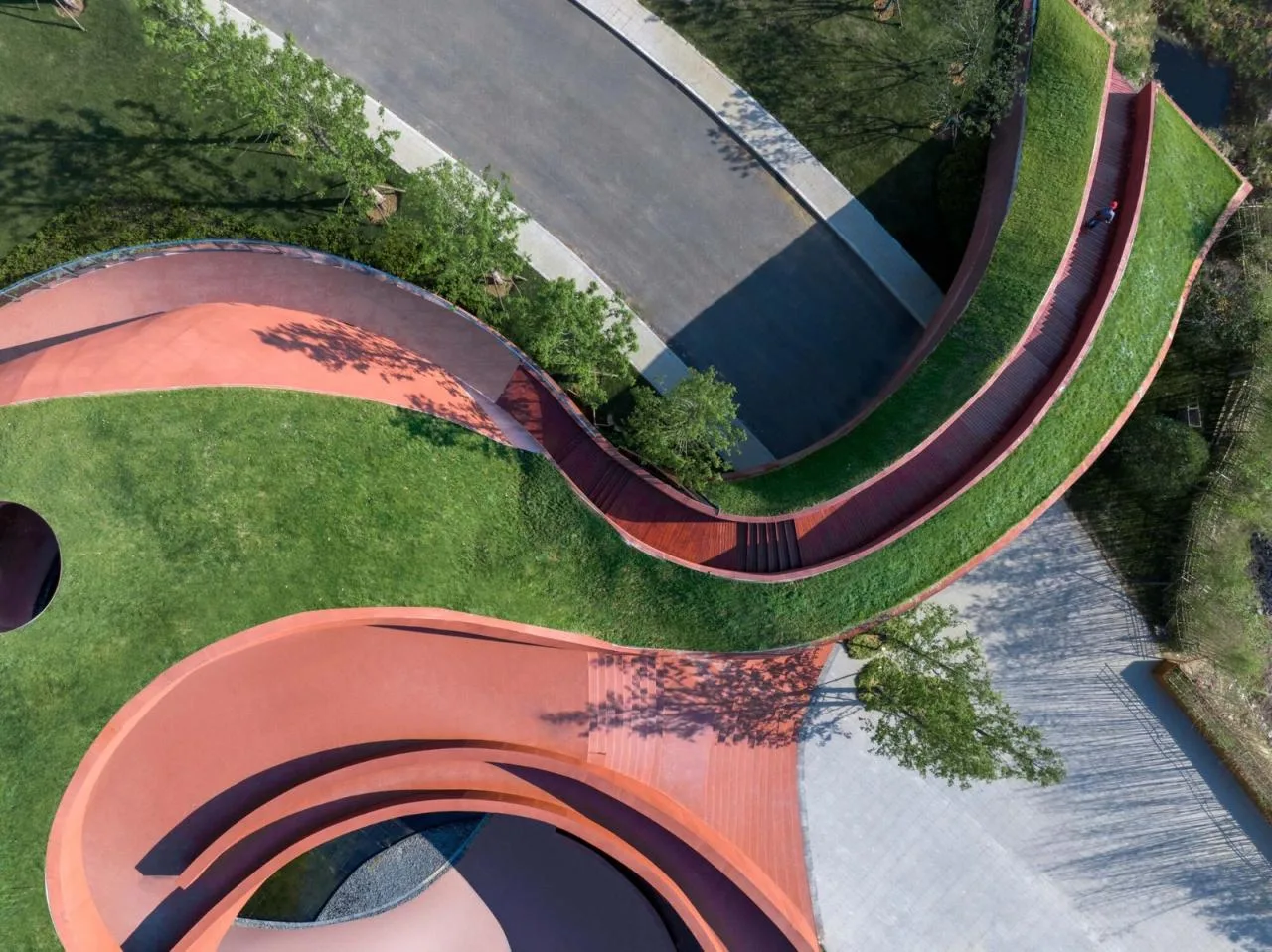
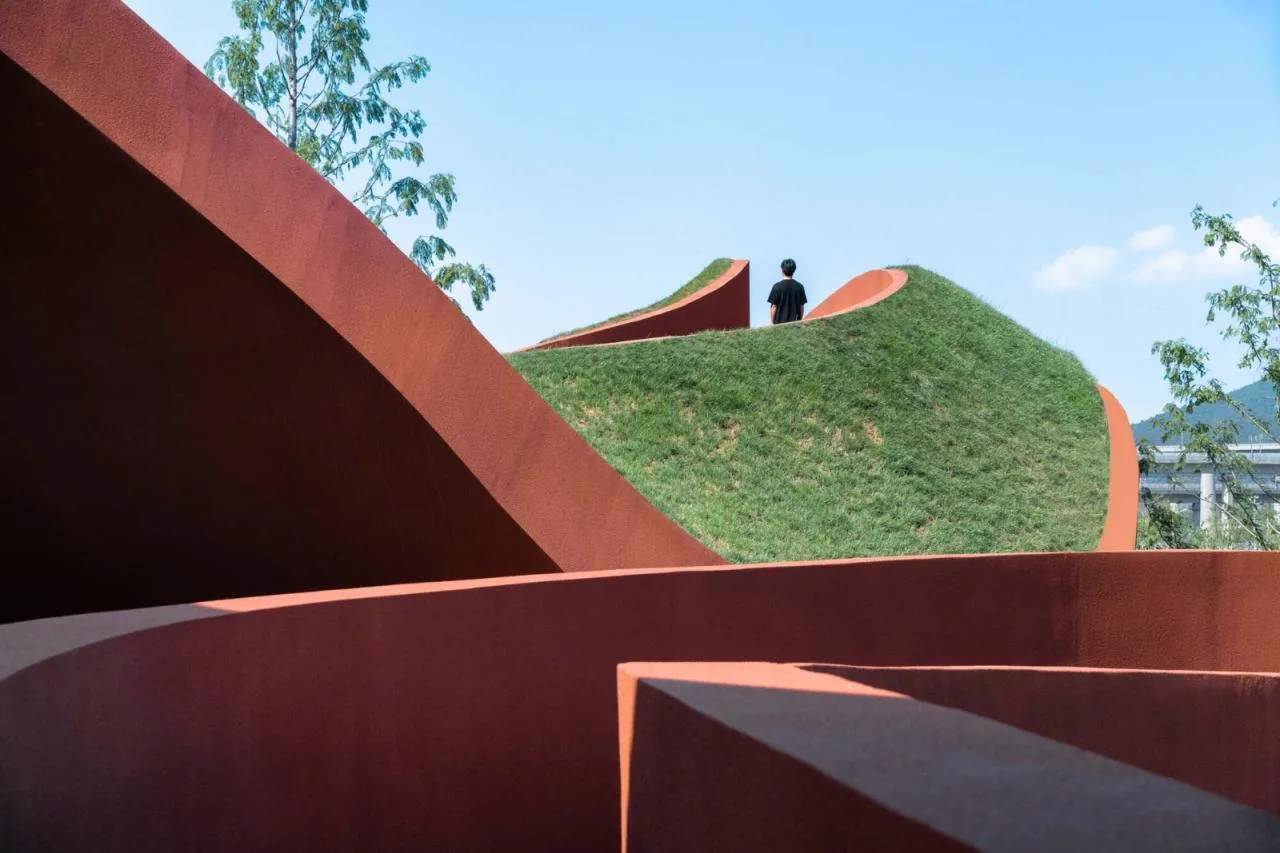
This architecture embodies tangible form with intangible boundaries, reflecting nature’s lack of limits. As part of the natural environment, the building’s edges represent moments of free movement within the landscape.
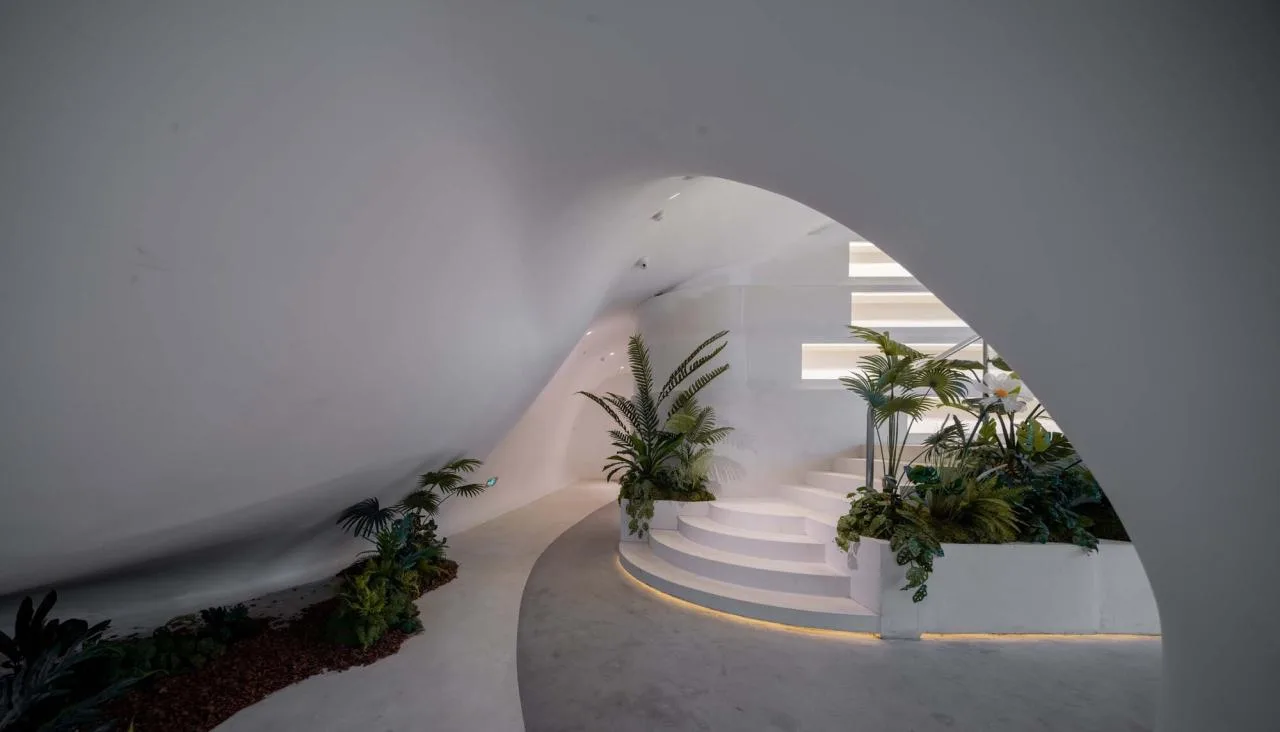
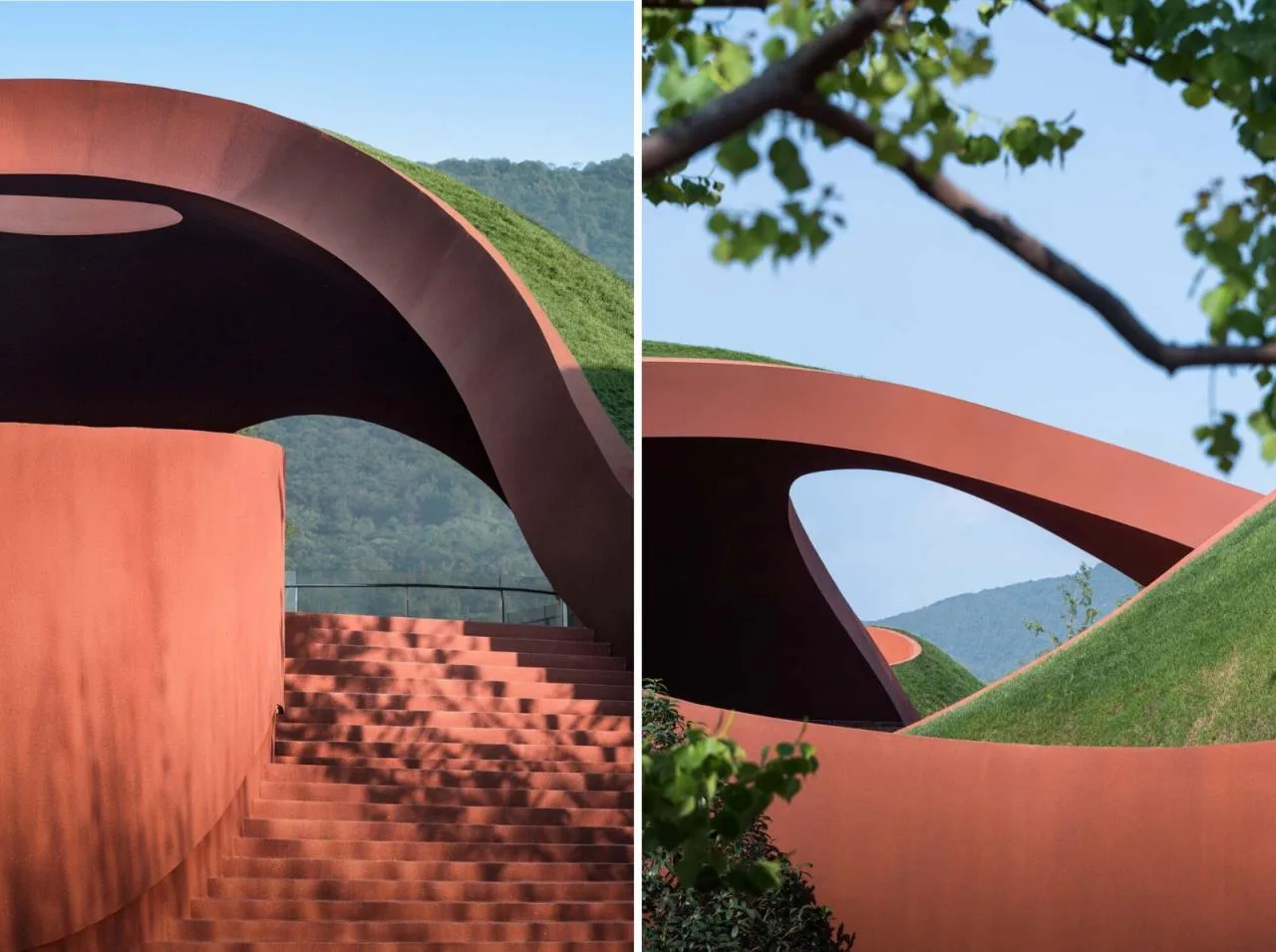
Visitors can enter the building via two main paths: a mid-air ramp in the front yard gently leads upward to a dome-shaped shell space, while a large staircase from the landscaped plaza beneath the roof crosses the road and leads down to the dome’s lower void. The roof spans the municipal road, doubling as a pedestrian bridge connecting the northern and southern plots. Crossing this bridge, one is greeted by the overlapping shadows of the architecture and distant mountains, naturally guiding them toward the dome.
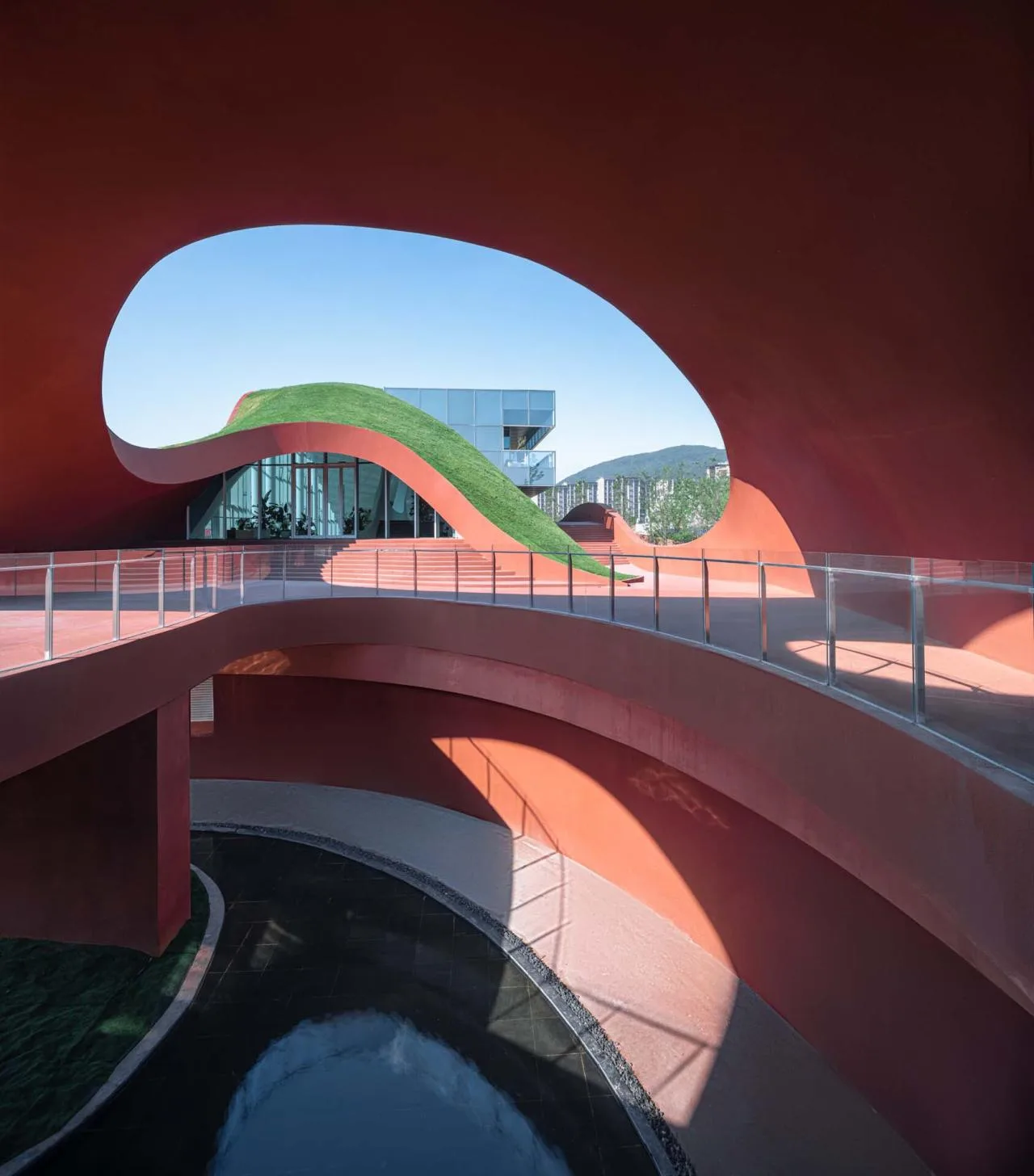
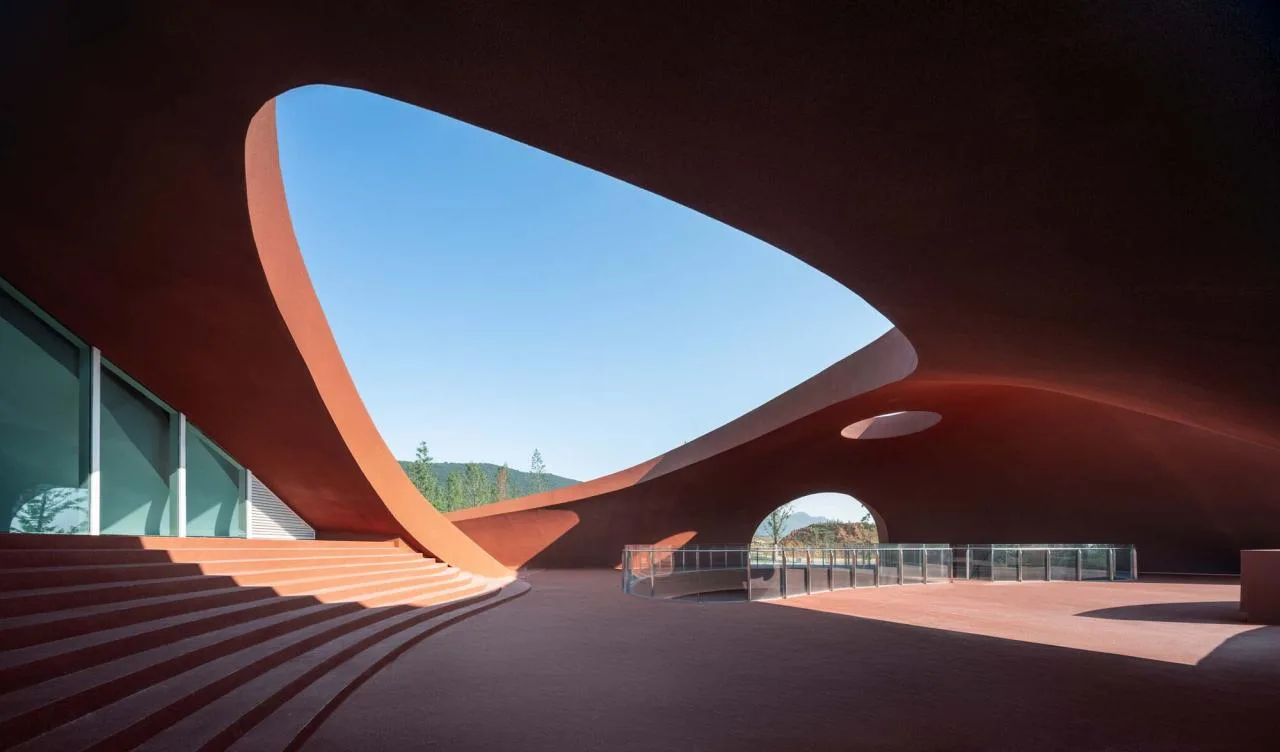
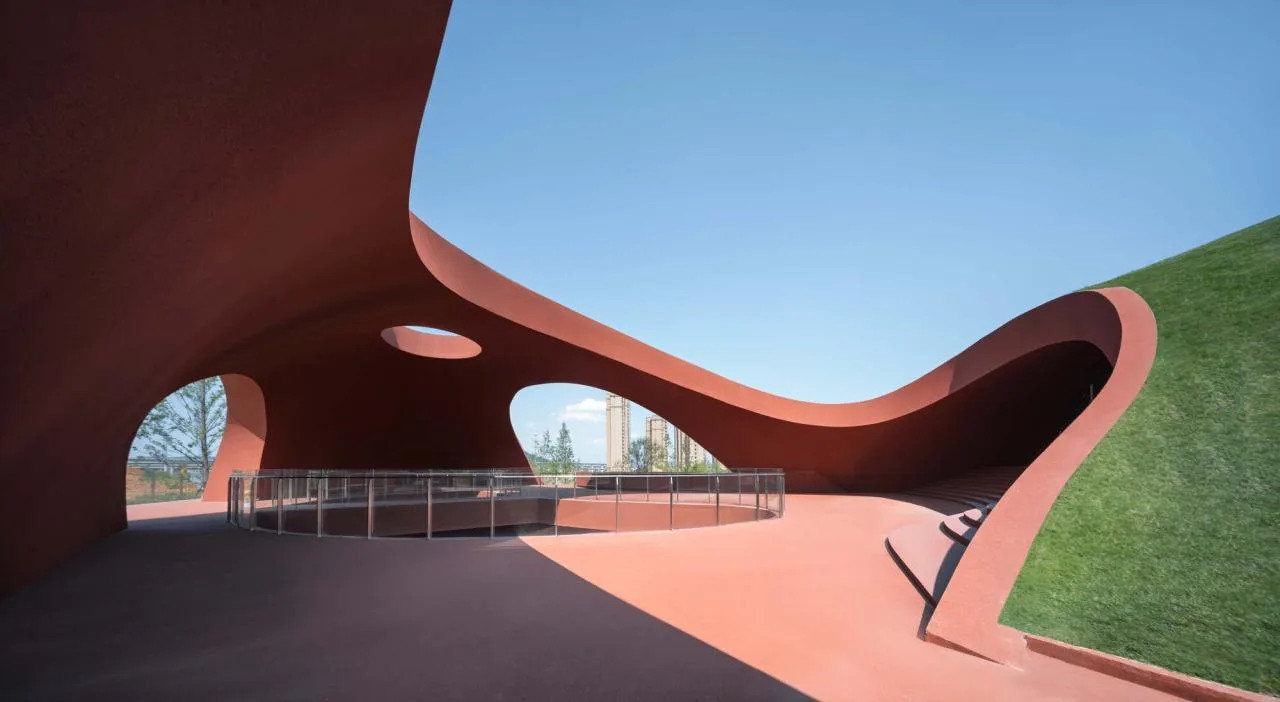
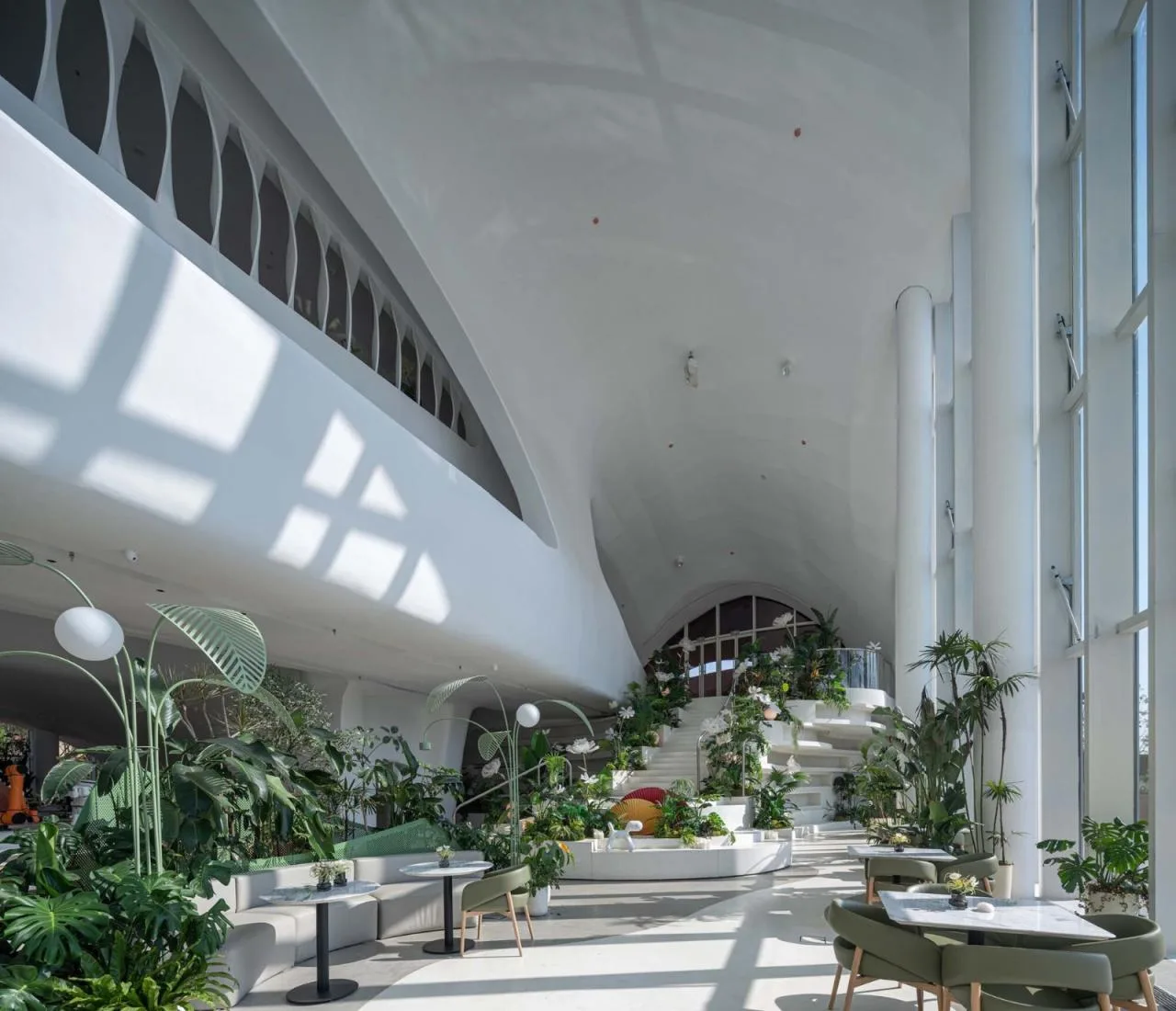
The dome-shaped building’s functional and transitional spaces intersect to create a vast public platform with a vertical space extending up to the dome’s apex. The front and rear shell openings frame the external environment, making this the most naturally immersive area within the building, where meaning and spirit are reshaped.
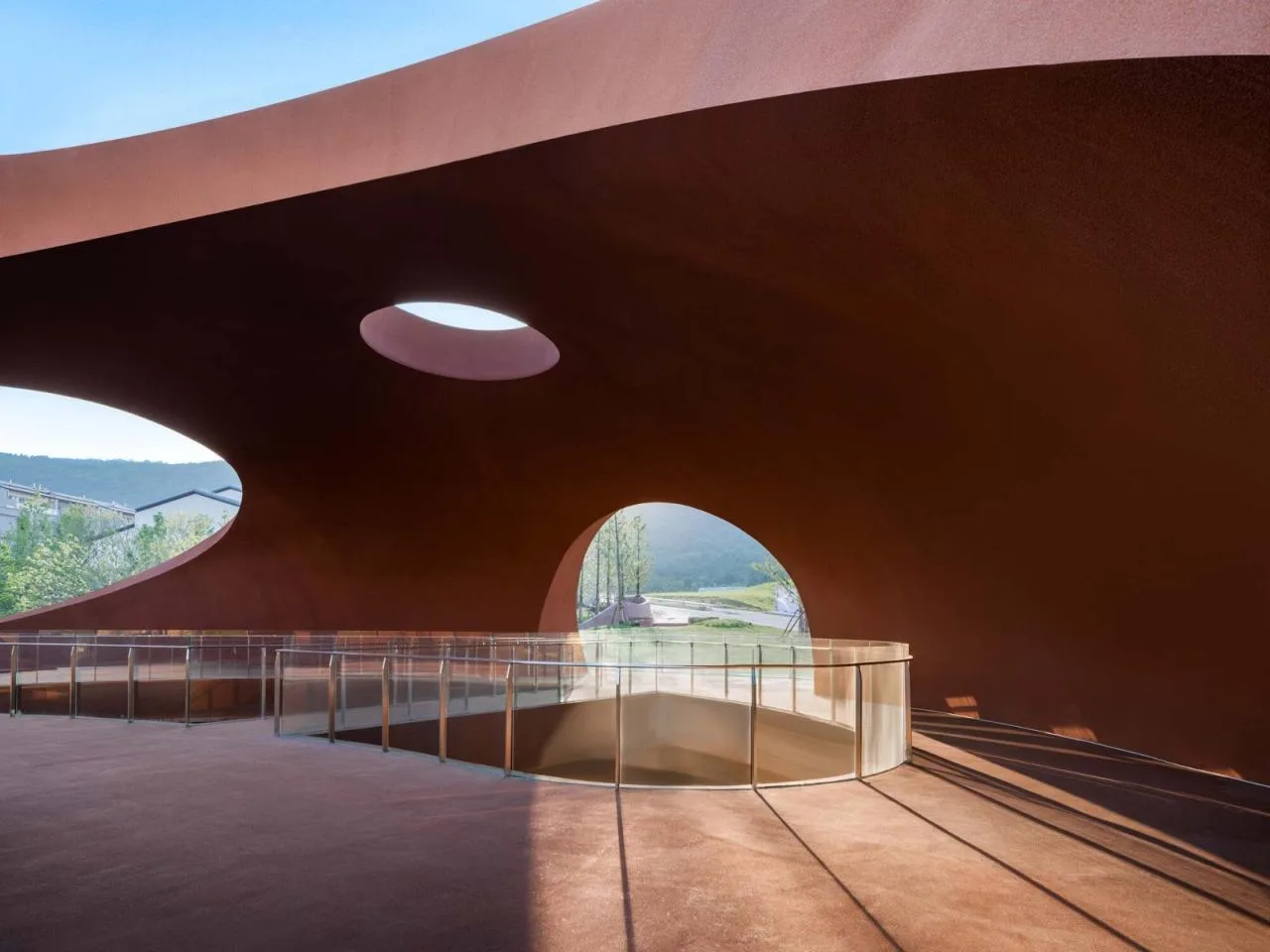
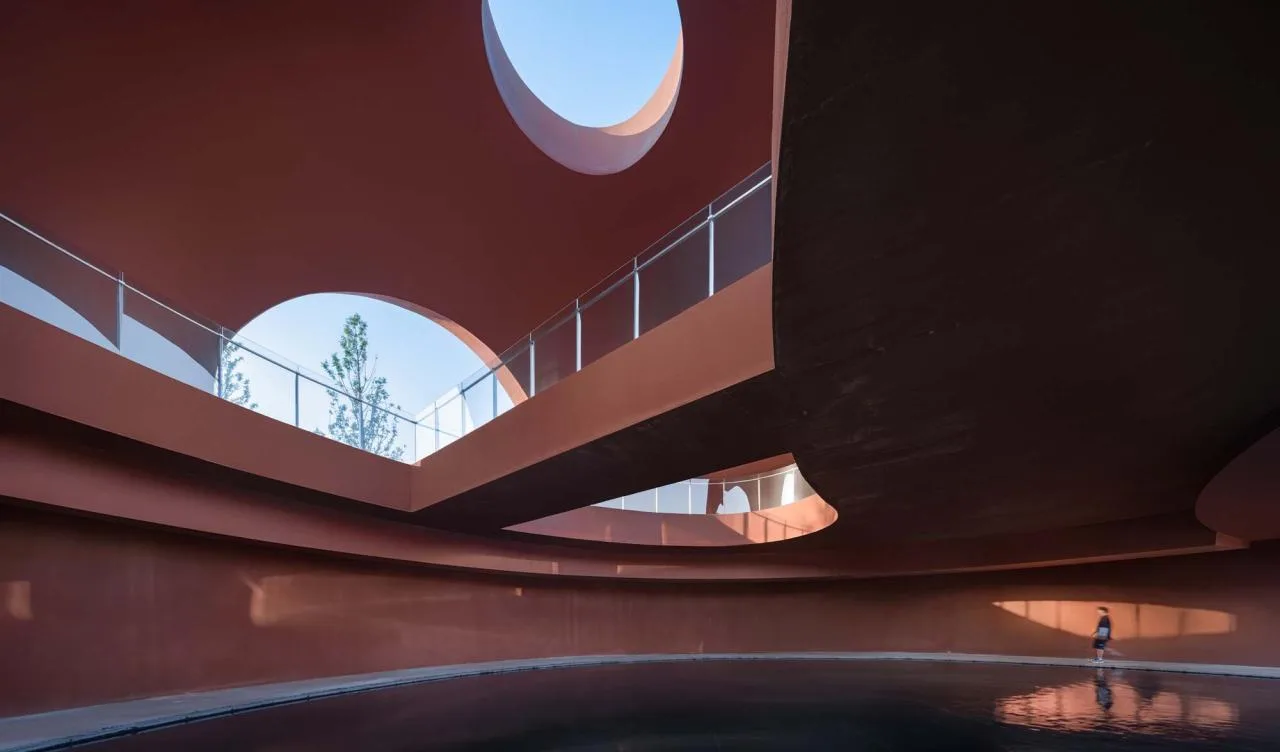
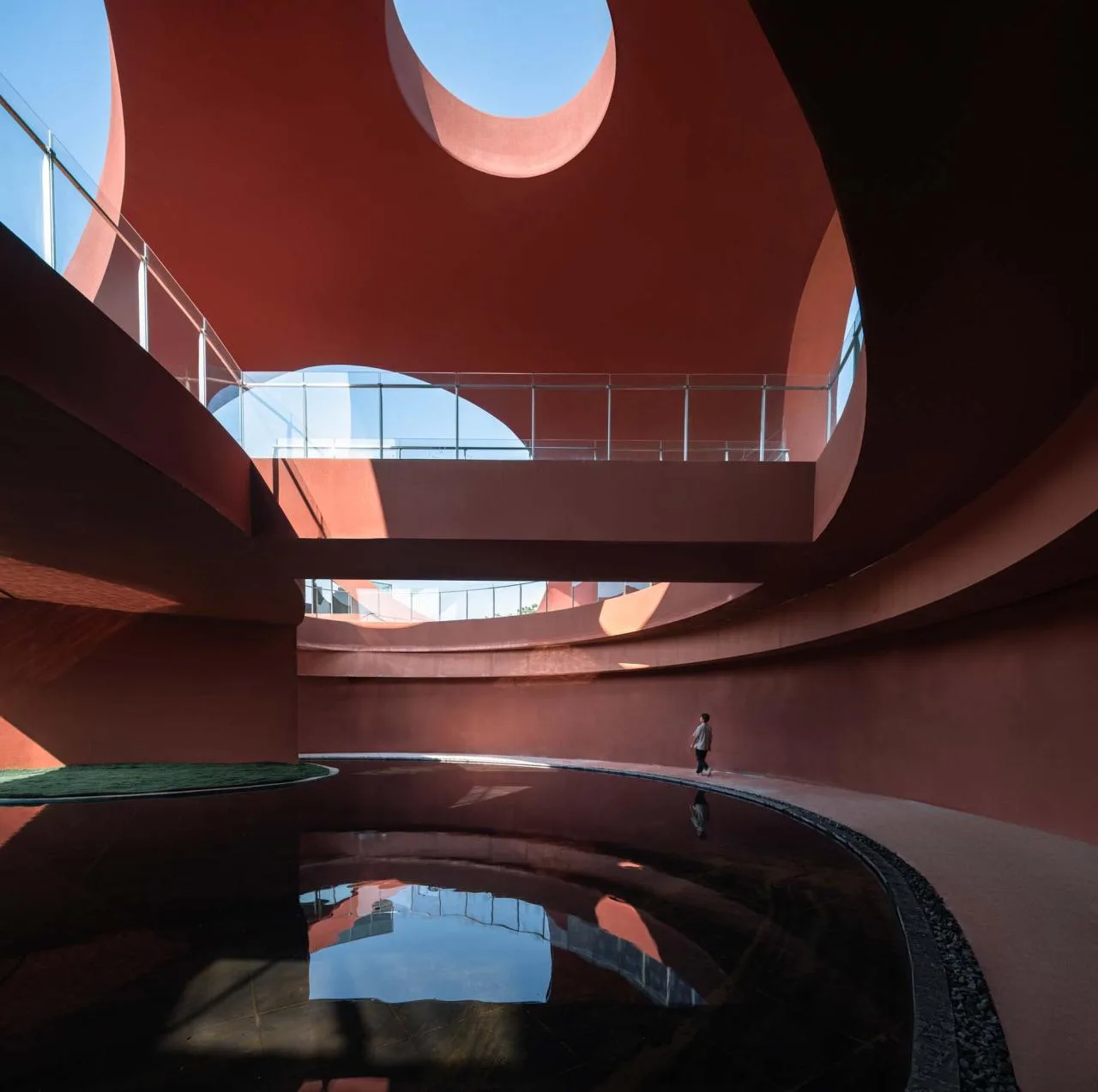
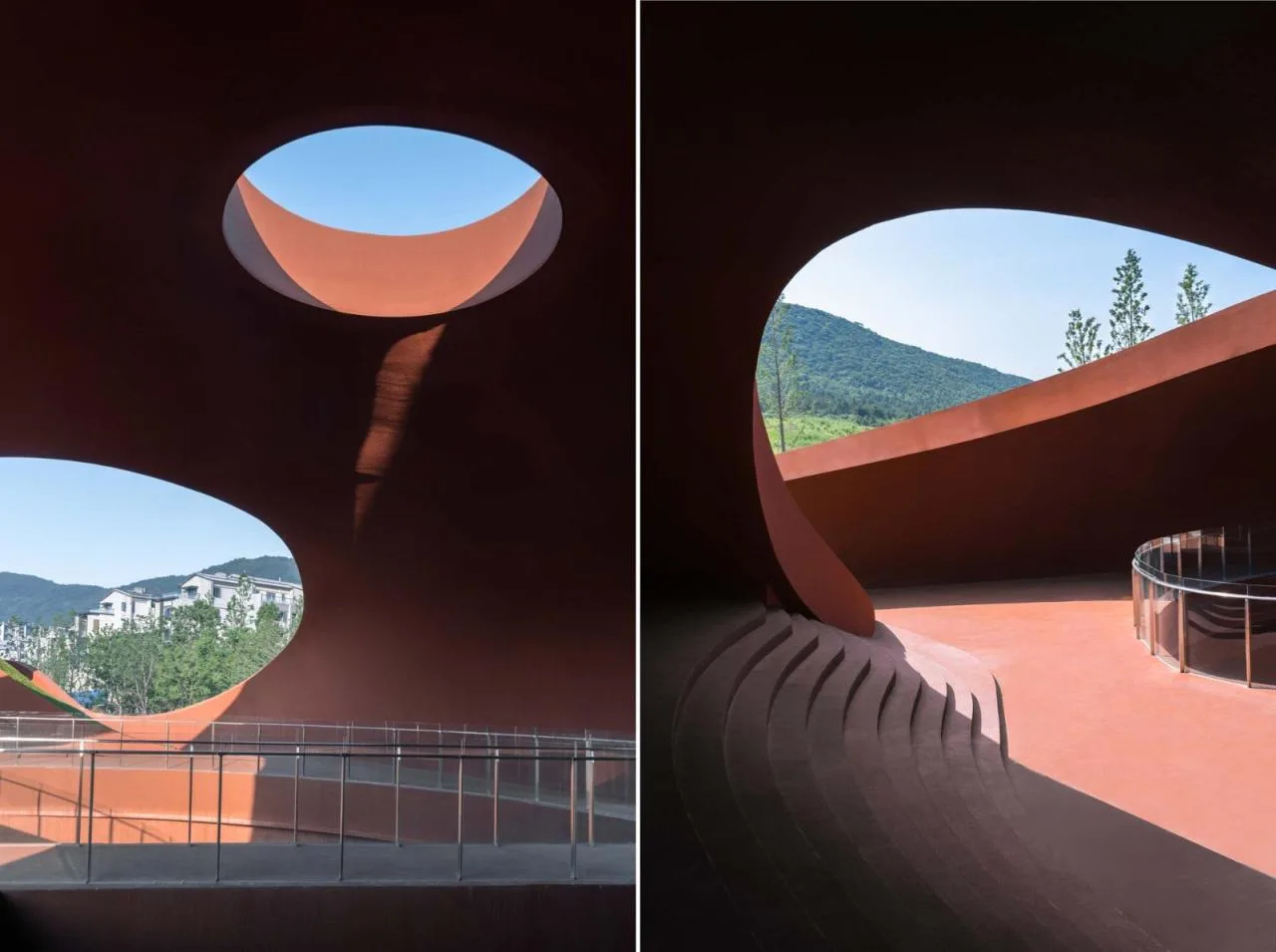
This building, seemingly independent of its architect, represents an ‘artificial hand’ crafted by the creator within the natural environment. Laozi’s “Tao Te Ching” states: “The clay is shaped to make a vessel; it is the space within that makes it useful. The door is carved to make a room; it is the empty space that makes it livable.” This architectural philosophy emphasizes that architecture arises from its role as a carrier, existing initially as an ‘empty’ form awaiting use.
By shaping itself into a ‘shell’ through ‘governing by inaction’, this carrier unconsciously invites environmental elements inside, sparking unexpected and meaningful reshaping of the surroundings.
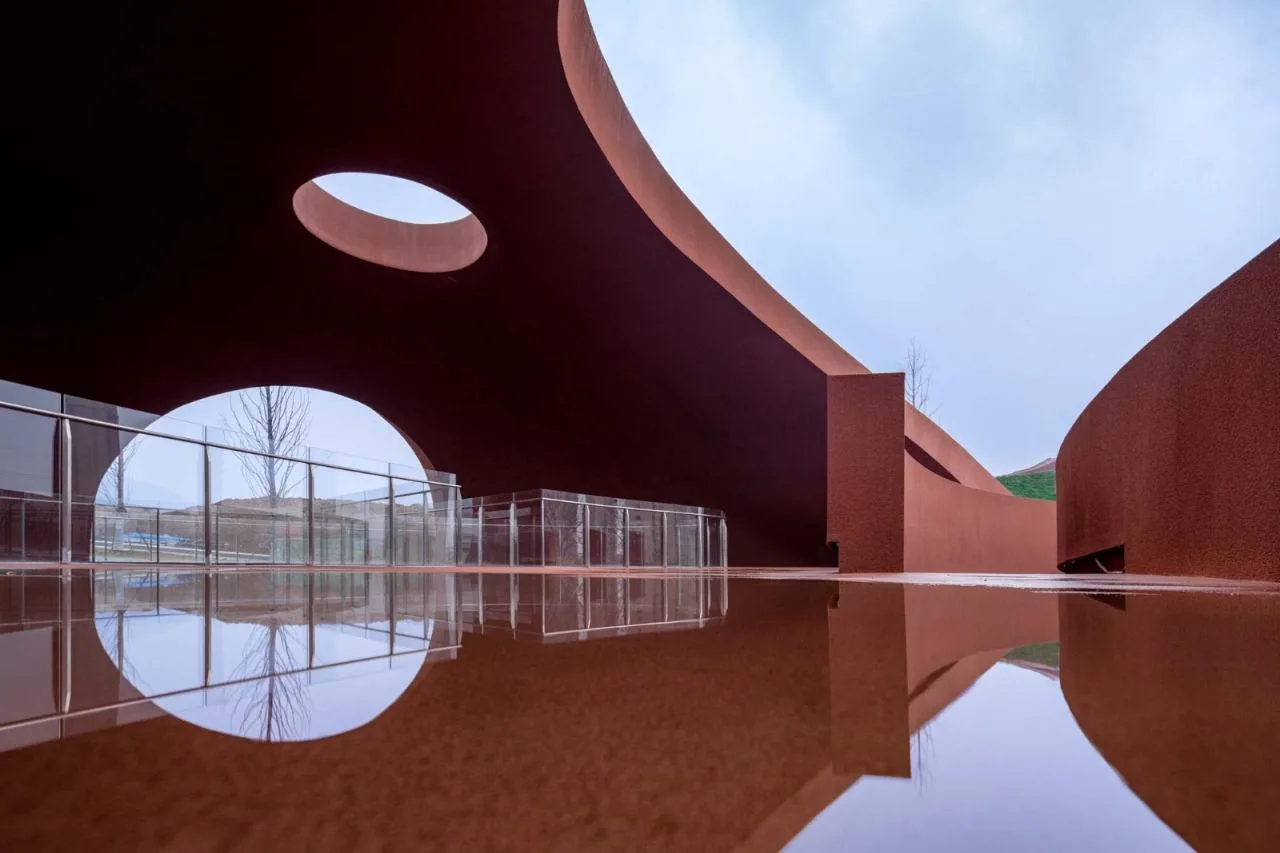
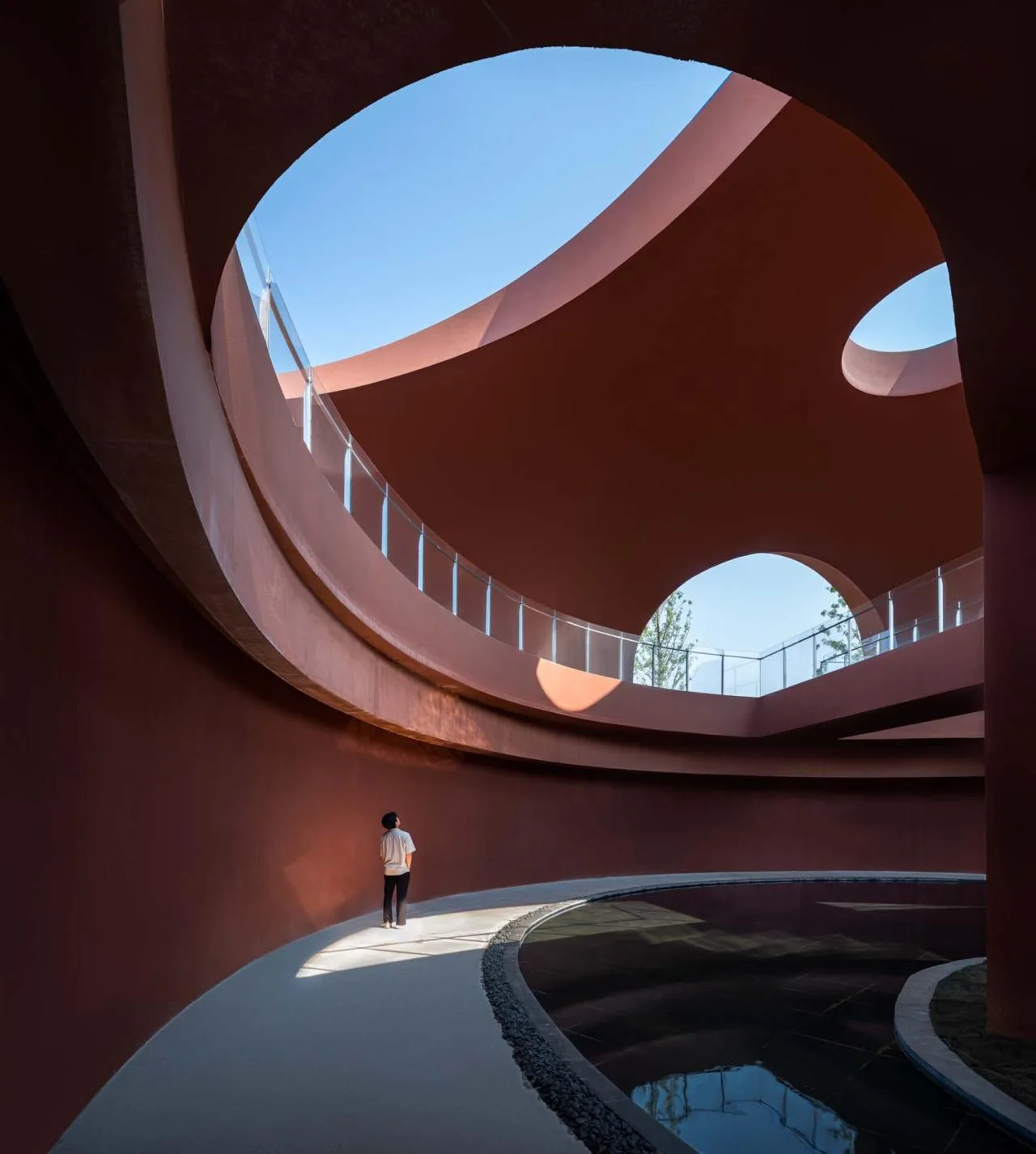
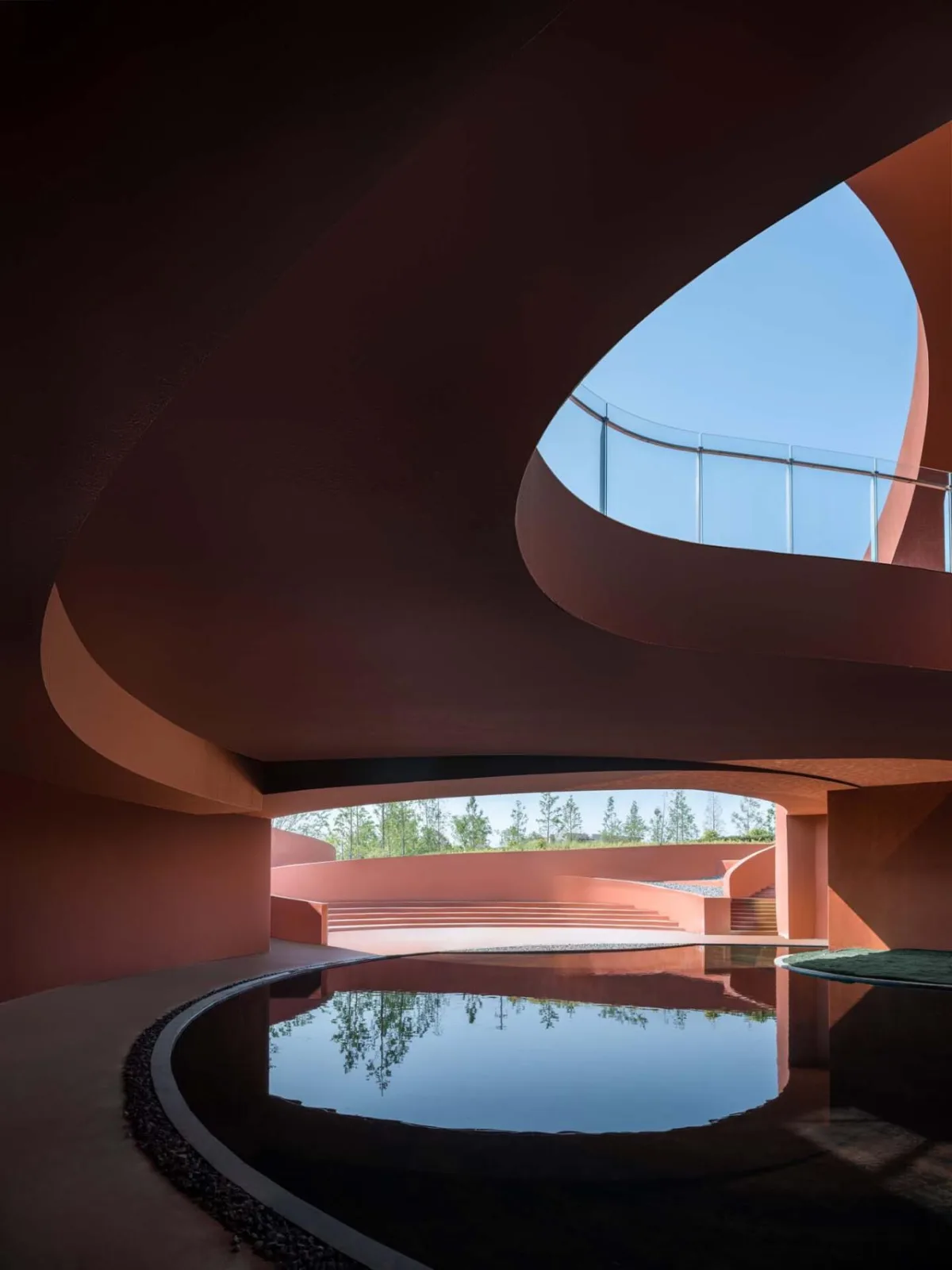
The semi-circular shell opening reflects the natural scenery after rain, inviting distant mountains into the building’s ‘showcase.’ After light rain, the large platform’s mirror-like surface creates a stunning visual effect, blending interior and exterior seamlessly.
The building’s free-flowing curves frame unique views of the external environment, creating momentary silhouettes that compose cinematic imagery throughout the visitor’s journey, resulting in a continuous natural performance.
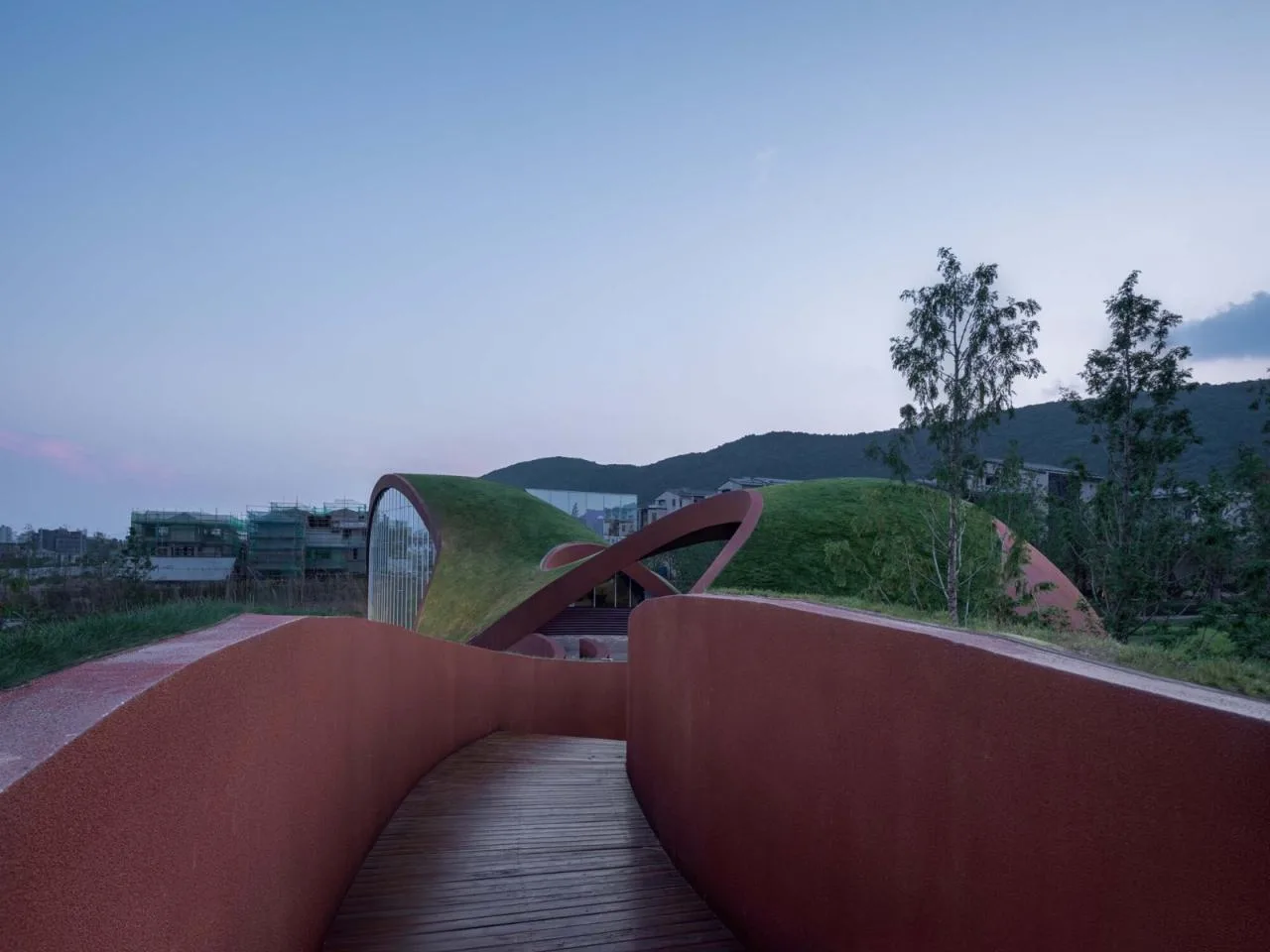
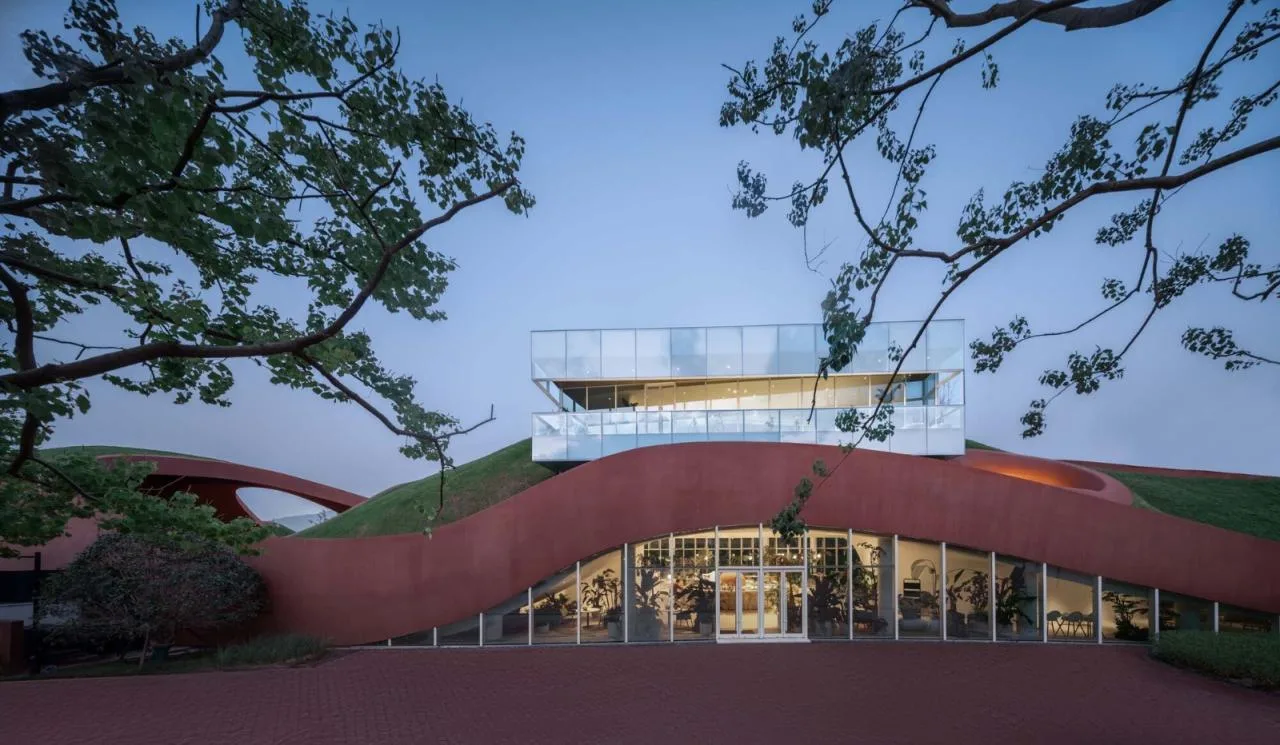
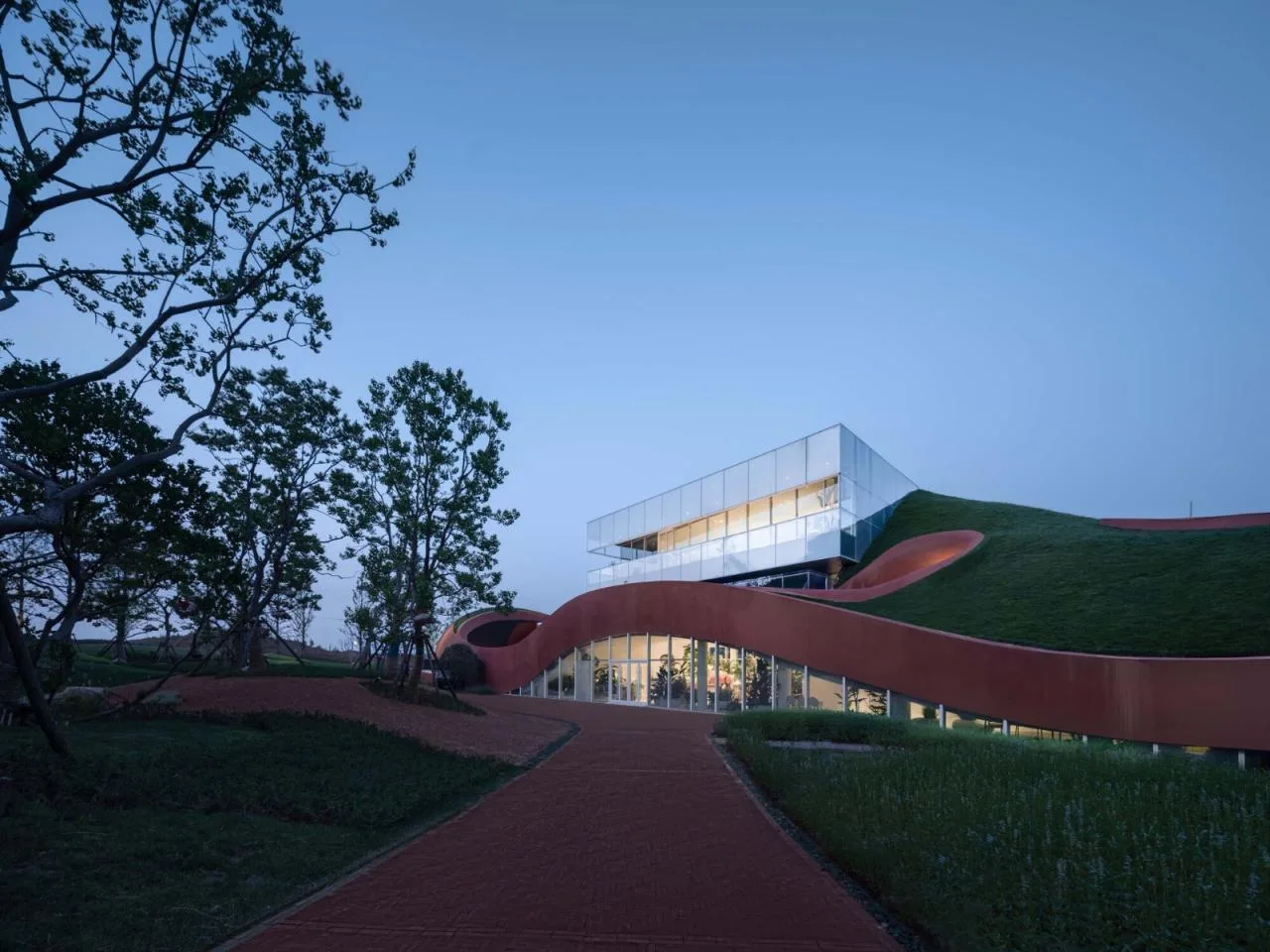
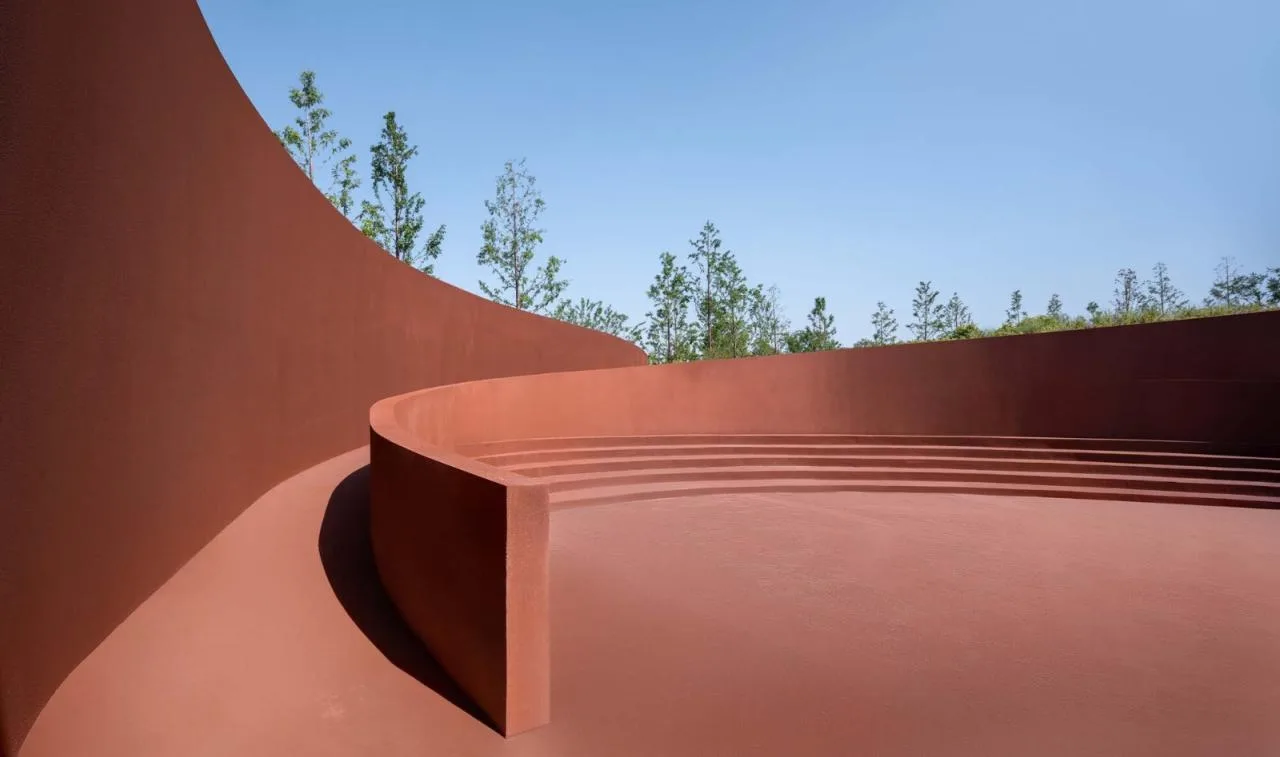
The open-air theater, nestled between walls reminiscent of sliced mountain faces, descends into a sunken space designed for outdoor performances. This amphitheater will host events for future buildings in the complex. Its visual focal point is a sunken water surface beneath the dome that collects natural rainwater. When drained, the water surface transforms into a small stage for performances.
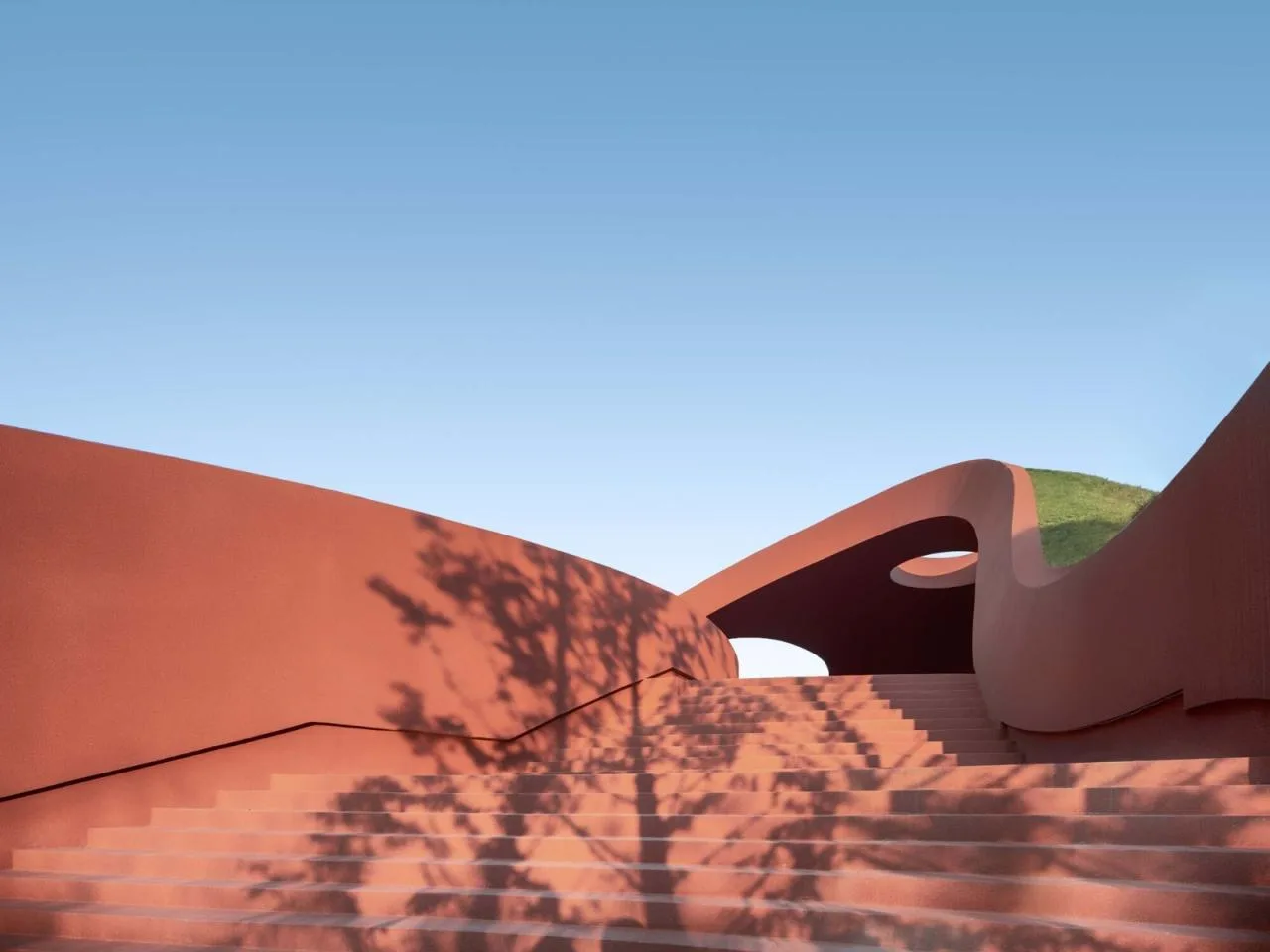
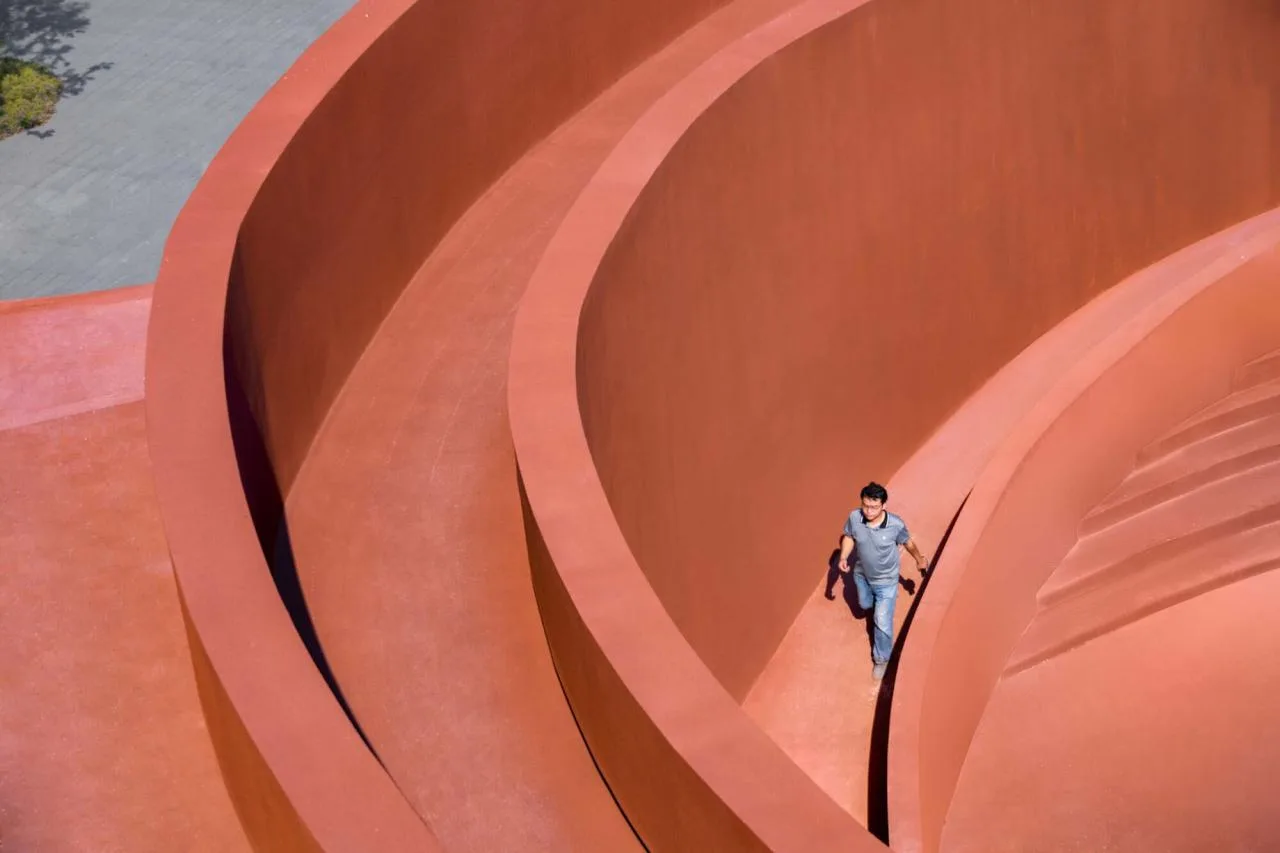
The building’s crustal shape is defined by distant mountain ranges, while the subterranean space is shaped by tectonic plate forces. The area between the sunken space and the shell surface forms a large platform, half above and half below ground, enclosed by solid retaining walls. The upper portion is void-like, while the lower is solid, together forming a complete geological cross-section where visitors can sense the power of geological forces.
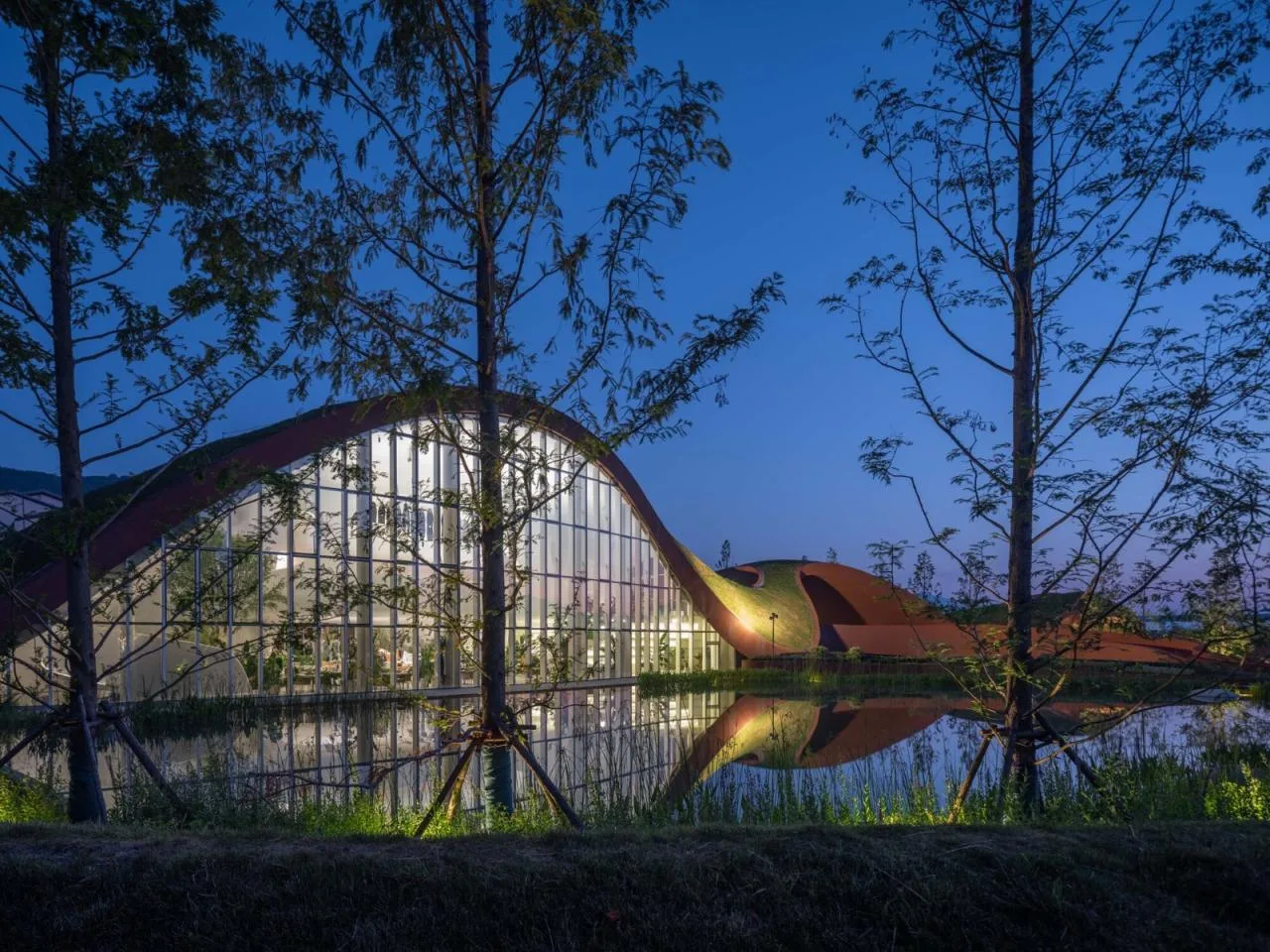
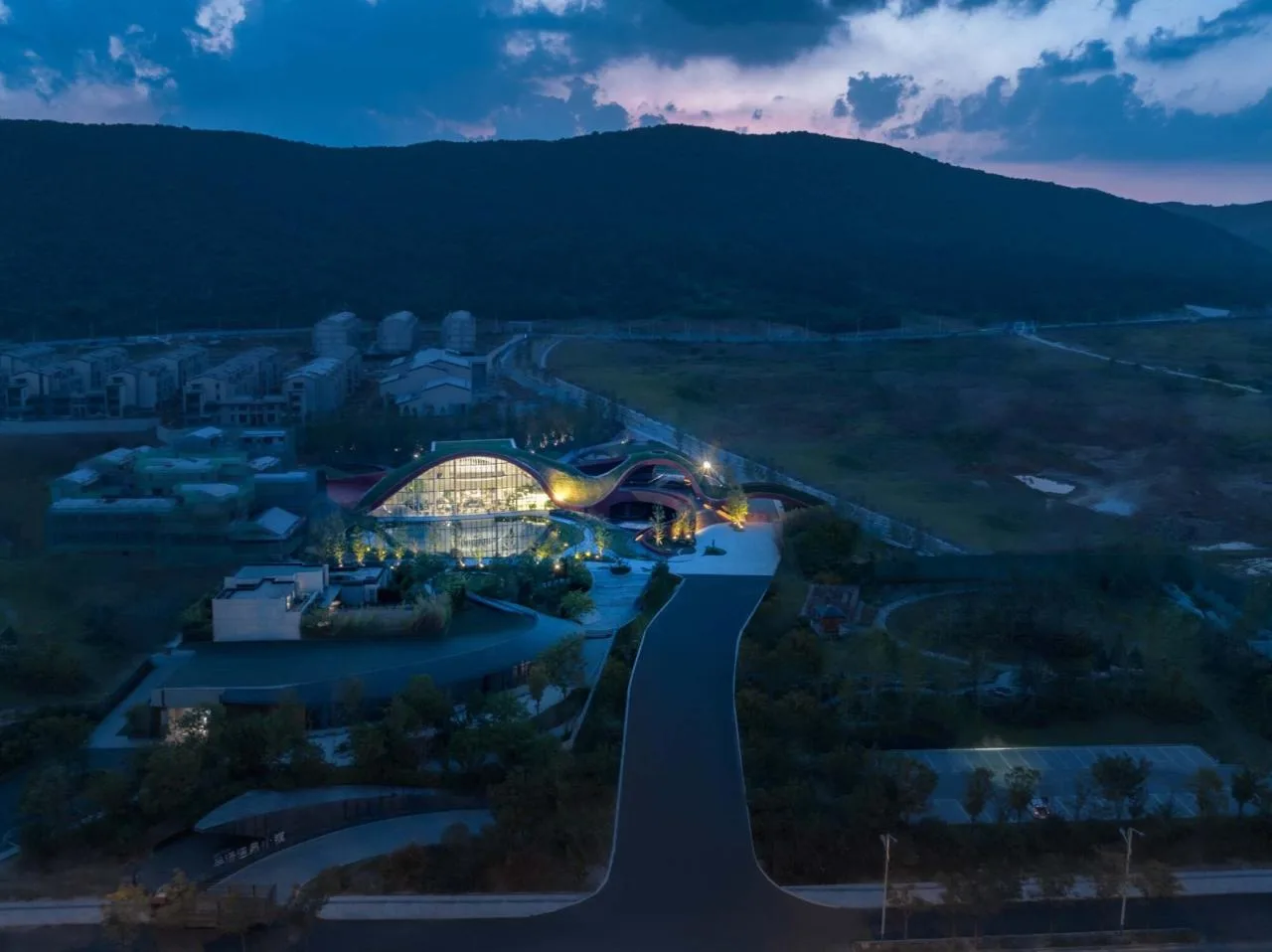
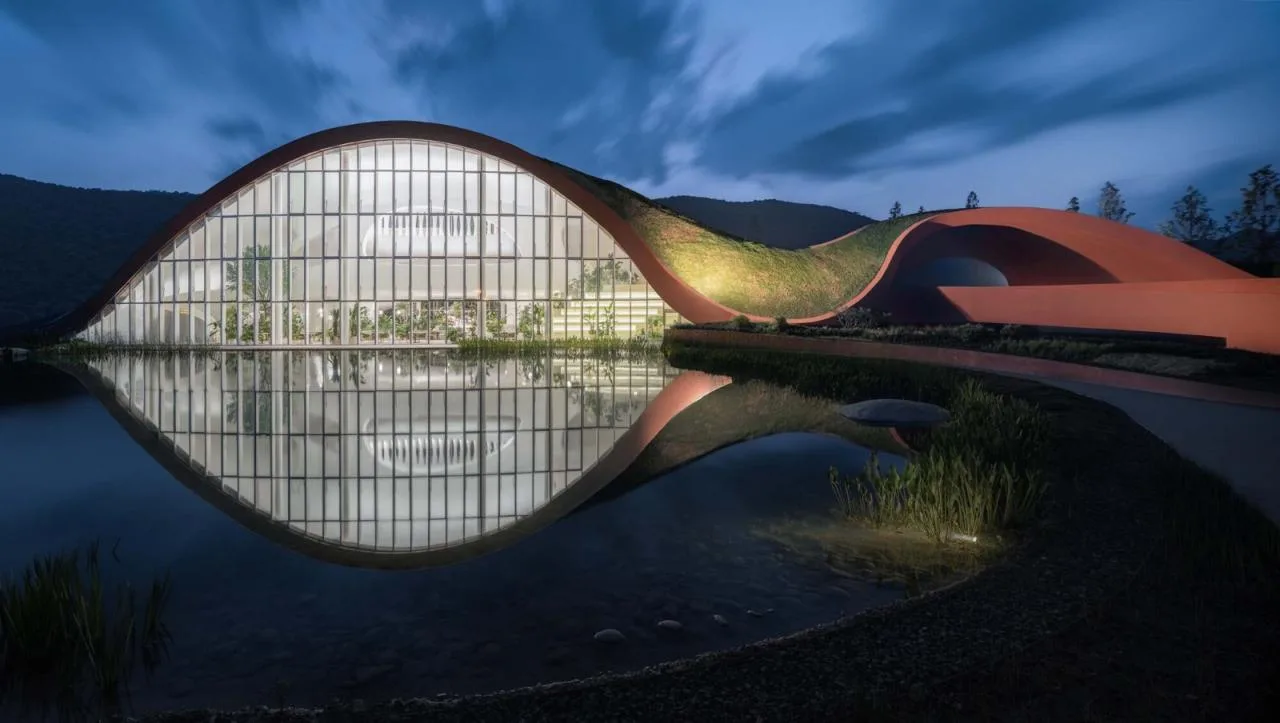
The continuous outdoor roof pathway begins at the northern bridge deck crossing the road, extends to the open half-platform beneath the dome, and continues south to the wormhole in the southwest corner. The upper and lower surfaces of this route define the building’s exterior and interior spatial boundaries. This roof flow line is fully connected but remains separate from the internal spaces.
This path traces the dynamic trajectory of a worm moving through soil, translating geological space into architectural form. Starting at ground level, rising to the roof, and finally returning to the outdoor site at the wormhole location, this journey embodies the philosophical concept of a ‘wormhole.’
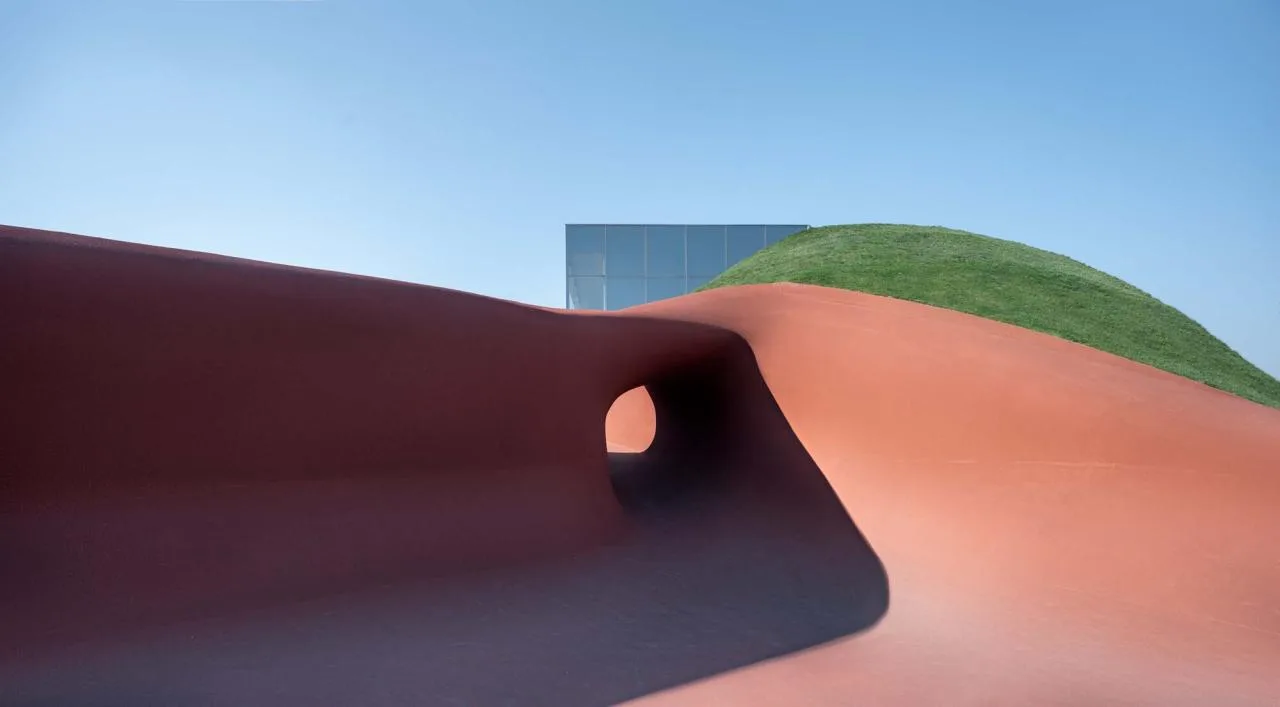
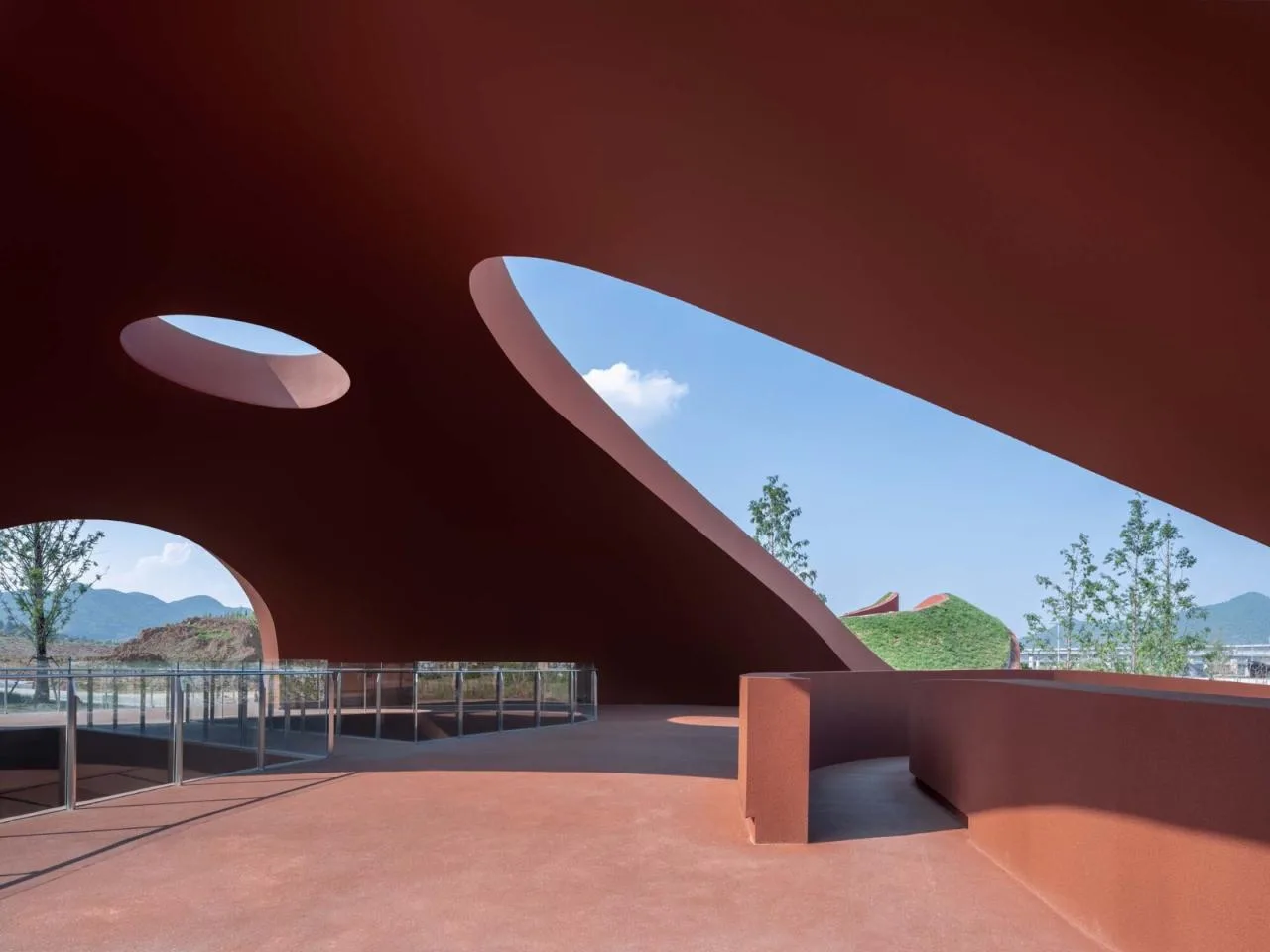
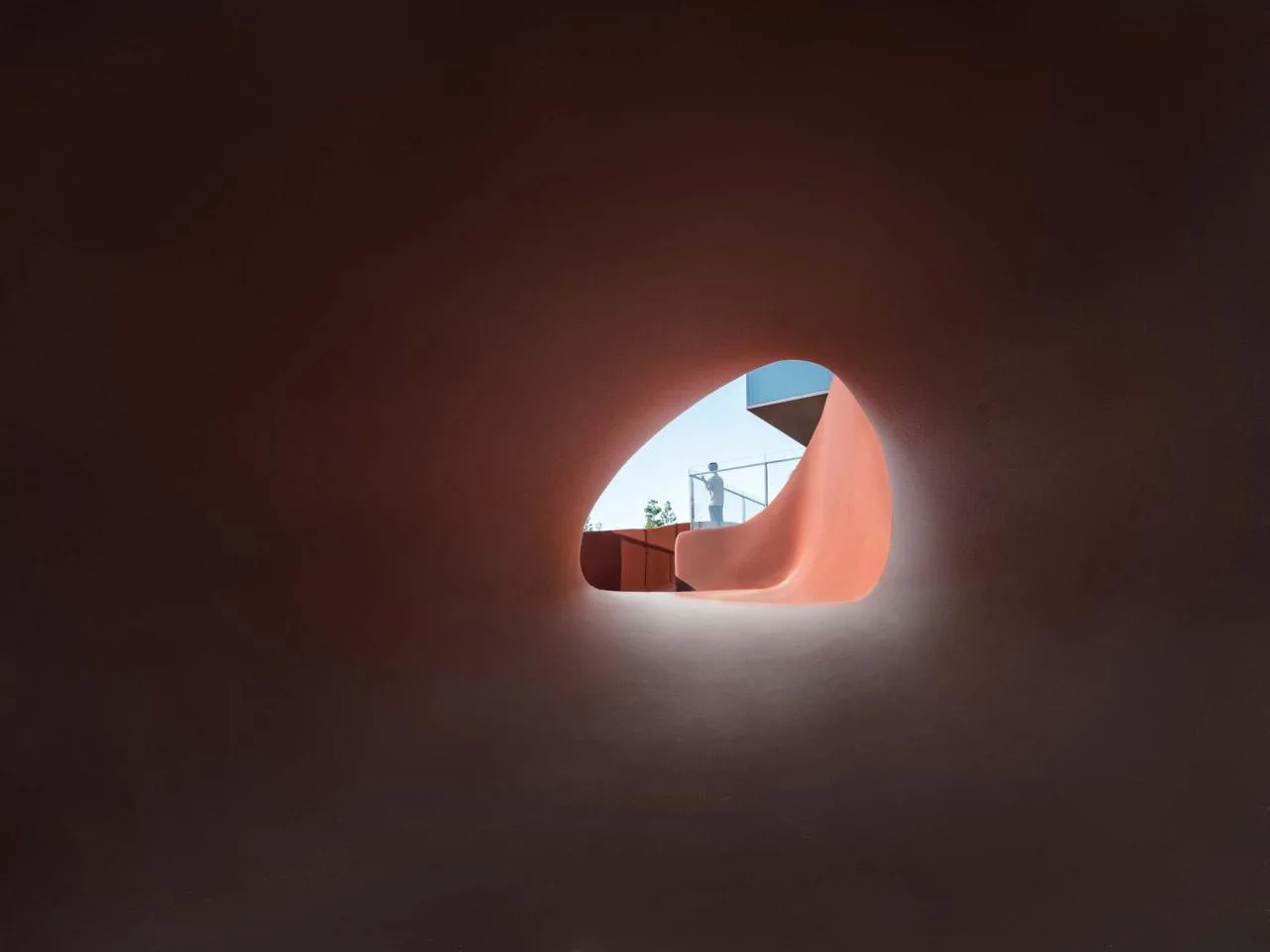
The square viewing box serves as both the starting and ending point of the building’s journey. This element, directly embedded into the free-form contour without decoration, is the only vertical connector inside the structure and the sole interior space opening visually toward the mountains.
Throughout the design process, the architect aimed to minimize stylistic imposition, striving for a ‘de-architectural’ approach. Yet, in this final gesture, they consciously assert a human presence distinct from nature by positioning the viewer in direct dialogue with the mountain. This space embodies the initial philosophical inquiry driving the project: the relationship between humans and nature—leaving behind a deliberate 10% of ambiguity and debate.
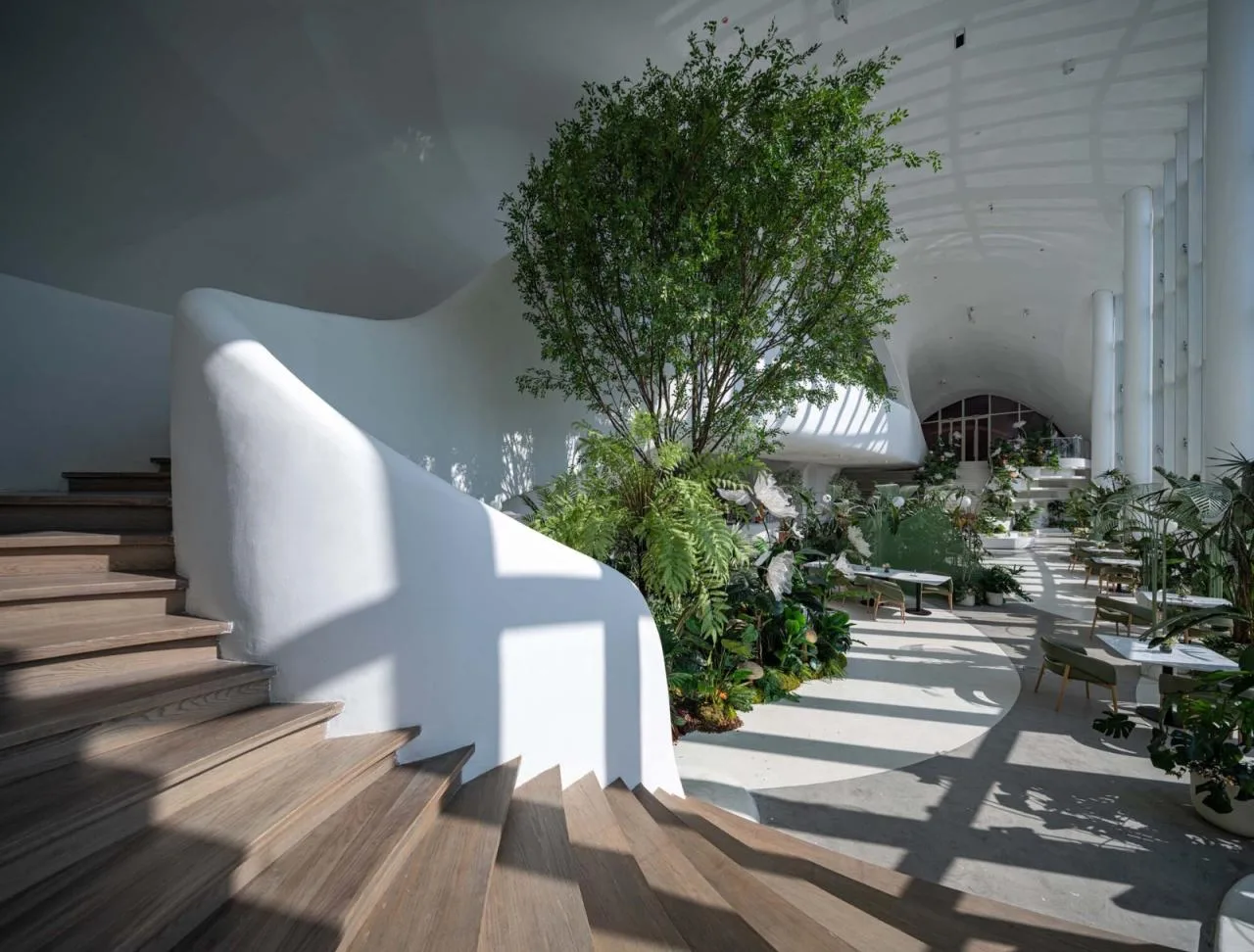
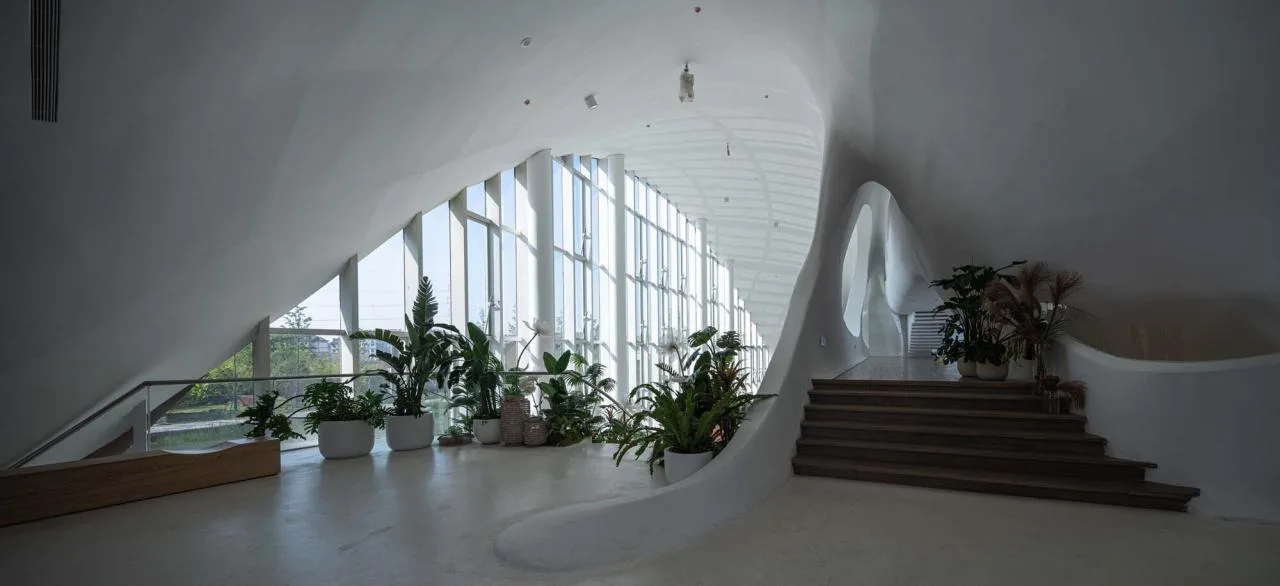
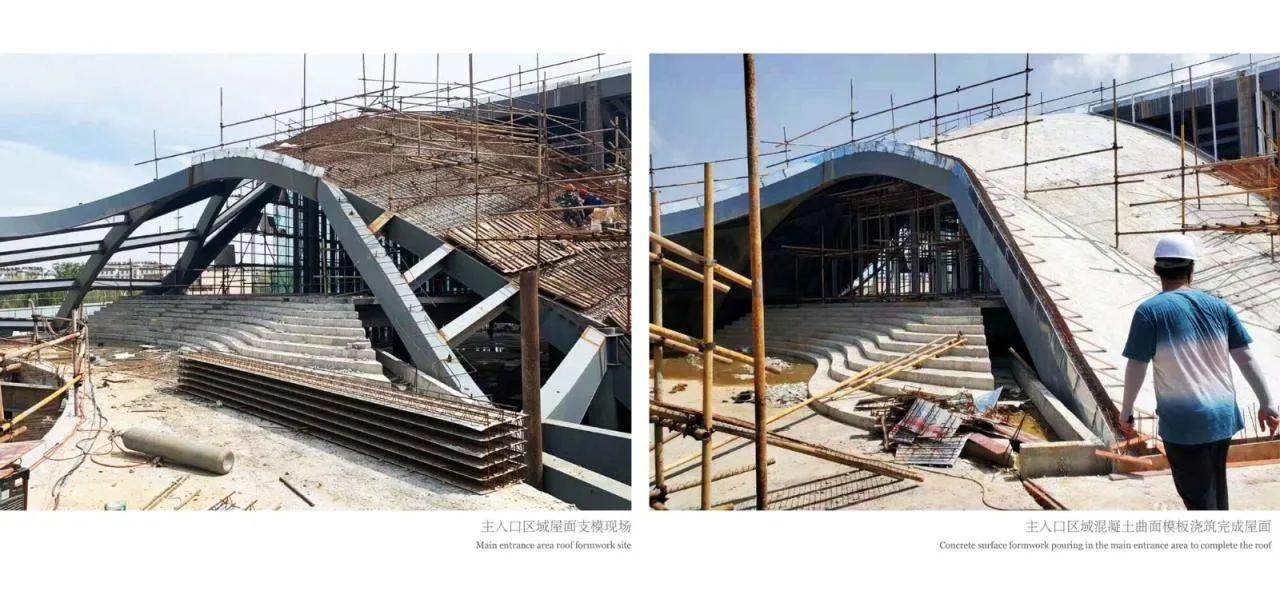
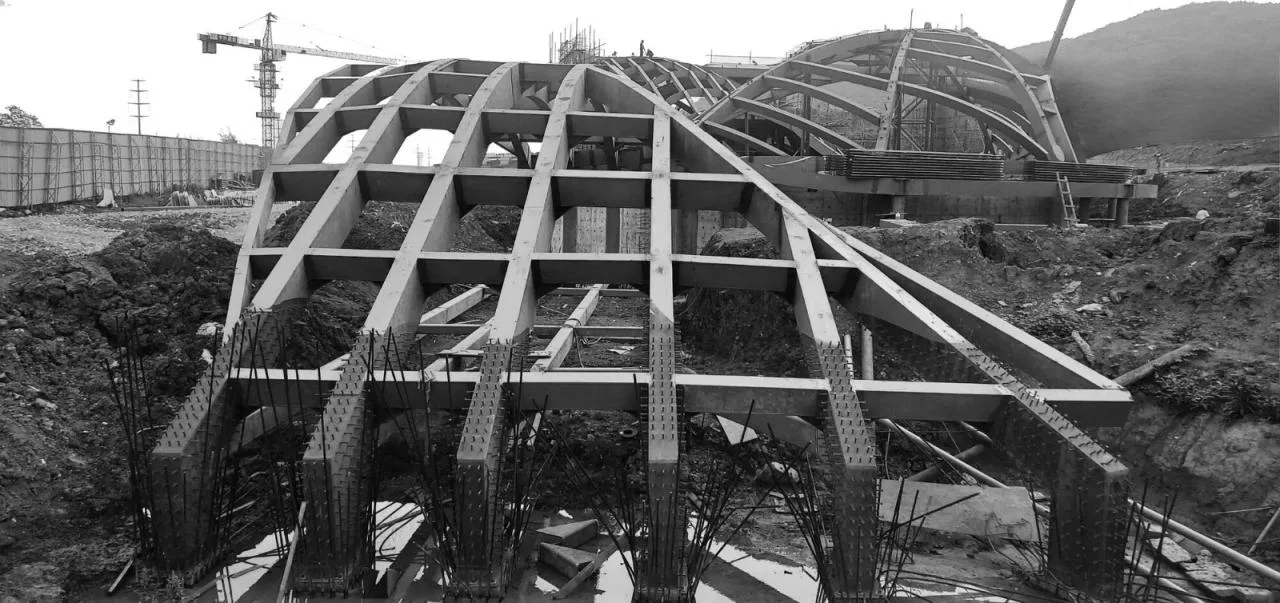
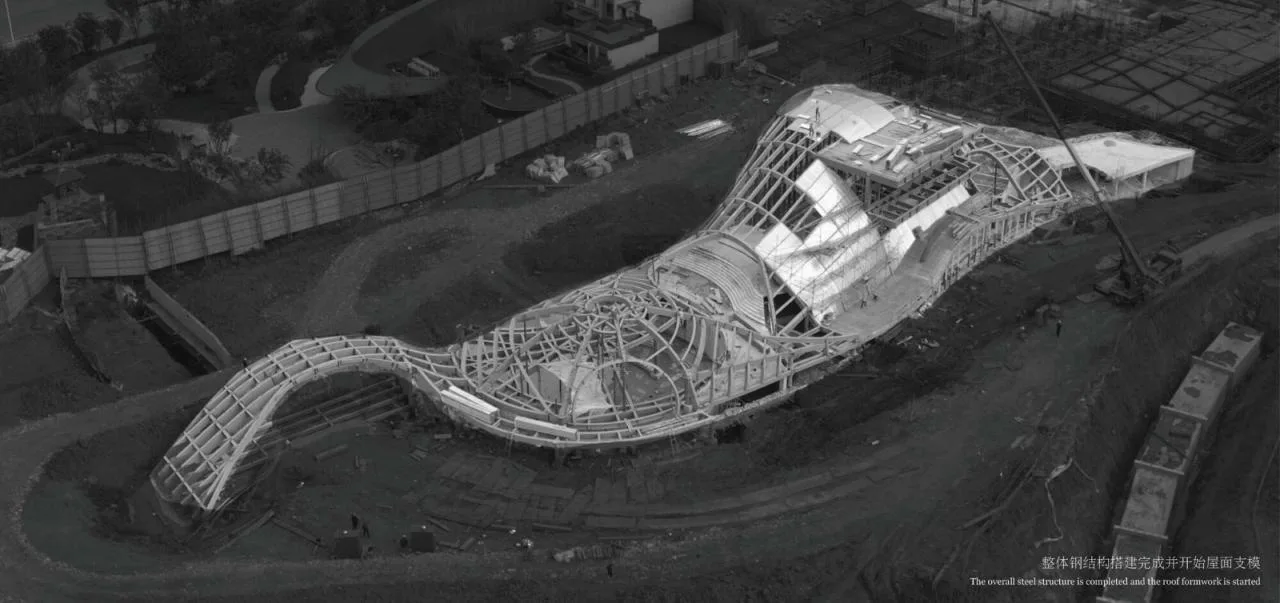
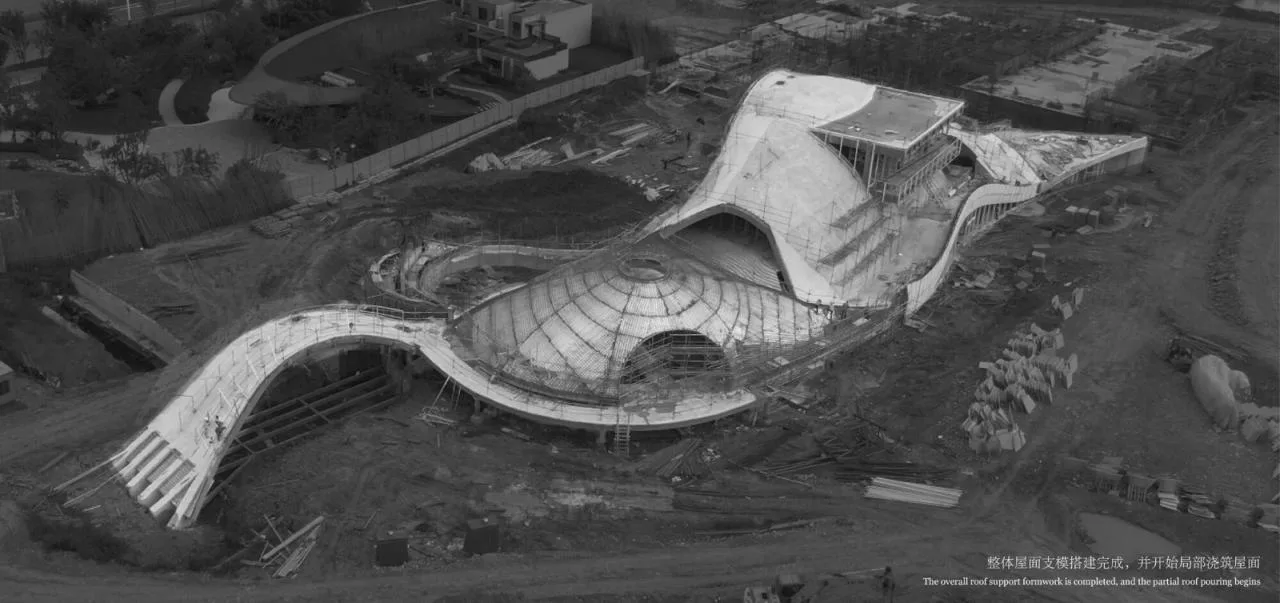
Project Drawings
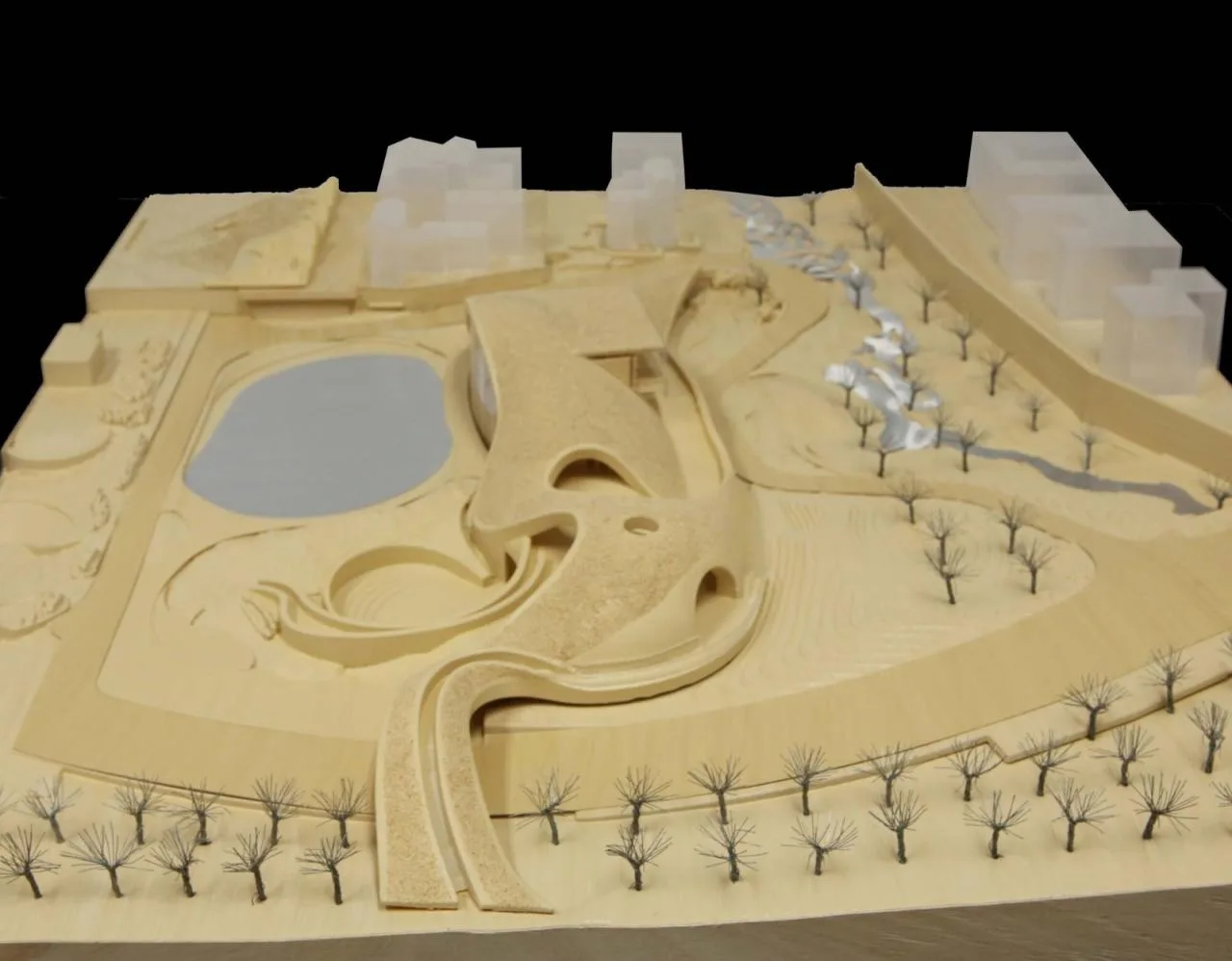
△ Model
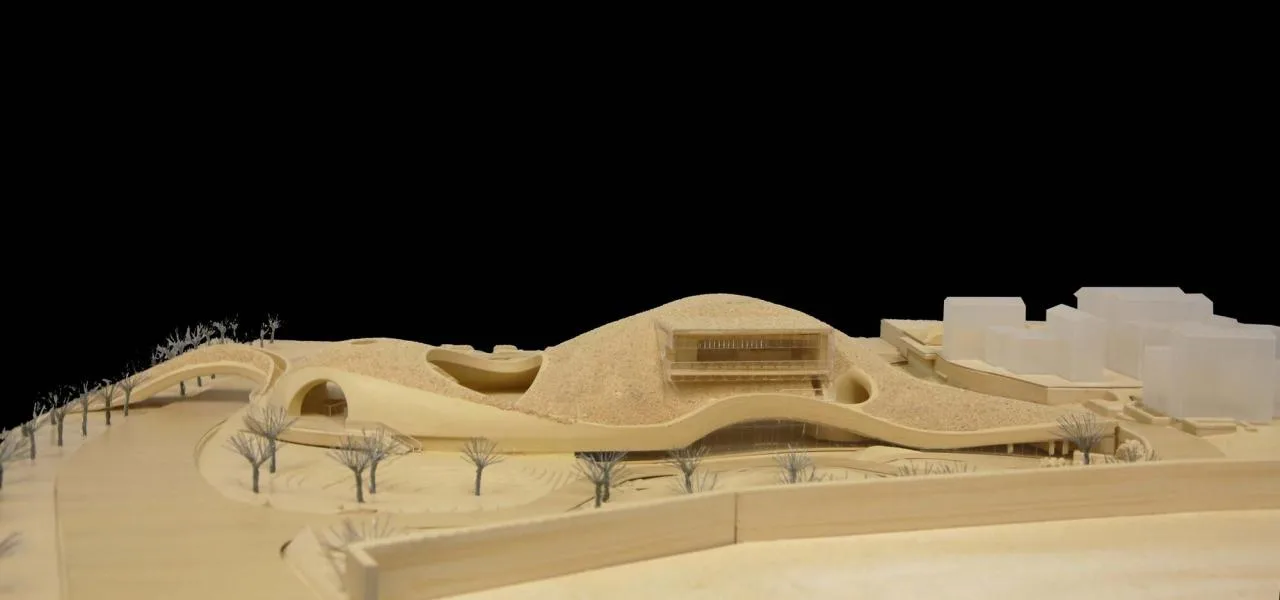
△ Model
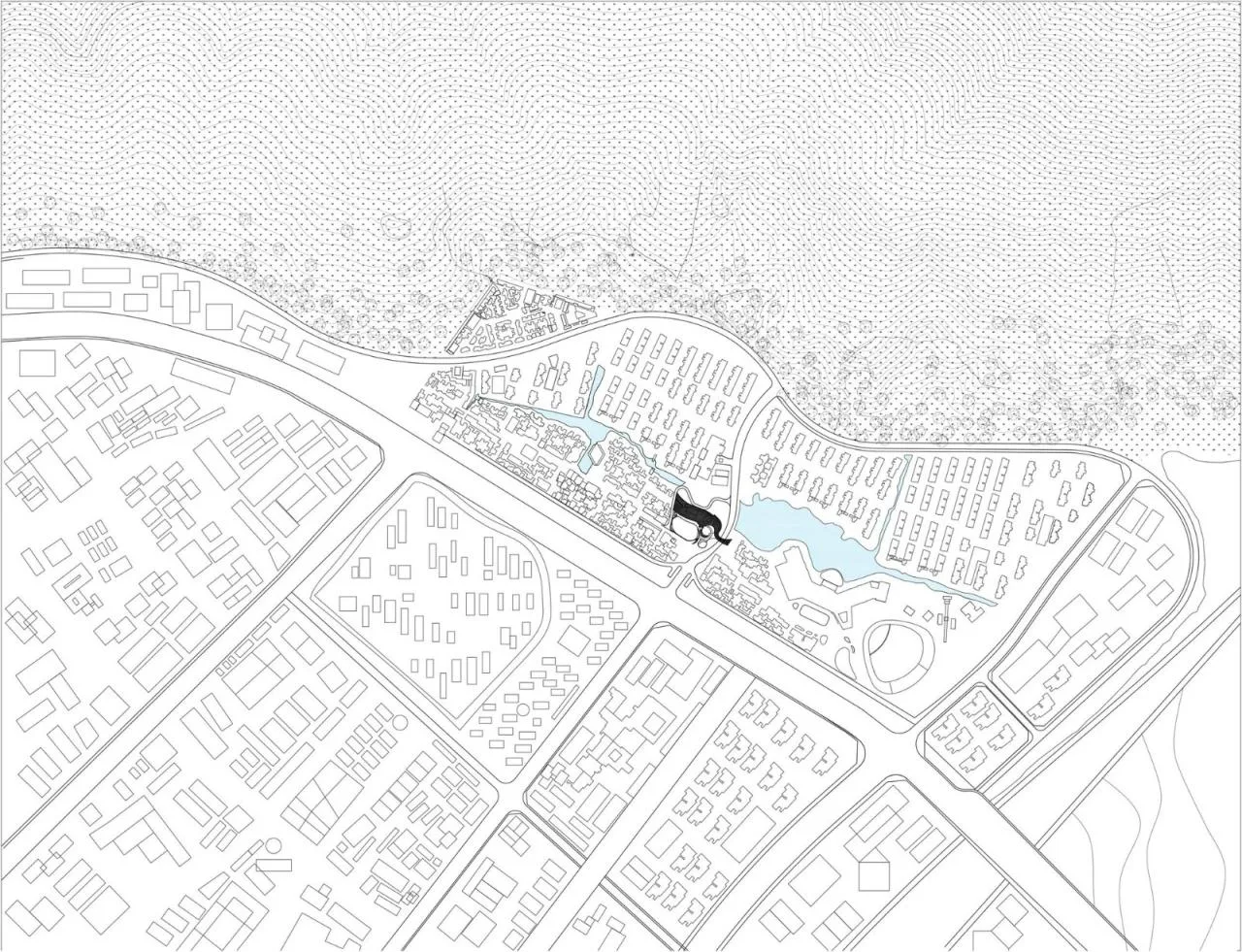
△ Base schematic diagram
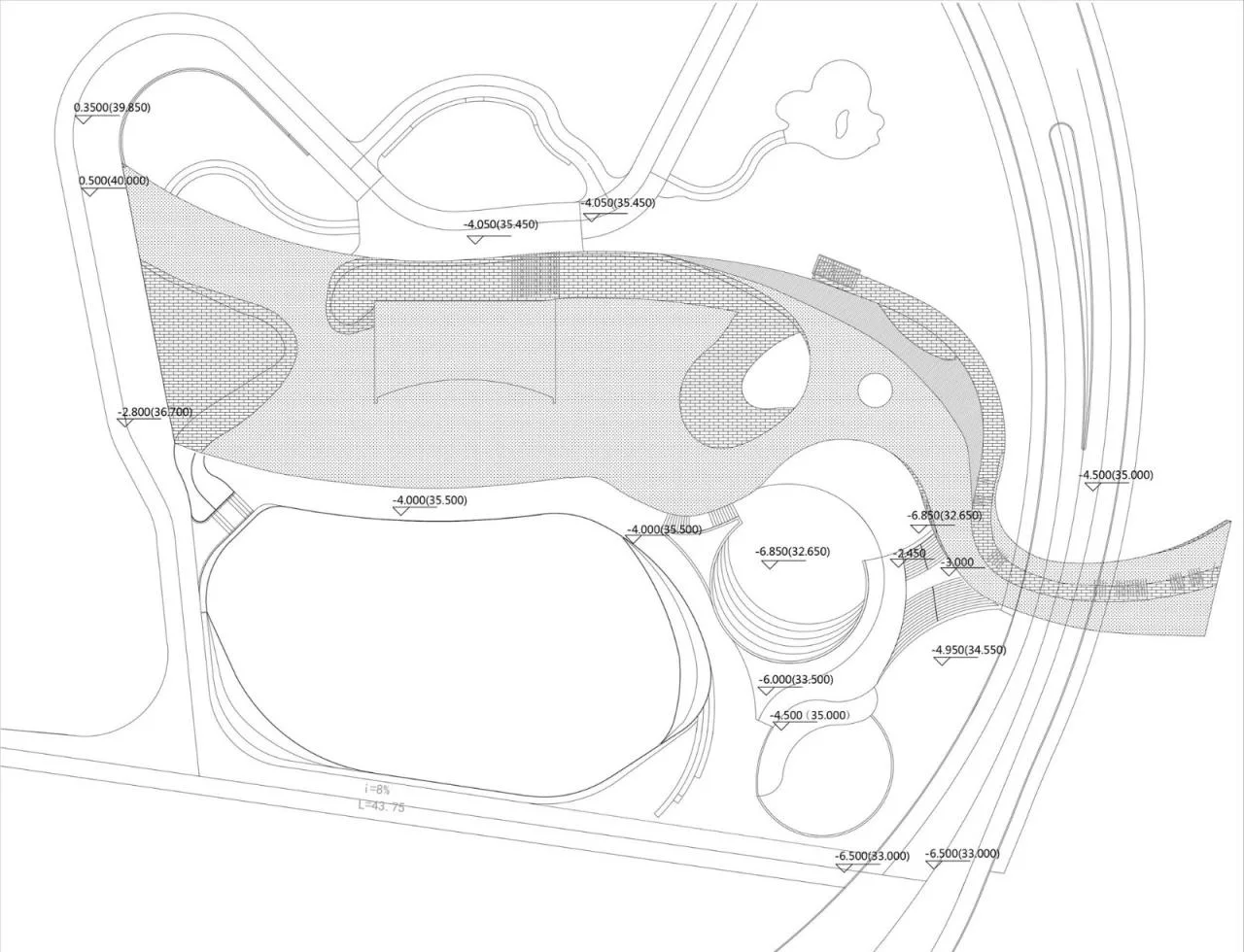
△ General layout plan
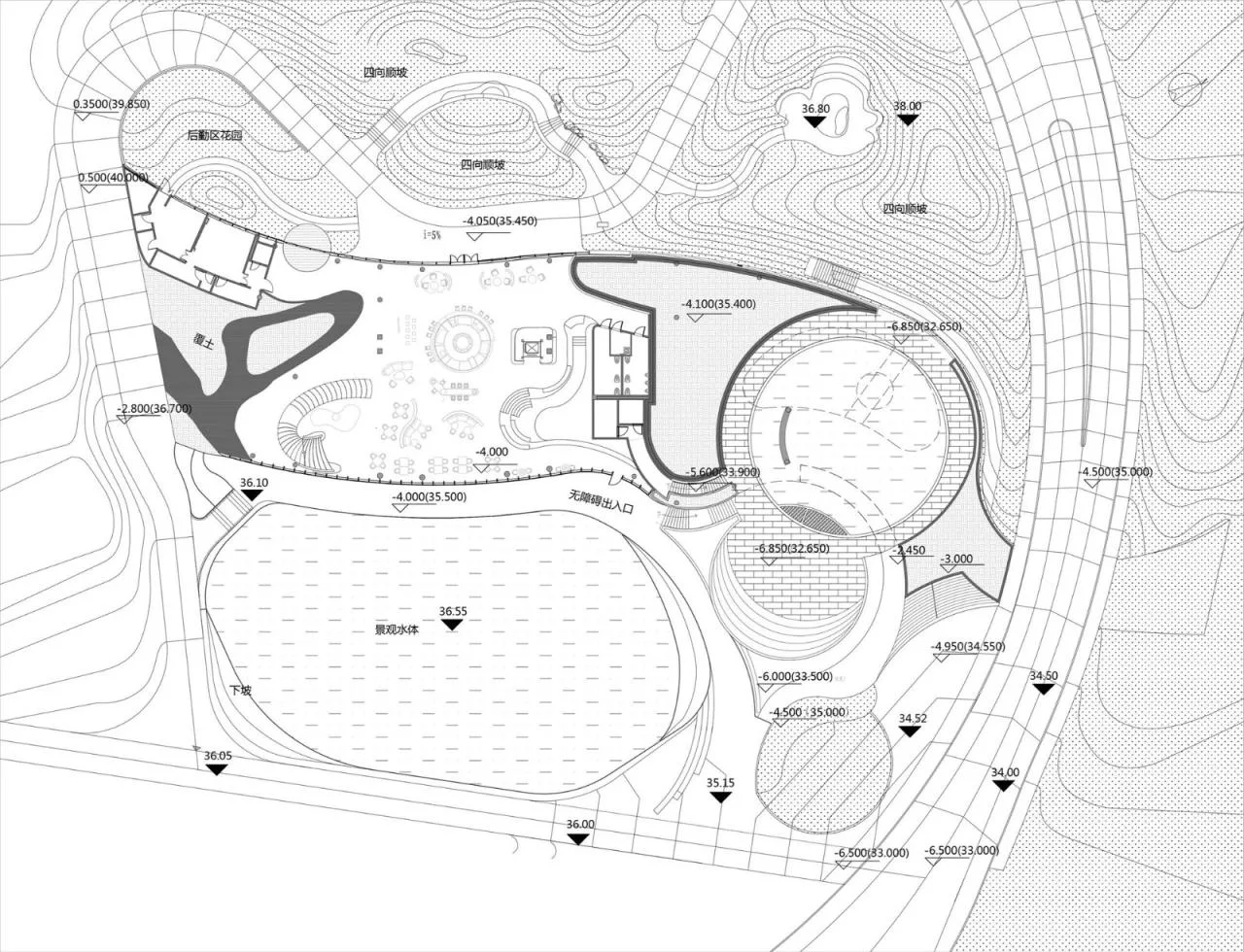
△ First floor plan
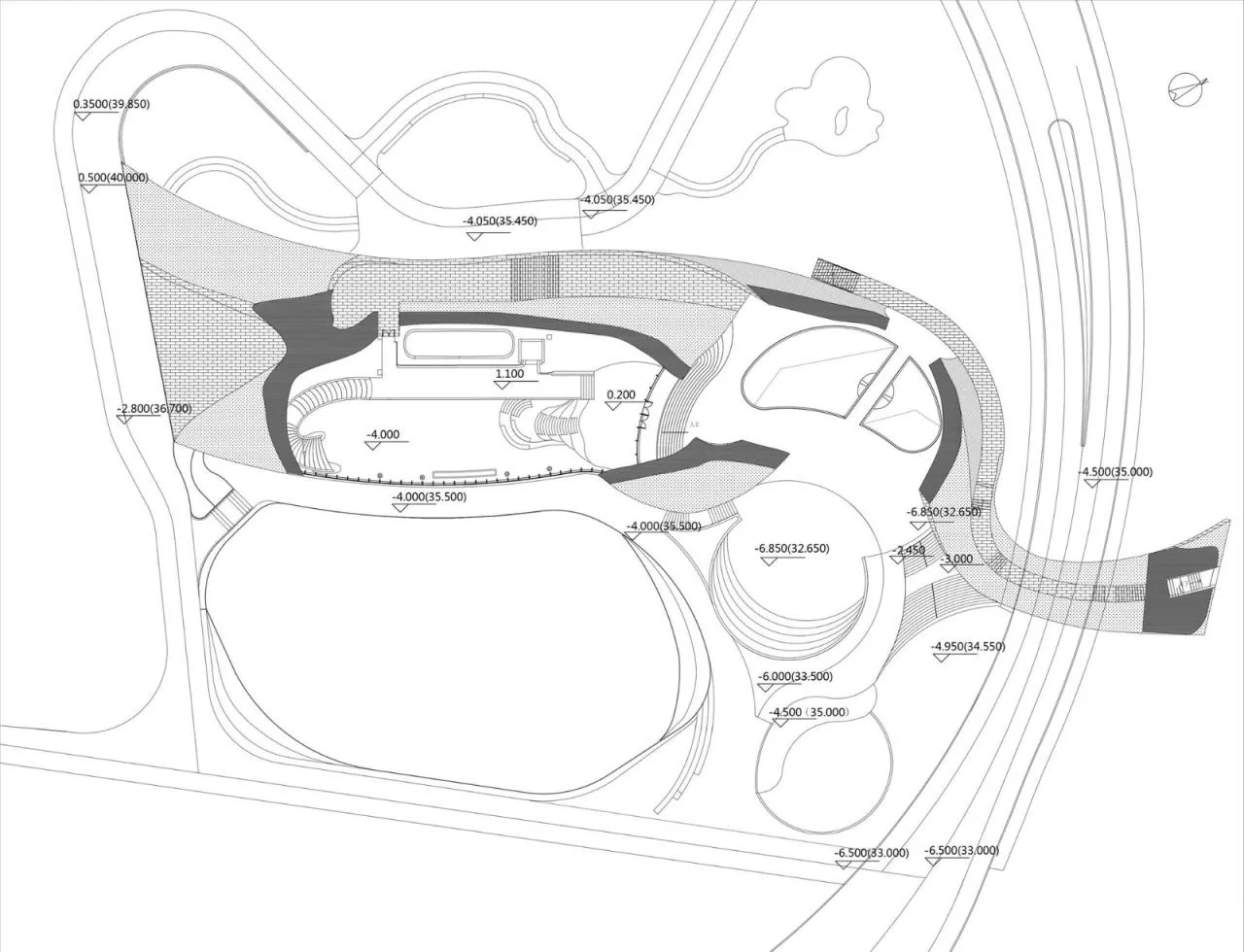
△ Second floor plan
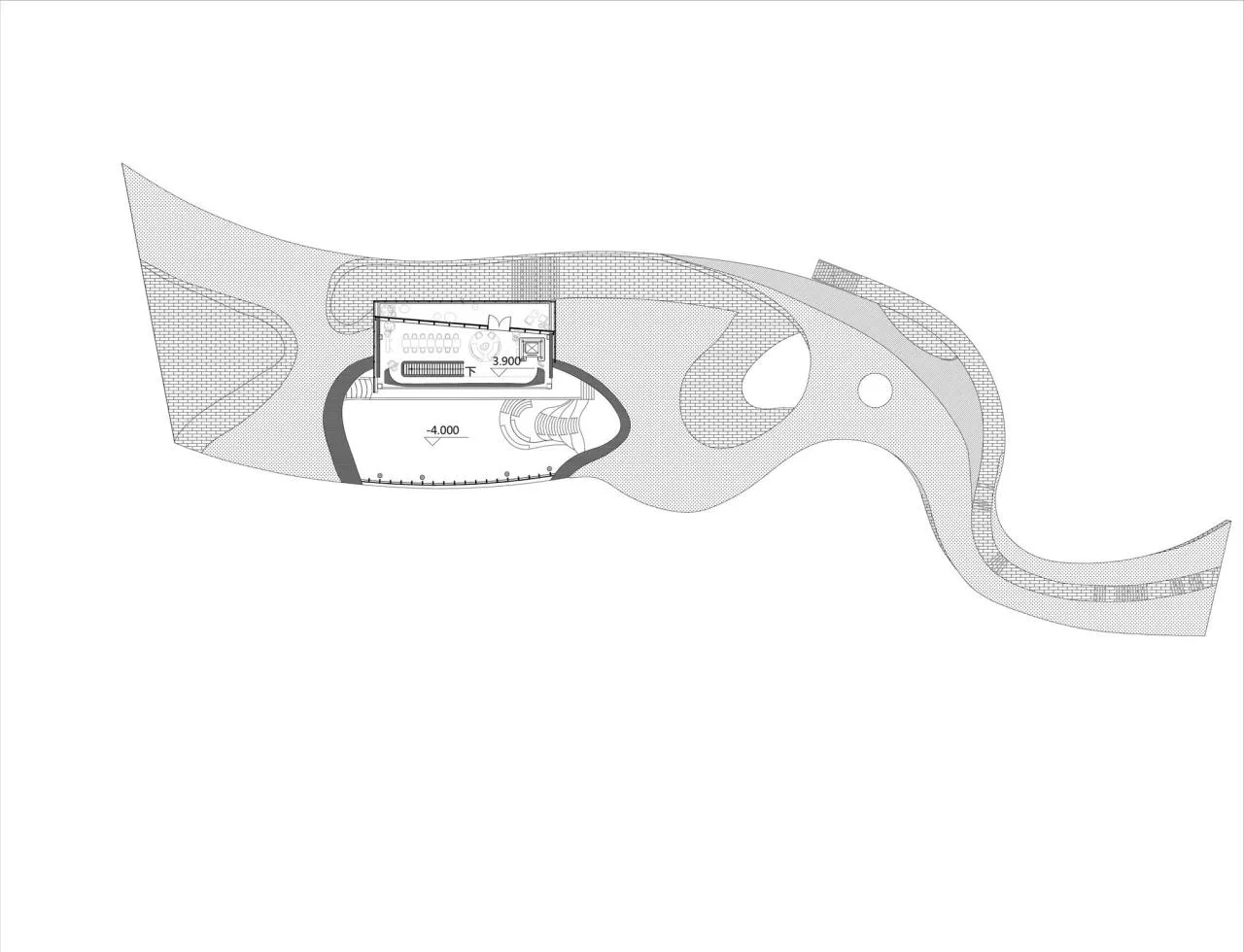
△ Third floor plan

△ Elevation drawing

△ Elevation drawing
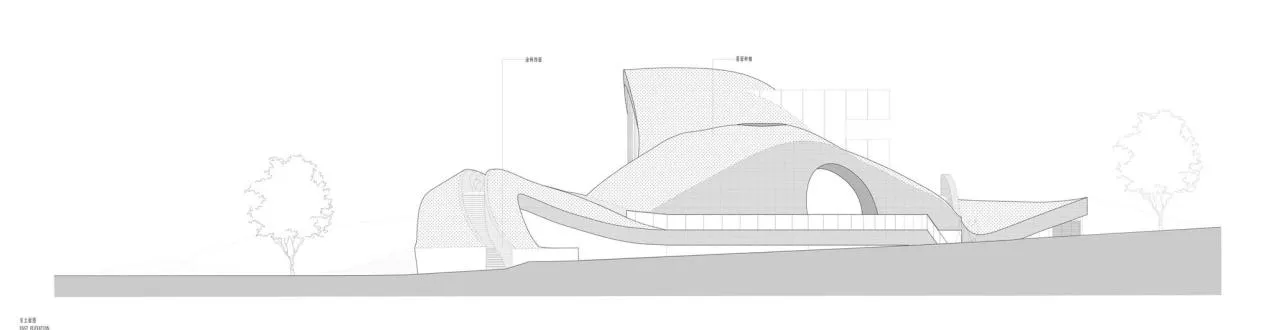
△ Elevation drawing
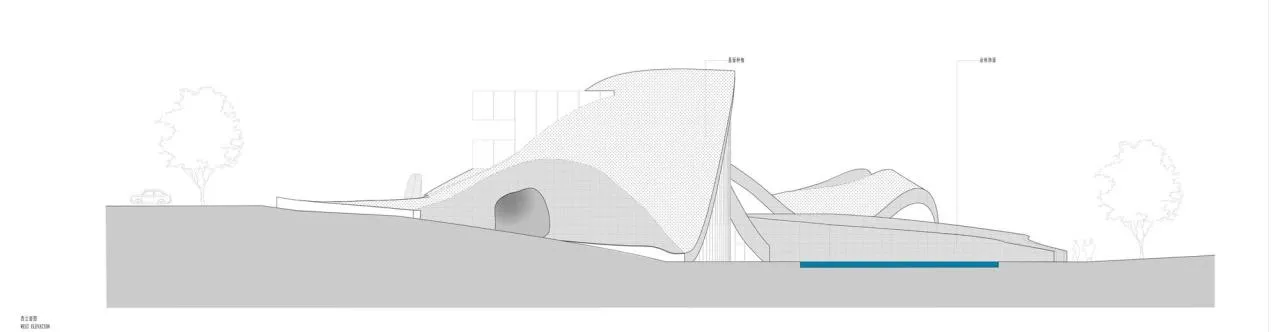
△ Elevation drawing
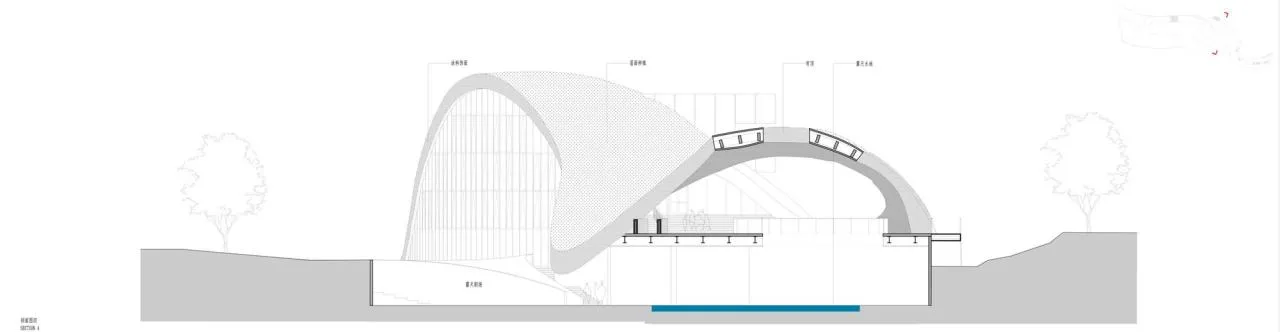
△ Elevation drawing
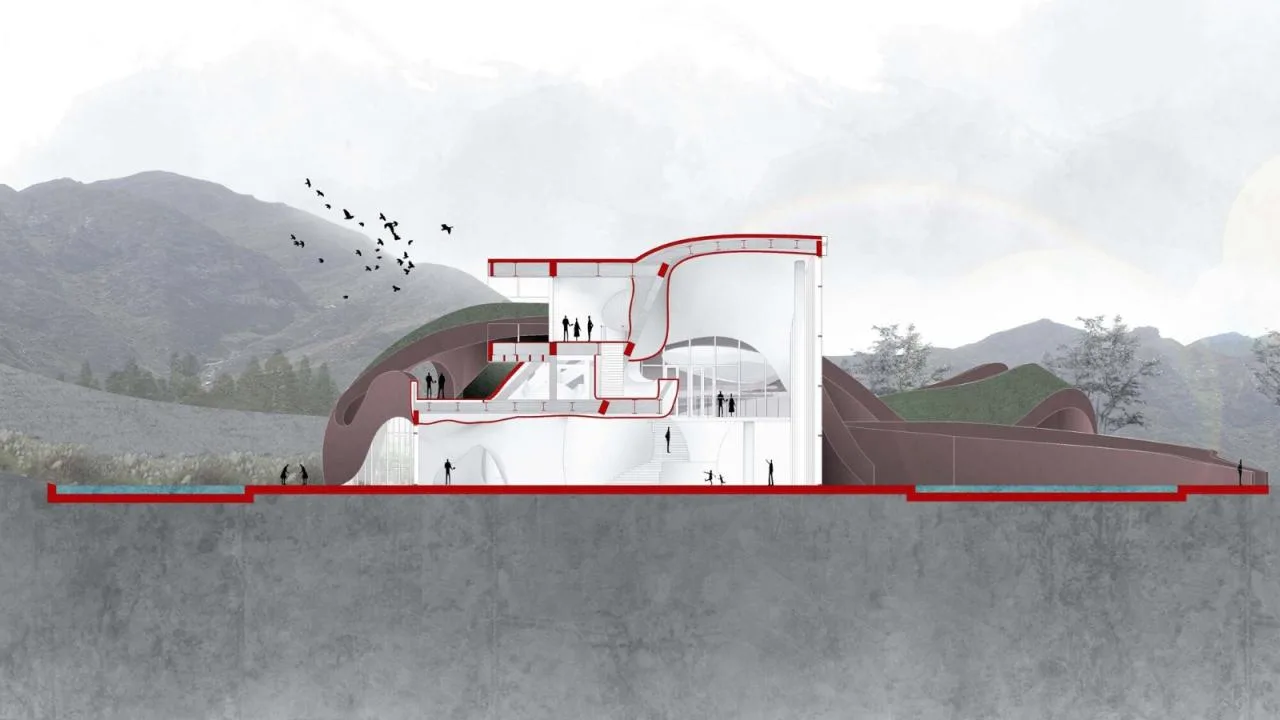
△ Section diagram
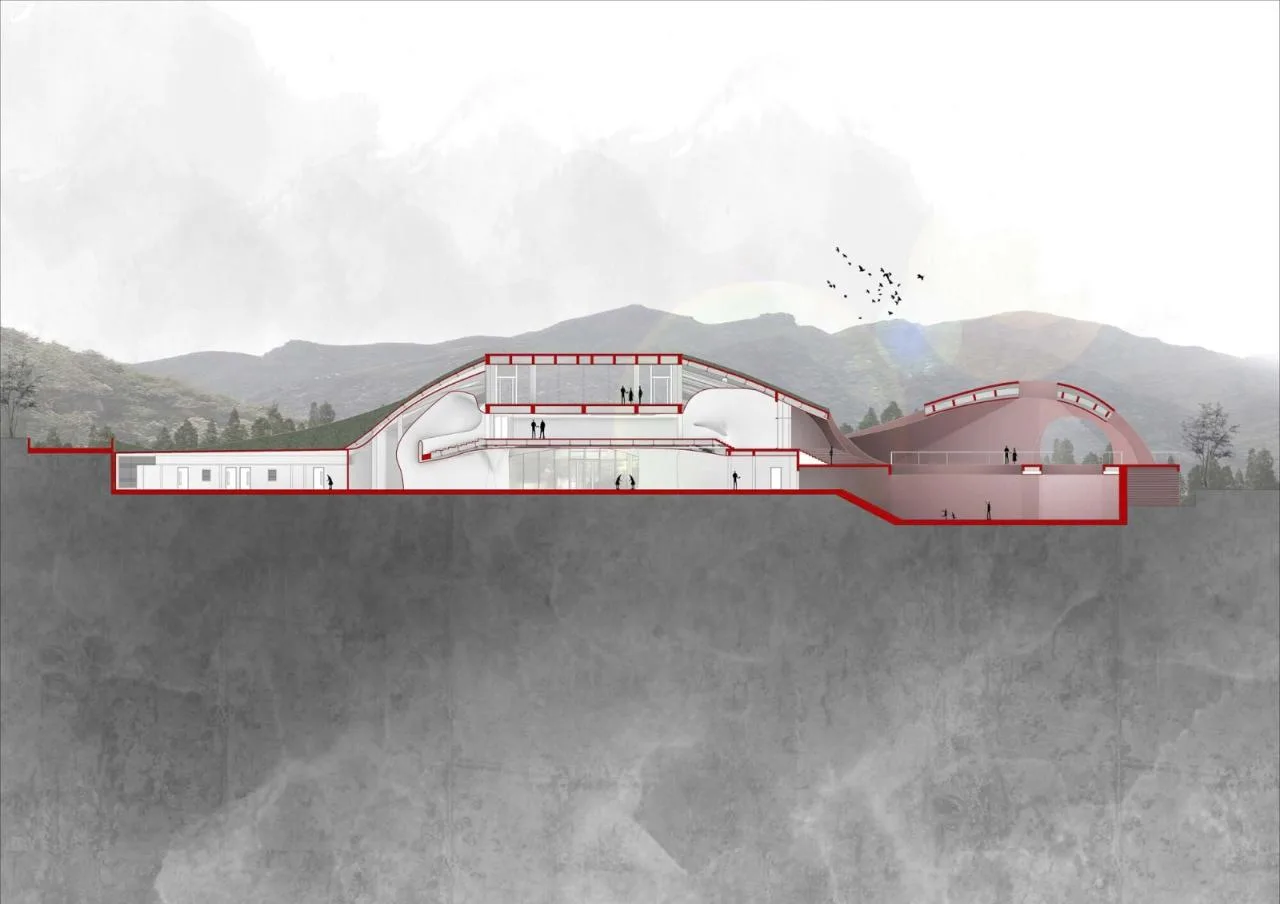
△ Section diagram
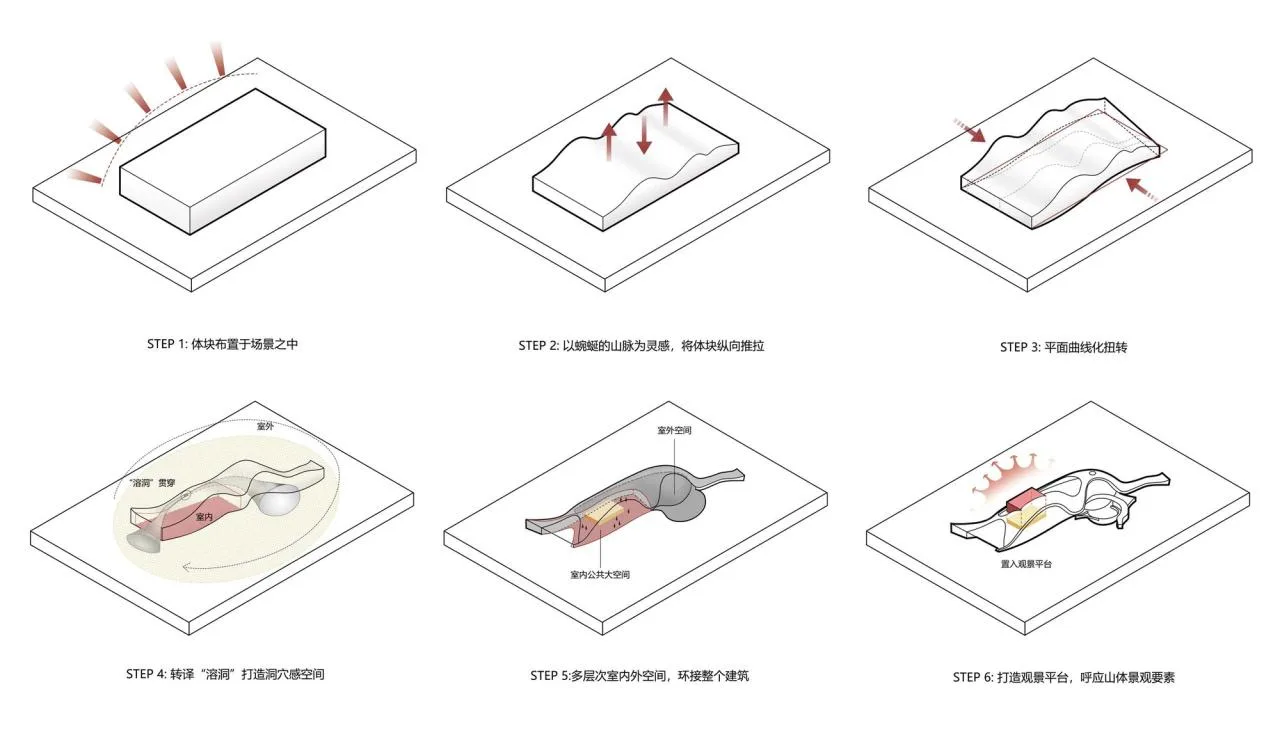
△ Analysis chart
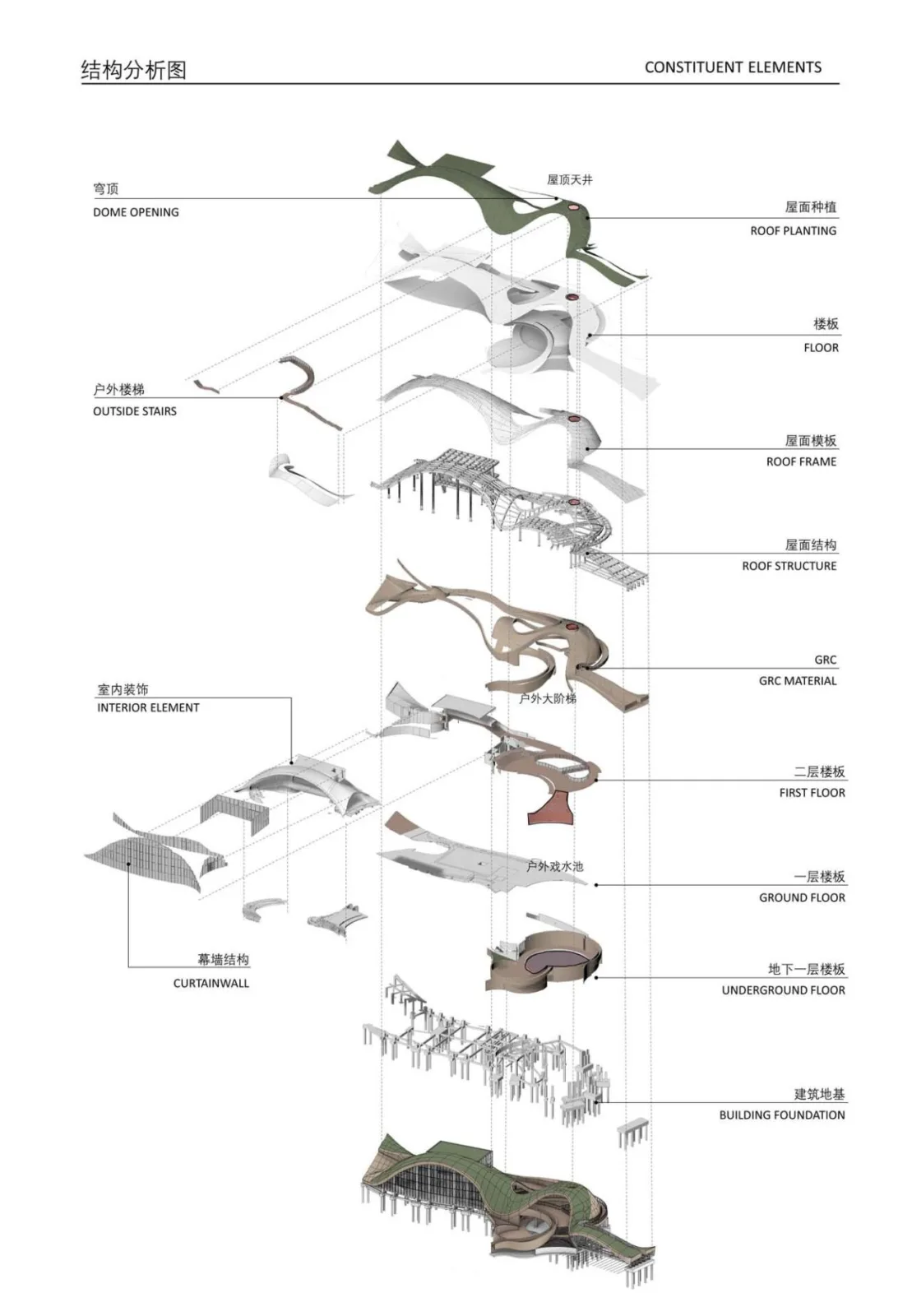
△ Explosion diagram
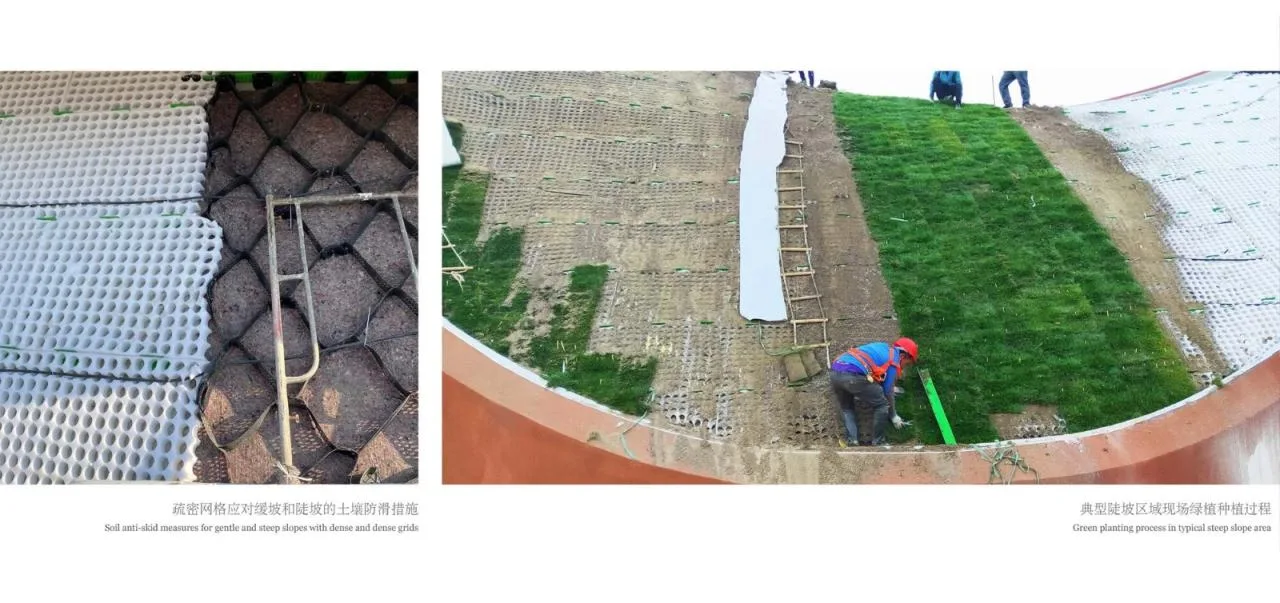
△ Analysis chart
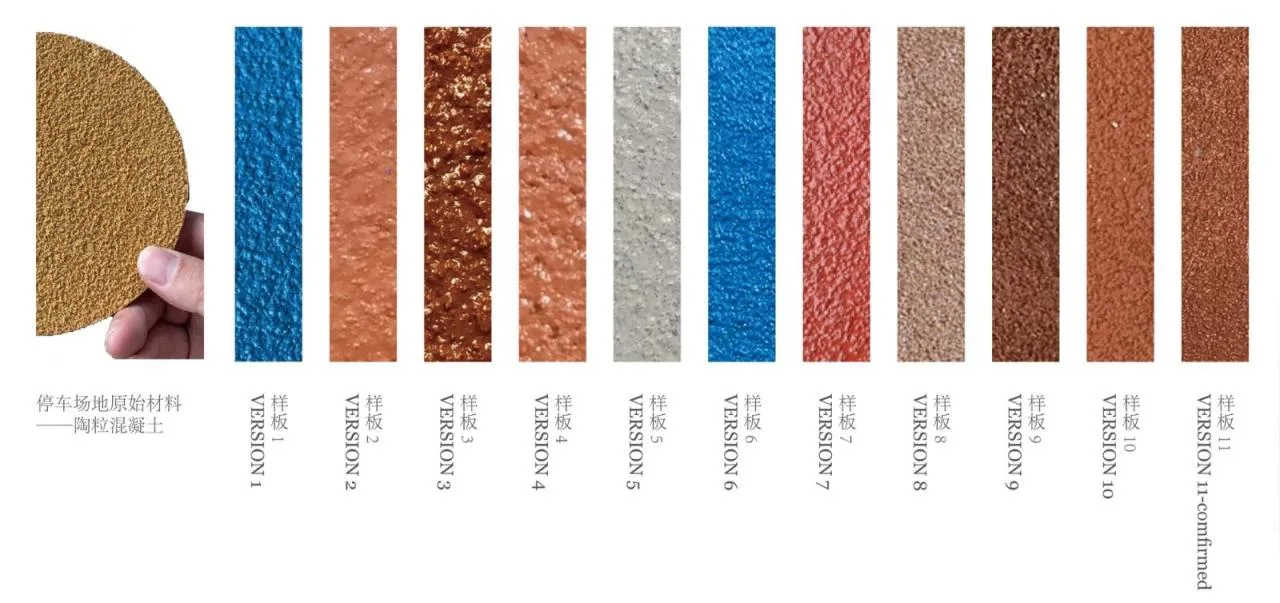
△ Analysis chart
Project Information
Architect: Shanghai Qianhe Architectural Design Firm
Area: 1500 square meters
Project Year: 2022
Photographer: Wu Qingshan
Lead Architect: Jiang Qiu
Design team: Zhou Yangyang, Shi Chen, Yuan Yongquan, Li Junqing, Liu Mengxue, Li Baona, Hou Xiaomeng, Jin Xiaoli, Bian Keming, Hao Ziting
Architectural creative and design consulting architects: Cai Sheng, Li Hansong HAN SONGLI (UK), Yin Wenjun, Hao Xingyu, Qian Jun
Consultant Structural Designer: Zhang Yewei
Structural team: Tong Min, Zhan Yulong, Liu Fan
Construction drawing team: Wanqiang Ma (architecture), Lu Ren (architecture), Qinghua Wu (architecture), Chang Liu (architecture), Yang Wu (structure), Mingxing Le (structure), Limin Bi (water supply and drainage), Wei Li (water supply and drainage), Hui Wang (HVAC), Dongyuan Gao (HVAC), Chaoyong Liu (Electrical), Kewei Chu (Electrical)
Construction team: Guangdong Diao, Xutao Sun, Zhongquan Dai
Structural Consultant: Shanghai Yuangui Architectural Structural Design Firm
Construction Drawing Design: Anhui Provincial Architectural Design and Research Institute Co., Ltd
Steel structure coordination: Anhui Fuhuang Construction Co., Ltd
Curtain Wall Design: Shanghai Xima Curtain Wall Engineering Consulting Co., Ltd
Landscape Design: Aimeo (Shanghai) Architectural Design Consulting Co., Ltd. (M.A.O)
Interior Design: IFGROUP (Germany), Ipolets Architectural Consulting Services (Shanghai) Co., Ltd
Logo Design: ZTE Construction Co., Ltd., Beijing Tushi Space Creative Design Co., Ltd
Soft Decoration Design: Beijing Tushi Space Creative Design Co., Ltd., Shanghai KOYI Architectural Design Co., Ltd
General Contractor: ZTE Construction Co., Ltd
Steel Structure Construction: Zhongyuan Xiongshi Enterprise Development Group Co., Ltd
Curtain Wall Construction: Shanghai Kaixiang Curtain Wall Co., Ltd
Roof Construction: Shanghai Hainaer Oxygen Forest Technology Development Group Co., Ltd
Interior Construction: Anhui Zhenfan Decoration Co., Ltd
Landscape Construction: Anhui Jianchuan Municipal Engineering Co., Ltd
Lighting Design: Jiehan Lighting Design Consulting (Shanghai) Co., Ltd
Location: Hefei















Must log in before commenting!
Sign Up