
BIM models are typically categorized into five levels of detail, each corresponding to different stages of the design and construction process. LOD100 is commonly used in the conceptual design phase, LOD200 during schematic design, LOD300 for construction drawings, LOD400 in fabrication and installation, and LOD500 for project completion.
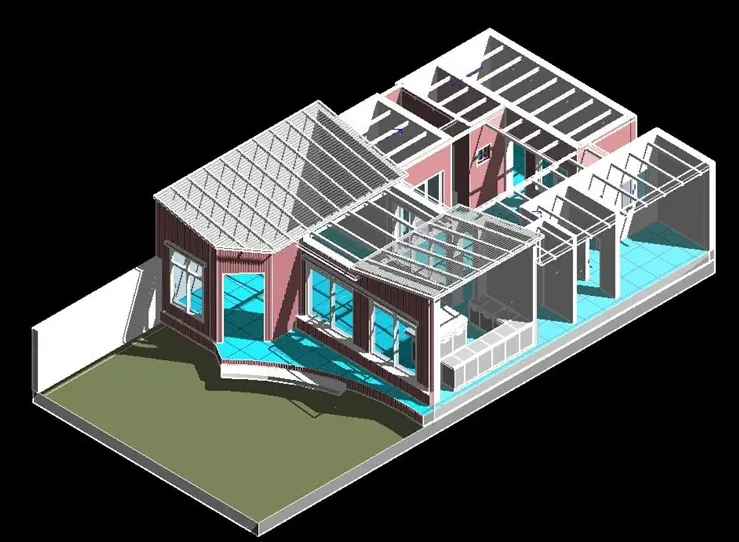
LOD100: At this level, model elements are represented by symbols or other general representations. The information is basic and may be derived from other model elements. It indicates the presence of elements but does not include precise shape, size, or location details.
LOD200: Model elements at this stage represent general systems, components, or assemblies with approximate quantity, size, shape, position, and orientation data. Non-graphical information may also be included. Compared to LOD100, these elements form a 3D model, though the details remain approximate.
LOD300: Elements are defined as detailed systems, components, or assemblies based on specific quantity, size, shape, position, and orientation. These details can be measured directly from the model without relying on additional non-graphical information, although such data may still be present.
LOD400: At this level, model elements include detailed descriptions for fabrication, assembly, and installation. The elements remain defined by precise quantity, size, shape, position, and orientation, with more comprehensive manufacturing and installation information included alongside any non-graphical data.
LOD500: The highest level, LOD500 elements are verified on-site and include confirmed quantity, size, shape, position, and orientation information. Non-graphical data may also be present. Since this level requires field verification, additional details can vary depending on the specific project. The refinement beyond LOD400 is not standardized and may be adjusted based on actual conditions.
These classifications outline the progressive refinement of BIM models throughout the project lifecycle. We hope this overview helps clarify the distinctions between each level of development.
















Must log in before commenting!
Sign Up