
The Civil Aviation Administration of China has developed the “Smart Civil Aviation Construction Roadmap,” which clearly outlines the promotion of BIM technology in airport construction. The roadmap emphasizes popularizing intelligent airport development, exploring digital twin-based training, achieving integrated construction and maintenance, and ultimately creating environmentally friendly airports.
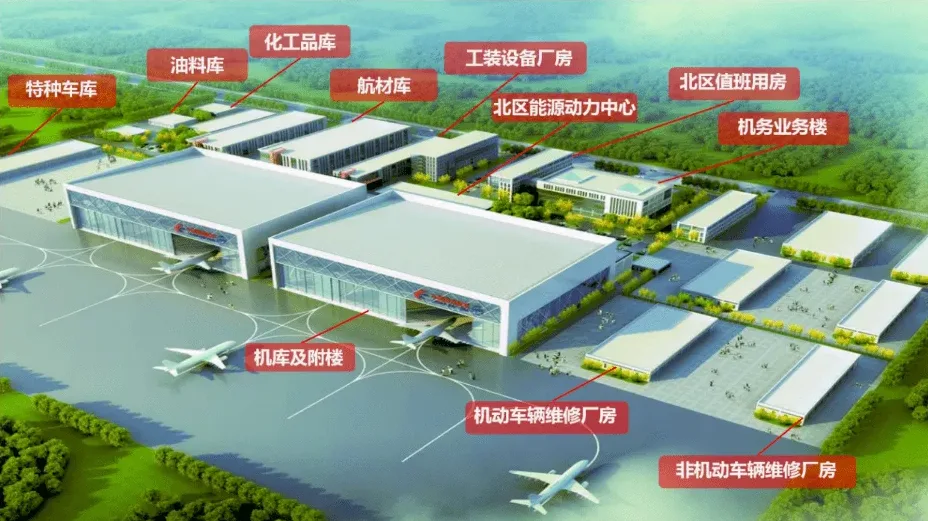
1. Pre-Preparation Stage: Once a project is initiated, BIM standards tailored to the project’s specifics are established, such as the “Technical Standards for Engineering BIM Implementation” and the “Construction Information Summary Table.” This phase requires integrating and standardizing the needs of various specialties and participating units involved in airport construction. It also facilitates online collaborative operations among all parties. As a complex and extensive undertaking, this foundational step is critical for the successful implementation of BIM technology throughout subsequent phases.
2. Design Phase: Utilizing two-dimensional drawings alongside professional models from disciplines such as structural engineering, architecture, HVAC, plumbing, fire protection, electrical systems, and curtain walls, the design phase aims to meet the detailed requirements of construction drawing models. BIM enables collaborative design and visualization of the airport’s design outcomes. It optimizes design schemes by detecting conflicts across disciplines and stages early on, minimizing costly changes during construction.
3. Construction Phase: Before construction begins, BIM technology helps create detailed construction models to identify drawing errors and update these models based on design revisions and actual site conditions. This assists in overall construction management. For example, Ezhou Huahu Airport uses a BIM-guided construction approach that requires precise alignment at every stage. During implementation, Ximengtech’s 3D heterogeneous lightweight modeling software was employed, integrating mainstream modeling tools and managing vast amounts of model data centrally. All participating units access unified BIM data on the platform, enabling seamless collaboration and transitioning traditional engineering management to an “online + offline” hybrid model. This approach supports comprehensive digital control throughout the project. Additionally, Ximengtech’s quality inspection and cost estimation software contributed to achieving “zero rework” in engineering quality by leveraging human, field, and actual measurement data.
4. Operation and Maintenance Phase: Using BIM models combined with specialized operation and maintenance platforms, information about construction projects can be accessed more efficiently. This supports digital management of machinery, site space, equipment, energy consumption, and emergency responses. Such capabilities enhance management efficiency, improve service quality, and reduce operational costs.
In summary, the application of BIM technology in smart airport construction spans all project stages, driving innovation, efficiency, and sustainability. We hope this overview proves valuable to all interested in this field!
















Must log in before commenting!
Sign Up