
BIM technology involves various software, which can be broadly categorized into two types: modeling software and other related tools. Since models form the foundation of BIM, modeling software plays a crucial role. For anyone working in this field, learning the core BIM modeling software is the essential first step.
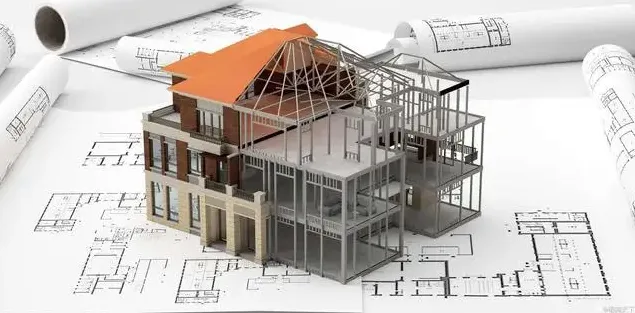
1. Autodesk Revit is currently the most widely used BIM software in the market, extensively applied in architectural design. Revit offers a variety of tools catering to diverse needs. After years of continuous development, it has become comprehensive and powerful. It not only supports model creation but also integrates with multiple software platforms to collect and summarize various data—this aligns with BIM’s core principles. However, Revit struggles with modeling complex, freeform surfaces.
2. Bentley Systems software is widely adopted in many design firms, especially for infrastructure projects such as roads, railways, and bridges. Bentley provides specialized functions tailored to different disciplines, facilitating collaboration and comprehensive management. A key advantage is its efficient conversion between drawings and models, allowing quick model generation. On the downside, Bentley software has a steep learning curve, making it difficult for newcomers. Coordinating across multiple specialties involved in detailed design remains a significant challenge.
3. Nemetschek Graphisoft primarily serves single-discipline architectural firms and includes three main products. Its user-friendly interface encompasses drawing, construction, and management modules, offering a well-rounded feature set. However, it lacks robust collaboration capabilities; it cannot automatically synchronize project updates, which limits real-time project management.
4. Dassault Systèmes (CATIA) is suited for modeling complex and irregular structures. Originally developed for mechanical manufacturing, CATIA has been widely used in aerospace and other industries for design and production. It was later introduced to construction engineering due to its powerful modeling capabilities, capable of handling any complex structural challenges. Its drawbacks include a large, complex, and costly software system. Since it was primarily designed for the mechanical sector, applying it in construction presents certain difficulties.
These are the core BIM modeling software and their respective advantages. I hope this overview proves helpful to everyone interested in BIM technology!
















Must log in before commenting!
Sign Up