
Introduction
Located in the heart of Changzhou Science and Education City, 510 Life Square has witnessed the area’s remarkable transformation since the city’s establishment in 2002. Once a low-lying farmland, this region has evolved into an innovation hub. As the initial phase of commercial support facilities, 510 Life Square was completed in 2012 but now falls short of meeting current demands. The design team aims to breathe new life into the square through renovation, reestablishing it as the “innovation core” of the Science and Education City.
1. Project Background
With the development of higher education parks and technology industry zones, supporting facilities—such as talent apartments and foundational education—have progressively improved. The Science and Education City now stands at a pivotal point, transitioning rapidly toward enhanced quality and growth.
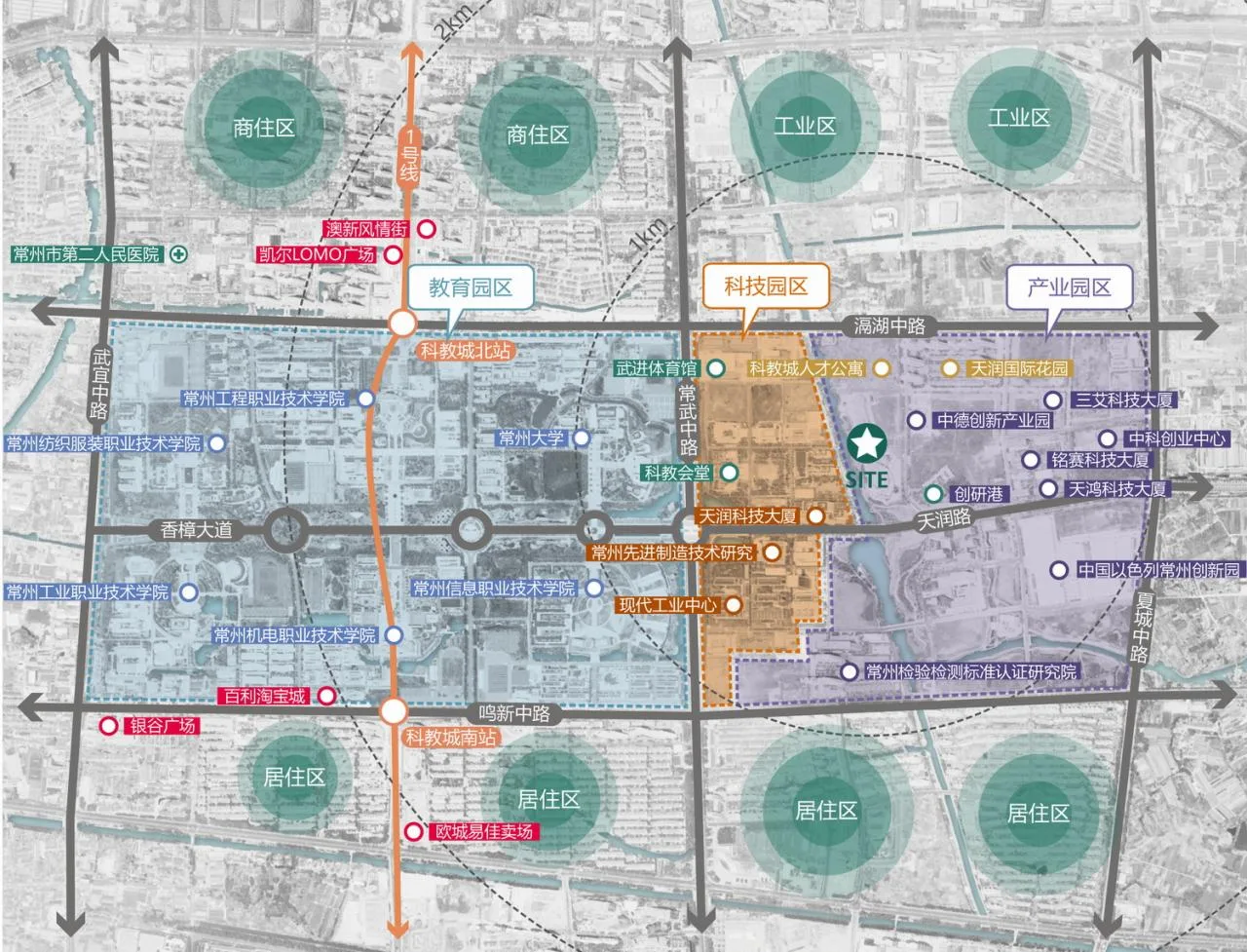
△ Project location
Originally designed for business and office use, 510 Life Square serves as the core commercial support facility for the entire Science and Education City. However, it has gradually become disconnected from the area’s evolving development, making renovation and upgrades essential.
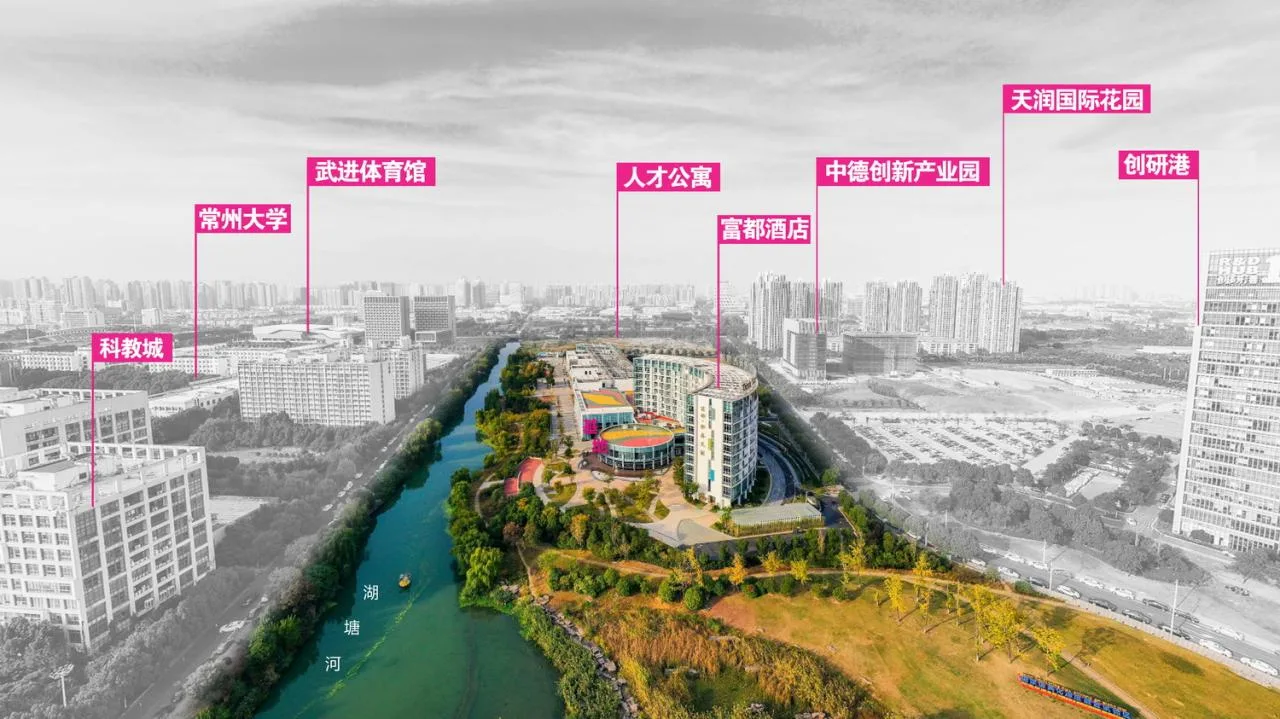
The site is separated from the university city and science park to the west by a river. It faces an industrial park to the east, talent apartments to the north, and the Fudu Hotel at the southern end. Situated centrally within the industry-university-research integration base, it plays a critical role in connecting various sectors.
2. Current Situation Analysis
The commercial support facilities include three main components: the newly renovated commercial street derived from 510 Life Square (the renovation’s focal point), the Fudu Changjiang Hotel, and two commercial office buildings on the east side (Phase II).
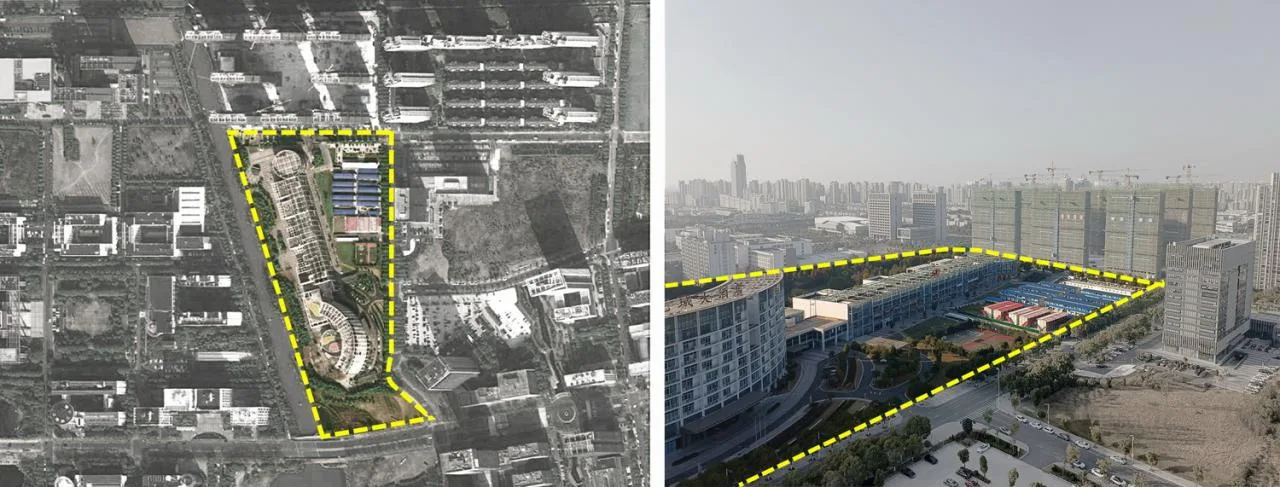
△ Current site condition
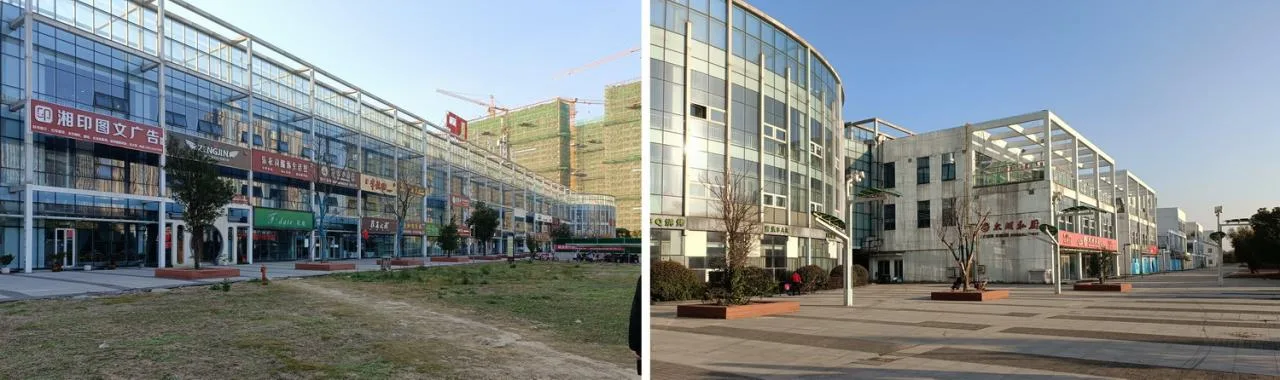
|| The Rusty Golden Key
The architectural design originally centered on the concept of a “key” symbolizing access to technology. However, the building’s form does not align with commercial logic, and the space feels rigid and uninspiring. This has led to poor shop management and an unsatisfactory consumer browsing experience.
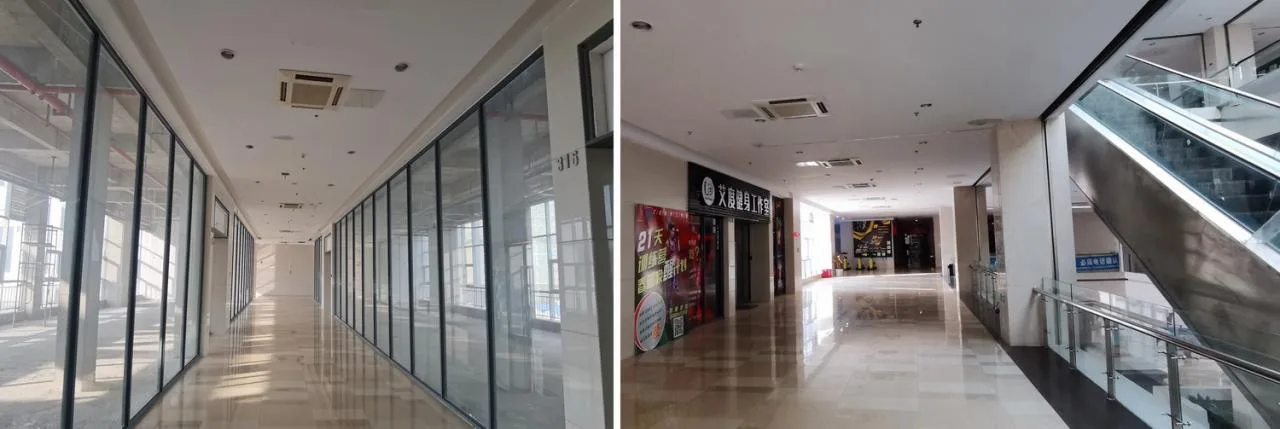
|| The Boring Long Box
The building block stretches over 200 meters, following a grid pattern but lacking variation and distinctive features. This results in low recognition and a monotonous appearance.
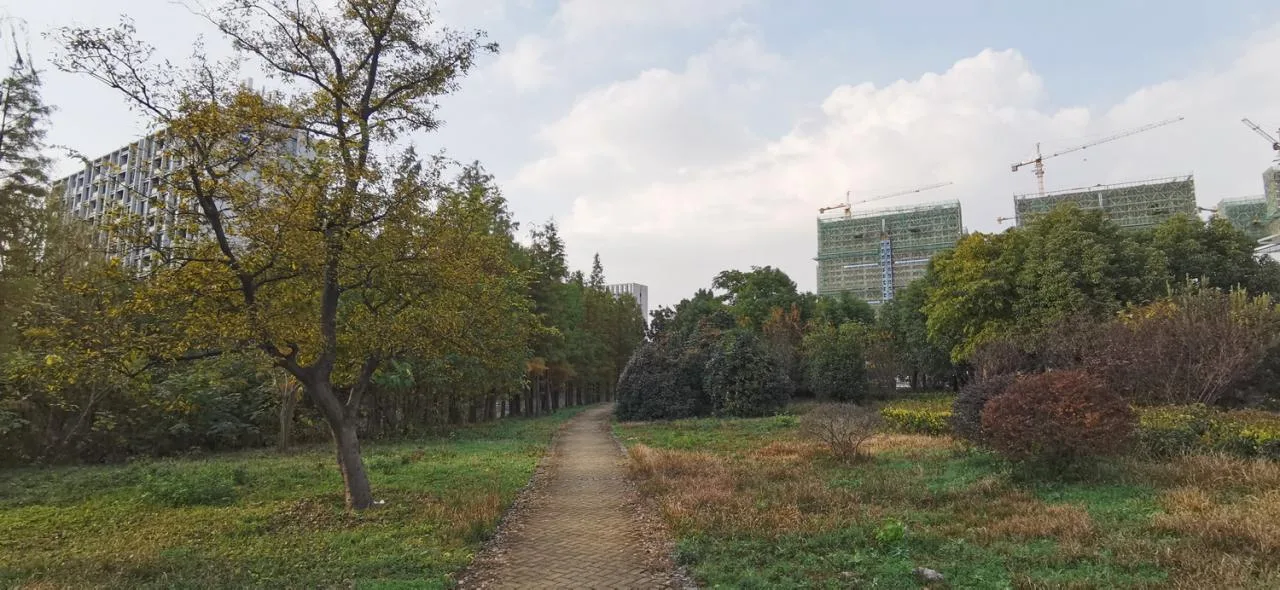
|| Isolated Wetland Park
The original wetland-themed park feels disconnected from the commercial atmosphere. The long building blocks completely separate the site, preventing any meaningful interaction between the landscape and the architecture.
3. The ‘Youth Commune’ in the Park
With the talent apartment on the northern edge nearing completion, a large community of college students, research professionals, and residents is forming in the area. However, there is a lack of community-focused commercial and recreational spaces to serve them. The renovation of 510 Life Square offers an opportunity to fulfill these needs.
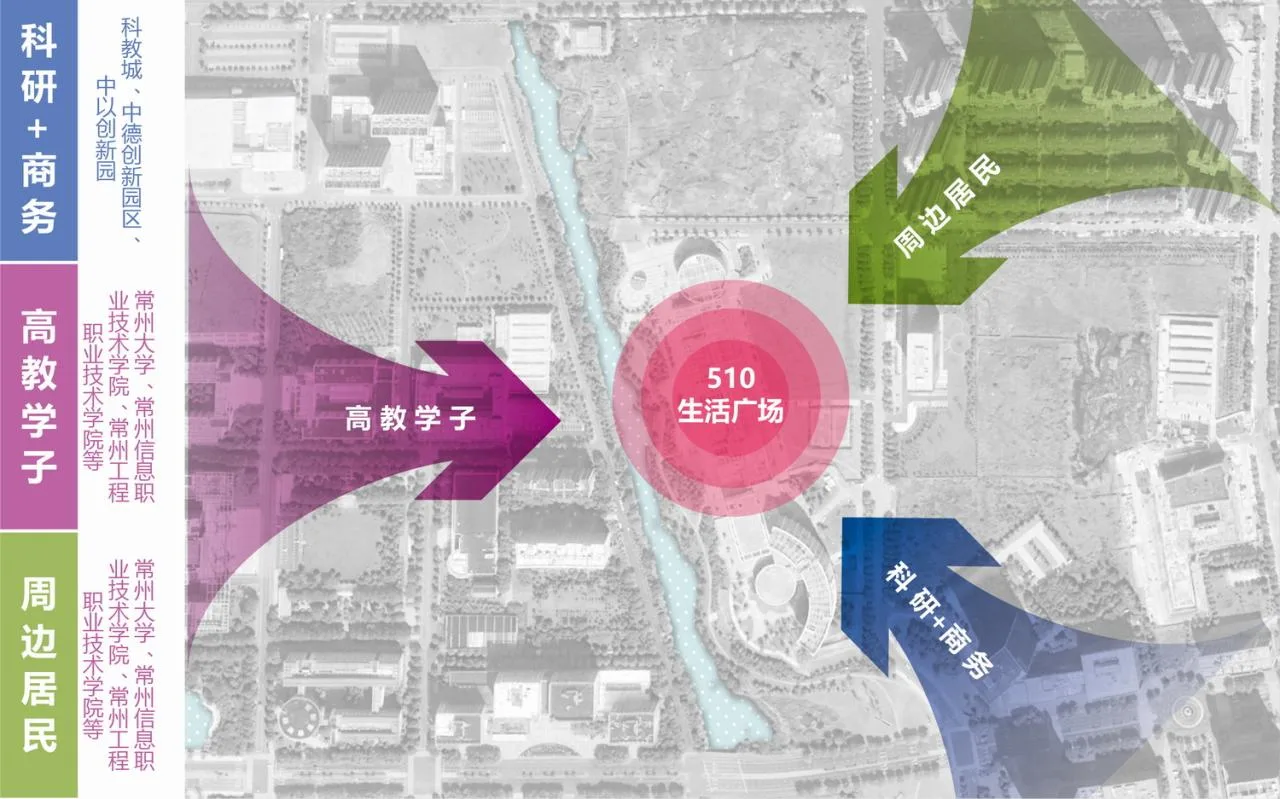
△ Customer group analysis
The design team aims to transcend the plot’s boundaries by integrating all surrounding environments and elements within a broader urban context. The goal is to create a “youth commune” within the park—an environment that blends service support, social sharing, intelligent convenience, and ecological harmony.
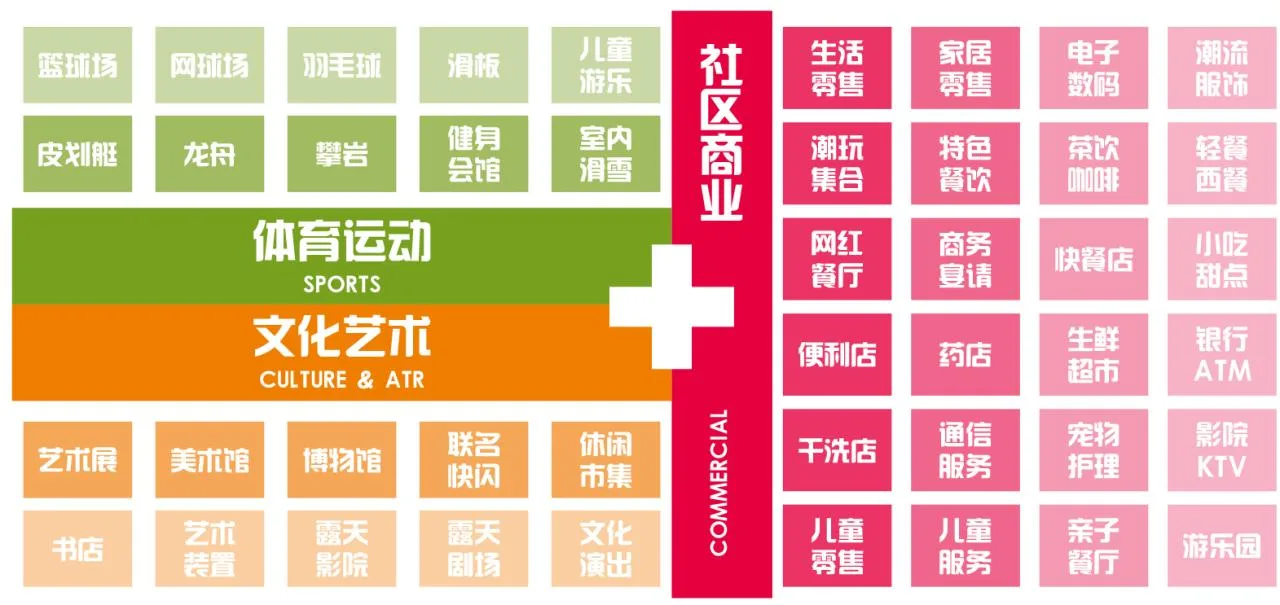
Within this unconventional commercial environment, people naturally foster close connections with one another and with their surroundings, deeply rooted in the city and contributing back to it.
4. Design Strategy
The new vision and functional goals challenge the transformation of both architectural spaces and the environment. The key question is how to seamlessly integrate all elements within the plot to activate the space and enhance connections between people, buildings, the site, and the city.
|| Urban Suture: Bridge of Bonds
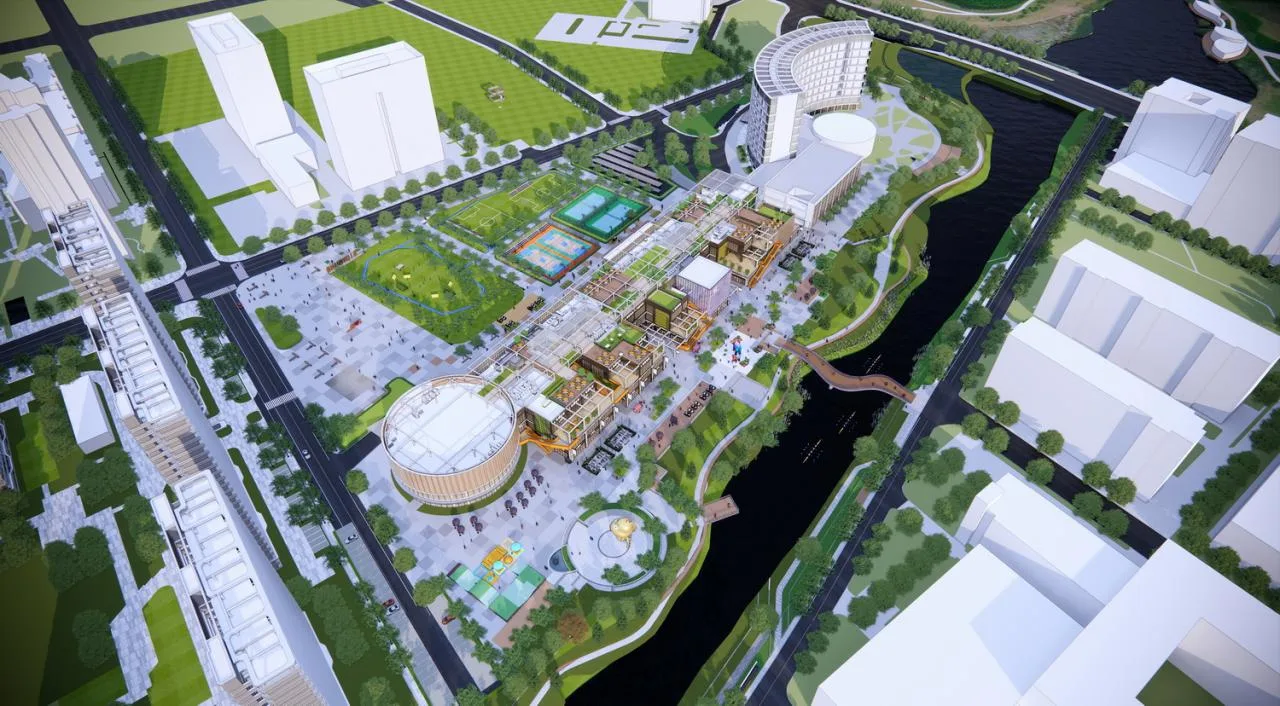
To revitalize the dormant space, the design team introduced a landscape bridge spanning the lake, pond, and river, connecting the university city with the living square. This vital link enhances plot accessibility and energizes the connection between the two sides of the city, fostering urban vitality and youthful energy.
|| Mobile Space · Park Interchange
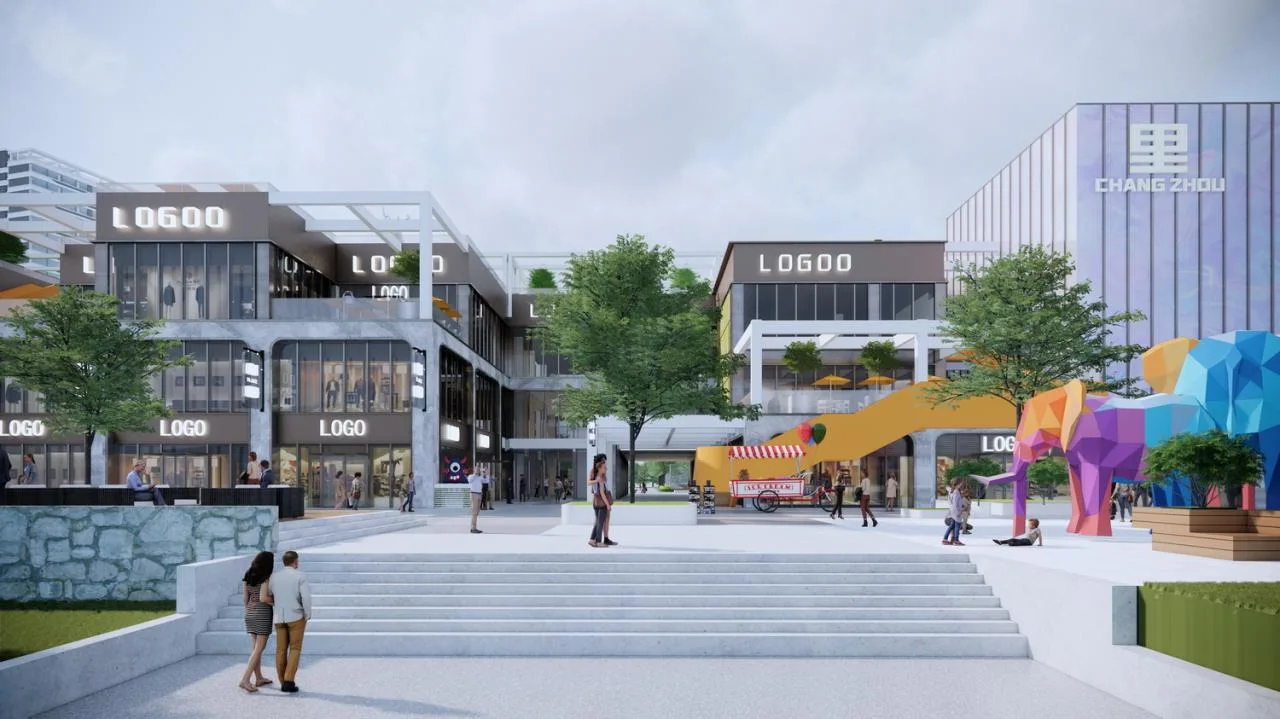
Internally, the design opens interactive channels between the east and west sides, allowing space to flow freely and creating themed parks in various zones. This breaks away from the isolated and outdated status quo, fostering diverse atmospheres suited for both commercial and civic activities.
|| Transforming and Renewing the Appearance
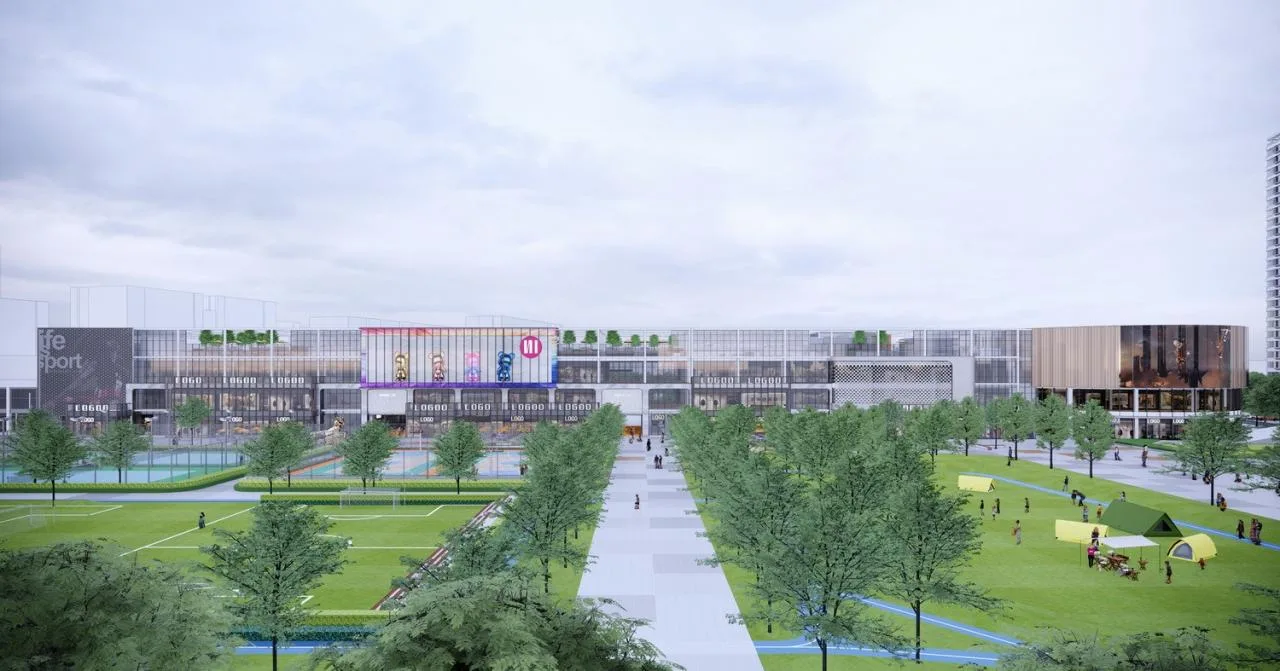
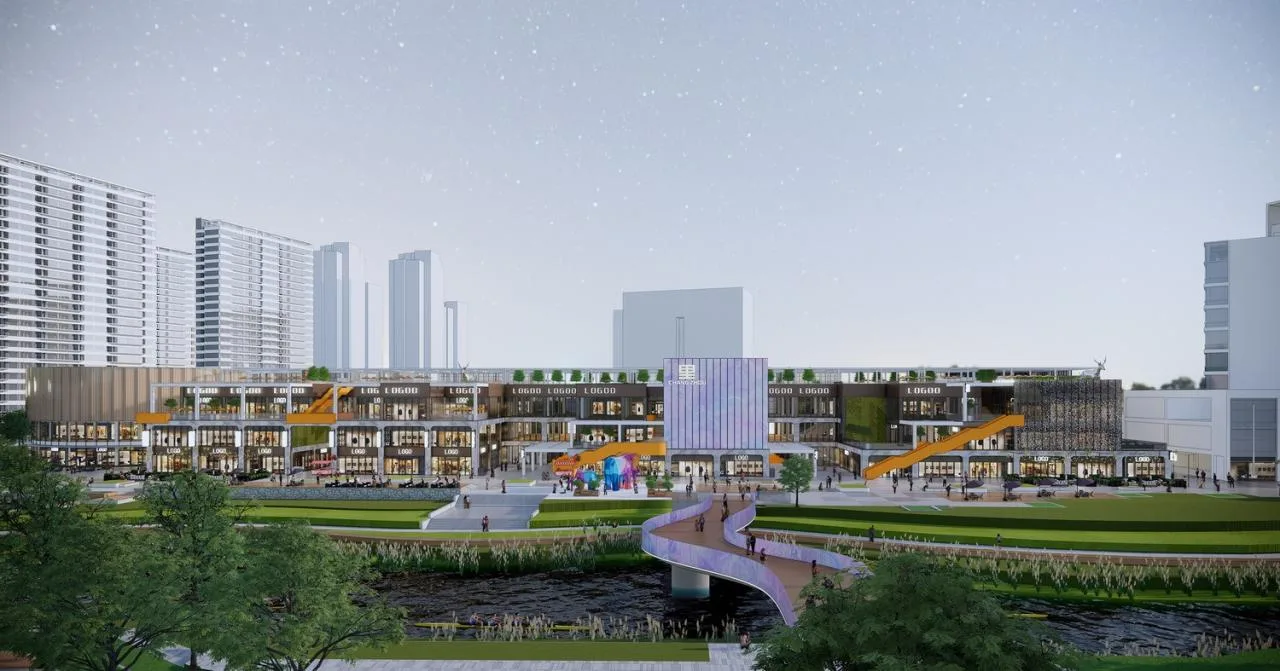
The design team carefully analyzed the facade elements of the existing building and upgraded the street- and river-facing surfaces. They introduced a “fifth facade,” offering a 360-degree aesthetic that enhances the project’s overall appeal.
5. Exploratory Approaches
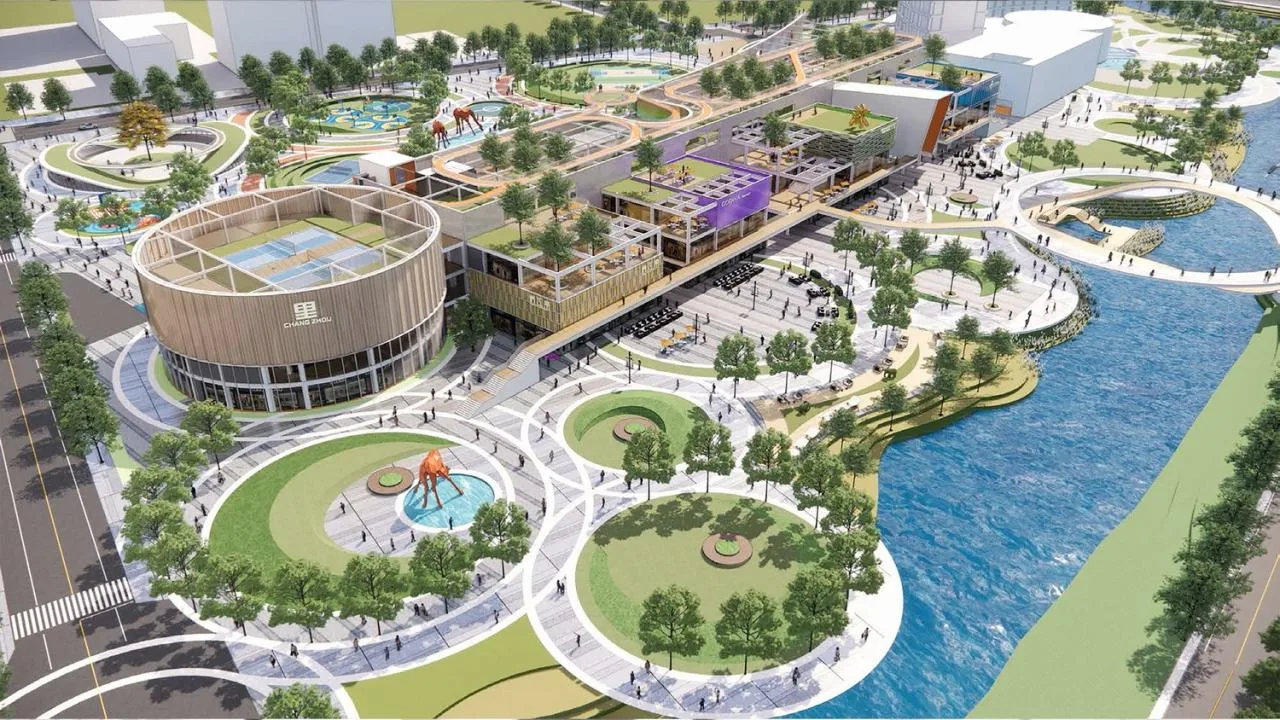
Without a definitive cost framework, the design team adopted an open-minded approach, proposing various levels of modifications to provide the owner with clear, comparative options.
|| Light Renovation · Yun Commune
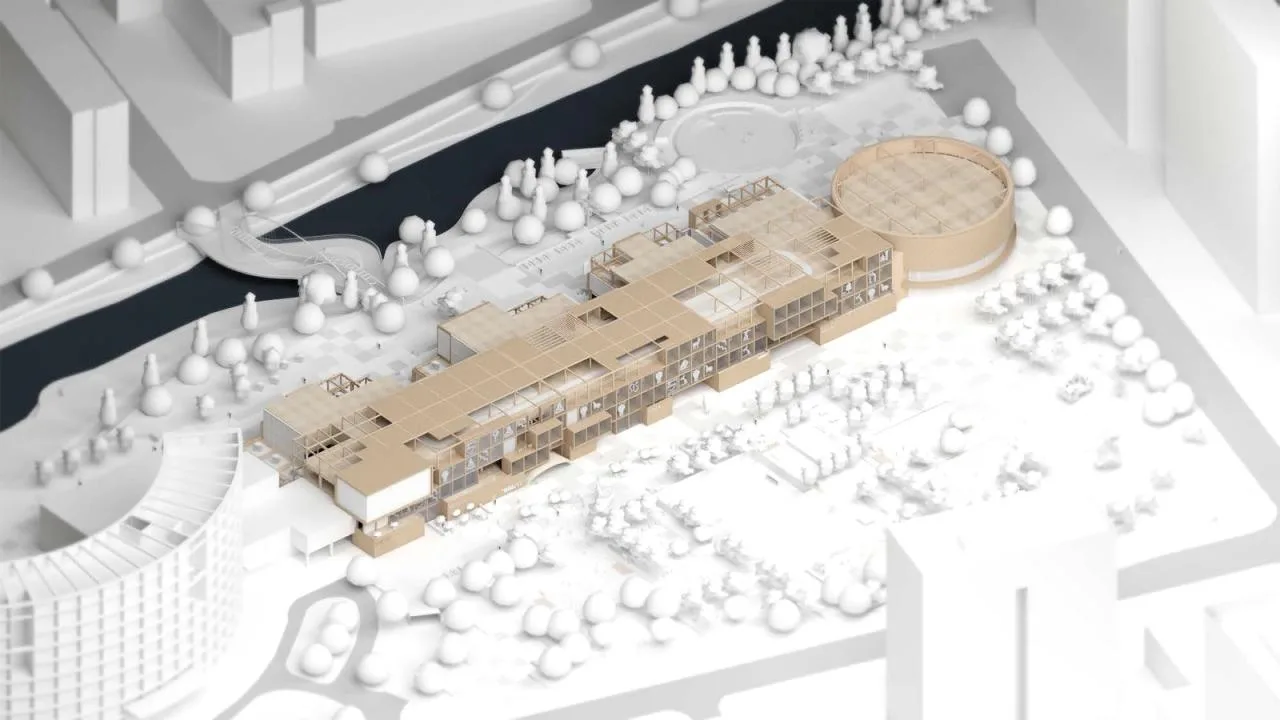
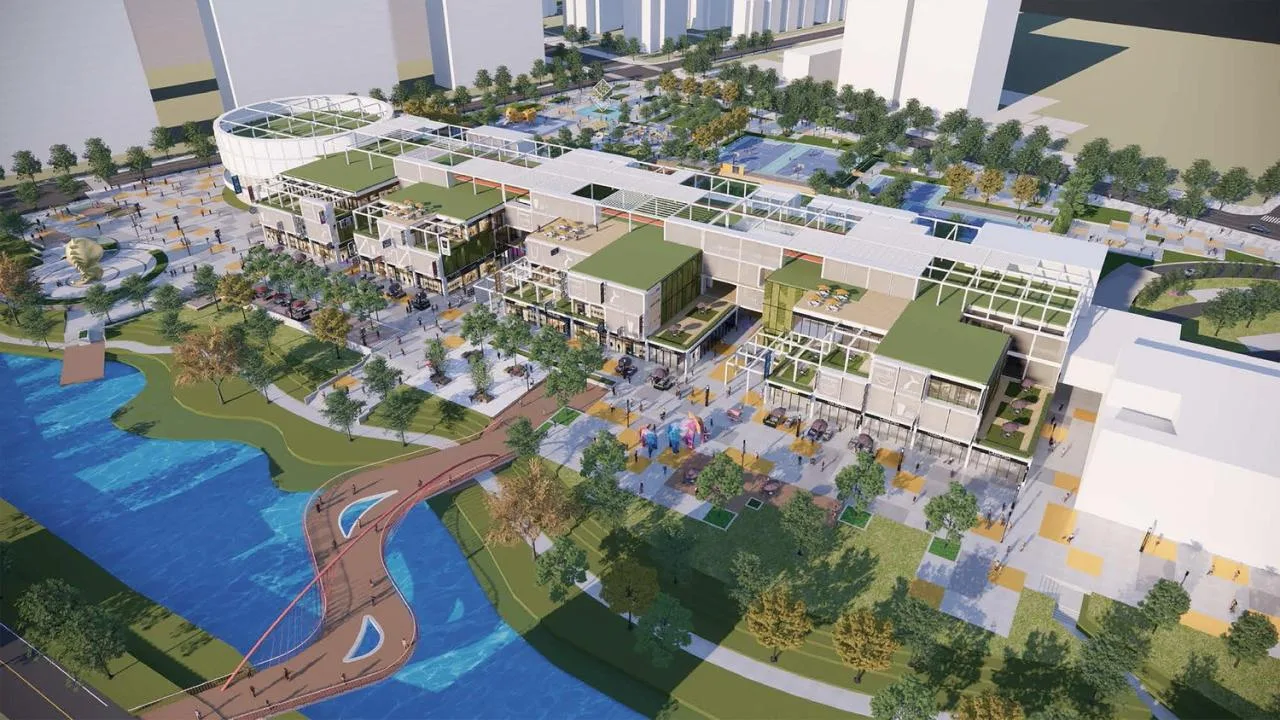
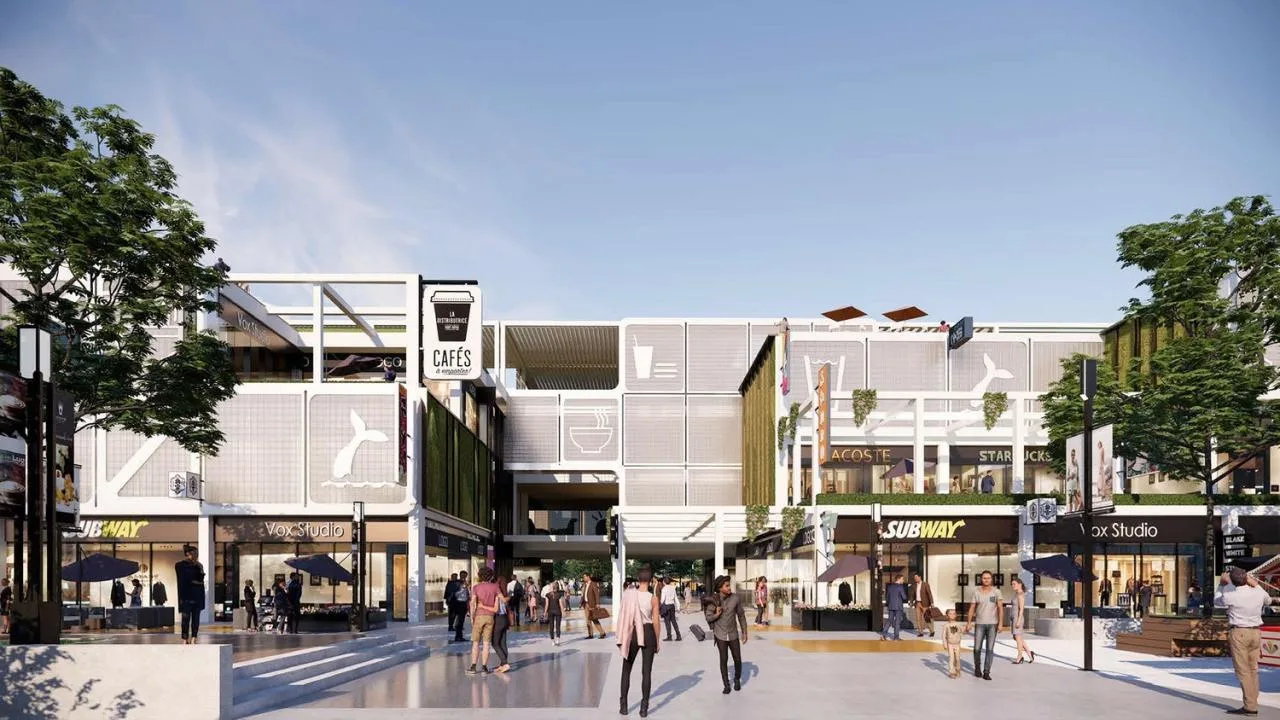
This approach uses the concept of a ‘pixel cloud,’ blending architecture and landscape while minimizing demolition and maximizing reuse of existing materials.
|| Mid-Scale Transformation · Vitality Rainbow
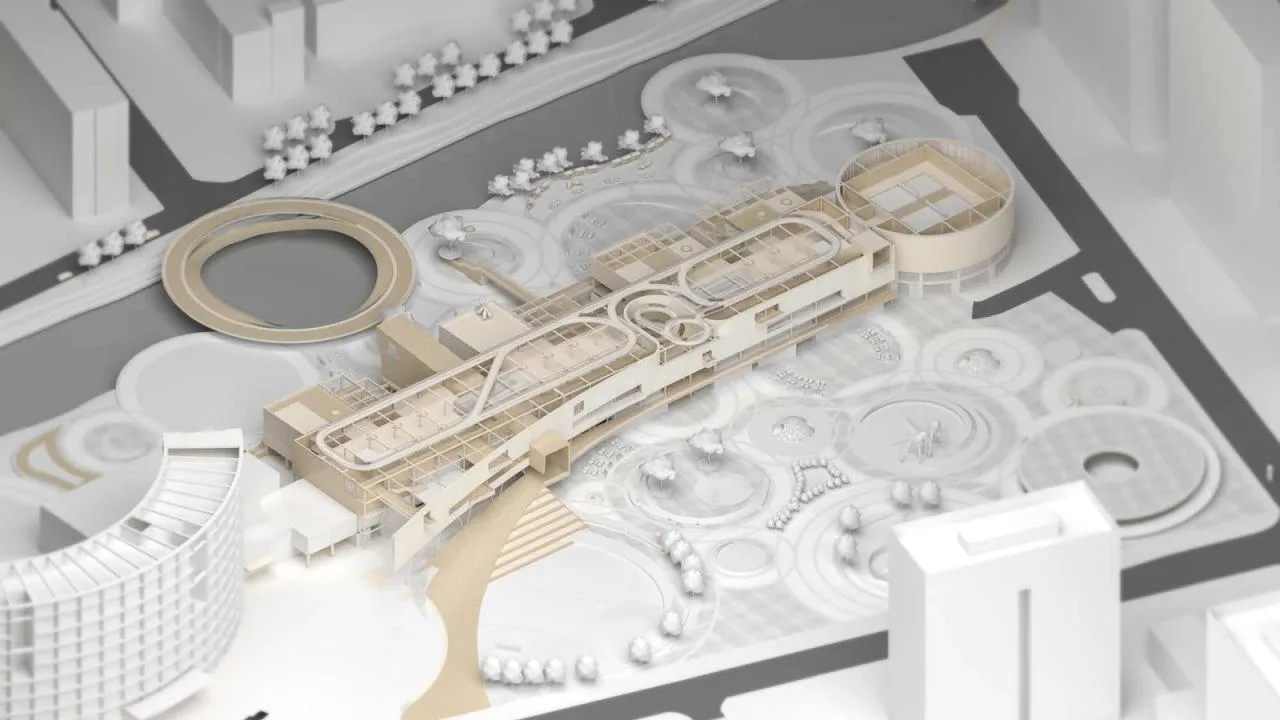
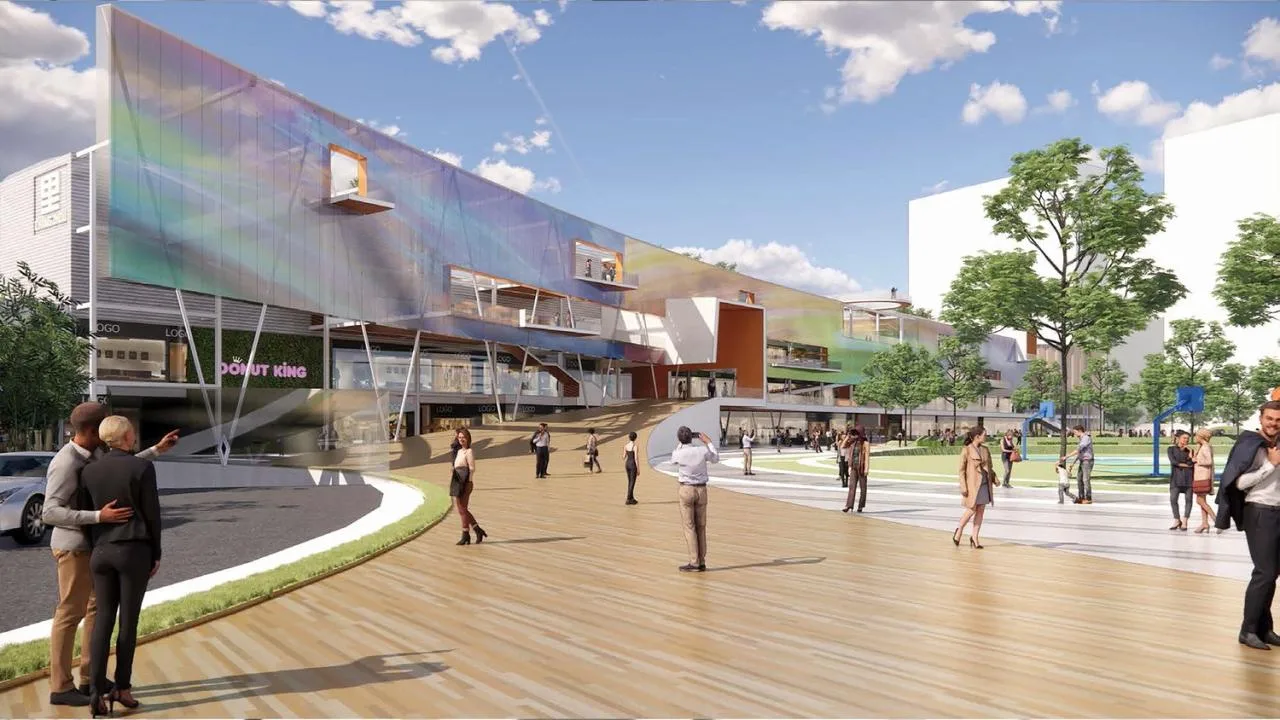
The facade’s skin is lifted to form a rainbow screen and pedestrian corridor, with landscaping inspired by water patterns created by falling rain—resulting in a lively and vivid environment.
|| Comprehensive Renovation · ∞ Cube
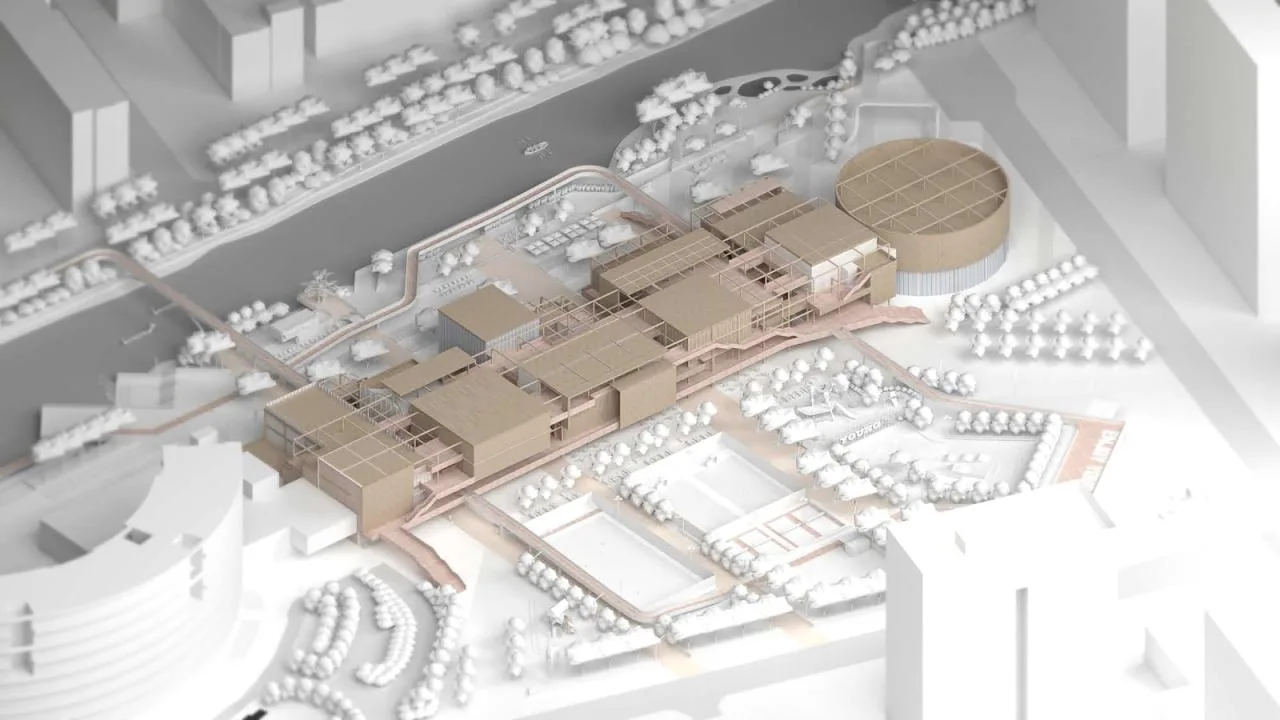
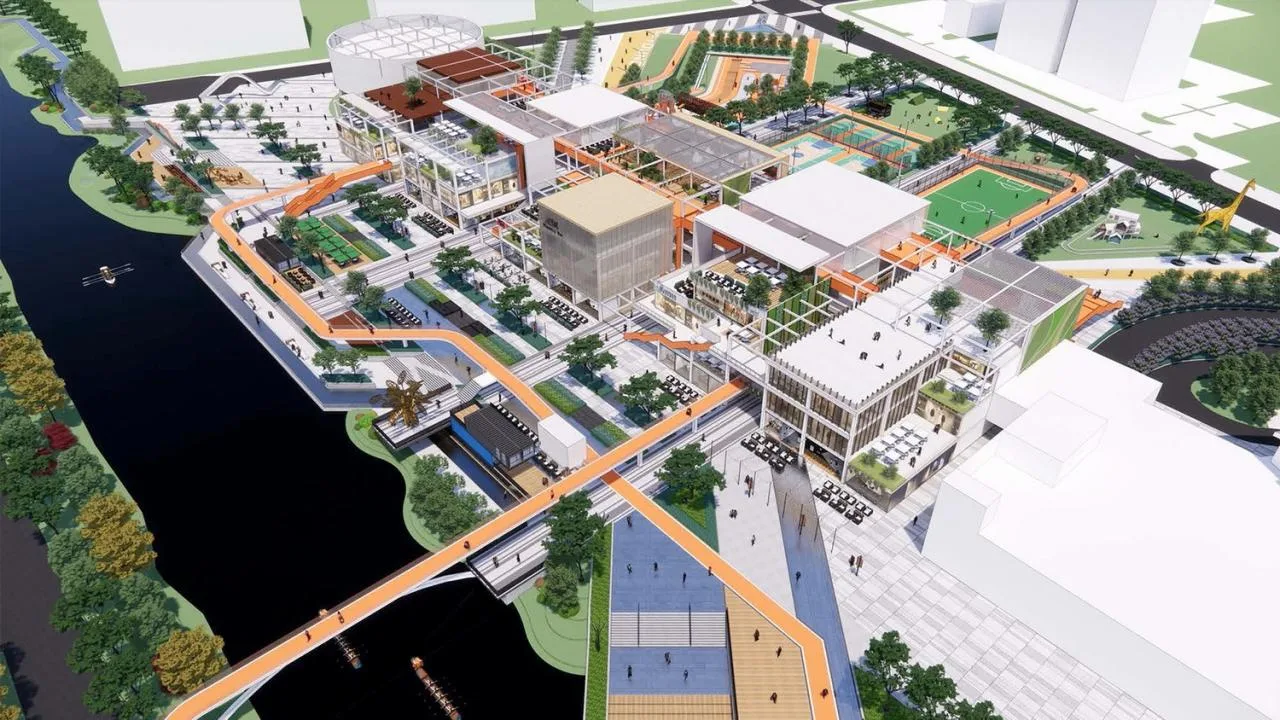
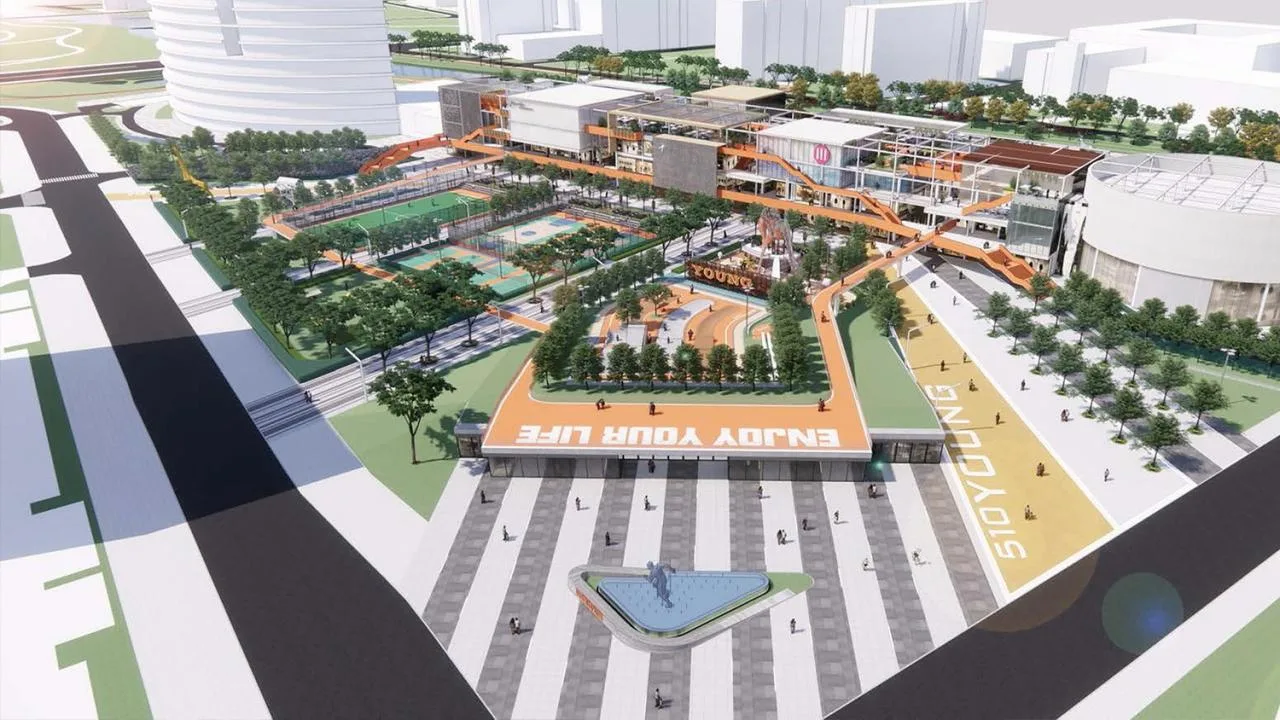
This approach redefines architectural and landscape spaces, creating a dynamic block-style commercial street.
6. Shared Cube
After the owner selected the light renovation approach, the design team refined the “Cloud Commune” concept further to finalize the implementation plan known as the “Shared Cube.”
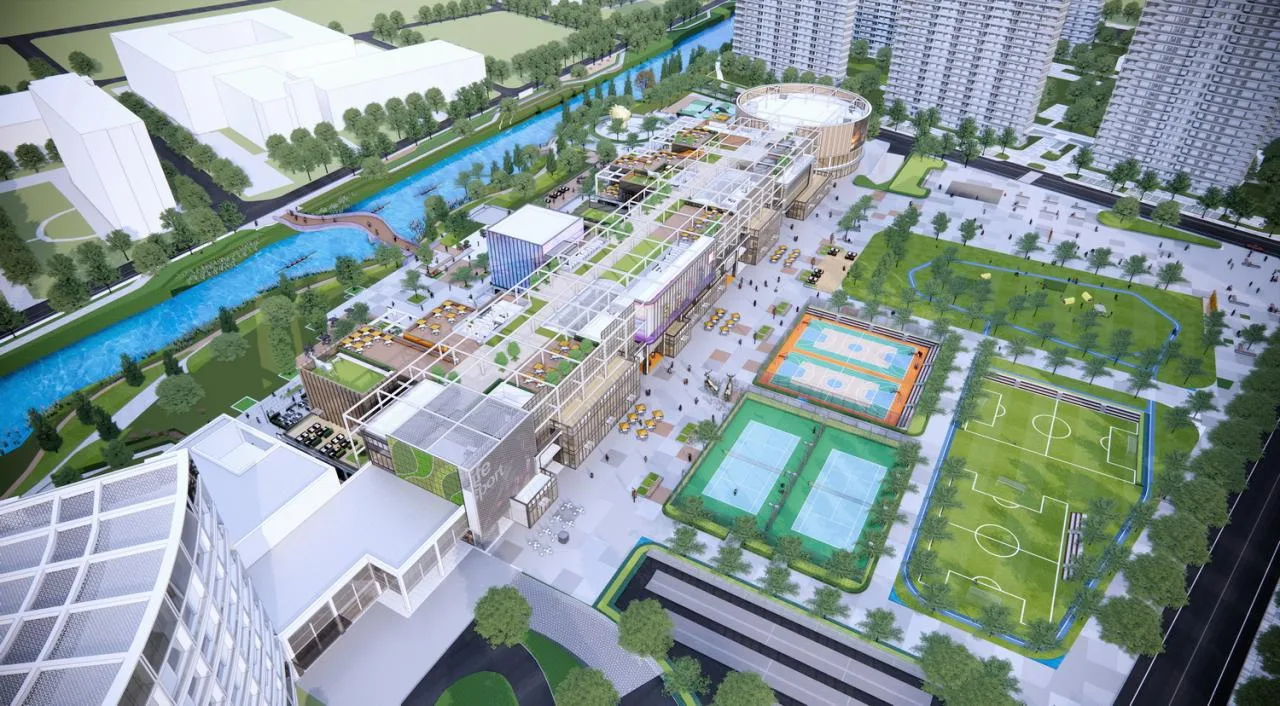
|| Adding and Subtracting Degrees
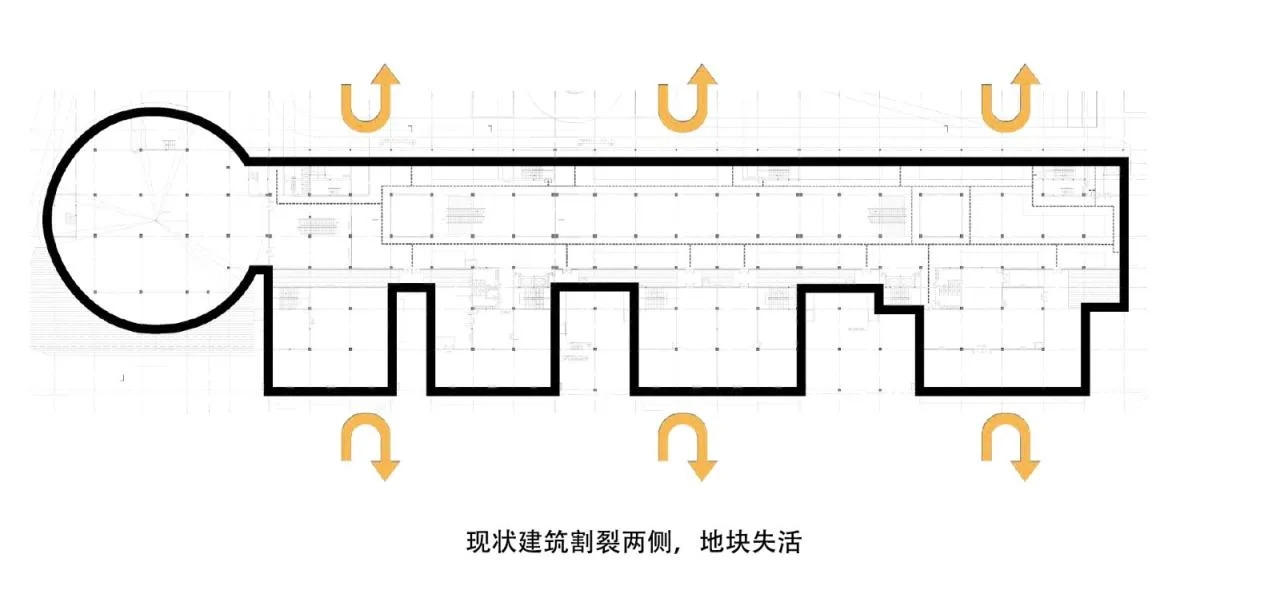
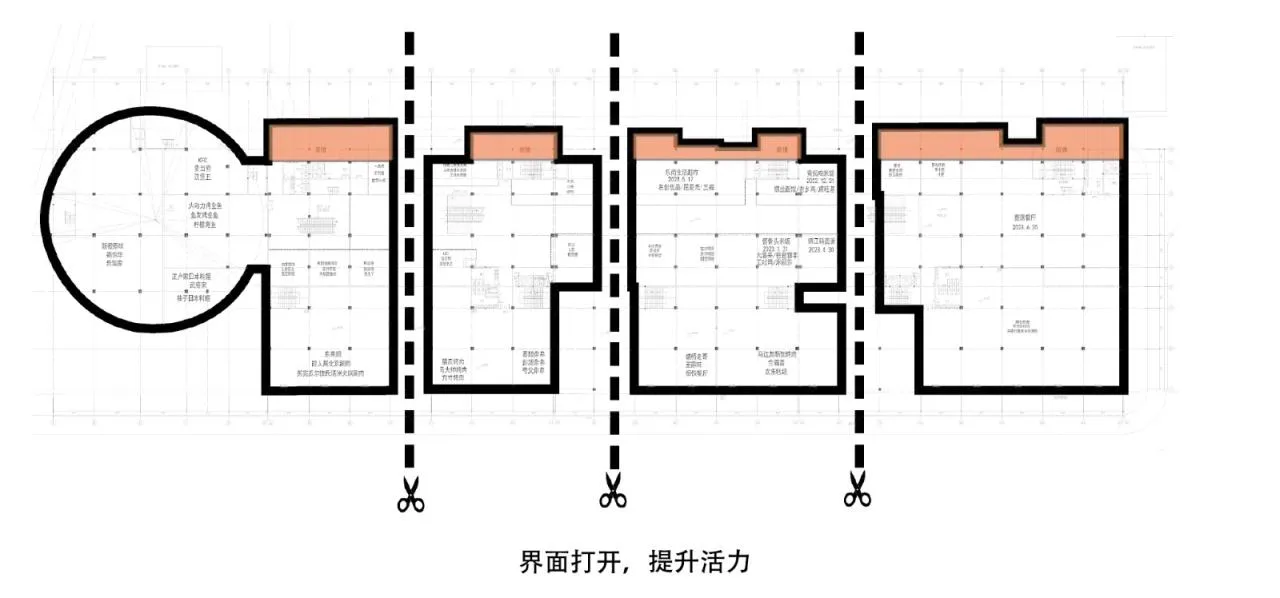
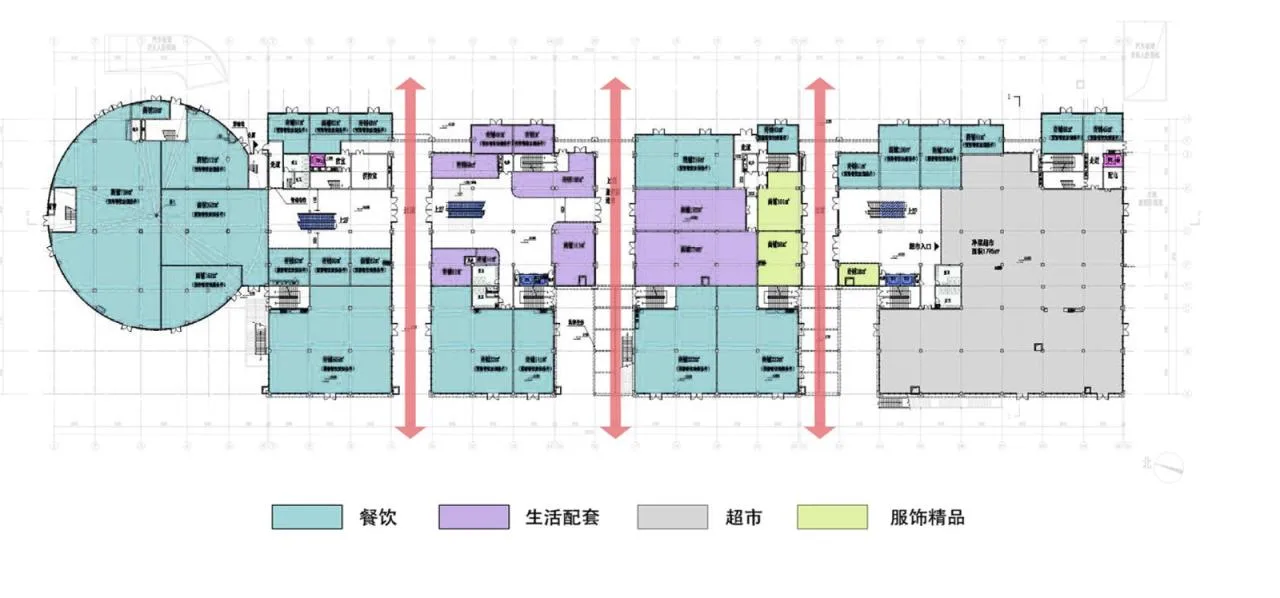
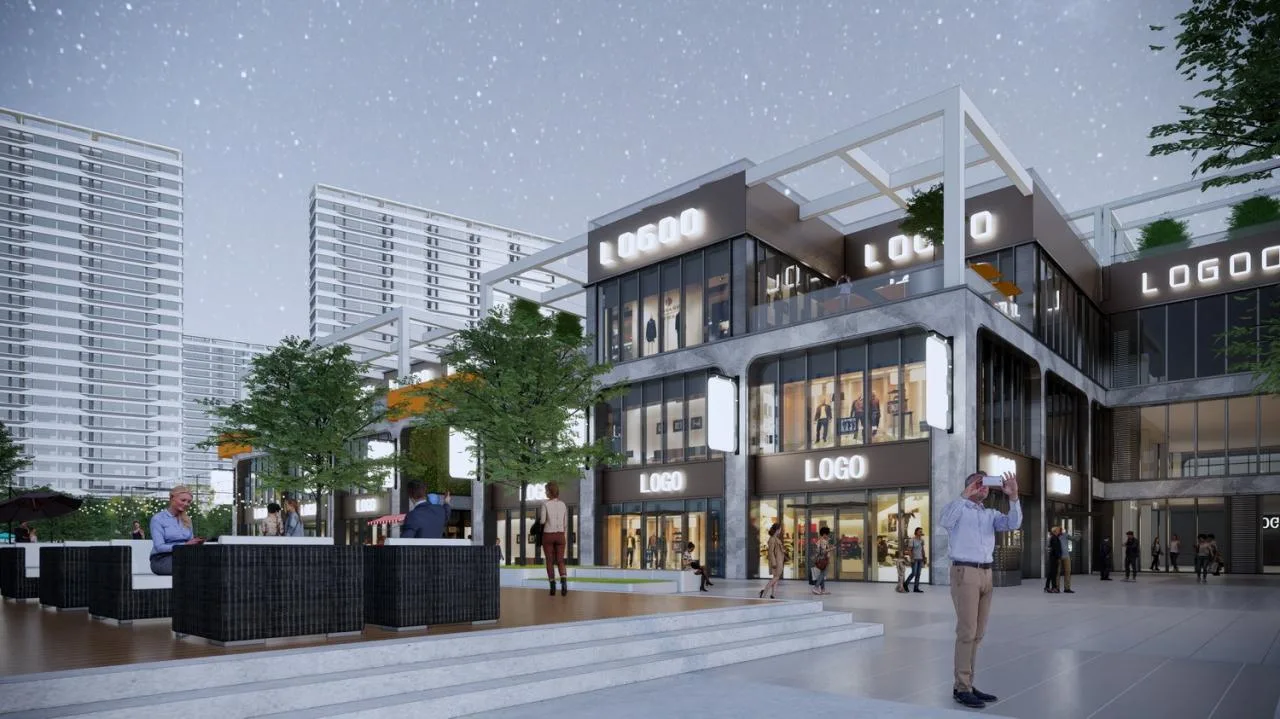
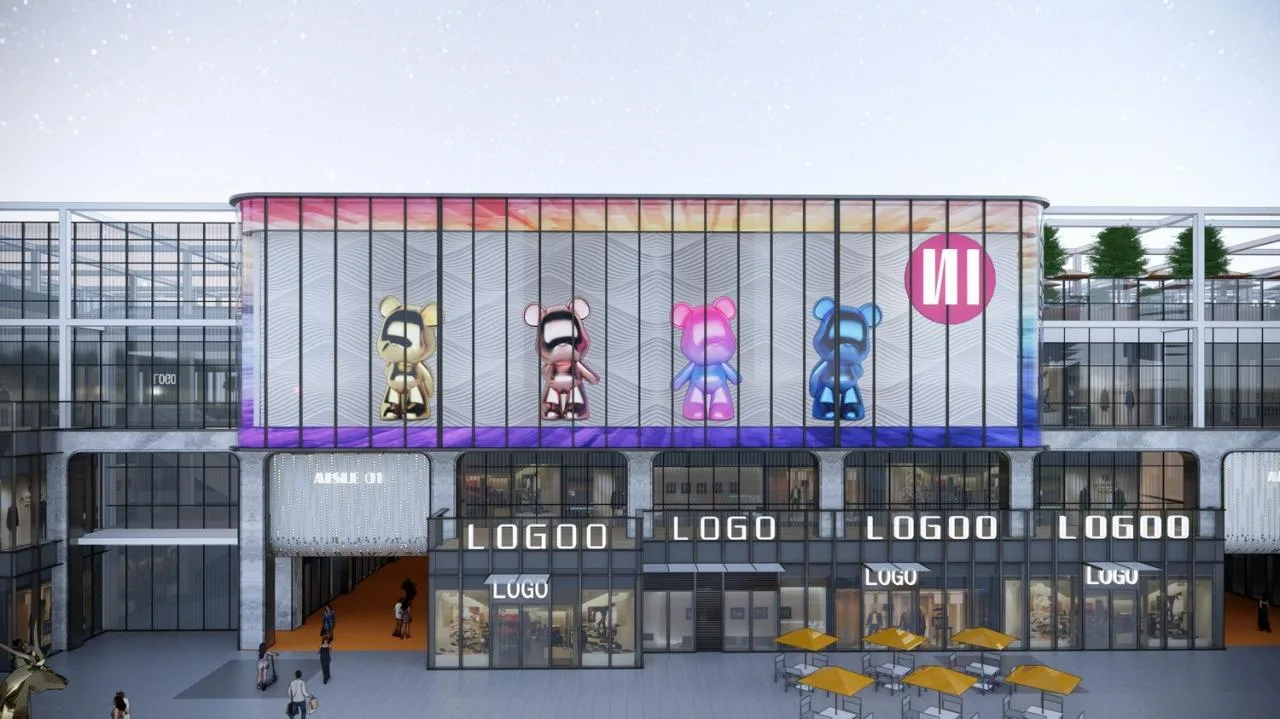
To bridge the spatial divide between the east and west sides, the ground floor was elevated, integrating the building with the surrounding space. The previously cluttered roof with dense pipelines was transformed into a vibrant rooftop garden.
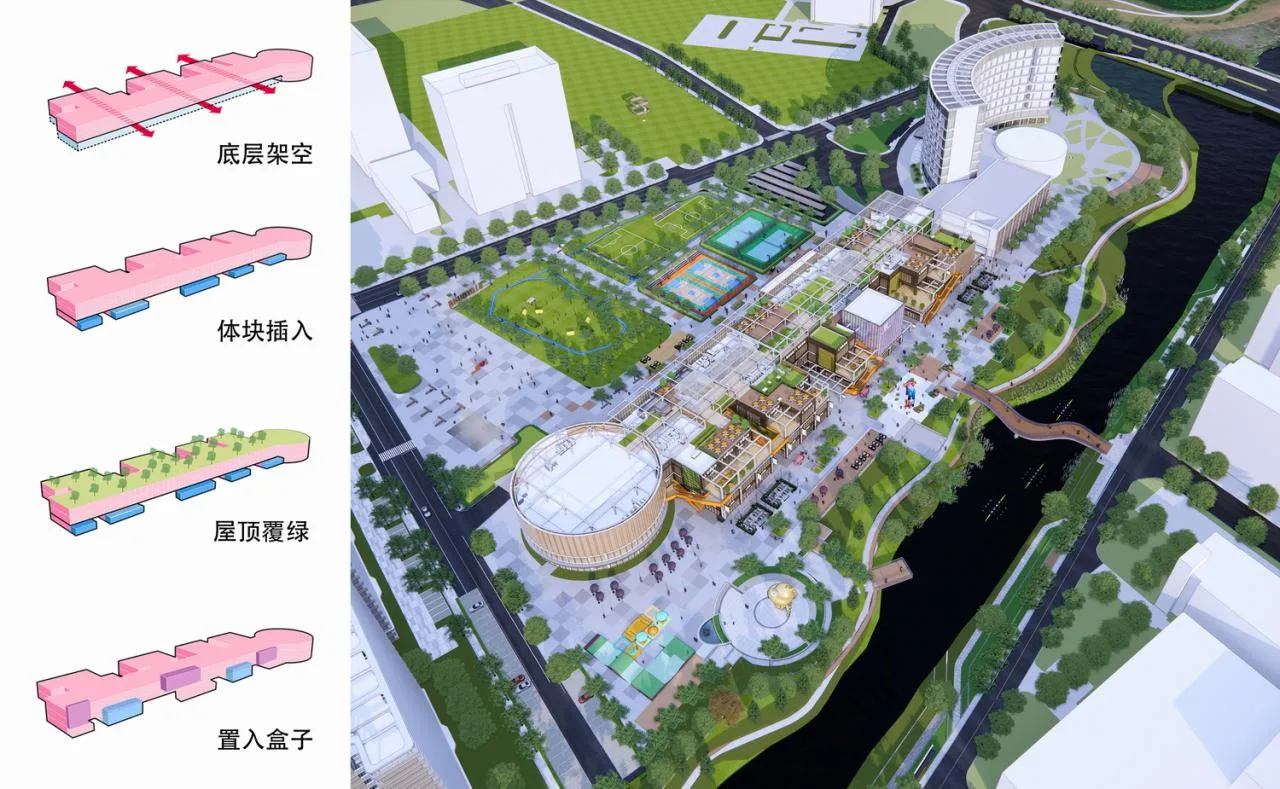
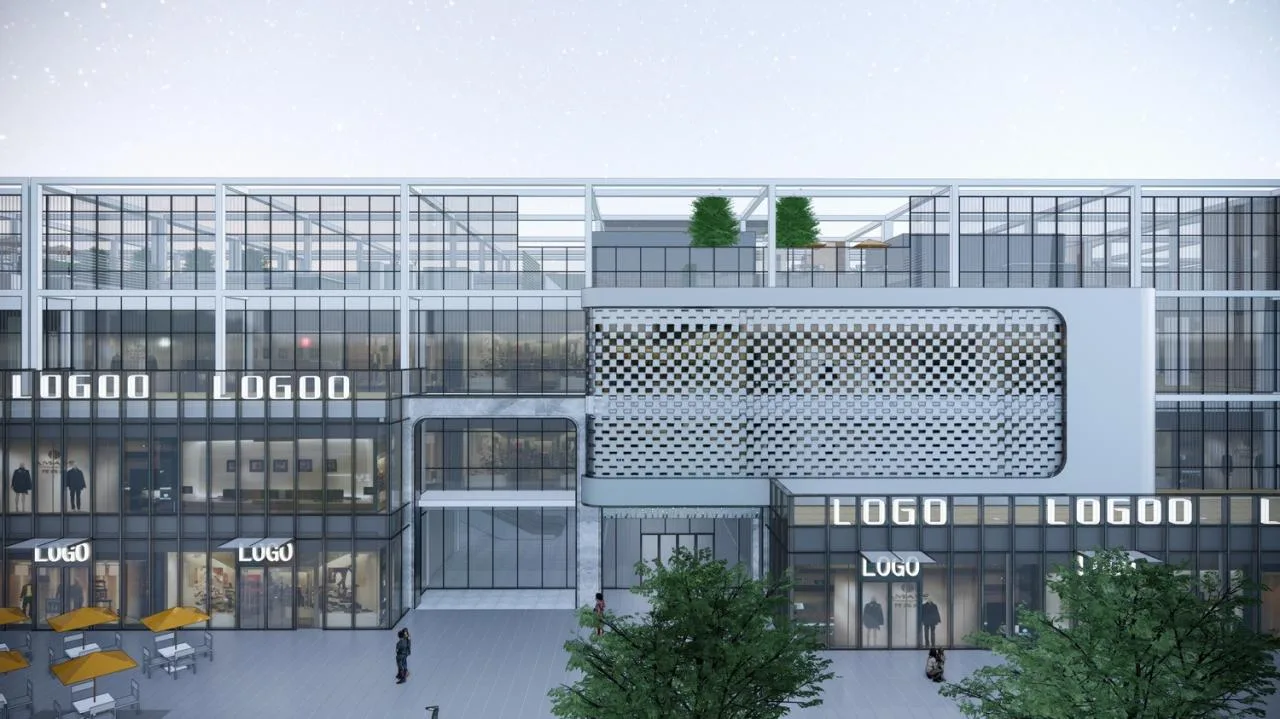
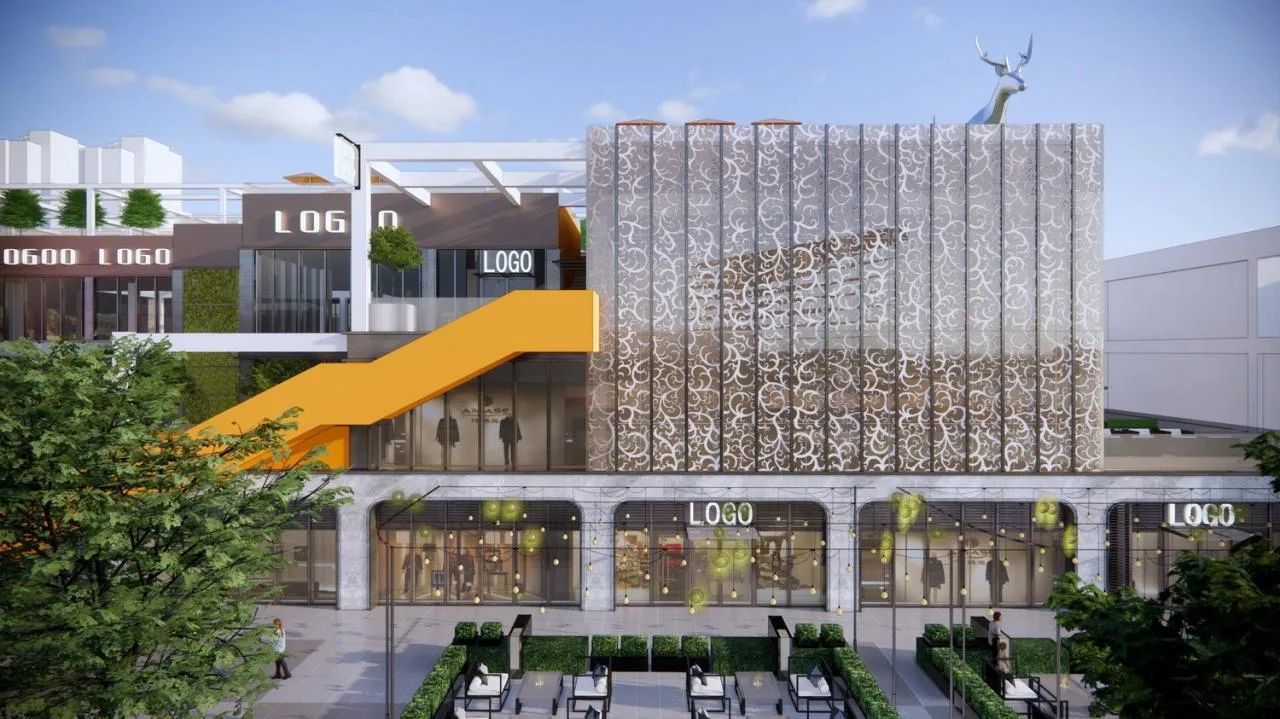
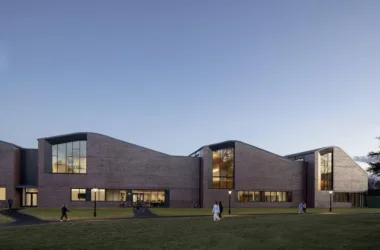
The architectural design draws cubic elements from the original building’s design techniques and combines them with the facade composition of the commercial office buildings to the east. Utilizing the existing decorative grid structure, themed boxes were softly embedded, creating scattered and interwoven blocks that form a vibrant and engaging space.
|| Multi-Themed Landscape Experience
Dedicated functional modules are thoughtfully designed to suit various area attributes.
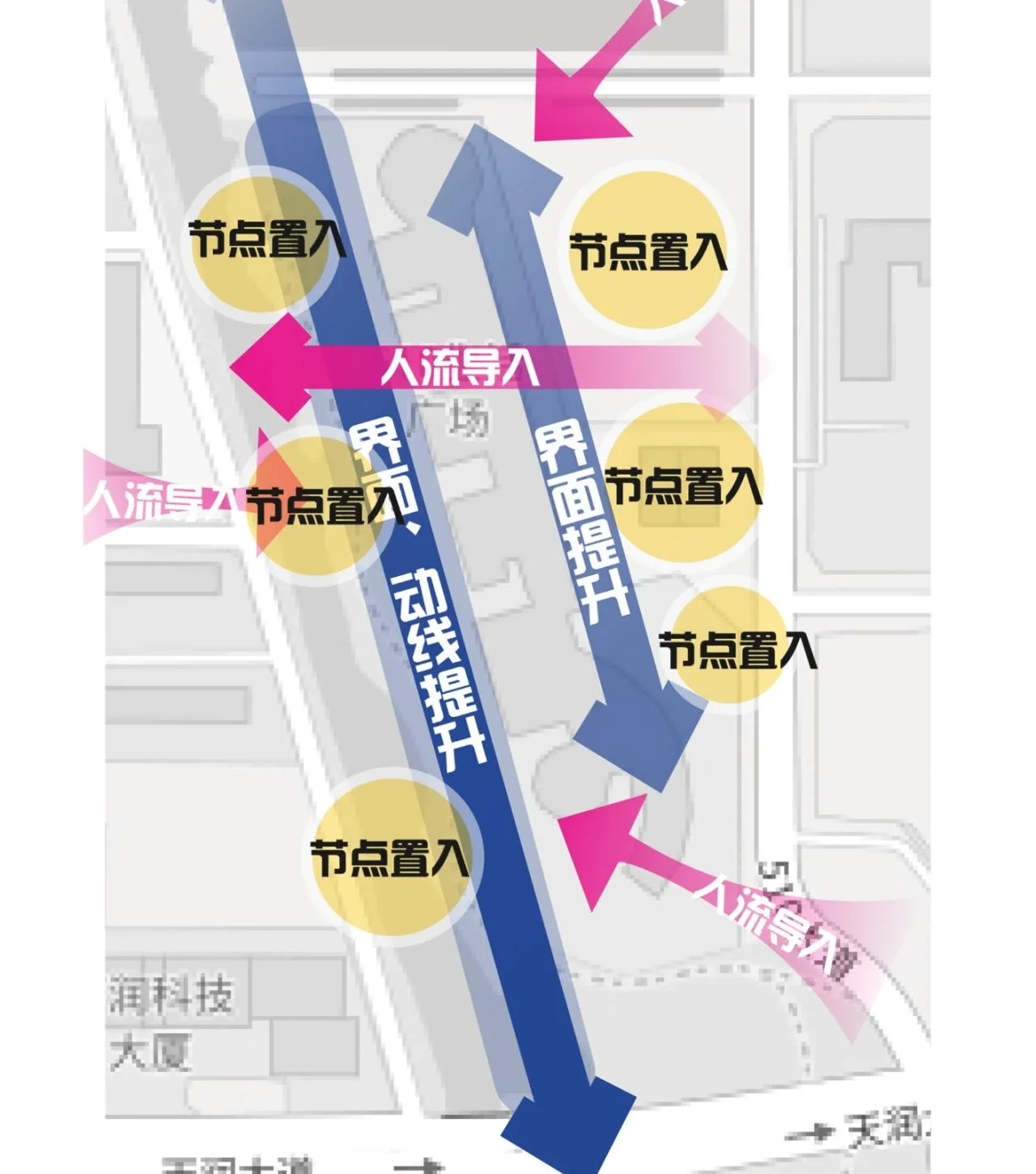
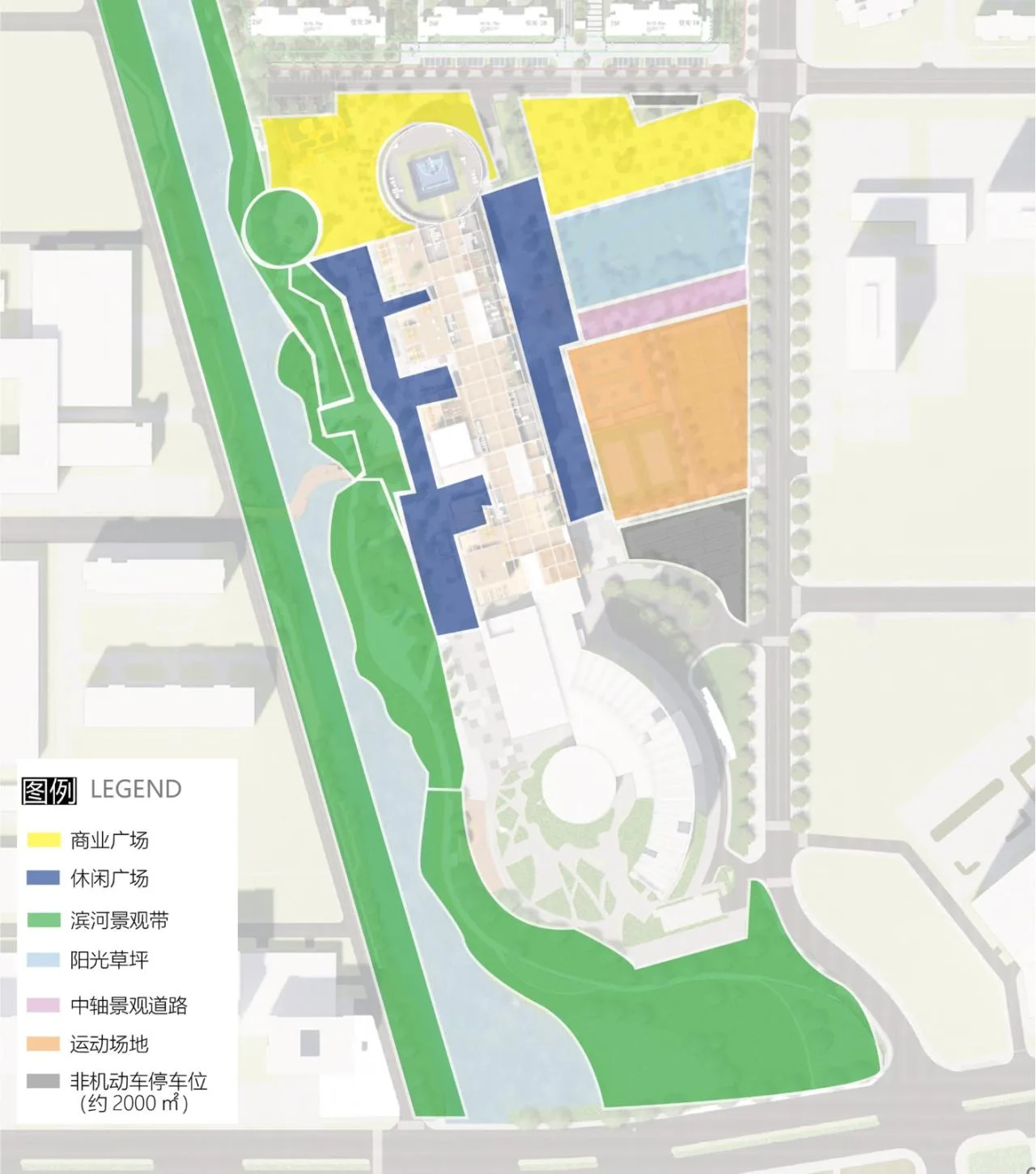
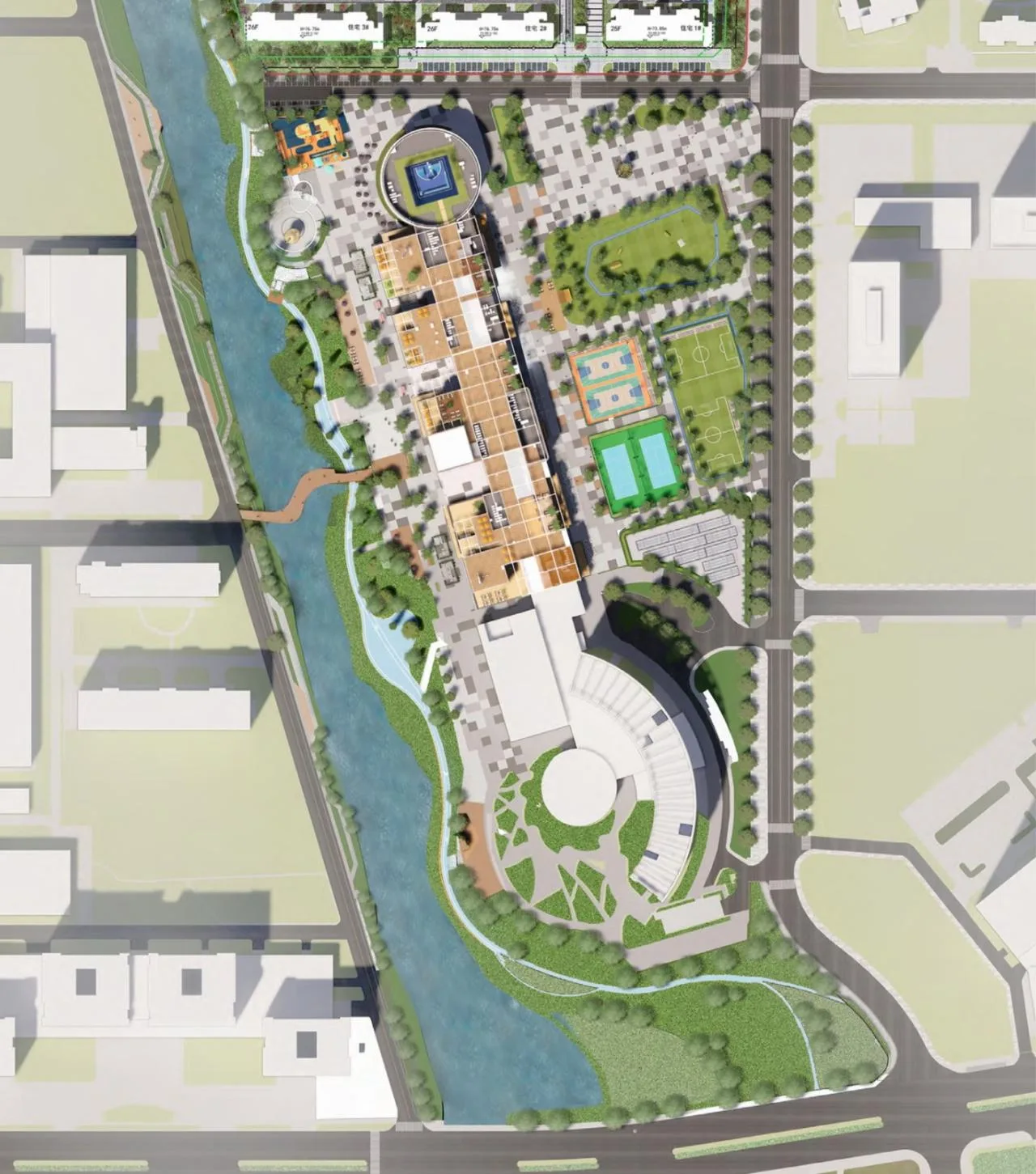
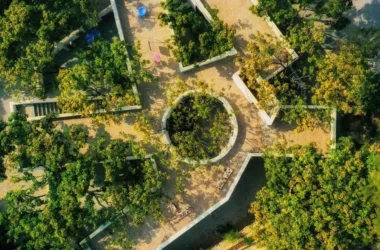
The commercial square at the entrance and leisure squares flanking the building foster a high-quality commercial atmosphere. Meanwhile, the sports park along the street and the waterfront leisure zone provide diverse recreational experiences, catering to the varied leisure needs of the community.
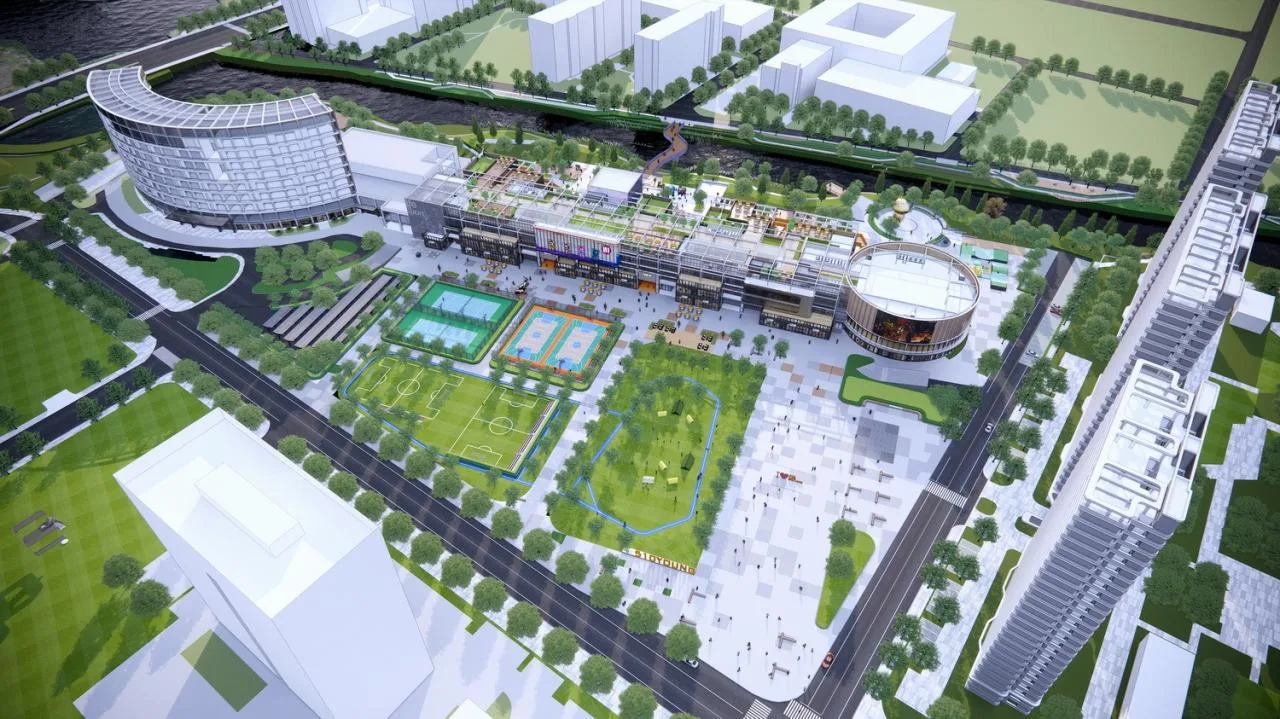
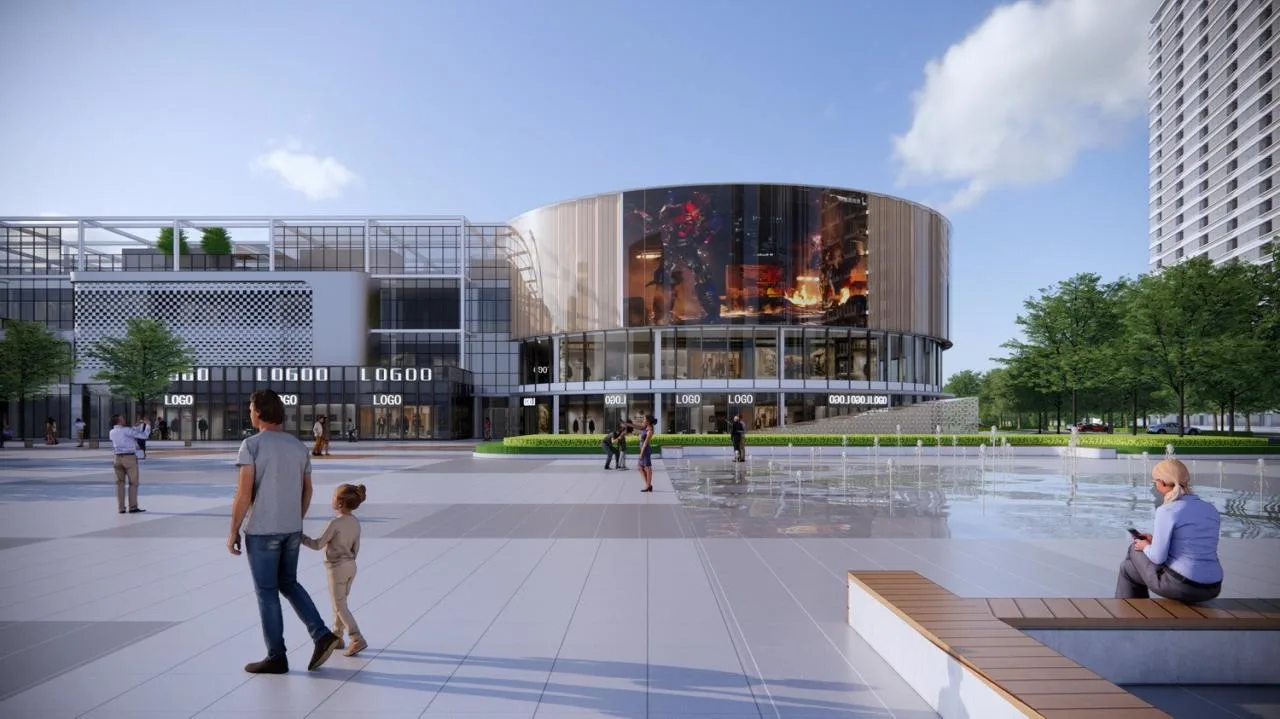
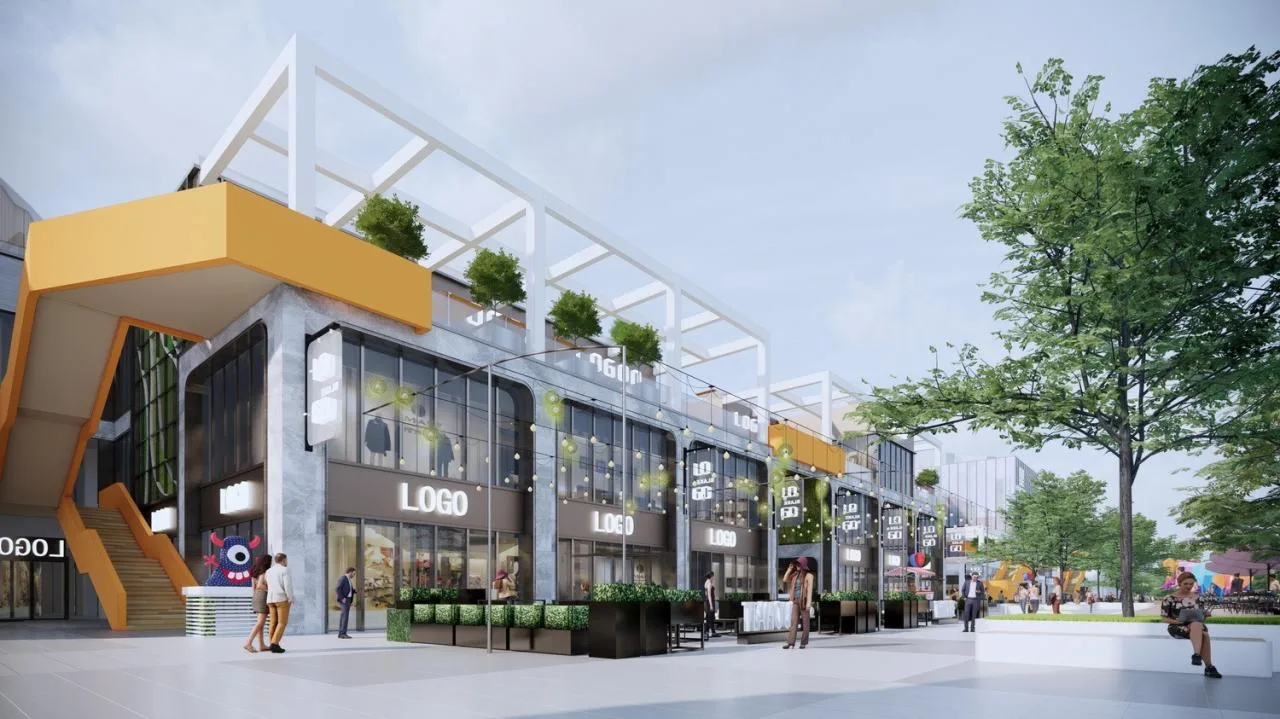
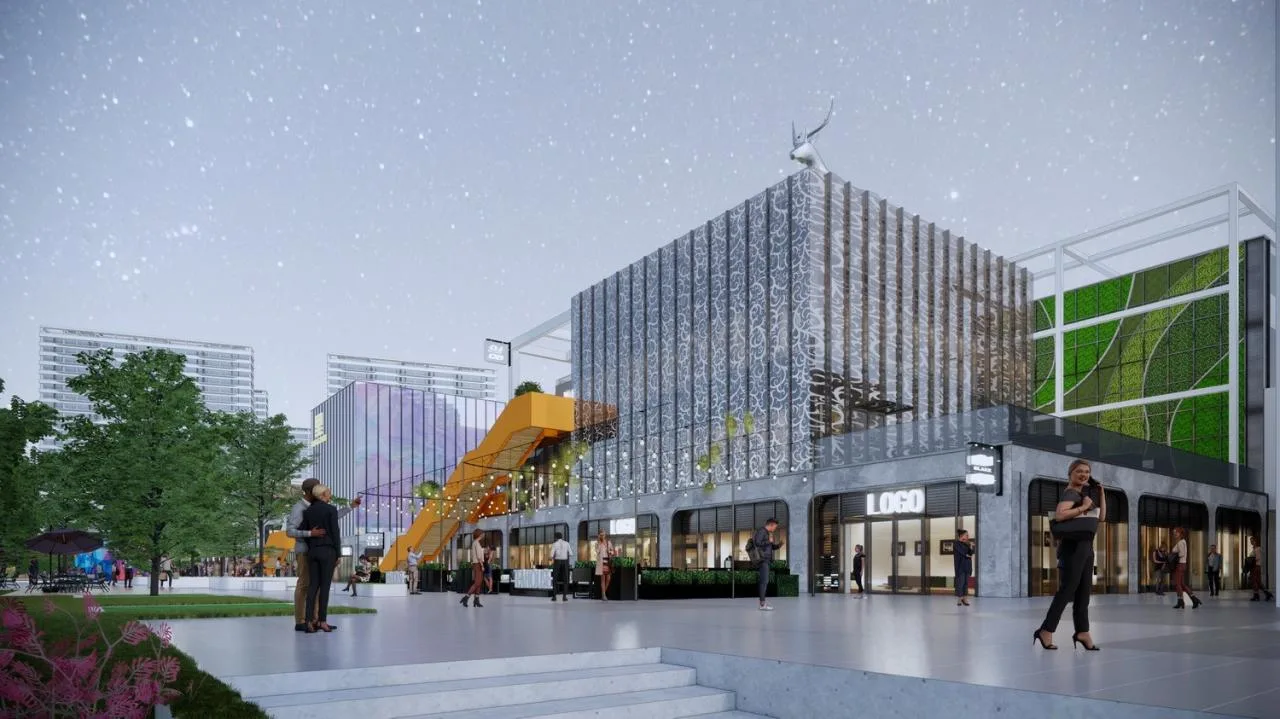
The mosaic-style ground patterns complement the building’s form and facade, using a pixelated design language to enhance the overall effect.
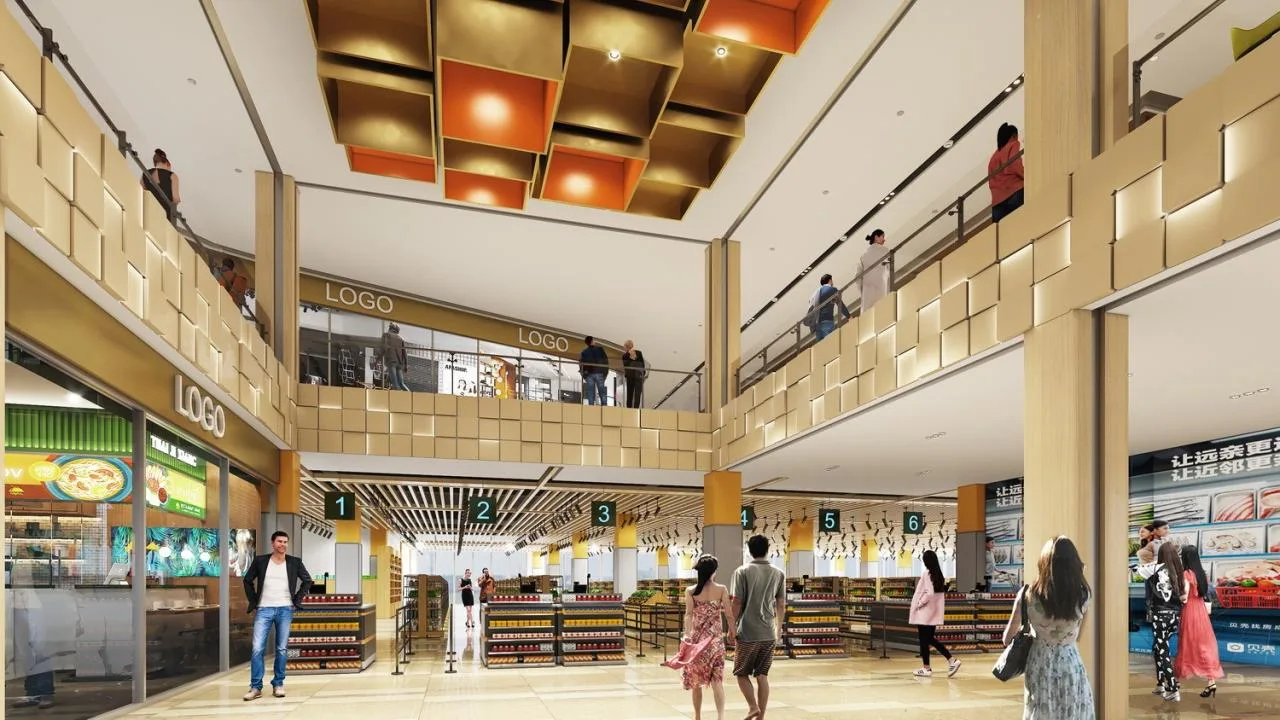
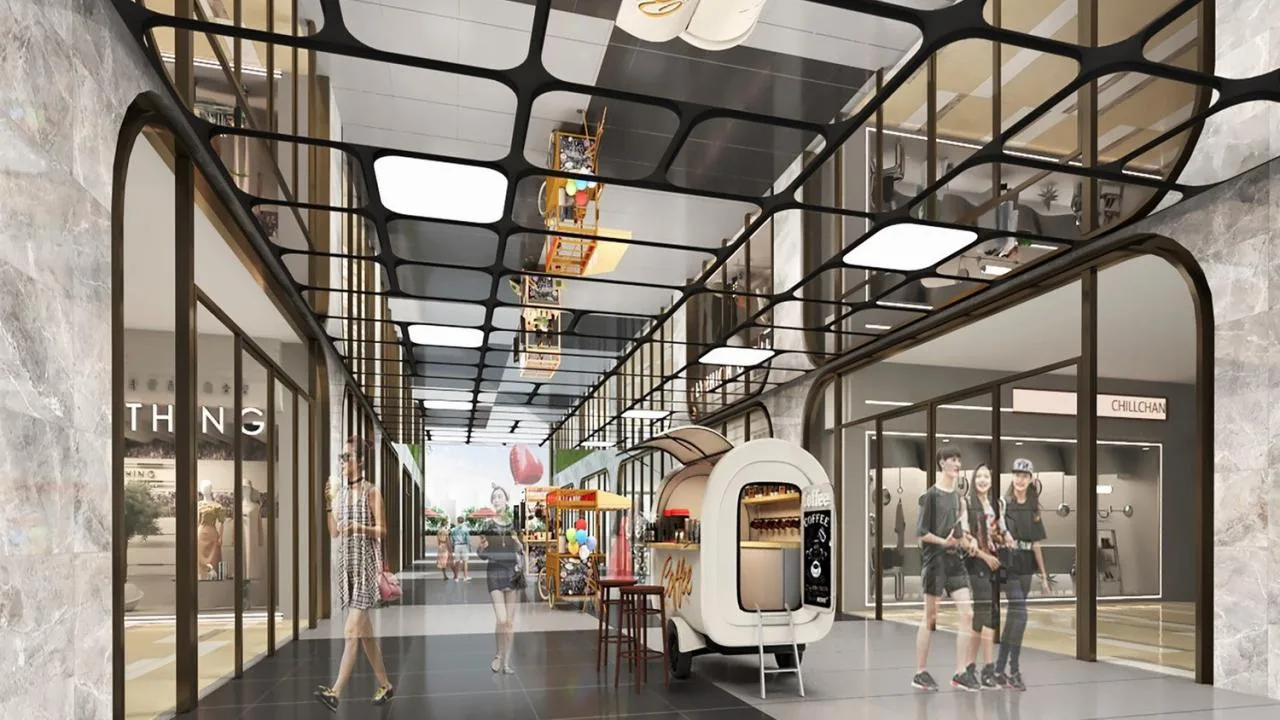
|| Indoor Rubik’s Cube
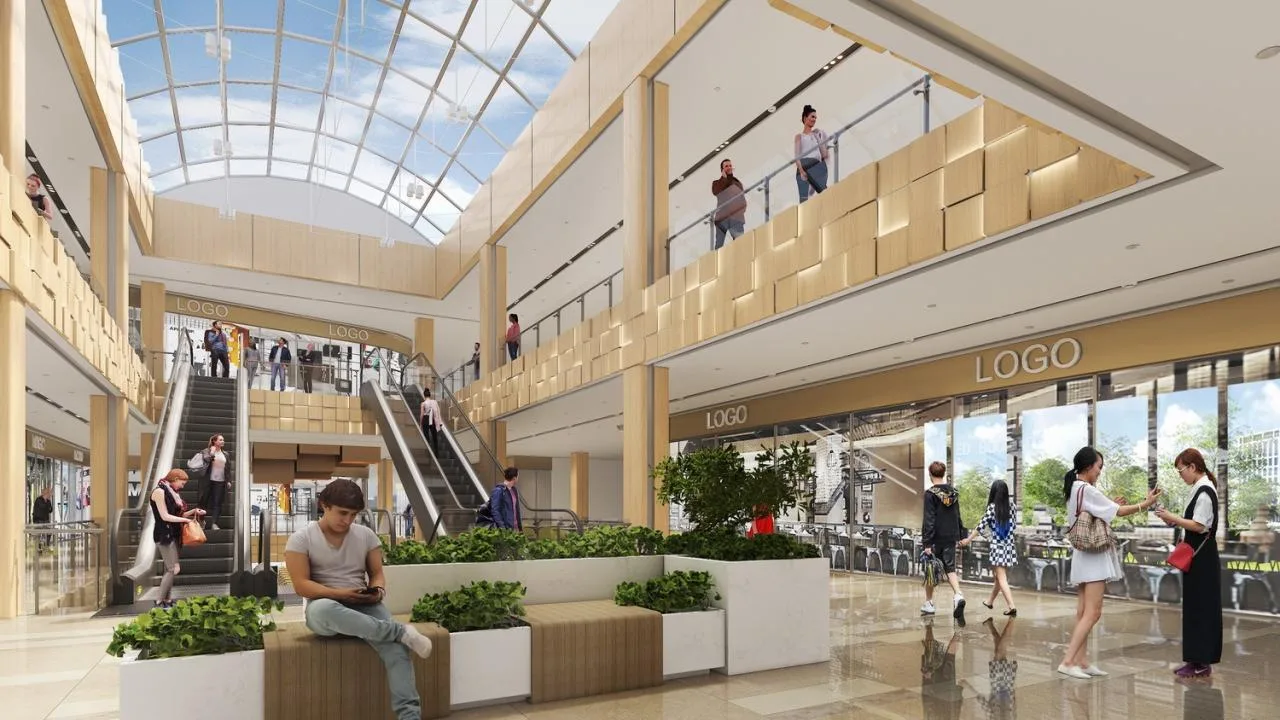
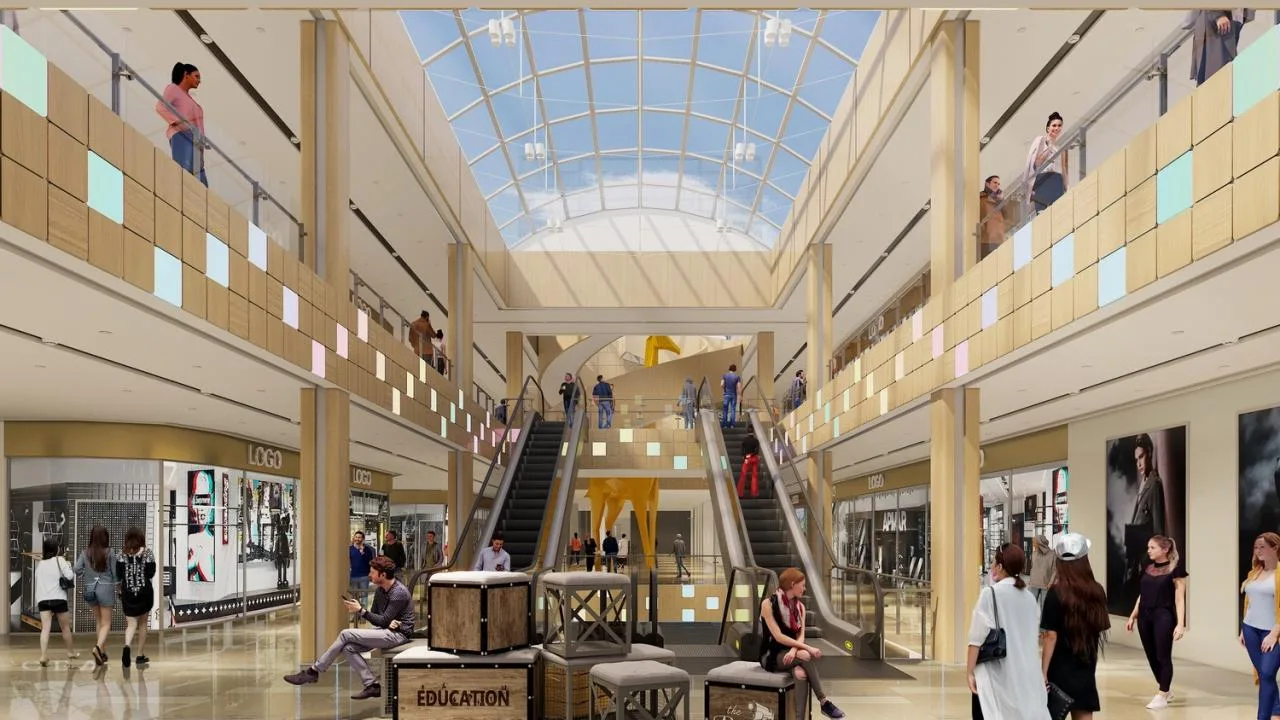
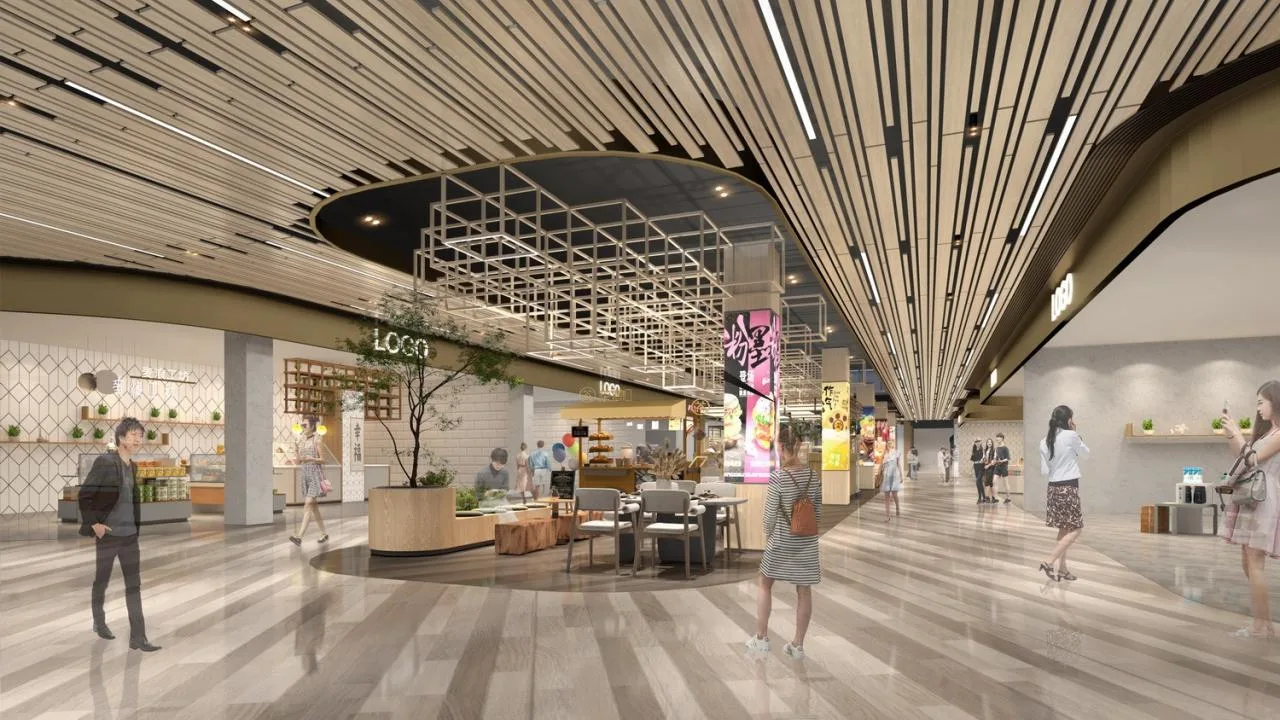
The interior design continues the “Shared Cube” concept, focusing on two atrium spaces themed “Vitality Cube” and “Shared Cube.” These spaces foster a trendy, vibrant commercial and social atmosphere.
7. Conclusion
Throughout the renovation of 510 Life Square, the design team remained committed to their dual role as creators and users. They envisioned a warm “Shared Cube” to establish a “youth commune” within the park, enhancing connectivity within the community and crafting a new landmark for the city. This space invites people to live, share, interact, and engage with the urban environment.
Project Drawings
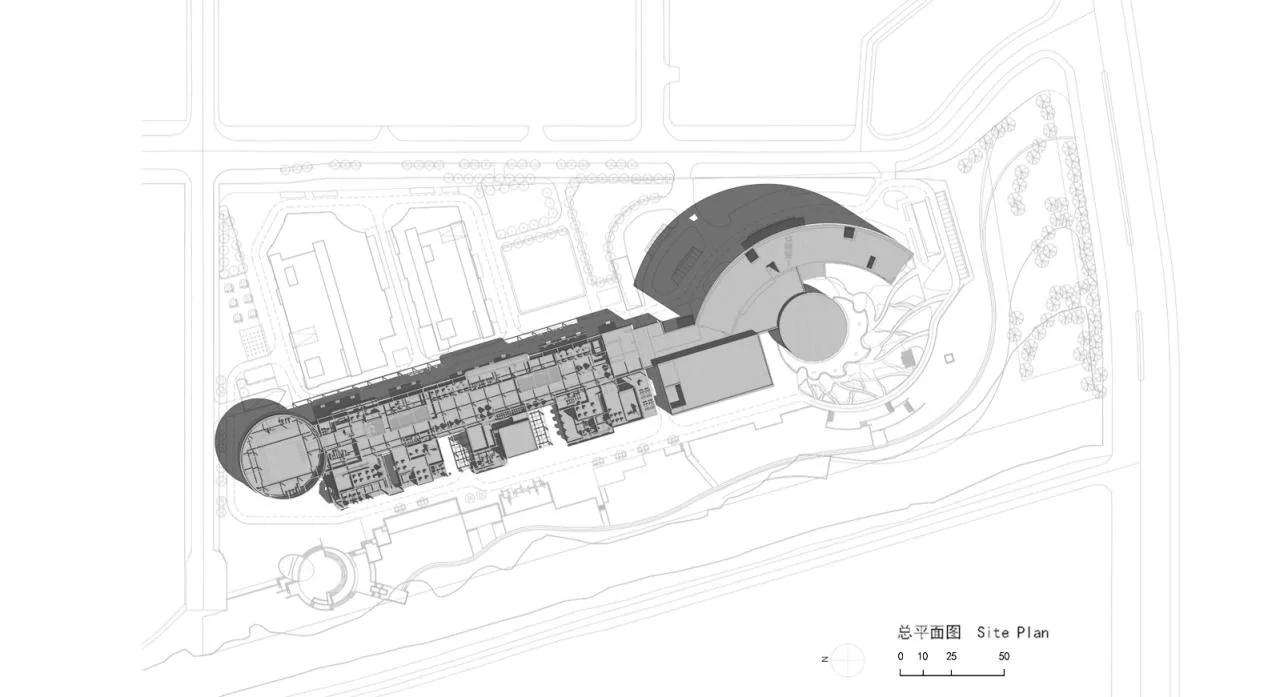
△ General layout plan
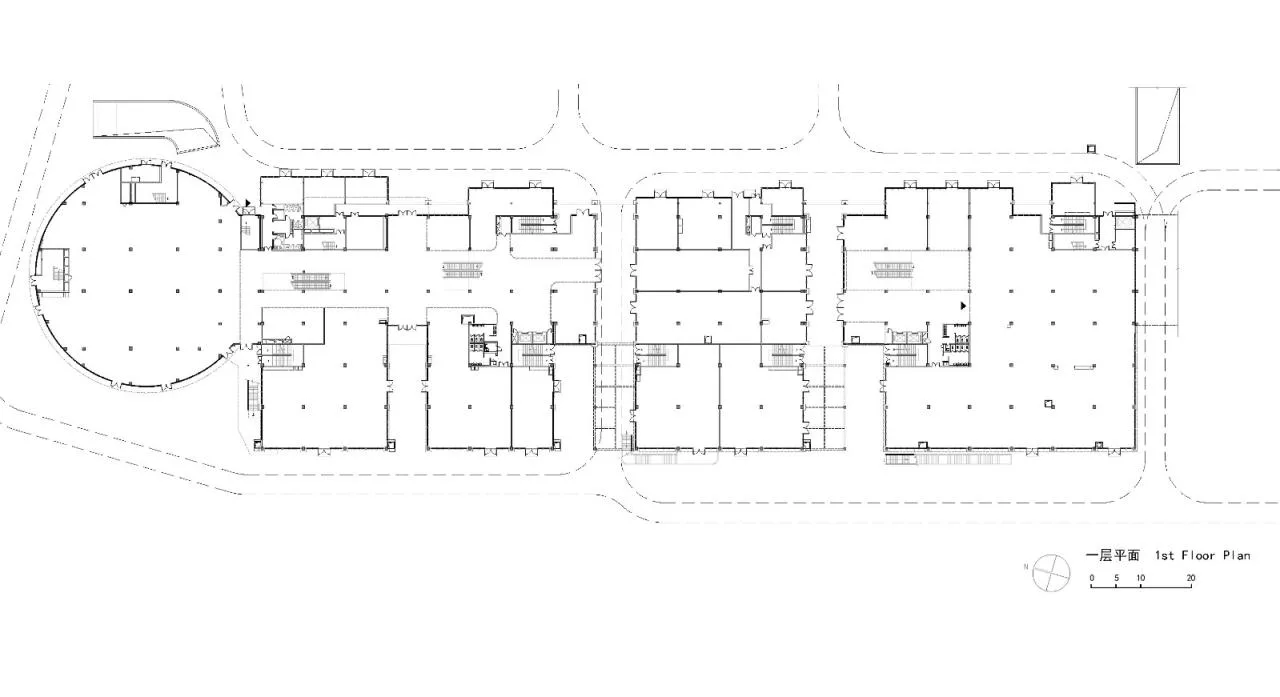
△ First floor plan
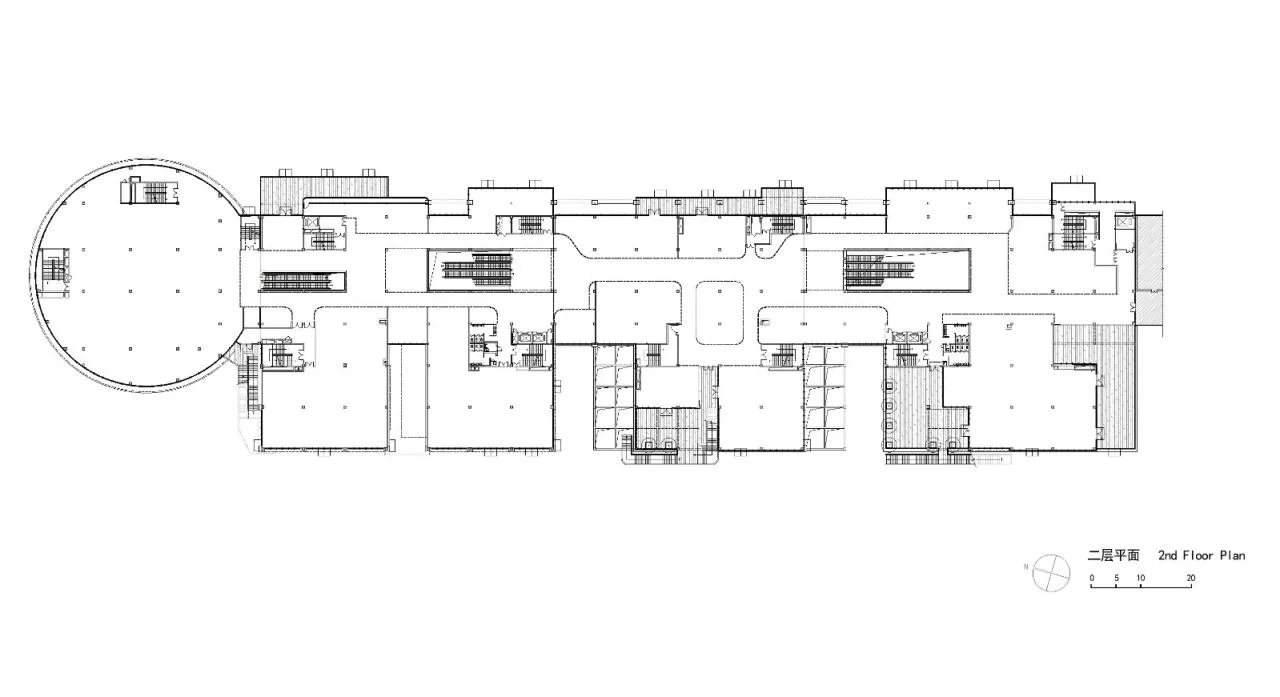
△ Second floor plan
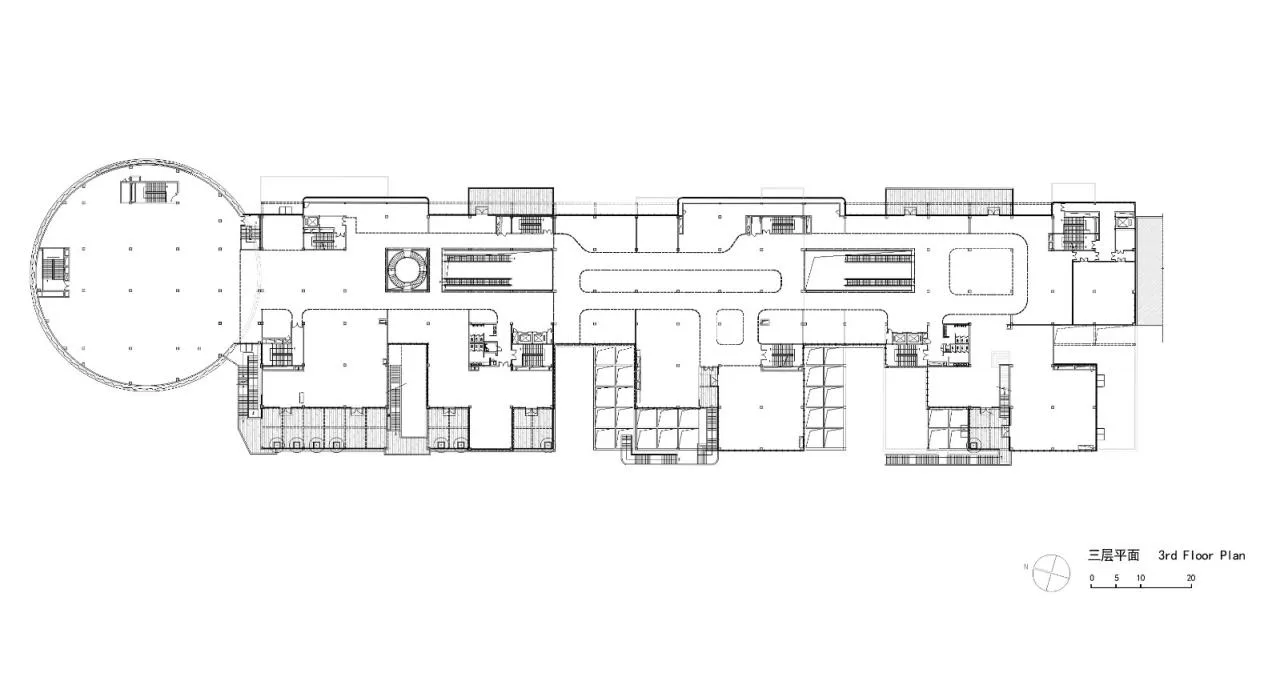
△ Third floor plan
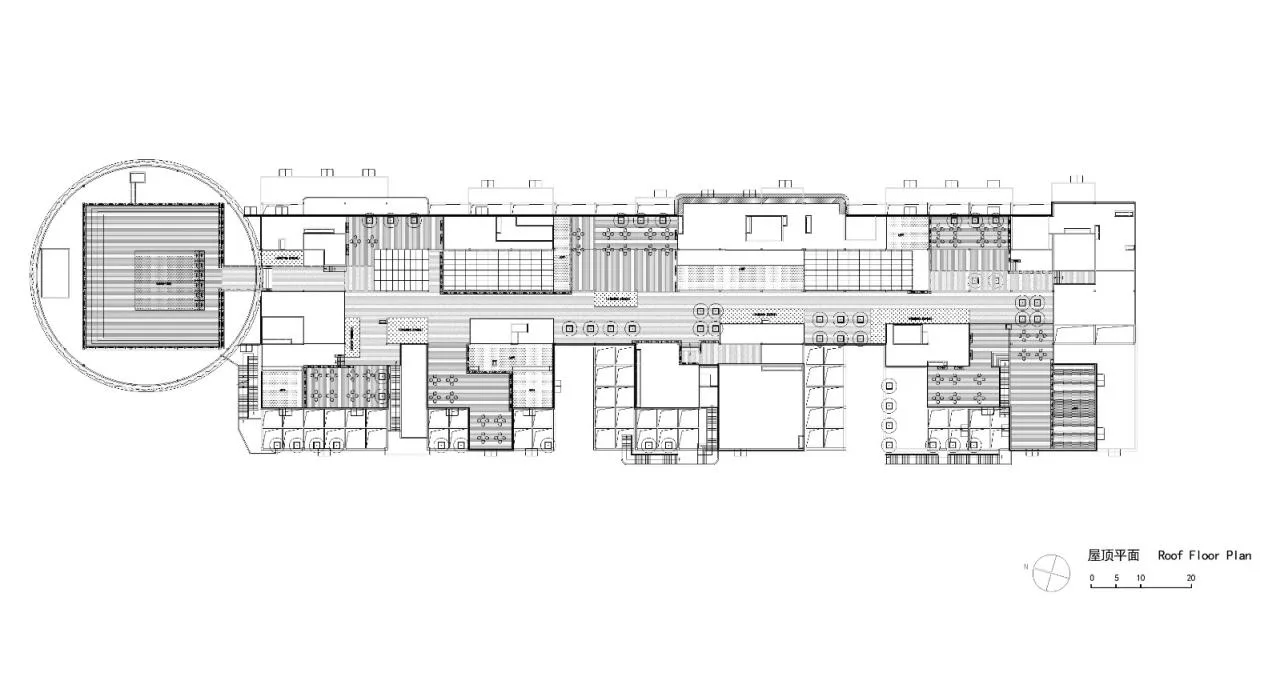
△ Roof Plan
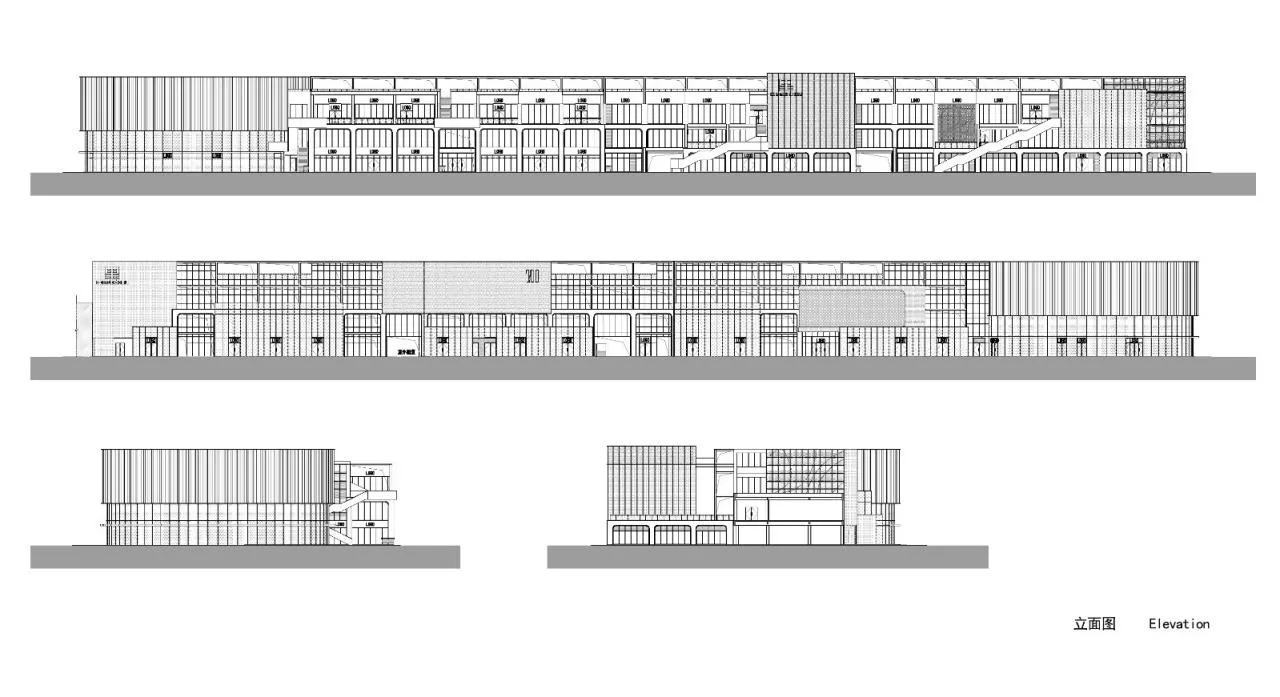
△ Elevation drawing
Project Information
Project Name: 510 Life Square Renovation
Owner Company: Changjiang Longcheng Technology Co., Ltd
Design Period: January 2022 – December 2022
Lead Architects: Zhang Xu, Zhang Cheng
Design Team: Liang Zeyuan, Zhang Wanli, Mihelaimu Aikeremu, Guo Jiacheng, Meng Dan, Dong Chao, Yu Qing, Qian Yun
Construction Drawing Design: Liu Pan, Li Jian, Huan Huabing, Wang Hao, Yuan Huizhi, Li Tengfei, Zhang Zhen, Shi Zhenhua, Guan Jiqing, Zhou Jinpeng, Wu Tong, Zhang Qian
Curtain Wall Design: Jingxiang Construction Engineering Co., Ltd
Interior Design: Chen Sinan, Pan Xuerui, Li Yanhong, Zhang Bing, Li Ying, Hua Xinlian
Landscape Design: Ma Bin, Sun Zhenyue, Duan Shanshan, Li Na, Cao Kexin, Liu Dong, Su Ni, Chen Meiling
Lighting Unit: Tri Color Stone Environmental Art Design (Suzhou) Co., Ltd














Must log in before commenting!
Sign Up