
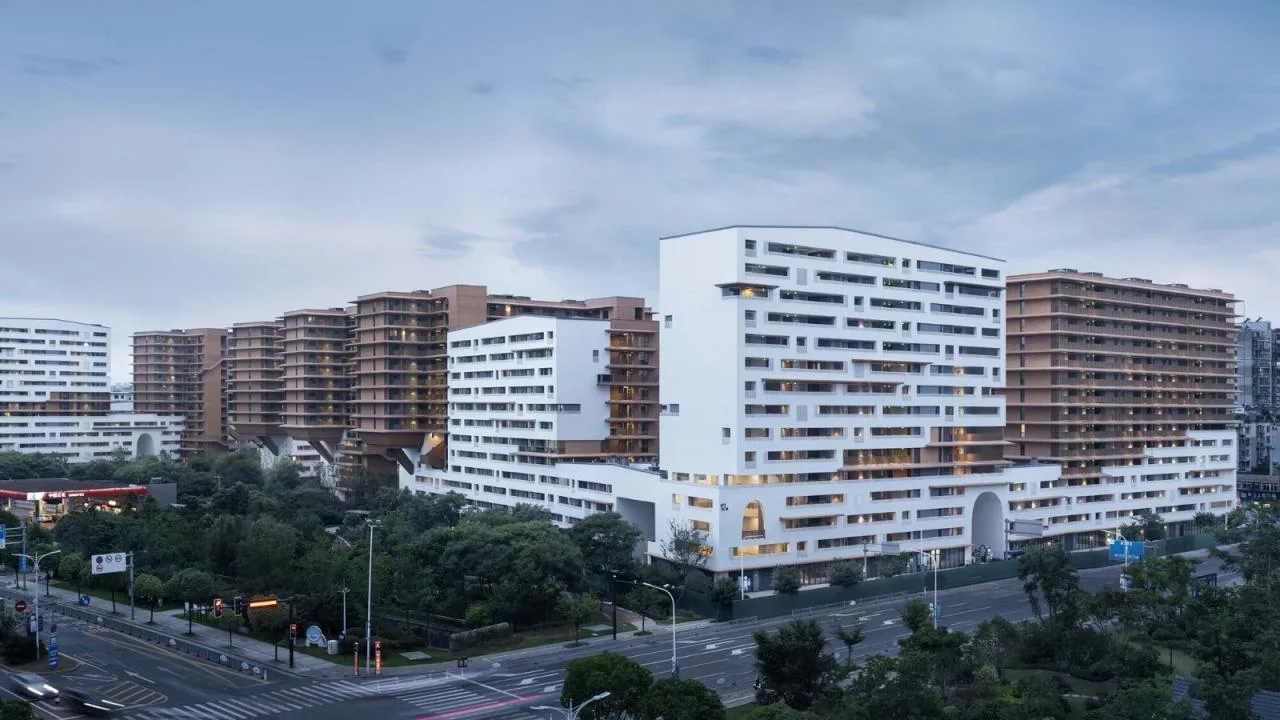
The Lixian Future Community in Quzhou is an urbanized public neighborhood located on the southwest side of Quzhou City. It is bordered by Xinyuan Road to the east, Shuanggang Bridge to the south, Qujiang River to the west, and faces Yanjiayu Island across the river. The community’s master plan emphasizes openness, featuring neighborhood centers and kindergartens at its core to encourage resource sharing.
An elevated, open, and shared three-dimensional slow-traffic system connects various residential clusters, neighborhood centers, and kindergartens within the community. This system also extends across the river to link Yanjiayu Car-Free Vitality Island. By separating pedestrian and vehicular traffic, the design creates a truly accessible, engaging, and safe urban public space that blurs the boundaries between the community and the city.
Community and urban public services — including markets, shops, early childhood education centers, elderly care facilities, and entrepreneurship support — are strategically placed around the community’s perimeter. This arrangement facilitates urbanization on the community’s outskirts.
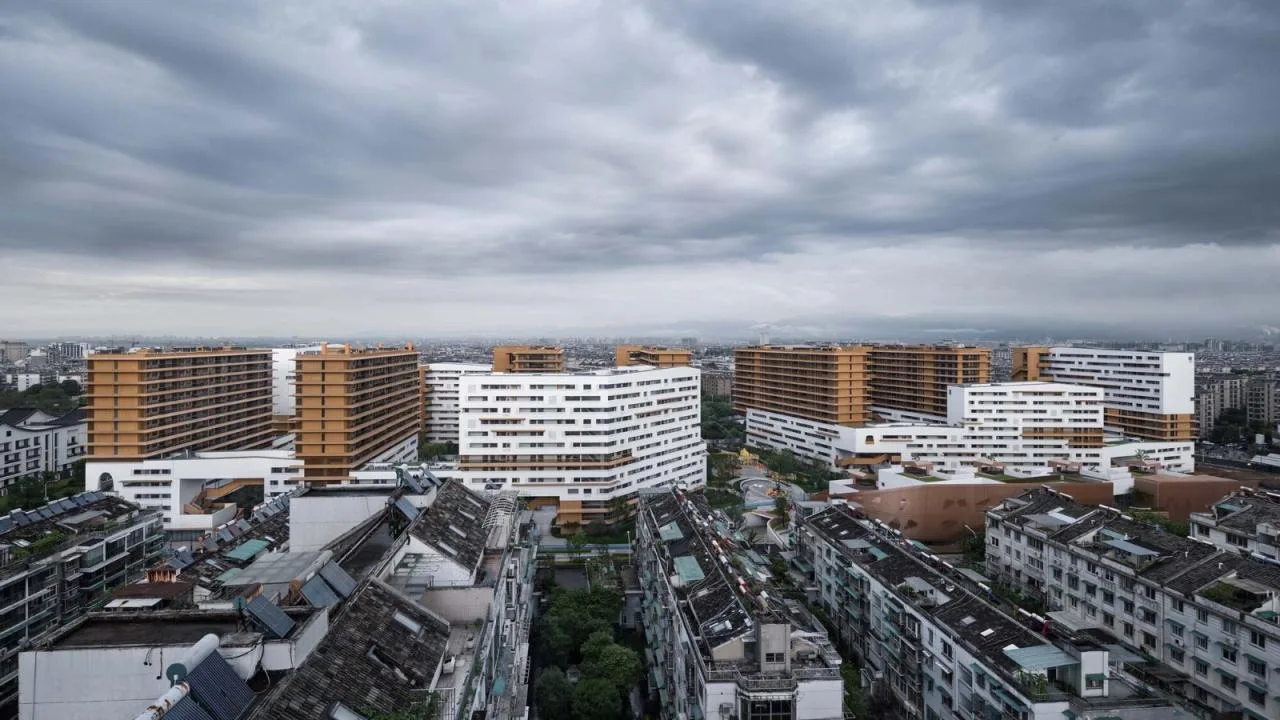
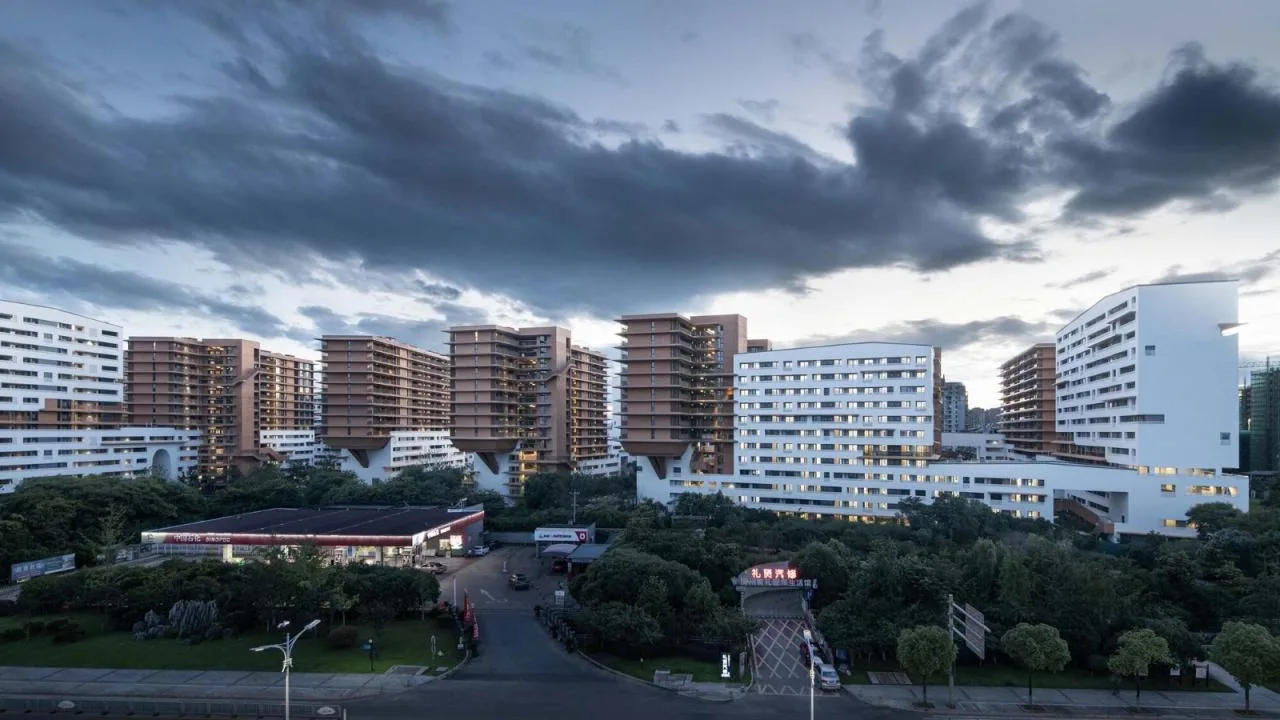
The majority of relocated residents are former factory workers from nearby areas who already share community bonds, forming a foundation of an “acquaintance society.” Besides meeting economic and technical goals such as a high plot ratio, a key focus has been to create a new home that fosters ongoing emotional connections and offers a dignified living environment.
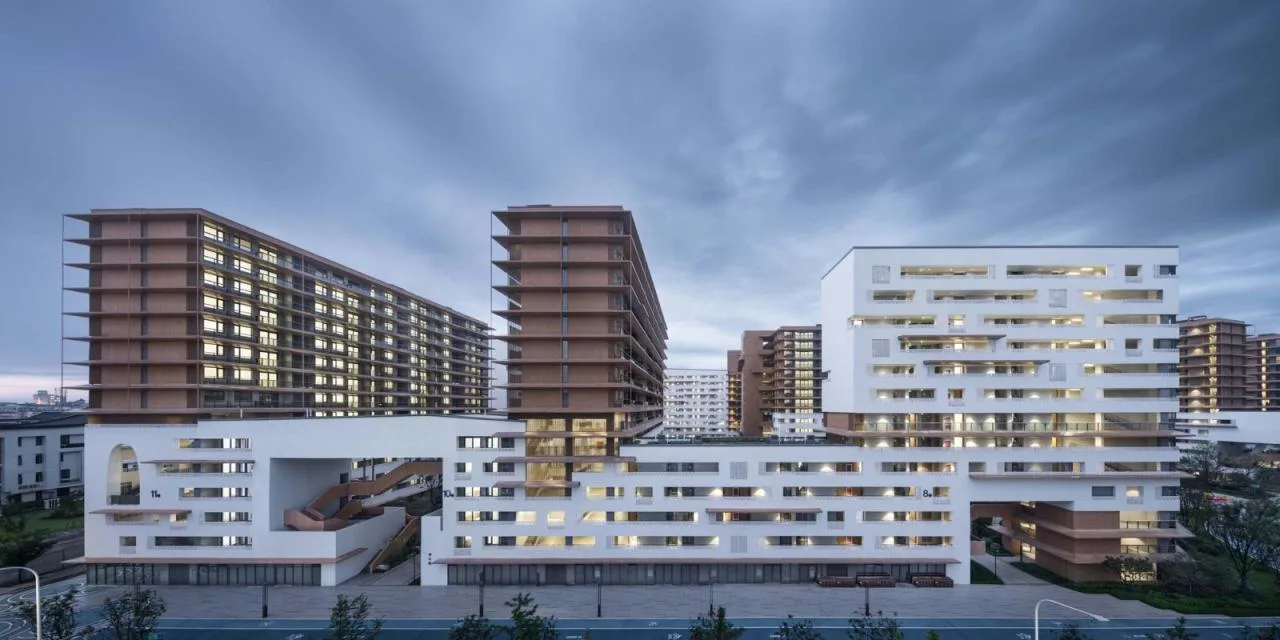
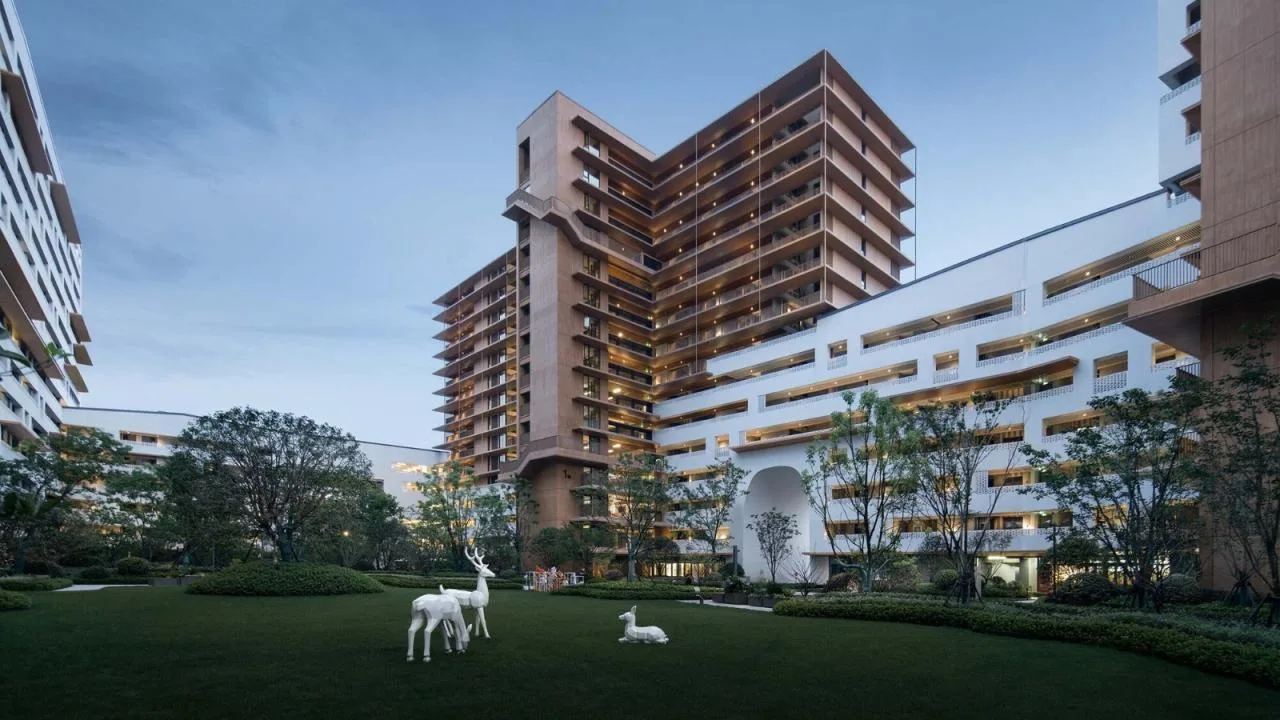
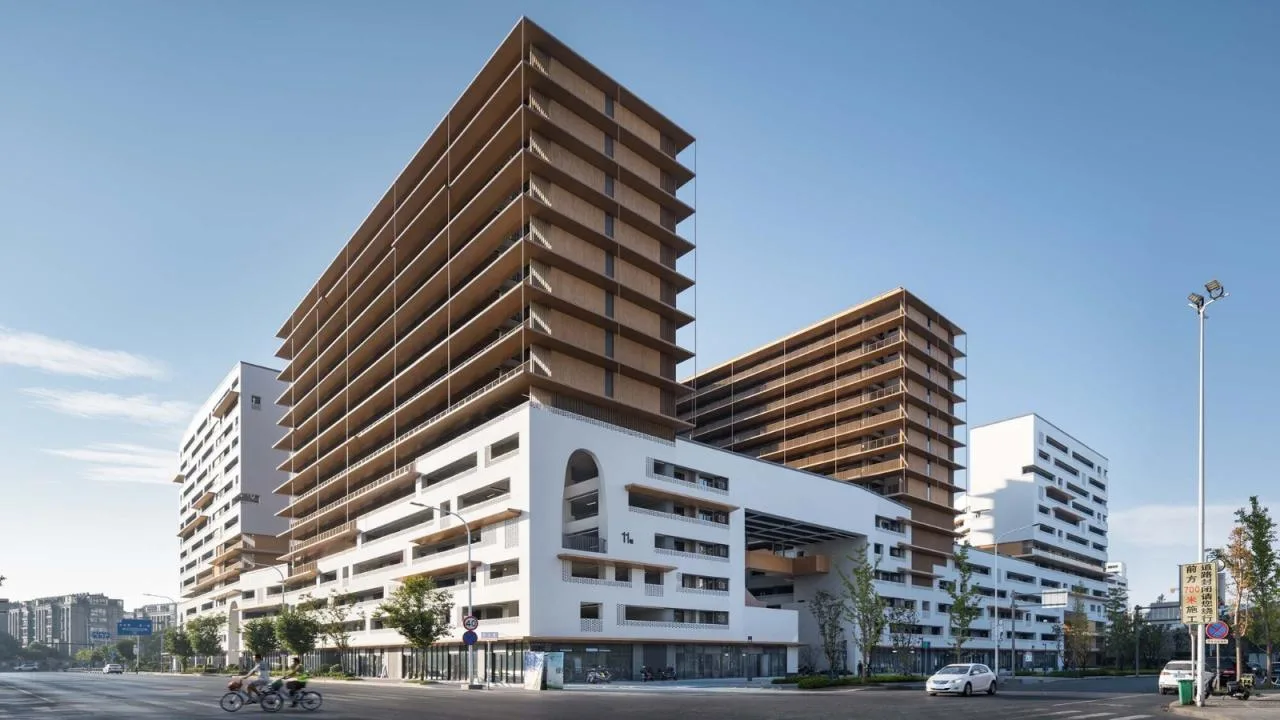
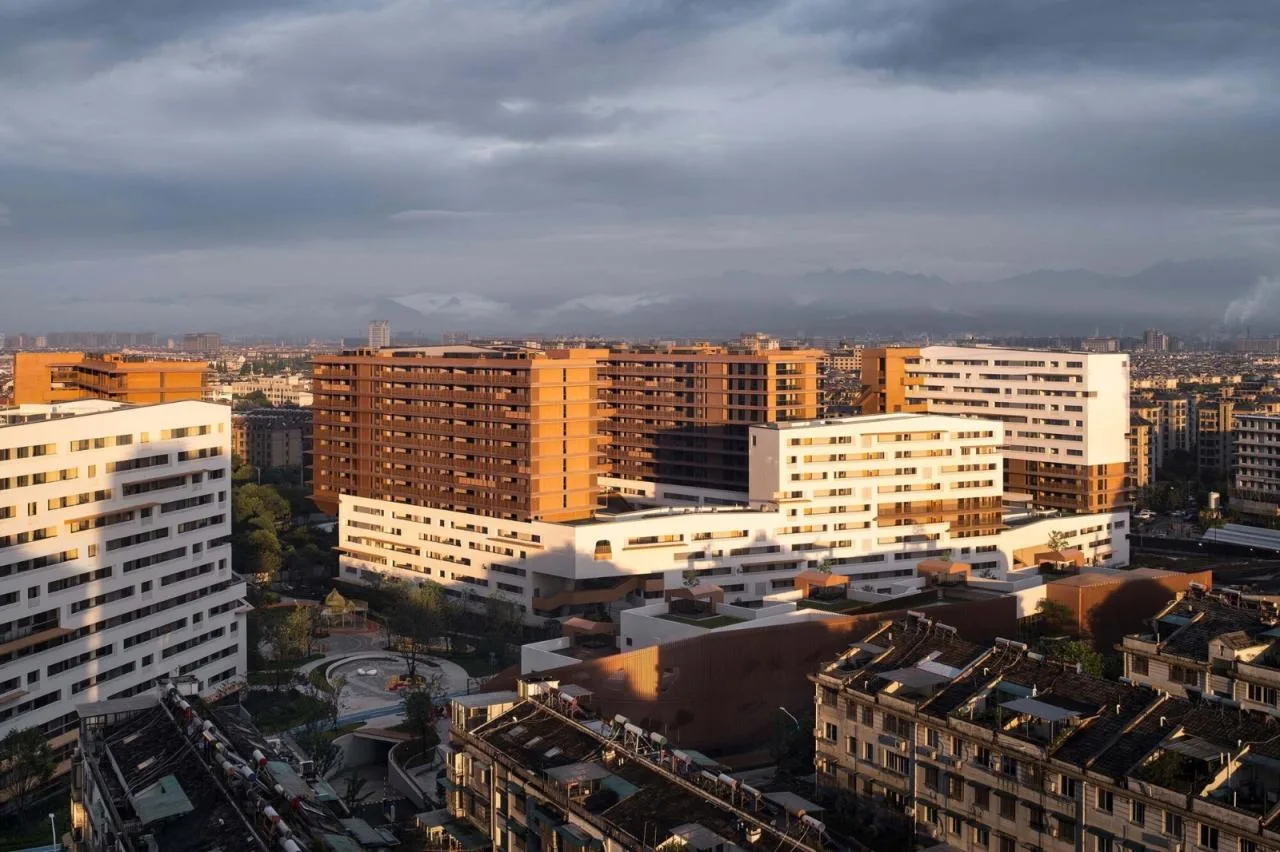
The residential clusters are enclosed, with resettlement housing positioned centrally within the community. While these units do not have prime river views like commercial housing, they benefit from proximity to the neighborhood center and kindergarten on the west side, and the city park on the east, ensuring convenient living and a unique urban landscape.
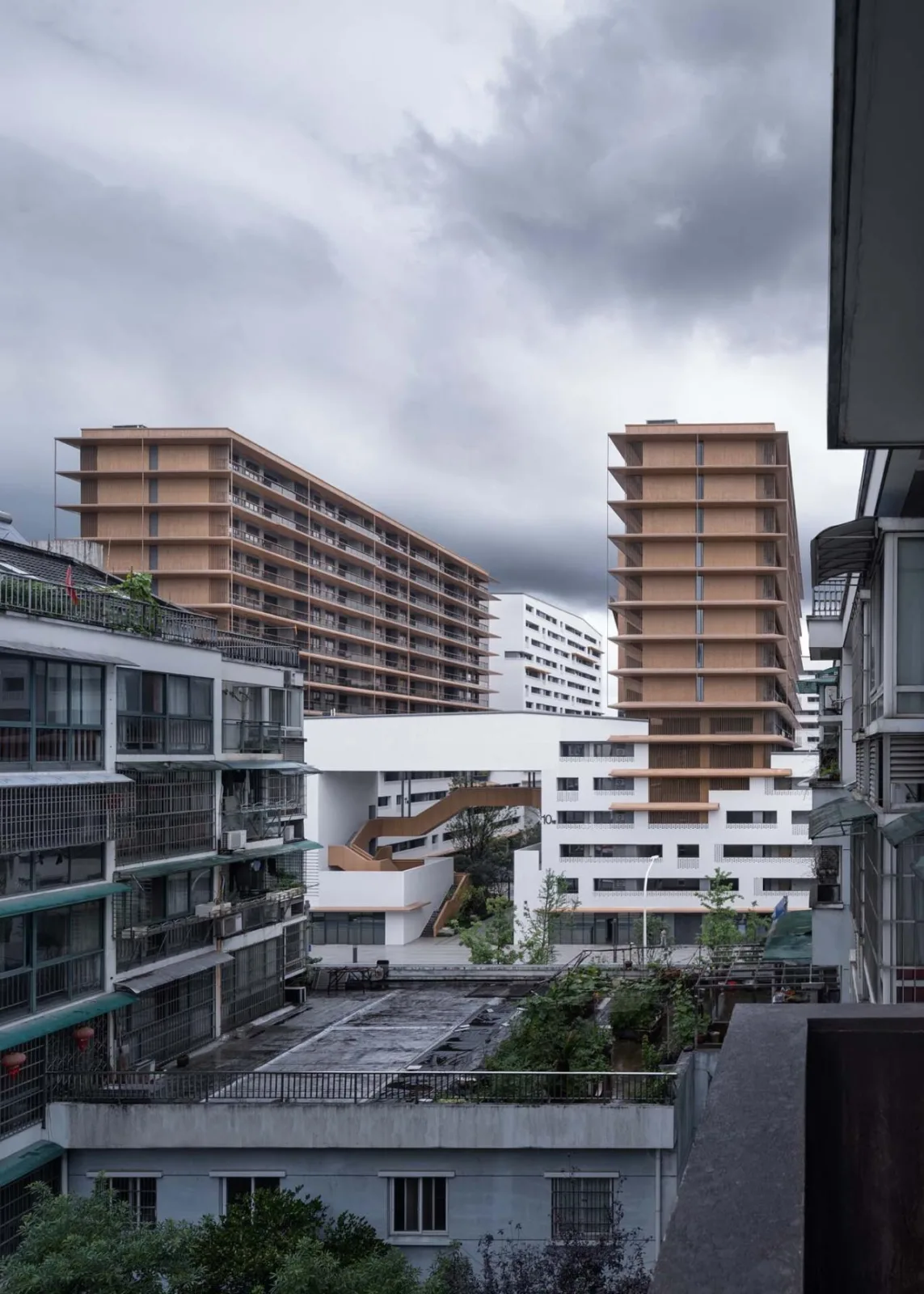
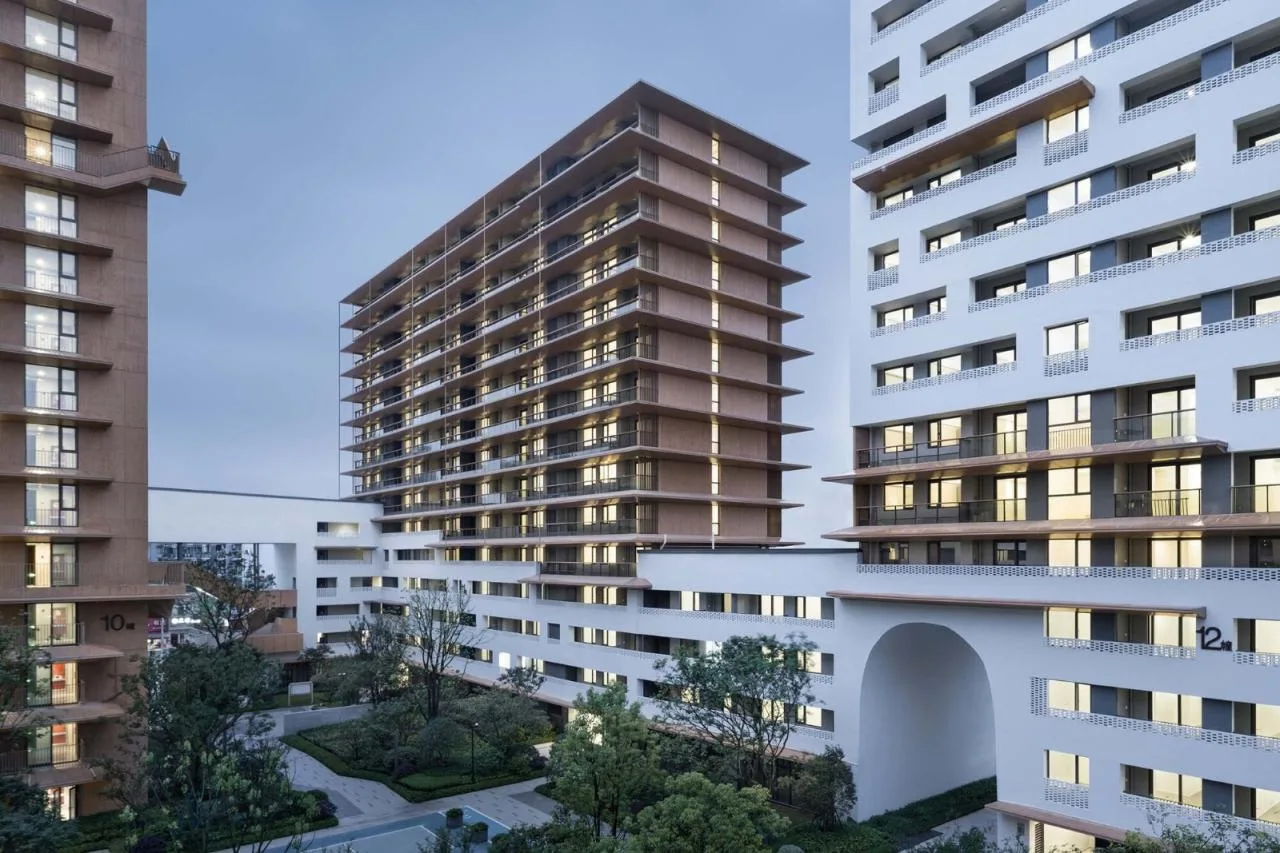
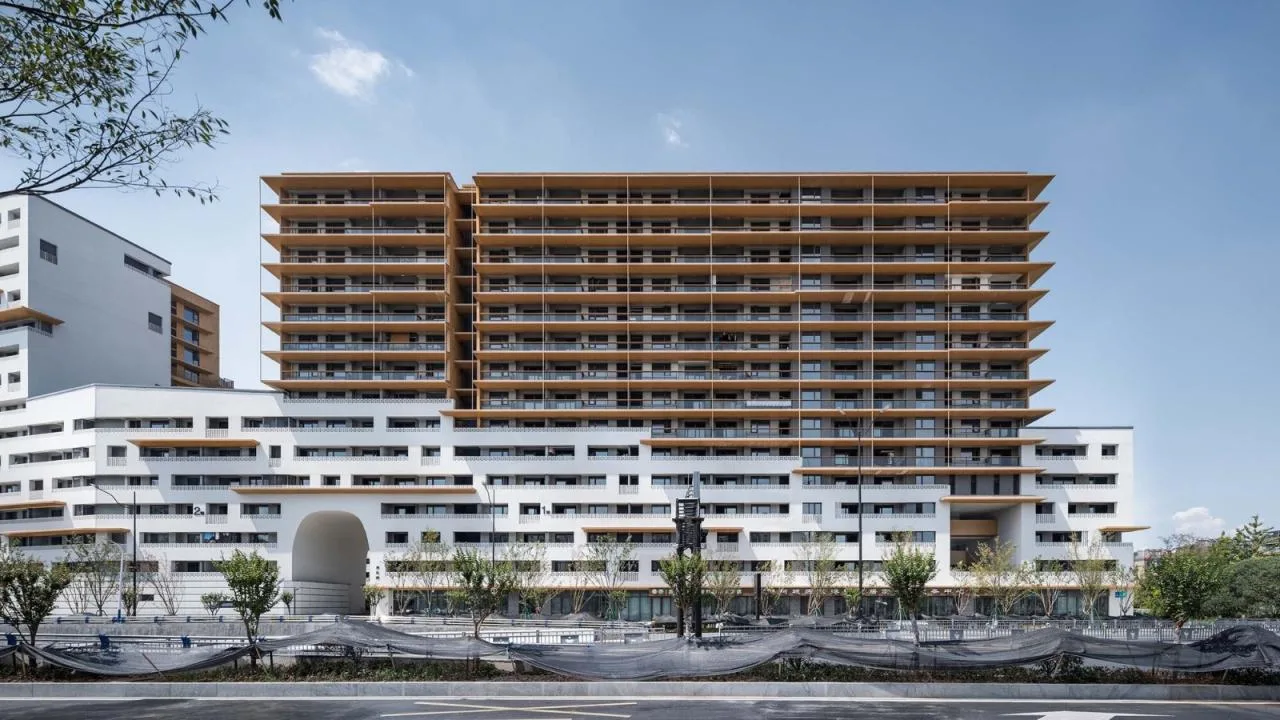
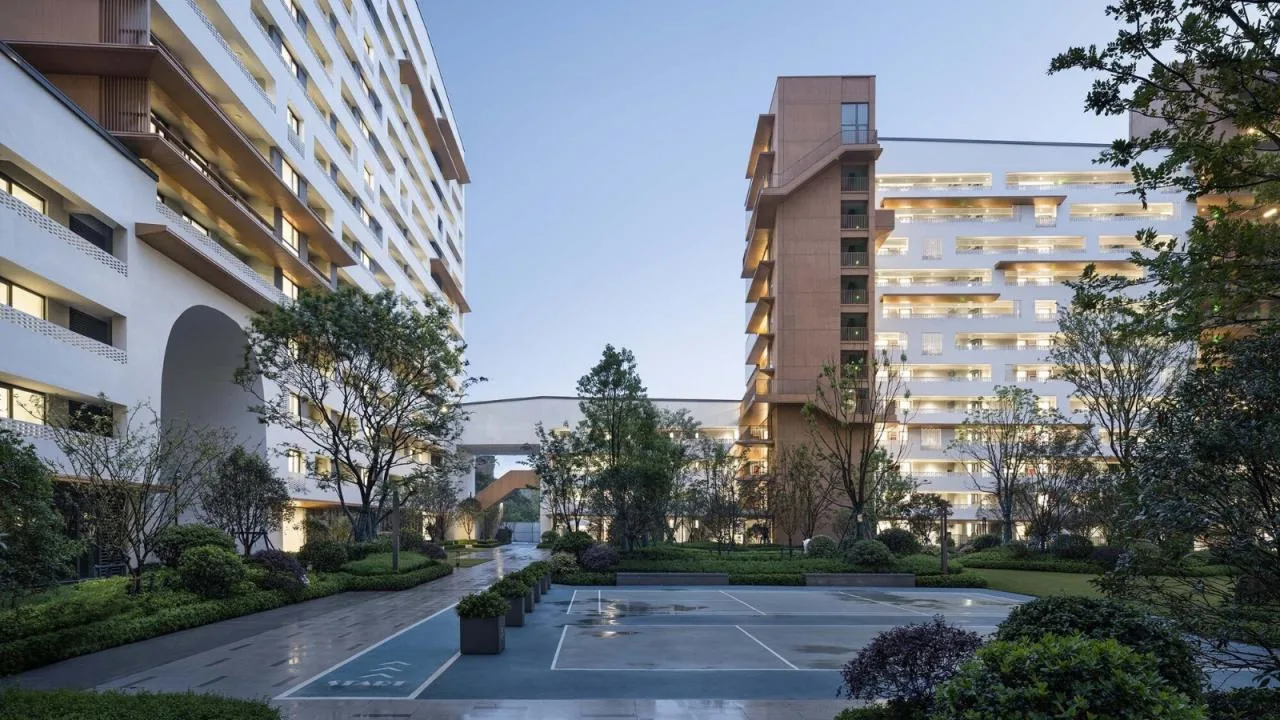
Breaking away from the monotony of conventional commercial housing’s linear layouts, this community creates an inward-facing space that fosters a stronger sense of belonging through its enclosed design. To ensure the smooth allocation of resettlement units, the public preference for north-south orientation is respected. Resettlement housing is arranged along the north and south edges of the cluster, while public rental units and community service facilities are positioned east-west.
This mixed-use, fully dimensional spatial layout encourages more opportunities for visual and social interaction. It not only helps neighbors get to know each other but also establishes a “street eye” effect, enhancing community security.
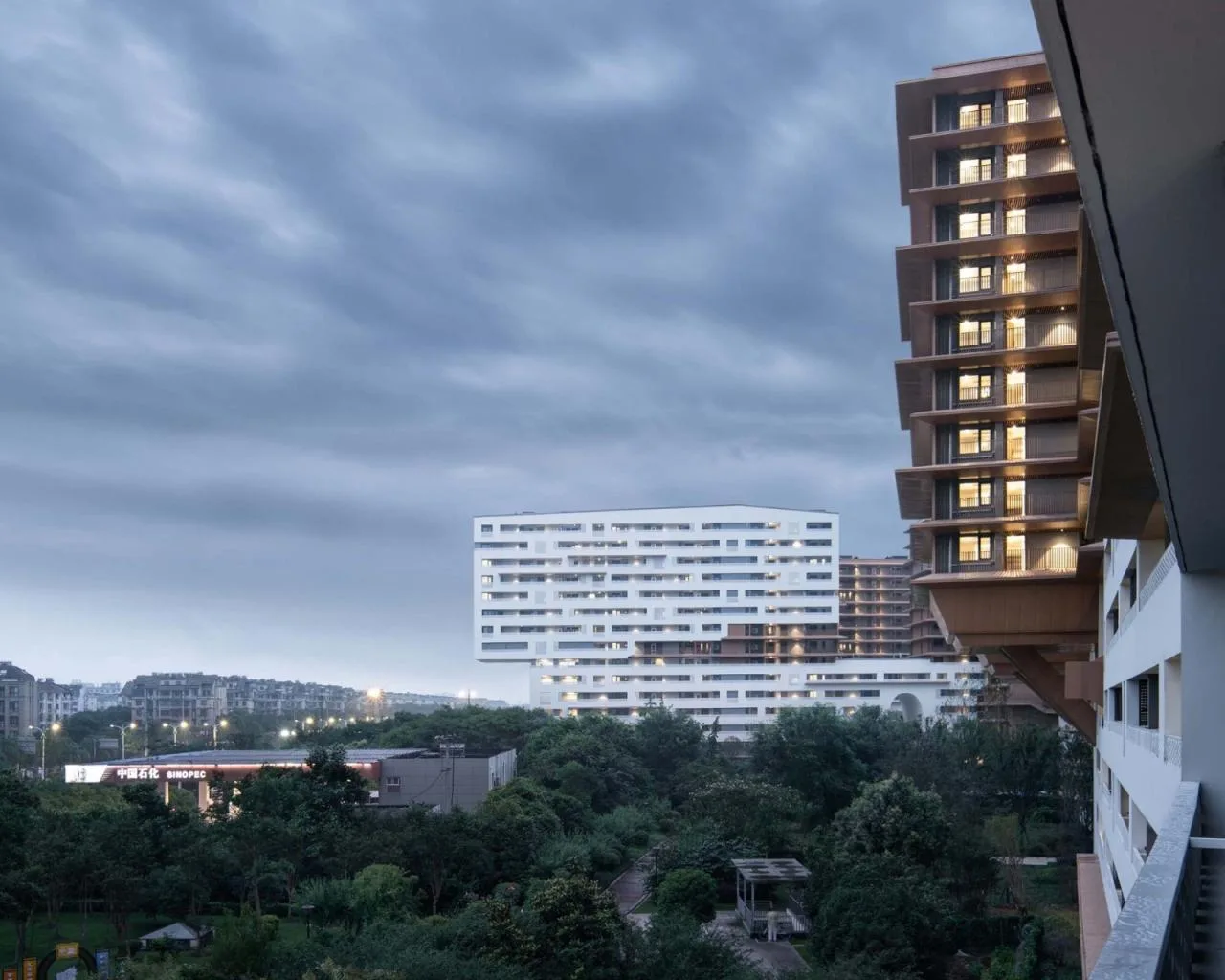
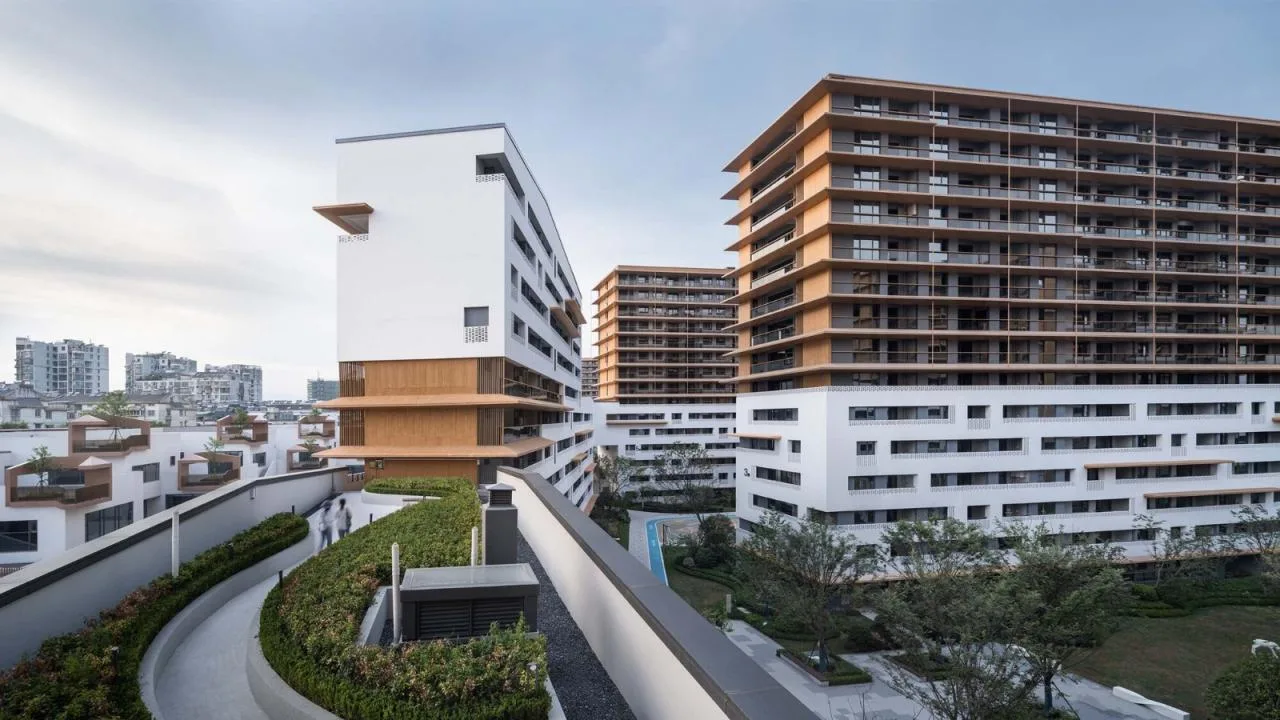
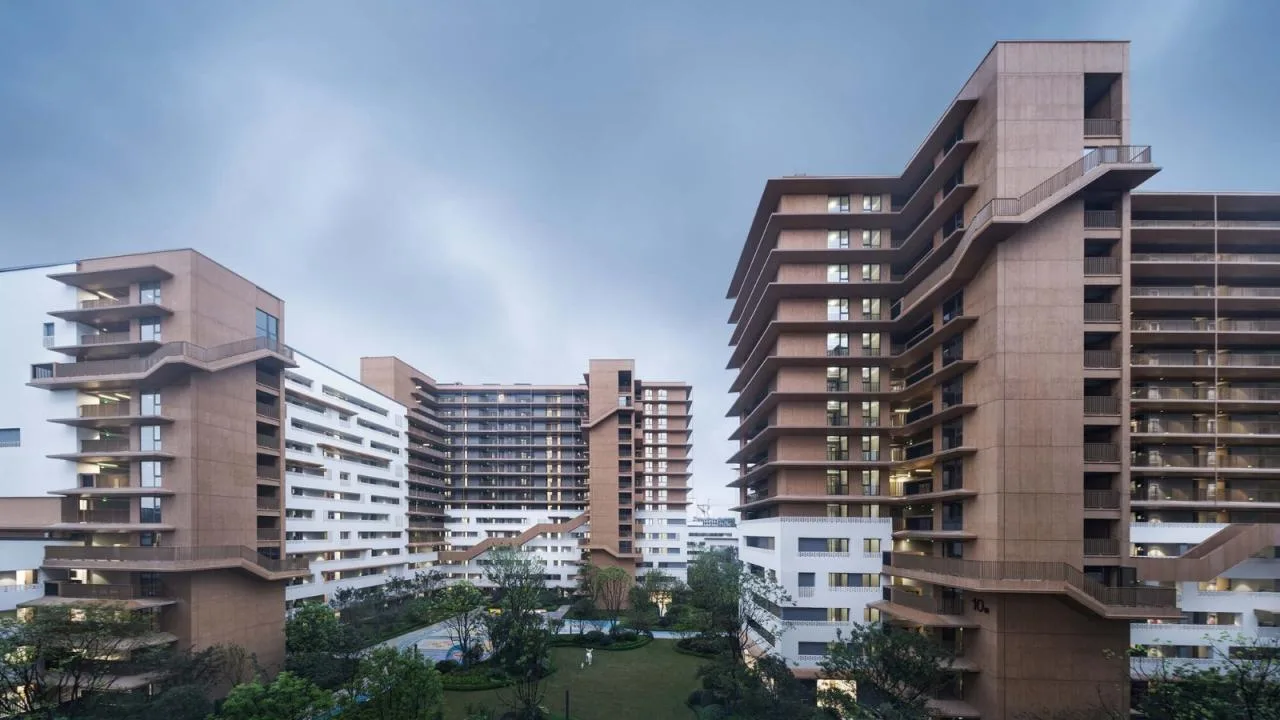
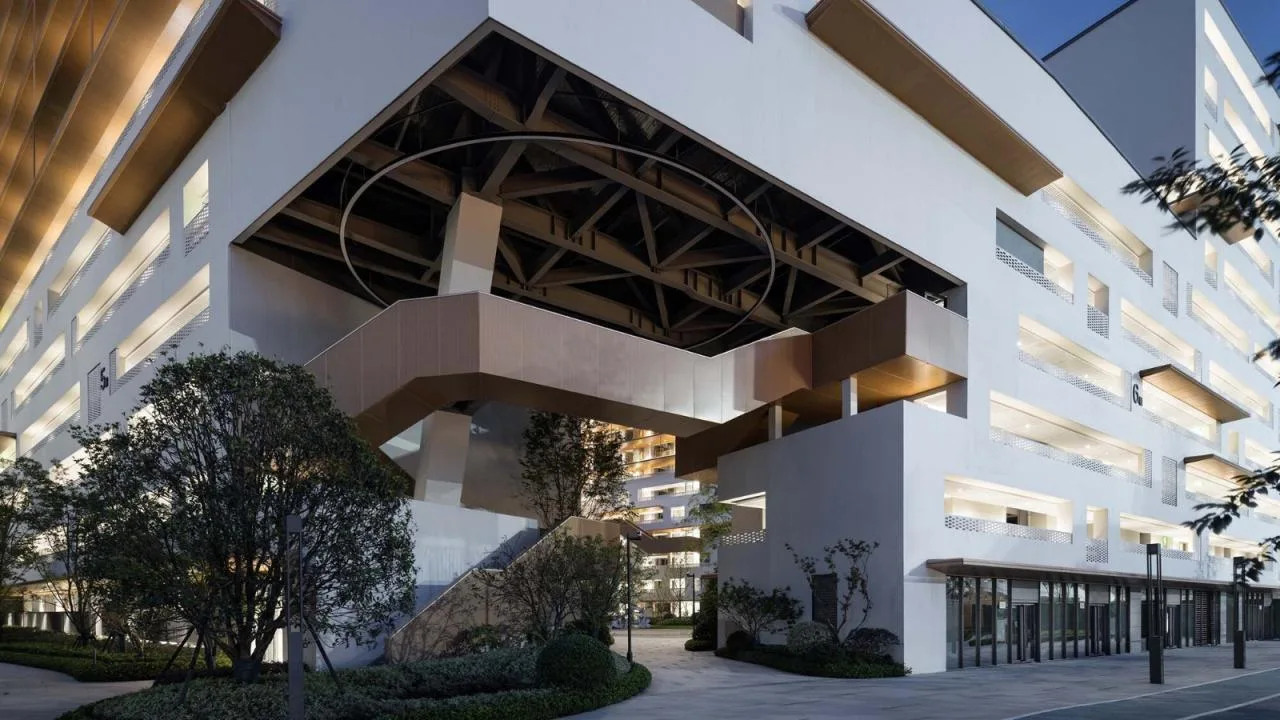
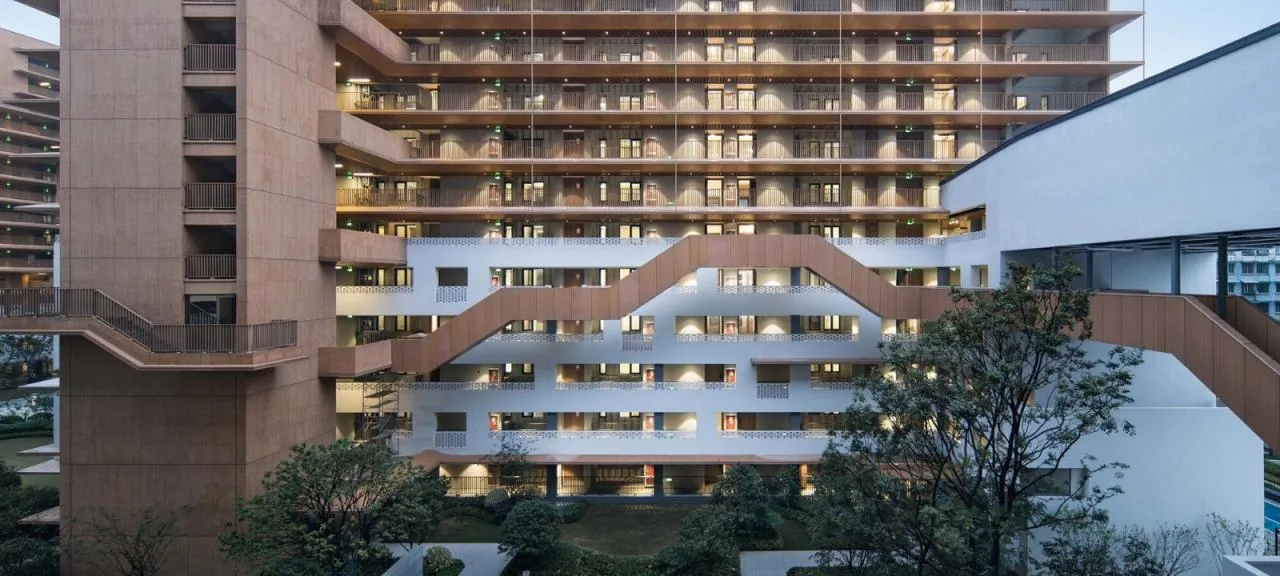
To foster social interaction, a multi-level, interconnected three-dimensional corridor system has been designed on floors 1 through 7, connecting public spaces across levels. This “three-dimensional neighborhood” shortens distances between units and floors, softening the scale of high-rise living.
Moreover, it expands interactions beyond the ground level, creating new activity spaces on upper floors and rooftops, enriching the community experience.
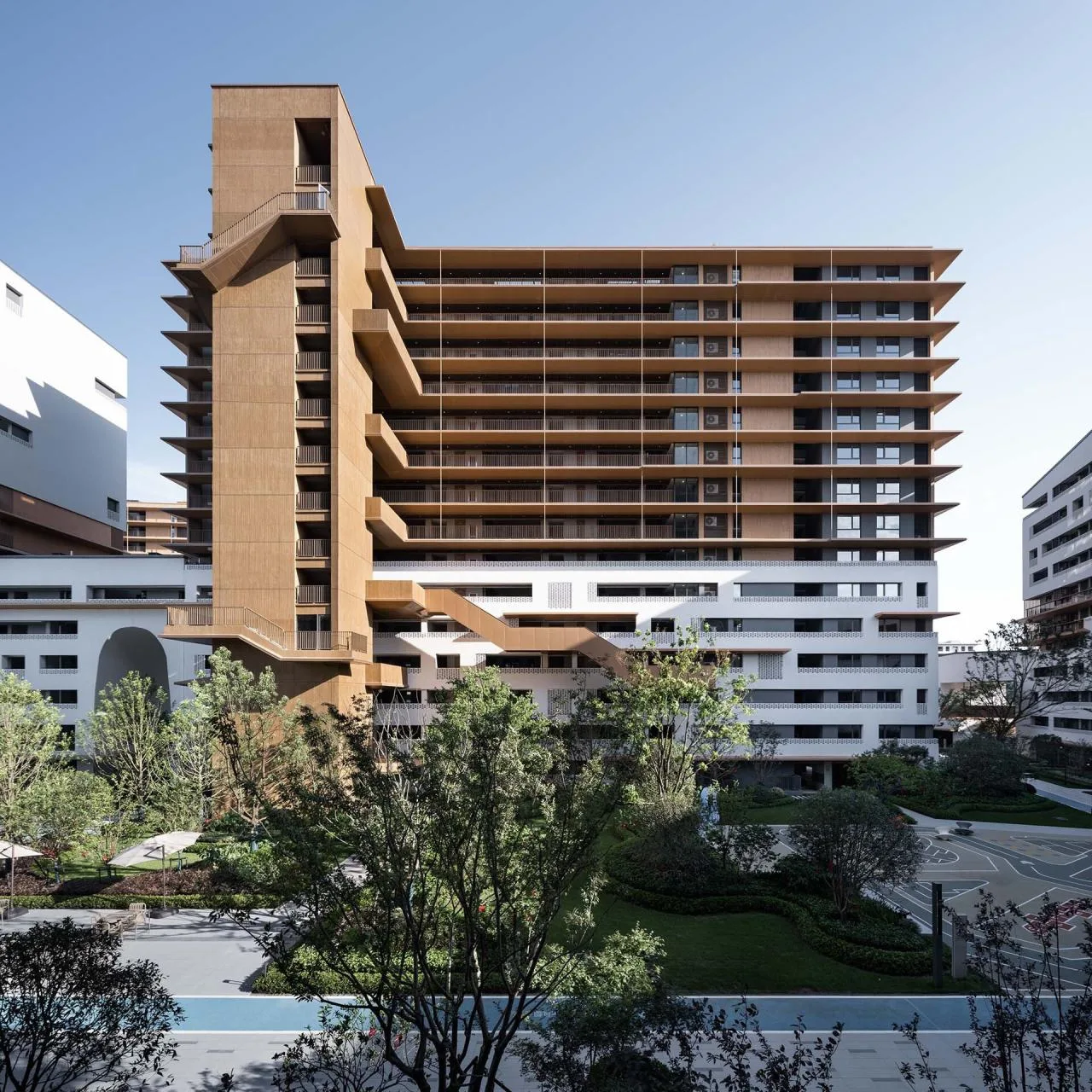
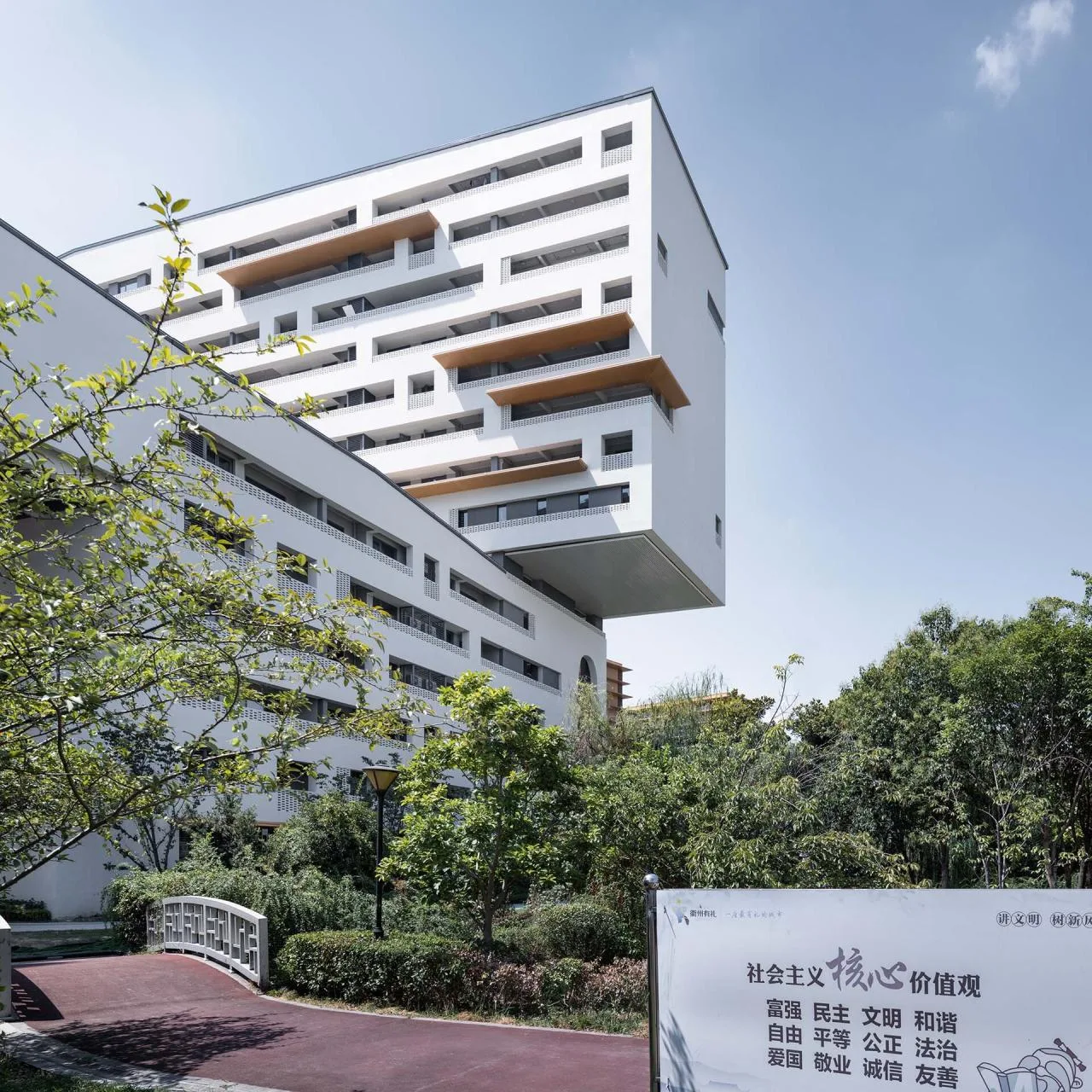
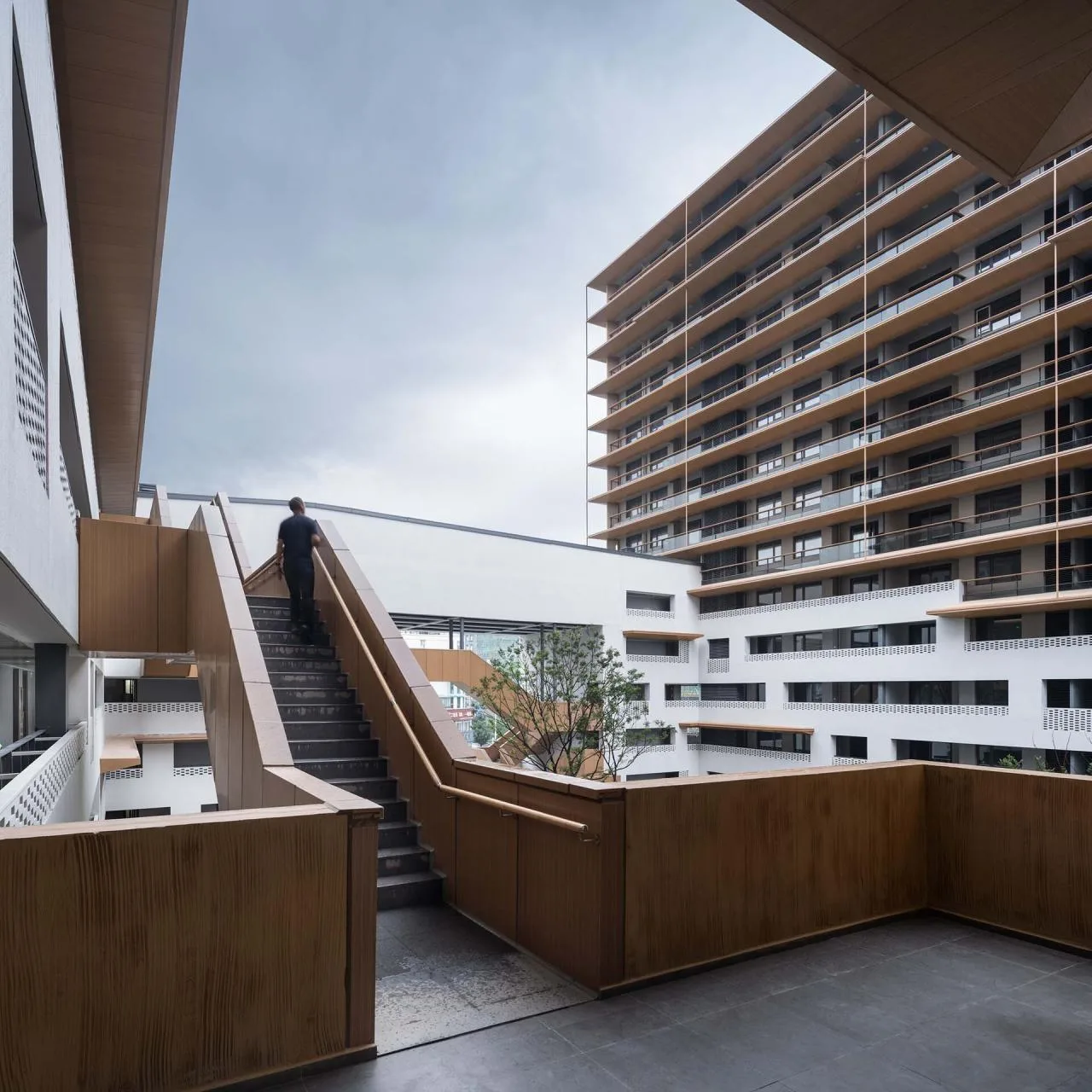
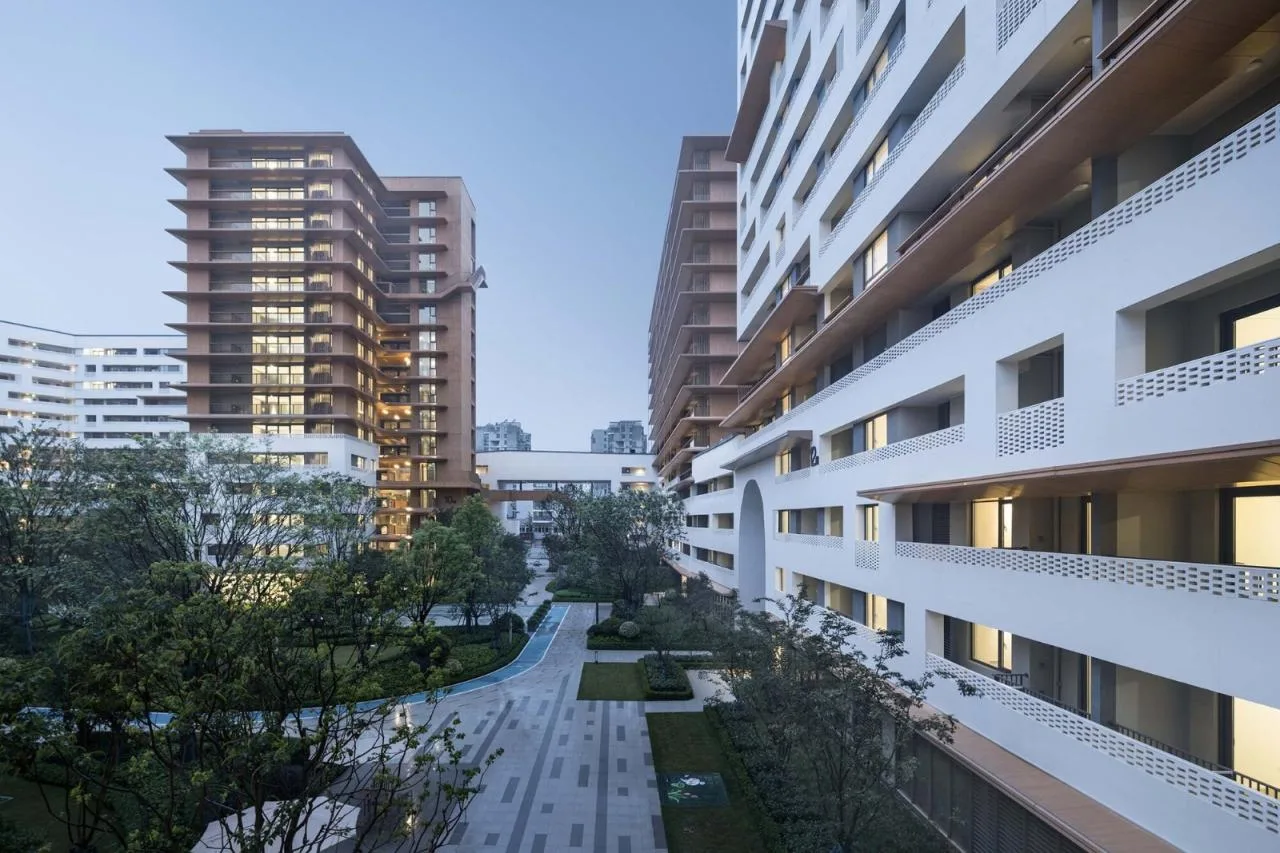
The combination of resettlement and public rental housing layouts encourages communication and includes nine different unit types, ranging from 50 to 130 square meters. To enhance the living experience, double- and triple-bay balconies are frequently incorporated to maximize sunlight exposure, urban views, and access to inner courtyards, allowing for sunlight from both north and south or east and west.
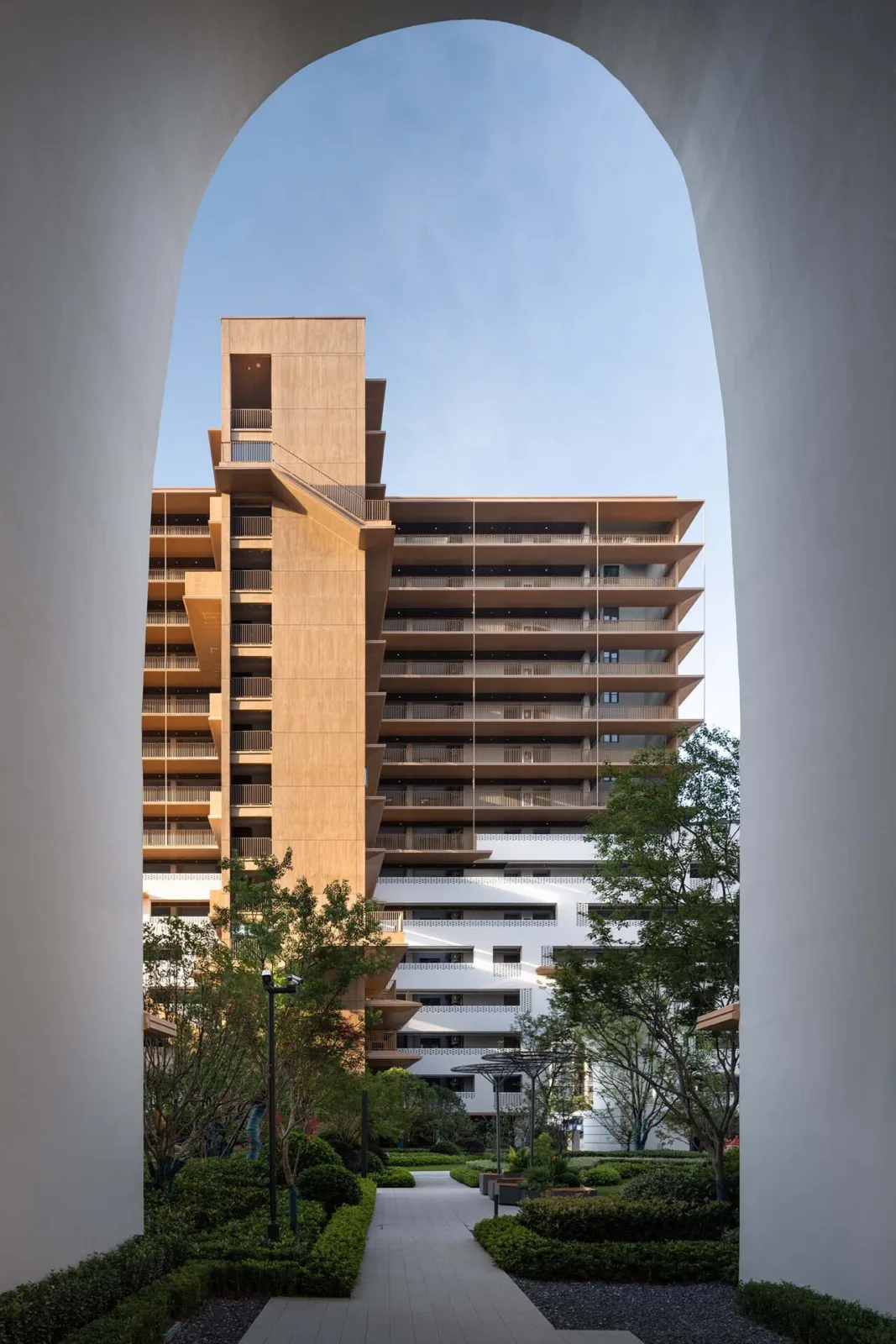
Given the acquaintance-based community, corridor-style residential layouts with 4 to 6 households per floor are used. This approach meets high plot ratio requirements while offering flexibility in combining different unit types, resulting in more social and activity spaces. Some core tubes are positioned externally, improving ventilation and creating larger platform spaces connected to outer corridors, providing residents with more opportunities to gather and socialize.
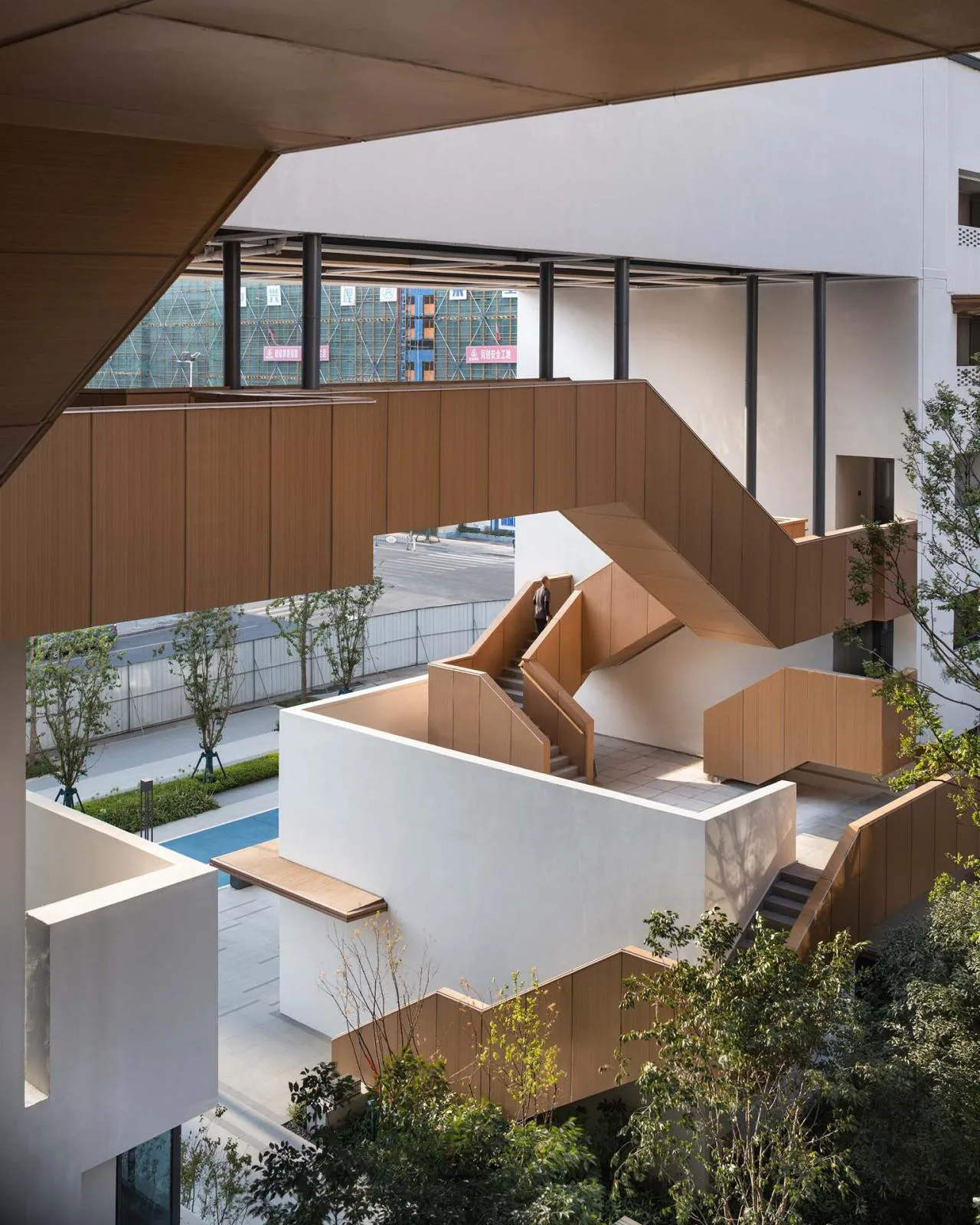
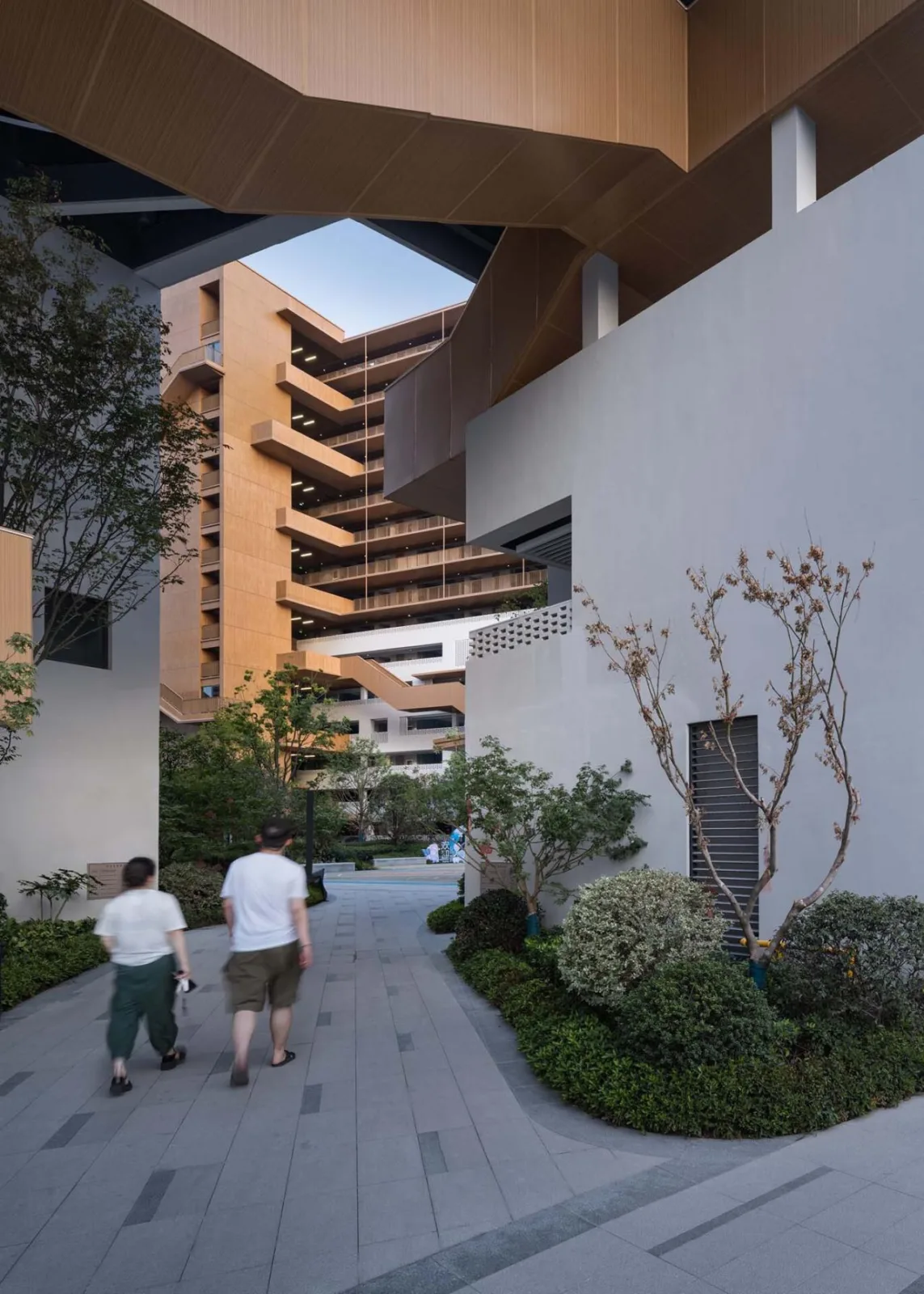
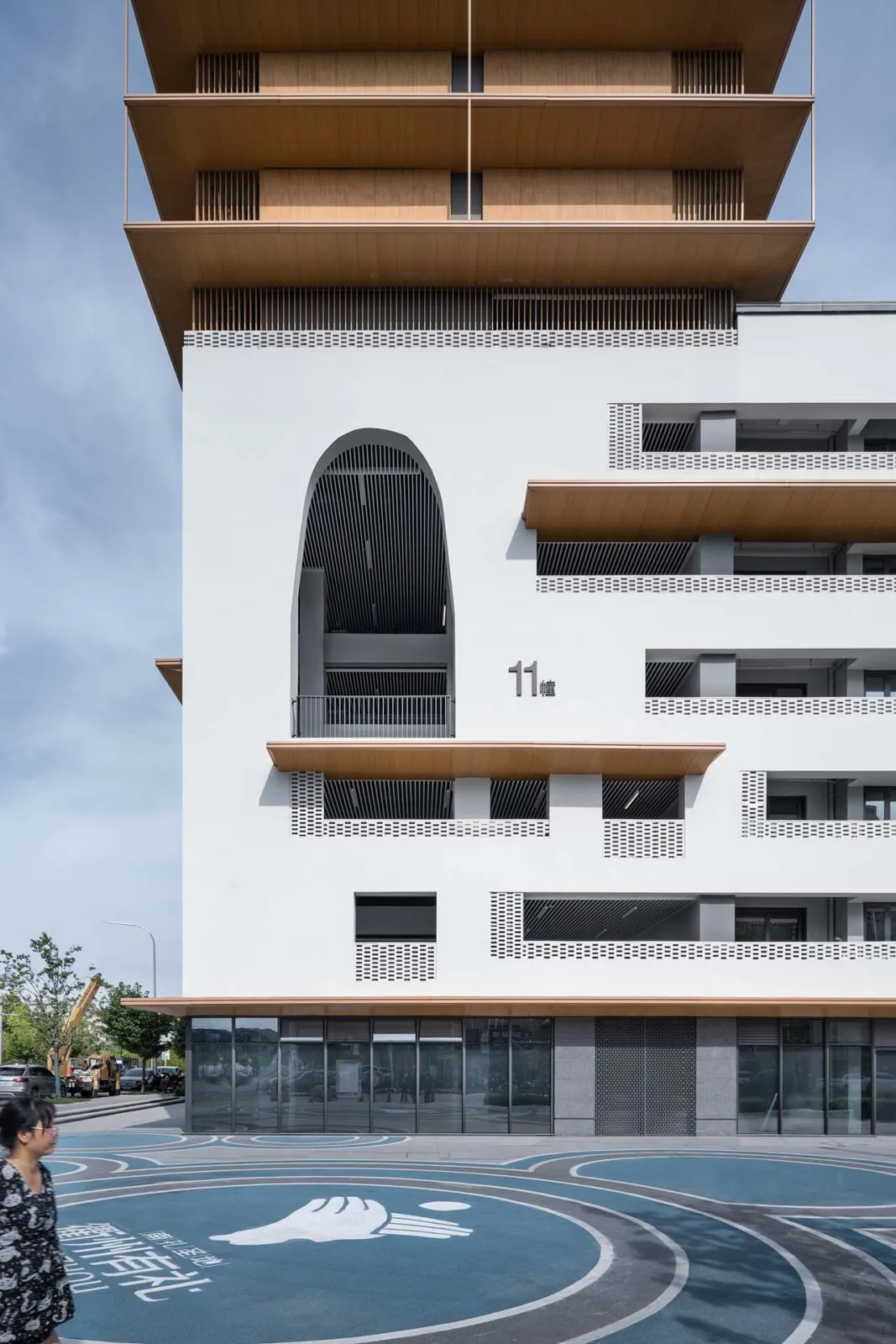
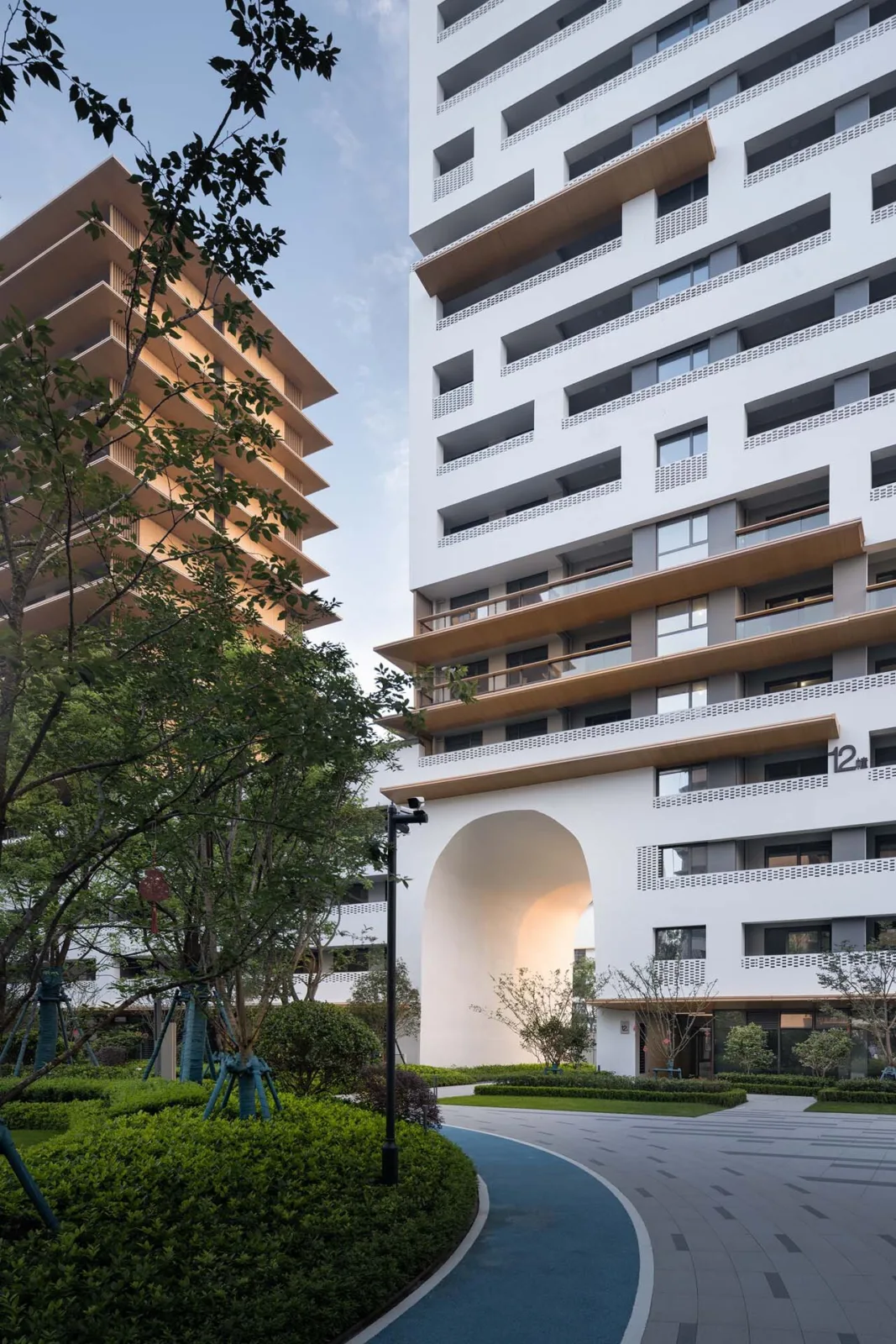
To create a more intimate and comfortable scale, the facade design uses white and wood-grain paint to differentiate the upper and lower floors of the seven-story buildings. The east-west facades feature prefabricated hollow bricks, employing cost-effective, energy-saving methods for shading and insulation.
Inspired by Quzhou’s traditional architecture and ancient city gates, the design incorporates large arched gateways that enhance the sense of arrival for residents. Horizontal eaves on the high-rise facades recall the traditional “old house with eaves” style, also serving functional roles such as waterproofing and rain protection.
The Quzhou Lixian Future Community resettlement housing was completed and handed over in August 2022, receiving positive feedback from residents. As this project differs from conventional commercial developments, ongoing monitoring will assess usage patterns, spontaneous new lifestyles, and the efficiency and maintenance costs of public areas to validate or refine the design approach.
Project Information
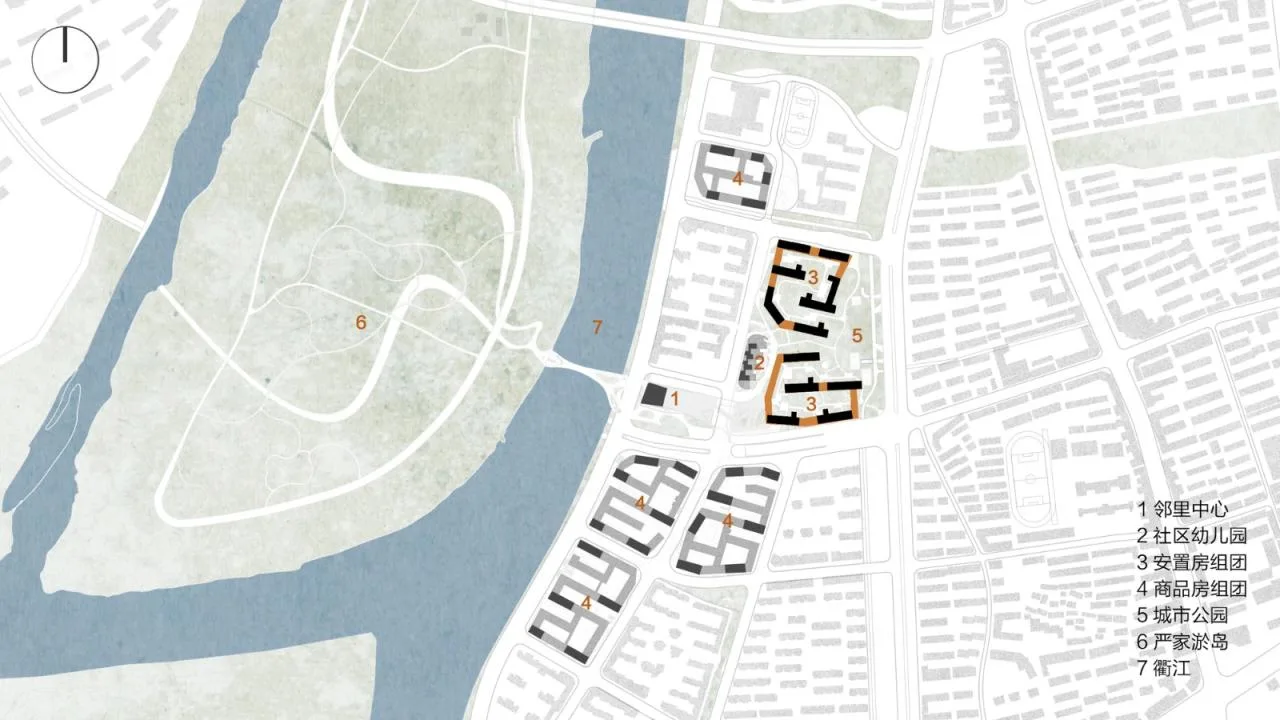
△ Base analysis diagram
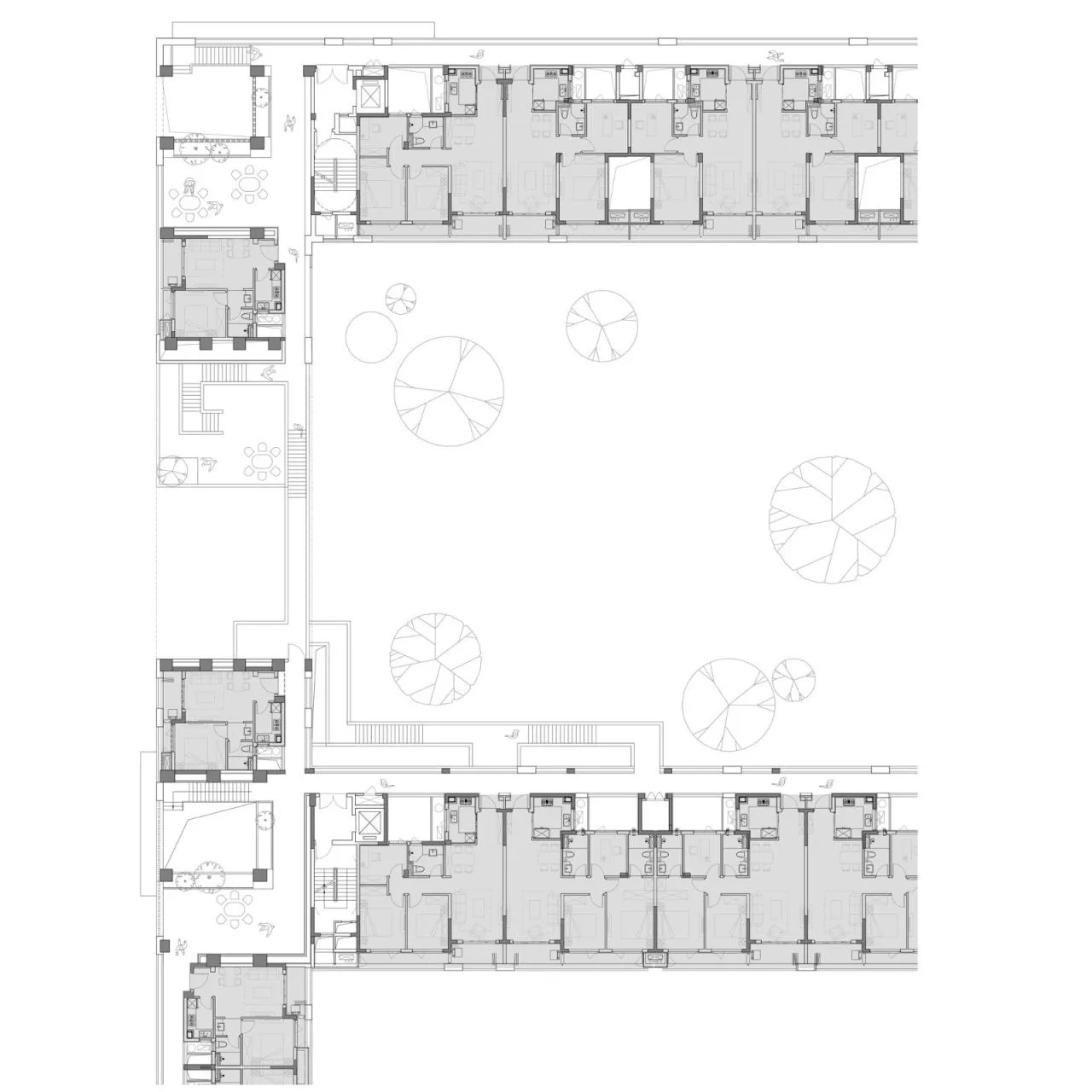
△ Site plan
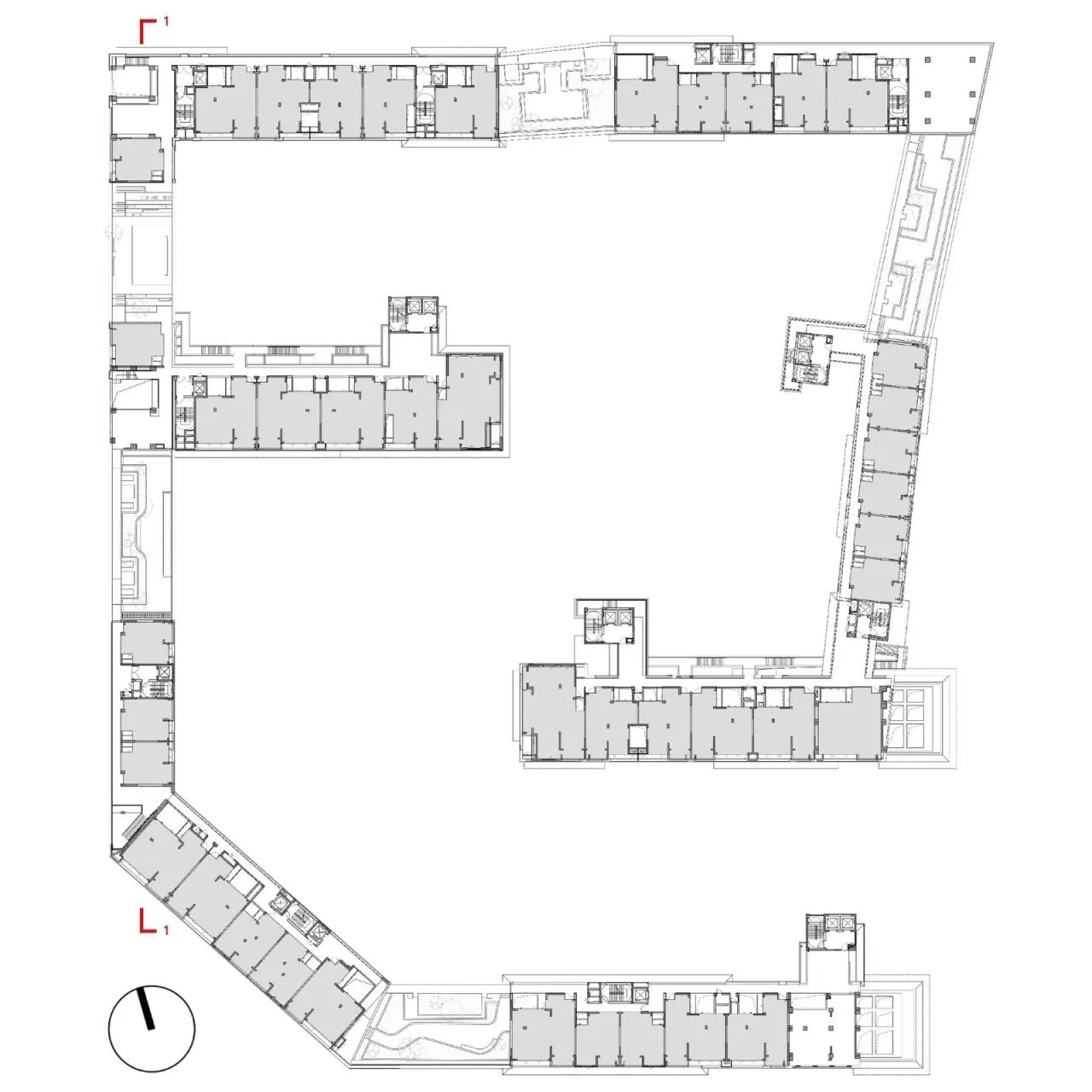
△ Site plan
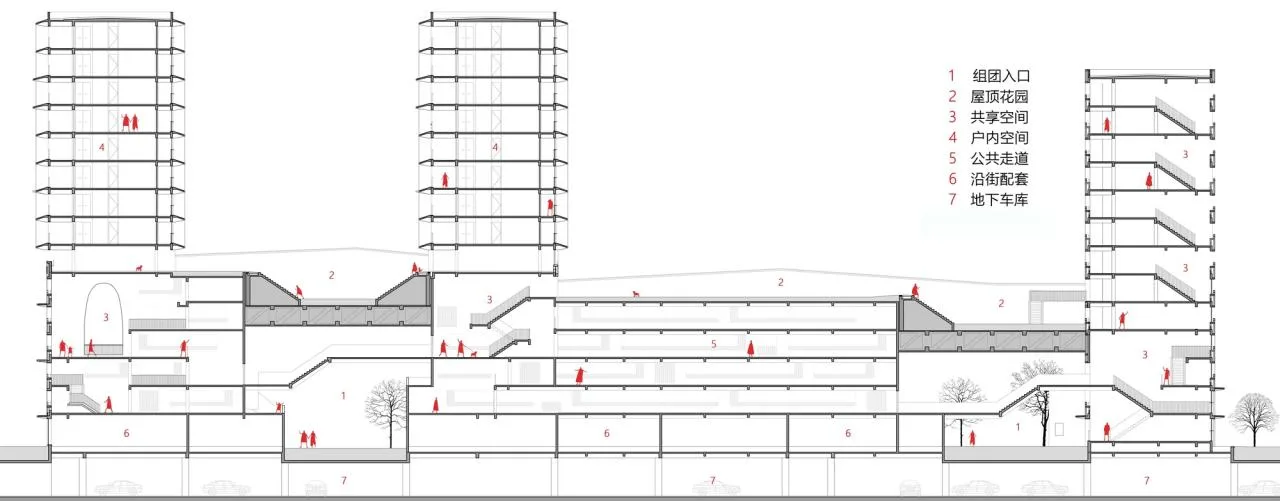
△ Section diagram
Project Details
Architect: Gad
Area: 194,900 m²
Year: 2022
Photographer: Hou Bowen
Manufacturers: Xinyi Glass, Depway, Jiangsu Hengmei, Zhejiang Zhouxu
Project Director: Zhang Wei
Design Team: Wu Xuan, Huang Huan (Architecture), Jie Lei (Architecture), Li Chun (Planning)
Planning Team: Zhang Liyang, Xie Hannova, Cheng Yin
Architectural Team: Xiao Jun, Wang Weidong, Zheng Junjie, Lu Jinqing, Lai Xiaoqiong, Ren Kai, Chen Wei, Yu Xingkai, Zhou Honglin, Chen Fengting
Structural Team: Hu Daming, Wu Yingdong, Yao Kaiming, Wang Lijun, Zhu Wei, Lu Zhegang, Guo Junfeng, Shen Xiaodong, Yan Xiaoxiao, Wang Qun, Qian Yao, Tang Yimeng
Water Supply and Drainage Team: Wu Wenjian, Zhang Bin, Gong Hai, Yu Yutao, Shi Jincheng, Shen Xiaowei, Cheng Yongqing
HVAC Team: Cui Daliang, Yang Baojun, Chen Dechuang, Zhong Tianli, Zhang Zhenhuan, Zhang Yanjun
Electrical Team: Tong Xinhong, Jiang Tao, Chen Jinhan, Yang Guanghao, Liu Rong
Location: Quzhou














Must log in before commenting!
Sign Up