
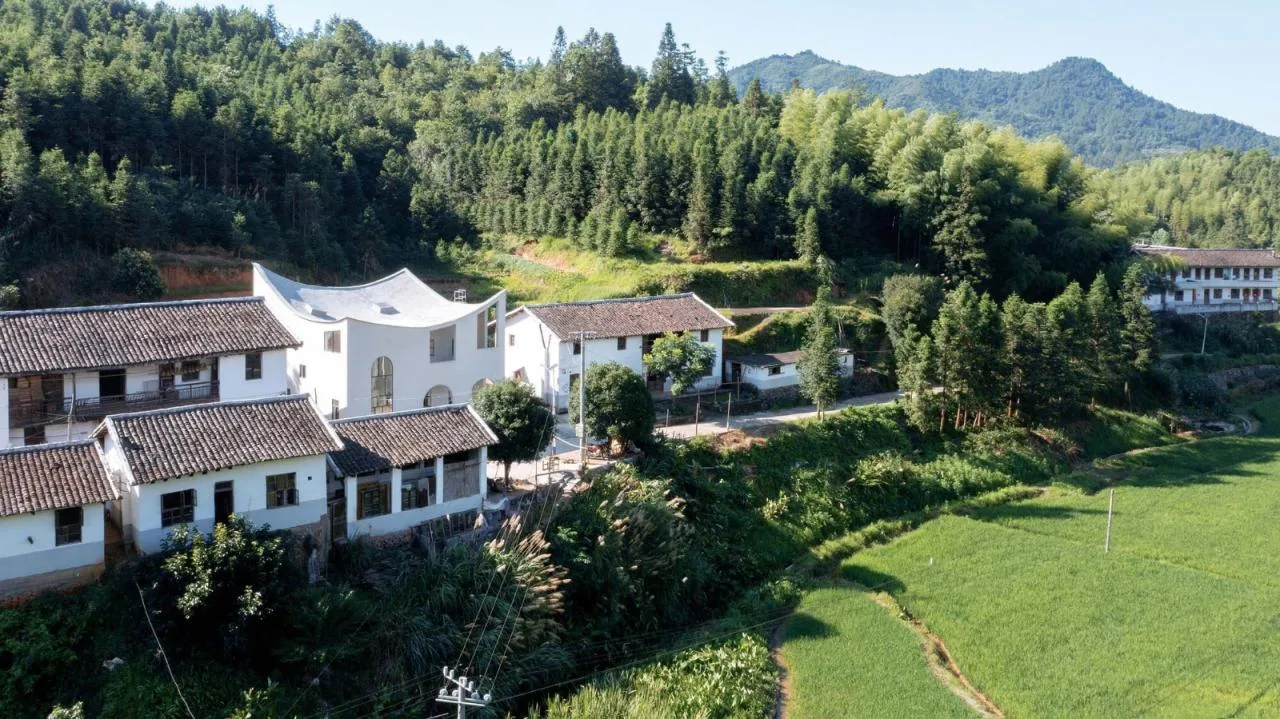
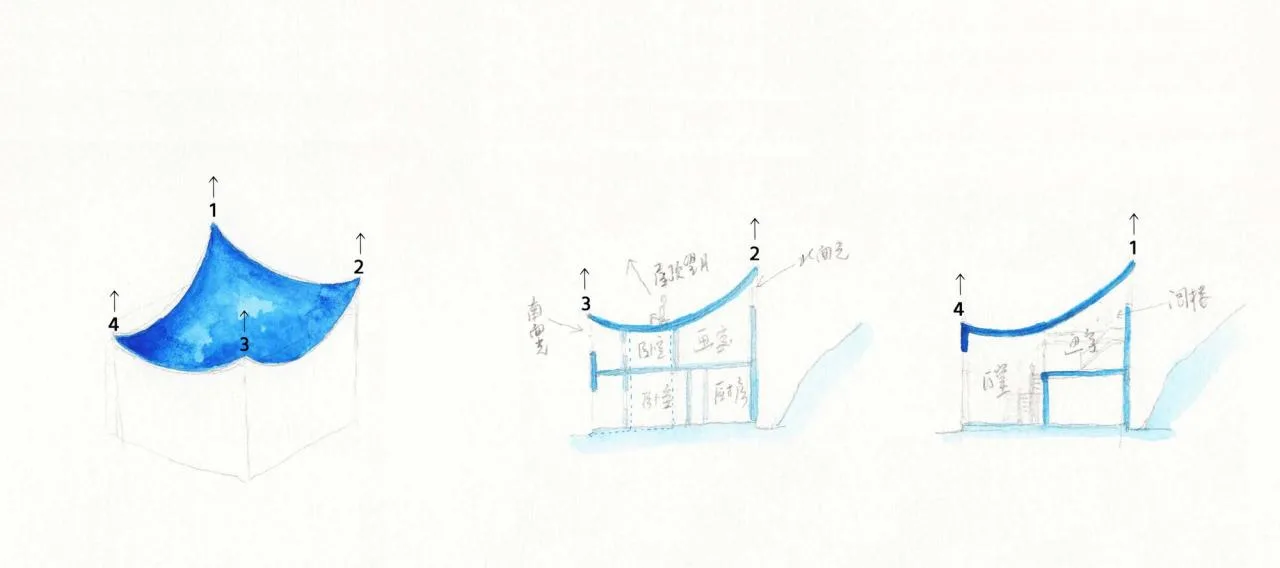
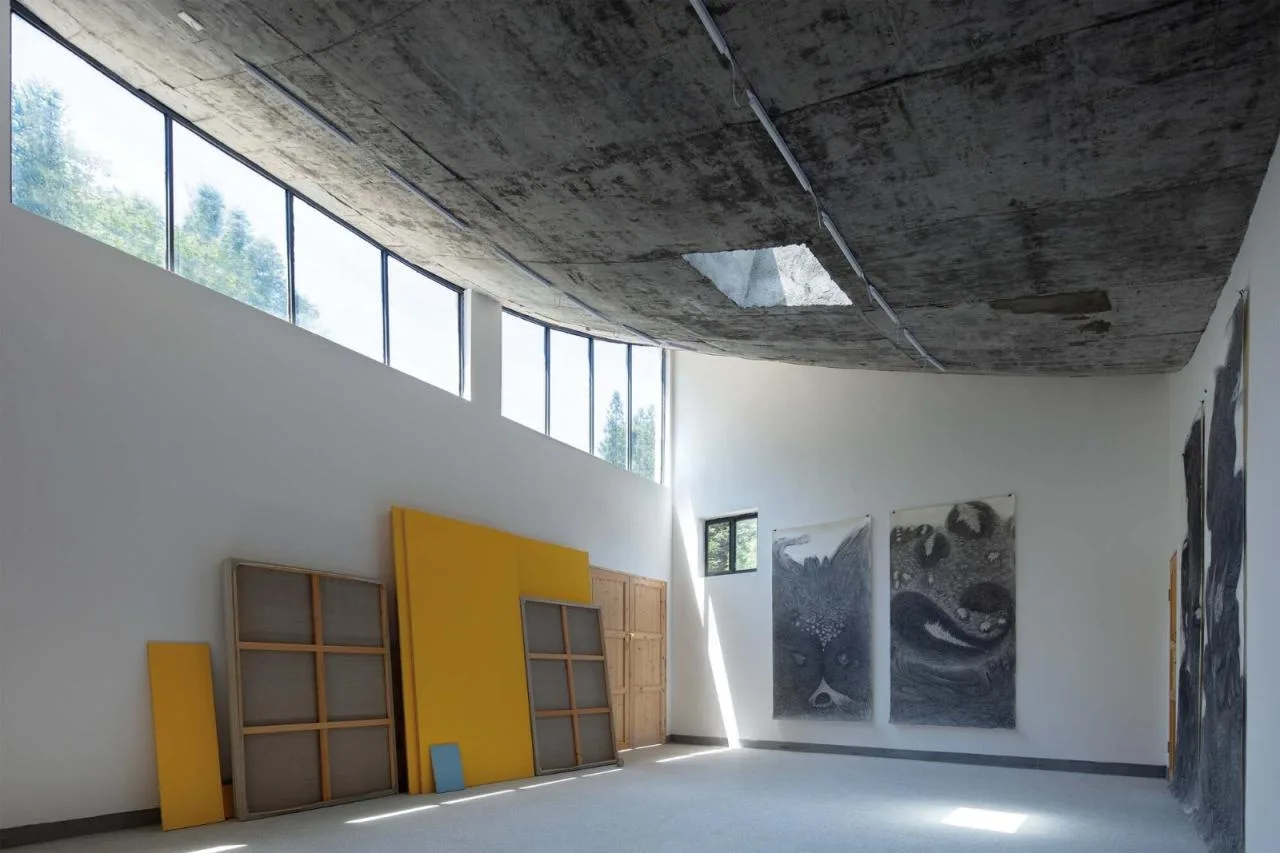
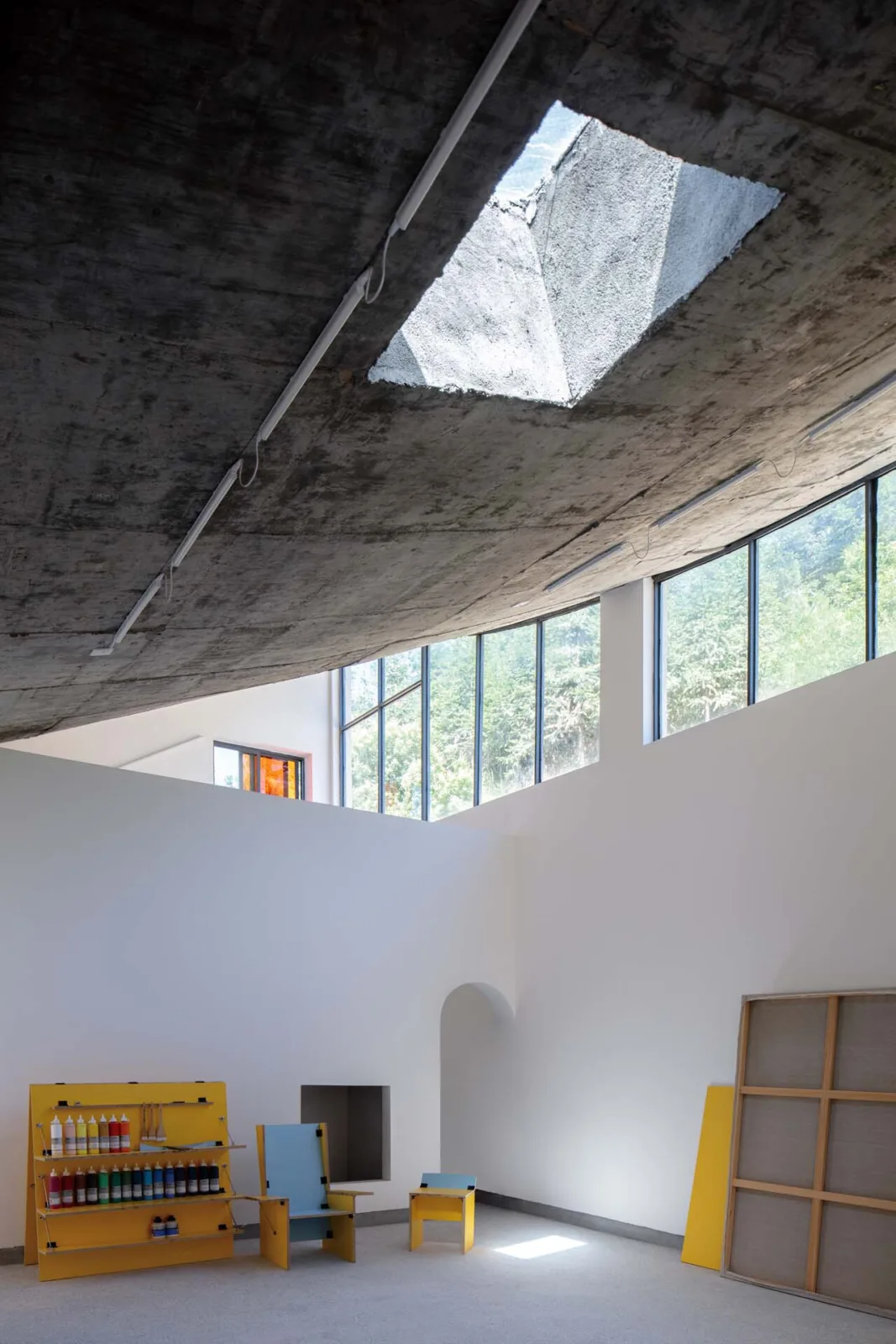
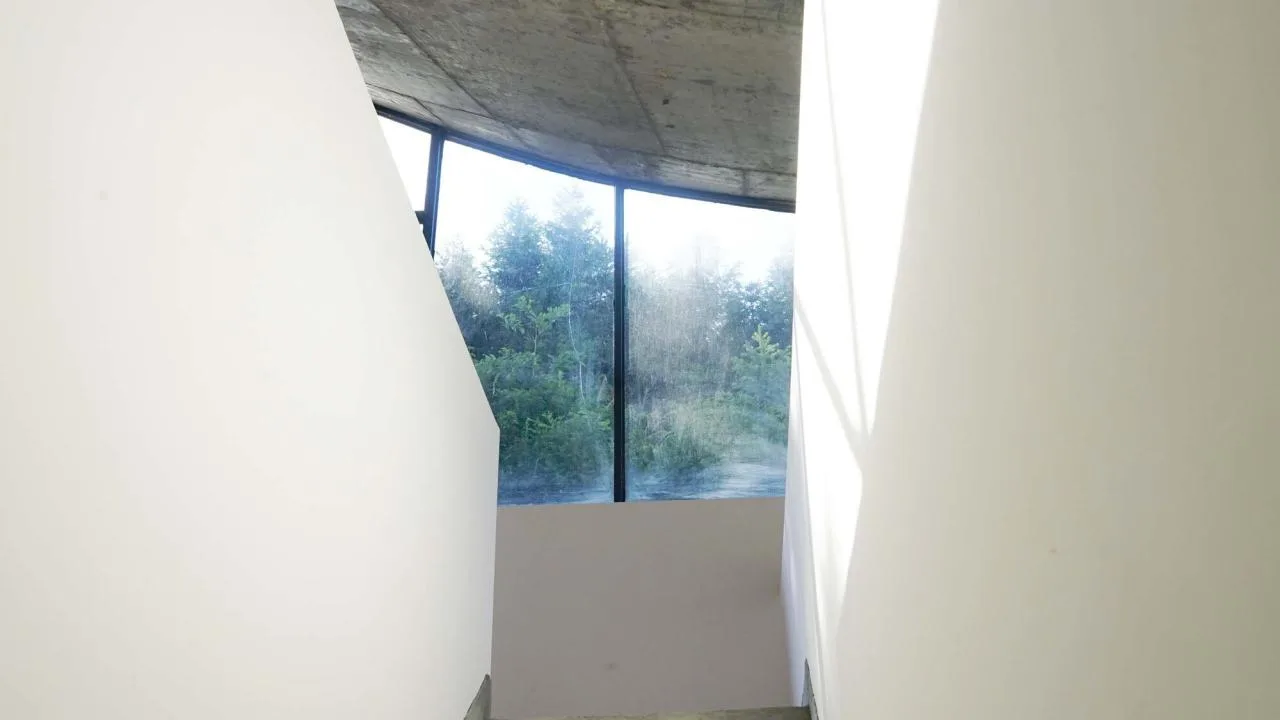
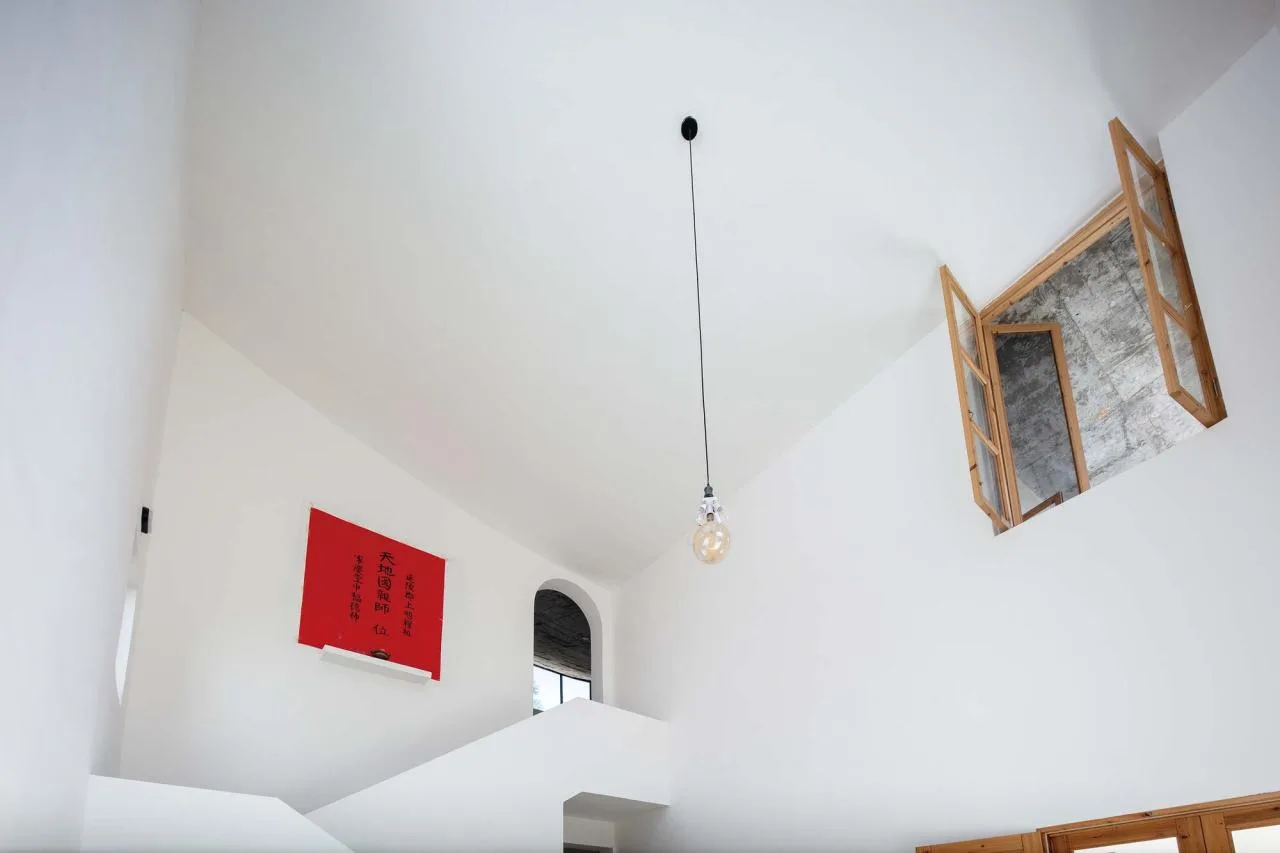
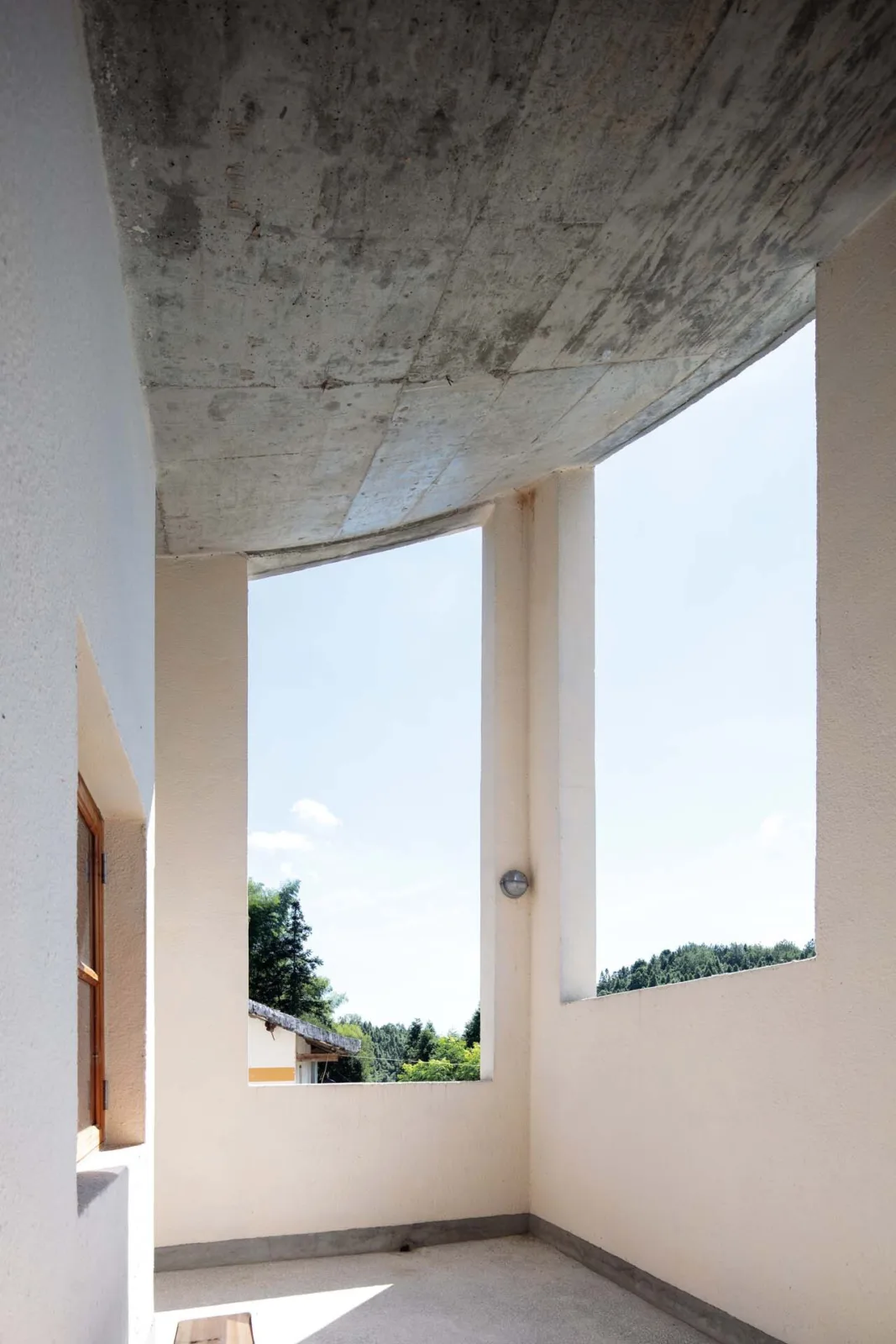
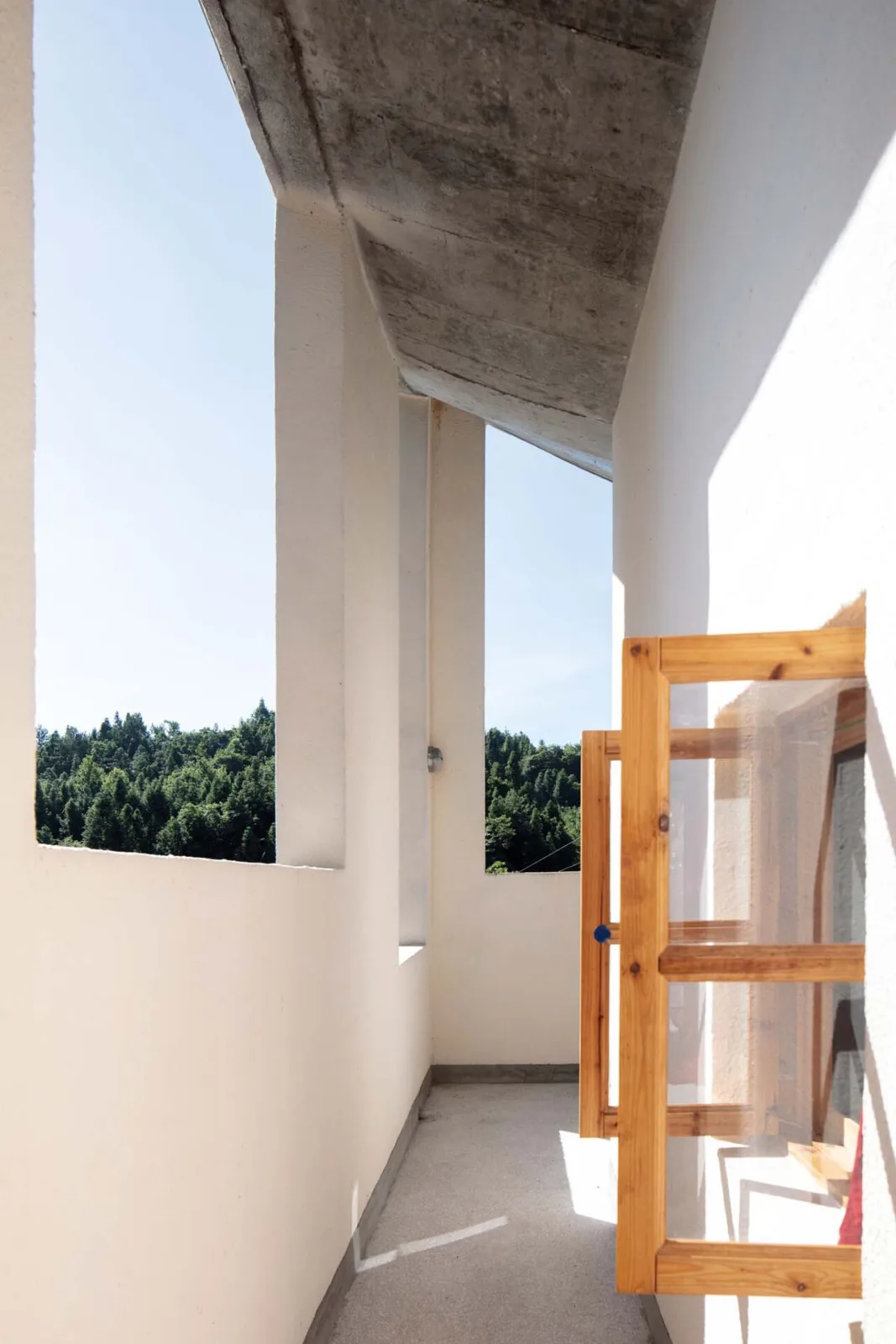
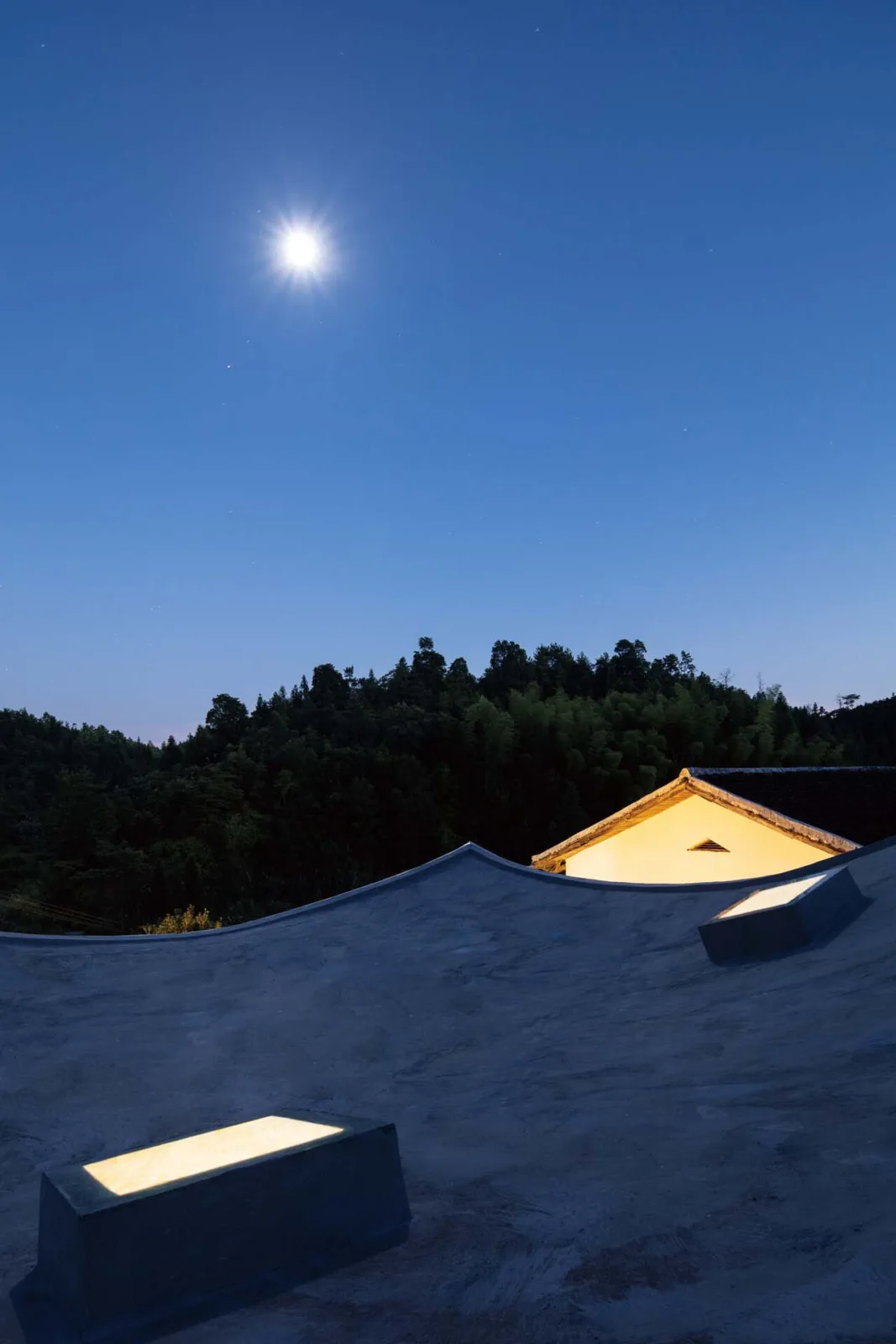
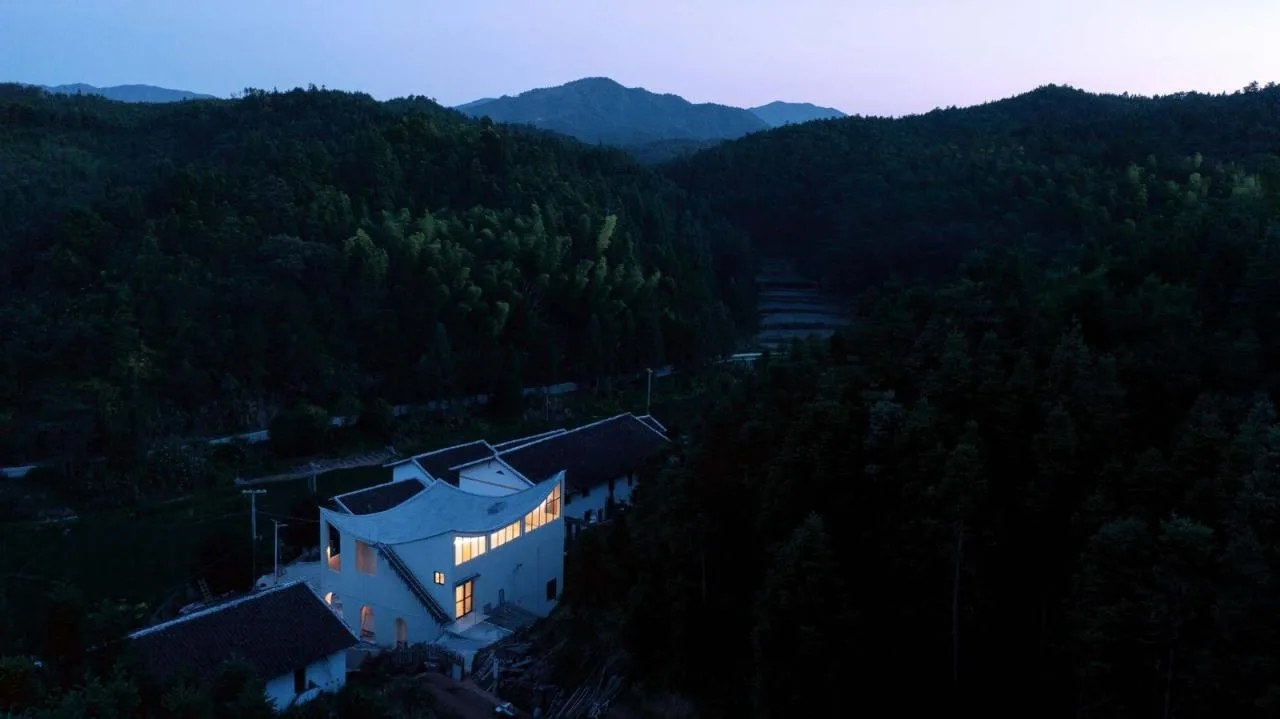
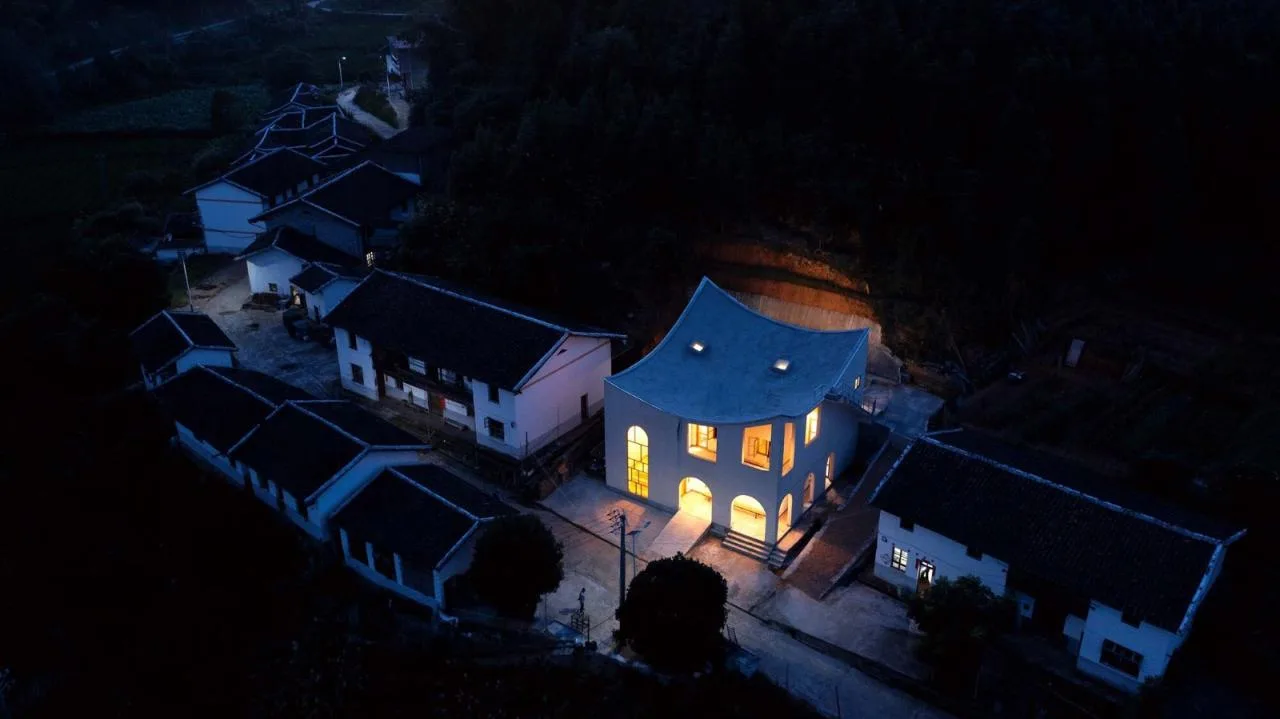
Imagine lifting the corners of a two-story house, allowing more light to flood in and blurring the distinction between floors. Some rooms span two stories, others reach one and a half floors, while some occupy just half a floor near the roof. These varied spaces naturally transform into living rooms, studios, galleries along the eaves, or attic rooms. The roof itself becomes a hyperbolic terrace, surrounded by four sweeping curves, resembling an open courtyard facing the sky. At the center lies a courtyard designed for cooling off and moon-gazing on clear nights, while also serving as a natural basin for rainwater collection during storms. Four concealed drainage points channel rainwater from the courtyard to the outside.
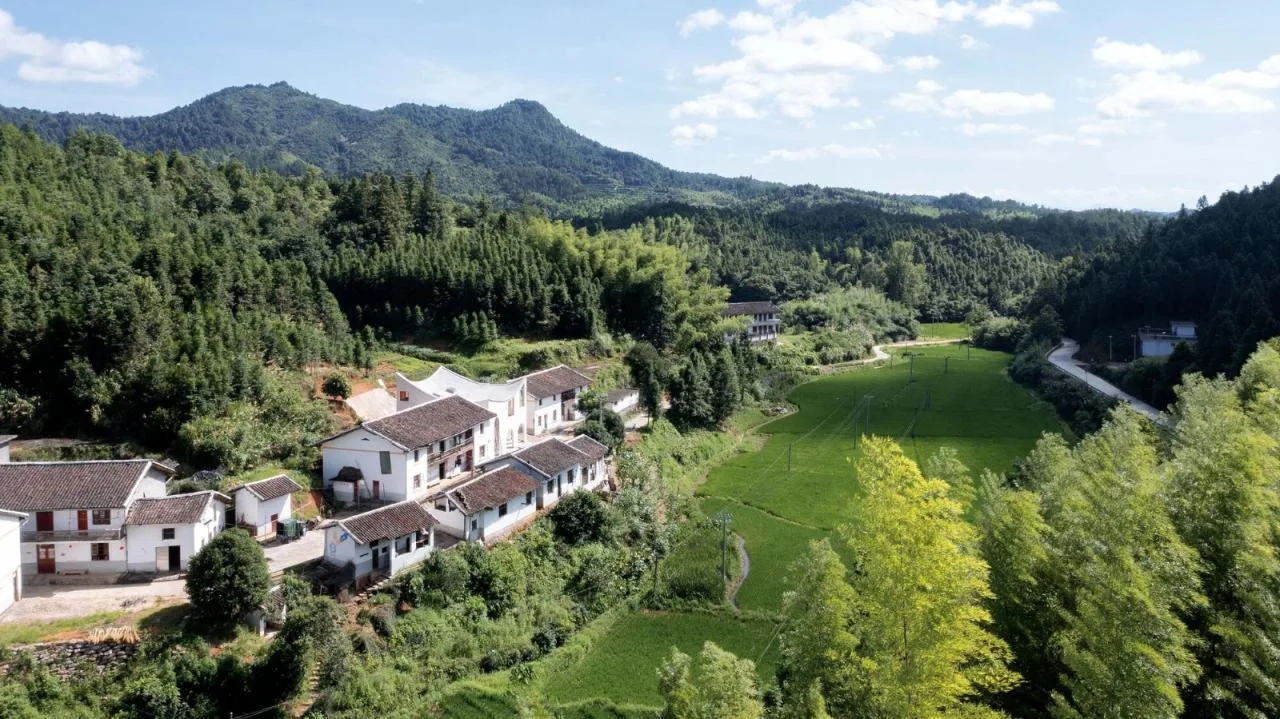
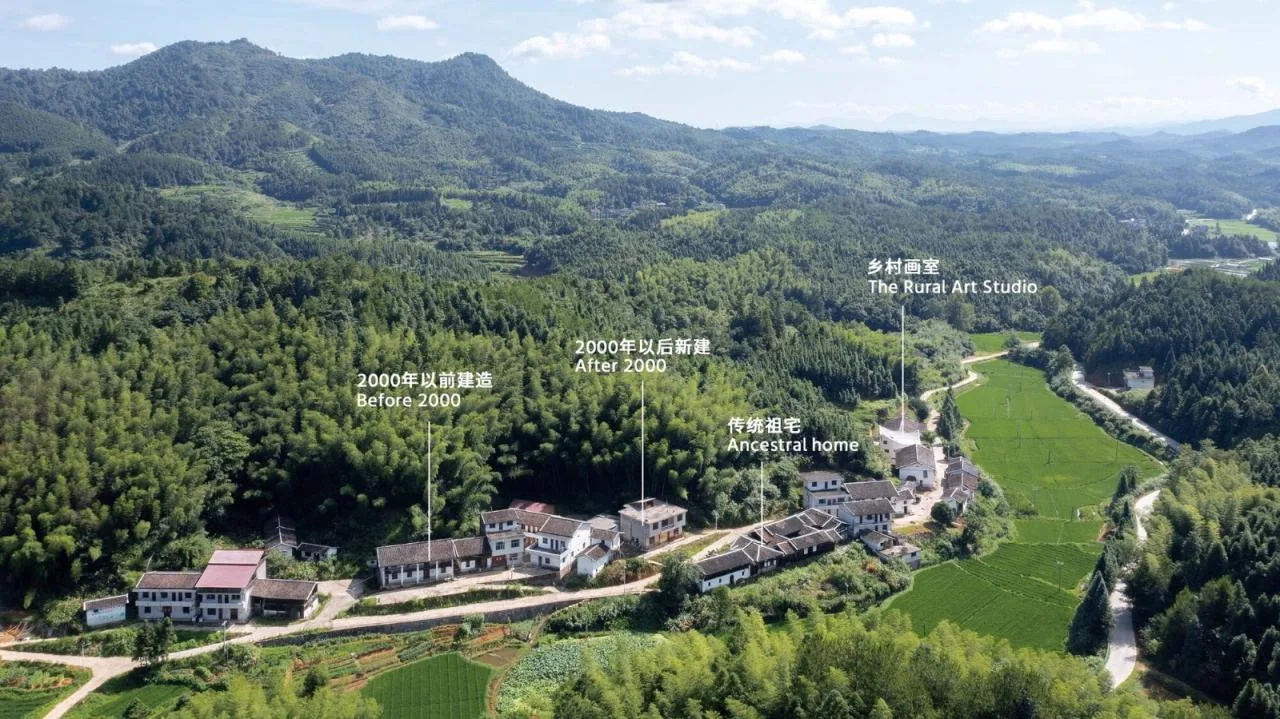
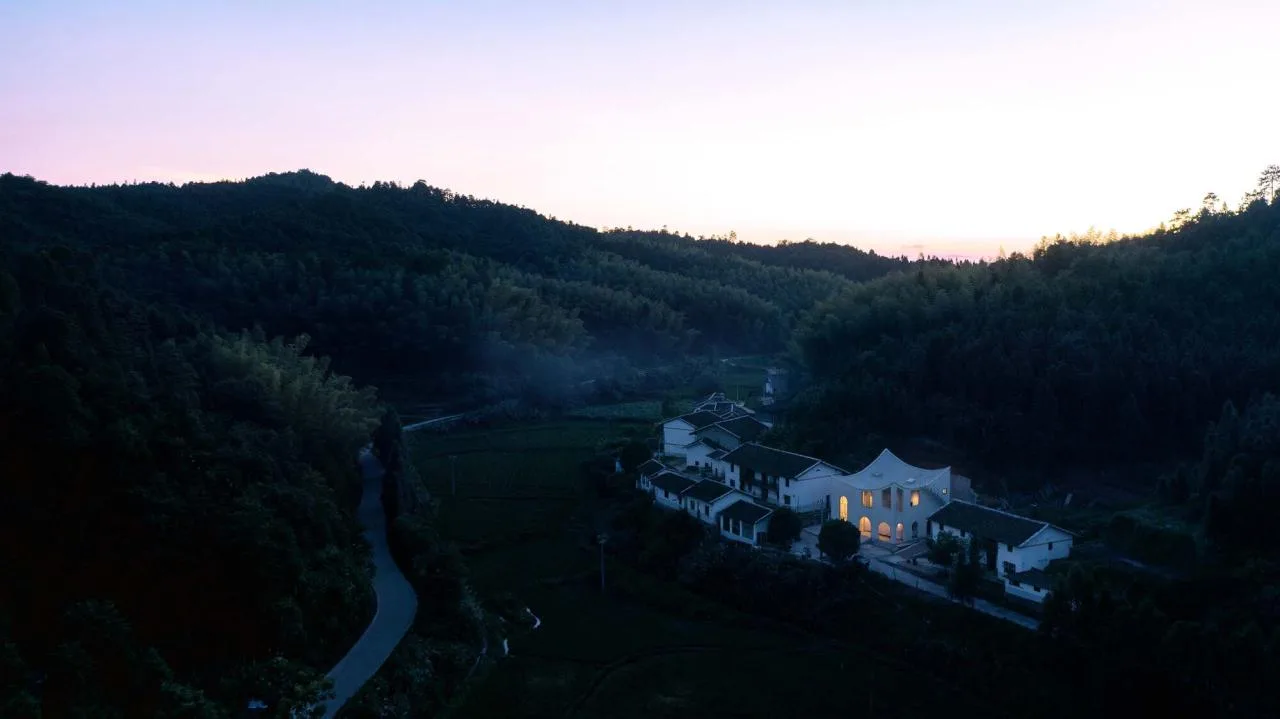
Studio + Residence: This studio is located in the Li’ao group of Lukeng Village, Fuzhou City, Jiangxi Province. The owner, Zhu Zi, is an artist who spent many years drifting north and then several years in Shanghai. Perhaps after such a long time away, he wished to build a studio in his hometown to return periodically and create art. The design also accommodates the daily living needs of his parents and provides space for his two sisters’ families to visit during holidays and reunions.
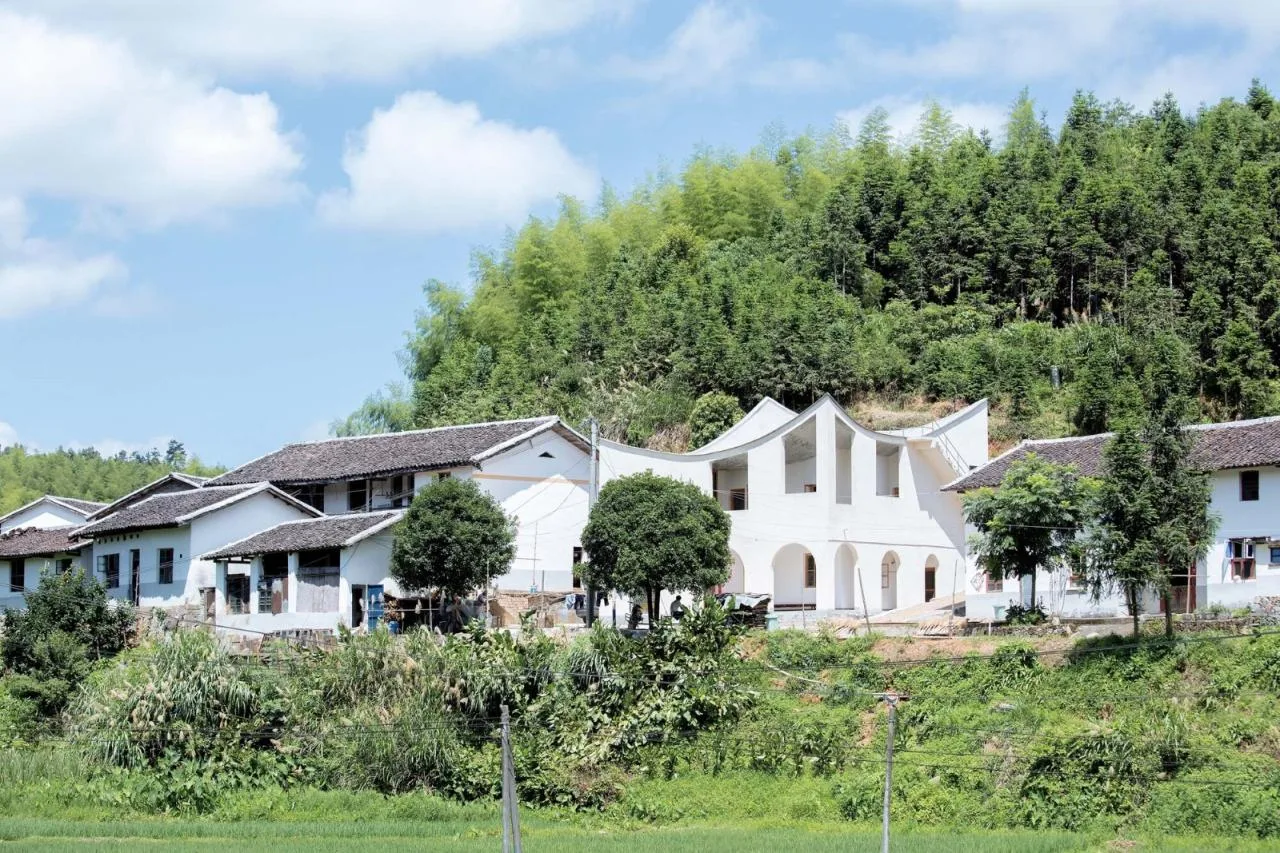
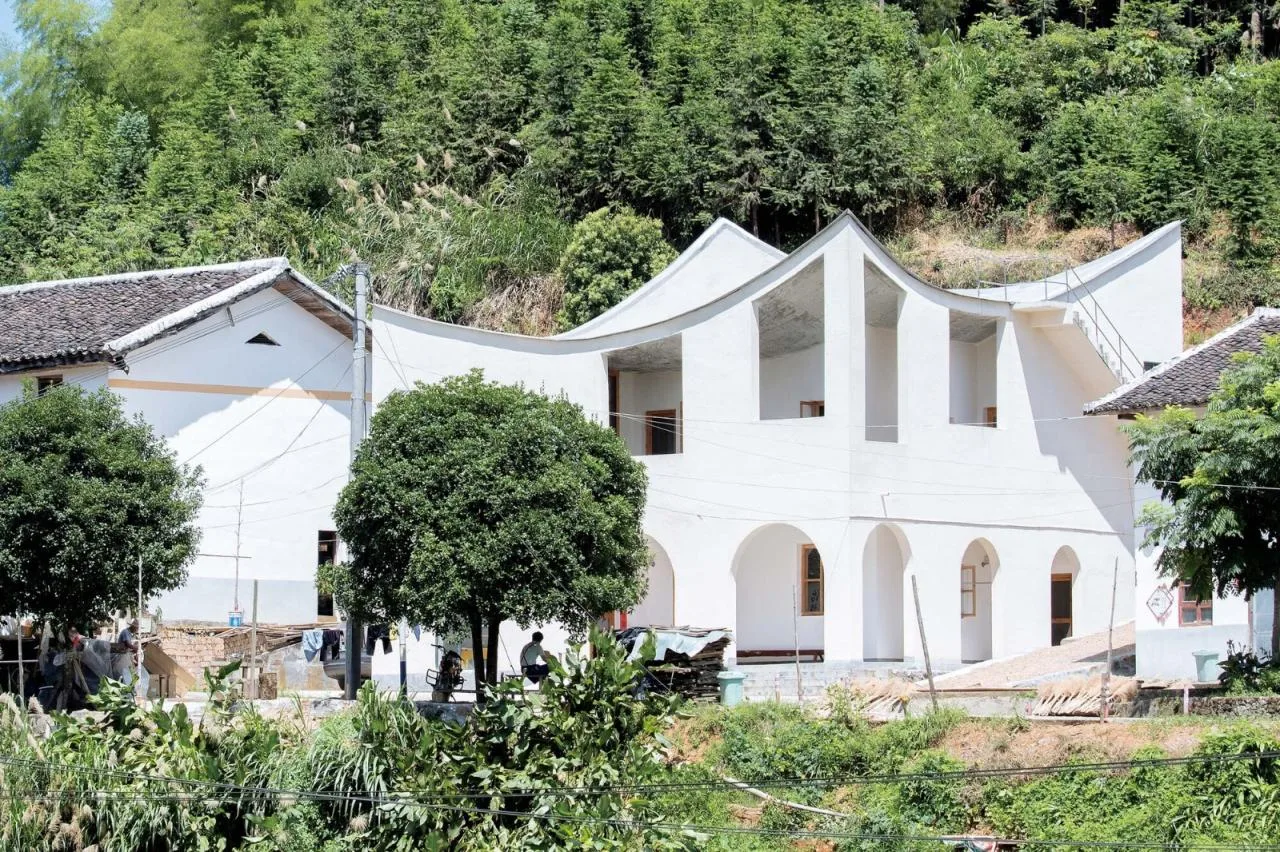
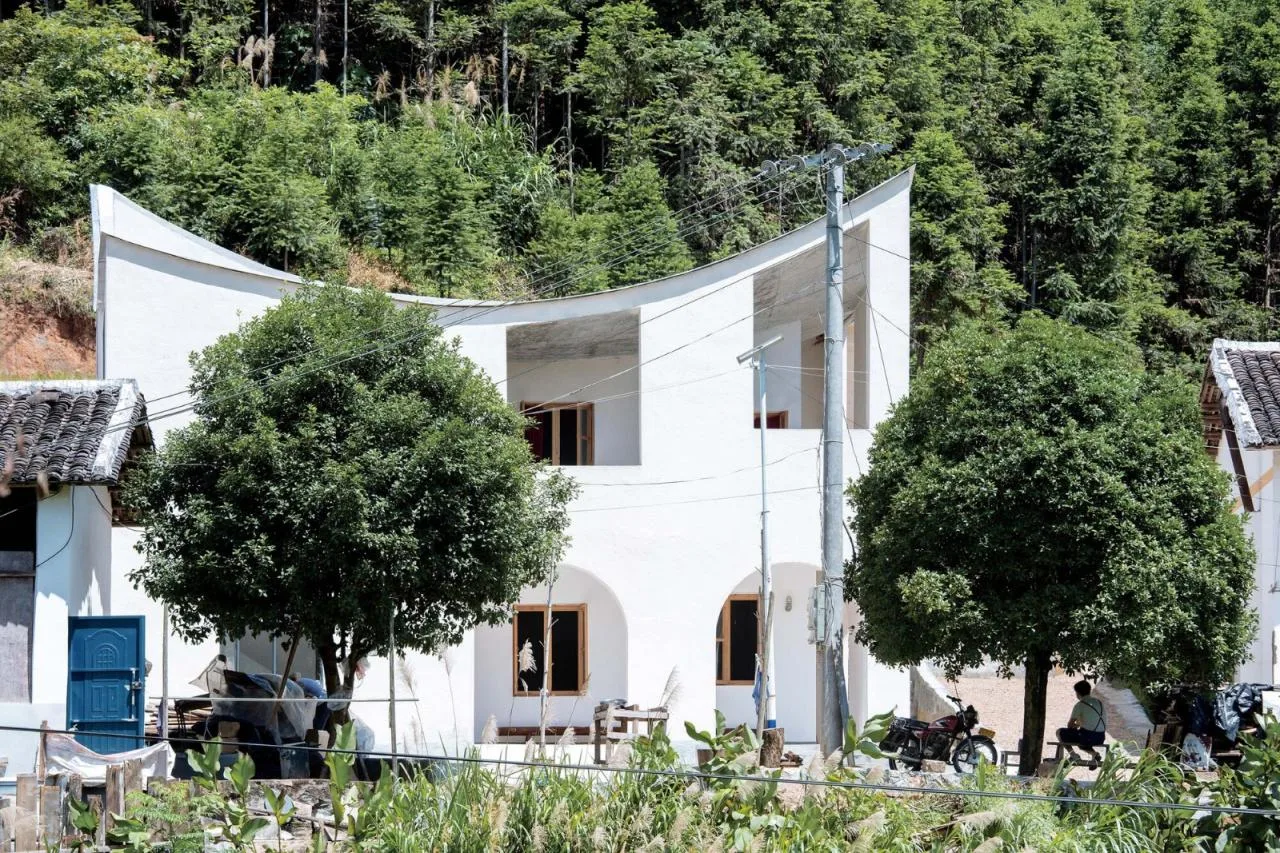
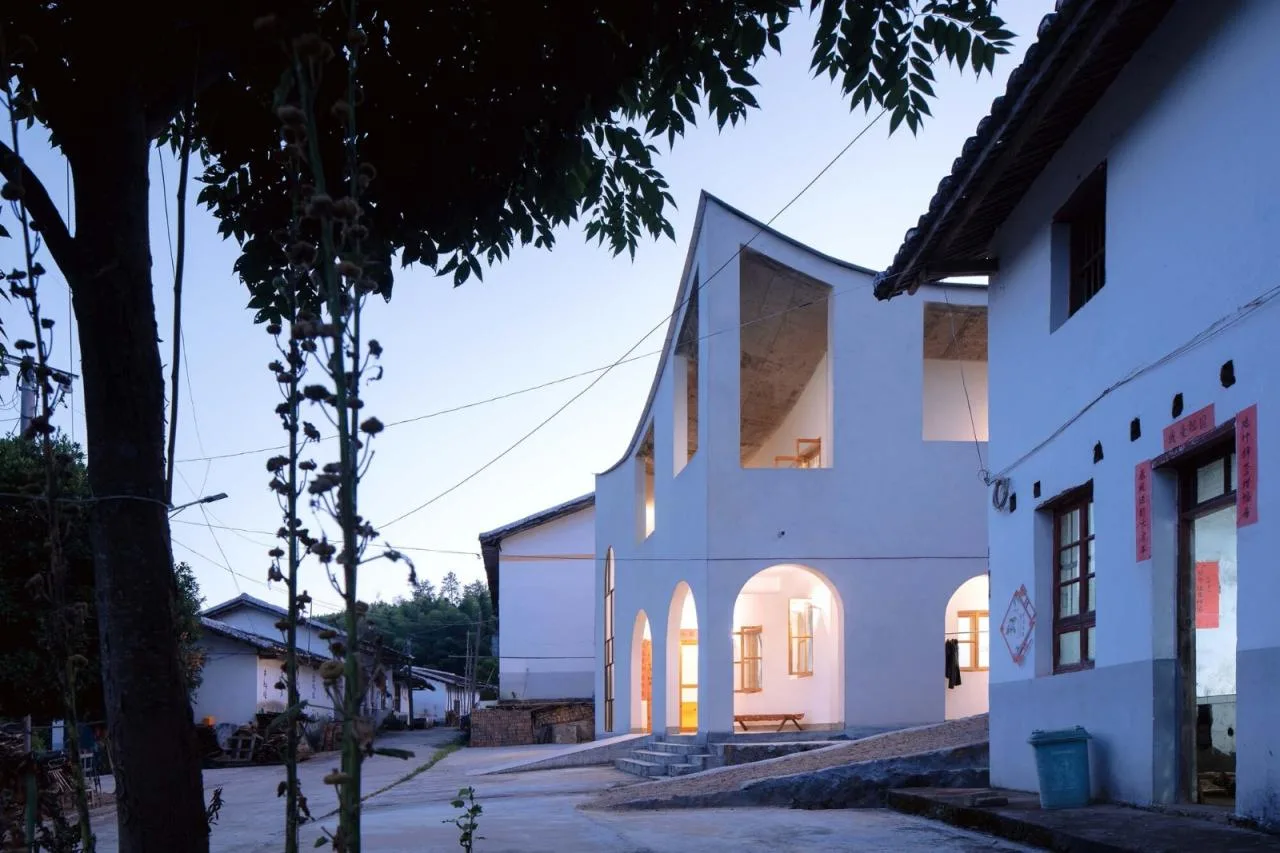
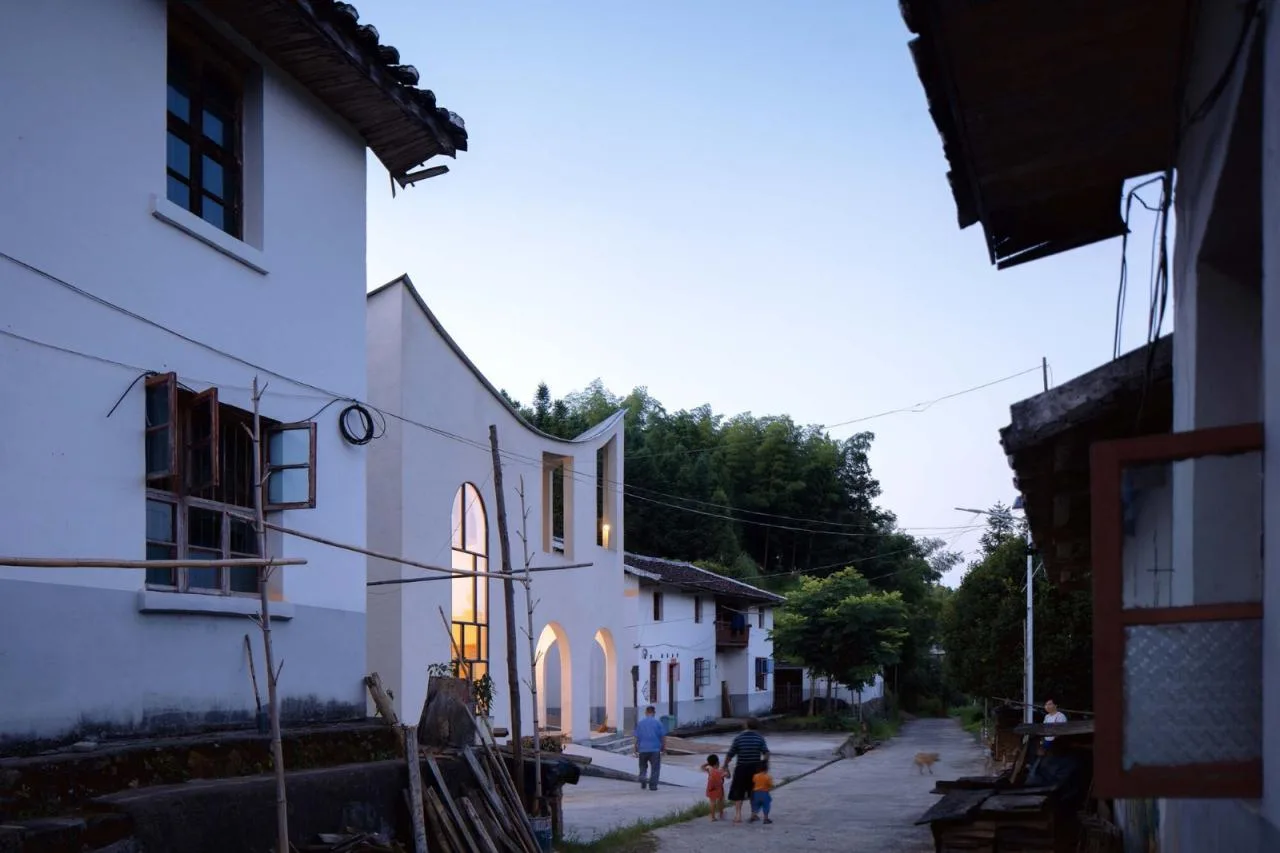
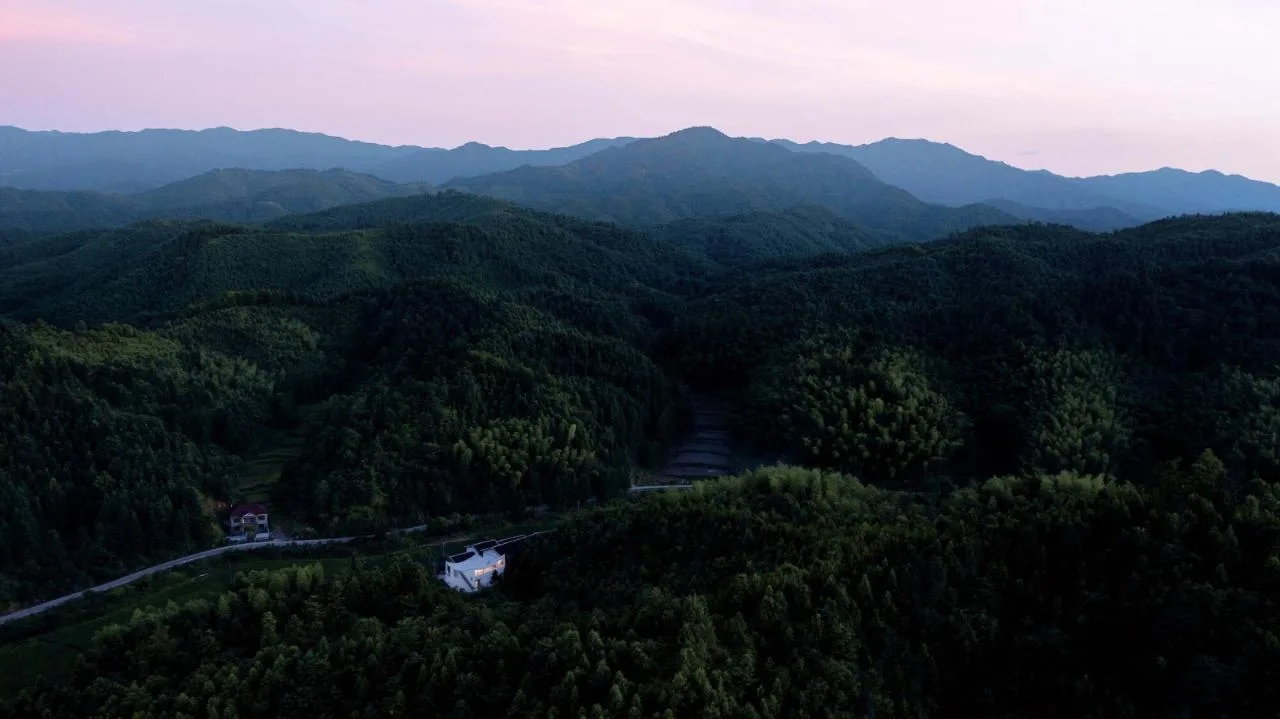
A Brief History of Rural Growth: Lukeng Village is known as the birthplace of bamboo, nestled deep in the mountains where transportation is limited. Like many mountain villages, it maintains a small, self-contained environment. The dozen or so houses in the Li’ao group, where the studio is located, are primarily built along the mountainside near the fields. Most homes are two-story, straight-shaped buildings constructed before 2000. A traditional courtyard-style house remains in the middle but is no longer inhabited. After 2000, some newer agricultural homes with ceramic tiles were added. These three types collectively capture the village’s growth history. Without Bamboo’s decision to build an art studio here, the village would have likely continued replacing older homes with newer rural residences quietly or gradually stopped growing due to population decline. The studio’s emergence is a beautiful, unexpected moment in the village’s growth story, creating ripples in its history.
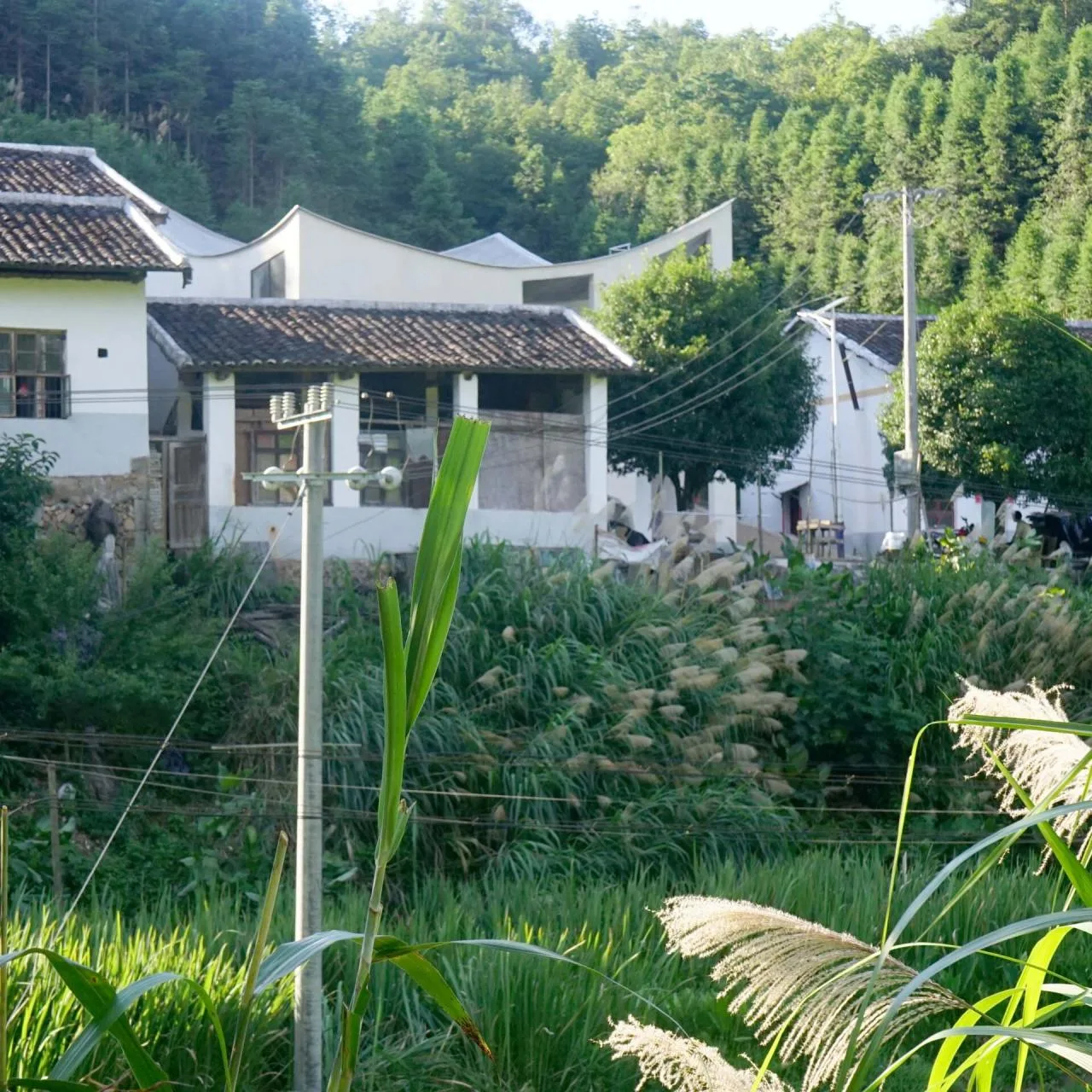
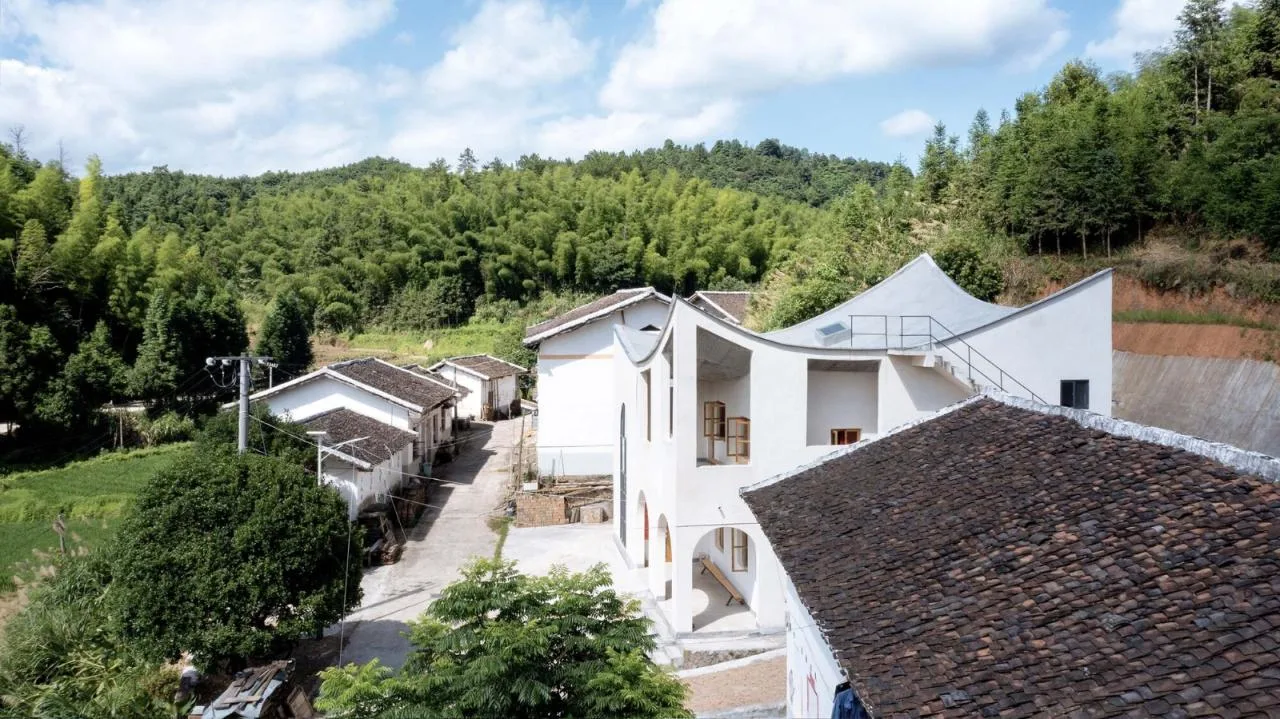
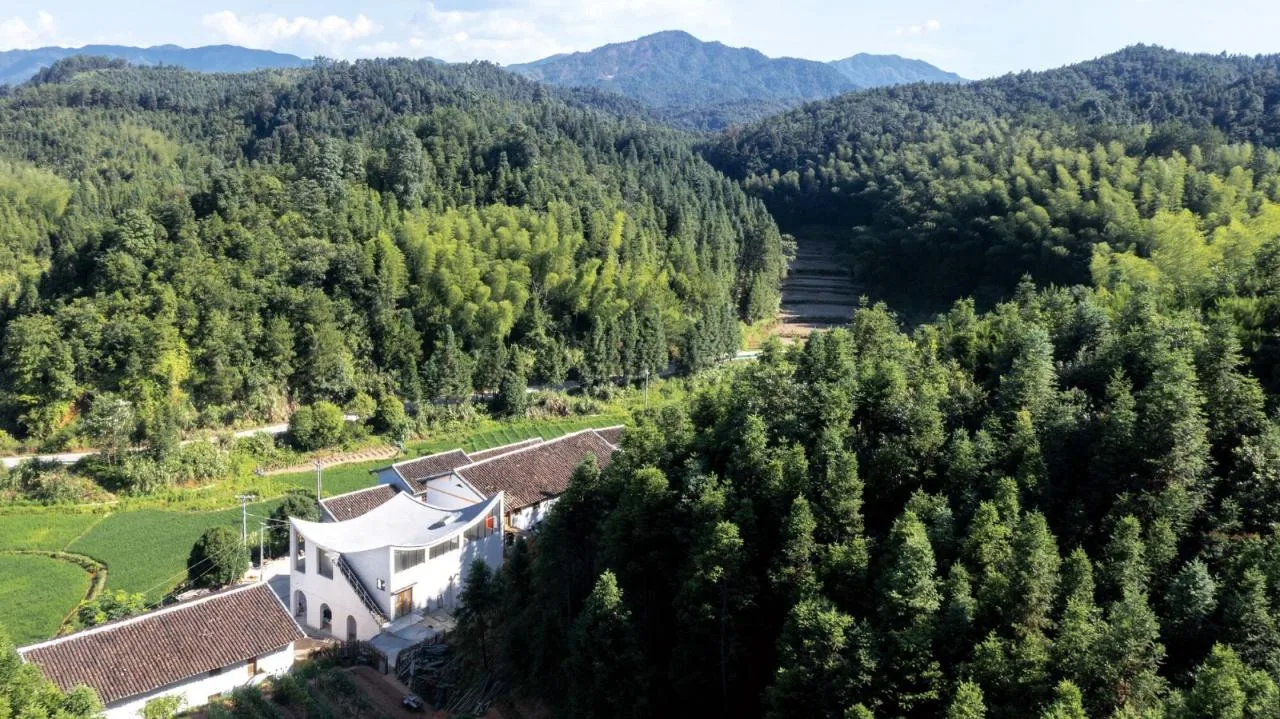
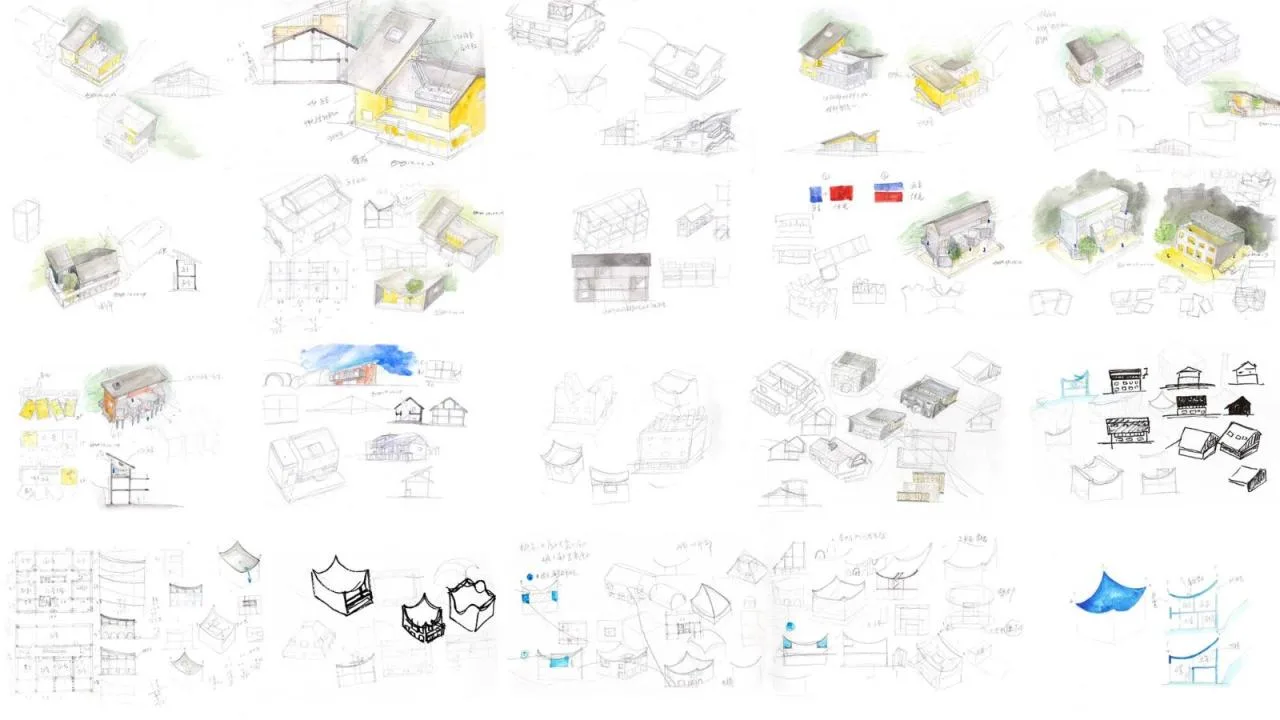
At the start of the design process, we had no fixed ideas about whether to continue the village’s existing character or introduce an external element. Should the “studio+residence” be a small hidden house combining both functions? Bamboo’s family needs made it impossible for the studio to feel foreign, yet the art studio’s presence meant it couldn’t fully blend in either. During brainstorming and planning, we explored many possibilities—from a collage of local forms and studio functions to a more defined and distinct model that softened local references for a clearer boundary. Like an artist who experiences rich emotions at the start of creation but aims for a simple, direct final piece, we embraced this romantic notion of Bamboo building a studio at home. Thus, we designed a romantic roof to shelter the daily life space, the unique creative space, and the connection between them.
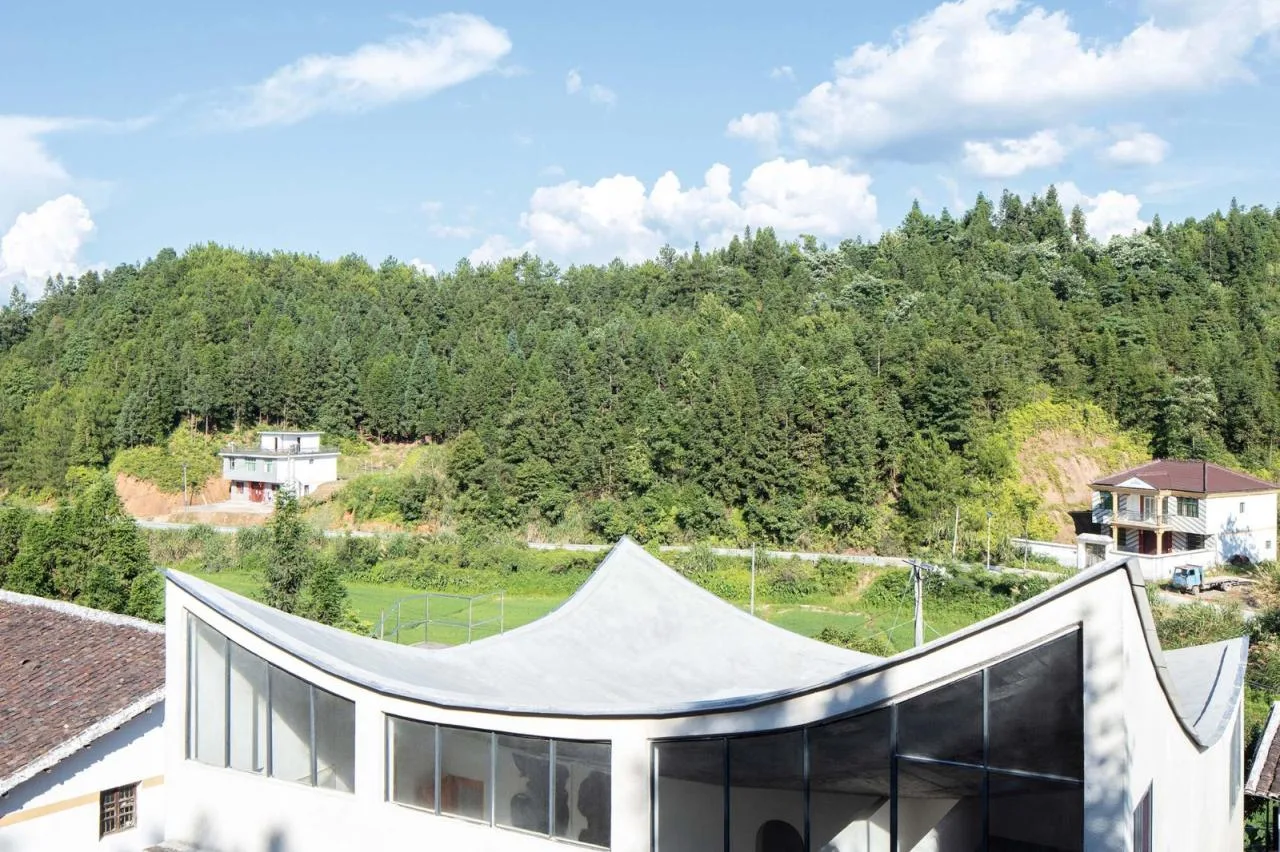
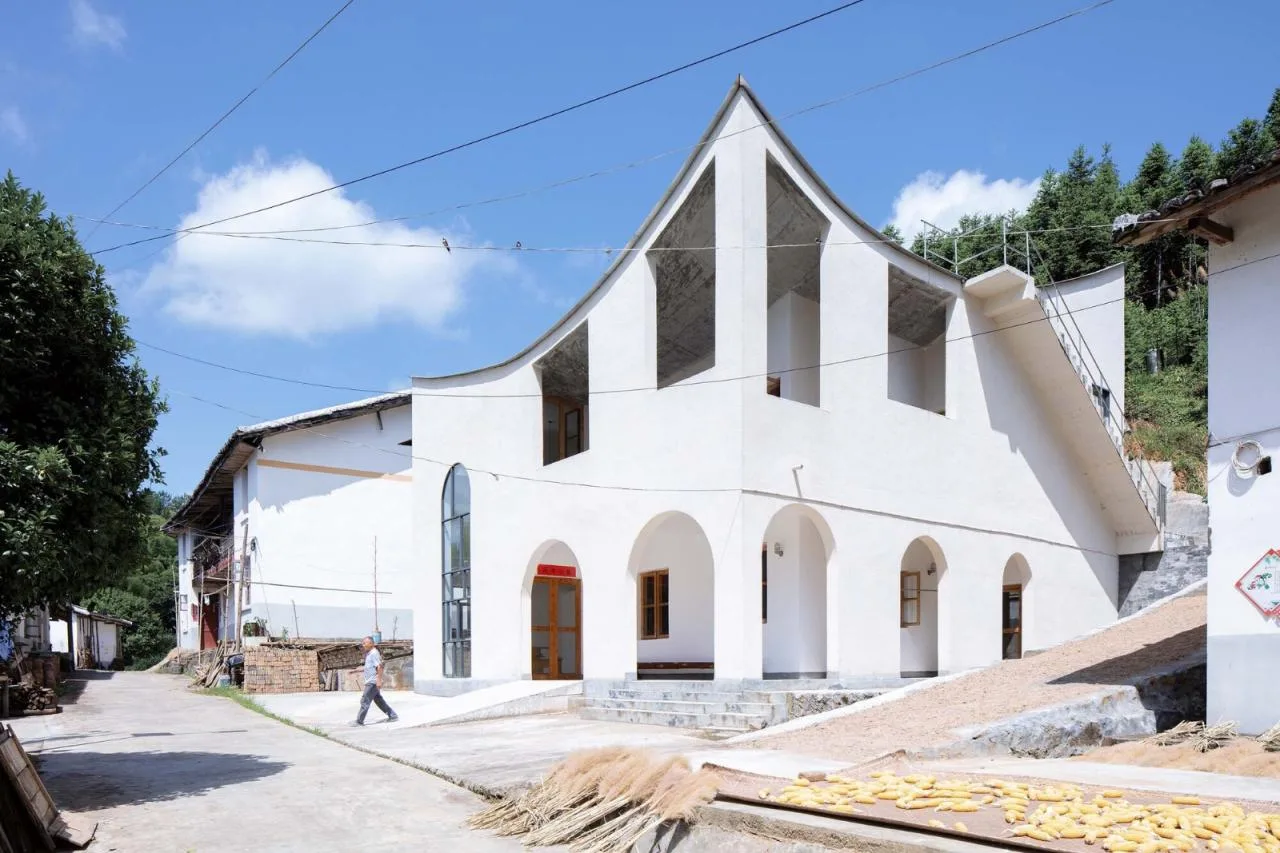
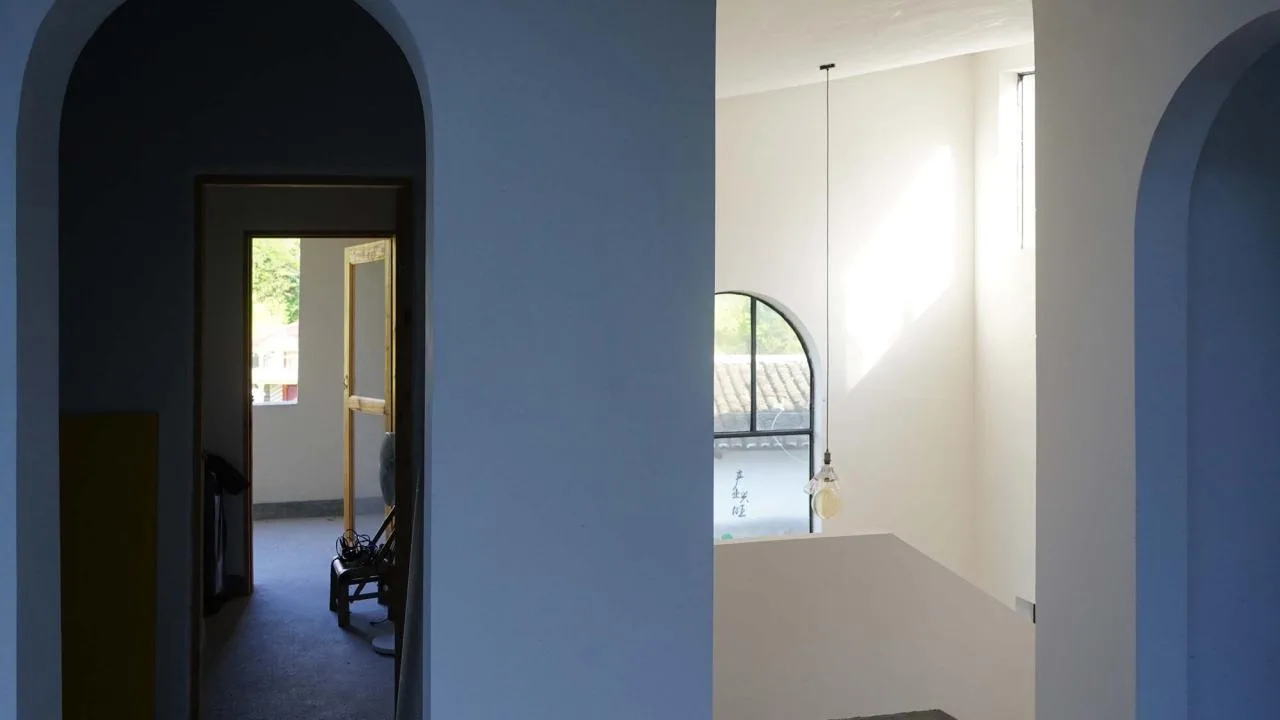
Rather than focusing on bedrooms, Bamboo prioritized the size and flow of public spaces—continuous areas linked by six smaller rooms. Early in the design, he shared a photo of a Western-style building with a deep eave corridor he passed daily (the former Italian Consulate on Wukang Road, Shanghai). He wanted his new home to feature a deeper and larger eave corridor than typical rural houses, providing space for villagers and families to cool off and socialize. Currently, only about 10 residents live in this village group, with most young people living elsewhere. For the elderly and children remaining, having a communal space is essential. For Bamboo’s family, who reunite infrequently, communal areas are even more important than private rooms. Starting from the eaves corridor, we designed a series of interconnected public spaces: the corridor links to the two-story living room, which connects to the studio, and further to the attic, second-story eaves corridor, and roof—forming a continuous public space network. Bedrooms were streamlined into six small rooms along with auxiliary spaces. This continuous public space folds inside a well-defined shell, leading to six distinct rooms, creating a transparent little world beneath the roof.
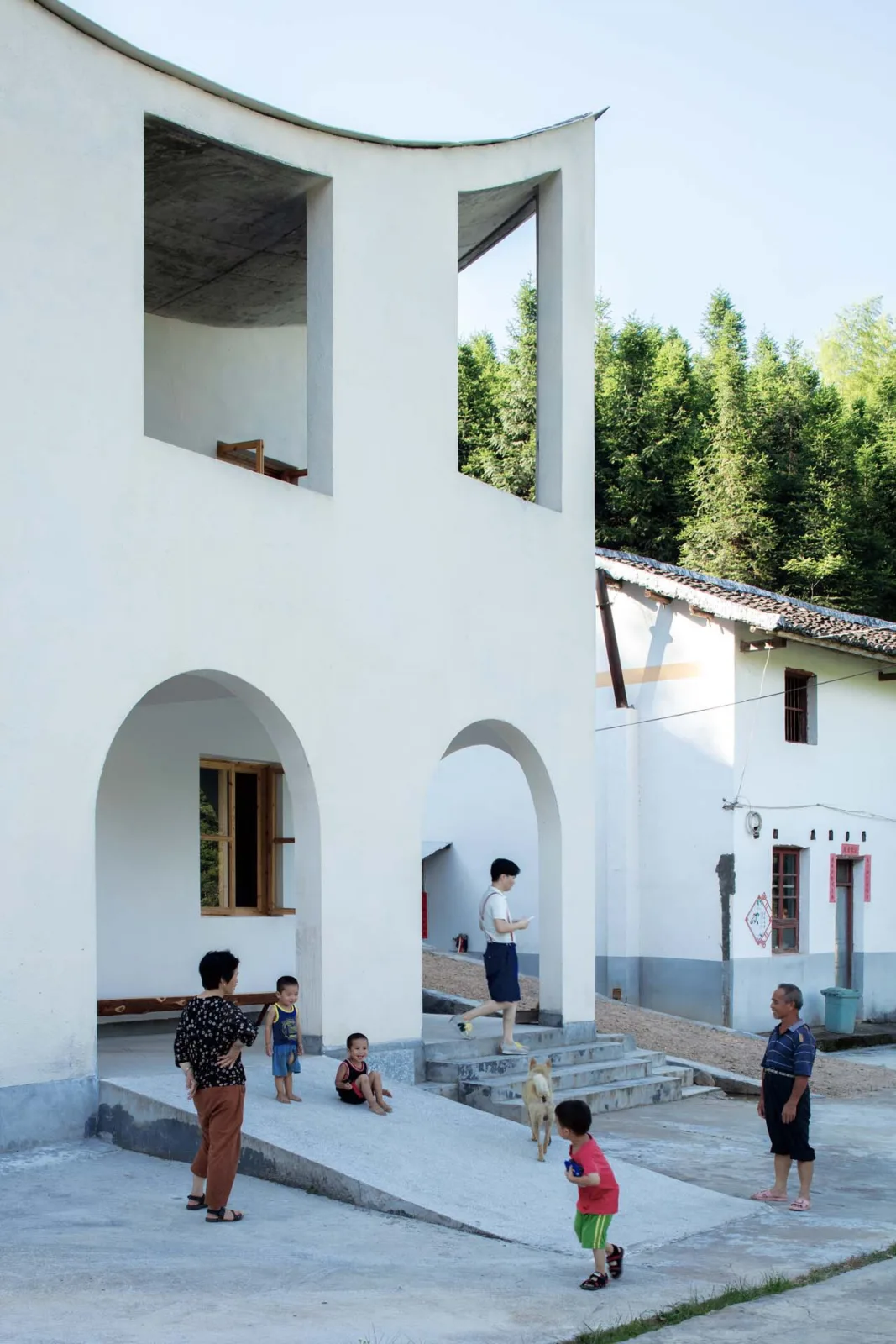
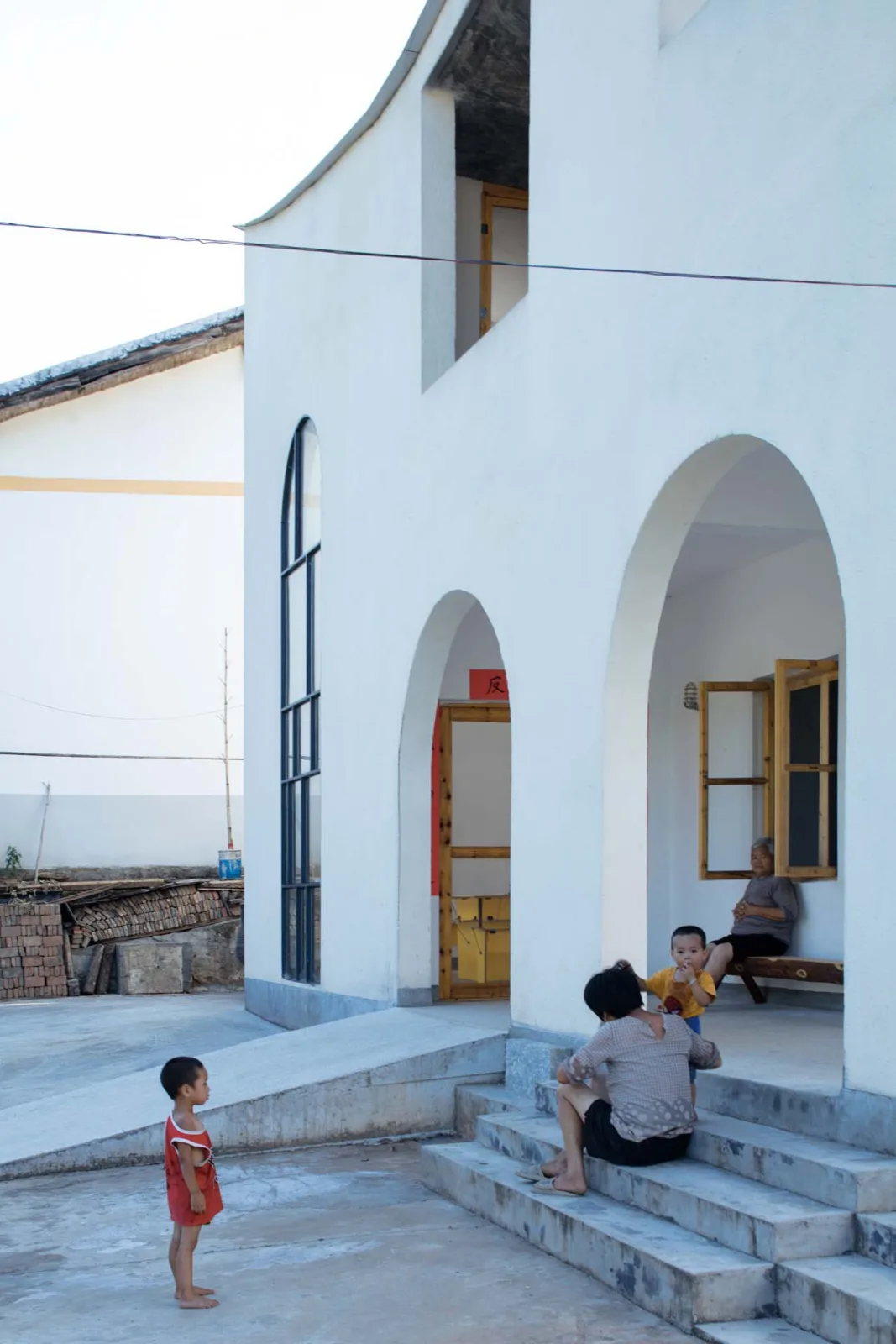
Constructing this house was a new and challenging endeavor for the locals. The two main builders came from neighboring villages—one older and highly skilled, the other younger and good at reading drawings and communicating. Bamboo’s father not only supervised but also worked alongside them. Given the very limited budget, their efforts were crucial. To help the builders better understand the plan, we provided 3D-printed models of both the building and its structure on site. The most difficult part of the construction was the roof, primarily due to complex formwork support and concrete pouring. For craftsmen accustomed to flat or sloped roofs, installing dozens of positioning points beneath the hyperbolic roof added significant difficulty.
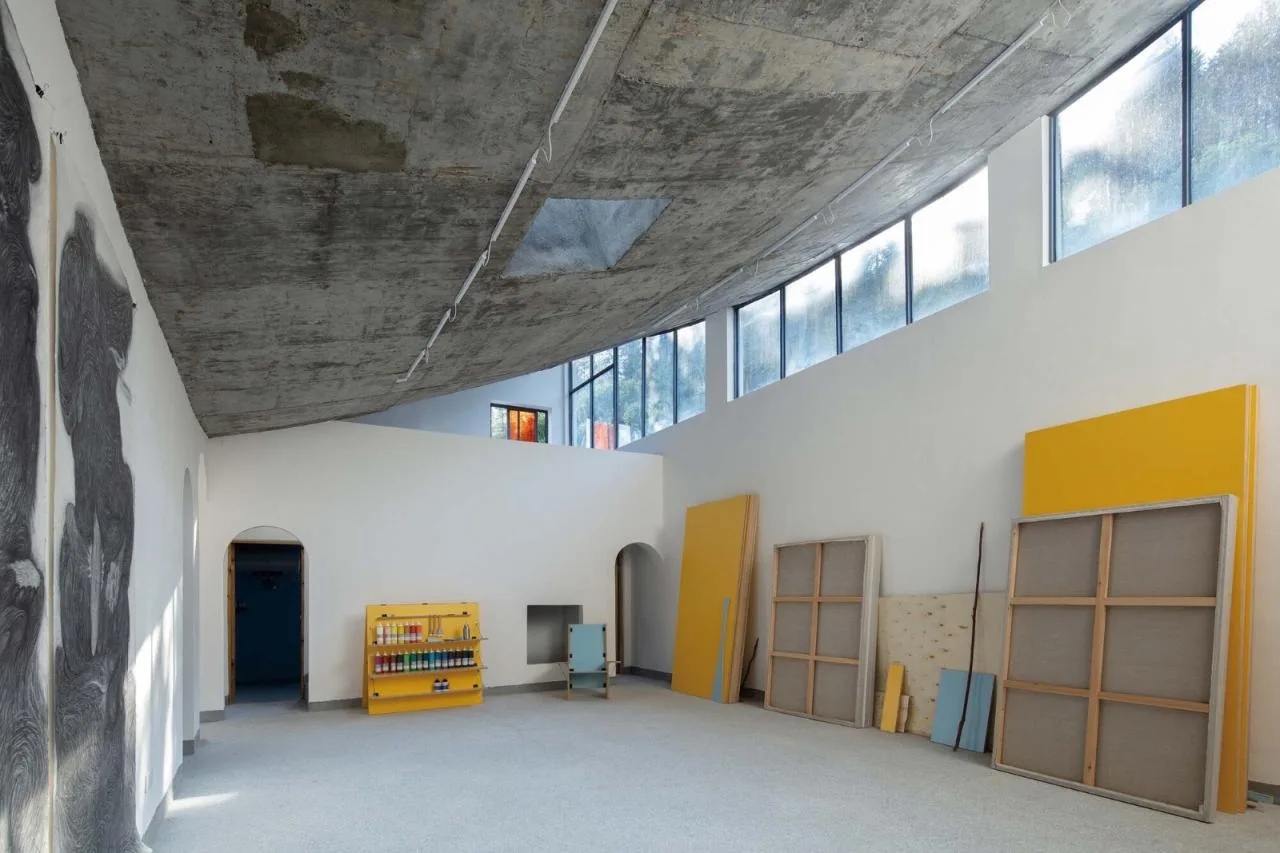
We also adjusted the design to fit local construction conditions. For instance, we initially planned to use a grid system to set the roof elevation, but after consulting the builders, we switched to using the dimensions of existing old templates, which simplified construction and reduced costs. Another example: the sharp corner on the north side was originally planned higher, but without concrete trucks available, manual carts were used to transport concrete. A higher corner would have made pushing the cart difficult, so we lowered it. Additionally, wooden columns replaced steel for formwork support due to budget constraints; their limited height and weaker splice strength also necessitated lowering the corner. Though this altered the intended slope, raising the north side and lowering the south, these on-site adaptations were essential. The final result is a small house that is both innovative and warmly rustic. The day the roof was poured was especially moving—neighbors came together to help, since concrete trucks were unavailable and the entire roof needed to be poured in one day. The community effort was deeply touching.
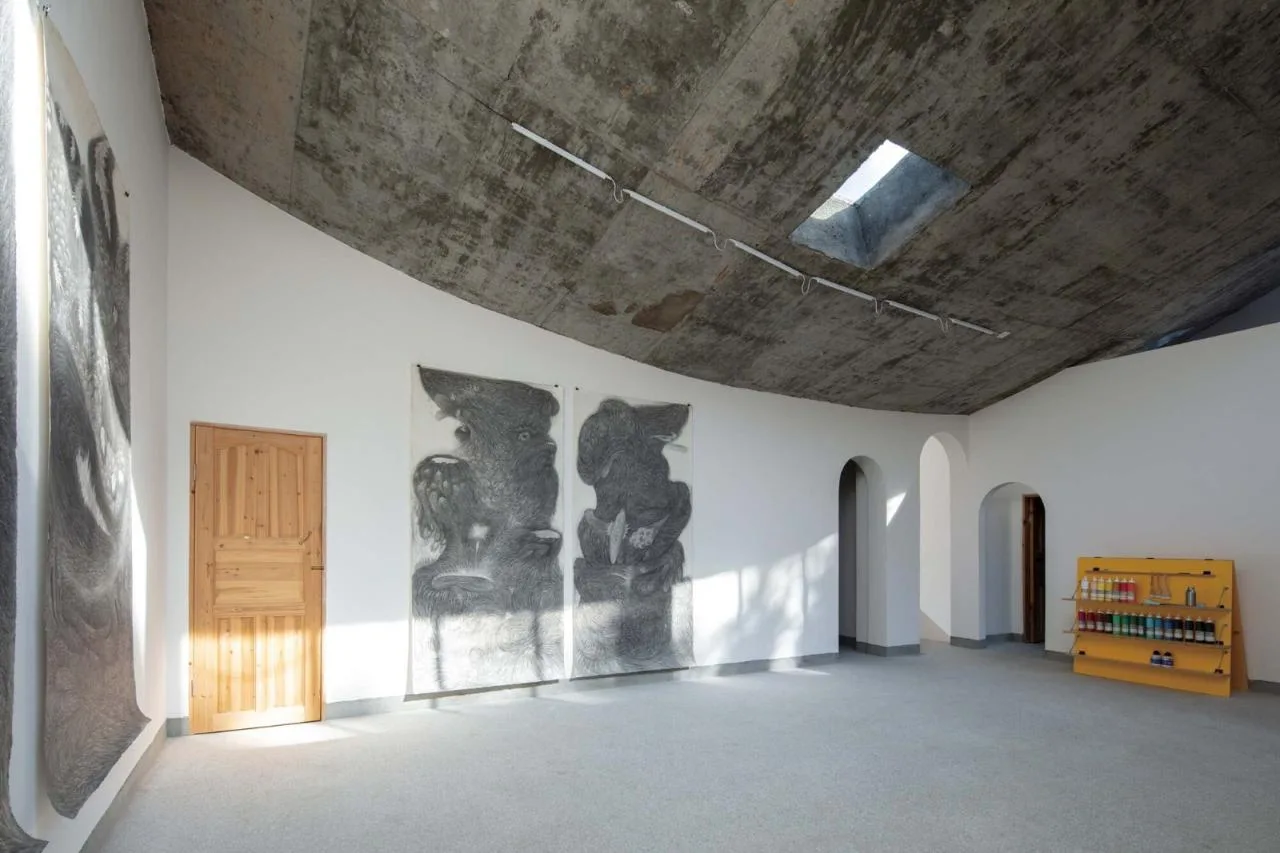
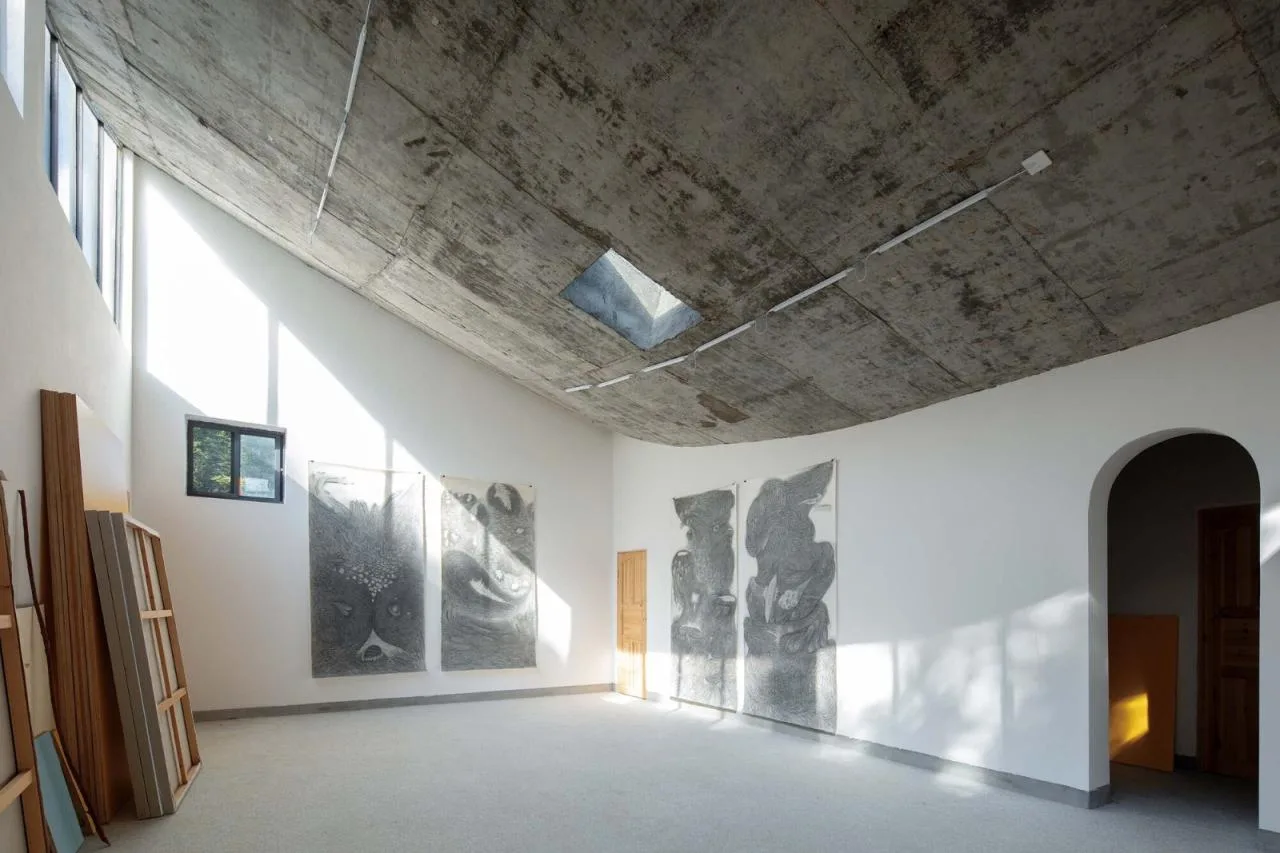
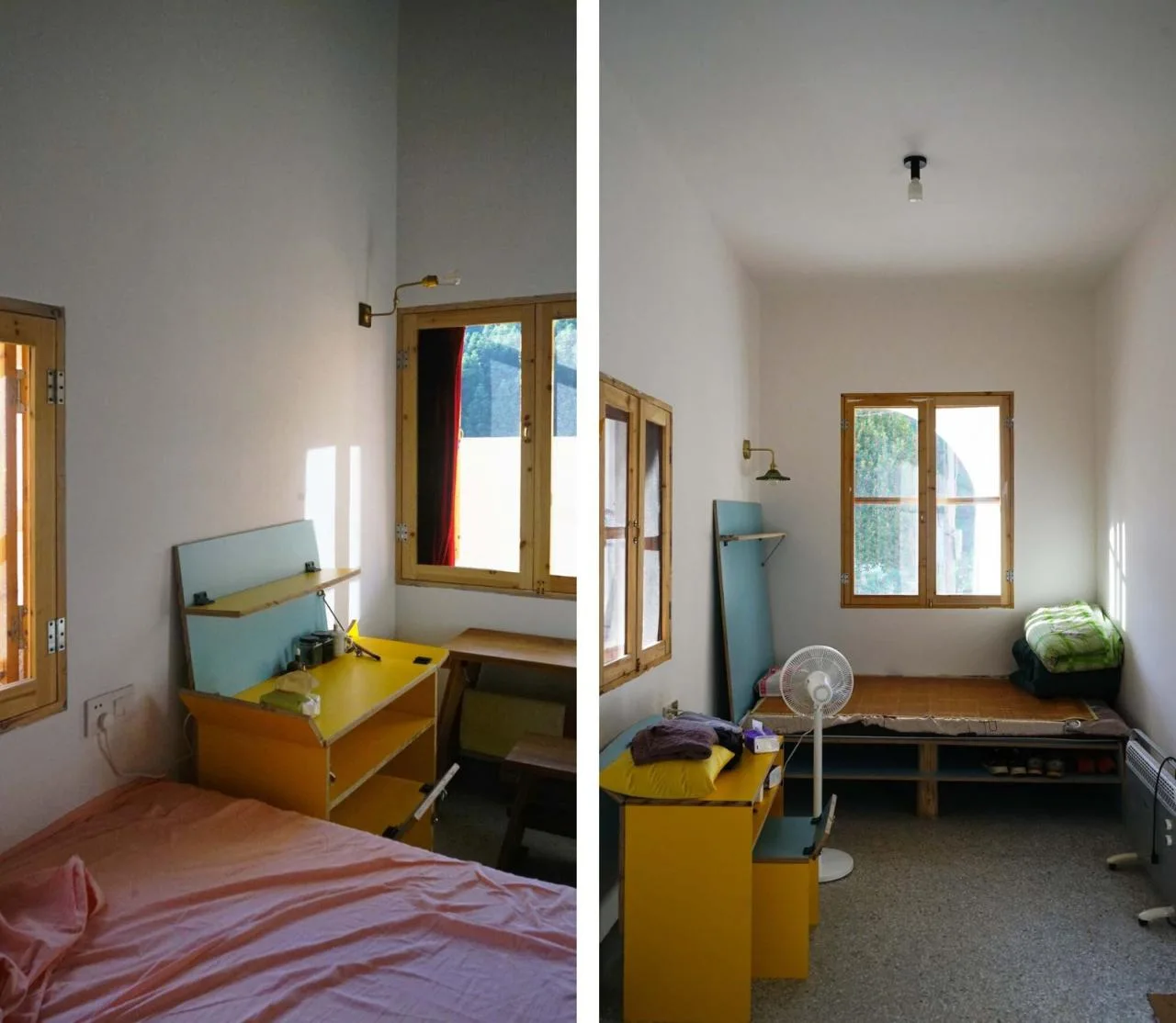
After completion, Bamboo crafted a series of charming furniture in the studio—from beds and tables to chairs, lamps, and tool racks. Some furniture pieces feature curved lines that echo the roof’s curves. Bamboo named the house “Anti Qu Xiaozhu” and wrote a couplet: “Looking back at ordinary things and thinking of changes, building a new face for the countryside.” As an independent artist, Bamboo stands out in the village; this couplet likely reflects his inner thoughts. His “abnormality” is a different perspective, which he wants to express visibly through architecture, and it carries a positive meaning. For an architect, an unconventional house can spark interest and add imagination to everyday life. After the house was finished, Bamboo’s family hosted a reunion banquet during Chinese New Year with eight tables set up, turning the art studio into the main hall. In that moment, the fading New Year spirit seemed to return.
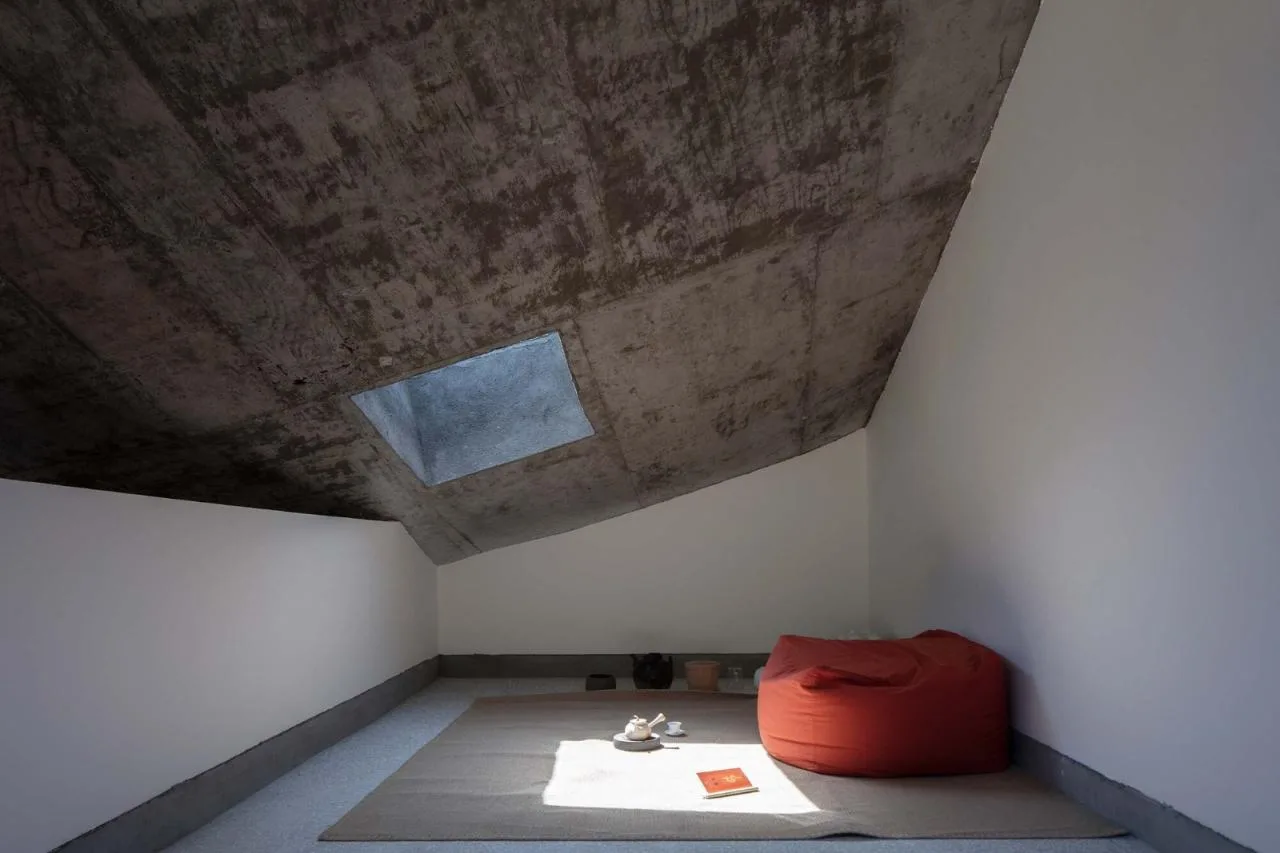
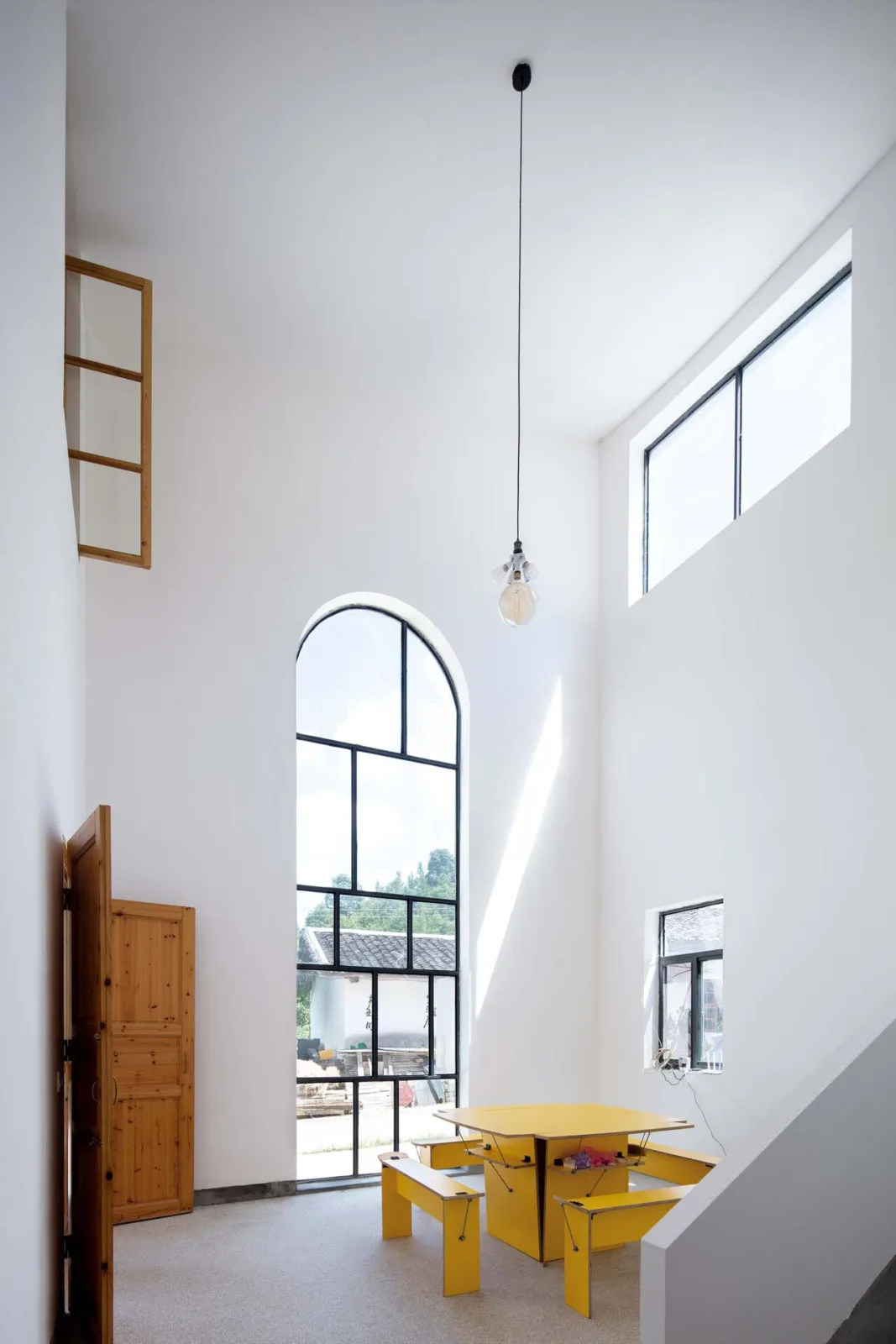
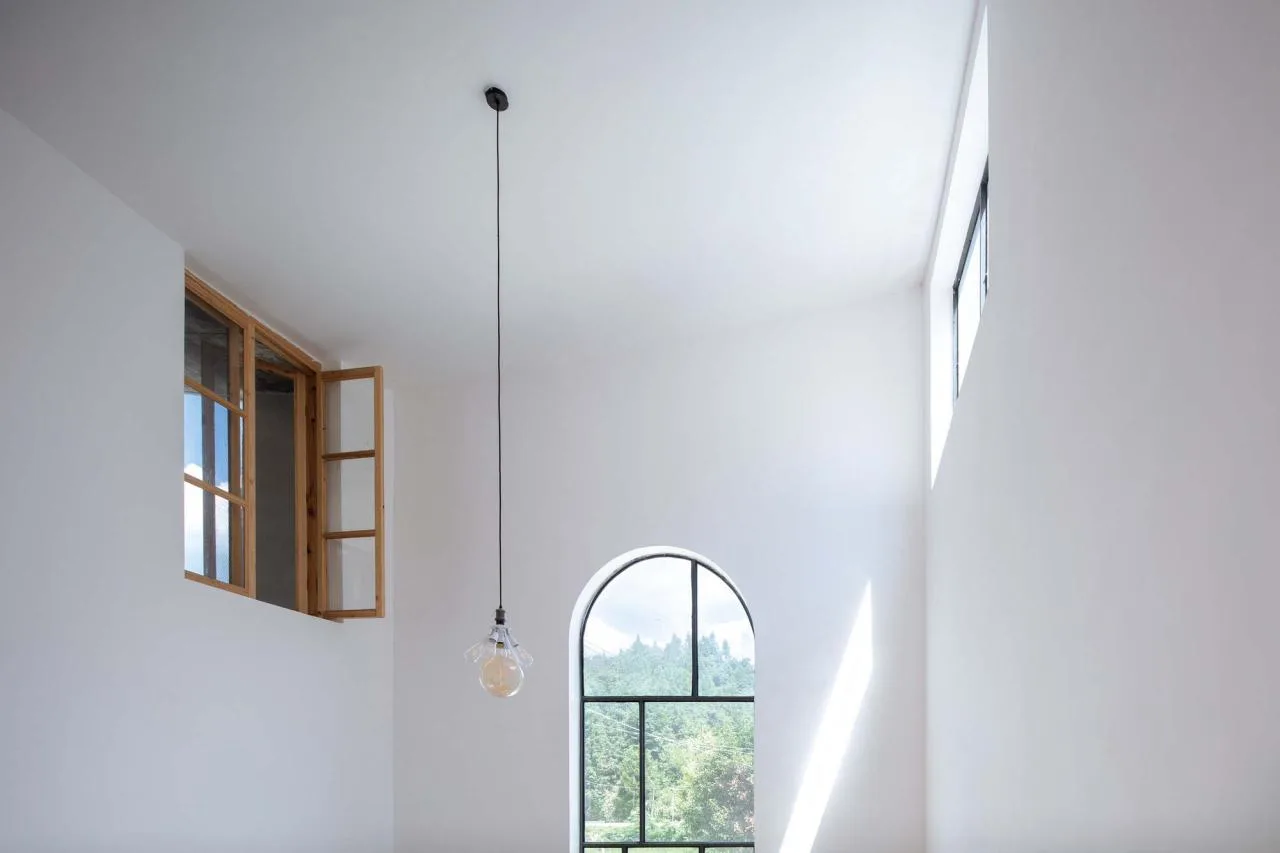
Following the house’s completion, the three of us—myself, Bamboo, and photographer Xia Zhi—spent two days there capturing photos. Whenever we wanted to chat, we found places to gather: the eaves, dining room, studio, living room, under the tree, or on the roof. When seeking solitude, we found our own quiet corners, feeling completely comfortable. It was summer, and the village was peaceful, filled only with the sounds of cicadas, birds, and a gentle breeze rustling leaves. Time seemed to slow to a crawl, and moments of daydreaming felt endless. At times, it felt like being in an ordinary, tranquil countryside, perhaps because of the house’s presence. Other times, it felt like stepping into a summer fairy tale—with rice paddies, watermelons, elders, children, earth dogs, round doorways, bamboo paintings, curved roofs, swallows nesting beneath the eaves, and a slender crescent moon.
Project Drawings
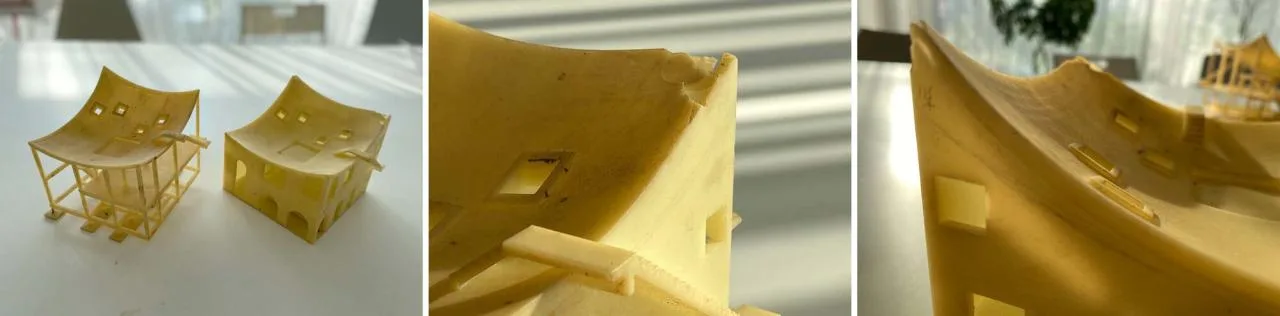
△ Project Model
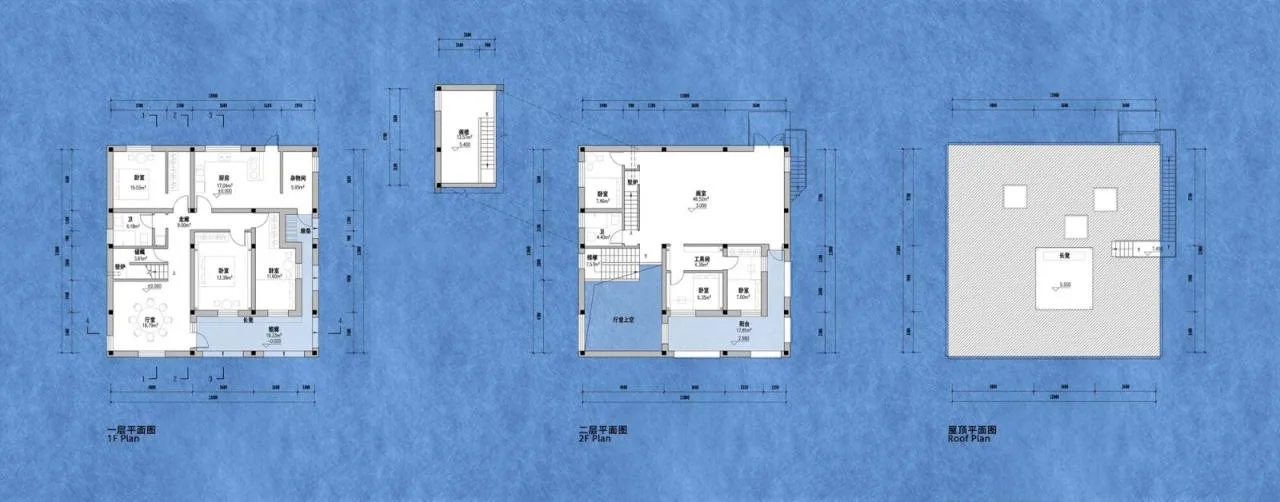
△ Plan View
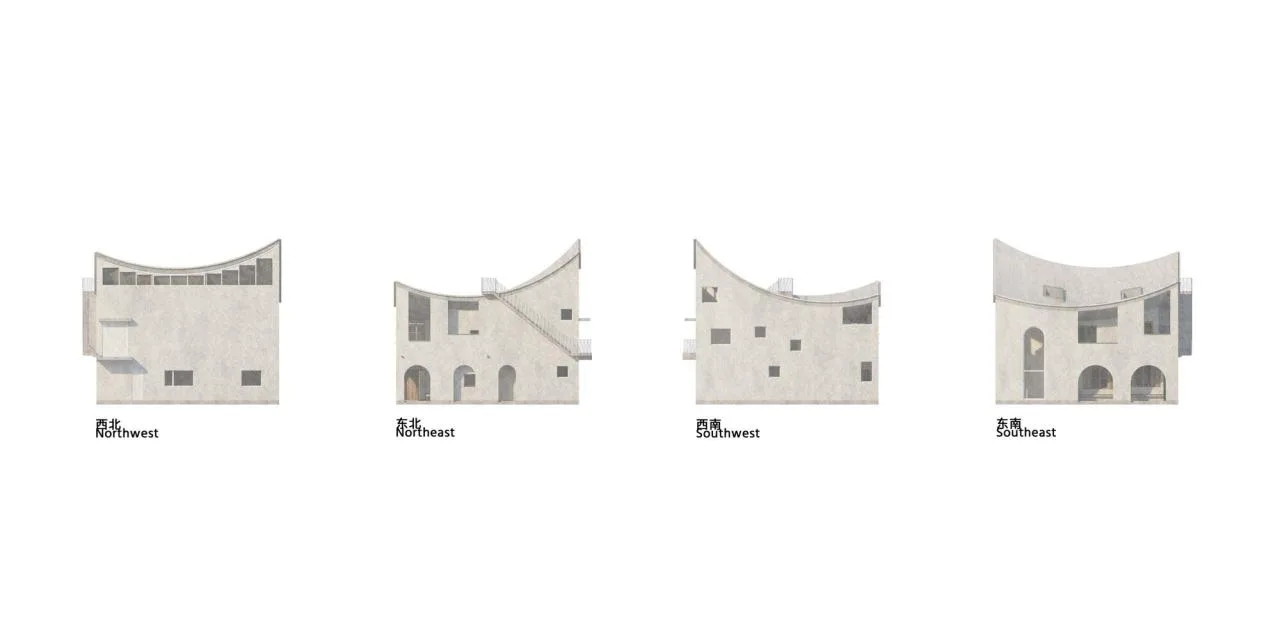
△ Elevation Drawing
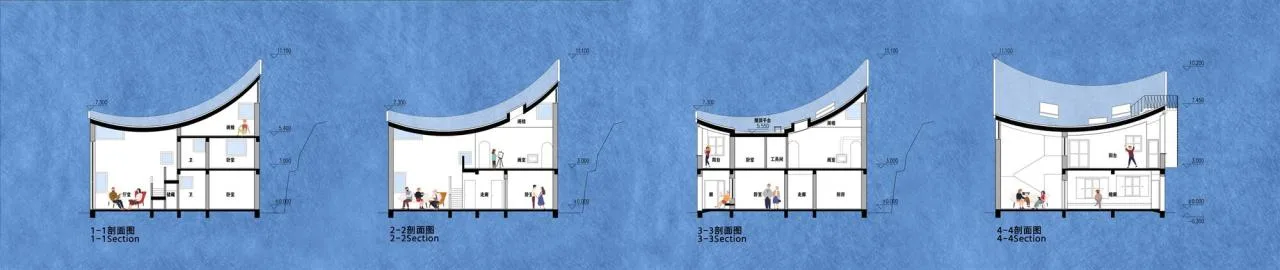
Sectional View
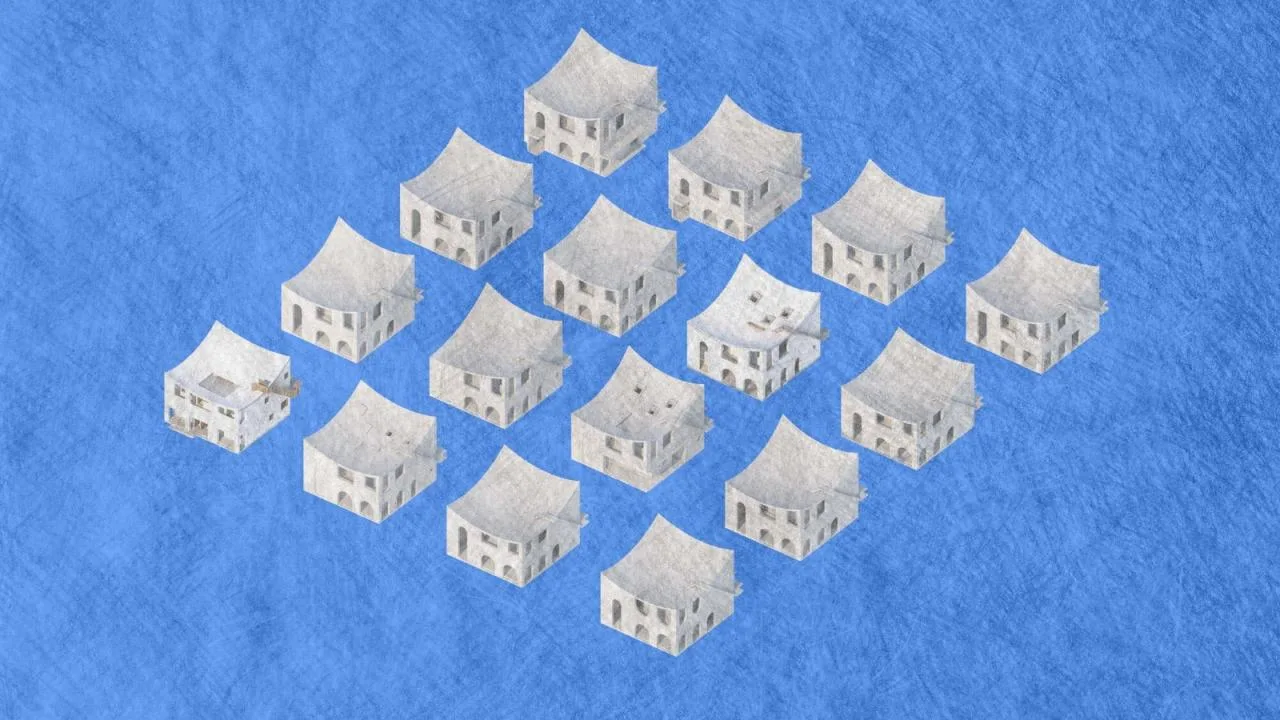
△ Different Scheme Models
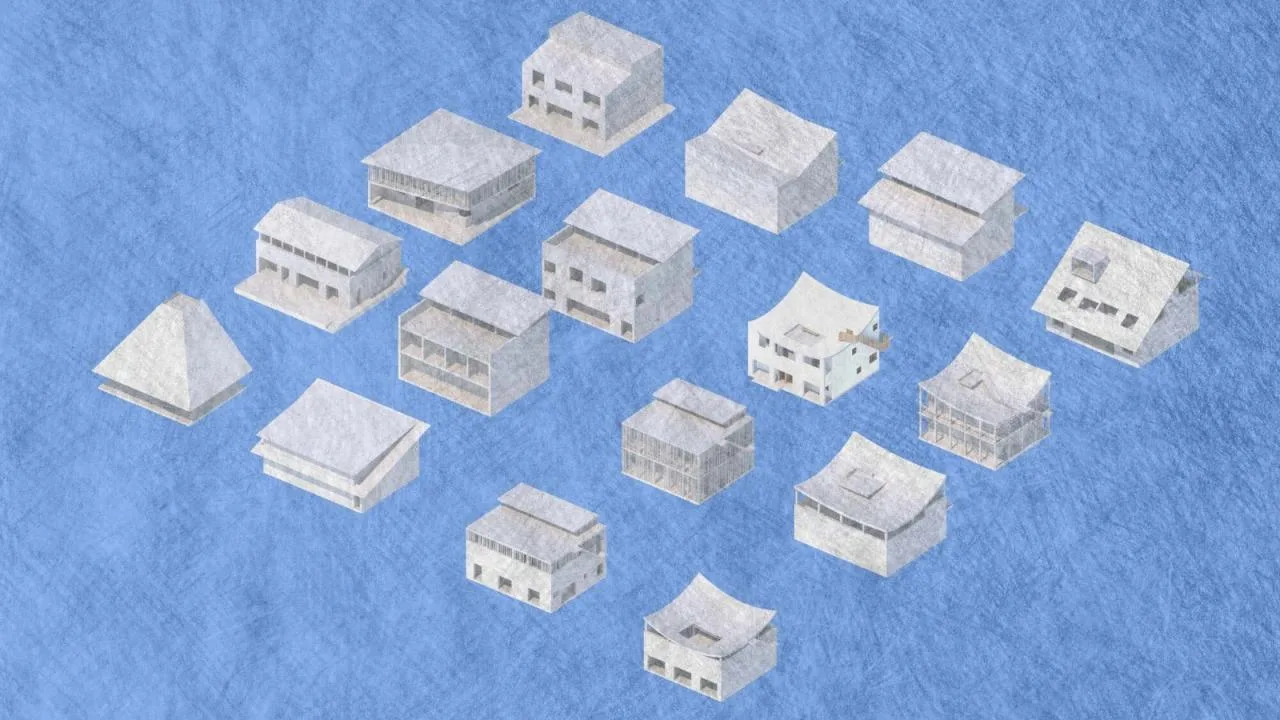
△ Different Scheme Models
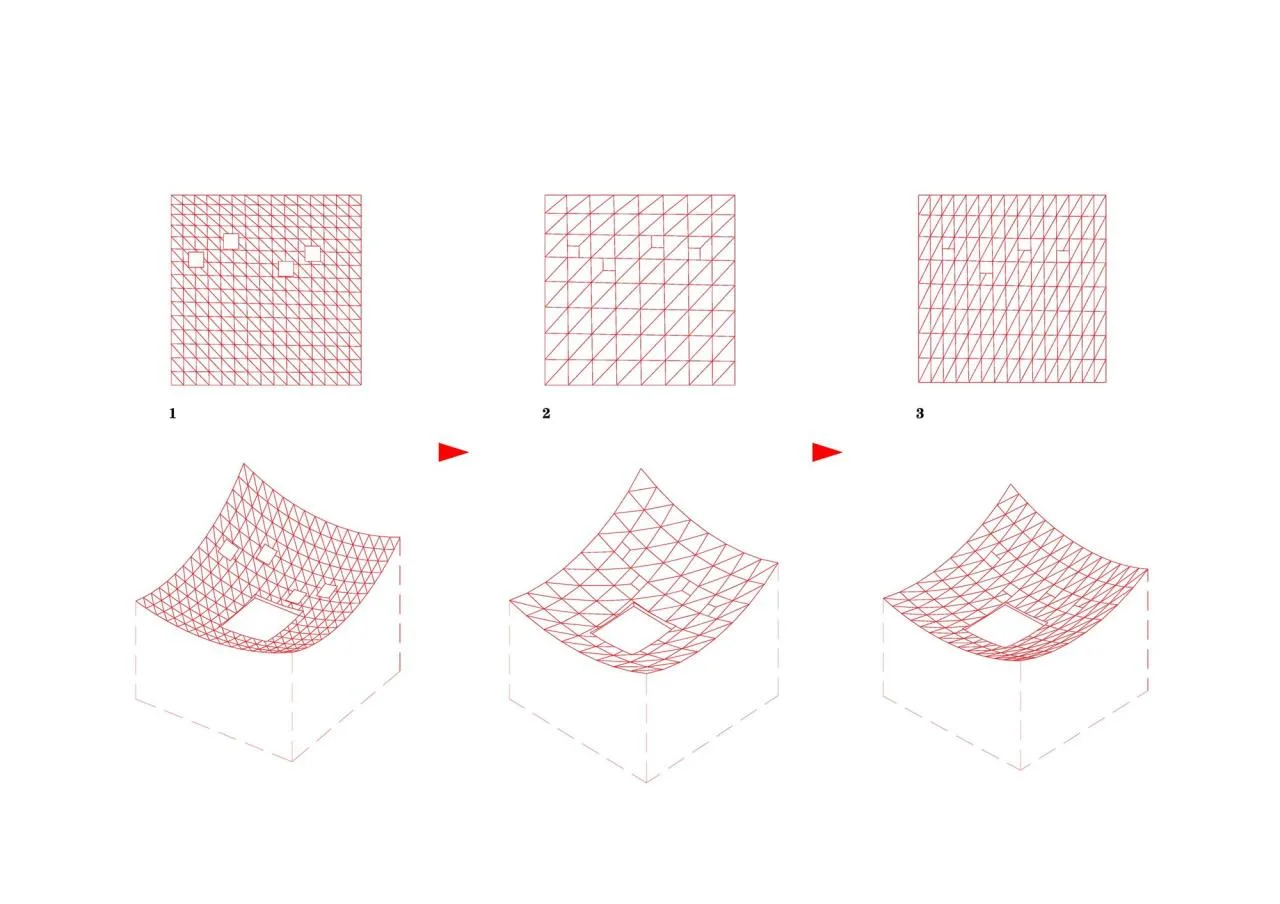
△ Positioning Grid and Roof Height Adjustment
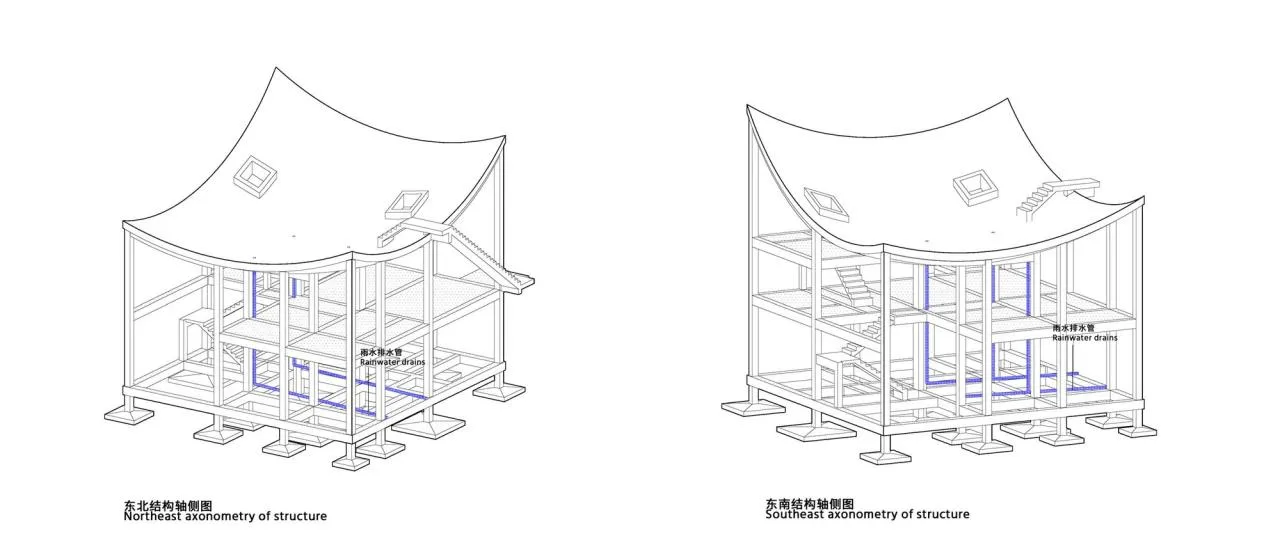
△ Structure and Drainage Diagram
Project Information
Architect: Jumping House Architecture Studio
Area: 310 m²
Project Year: 2021
Photographers: Summer Solstice, Wang Tiantian
Lead Architects: Wang Tiantian, Luo Yaqin
Structural Design: Zhou Jiancheng
Construction Team: Bamboo’s Father, Xiaochai, and Xiaogen Master Team
Client: Bamboo
Location: Fuzhou City












Must log in before commenting!
Sign Up