
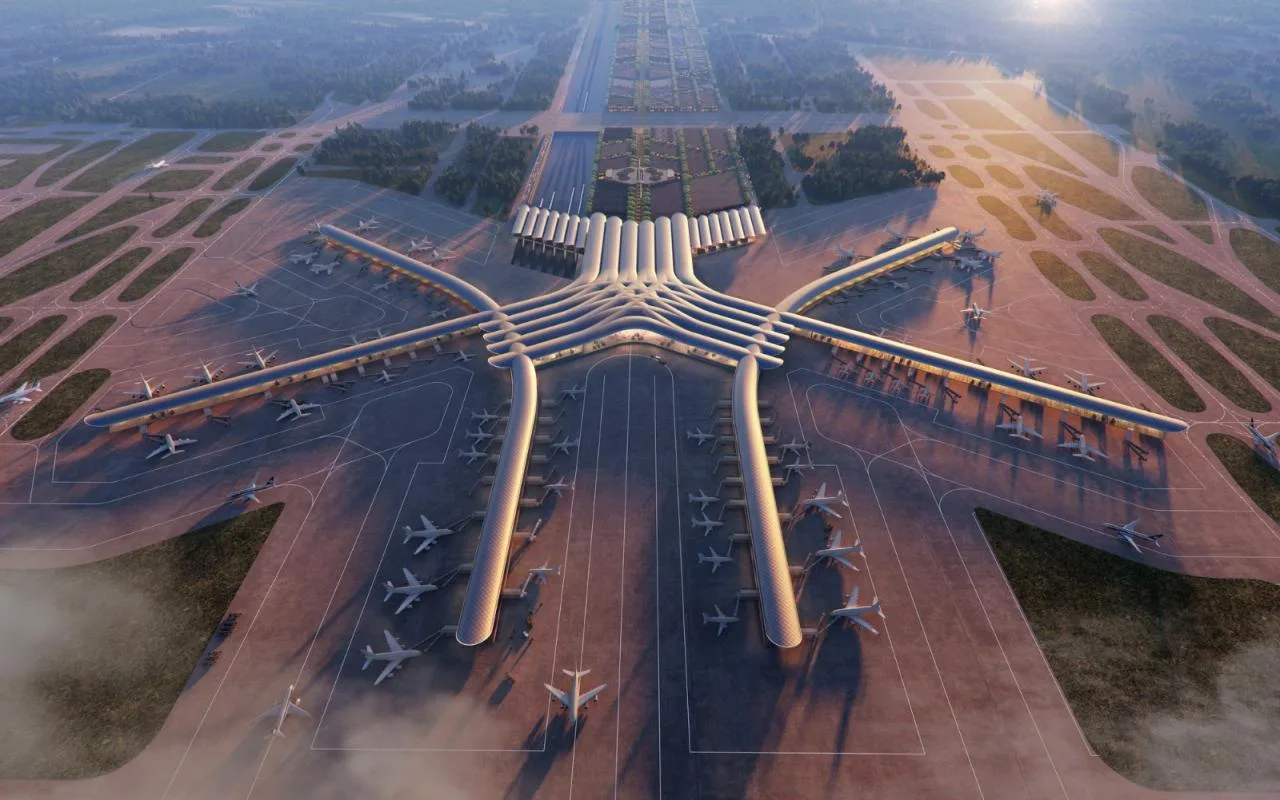
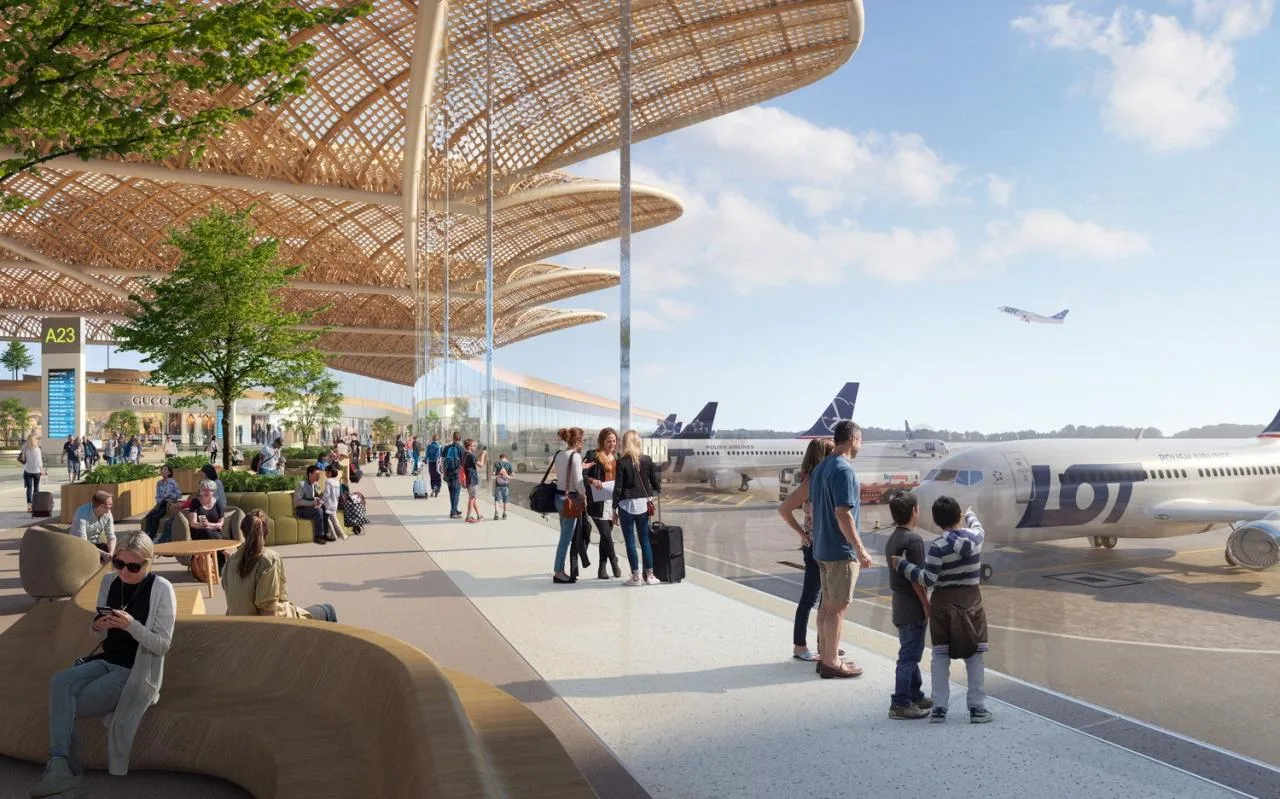
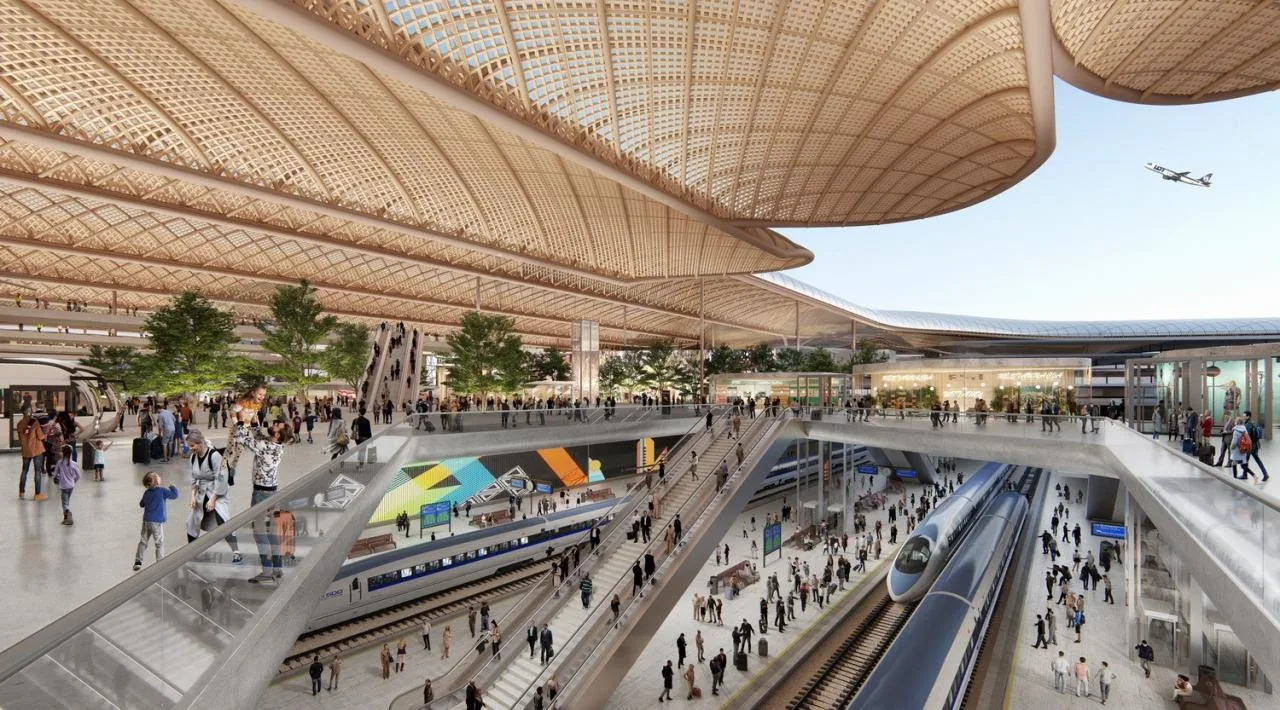
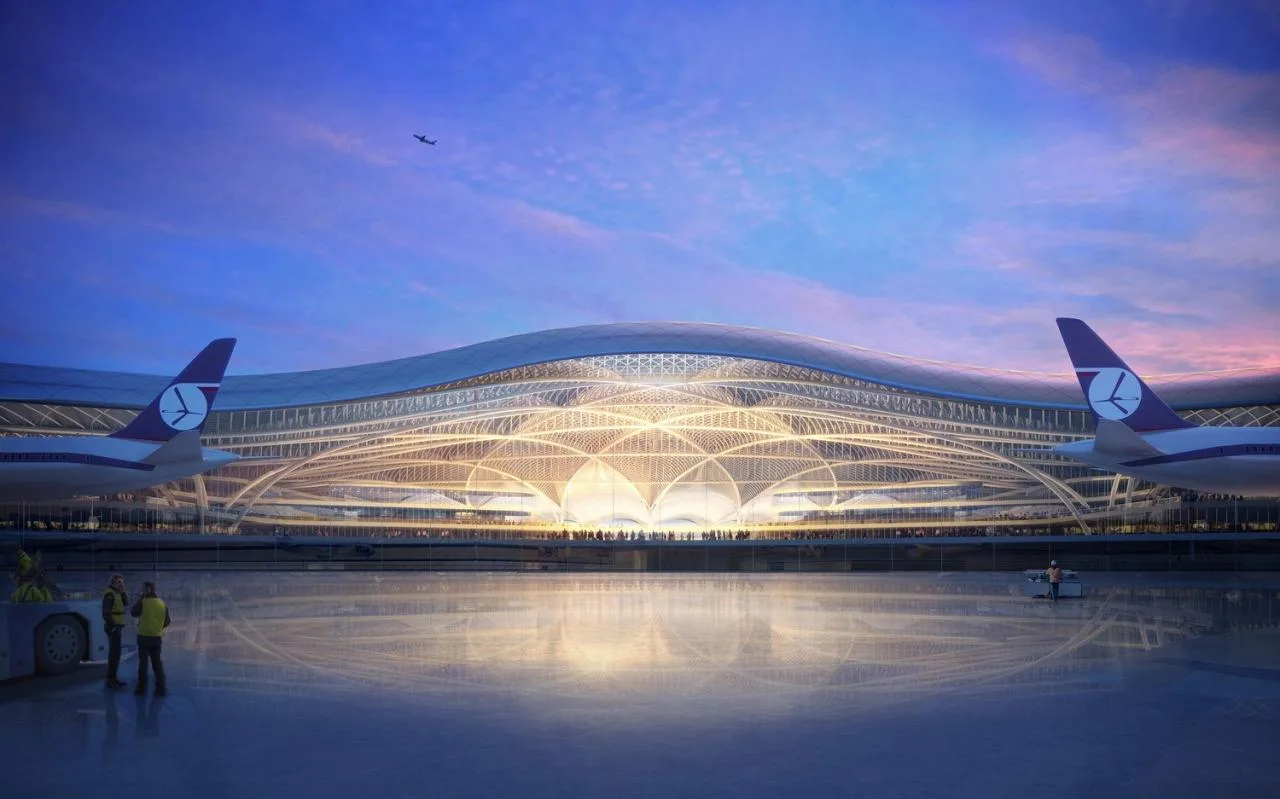
The winning design of the Polish New CPK Airport Competition was presented by Foster+Partners in collaboration with Buro Happold Engineering Consulting Company. Situated between Warsaw and Łódź, the airport is envisioned as a 21st-century transport hub that seamlessly integrates air travel, railways, and highways.
This design aims to balance operational efficiency, environmental sustainability, and the symbolic representation of national identity. Initially planned to serve up to 40 million passengers, the airport’s design also allows for easy expansion to accommodate up to 65 million passengers by 2060.
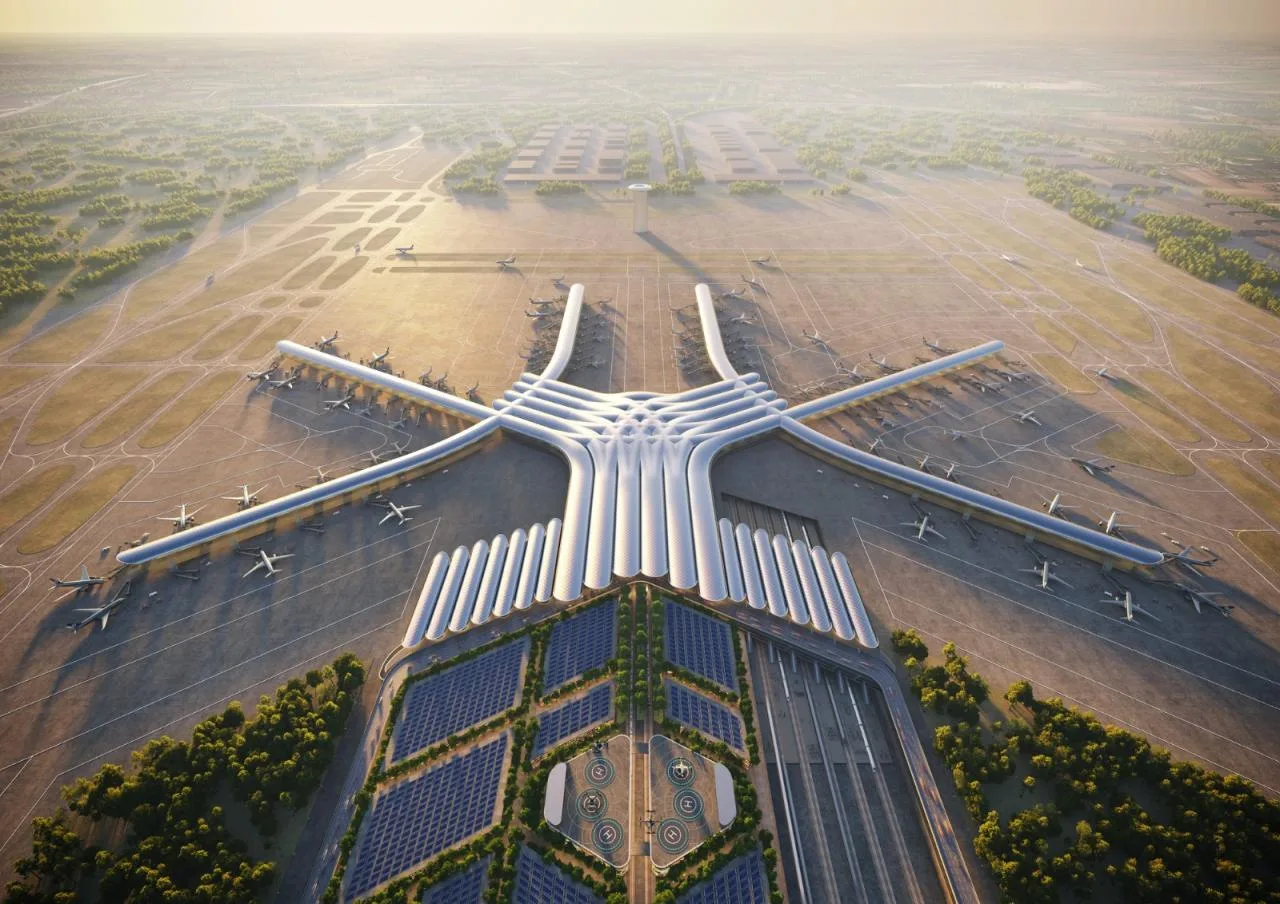
“We believe this project will transform travel across Poland and beyond. The architectural concept of weaving is deliberately prominent, serving not only to shape the buildings and guide passengers through the space, but also as a powerful symbol of Poland’s rich cultural heritage and national unity,” said Grant Brooker, Design Director at Foster+Partners.
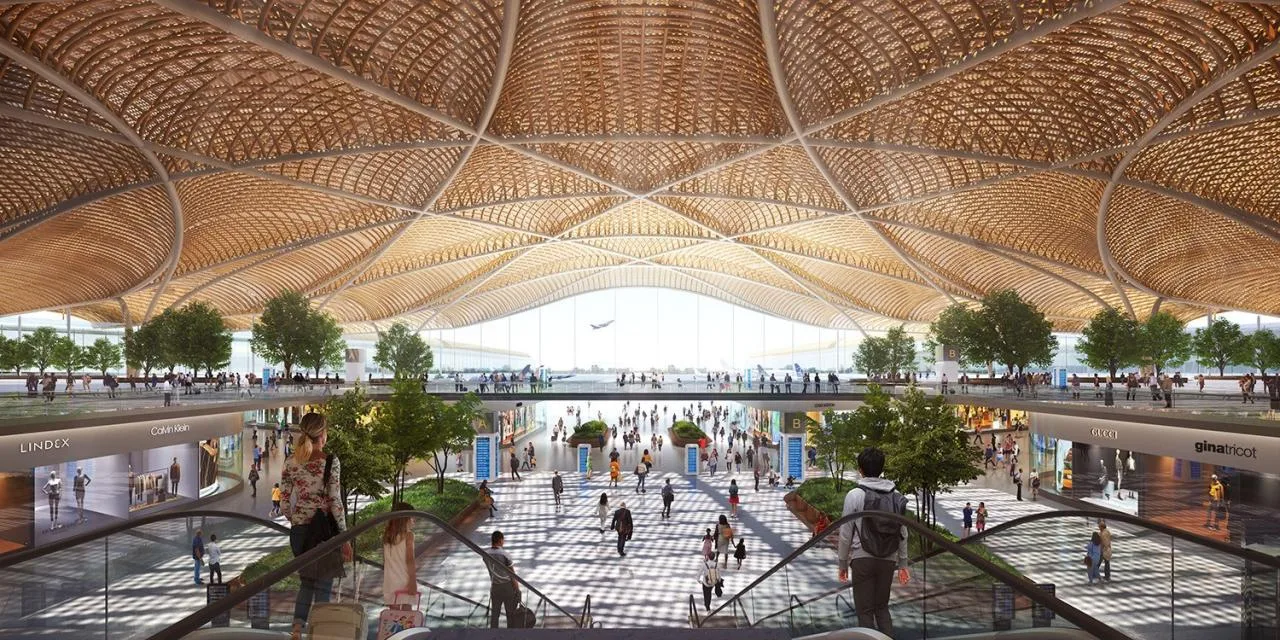
The airport design centers around a large interchange plaza, vibrant with greenery and natural light. This plaza creates seamless connections between key transport modes—air, rail, and road. Serving as the heart of the master plan, it fosters efficient, well-signposted passenger flow and encourages sustainable travel choices.
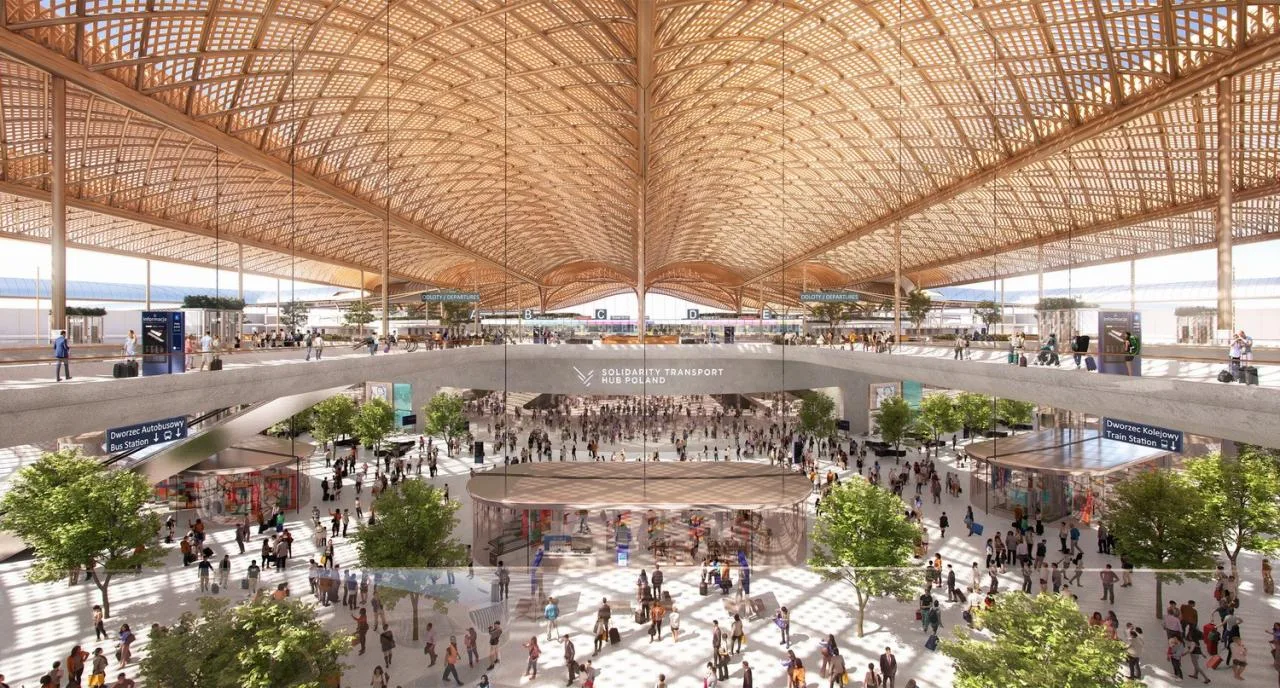
The sweeping arched roof above the plaza naturally draws passengers’ attention from the central hub to the aircraft. This design prioritizes passenger experience by creating an accessible and inclusive environment. Minimal floor level variations and a flexible layout support smooth passenger flow and optimized transfers. Additionally, visual connections with the surrounding landscape enhance spatial orientation within the terminal.
The design also emphasizes modular and prefabricated construction methods, allowing the airport to adapt flexibly to evolving operational demands.
Foster+Partners is also currently constructing another airport in Saudi Arabia, an integral part of the ambitious Red Sea tourism development plan. Inspired by the vibrant colors and unique textures of desert landscapes, the New Red Sea International Airport features five pod-like structures arranged radially around a central drop-off area.
Buro Happold has collaborated with BIG and HOK on the design of Zurich International Airport, and also partnered with OMA to propose the Al Daayan Health Block in Doha, Qatar.














Must log in before commenting!
Sign Up