
Currently, the application and adoption of BIM technology have yet to show significant progress, but its development pace should not be underestimated. Construction companies and all stakeholders involved in projects should approach BIM development with a rational mindset.
Let’s explore the key functions of BIM technology in the construction industry.
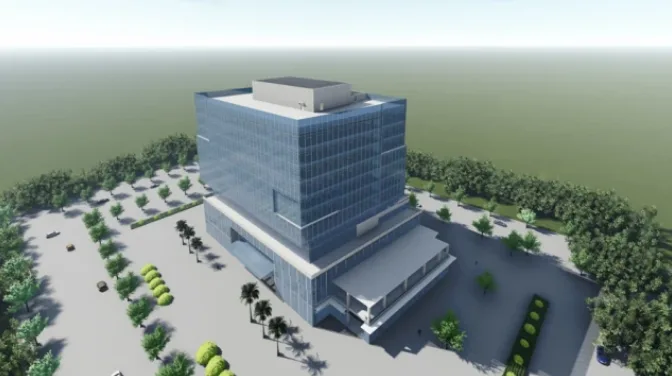
Here are the twelve major functions:
1. Visual Display of Construction Site
This feature allows every project participant to intuitively understand the design scheme and intentions through visual representation, greatly enhancing project management capabilities and communication efficiency.
2. 3D Site Management
It simulates the overall site layout, assisting in optimizing the site plan. It also displays the project’s spatial structure, helping to identify and prevent issues early on.
3. Identification of Drawing Issues During Revit Model Creation
While creating models across different project disciplines, various drawing issues may be uncovered, such as unclear component dimensions, incorrect elevations, or mismatches between detailed drawings and floor plans. These issues are documented during model creation and addressed in drawing review meetings to modify the design accordingly.
4. On-Site Quality, Safety, and Civilized Management
When on-site management personnel detect quality or safety issues, they upload them via mobile applications to the cloud and PC. The BIM system links the location, time, and rectification status of these issues with the BIM 5D model, enabling real-time queries of construction safety and quality at any node, section, or component. It also automatically generates statistical reports on quality and safety.
5. Comprehensive Basement Pipeline Design
Ensuring both the functionality and requirements of electromechanical systems, this integrates and refines designs across disciplines (architecture, structure, HVAC, electrical, plumbing, low current systems, etc.) while considering ceiling heights. During pipeline integration, principles like replacing non-pressure pipes with pressure pipes, using smaller diameter pipes where possible, and simplifying construction to avoid complexity are followed for preliminary adjustments.
6. Comprehensive Design of Pipes and Wells
Accurately locating risers in pipe wells, determining reserved hole positions, avoiding rework, pre-arranging branch pipes, saving materials, and ensuring both aesthetic appeal and practicality to facilitate future maintenance.
7. Template Engineering and Support Frame Detailed Design
Three-dimensional creation of formwork for walls, columns, beams, and slabs, along with reinforcement and support systems, enables scheme planning, technical disclosure, and material processing with clear visual effects, reducing communication barriers. Material usage, including templates, timber, steel pipes, and fasteners, is summarized and controlled effectively.
8. Detailed Masonry Engineering Design
Pre-layout, optimization, and detailed design of masonry elements such as standard and non-standard blocks, core columns, horizontal tie beams, and wire boxes provide technical support for centralized block processing and distribution.
9. Rapid Quantity Extraction
By linking each construction section’s models with the schedule, construction progress can be simulated, allowing easy and quick multi-dimensional queries of quantities based on time and workflow sections.
10. Virtual Construction Management
Following the BIM process of “target setting, simulation, optimization, tracking, display, analysis, and adjustment,” a complete schedule control is implemented, enabling visual project management. This introduces innovative management concepts for production teams and significantly reduces daily scheduling workload.
11. Navisworks Video Production
Using Navisworks’ dynamic progress demonstration features, potential project issues can be predicted through clash detection. The overall project scene is displayed via 4D scheduling, model animations, and simulated equipment installation. The schedule can be dynamically adjusted, providing a basis for decision-making and supporting project progress management.
12. Lumion Video Production
Leveraging Lumion’s real-time 3D visualization capabilities, BIM models can be imported and combined with the software’s visualization modules to quickly produce videos and render static frames. This facilitates dynamic browsing of BIM models, aiding construction planning discussions and effect reviews.
These are the twelve key functions that BIM technology offers to the construction industry. We hope this overview proves helpful!
















Must log in before commenting!
Sign Up