
Today, the adoption of BIM technology in the construction industry has become widely accepted. But what tangible advantages has BIM, developed over many years, brought to the field? And will it continue to benefit the industry in the future?

1. More Accurate Analysis
BIM enables precise architectural scheme design and parameter analysis by creating detailed models. Various building parameters can be input during model creation and adjusted at any time to reflect changes in project quantities. Real-time updates allow modifications to parameters and material definitions based on actual conditions. This facilitates rapid feasibility assessments and enables simulation of different design options, helping teams choose the optimal solution.
2. Enhanced Communication
Traditional construction projects involve multiple teams and departments across design, construction, and maintenance stages. This complexity often leads to communication challenges, especially when coordination occurs across different companies. Typically, issues are only addressed during final reviews, causing duplicated efforts and delays. Construction phases face similar risks, including material waste and rework due to untimely communication.
BIM addresses these barriers by providing a centralized platform where all stakeholders upload their work progress and update building parameters in real time. Team members can easily ask questions, provide feedback, and approve changes within the system, significantly reducing communication delays.
3. Centralized Information Sharing and Consistency
All project data is stored centrally within BIM models, allowing staff to query, filter, and extract information whenever needed. This ensures everyone stays informed on project status and synchronizes updates promptly. As a result, teams can quickly identify changes and adjust their work accordingly, maintaining consistency throughout the project lifecycle.
4. Project Visualization
Visualization plays a crucial role in construction projects. Previously, understanding complex details relied heavily on imagination and experience. BIM’s 3D visualizations offer an intuitive view of the entire project, which is invaluable for introducing the project to clients, explaining designs, simulating construction progress, and refining scheme designs.
5. Project Parameterization
BIM’s parameterization feature allows properties to be modified with automatic adjustments and associations across related elements. For example, changing the floor design will automatically update connected objects like columns and walls. This linkage prevents errors during manual edits, reducing costly rework and waste during construction. Accurate parameterization also boosts efficiency by enabling designers and builders to focus on setting parameters for each object. Errors can be identified quickly, streamlining the design and construction process compared to traditional methods.
6. Improved Construction Quality
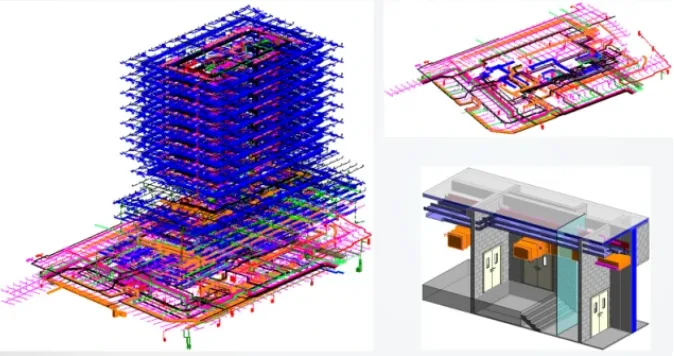
High-quality construction requires precise execution, but traditional methods often suffer from rework and material waste due to communication gaps and unclear drawings. BIM helps managers verify pipeline installations and inspect material quality through digital models. It also synchronizes design and construction plans, enabling timely detection of design errors, rapid scheme adjustments, and parameter updates.
Moreover, BIM supports simulation and monitoring of complex construction processes to prevent issues on site, ensuring a higher standard of quality throughout the project.
In summary, BIM technology offers numerous advantages that streamline construction projects, improve collaboration, and enhance overall quality. As BIM continues to evolve, it will further elevate construction practices and provide solid technical support for the future development of the industry. We hope this overview helps you better understand the value BIM brings to construction.
















Must log in before commenting!
Sign Up