
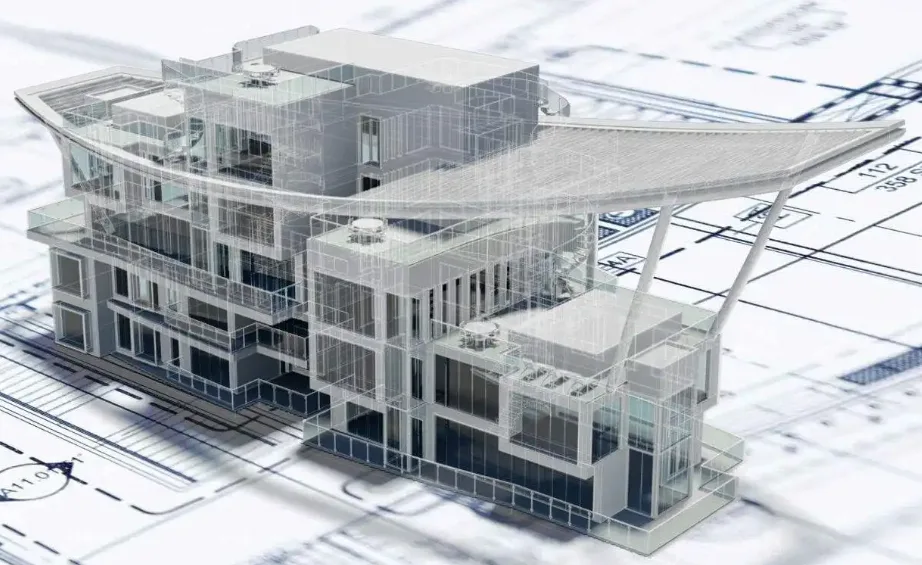
BIM models primarily serve as vital data support tools within the construction industry. They integrate, consolidate, and analyze information from various aspects of a construction project using specialized BIM software, ultimately applying these insights to enhance project quality and reduce completion time.
1. Since the advent of the information age, many manufacturing and service industries have successfully transitioned into intelligent digital operations through comprehensive informatization. However, numerous studies reveal that the construction industry’s progress in informatization and automation has lagged behind other sectors. One possible reason is that increased transparency in engineering information conflicts with the traditional culture that has long existed in the construction field.
2. The integration and collaborative management of engineering graphics and textual information, along with a relative transparency of data, is inevitable. When representing building elements through 2D plans, many simplifications and omissions occur. These simplifications often lead to blind spots, speculation, and disputes, resulting in significant losses caused by oversights and misjudgments.
3. BIM models represent the most direct application of BIM technology, providing comprehensive data support at every project stage through data integration, verification, processing, and analysis. Their specific functions include design modeling, design review, as-built modeling, site analysis, 3D coordination, cost estimation, engineering analysis, facility energy performance assessment, sustainability evaluation, spatial and phase planning, digital construction, site utilization planning, 3D control and scheduling, completion simulation, project system analysis, maintenance planning, spatial management and tracking, as well as asset management.
As a data-driven technology for construction projects, BIM has been widely adopted in architecture and related fields. Earning a BIM certification enables professionals to qualify for technical roles as BIM modelers.
The impact of BIM models extends beyond design and construction. With BIM’s adoption, the industry has diversified into new sectors such as property management, equipment manufacturing, software and IT services, technical training, and certification. This expansion broadens the construction industry chain and increases the overall scale of industry output.
















Must log in before commenting!
Sign Up