
The widespread adoption of BIM technology has transformed the construction industry, shifting from primarily using drawings to integrating both graphics and 3D models in production processes. Models now play a crucial role throughout project planning, design, construction, operation, maintenance, and overall industry management.
1. Current Status of BIM Technology Learning
1.1 Talent Demand
The Ministry of Housing and Urban-Rural Development has issued the “Guiding Opinions on Promoting the Application of Building Information Modeling” policy. This policy mandates that by 2020, large and medium-sized buildings funded mainly by state-owned capital should have a 90% integration rate of BIM applications across surveying, design, construction, operation, and maintenance for public buildings and green ecological demonstration communities.
As a result, organizations are actively building their own BIM teams, leading to an increasing talent gap. Furthermore, with the 2018 implementation of national standards like the “Construction Application Standards for Building Information Modeling,” it was projected that the national BIM talent gap would reach 600,000 by 2021. This gap is expected to continue growing in 2022 and beyond, making proficiency in BIM technology essential to maintaining competitiveness in the industry.
1.2 Technical Application
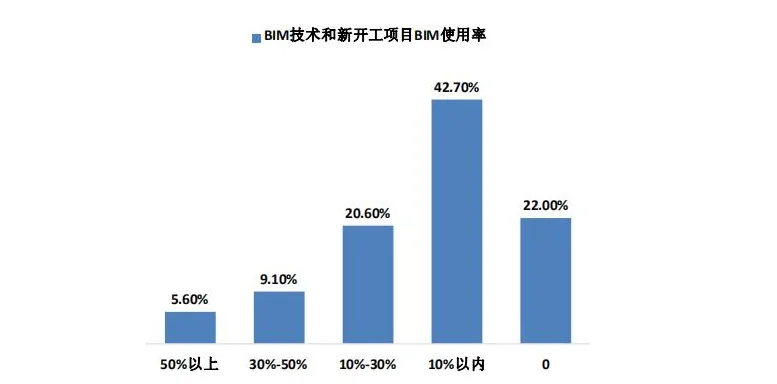
Although BIM technology has been applied across various stages of the building lifecycle, its overall adoption rate remains relatively low within the industry. This is especially true for construction firms, which play a key role in transforming designs and models into physical structures. Many technical personnel lack sufficient BIM theoretical knowledge, and the importance of BIM application is often underestimated within organizations, resulting in a severe shortage of qualified BIM professionals.
1.3 Career Advancement
The rise of BIM has created numerous new job opportunities and specialized roles. BIM practitioners need to stay ahead by aligning their software skills and BIM implementation knowledge with industry developments. Proactive career planning that incorporates BIM expertise will help professionals remain competitive and seize opportunities as the field evolves.
2. Future Development Prospects of BIM Technology
2.1 National Goals
Current BIM guidelines set a target to achieve a 90% BIM integration rate by the end of 2021 for new projects including large and medium-sized buildings funded mainly by the state, as well as public buildings and green ecological demonstration communities applying for green building certification.
2.2 Regional and Sectoral Initiatives
Alongside national planning, provinces, cities, and municipalities directly under the central government have introduced their own BIM development plans and targets. Ministries overseeing the construction industry and related administrative departments have also issued documents and policies that clarify BIM requirements for digital city construction (CIM).
This overview highlights the current status and promising future of BIM technology learning. It is clear that significant growth opportunities still exist in China’s BIM development. I hope this article provides helpful insights for everyone interested in this field!
















Must log in before commenting!
Sign Up