
In today’s rapidly evolving construction industry, Building Information Modeling (BIM) technology plays a vital role, supported by specialized software. BIM models serve as the core representation and carrier of this technology. But what are the key considerations when creating BIM models? Let’s explore.
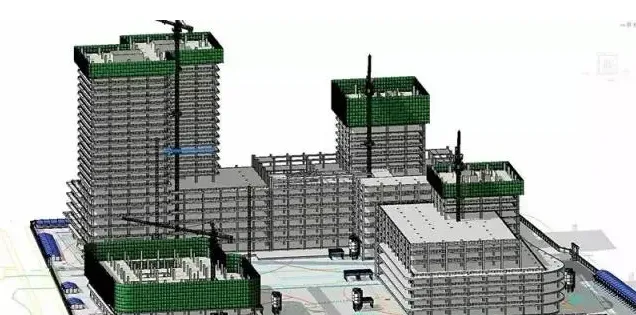
1. The process of building BIM models primarily relies on architectural, structural, and system elevation drawings provided by the client. If the construction contractor notices any questionable details during modeling, they must promptly notify the supervising authority and the client. Subsequently, a coordination meeting should be held to resolve any uncertainties. BIM construction must adhere to the following guidelines:
• Develop a graphical and procedural construction plan that integrates BIM models for simulation purposes, including hypothetical projects and auxiliary construction tools.
• Provide a BIM model centered on the design timeline, incorporating construction details tied to manufacturing objects. This includes creating work items and scheduling processes, which are illustrated through model animations.
• Update and revise the BIM model throughout the construction process, progressively integrating it into the final as-built documentation.
• Establish an information management platform to streamline processes such as Requests for Information (RFI), design changes, and coordination among supervisors, contractors, and negotiation parties.
2. The level of detail in BIM model segmentation greatly affects the ease and accuracy of information extraction, combination, and processing, as well as the precision of model visualization. However, finer segmentation results in more components, increasing the workload for maintaining supplier and other data, and slowing down the modeling speed.
Consider the following key challenges:
a. Creation of New Families
Modern architectural designs often incorporate a wide range of new products and materials. Many elements such as doors, windows, light fixtures, and valves have evolved rapidly, resulting in few identical BIM families. Modelers must continuously update and refine these BIM families. The more accurately a BIM family represents the real product, the longer it takes to create, impacting the overall modeling timeline.
b. Modeling Irregular Structures
Irregular components like unconventional beams, columns, and ducts are generally created using volumetric methods. BIM software relies on operations like extruding, rotating, and cutting to shape these elements. Generating such components demands significant computation time and resources, often requiring multiple attempts to achieve precision. Since construction site computers are primarily configured for daily project management, not intensive modeling tasks, hardware limitations create a conflict between modeling demands and routine operations.
c. Workset Division
BIM models, due to their detailed nature, can contain tens of thousands of components. Insufficient workset division leads to lengthy file synchronization times and frequent failures when saving synchronized files, hindering progress. Conversely, dividing worksets too finely can prevent timely detection of model errors between sets, which may only surface during final integration. Such errors often lead to extensive rework, delaying model delivery.
In summary, BIM modeling is a meticulous, time-consuming process requiring extensive data input before the model can be effectively utilized. While additional challenges will emerge with ongoing experience, understanding these fundamental considerations is essential for successful BIM implementation.
















Must log in before commenting!
Sign Up