
Building Information Modeling (BIM) is a groundbreaking technology in architecture that follows the era of CAD. It utilizes various relevant data from construction projects to create detailed building models and digitally simulate the real-world information of structures. BIM technology is defined by five key features: visualization, coordination, simulation, optimization, and graphing.
By incorporating diverse project data into parameterized models, BIM enables seamless sharing and transmission of information throughout the entire project lifecycle—from planning and design to construction, operation, and maintenance. The three fundamental characteristics of BIM technology are highlighted below.
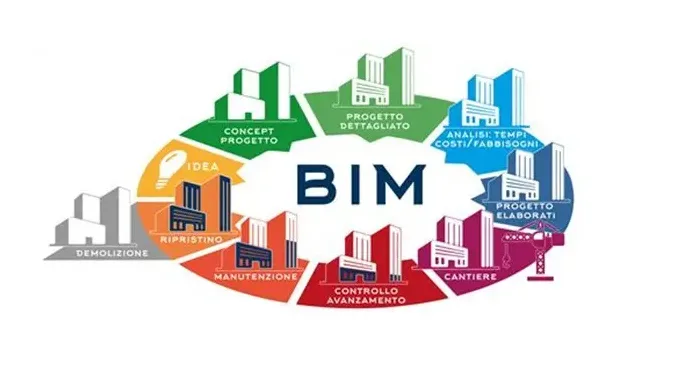
1. Timeliness of BIM Database Information
BIM creates a three-dimensional model containing the building’s information parameters. When project data is updated or changed, only the relevant parts of the BIM model need adjustment, and the entire database updates automatically, evolving alongside the project lifecycle. This database includes quantities of materials, market prices, and data before and after design changes. Cost managers can quickly and accurately access the necessary information, improving both efficiency and the quality of cost control.
2. Accuracy of Quantity Calculations
BIM technology relies on parametric models grounded in spatial topology and 3D calculation rules. Cost estimators only need to update these calculation rules within the BIM software, and the system automatically performs precise and rapid component calculations. This eliminates tedious manual calculations, significantly saving time while enhancing the accuracy of quantity estimations.
3. Sharing and Management of BIM Database
Engineering cost information is vital for effective project management. Through BIM’s parameterized models, this information is stored in databases accessible to all project stakeholders, facilitating collaboration and communication. The extensive cost data within the BIM database allows companies to establish benchmarks and quickly generate BIM models for new projects by referencing historical data.
In summary, these three core characteristics of BIM technology provide robust support for information sharing and communication, offering a solid foundation to improve and optimize engineering cost management throughout the project duration.
Source: Author: BIM Website Source: BIM Website
















Must log in before commenting!
Sign Up