
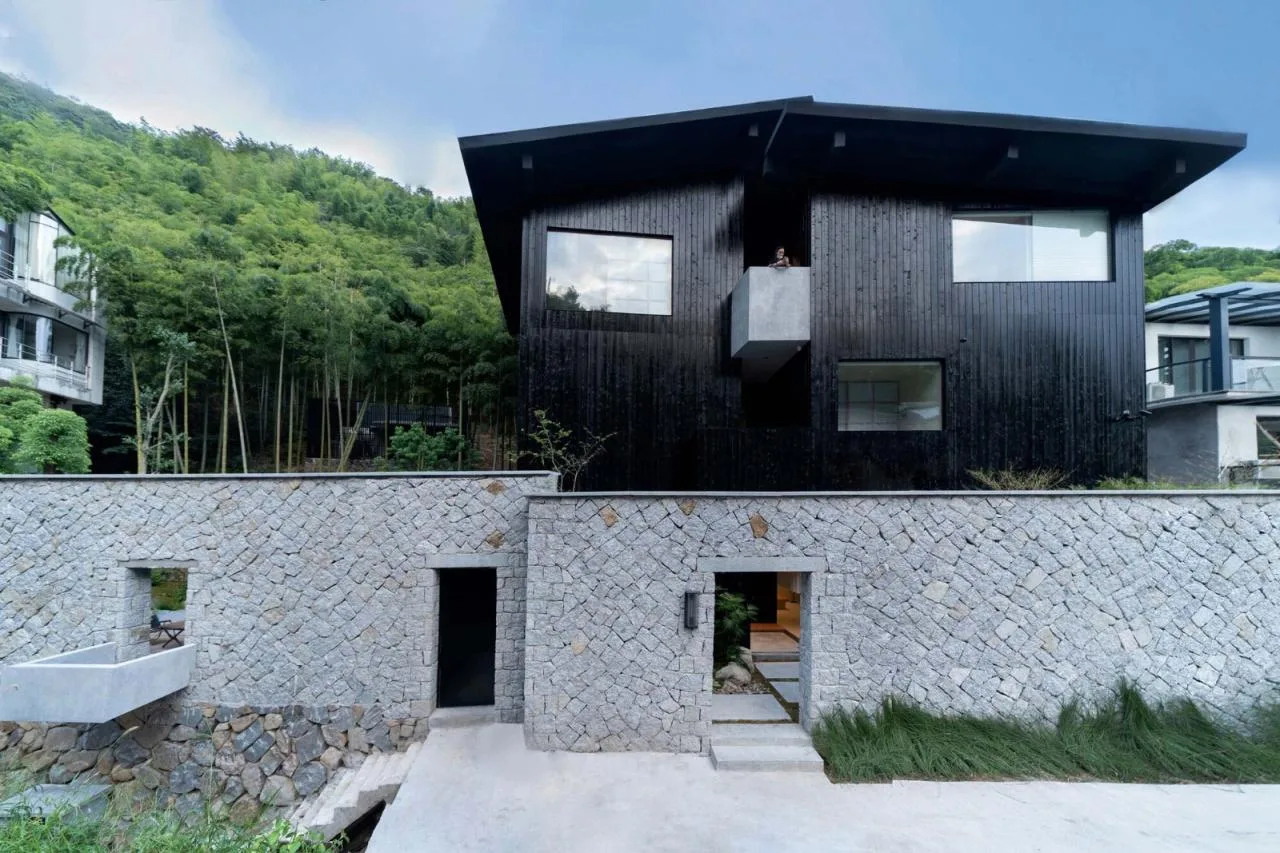
Overview: This inward-looking project consists of a cluster of buildings designed to evoke the traditional rural villages of Jiangnan, reimagined as a modern garden complex. Located in Moganshan Town, Deqing County, Huzhou City, the newly constructed three-story homestay blends tradition with contemporary design.
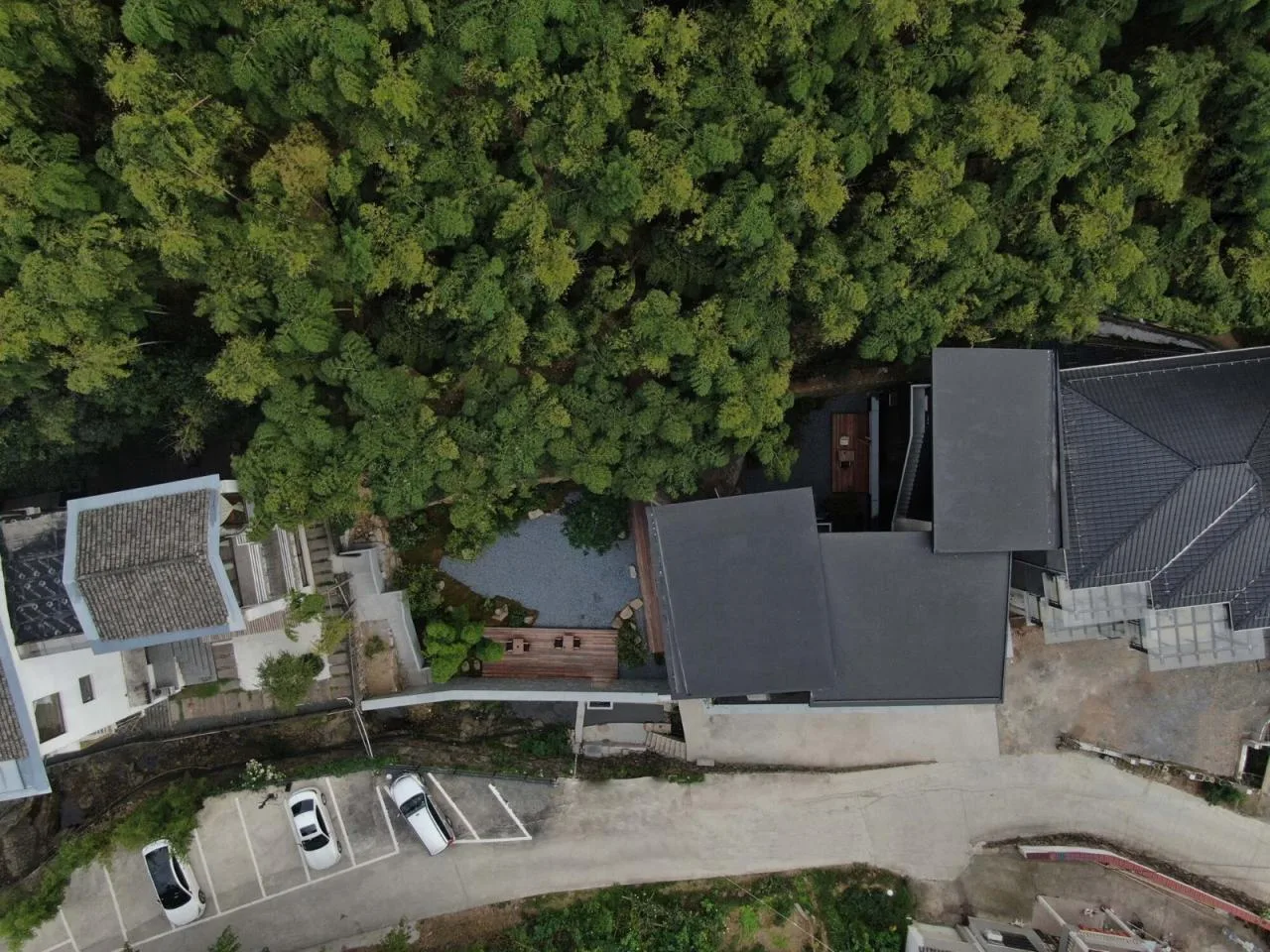
The site is bordered by the first phase of the homestay brand building to the north, a three-story residential building to the south, and partially by a creek on the west, which runs close to a main road. The terrain slopes gently upward from southwest to north, with a height difference of nearly four meters at the northern edge. Across the road to the southwest stands another three-story residence, while tea gardens and bamboo forests frame the west side, and a large bamboo mountain rises behind to the east, all nestled within a narrow valley between two mountains.
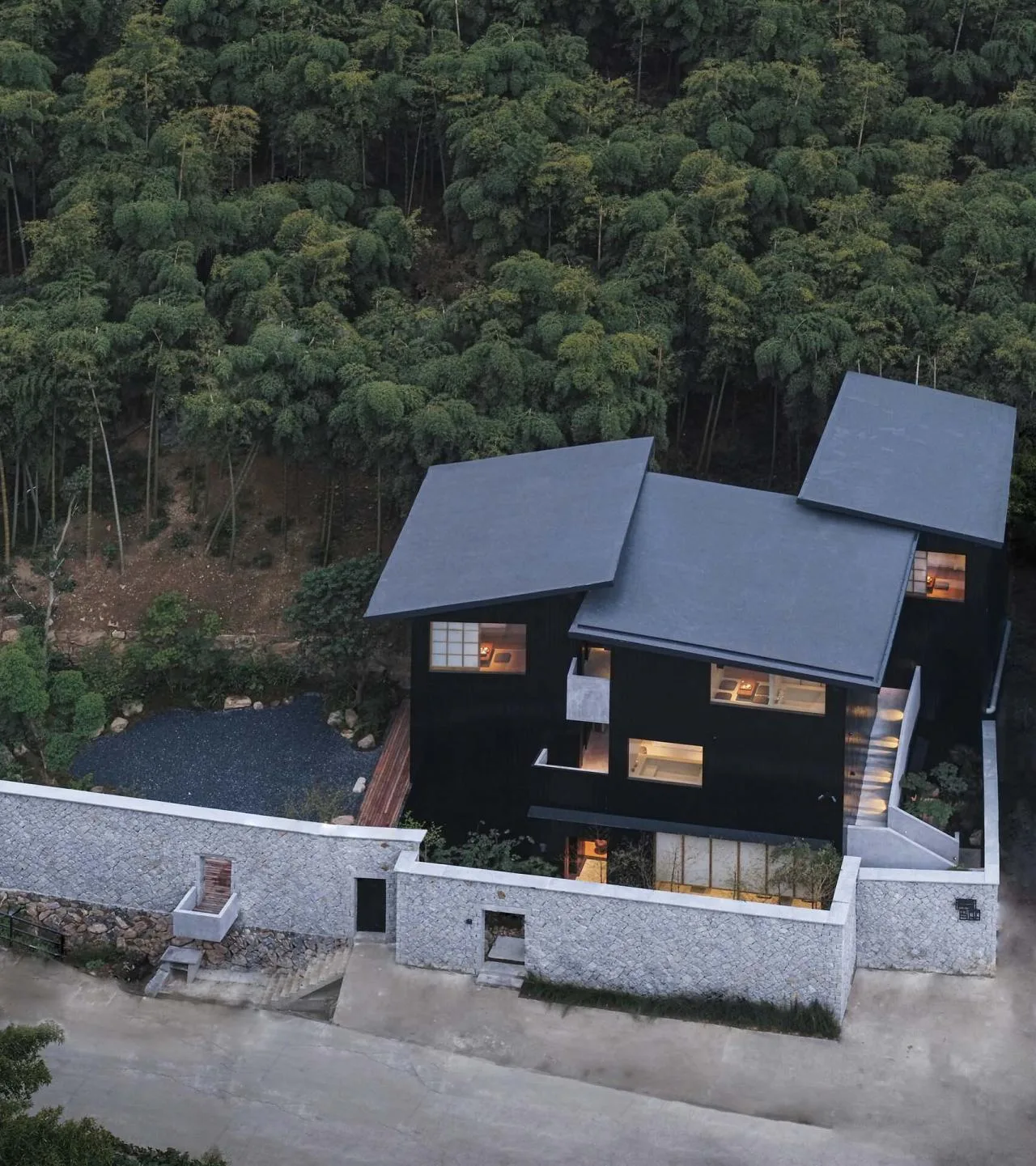
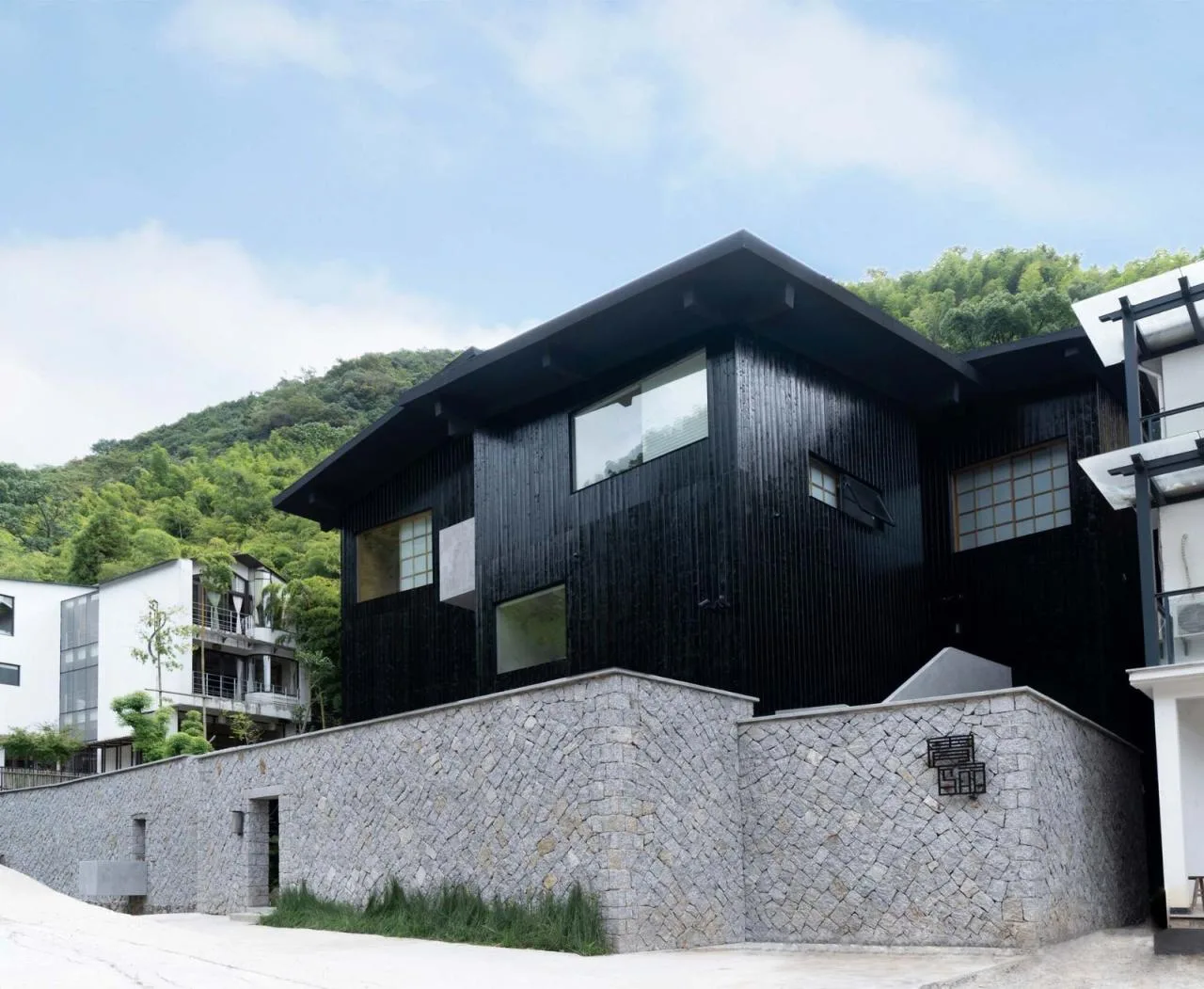
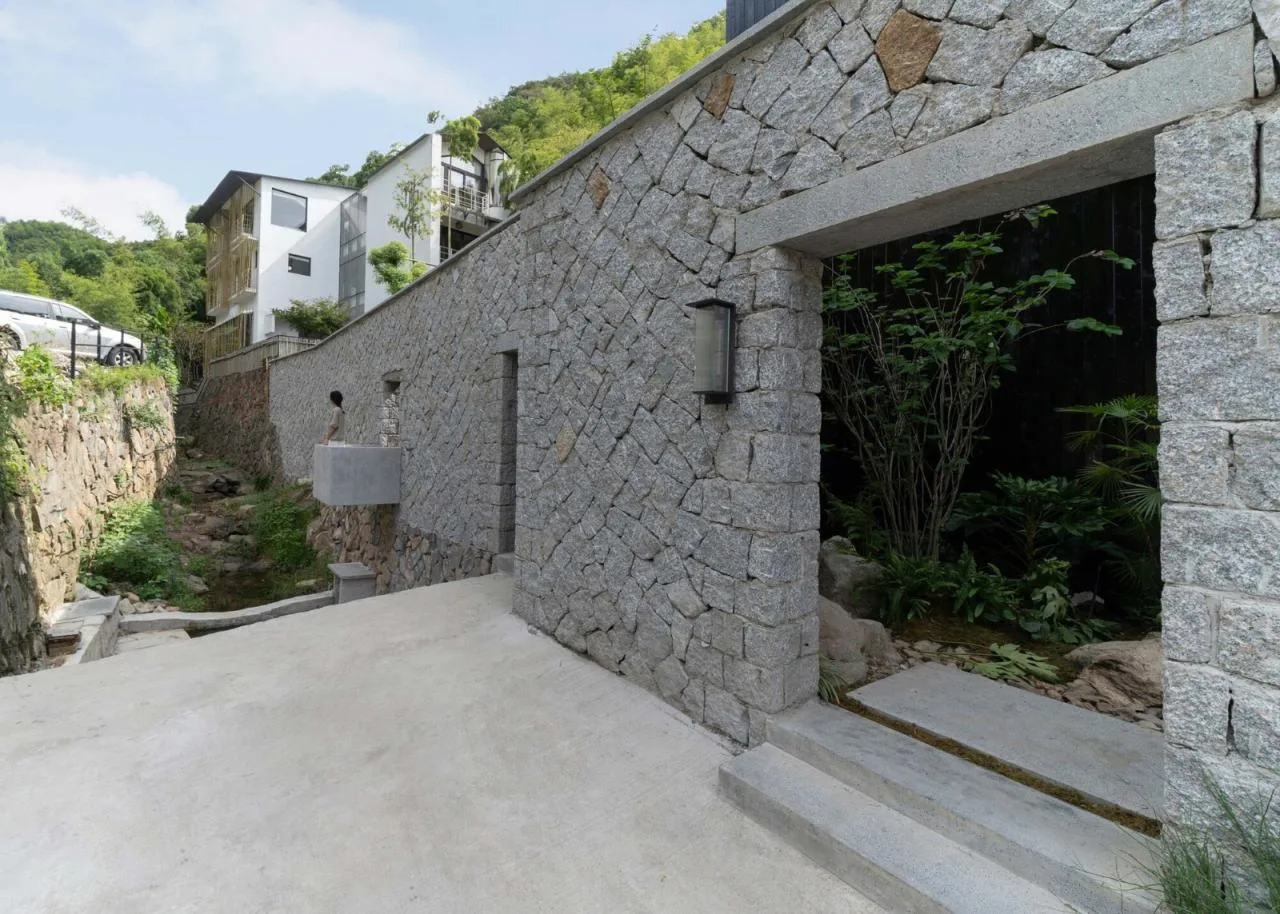
This site presents challenges such as low terrain, dense surrounding buildings, and limited views. However, it benefits from scenic streams, bamboo forests, and tea gardens. The main design challenge was to craft a high-quality internal experience while minimizing external disturbances. Inspired by traditional garden design, a nearly four-meter-high stone wall encloses the project, creating a secluded inner world.
From the entrance and the terrace overlooking the stream, visitors catch glimpses of the inner courtyard, where several large trees rise above the stone wall. This high barrier shields the courtyard and first floor from passersby, sparking curiosity while also dampening noise from the surroundings.
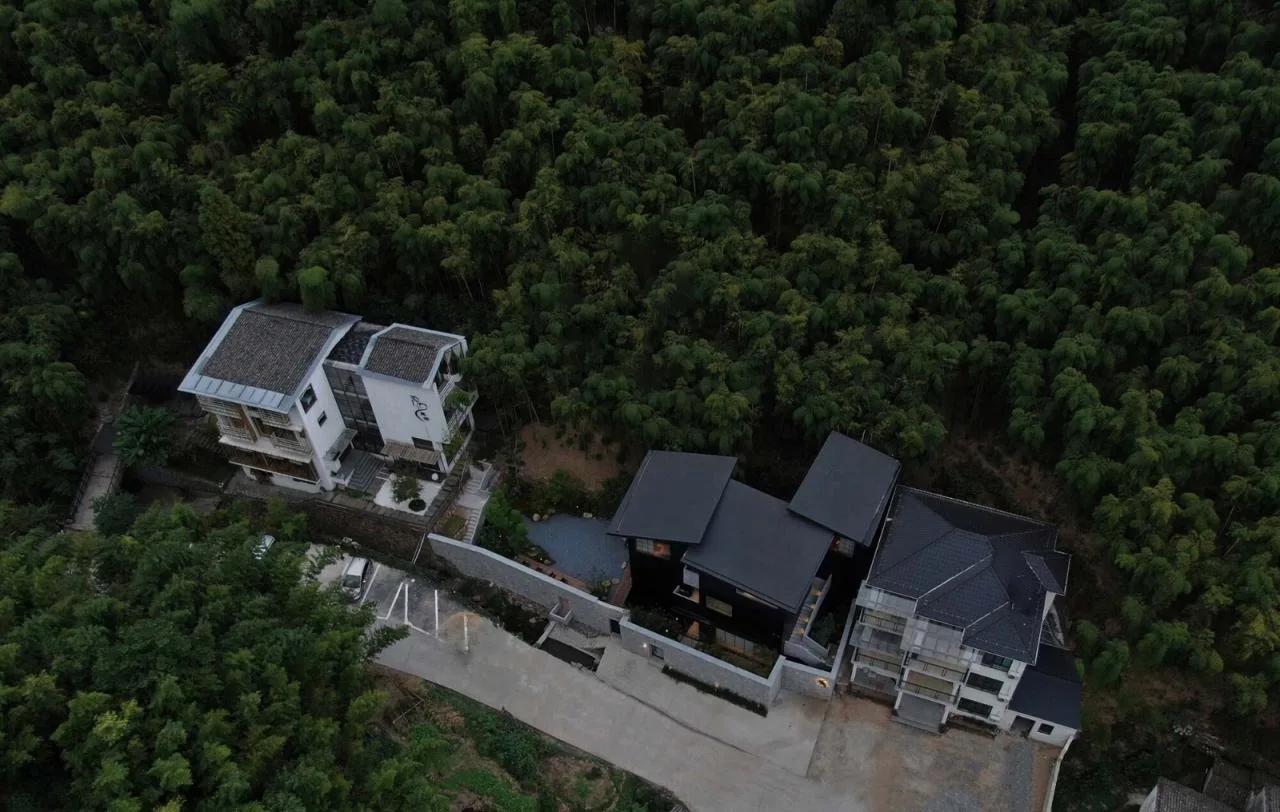
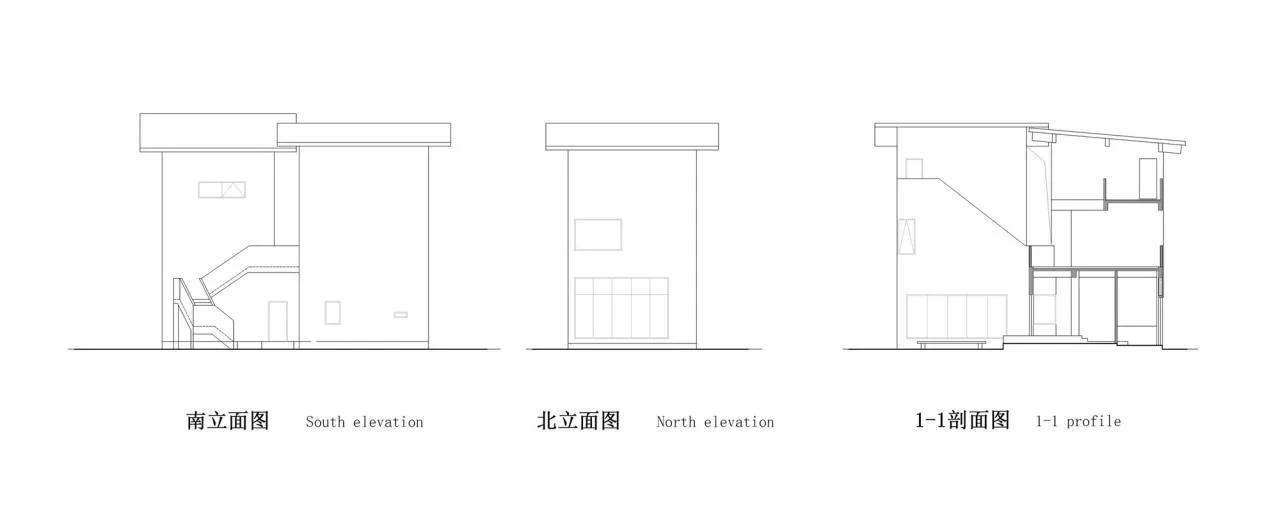
Though covering 140 square meters across three floors, the building avoids the disproportionate scale common to many rural three- and four-story residences. The first floor is subtly concealed, while the second and third floors are divided into three smaller volumes resembling intimate two-story houses. These proportions create a cozy, elegant atmosphere that harmonizes with the rural setting and evokes memories of traditional Jiangnan homes.
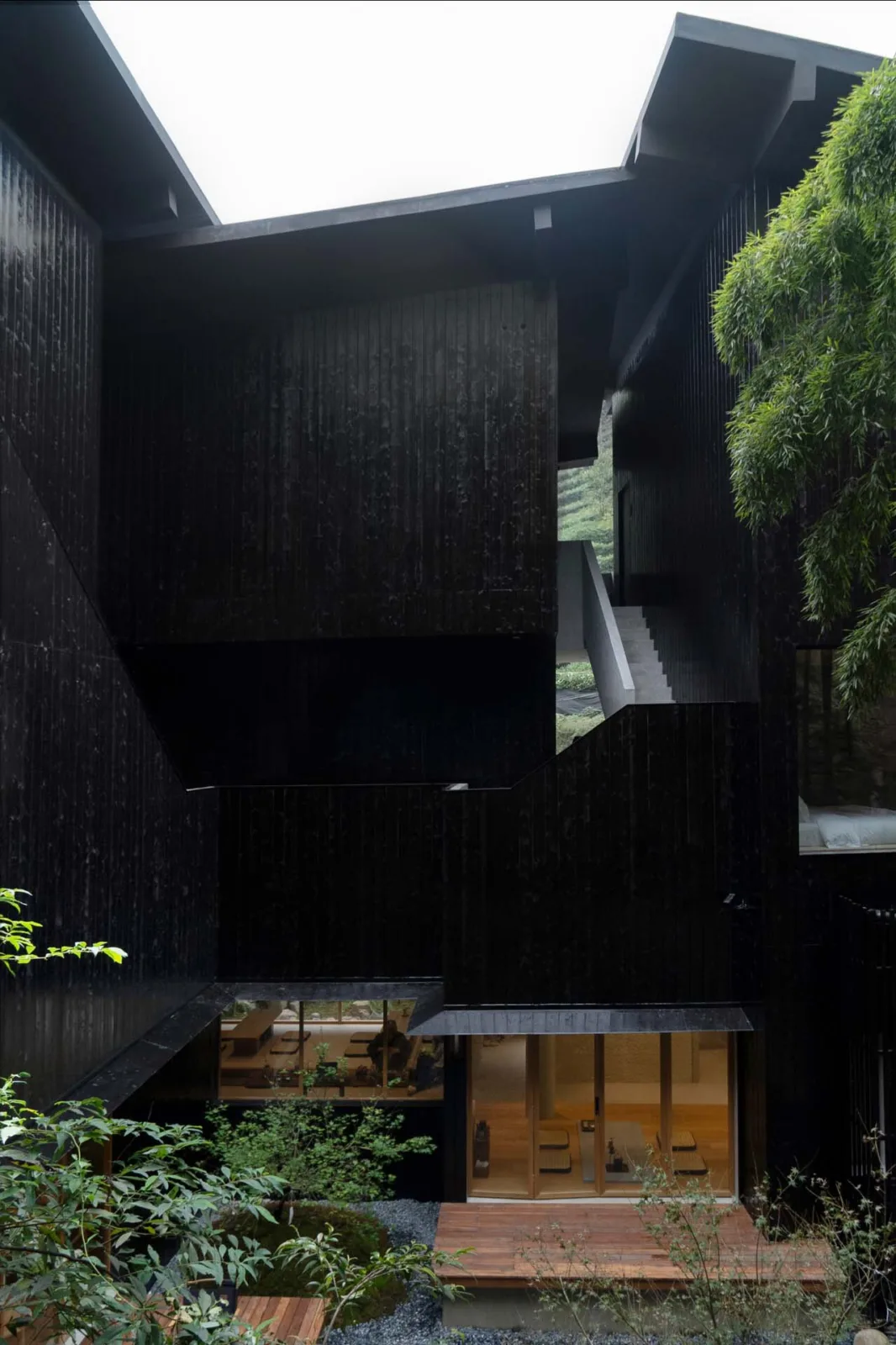
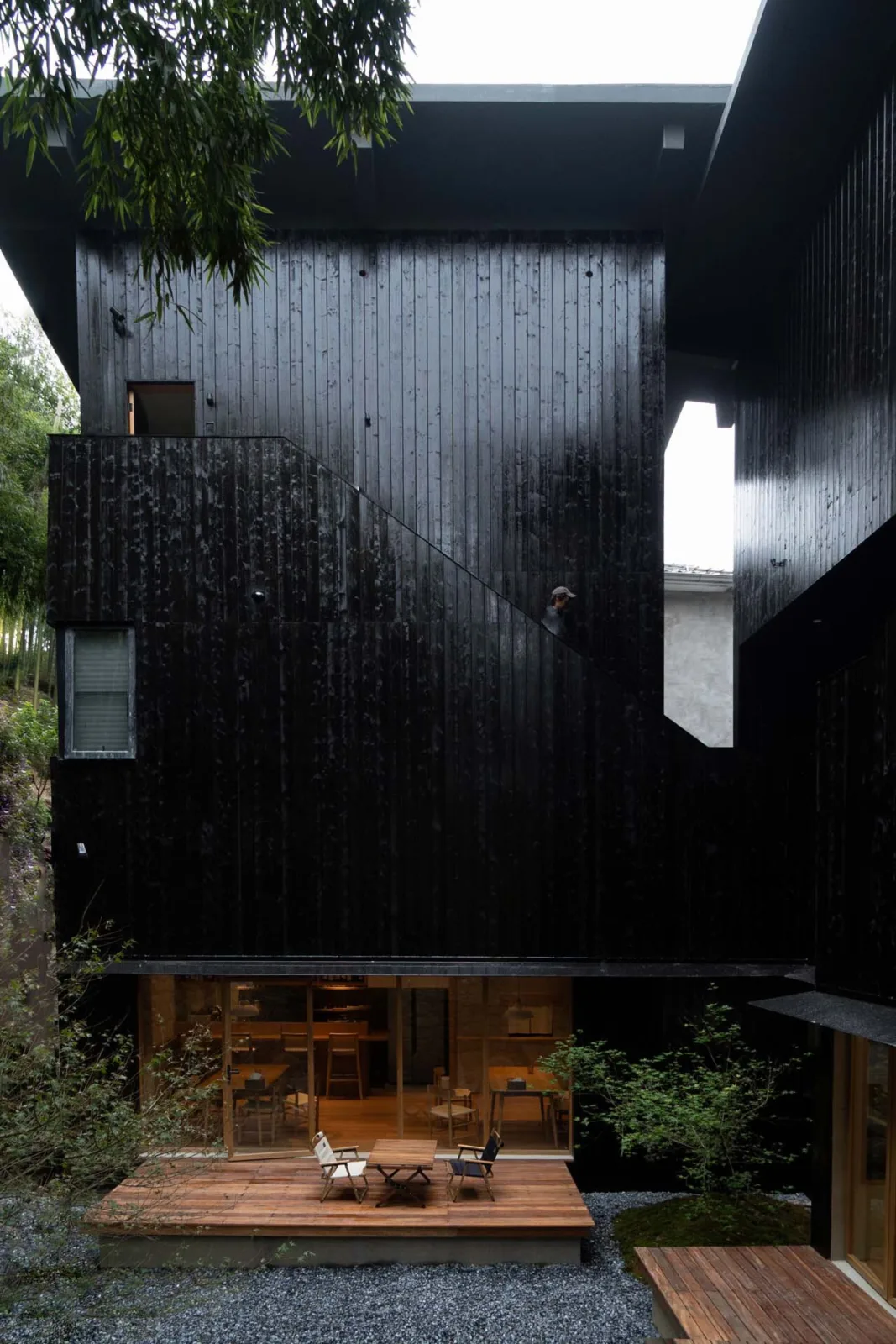
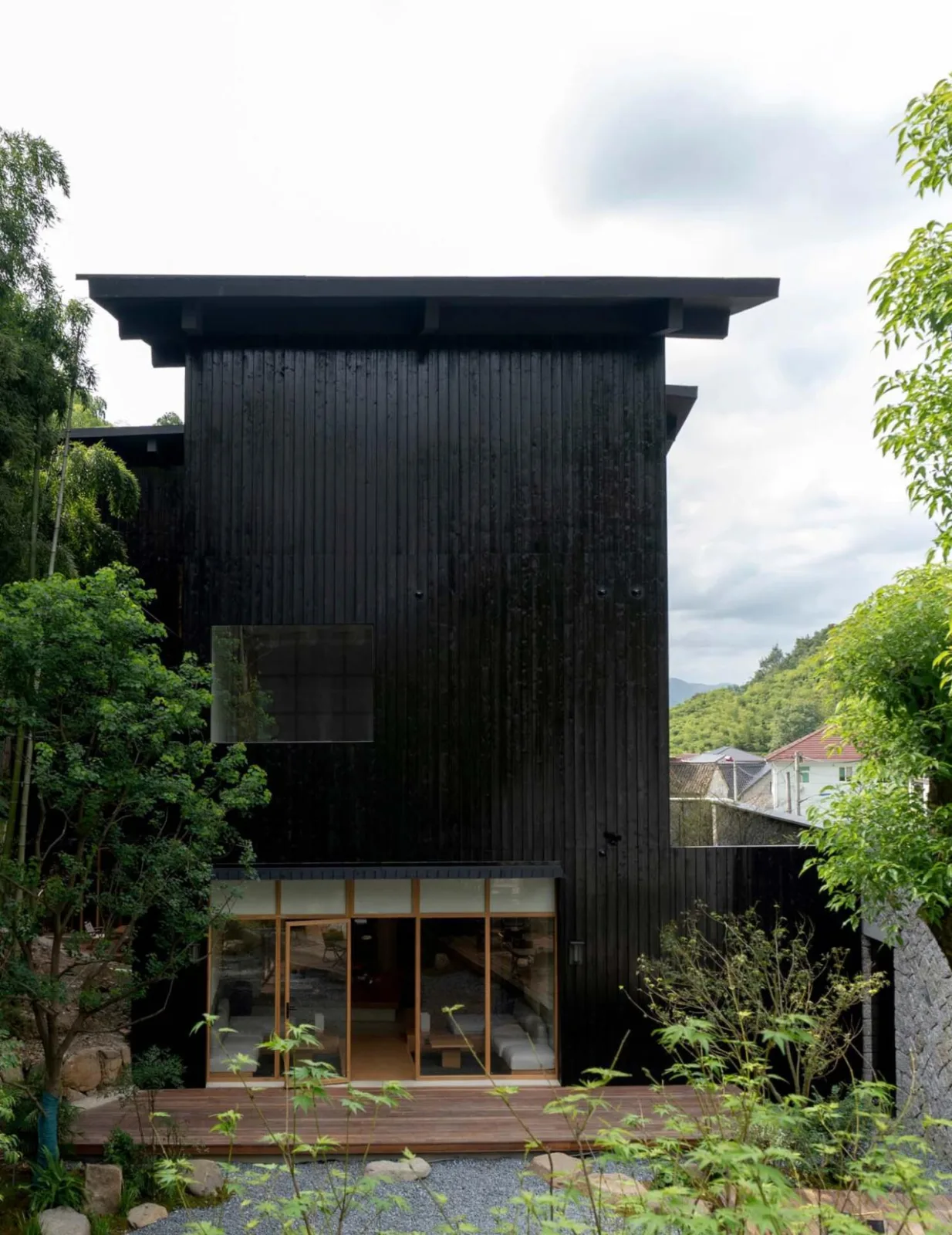
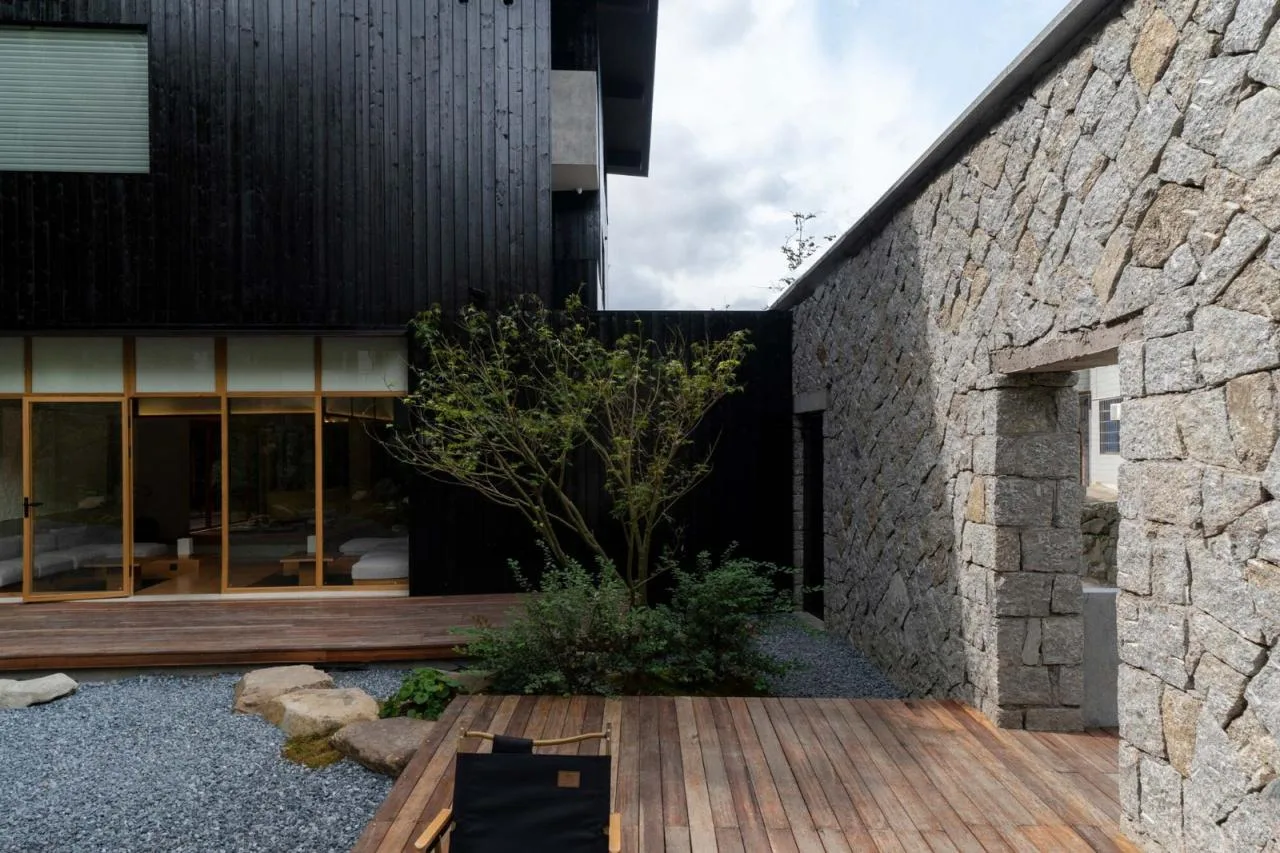
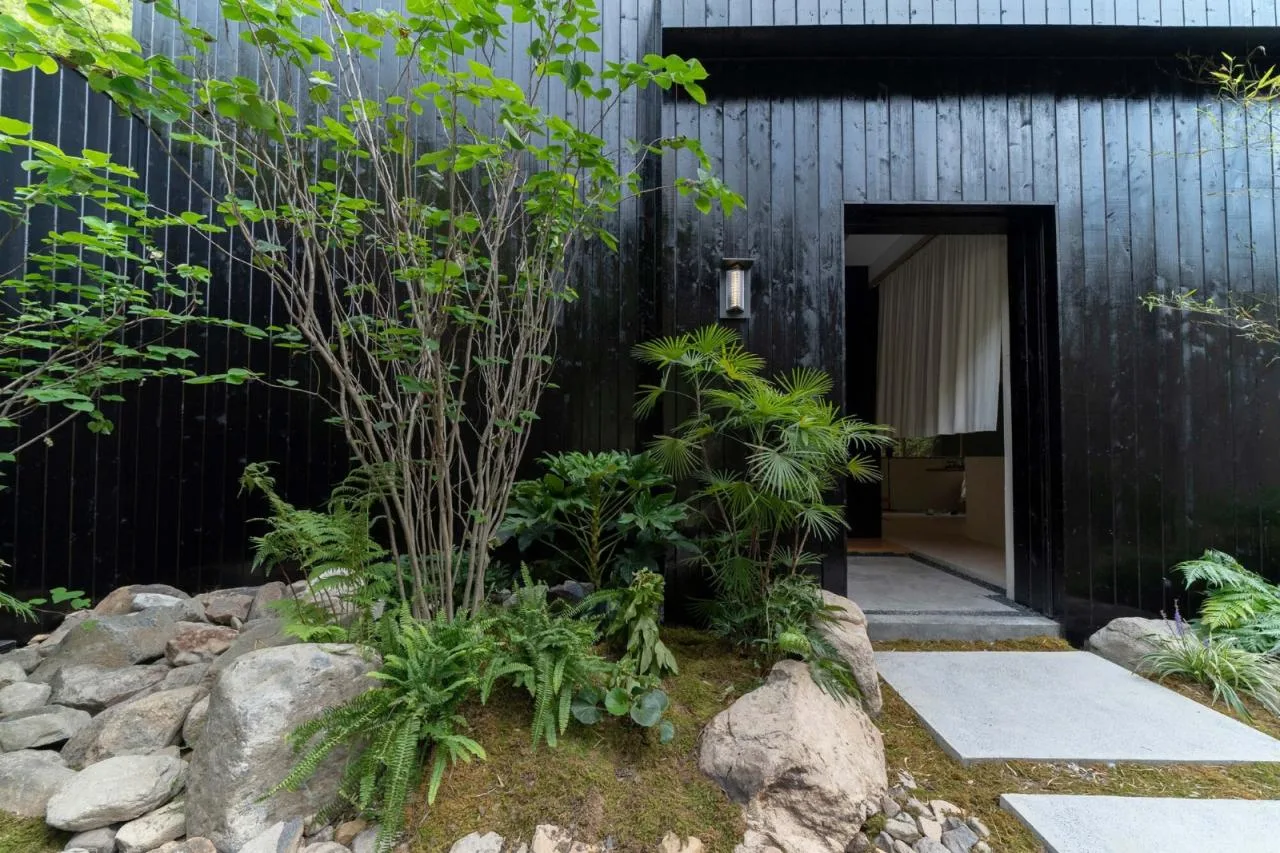
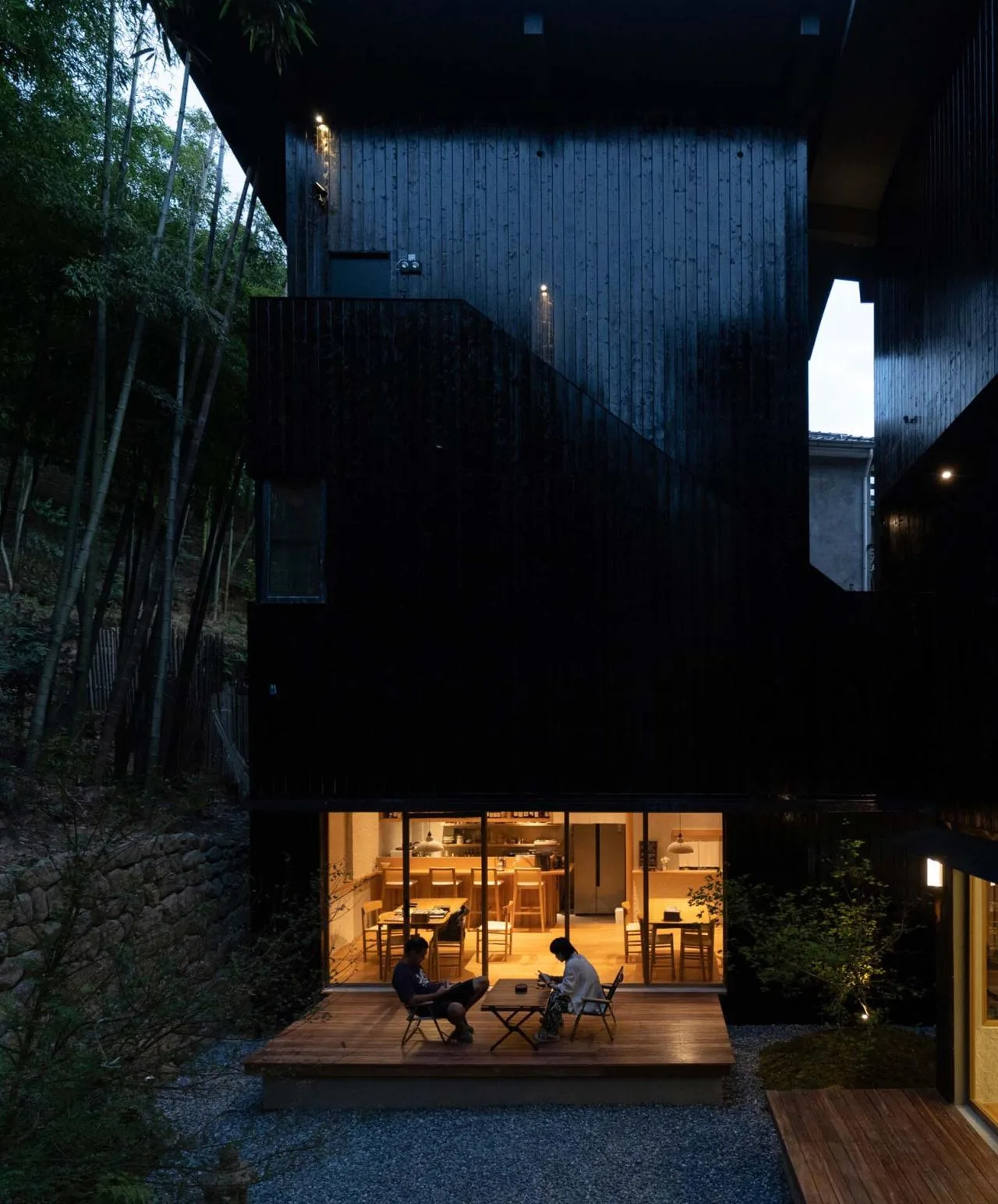
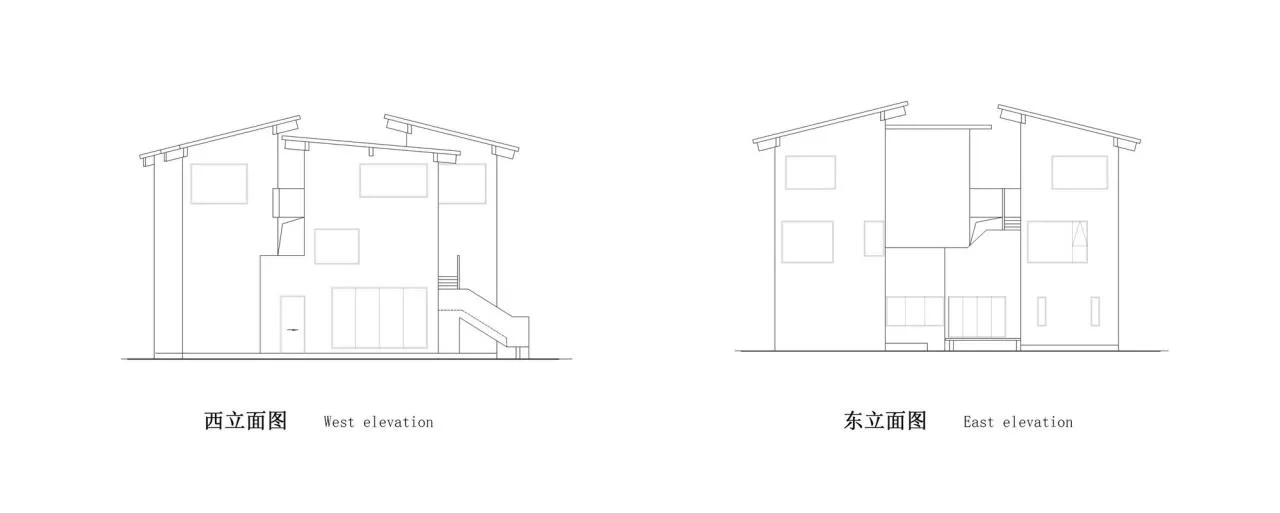
The exterior features anti-corrosion wooden boards painted black, referencing the aged wooden facades of Zhejiang mountain dwellings. Combined with gray stone walls, the building’s dark, steady appearance suggests a deep-rooted presence in the landscape, embodying an understated yet timeless charm.
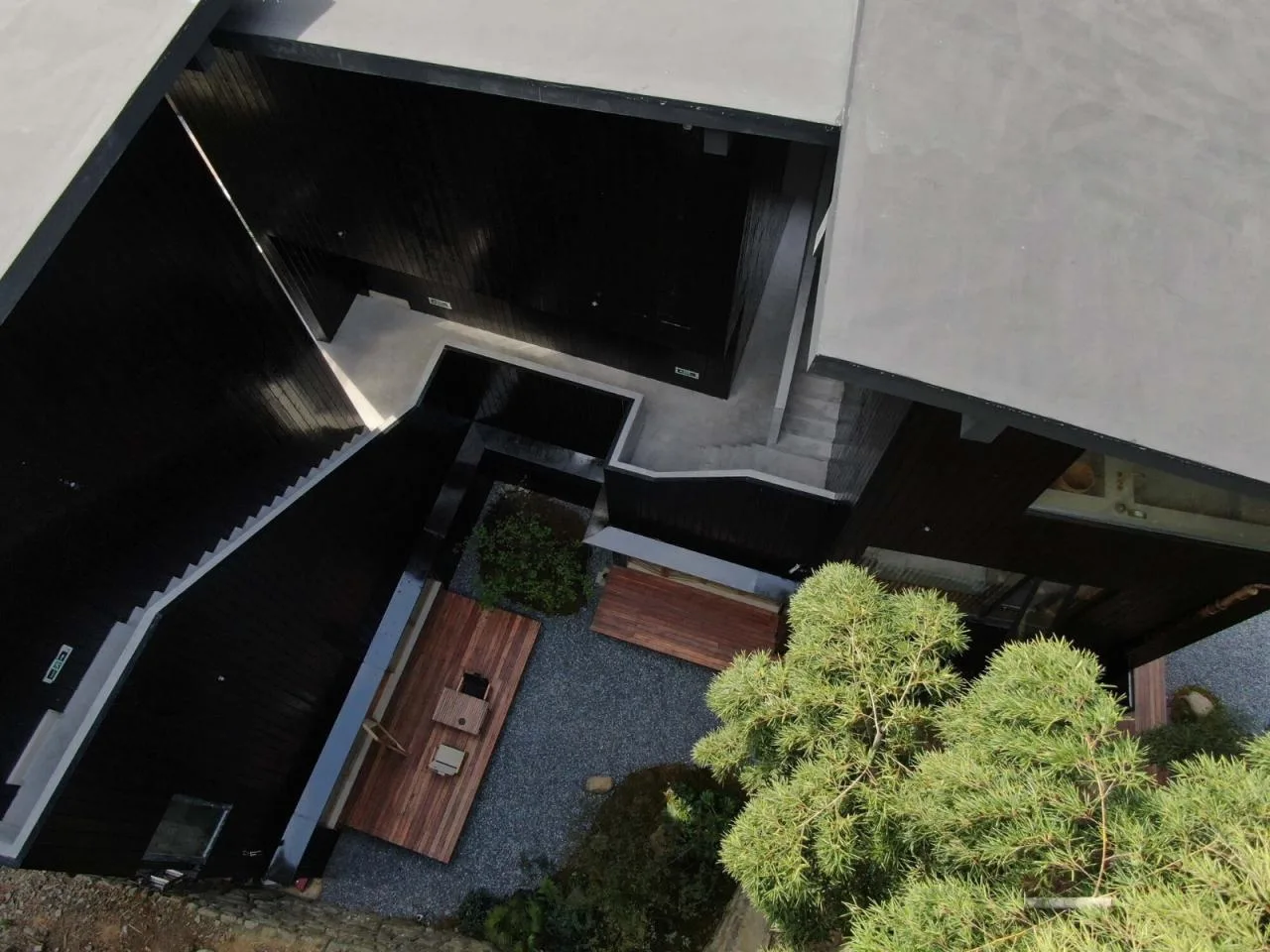
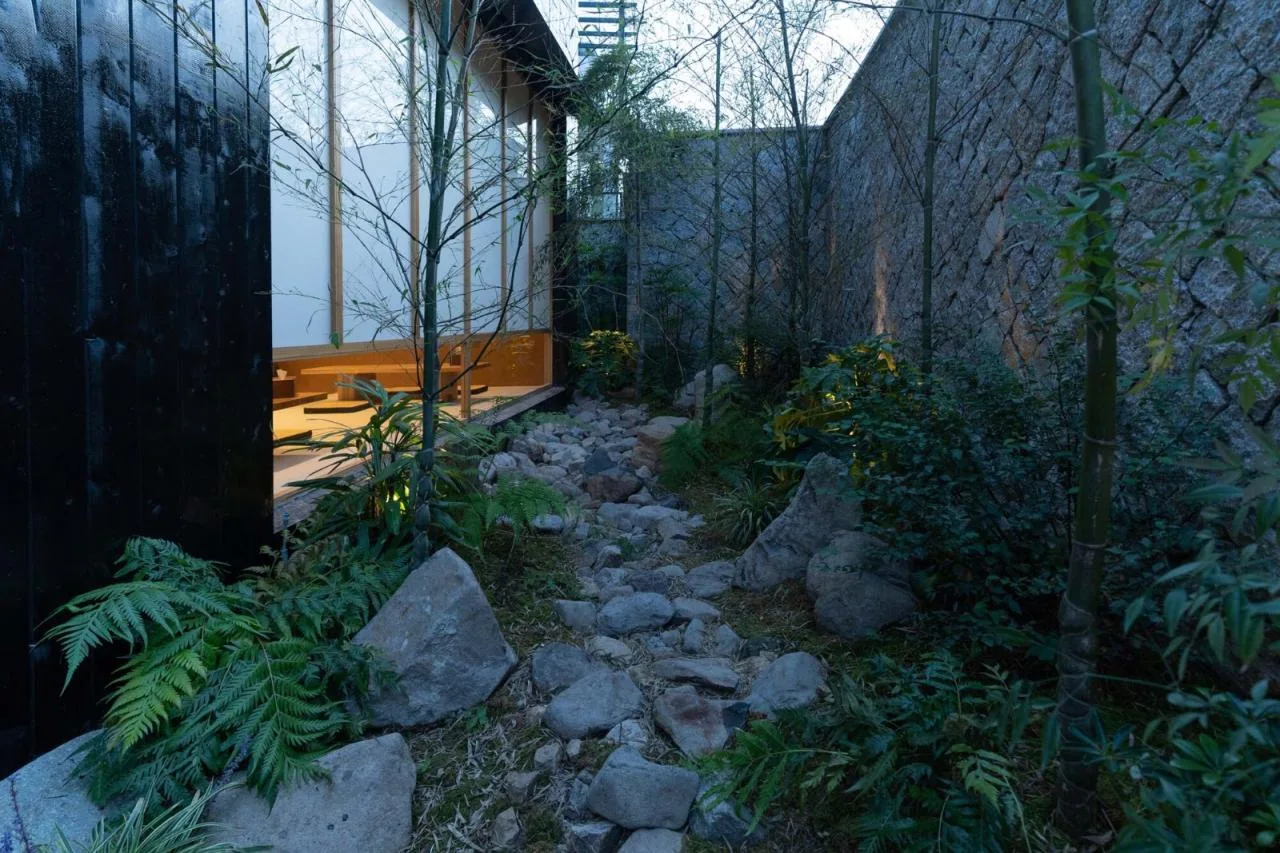
To address the site’s limitations, stone walls were employed to separate interior from exterior spaces. The design draws the landscape inward, toward the inner courtyard and the bamboo forest beyond the mountain. This inward-facing building features four courtyards of different sizes, fully enclosing the structure within courtyard spaces.
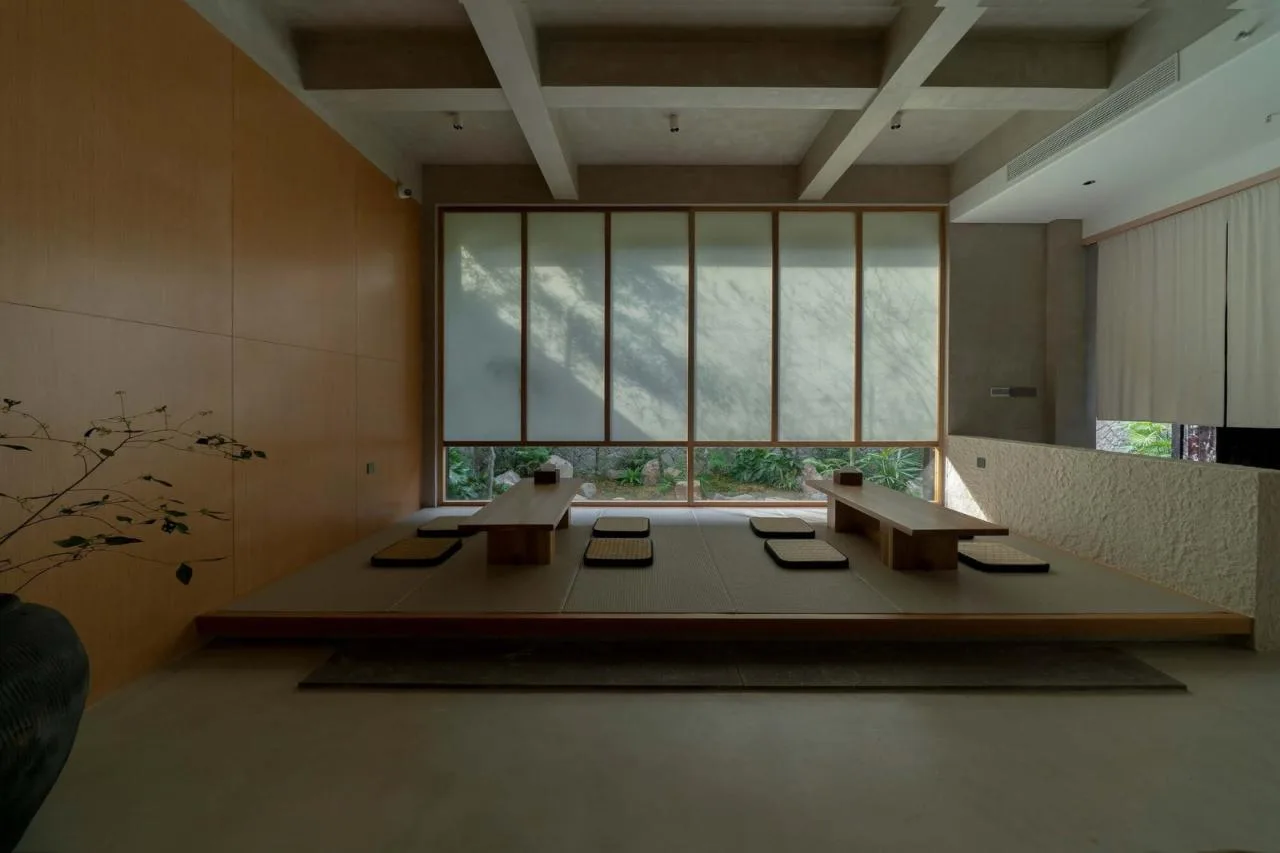
All indoor public areas and pedestrian routes are arranged to interact with these courtyards. The western courtyard serves as a transitional space, providing a long, narrow entryway and functioning as the main landscaped area for the one-story tatami space.
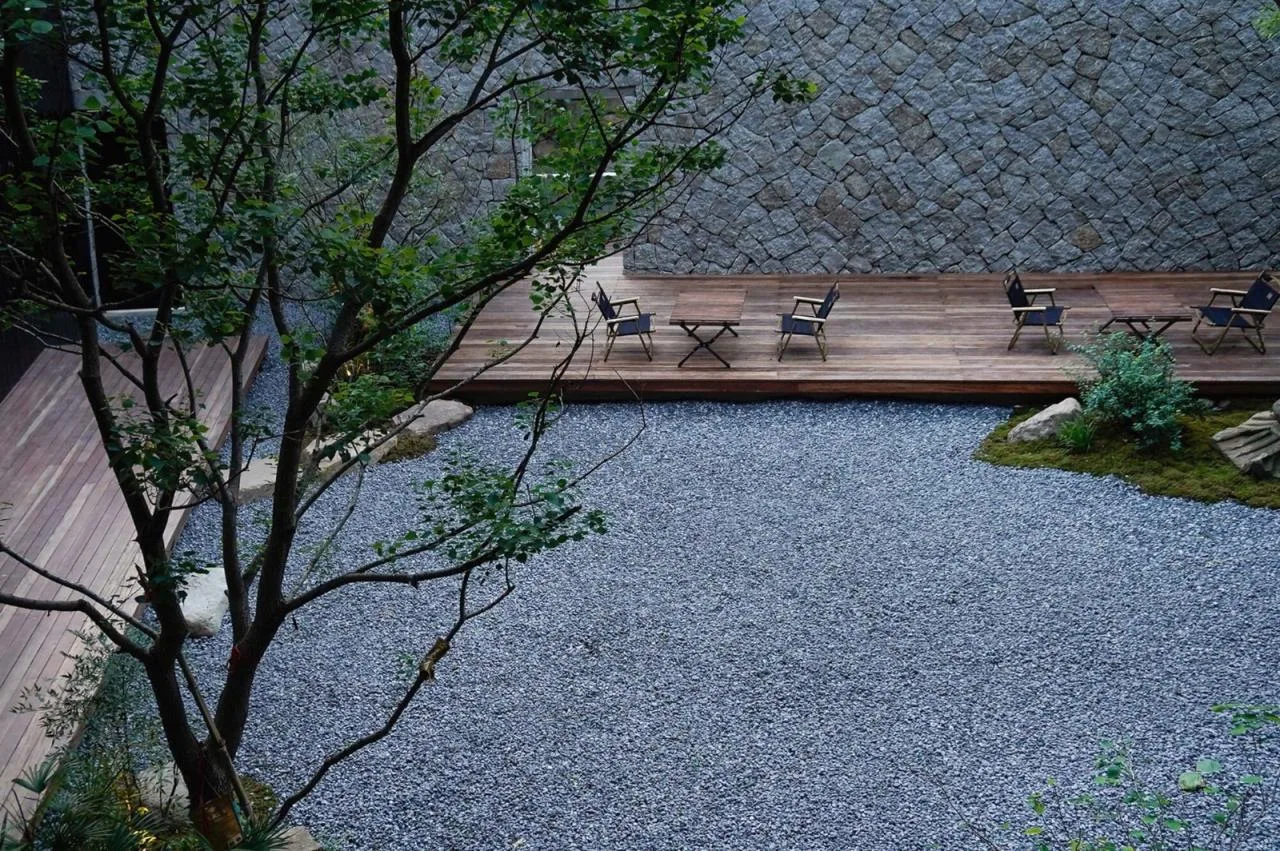
The northern courtyard is the largest, designed to accommodate outdoor activities across both project phases, offering a spacious, relaxed environment. The southern courtyard is the smallest, integrating outdoor stairs into its layout.
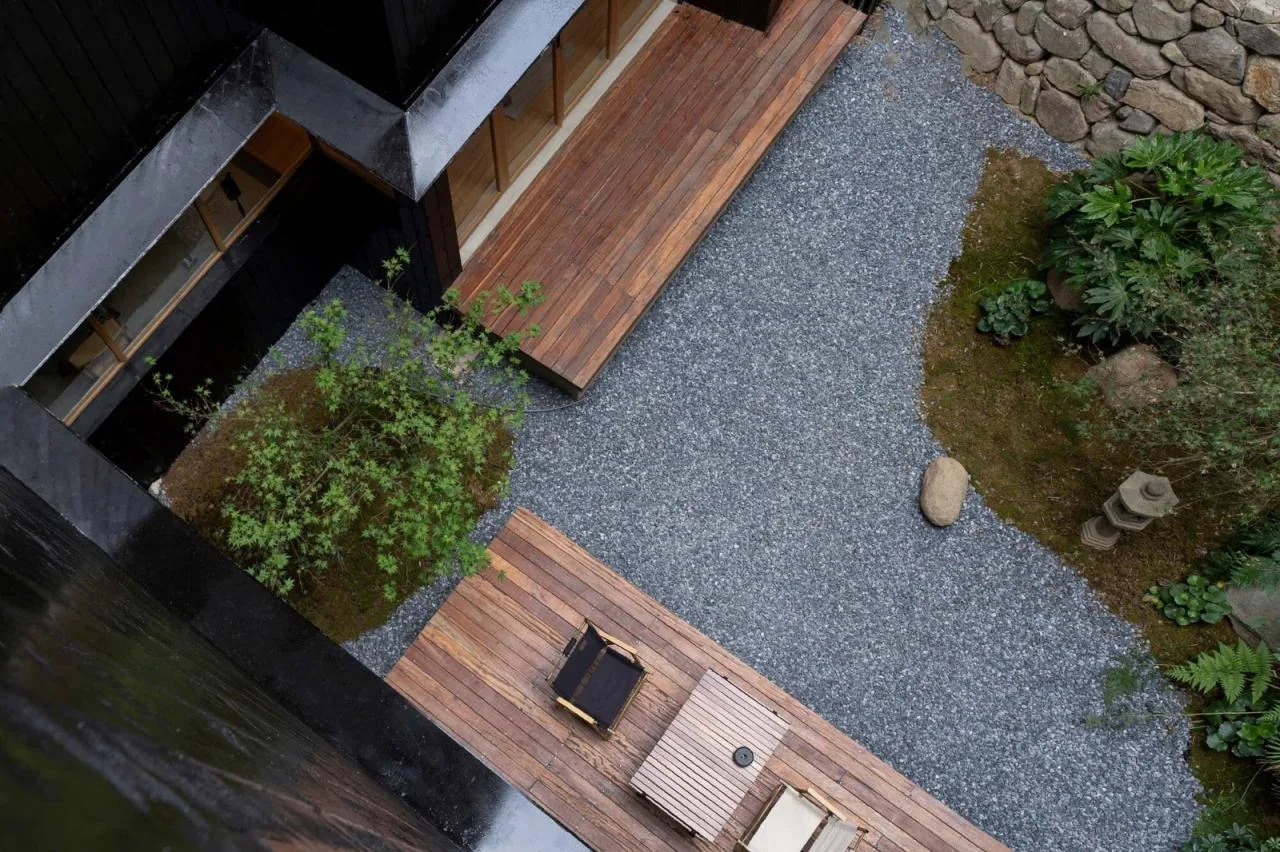
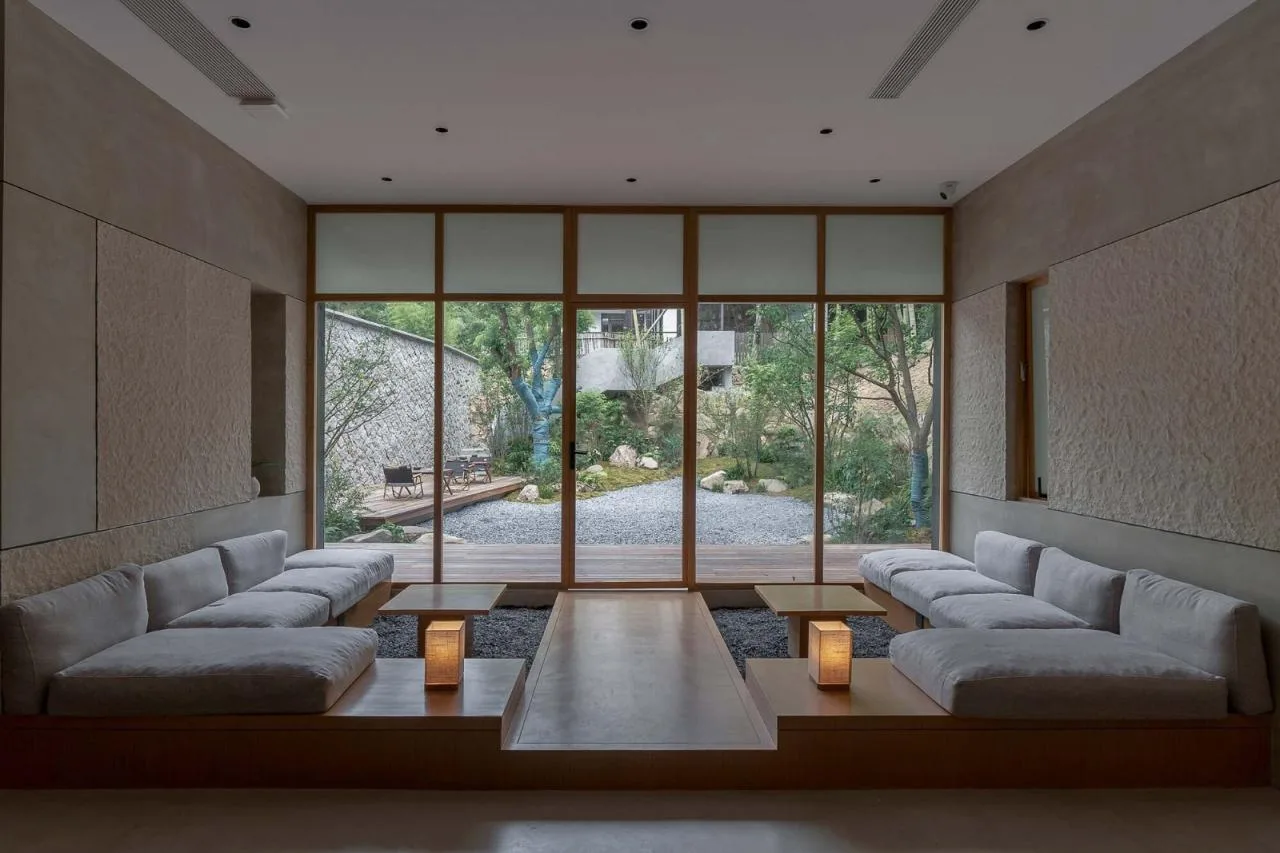
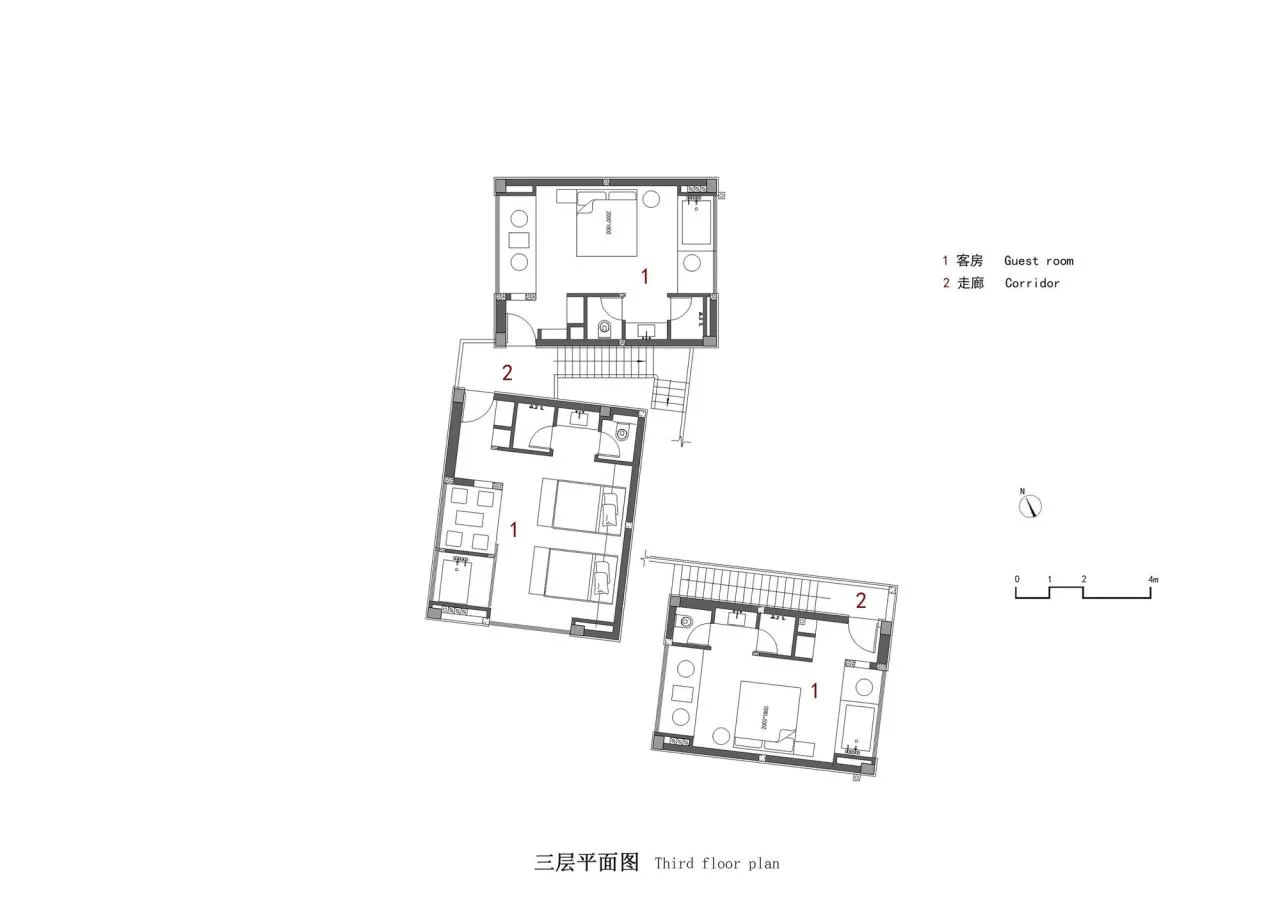
On the east side, the central courtyard is enclosed by buildings and mountains, distinguishing it from traditional residential courtyards. The first floor features an extended window facing this courtyard, with a wooden platform accessible from both the tea table area and the izakaya. A corridor and staircase on the third floor wrap around this central courtyard, echoing traditional residential designs where inner corridors surround a courtyard. This layered observation from the first to the third floor intensifies the building’s introverted character.
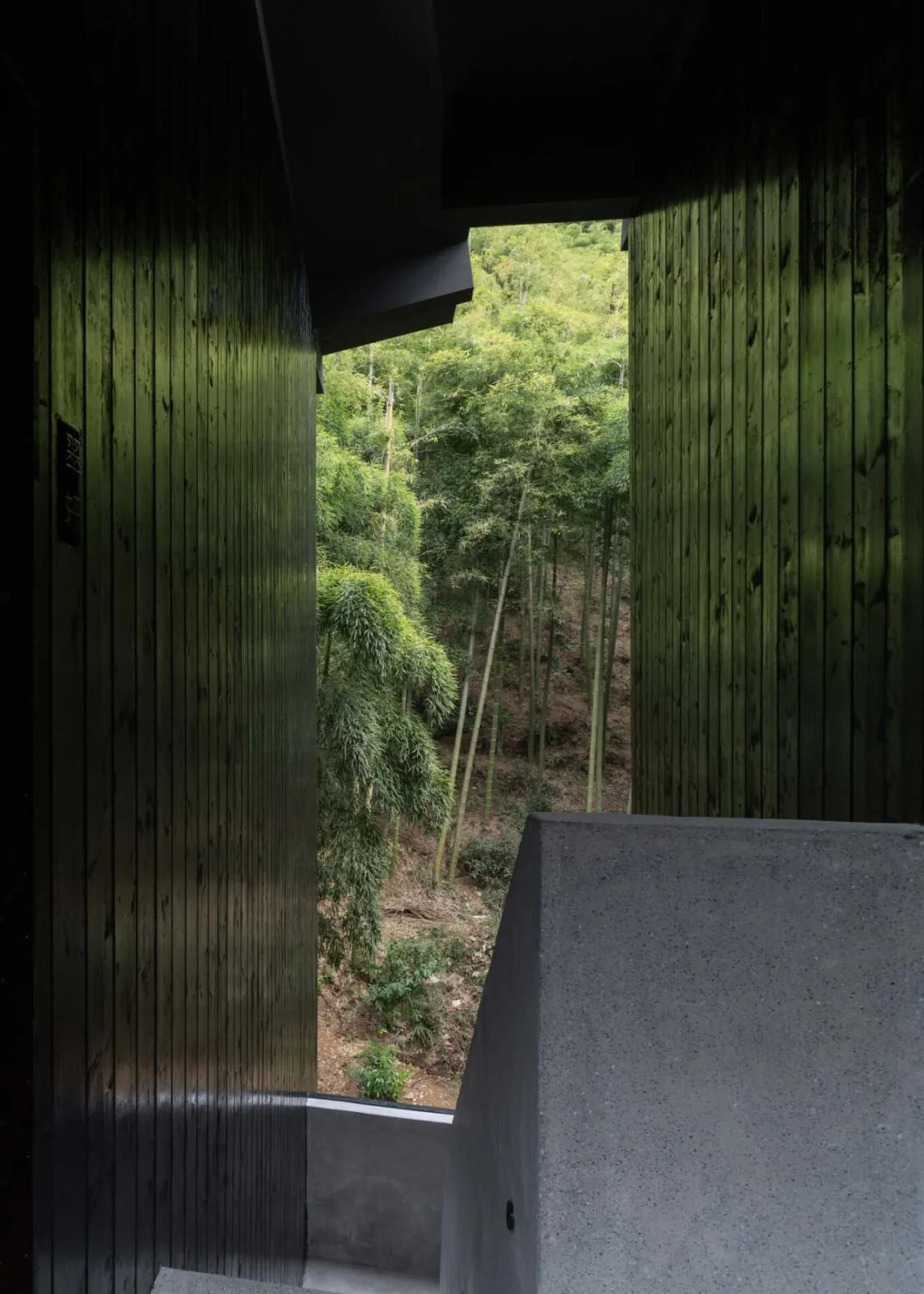
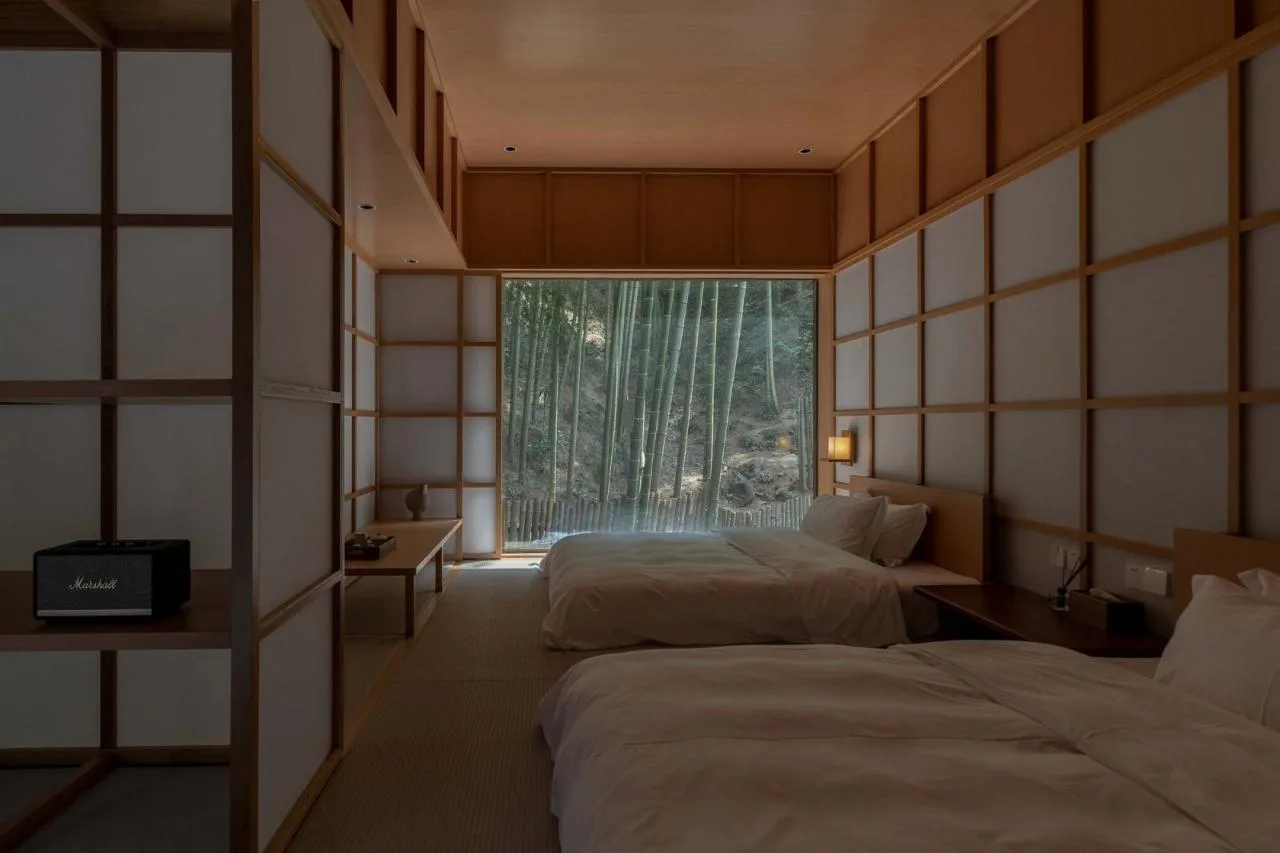
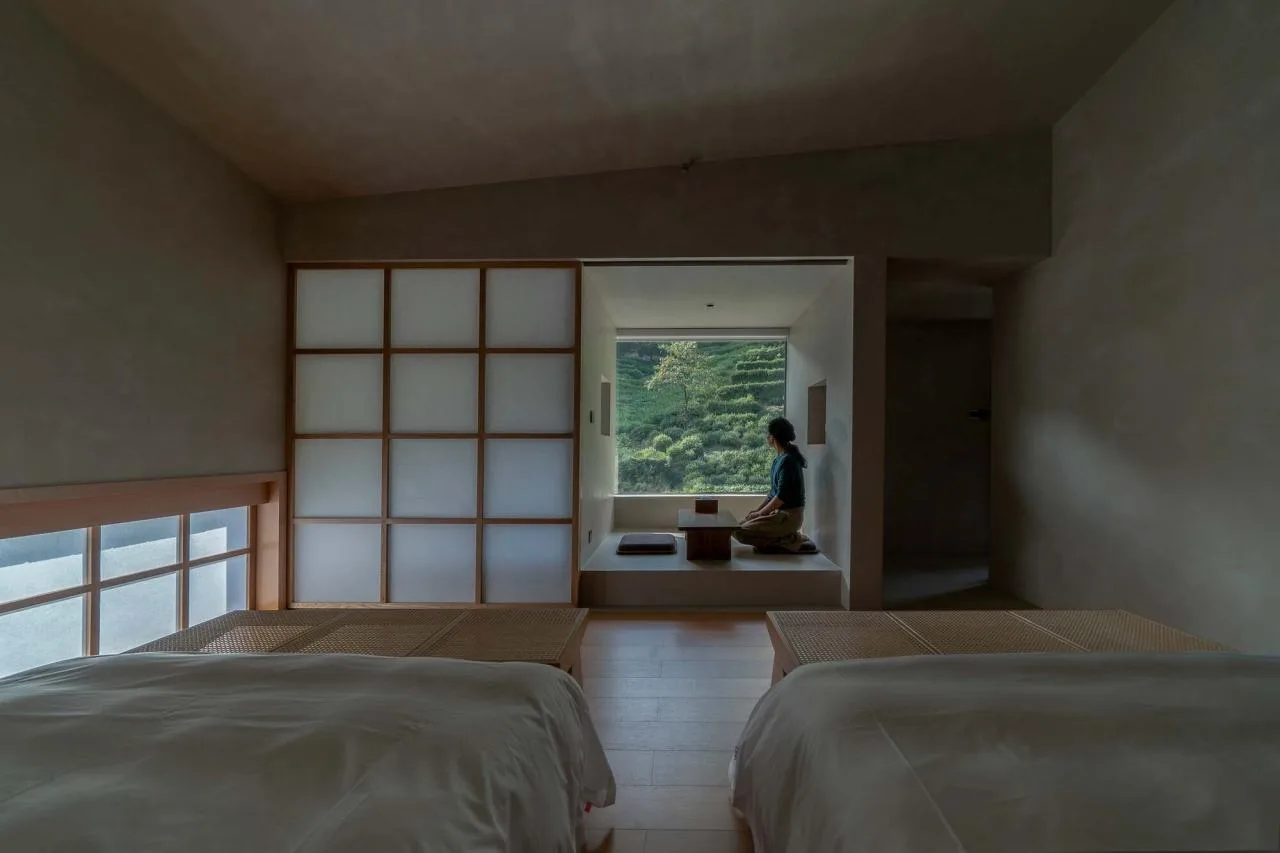
Guest room windows, except for a few overlooking the western tea gardens, predominantly face the bamboo forest behind the mountain, reinforcing the inward focus. Since the main circulation on the second and third floors revolves around the central courtyard, guest rooms have minimal windows facing it, reducing visual and noise interference while maximizing privacy and comfort.
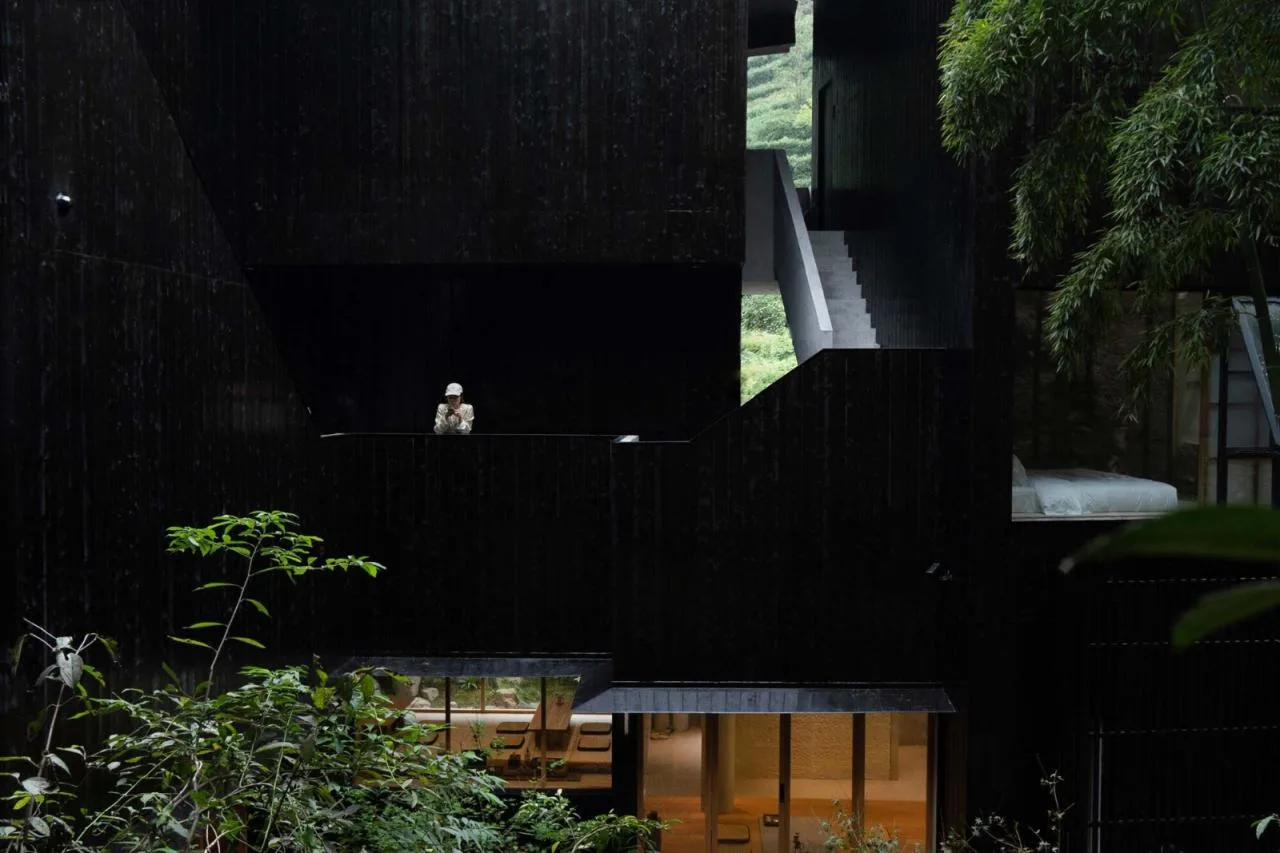
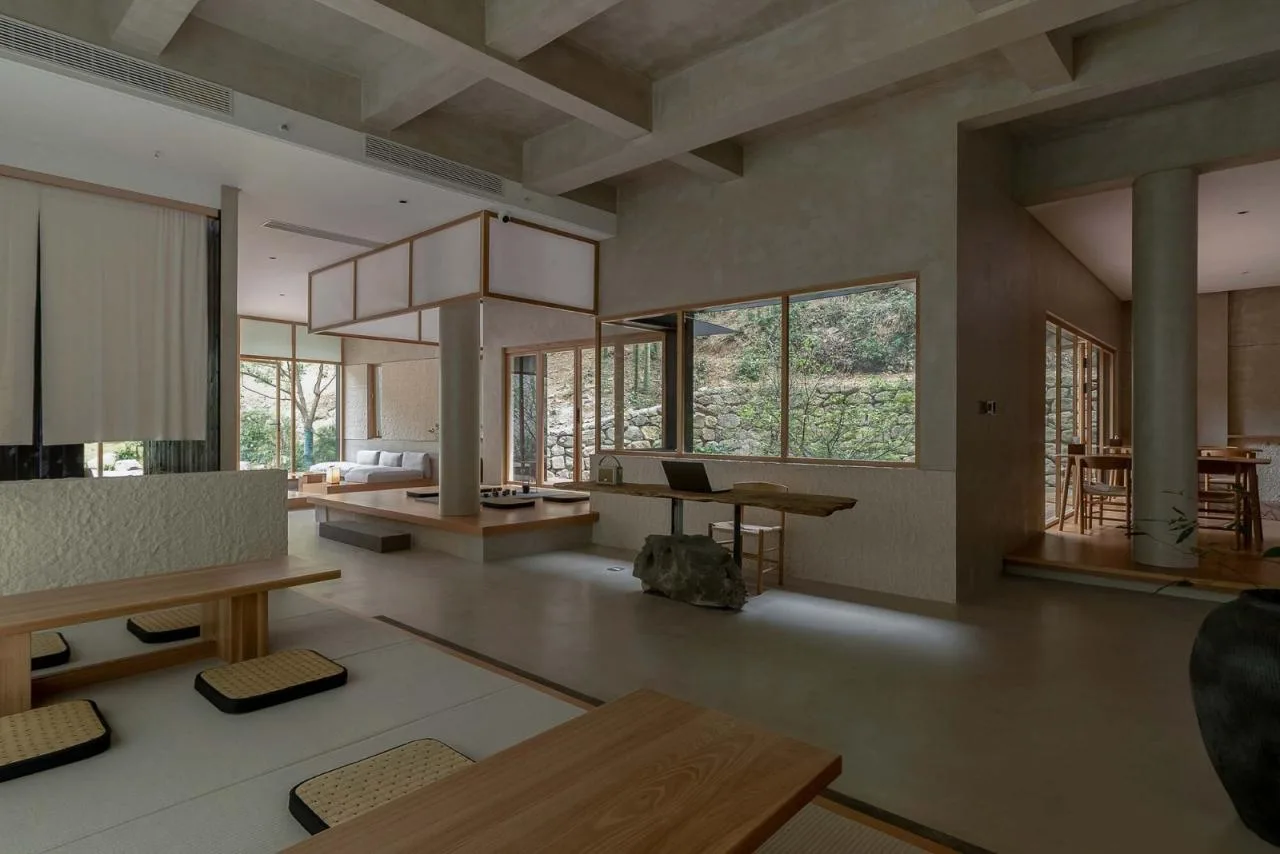
The first floor forms a cohesive public area for the homestay, with an open plan that seamlessly connects various functional spaces while maintaining their independence. The second and third floors are divided into three separate guestroom blocks, minimizing noise interference between units.
Interlocking eaves on all three levels create numerous semi-outdoor “grey spaces,” giving each guest room a private outdoor resting area at its entrance. These spaces also frame views of the bamboo forest and distant mountains.
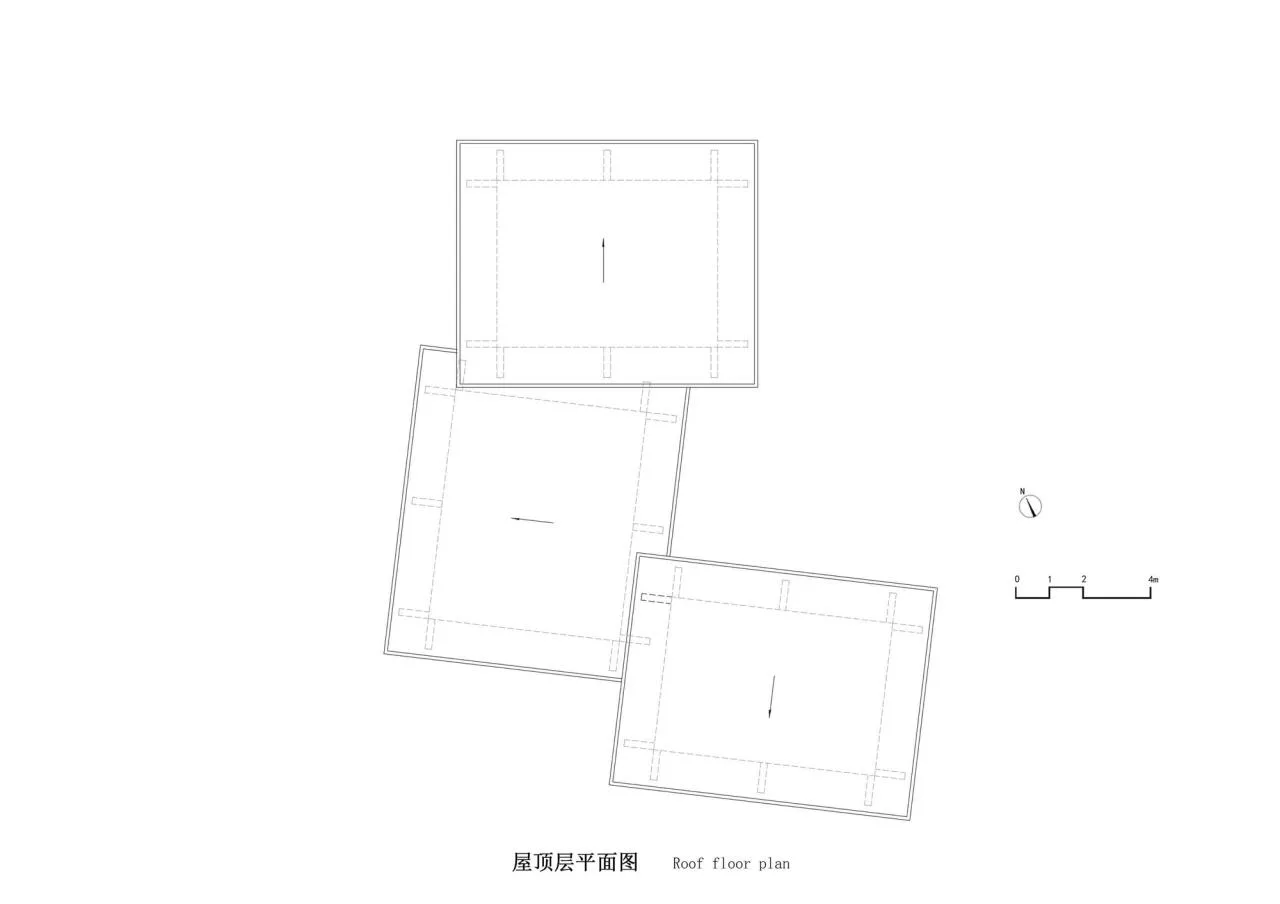
The western block is angled to avoid overshadowing the southwest neighbor and to better face the tea garden across the way, adding vitality and diversity to the building’s overall form. This tripartite layout echoes the feel of a traditional village; entering the building is like strolling through a mountain village, with corridors and stairs resembling winding alleys and stone steps that create intimate grey spaces.
This design encourages natural interaction with the environment during the journey from the public areas on the first floor to private guest rooms.
How can a natural world be constructed and simulated within the garden of this “turning point”? Nature’s essence is change, and the “turning point” is the fundamental unit of transformation.
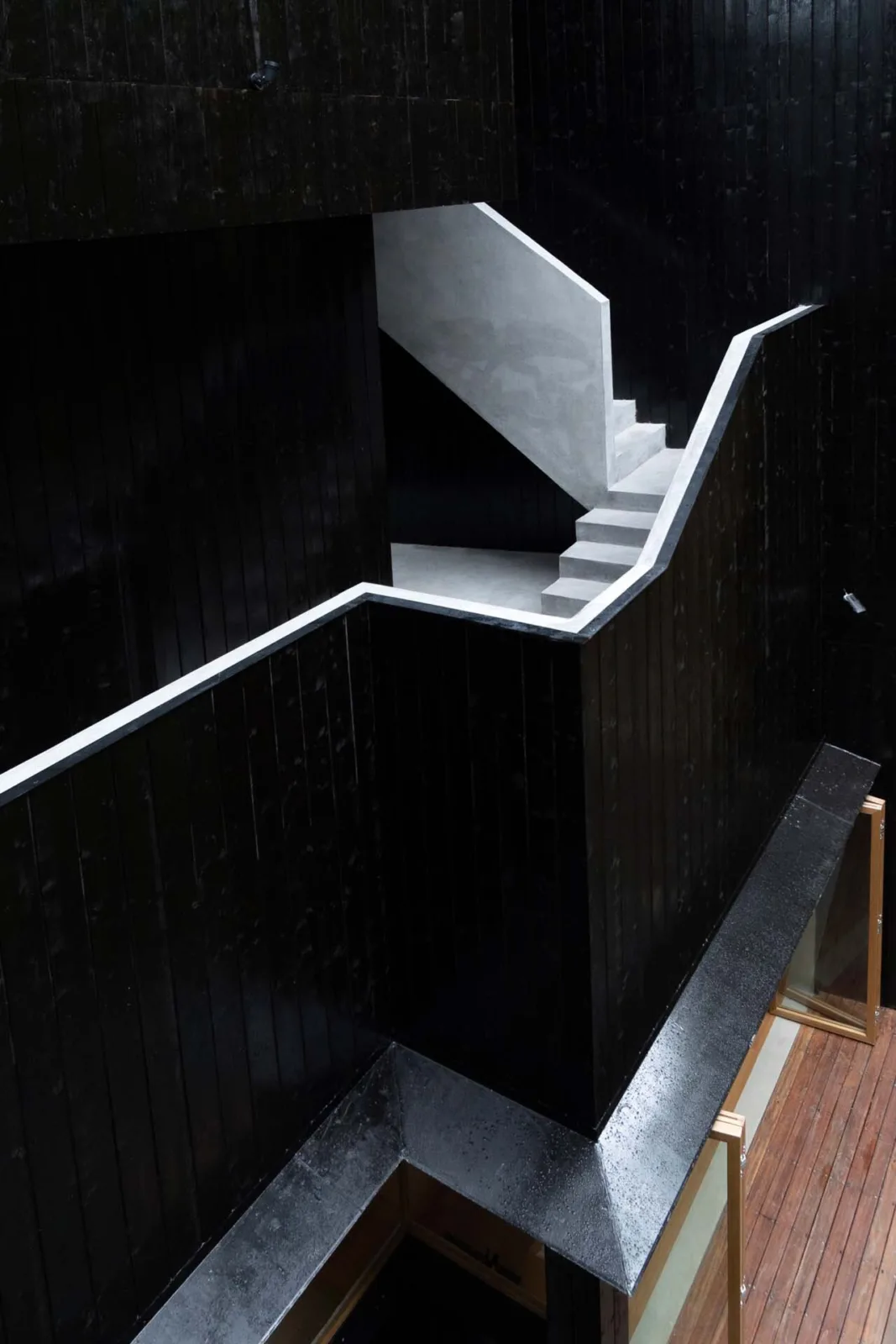
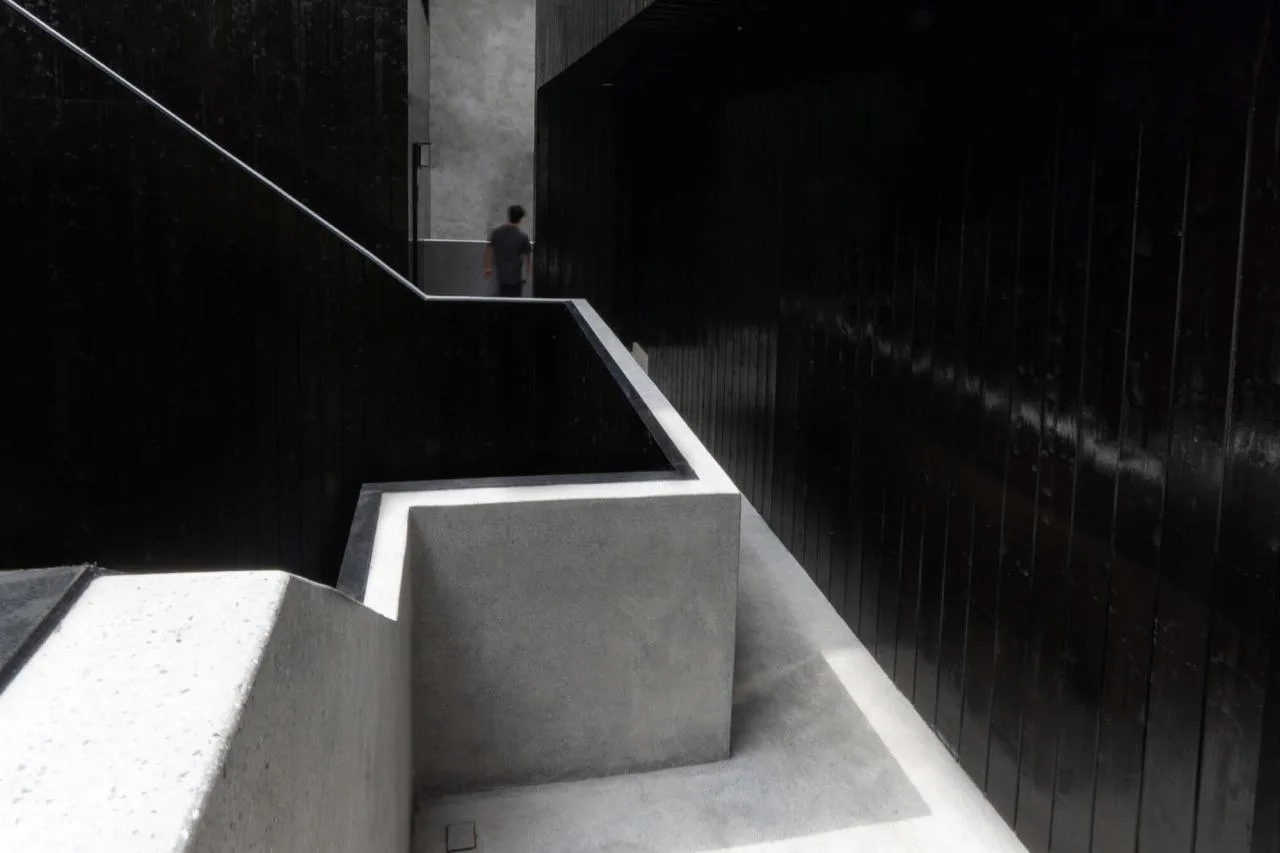
The shifting courtyards, building blocks, and vertical circulation together create a dynamic spatial experience of flow and change. The transition from two-dimensional plans to three-dimensional forms folds and connects the indoor and outdoor pathways, mimicking the sensation of climbing a garden rockery.
This intricate web of intersecting routes is captivating. The turning point is linear, forming a unified whole, yet fluid and displaced, making adjacent spaces both connected and distinct.
The building itself is a three-dimensional turning line, with outdoor stairs and corridors winding through multiple turns from plan to elevation. This complex circulation generates a variety of changing views and landscapes, enriching the experience of moving through the building and enhancing its overall appeal.
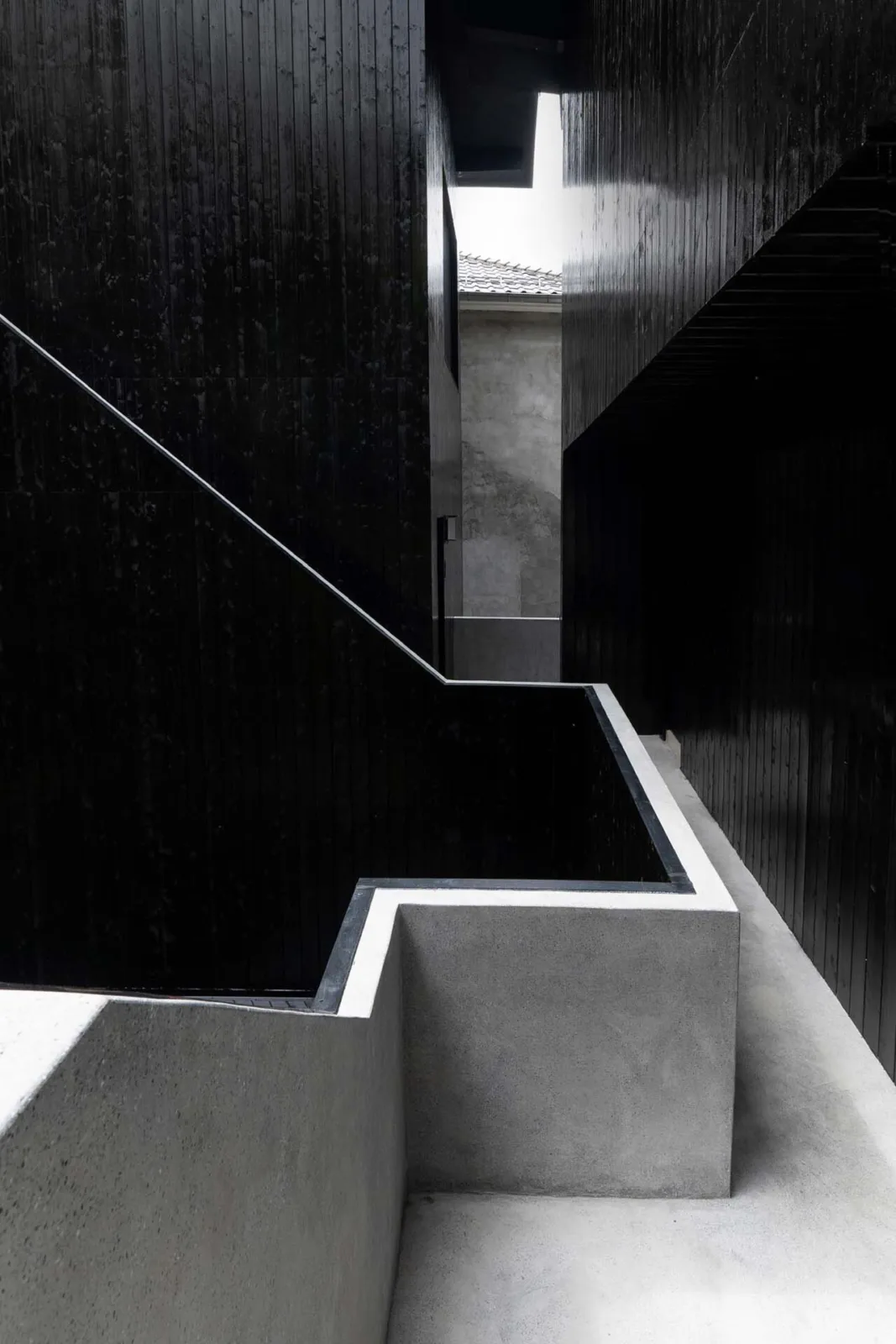
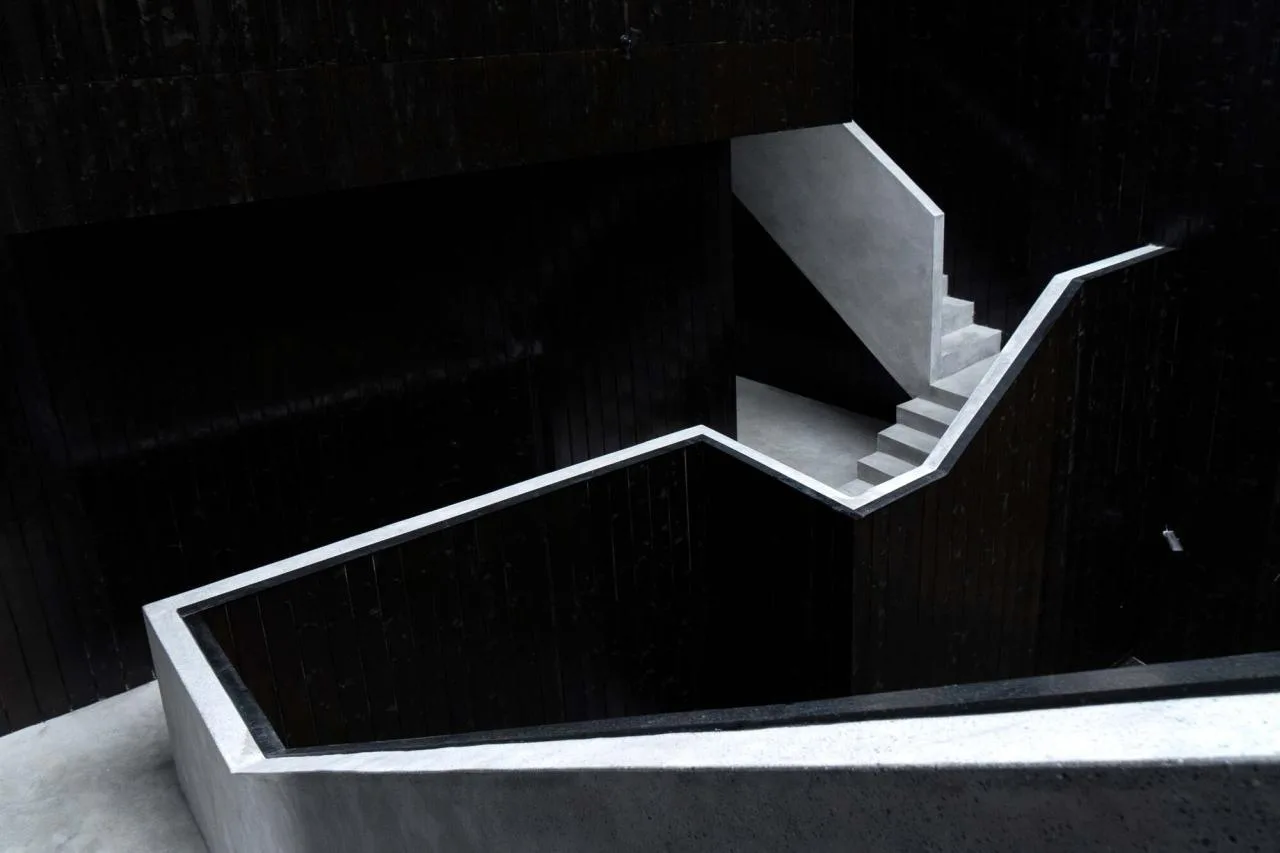
To better integrate the building into its rural surroundings, natural materials such as stone and wood were chosen for the exterior façade. The walls are constructed from hand-chiseled rough stones sourced and assembled on site, providing a thick, stable base that anchors the building.
Openings in the stone walls serve as entrances and terraces that engage with the adjacent creek, breaking up the mass of the stonework. The façade is complemented by blackened, anti-corrosion wooden cladding, whose texture adds warmth and a friendly yet modern and minimalist character.
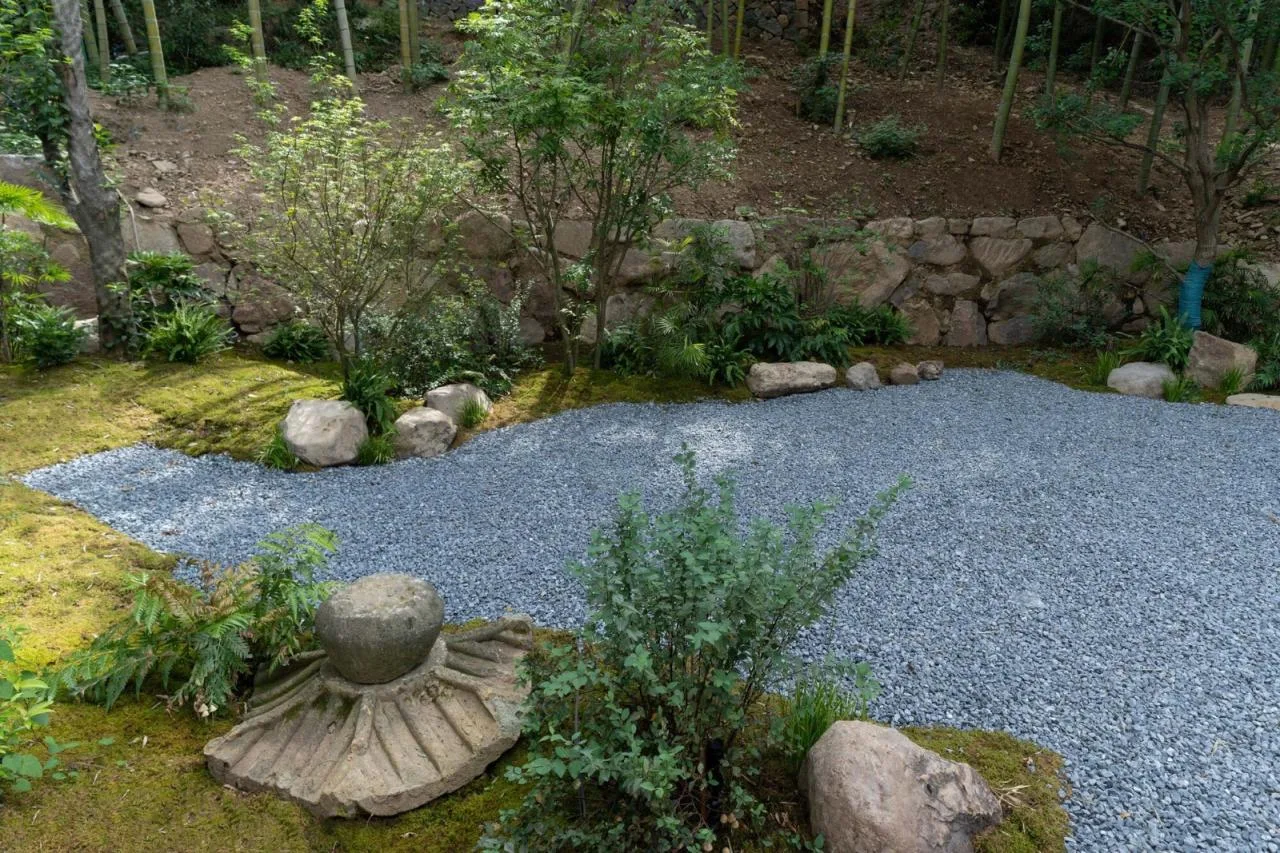
The courtyards feature local natural pebbles, including the stone walls bordering the bamboo forest behind the mountain and the courtyard flooring. Two distinct stone sizes and paving techniques are employed: the central courtyard showcases small pebble stones using a “skin laying” method, achieving a delicate horizontal texture, while the north courtyard and Phase I stone walls use larger pebbles assembled with mud joints for a rough, natural look.
Project Information
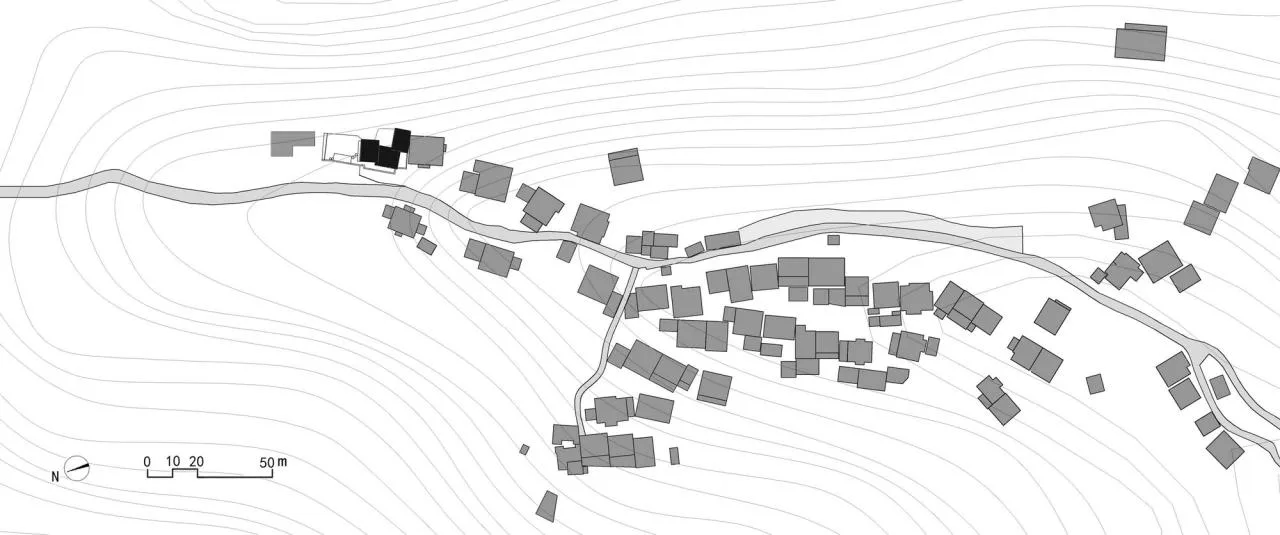
△ Project Base Diagram
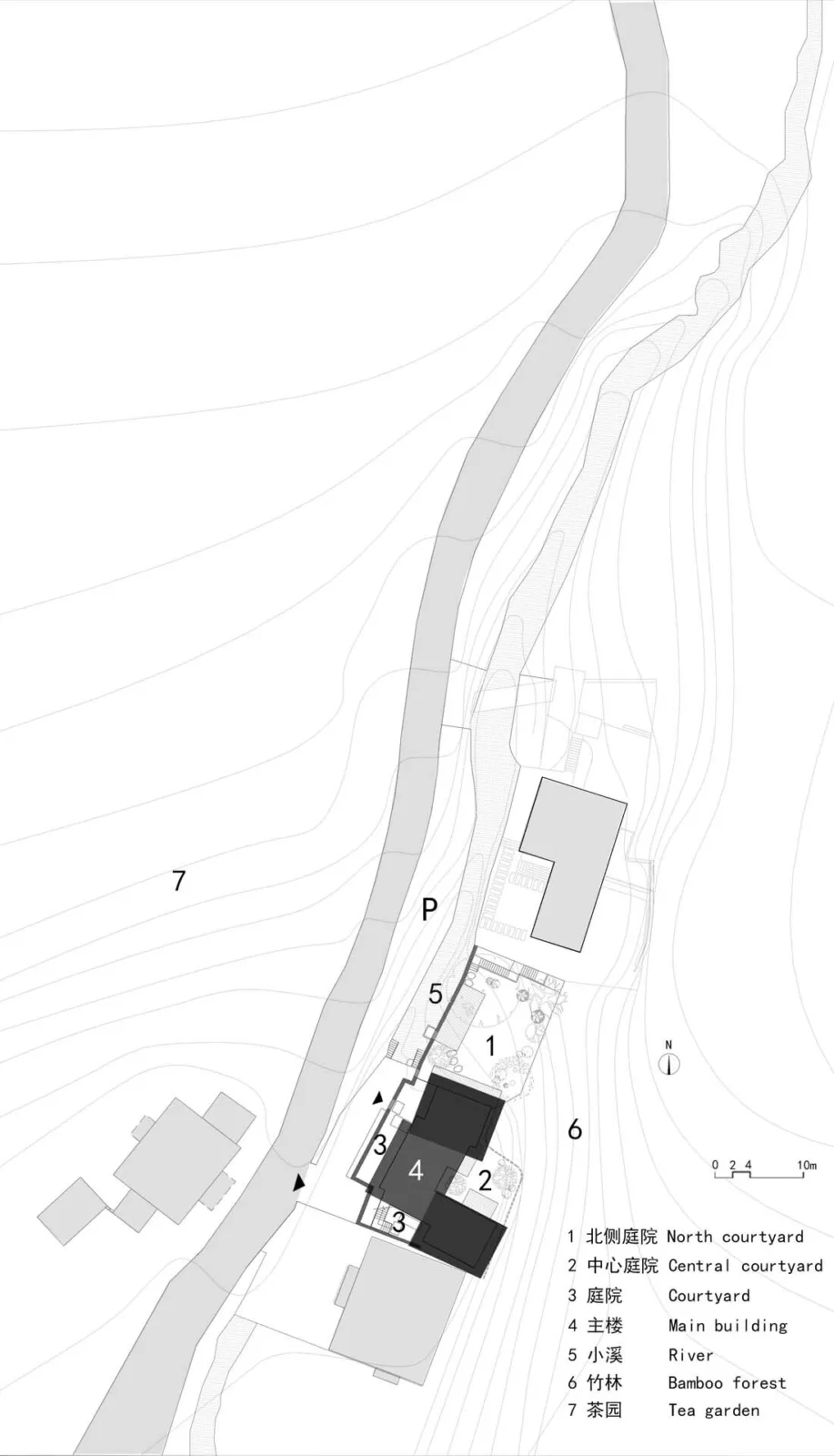
△ General Layout Plan
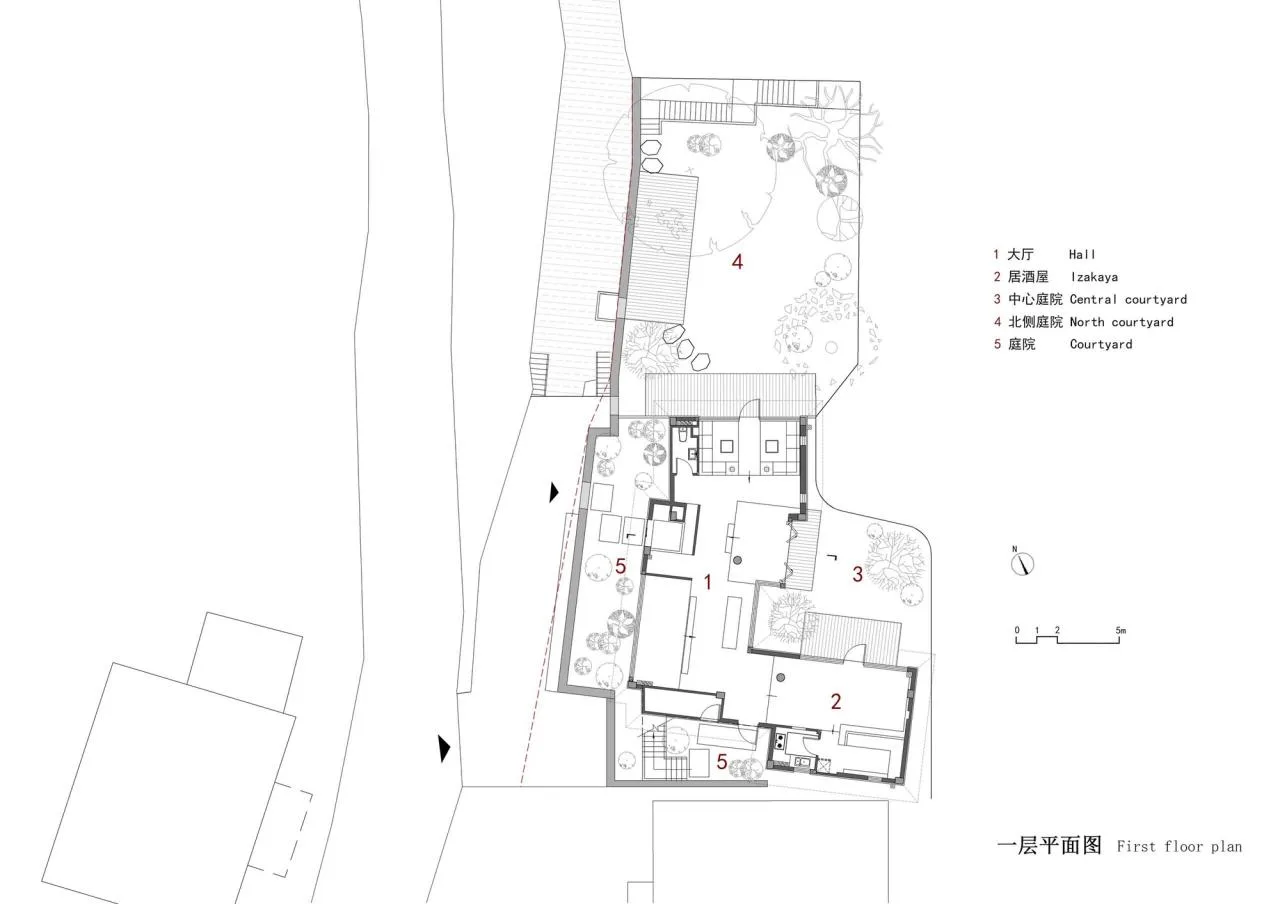
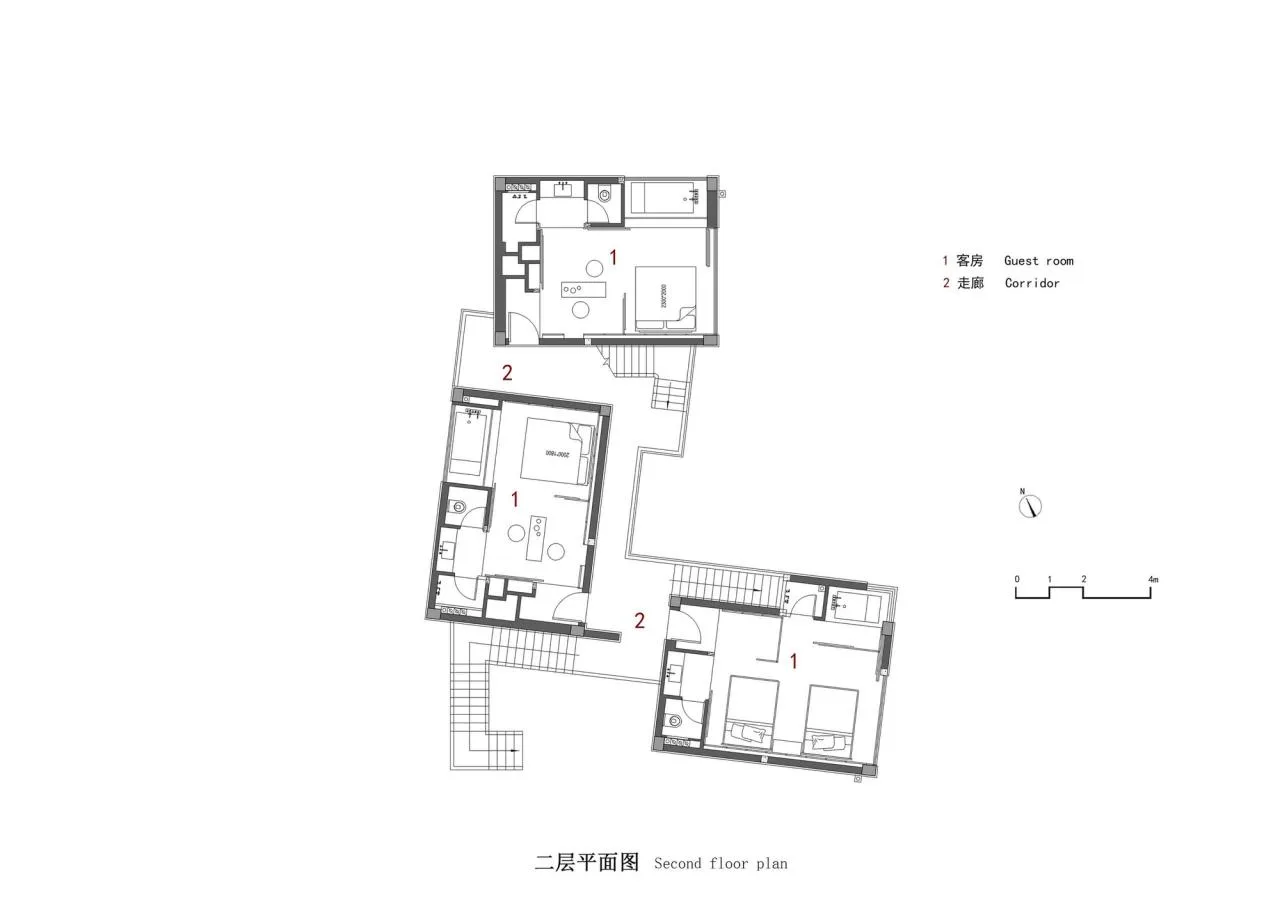
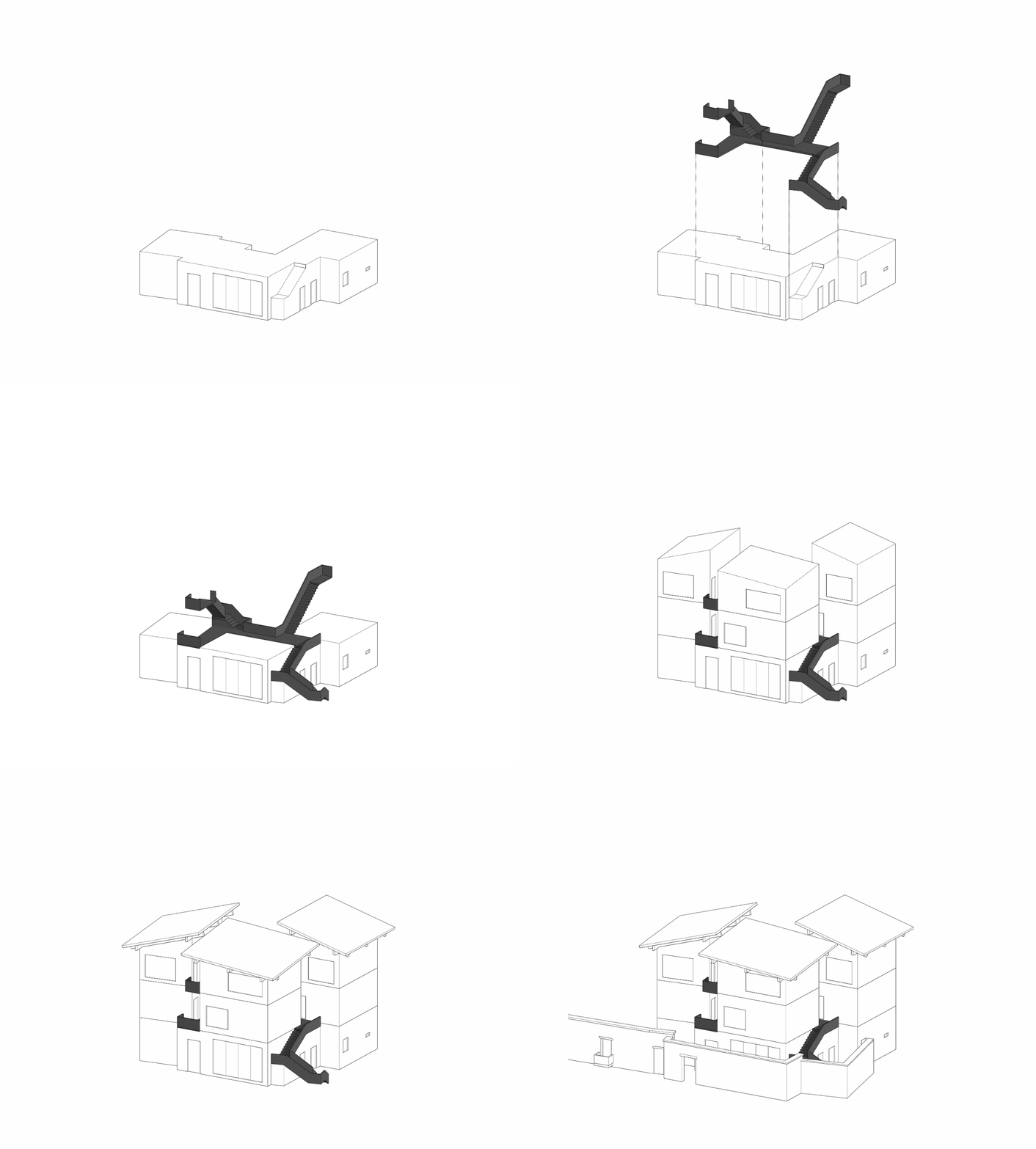
△ Generate Graph
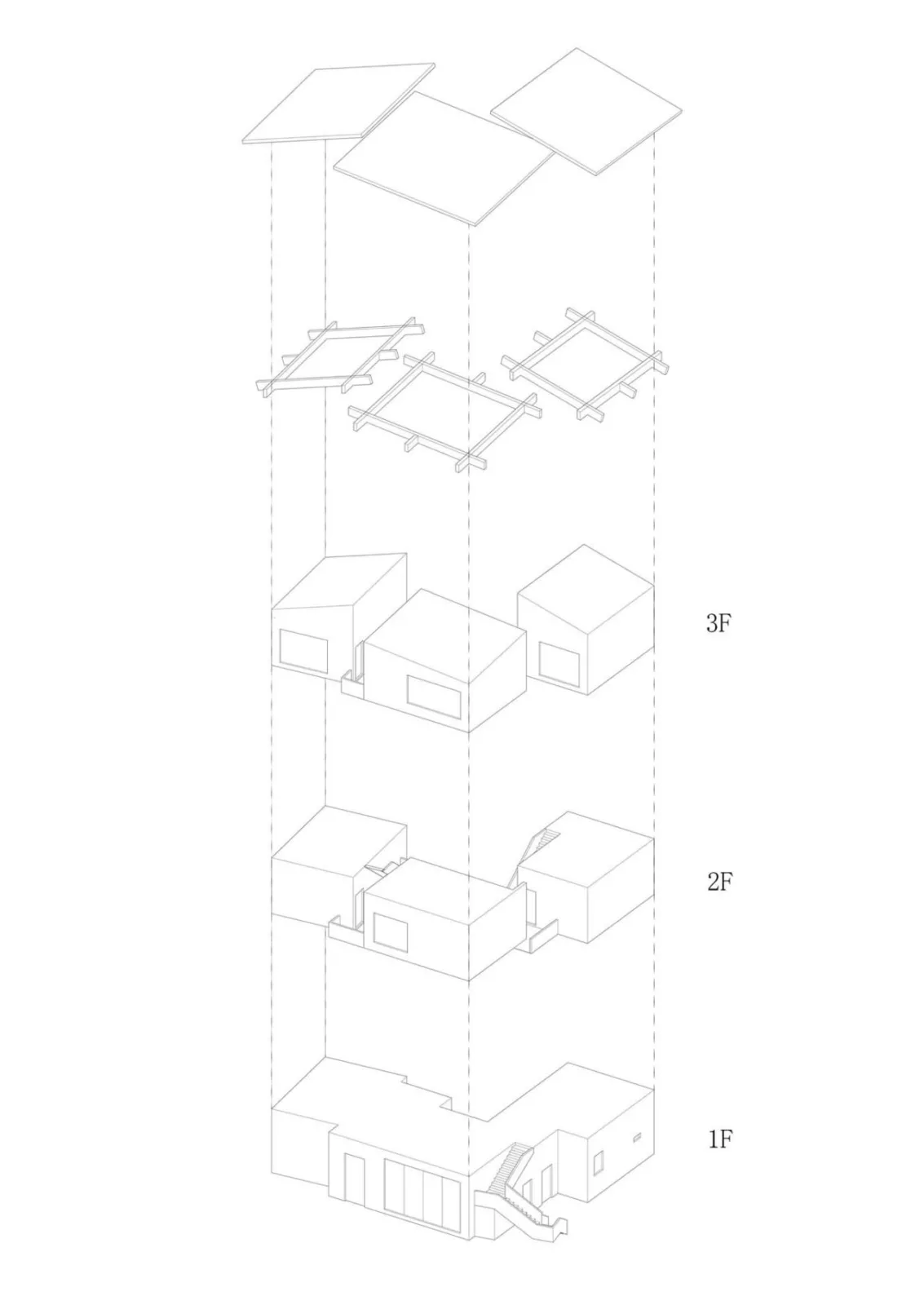
△ Explosion Diagram
Project Information
Architect: HEI Architectural Design Studio
Area: 382 square meters
Project Year: 2022
Photographers: Alili, uhe Studio
Principal Architect: Peng Xianfei
Interior Design: Chen Junyu, Quan Wenbo
Landscape Design: Lv Wenjiang
Construction Drawings: Liu Jun
Structural Engineer: Chen Yaxiong
Construction Contractor: Deqing Xingcheng Decoration Co., Ltd
Location: Deqing, China















Must log in before commenting!
Sign Up