
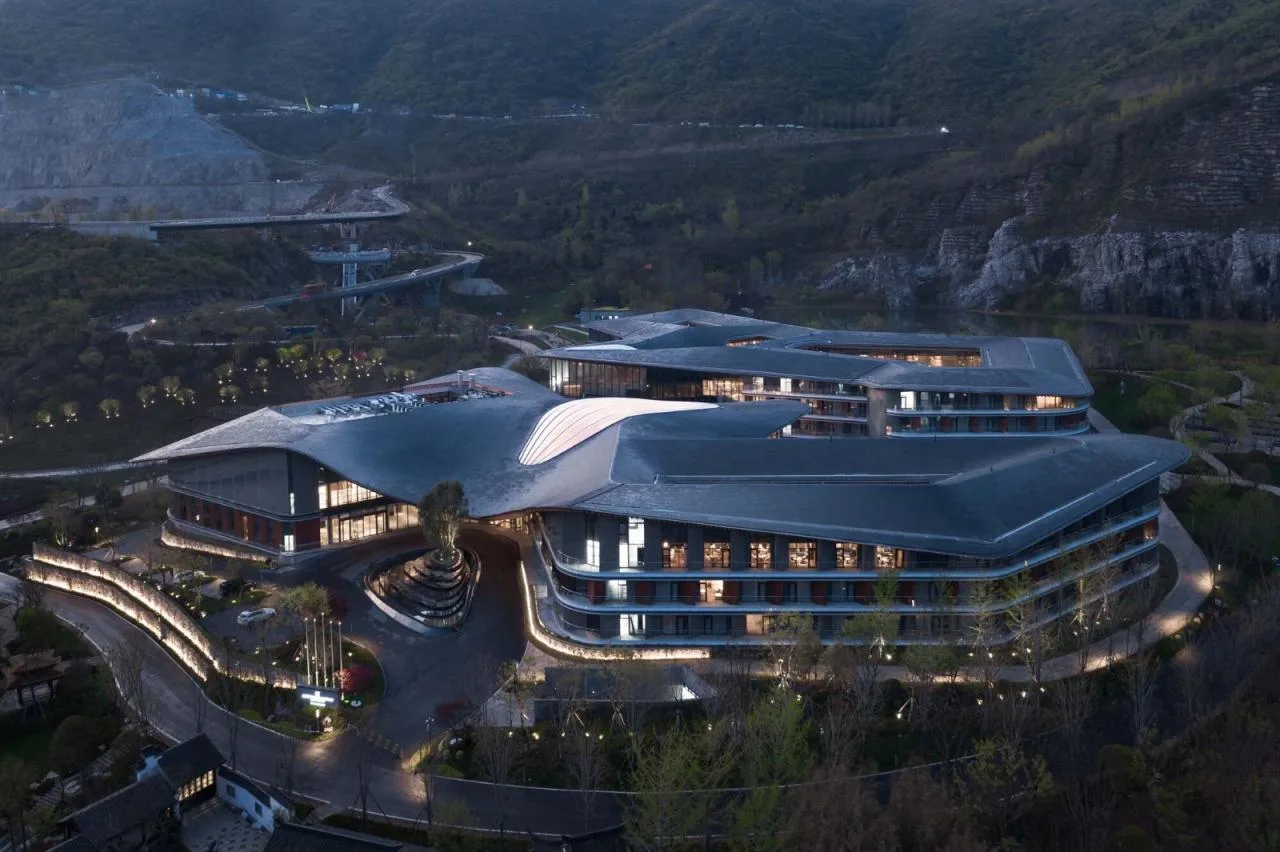
Our journey with this site began in 2018, and reflecting on it after its completion in 2021, we are reminded of the poetic description: “A stone tablet on Thousand Foot Yangshan Mountain, the axe work god captures the river’s beauty. To the north of the mountain’s altar, cascades descend while the cliff’s spirit remains calm. Reflecting on Jinling’s thousand-year history, the rain god with eaves turning a hundred times stretches across a century. Purple energy flows from the Six Dynasties in the east, and the park is filled with spring.” This project has been a unique experience in continuously understanding the landscape and harmoniously integrating design with nature.
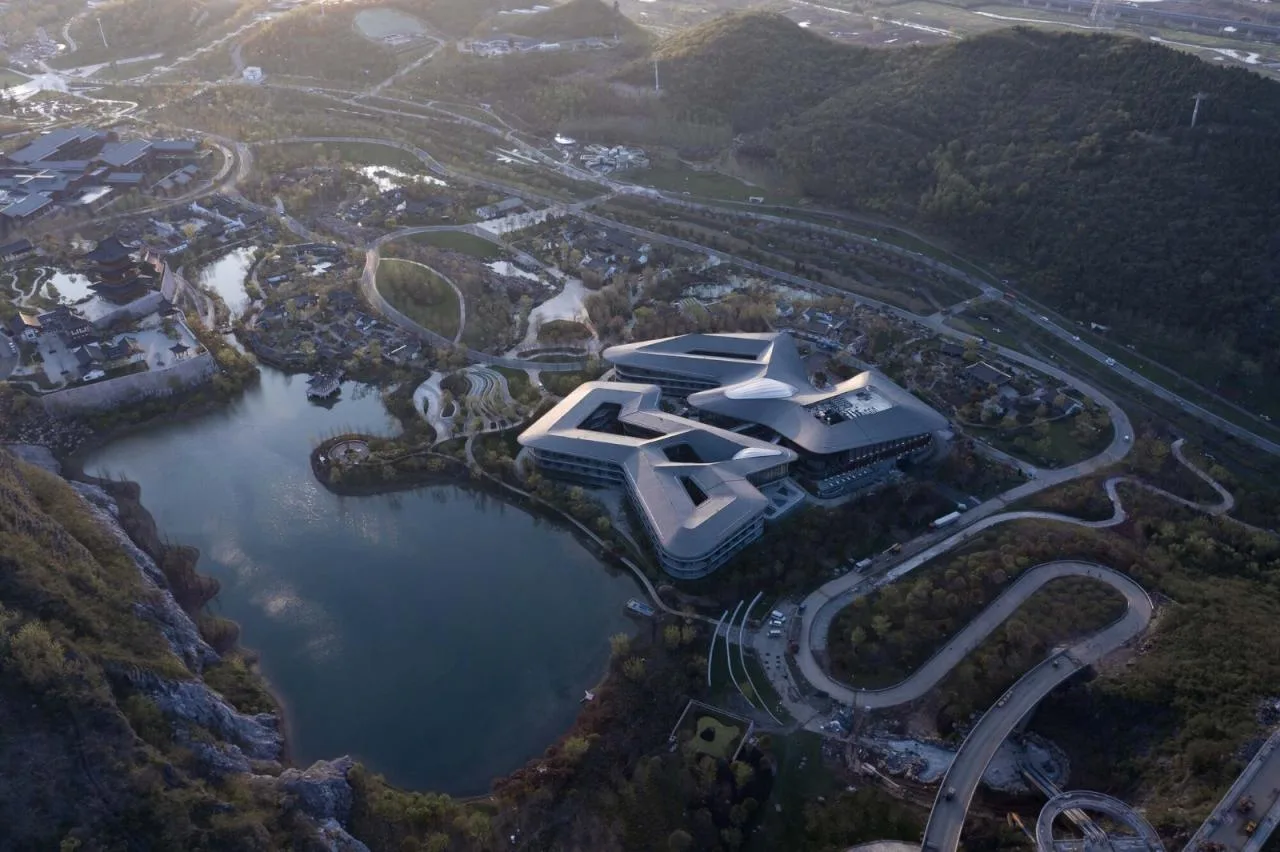
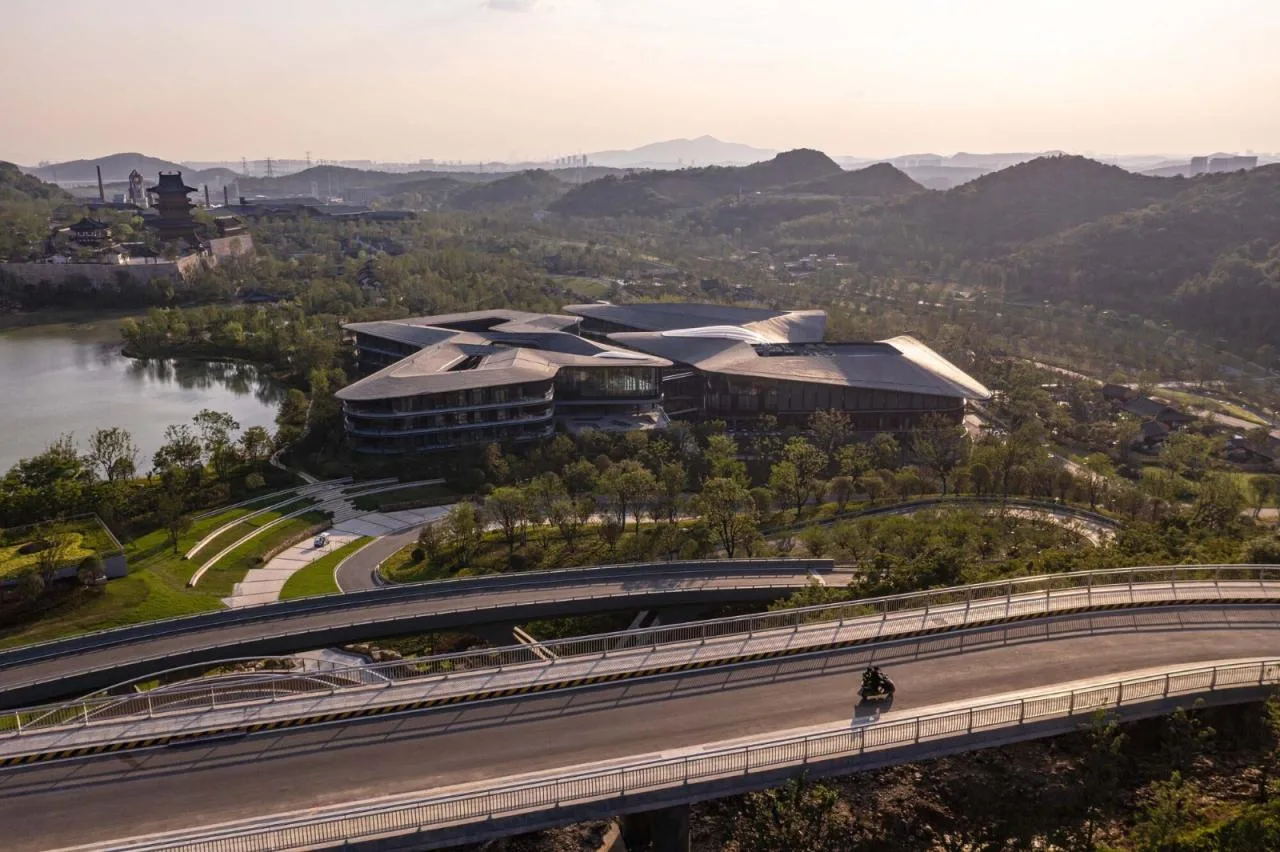
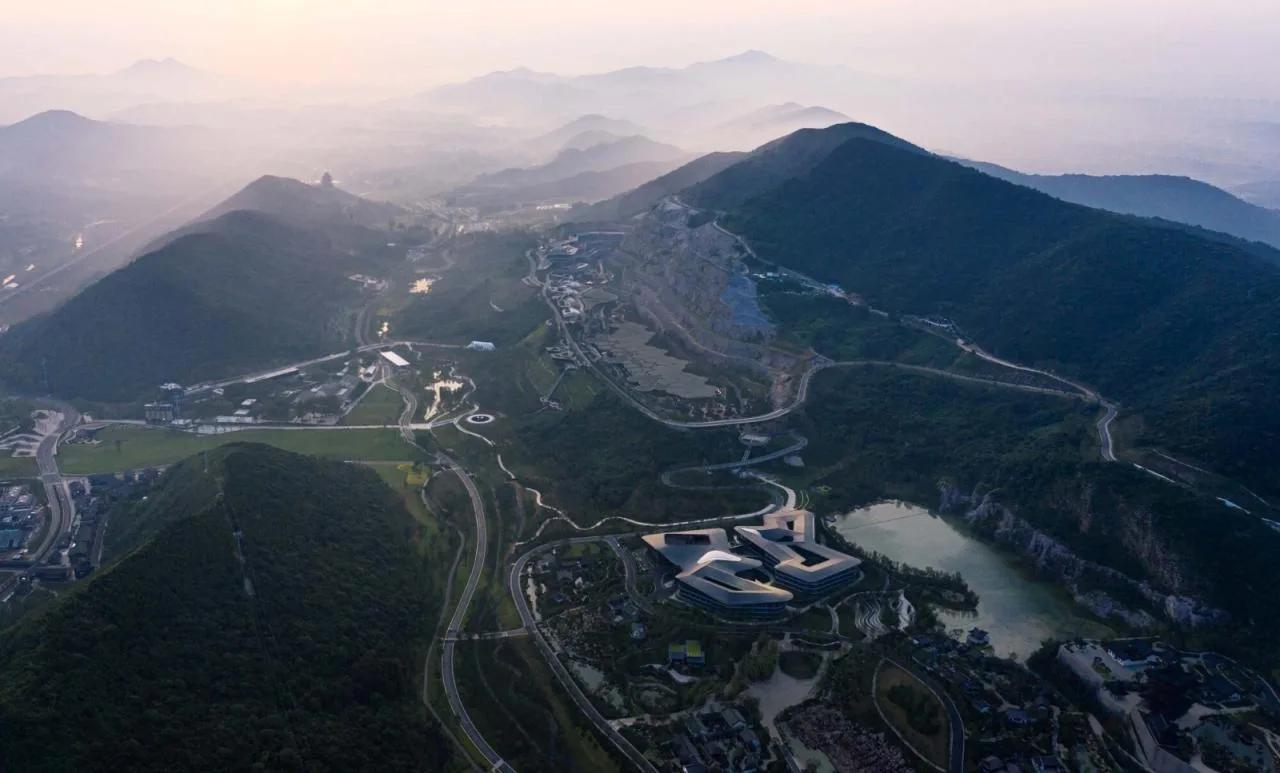
The Nanjing Garden Expo Park, situated in the abandoned mining area of Tangshan, was once scattered with “residual pools and broken walls.” This neglected land presented an ideal foundation for the Garden Expo Park. Ecological restoration here is more than a slogan — it offers architects a rare opportunity to reinterpret the dialogue between nature and humanity in the post-humanistic era. In the early planning stages, Professor Chen Wei drew inspiration from Song Dynasty landscape painter Guo Xi’s vision of “High and Far Forest City, Profound Poetry, and Plain Life,” which guided the overall urban exhibition park design and deeply influenced the opening plan.
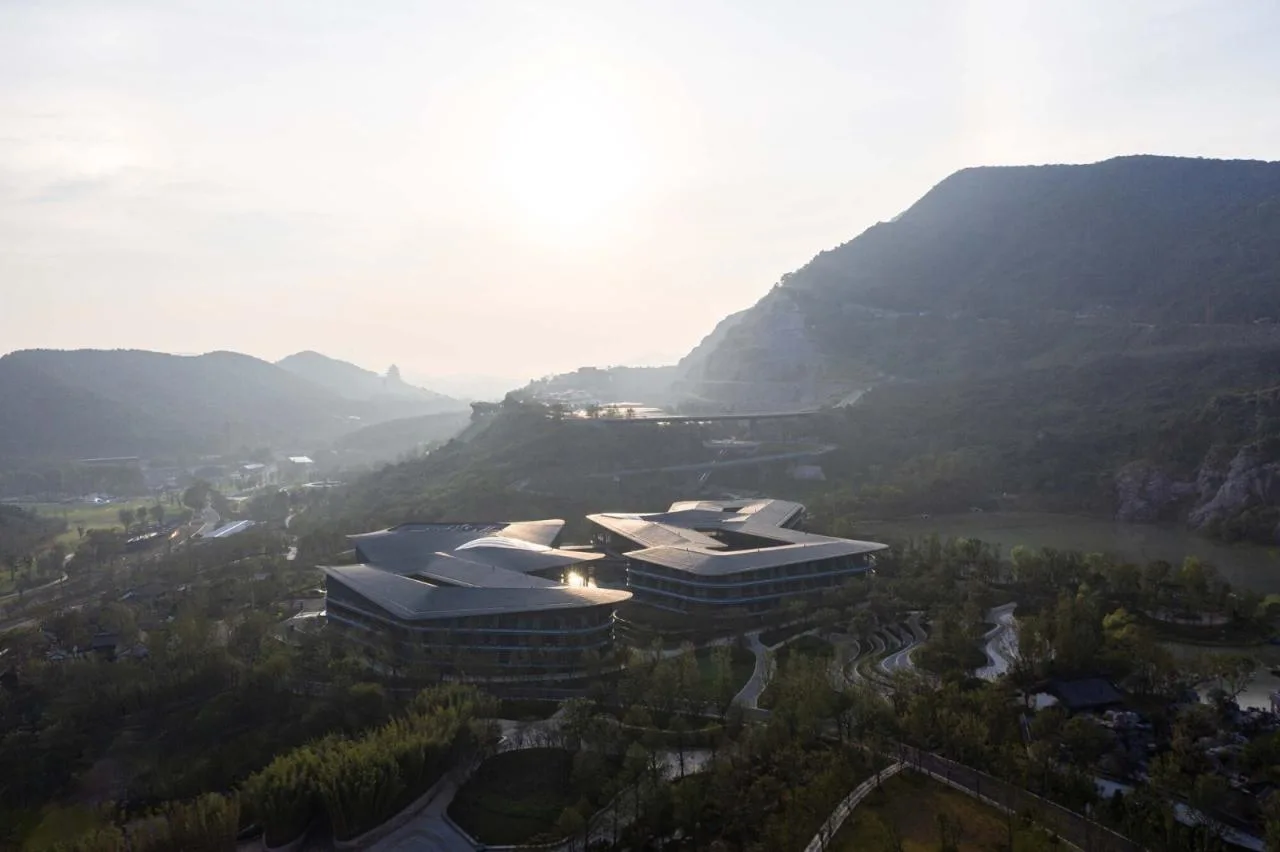
The hotel, spanning nearly 35,000 square meters, is positioned south of the pond, overlooking the northern cliff of the “Yangshan Monument.” While the site offers pure depth of field, its narrow landscape scale posed challenges. The terrain slopes from low in the north to high in the south, bordered by the City Exhibition Park to the west, creating diverse landscape orientations. This variety and the dynamic nature of the site offered many creative possibilities but also made it challenging to design a building that stands out while maintaining a unique character and harmonious relationship with the landscape.
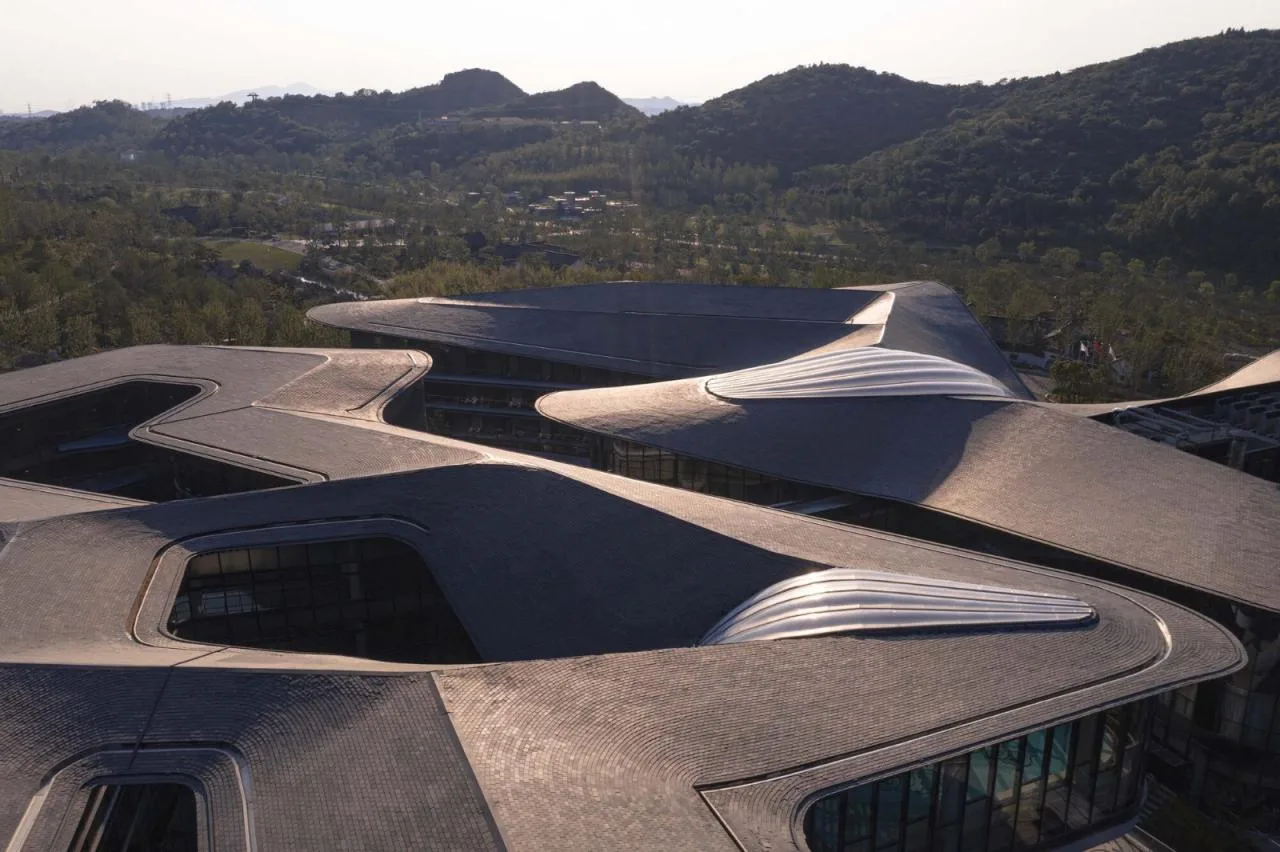
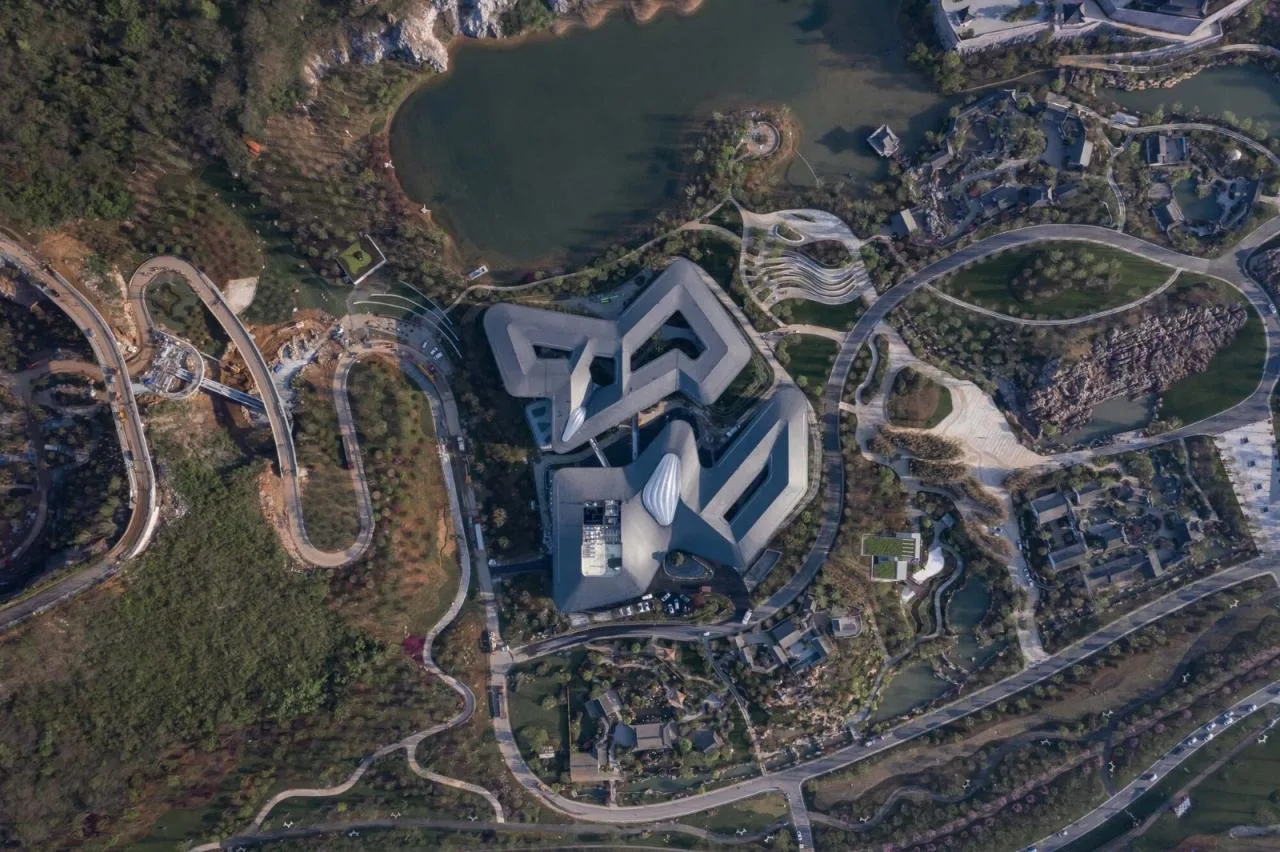
The design utilizes Geographic Information System (GIS) visualization technology to objectively analyze the relationships between cliffs, pond views, and site topography. By examining the tangent and normal vectors of the site’s three core elements — slope, height, and aspect — a composite vector field was created. Using a particle swarm intelligence algorithm, particle trajectories were mapped under multiple constraints, generating geometric paths aligned with the site’s texture. These paths informed the hotel’s form, ensuring it blends naturally into the landscape garden.
The roof design follows the trajectory lines of characteristic particle points, forming a preliminary curved surface. This surface is shaped into a gradually steeper concave roof from bottom to top, using the traditional “lifting and folding system” found in Chinese sloped roofs. This approach ensures structural integrity while continuing and echoing traditional Chinese architectural methods.
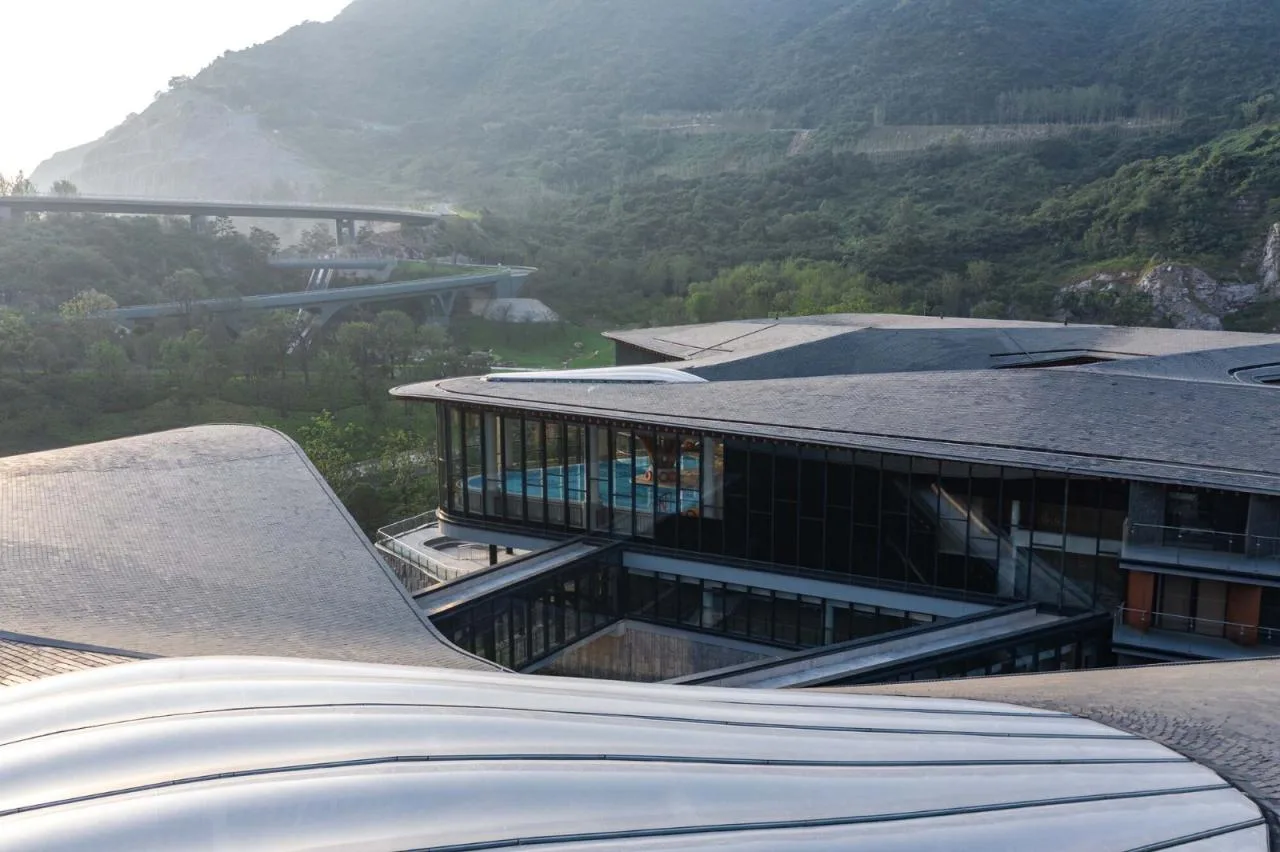
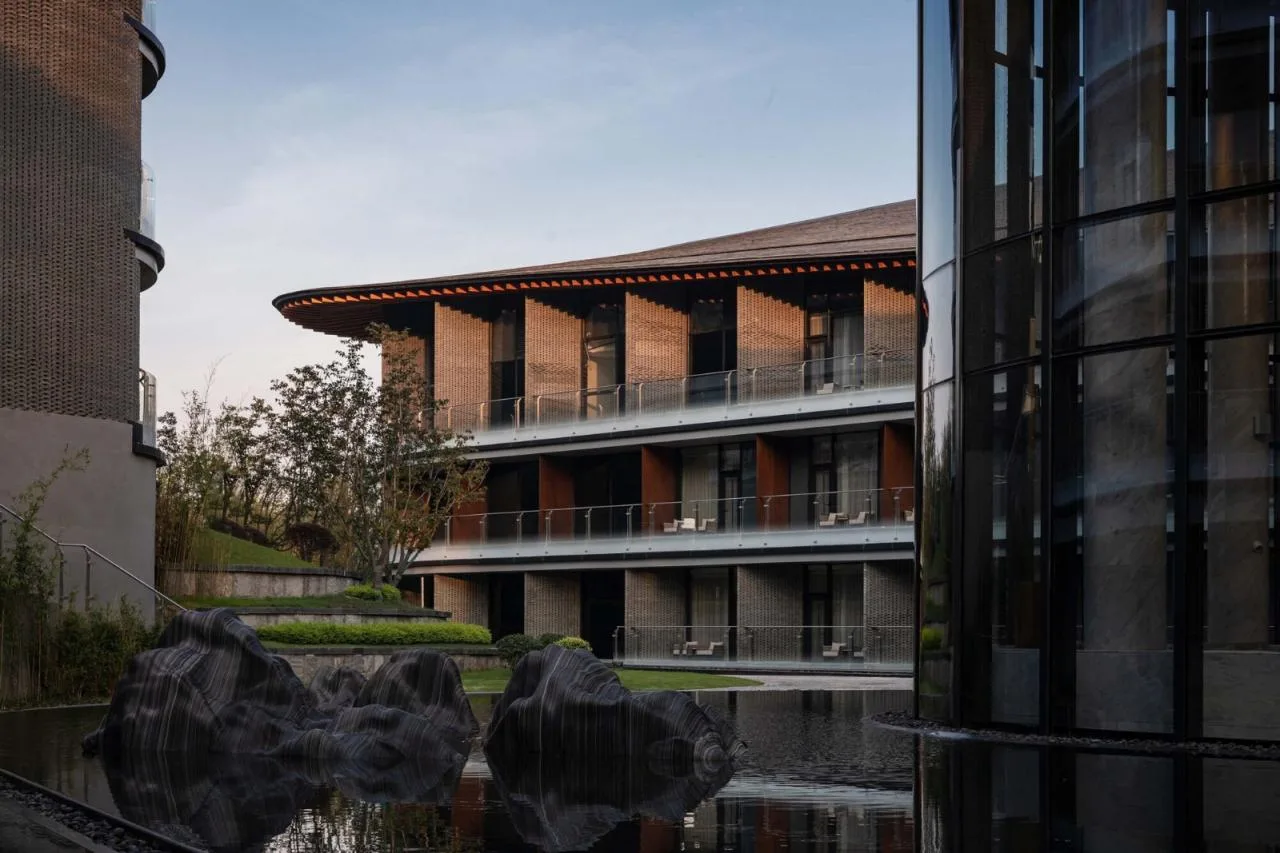
Following the land’s contours, the Sheraton Hotel’s overall massing reflects the earth’s geometry. The 15-meter elevation difference creates a layered, winding landscape. The plan adapts to these topographical trends, splitting the site into northern and southern functional zones. Five height variations are introduced, connected organically by a circular park path that links guest rooms, reception areas, wellness spaces, dining, entertainment, and the landscape park.
This architectural system engages in a natural dialogue with the cliff textures and surrounding wilderness, offering a multi-directional spatial experience that balances living with nature. Beyond the complex relationships with cliffs, ponds, cascading waters, and mountain-lake views, the Garden Expo Park also features numerous small garden spots. The hotel’s linear folding façade redefines the urban exhibition park’s elegant boundaries, employing a subtle yet strong framing strategy that embodies the philosophy of “great success as if lacking, great deficiency as if complete.”
The building’s posture climbs the slope with staggered layers complementing the garden trees, creating a harmonious conversation between architecture and the environment.
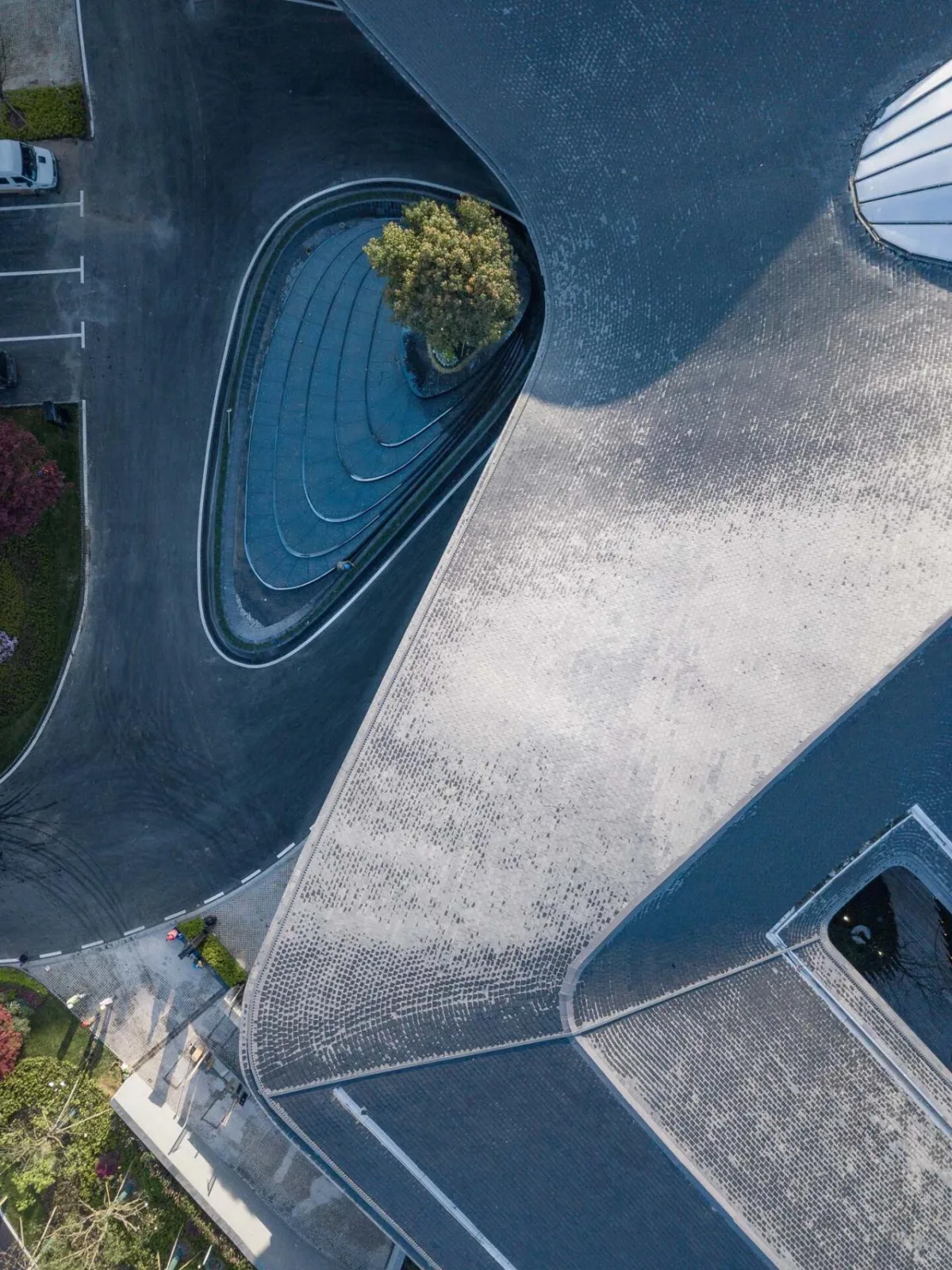
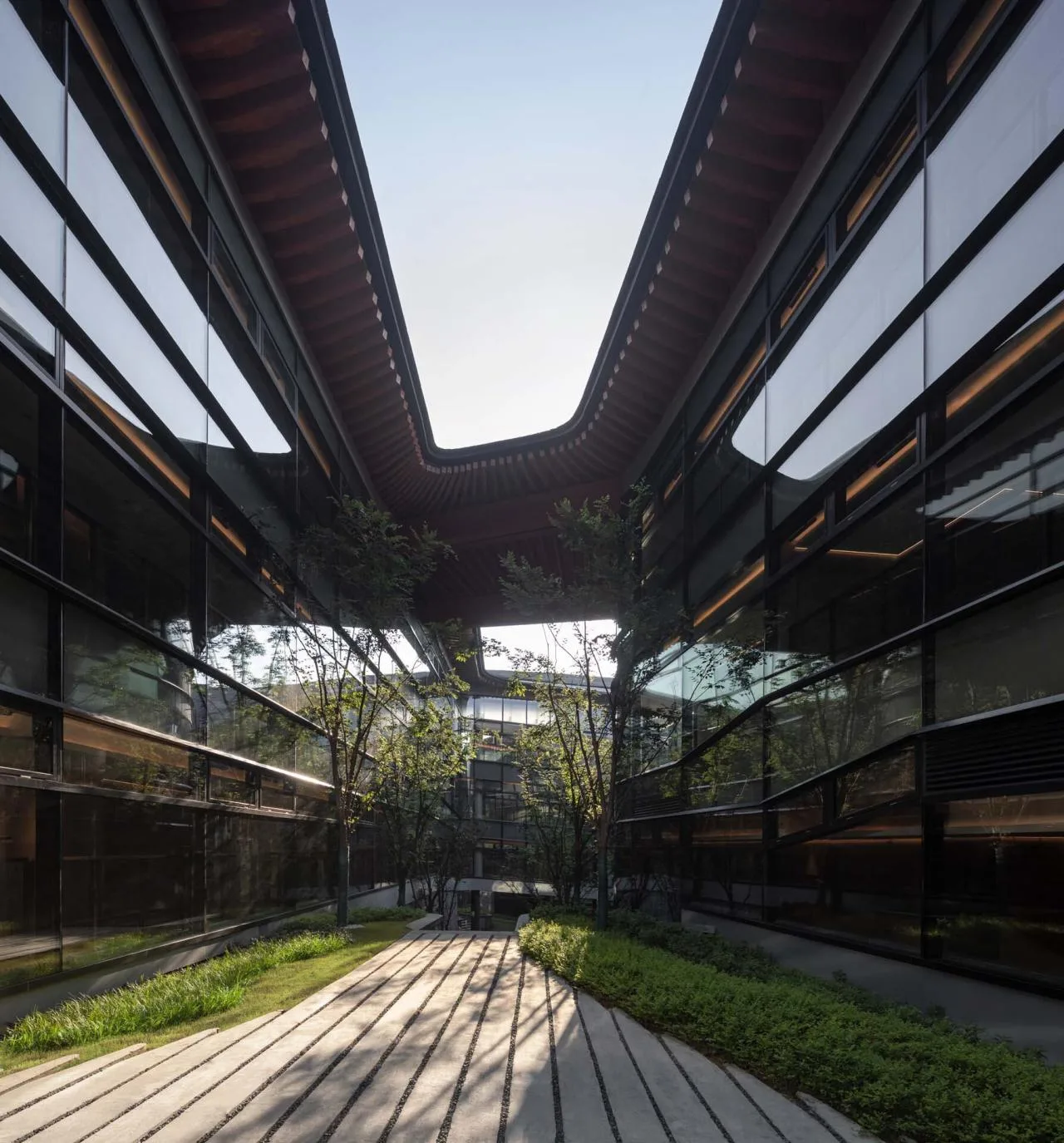
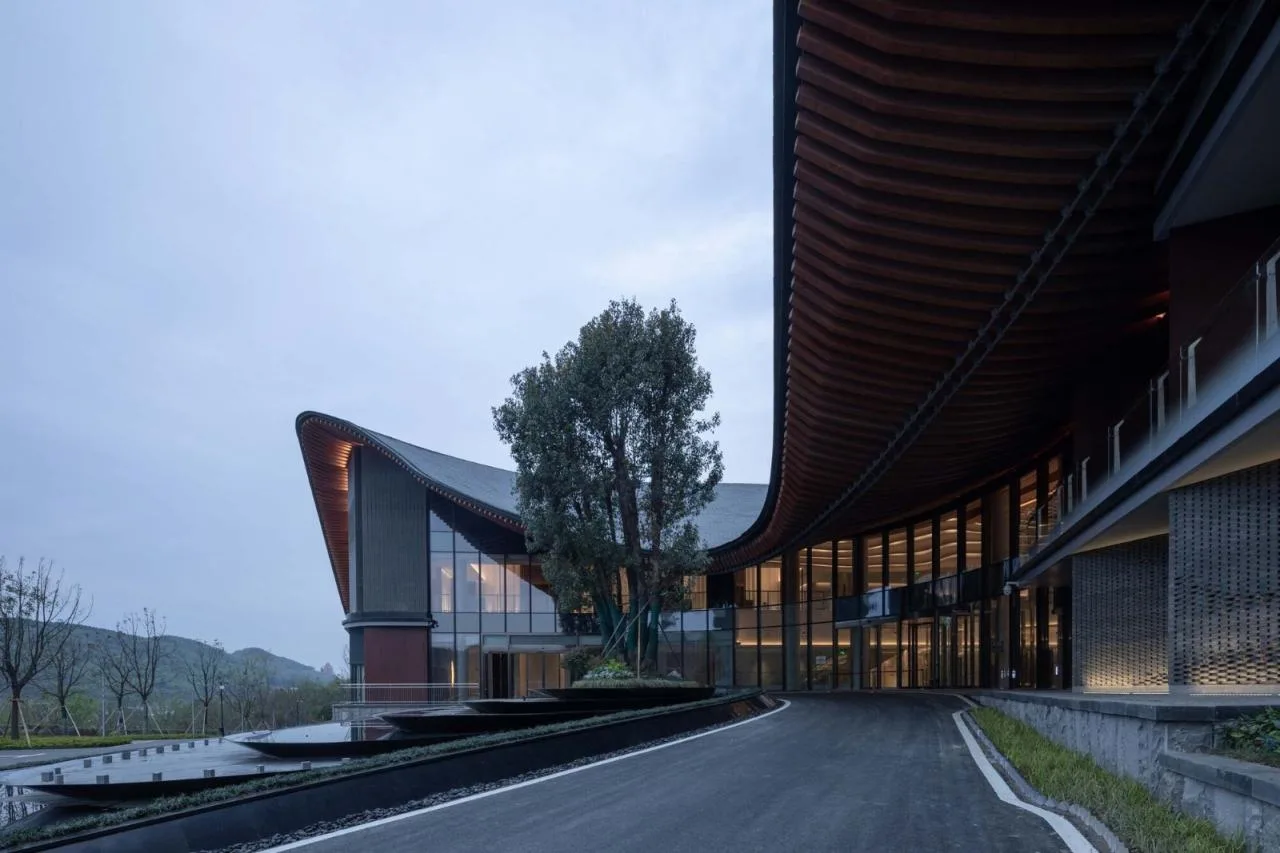
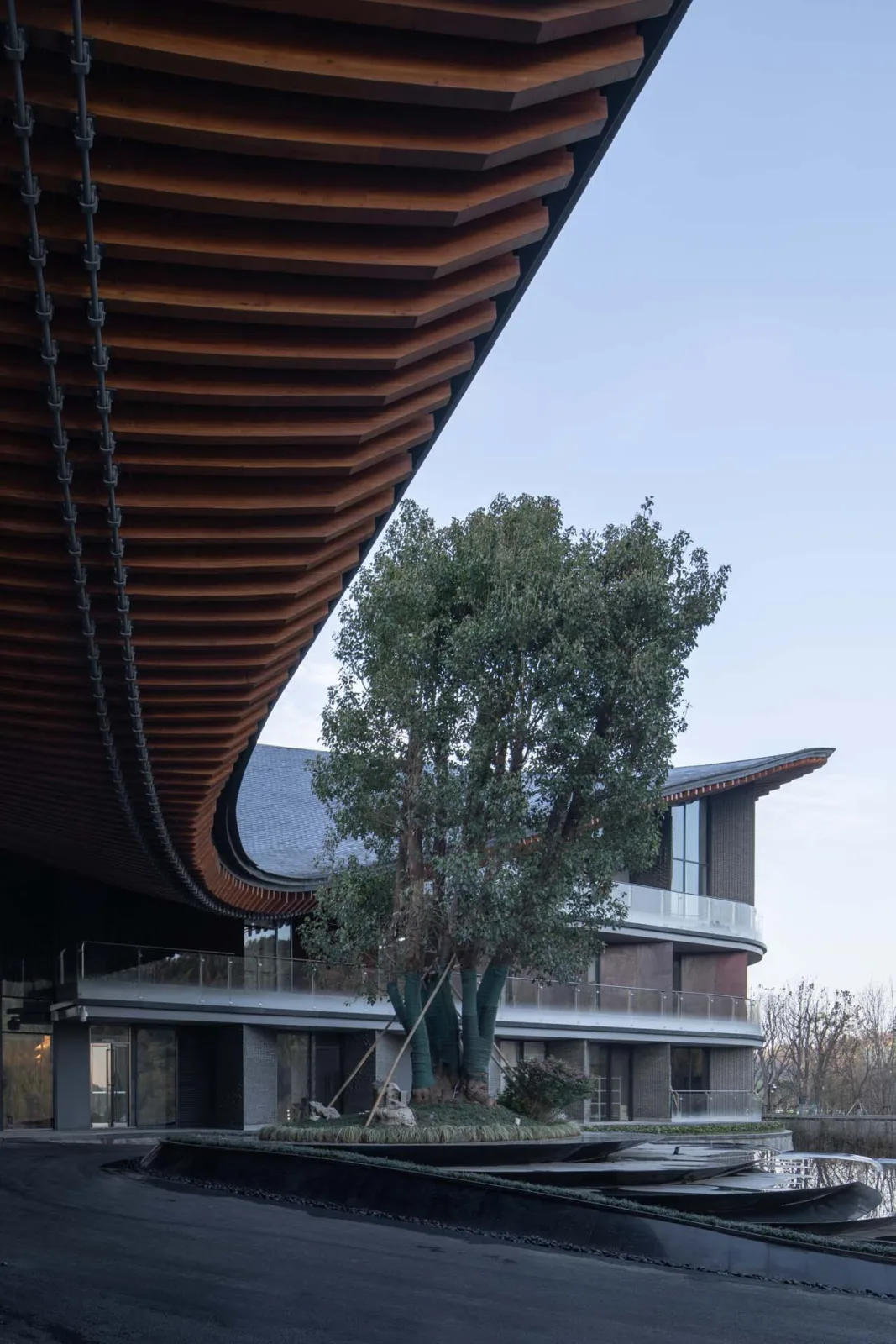
The hotel’s entrance features a horizontal roof span with pillarless, overhanging eaves set on a 3-meter-high platform overlooking the Nantong Garden of the City Exhibition Park. From a high vantage point on the winding mountain road east of the hotel, the solitary tree’s lush canopy at the entrance stands out distinctly, surpassing the building’s scale. This creates an asymmetrical sense of order and a picturesque scene described as “one tree forming a forest.”
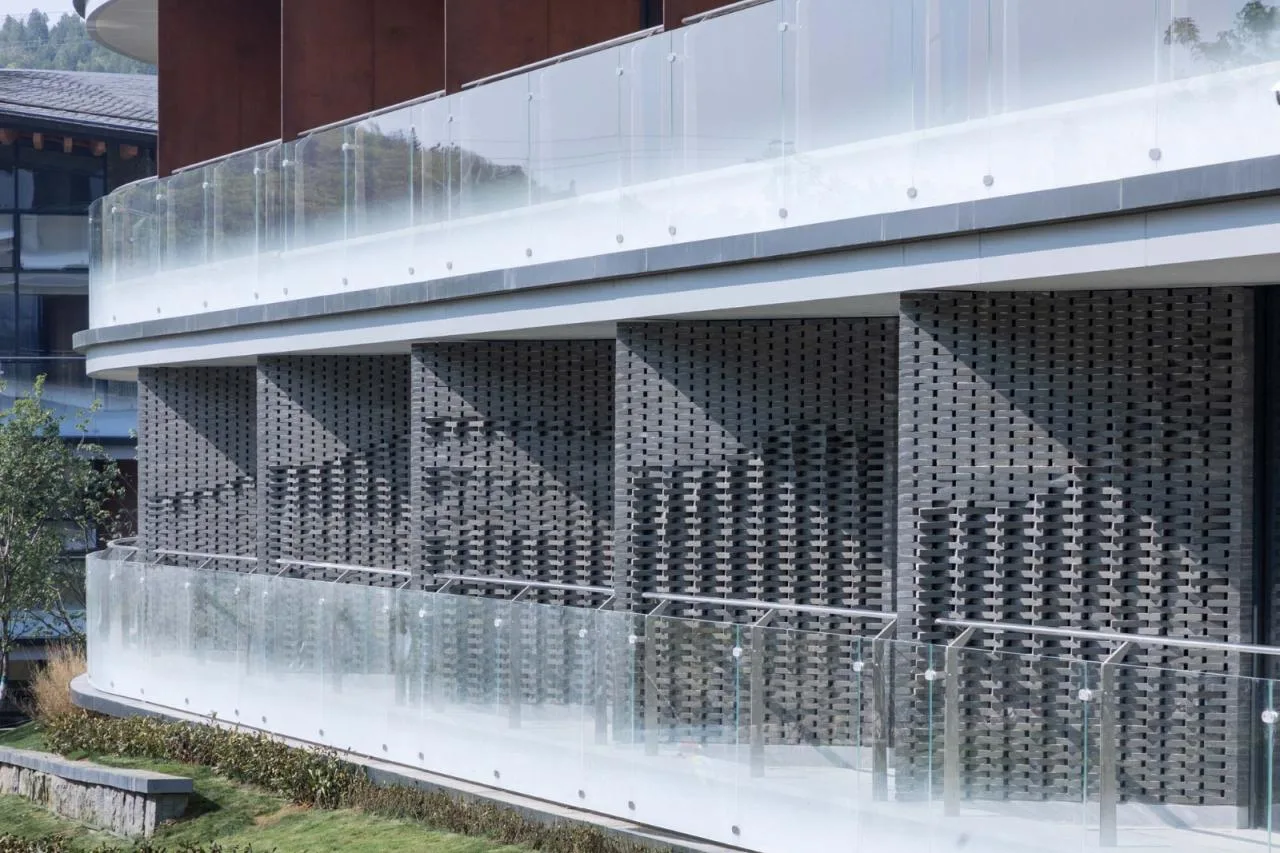
The north façade of the Blu Hotel’s main entrance is clad in gray tones, featuring a tiled roof and a long stretch of gray robot bricks that complement the dense greenery of the Garden Expo Park. The interplay of rigidity and softness invites distant viewing and exploration.
The entrance canopy reinforces the sense of order, balancing the need for a spacious atmosphere with practical shelter for guests and vehicles during rain. The design integrates a smooth eave corridor, uniting structural form and function under the Kangaroo dynamic simulation concept. Although the optimal form presented construction challenges due to the wooden roof’s properties, collaboration with structural engineers led to a column-free cantilevered corridor spanning 28 meters with an average depth of 8 meters, using two steel cables to balance roof pressure and shape.
The sagging cables not only optimize structural stress but also enhance aesthetic appeal. The intentionally open eaves without a sky gutter create a natural interaction with the solitary trees and entrance pool, producing a graceful waterfall effect during rain.
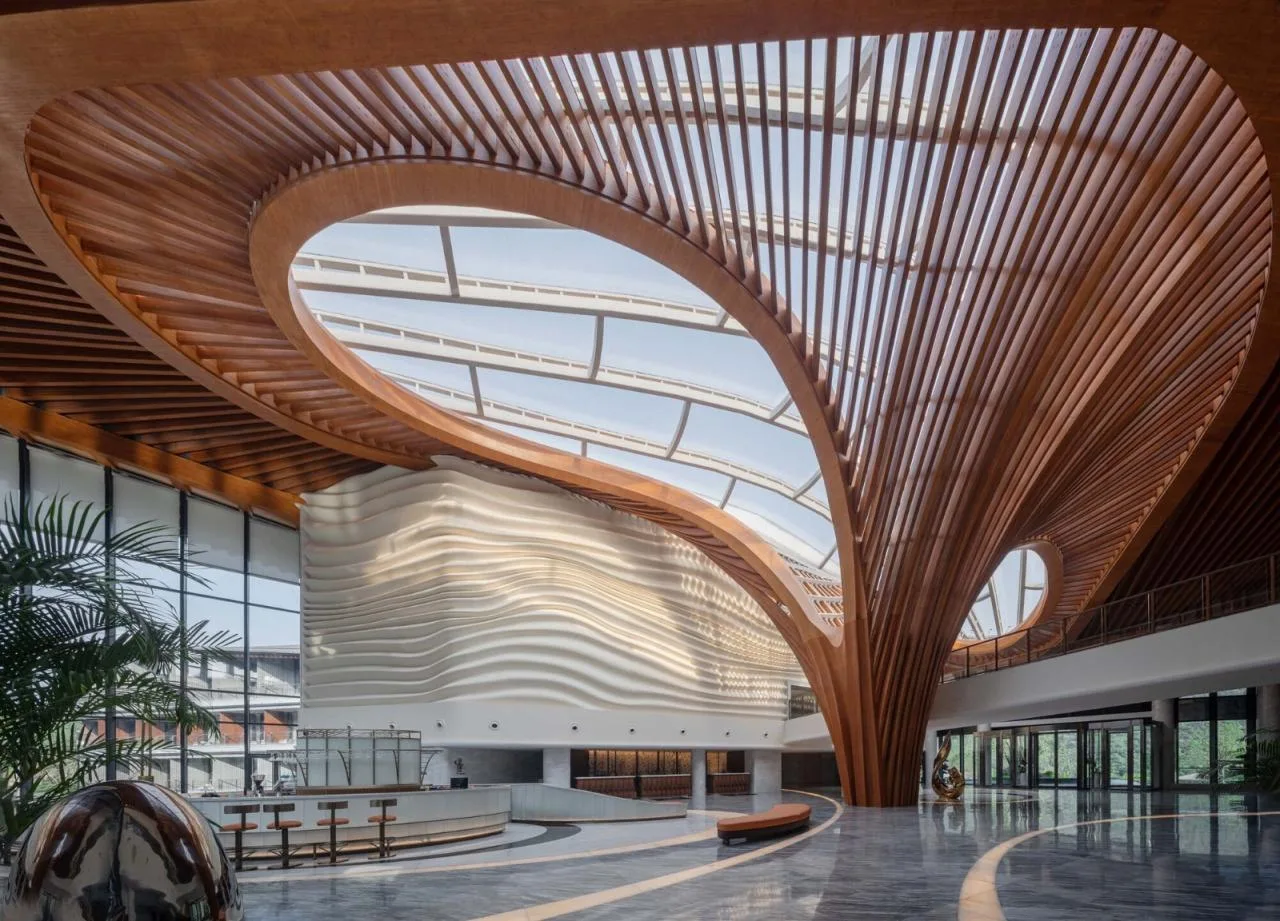
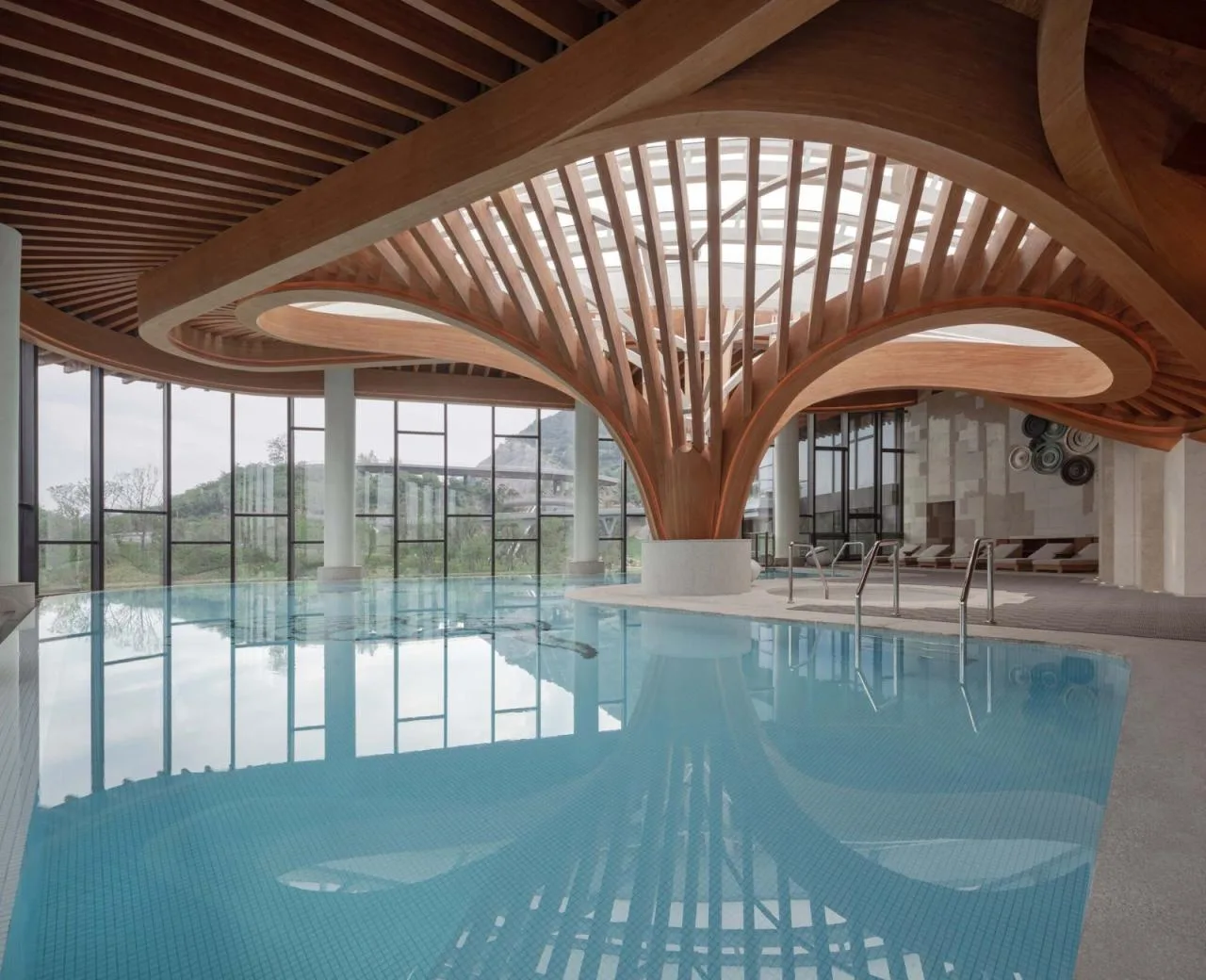
The project aims to extend a sense of vastness by guiding views toward the Garden’s landmark, Jingyang Tower, visible through the French window at the lobby’s end. The design adjusts and extends the complex, layered interfaces to frame panoramic views of winding roads, water systems, and hidden mountains and lakes. The lobby echoes the entrance’s artistic theme of “one tree forming a forest,” realized through an innovative structural design.
Using structural mechanics and form coupling, nearly 2,000 square meters of column-free hyperbolic roof space was achieved. The lobby’s column and beam system integrates topology continuity, unfolding the concept of “flowering columns” through a quarter topology configuration. Curved beams and columns are designed to unify form and force.
Kangaroo dynamic simulation shaped the “flowering columns,” which primarily consist of steel with secondary curved wooden beams. The optimized structure achieves unity of form, force, light, and space. These columns not only provide structural support but also serve as a key light source through ETFE membrane material at the top, channeling sunlight through the gaps between wooden beams and extending transparency from the entrance eaves to the atrium.
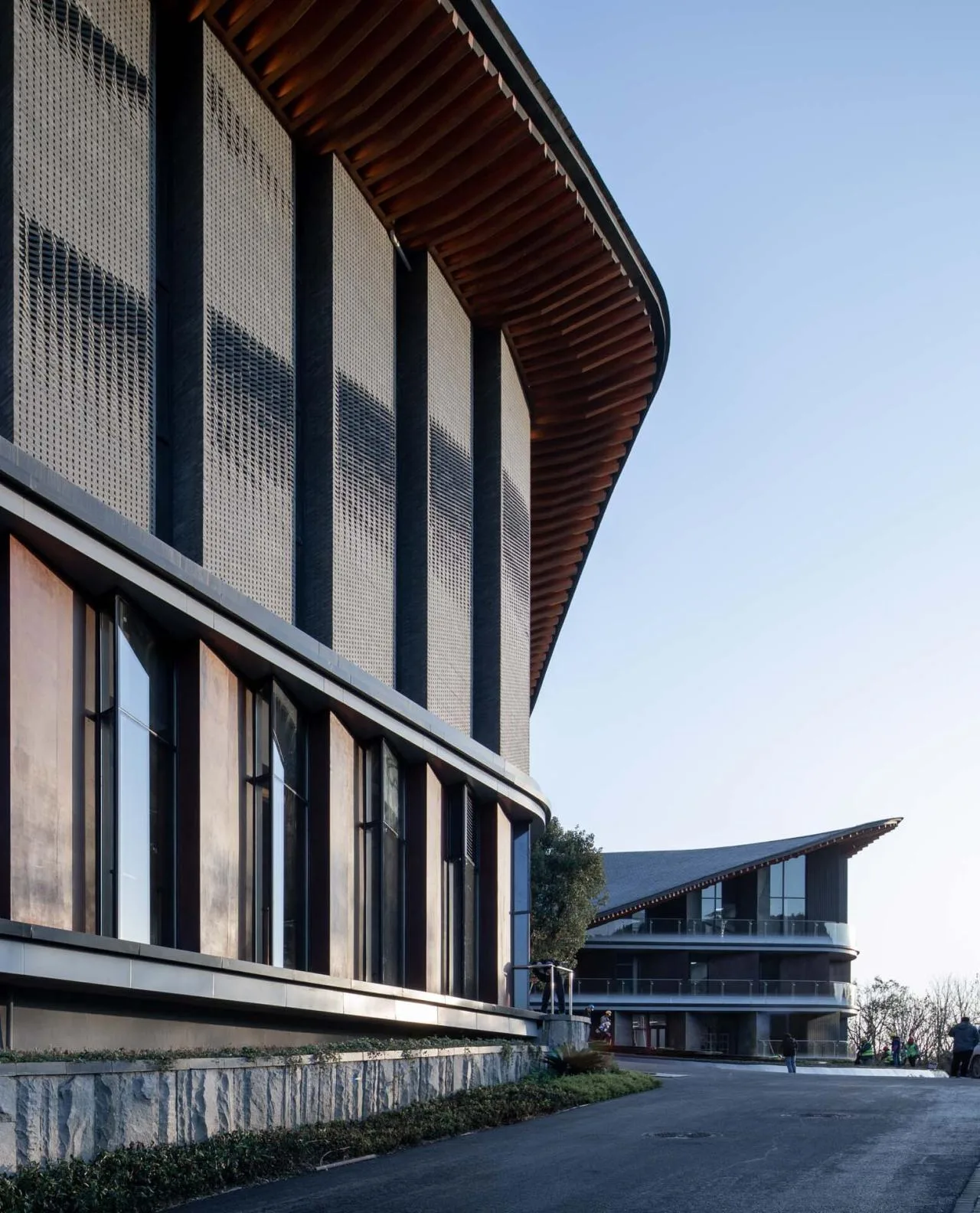
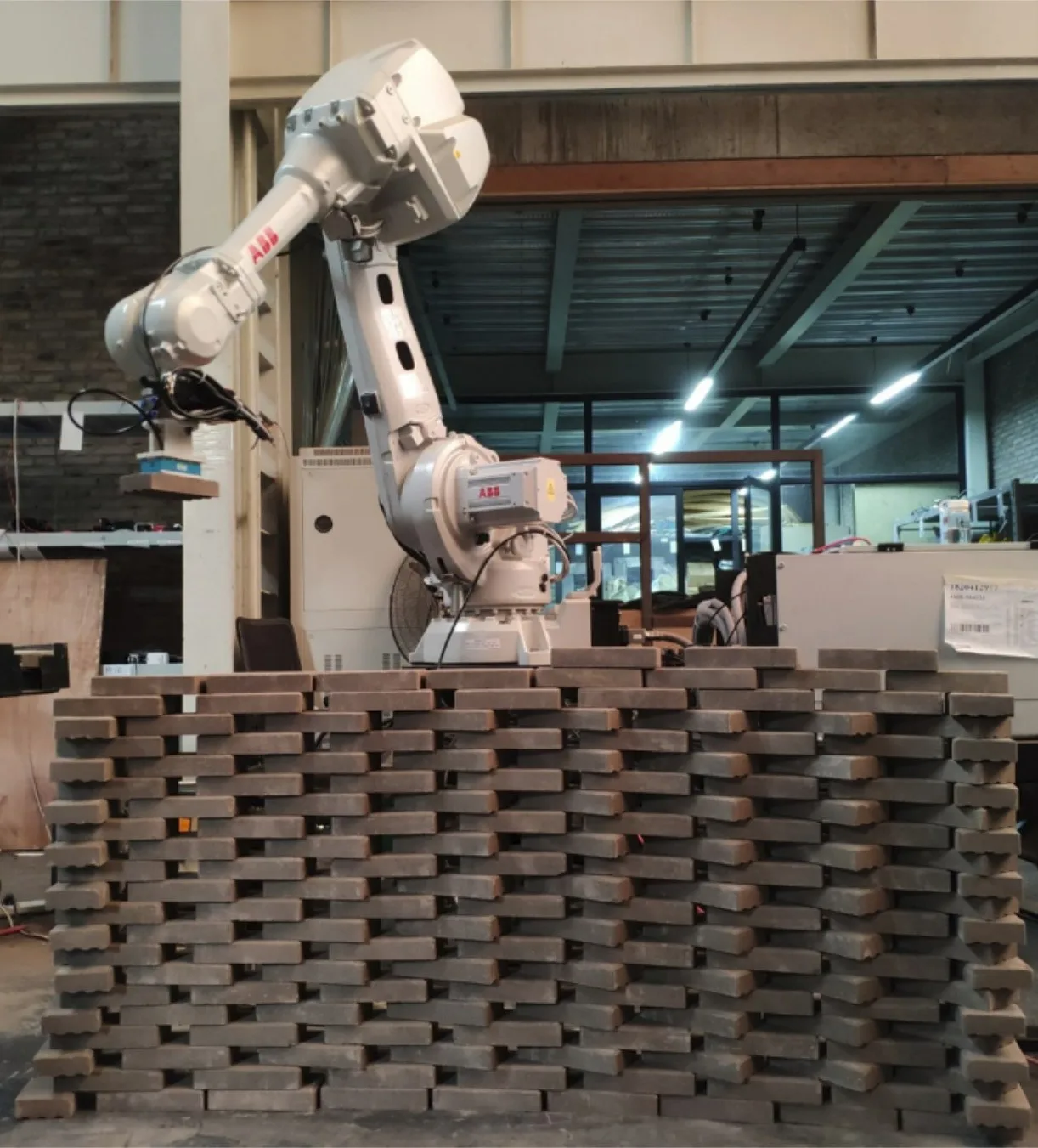
The façade design revisits the mountainous cliff landscape through innovative machine-made brickwork. Beyond performance-based construction, this project explores robotic construction methods to reshape localized cultural memories through technology. In guest rooms, brick partition walls use image interference technology to control the rotation angles of bricks, producing dynamic concave and convex light and shadow effects. Uneven brick joints recreate abstract digital geometries, expressing the “Purple Mountain and Water” theme and reflecting the dual imagery of nature and tourism.
Artificial intelligence (AI) models trained on over 500 local landscape images utilize deep learning-based Generative Adversarial Networks (GANs) to transfer the structure and brushwork style of Jinling landscape paintings. This iterative process generates digital landscape paintings that align with the site’s cliff aesthetics. Grayscale discrete geometry extraction converts grayscale parameters into brick rotation angles during construction, translating landscape painting elements into tangible façade visuals, resulting in a digitally constructed and visually compelling façade.
In the Ritz Hotel project, human-machine collaboration in robotic wooden and brick structures has demonstrated significant advantages in construction speed and precision. More importantly, it has fostered meaningful interaction between humans and machines in terms of emotion, cognition, memory, and creative intent. This milestone advances the integration of virtual design with material intelligence in the post-humanistic era.
This profound approach — using contemporary technology to inscribe traditional memories and breaking free from conventions with a new post-humanistic spirit — stands as the project’s most unforgettable achievement.
Project Drawings
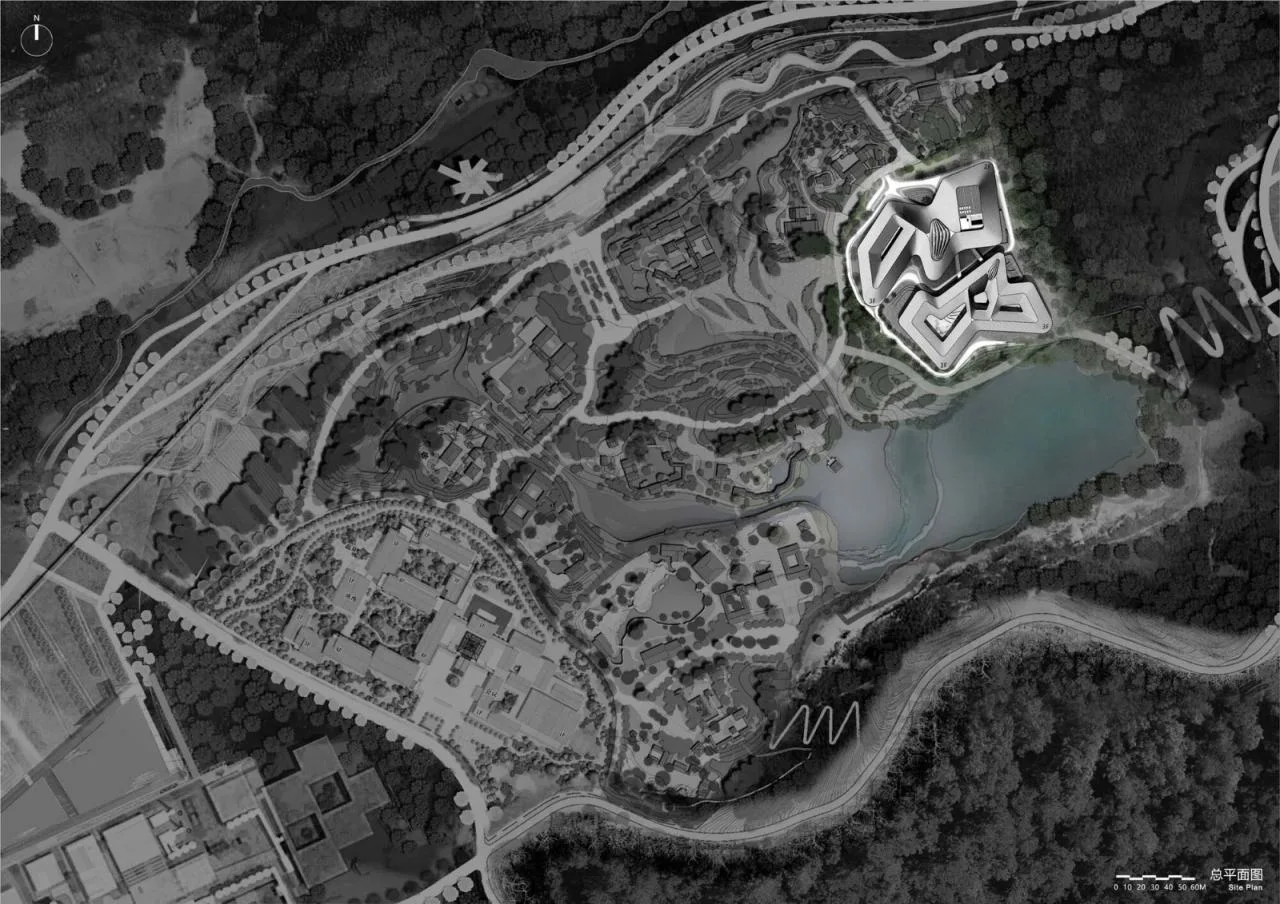
△ General Layout Plan
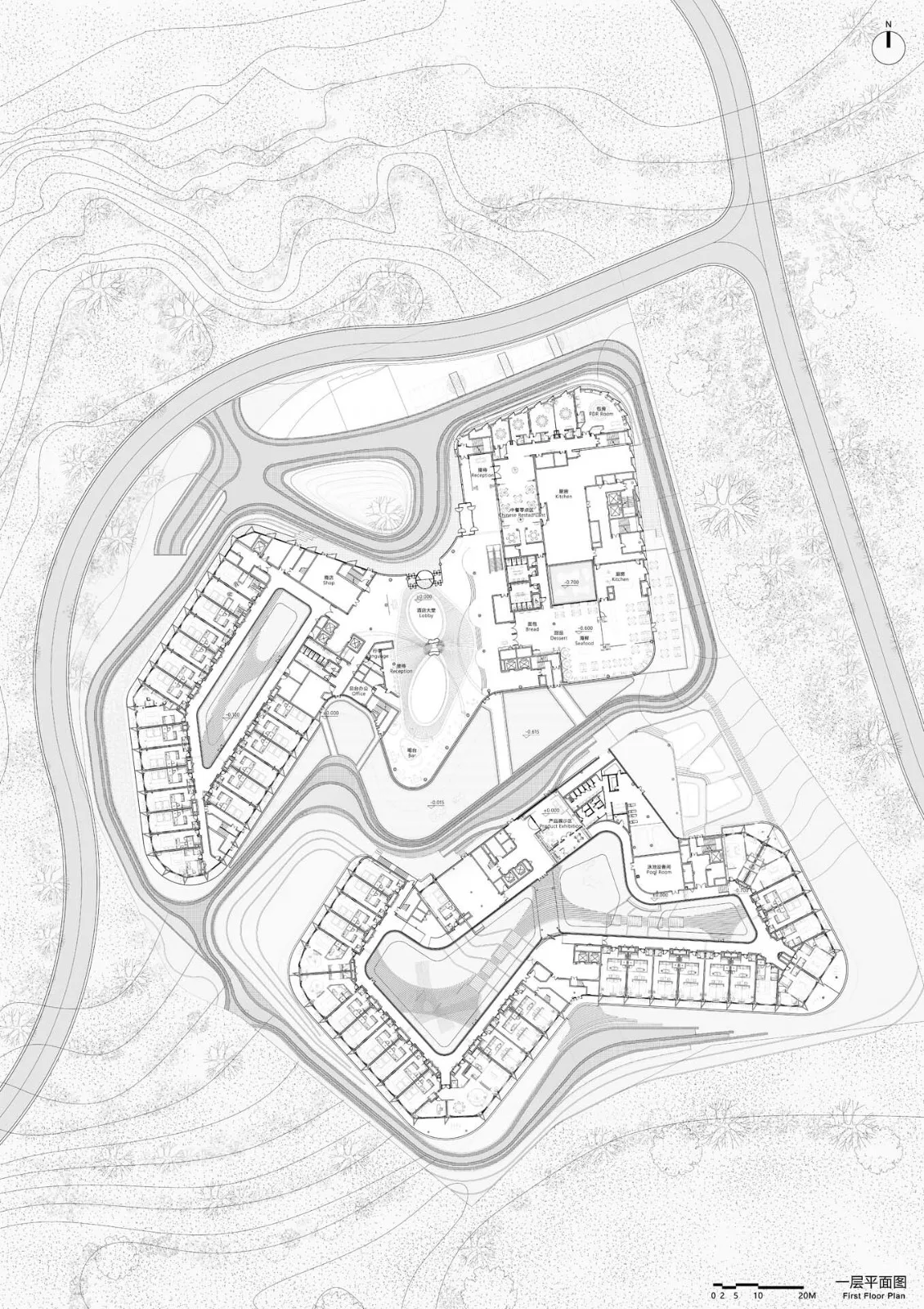
△ First Floor Plan
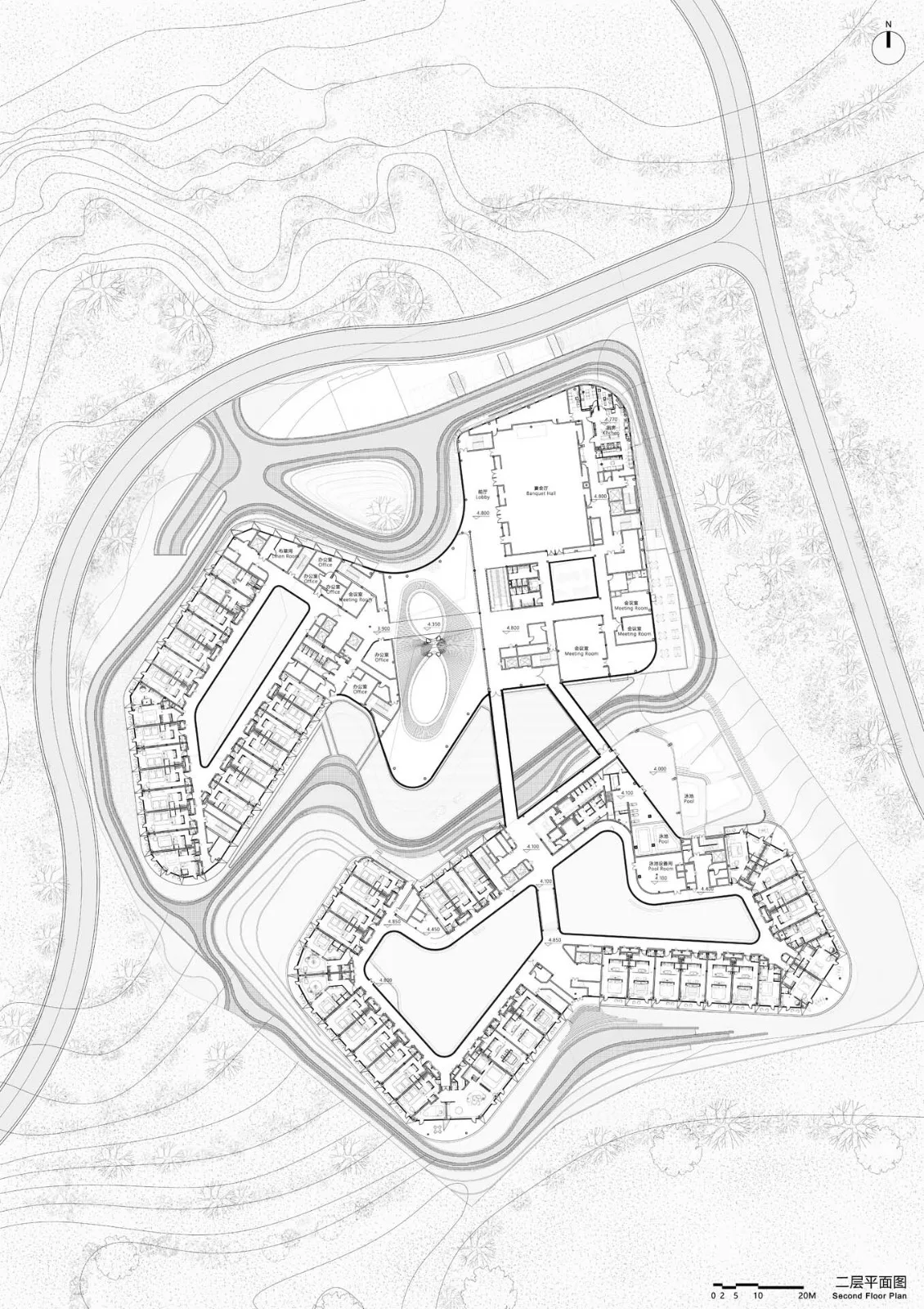
△ Second Floor Plan
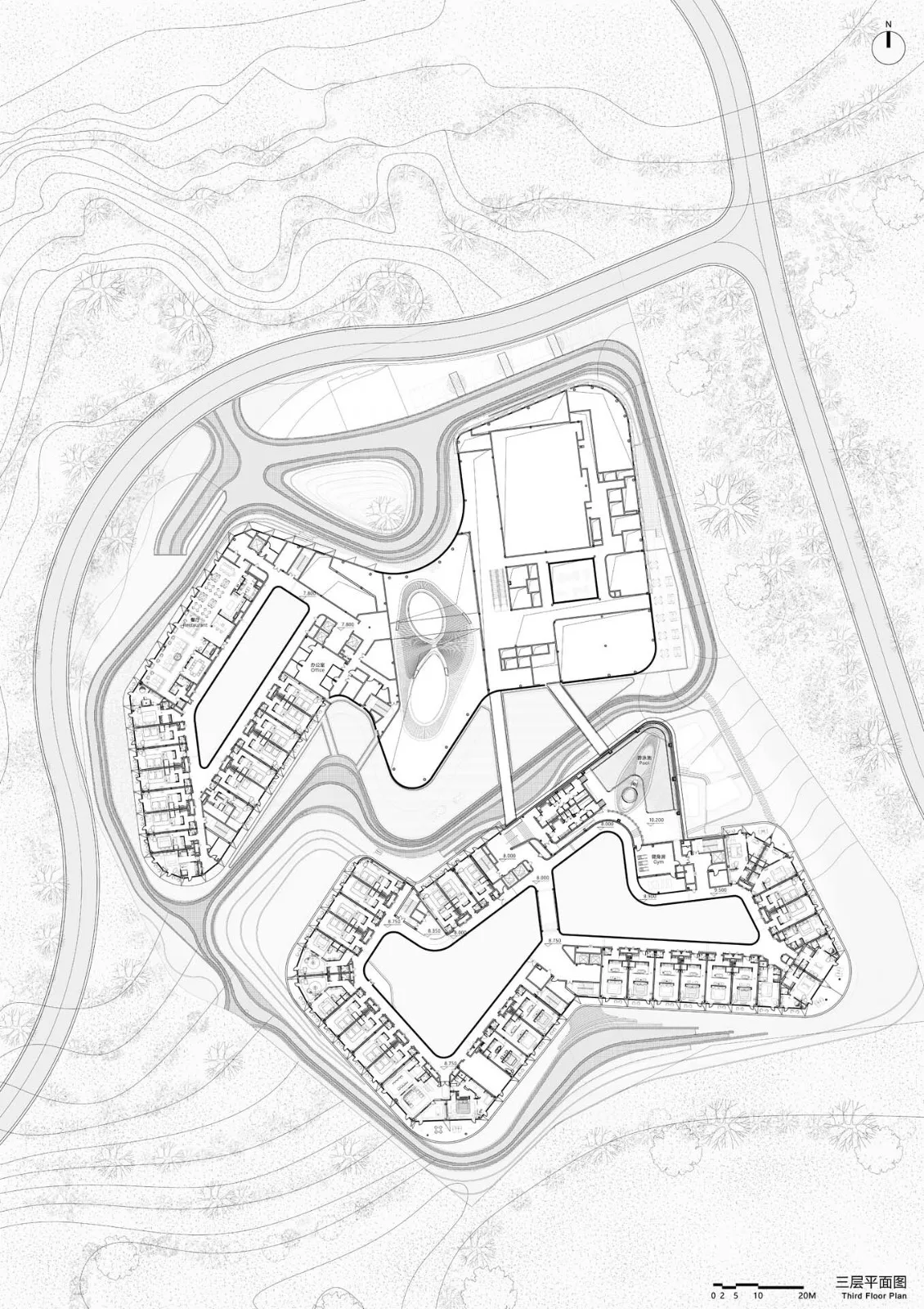
△ Third Floor Plan
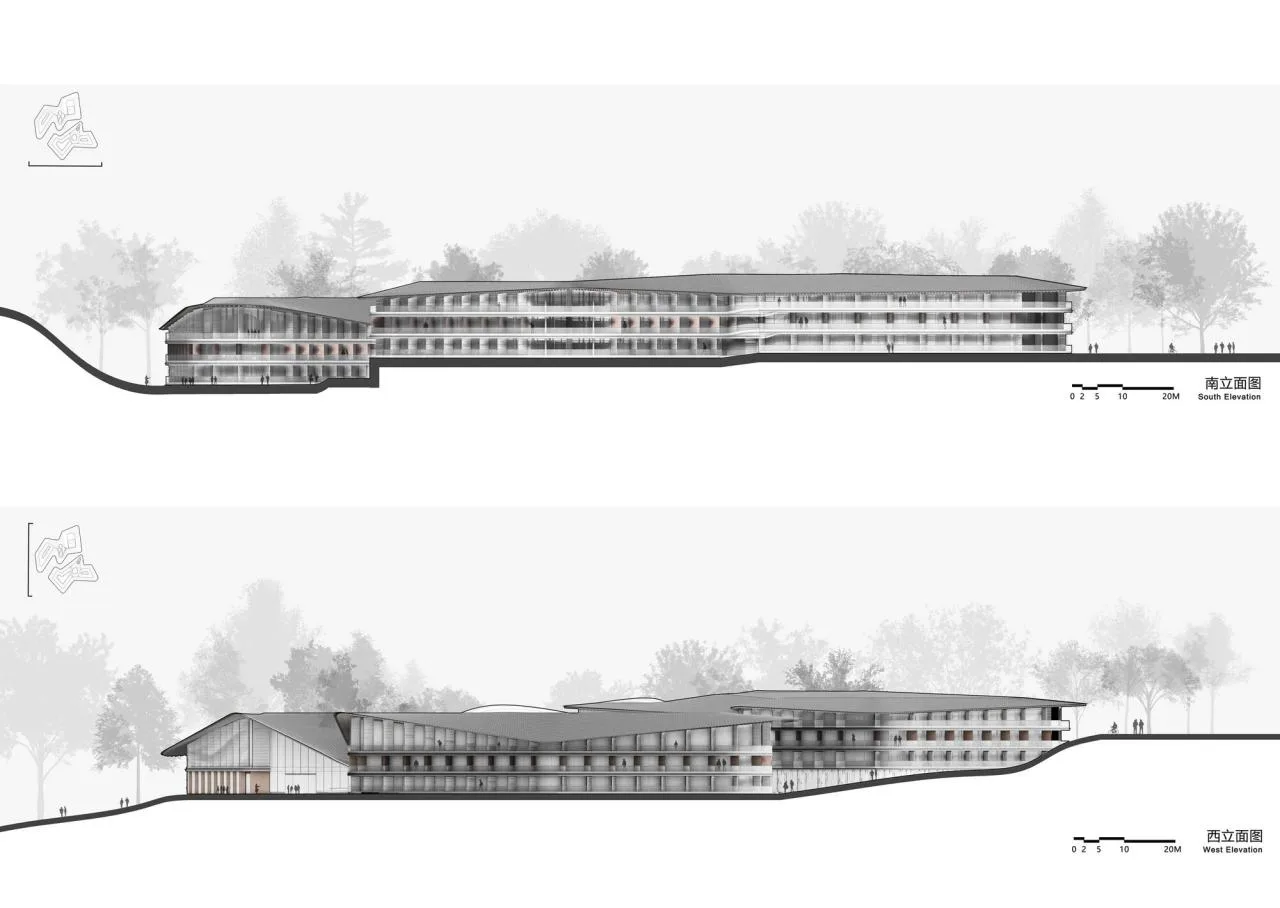
△ Elevation Drawing
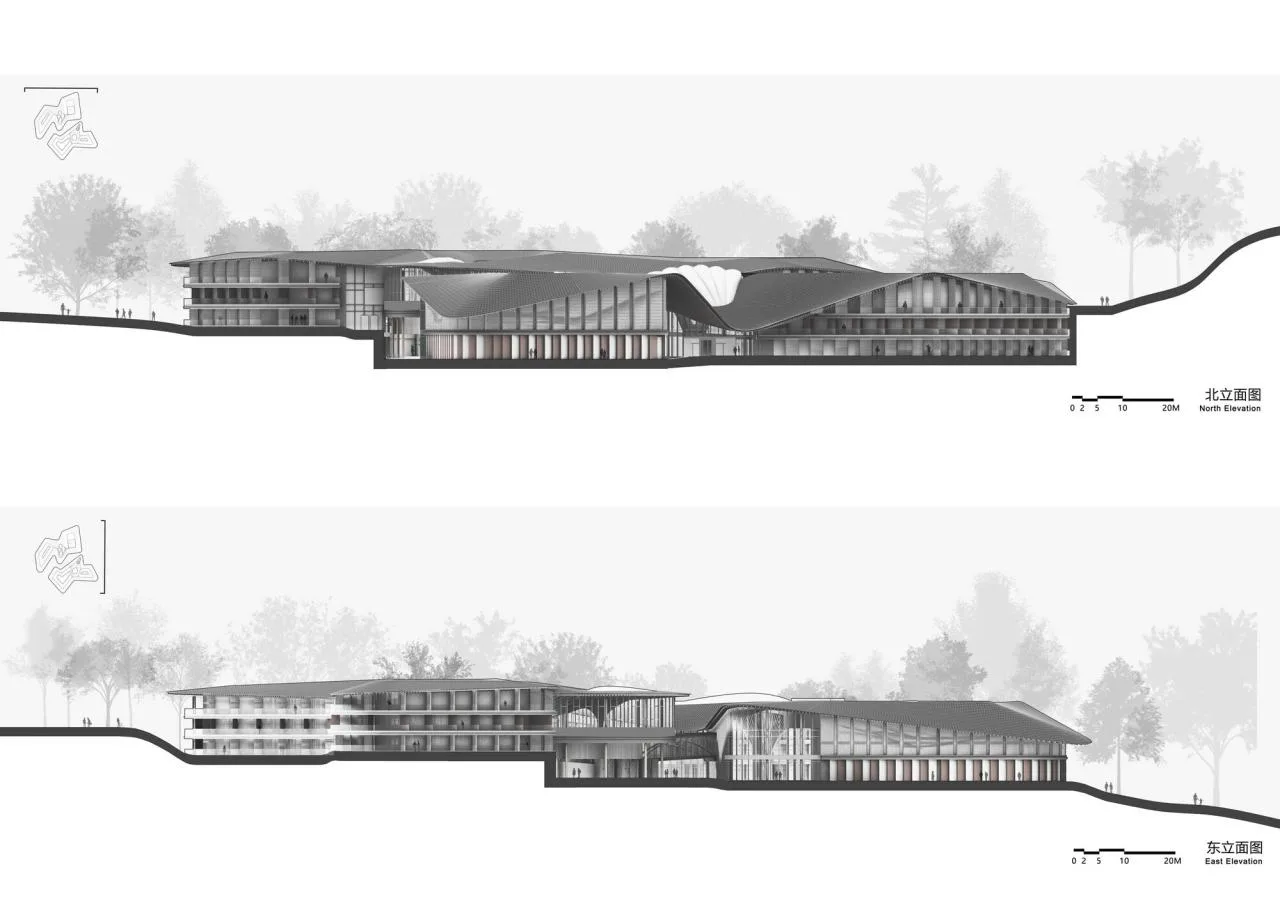
△ Elevation Drawing
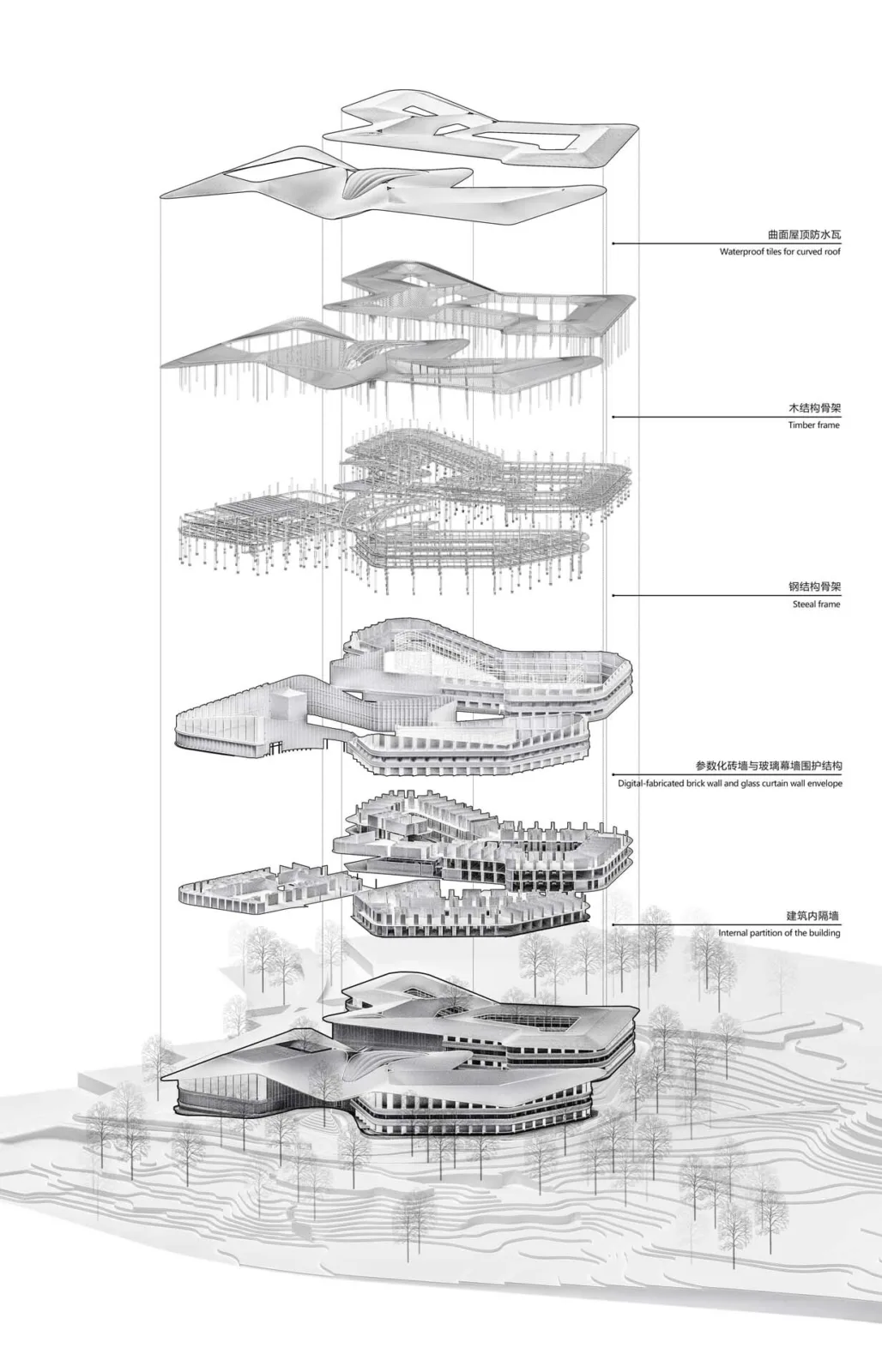
△ Exploded Diagram
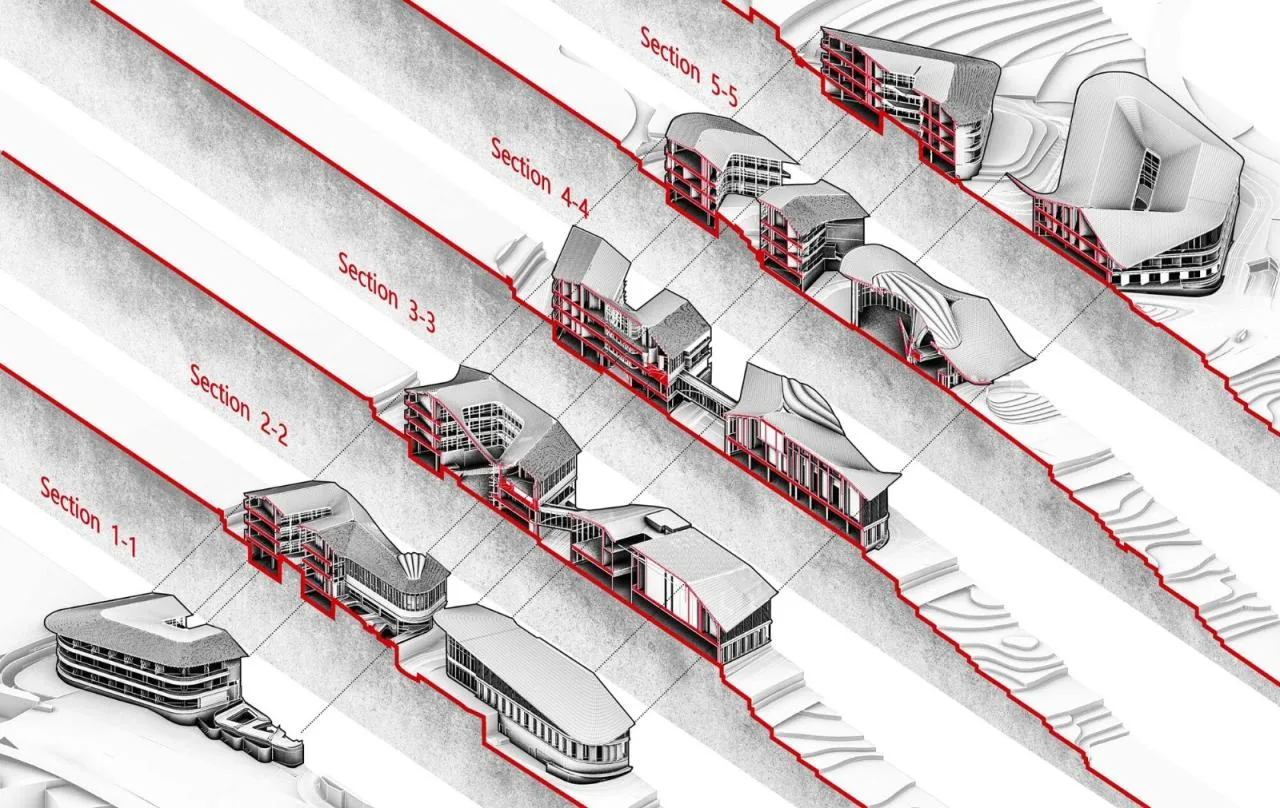
△ Section Diagram
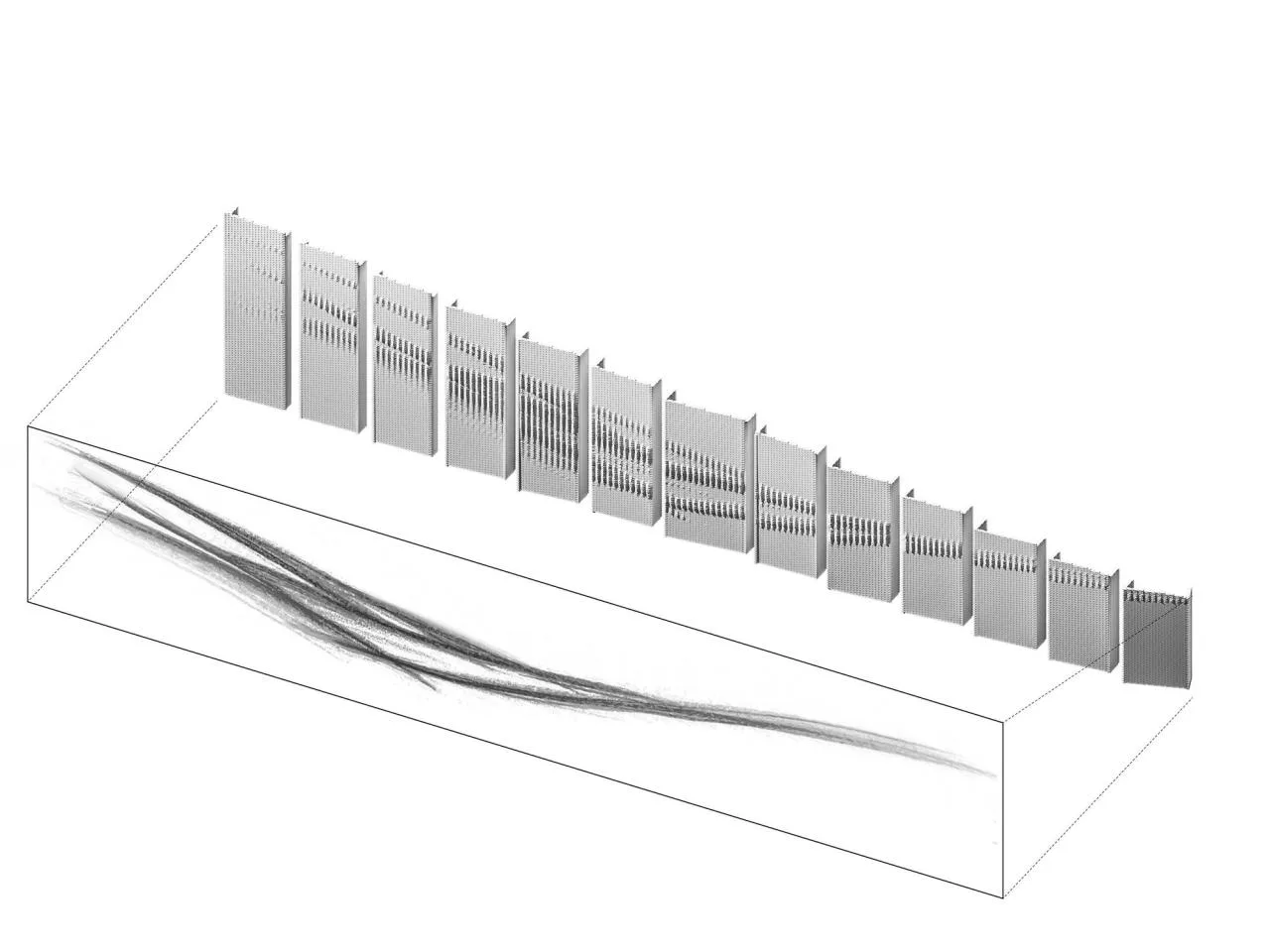
△ Analysis Chart
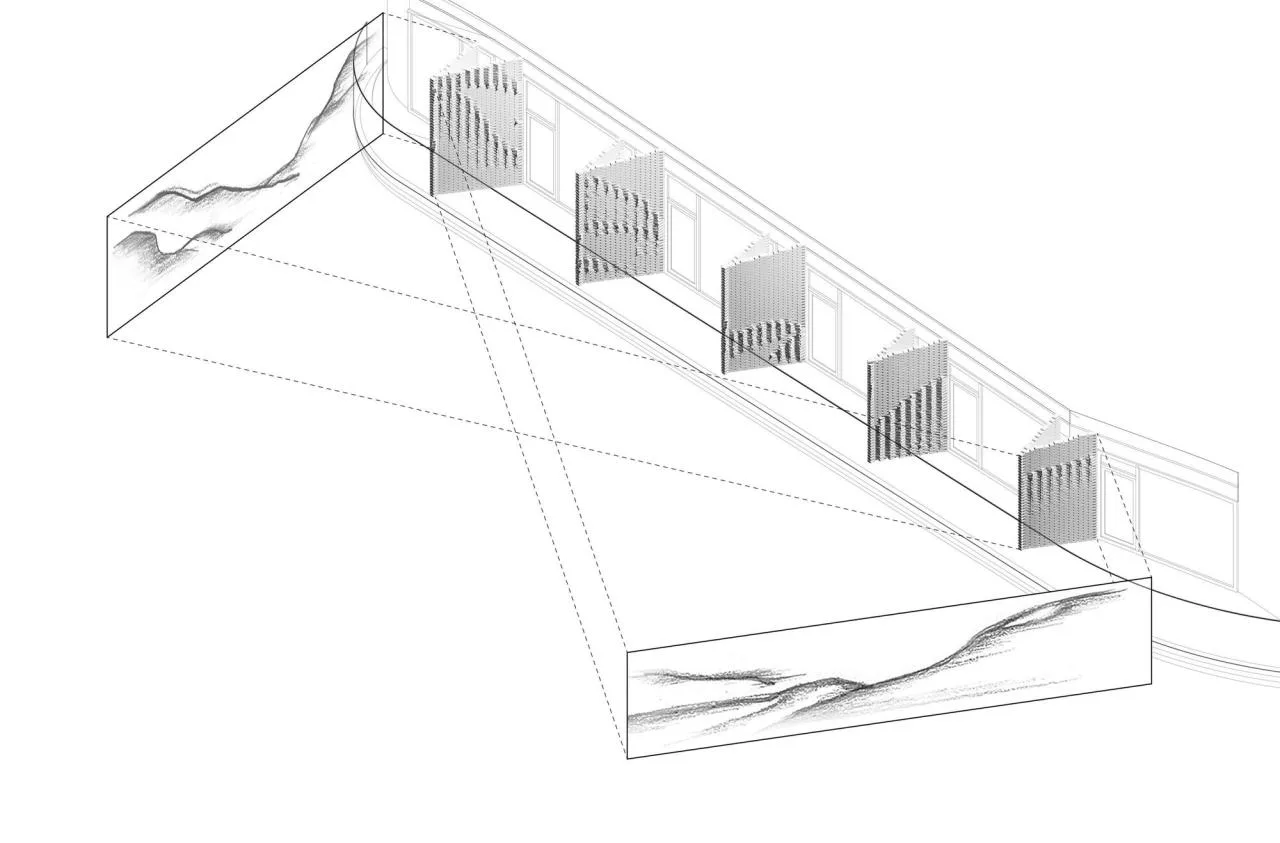
△ Analysis Chart
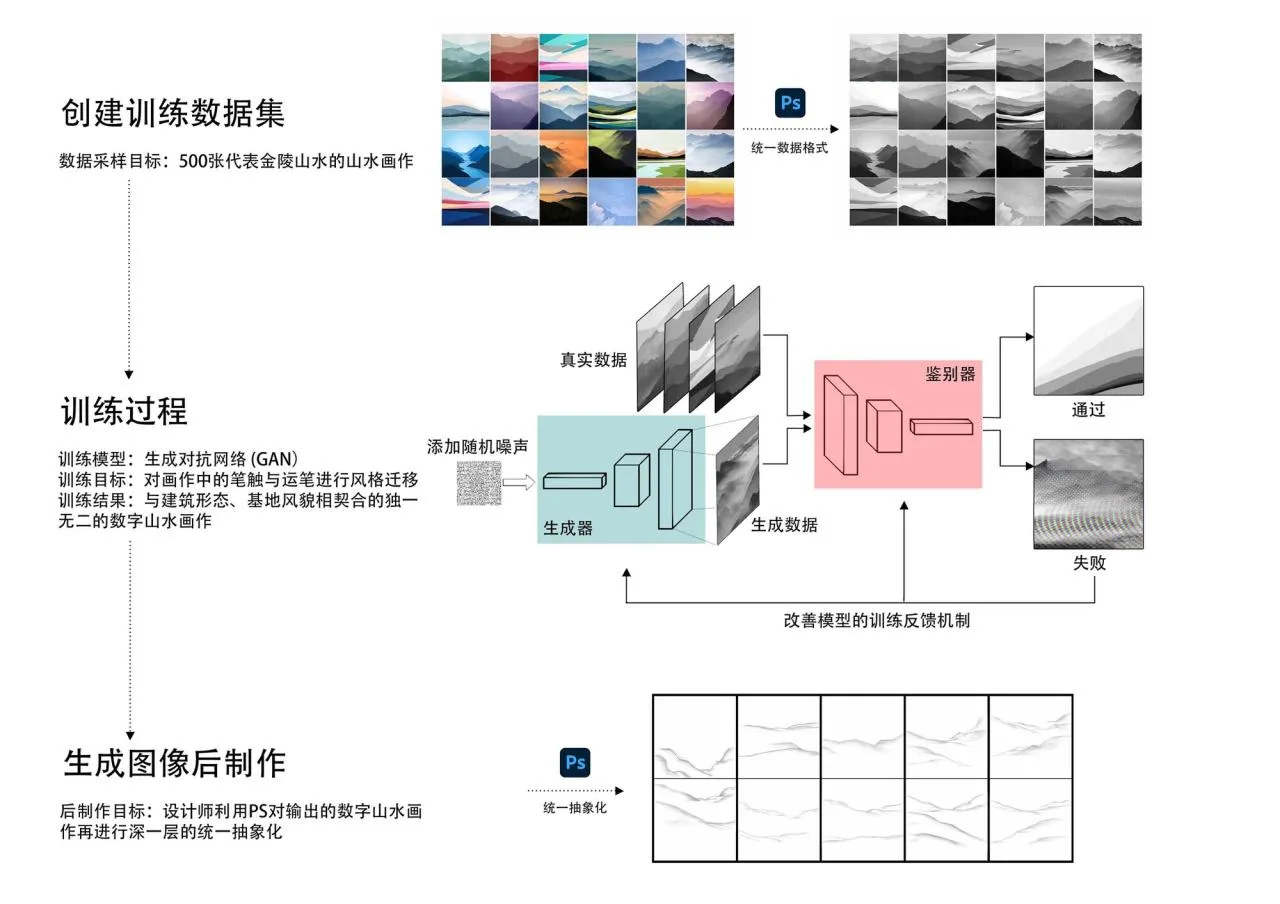
△ Analysis Chart
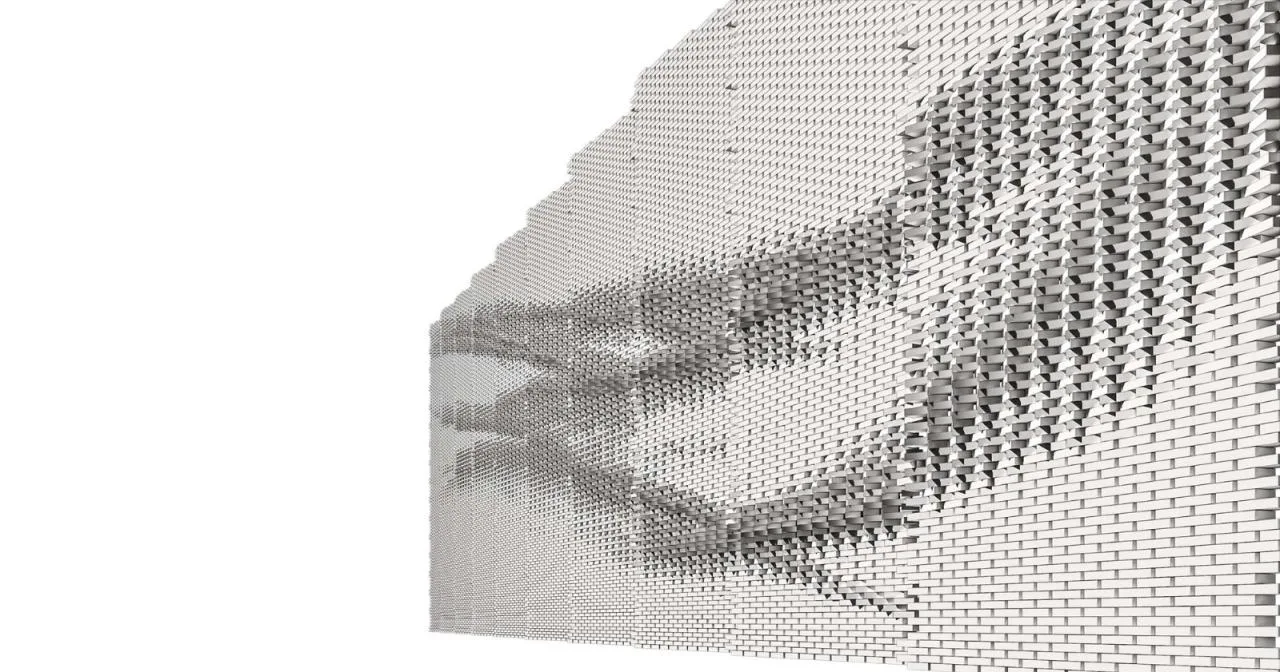
△ Analysis Chart
Project Information
Architect: Shanghai Chuangmeng International Architectural Design
Area: 34,646 m²
Project Year: 2021
Photographer: Wongke, Ziran Architecture Photography
Principal Architect: Yuan Feng
Design Team: Gao Weizhe, Kong Xiangping
Digital Construction Team: Shanghai Yizao Technology Co., Ltd
Interior Design: LWK+PARTNERS
Construction Drawing Team: Nanjing Changjiang Urban Architectural Design Co., Ltd
General Contractor: China Construction Eighth Engineering Division Co., Ltd
Location: Nanjing














Must log in before commenting!
Sign Up