
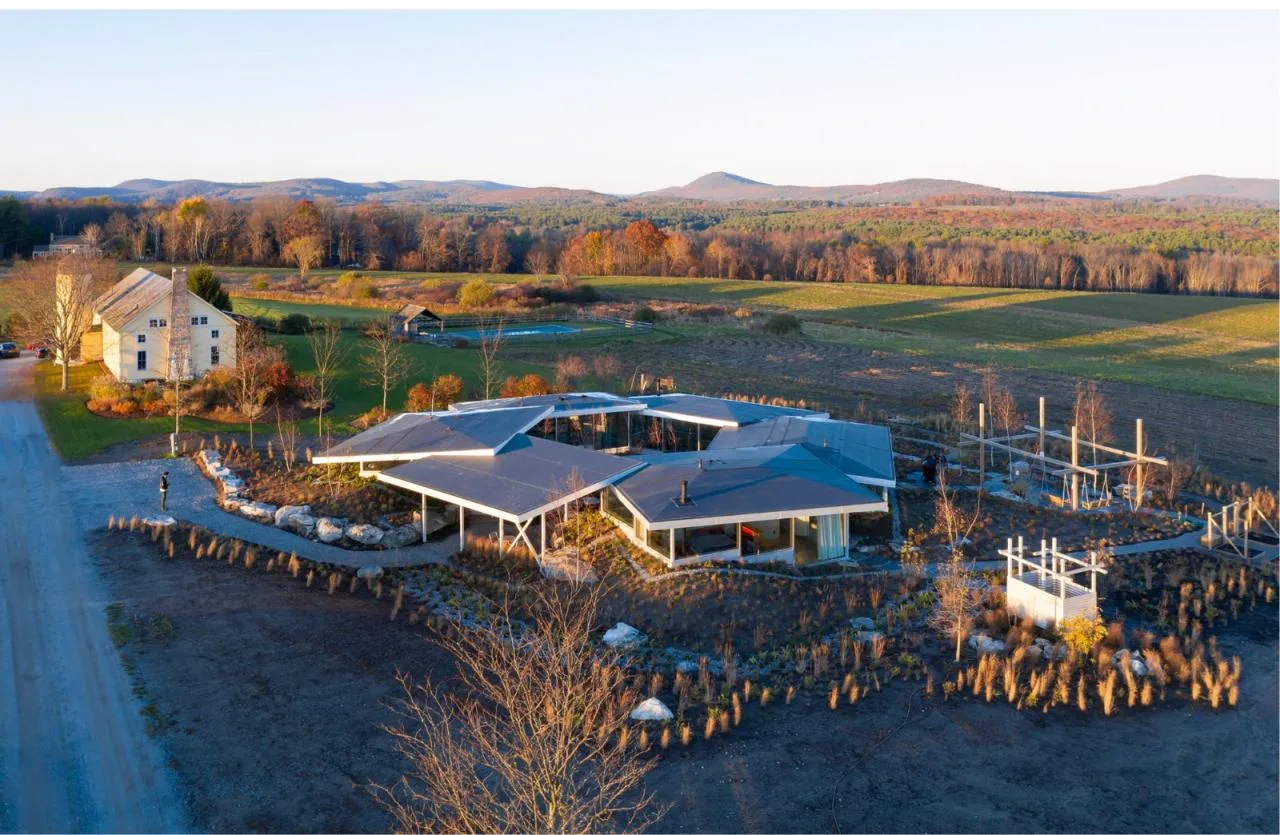
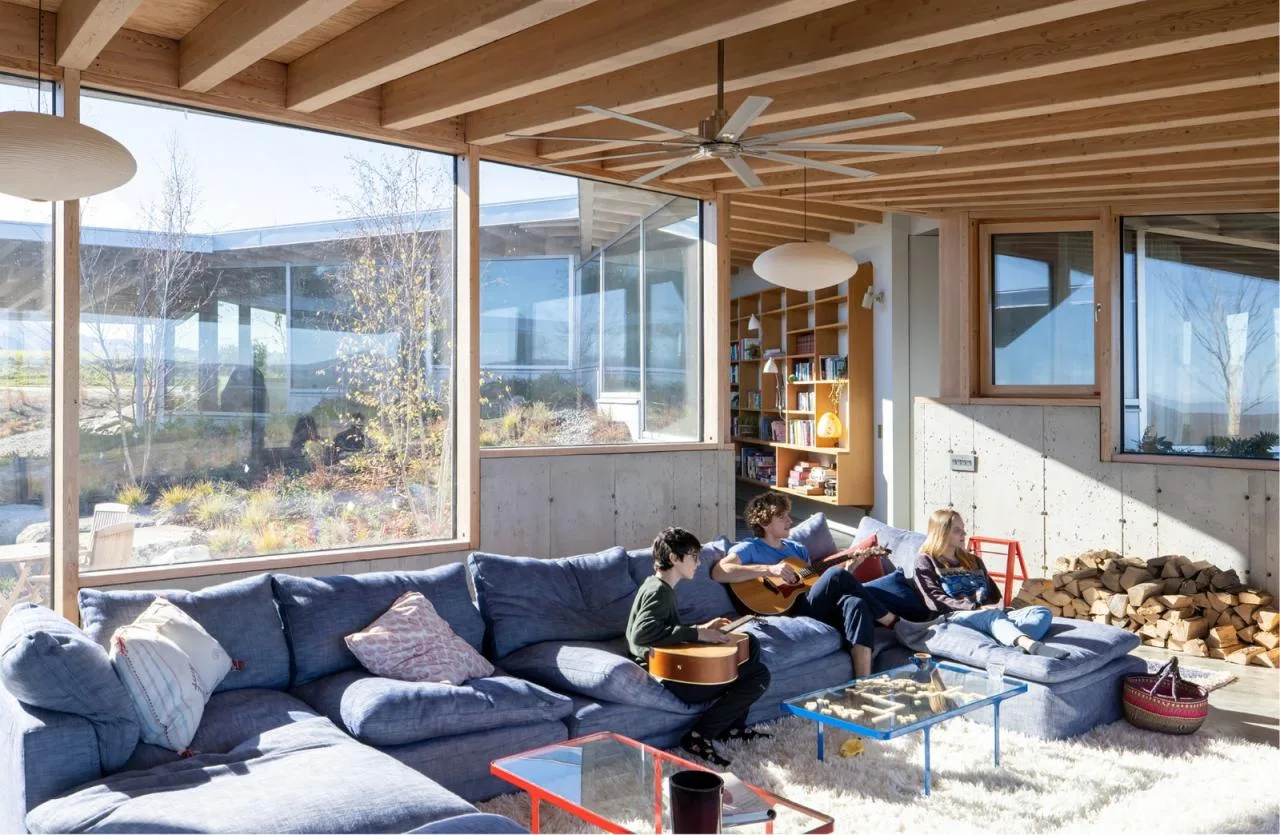
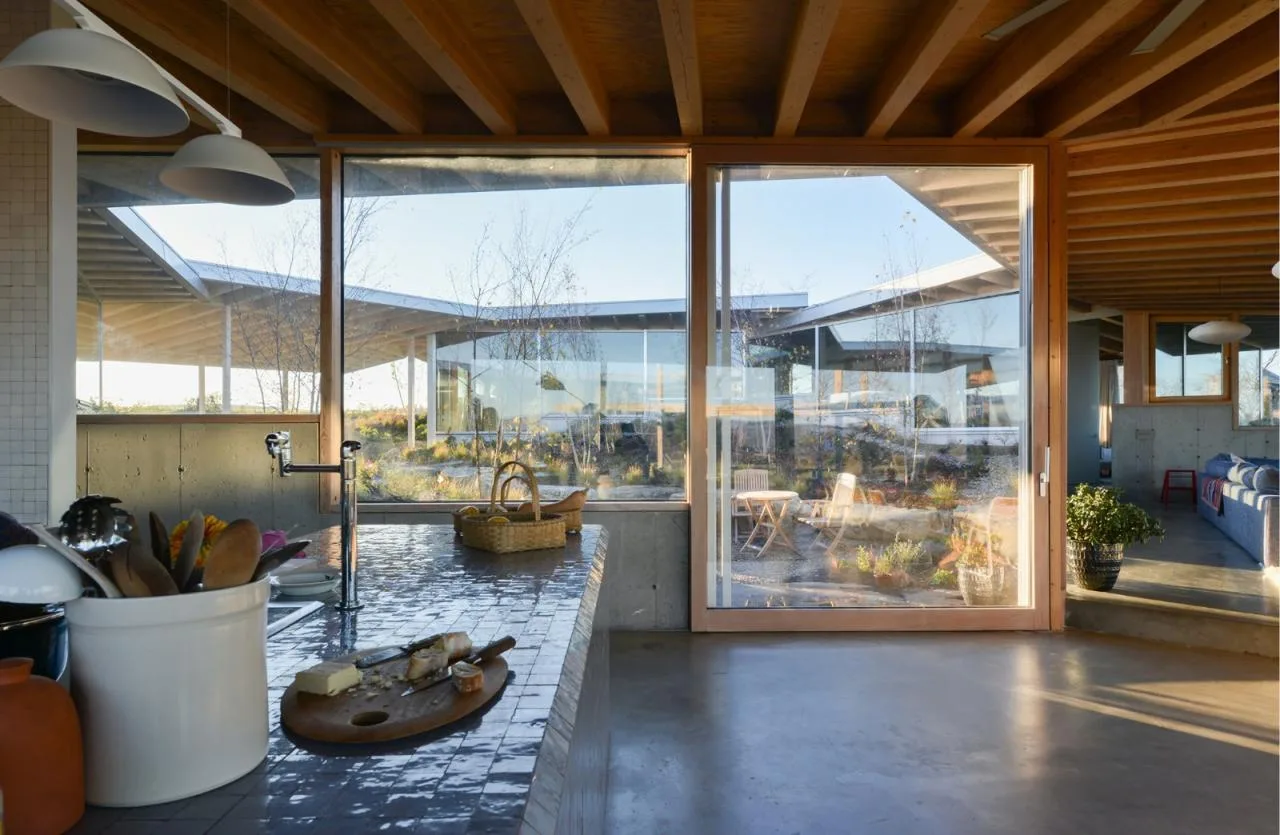
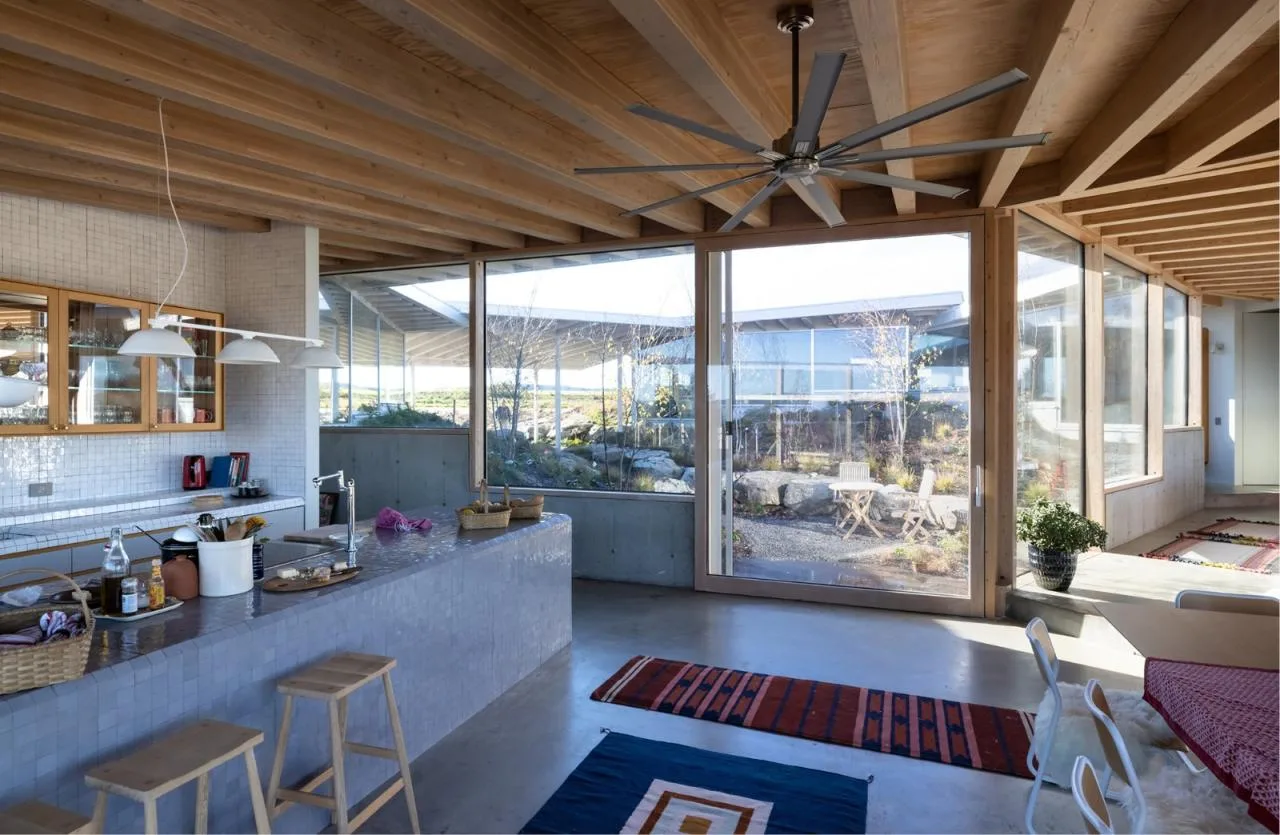
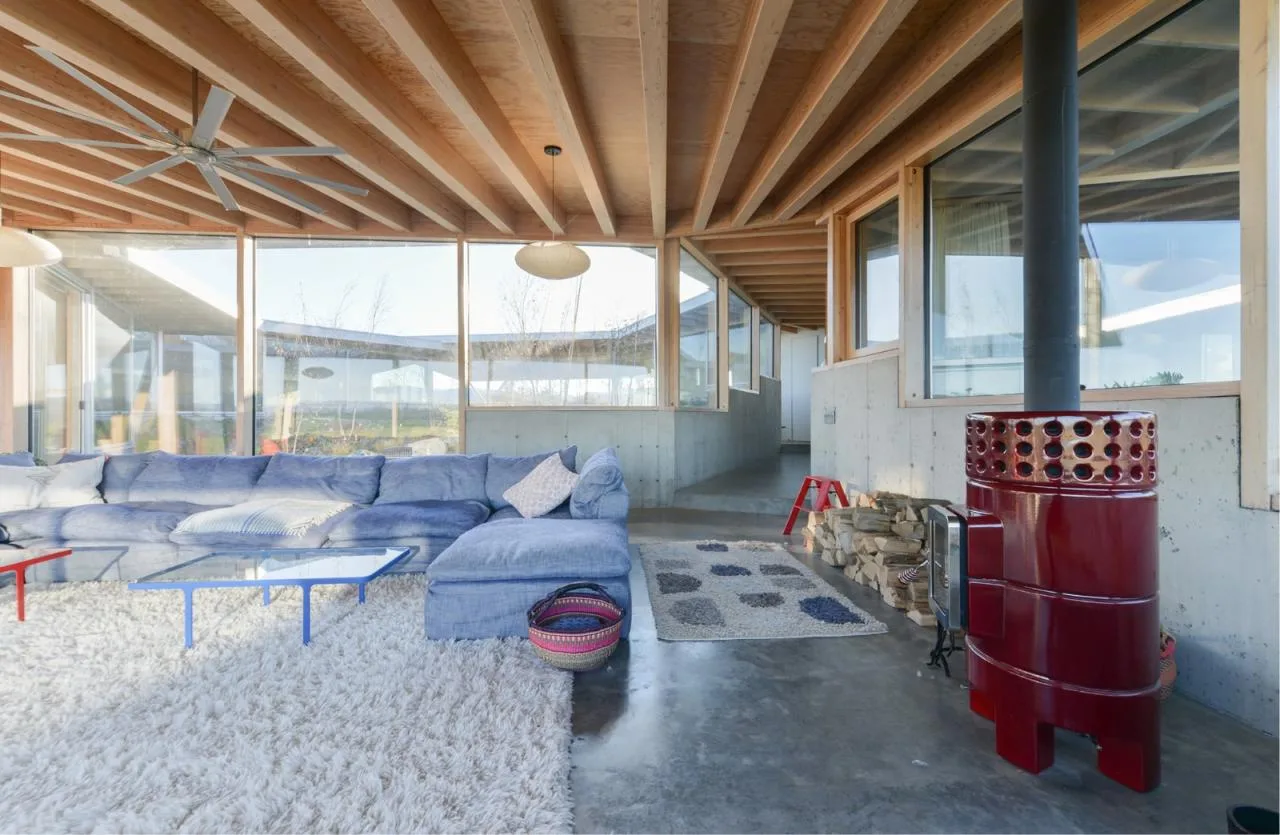
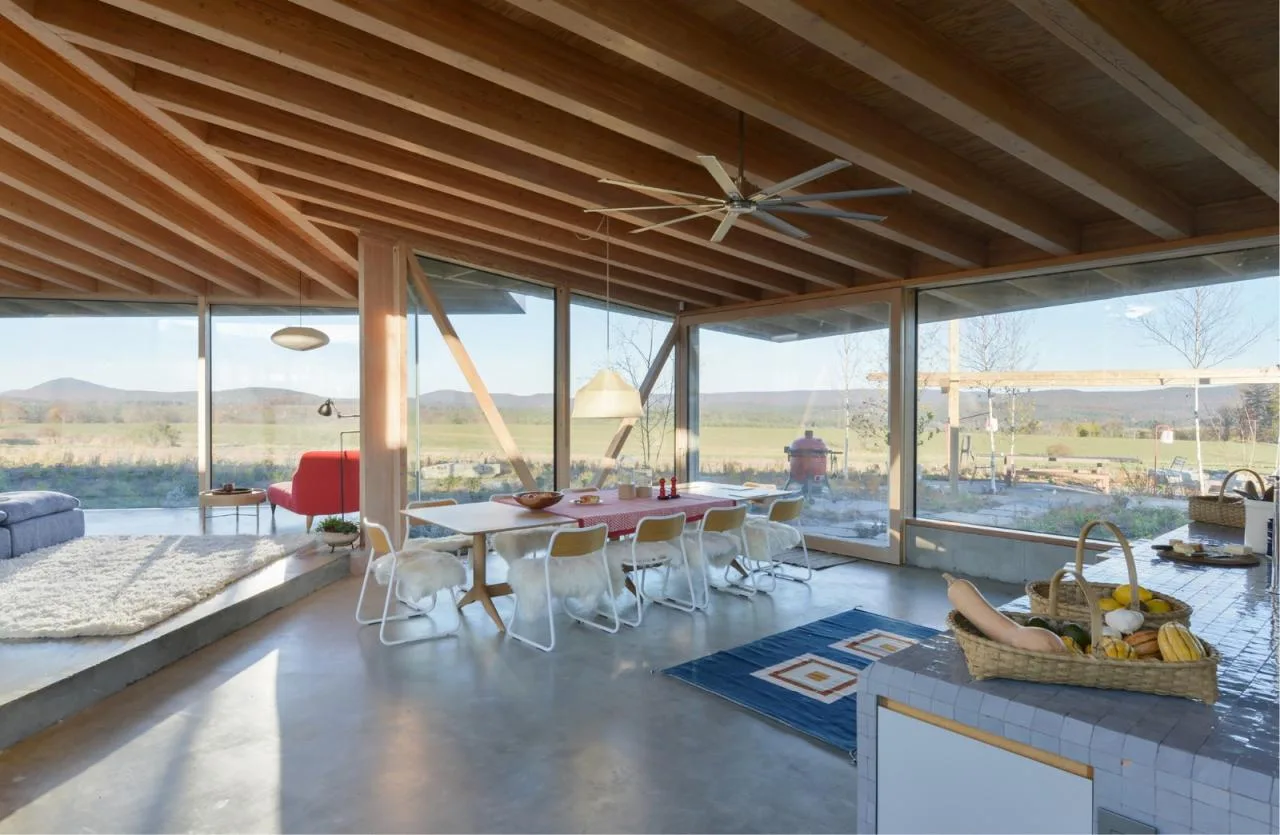
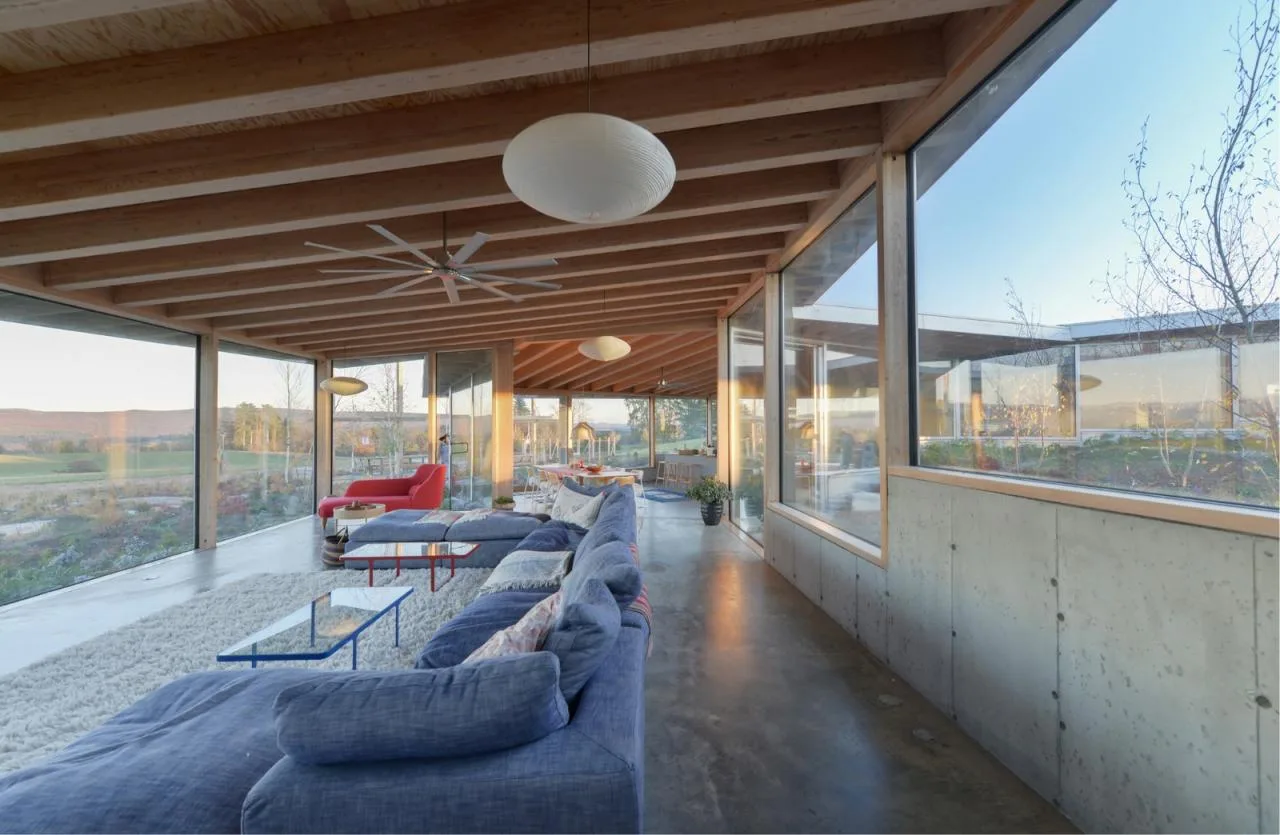
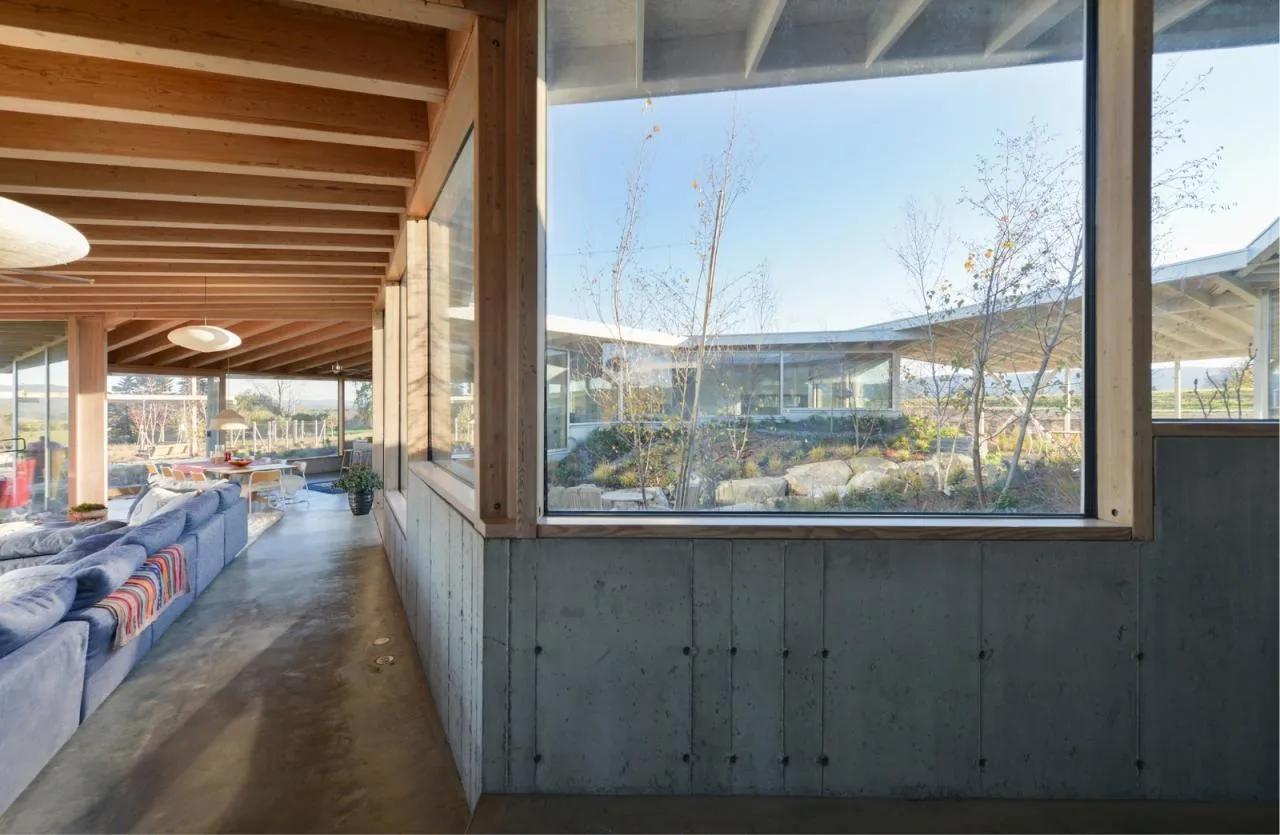
The “Flower House” is composed of six small, petal-shaped cabins that surround a central open courtyard. These cabins are closely connected, forming a building that resembles a blooming flower. By interacting dynamically with the local natural landscape and the floor plan layout, the design redefines and expands the concept of glass houses.
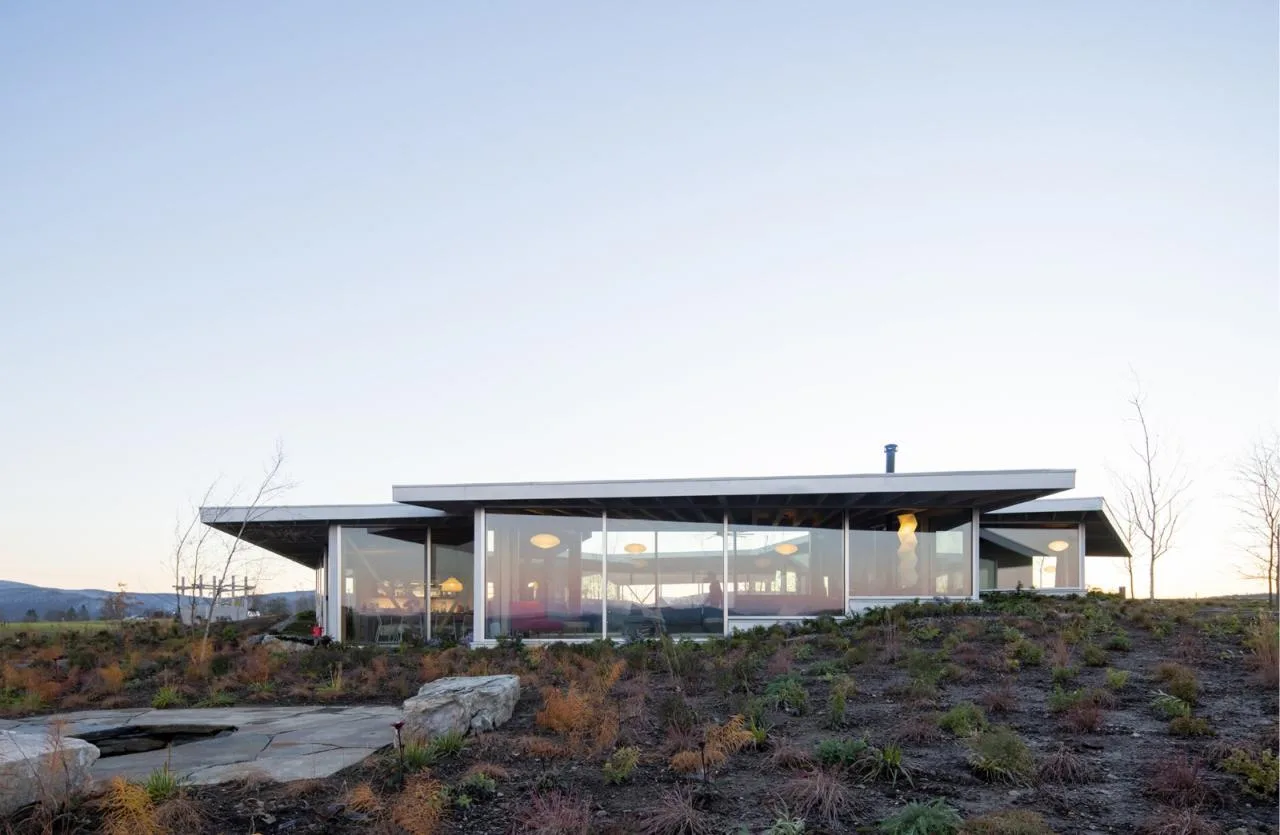
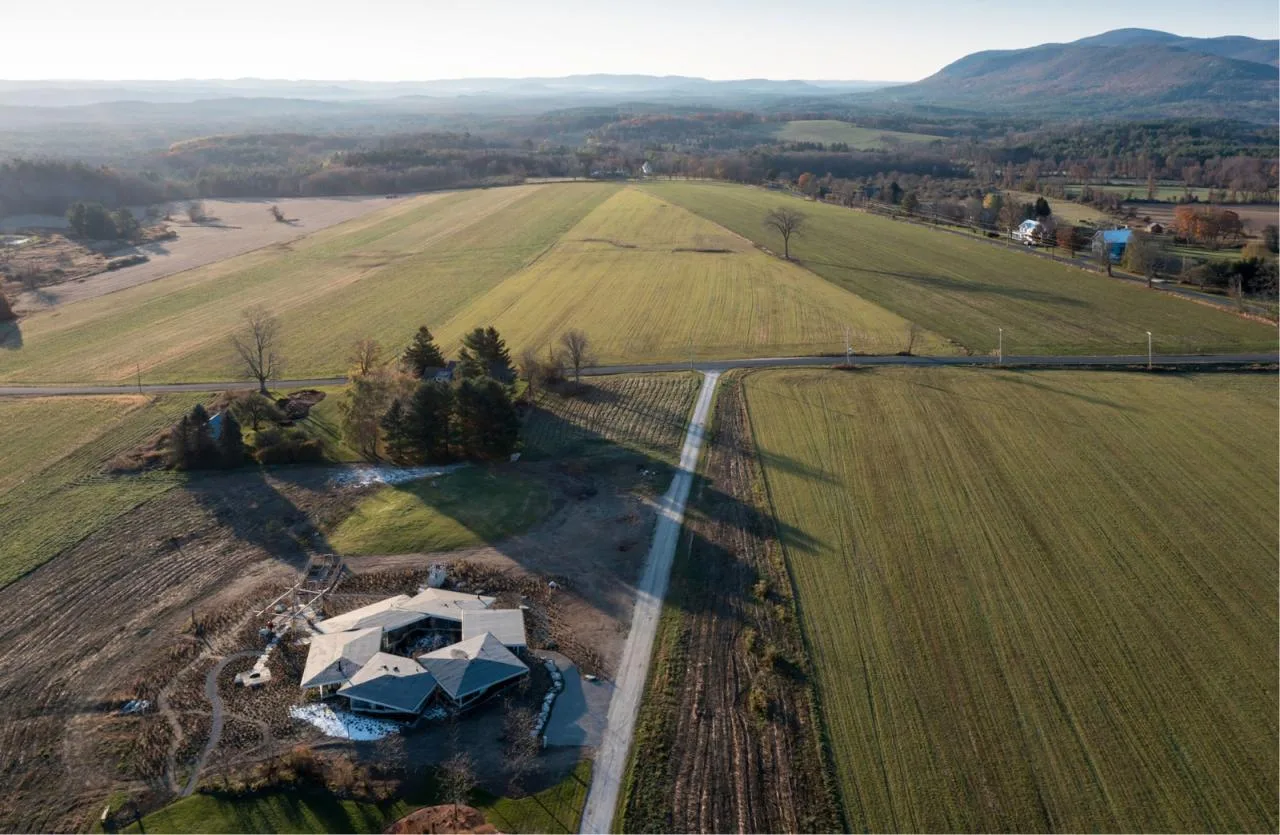
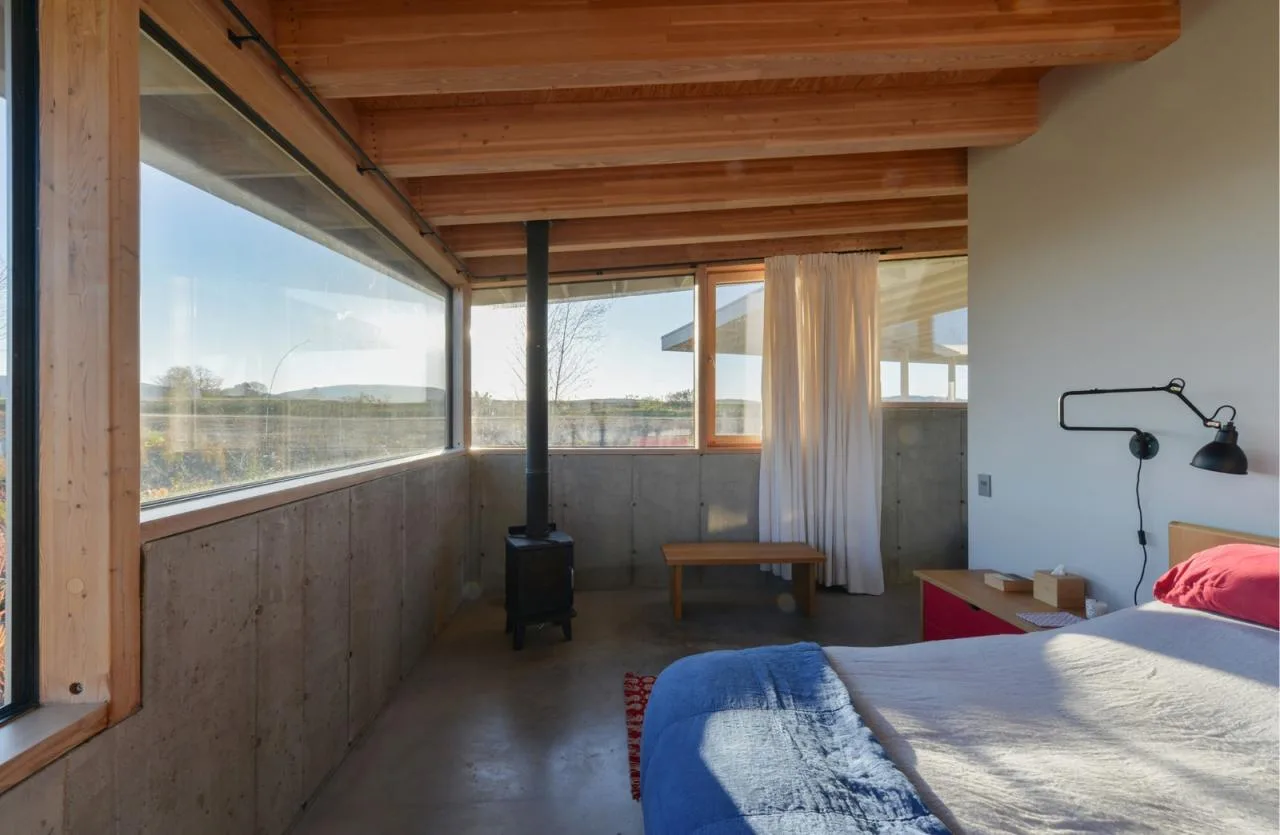
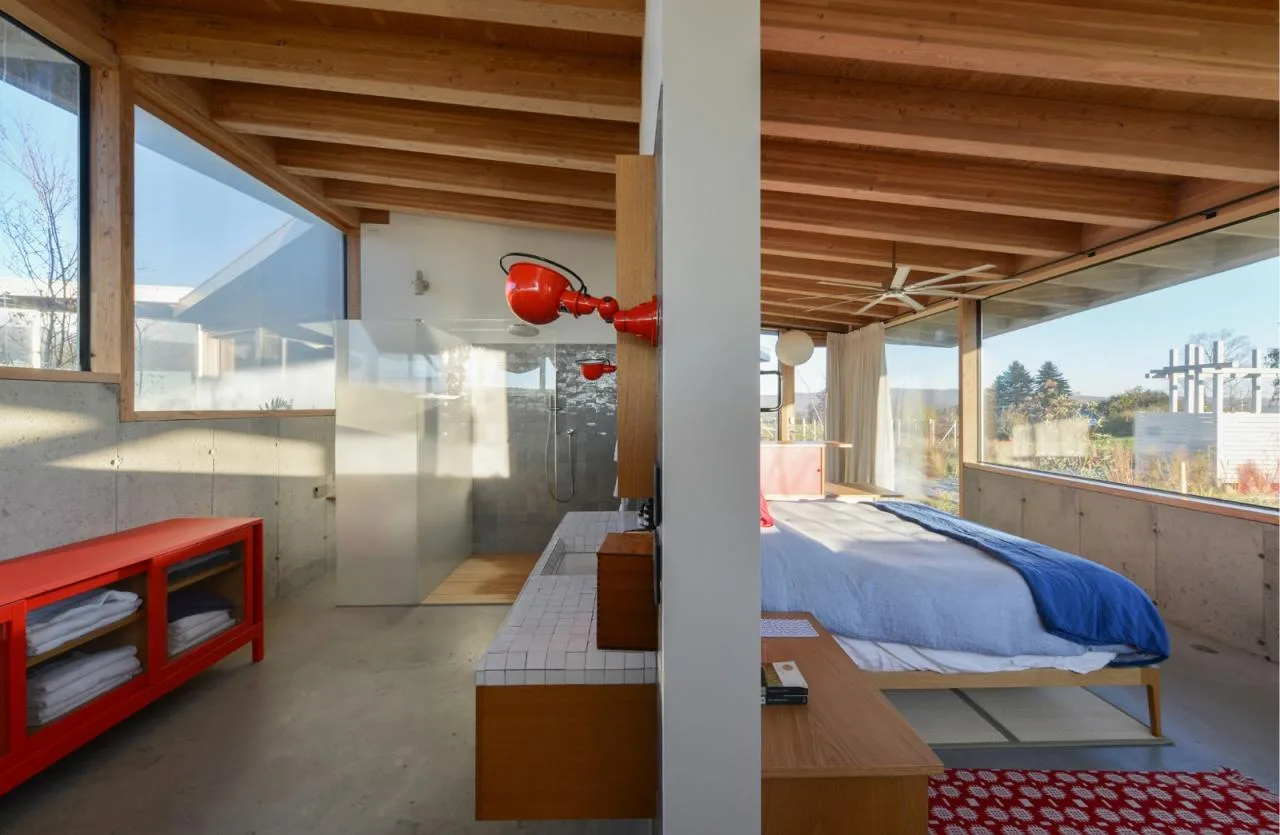
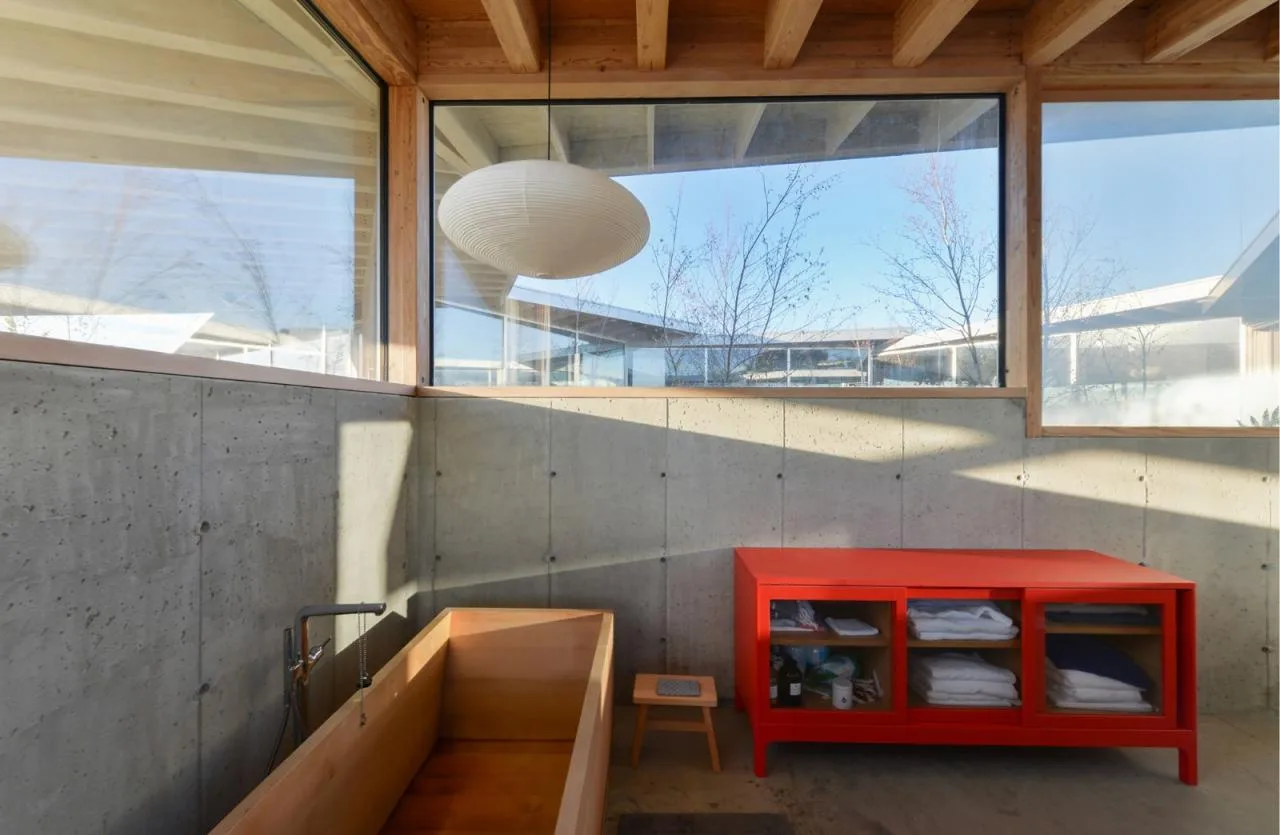
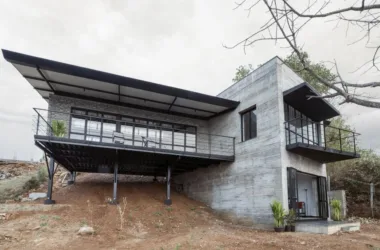
Partially embedded into the hillside, Hua Zhi Jia benefits from the site’s terrain, which provides natural insulation. This design allows the indoor space to transition dynamically—from open to enclosed, public to private, and from above ground to underground. On the upper ramp to the west, skylights illuminate the bedroom and bathroom, while the lower ramp to the east features more public areas that open to the surrounding landscape through French windows.
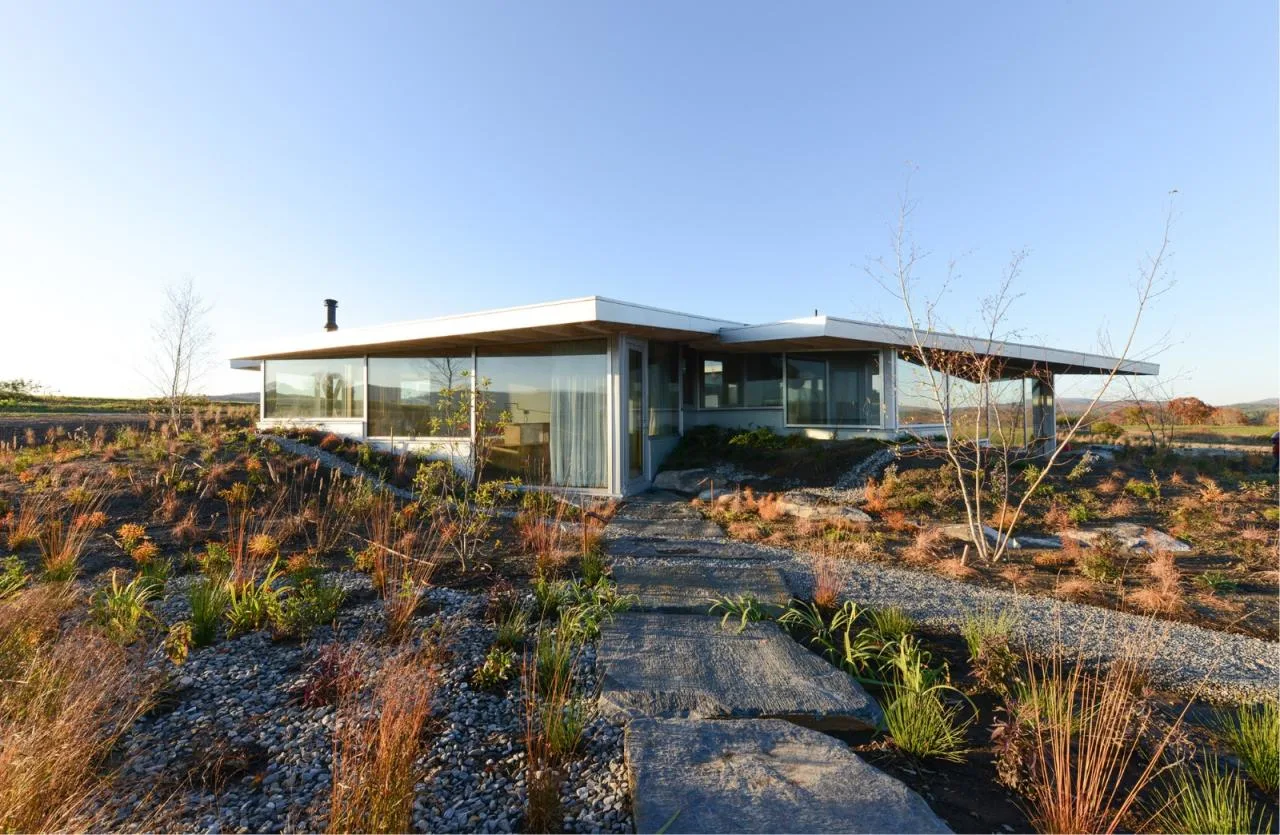
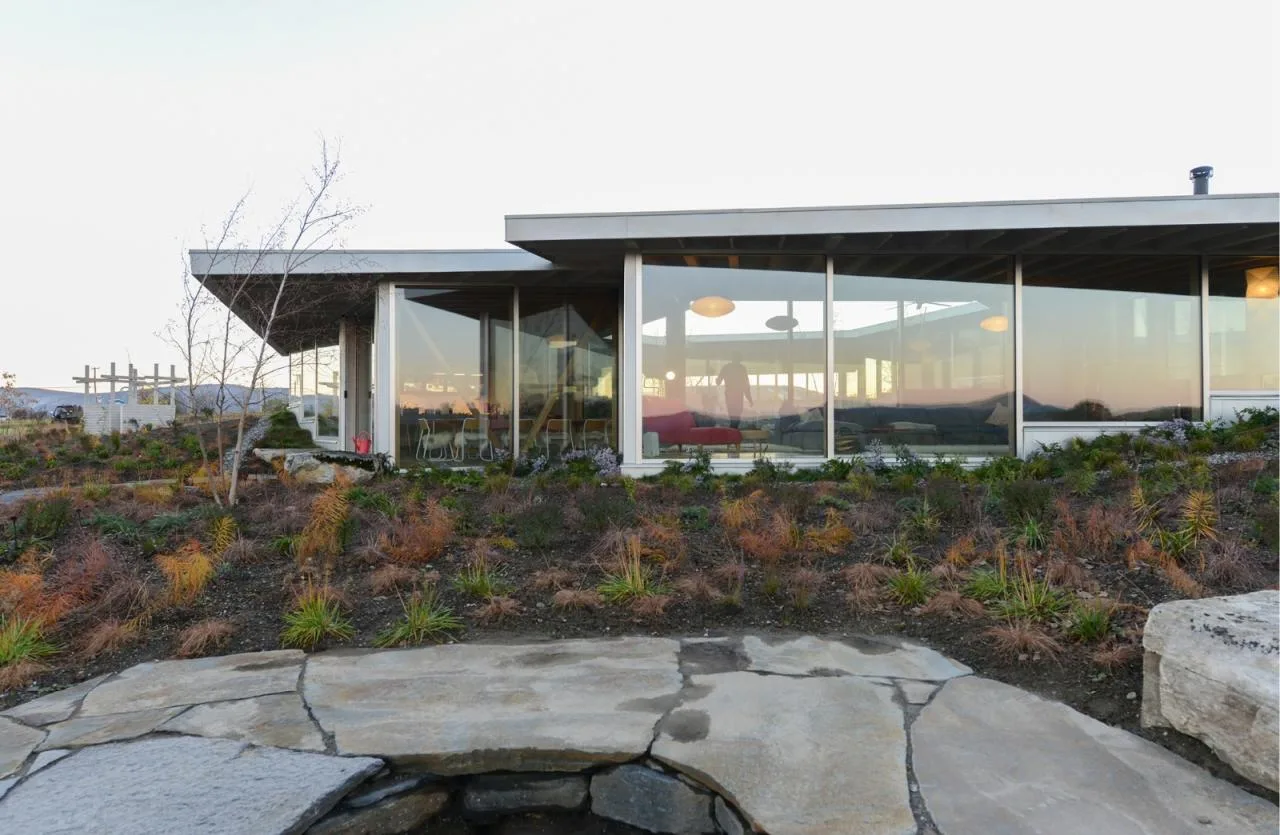
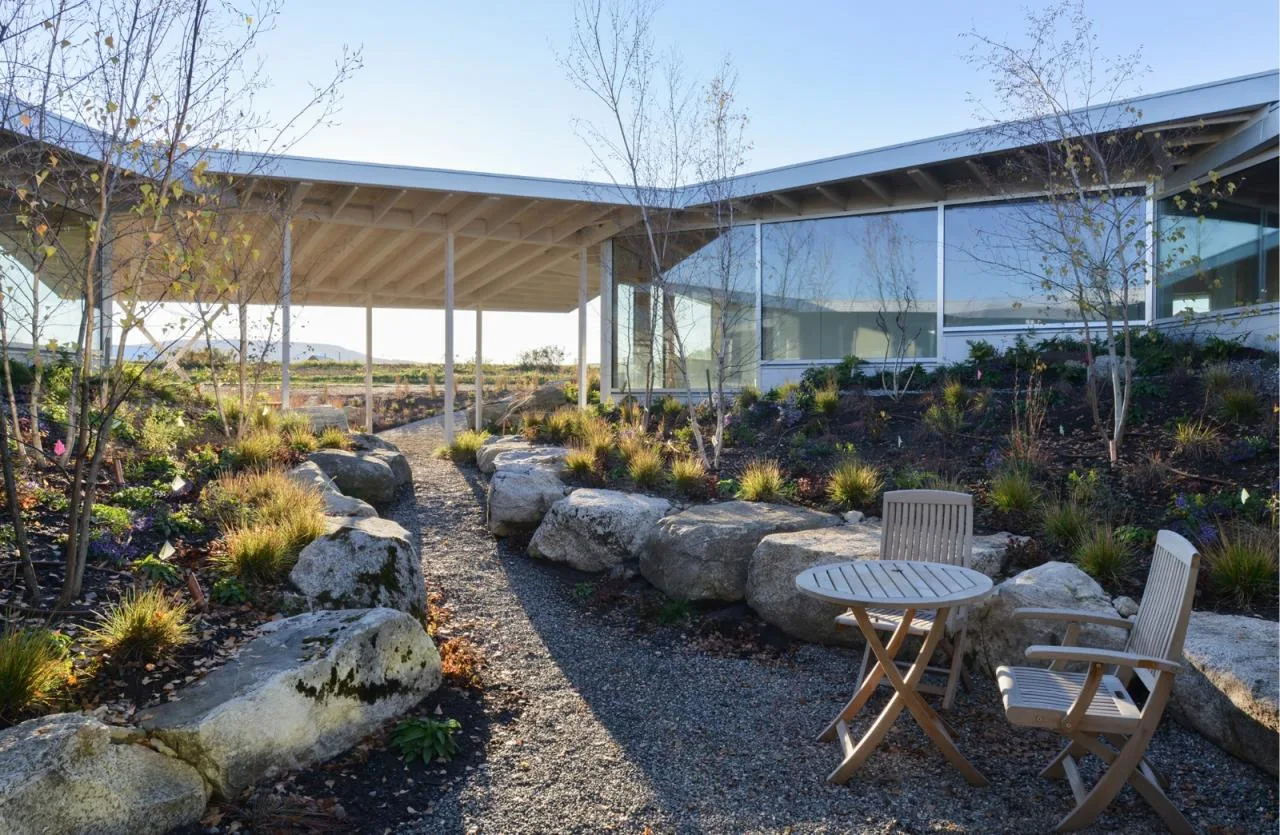
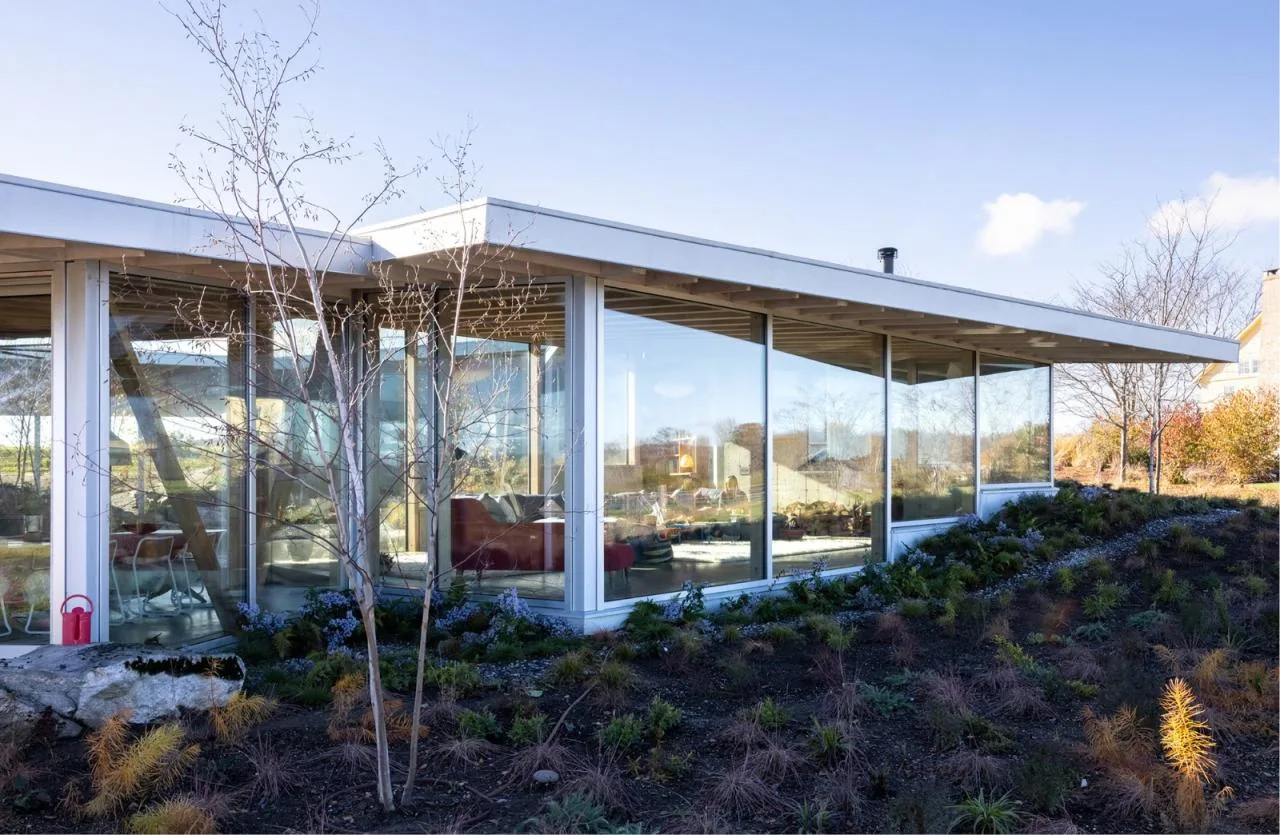
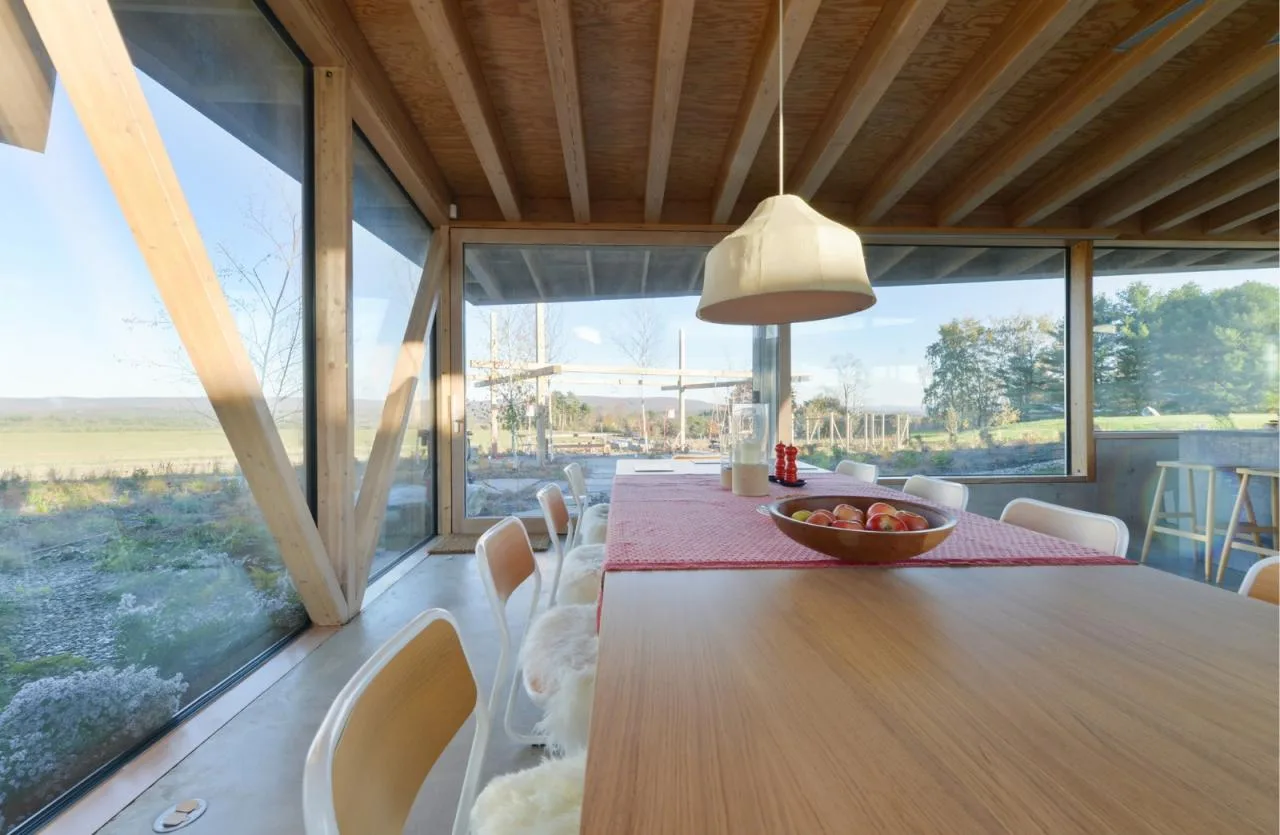
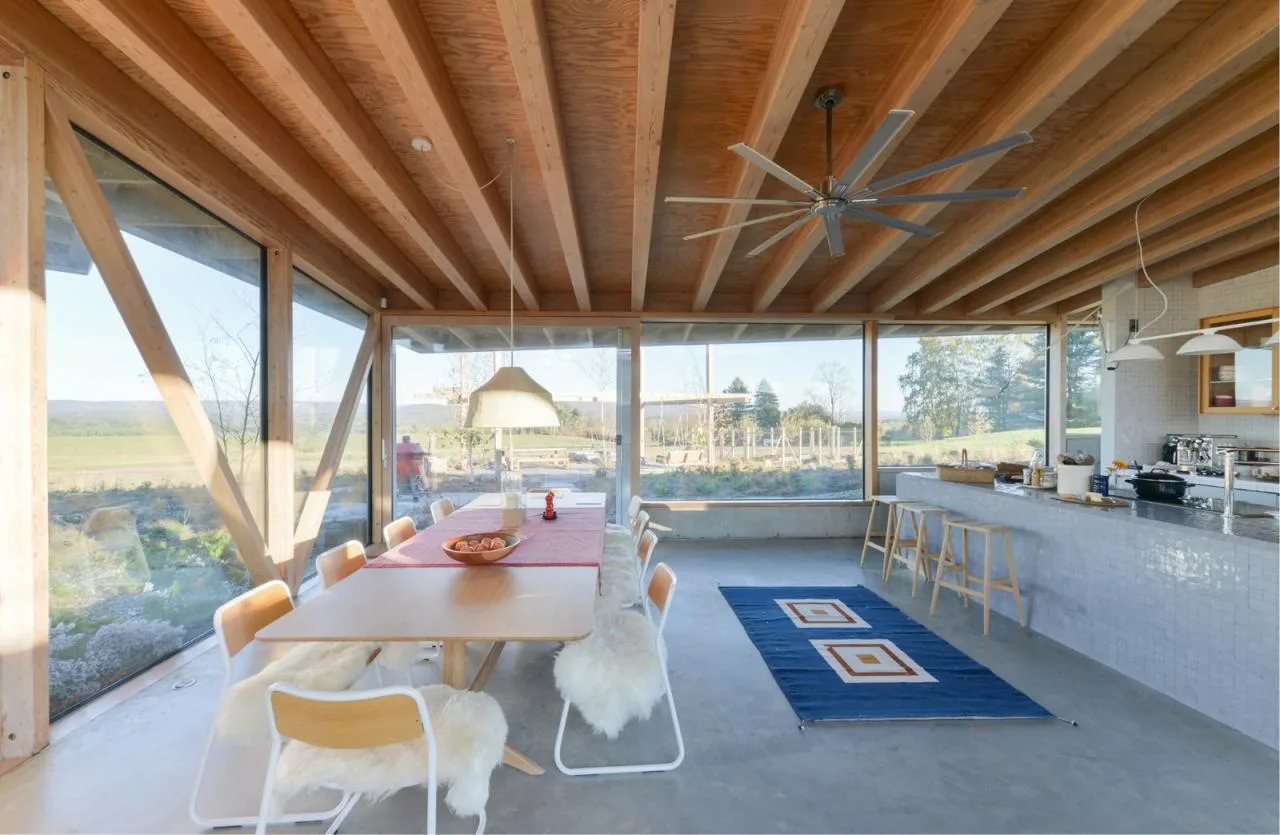
The six petal-shaped pavilions each serve different functions and orientations, optimizing sunlight exposure from various angles throughout the year. This arrangement creates spaces with different levels of privacy. Additionally, the cantilevered roof canopies of each pavilion rotate at unique angles, offering protection from harsh weather, providing passive shading indoors, and enhancing the seamless transition between indoor and outdoor spaces.
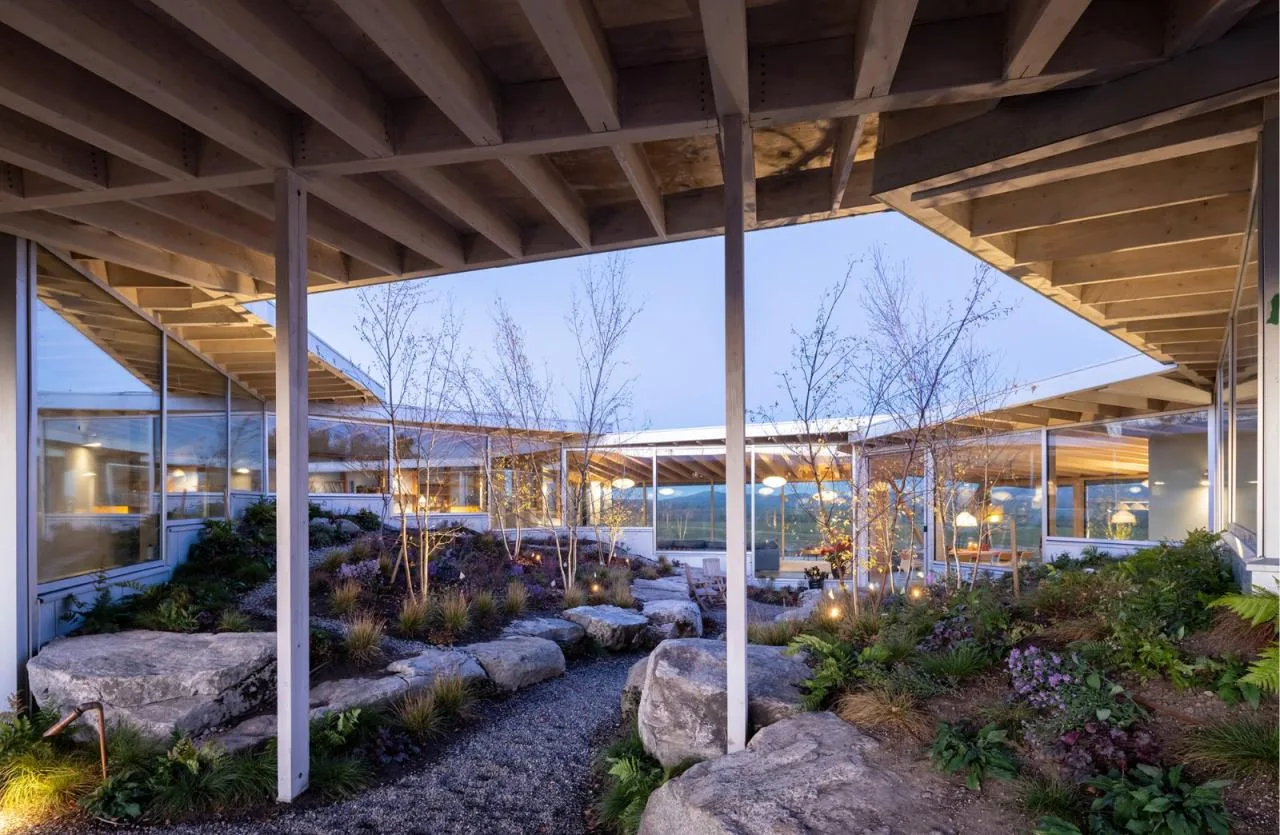
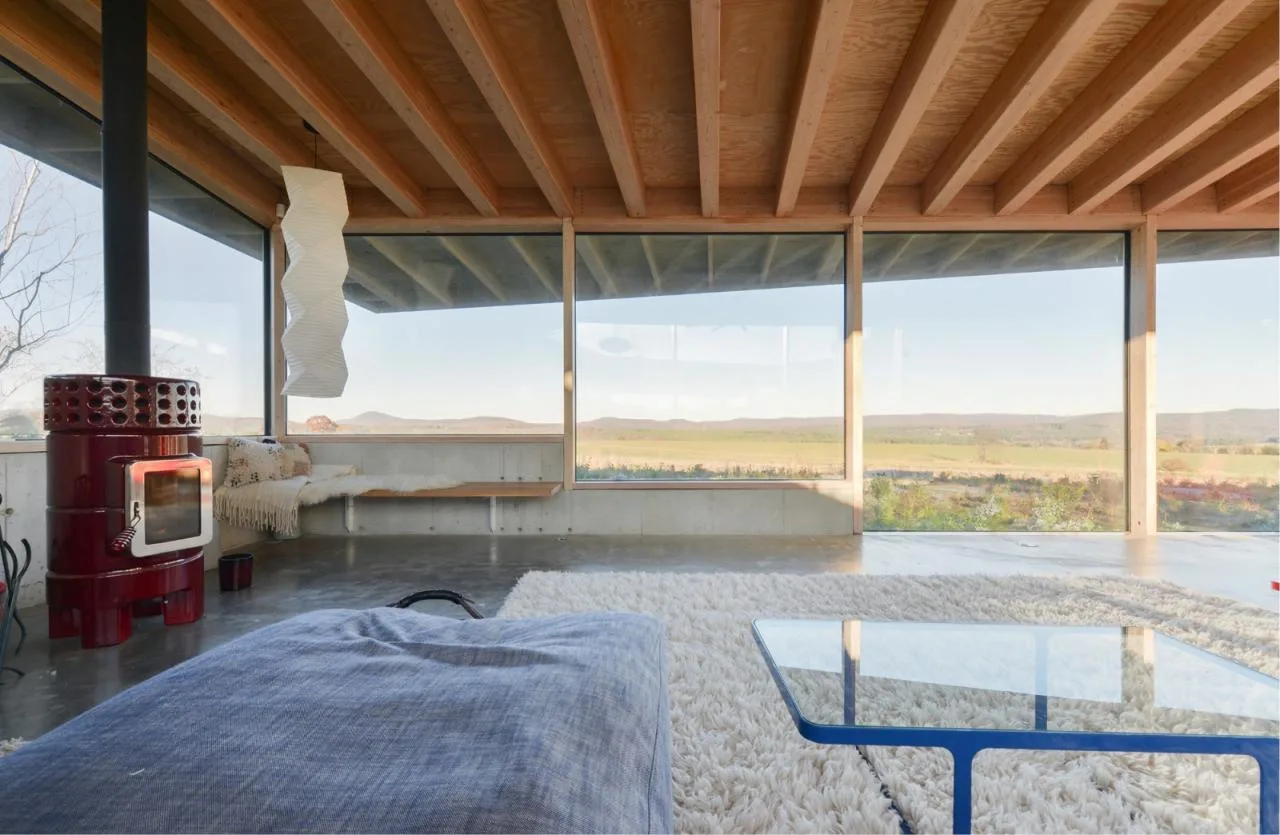
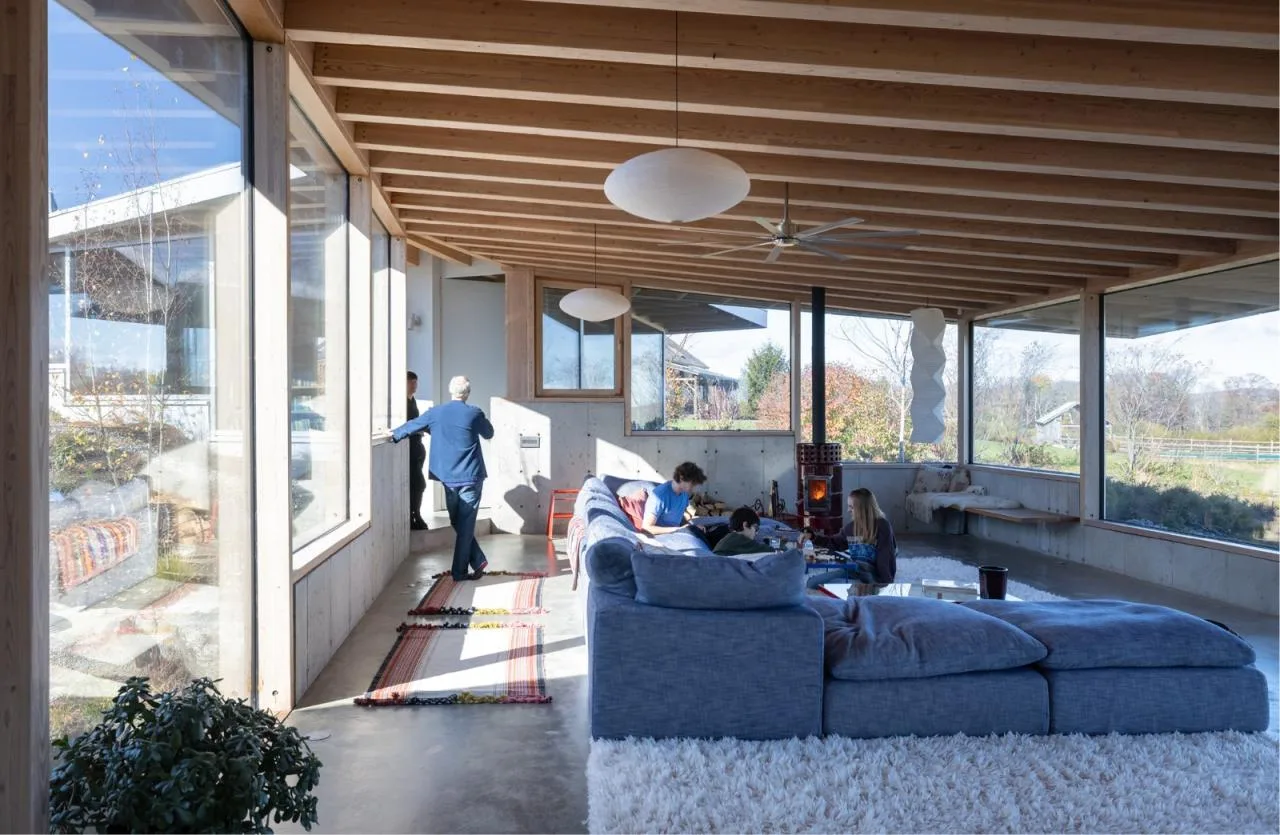
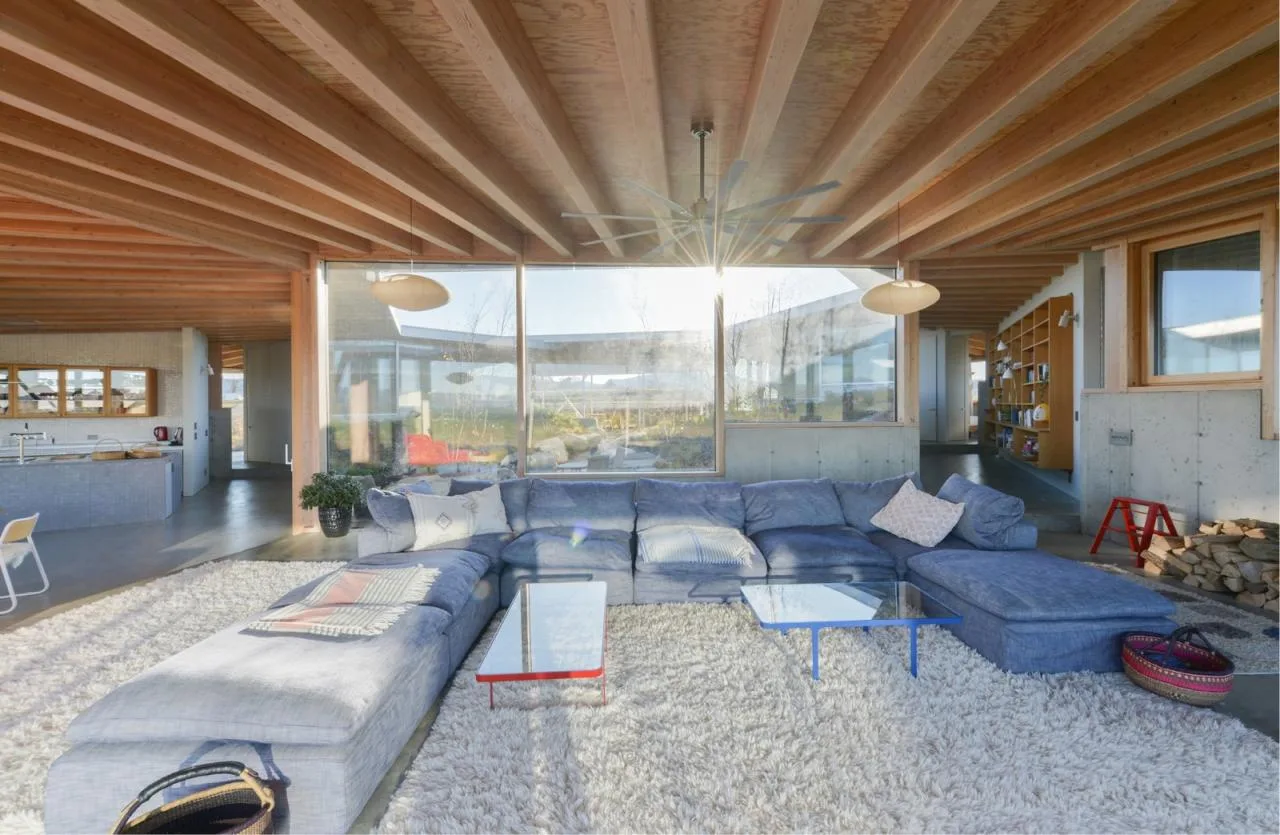
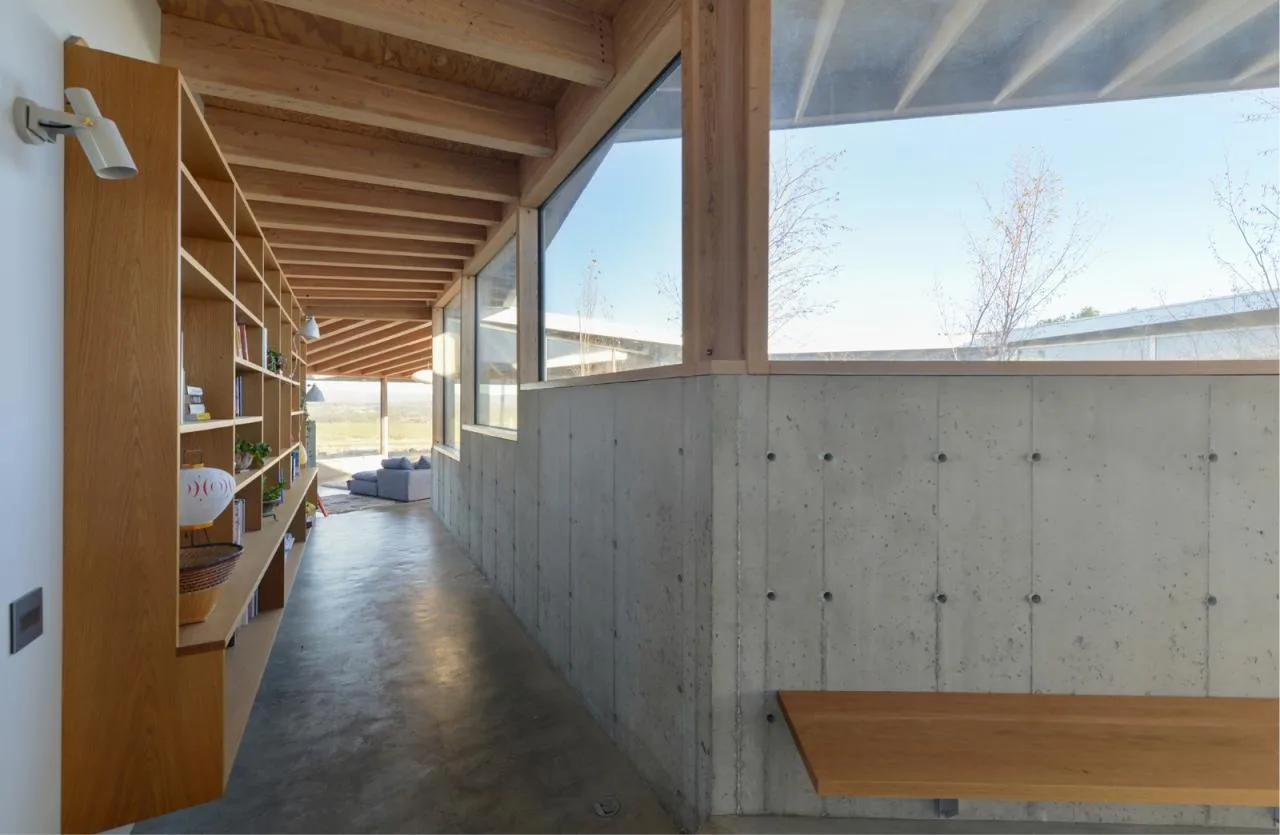
Structurally, each branch of the Flower House functions like an umbrella inspired by Mies van der Rohe’s design principles. The building consists of six individual blocks, covered by a canopy that opens in all directions. Below, a continuous exposed concrete foundation anchors the structure. Vertical loads are supported by load-bearing window frames, while T-shaped and L-shaped core tubes hide concrete shear walls that provide lateral stability.
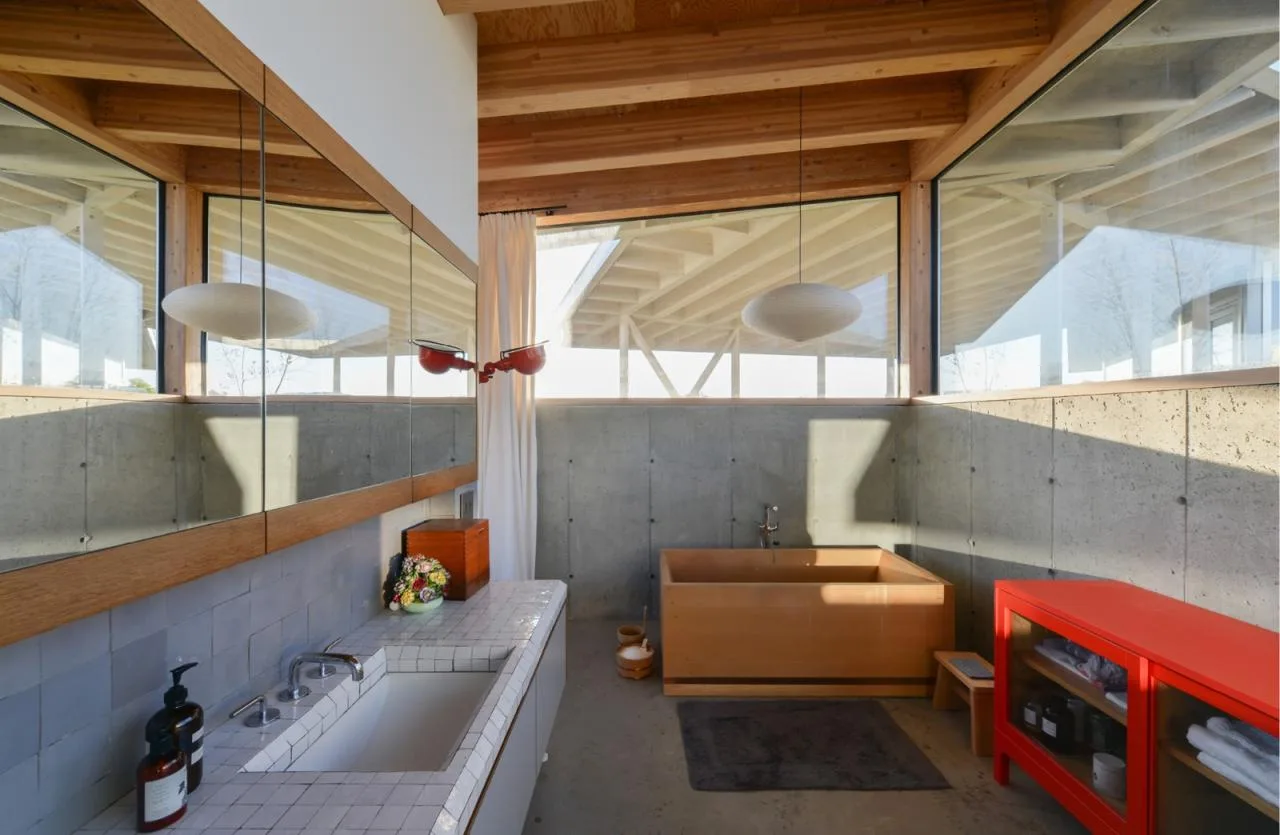
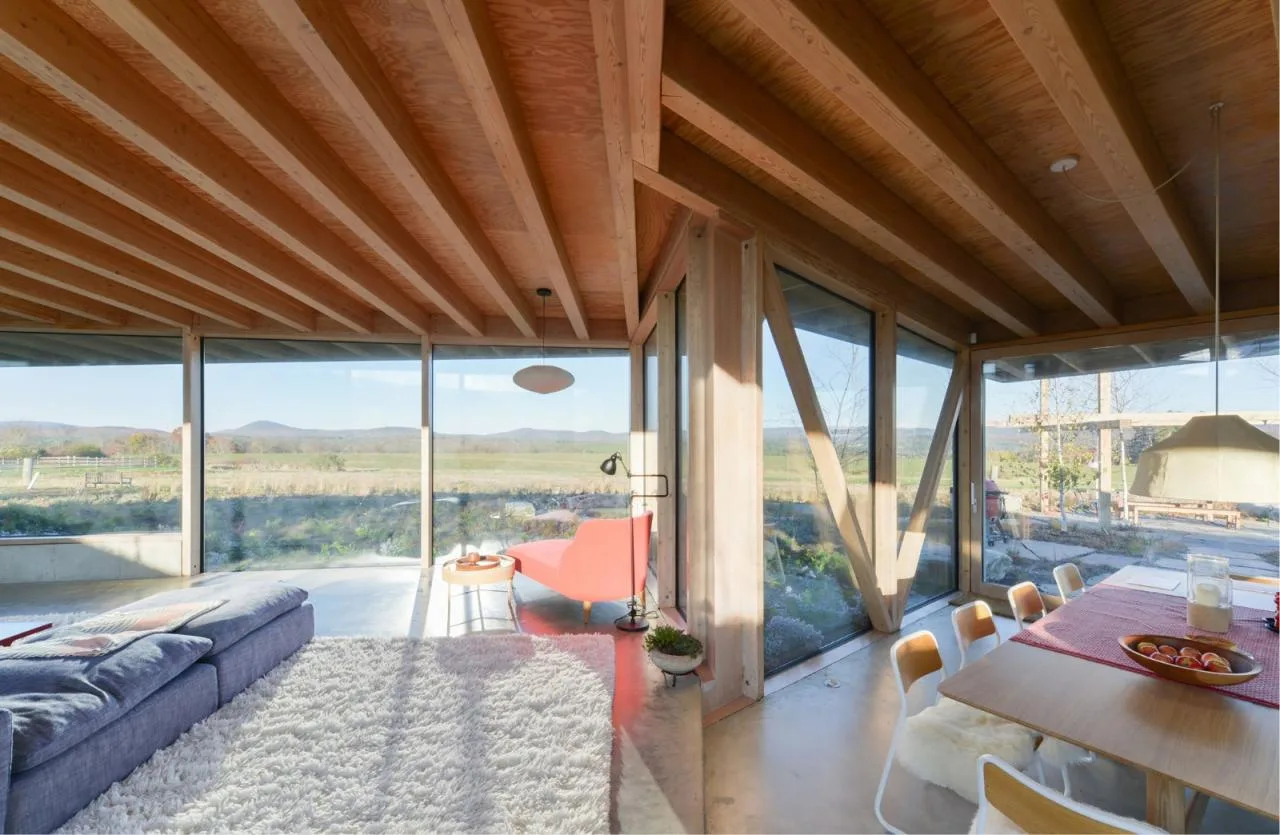
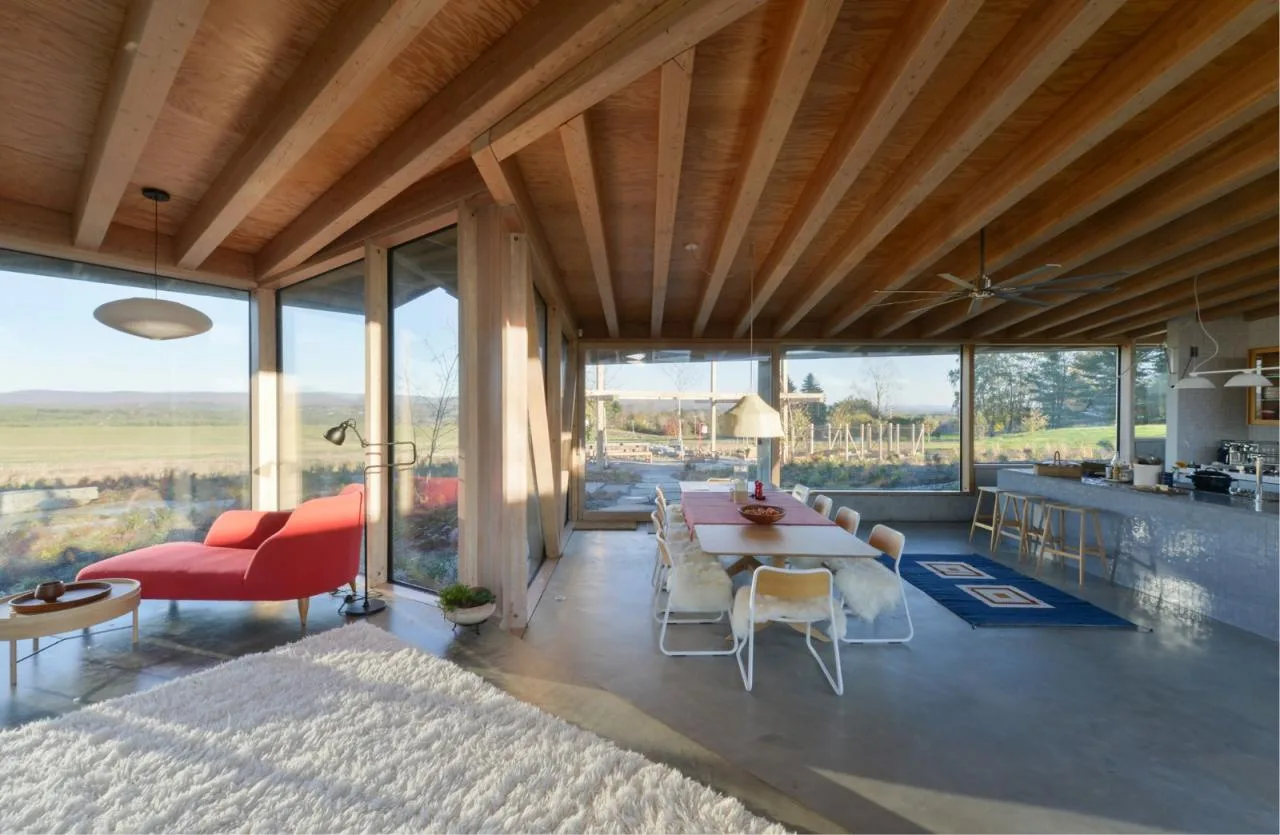
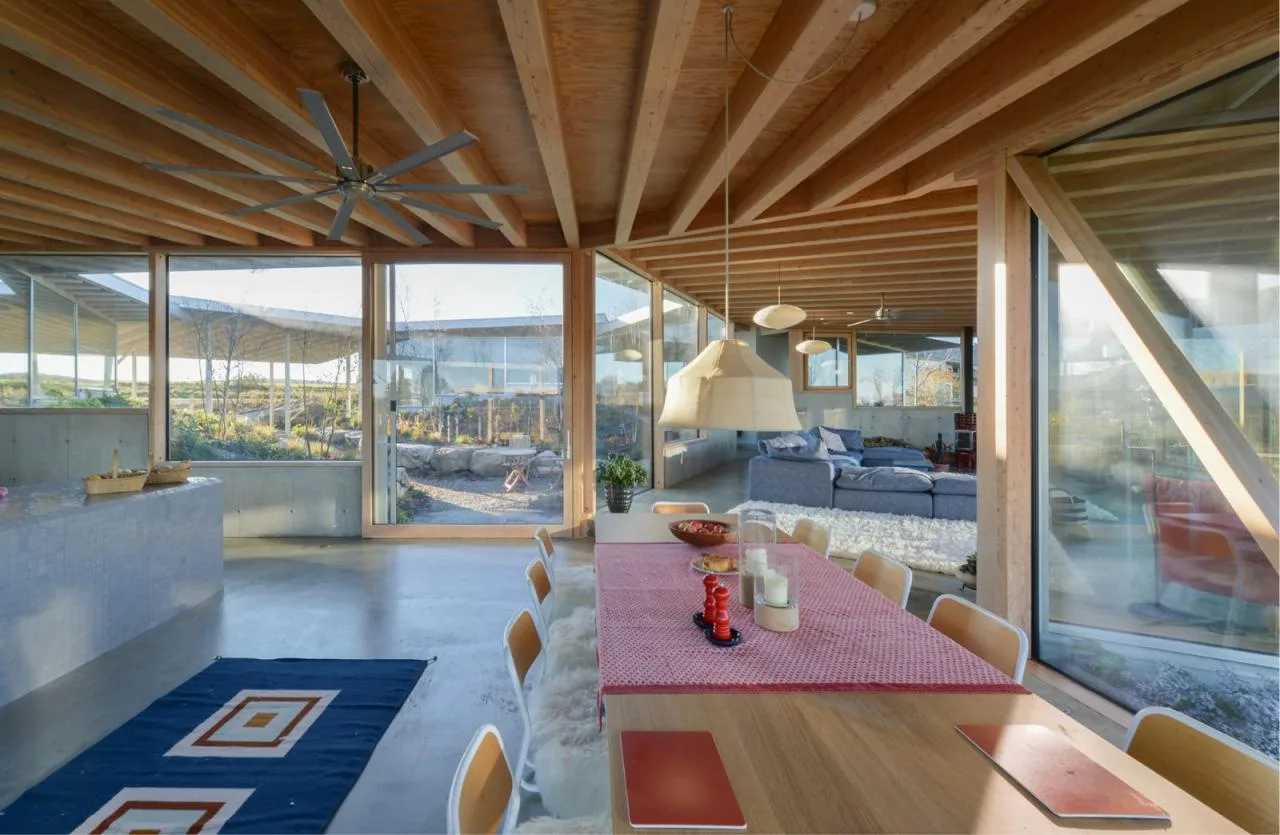
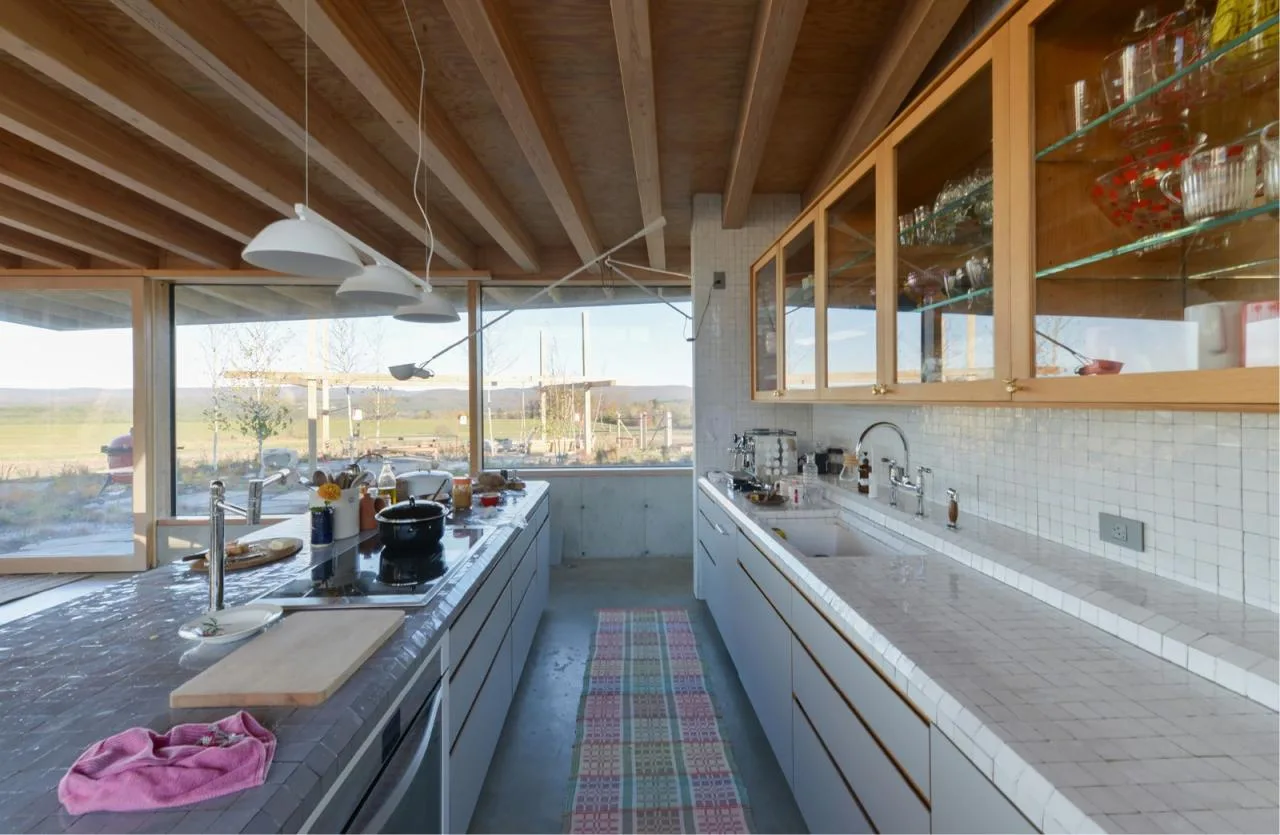
The core structure integrates bathrooms, storage rooms, and mechanical equipment, maximizing usable space while minimizing solid wall surfaces. The column-free interior allows for fluid movement and uninterrupted views between the courtyard’s landscape and the distant outdoors. Throughout the design process, architects carefully refined the building’s contours to create a rich spatial experience with minimalist structural systems, emphasizing the surrounding landscape and the diverse functional zoning inside and outside the building.
Project Drawings
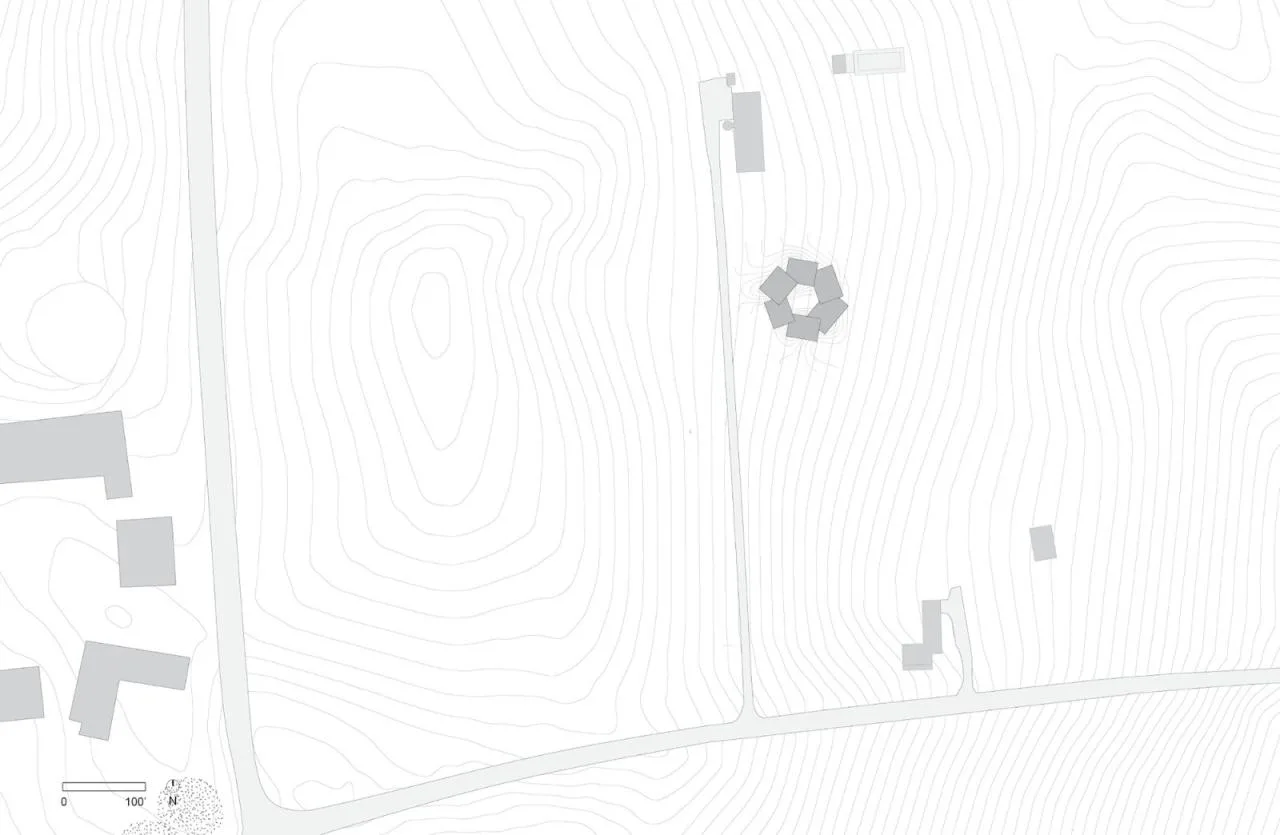
△ Base schematic diagram
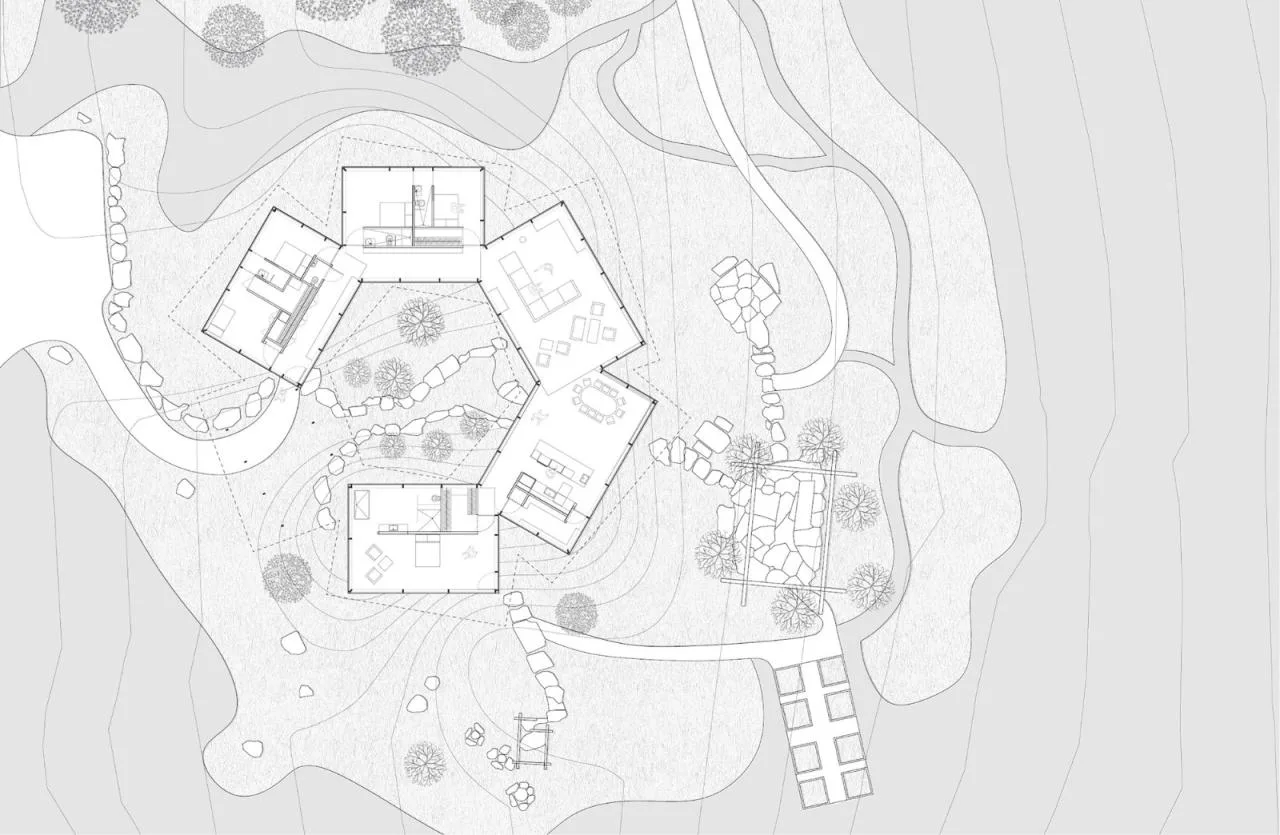
△ Plan view
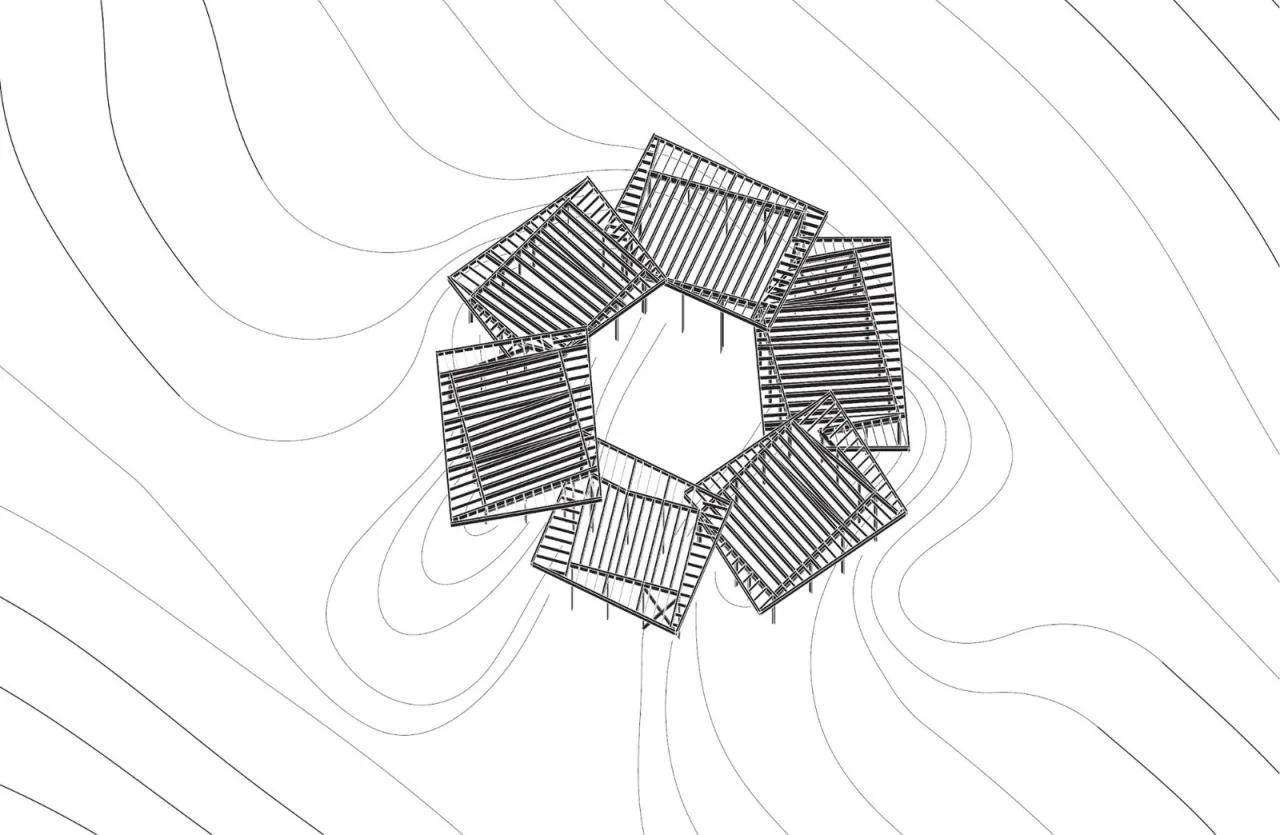
△ Analysis chart
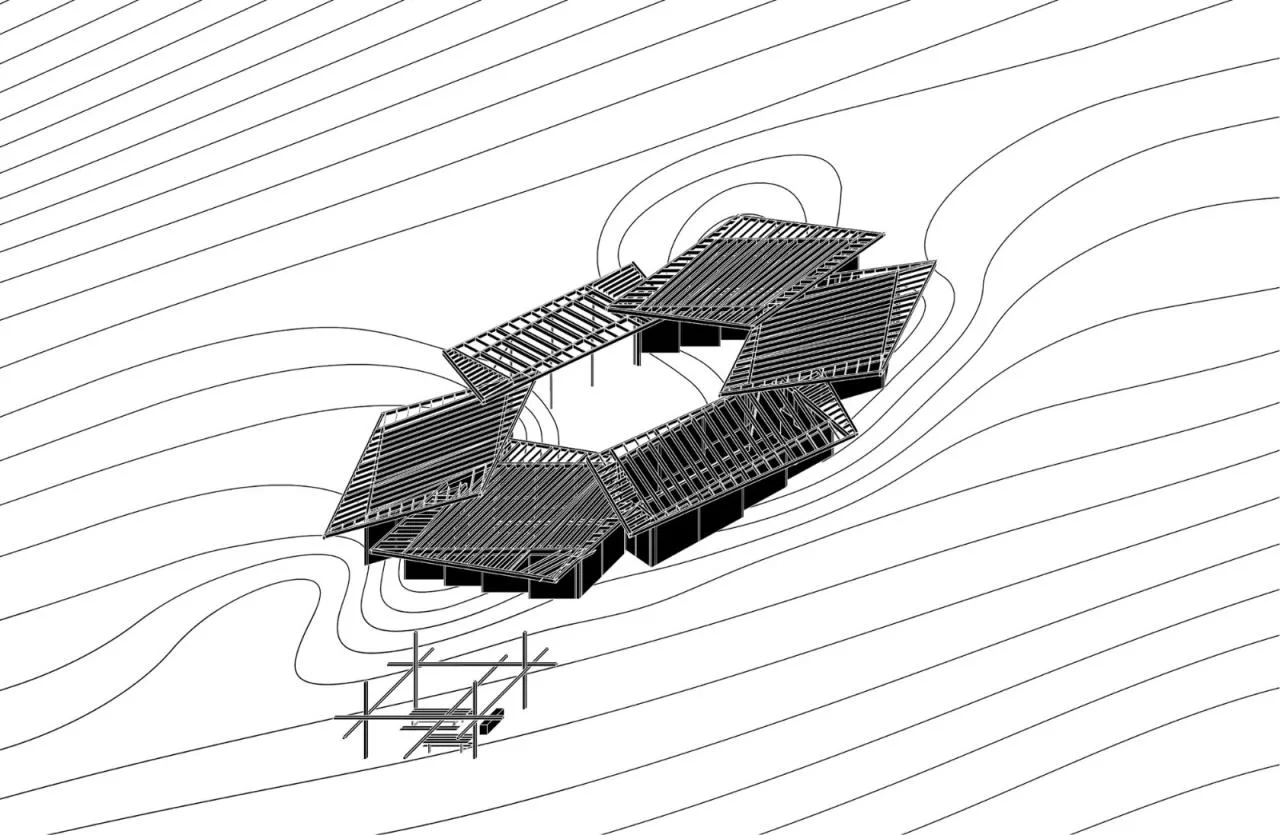
△ Analysis chart
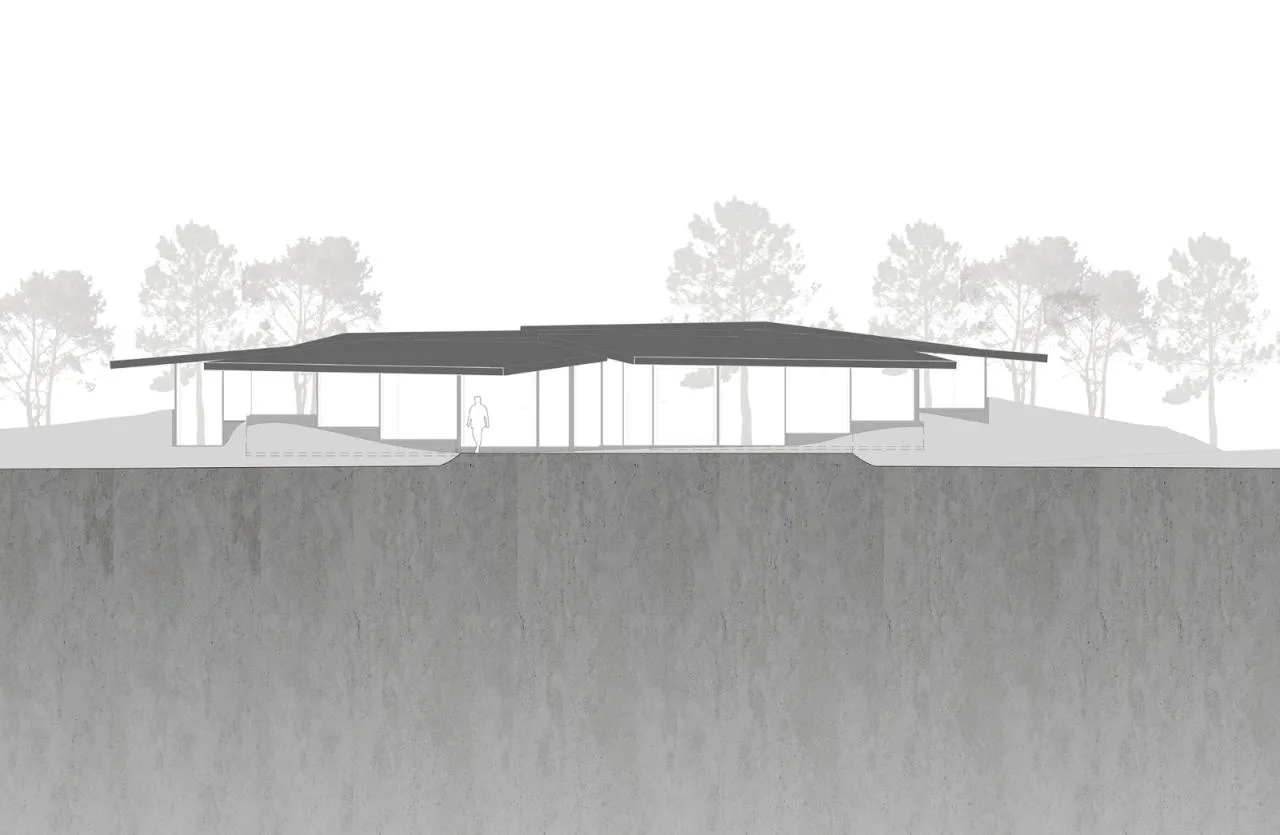
△ Elevation drawing
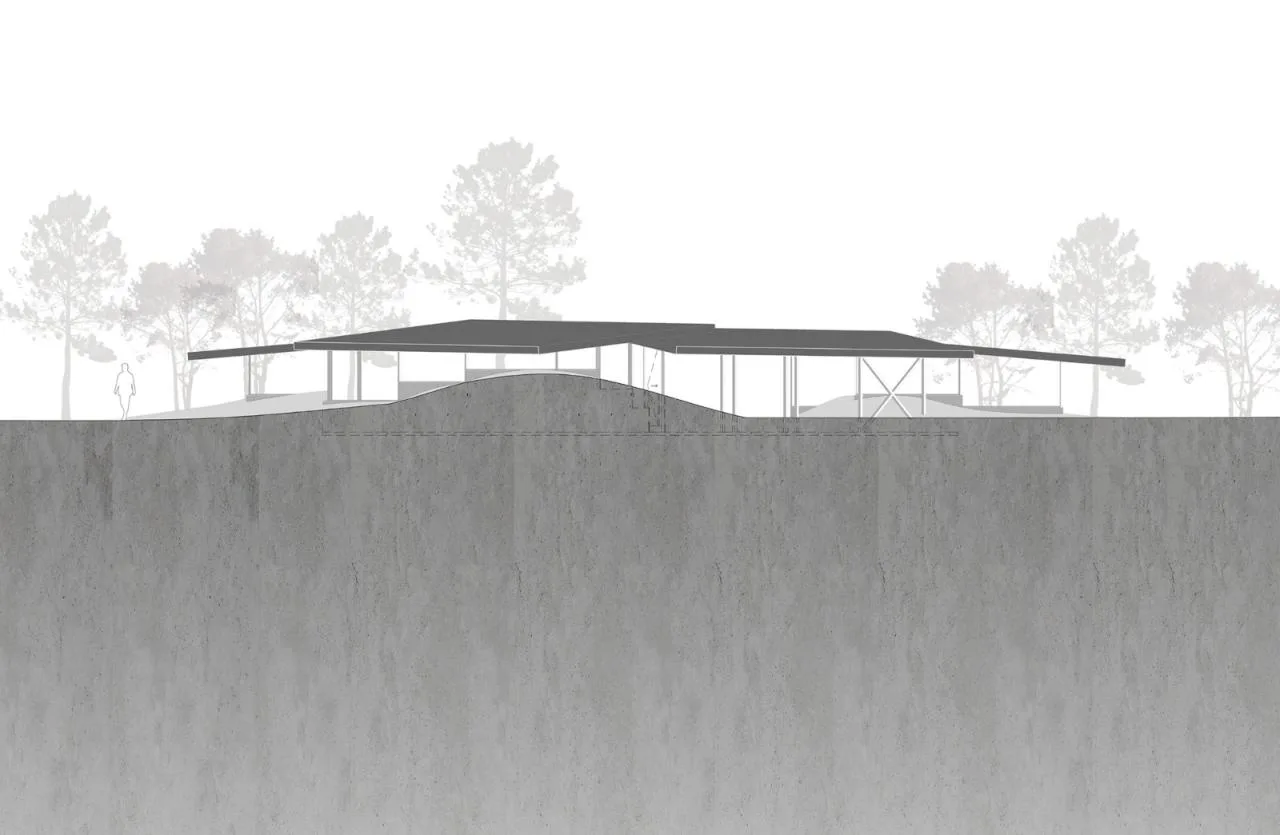
△ Elevation drawing
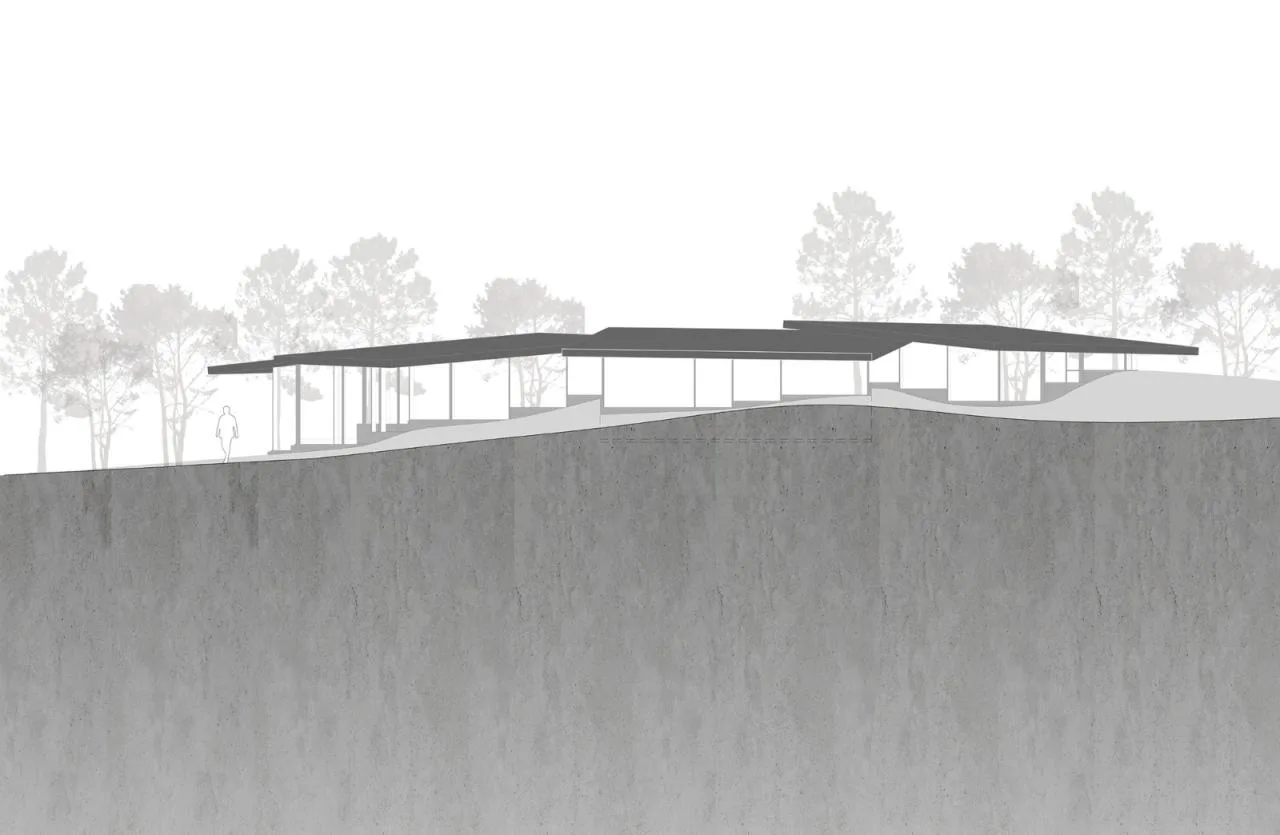
△ Elevation drawing
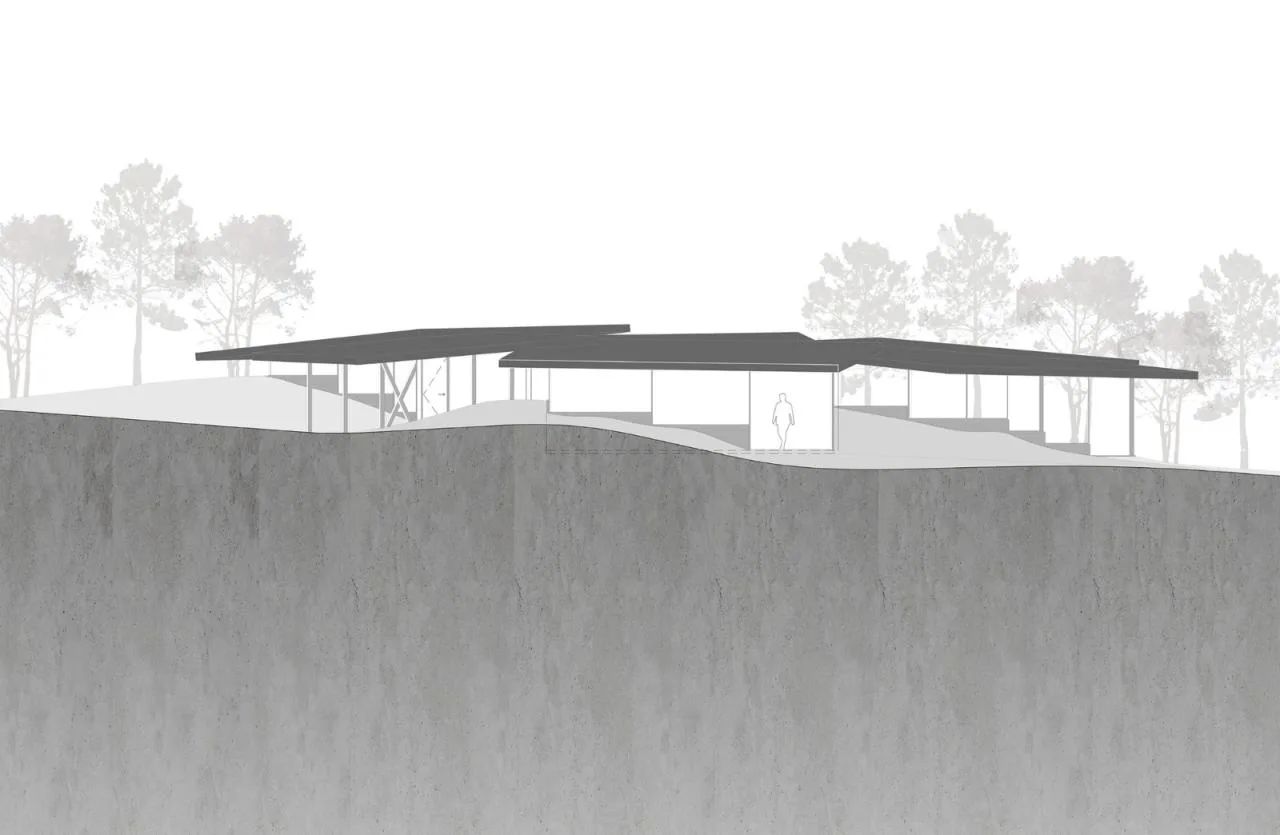
△ Elevation drawing
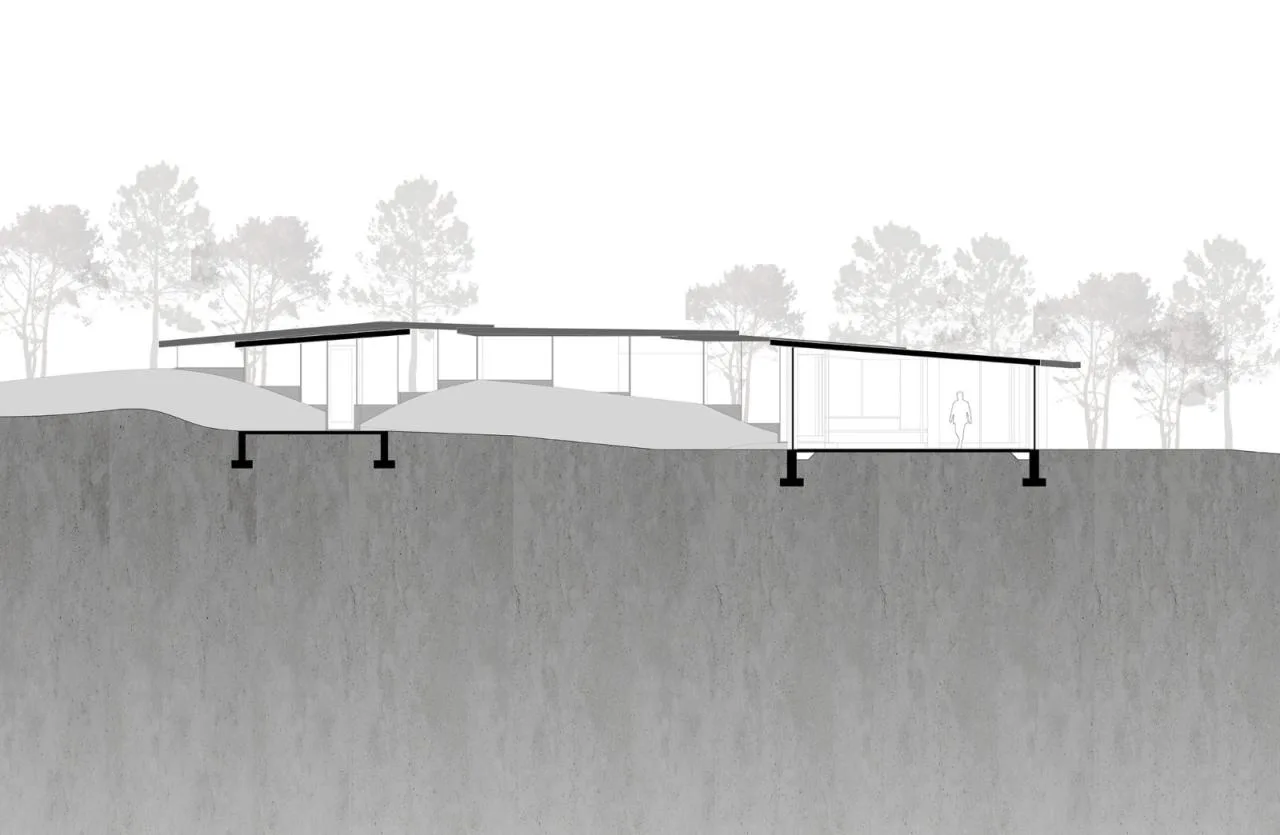
△ Section diagram
Project Information
Architect: No Architecture
Area: 326 square meters
Year: 2020
Photographer: Iwan Baan
Design Team: Dana AlMathkoor, Maria Carriero, Yan Chen, Jennifer Diep, Sbrissa Eleonora, Andrew Heid, Yawen Jin, James Kubiniec, Chung Ming Lam, Jean Lien, Naifei Liu, Alberto Andrés Silva Olivo, Jie Xie, Jialin Yuan, Daniel Zuvia
Contractor: Quadresign Inc
Structural Engineer: Madden & Baughman Engineering, Inc.
Location: United States












Must log in before commenting!
Sign Up