
Preface
Haier Zhigu is the first industrial park established by Haier Group in Songjiang, Shanghai, designed to be a cutting-edge intelligent ecological industrial park.
Located within Zhongshan Industrial Park in Songjiang District, the site is bordered by Guangfulin Road to the south, Zhongchuang Road to the west, Shiyuan Road to the north, and Zhangjing River to the east. The park is positioned as a headquarters office park in the non-core areas of a first-tier city, incorporating various building types including sales offices, proprietary offices, exhibition halls, apartments, and service facilities. Sales office buildings are categorized into multi-story garden-style offices and high-rise office towers.
The overall spatial design is organized around two main landscape axes running north-south and east-west. The intersection of these axes hosts the core buildings, forming the central hub of the site. Taller and larger buildings are placed along the west side of Zhongchuang Road to enhance the urban frontage, while the east side features low-rise, staggered buildings that respond to the natural landscape along Zhangjing River.
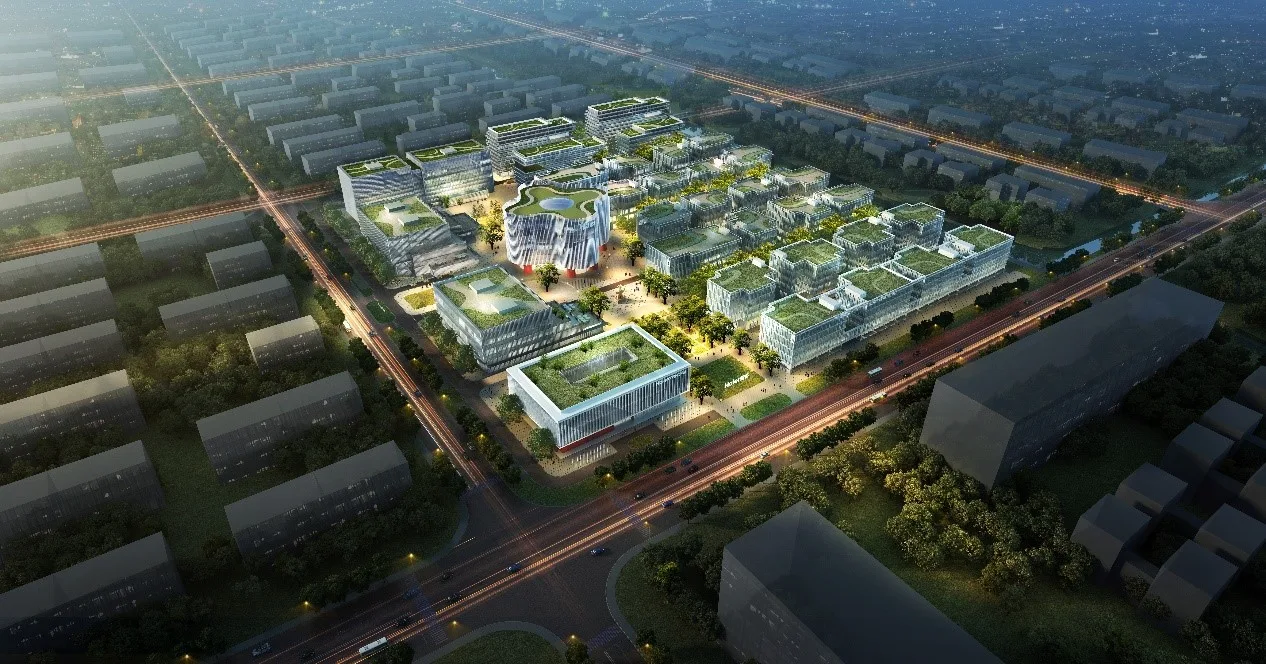
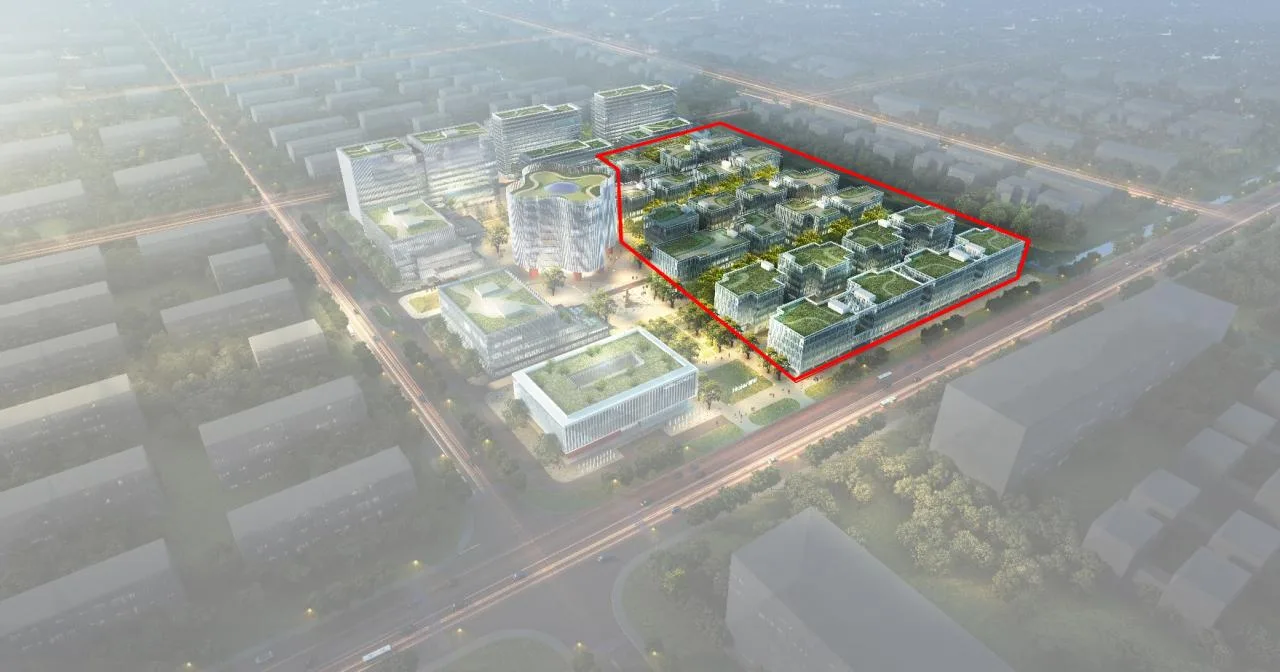
Overall Park View
The project is constructed in three phases. The recently completed Phase II focuses on garden-style office areas composed entirely of multi-story standalone office buildings.
01 [Spatial Pattern]
Transitioning from City to City
Starting with the fundamental relationship between site and city, the design emphasizes shaping urban space and interfaces. Phase II’s layout extends the park’s two main axes by adding two secondary east-west axes. These three axes collectively establish an ecological network within the site, extending toward Zhangjing River and forming a green belt within the urban fabric. This spatial framework divides the 24 buildings into three clusters, enriching the overall spatial hierarchy.
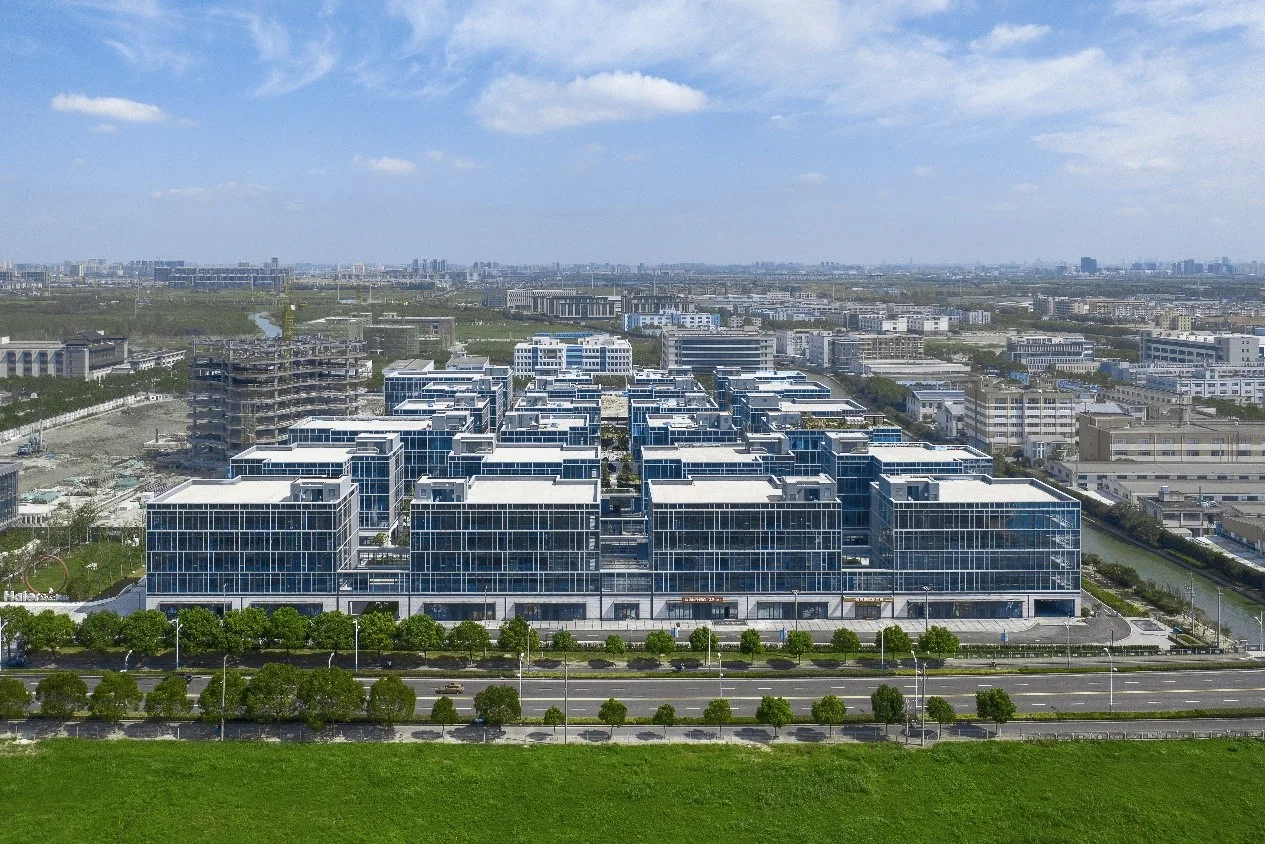
Overall Spatial Architecture
Guangfulin Road, located on the southern edge of the site, serves as a key transportation corridor and urban gateway in Songjiang District. Buildings facing Guangfulin Road are designed to convey a unified and strong urban presence. While maintaining a standalone office typology, these buildings connect at the base level to create a continuous and cohesive urban facade.
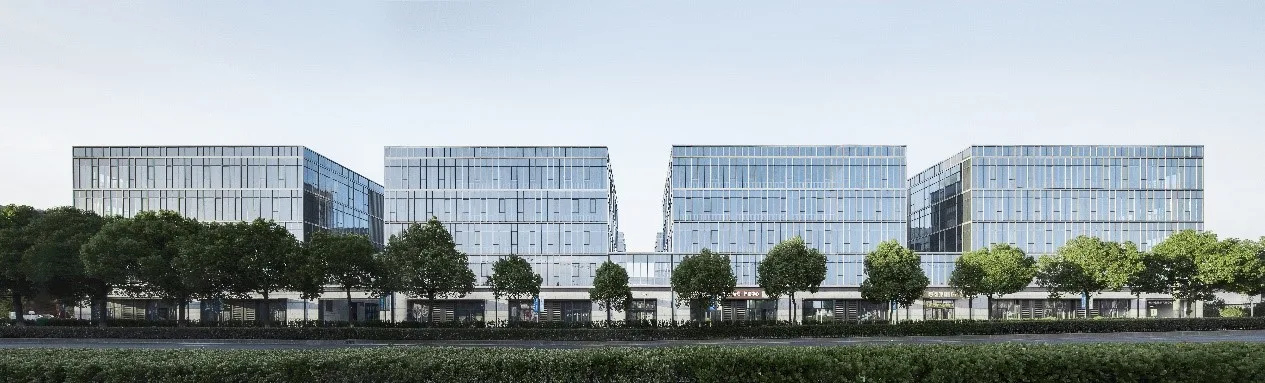
Continuous Facade Along Guangfulin Road
02 [Architectural Form]
A Calm and Refined Architectural Complex
Due to industrial requirements, the buildings’ forms remain restrained with limited variation. The design approach for Phase II leverages multiple buildings and clusters to emphasize orderly variation across the site.
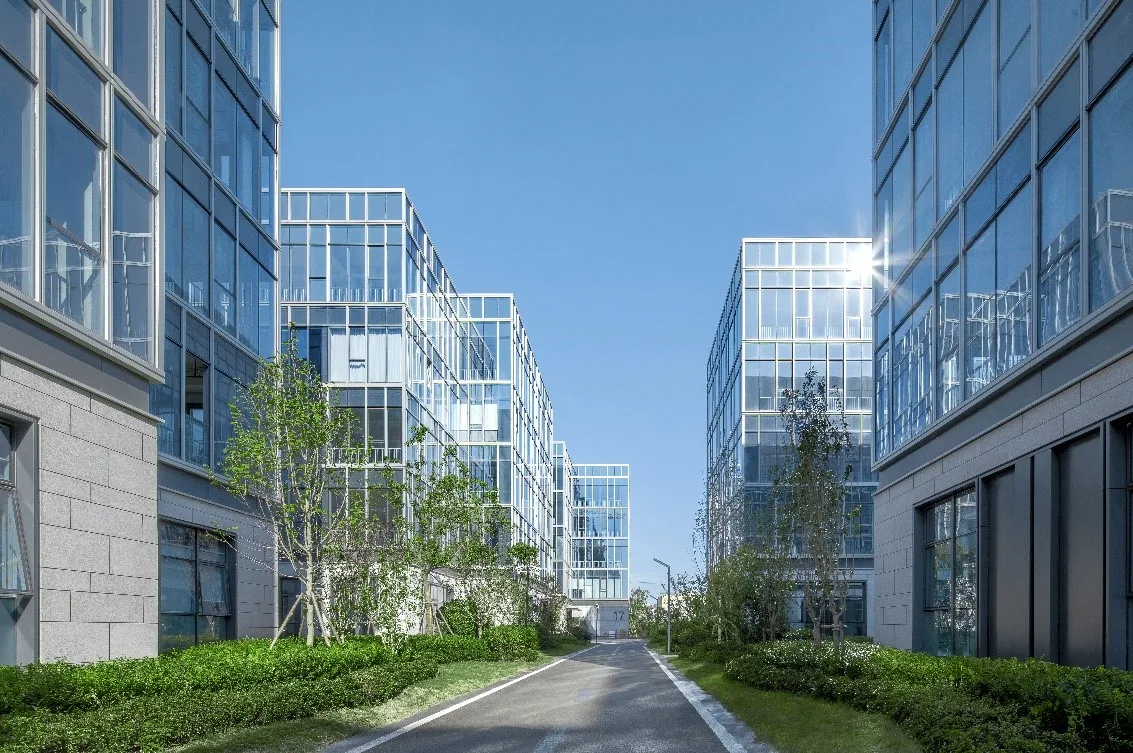
Architectural Complex
Individual buildings feature a refined blend of metal and glass curtain walls, skillfully balancing solid and transparent elements. Thoughtful consideration of building proportions contributes to a bright, simple, and modern park atmosphere. Vertical lines dominate the facade language, enriched by the variation of components, materials, and detailed craftsmanship.
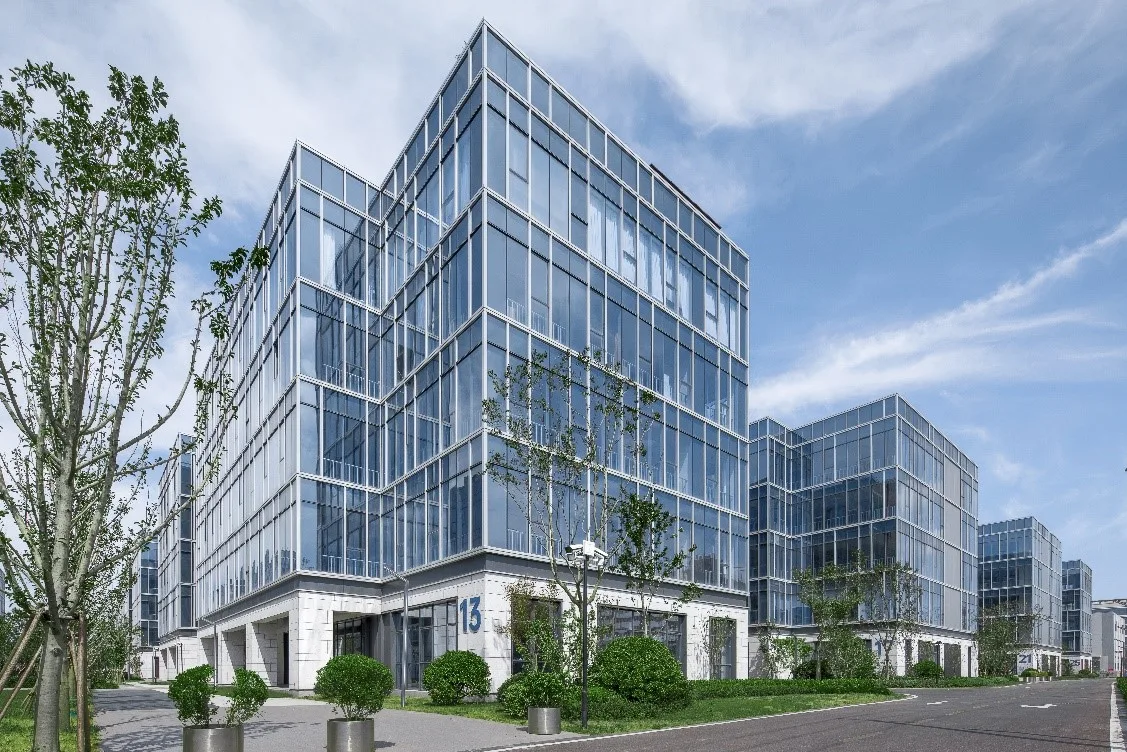
Single Building Detail
03 [Attention to Detail]
Human-Centered Design in Subtle Details
The three ecological axes introduce expansive green landscaping. Office clusters framed by these axes offer users continuous views of green spaces, enhancing the 24-hour office experience.
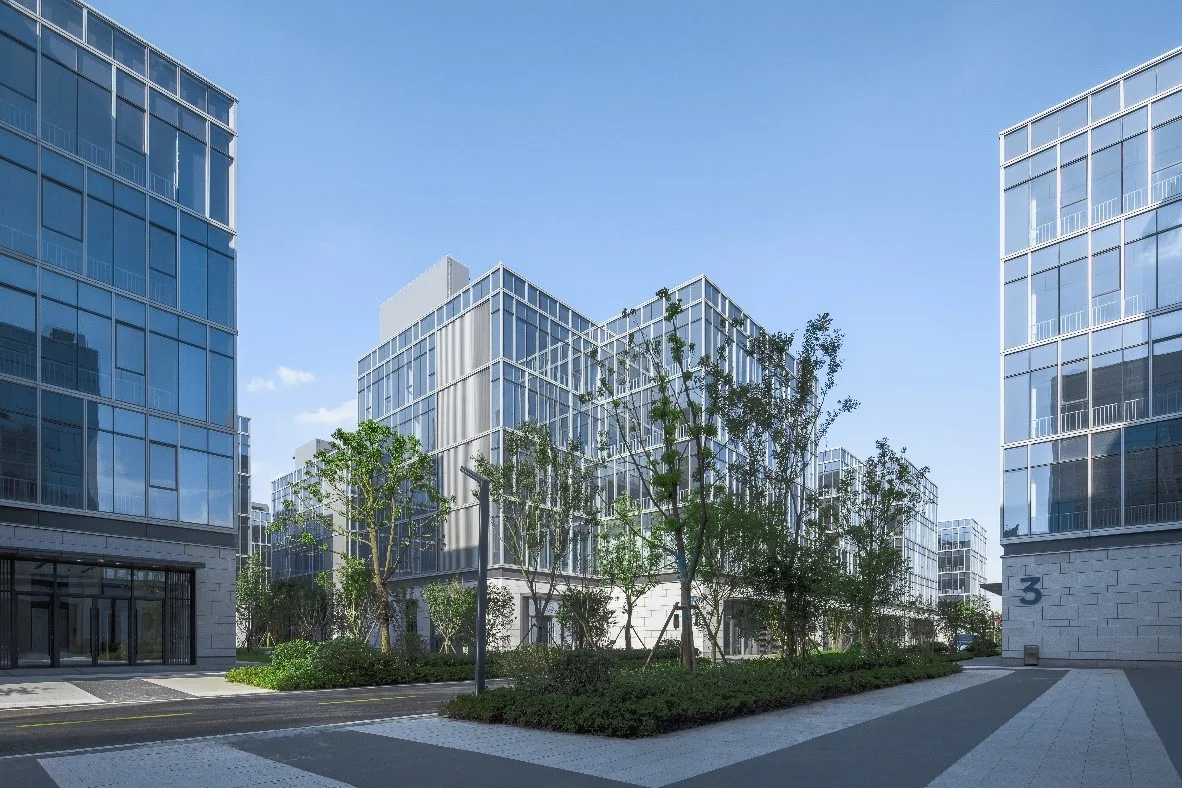
Central Green Space within the Office Cluster
Building entrances facing two ecological axes are elevated, and the transition from grey space to landscaped areas adds spatial layering, enriching the entrance experience.
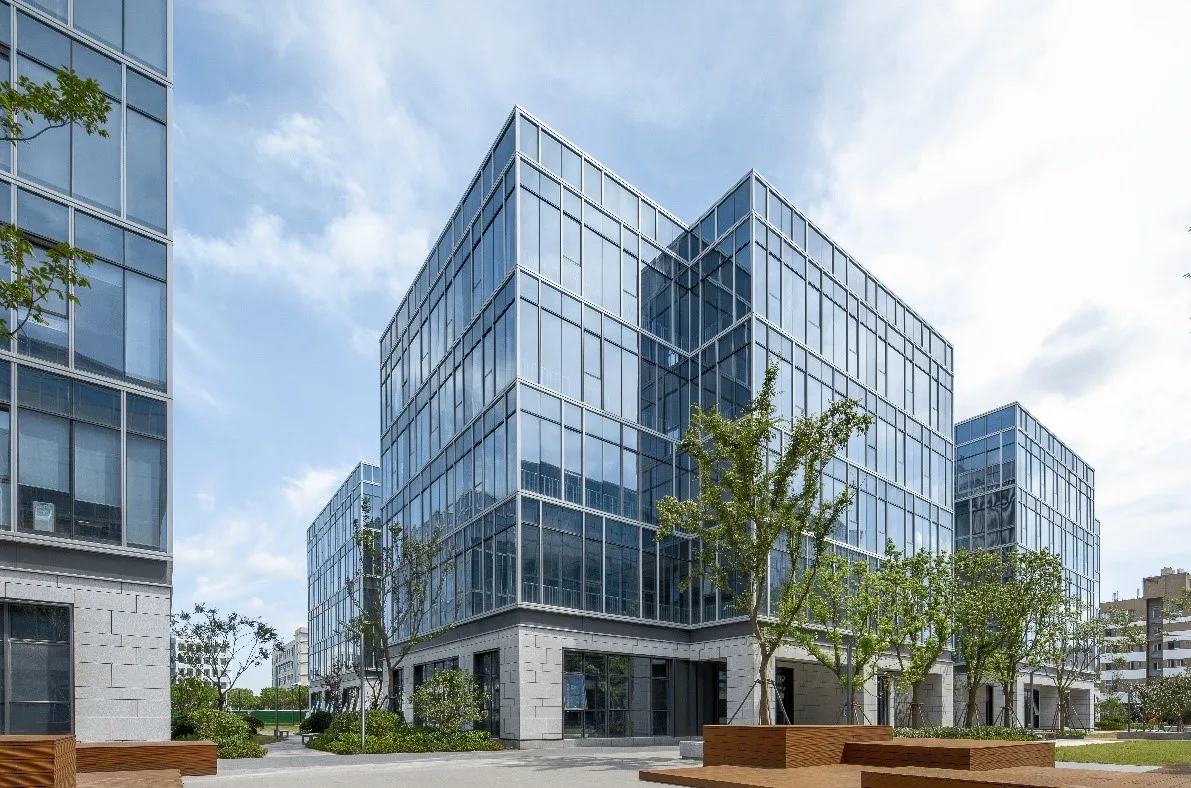
Main Entrance Facing Ecological Axis
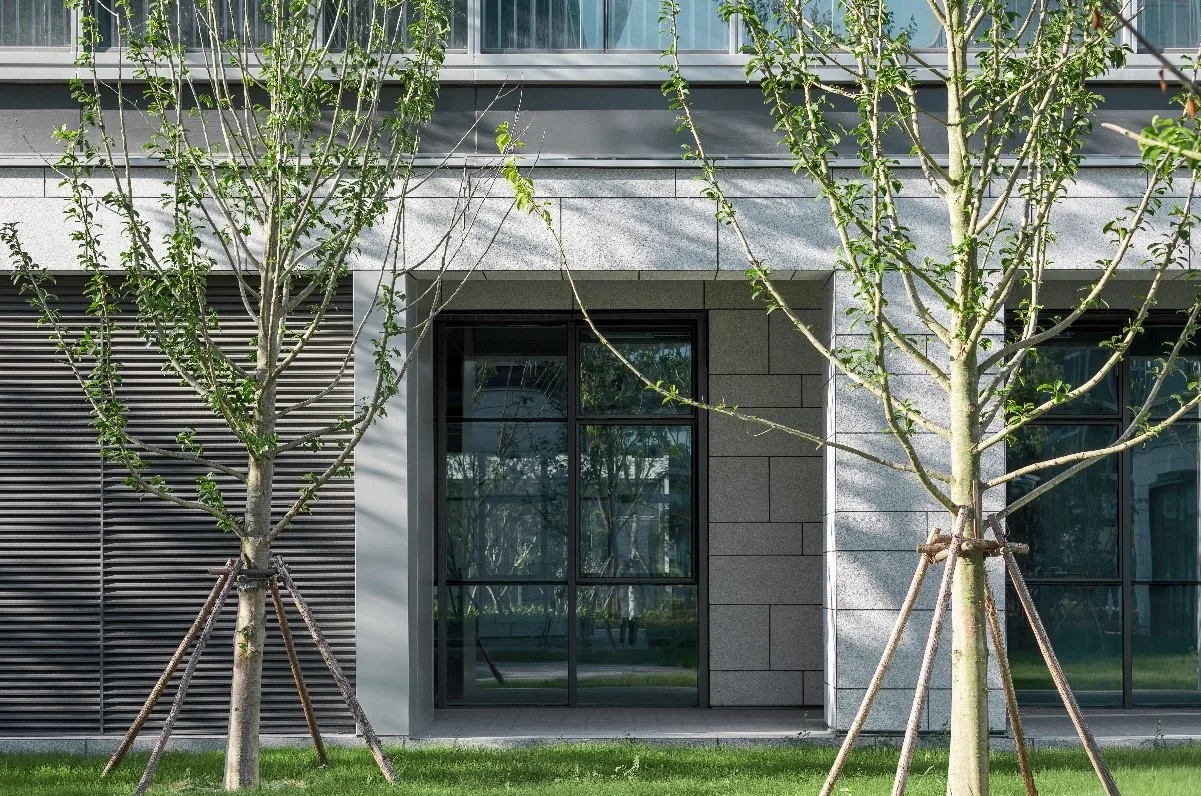
Entrance Grey Space Details
These landscaped corridors act as the park’s “green lungs,” playing a vital role in regulating the micro-ecological environment. They improve the regional microclimate, creating a comfortable, pleasant ground-level environment and enhancing users’ wellbeing.
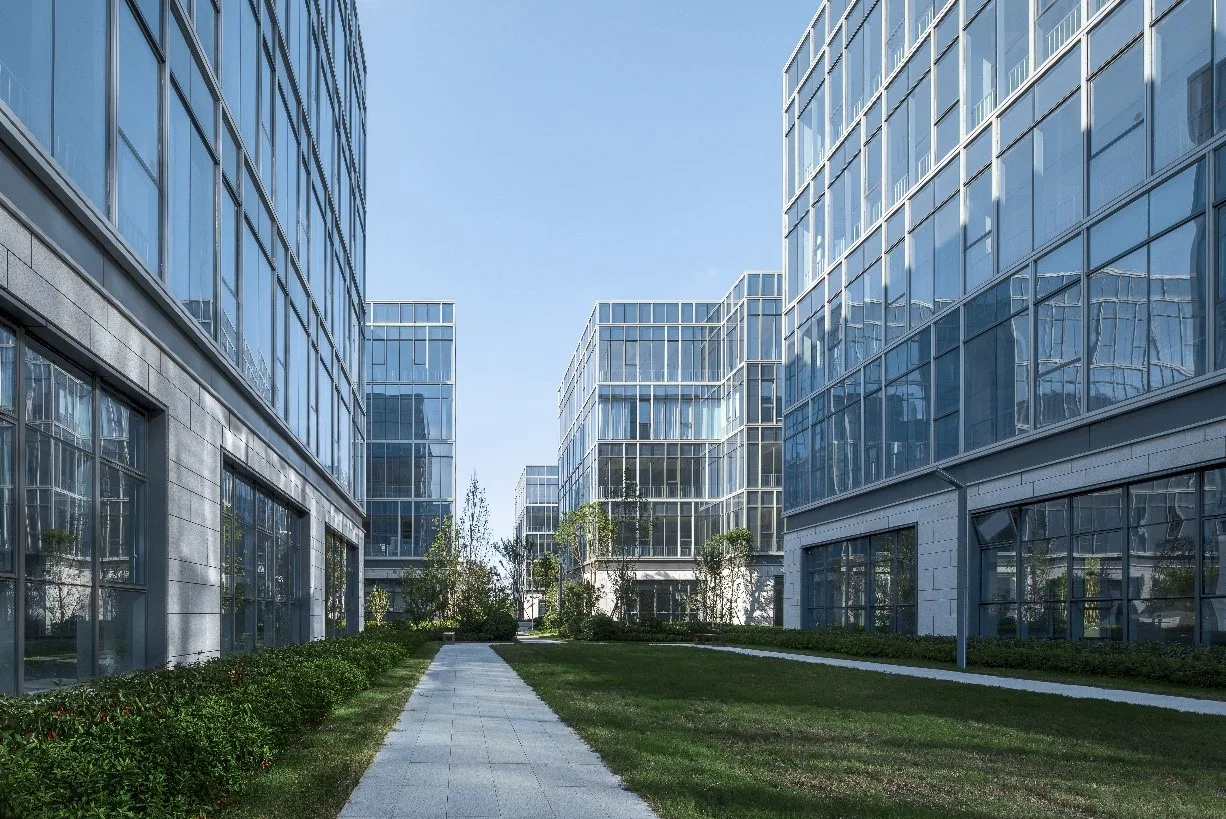
Buildings Oriented Toward the Ecological Axis
04 [Technical Approach]
Prioritizing Construction Quality
Structural Selection
To achieve a lightweight, transparent facade, the design replaces traditional window wall systems with curtain wall systems. After extensive collaboration with the technical team, the concrete cantilever slabs were optimized to 120mm thickness, minimizing the visual bulk of beams and columns and lending the facade a sense of lightness. Aluminum panel curtain walls wrap the cantilever slabs, creating a refined 200mm line detail. Each upper-level unit incorporates 65mm curtain wall-style vertical mullions to soften the appearance of traditional window frames.
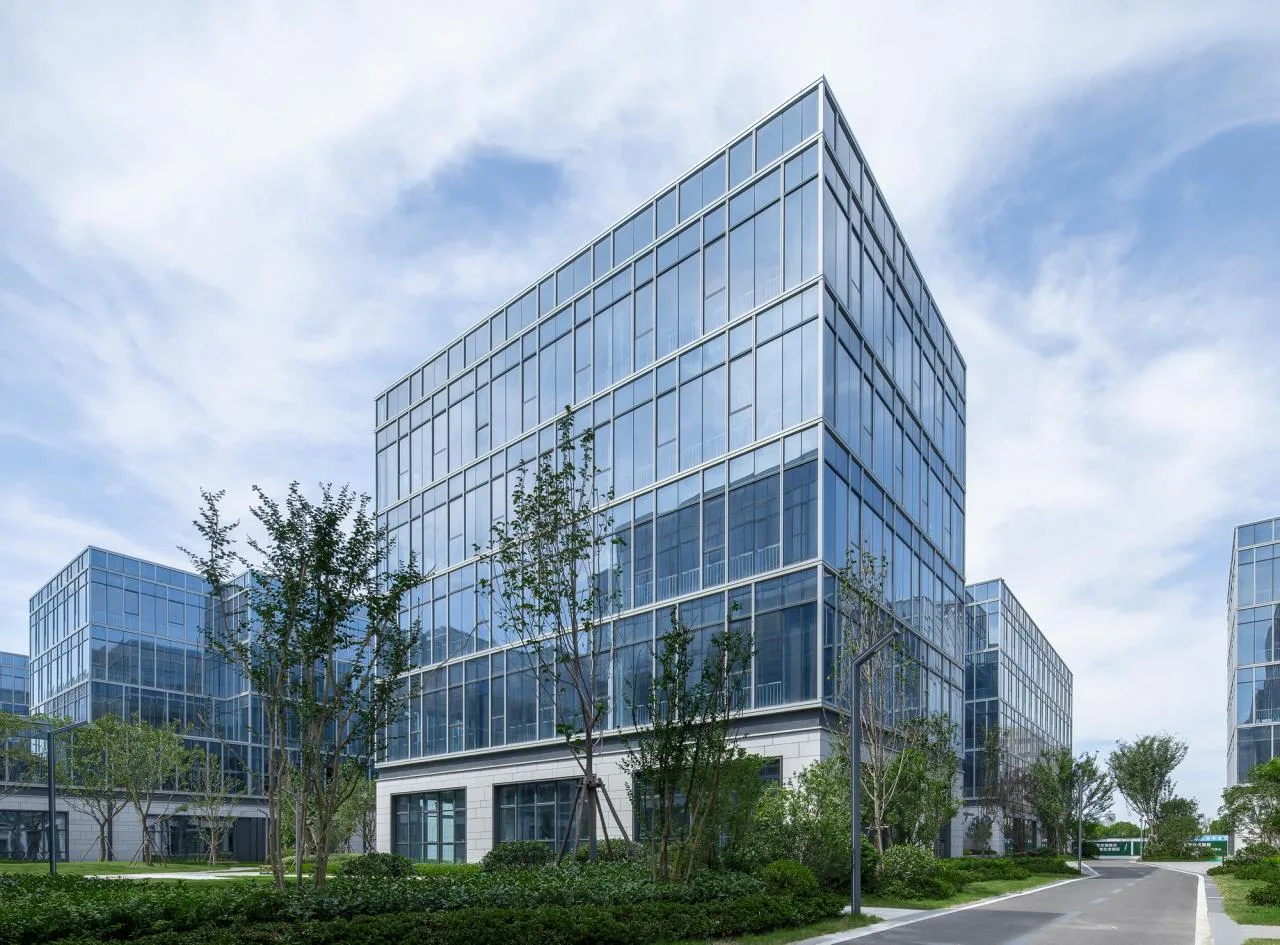
Overall Curtain Wall Effect
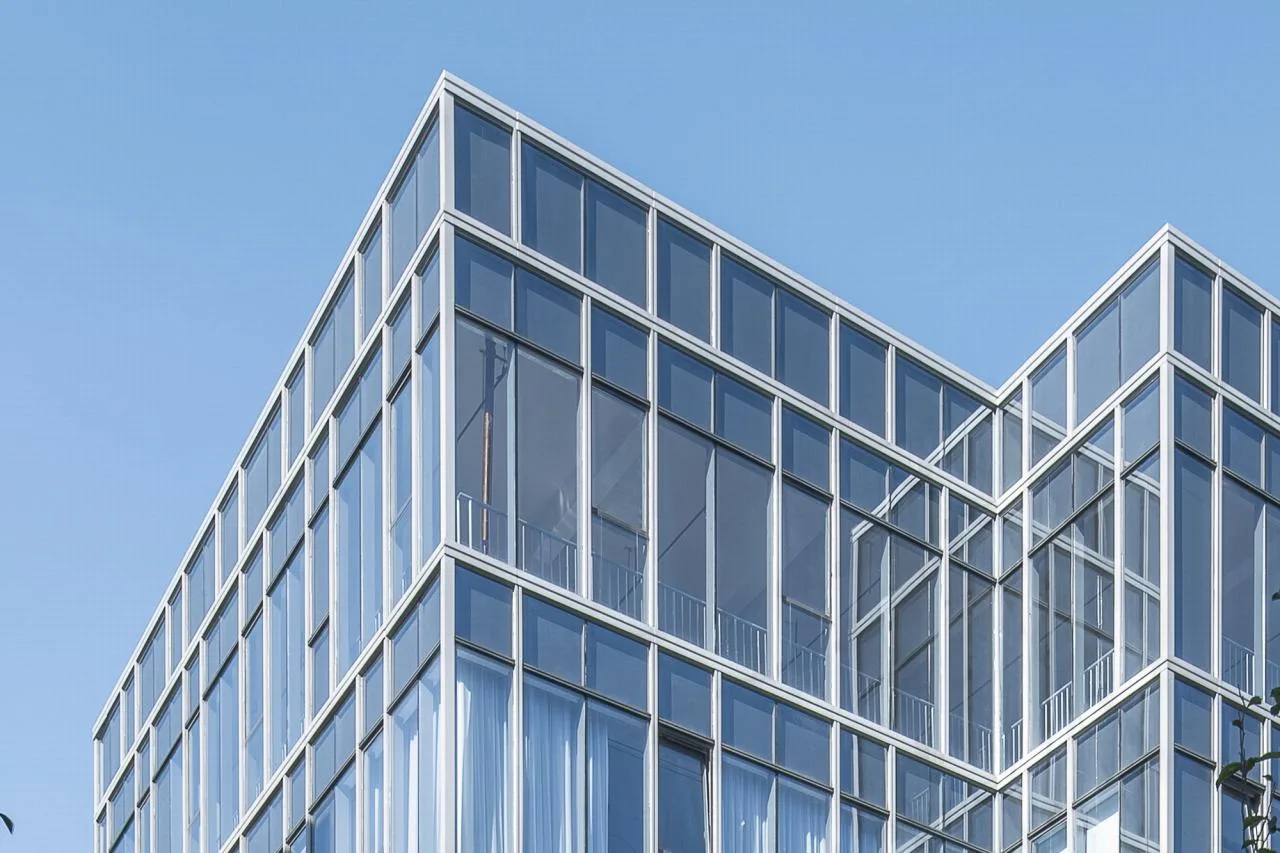
Curtain Wall Details
Size Control
The base stone cladding is assembled in a regular pattern using three different template sizes. The glass panels of the upper curtain walls are staggered, creating a rhythmic and refined detail composition.
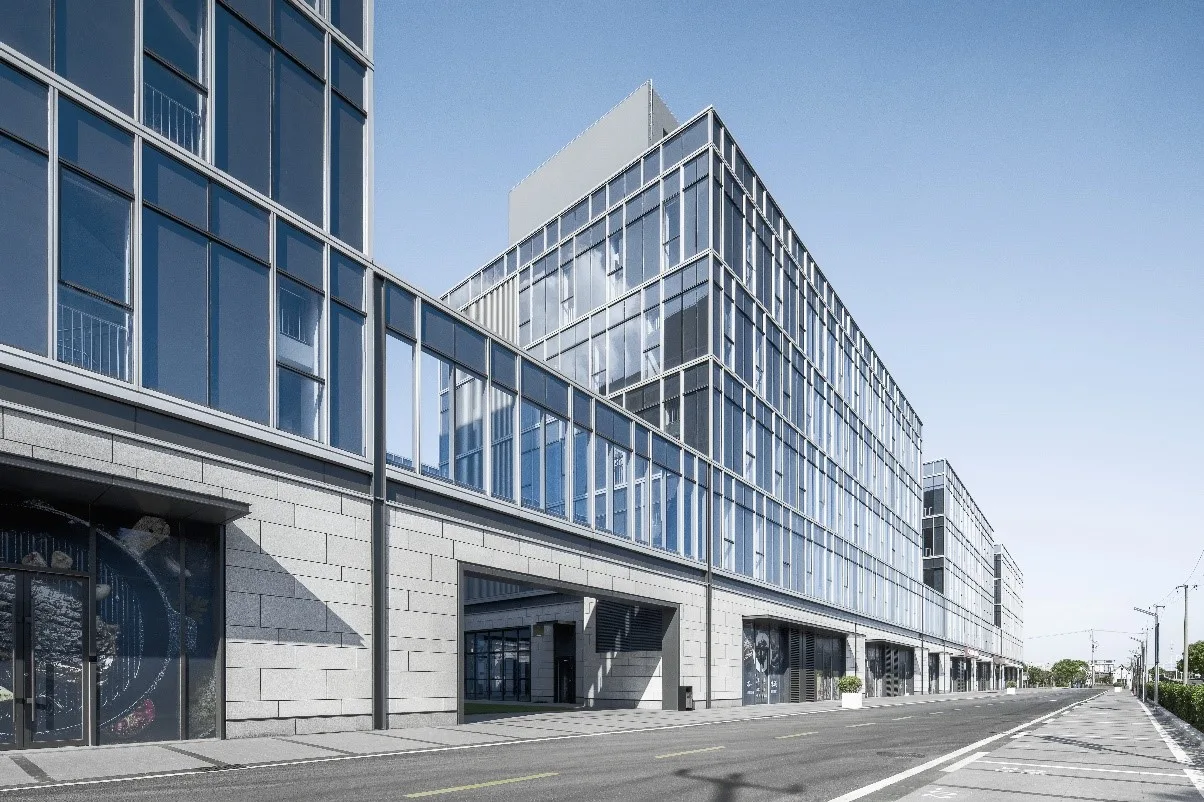
Stone and Glass Curtain Wall Details
Material Review
Based on a review of Phase I’s completed appearance, adjustments were made to the aluminum panel selection for Phase II. A cleaner white finish was chosen to achieve a simple, bright, and cohesive cluster effect.
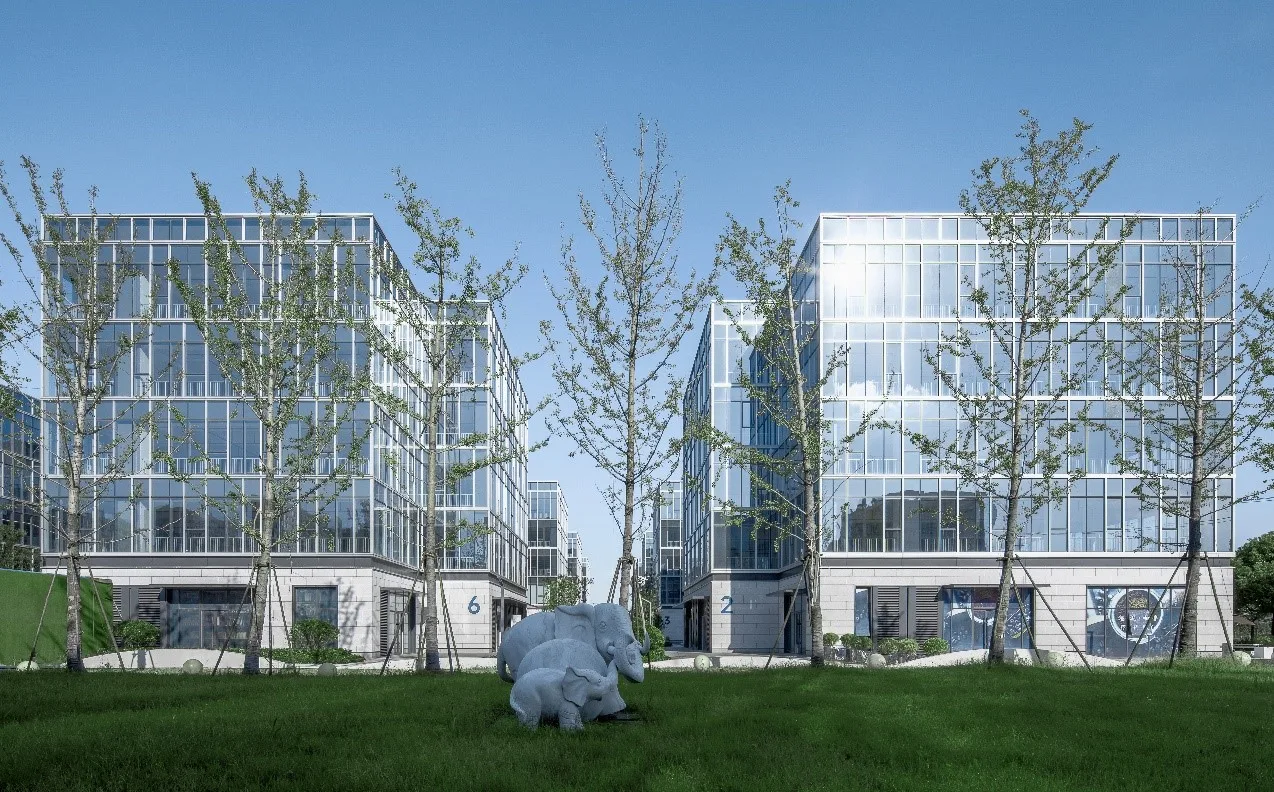
Simple and Lightweight Facade Effect
Conclusion
Design is a comprehensive work of art that demands attention to every detail. A project’s success is not determined by drawings alone but by the entire construction process. Navigating and resolving countless small challenges throughout this complex cycle provides invaluable architectural education and experience.
Project Information
Project Name: Shanghai Songjiang Haier Smart Valley
Location: Guangfulin Road, Zhongchuang Road, Songjiang District, Shanghai
Owner: Haier Group
Total Building Area: 340,000 m² (entire park)
Phase II Area: 120,000 m²
Architectural Design: C+D Design Center
Lead Architect: Dong Yi
Design Team: Gao Pan, Zhang Chunwei, Lin Shuya, Liu Wenwen
Landscape Design: Shuishi International
Construction Drawing Design: Shanghai Jianqi Construction Engineering Design Co., Ltd
Project Photography: DC International















Must log in before commenting!
Sign Up