
Since the reform and opening up, rural urbanization has led to a continuous migration of rural populations to cities, leaving many houses in rural areas vacant. In recent years, the “rural revitalization” strategy has been proposed, prompting both central and local governments to introduce supportive policies. These policies, along with pilot reforms of the rural homestead system and the integrated development of primary, secondary, and tertiary rural industries, aim to promote the active use of idle rural homestead land. Motivated by this initiative, the residents of Shilong Village in Anji are preparing to transform their unused yards into garden-style restaurants, commissioning design services for some of the buildings.
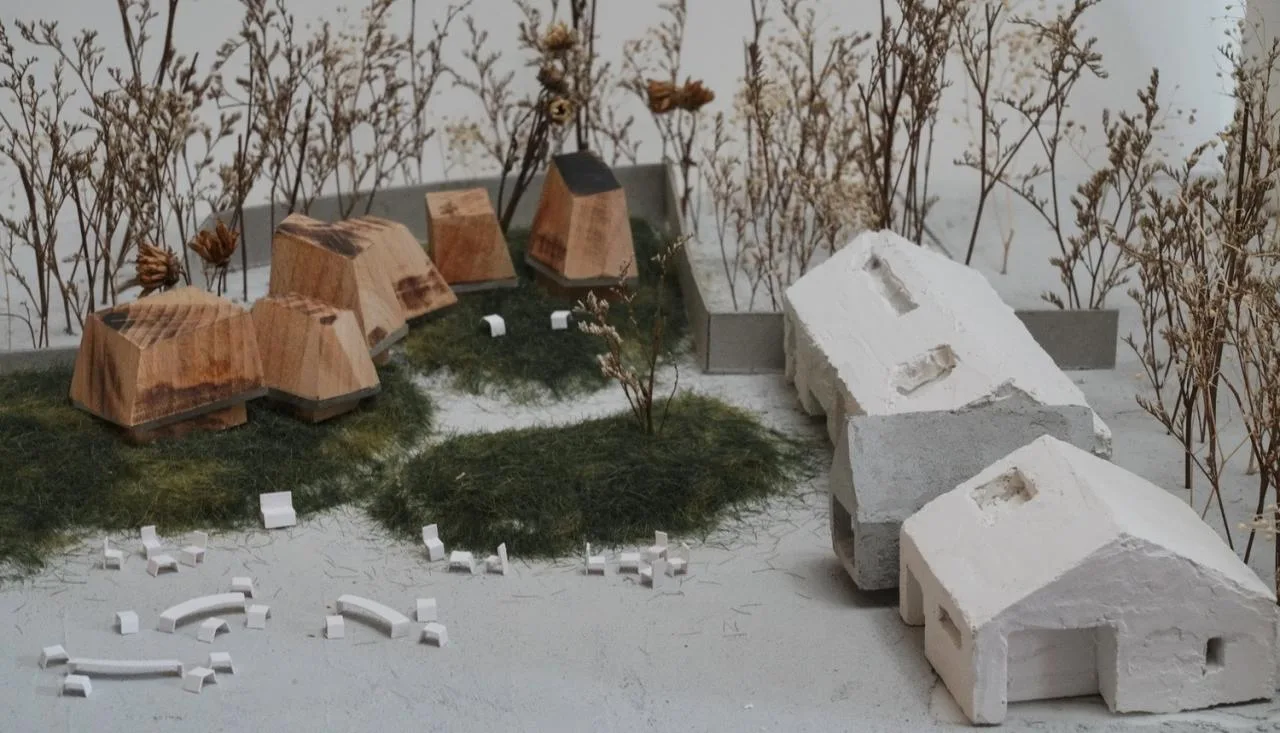
△ Model bird’s-eye view © Wang Yitong
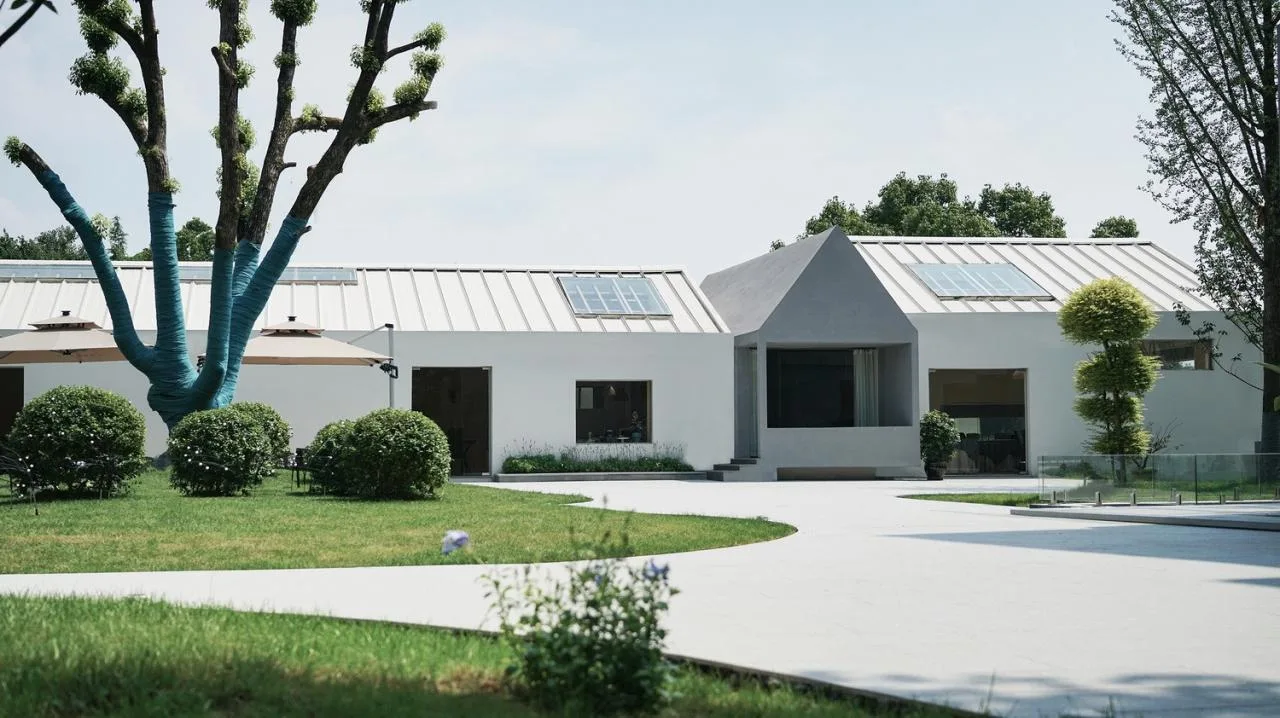
Overview of restaurant renovation © Lin Guijia Building
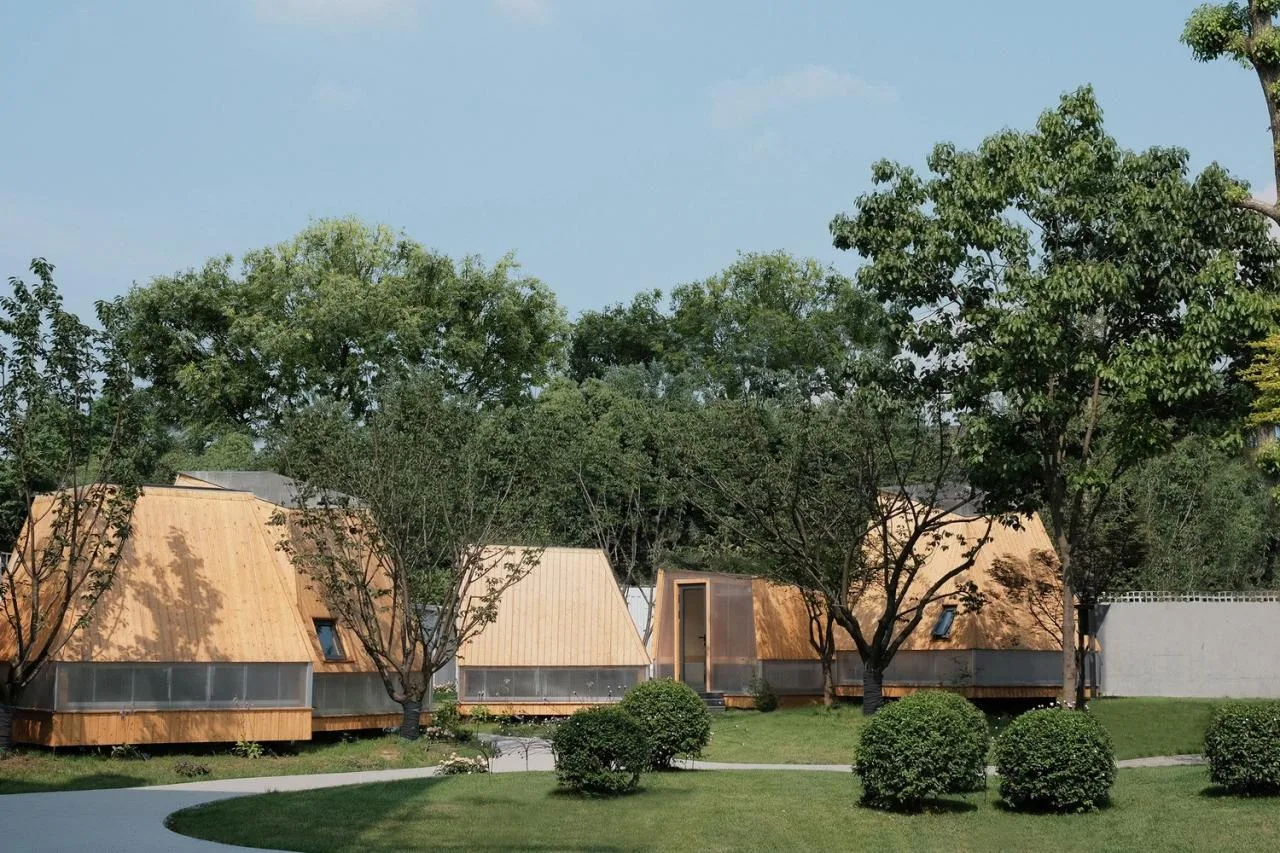
Overview of the newly constructed section of the restaurant © Lin Guijia Building
Research into existing dining establishments in Shilong Village reveals that most local restaurants feature Chinese and European retro styles, predominantly reflecting the popular décor from twenty years ago. These venues often emphasize a “local luxury style” characterized by extensive use of marble tiling. To distinguish our project from these existing styles and to achieve high cost-effectiveness, our goal is to create Shilong’s first modern-style garden restaurant.
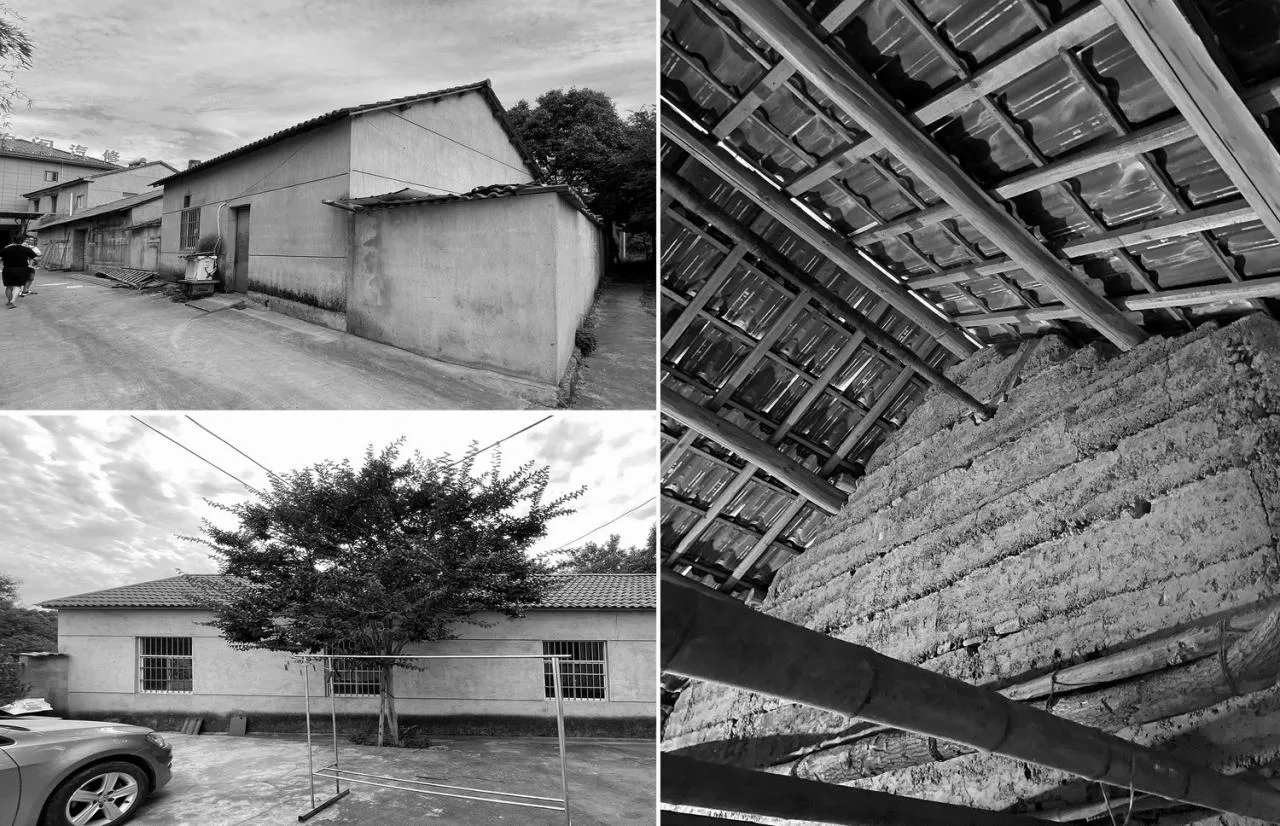
△ Original architecture © Lin Guijia Building
The site includes a 1,000 square meter open space and three unused houses built in the 1990s. These three houses form an L-shape, featuring aging roofs, wooden internal structures, small windows, and dim interiors—conditions unsuitable for commercial dining. To address these issues, we have developed three renovation strategies to gradually transform the space into a modern, comfortable restaurant.
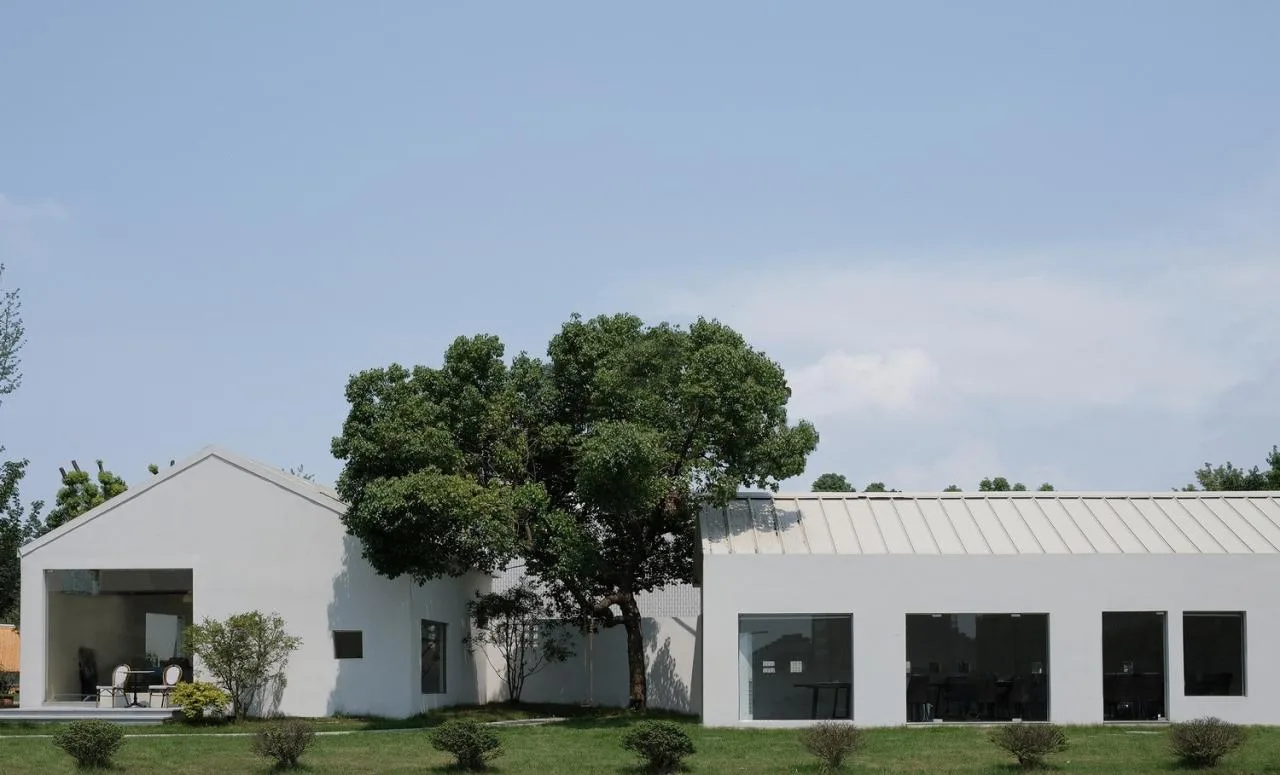
△ Roof replacement © Lin Guijia Building
First, we repaired and replaced wooden truss structures damaged by insects and decay. We reconstructed the roof system by adding insulation and waterproof layers above the wooden framework, replacing the original leaking tile roof with white steel plates. This change visually integrates the white roof and walls, enhancing the building’s sculptural and volumetric presence. The three houses now resemble three white gypsum blocks on the site, ready to be sculpted by light and shadow.
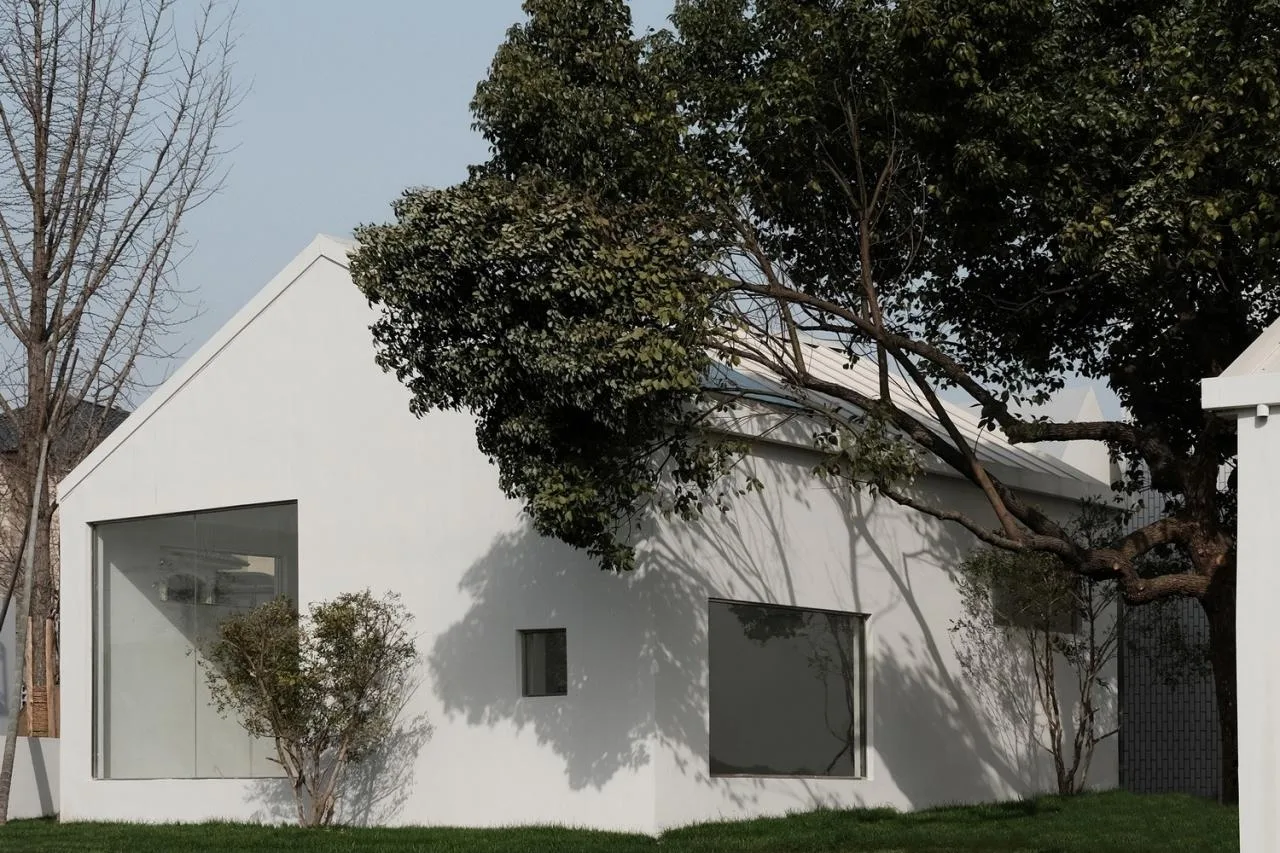
△ Window redesign © Lin Guijia Building
Second, we redesigned the building’s facade windows. Taking internal functions into account, we installed high windows on the exterior of business rooms to ensure dining privacy, and large French windows in the leisure dining area to bring in outdoor natural views. The windows across the three houses correspond with each other and the courtyard’s trees, creating scenic vistas. Low windows were also installed near leisure sofas and coffee tables to bring diners closer to flowers and plants outside.
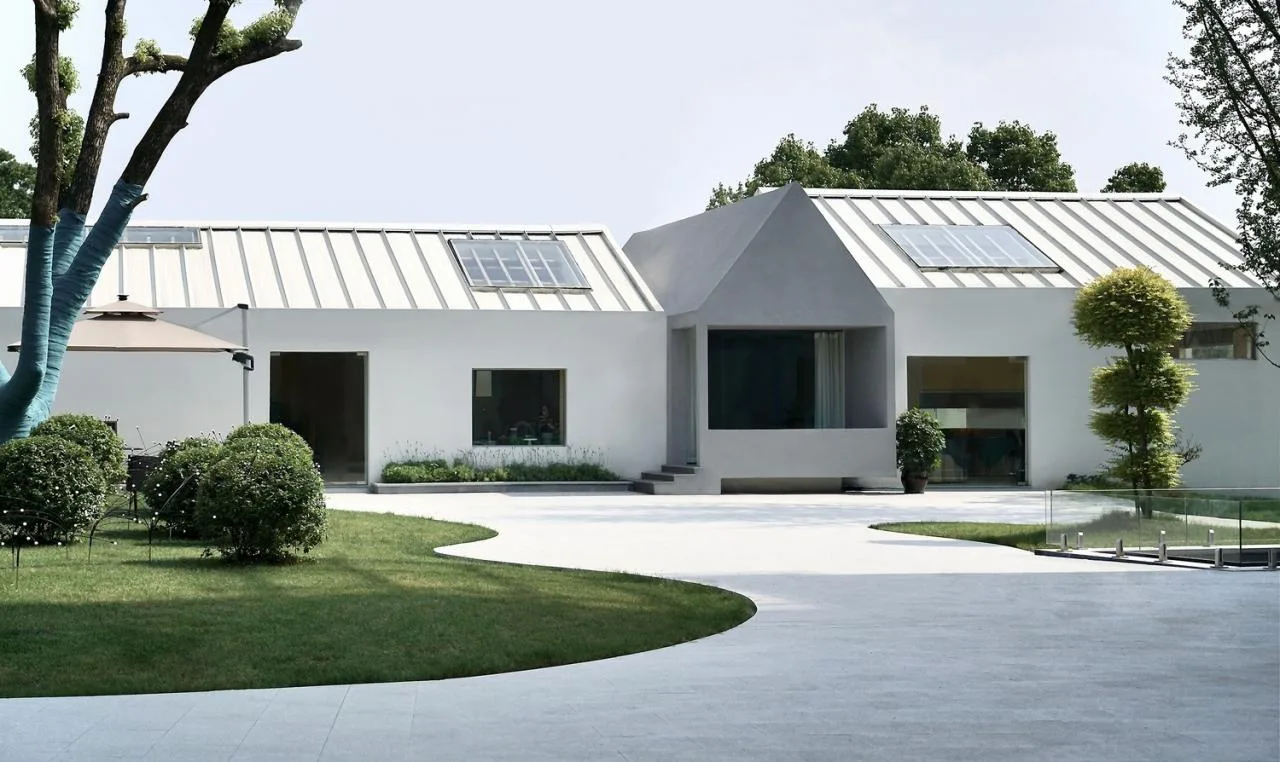
△ New architectural block insertion © Lin Guijia Building
Finally, we inserted a new block into the gap between two buildings. Featuring a pointed roof with an inward-facing gable, this addition echoes the original architecture without appearing abrupt. It maximizes land use by adding a dining room and connects the three separate buildings, forming a cohesive architectural complex.
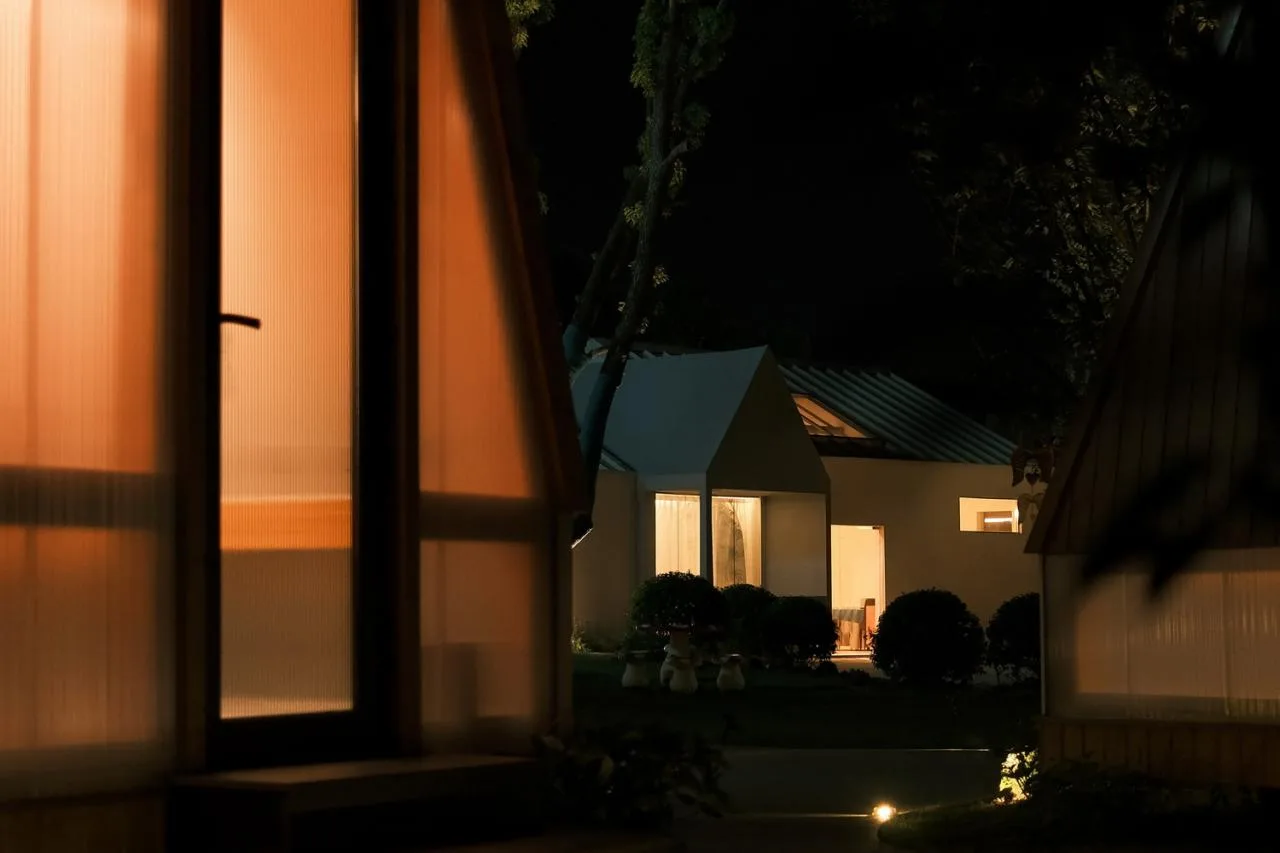
△ Night scene © Lin Guijia Building
At night, light from inside the building flows through the windows. The varied interior paint colors create different hues of diffused light.
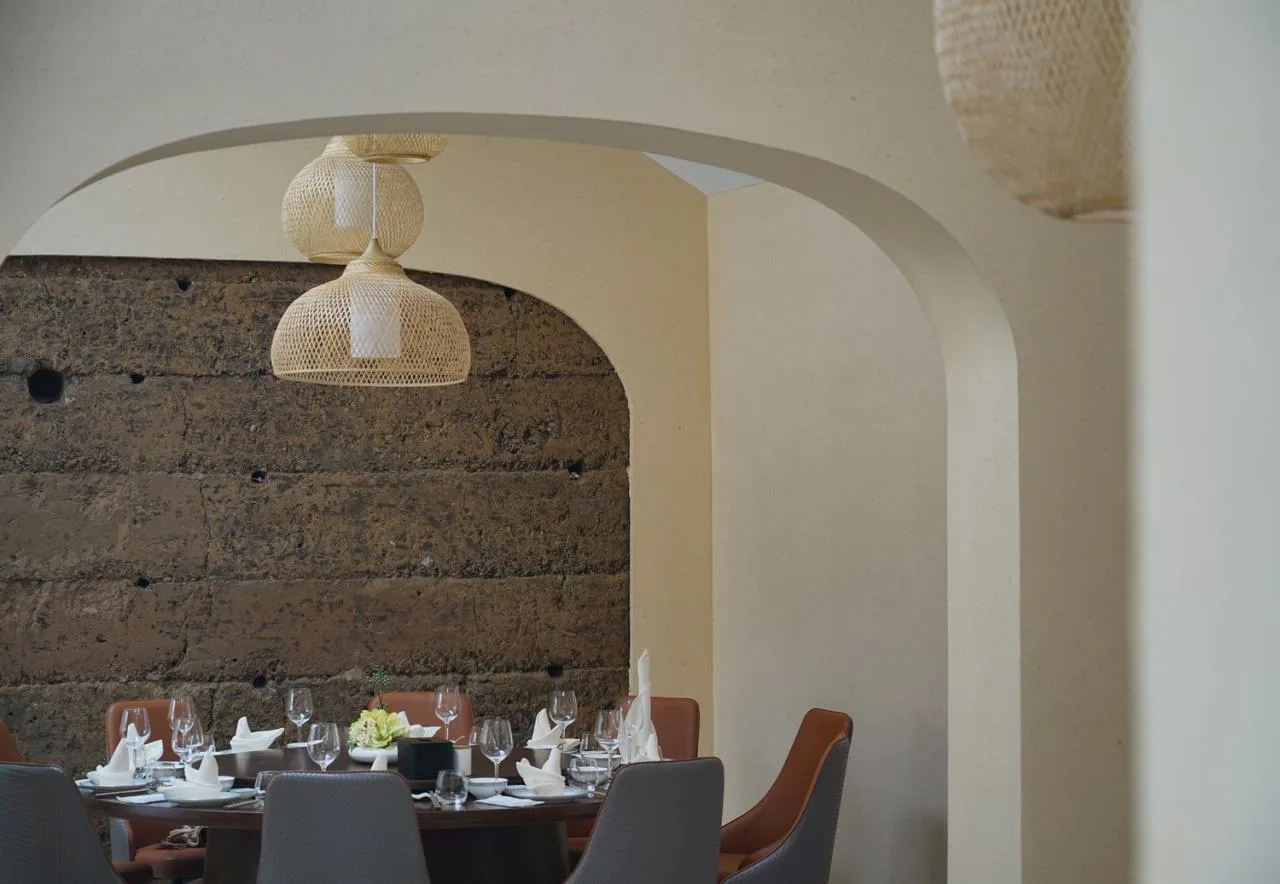
△ Indoor space © Lin Guijia Building
The interior retains elements of the original rammed earth walls and traces of bamboo beams, preserving the charm of the old house.
Beyond the three houses slated for renovation, there is a large open area on-site awaiting transformation. Since Anji is renowned among tourists for its green mountains and clear waters, people generally prefer natural surroundings over artificial ones. However, this project is located at the junction between the village and town, lacking abundant natural landscapes. The only greenery is a small forest at the site’s edge. To introduce natural wilderness and provide outdoor dining, we constructed a wooden cabin restaurant outdoors. Micro-terrain and vegetation have been added along the visual axis from the entrance to the forest, hiding the cabin and creating a sense of depth. This design maximizes the landscape effect, giving visitors the feeling of entering a small forest upon arrival.
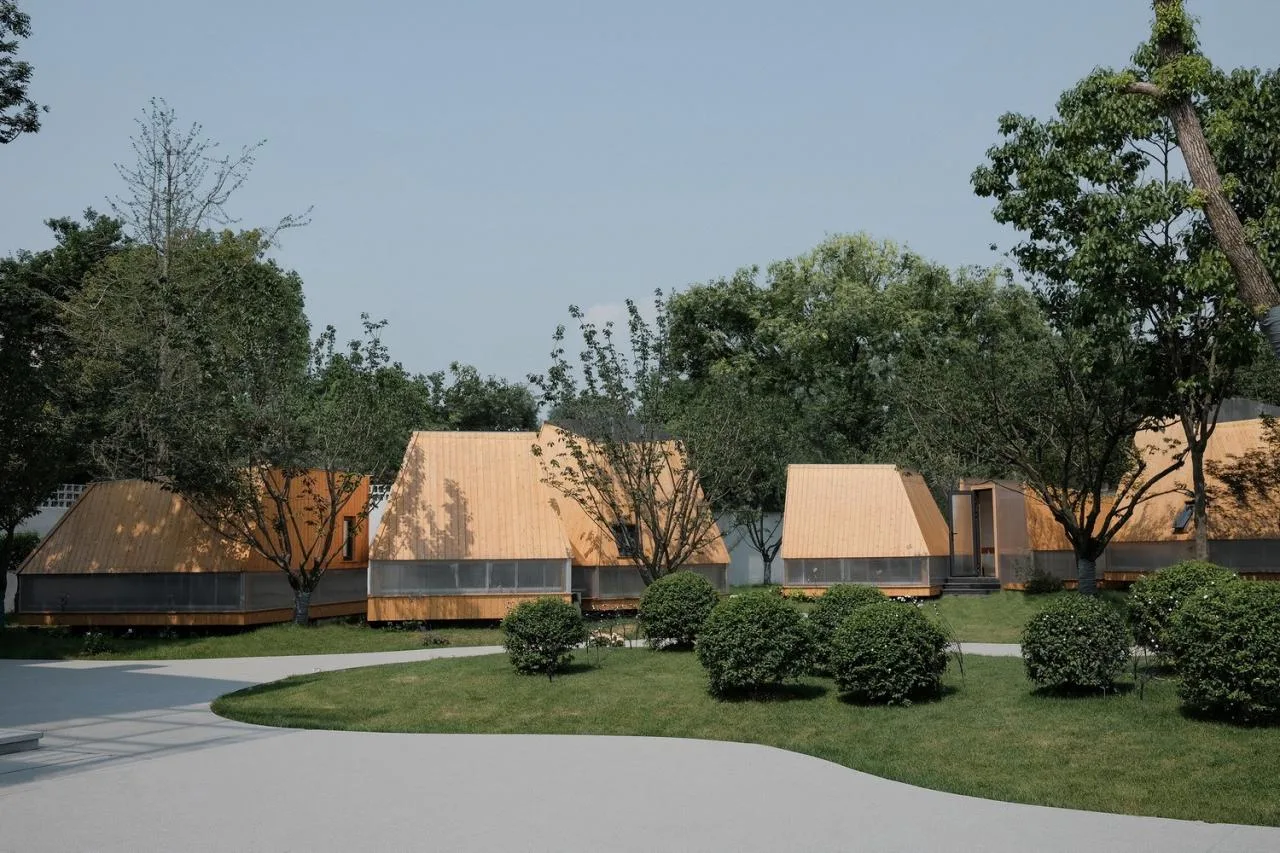
Overview of the wooden houses during the day © Lin Guijia Building
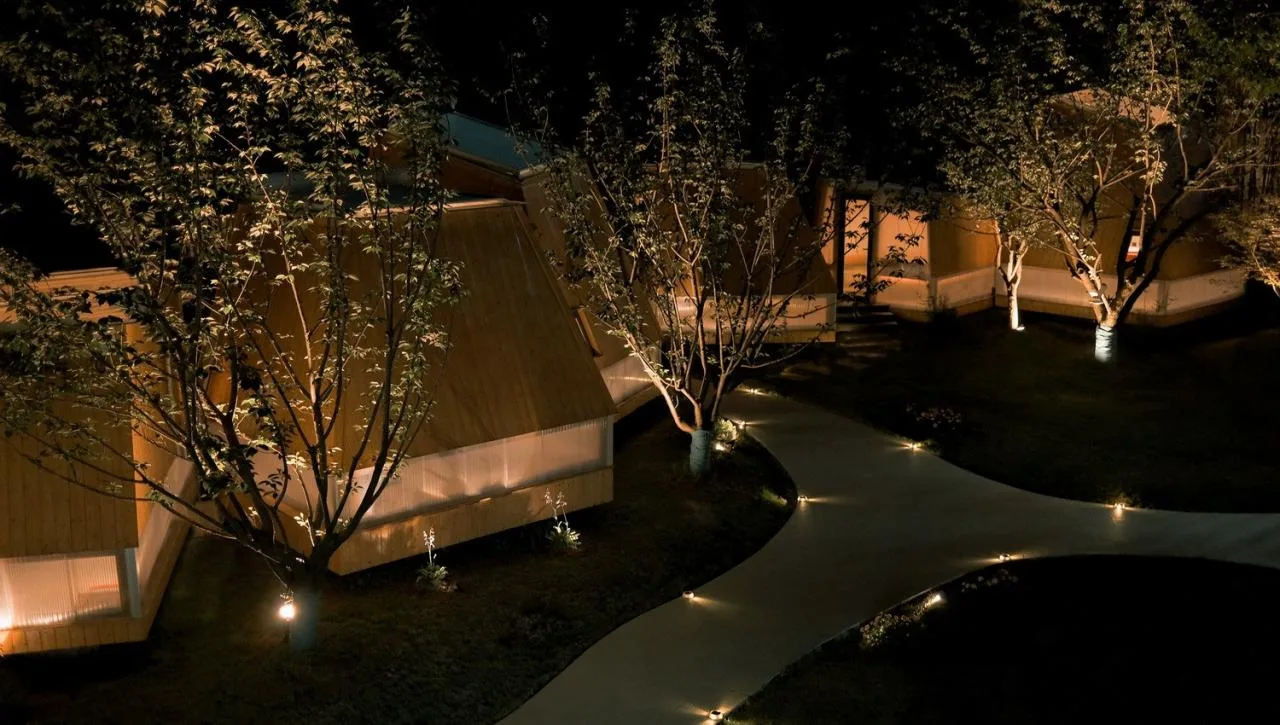
Overview of wooden houses at night © Lin Guijia Building
The wooden cabin is divided into six individual units of varying shapes and sizes. The overall height is staggered to create a lively atmosphere that blends flexibly with the environment. The six cabins are arranged in two groups of three, with a central gap serving as the main path for pedestrians and staff delivery.
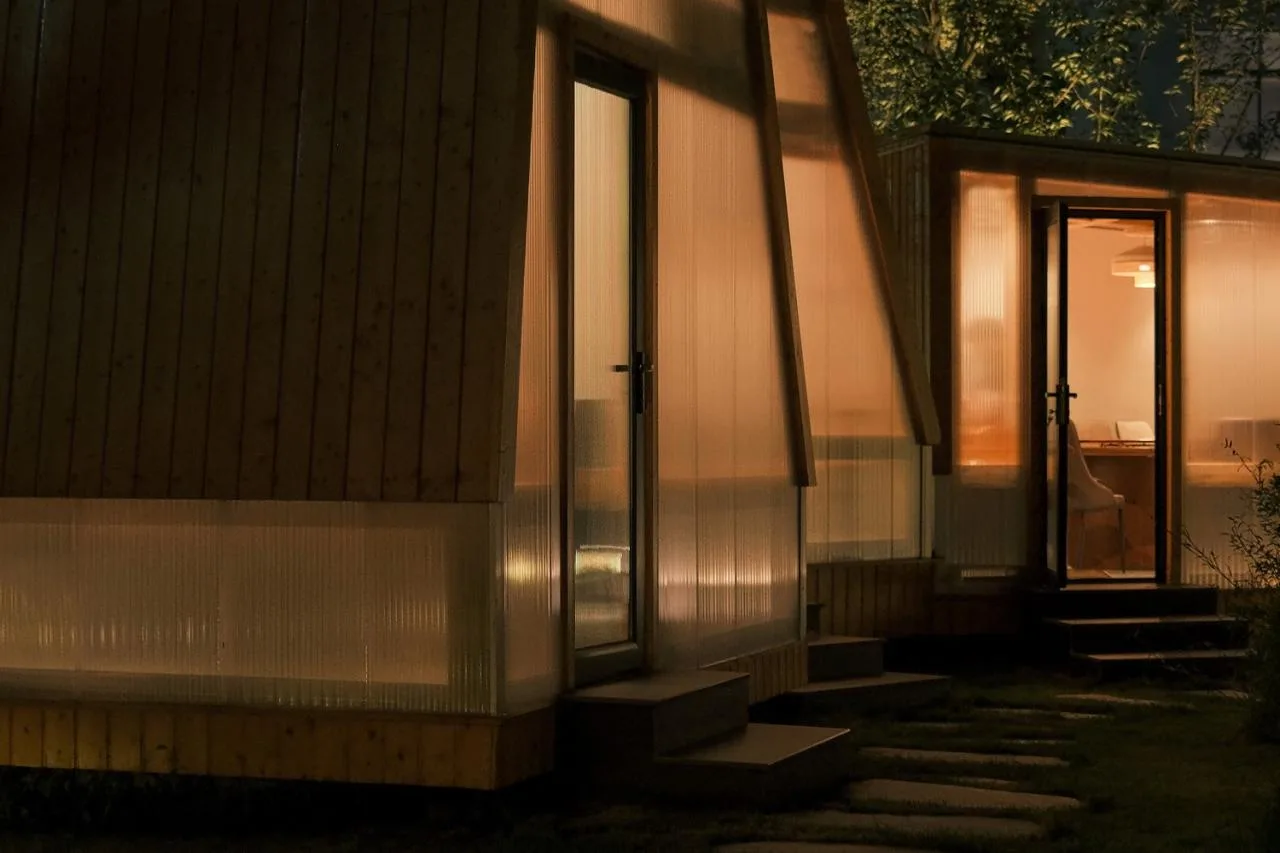
△ Night view of wooden houses © Lin Guijia Building
Each wooden cabin features polyhedral shapes with irregular angles, suspended above a rectangular base, creating an impression of floating in the forest. Except for the flat wall at the entrance, all surfaces have varying degrees of inclination.
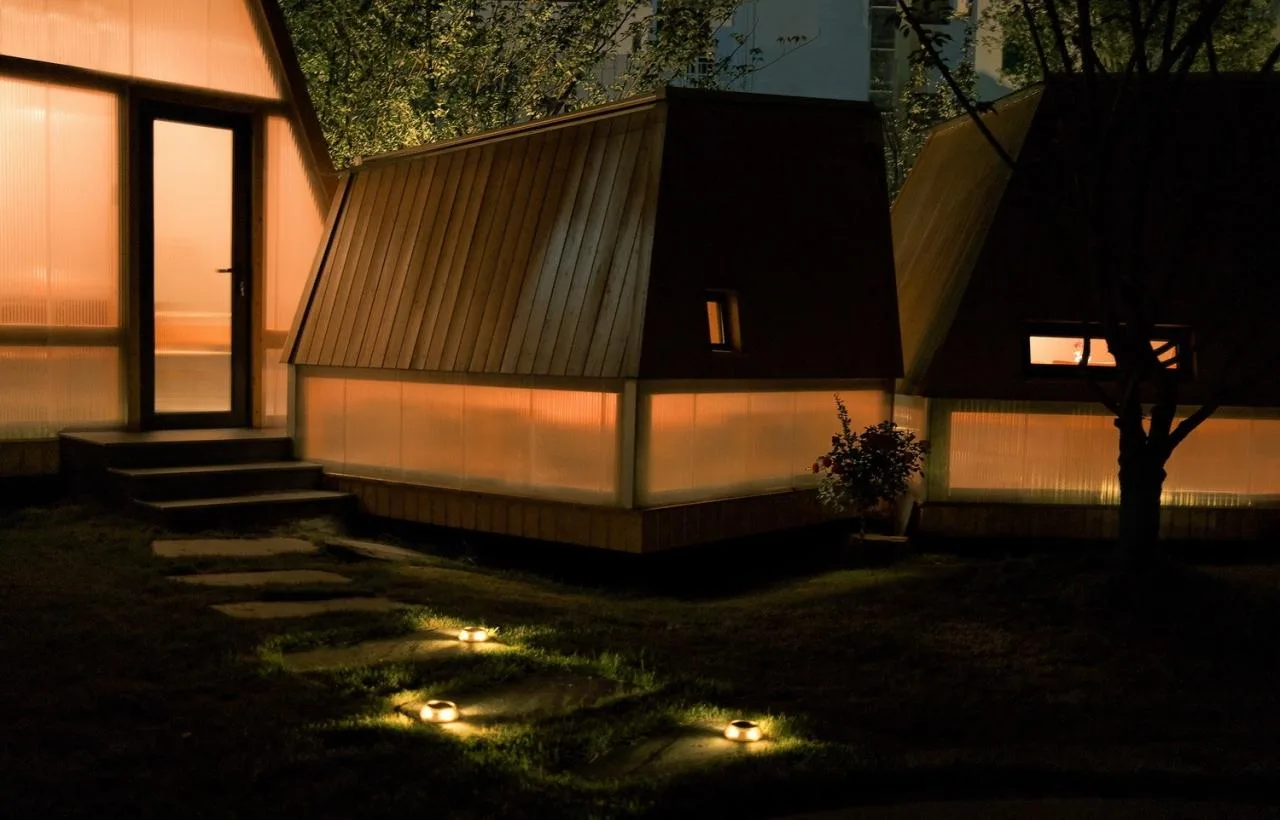
△ Night view of wooden houses © Lin Guijia Building
To create a lightweight and suspended visual experience that preserves unobstructed views of nature, each polyhedral block is cantilevered from the base. Additionally, a sun panel is placed beneath the structure, preventing the wooden walls from directly touching the ground. This results in a solid top with a visually open bottom.
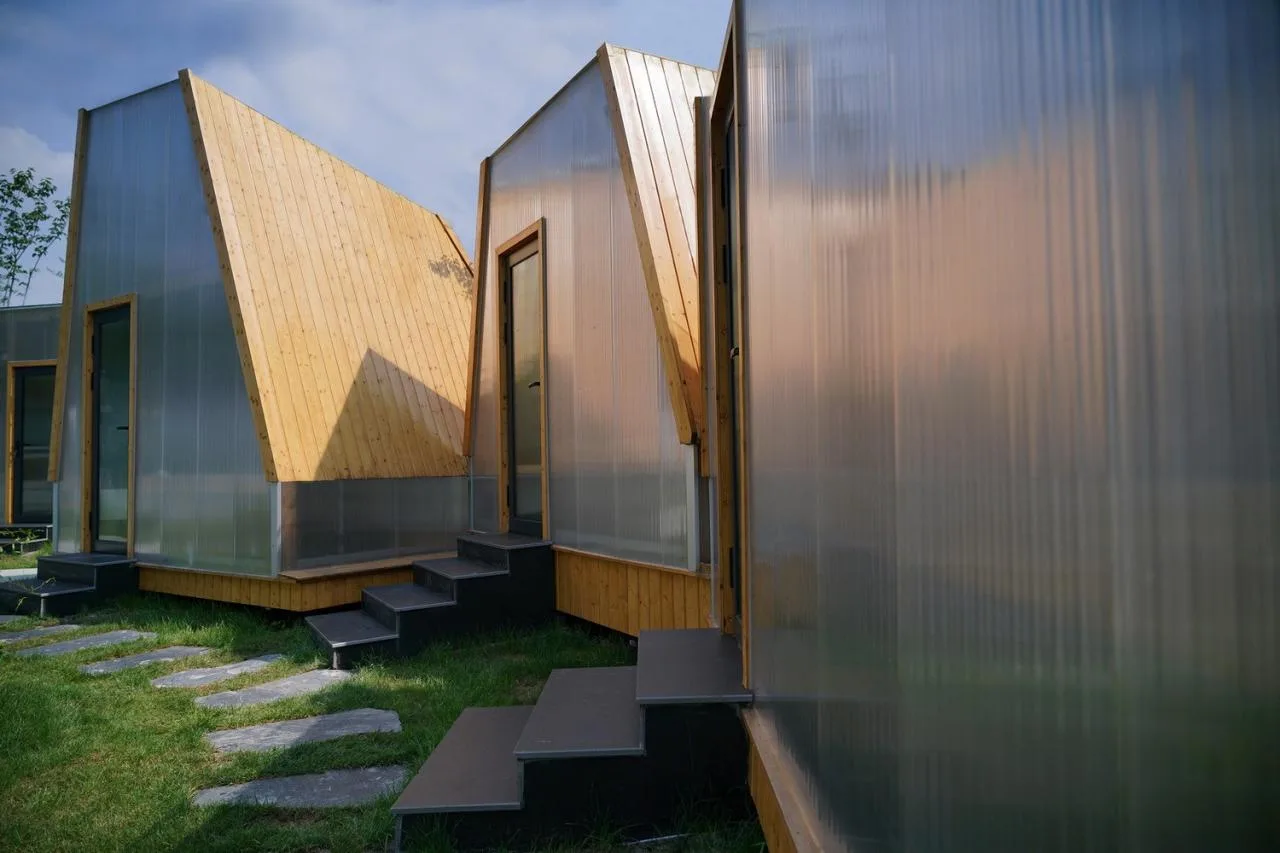
△ Wooden houses by day © Lin Guijia Building
At night, warm orange light shines through the sun panels and small windows, enhancing the uniqueness and charm of the wooden cabins.
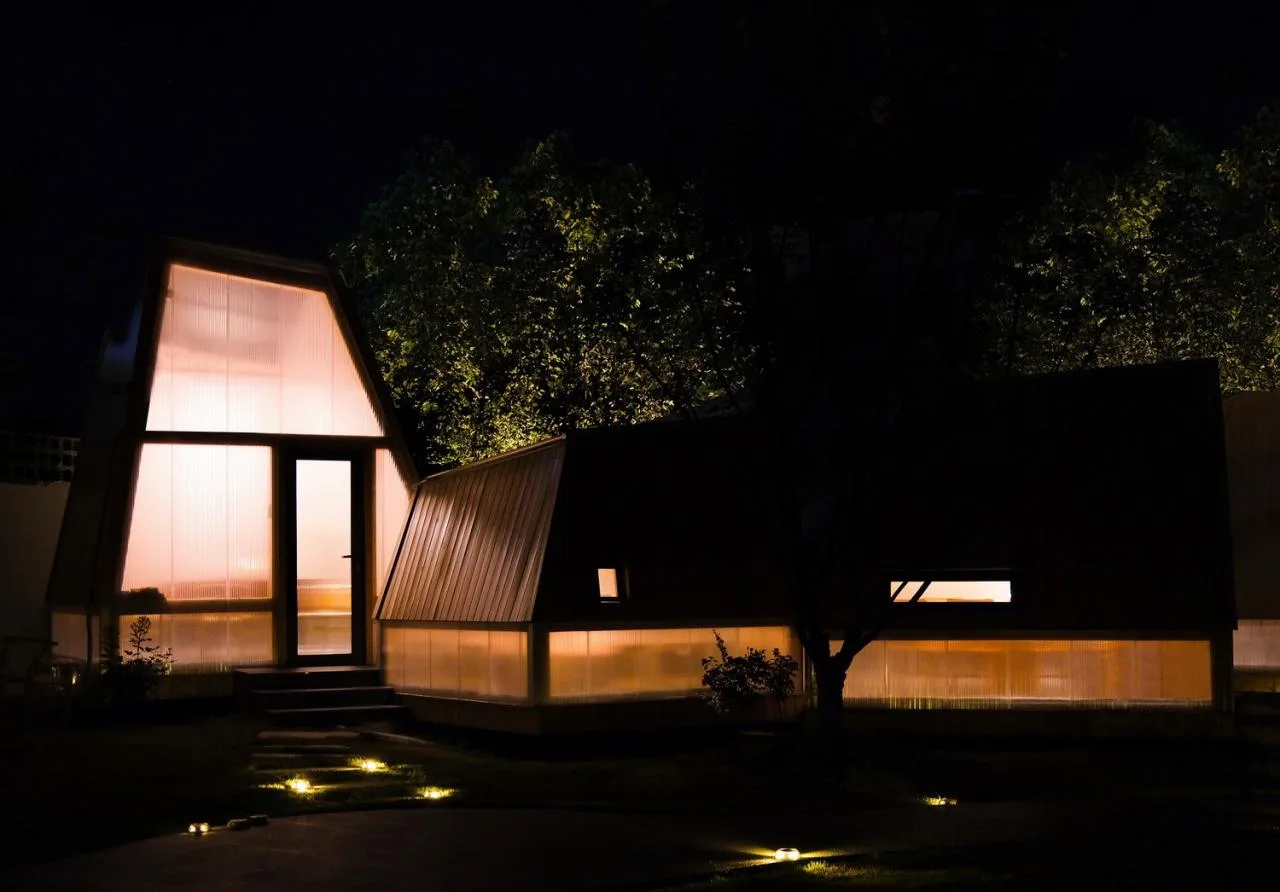
△ Night view of wooden houses © Lin Guijia Building
The wooden cabins are constructed on welded steel frames, insulated with cotton, clad internally with European pine boards, and finished externally with oak siding. The foundations are cast-in-place concrete, while the upper sections are prefabricated off-site and assembled on location.
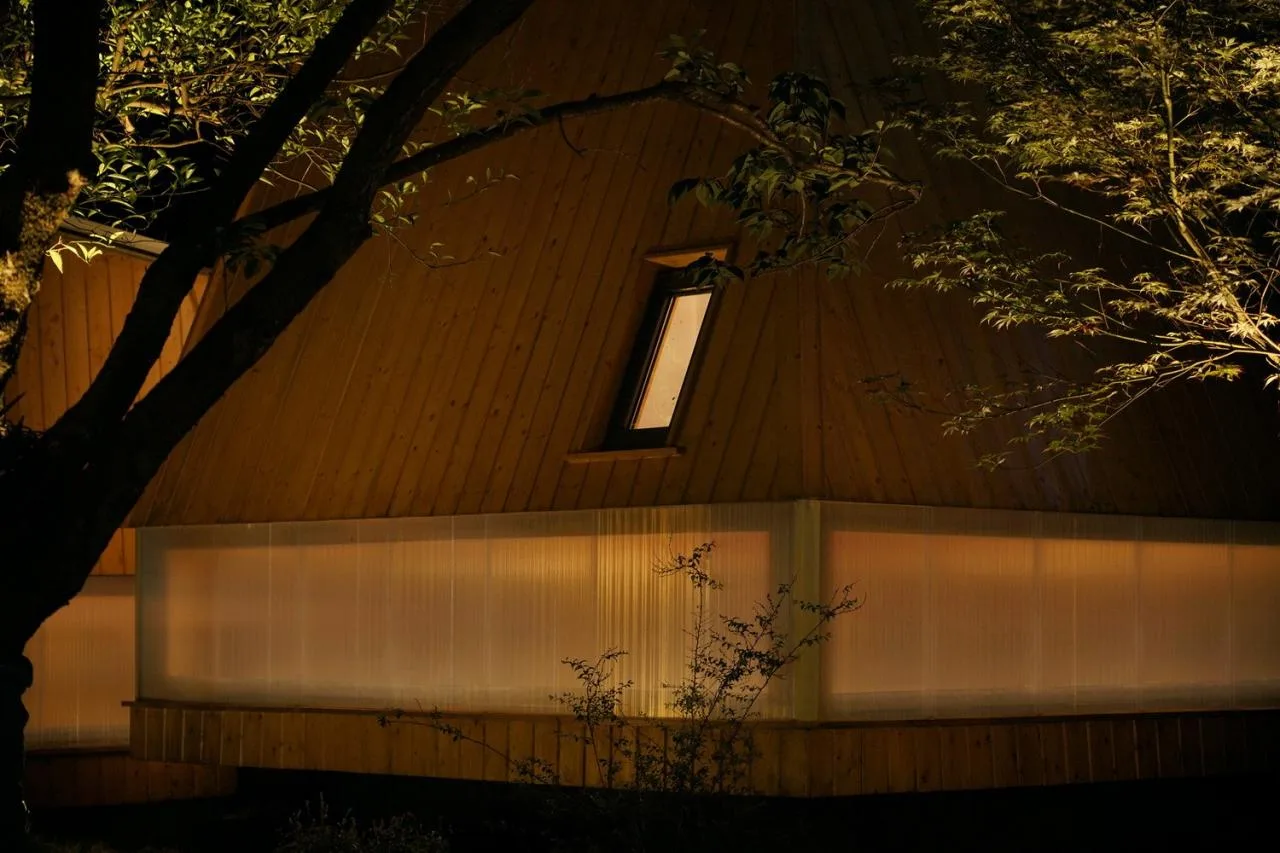
△ Night view of wooden houses © Lin Guijia Building
Window size, shape, and placement vary across the cabins to provide ventilation during the day. At night, these translucent windows become striking features that enhance the restaurant’s ambiance.
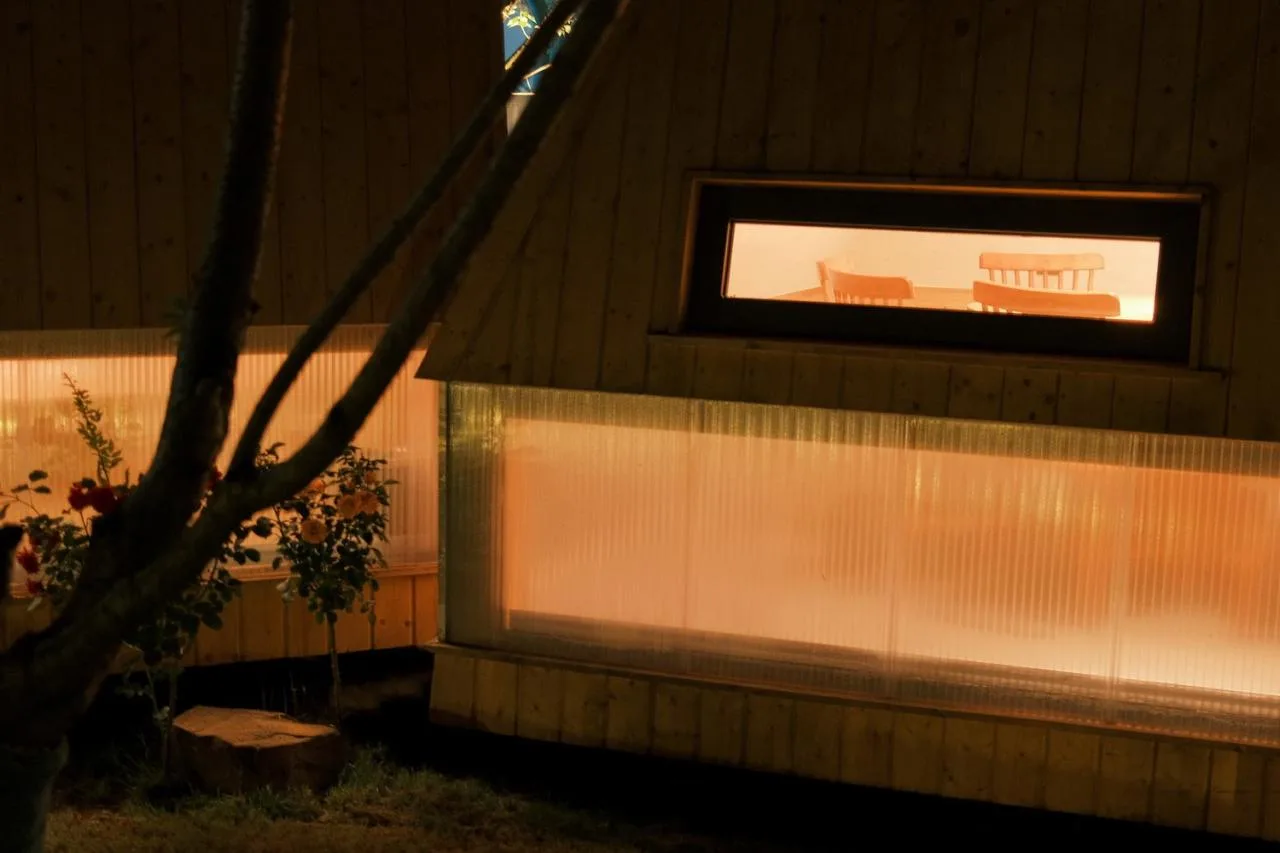
△ Night view of wooden houses © Lin Guijia Building
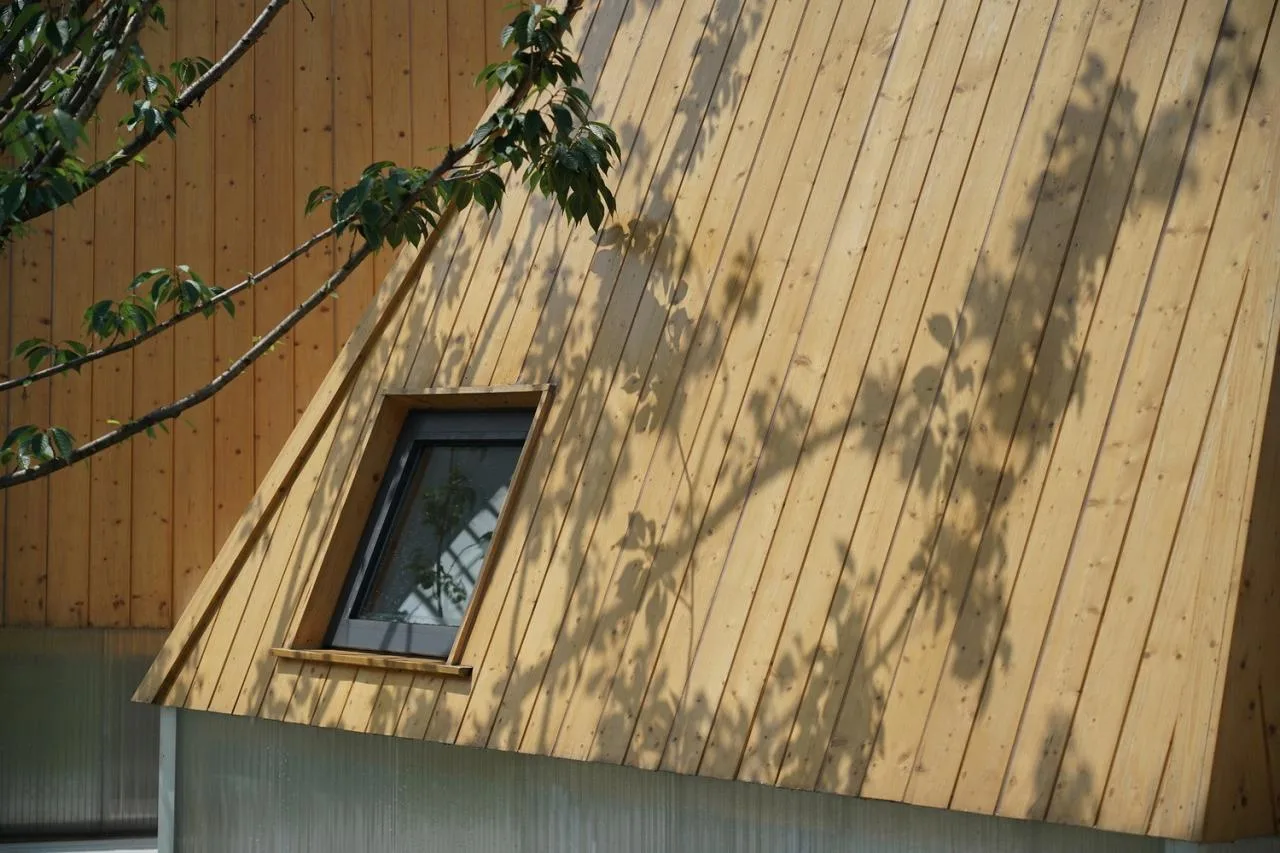
Details of wooden house exterior © Lin Guijia Building
To avoid visual layering caused by horizontal wooden board splicing, the outermost layer of boards is installed vertically, creating a smooth and flat facade.
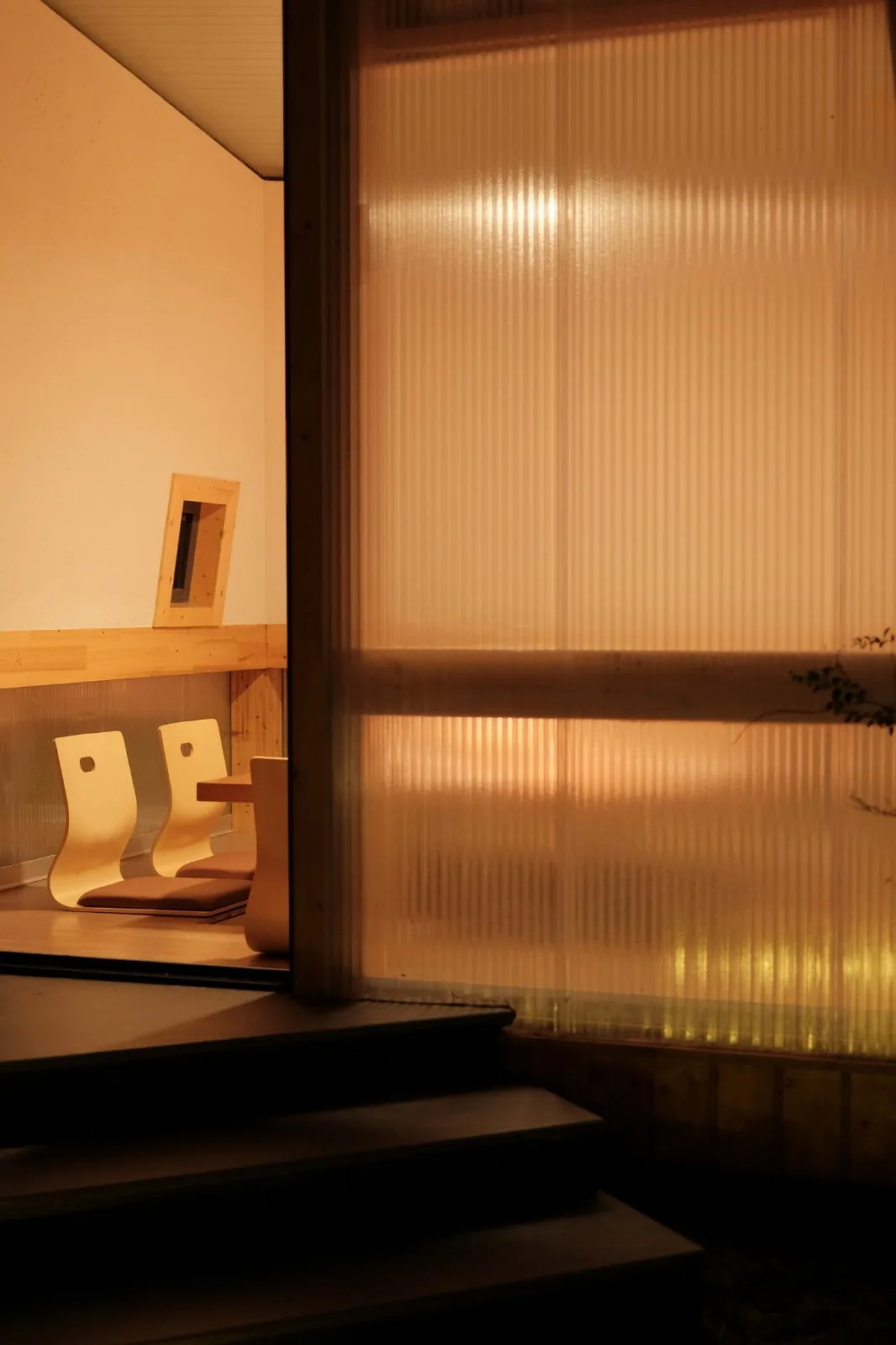
Interior view of wooden house © Lin Guijia Building
Inside, the varying heights and sizes of the wooden cabins accommodate multiple private room types. Shorter cabins have hollowed foundations allowing guests to sit on the floor, suitable for groups of 2 to 4. Taller cabins feature standard-height tables and chairs, ideal for family gatherings and dining.
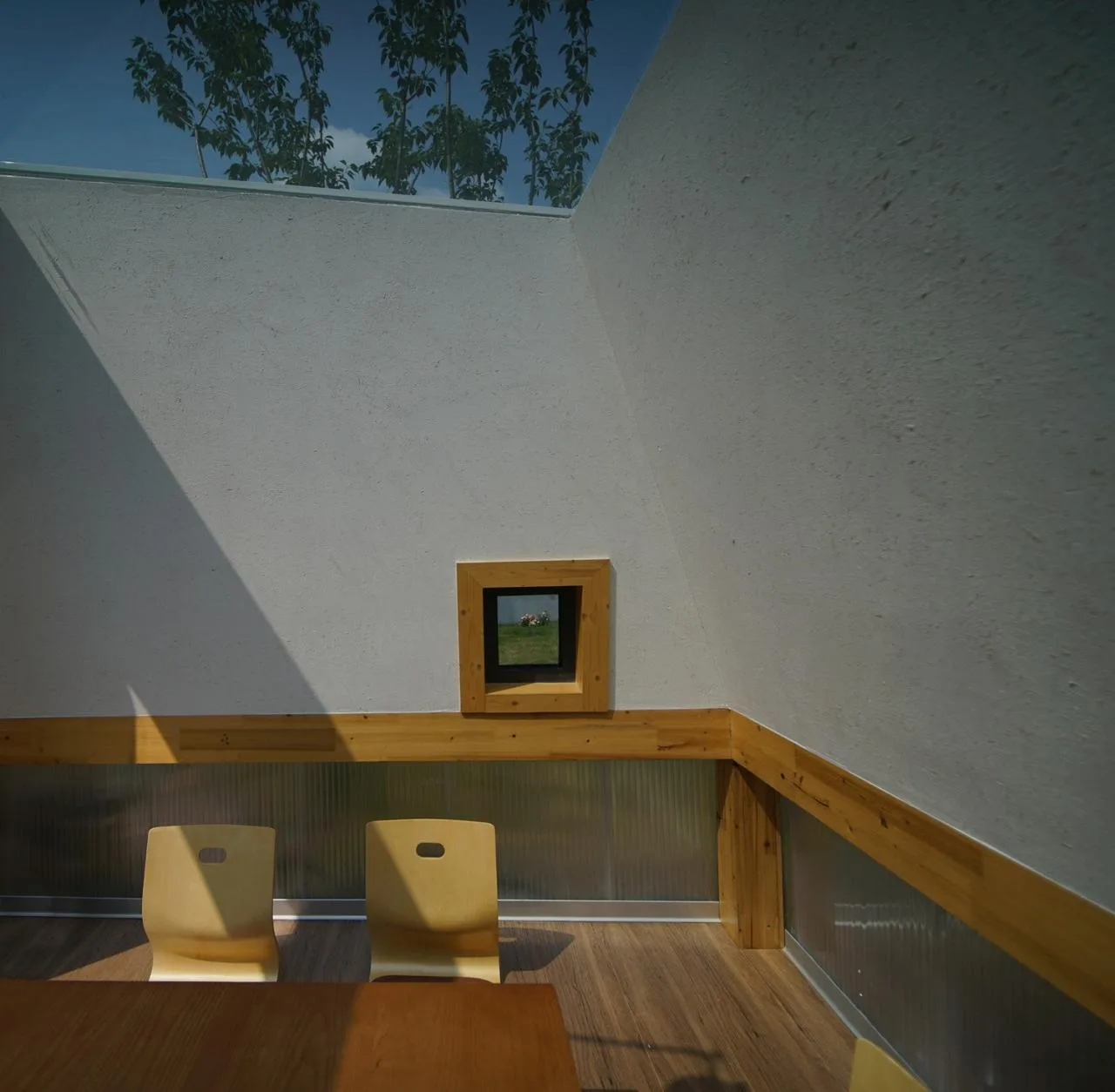
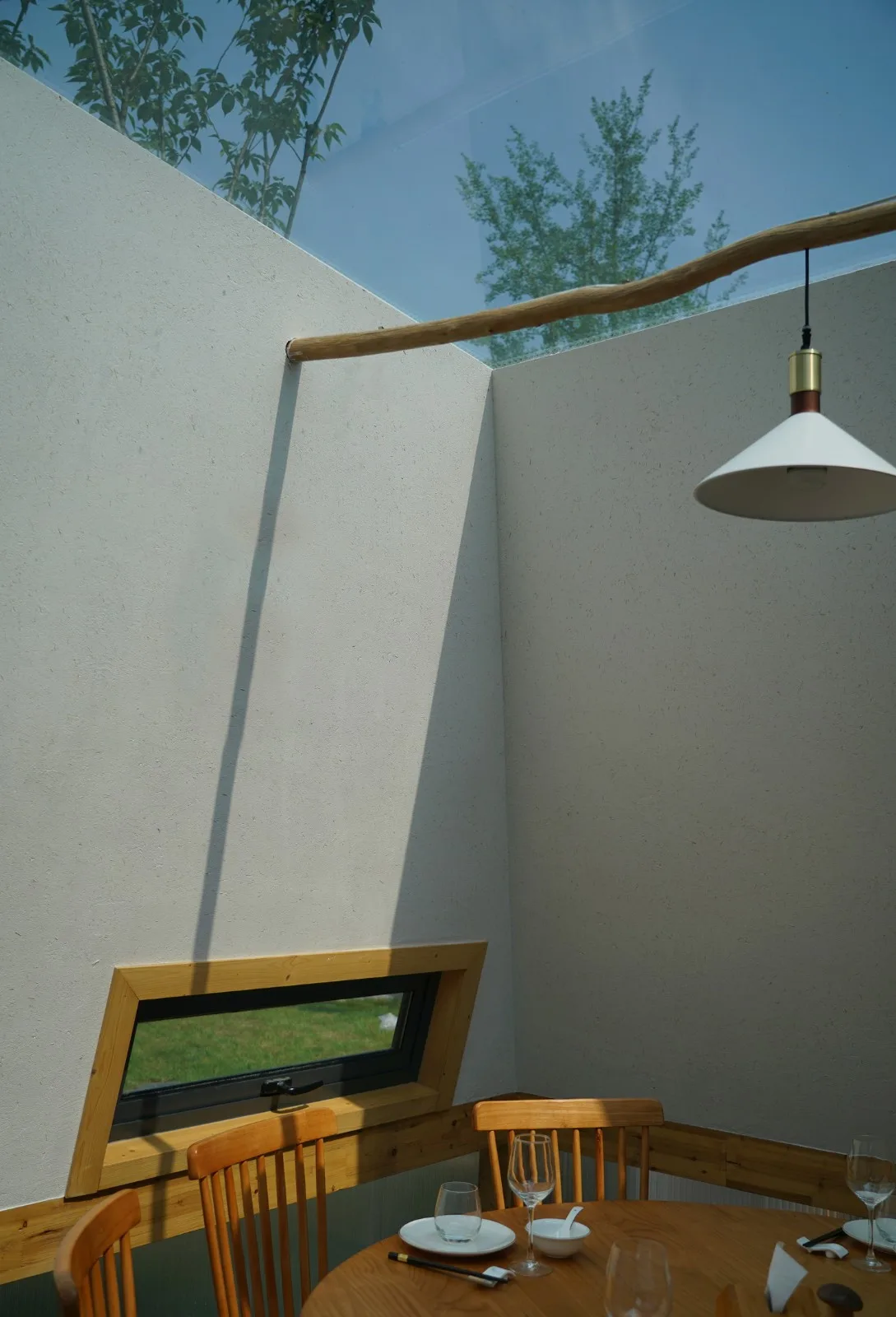
Interior of wooden house © Lin Guijia Building
Project Drawings
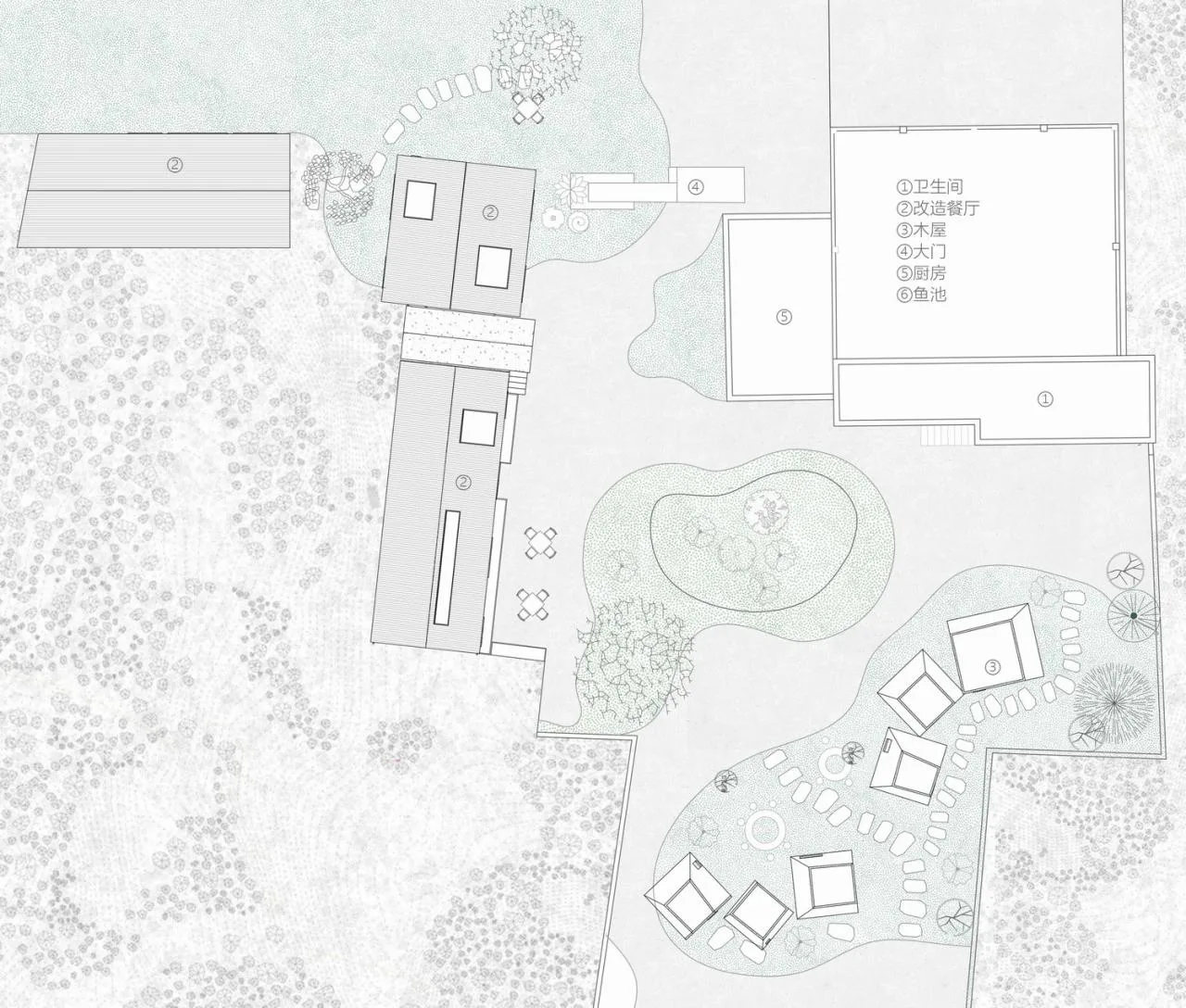
△ General layout plan © A bit of architectural design
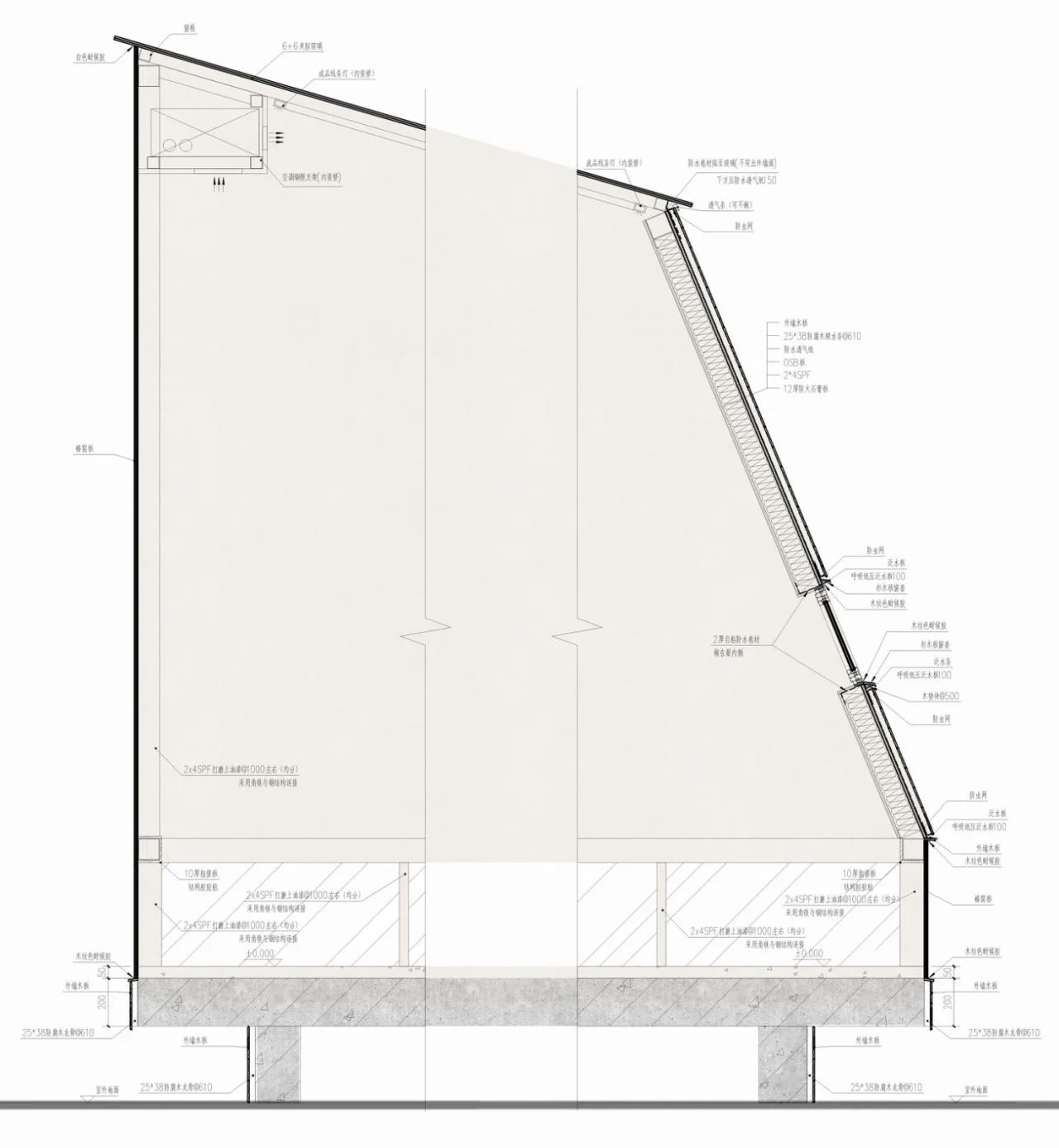
△ Wall detail drawing © A bit of architectural design
Project Information
Project Name: Villagers’ Courtyard Restaurant
Designer: Somewhat Architectural (Suzhou Somewhat Architectural Design Co., Ltd.)
Design Period & Completion Date: March 2022 to August 2022
Lead Designers: Lin Guijia, Wang Yitong
Partner: Suzhou Kunlun Green Building Wood Structure Technology Co., Ltd
Project Location: Shilong Village, Anji County, Huzhou City, Zhejiang Province
Building Area: 500 square meters
Photography © Somewhat Architecture (Suzhou Somewhat Architectural Design Co., Ltd.)
Client: Auntie’s Courtyard Restaurant













Must log in before commenting!
Sign Up