
When discussing Revit, one of the first concepts that comes to mind is parameterization.

Parameterization is a key advantage and defining feature of BIM technology, especially evident in the creation of 3D models. Parametric design involves using algorithms or functions within parametric software to link design components or graphics with related variable parameters. This process forms digital design elements that are data-driven. Essentially, parametric design establishes relationships between a model and its parameters, allowing changes to one parameter to automatically adjust the size and specifications of related parts. This results in models that share similar shapes but differ in dimensions.
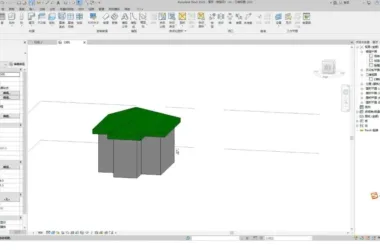
All Autodesk Revit products support parameterization. Revit elements can drive component modifications through parameters and store all feature parameter data. Any change made in any Revit view—whether deletion, movement, or resizing—is synchronized across all views. This eliminates the need to update each view individually, ensuring consistent models and significantly improving user efficiency. These view associations are set up by the software or developers at the start of a project.
In practice, Revit’s parametric design centers around parametric modeling. Parameterized components simplify data management and modifications, serving as the fundamental building blocks of structural models. When building a local model library based on previously gathered component data, there are three main approaches:
- Secondary development using API plugin interfaces to achieve localization;
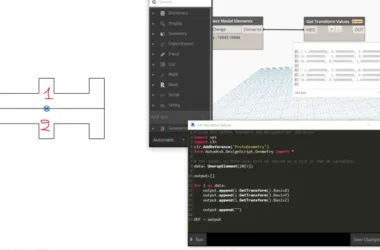
- Utilizing Dynamo, an open-source programming tool integrated with Revit, which allows users to create node-based formulas and manipulate model components visually;
- Directly customizing parameterized component databases using component template files included in BIM software to fit local requirements.
Each method has its strengths: the API approach enables more advanced and complex functions but requires significant time and effort; customizing template files is straightforward and user-friendly, allowing for quick expansion of component libraries; and Dynamo strikes a balance by letting designers control Revit elements through a visual programming interface without needing deep coding skills.













Must log in before commenting!
Sign Up