
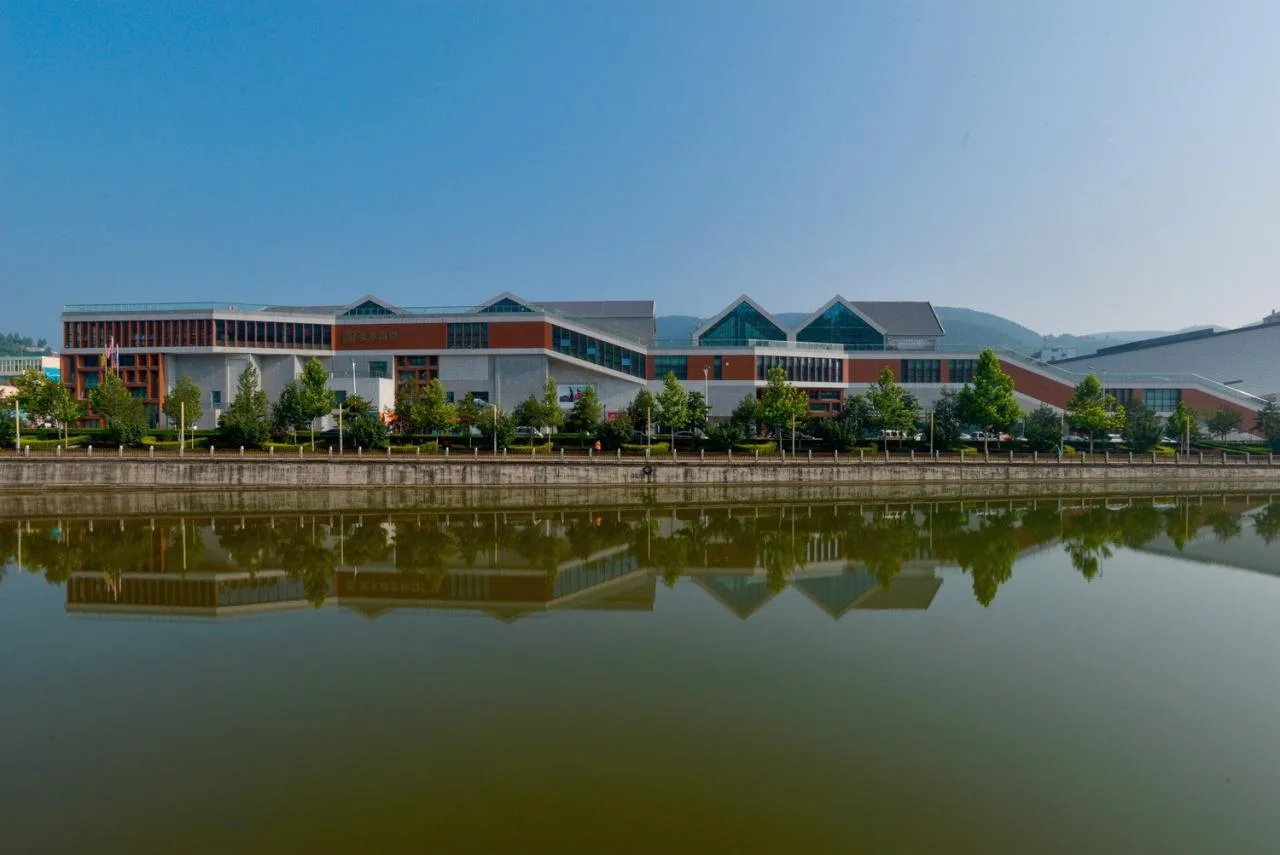
View Across the River
Project Location
Located at the intersection of Xinghexin Road and Nanjie, Qinshui County, Jincheng City, Shanxi Province, China.
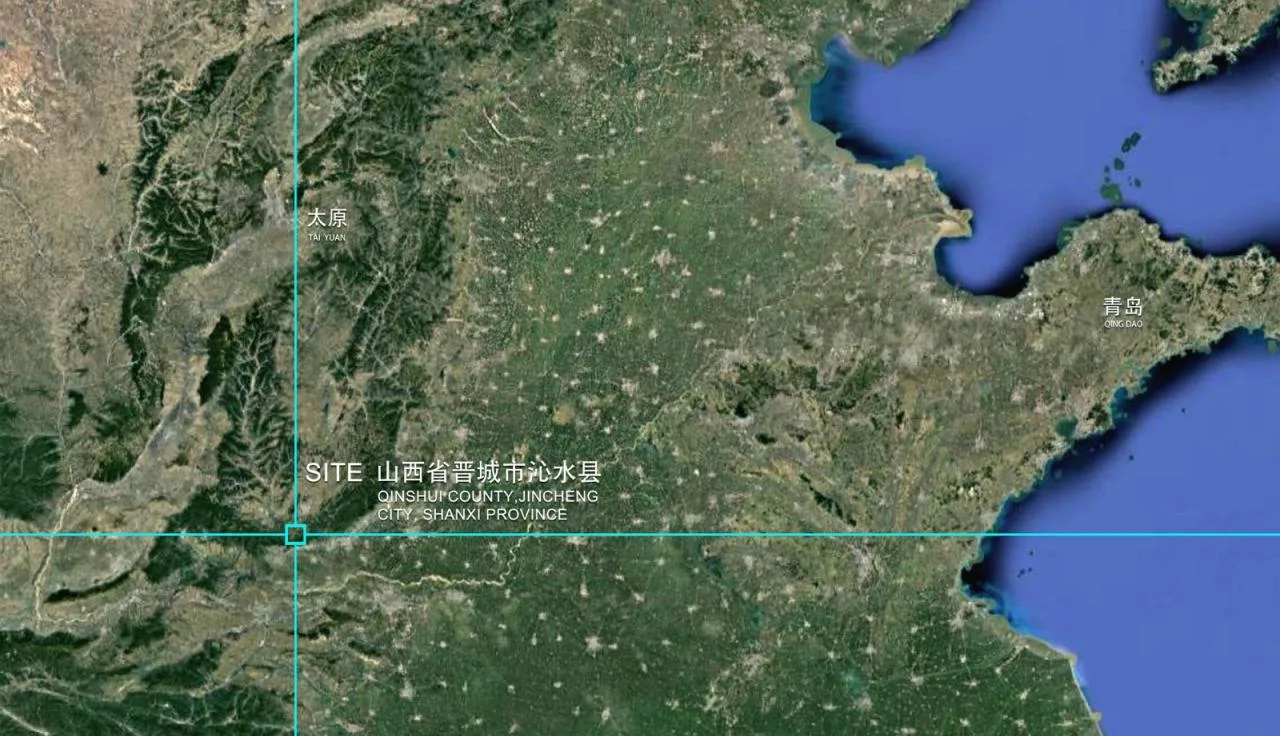
△ Site Location
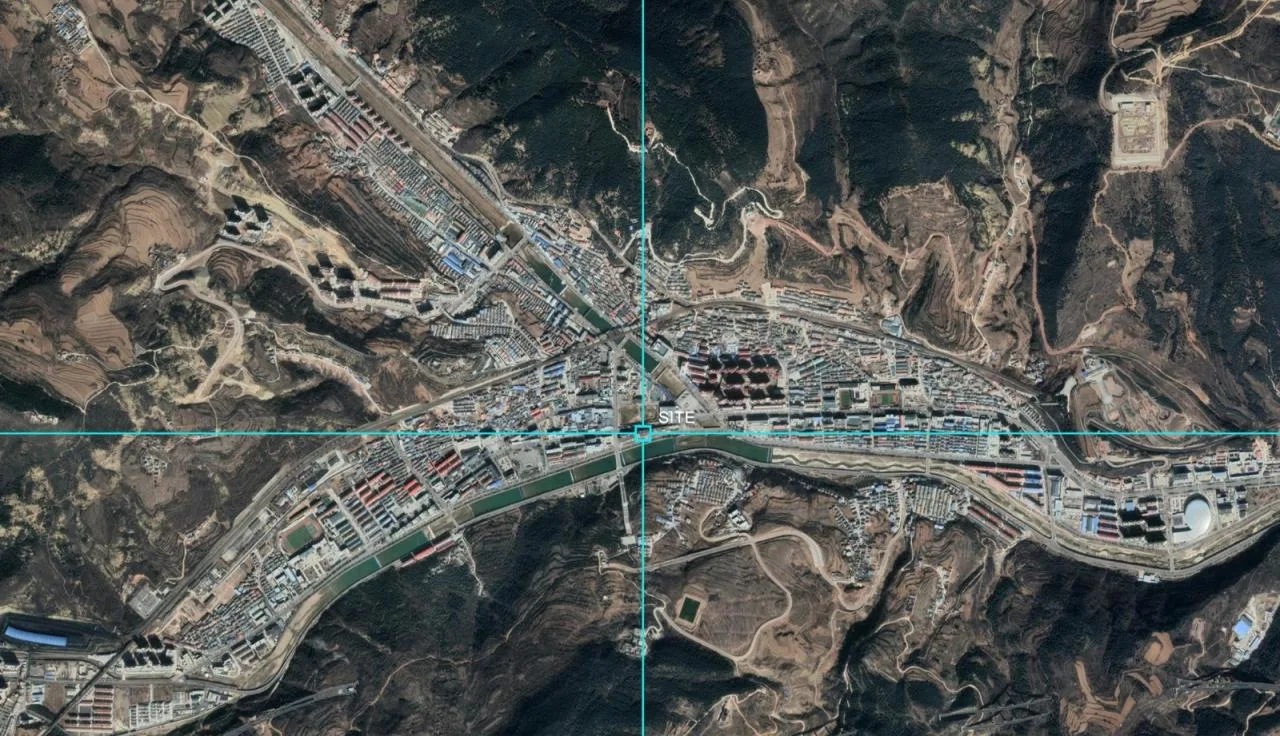
△ Site Location View 1
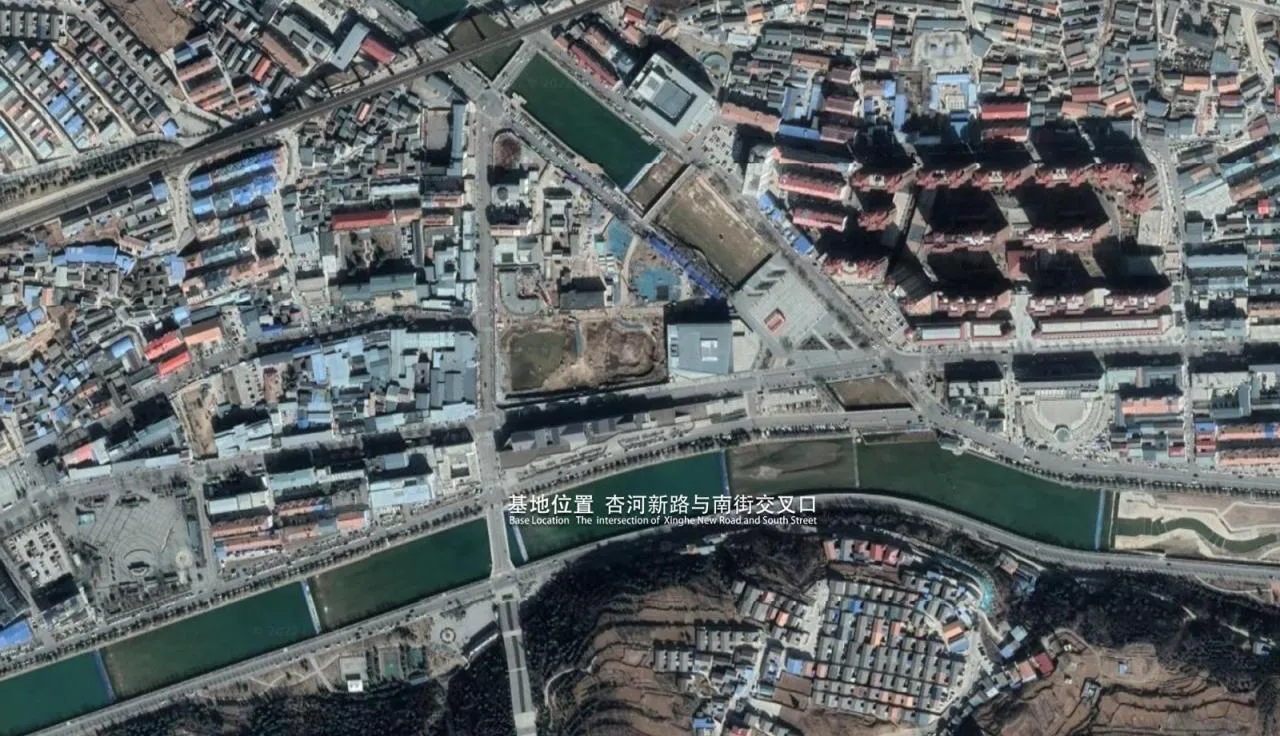
△ Site Location View 2
Project Background
Qinshui is a newly developed small town located in southern Shanxi Province. Its unique landscape has shaped an urban style described as “half city landscape, half city garden.” The town’s center is defined by two rivers converging into a delta. This project is situated at the edge of that delta and represents the first commercial development in the entire Qinshui area. The local government envisions this project as a landmark for Qinshui and a vibrant hub for community activities.
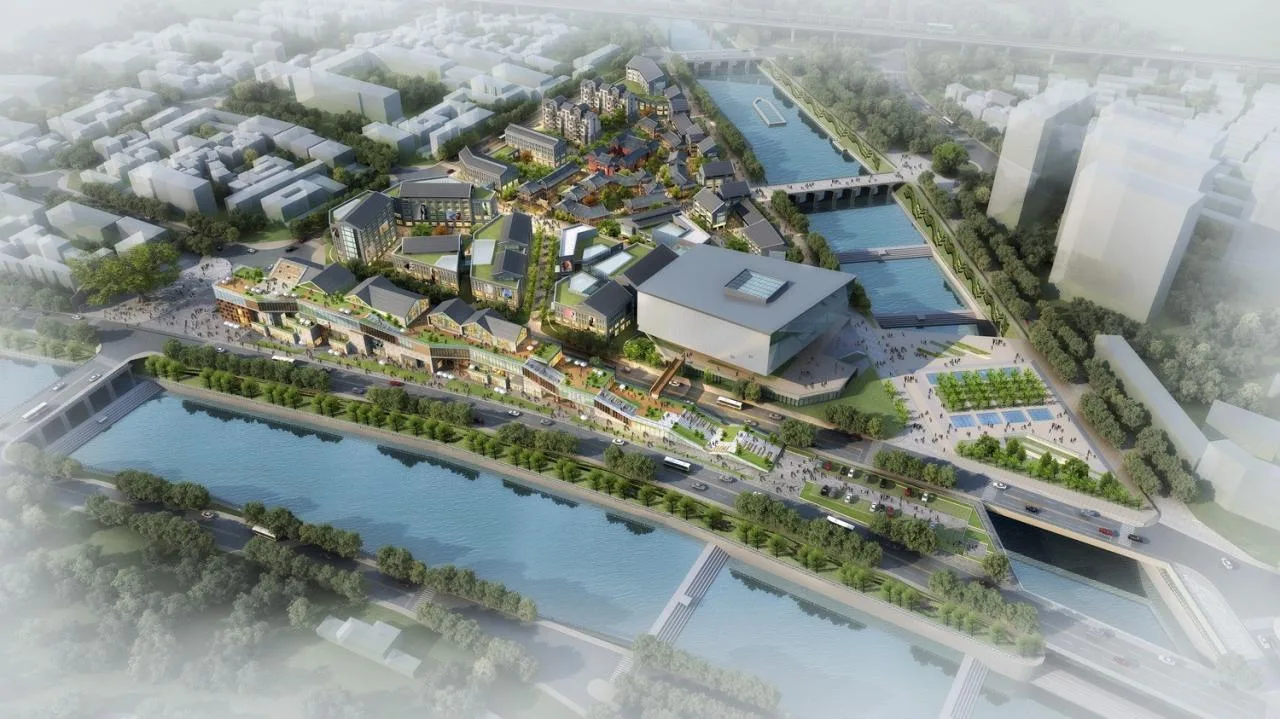
△ South-facing Bird’s Eye View
Site Analysis
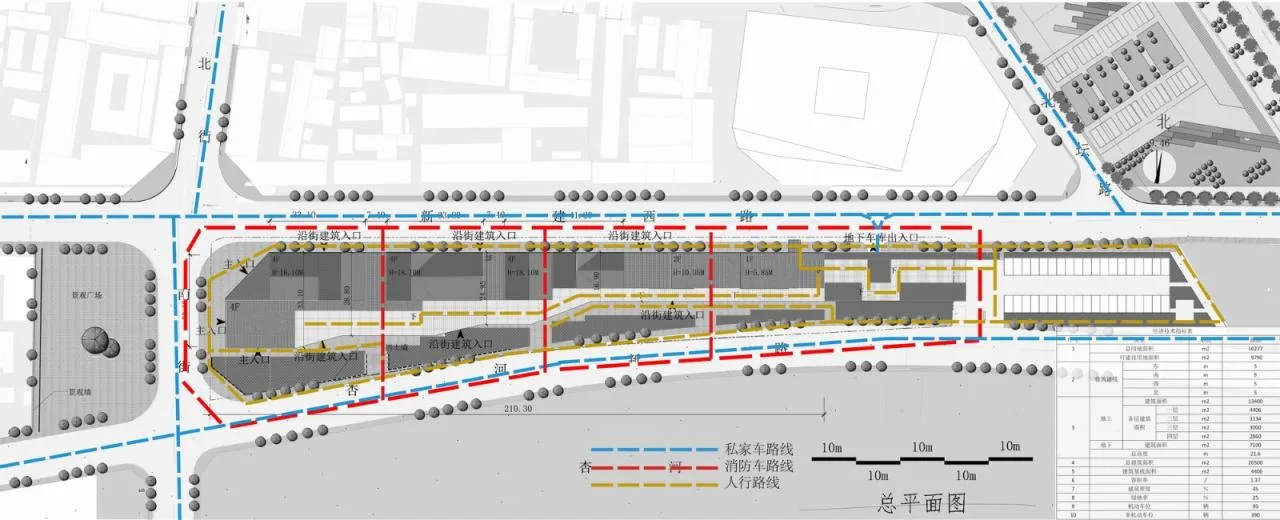
Streamline Analysis Within the Site
The site is a narrow east-west strip of land, approximately 250 meters long and 20 to 30 meters wide, surrounded by motor vehicle roads. Although designed as a shopping mall, the building functions more like a commercial street. Therefore, the design prioritizes reserving a fire truck route. The main entrance faces the Civic Square on the west side, with additional entrances on the north and south sides along the main road to attract pedestrian flow. Inside, a through-pedestrian route connects these entrances, enhancing circulation and creating a dynamic flow. The site’s natural height differences are used to design stepped pathways, adding a winding, stair-led experience for visitors.
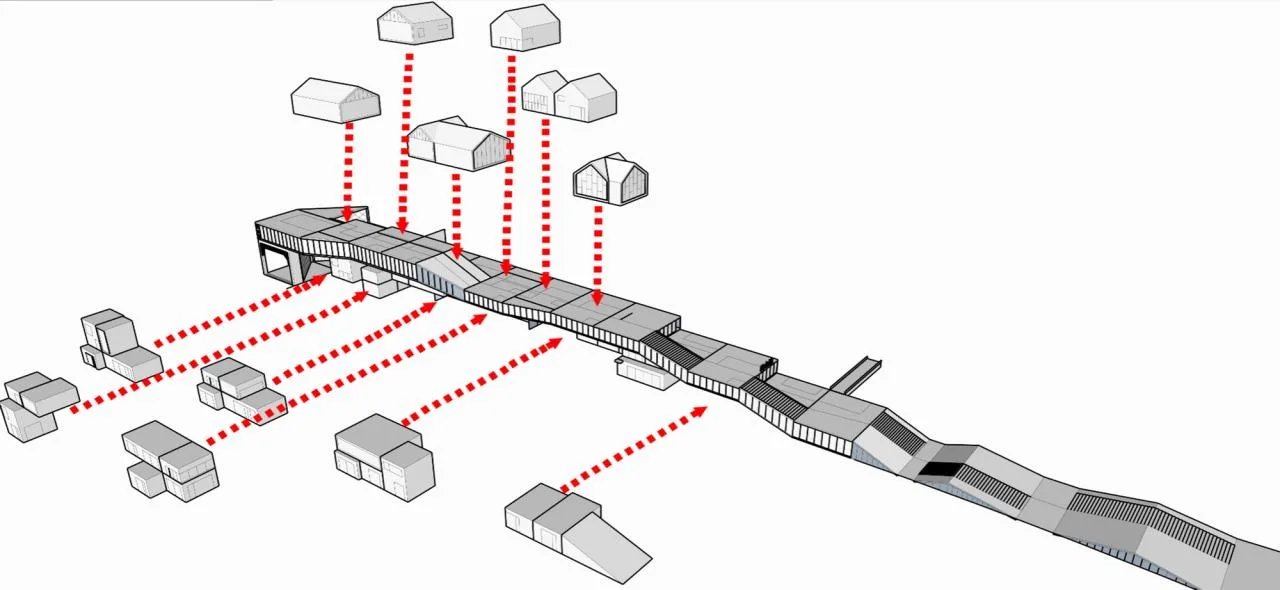
△ Building Blocks Decomposition
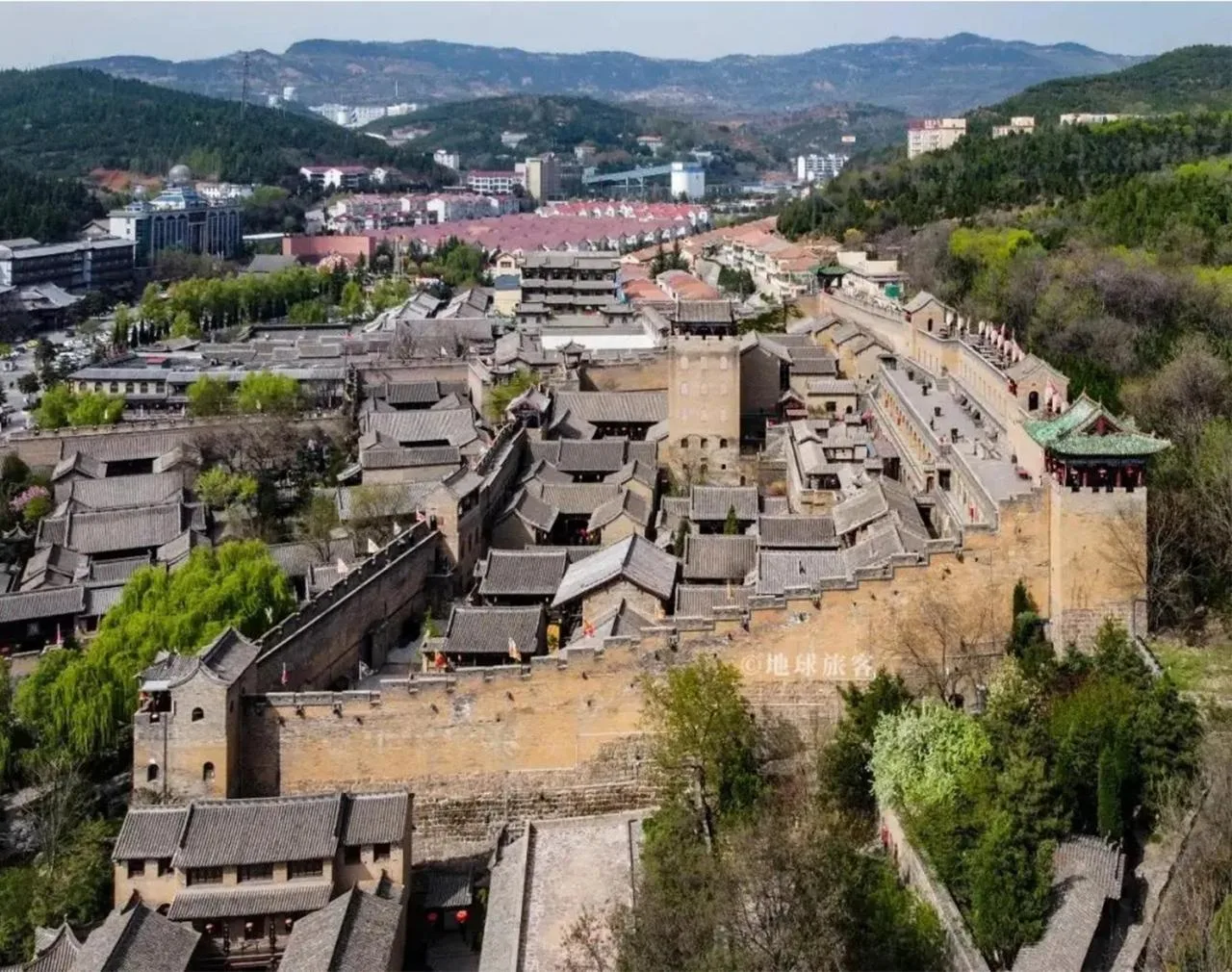
△ Jincheng Ancient Architecture – Imperial Prime Minister’s Office
Design Concept
The Qinhe Commercial Belt’s concept integrates elevated observation points, winding pathways leading to intimate spaces, grand architectural forms, and traditional multi-treasure pavilion-style residential buildings. The building steps upward from east to west, partly to accommodate the setback required by the exhibition hall’s city image on the north side, and partly to draw visitors from the water square on the east side to each floor via stairs, boosting commercial activity. This east-west pedestrian flow forms a “ridge,” creating an open and flowing commercial space indoors.
A transparent viewing corridor runs along the exterior facade, culminating in a glass café at the western end, offering panoramic mountain views. The lower “ridge” houses shops nestled among forest-like areas, clustered into commercial blocks. The upper spine features flagship stores with a relaxed layout inspired by Shanxi residential architecture. At the western end, the main entrance draws inspiration from the traditional Chinese furniture piece “Duobao Ge,” serving as a distinctive landmark and symbol for the city’s commercial identity.
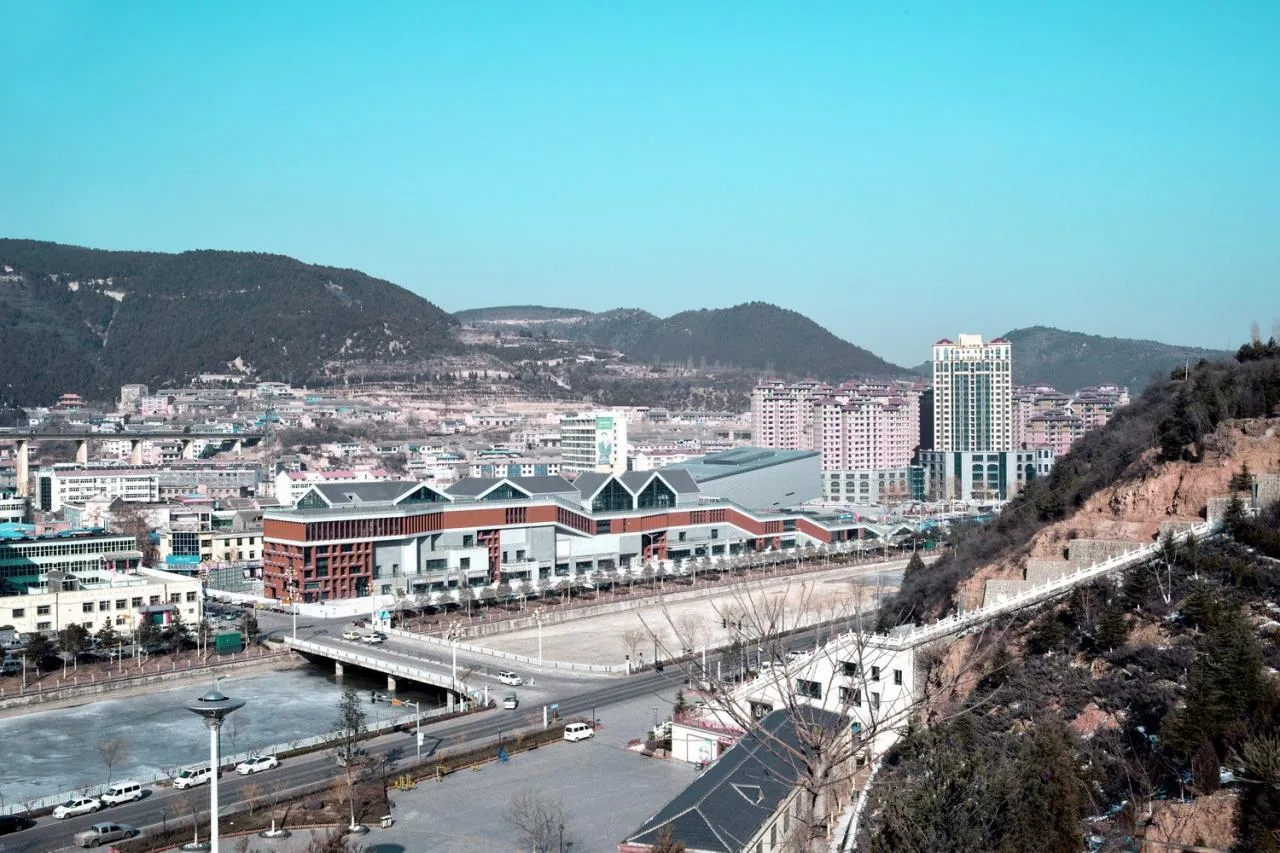
Buildings Nestled Among Mountains
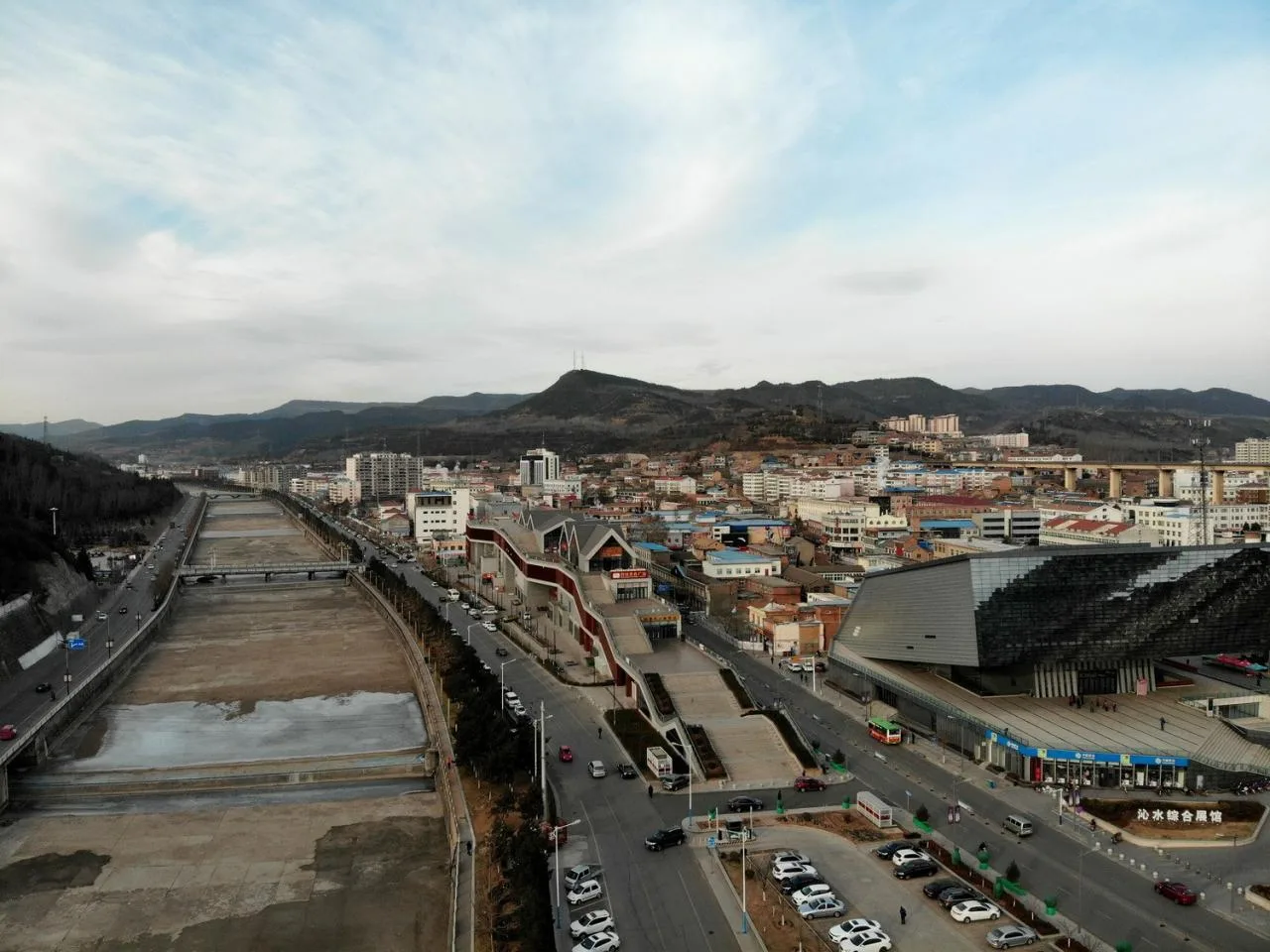
△ East-facing Bird’s Eye View
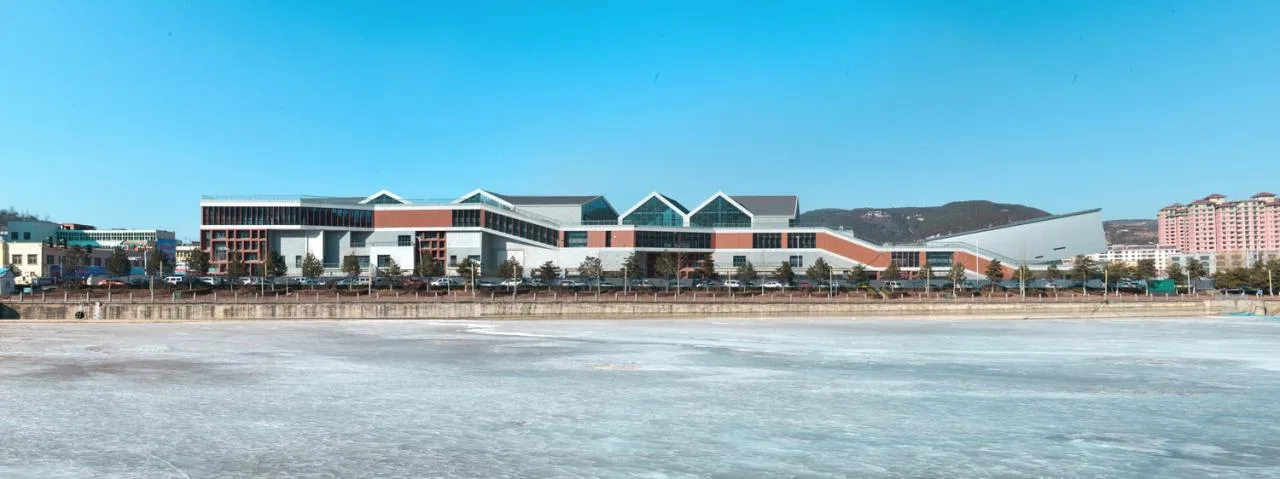
View Across the River
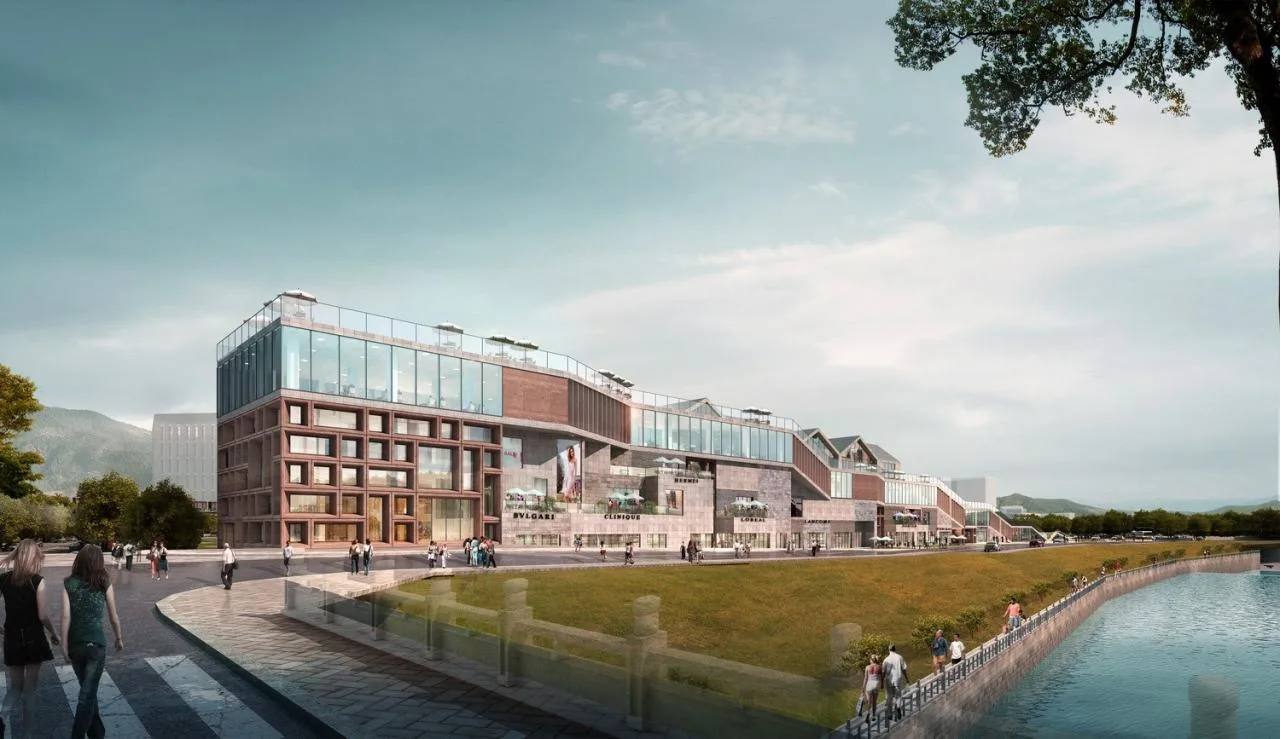
View Toward the Building at the Intersection
From the building’s west side, visitors can overlook the ancient city of Qinshui, taking in the scenic mountains, rivers, and the lively atmosphere of the historic city. The continuous sloping roofs and distant mountain landscape create a harmonious silhouette. Visitors ascending the stairs are treated to varied views of daily life below, fostering a connection between those at the mountain base and those above, encouraging more people to climb and enjoy the scenery.
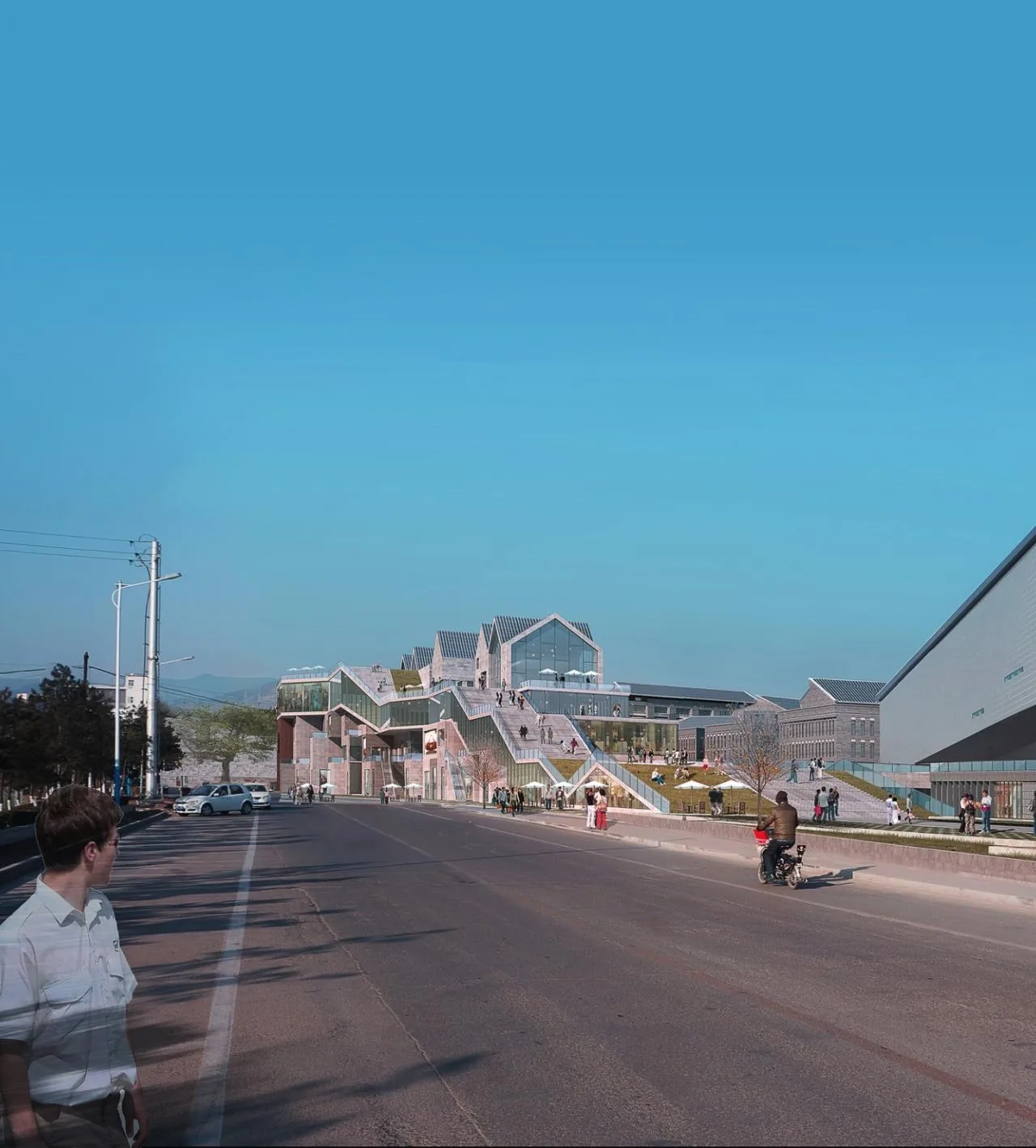
Eastward View Highlighting the Building’s Winding Form
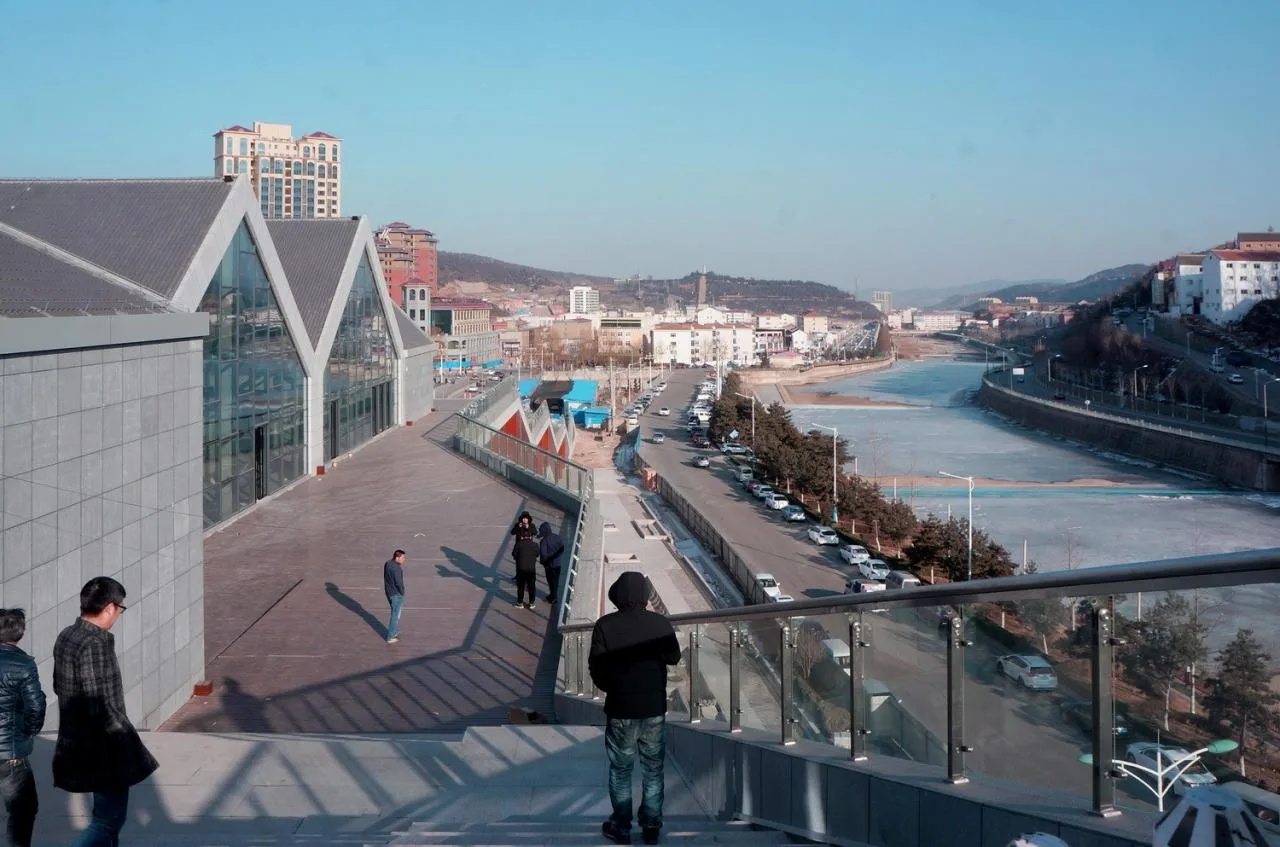
View From the Steps
The stepped design gradually ascends from east to west, offering a unique experience at each level. These landscaped stairs not only draw visitors to the commercial buildings but also enhance the urban environment’s aesthetic appeal.
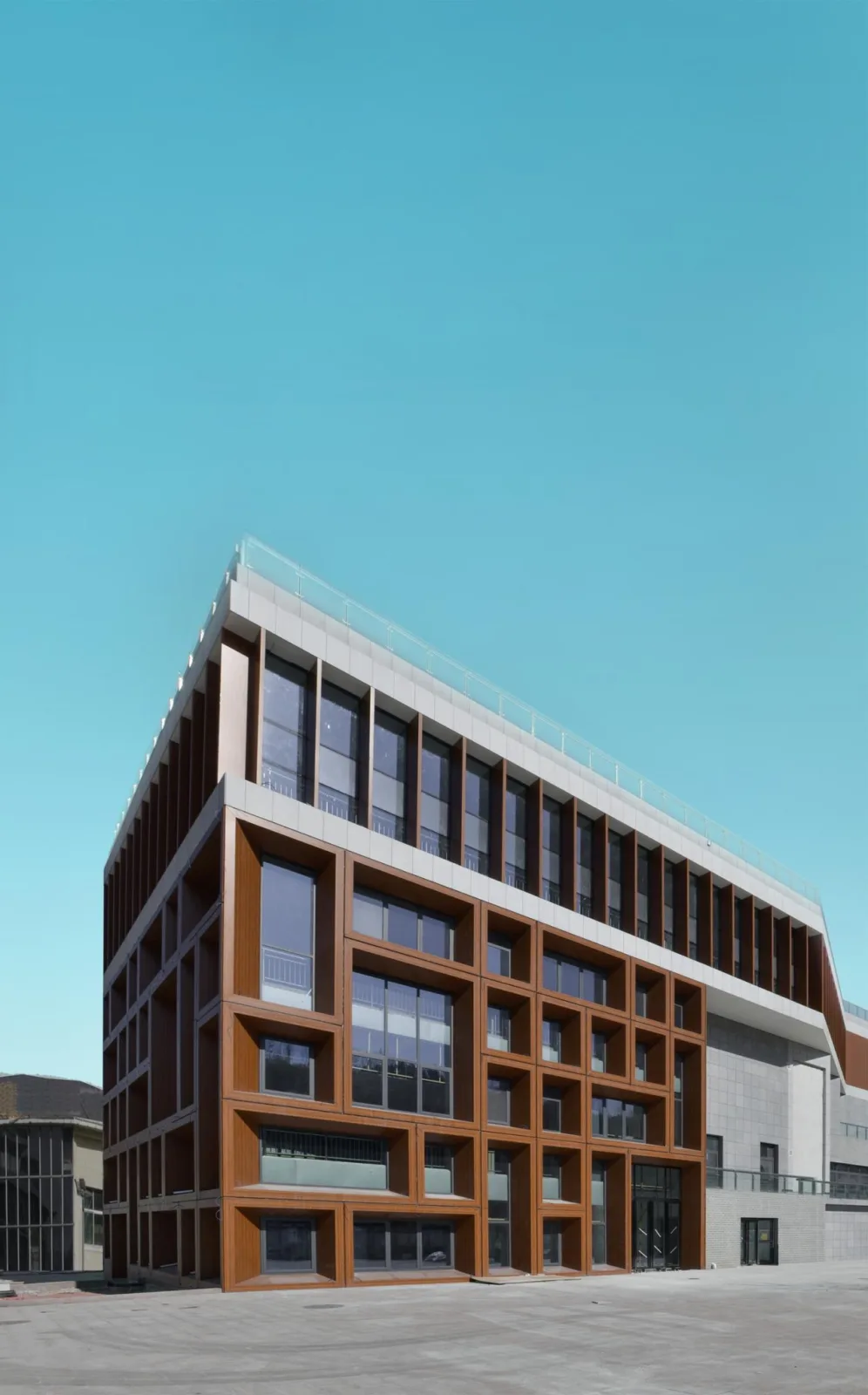
△ Main Entrance on the West Side
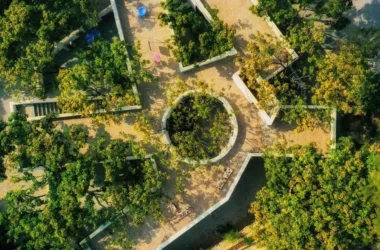
The main entrance on the west side features a distinctive facade that invites passersby inside. It faces the Civic Square, where an ancient tree has been transplanted amidst green bricks and grass, creating a serene spot for tea, conversation, and relaxation amid the urban bustle.
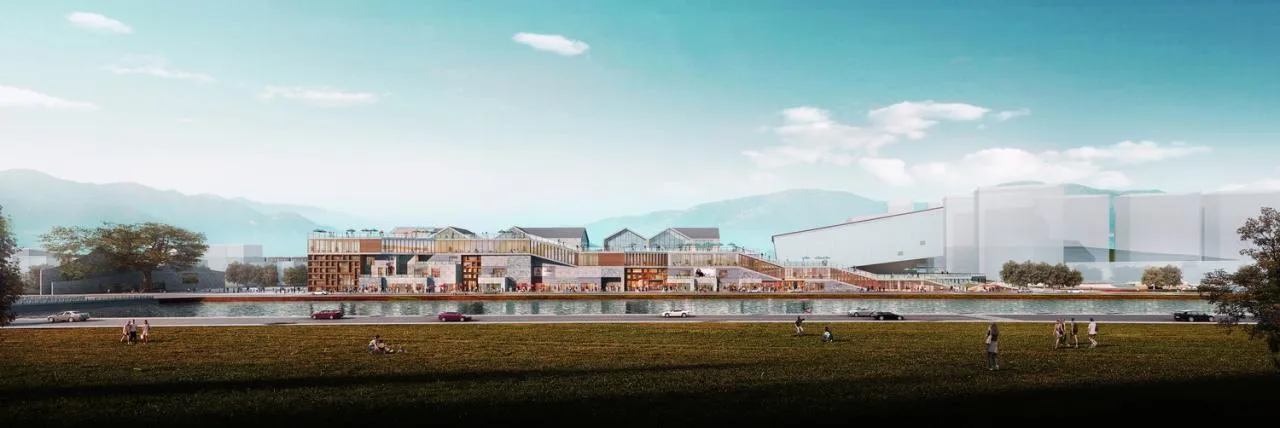
△ South Facade of the Building
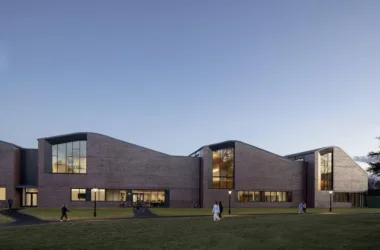
The south facade faces the Xinghe River, featuring a continuous corridor that guides visitors’ gazes fluidly along the structure. This facade is rich in architectural elements, including winding corridors and open spaces created by a blend of solid and void through block segmentation. It combines multi-treasure pavilion style end spaces with relatively introverted concrete walls, seamlessly blending with the surrounding mountain and water views.
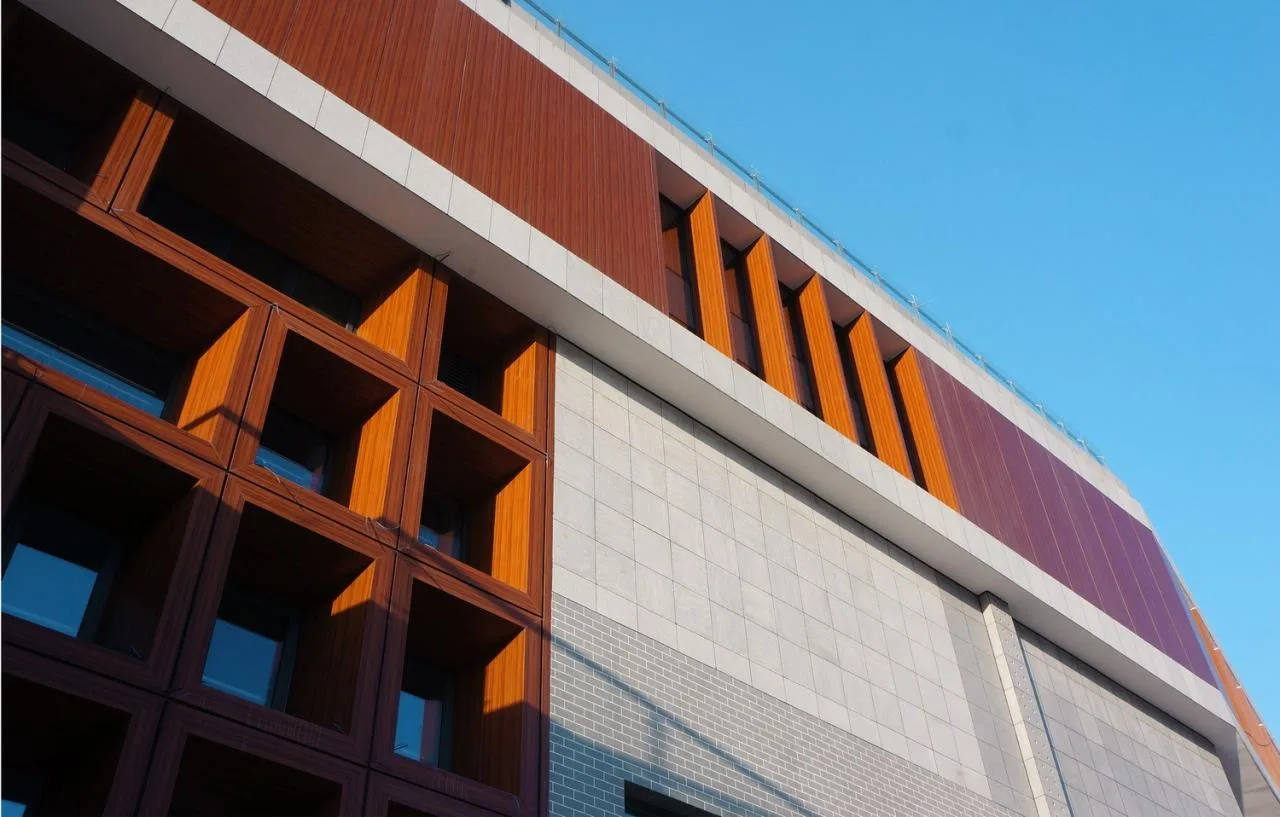
△ Facade Design 1
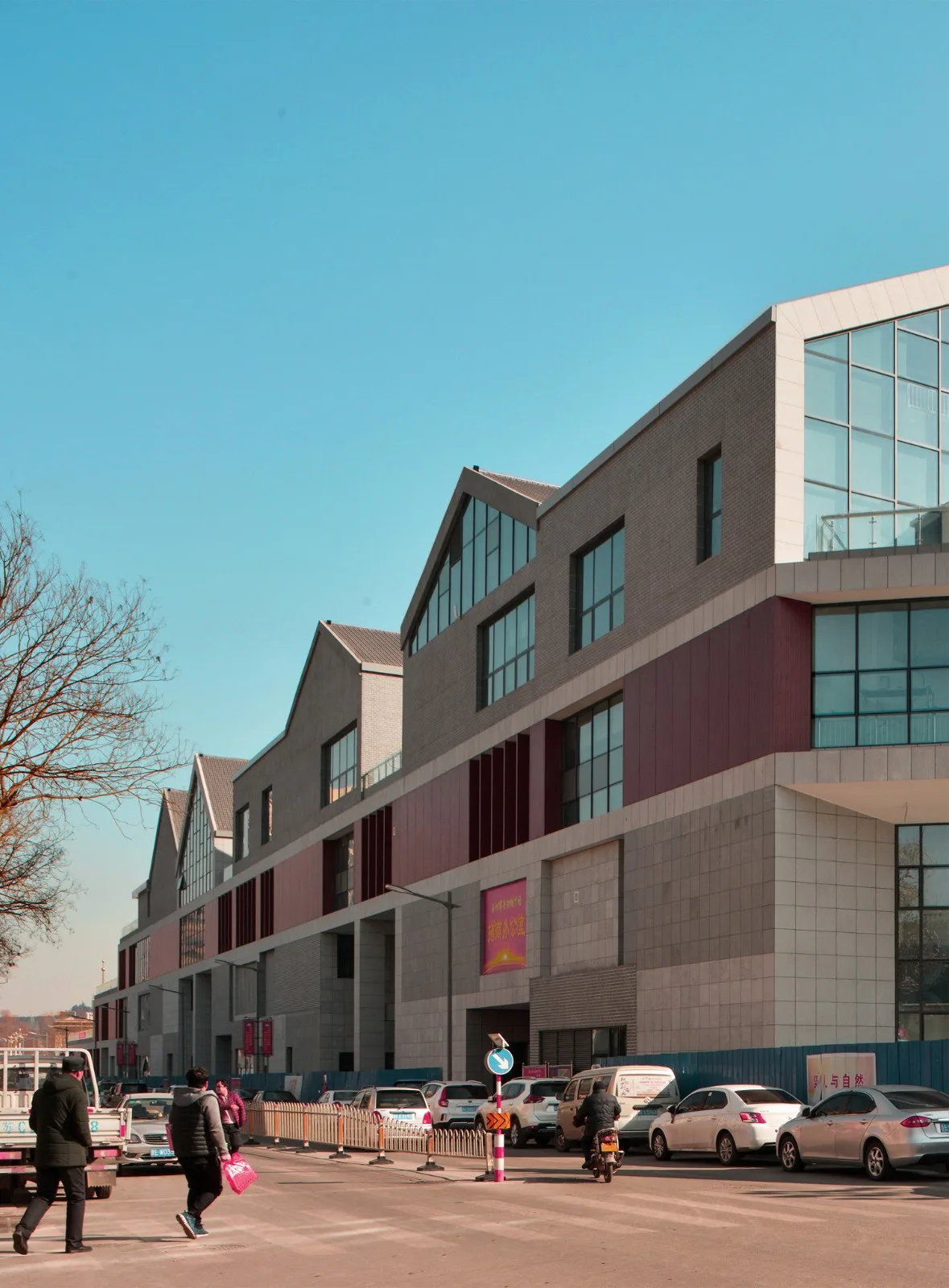
△ Facade Design 2
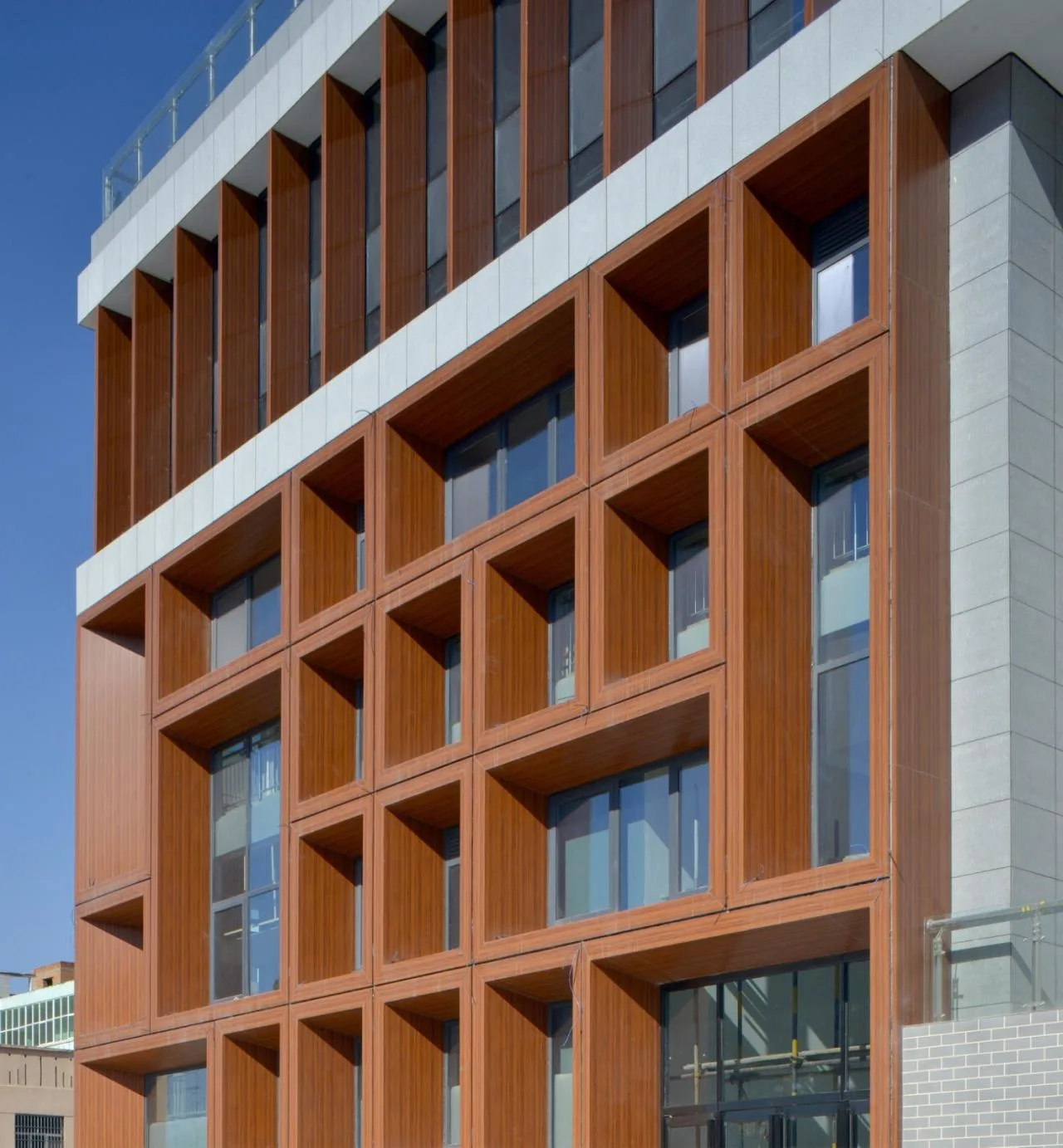
△ Facade Design 3
The facade is arranged with staggered concave and convex elements inspired by traditional Chinese “Duobao Ge” and “Queti” concepts. This approach creates a vibrant, textured facade full of visual interest and charm.
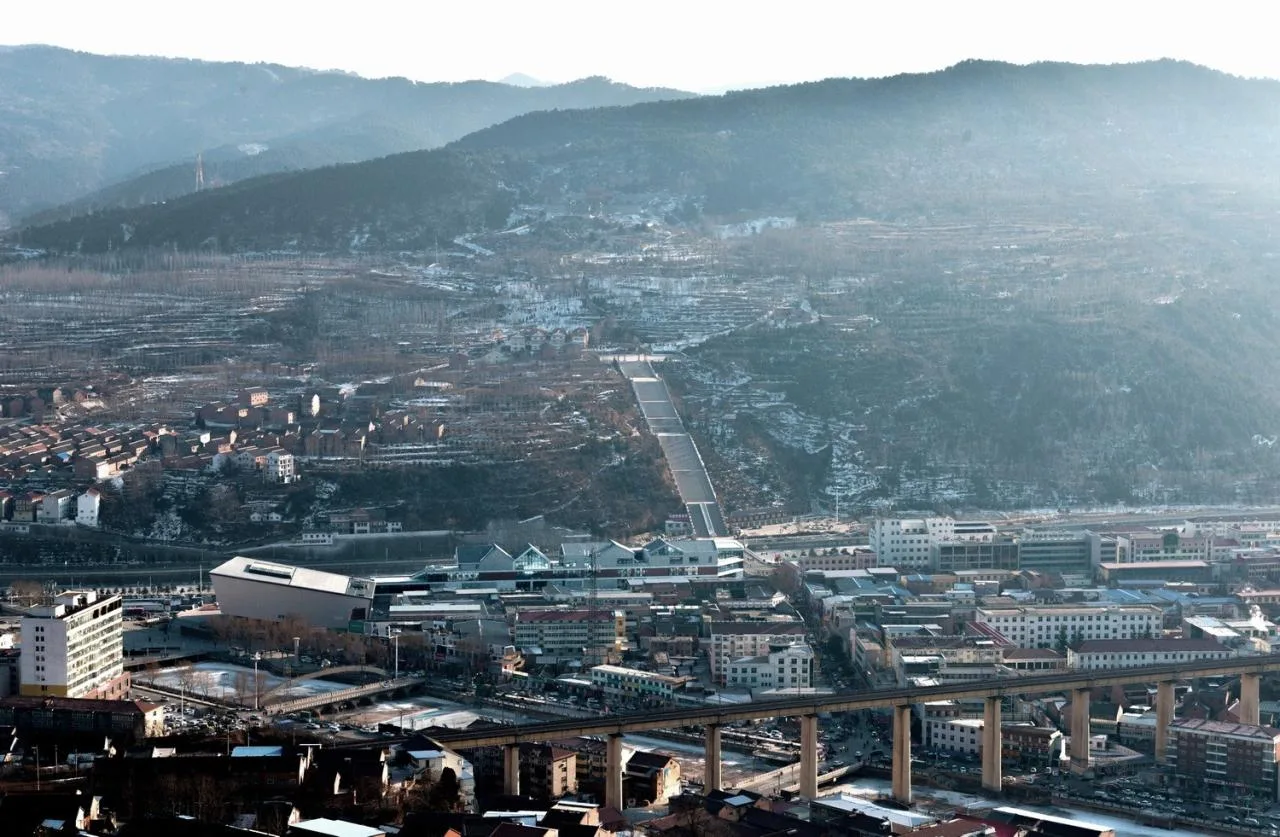
△ North-facing Panoramic Bird’s Eye View
From a distance, the building appears to merge naturally with the ancient cityscape, with its sloping roofs blending into surrounding structures. Stretching from east to west, it unfolds toward the distant mountains like a natural extension of the existing urban fabric and landscape.
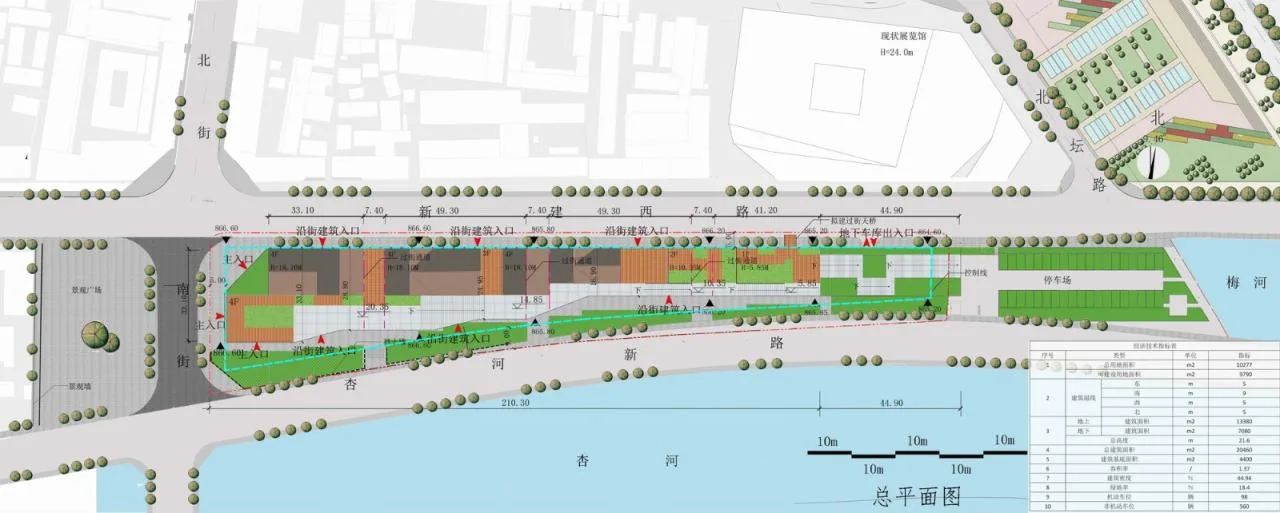
△ General Layout Plan
The narrow commercial buildings line the north side of Xinghe New Road and the south side of Xinjian West Road within the site, extending approximately 246.3 meters east to west and about 33 meters north to south. South Street borders the west side, while an outdoor parking lot and the Meihe Exhibition Hall are to the northeast.
The main pedestrian entrance is on the west side. Large pedestrian flow areas are designated on all four sides of the site—including southeast, northwest, and north—to ensure adequate fire evacuation routes. Parking is provided around the site with approximately 390 spaces, including reserved underground parking on the south and northeast sides. The eastern section features expansive outdoor steps that moderate site elevation changes, creating a lively, attractive, and well-equipped outdoor space for the community.
Due to the site’s narrow north-south depth, the commercial belt follows a linear layout, with a shopping mall including an atrium at the west end and single-row shops at the east end. The building aligns with the land’s contours, maintaining required setbacks. The main entrance is located 12 meters from the Civic Square on the west end.
The central section’s first floor connects three street sections, linking the Chenghuang Temple pedestrian street to the north with the Xinghe River to the south. The building slopes downward from west to east, with a gradually retreating roof that forms multi-level green terraces. These terraces extend public space in the core area and activate commercial activities in the taller sections. Additionally, terraces run south to north, offering excellent spaces for sightseeing and relaxation.
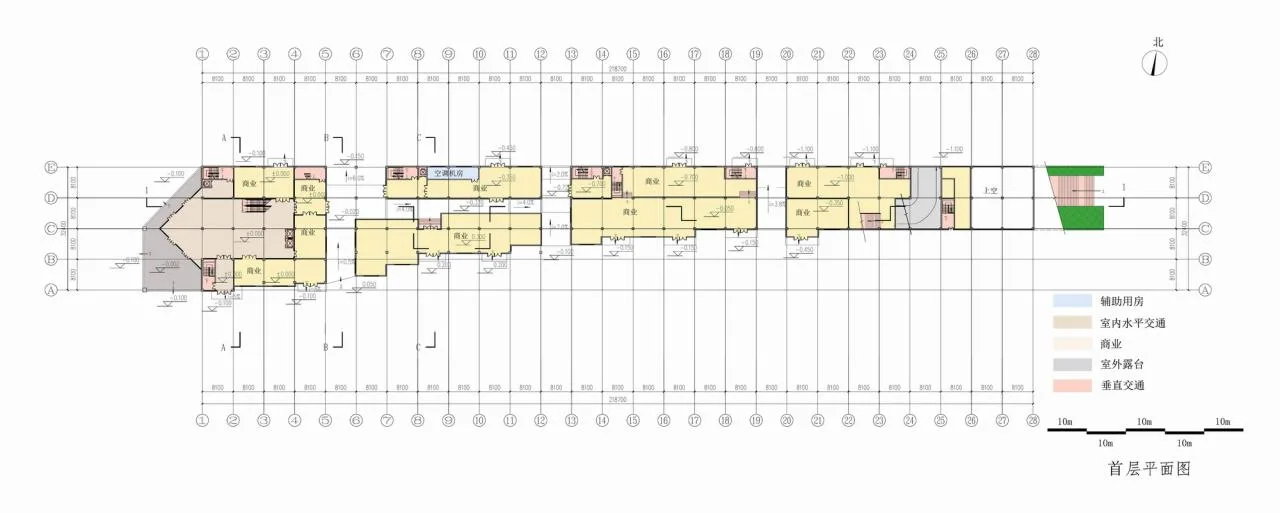
△ First Floor Plan
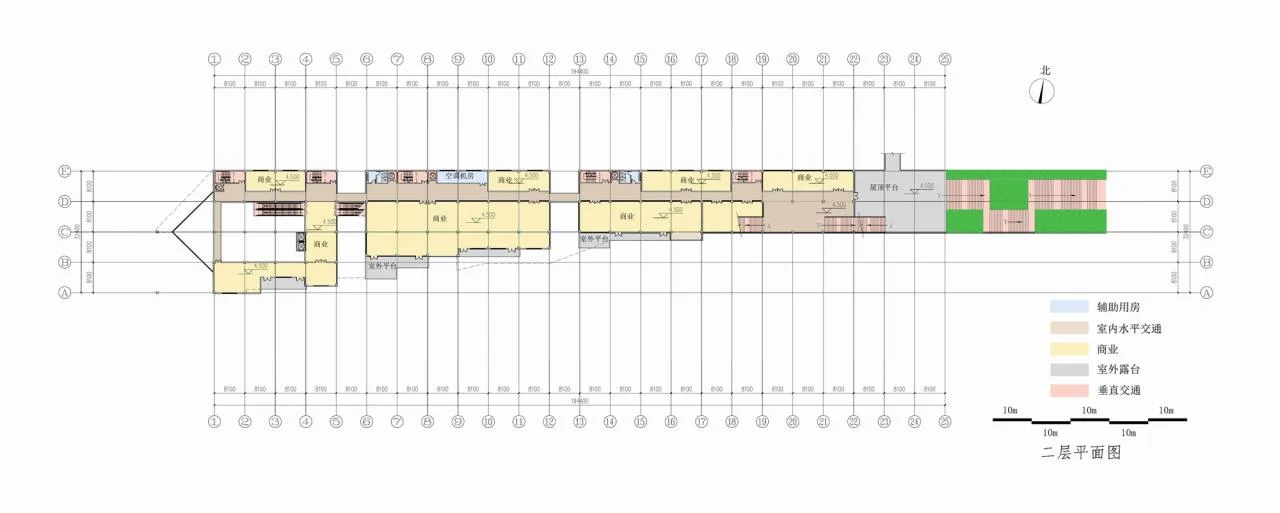
△ Second Floor Plan
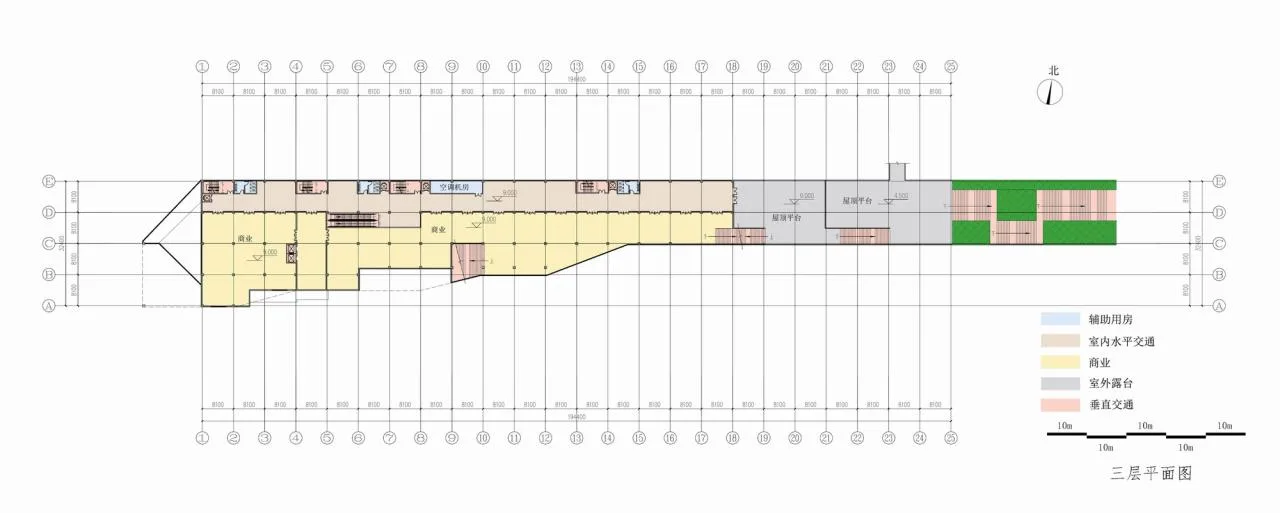
△ Third Floor Plan
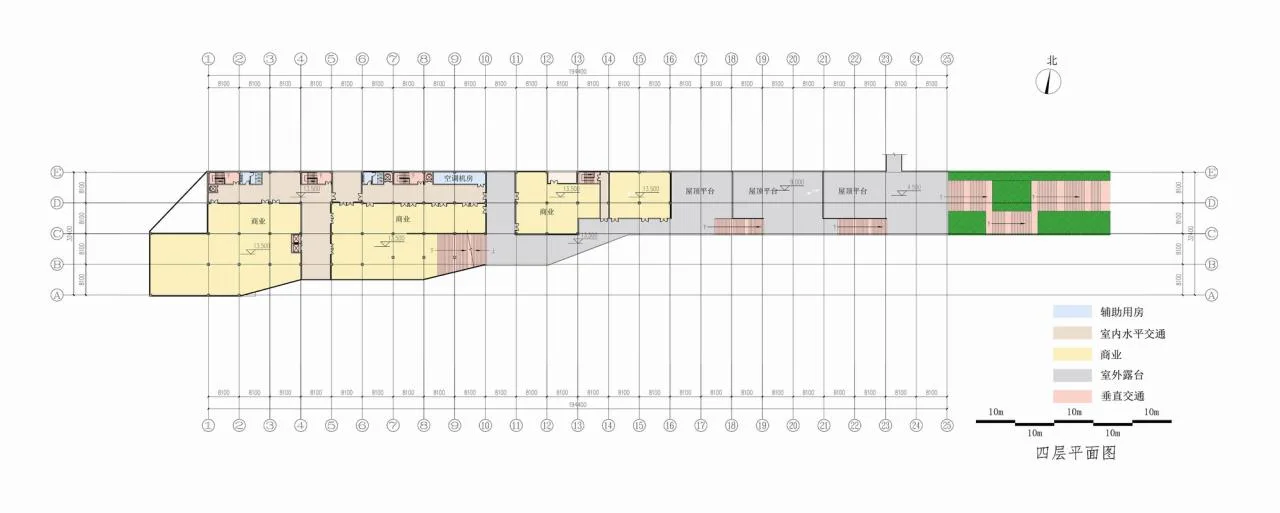
△ Fourth Floor Plan
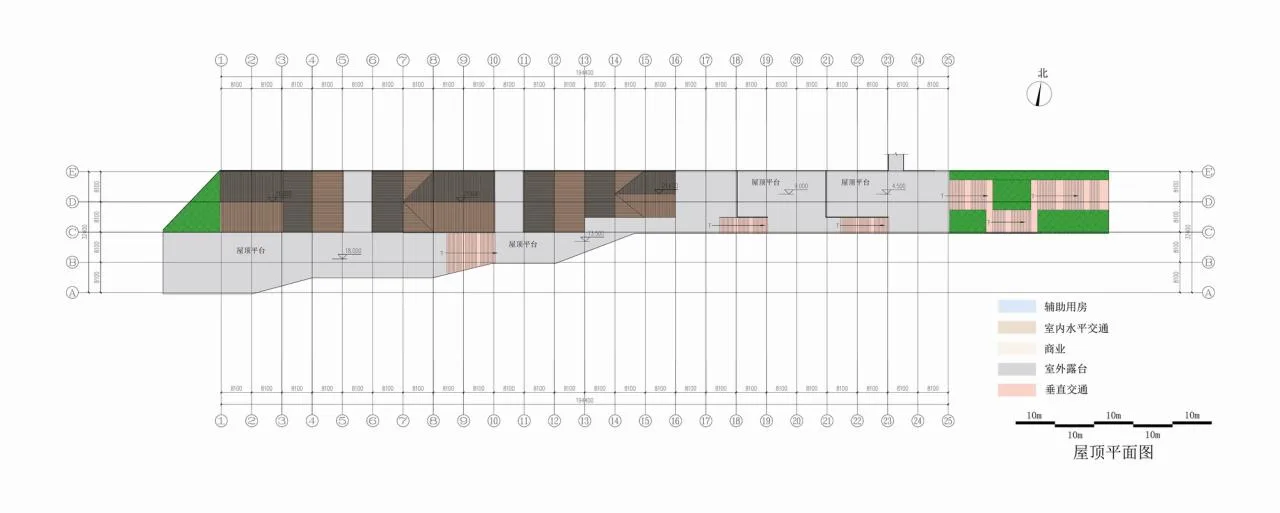
△ Roof Floor Plan
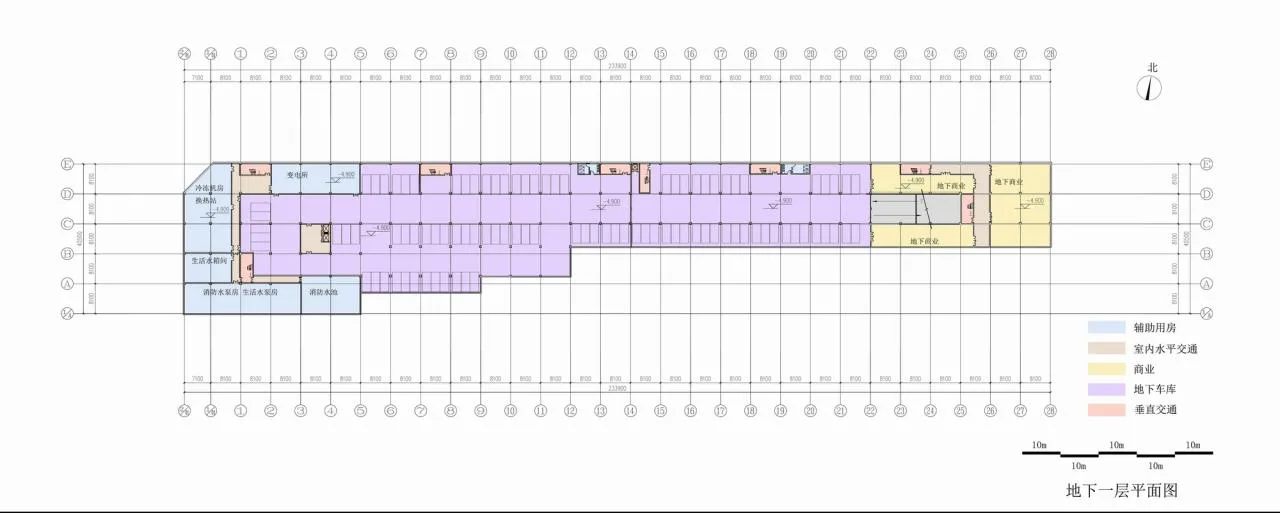
△ Basement Floor Plan
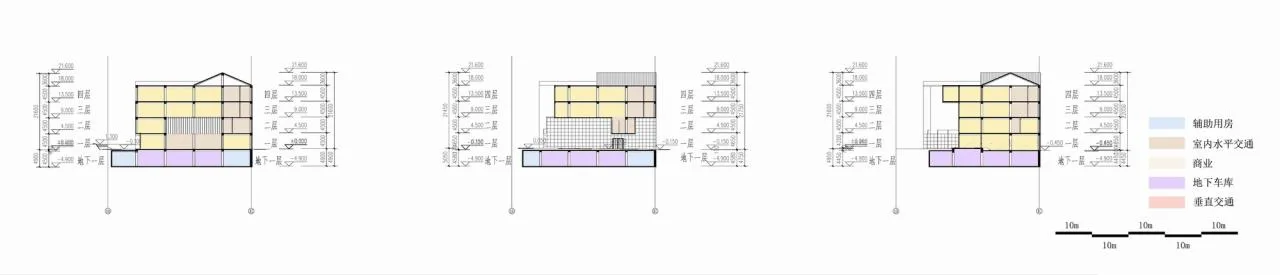
△ Section 1

△ Section 2
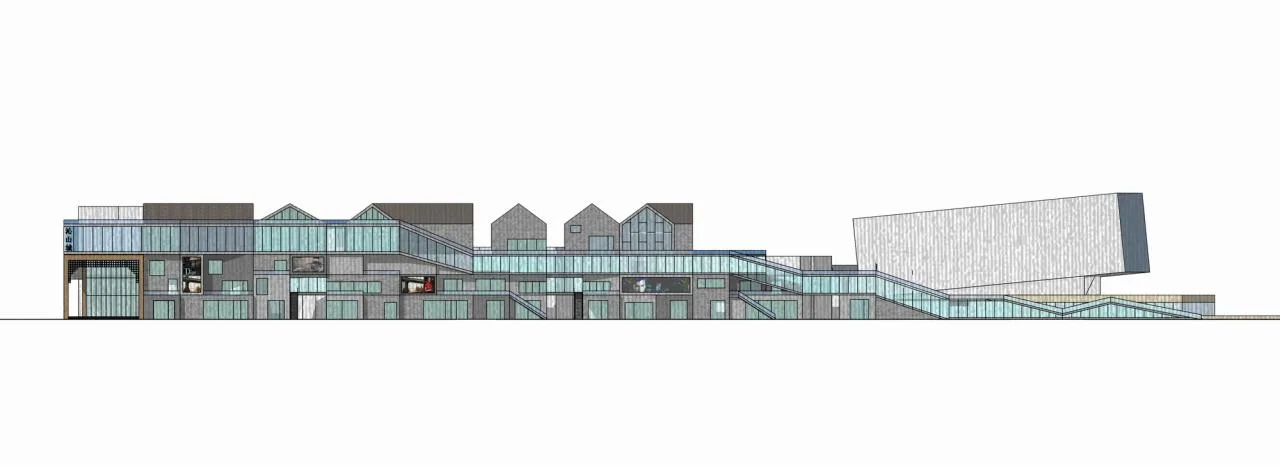
△ South Elevation
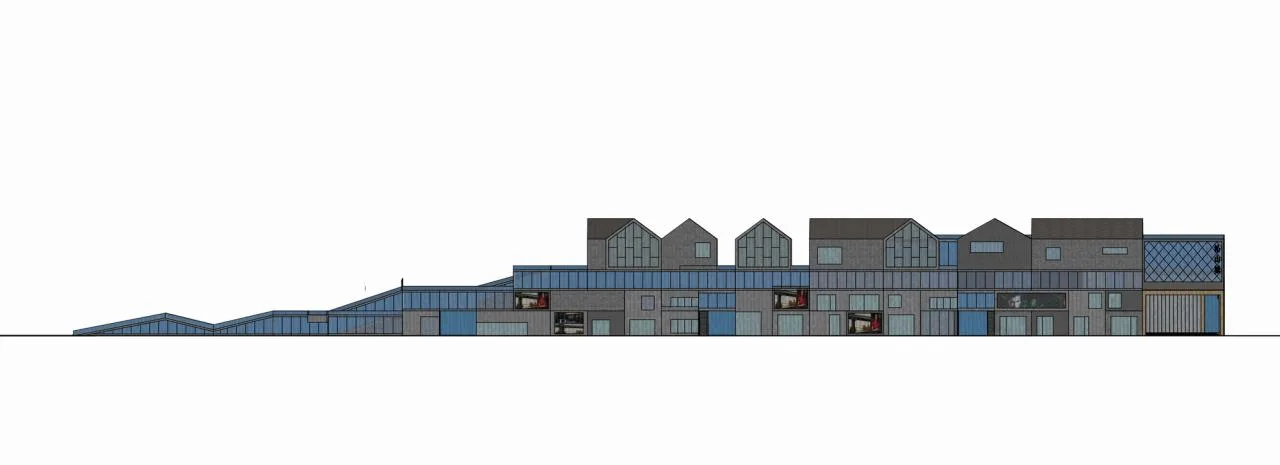
△ North Elevation
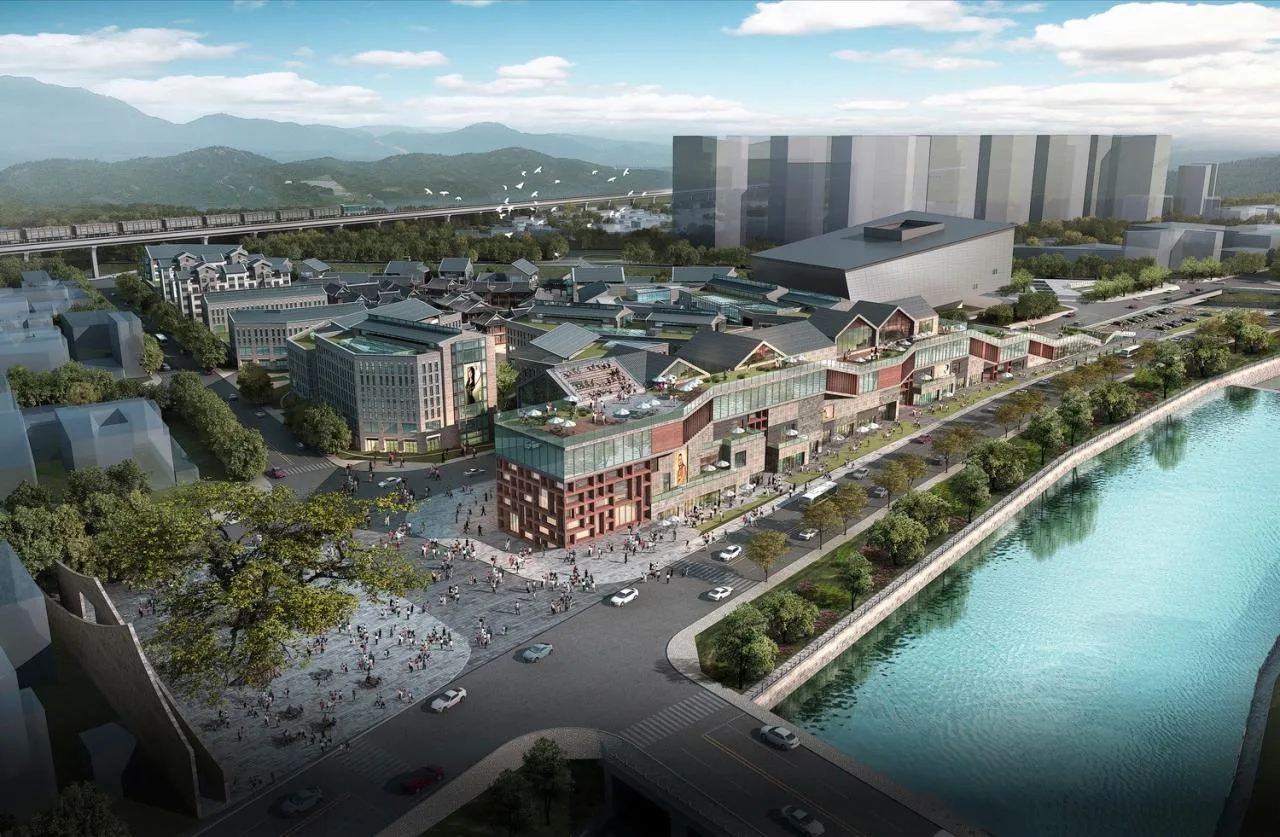
△ North-facing Bird’s Eye View
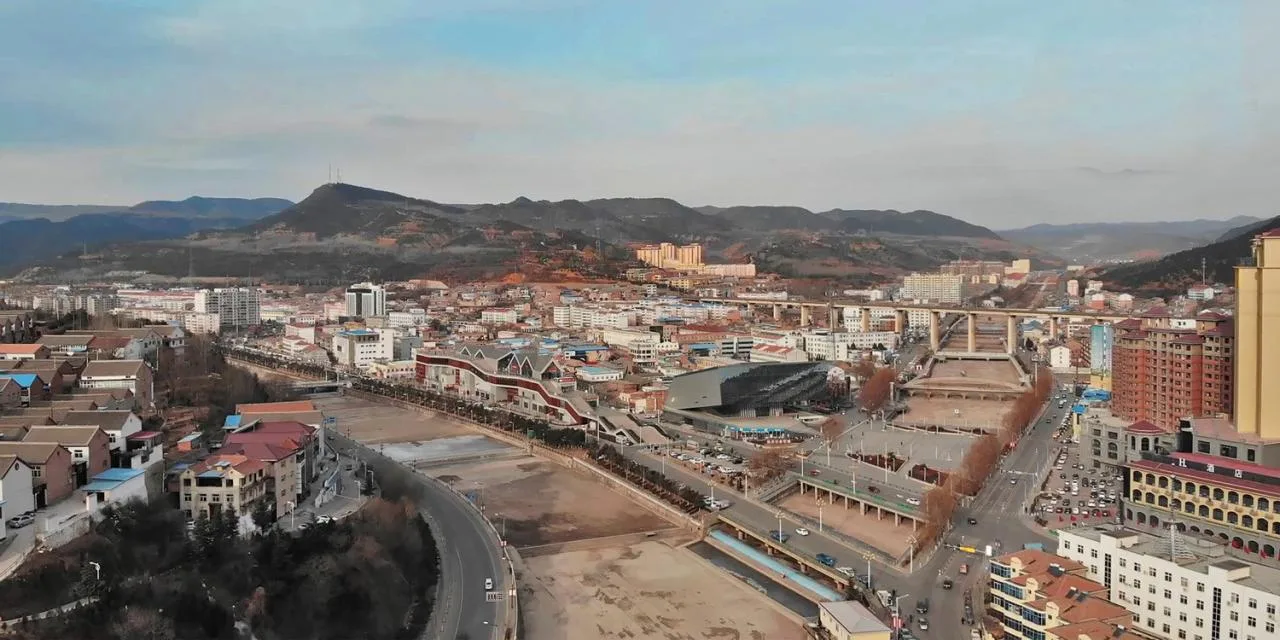
△ Aerial View
Shanxi Province is renowned for its deep-rooted ancient Chinese architectural heritage. As a city landmark, the Qinshui Commercial Belt reflects classical artistry through its spatial design, appearance, and materials. Built along the river, the project not only revitalizes Qinshui’s urban life but also harmonizes with the natural surroundings and continues the local architectural traditions. Using green bricks, blue stones, wooden elements, and white jade, the development fuses commercial vitality with the city’s historical context.
As a landmark node, the Qinshui Xinghe Commercial Belt aims to create an expansive and enduring urban space for the community, embracing cross-disciplinary thinking and a broad temporal and spatial vision.
Project Information
Project Name: Classical Fish – Qinshui Xinghe Commercial Belt
Project Type: Commercial Building
Designers: Wide Architecture & Beijing Urban Construction Design and Development Group
WeChat Official Account: Kuan Jian Building
Lead Designers: Wang Kuan, Wang Dongchun
Completion Period: 2017-2022
Design Team: Wang Kuan, Wang Dongchun, Hai Lan, Martin, Wang Meng, Liu Ming, Yu Xiaohe, Li Jiahui, Yin Xiaobin, Hu Ruotong
Location: Qinshui County, Jincheng City, Shanxi Province
Building Area: 20,460 square meters
Photography Copyright: Wang Dongchun (photos), Zhao Xingyun (video)
Construction Drawings: Beijing Urban Construction Group
Client: Qinshui City Investment
Materials: Stone wood veneer, gray brick, glass














Must log in before commenting!
Sign Up