
The full term BIM stands for “Building Information Modeling,” and it has multiple definitions and interpretations. The definition provided by the United States National BIM Standard is widely regarded as accurate and comprehensive. BIM is described as:
- A digital representation of the physical and functional characteristics of a facility or construction project;
- A shared knowledge resource;
- A process for sharing information about a facility, serving as a reliable foundation for all decisions throughout the entire lifecycle of the facility—from initial concept to demolition;
- A collaborative platform where various professional disciplines input, extract, update, and modify information within the BIM model at different project stages.
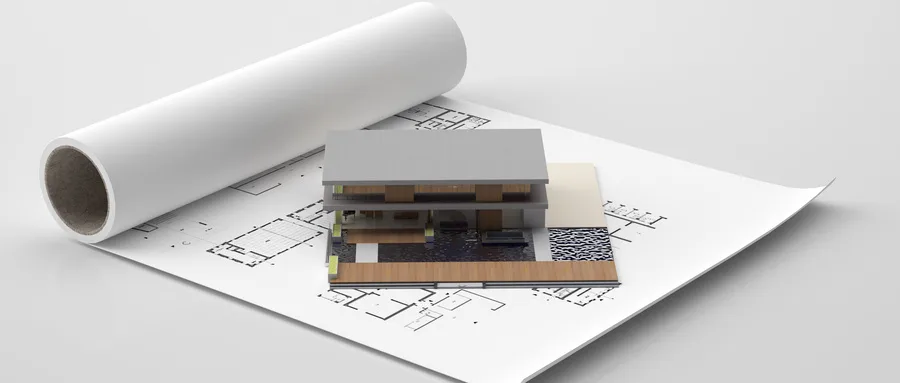
The BIM data model can generate various types of drawings on demand, including floor plans, elevations, sections, and even 3D visualizations. In special cases, BIM models can also provide detailed construction information and prefabricated component data. Using the information-rich data within BIM, prefabricated component manufacturing drawings can be generated directly. This approach reduces the effort required for detailed design and improves the accuracy of manufacturing drawings.
Thanks to BIM’s ability to detect and resolve physical clashes through computer simulations, errors that typically occur during on-site assembly of prefabricated components are minimized. Consequently, more construction work can be performed off-site in well-controlled workshop environments. Currently, manufacturers specializing in steel and MEP (Mechanical, Electrical, and Plumbing) frequently utilize BIM models to produce their components.
In traditional workflows, manufacturers first review design documents provided by designers and then create their own manufacturing drawings. These drawings are compared against other professional construction documents to finalize the prefabricated component manufacturing drawings. This multi-step process is prone to errors at each stage.
By contrast, BIM data models significantly reduce or even eliminate dimensional discrepancies, physical clashes, and integration errors caused by different designers. As the construction information within BIM becomes increasingly comprehensive, manufacturers are able to produce more precise prefabricated products with greater confidence.
















Must log in before commenting!
Sign Up