
Source: BLM Digital

Project Overview
The Zhoujiadu project is a new commercial and office development situated within a large residential area in Pudong, Shanghai. The site is bounded by Zouping Road to the east, Plot 16-09 to the west, Dezhou Road to the south, and Chengshan Road to the north.
The land area includes 8,056.2 square meters for Plot 16-07, 10,096 square meters for Plot 16-10, and 10,105.5 square meters for Plot 16-11. The total construction area covers 142,741.7 square meters, which consists of 89,953.36 square meters above ground and 52,788.34 square meters underground.

Project Challenges
- Proximity to the subway requires high construction standards and complex interface management.
- Multiple structural types demand stringent sealing at structural interfaces.
- The underground commercial layout is complex, requiring thoughtful planning.
- High clear height requirements across functional building areas.
- Conflicts exist between five mechanical and electrical pipelines and structural components, necessitating pipeline rerouting.
- Numerous devices require precise installation with strict accuracy standards.
- Each of the three plots has unique forms and diverse conditions, requiring tailored analysis.
01 BIM Implementation Principles and Objectives
Implementation Principles
Before implementing BIM, the team developed the “Zhoujiadu Project BIM Implementation Outline” tailored to the project’s specific characteristics. This document established a unified BIM management framework and standards tailored to each project stage, guiding all involved parties in BIM adoption.
The outline clarified overall goals, organizational roles, workflows, work interfaces, deliverables, and collaboration mechanisms, while setting standards for model creation and deliverables.
Implementation Objectives
- Create a comprehensive digital engineering information model to simulate plan feasibility and minimize costs.
- Support the construction team with thorough simulations and analyses, optimizing plans via visual collaboration to enhance quality and safety.
- Leverage BIM to strengthen control over the entire project lifecycle, improve management efficiency, and ensure timely, high-quality delivery.
02 BIM Technology Application Planning
Project Implementation Plan Development
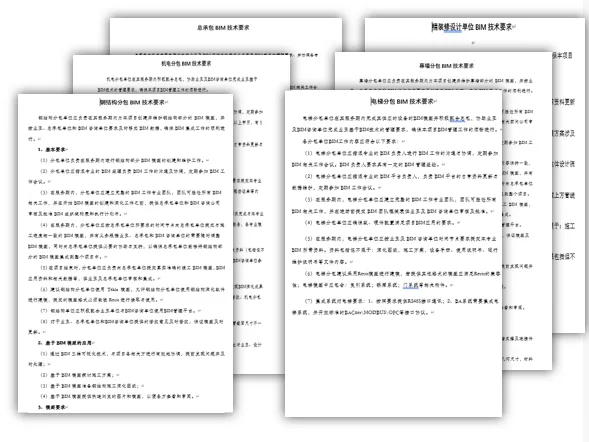
The “BIM Implementation Outline for Zhoujiadu Project” defines customized BIM requirements, details implementation tasks, assigns team responsibilities, and specifies expected outcomes in coordination with the project owner.
Team and Personnel Structure
Shanghai Yuchuang Engineering Consulting Co., Ltd.’s BIM studio operates under a two-tier departmental management system. It consists of five specialized working groups: Building, Structural, Mechanical and Electrical, Coordination, and Expansion Application, each responsible for BIM implementation.
The project team includes nine members, averaging 33 years old, all holding at least a bachelor’s degree. Each member has completed an average of 80 hours of BIM training, with full attendance in related activities.
Equipment Configuration
Software: The team utilizes a comprehensive suite of BIM software including Revit, Tekla, Lumion, 3ds Max, Fuzor, and Navisworks to form a robust application system.

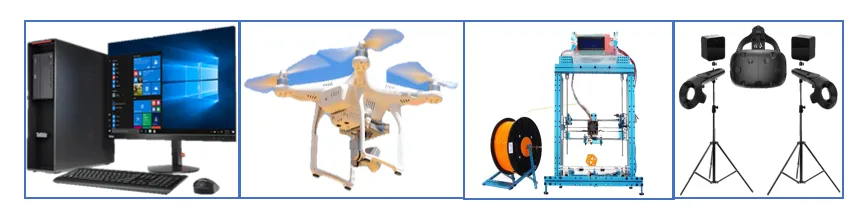
Hardware: The setup includes two desktop servers, one mobile workstation, and advanced equipment such as drones, 3D printers, VR devices, and welding robots.
Project Operation Strategy
- Requirement and Feasibility Analysis: Fully understand the owner’s needs and develop a project plan based on comprehensive evaluations of economic, technical, operational, and market feasibility.
- Design Review and Modeling: Build BIM models from design drawings, review them against owner requirements and project specifics, conduct digital simulations, and identify potential issues.
- Optimization: Refine and improve the design based on simulation feedback. Use visual analysis to minimize risk, reduce costs, and prioritize quality and safety.
- Implementation: After thorough simulation and validation, execute the plan during construction, conducting timely inspections to ensure smooth progress.
03 BIM Technology Application
Model Establishment Stage
Following the “BIM Implementation Outline,” the team constructed a preliminary project framework, incorporating design requirements, net height specifications, and BIM summaries from the design phase.
Using BIM family libraries, collision detection was conducted to identify and resolve potential conflicts, especially between mechanical and electrical pipelines and structural elements. Space verification for the computer room and pipe wells led to optimized design drawings.
During the detailed construction design phase, the model was enhanced based on updated decoration, steel structure, and construction-phase BIM models. This collaborative effort addressed issues such as insufficient net height, providing strong support for subsequent project stages.
Model Visualization
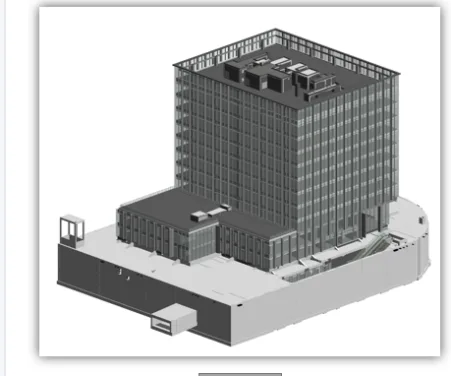
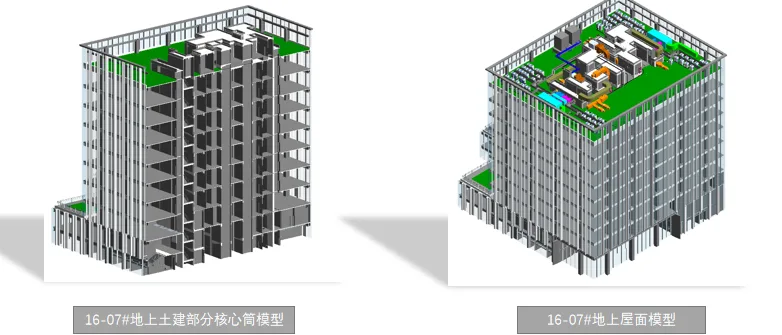
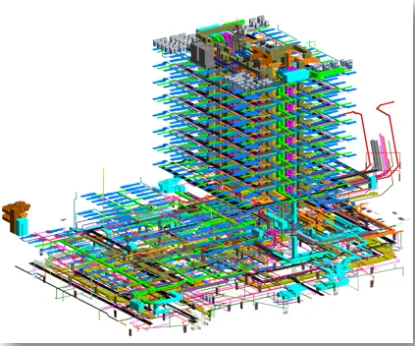
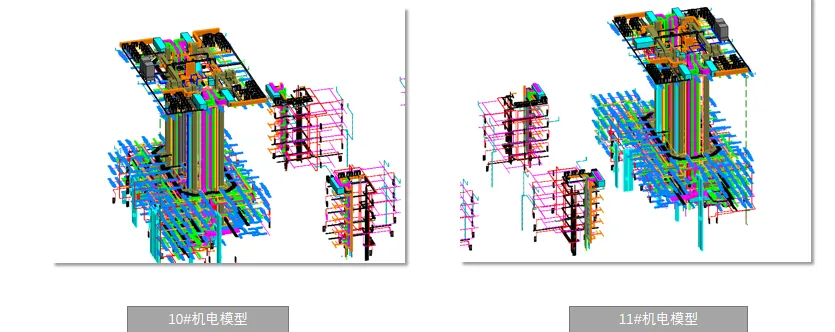
By creating a virtual 3D model of the project, a consistent and comprehensive construction information database was established. This model provides the owner with detailed geometric data, professional attributes, and status information for all building components, as well as non-component elements like space and motion behavior.
This integration significantly improved information management and data accessibility throughout the project.
Integrated Management Model
The comprehensive management model enabled successful collision detection and detailed electromechanical pipeline design, preventing many issues in advance. Challenging problems such as insufficient net height were resolved through iterative model simulations.
A net height review was conducted, and a detailed report was submitted to evaluate compliance with specifications and functional requirements. Collaboration with the owner led to necessary design modifications through cross-department coordination and negotiation, effectively avoiding costly rework.
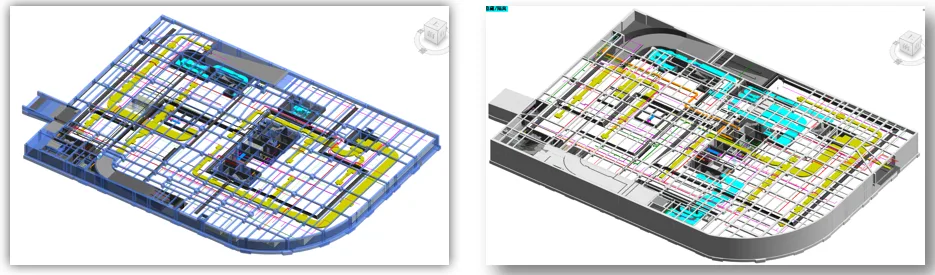
During model development, Plot 16-07 generated 23 issue reports identifying 127 potential problems in design drawings: 84 related to electromechanical systems and 43 to civil engineering. Plots 16-10 and 16-11 produced 10 reports with 73 identified issues: 43 electromechanical and 30 civil engineering. All issues were resolved through ongoing communication with the design team.
Site Layout Planning
Prior to construction, BIM was employed to plan the layout of living and office areas on site. Using BIM models, teams discussed and finalized locations for temporary buildings, sports fields, parking lots, and activity zones.
Renderings and walkthrough videos facilitated comparisons of various design options, including employee circulation paths, cultural corridors, experience areas, and green space designs, leading to the selection of a final site layout plan.
Roof Layout Optimization
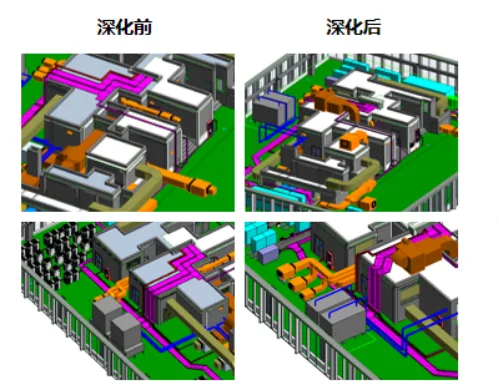
The initial roof equipment placement and pipeline routing failed to account for space needed for roof planting and personnel access, resulting in a cluttered layout with limited accessibility.
After refining the roof layout, some equipment was relocated to the upper cabin surface, with pipelines placed as close to the roof surface as possible to reduce the need for high-level access ladders. Large pipes such as air ducts were staggered to minimize footprint and facilitate maintenance access, ensuring adequate space for green roofing. Equipment and foundations were arranged neatly, maintaining over 600mm clearance from building walls for a clean, orderly roof plan.
Plot 10
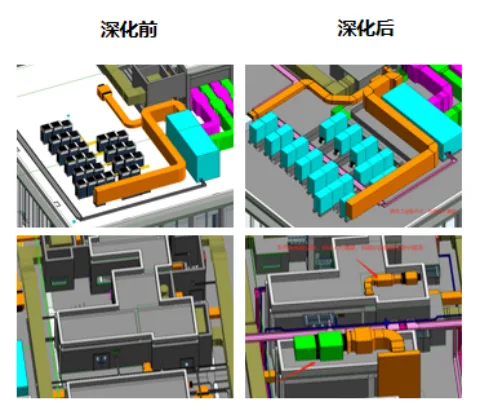
Plot 11
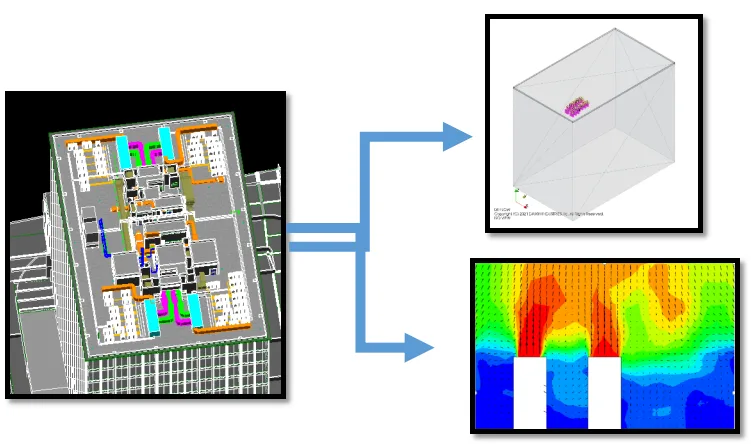
Airflow Analysis on Roofs
Using the BIM-enhanced roof model, airflow organization was analyzed to verify the feasibility of the roof design and identify the location of the most critical airflow points.
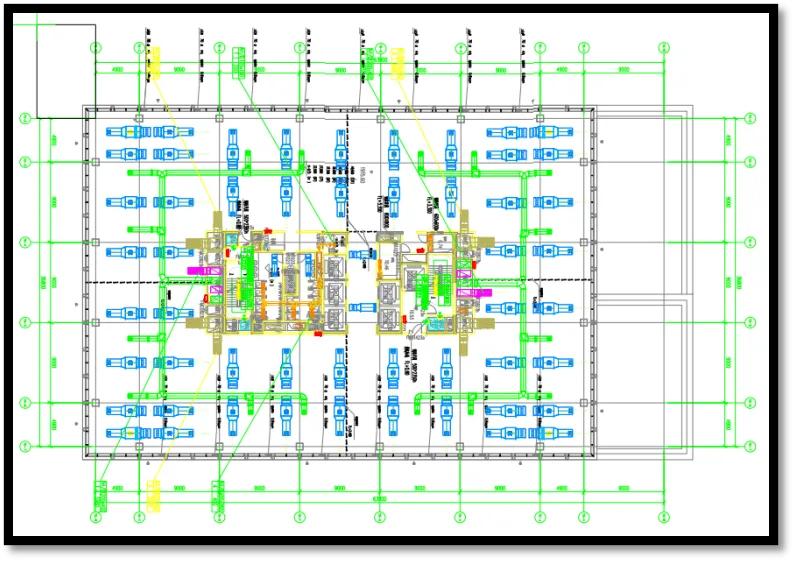
BIM-Assisted Equipment Selection
BIM was used to refine the model and generate floor plans for calculating air conditioning fan pressures, ensuring precise fan selection and smooth workflow progression.
Edge Safety Simulation
Software was employed to analyze model edges, establish safety barrier models, calculate the dimensions of edges and openings, and determine the required number of protective barriers.
This data provides a scientific basis for the layout of edge protection, ensuring comprehensive safety coverage without blind spots, thereby safeguarding the lives of on-site and high-altitude workers.

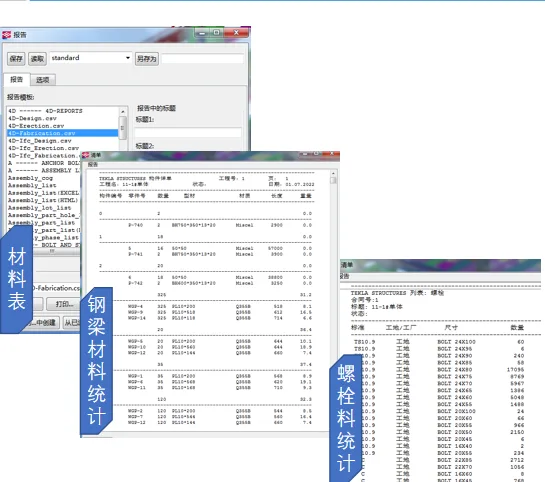
Steel Structure Detailing
The BIM model was used to generate a steel consumption statistics table, categorizing components by type, material, and length. It includes data on quantities, unit weight, total weight, and surface area, facilitating material reporting, processing, and procurement.
Conclusion
BIM technology is not limited to the efforts of BIM consulting teams alone. Its true value is unlocked through collaborative management across all participating departments, identifying innovative applications and integrating BIM into full lifecycle project management.
BIM and collaborative platforms transform how information is shared and managed, enabling all stakeholders to collaborate effectively throughout the project. This leads to cost savings, accelerated progress, and enhanced construction quality.
During the project, continuous exploration of efficient communication and coordination methods based on BIM is essential. Establishing agreements with various subcontractors to use BIM in deepening design collaboration is key to achieving genuine progress and digital transformation in the construction industry.
















Must log in before commenting!
Sign Up