
In large-scale construction projects, the investment in BIM technology represents only a small fraction of the total cost. However, its application can significantly reduce project timelines by precisely managing quality, safety, scheduling, and other critical factors, ultimately delivering substantial economic benefits. Many property owners in China have already recognized these advantages and integrated BIM technology into their project management practices.
The implementation of BIM technology involves creating a comprehensive project model by integrating various BIM models, including building, structural, plumbing, electrical, and general layout components. This unified model supports 3D visualization and can directly generate 2D drawings and documents used as construction blueprints. Additionally, the comprehensive BIM model facilitates quantity takeoffs, cost management, collision detection with detailed reports, and assists in operation and maintenance after project delivery. By incorporating scheduling plans, the BIM model enables dynamic 4D simulation of the project, allowing for refined and proactive management throughout the construction process.
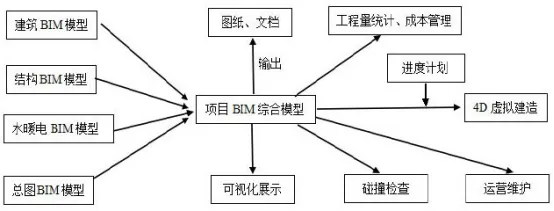
BIM-based construction project management extends beyond traditional quality control, schedule oversight, cost estimation, and safety monitoring. It also offers advanced capabilities such as visualization, thermal analysis, environmental impact studies, sunlight evaluation, acoustic modeling, energy consumption simulation, system coordination, standards compliance, collision detection, finite element analysis, video simulation, constructability assessment, facility maintenance, property leasing, emergency equipment management, and operational evaluation. BIM technology is characterized by its integration, multifunctionality, digitalization, and the interconnection of model information. This enables all project stakeholders to collaborate more effectively. Consequently, BIM technology has been widely adopted across developed Western countries since its inception.
















Must log in before commenting!
Sign Up