
This article references the 2018 paper Towards Digitalization of Building Operations with BIM from the Berlin Institute of Technology, Germany. It serves as a foundational study on this topic.
Summary
Building Information Modeling (BIM) is among the most promising approaches for digitizing the entire building lifecycle in today’s construction industry. However, most research and projects in both industry and the public sector primarily focus on the planning and construction phases. The practical use of BIM during the operational phase of facility management (FM) remains limited.
While BIM can enhance maintenance planning and control, speed up the handover from construction to FM, and improve operational management of new buildings, significant challenges hinder its widespread adoption in FM. For example, there is currently a lack of standardized guidelines to help FM organizations define BIM requirements for diverse purposes. Additionally, completion data for existing buildings is often insufficient to develop the digital building models required for BIM-based FM.
The shortage of existing 3D digital building models in FM is unlikely to change soon, as more than 90% of buildings under FM maintenance are existing structures. Although digital measurement techniques such as 3D laser scanning and drone aerial photography can simplify data acquisition, the parameterized modeling needed to create digital building models suitable for FM still demands substantial effort—effort that typical FM organizations currently cannot manage.
This article builds on initial results from the BIM-FM research project initiated at INserviFM in 2017. It compares various digital measurement methods used in field experiments and optimizes workflows to make digital models of existing buildings accessible for FM. To enable FM organizations to access BIM data for long-term building operations, the study explores a novel data management concept based on semantic web technology, linking BIM data with alphanumeric information stored in computer-aided facility management (CAFM) systems.
Building Information Modeling for the Entire Lifecycle of Building Operations
Building Information Modeling (BIM) is a leading method for digitizing lifecycle management in the construction industry. The numerous national initiatives by public associations in construction and facility management aim to put this innovative planning method into practice. BIM involves creating a digital twin of real buildings that spans the entire lifecycle—from planning and design through construction to building operations—facilitating optimized collaboration and information exchange among all stakeholders.
In this article, the term “building model” or “digital building model” refers to the digital representation of alphanumeric building data, including 3D geometry, topology, and interlinked information.
Most research and projects, however, still focus on the planning or construction phases. Although the benefits of BIM during the operational phase are widely recognized, actual BIM use in facility management remains rare. One major reason is the lack of completed construction projects with digital building models suitable for FM, especially in Germany. Even current BIM construction projects face uncertainties regarding the final “as-built” model and the scope of information it should contain.

Upcoming standards from organizations such as BuildingsMART, GEFMA, and VDI will soon help define FM-specific BIM requirements. Early anticipation of these requirements during planning and construction will ensure building information models better meet FM data needs. Understanding which BIM application scenarios are most critical in FM is essential.
Recent research highlights the key goals and benefits of BIM in FM. For building owners and FM professionals, improving the quality of architectural documentation and enhancing visualization and clarity of design concepts are primary advantages. Additionally, BIM use requires efficient FM handovers from construction and seamless management of building operations. However, practical experience applying BIM in daily FM remains limited.

The shortage of existing 3D digital building models in FM will persist, as over 90% of buildings under FM care are existing structures. Another challenge is that creating usable digital building models for FM in these existing buildings requires substantial effort. Consequently, developing digital building models for existing buildings is crucial for BIM adoption in FM. Furthermore, FM organizations must maintain these models throughout long-term operations, which can exceed 50 years. Keeping models updated is a significant challenge that often requires parallel updates to other key FM information sources, such as CAFM databases—which themselves are difficult to maintain accurately.
This article extends previous findings from the BIM-FM research project, presenting field trial results from Frankfurt in 2017. The study compares various digital measurement techniques to capture existing building data and make it usable for FM. Additionally, it introduces new data management concepts based on semantic web technology, enabling retrieval of information from multiple linked building models integrated with alphanumeric data in standard CAFM systems.
Discussion on the BIM-FM Research Project
The joint research project between HTW Berlin and Beuth Hochschule Berlin began in 2016 to address these challenges. Its aim is to explore existing technologies and workflows that facilitate generating complete virtual building models of existing buildings for FM purposes. It also investigates how the Common Data Environment (CDE) described in PAS 1192 (NN 2013, p. 25) applies from an FM perspective, particularly when using multiple linked building models during the operational phase of the building lifecycle.
Funded by the Berlin Förstenberg School, the project focuses on developing practical concepts and evaluating their implementation throughout the project duration. Two industry partners (Gegenbauer Facility Management and Alexianer Agamus GmbH) and one technology partner (Ambrosia FM Consulting & Services GmbH) actively participate in the research.
Since FM business information management differs depending on whether it is viewed from the FM service provider’s or the building owner’s perspective, the project maintains that BIM management should also be adapted accordingly. To address this, the project develops prototypes of two different existing building models (see Figure 1).

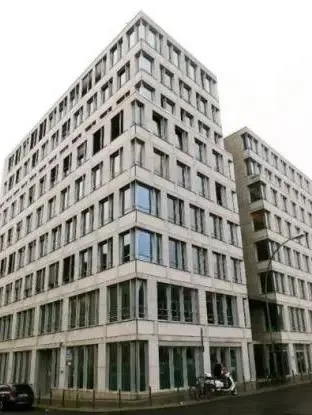
Figure 1: Case images from the BIM-FM project (St. Hedwig Hospital and Berlin Verb?ndehaus)
The first case involves a relatively new office building with multiple owners, managed by Gegenbauer Facility Management. The building features a regular facade and rooftop technical equipment for HVAC systems. A large glass-covered atrium is a key focus area for data collection. BIM requirements here emphasize the FM service provider’s perspective, focusing on factors within a defined contract period.
The second case is the St. Hedwig Hospital in Berlin, managed by Alexianer Agamus GmbH, reflecting the building owner’s perspective. Unlike the first case, this is an older building, partially protected as a historic monument. It also has special requirements linked to hospital medical technology, such as operating and radiology rooms, as well as several small, irregularly shaped spaces housing building equipment due to the building’s age.
















Must log in before commenting!
Sign Up