
The preliminary design must be further developed from the conceptual design model, ensuring it meets the accuracy standards of LOD300 while effectively conveying the project’s fundamental information. Designers should select suitable collaborative design solutions. For example, using Revit software, the project can be divided by disciplines and floors based on its characteristics. Professional collaboration can then be achieved either through linked files or by creating a workset via a central file.
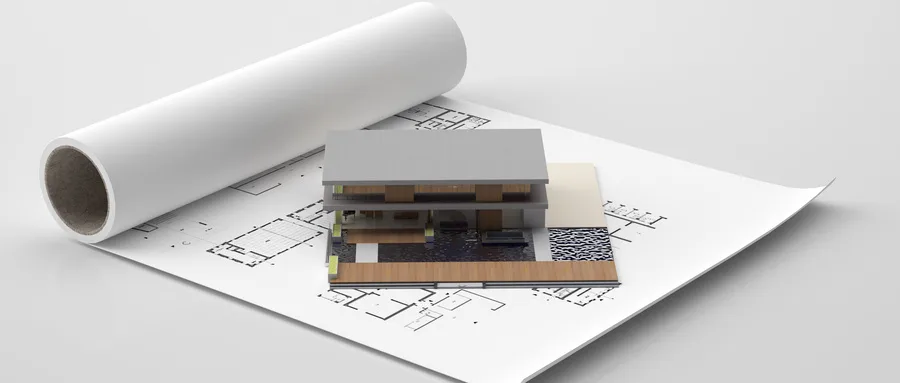
1) Detailed Development of Civil Engineering Models (Architecture, Structure)
During the preliminary design phase, the BIM model from the scheme design stage should be refined to provide detailed modeling of civil engineering elements. Modeling depth must align with the LOD accuracy requirements set by BIM implementation guidelines. The model should be broken down according to design schedule milestones to enhance construction methods reflected in the design drawings. Additionally, component information should be incorporated early to support subsequent design stages, ensuring the BIM model meets the preliminary design standards.
2) Detailed Development of Mechanical and Electrical Models (Water Supply and Drainage, HVAC, Electrical)
Similarly, the preliminary design phase requires detailed modeling of mechanical and electrical systems based on the scheme design BIM model. The modeling depth should comply with the LOD accuracy prescribed by BIM guidelines. The model must be segmented according to design progress milestones, improving system functions and methods outlined in the design drawings. This process determines equipment usage functions and installation locations. Early integration of component information is essential to ensure the mechanical and electrical BIM models satisfy preliminary design requirements.
3) Optimization of Prefabricated Components
At the initial design stage, the spatial relationships between prefabricated components and cast-in-place parts are defined and positioned carefully. Preliminary considerations are made for the reserved and embedded positions of mechanical and electrical pipelines. Based on these pipeline locations, prefabricated components are logically segmented. Additionally, by leveraging the characteristics of prefabricated components, their categories are simplified to increase the prefabrication rate. Furthermore, both geometric and non-geometric relationships of these components must be thoroughly evaluated in subsequent design phases.
















Must log in before commenting!
Sign Up