
The design of industrialized residential buildings presents unique challenges, including high collaboration complexity, stringent design quality standards, comprehensive design requirements, and tight cost control. Traditional design methods are insufficient for meeting these demands. Therefore, Building Information Modeling (BIM) technology is employed to enable automatic structural segmentation for industrialized residential buildings.
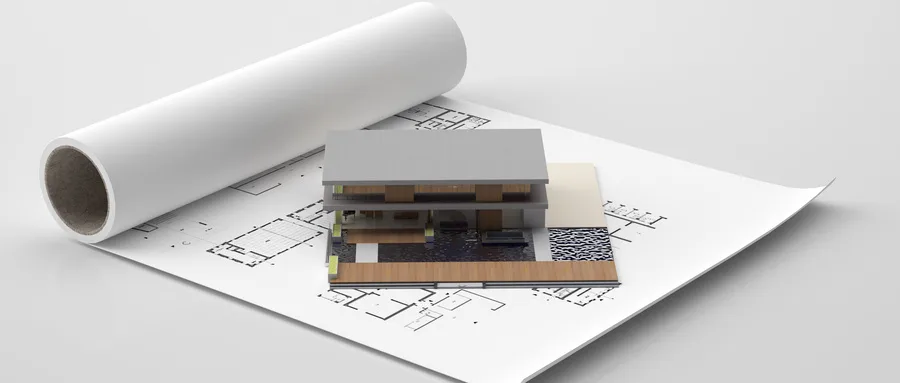
1. Visualization: BIM’s visualization capabilities greatly benefit construction projects. Traditional construction drawings rely on lines and numbers to represent building components, requiring workers to mentally visualize 3D forms from 2D plans. While simple structures may be easy to imagine, modern projects often involve complex shapes that are difficult to interpret. BIM solves this by converting 2D designs into detailed 3D models, allowing construction teams to clearly understand the designer’s intent and efficiently execute the plans.
2. Coordination: BIM facilitates effective collaboration among design teams, construction units, and contractors through shared 3D models. Previously, resolving conflicts during project implementation required coordination meetings to identify issues and develop solutions. For example, clashes between HVAC pipelines and structural elements often arose due to lack of integrated planning. BIM enables early detection and resolution of such conflicts during the design phase by providing comprehensive coordination data, significantly reducing problems during construction.
3. Simulation: BIM technology supports various simulations throughout the project lifecycle. During design, it can simulate lighting, airflow, and energy consumption. In construction, BIM incorporates 5D modeling by adding schedule and cost dimensions to the 3D model, enabling realistic construction sequence simulations and effective cost control. During operation, BIM can simulate emergency evacuation scenarios, helping to prepare for events such as earthquakes or fires and minimizing potential harm.
4. Optimization: BIM continuously optimizes the building model across all project phases—design, fabrication, construction, operation, and maintenance. The complexity of modern buildings surpasses manual control, but BIM, combined with advanced tools like detailed design, structural analysis, and green building evaluation, allows for comprehensive optimization. This results in clearer design understanding for stakeholders, better decision-making, and improved investment cost management.
5. Drawing Capabilities: Unlike traditional design methods, BIM can automatically generate accurate drawings directly from 3D models. These include coordinated and collision-free plans, such as integrated pipeline layouts after clash detection and adjustments, enhancing precision and efficiency in documentation.
















Must log in before commenting!
Sign Up