
BIM forward design represents a comprehensive transformation of the traditional Chinese construction project design process. It enables building structures and components to be represented through highly intuitive 3D models. By centralizing the management of building information systems across various levels and attributes on a single platform, it significantly enhances the efficiency and coordination of engineering design, thereby improving overall design quality.
Unlike the conventional BIM reverse design method—which typically follows a “CAD drawing first, then modeling” approach—BIM forward design adopts a “modeling first, then drawing” workflow. This shift greatly improves information consistency, integration, and guidance throughout the entire lifecycle of urban planning, architectural design, construction, operation, and maintenance. It addresses the requirements of all project stakeholders, including owners, contractors, supervisors, and review agencies, by providing accurate construction data. Additionally, it mitigates issues such as redundant work, lower engineering efficiency, and excessive consumption of human and material resources commonly associated with BIM reverse design.
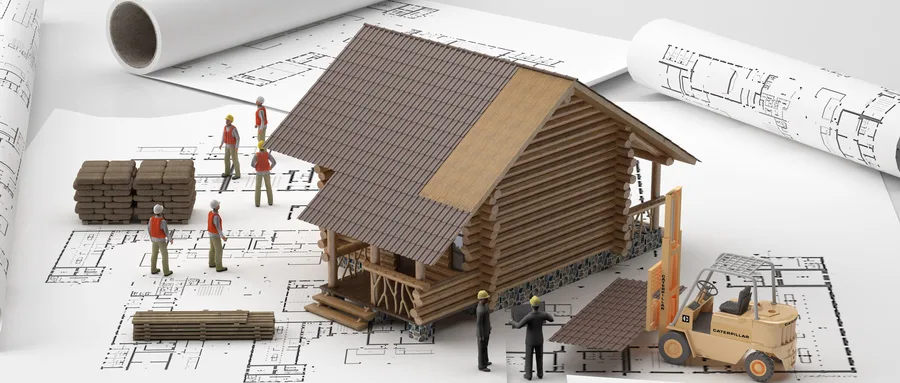
The core concept of BIM forward design is to begin with establishing a 3D model, followed by producing construction drawings. This represents a fundamental shift in design methodology. Unlike traditional 2D design, forward design eliminates the need for 3D modeling based on 2D drawings. Instead, the design process starts directly within 3D modeling software, and 2D drawings are generated from the 3D model.
This approach markedly improves the quality of design schemes and boosts efficiency. For designers, the limitations of traditional 2D design have become apparent, whereas forward design offers an intuitive way to visualize engineering concepts through virtual models. Using 3D models to express design intentions not only enhances clarity but also simplifies operations via parametric design.
Continuous adjustments to 3D models enable real-time updates to linked 2D drawings. Currently, project deliverables usually consist only of 2D drawings, which carry limited information. In contrast, forward design’s reliance on 3D models ensures that the final output includes comprehensive 2D drawing details along with extensive geometric data, fully compensating for the limitations of traditional 2D documentation in terms of application depth and information transfer.
——Excerpt from “Research on BIM based Structural Forward Deepening Design” by Jiang Minhui
For educational and communication purposes only. Copyright belongs to the original author. Unauthorized use or infringement will be addressed accordingly.
















Must log in before commenting!
Sign Up