
Revit software includes a variety of pre-set system families, offering users numerous family templates categorized by type and purpose. Users can select and import the appropriate family templates according to their specific needs.
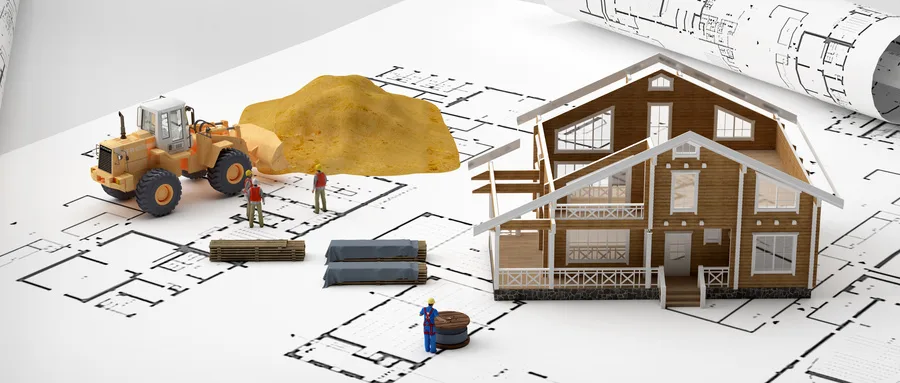
For instance, by selecting a metric structural column family, you can easily create structural columns. Most of the system family presets in Revit are derived from the most commonly used reinforced concrete building types. This highlights the importance of family planning and the creation of family libraries as essential steps in building information modeling (BIM).
Family planning acts like customizing a dedicated workspace tailored to the project, ensuring alignment with the project’s structural and logical relationships. Revit’s powerful family editor supports this process by enabling the creation of component families.
The key benefits of creating a family library include:
1. Enhanced modeling efficiency: During the building information modeling process, you can quickly access and use the necessary family components from the library, speeding up the design phase—especially for wooden structures—and reducing time costs.
2. Standardization and quality: Family libraries are created and continually updated based on industry design standards and engineering experience, promoting more consistent and standardized modeling.
3. Reusability: Once a family library is developed for a project, it can be reused in future projects. Similar family components can be directly accessed from the library, saving time and effort.













Must log in before commenting!
Sign Up