
To unify and standardize the digital design outputs of the project, it is essential to establish principles and standards for 3D design modeling that align with the project’s characteristics and future applications.
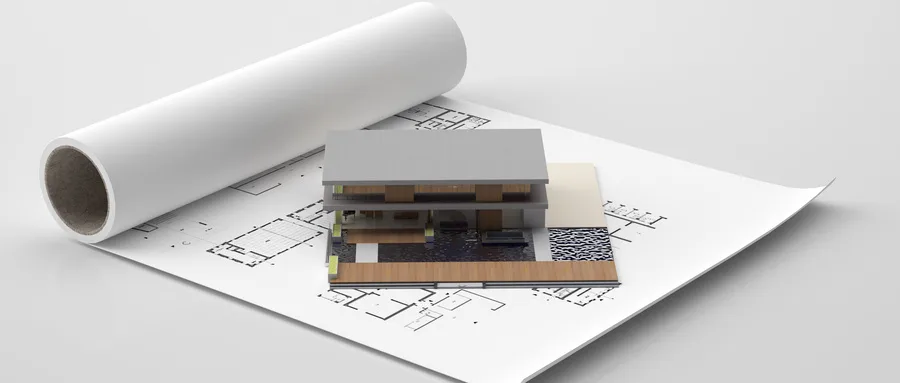
First, the principle of information uniformity: the BIM model should exclude unnecessary information, ensuring that all data corresponds precisely to what is shown on the 2D drawings. One of the key advantages of a BIM model is its ability to adapt quickly as design changes occur. The model must accurately represent professional details such as object names, system codes, material specifications, and other design requirements. These details are critical for subsequent processing, installation guidance, and final quality inspection.
Second, the principle of authenticity: the model must accurately reflect real-world conditions. From the outset, the design should consider the model’s required level of detail to maximize its practical value. During model construction, all components should comply with industry standards. Typically, most components require a Level of Development (LOD) of 300, while key components demand a higher precision of LOD 400. Additionally, the model must take the construction process into account to ensure it faithfully represents the actual build.
Third, the principle of accuracy: design software is capable of achieving dimensional accuracy up to 0.8mm. The created model must adhere strictly to these dimensional standards, matching drawing specifications to minimize errors. Following these principles allows for clear determination of model granularity, accuracy, and criteria for segmenting the model effectively.
















Must log in before commenting!
Sign Up