
As building volume and scale rapidly increase, technical requirements and user demands continue to evolve, making mechanical and electrical installation engineering progressively more complex, especially in public buildings. Traditional installation techniques and management methods can no longer keep pace with industry development, giving rise to the adoption of BIM technology. Beyond collision detection and pipeline integration, BIM’s visualization and simulation capabilities enable optimization and coordination across project materials, equipment management, and technical processes. This improves material management precision, cost control, project scheduling, and on-site construction coordination. Additionally, the rich information embedded in BIM models serves as a crucial foundation for future operation, maintenance, and system energy efficiency monitoring.
The air conditioning refrigeration room is a critical component of the electromechanical system, characterized by complex piping, numerous pieces of equipment, and limited space. It must also accommodate equipment hoisting, maintenance, water balance adjustments, and energy consumption detection. BIM technology offers significant advantages for installing refrigeration equipment rooms. This article illustrates these benefits through the example of installing an equipment room in a specific project.
1. Comprehensive Pipeline Layout and System Optimization
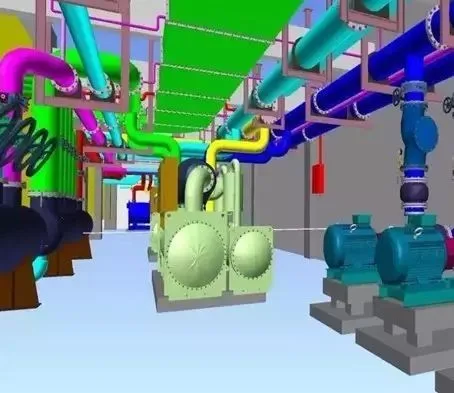
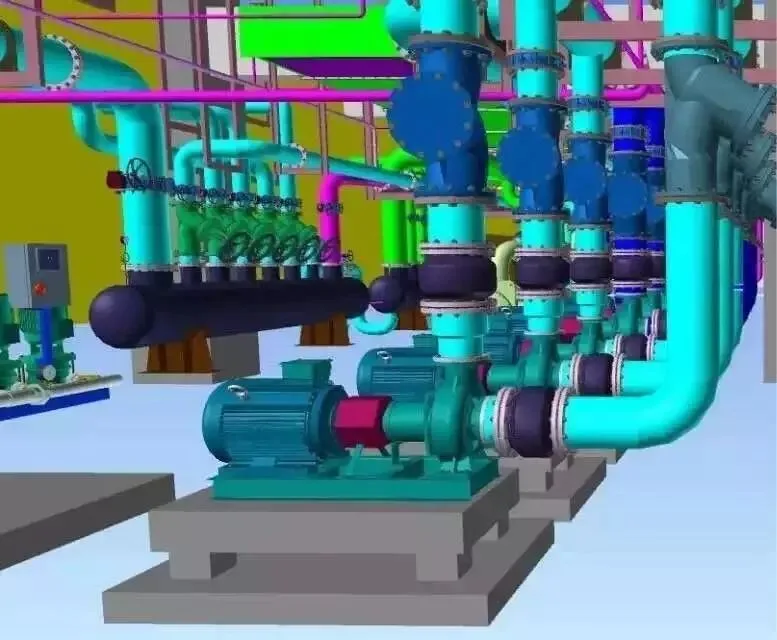
Leveraging BIM’s 3D visualization, pipelines can be laid out comprehensively and equipment arranged logically. Space for equipment maintenance and operation is planned in advance, ensuring a well-organized pipeline layout with open space and an aesthetically pleasing computer room environment.
2. Lifting of Large HVAC Equipment
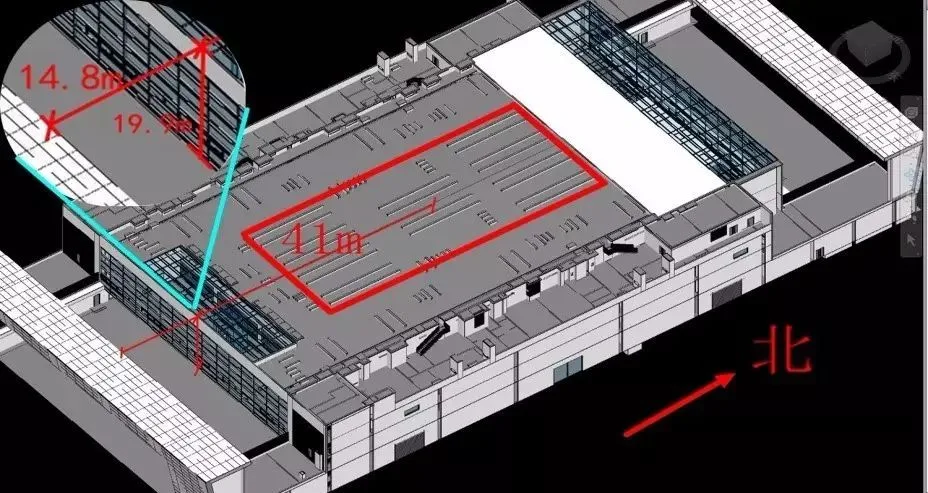
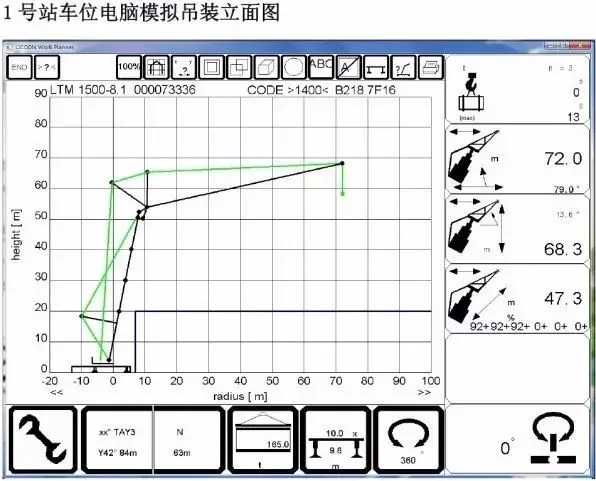
Managing the lifting of large HVAC equipment is a critical and challenging task in mechanical and electrical installation. Using BIM 3D models combined with equipment dimensions and weight allows identification of key control points. Lifting analysis software then simulates the process through 3D animation to evaluate feasibility, safety, efficiency, and cost, ultimately selecting the optimal lifting plan. Details such as lifting hole locations, crane models, arm lengths, crane positions, and lifting procedures are precisely determined.
3. BIM-Based Information Delivery and Operation Maintenance
Integrating BIM 3D information models with software platforms creates a comprehensive maintenance and management system encompassing building fire protection, environment, energy, pipeline networks, and assets. This project emphasizes energy efficiency monitoring for hot and cold water systems. Flow meters, energy meters, thermometers, and pressure gauges installed in main pipelines transmit data to a visualization platform, enabling real-time monitoring of system operation and energy consumption. This data is shared with the operation and maintenance team to optimize system performance. Currently, this data is undergoing testing.
















Must log in before commenting!
Sign Up