
When irregularly shaped buildings first emerged, they primarily featured linear surfaces that adhered to specific functional forms, such as spheres and ellipsoids. However, with the passage of time and advancements in the construction industry, an increasing number of irregular spatial structures with nonlinear surfaces have been developed.
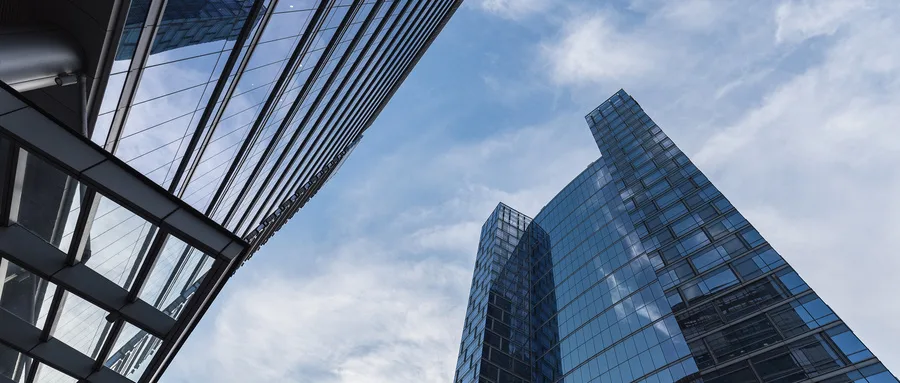
Nonlinear surfaces are mainly free-form surfaces; some follow functional rules, while others do not adhere to any predefined function. To accurately represent these irregular surfaces and fully capture their shapes, a drawing interface must offer an intuitive 3D environment. Traditional design methods and software often fall short of this requirement. This is where BIM parameterization technology plays a crucial role.
BIM parameterization translates irregular surfaces into parameters based on specific logic, generating these surfaces within a 3D interface through algorithmic processes. By controlling the surface model via algorithms, BIM parameterization provides essential technical support for modeling complex geometries. Consequently, using BIM parameterization technology to assist in modeling irregular surfaces has become indispensable.
Controlling 3D modeling of irregular surfaces through parameters and programming within BIM parametric software is the most effective approach. Compared to traditional manual modeling, this method offers greater efficiency, accuracy, and control because parametric technology fundamentally relies on data. While an irregular surface might appear as a simple shape to the human eye, a computer interprets it as a structured set of data. Surfaces generated through data-driven control are unquestionably more precise than those created manually.
Moreover, BIM parametric software can export these surfaces in formats compatible with other technical analysis tools, enabling information sharing and collaborative workflows across multiple platforms.
BIM parameterization technology has advanced the construction of irregular spatial structures. Conversely, the demand for increasingly complex and unique structures fuels the development of BIM parameterization itself, creating a mutually reinforcing cycle. This technology has contributed to the rise of buildings with distinctive shapes worldwide, while these innovative designs continue to drive the maturation of BIM parameterization.
— Excerpt from Research on the Application of Parameterized Information Technology in BIM-based Alien Space Structures by Zhan Jianwen
















Must log in before commenting!
Sign Up