
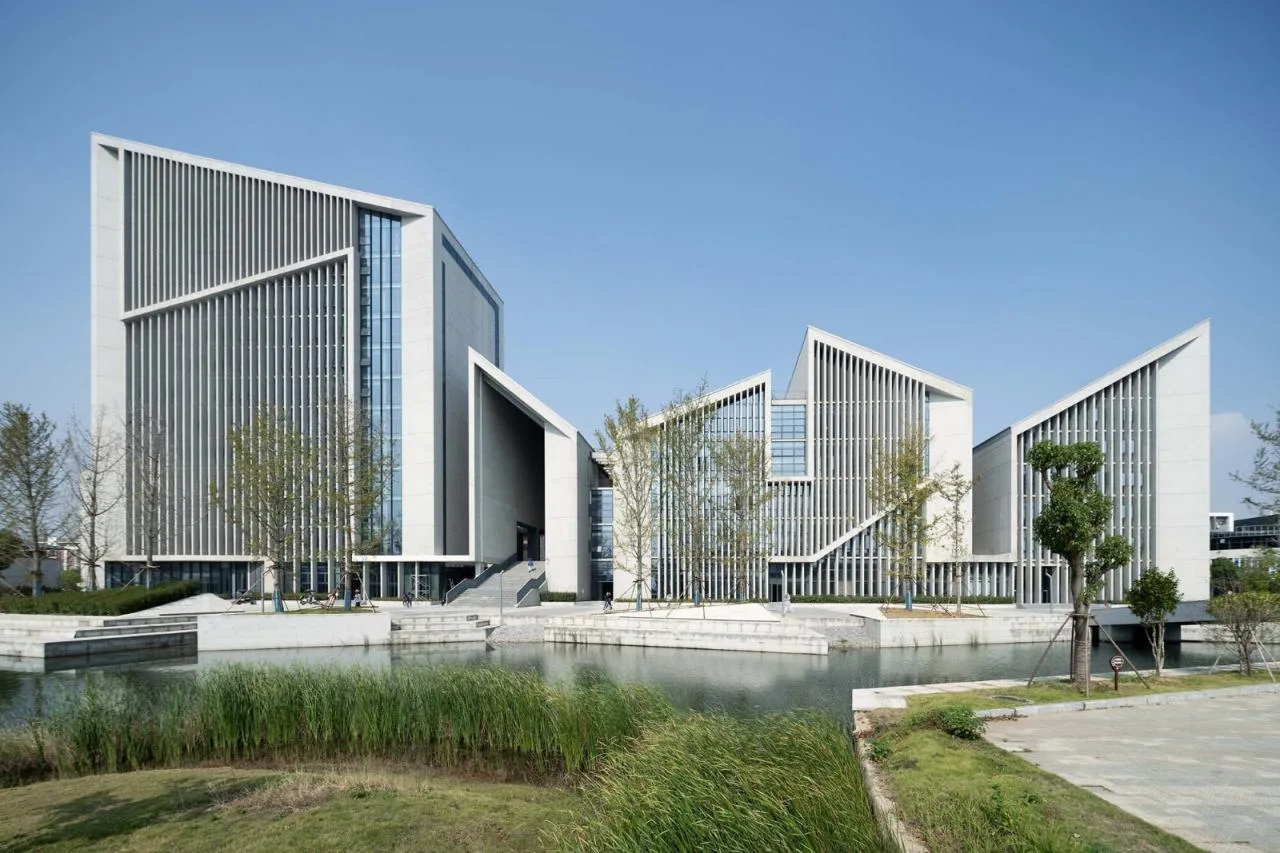
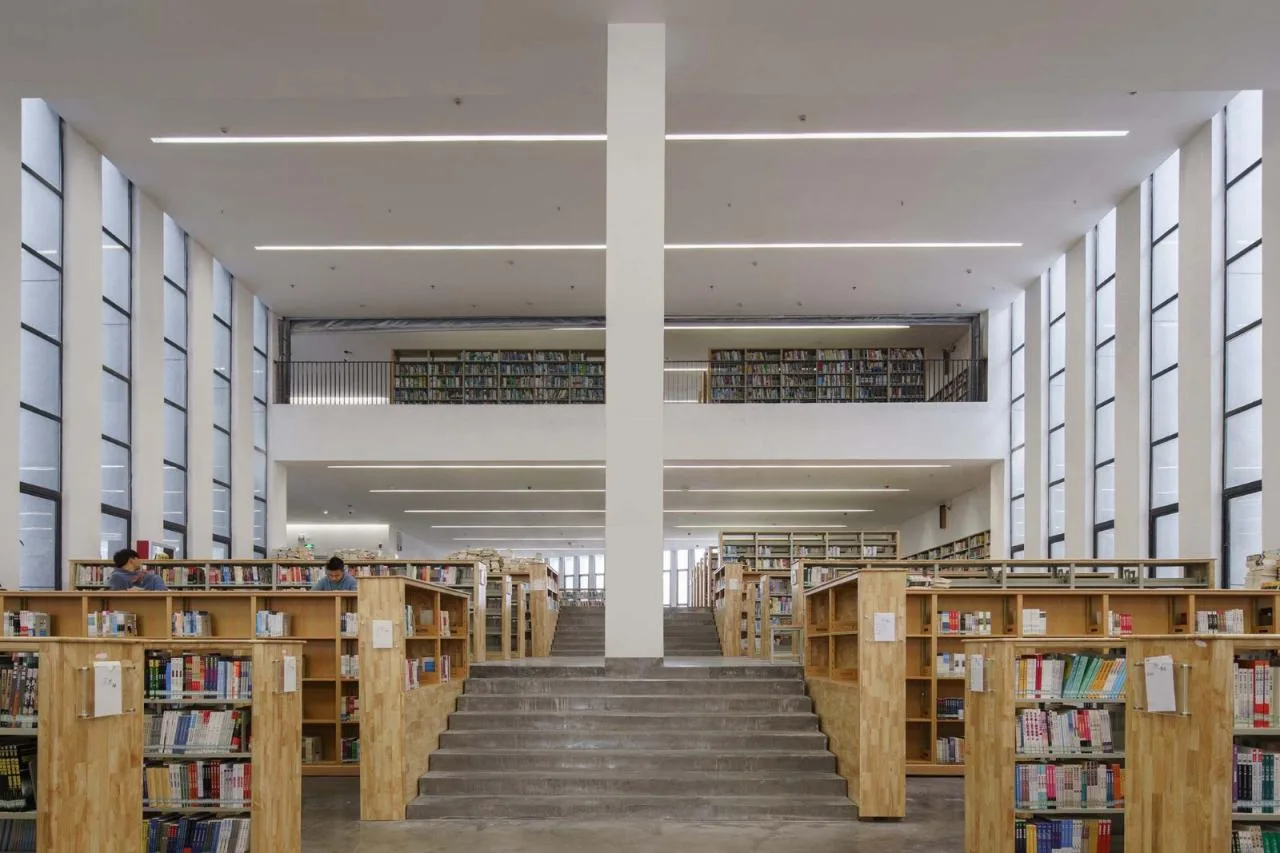
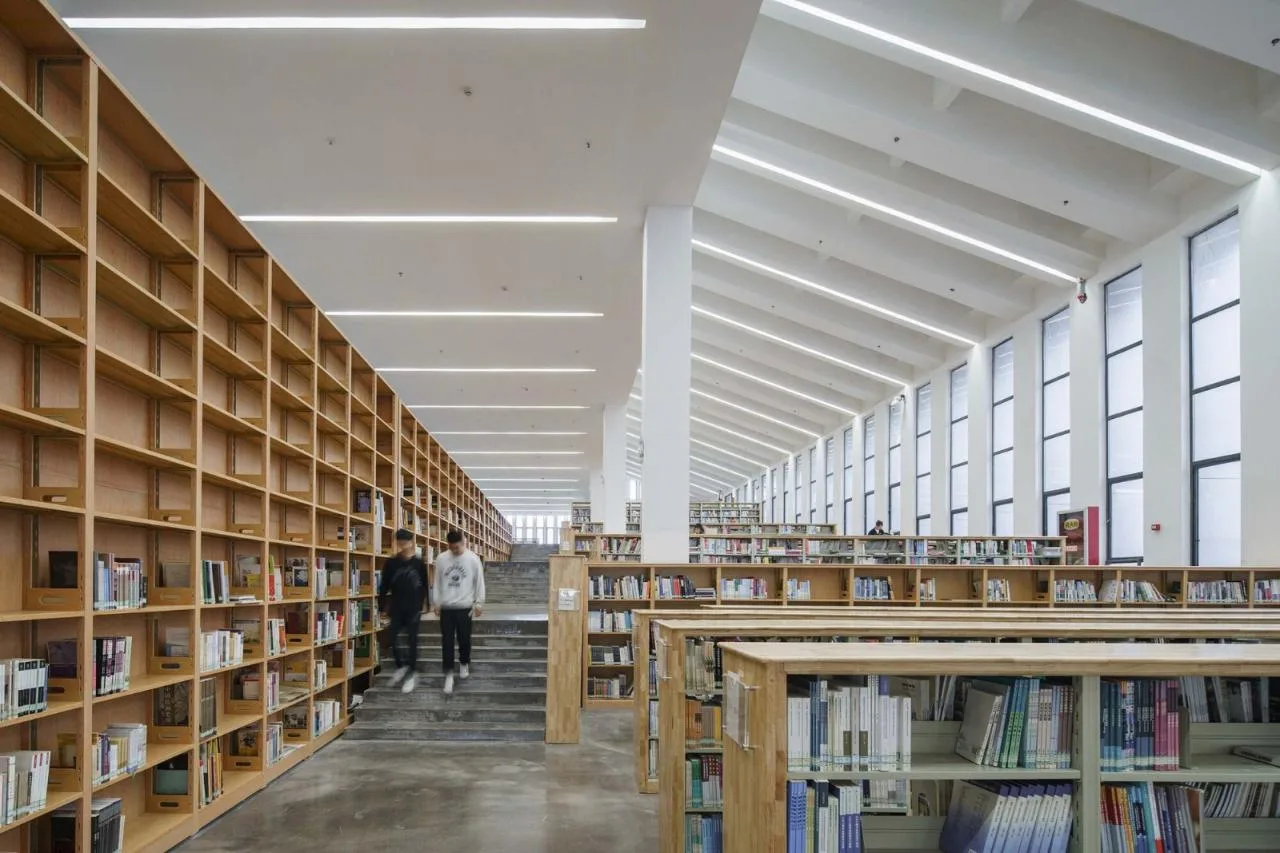
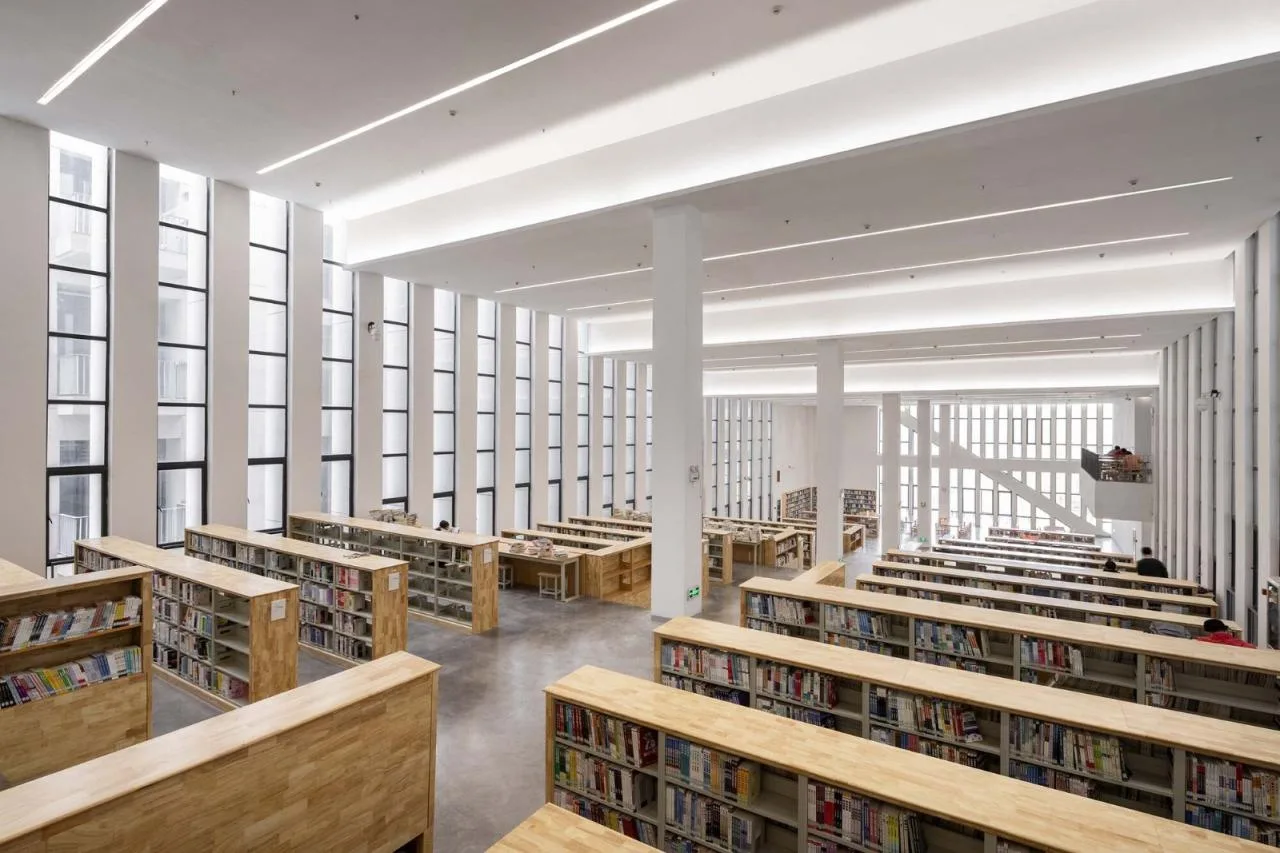
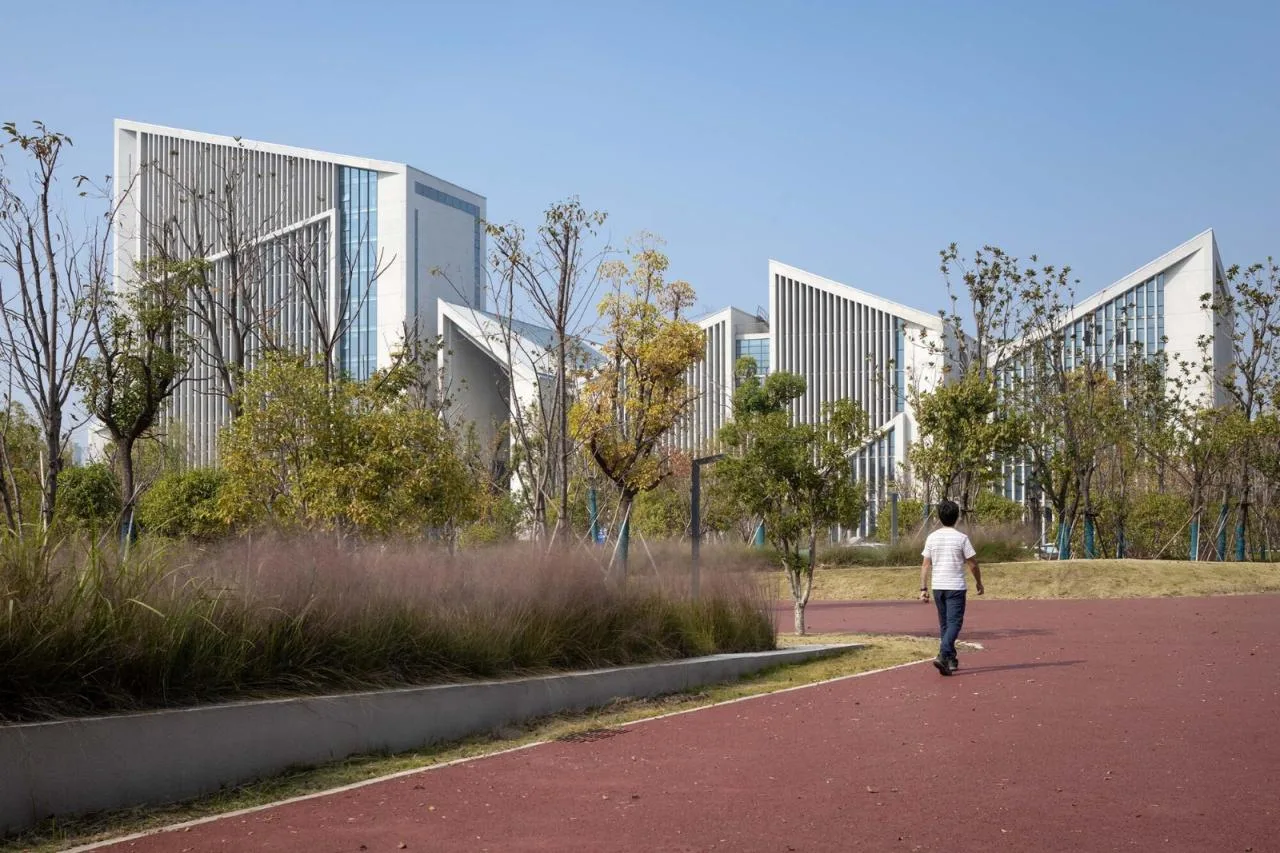
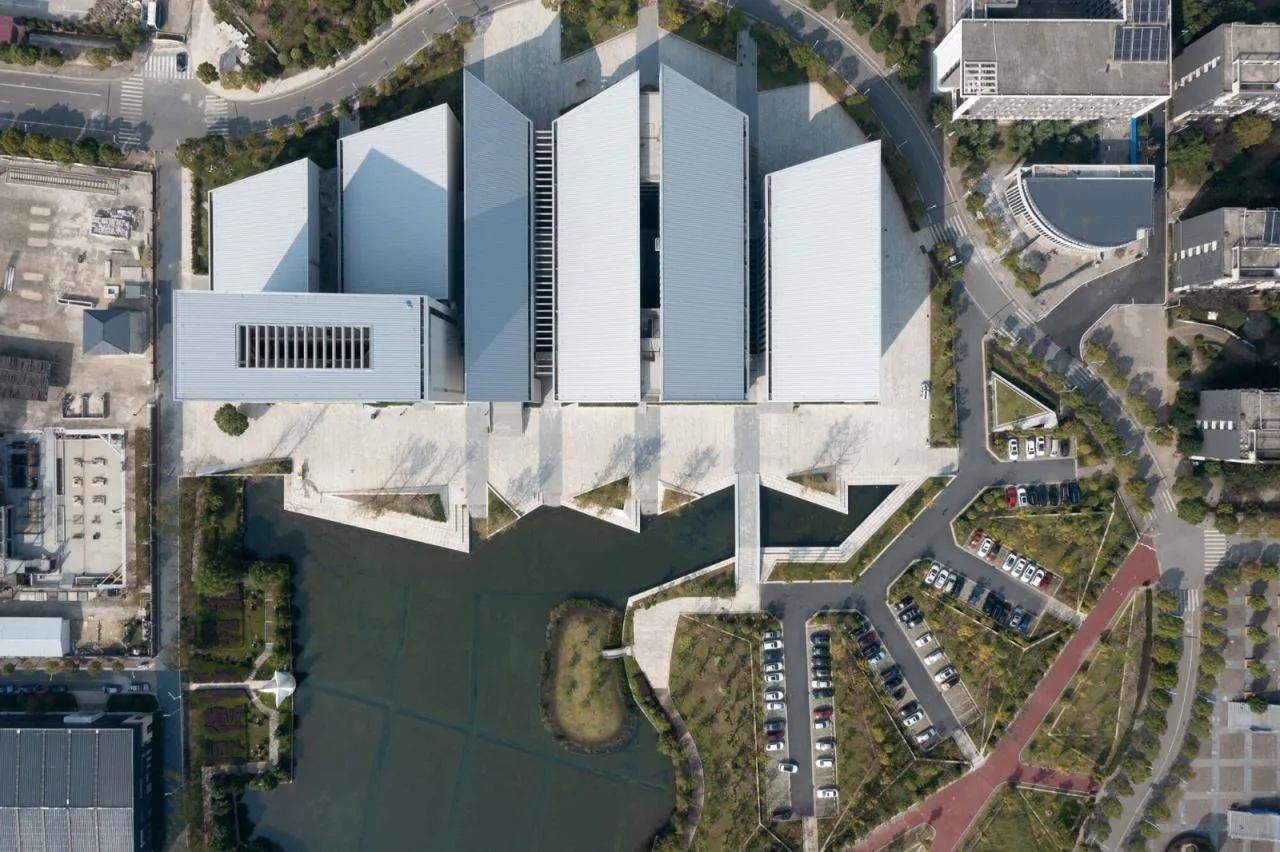
Overview: The Graphic and Text Information Comprehensive Building spans a total floor area of 31,266 square meters. This multifunctional campus complex incorporates a library, administrative offices, a covered playground, online classrooms, dining facilities, and more. Situated at the heart of the campus, it anchors the central landscape axis, with the main landscape lake to the south and a mountain park to the north.
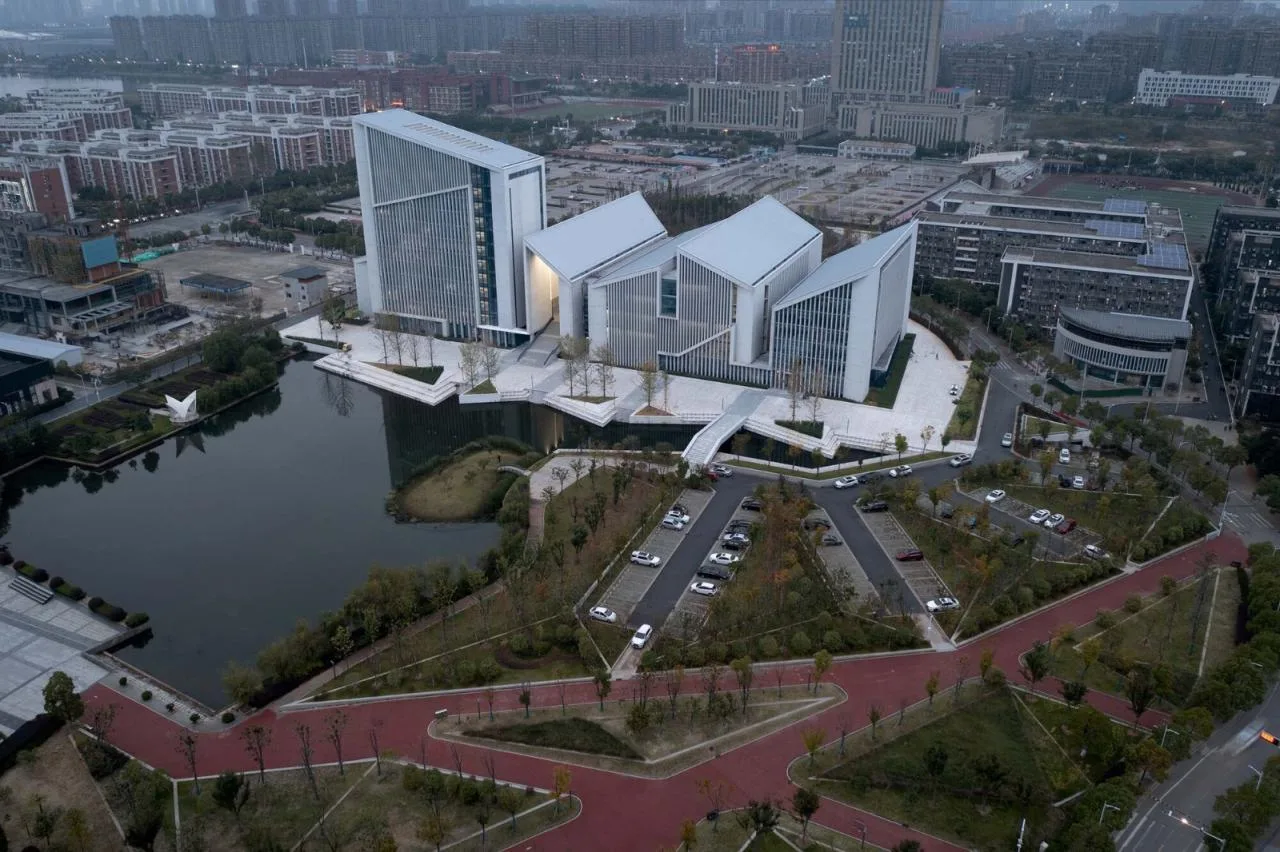
The site presents a tight and irregular plot, requiring the building to accommodate diverse functions including library spaces, office areas, and a sheltered playground. Managing complex pedestrian traffic flows is a key challenge. Additionally, it is critical to minimize the visual and spatial barriers created by the large-scale buildings between the central lake to the south and the mountain park to the north, preserving the continuity of the campus’s north-south landscape and sightlines.
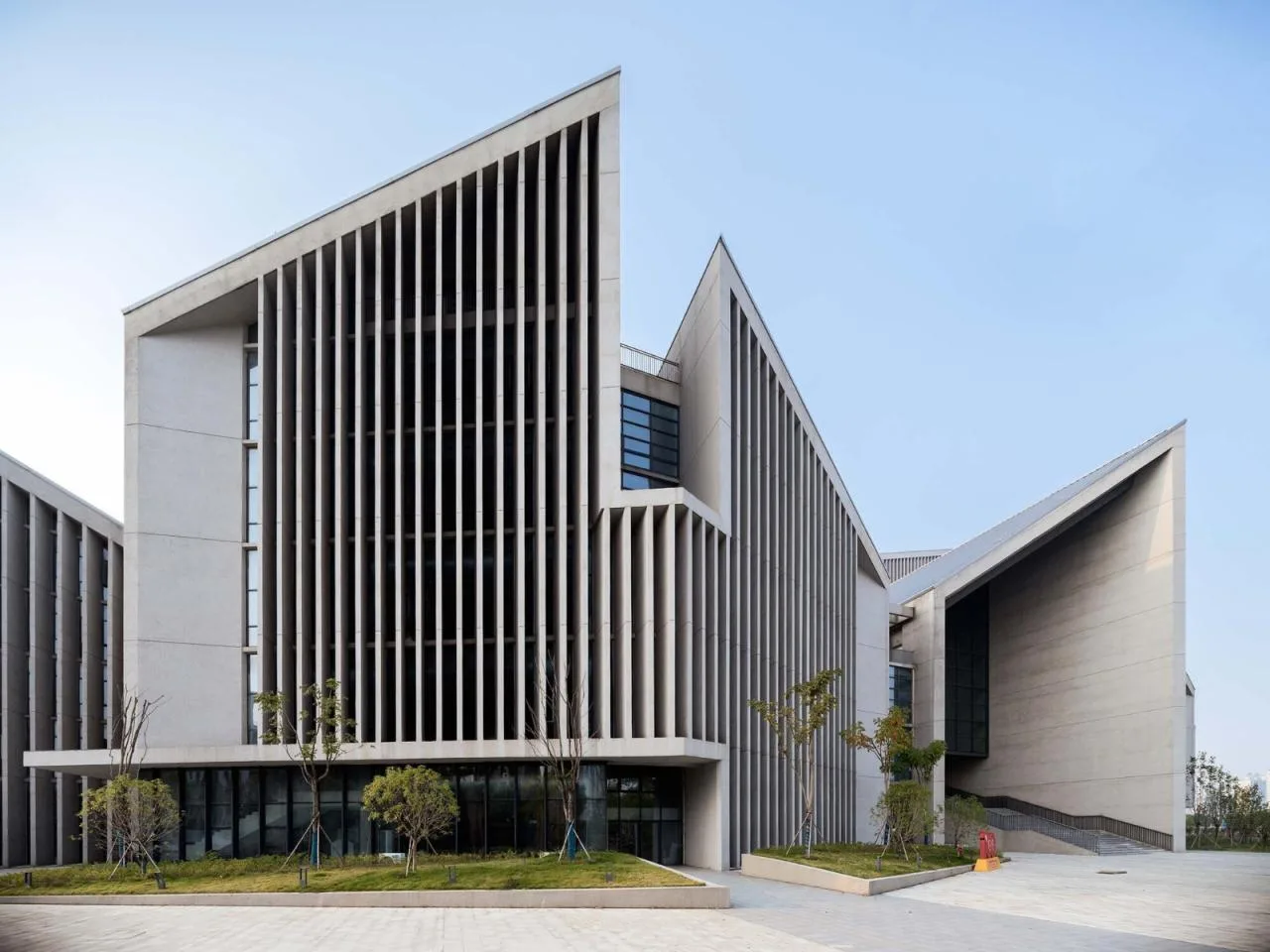
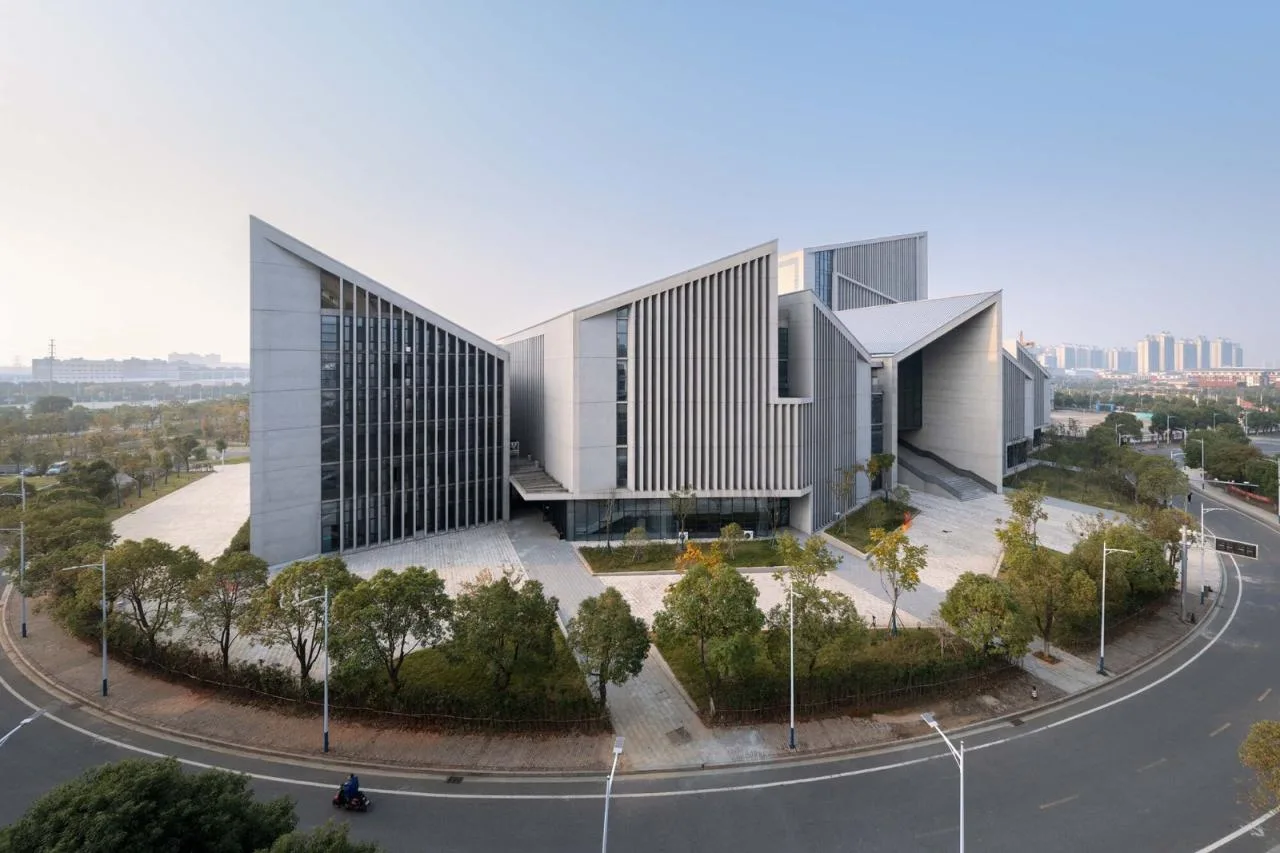
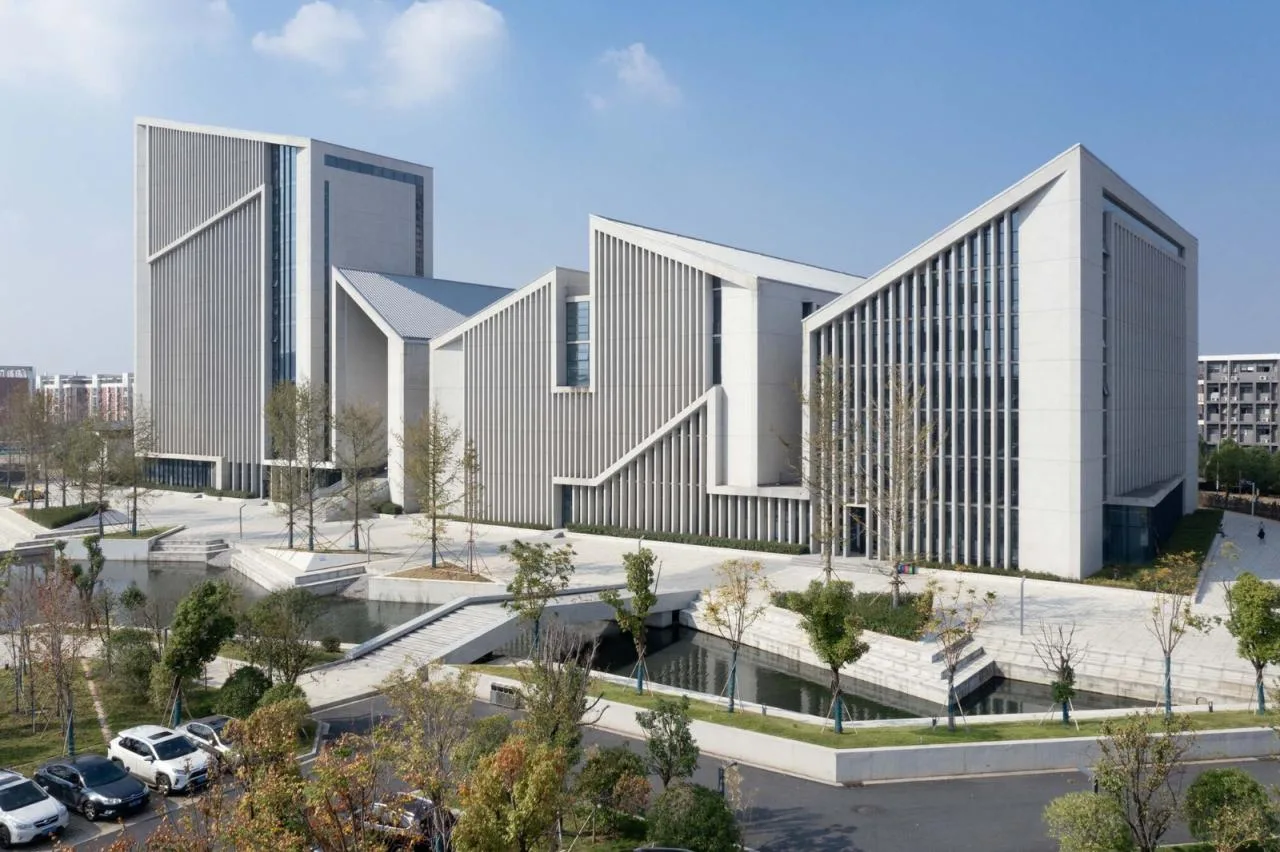
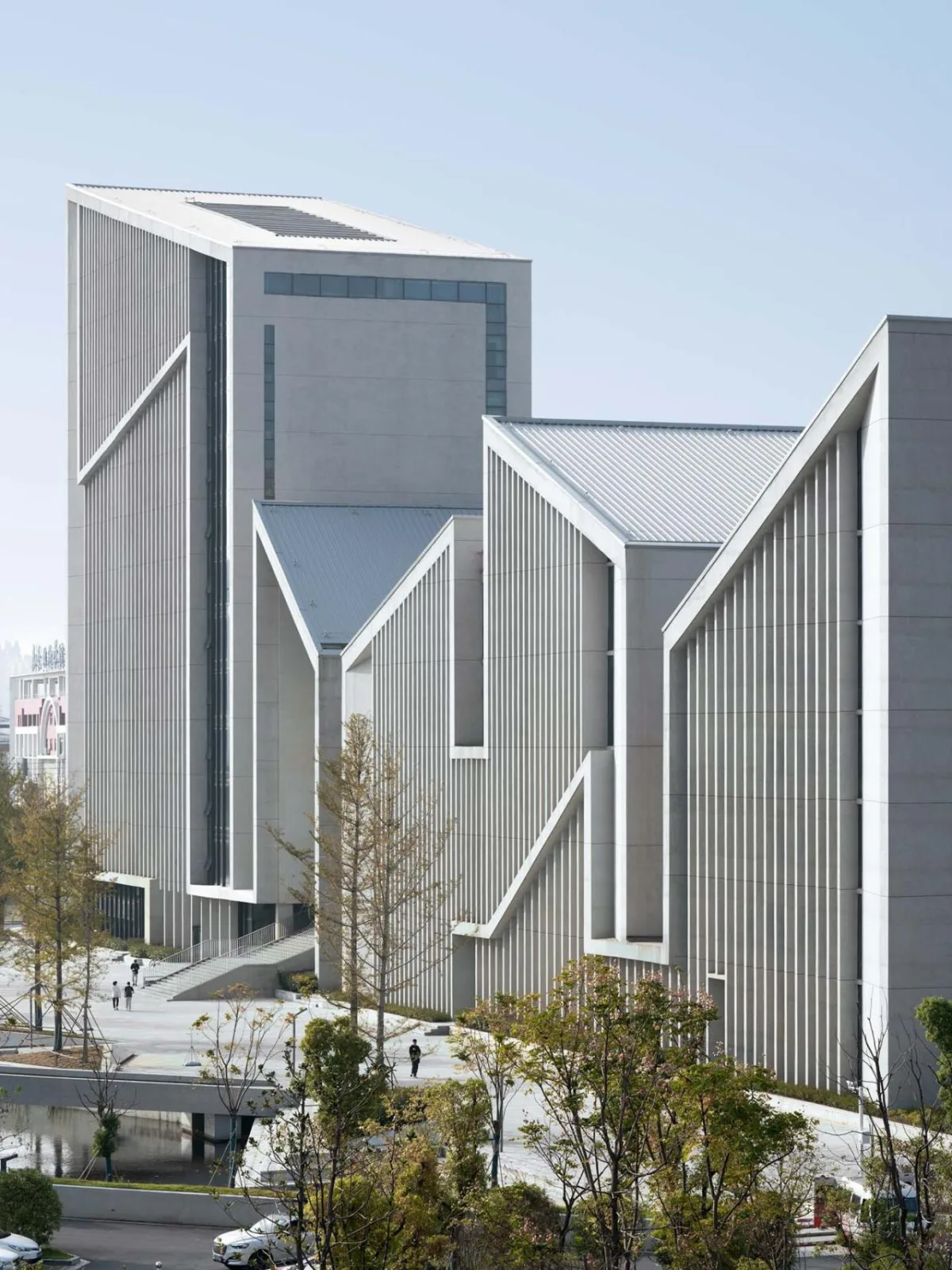
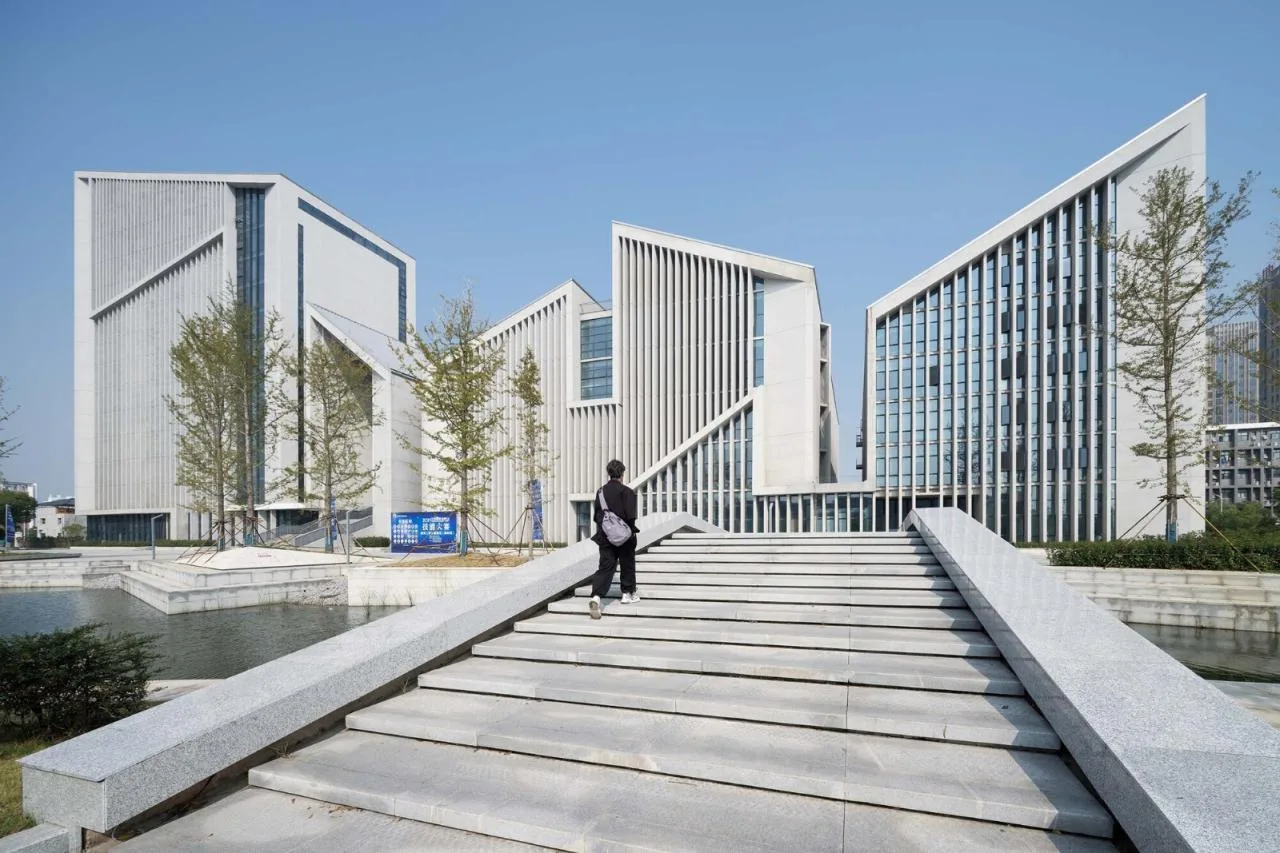
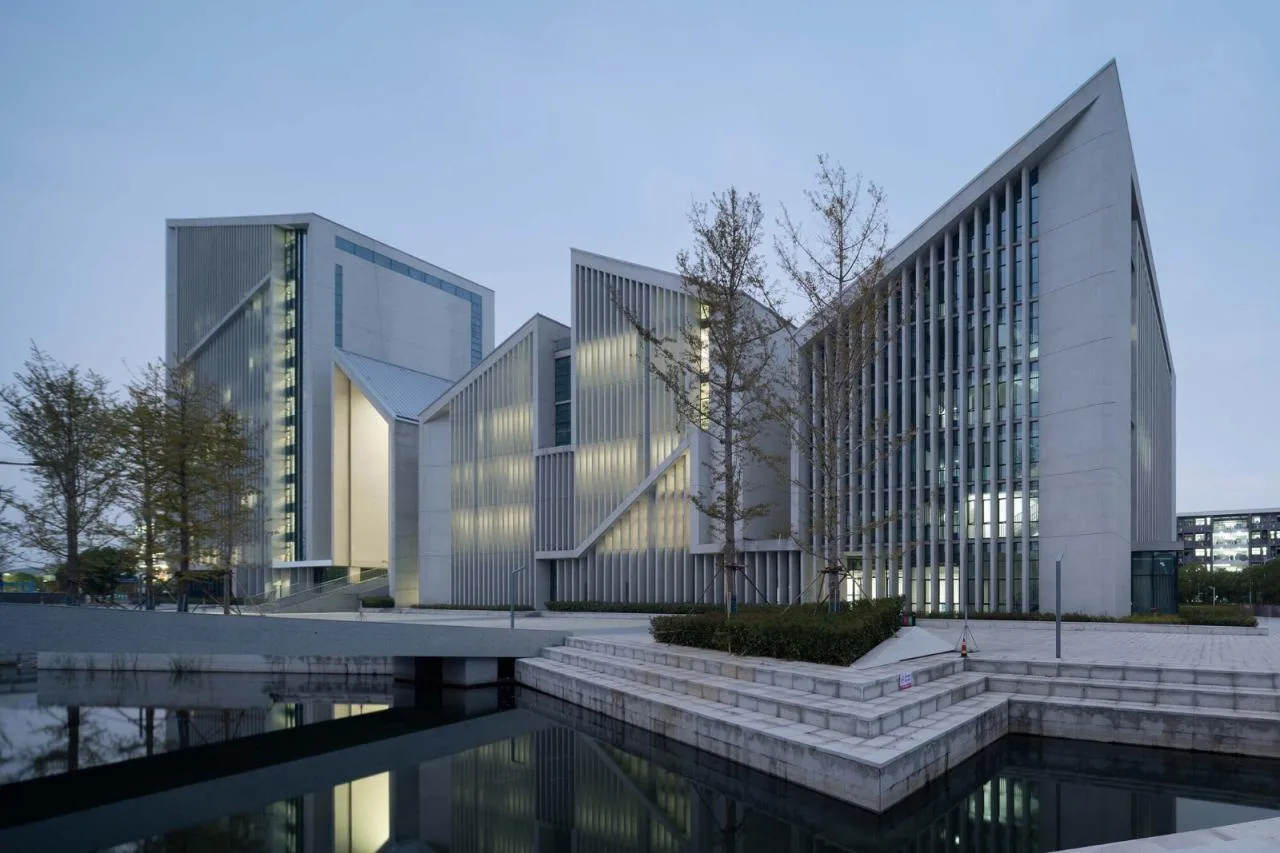
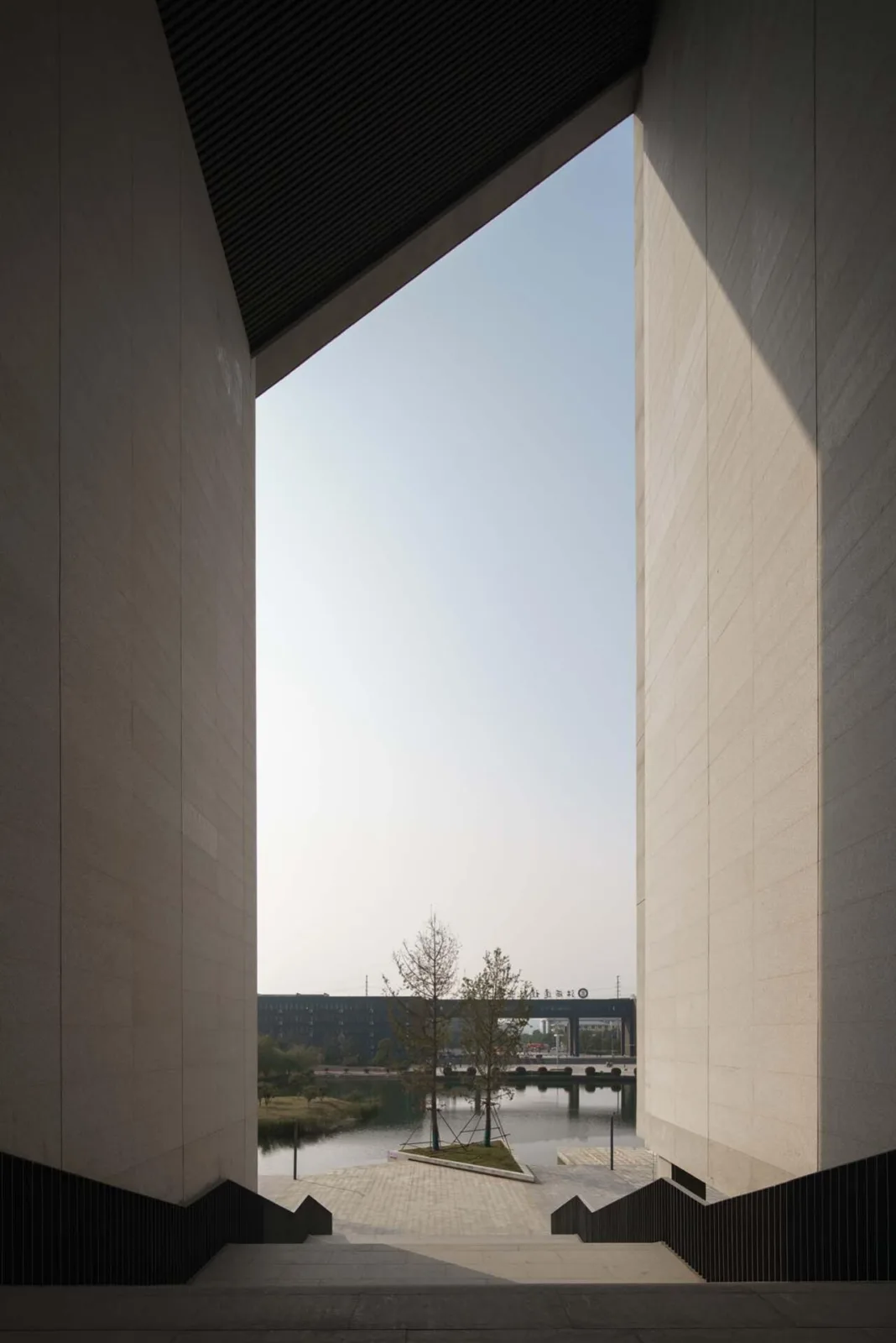
The design strategy draws inspiration from traditional “cold alleys” by integrating five north-south oriented courtyard crevices. This approach fragments the building into six linear strips, each corresponding to specific functions. These vertical courtyards connect the north and south landscapes and maintain sightline continuity, transforming the building into a vital link between campus zones.
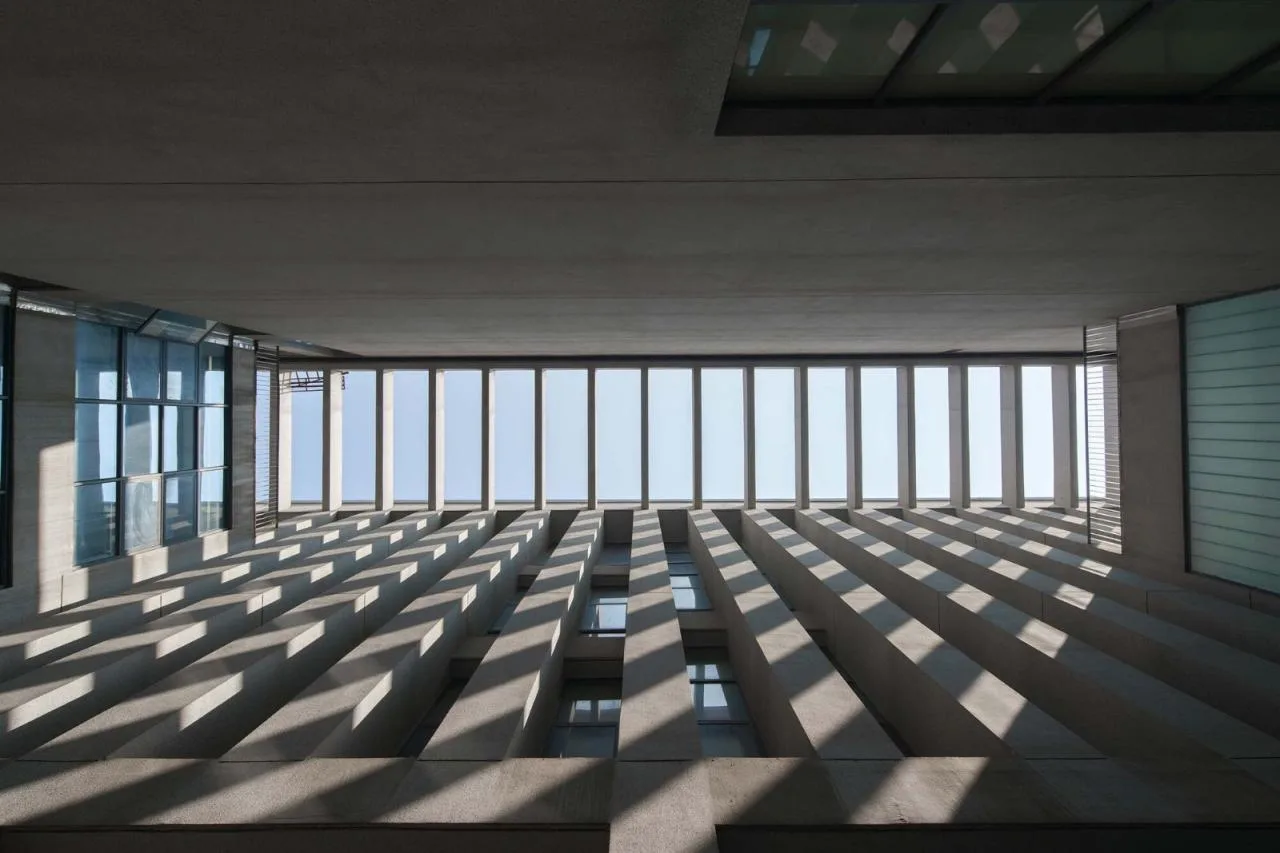
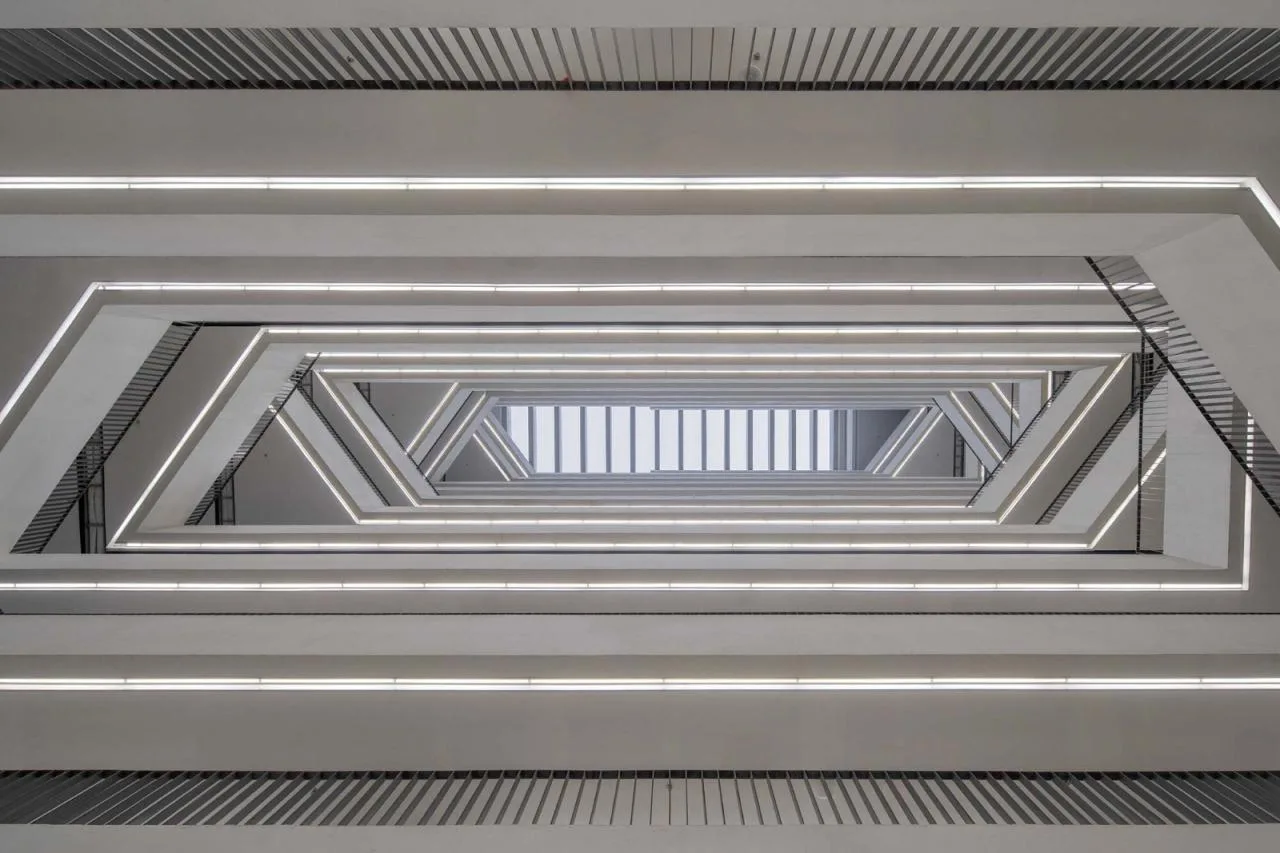
Moreover, the separation into functional blocks enhances natural ventilation and daylighting through the courtyards, reducing dependency on air conditioning and supporting cost-effective passive environmental control.
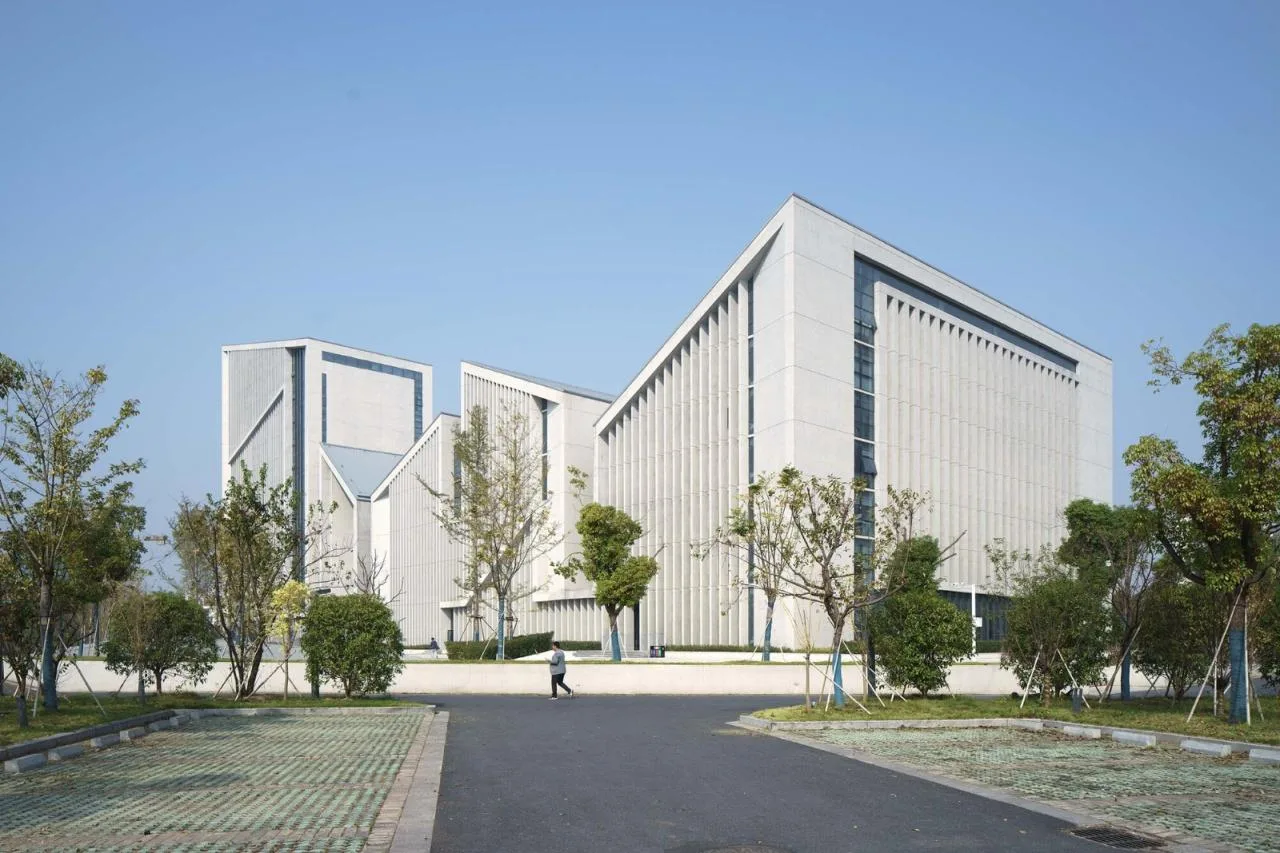
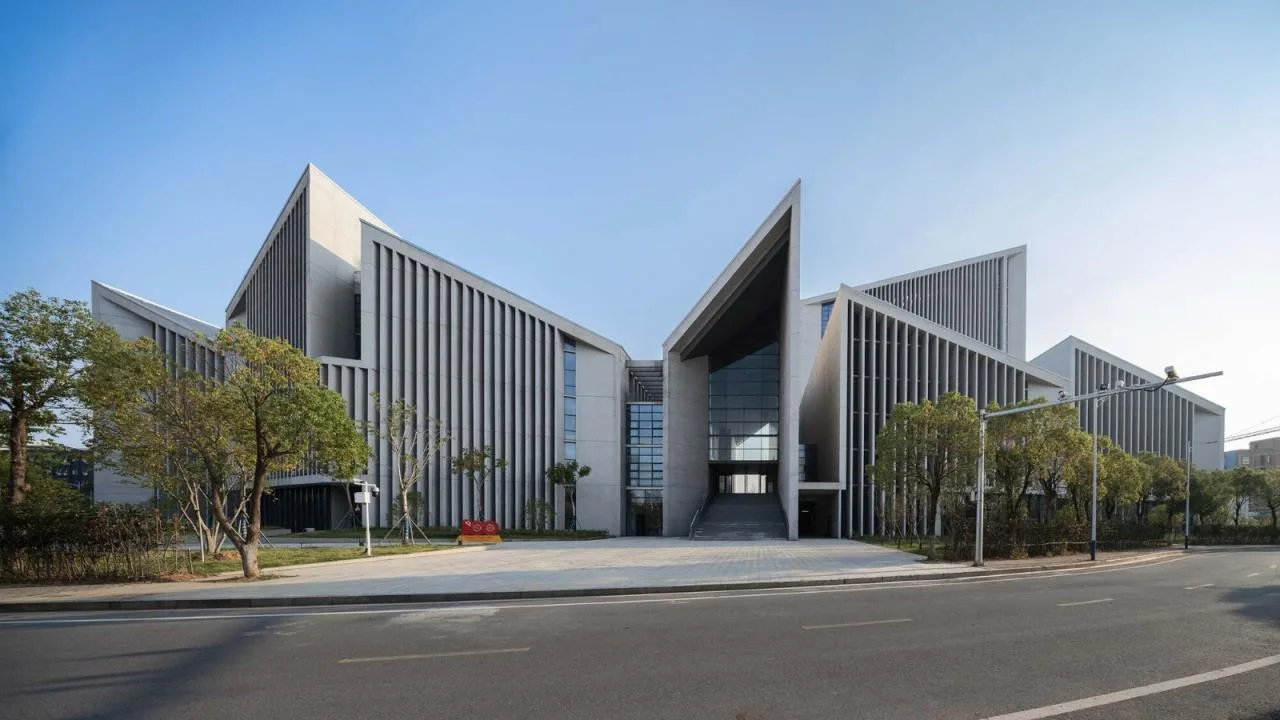
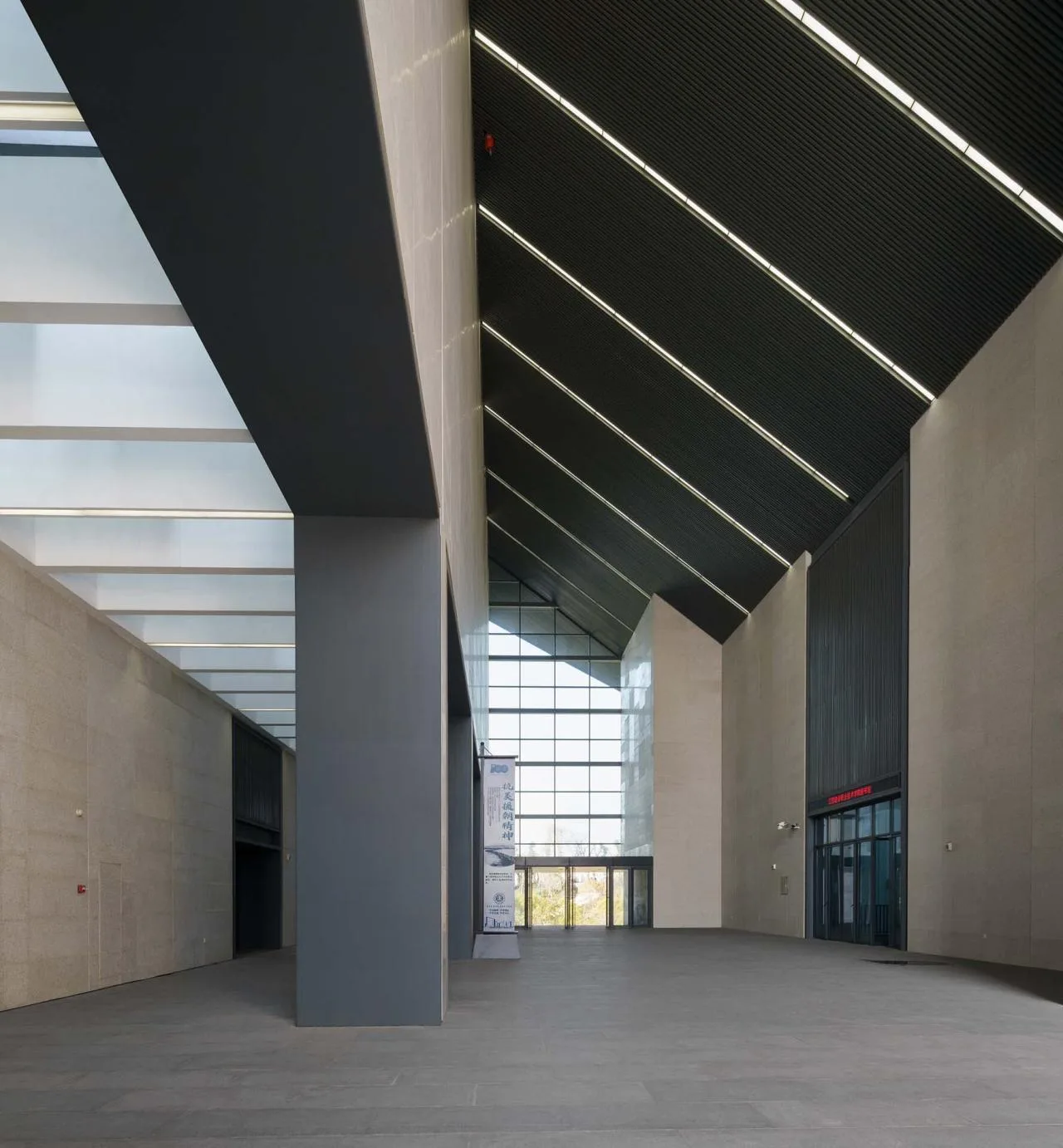
To address traffic flow and zoning challenges among the library, administrative building, and covered playground, a central shared transit system is placed between these three blocks. This arrangement manages complex circulation by channeling movement through an open, comprehensive entrance hall. Additionally, the “dynamic” covered playground is physically separated from the “quiet” library to prevent noise interference.
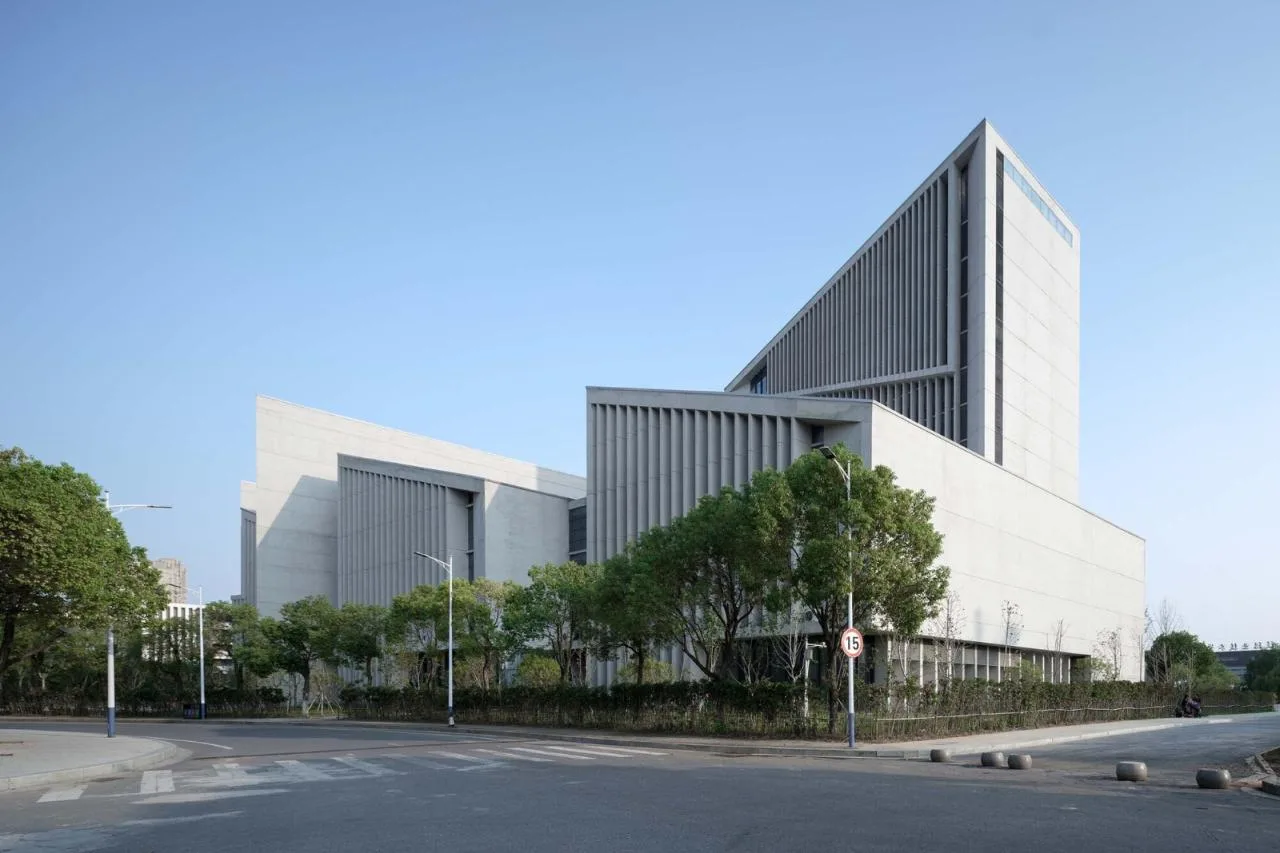
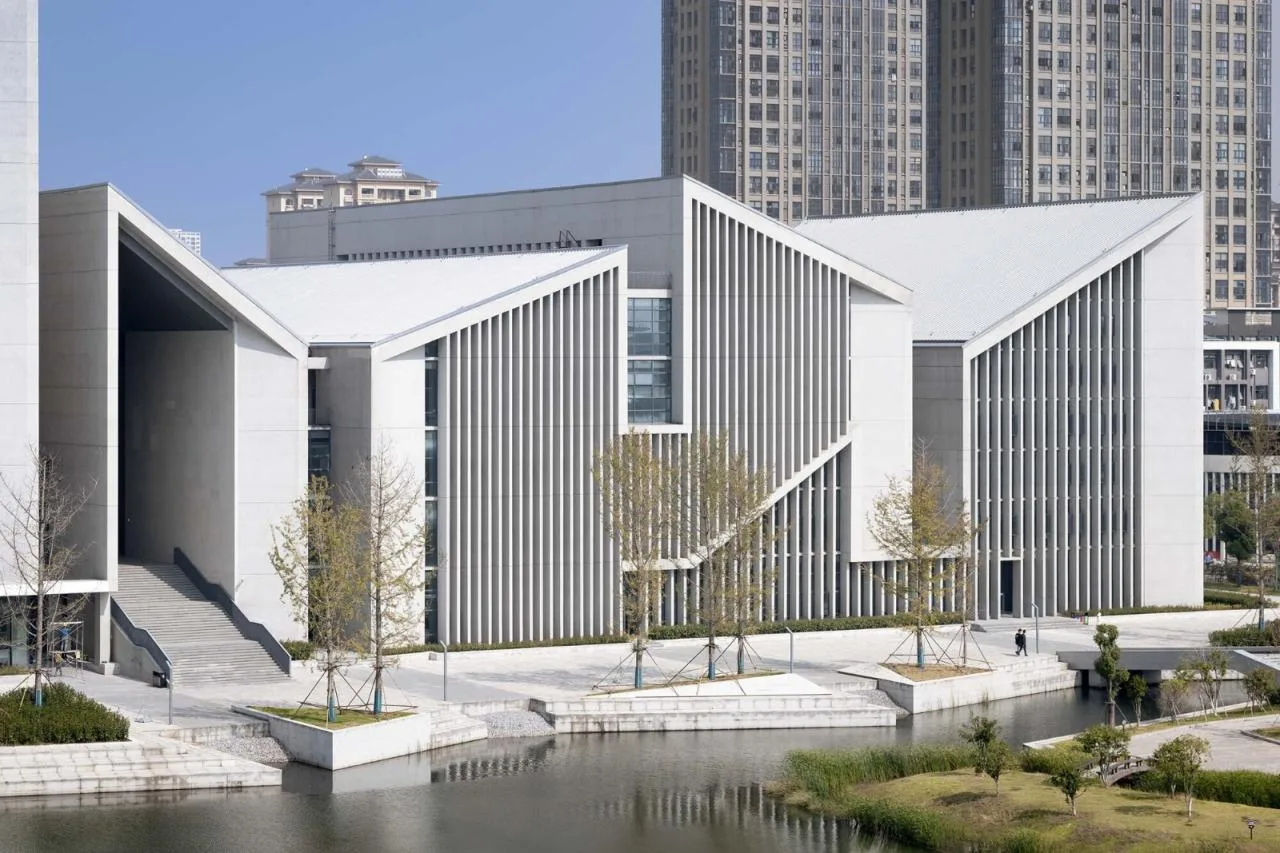
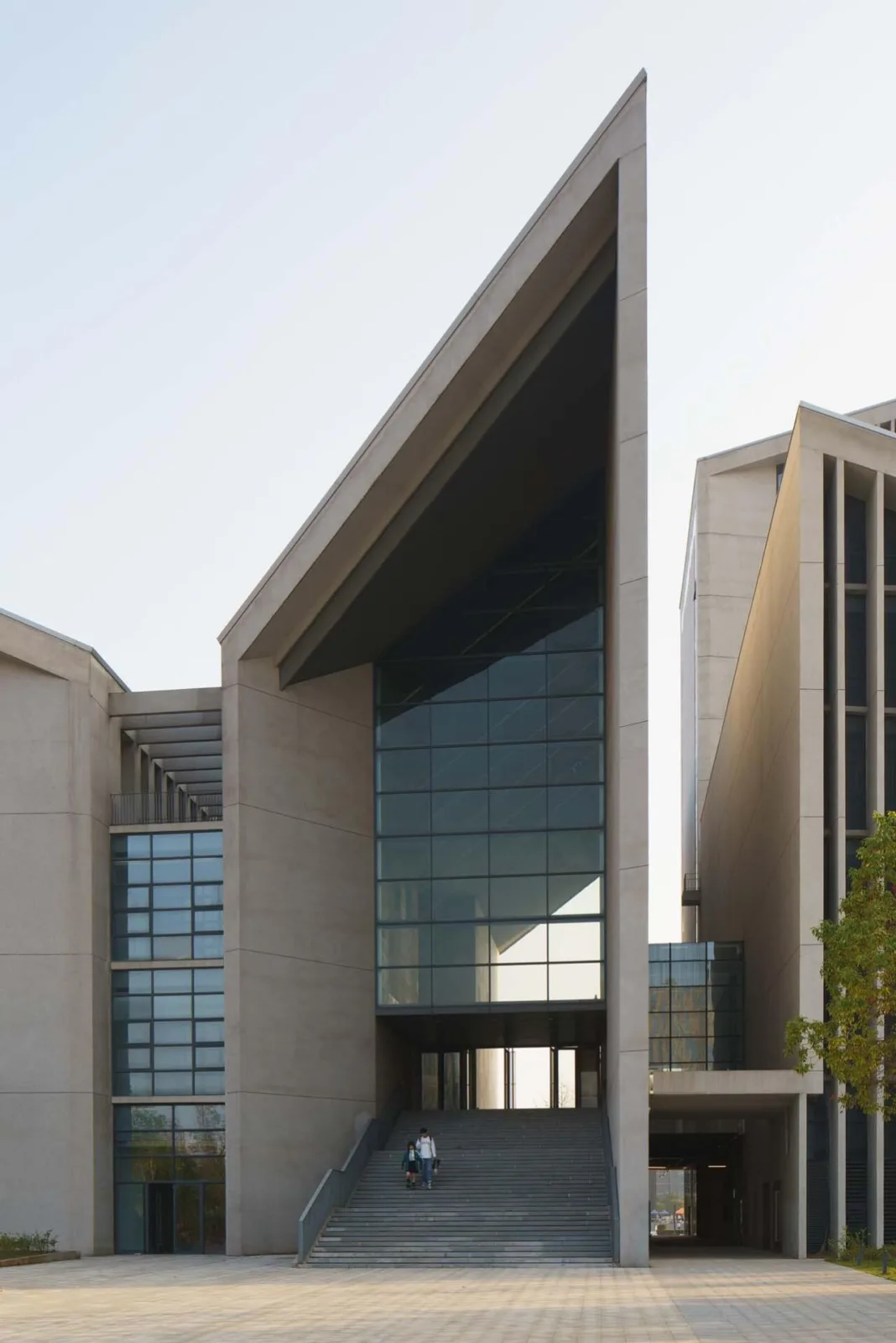
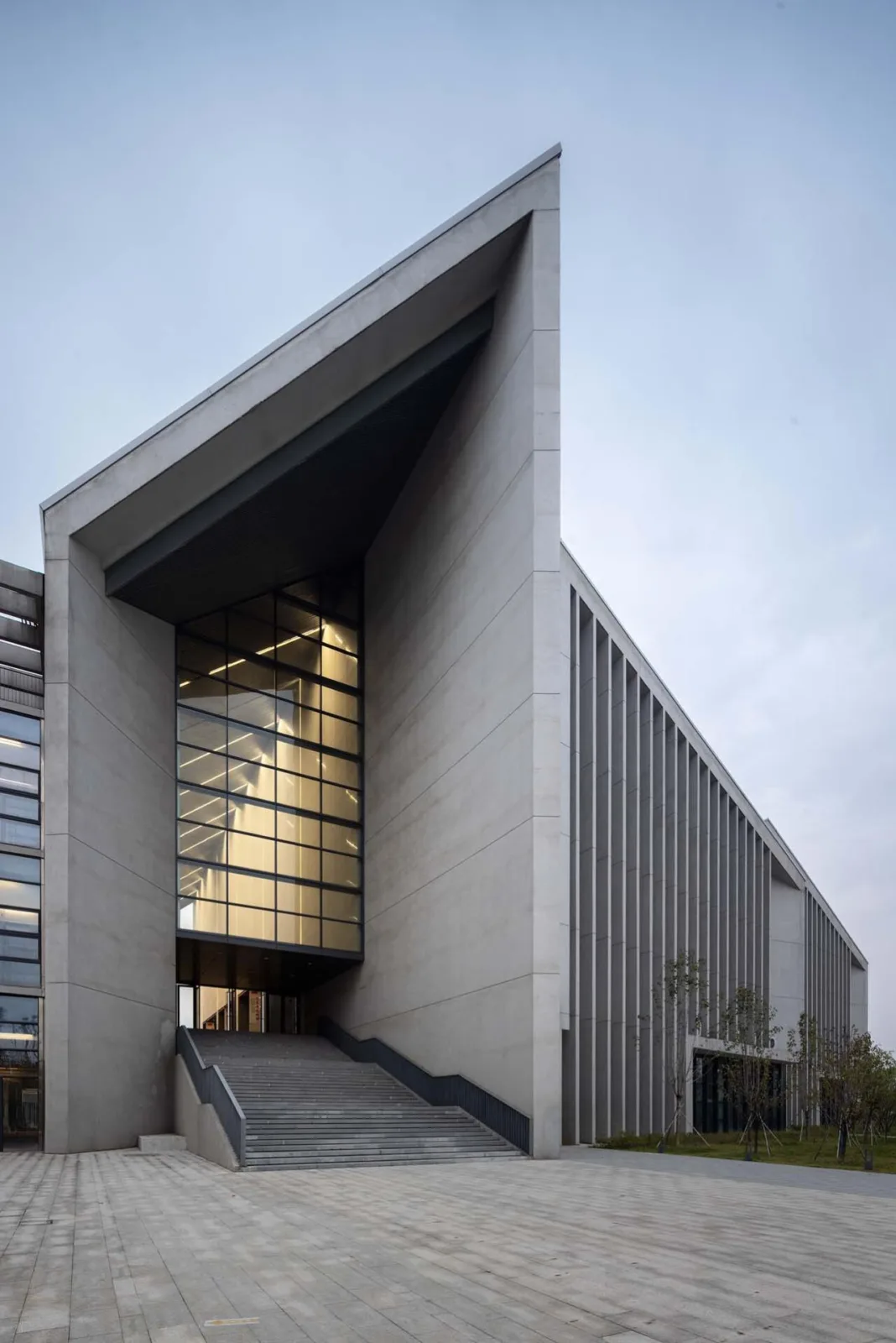
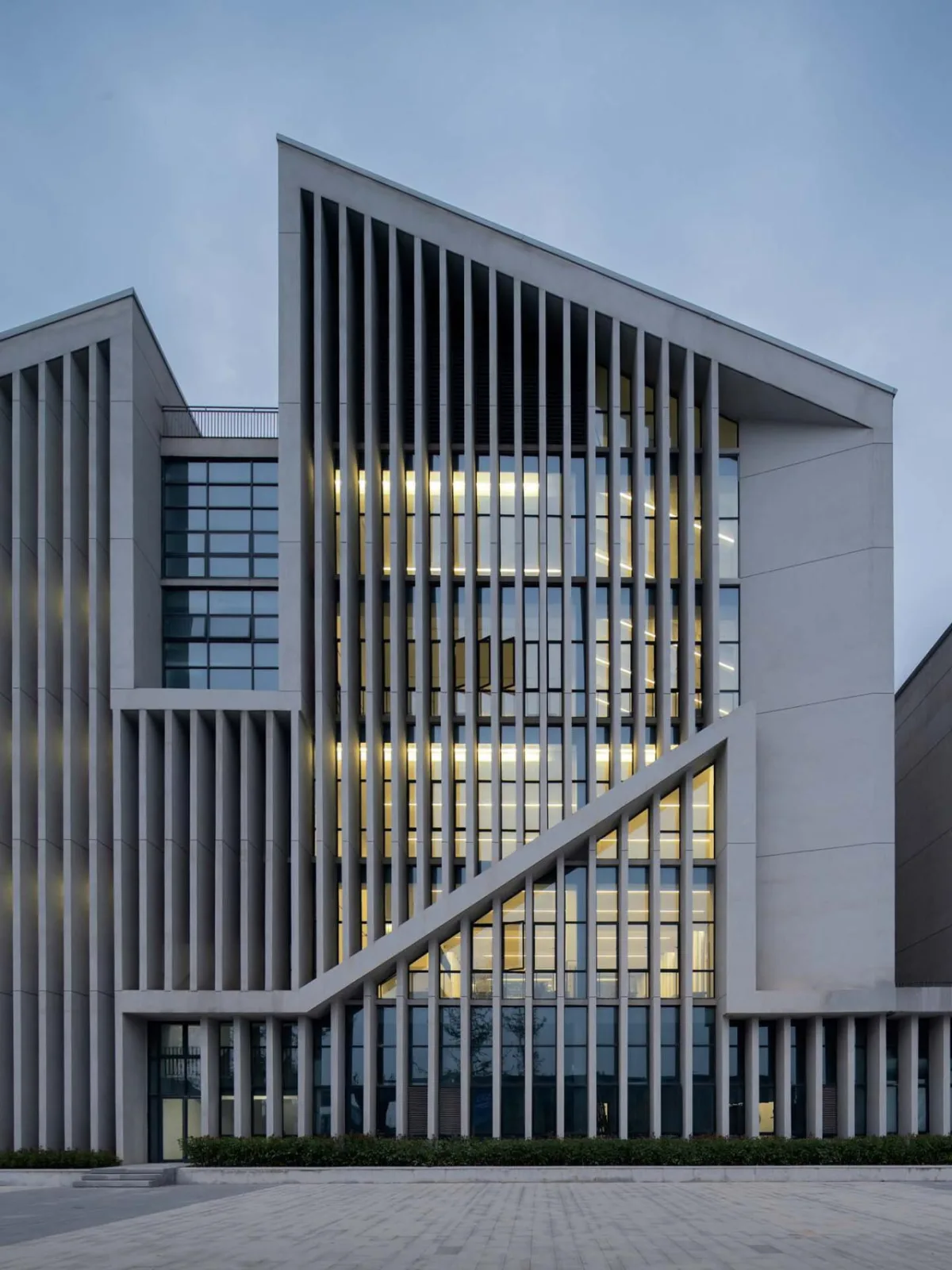
The building’s south façade features consistent vertical strips, while the north façade adapts to the road’s shape through angled cuts and turns. The roof undulates with varying heights, connecting the functional blocks. Both north and south façades are clad in concrete vertical louvers with varying spacing and depths, emphasizing architectural cohesion and creating a distinctive landmark.
Project Drawings
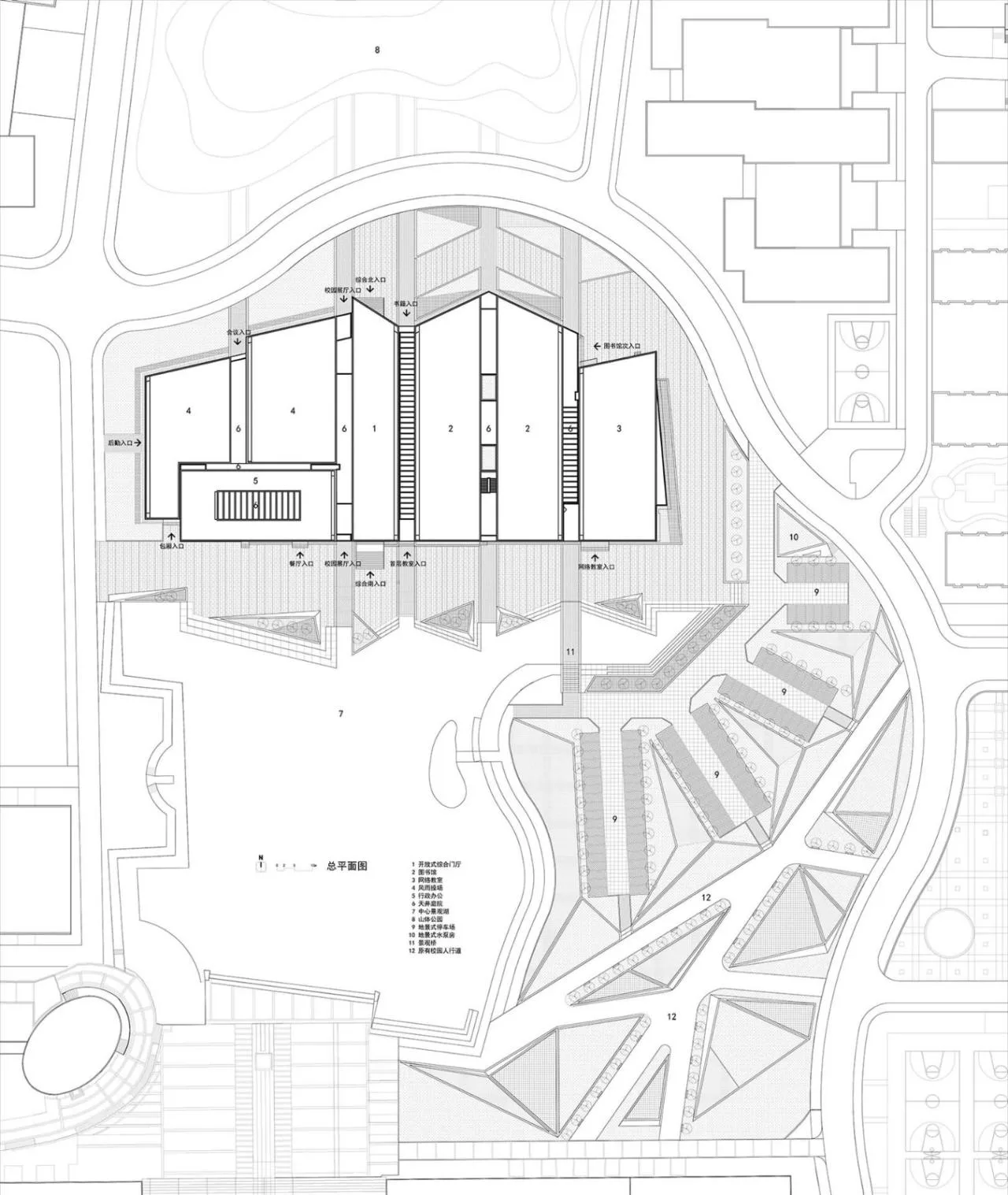
△ General Layout Plan
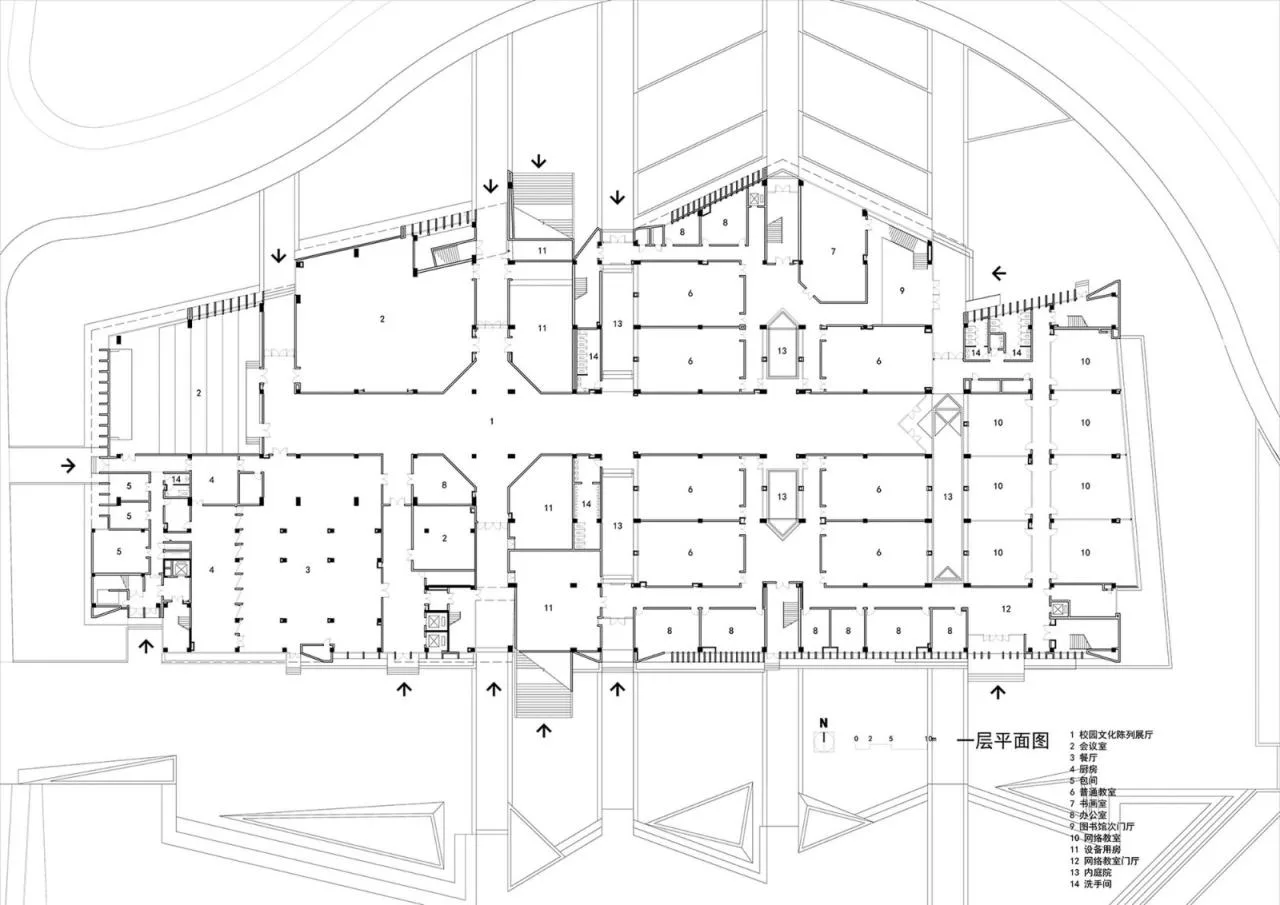
△ First Floor Plan
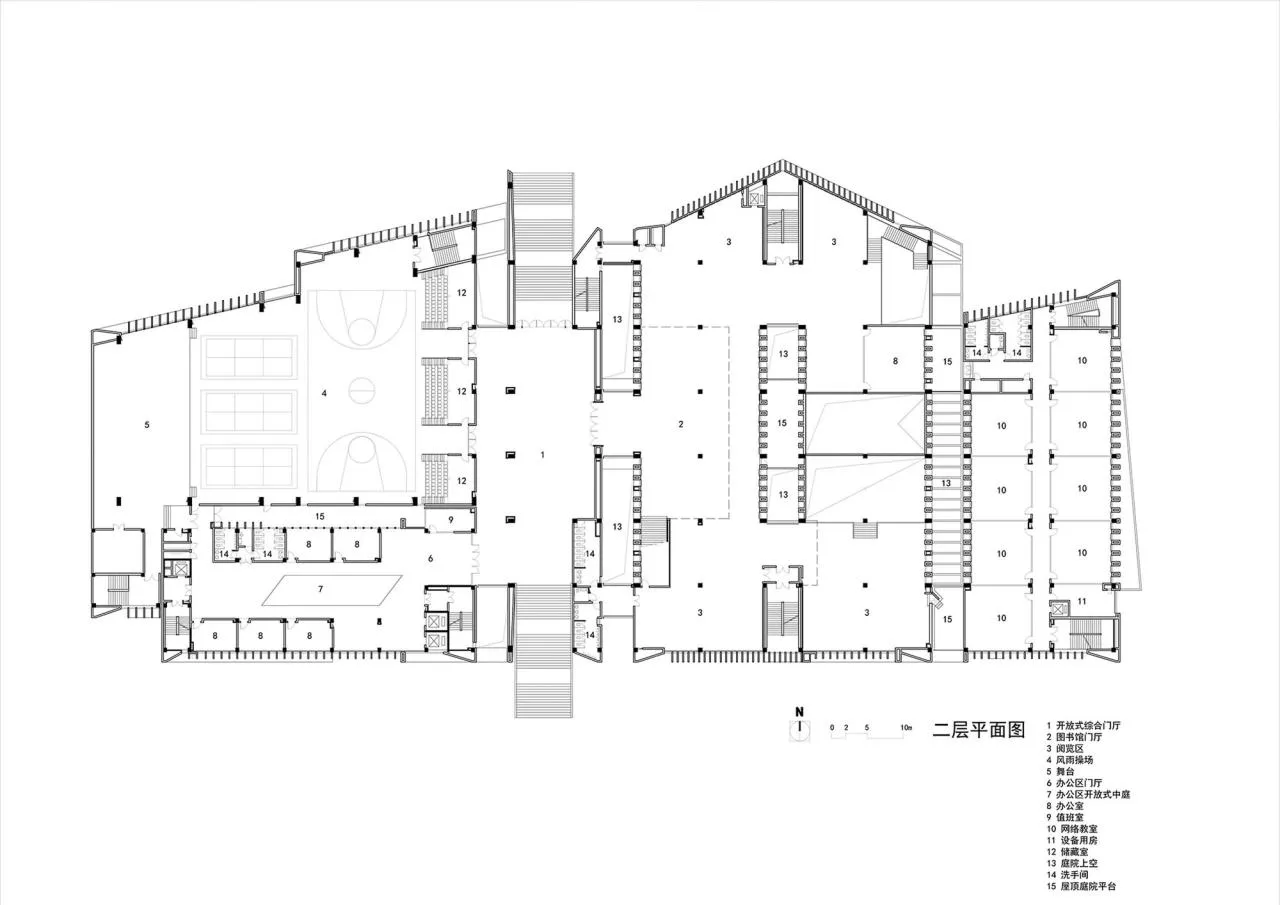
△ Second Floor Plan
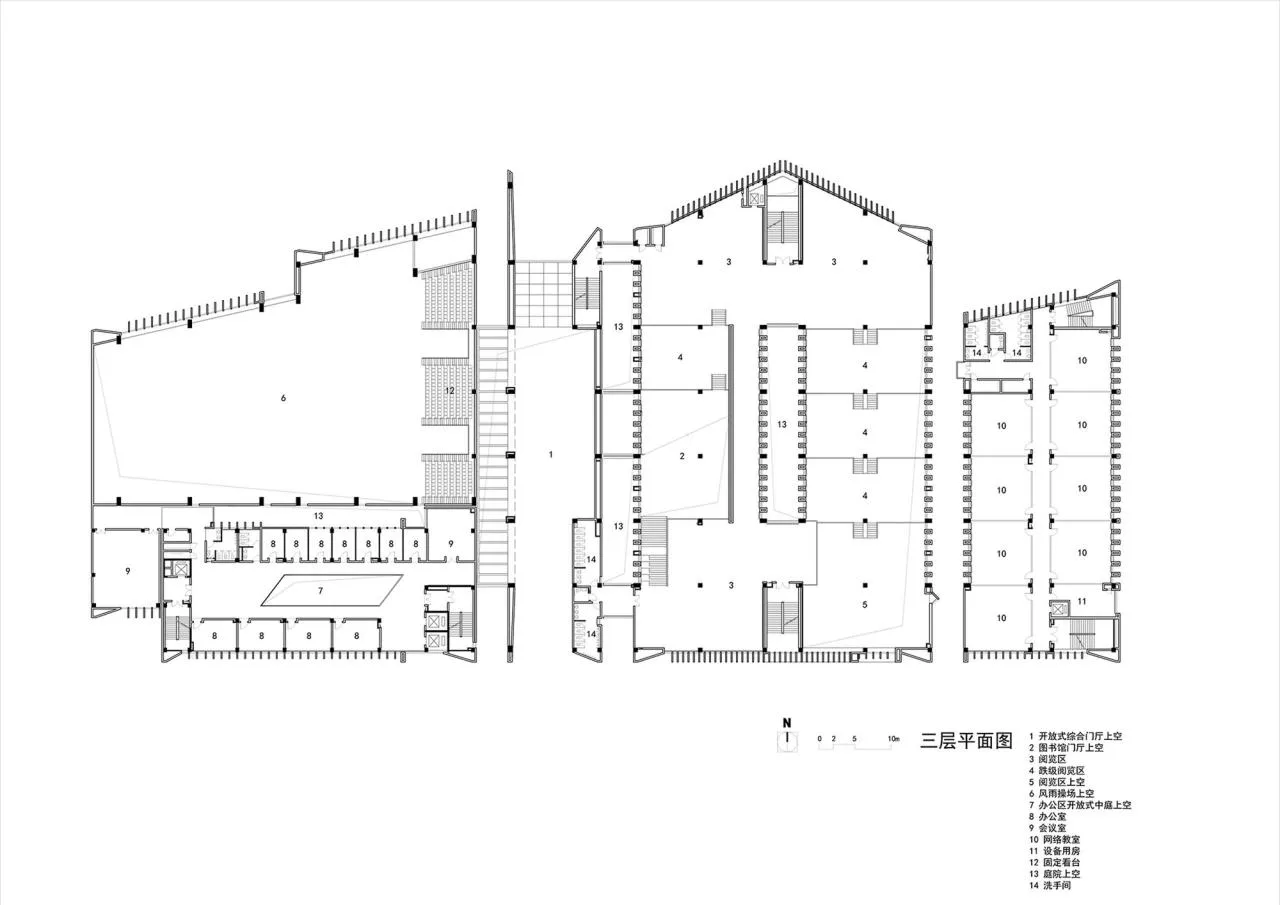
△ Third Floor Plan
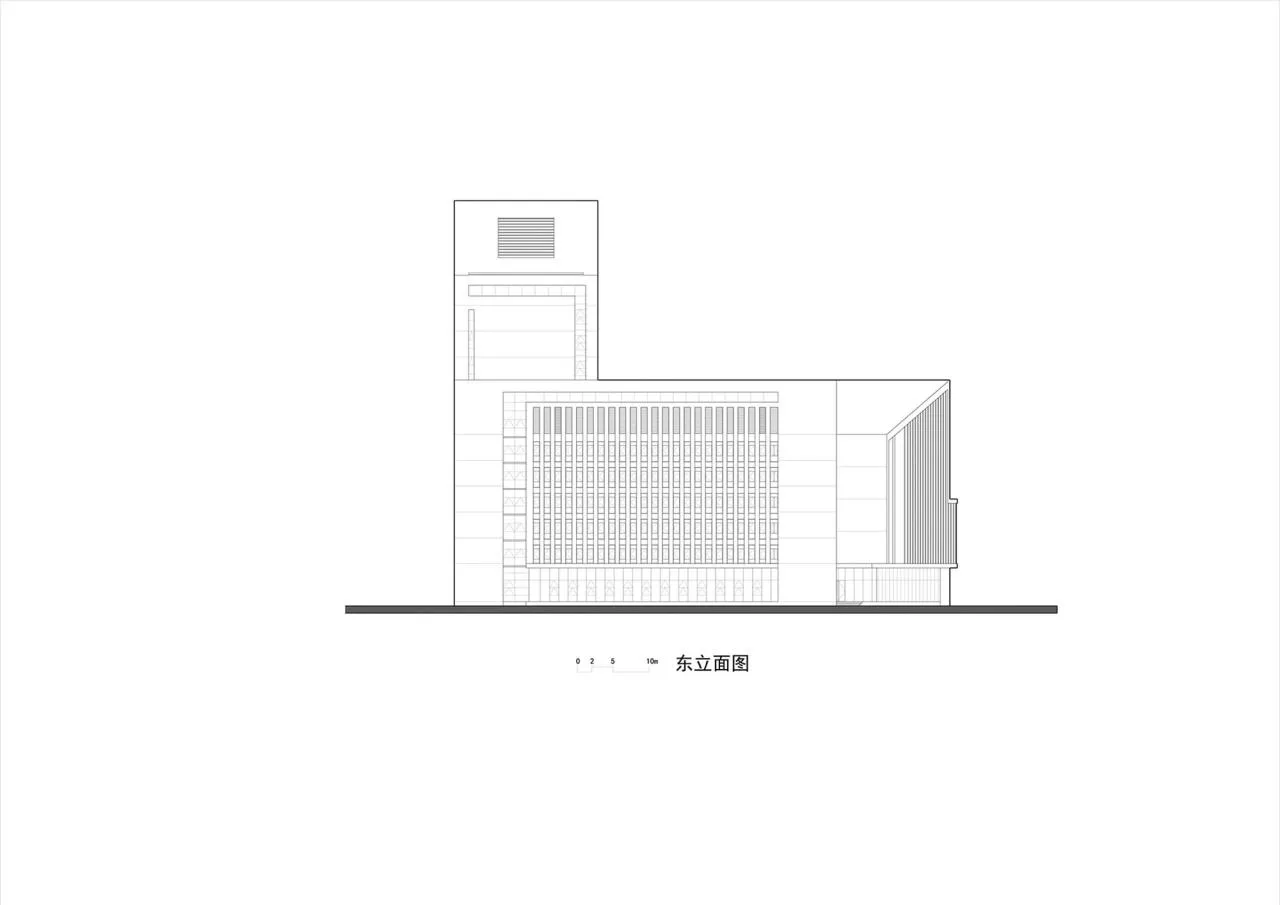
△ Elevation Drawing
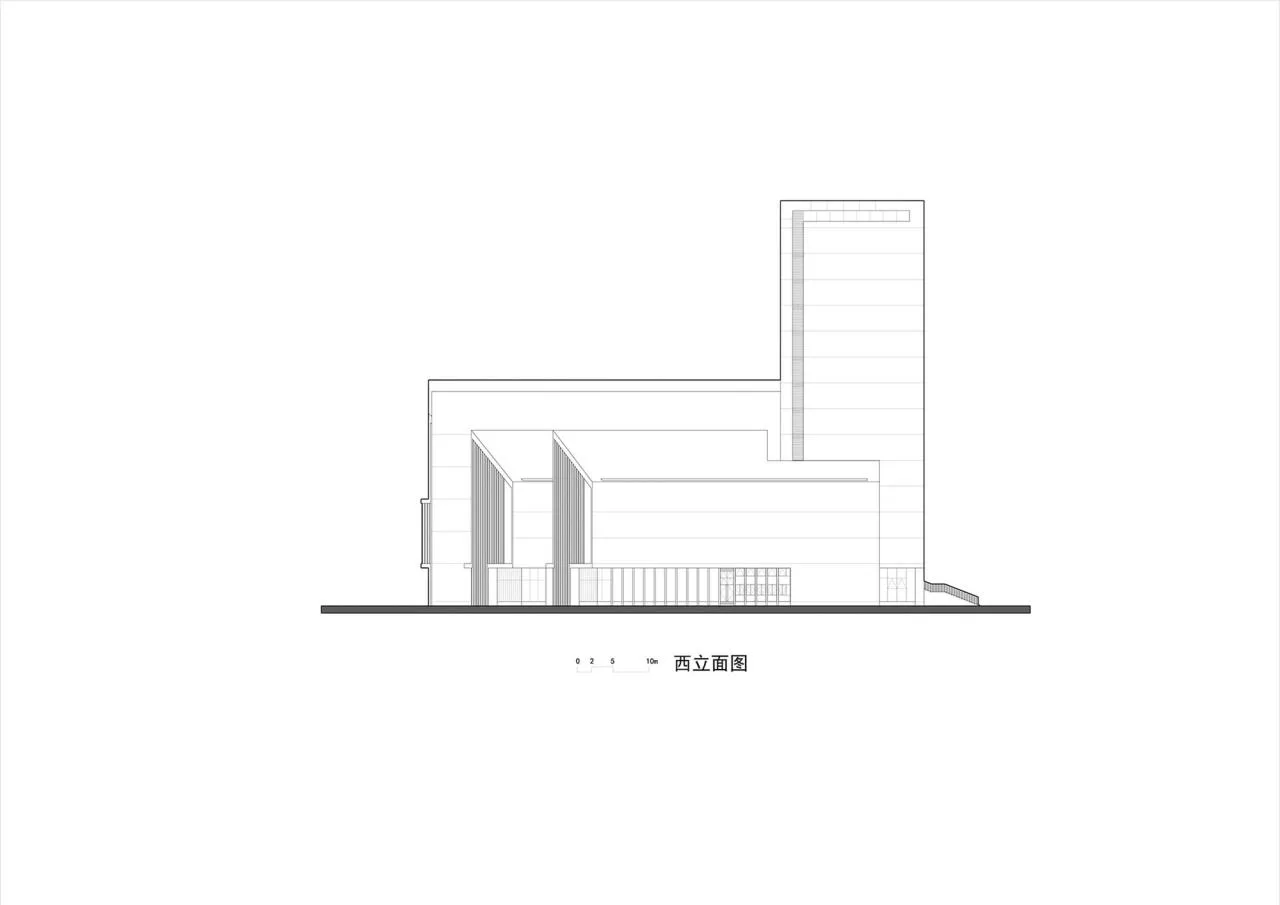
△ Elevation Drawing
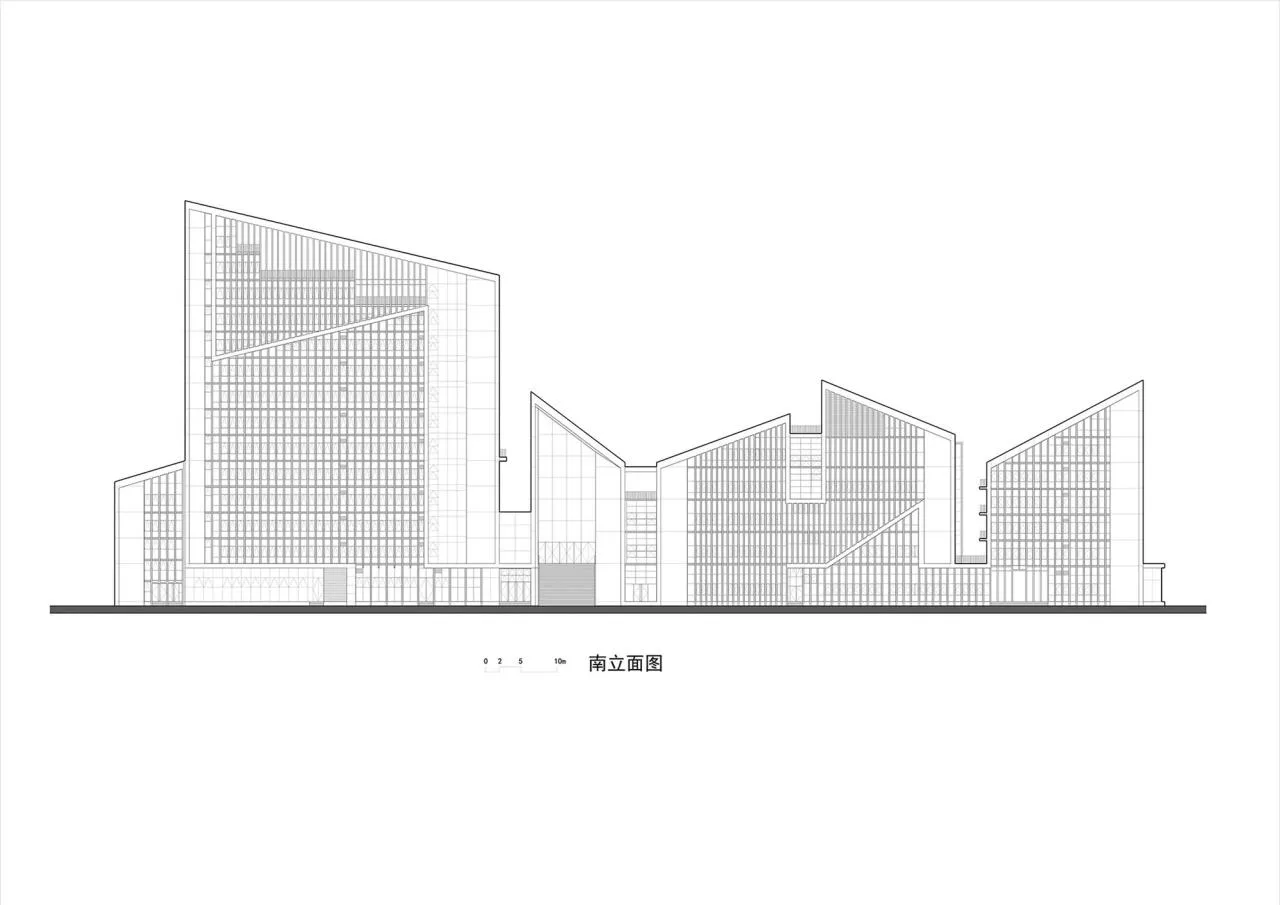
△ Elevation Drawing
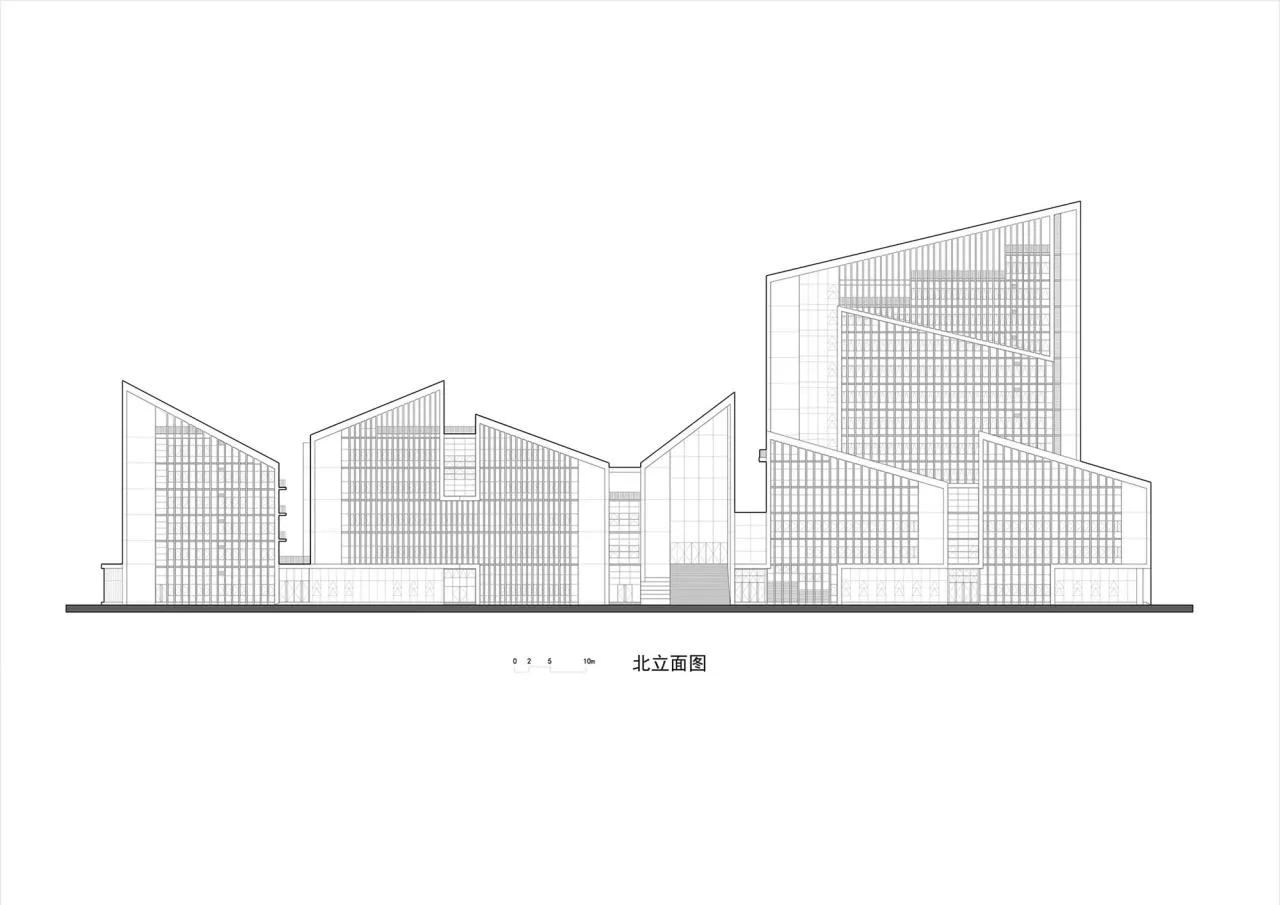
△ Elevation Drawing
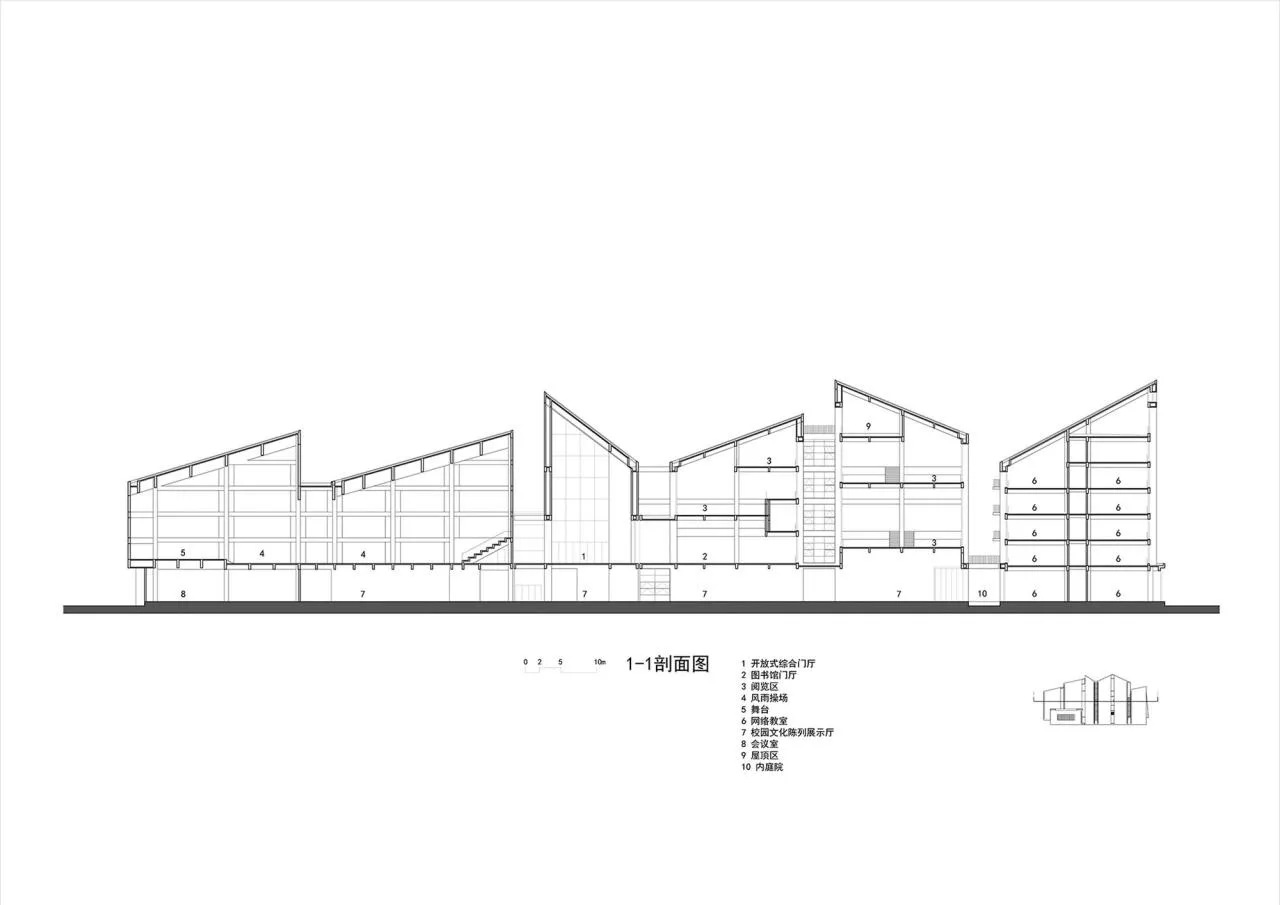
△ Section Diagram
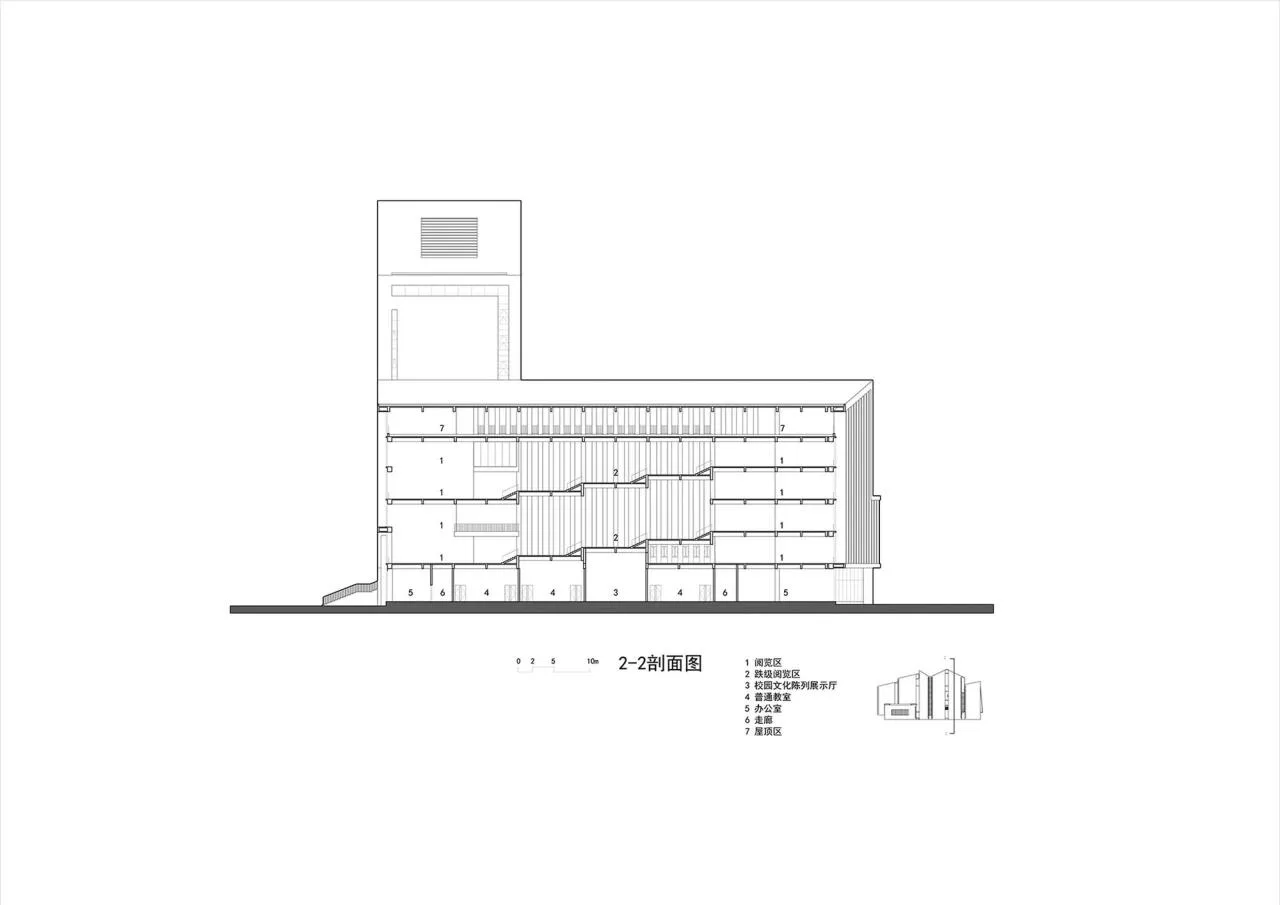
△ Section Diagram

△ Analysis Chart
Project Information
Architect: Architectural Design and Research Institute of South China University of Technology
Area: 31,266 m²
Year: 2020
Photographer: SFAP
Lead Architects: Tao Zhi, Guo Qinen, Chen Zijian
Design Team: Guo Qinen, Lian Wenyu, Chen Tao, He Anyong
Structural Design: Lai Hongtao, He Zhiwei, Lin Sijia, Xiong Yong
Electrical Design: Huang Xiaofeng, Chen Tao
Water Supply and Drainage Design: Xiao Jingfang, Yan Zhenghui, Yu Xiaolong
HVAC Design: Chen Zuming, Chen Jie, Huang Zhixiang
Landscape Design: Guo Qinen, Ai Yang, Huang Chengjie
Interior Design: Guo Qinen, Chen Ke, Ai Yang, Huang Chengjie, Lian Wenyu
Client: Jiangxi Construction Vocational and Technical College
Location: Nanchang, China















Must log in before commenting!
Sign Up