
1. Project Overview
Project Name: Quxuan Headquarters Project
Location: AT0305146 Plot, Gaotang New Building Area, Tianhe Science and Technology Park, Tianhe District, Guangzhou City
Project Features: One of the key construction projects in Tianhe District, Guangzhou, in 2022
Total Investment: Approximately 270 million yuan
Project Description: The project consists of five separate buildings above ground and three basement levels. The basements are designed according to the site’s elevation differences, with up to two basement floors at each location. The project covers a total area of 10,476 square meters, with a total construction area of 30,077 square meters, including 16,286 square meters above ground and 13,791 square meters underground.
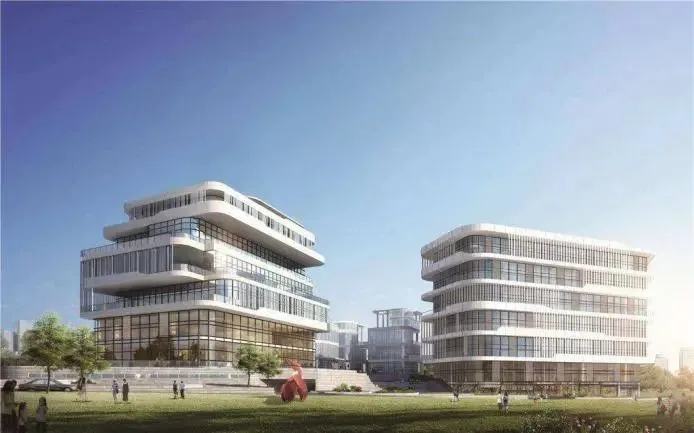
Figure 1: Project Rendering
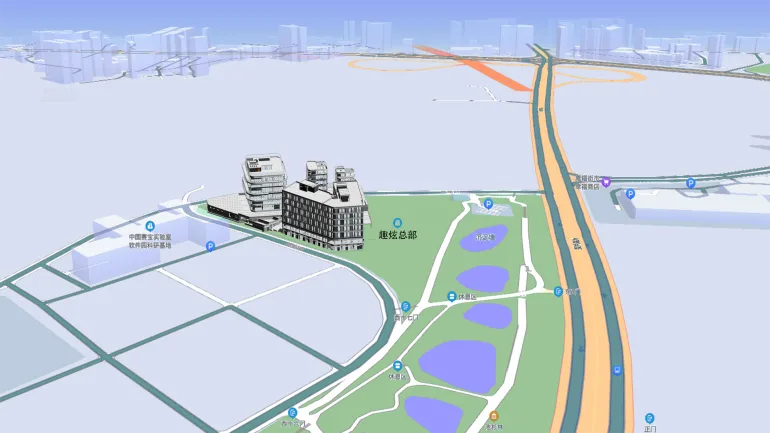
Figure 2: Project Location Schematic
2. Application of BIM Technology
1. Full Professional BIM Model Construction
Using CAD construction drawings, modeling guidelines, project BIM application instructions, and other references, BIM models were developed for multiple disciplines including architecture, structure, and mechanical and electrical engineering. This established a solid foundation for all subsequent BIM applications.
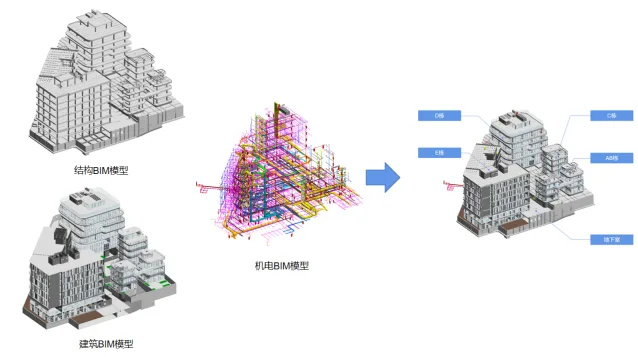
Figure 3: Full Professional BIM Model
2. Integrated Design Review
By integrating BIM models across disciplines, 28 issues were detected in the basement and 49 issues above ground. These were compiled into BIM verification reports and shared with the design team. Through consultations, all issues were resolved, allowing the finalized BIM model to serve as the basis for issuing construction design drawings. After approval and stamping by the design institute, these drawings became official blueprints for on-site construction. Identifying and addressing potential rework during the design stage significantly saves materials, time, and shortens the construction schedule.
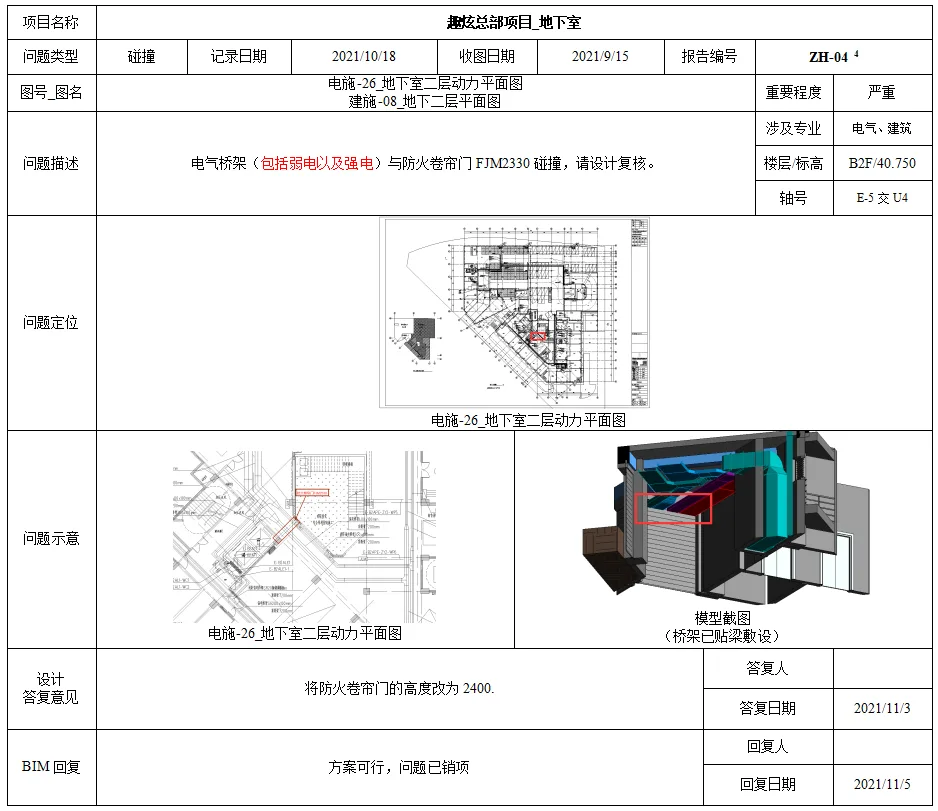
Figure 4: Collision Report
3. Detailed Pipeline Design and Net Height Analysis
Comprehensive deepening of pipeline design was conducted according to design standards, construction conditions, and project net height requirements. Corresponding construction guidance drawings were issued to help on-site teams clearly understand pipeline hierarchies, improving both visualization and construction quality.
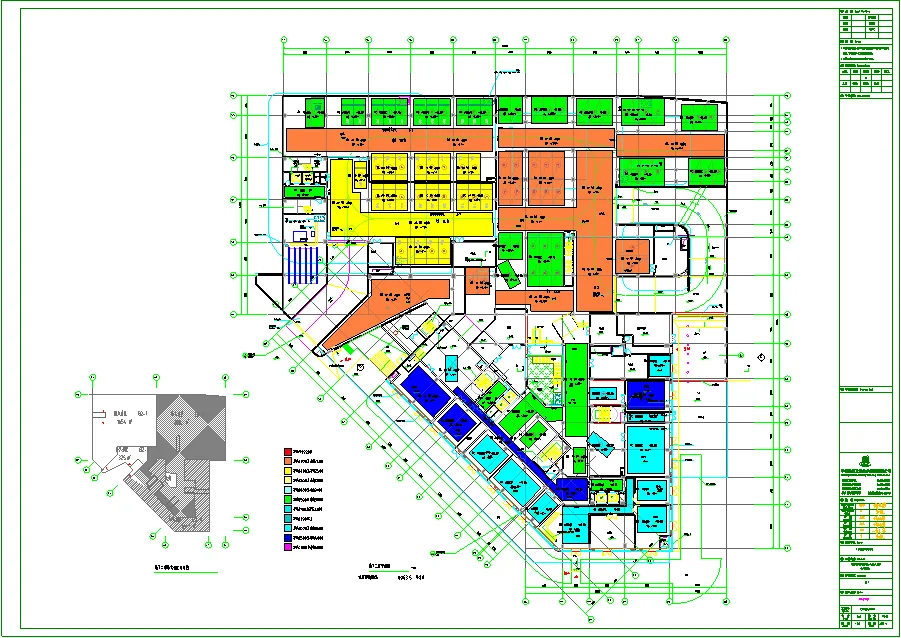
Figure 5: Net Height Analysis Chart
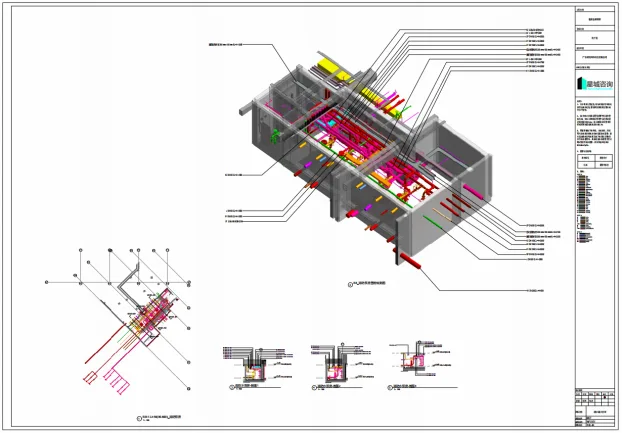
Figure 6: Detailed Pipeline Section
4. BIM Construction Drawing Review
The BIM model was adjusted based on construction drawing review feedback. The updated model was then exported and submitted to the “Guangzhou Housing Construction Engineering Construction Drawing 3D (BIM) Electronic Auxiliary Review System”. After passing the review, the BIM construction drawing review certificate was obtained, allowing construction approval.
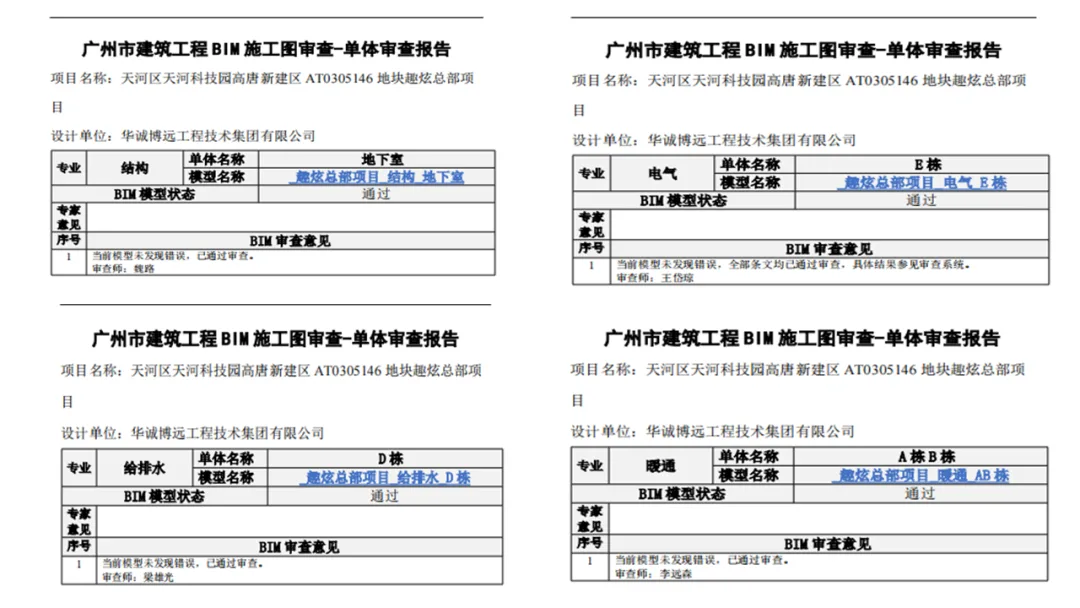
Figure 7: BIM Construction Drawing Review Certificate
3. Highlights of BIM Technology Application
This project complies with the directives outlined in the “Notice on Further Accelerating the Application of Building Information Modeling (BIM) Technology in Our City” and the “Notice on Trial Implementation of Three Dimensional (BIM) Electronic Auxiliary Review of Building Construction Drawings.” BIM technology was applied and construction drawing reviews were conducted during the design phase.
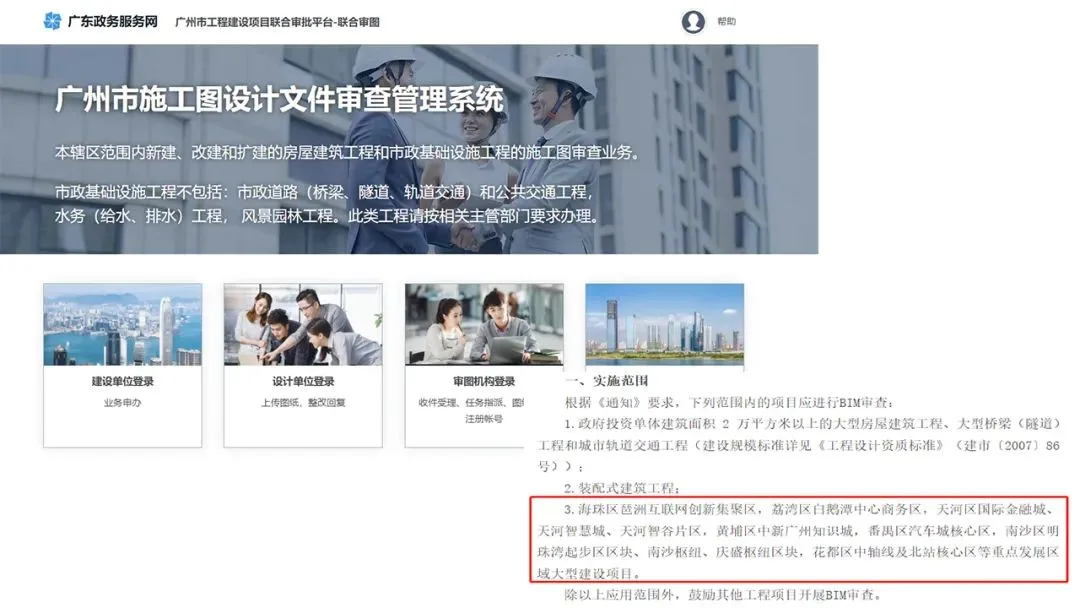
Figure 8: Review System Interface and Policy Documents
The implementation of electronic construction drawing reviews (BIM) aims to accelerate the adoption of BIM technology in Guangzhou and promote its use starting from the design stage through administrative support. It leverages information technology to overcome the limitations of traditional manual reviews, such as incomplete checks, lengthy review cycles, and high personnel demands. Furthermore, this supports the development of the City Information Modeling (CIM) platform, a backbone for smart city construction. After review approval, BIM model data is uploaded to the CIM platform, providing essential data for smart city development.
4. Project Summary
The application of BIM technology in the Quxuan Headquarters Project represents a successful example of Xingcheng Consulting’s expertise in construction drawing review using BIM. The project addressed common challenges in traditional construction, such as reducing rework, enhancing visual construction clarity, and optimizing the layout of complex electromechanical pipelines. This resulted in improved construction efficiency, simplified project management, and significant savings in time and materials.
BIM technology is an essential tool for digitalizing construction and significantly improving project efficiency. By integrating various construction factors into a unified information flow, BIM coordinates design, construction, and cost management, easing project management challenges and maximizing resource utilization. As BIM technology continues to evolve, it will bring profound changes to the construction industry.
















Must log in before commenting!
Sign Up