
This project is situated in Jing’an County, Jiangxi Province, where tourism serves as the primary industry. The region boasts abundant tourism resources, a large potential customer base, and excellent transportation accessibility. However, it lies off the main tourist routes in Jiangxi Province, limiting its influence mainly within the province. Compared to other tourist cities of similar size, Jing’an experiences lower visitor traffic and lacks a strong tourism identity. To successfully develop a cultural and tourism town here, the design must deeply explore and reflect the area’s unique environmental characteristics.
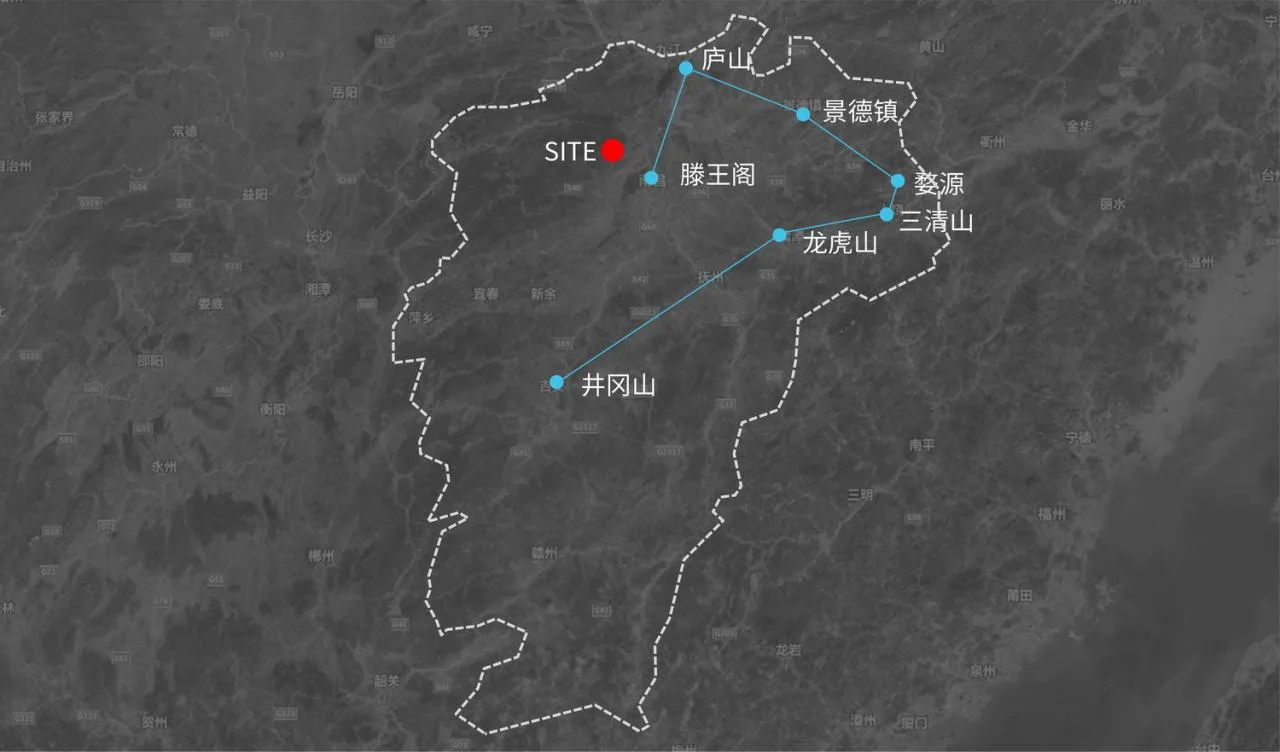
Analysis of Site Location and Current Surroundings
© Image sourced from the internet
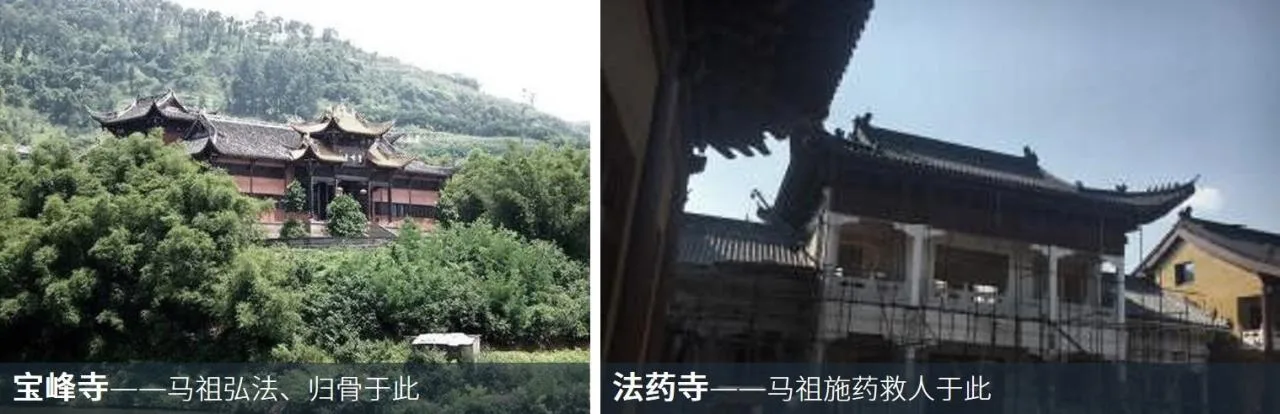
Jing’an was historically a key center for the dissemination of Buddhist teachings during the era of Mazu Daoyi, founder of the Hongzhou sect of Zen Buddhism. Notable sites such as Baofeng Temple and Fayao Temple, where he studied Taoism, have long been celebrated. The Zen culture he epitomizes transcends regional boundaries in both its spread and experiential depth. Our design team has delved deeply into Mazu’s philosophy of “relaxed meditation,” using this as the foundation to conceptualize and develop Mingjingwan Cultural and Tourism Town around the theme of “light meditation in daily life.”
Key Questions in Planning:
How can life scenarios be interpreted within the planning framework?
How can the concept of light meditation be expressed through design?
The Core Concept: Light Zen in Everyday Life
A dynamic lifestyle experience
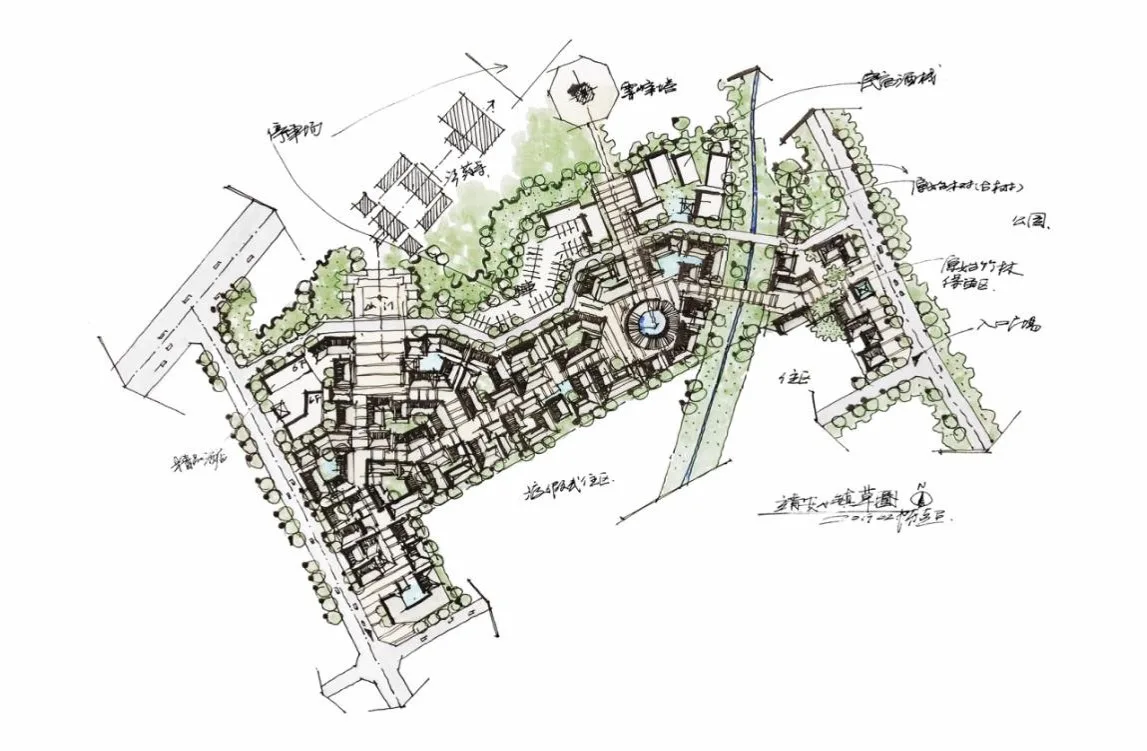
Grounded in the profound culture of Mazu Zen, the team analyzed the base’s existing and potential customer groups. They integrated dynamic local living scenes into the project’s planning and design, crafting a Zen-inspired town that combines culture and tourism as its core, supported by commerce and wellness sectors. This approach ensures that visitors continuously experience the charm and tranquility of Zen living.
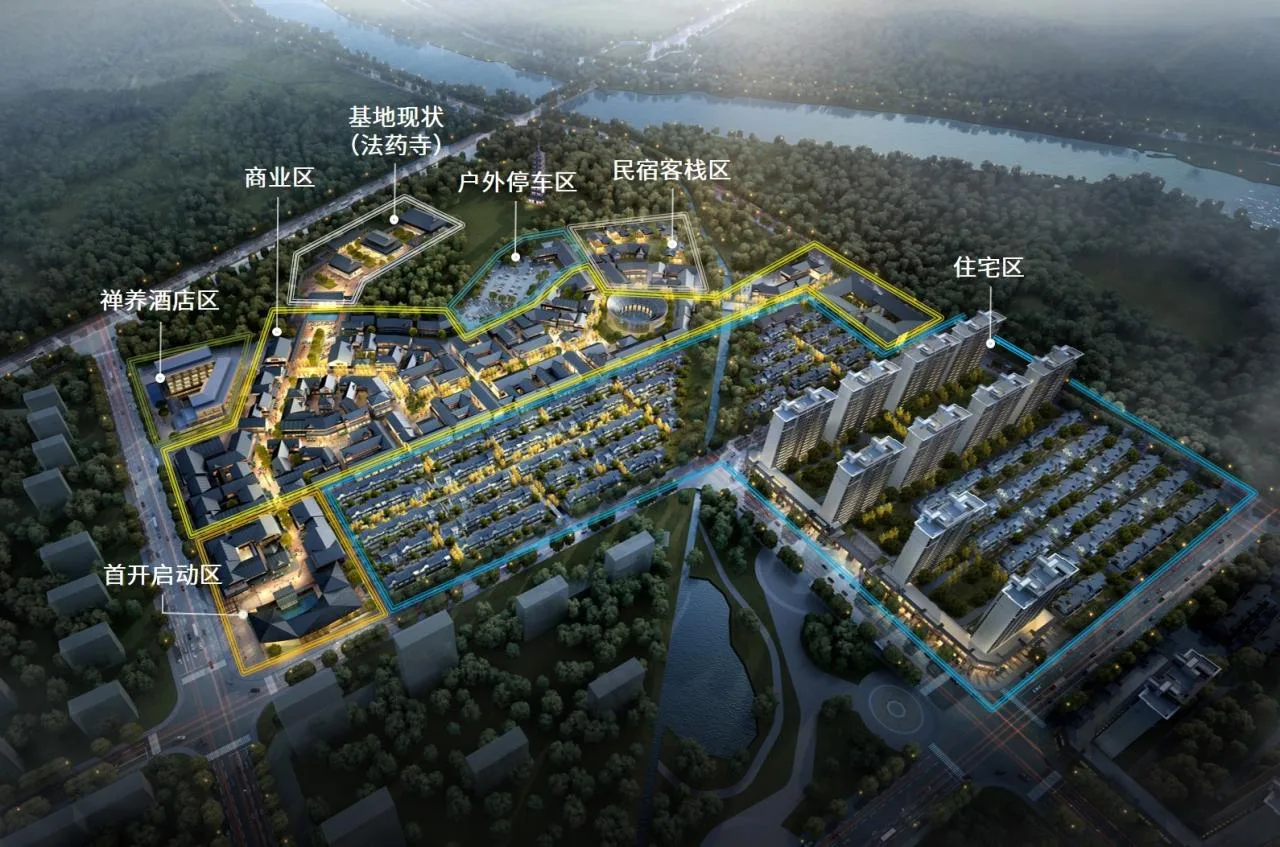
△ Relationship Between Lifestyle-Oriented Spatial Formats
A Vibrant Venue Featuring Three Levels and Nine Banks
Reflecting the town’s positioning as a harmonious blend of culture, tourism, commerce, and wellness, the design includes diverse living spaces: a startup zone, commercial area, homestay and inn district, Zen hotel section, outdoor parking, and residential areas. The narrative of “three levels and nine banks” guides the design, with key nodes activating the Zen living spaces and generating the town’s main pedestrian flow, fulfilling the thematic “light Zen” concept of this cultural and tourism development.
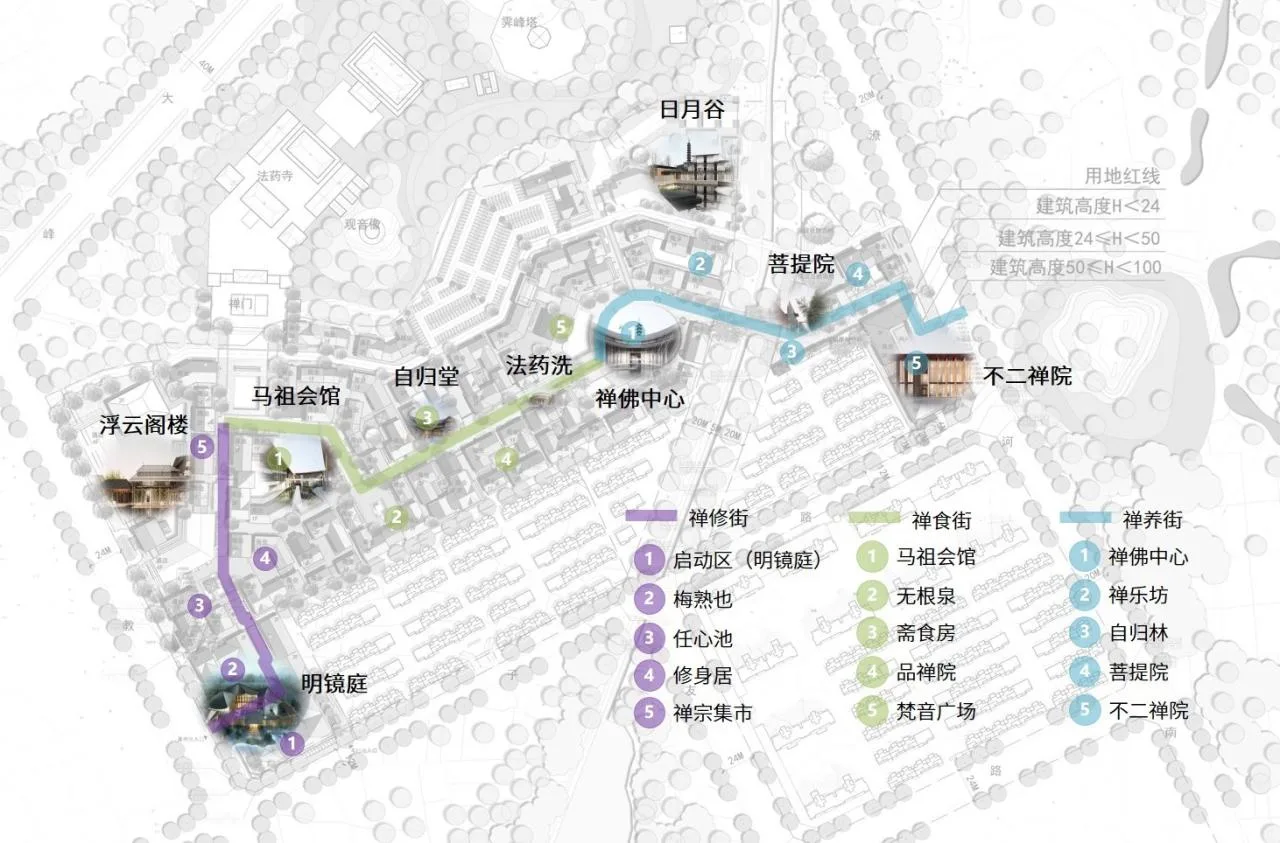
The Storyline of “Three Levels and Nine Banks”
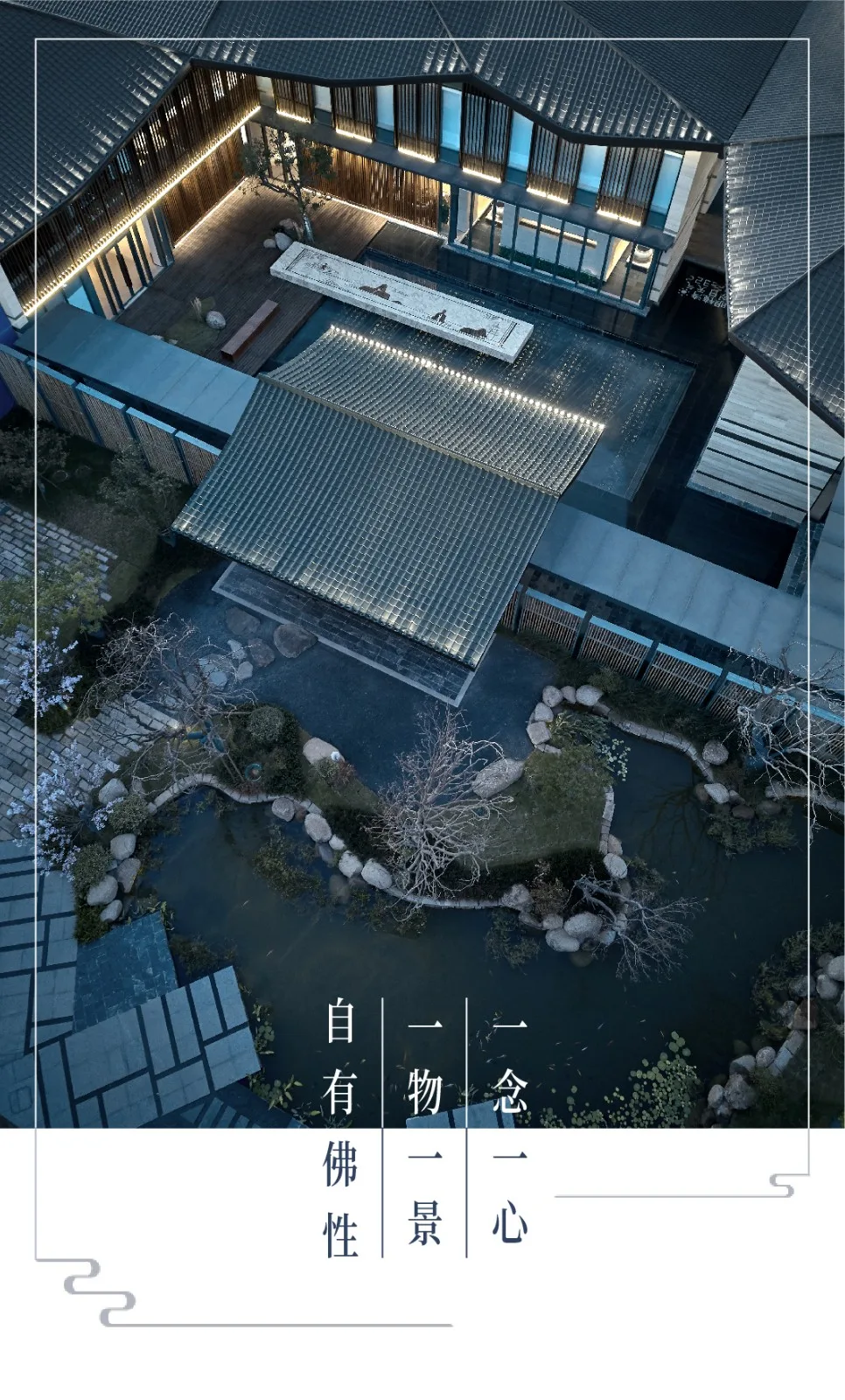
Serving as the exhibition center of the town, Mingjingting holds the critical role of showcasing the overall masterplan. Every element is meticulously crafted and profound, allowing visitors to feel the essence of Zen living the moment they enter the space.
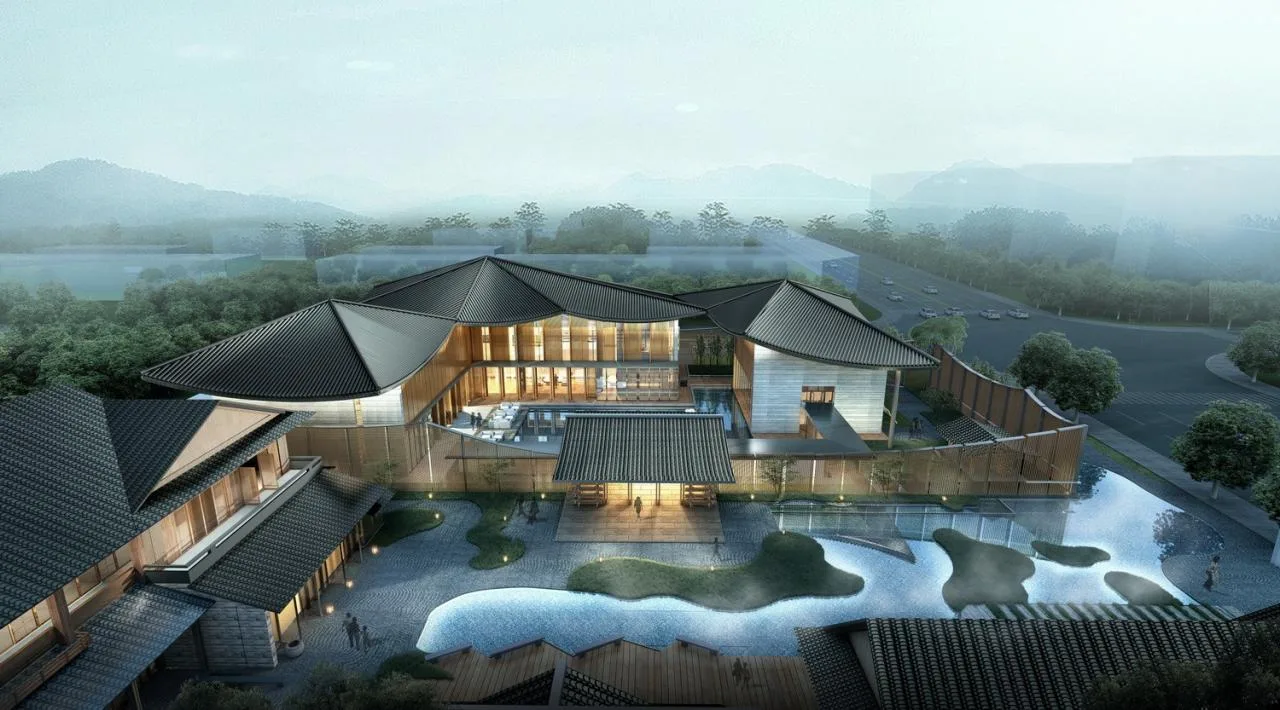
△ Spatial Relationship Rendering of Mingjing Court
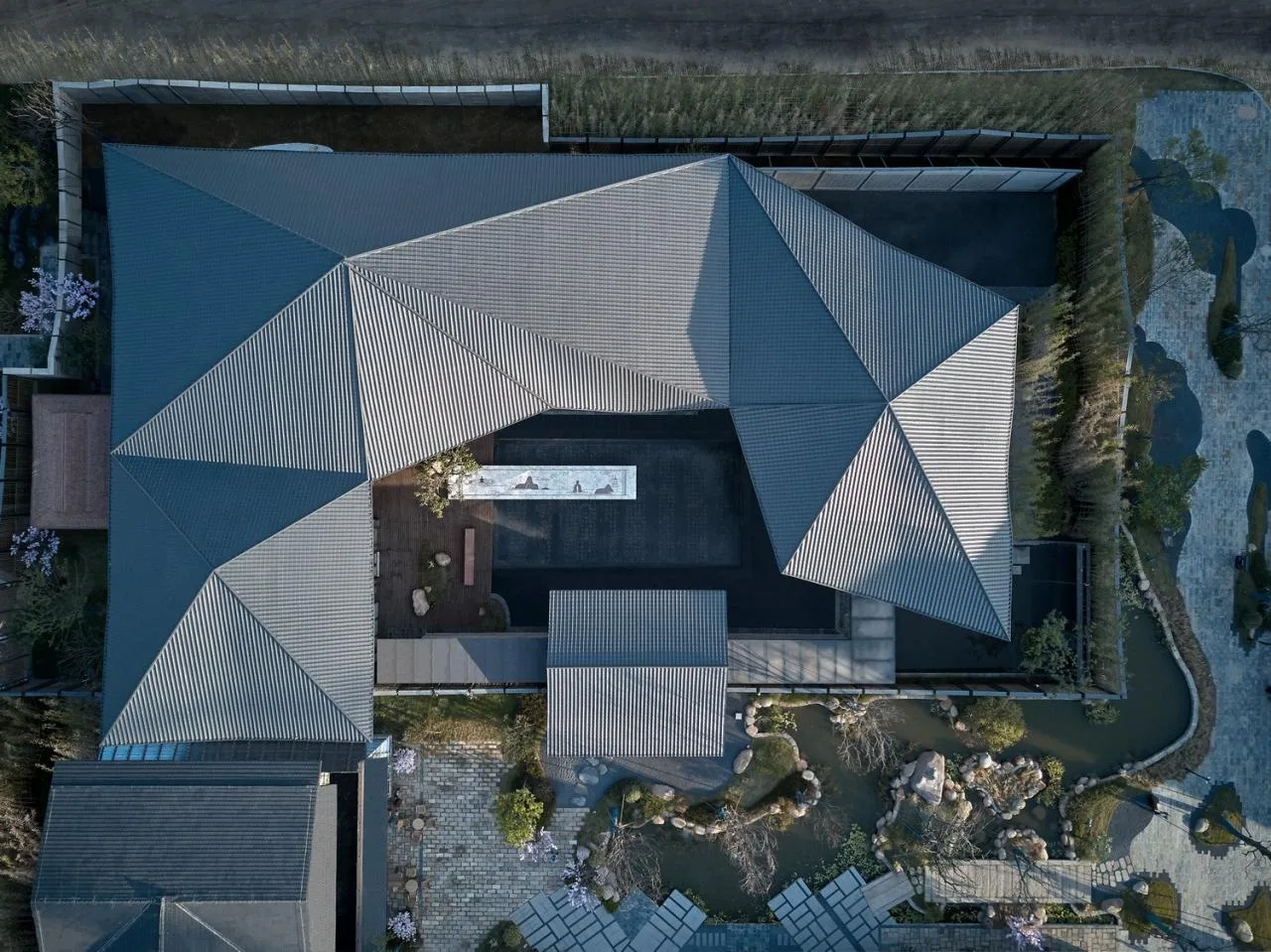
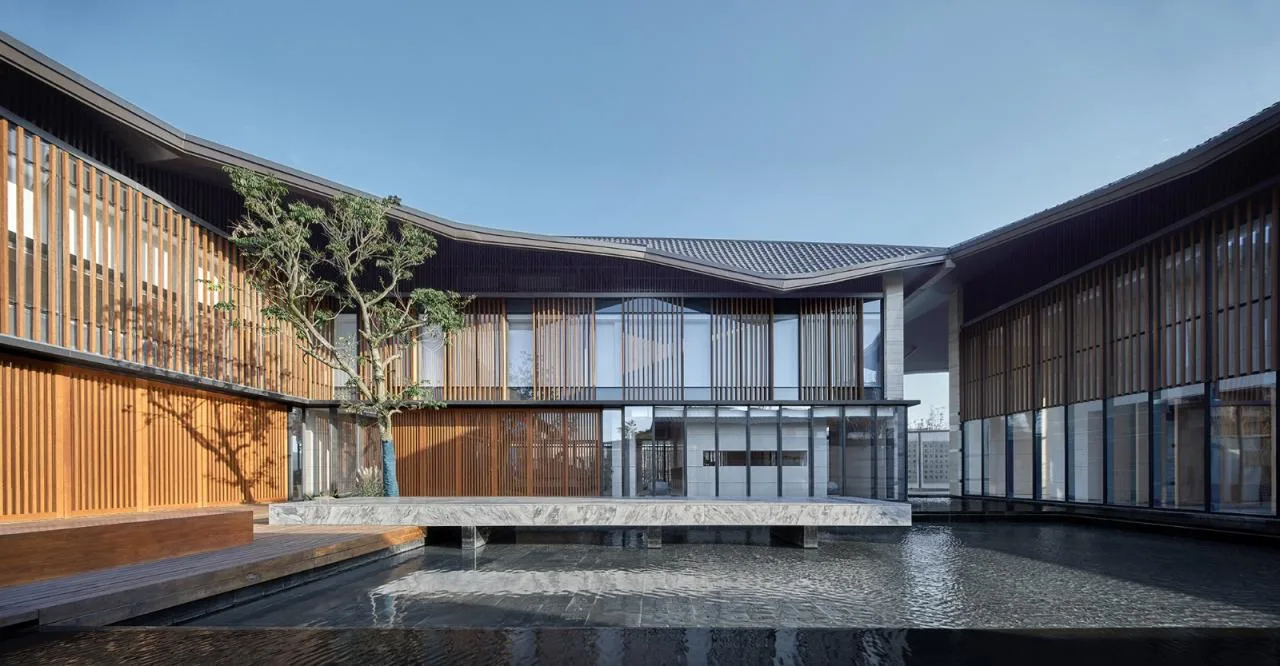
The serene courtyard spaces evoke a sense of enlightenment and contemplation.
© Zengjiang River
The Floating Cloud Attic, designed as a Zen resort hotel, lines the street with a complete urban frontage. It integrates organically with the commercial street, forming an inviting inner courtyard.
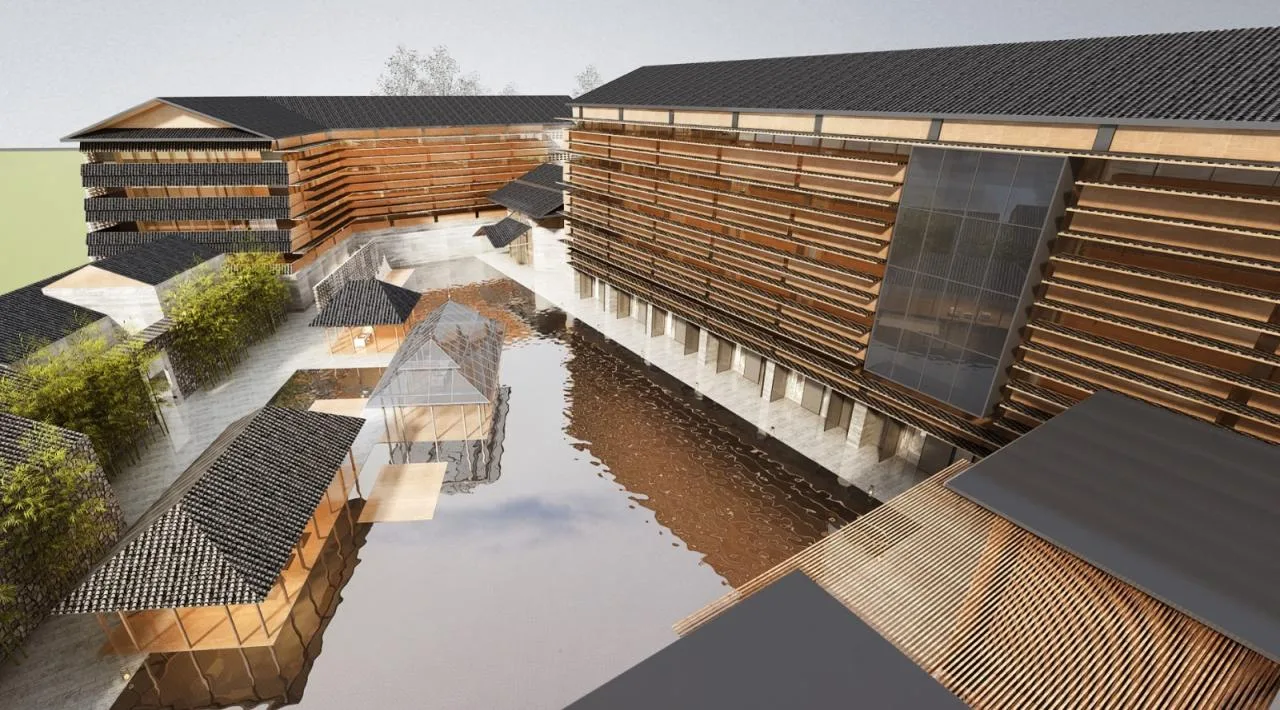
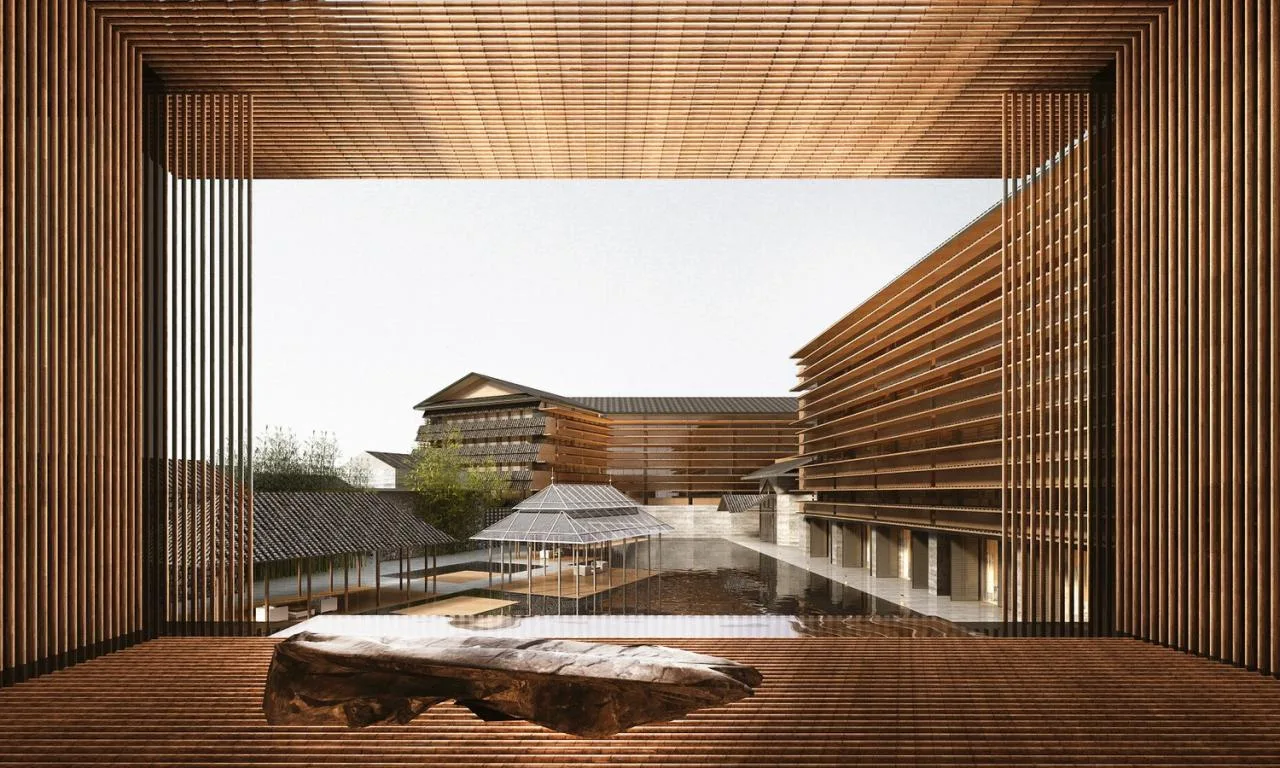
△ Embracing worldly prosperity while experiencing Zen health preservation through mottled light and shadow
The Mazu Guild Hall occupies Shanmen Square. Through meticulous planning and dynamic line control, it employs simple yet refined materials to subtly convey inner Zen meanings. This building stands as a timeless architectural symbol that both restricts and transcends boundaries.
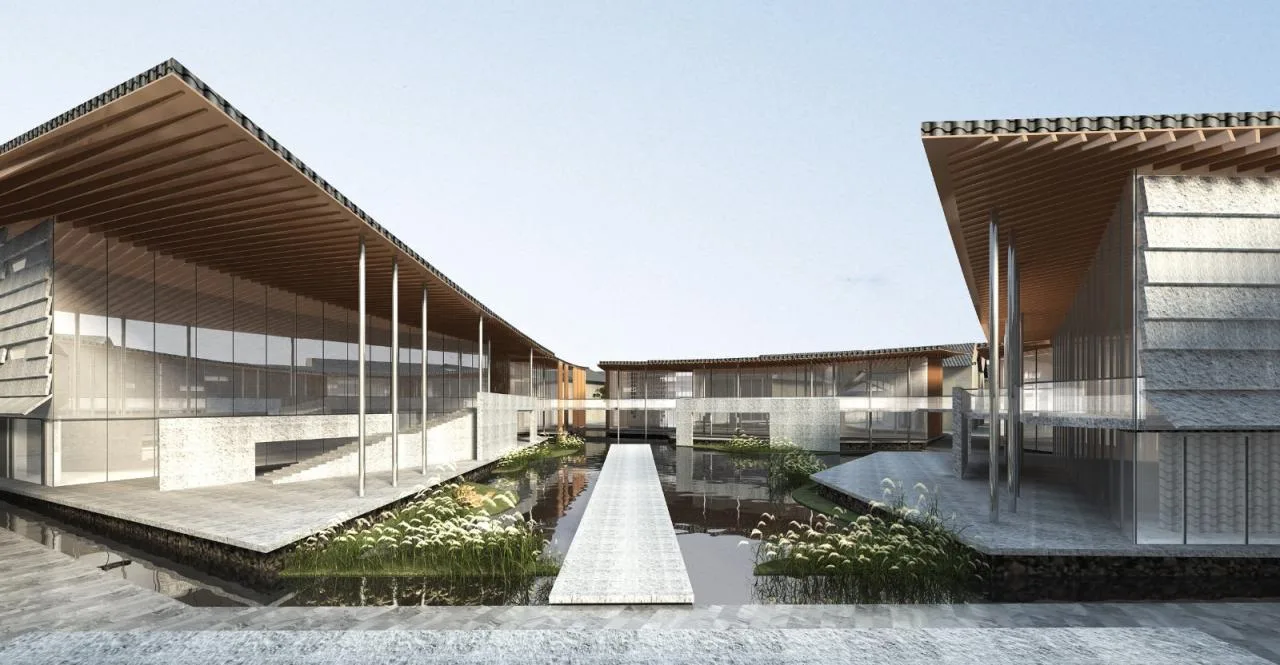
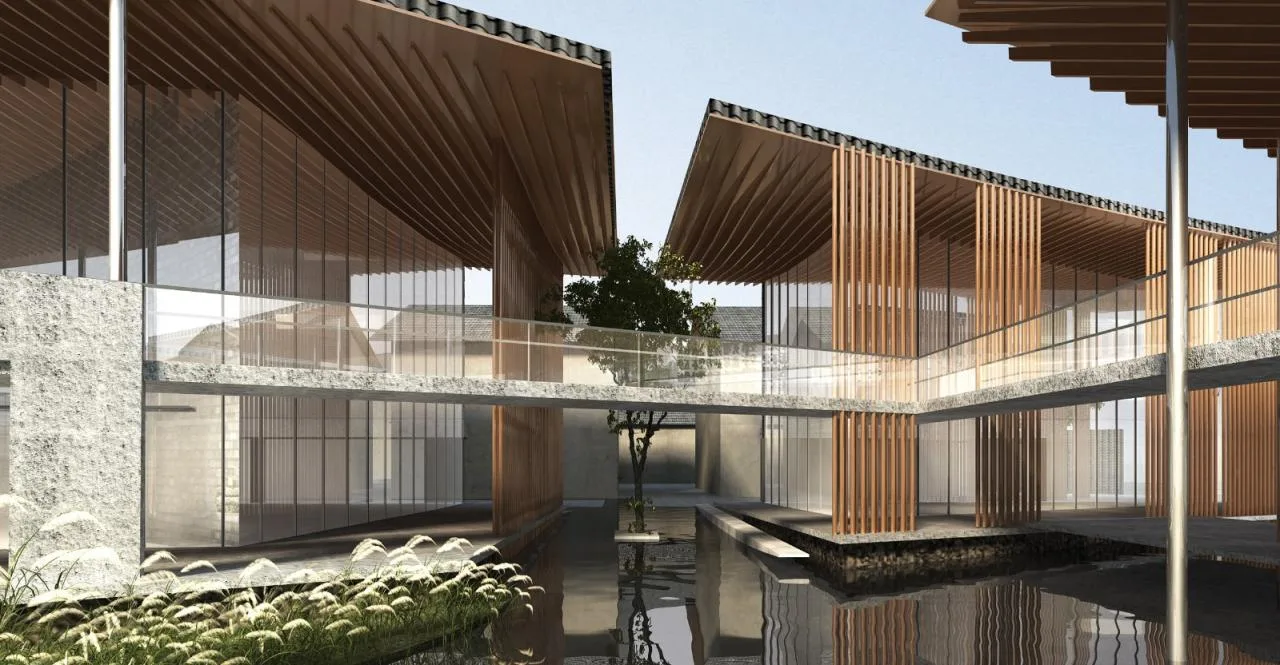
Enjoy a peaceful corner reflecting water and light.
The Zen Buddhist Center draws from Zen doctrine and incorporates the essence of local Hakka culture. Employing traditional bamboo weaving art, it harmonizes the tranquility within its walls with the vibrant market noise outside, elevating the Zen lifestyle and forming the visual centerpiece of the town.
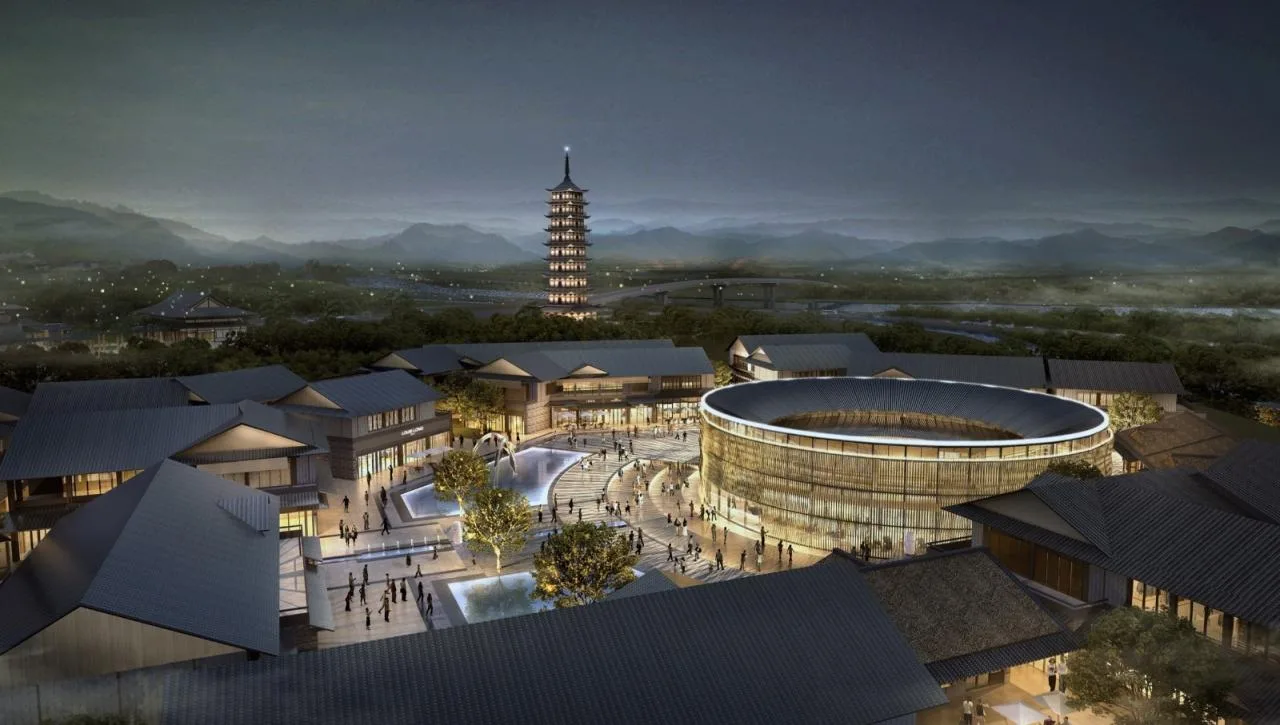
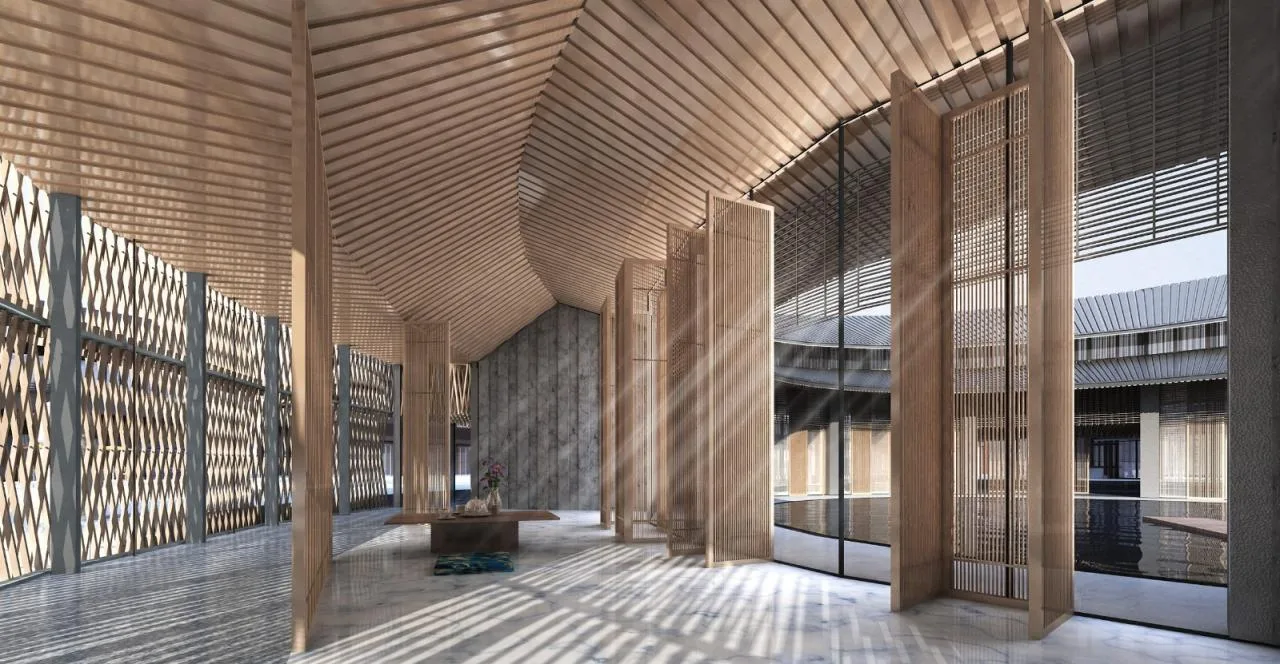
△ Experience the cycle of life through light and shadow in the present moment
The design of Sun Moon Valley is inspired by the saying: “Mazu Sun Moon Buddha, Moon Moon Buddha, the method of mutual treatment without opposition, allowing clouds to rest at ease; the valley blends with mountains and rivers, hidden within the world.” Built in harmony with the natural landscape, it creates a secluded and refined homestay area that feels detached from the bustle.
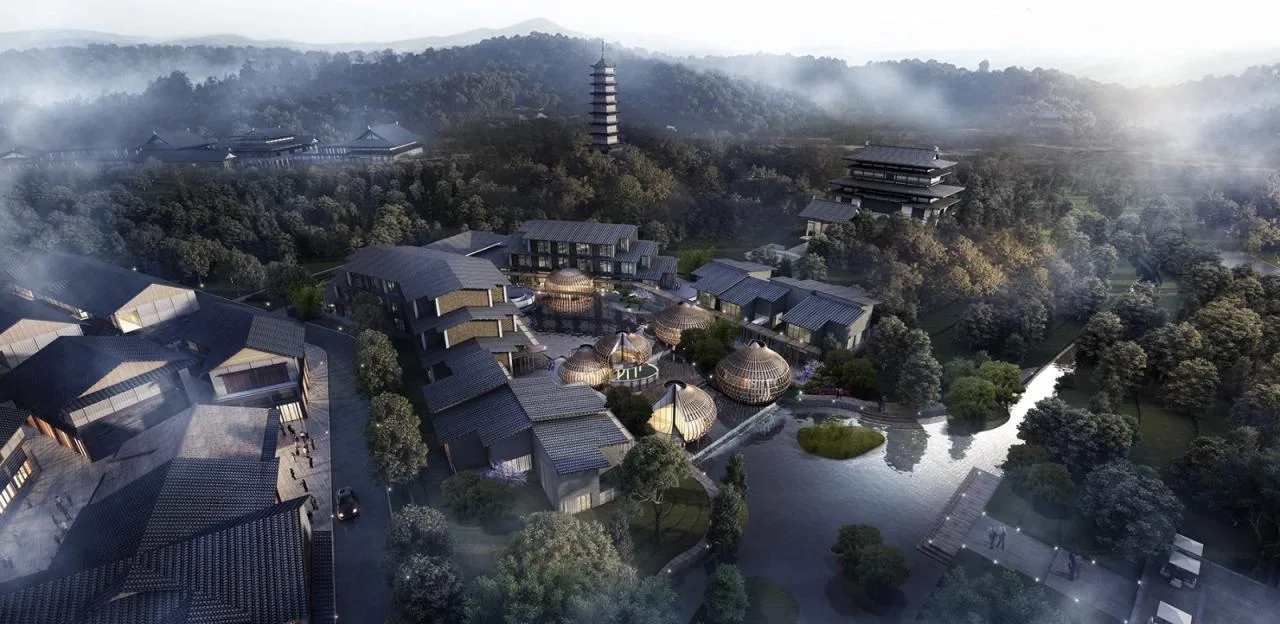
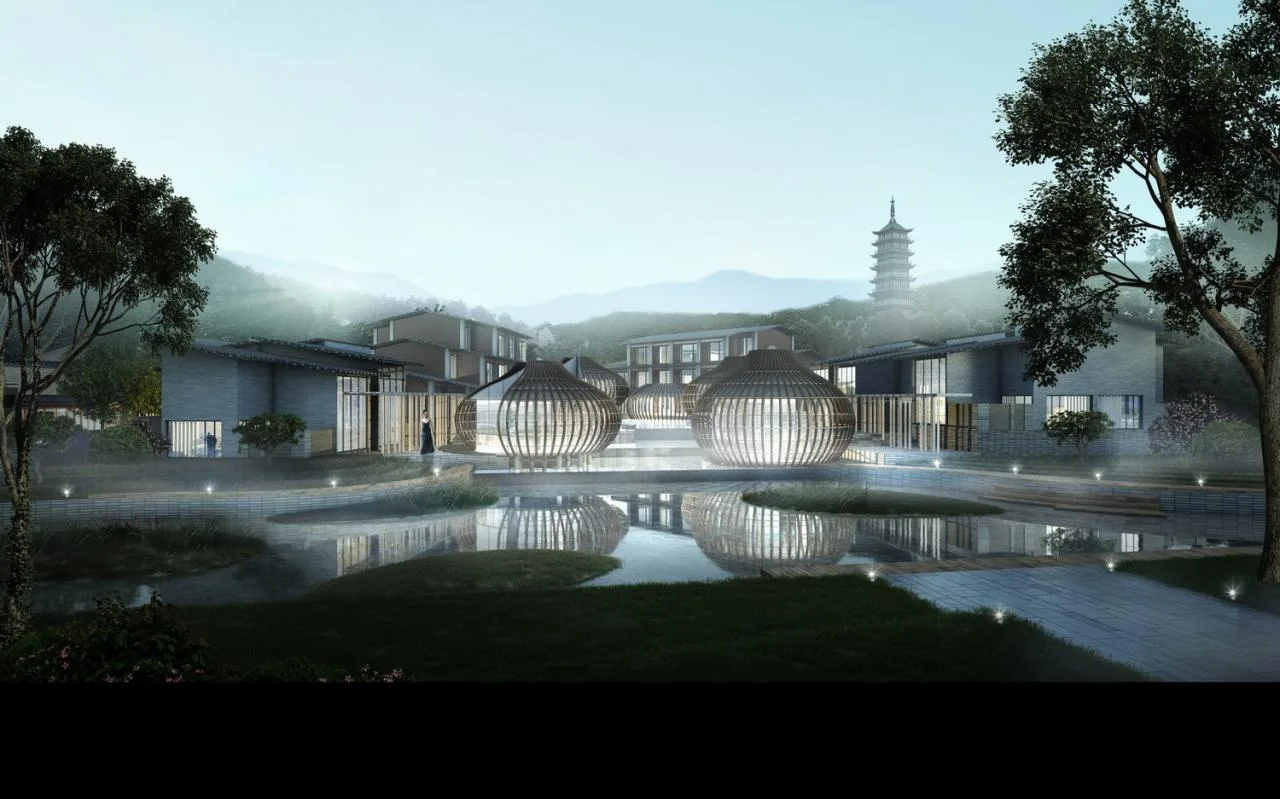
△ Separate the bustle of time with neon lights, while enjoying an open and tranquil visual field
Buer Zen Monastery opens towards the commercial street, blending its courtyard with the commercial square. Traditional spatial arrangements enclose the courtyard, while bamboo forest landscaping partitions it, isolating residential areas from urban disturbances and creating a convenient flow for residents.
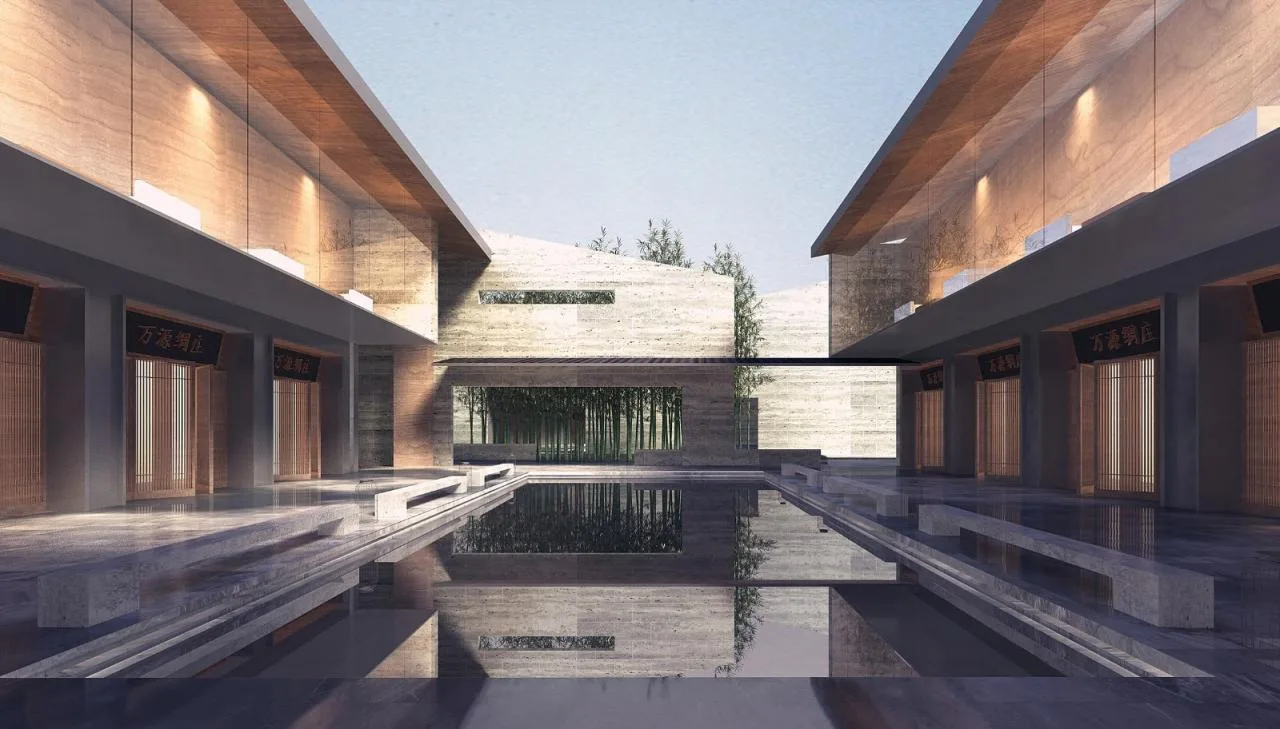
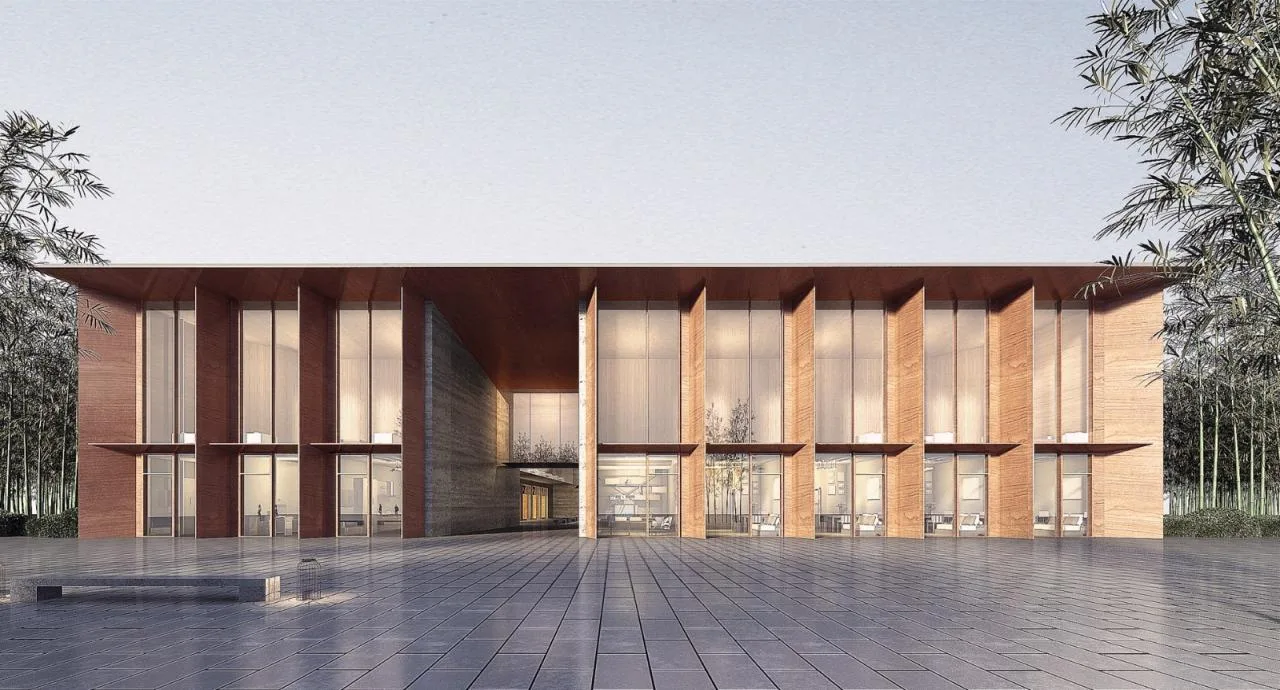
△ Advancing the essence of Zen Buddhism within a globally independent context
Defining Neighborhoods Through Travel Experiences
Drawing from the street layout of Qingshui City’s front streets, a circular route has been designed to reduce travel depth and increase engagement. At the block scale, the focus is on human experience and daily life:
- Squares designed for gatherings range from 20 to 40 meters in width;
- Main street widths vary between 7 and 9 meters;
- Transition spaces for buffering and guiding measure between 9 and 16 meters;
- Internal pedestrian-assist roadways are designed at 4 meters wide.
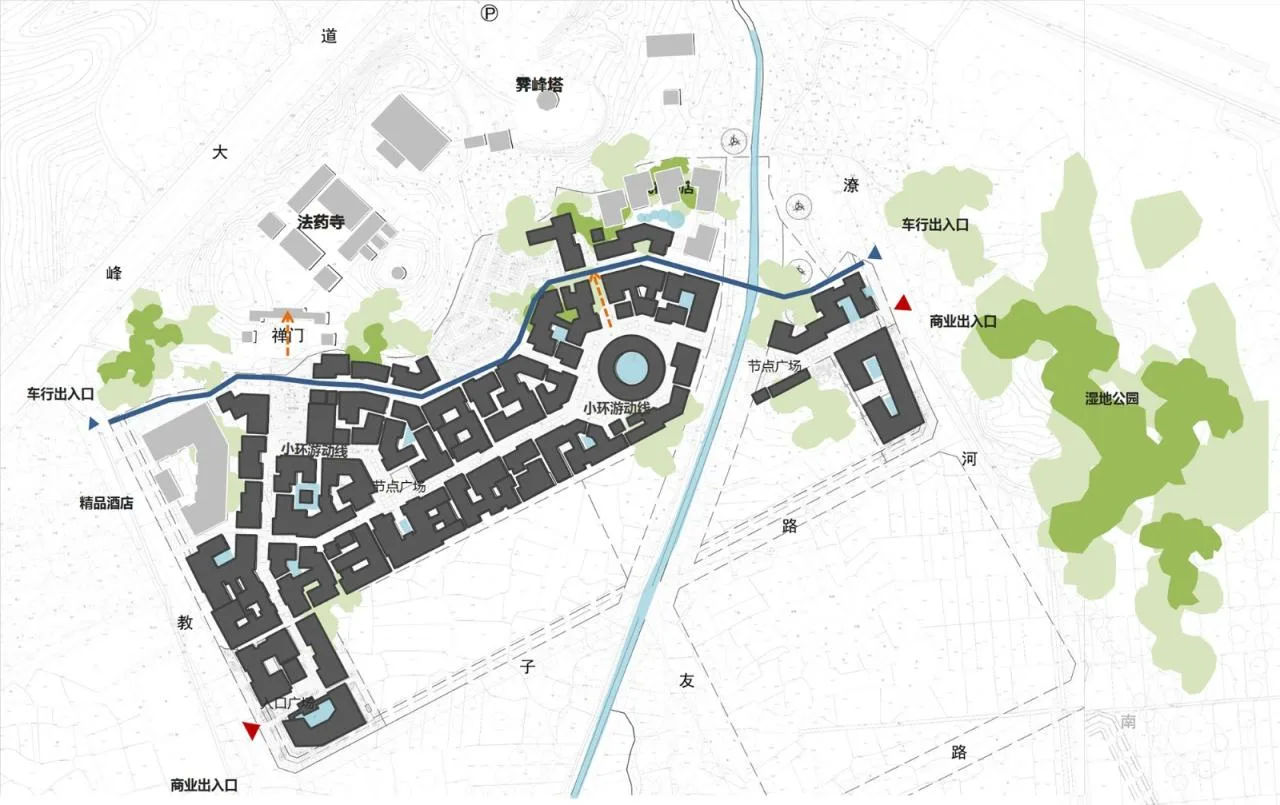
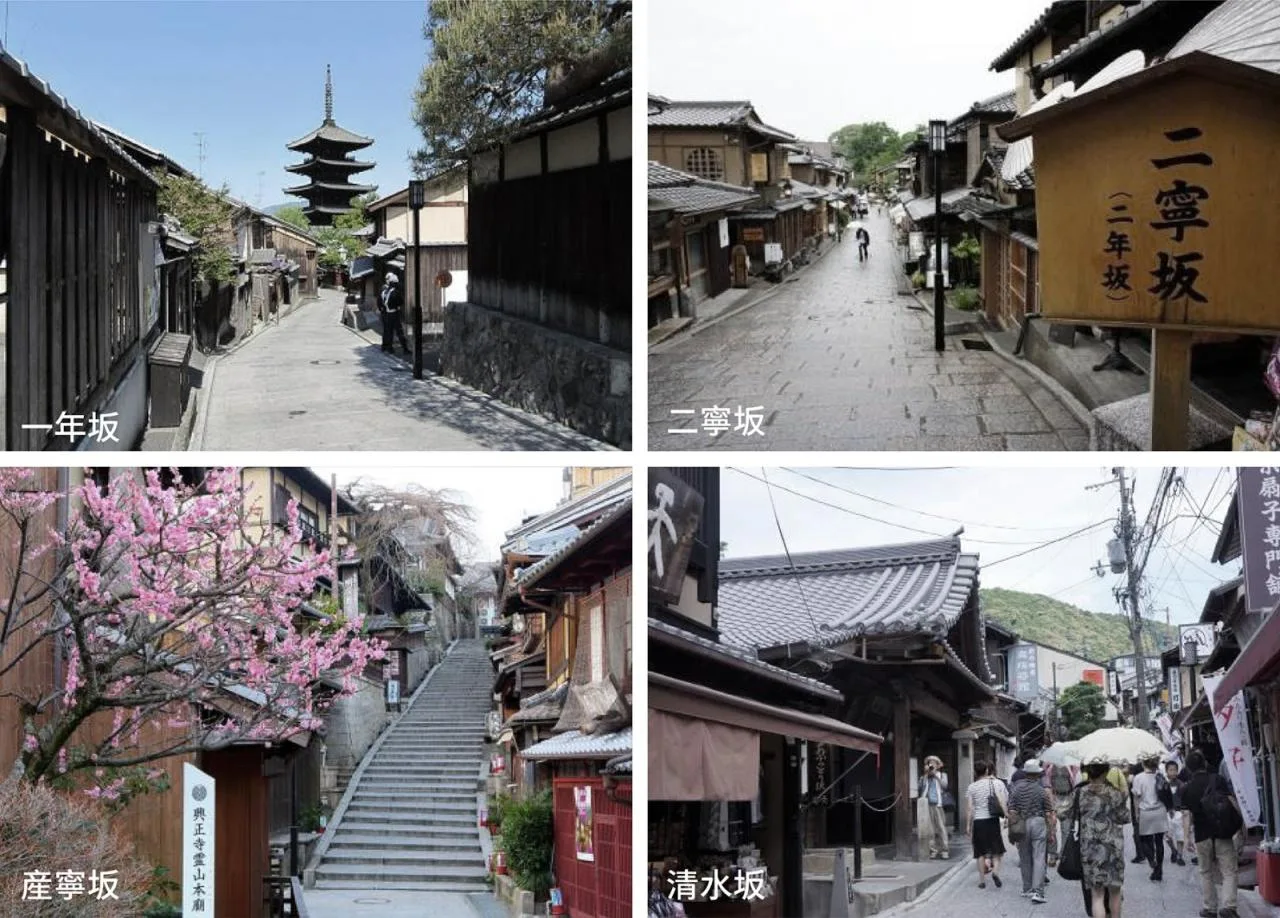
△ Street Structure and Engaging Public Spaces
© Image sourced from the internet
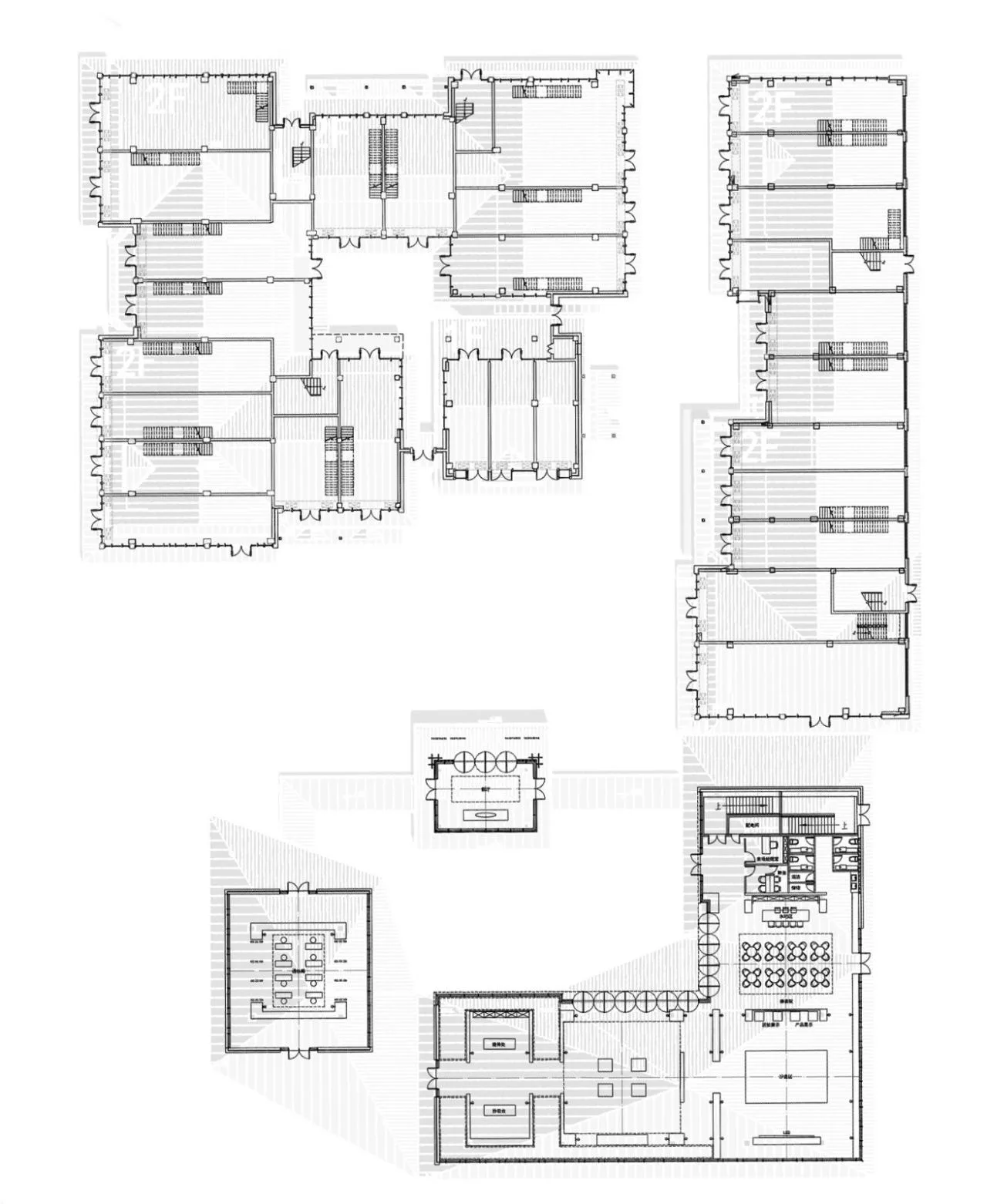
△ First Floor Plan of the Startup District
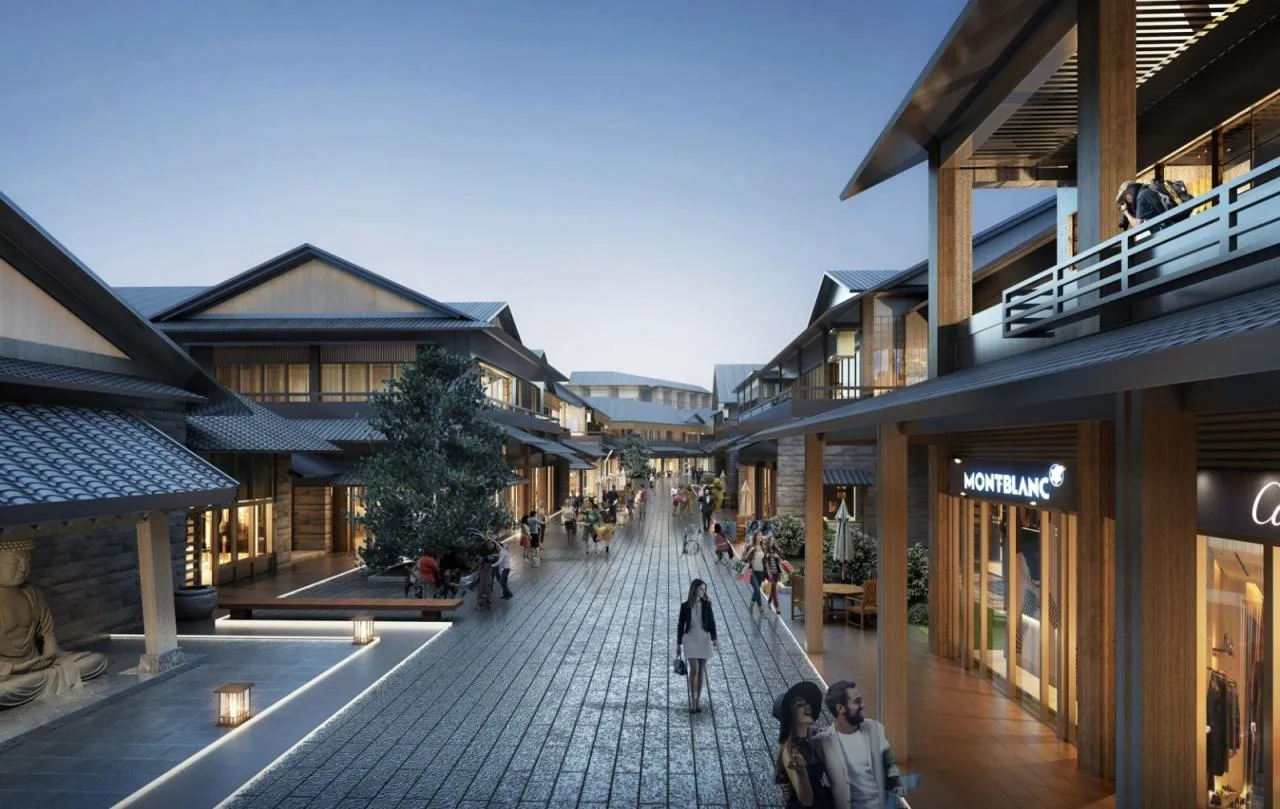
△ A Gradual Experience Before the Mountain Gate
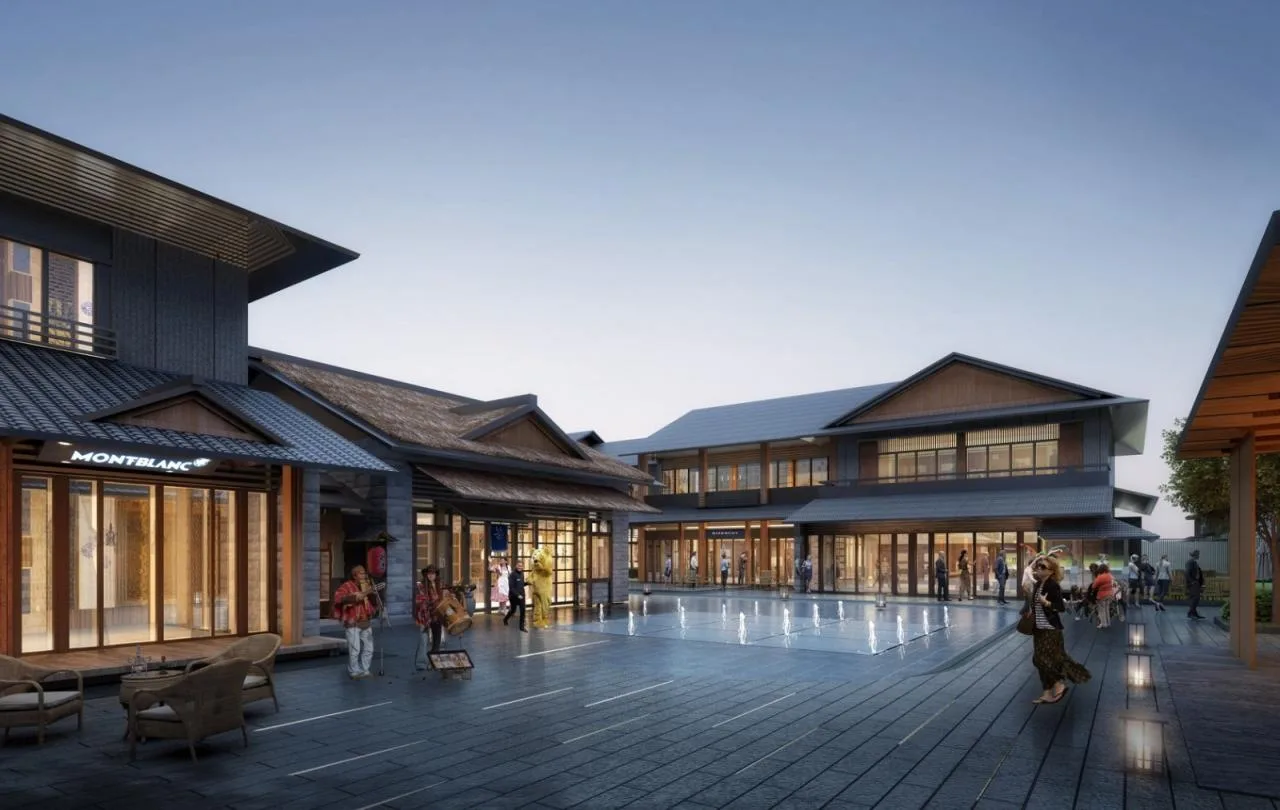
△ Quiet Square
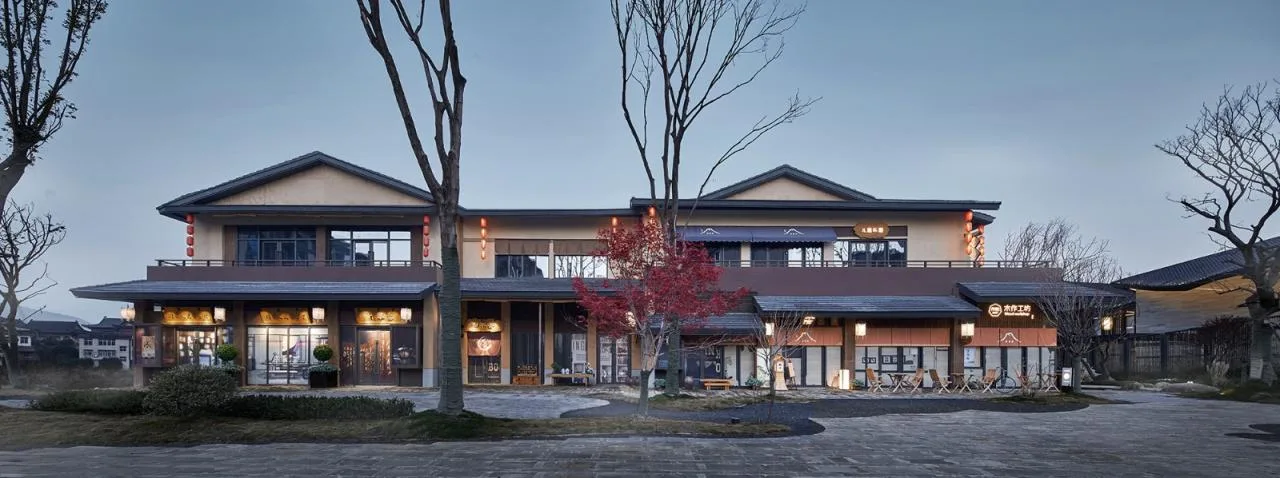
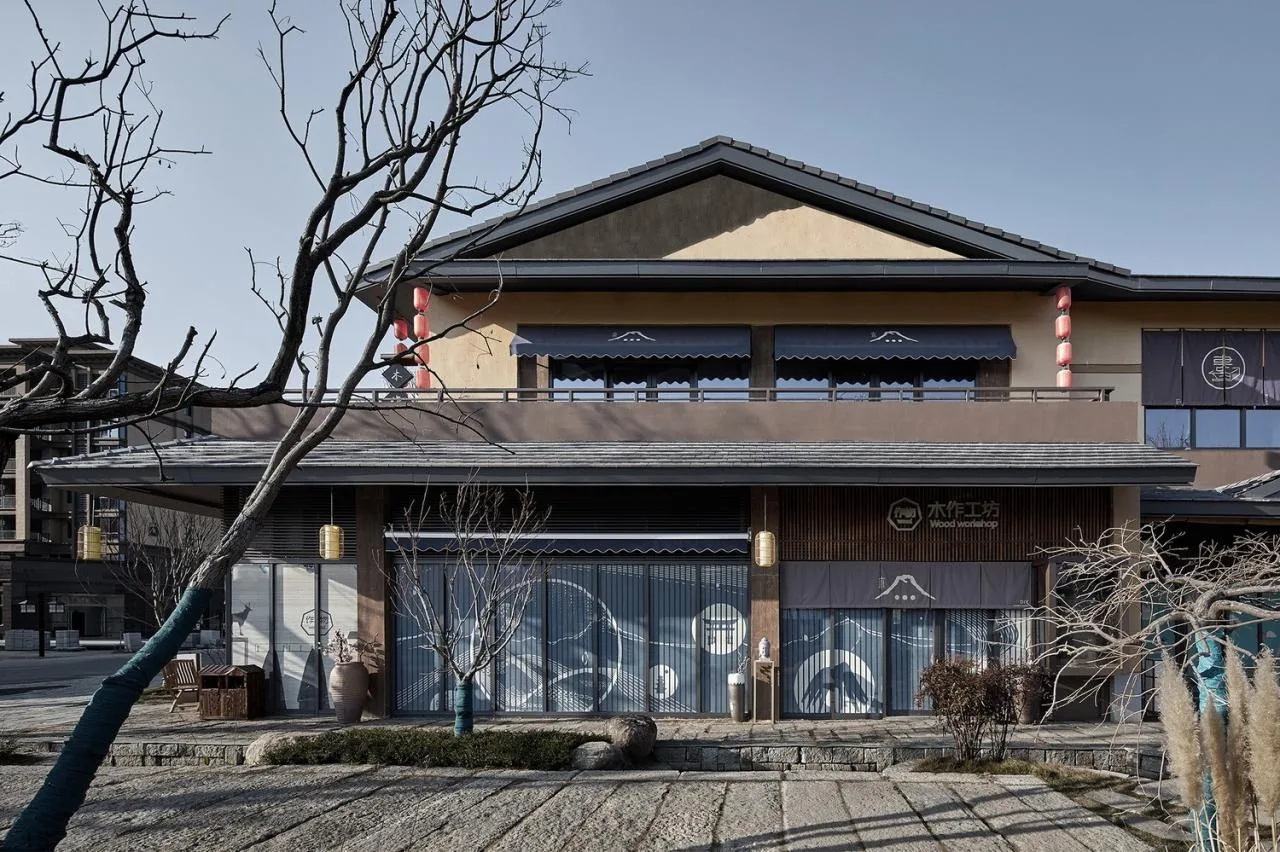
Zen is never without poetic meaning.
© Zengjiang River
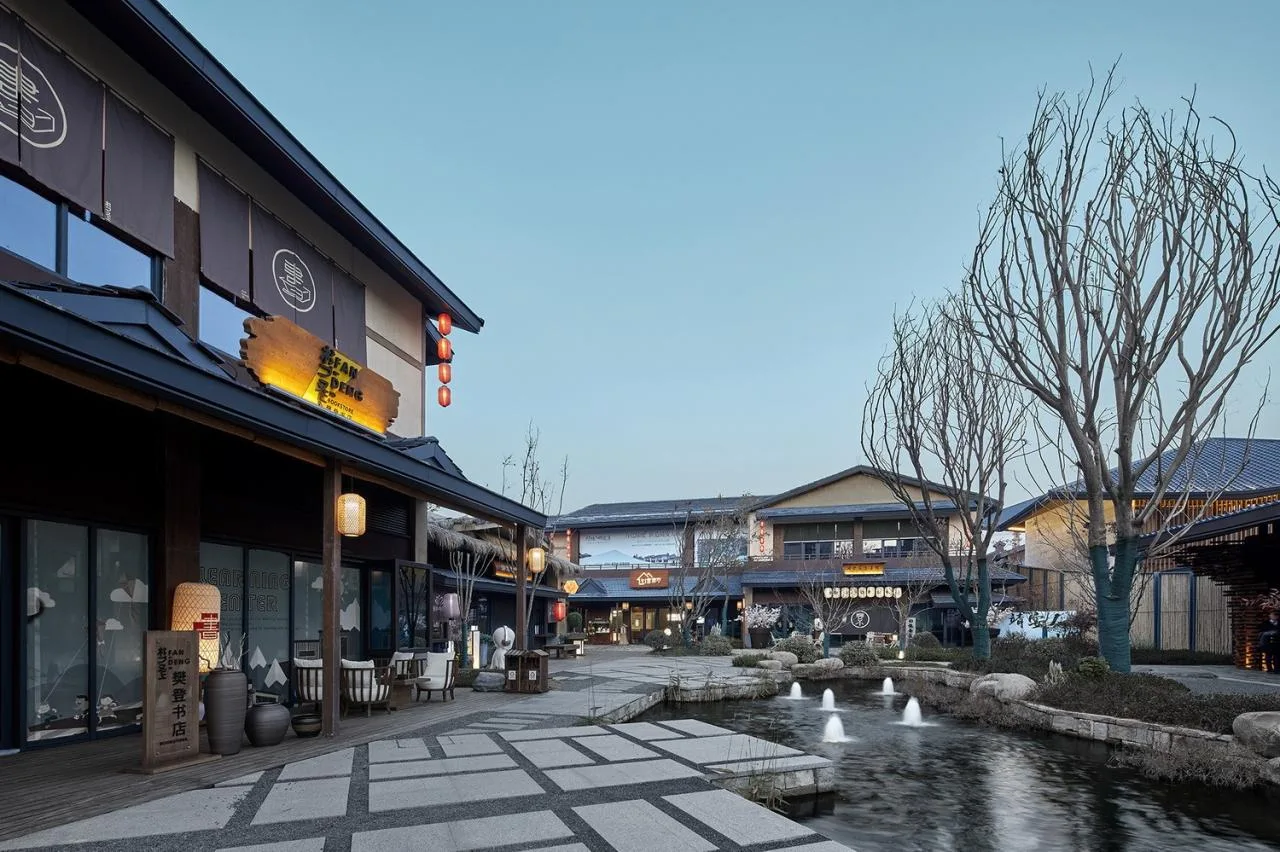
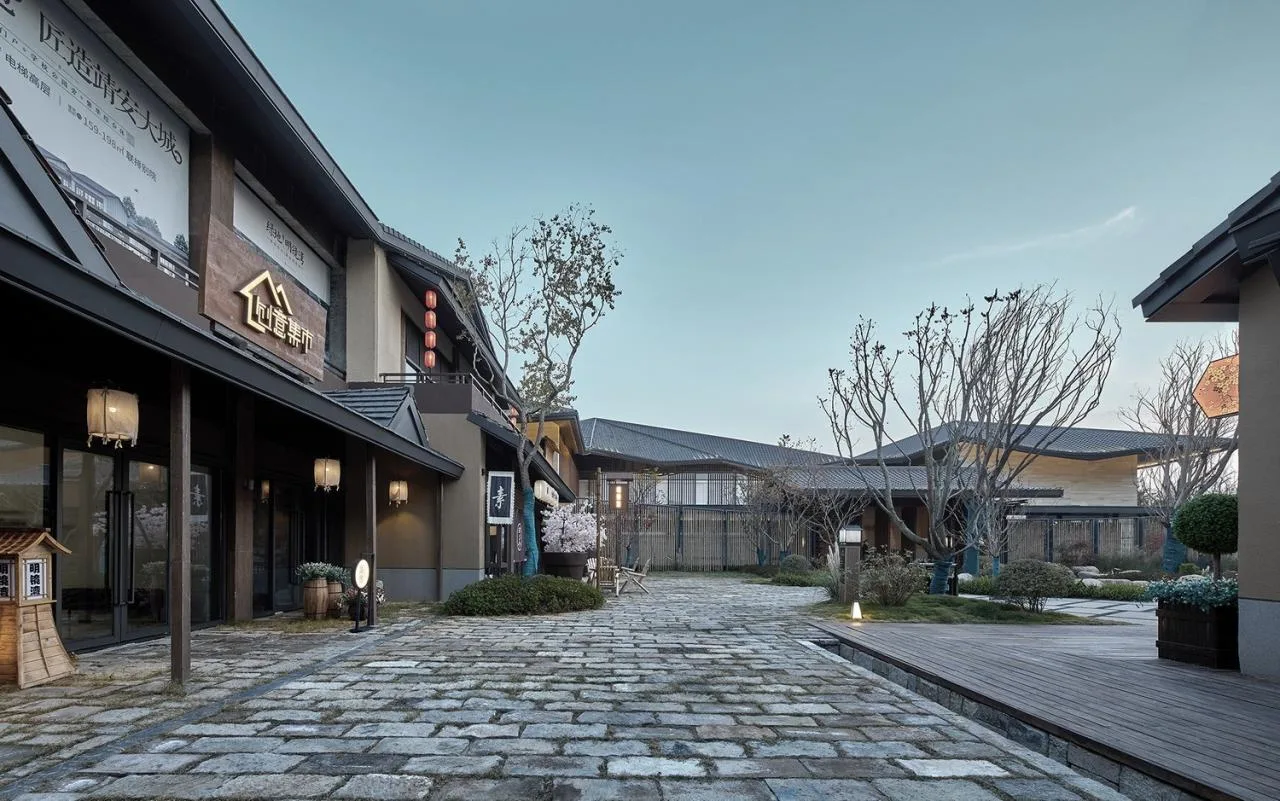
Step lightly on the stones and enjoy complete tranquility.
© Zengjiang River
A Simple and Accessible Form
Mingjingting, as the exhibition center of the town, embodies the Zen meditation journey, highlighting the “clarity, purity, harmony, and beauty” of Eastern Zen philosophy. Architecturally, the building features a curved roof, simple curtain walls, integrated corridors, enclosed courtyard walls, and Zen-style pavilions. This creates a layered spatial relationship that feels warm and inviting, establishing a Zen sanctuary free from rigid forms.
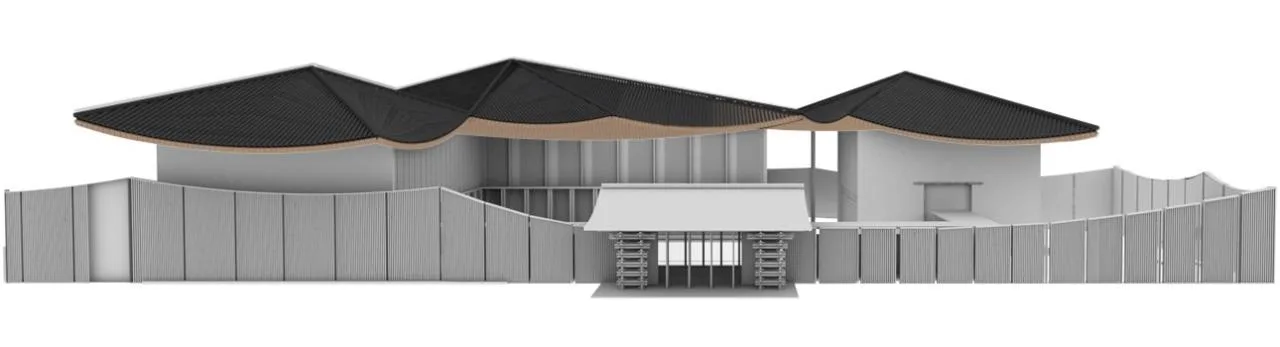
Mingjing Court’s Formal System
Curved Roofs That Echo the Mountain Silhouette
The extensive use of curved roofs, harmonizing with the mountain shapes, layers an elegant and simple historical texture, evoking a fresh and bright ambiance.
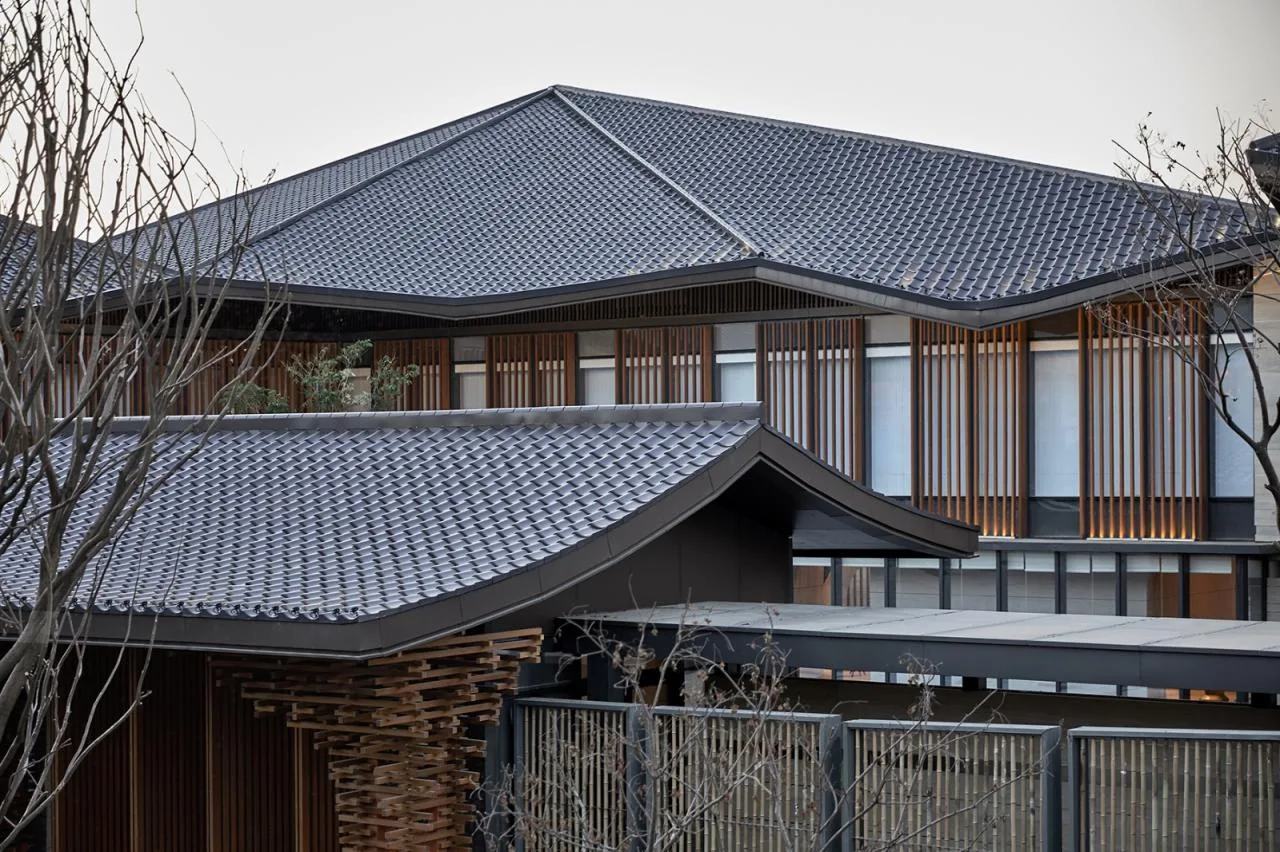
△ Curved roofs echoing mountain forms
© Zengjiang River
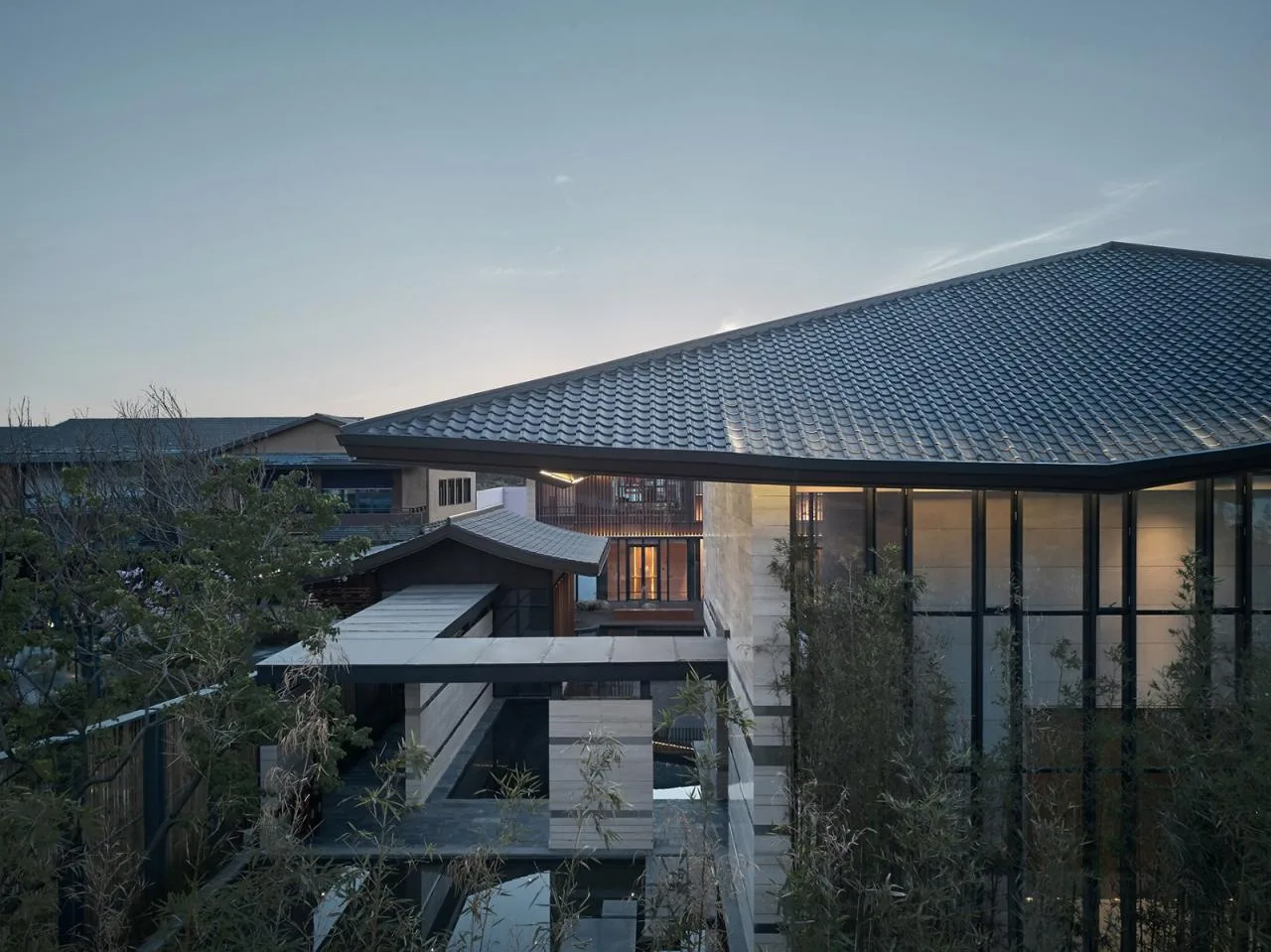
Experience clarity and freedom of the soul.
© Zengjiang River
A Simple and Rhythmic Curtain Wall System
The curtain wall facade integrates natural materials such as bamboo grilles, stone, and glass, expressing Zen and Buddha nature through rhythmic and delicate modern textures. This design captures the ethereal artistic essence typical of Chinese landscape painting.
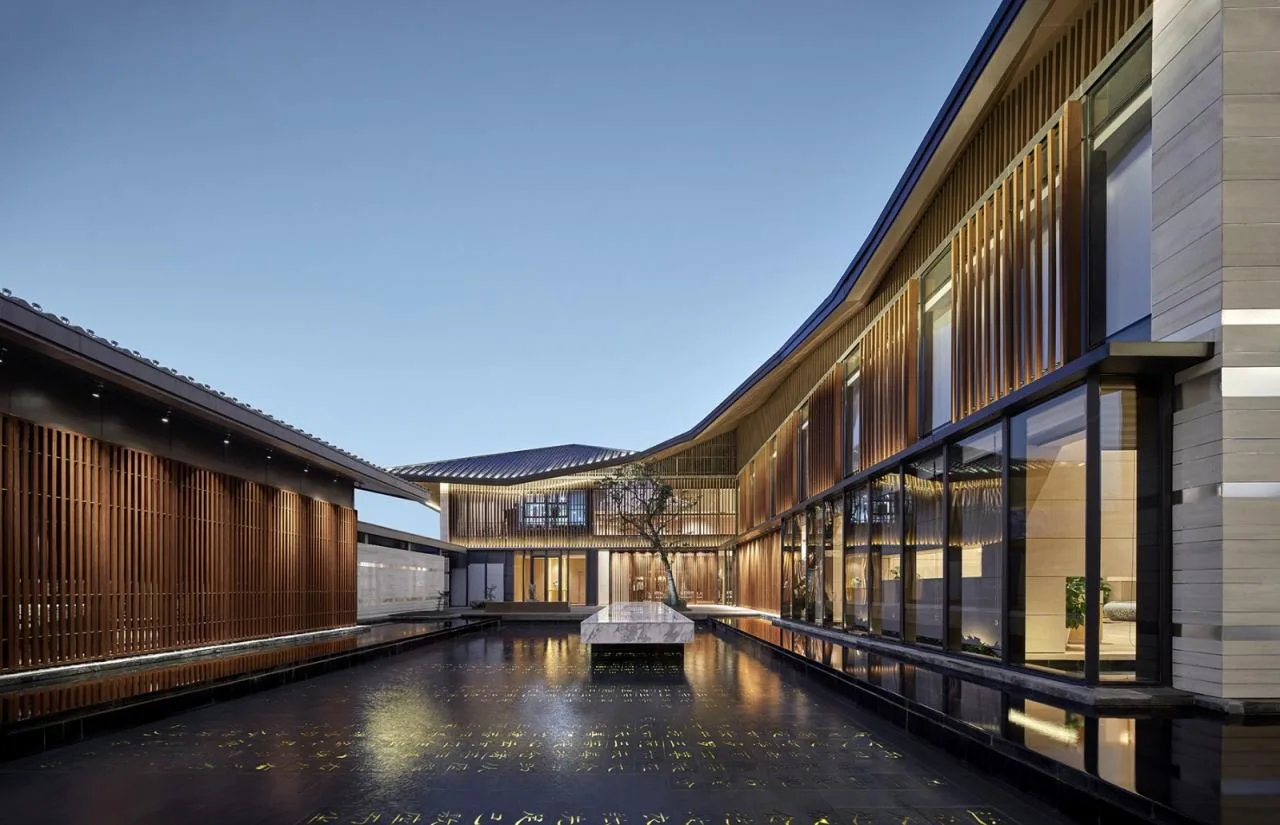
Thoughtful combinations of materials create a Zen-inspired living space.
© Zengjiang River
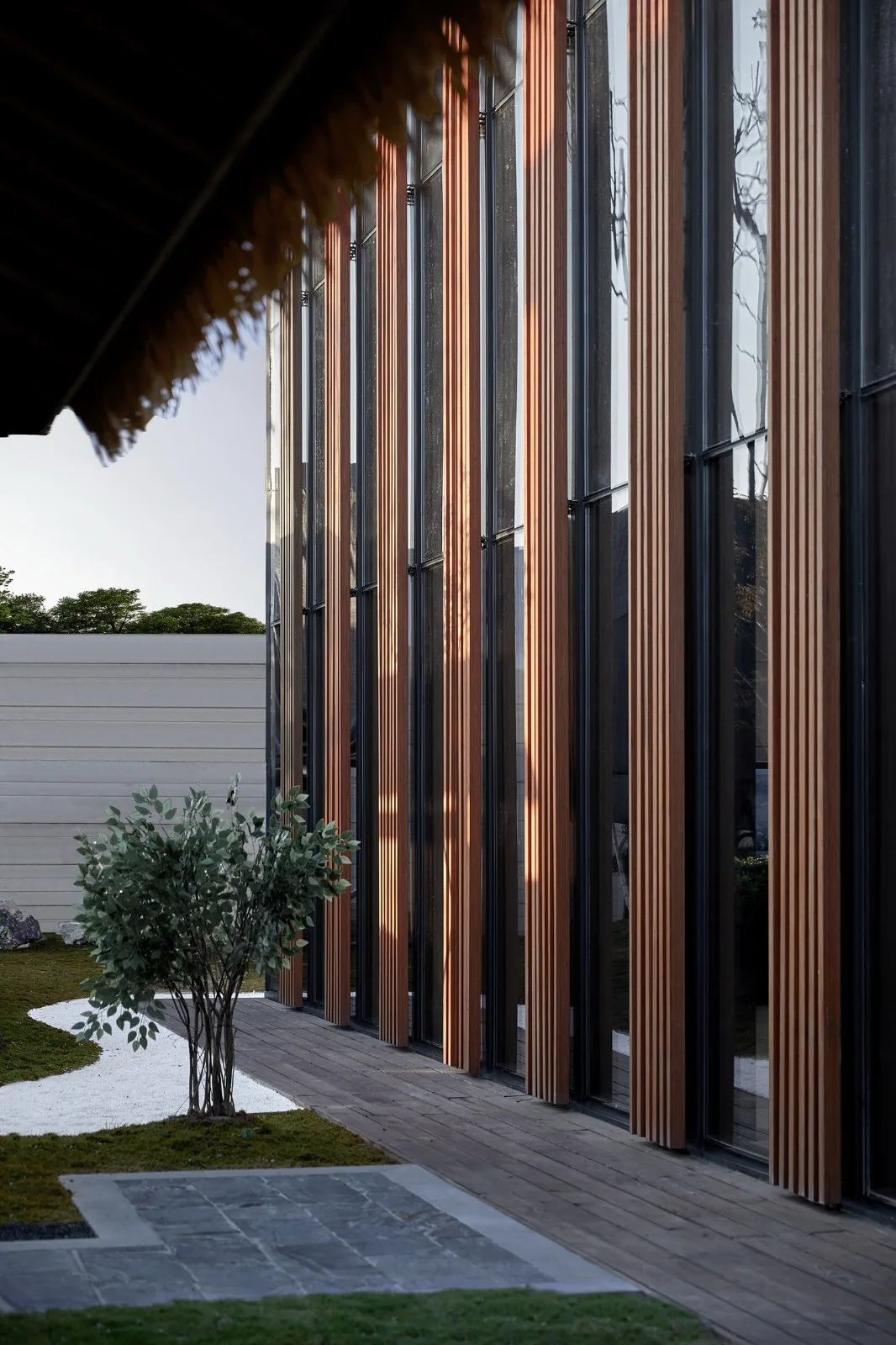
Green bamboo symbolizes the Dharma body.
© Zengjiang River
Innovations in traditional local construction techniques, such as ancient village lintel pressing and mountain wall masonry, respond to the concept of light meditation throughout the town. These techniques were carefully controlled during construction.
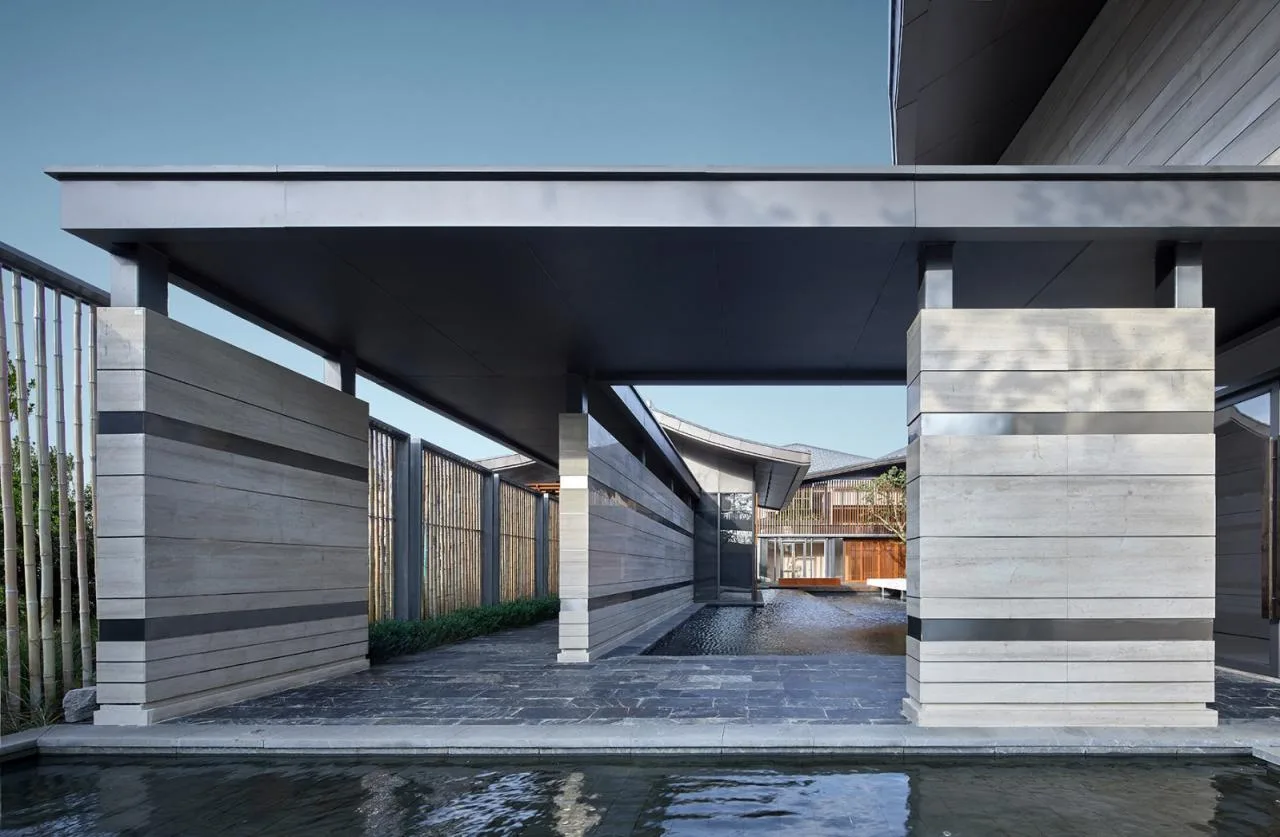
Applying localized techniques to reinterpret traditional Chinese garden architecture.
© Zengjiang River
Experience the Play of Light and Shadow Along the Corridor
Bamboo is planted between the corridor and the wall, facing an enclosed courtyard. The bamboo grille filters sunlight, casting mottled reflections on the water’s surface that softly touch the faces of passersby.
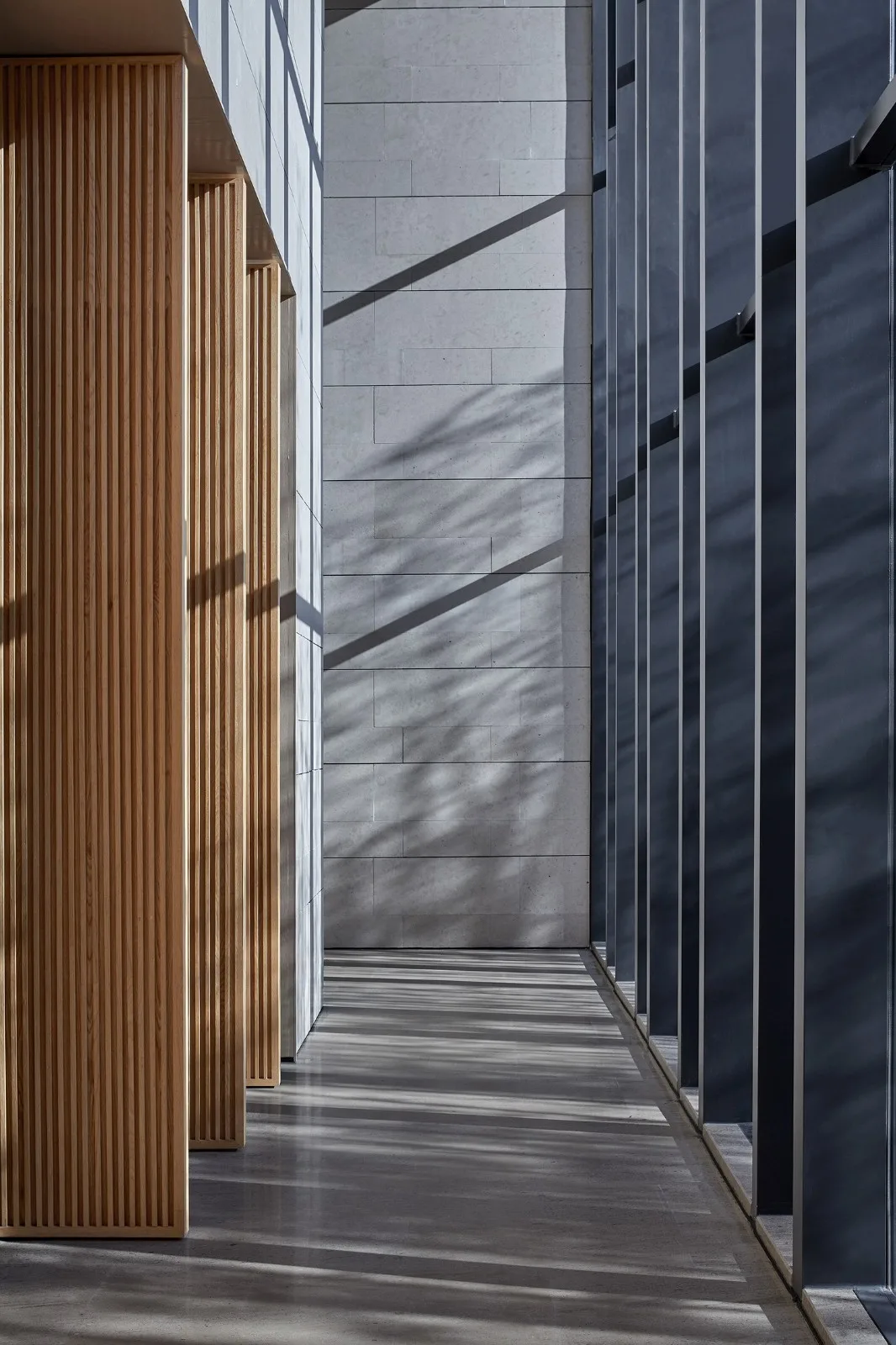
The beauty of ever-changing light and shadow.
© Zengjiang River
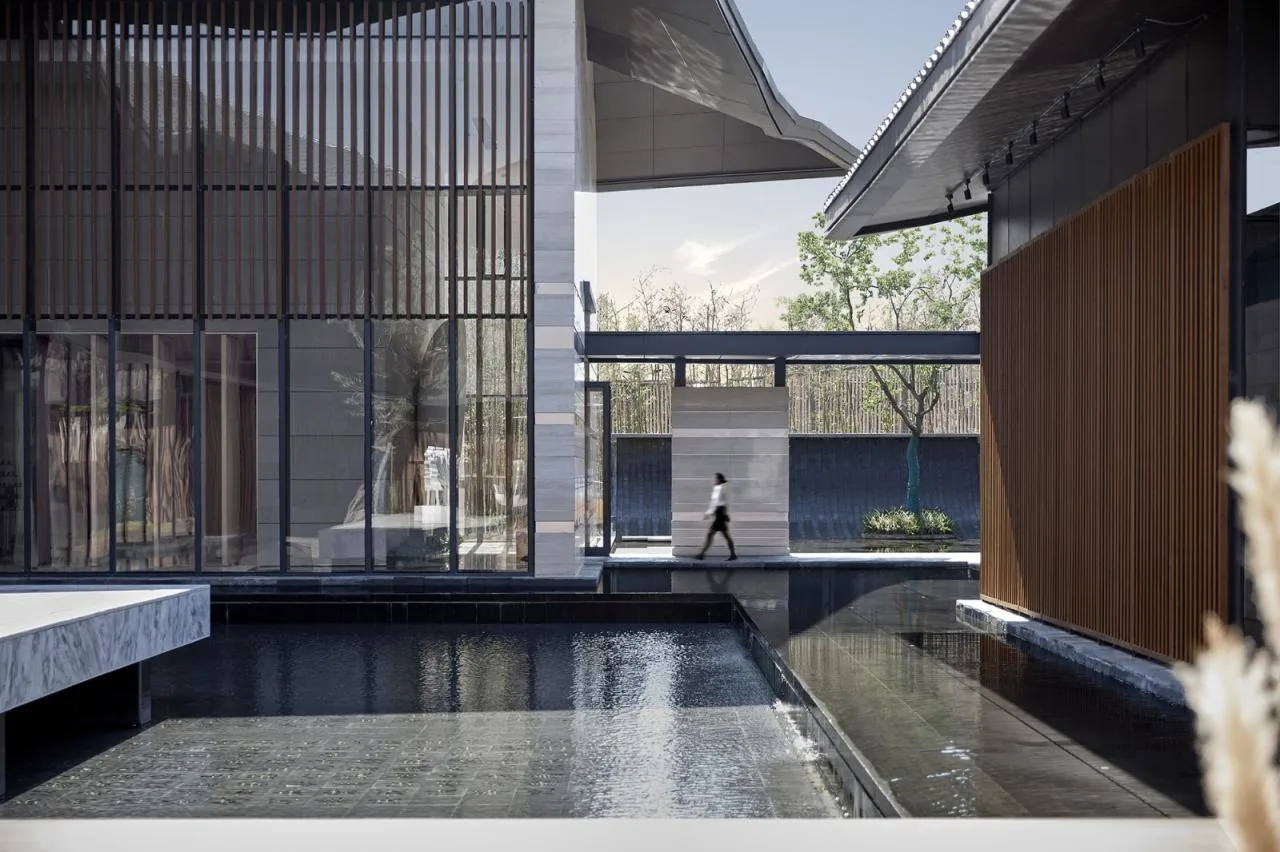
Step forward with head held high.
© Zengjiang River
A Borderless Courtyard Wall That Feels Like an Enclosure
The courtyard walls are constructed from “thick” bamboo panels, creating diverse courtyard spaces with the buildings. The curved top edges of the walls echo the continuous mountain ridges and the curved roof surfaces.
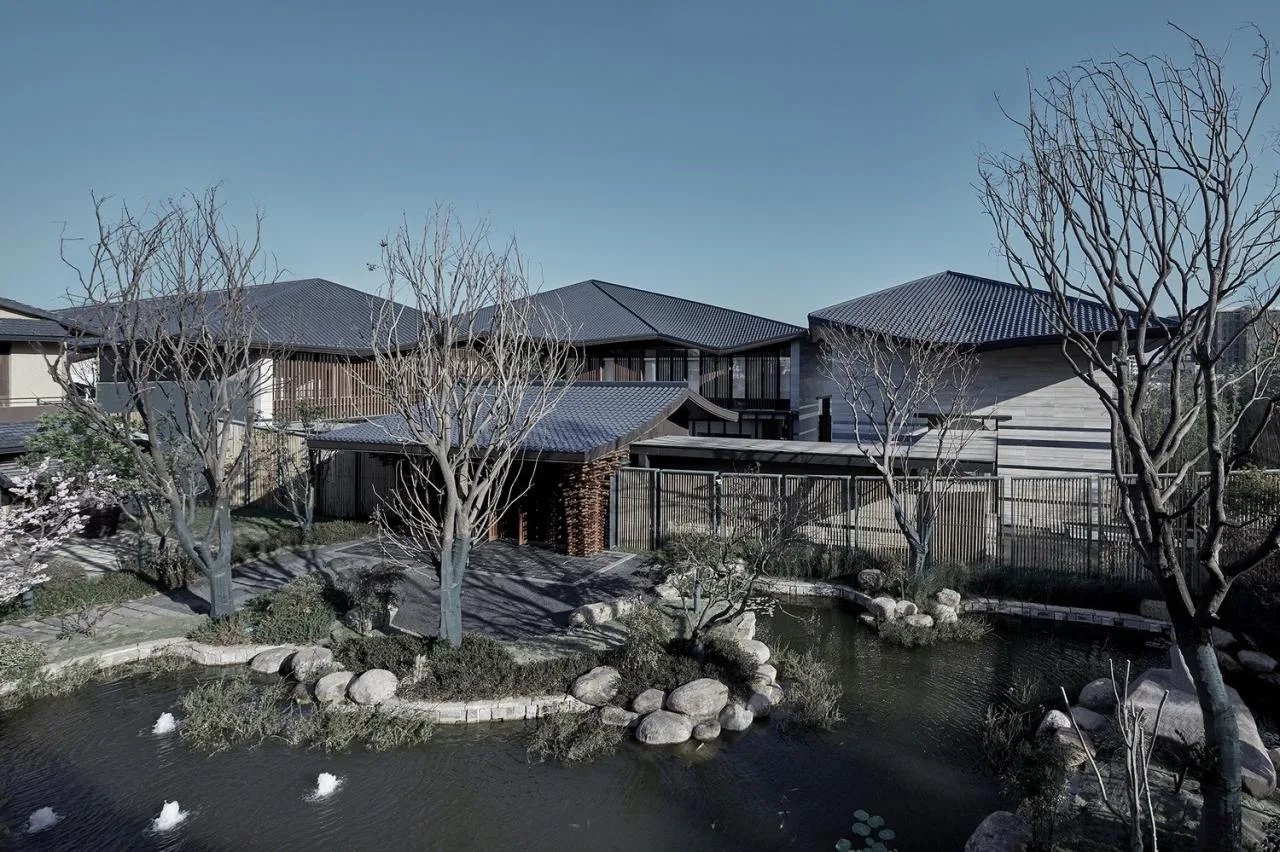
A Zen venue enclosed by bamboo courtyard walls.
© Zengjiang River
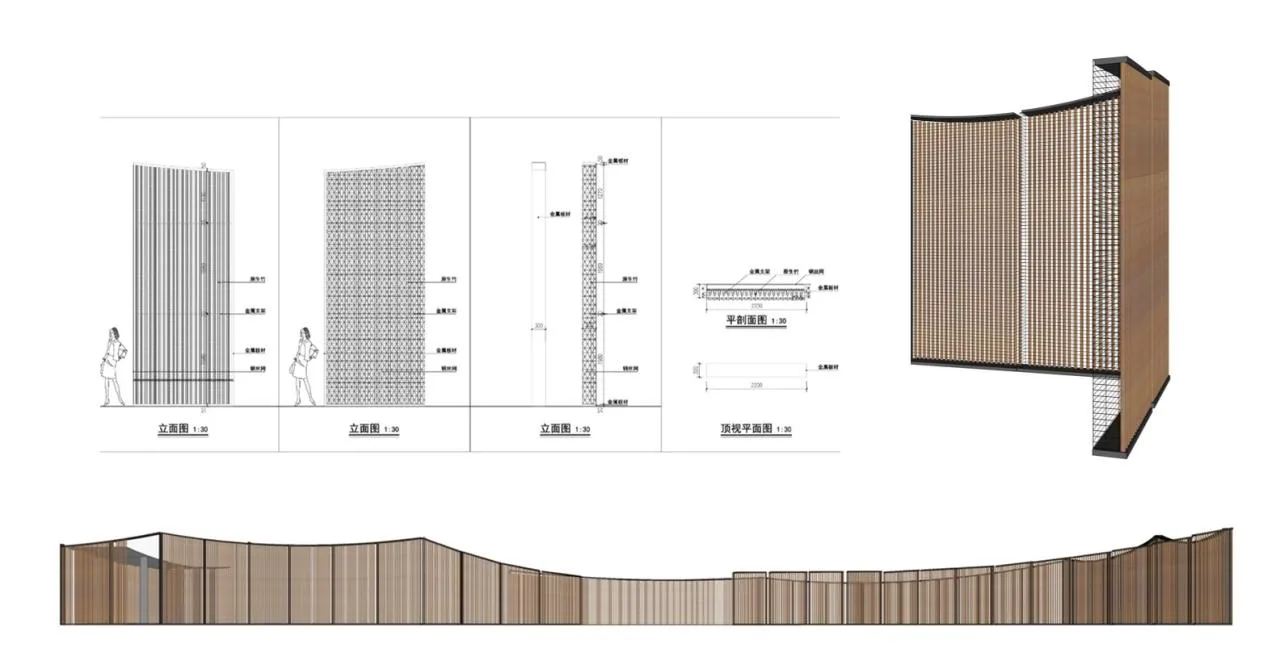
△ Diagram of Bamboo Courtyard Wall Expansion
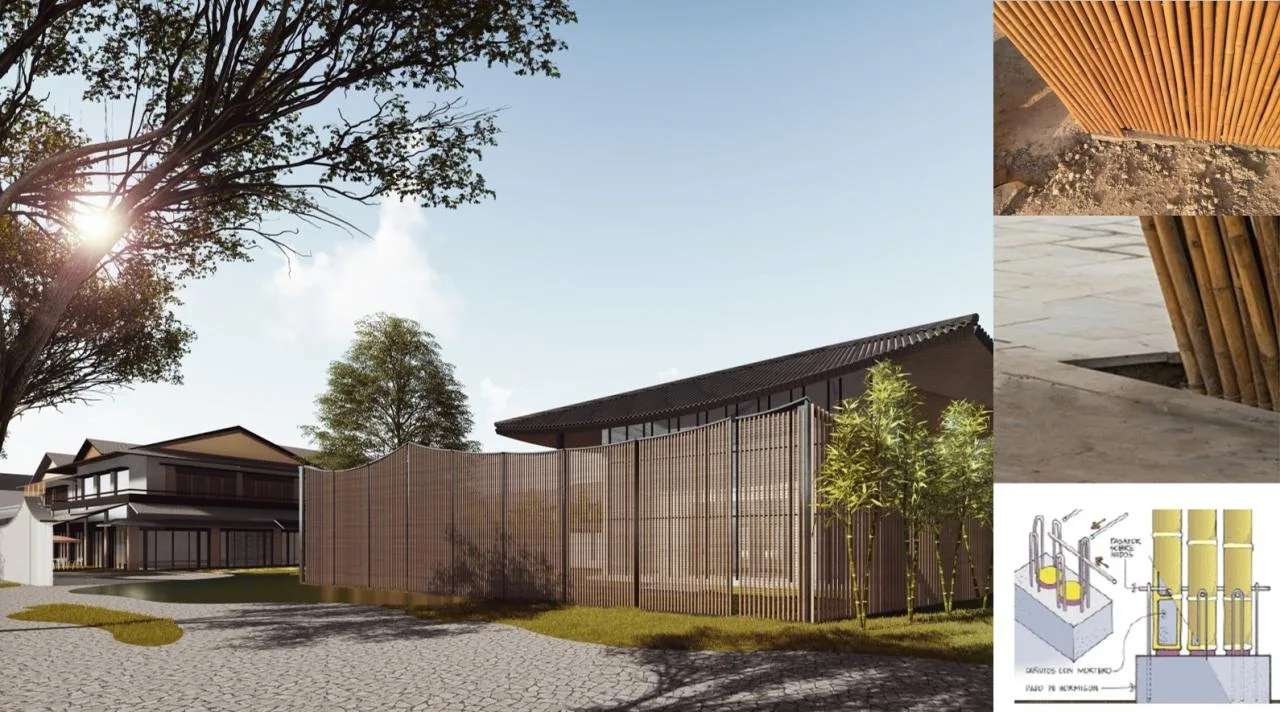
△ Rendering of Bamboo Courtyard Wall
The Zen Pavilion of Emptiness
The courtyard entrance maximizes the use of local bamboo materials. Hollow columns symbolize Zen philosophy, creating a sense of emptiness that seamlessly integrates with the surrounding environment.
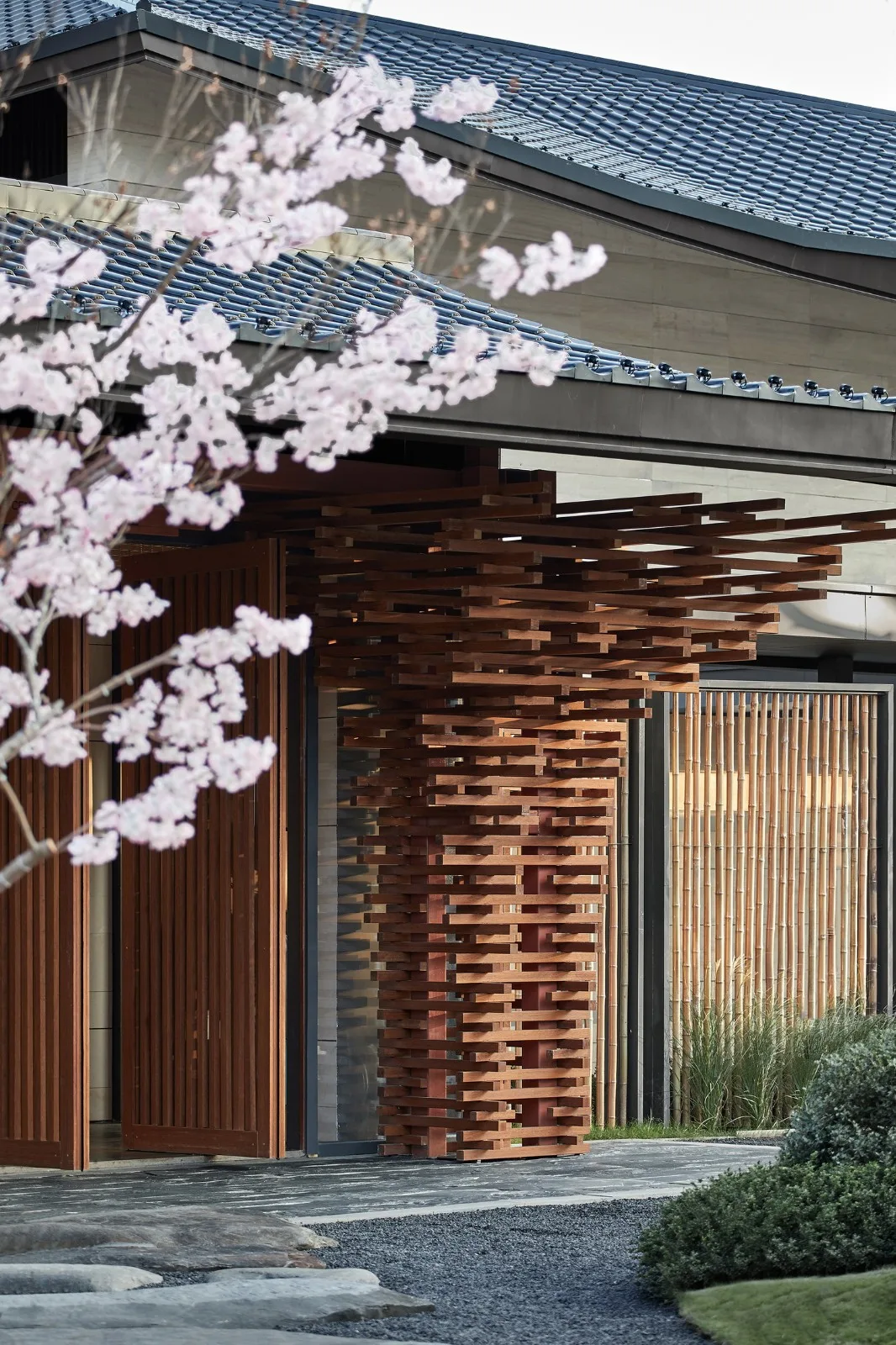
△ Emptiness outward, semi-transparent inward.
© Zengjiang River
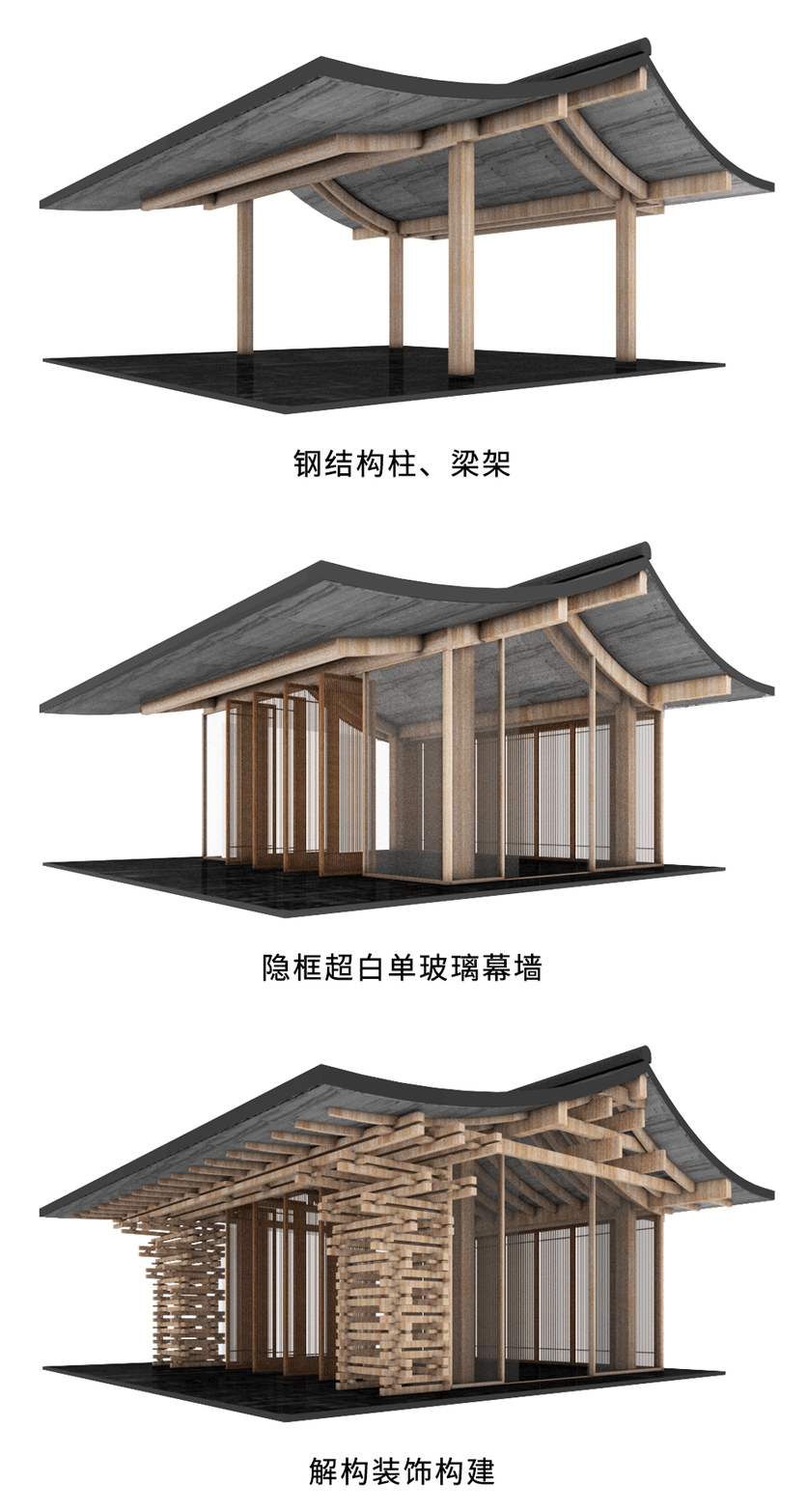
Schematic of wooden column deconstruction.
Zen Meditation, Daily Life, and the Ordinary Mind as the Tao
The realm of meditation is extended through a simple, universal spatial layout, revealing the world between existence and non-existence through each building and object. The wisdom of Chinese Zen is reflected in the spatial relationships and meticulous architectural details. When flowers bloom, one sees Buddha and realizes the impermanence of life; through light meditation, the heart finds peace.
Project Information
Building Types: Cultural Exhibition Center, Featured Commercial Street, Health and Wellness Hotel, Zen Residence
Total Building Area: 505,066 square meters
Developer: Greenland Holdings Group Jiangxi Business Unit
Architectural Design: UA Youan Design
Construction Status: Under construction















Must log in before commenting!
Sign Up