
01. Project Background
Changzhou High-Speed Railway New City, situated within the Changzhou National High-Tech Zone, is a pivotal development area outlined in Changzhou’s 14th Five-Year Plan. The project aspires to establish a green development demonstration zone within the Yangtze River Economic Belt, aligning with the vision of a “new urban center, new core of the central axis, new industrial hub, and smart ecological city.”
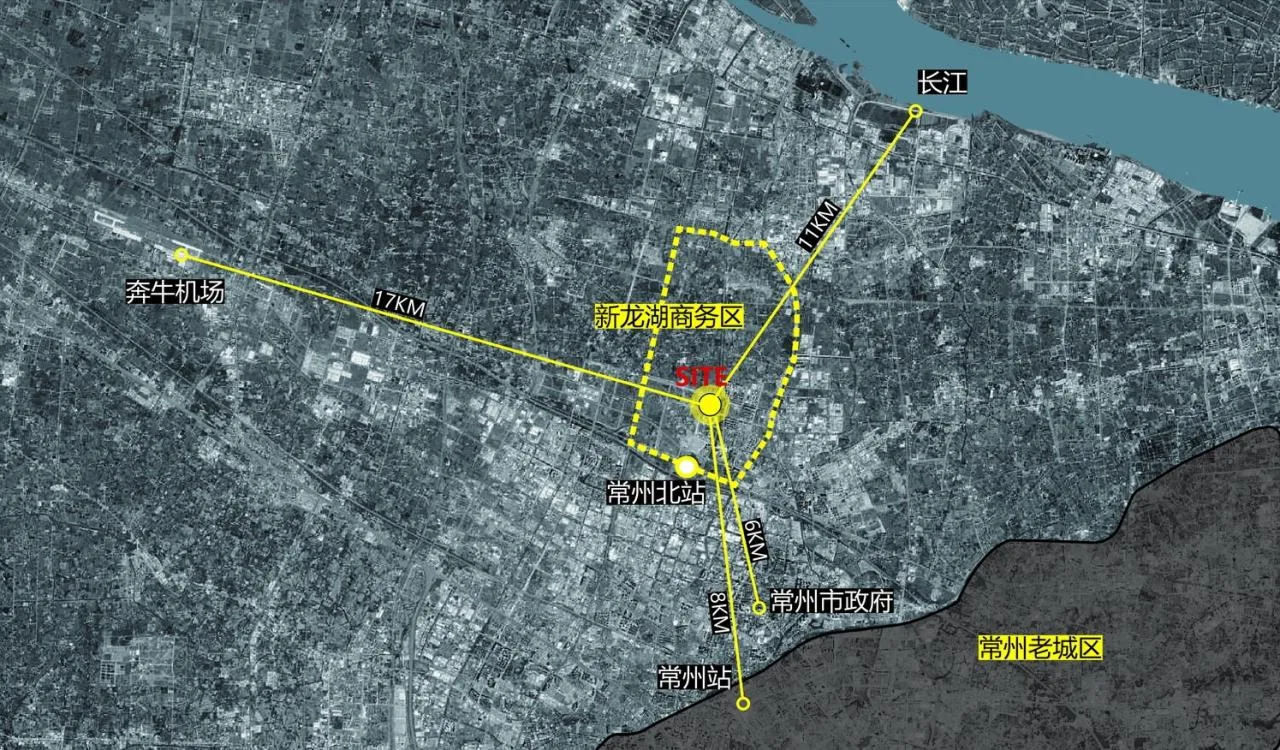
△ Location analysis
02. Opportunities and Challenges
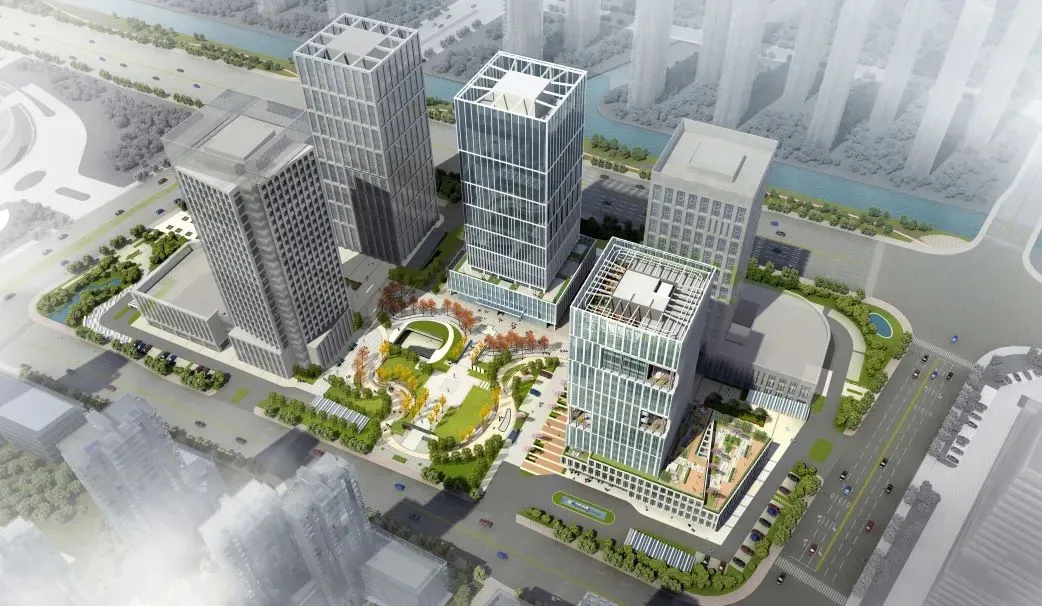
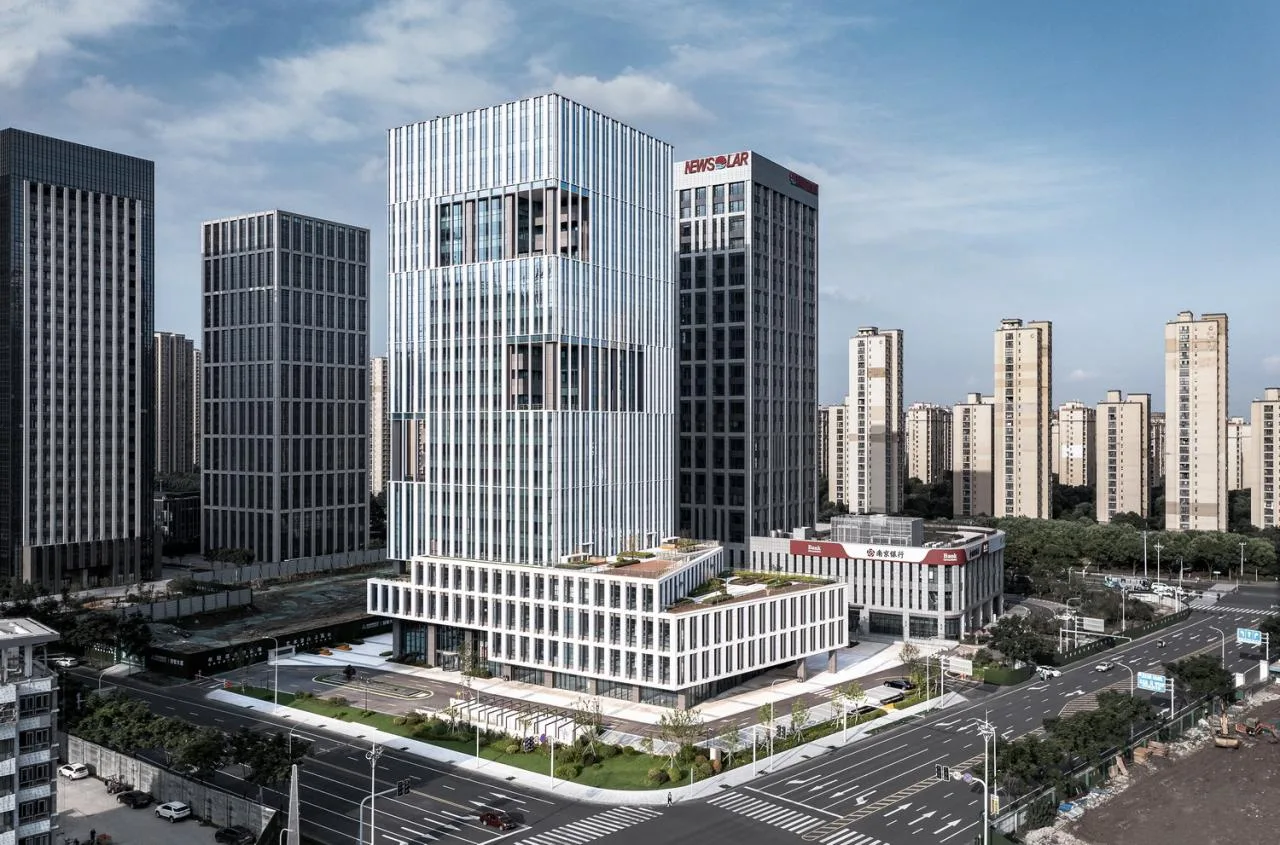
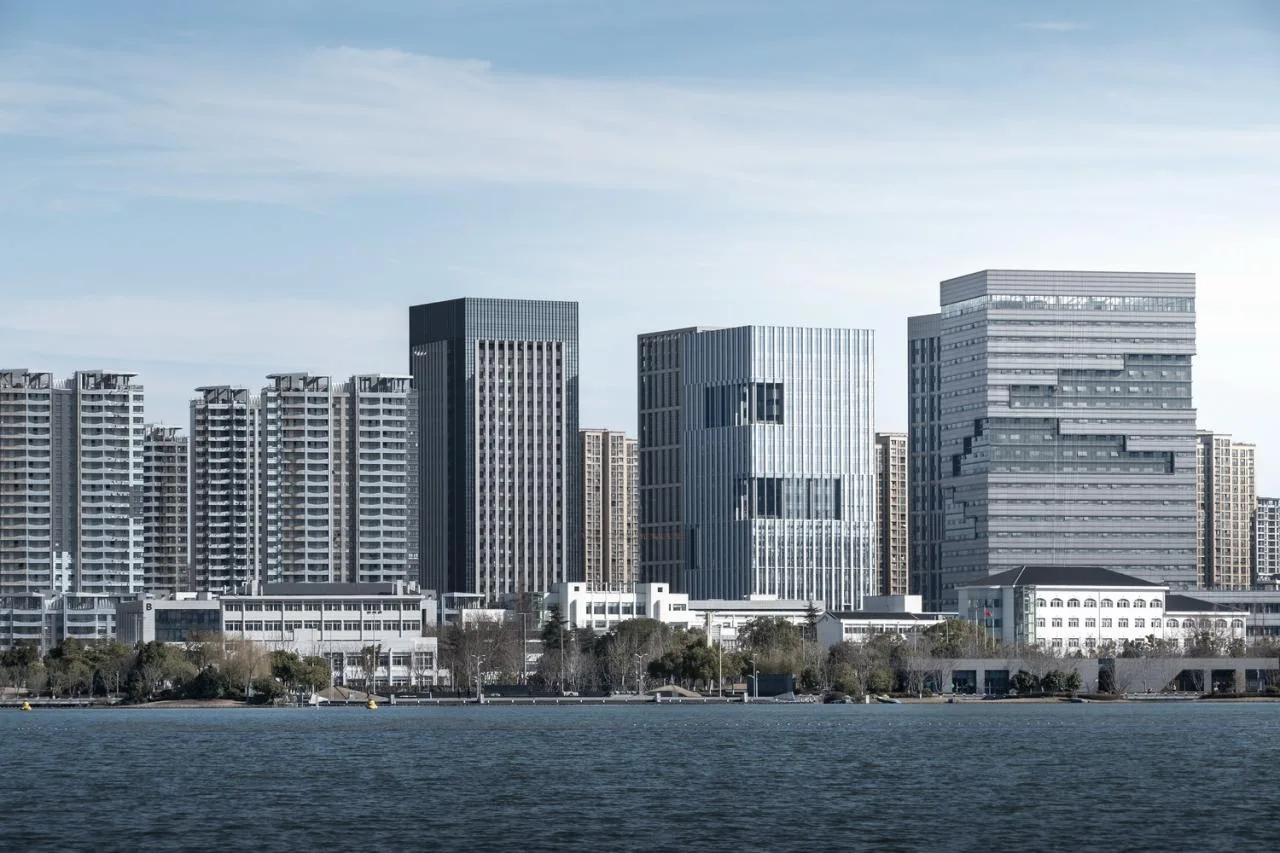
The “Xinlong Headquarters Economic Zone,” the site of this project, comprises five towers each standing 100 meters tall, along with their podiums. Following the principle of “unified planning and land allocation,” three of these towers had already been constructed by different owners when our team joined the project. The initial challenge for the architects was essentially a “proposition essay”: how to effectively plan and design to seamlessly integrate these five independent plots into a cohesive whole that would serve as a distinguished “business card” for the region?
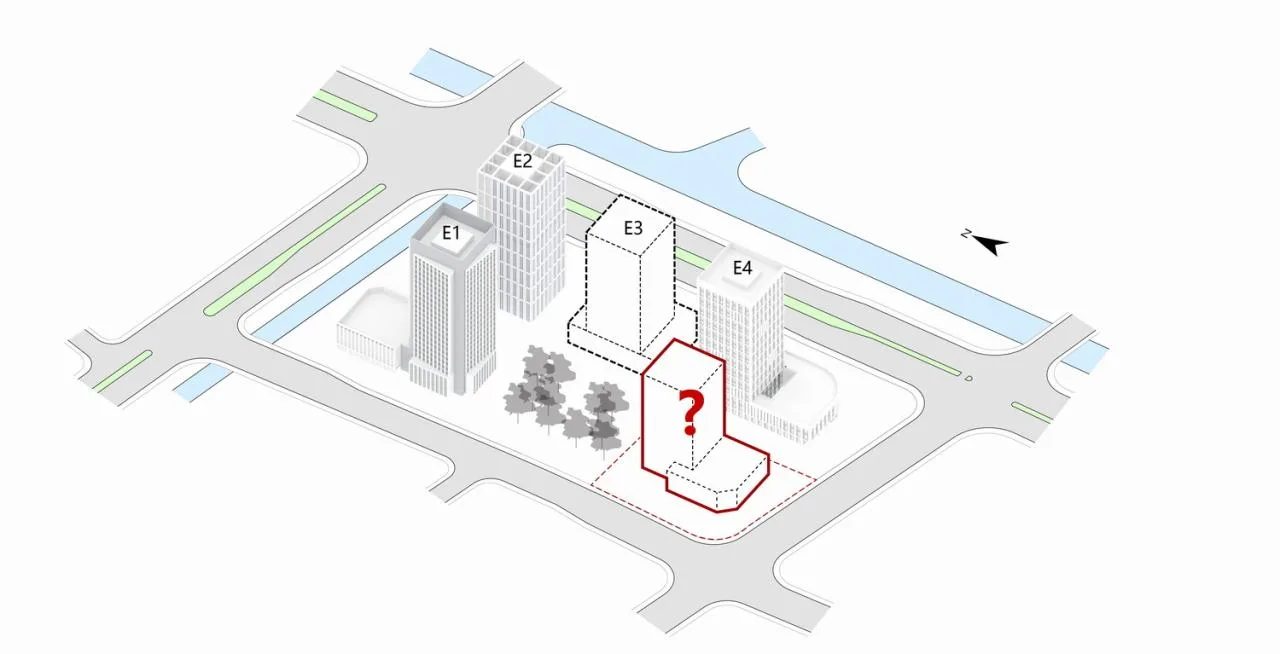
△ Analysis chart
03. Integrated Design
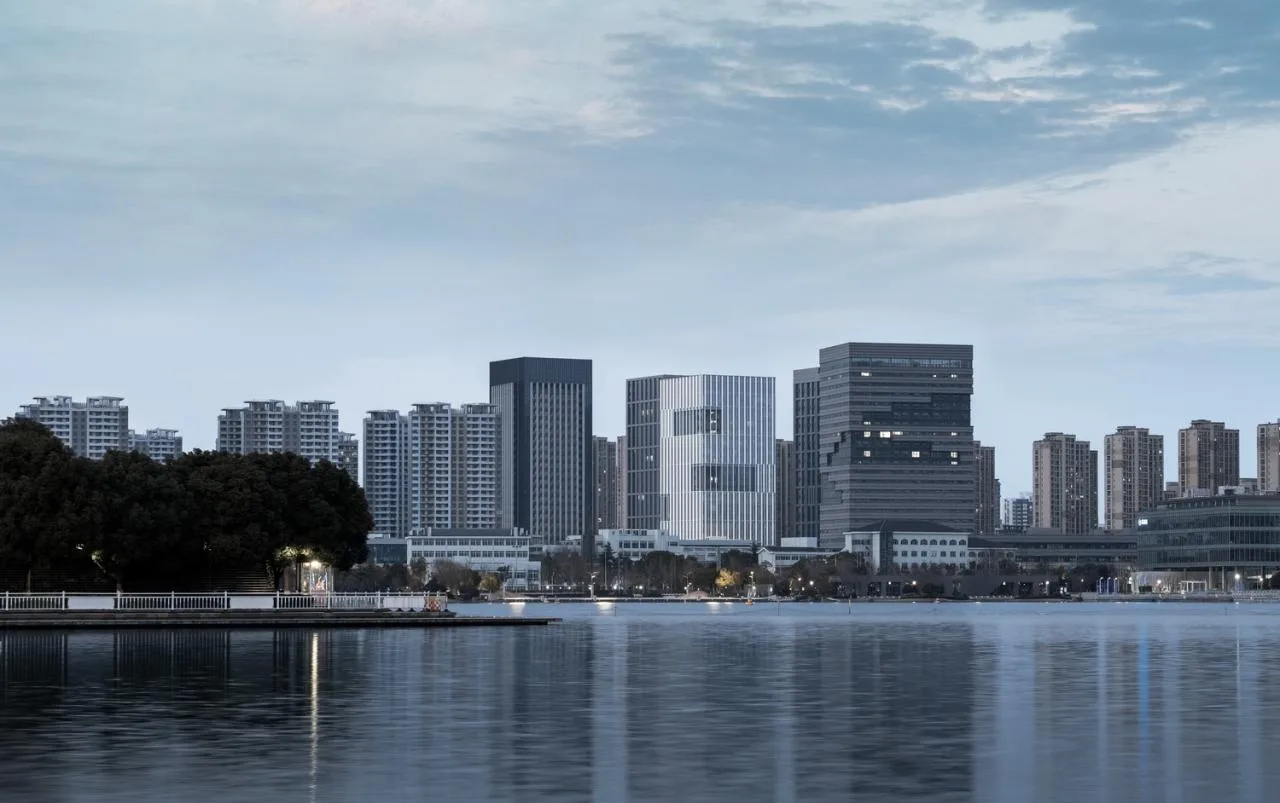
Our goal was to empower the entire plot through design, ensuring it becomes an organic extension of the urban space rather than merely adding two new buildings. When the Jianhe architectural team began their design process, they carefully considered the surrounding community and context.
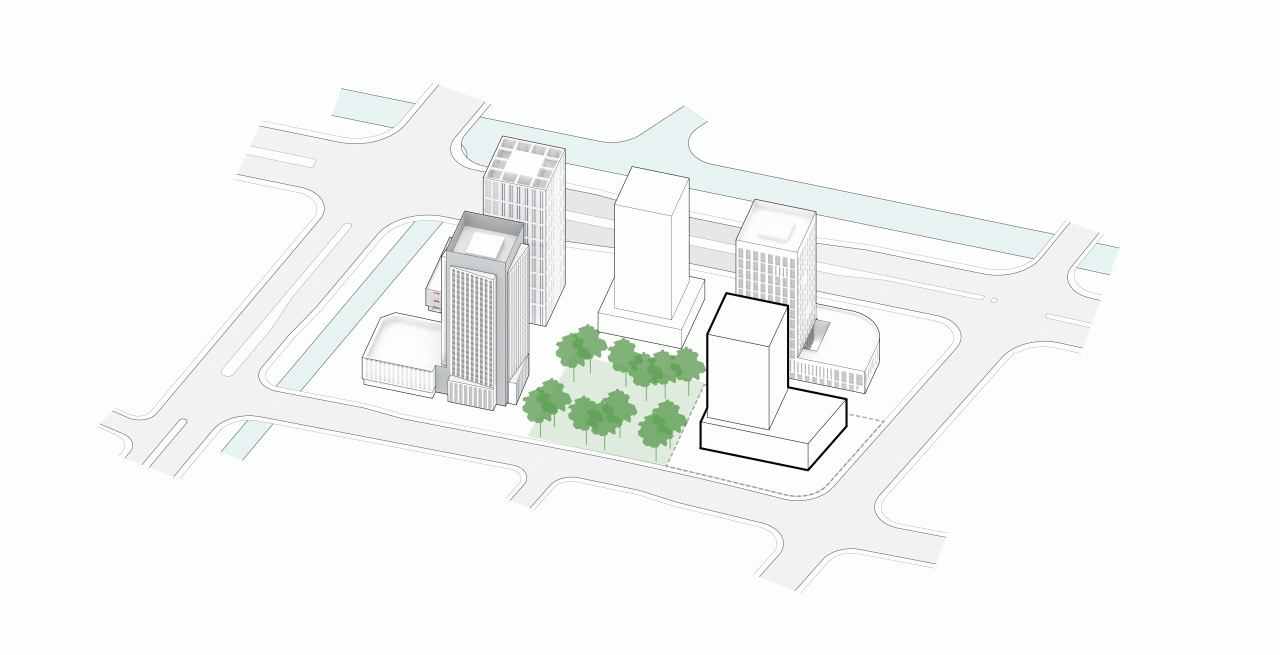
△ Generation analysis
The design separates pedestrian and vehicular traffic, incorporating an elevated grey space at ground level that encourages people to linger and enhances accessibility to the site by creating an open garden within. The new basement is designed to connect with the existing basements of the three adjacent towers, minimizing the need for additional ramps. This approach begins with addressing the overall urban design challenges of the plot.
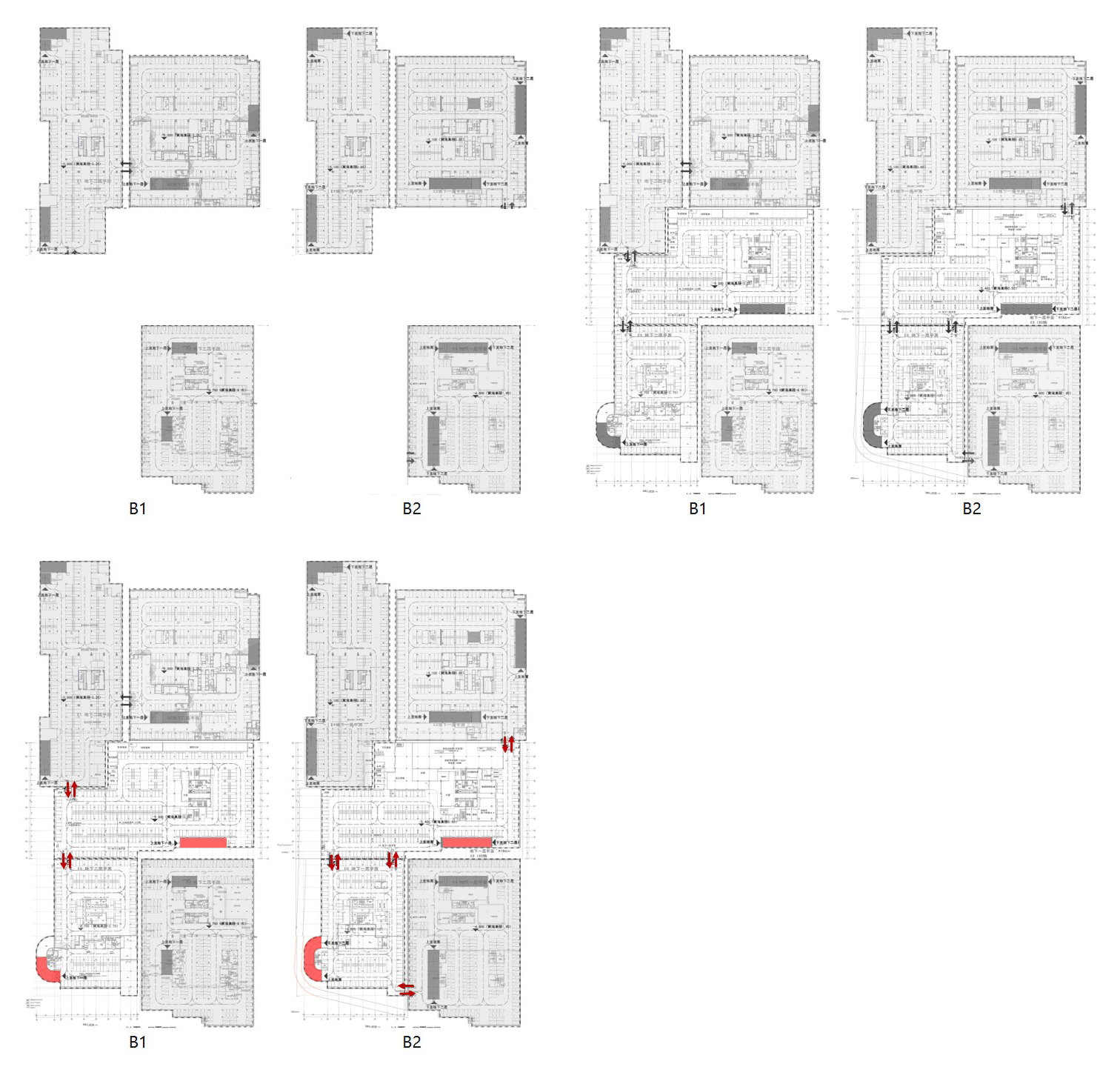
△ Underground Connection
04. Facade Weaving
Our approach is not simply additive but multiplicative—identifying the fundamental elements and finding the greatest common denominator. The key question: how do we embed the two new buildings into the existing context, which features three distinct facade styles, while refreshing the park’s appearance?
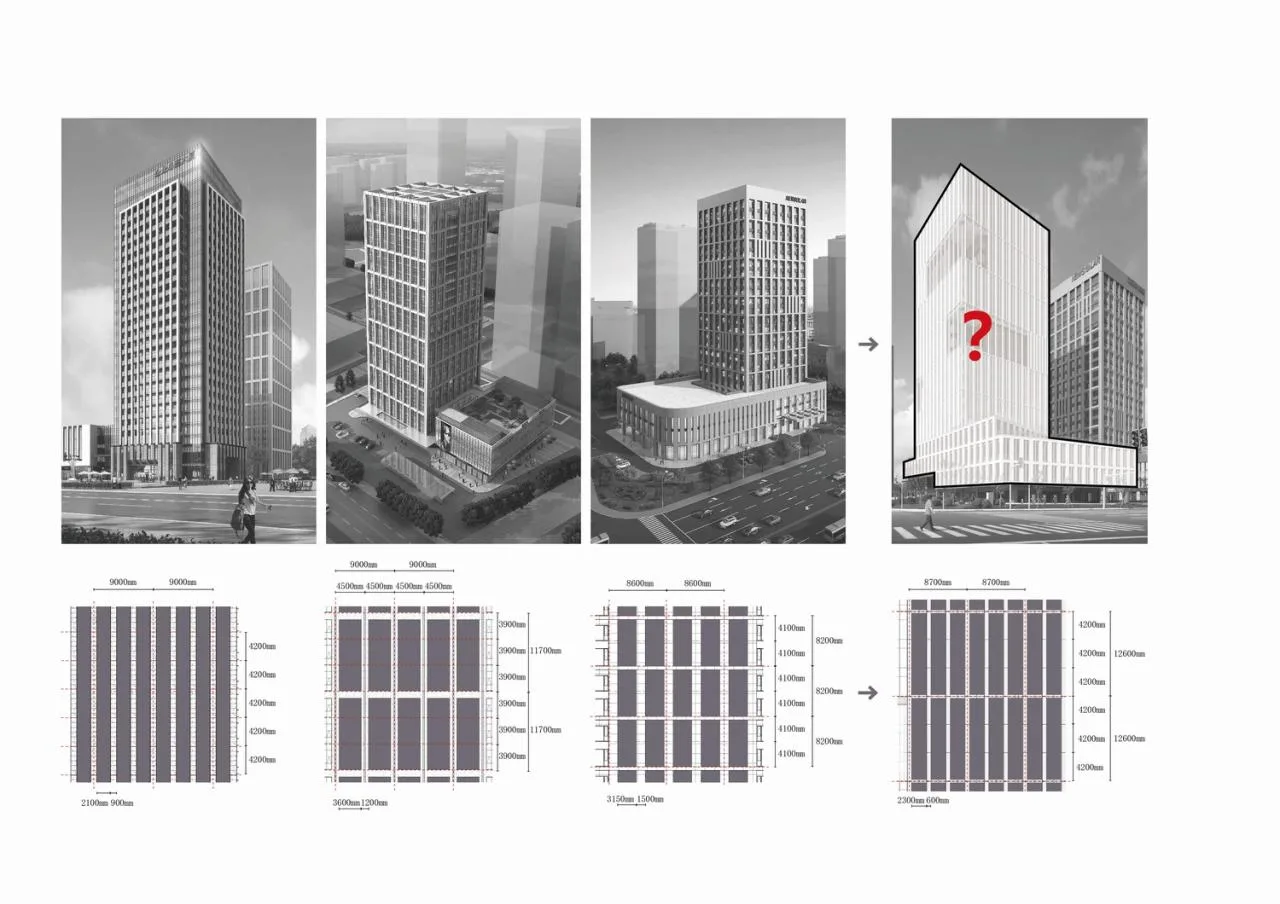
△ Facade modulus analysis
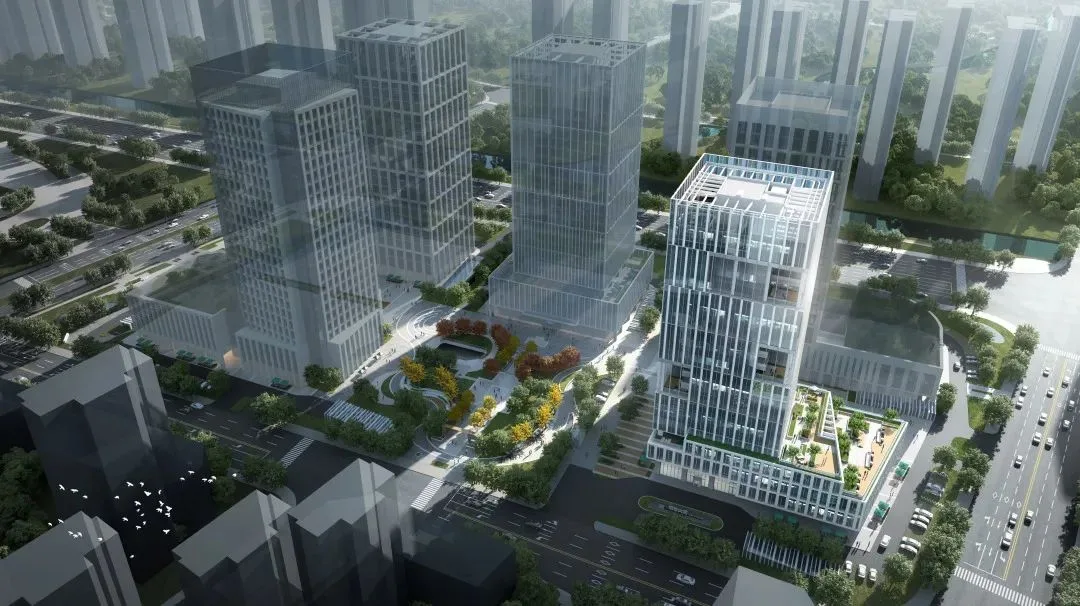
The design team applied a process of decoding and recoding to extract facade elements from the existing three buildings, then reinterpreted these elements in a new style. The resulting appearance is both cohesive and varied. Through the “weaving” of the new structures, old and new facade styles complement each other to form a harmonious whole.
05. Architectural Features
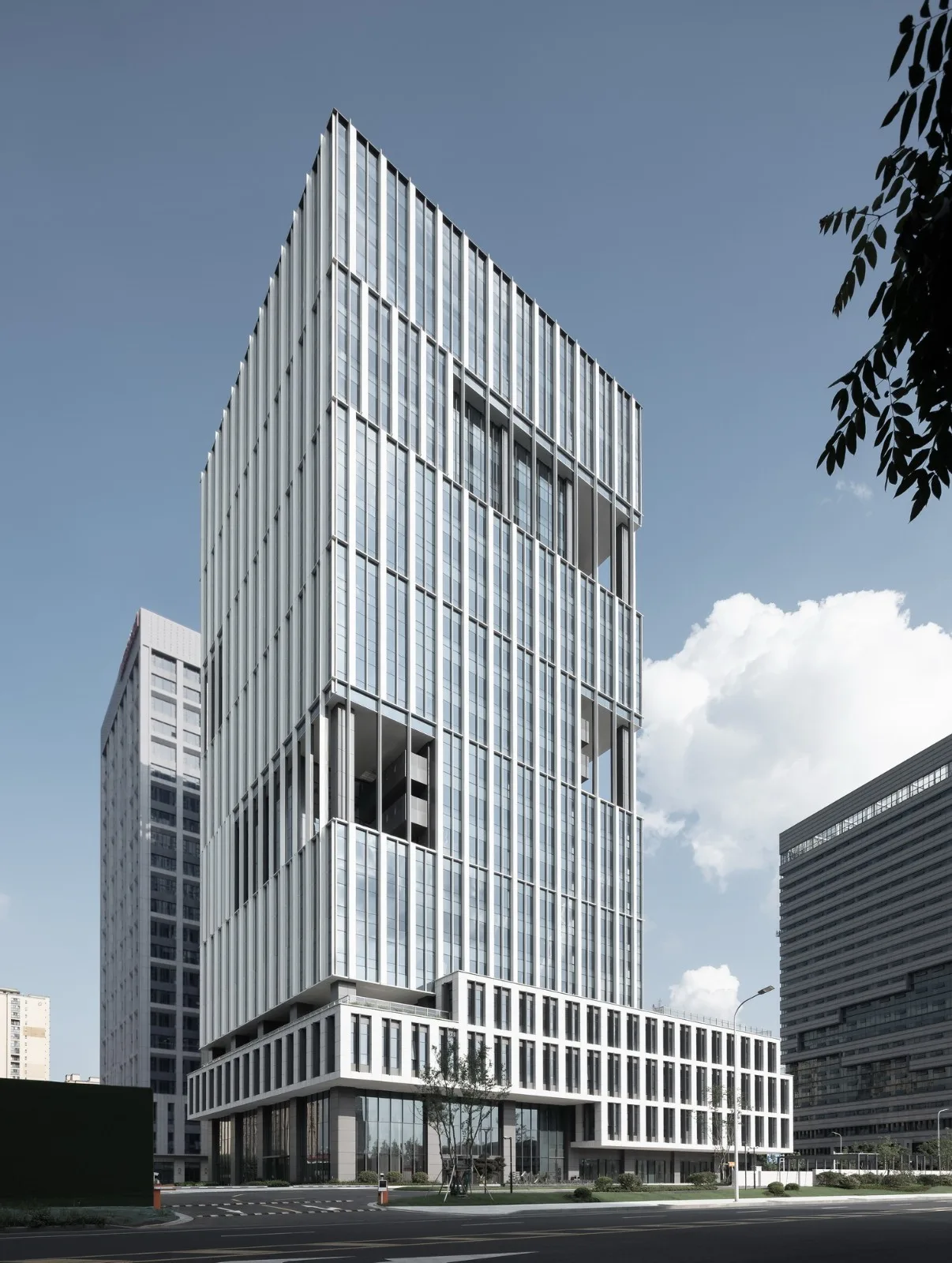
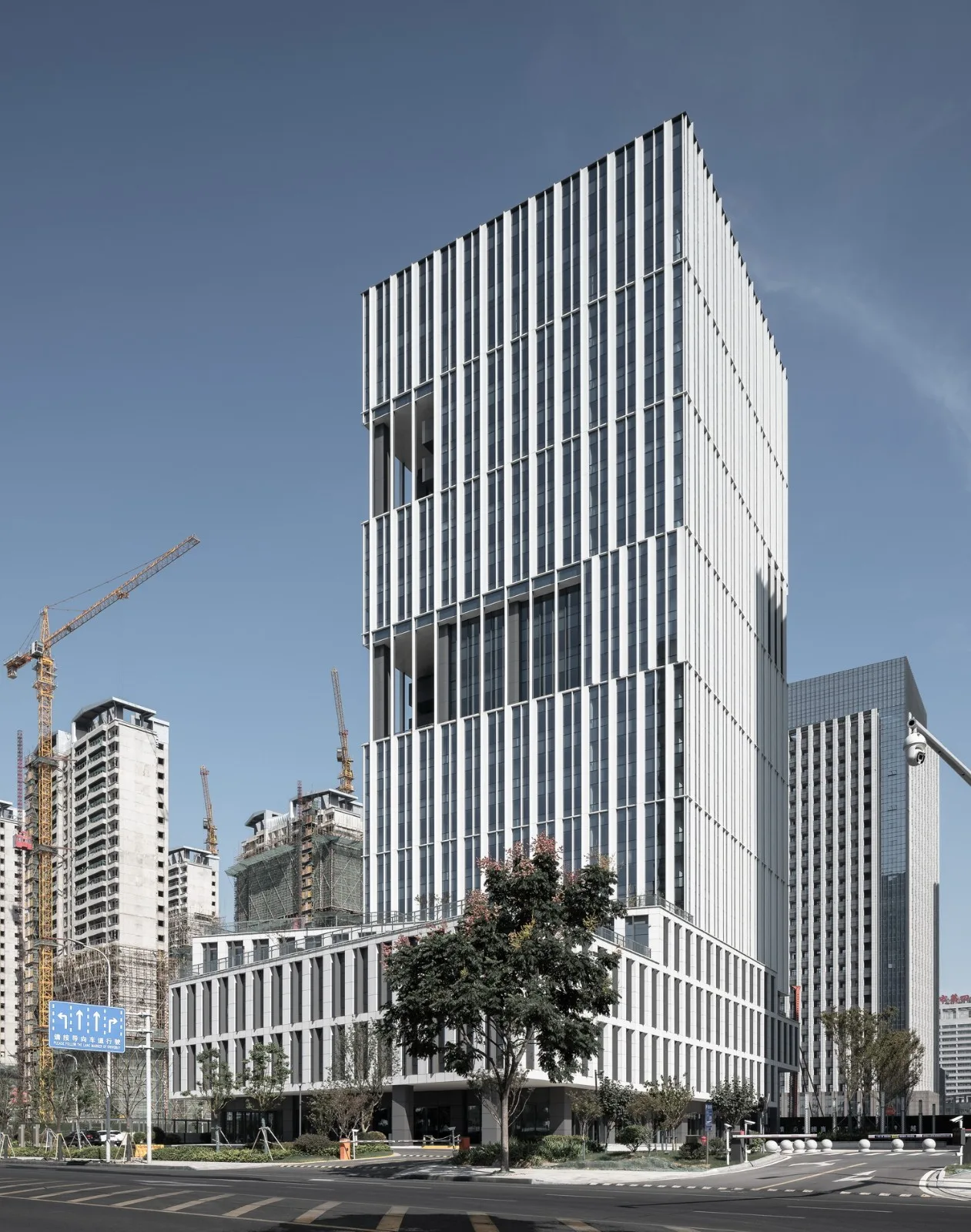
The Green Innovation Building, located at the southeast corner of the headquarters economic zone, is the only building in the area visible from the North High-Speed Railway Station. It acts as a “window” showcasing the entire zone. The building faces a challenge: with a plot ratio of 3.5, its height is typically limited to about 80 meters, yet the client desires a visual height close to 100 meters. This dilemma called for innovative solutions.
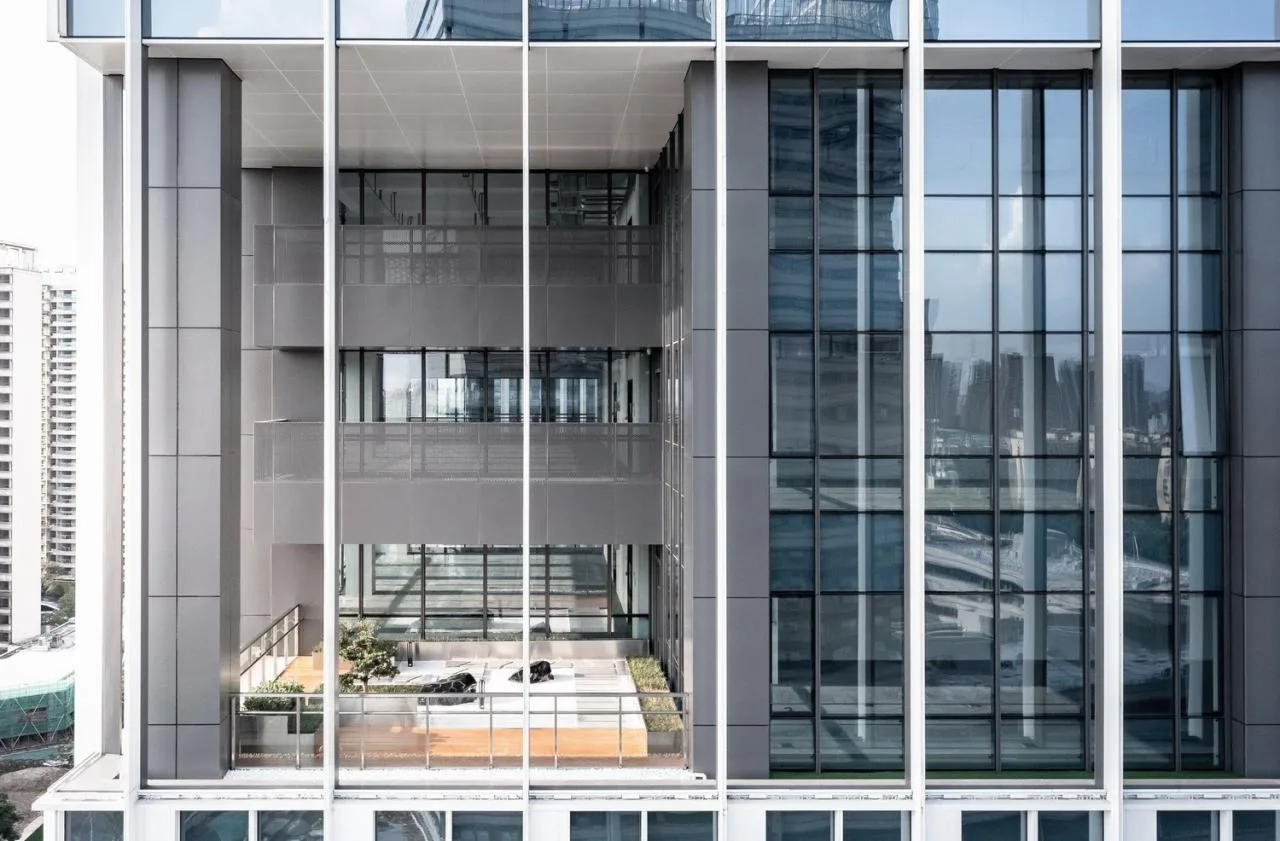
The breakthrough was to maximize floor count without increasing the building footprint, leading to the adoption of elevated atriums and sky gardens—both a challenge and a highlight of the design. Sacrificing 25% of each floor’s area as vertical open space reduces office area efficiency, which is why most commercial office buildings prefer the traditional large flat floor plans. The client’s trust in the architect to take this risk reflects careful client profiling and collaboration.
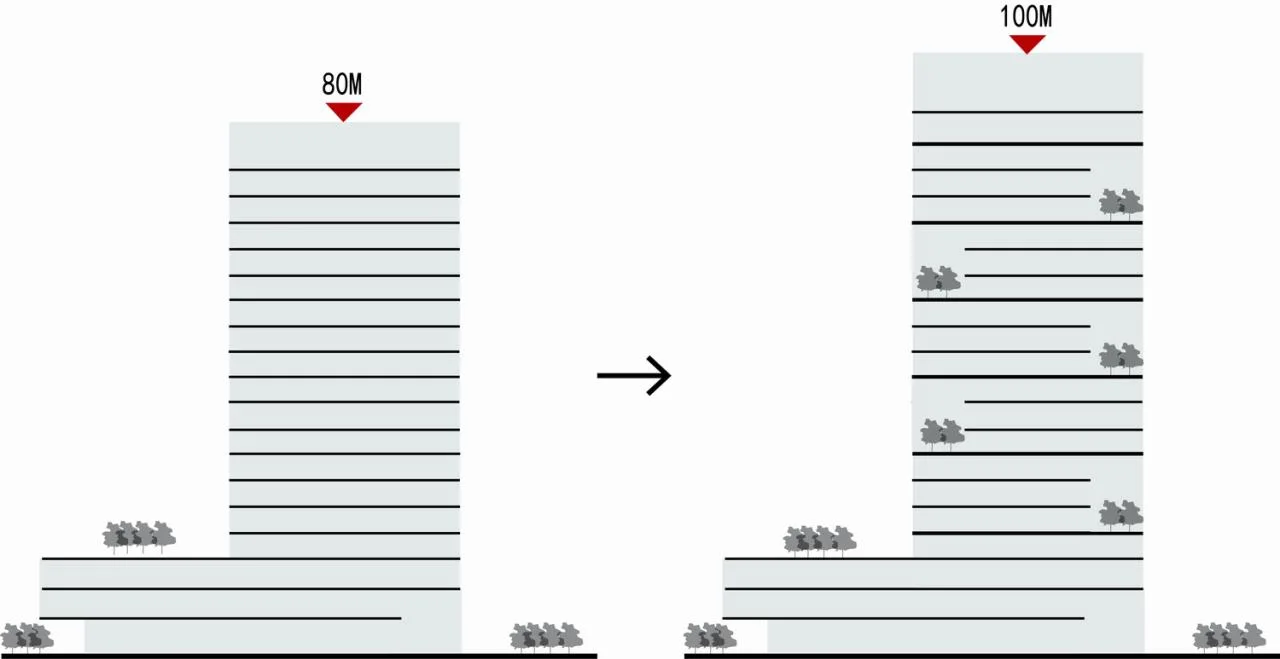
△ Height and Volume Analysis Diagram
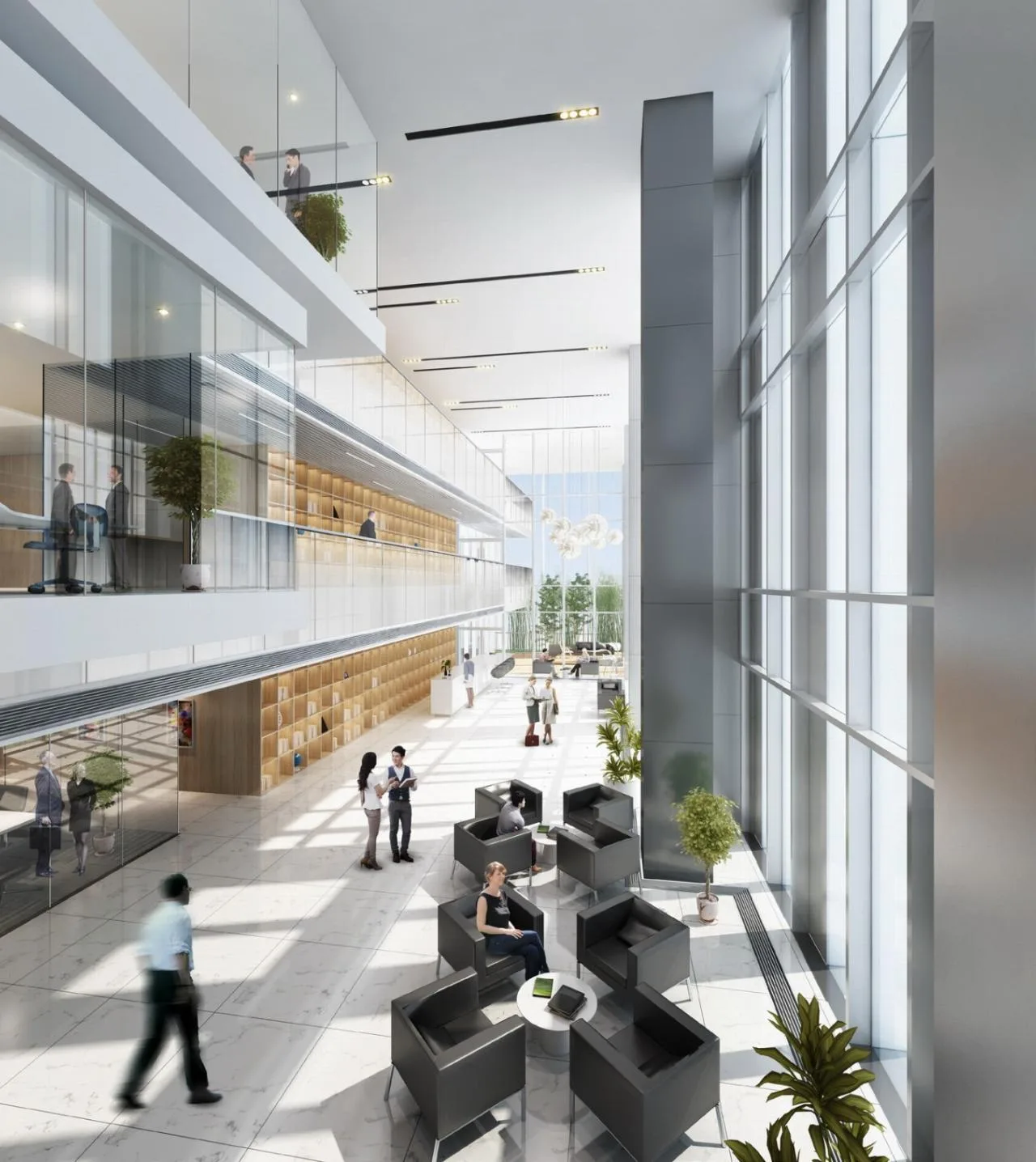
The Green Innovation Building introduces the concept of a “vertical garden-style corporate headquarters.” Each company occupies three floors, covering approximately 4,000 square meters, featuring a three-story corporate living room and an outdoor aerial courtyard. Vertical communication within the company is emphasized, with shared spaces designed to foster interaction, relaxation, and gatherings, serving as impressive display areas for the enterprise.
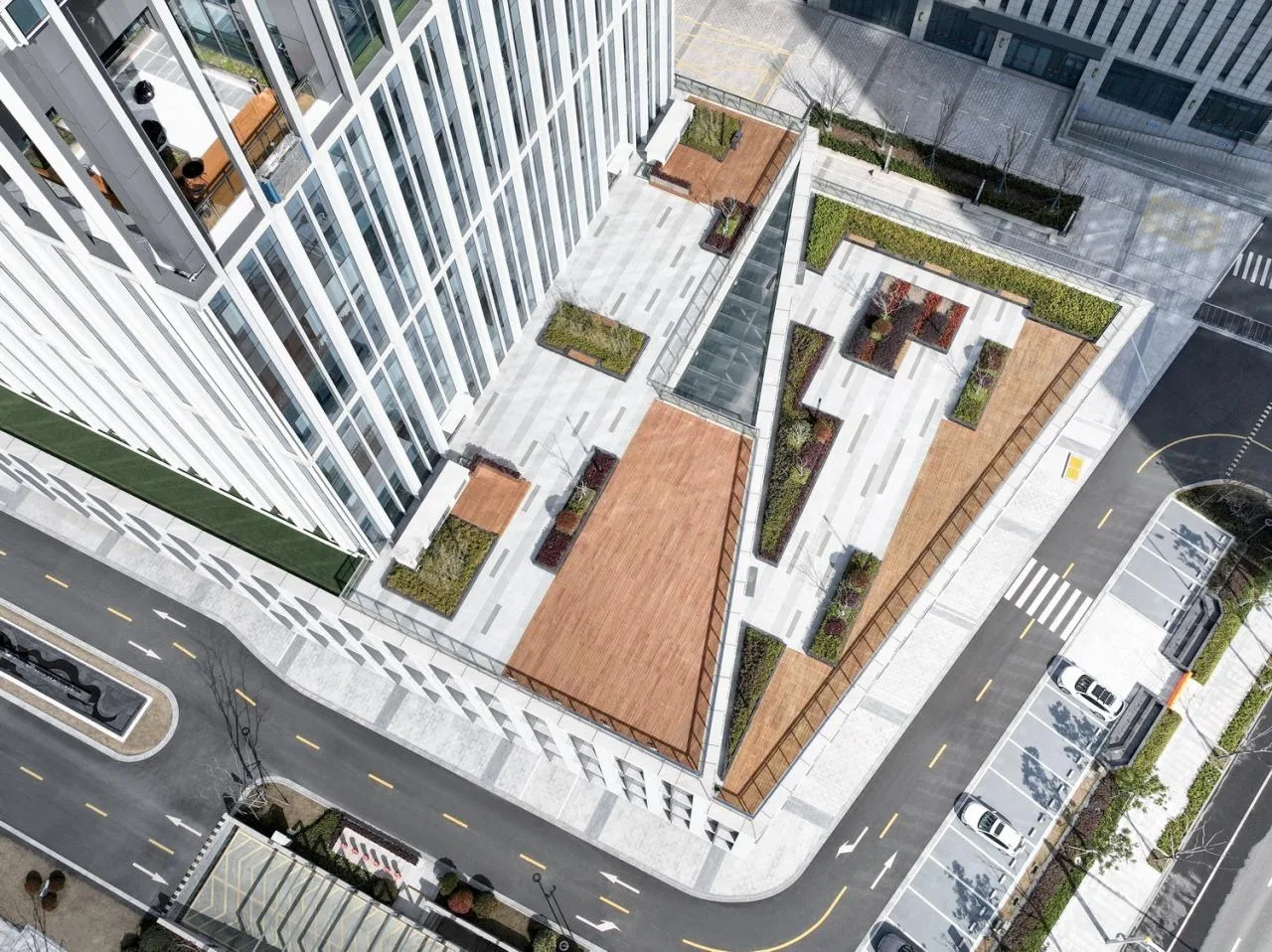
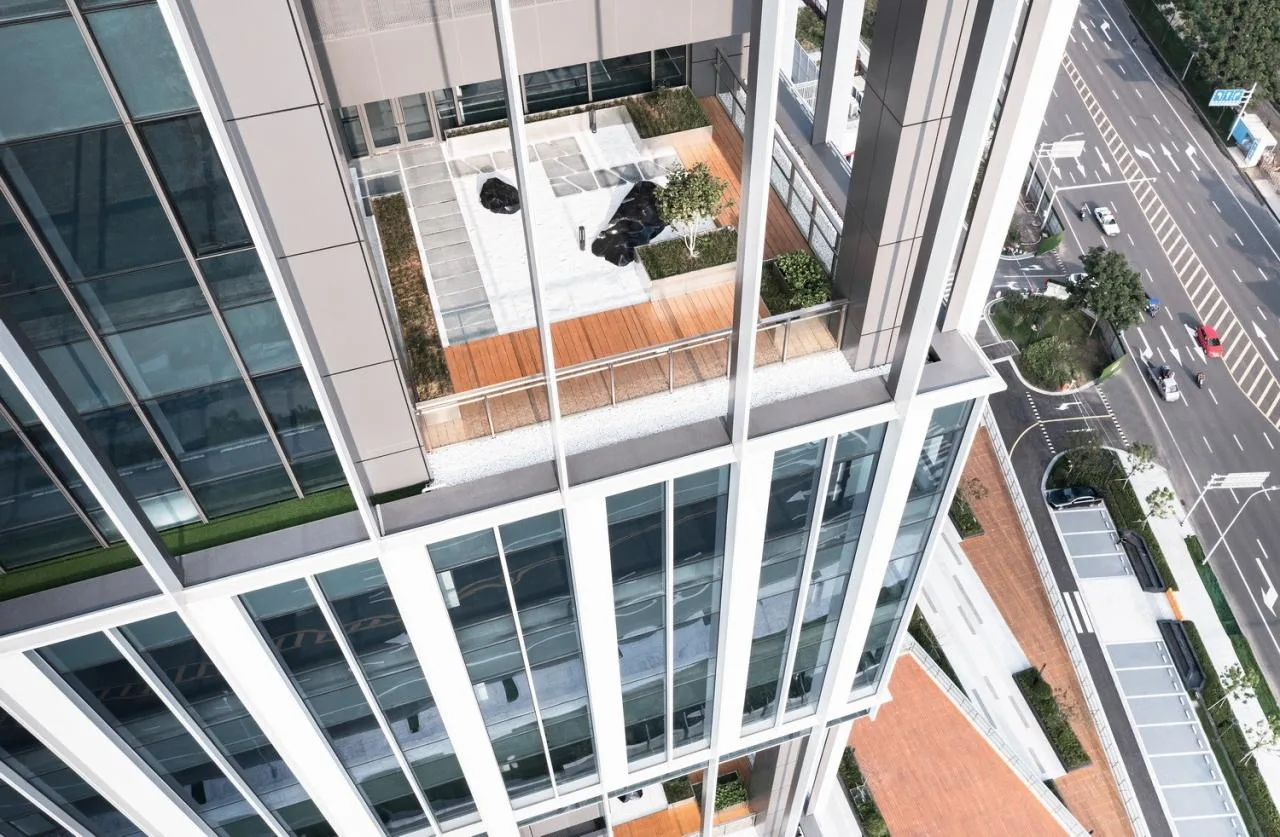
Outdoor garden locations are strategically placed based on the relationship between the building and city context. East and south-facing gardens are elevated, offering views of Xinlong Lake and the North High-Speed Railway Station, while west and north-facing gardens are lower, overlooking the internal square. The indoor atrium is concentrated in the less valued west and north zones.
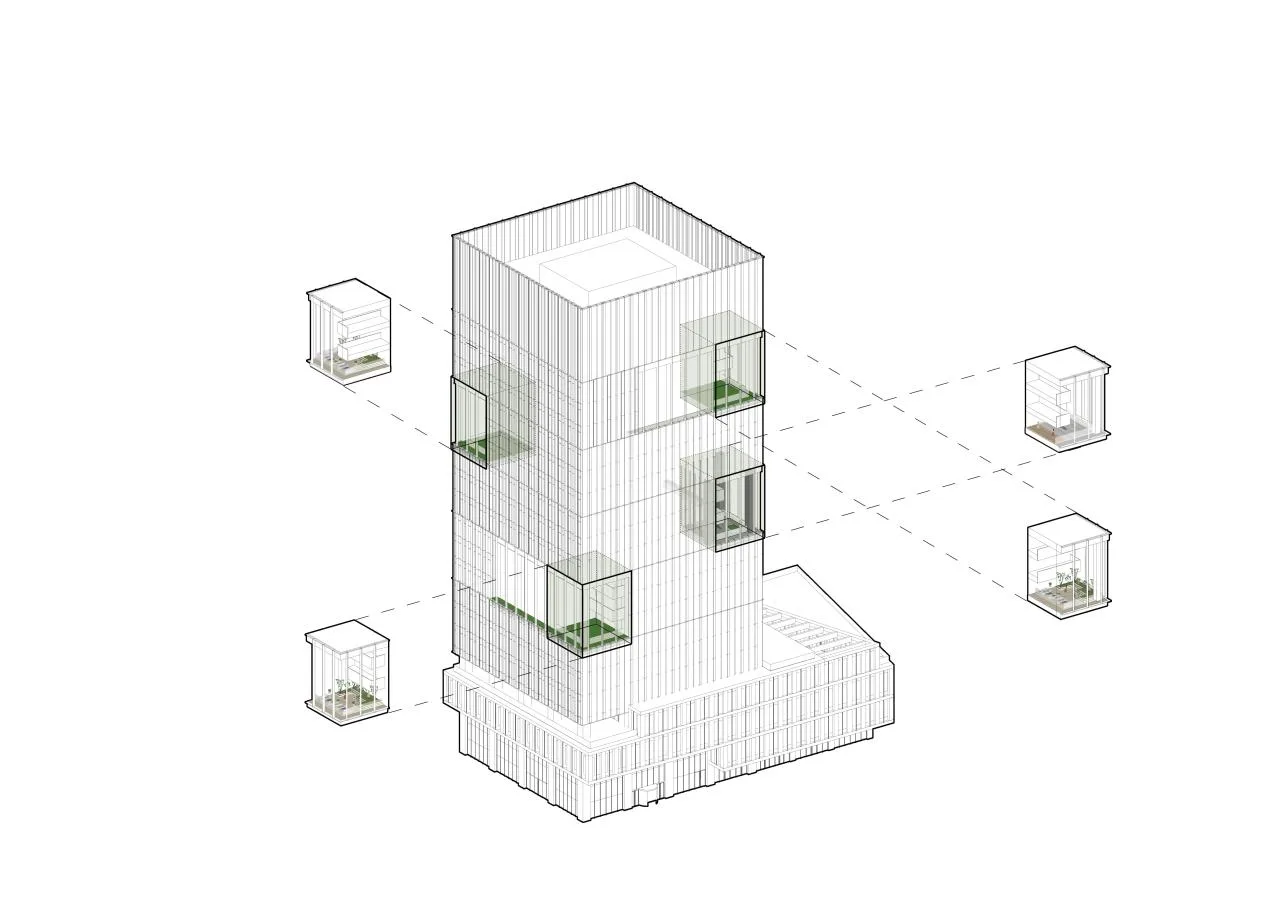
Analysis diagram of the aerial garden
06. Refined Facade Design
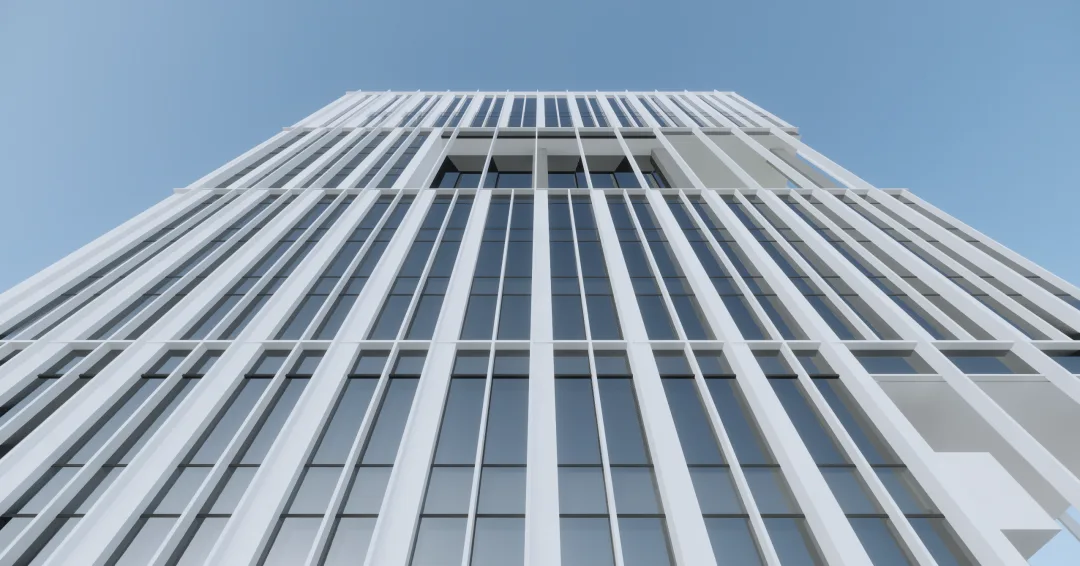
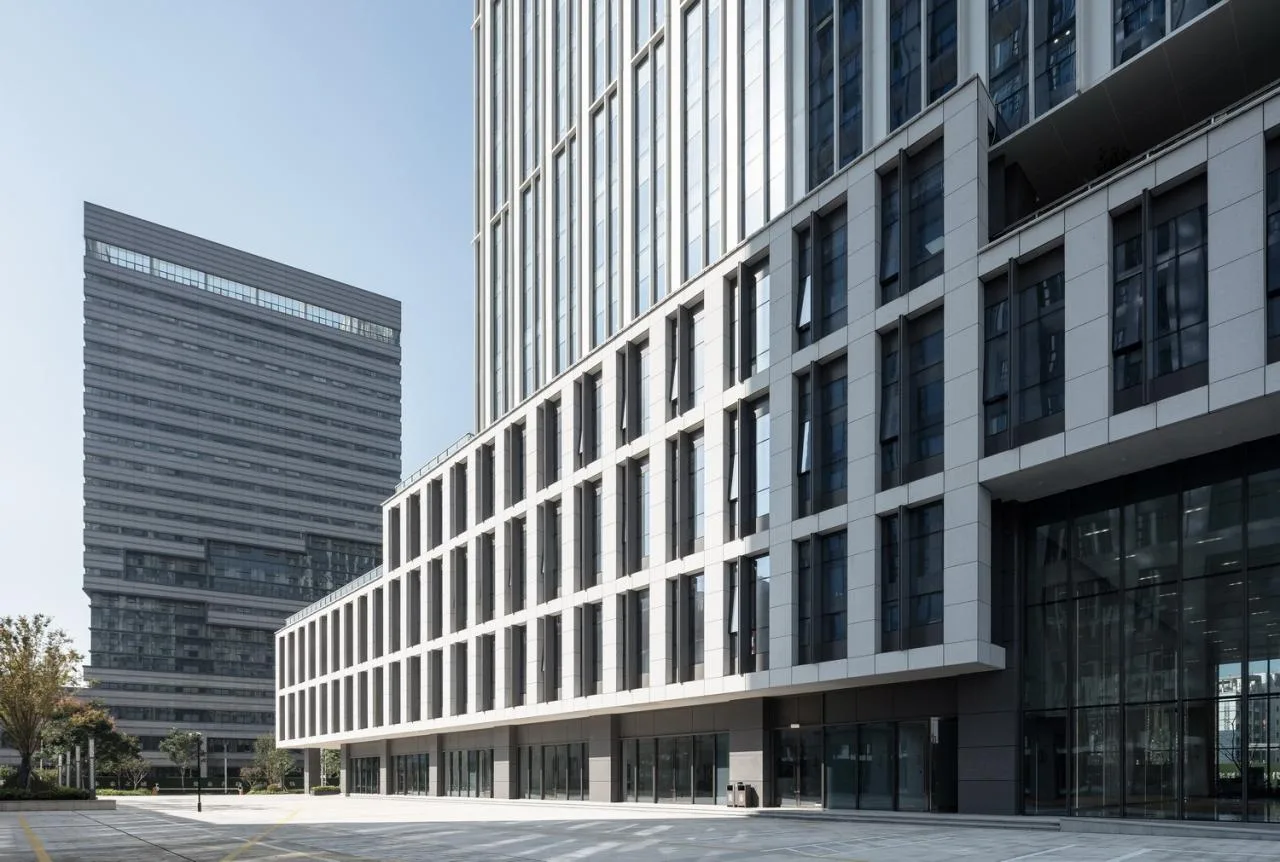
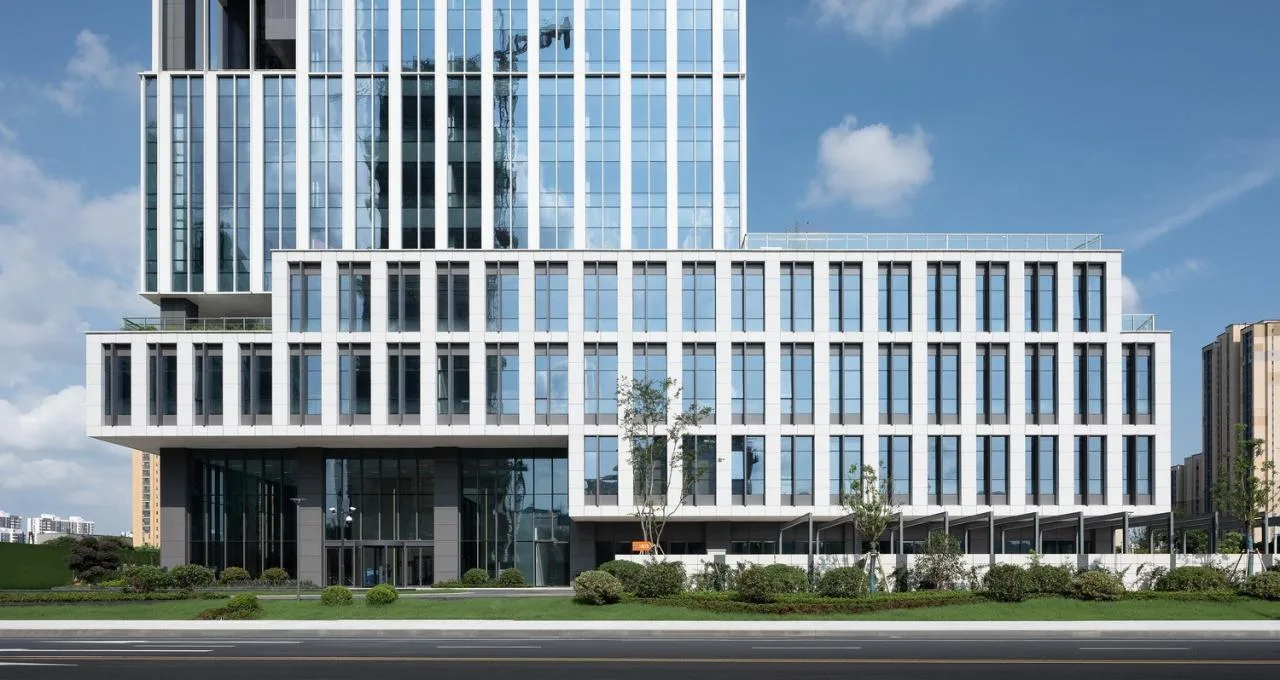
The Greentown Tower’s facade features vertical aluminum decorative panels arranged in sections of three floors each, which de-emphasize horizontal lines and accentuate verticality, lending the tower a more upright appearance. The decorative aluminum panels consist of 600x200mm parallel glass aluminum plates and 70x450mm protruding aluminum decorative lines, creating a layered effect across two quadrants. The vertical lines form a “wave” pattern aligned with the sky gardens, breaking the facade’s rigidity and adding rich variation within a unified design.
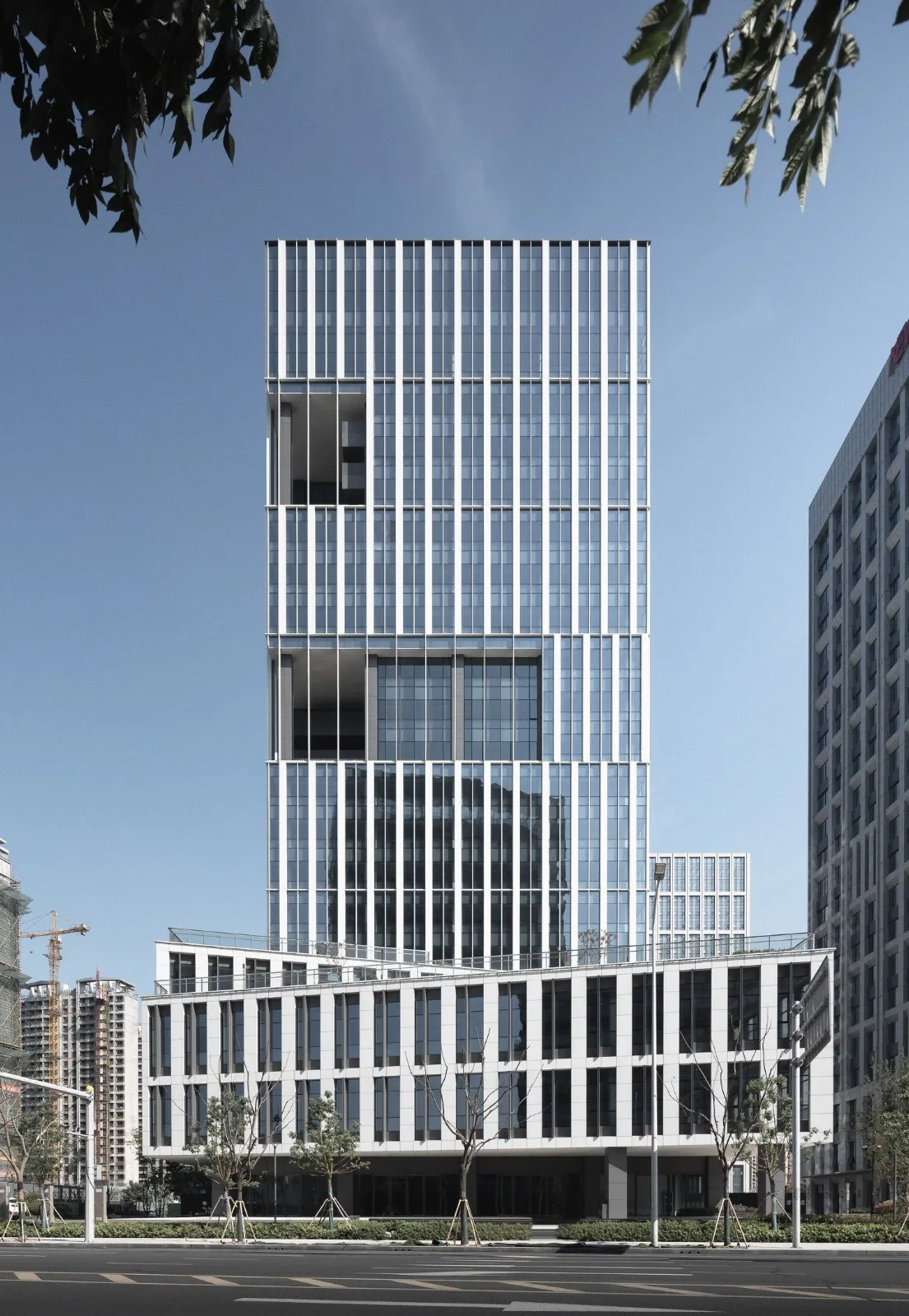
△ Realistic image of the east facade
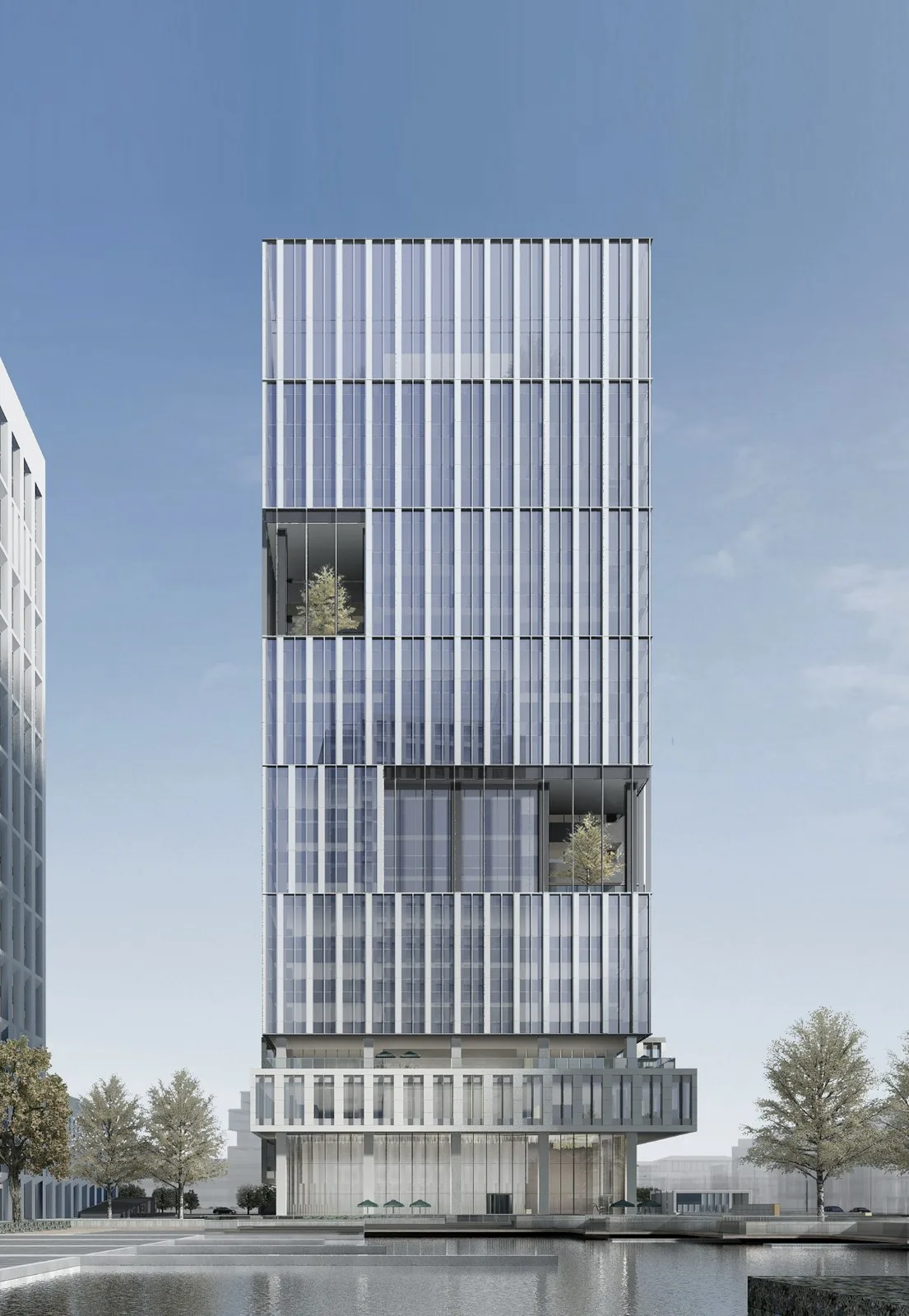
△ West facade rendering
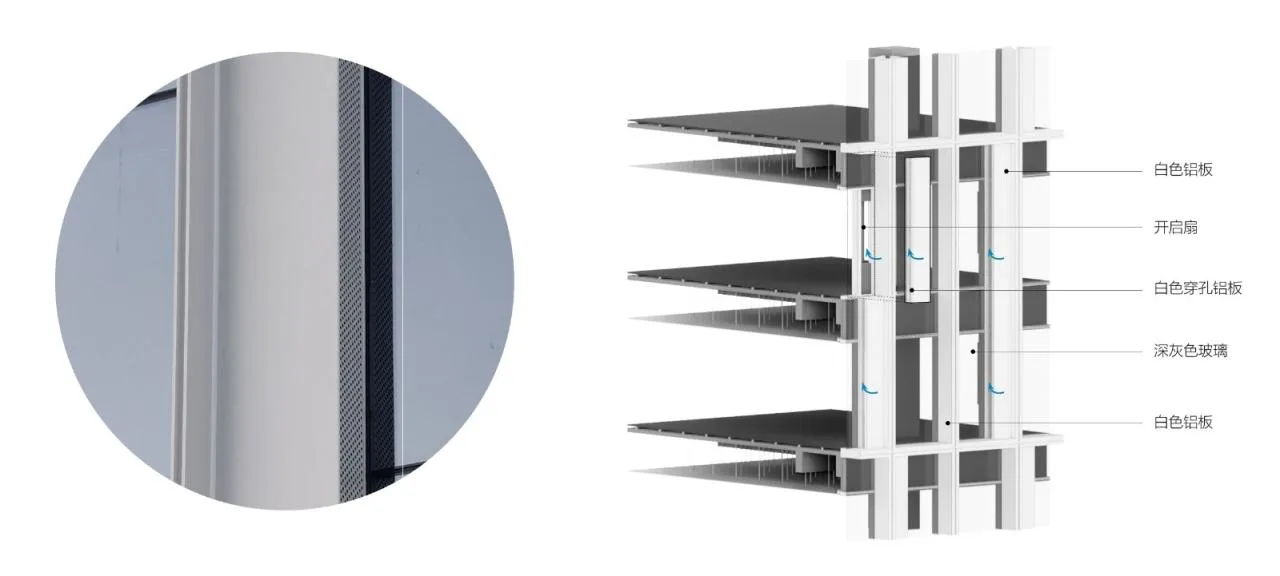
The vertical decorative lines that protrude from the glass facade not only add visual depth but also serve a functional purpose. Perforated panels are installed beside these lines, with concealed operable windows behind them, providing ample natural ventilation to office spaces without compromising the facade’s overall aesthetic.
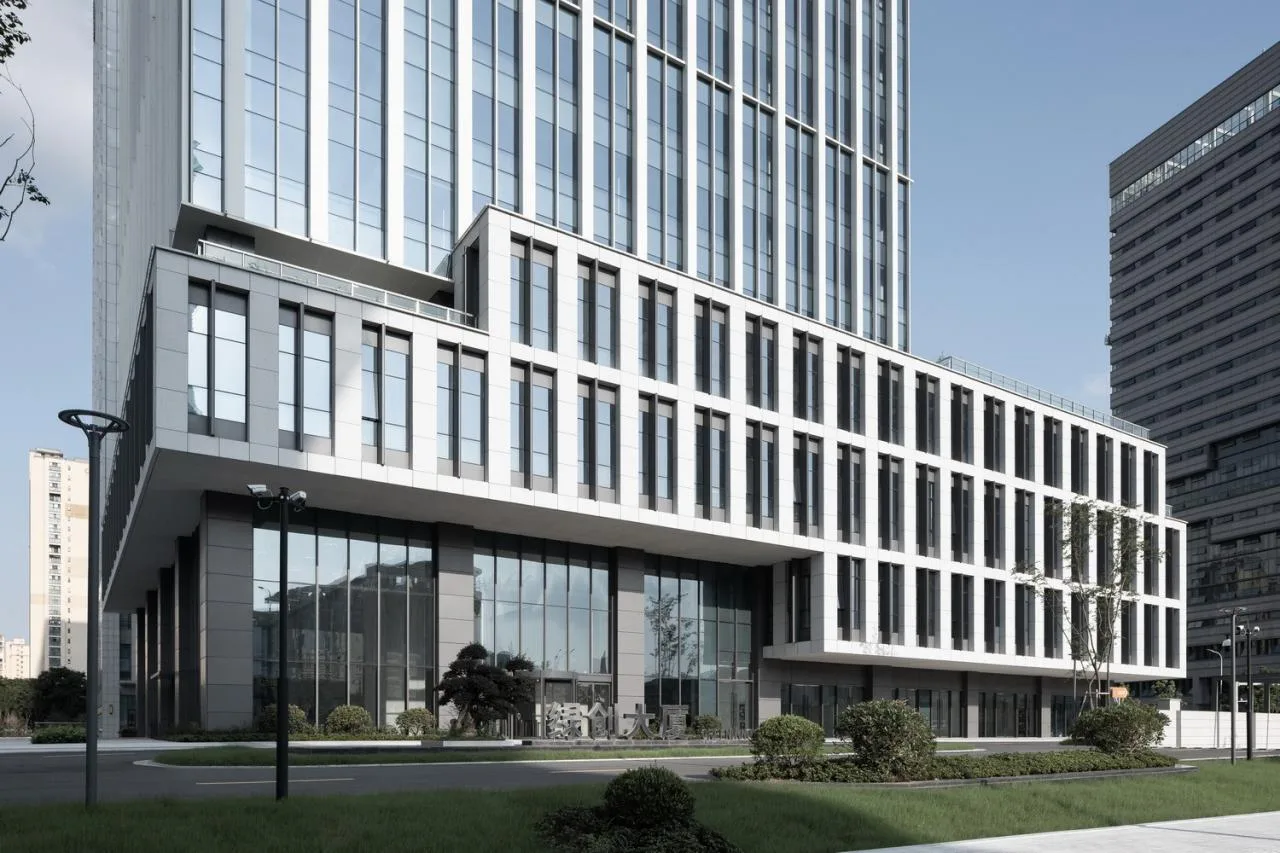
The podium is designed to house a bank, with the client requesting a stone facade to emphasize the base’s “stability,” consistent with the surrounding buildings. The design team carefully evaluated various material combinations and their appearance under different weather conditions before finalizing the choice.
07. Integrated Design Approach
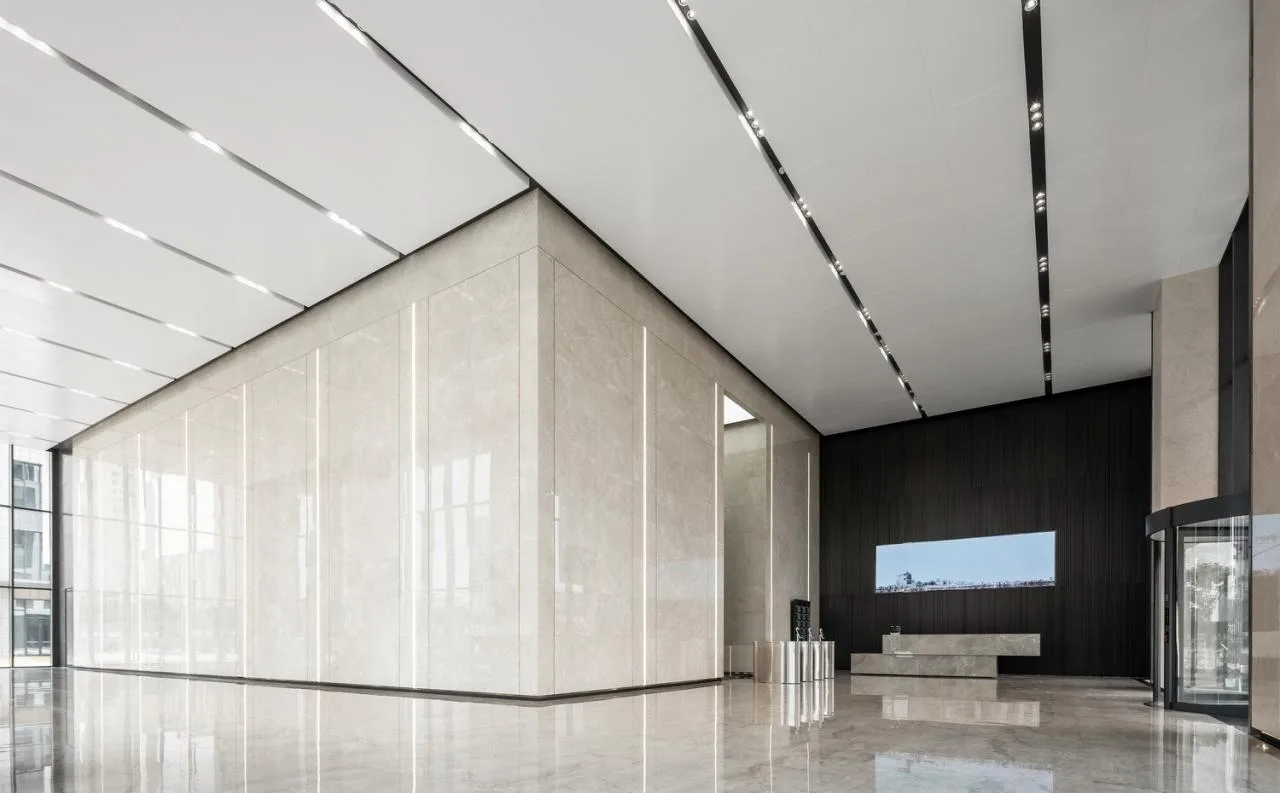
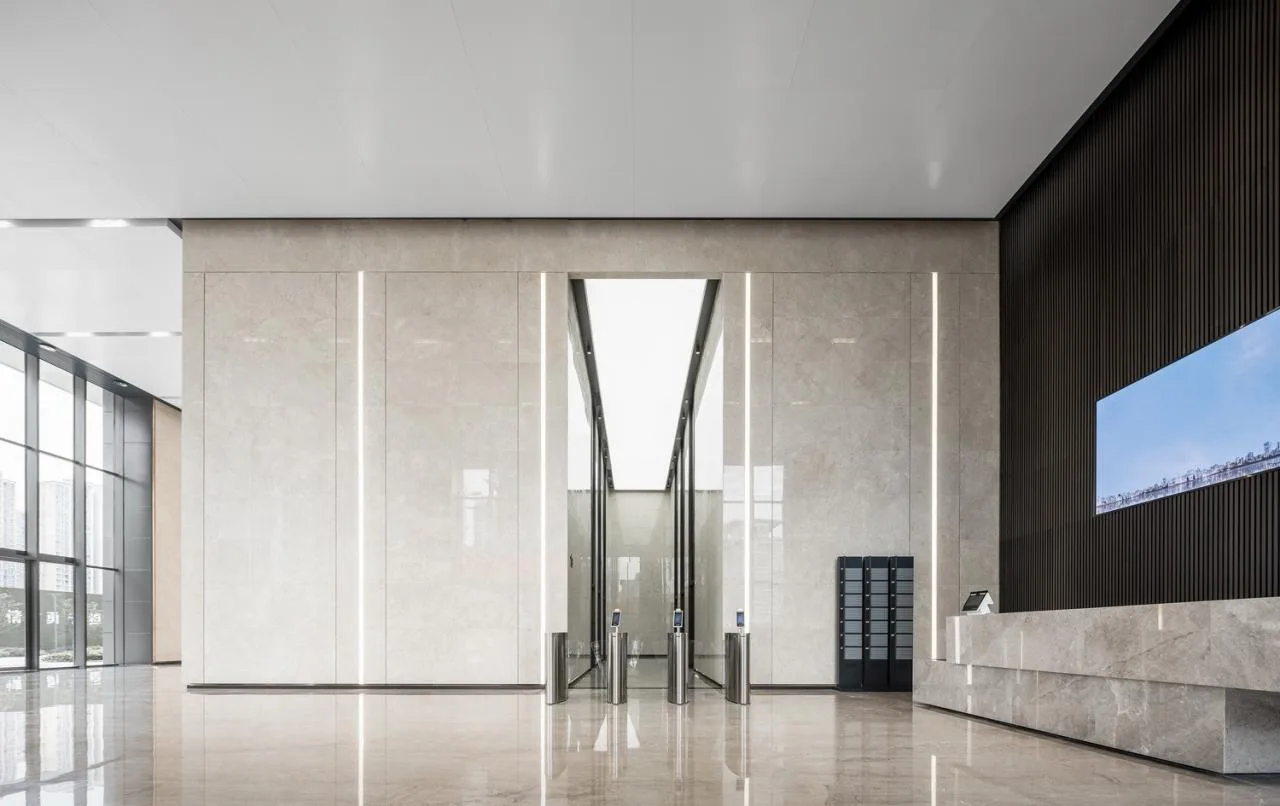
The design of the Green Innovation Building explores a “vertical garden-style corporate headquarters,” an innovative office concept by Jianhe Design that integrates workspace with living environments. This integrated approach extends throughout the project, involving full collaboration with interior designers, landscape architects, and curtain wall specialists, resulting in an exceptionally cohesive final construction.
08. EPC General Contracting Model
The Green Innovation Building was developed under the “Design, Procurement, and Construction Engineering General Contracting” (EPC) model, led by scheme design. During the design phase, comprehensive pre-design was conducted for all specialties, with strict control over major materials and brands to manage costs effectively. The design team also assisted the owner in preparing bids. Any omissions or lack of detail in design could provide opportunities for contractors to exploit.
Overall, EPC projects demand higher design team expertise, while empowering architects to represent the client in negotiations with construction teams. This ensures material selections stay within budget while maintaining quality. For instance, during construction, several suspended curtain walls in the sky garden, including a 12-meter-long panel, bent during handling. The architect and client insisted the construction team dismantle and return these panels for factory reprocessing, guaranteeing flawless final results.
09. Project Follow-Up
Since its completion in 2021, the Green Innovation Building has received unanimous praise from the client for its high fidelity to the design and its unique spatial concepts. Its distinctive market positioning has attracted strong customer interest. This “vertical garden-style corporate headquarters” marks an innovative office product by Jianhe Design. Situated near the bustling high-speed railway station and scenic Xinlong Lake, it provides a warm working environment and soulful shared spaces for employees.
Project Drawings
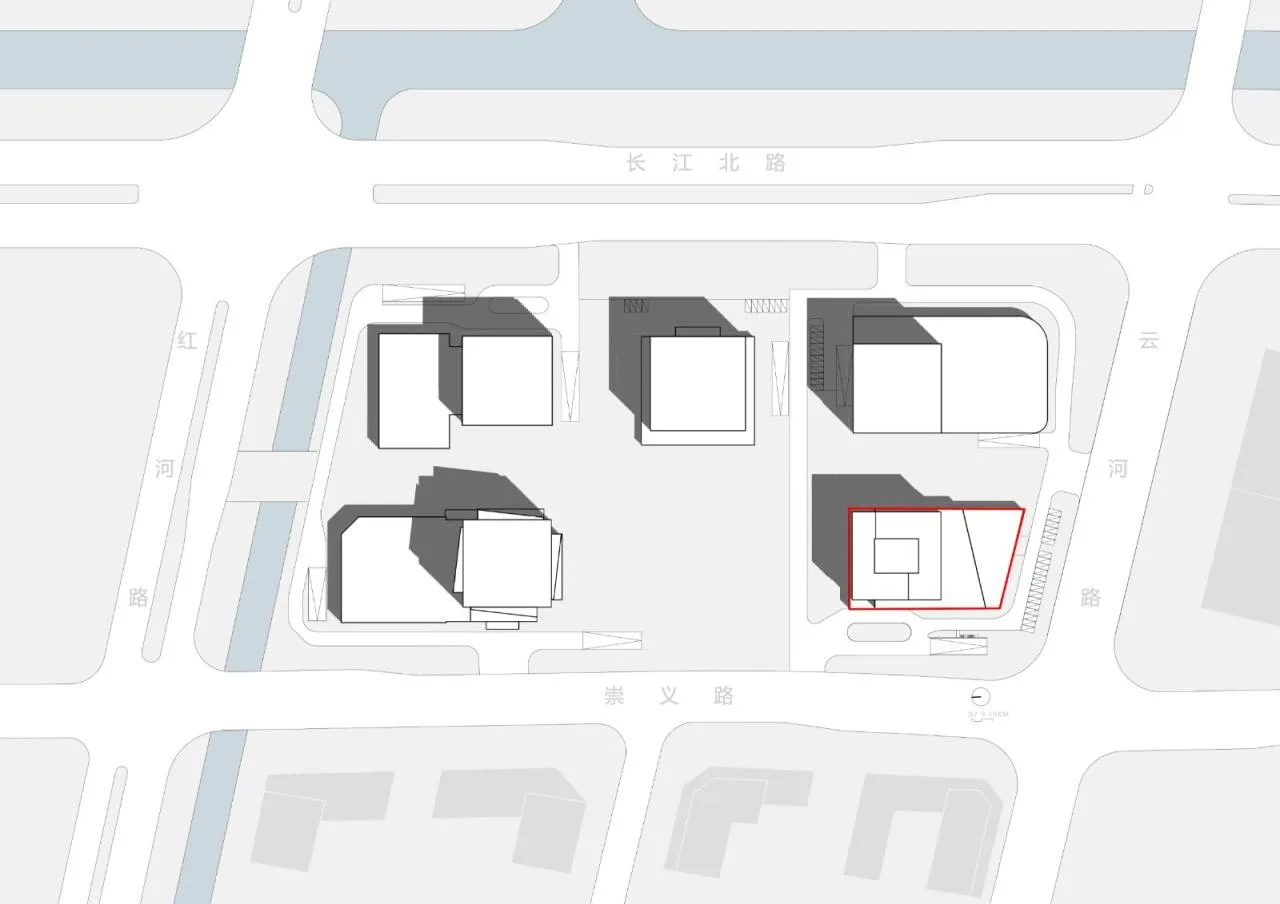
△ General layout plan
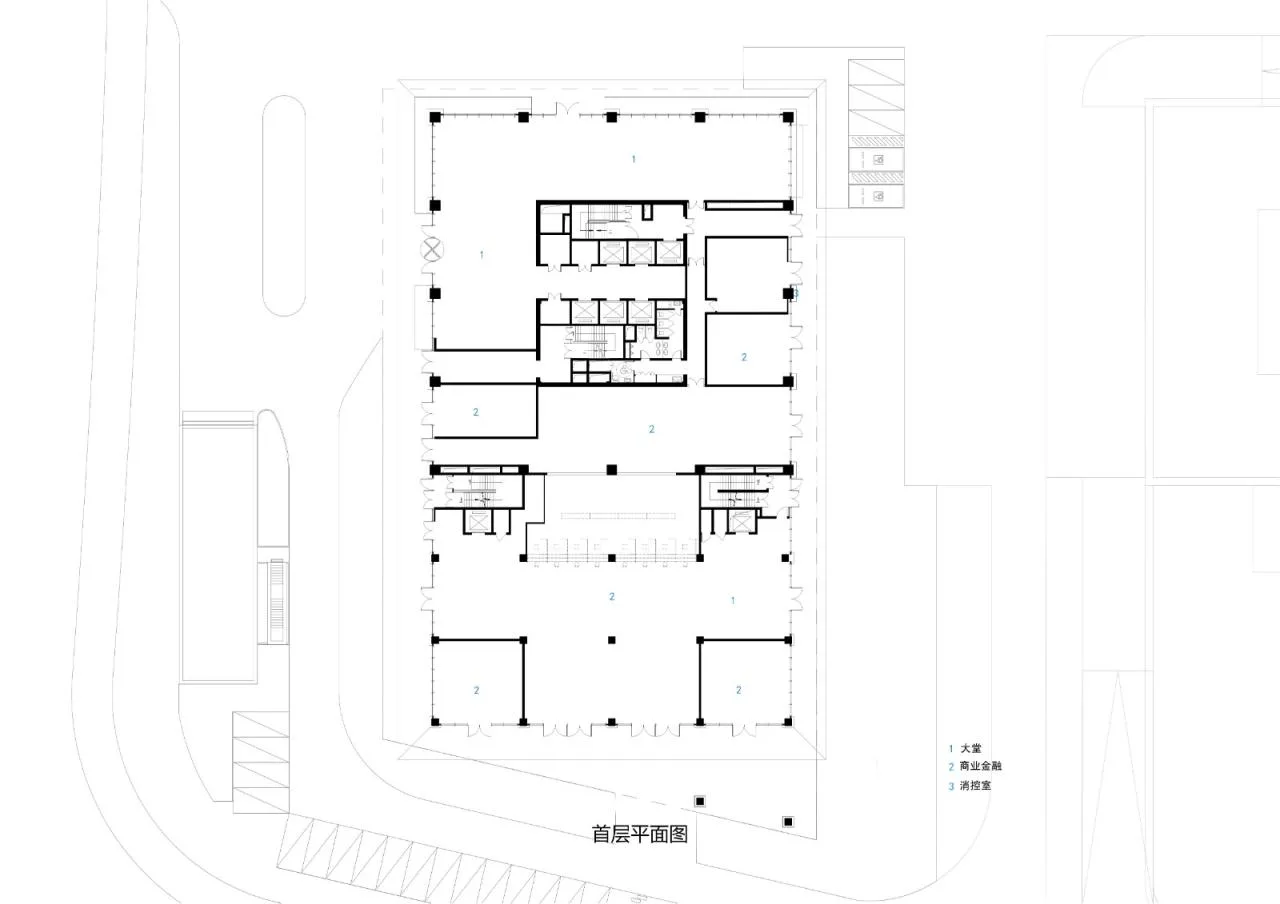
△ First floor plan
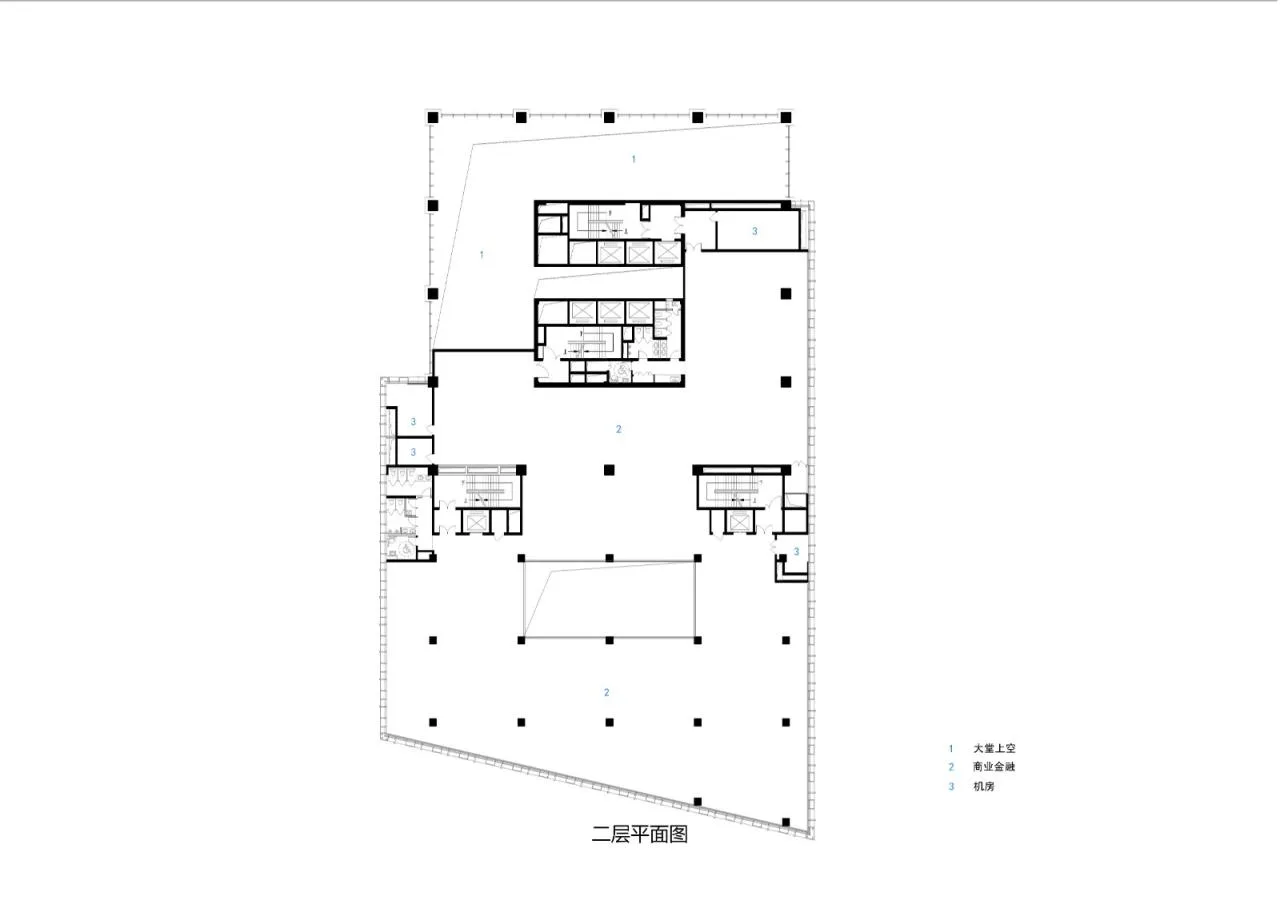
△ Second floor plan
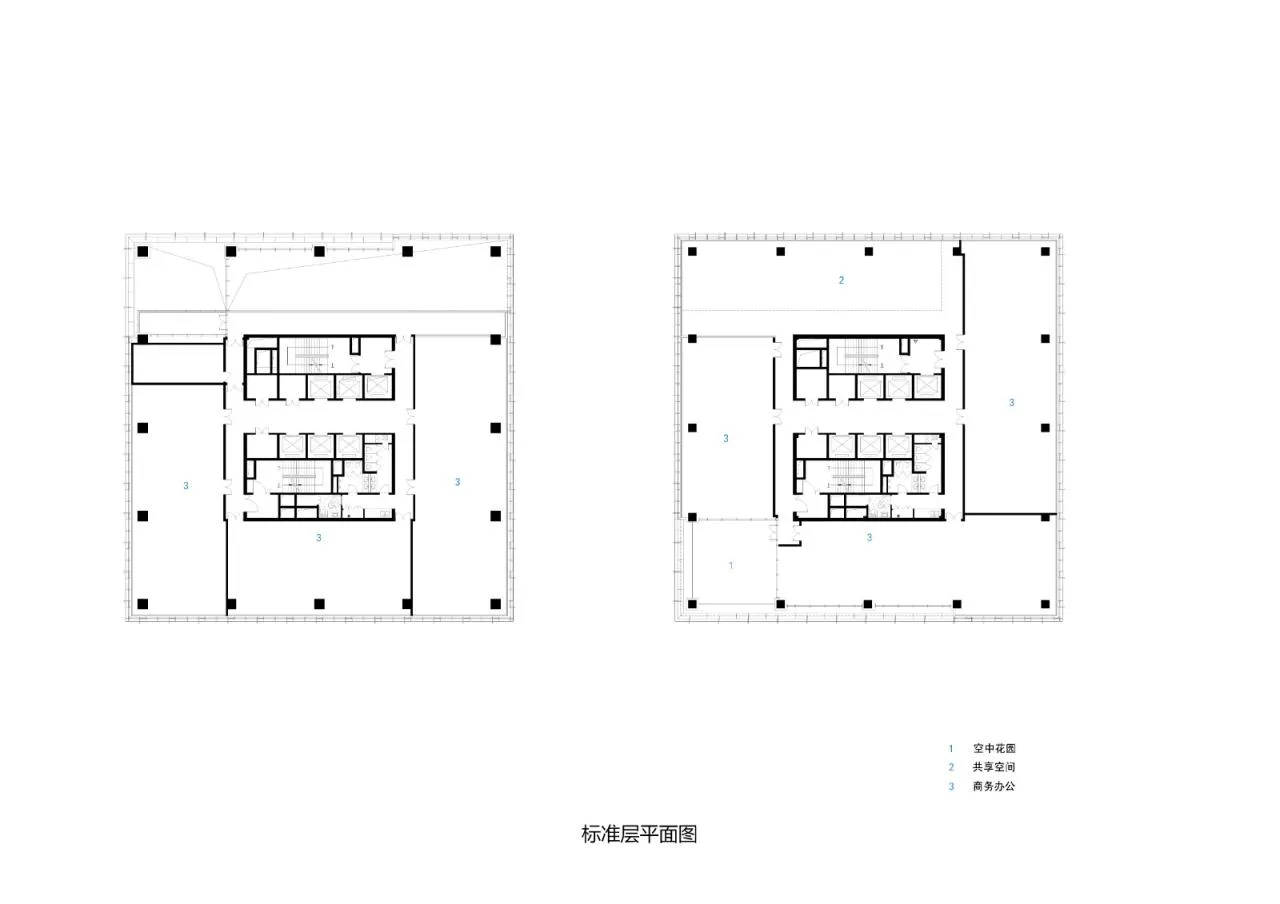
△ Standard floor plan
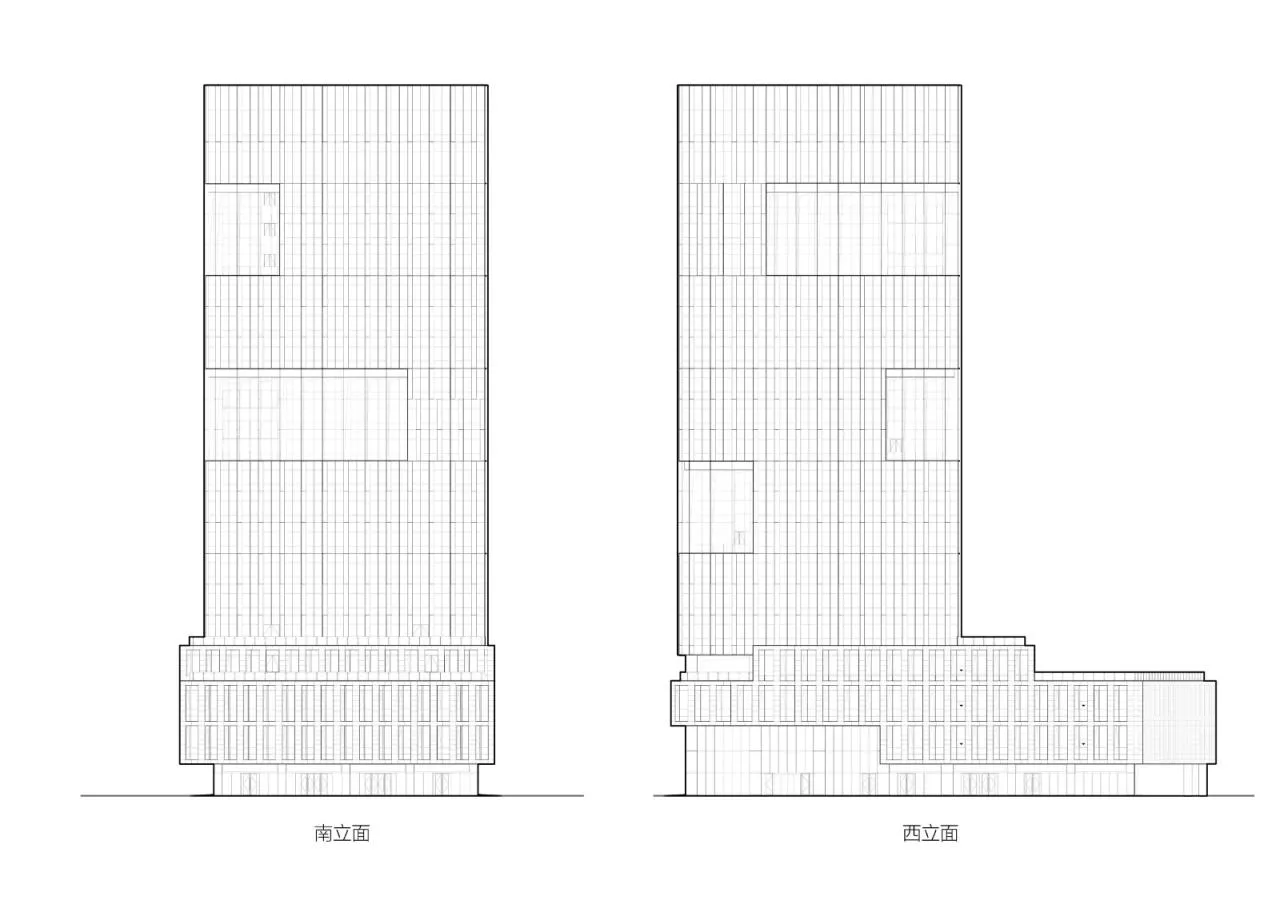
△ Elevation drawing
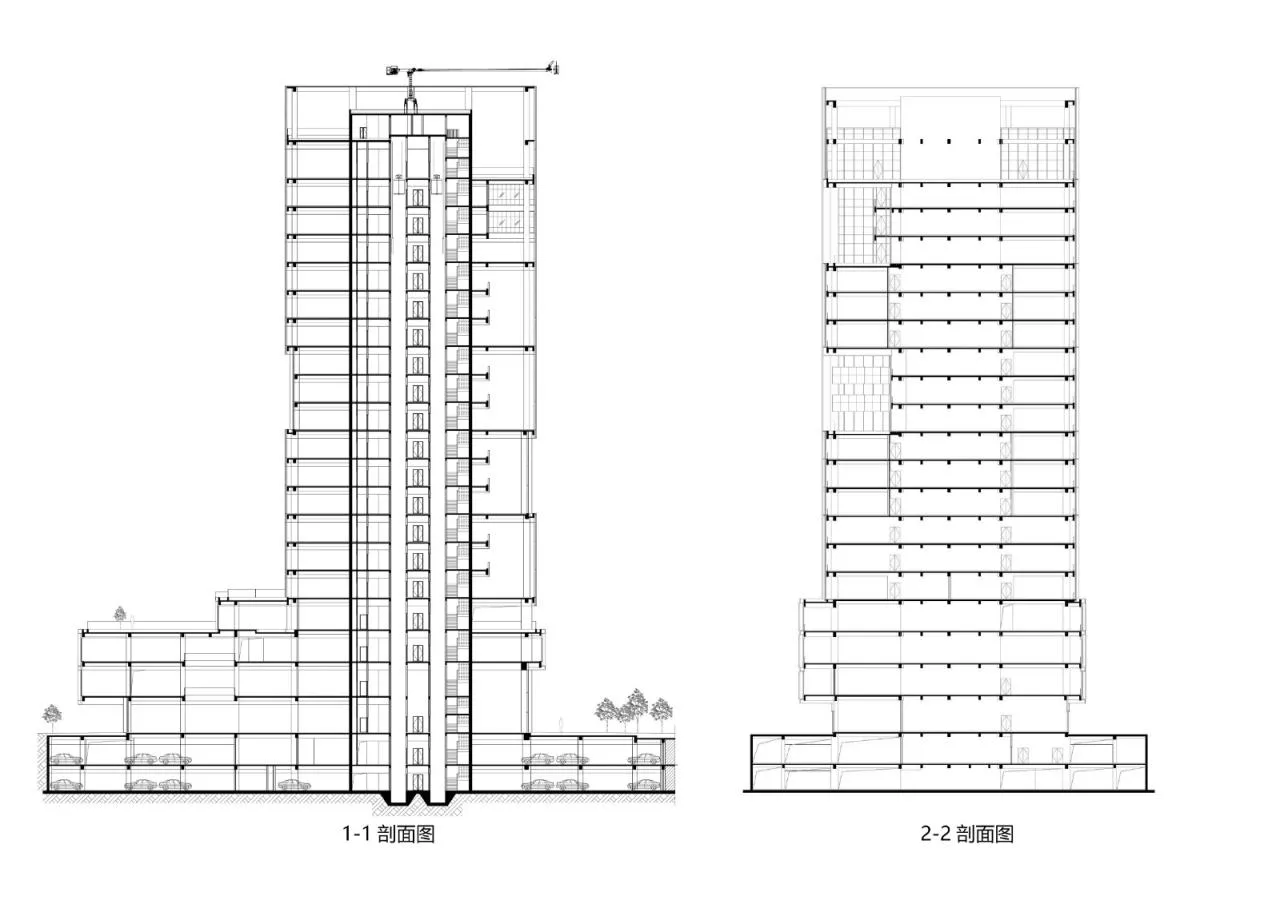
△ Section diagram
Project Information
Project Name: Changzhou Headquarters Economic Zone Green Innovation Building
Project Type: Office
Owner Company: Changzhou Lvzhi Investment Development Co., Ltd
Design Company: GEN Jianhe Studio
Design Period: April 2018
Completion Date: June 2021
Building Area: 40,000 square meters
Design Team: Zou Danni, Sun Ping, Liu Yujing, Lin Qiushan, Zhang Chi, Lu Jinlei, Ma Bin, Chen Meiling, Su Ni, and others
Photography: Xia Mu Studio















Must log in before commenting!
Sign Up