
BIM technology has become a widely adopted 3D visualization and digital tool in architectural design, construction, management, and operation. By integrating building information and data models, it enables seamless information sharing and communication throughout the entire lifecycle of construction projects. This enhances the understanding of project details among technical personnel and provides a collaborative platform for various teams. Consequently, BIM contributes to improved project management efficiency, cost savings, and reduced construction timelines.
The Hong Kong-Zhuhai-Macao Bridge connects Lantau Island, the Macau Peninsula, and Zhuhai City in Guangdong Province, spanning a total length of 49.968 kilometers. The main section, known as the “Sea Bridge Tunnel,” stretches 35.578 kilometers. The Gongbei Tunnel, a critical control segment on the Zhuhai connection line of this bridge, was selected by the project team to incorporate BIM technology throughout its construction. This decision followed thorough research and expert review, due to the tunnel’s complex construction challenges, high engineering risks, and unique environmental conditions.
The application of BIM technology in the Gongbei Tunnel focuses primarily on achieving informatization, integration, visualization, and intelligent control of the construction schedule. By linking the project’s 3D model with the construction timeline, the site’s progress can be visualized and dynamically managed. Additionally, compared to traditional methods, the BIM-based temperature monitoring system for pipe curtains leverages BIM’s information advantages. It offers comprehensive control over progress by incorporating historical data and monitoring point locations, enabling accurate and efficient risk identification and enhancing construction safety.
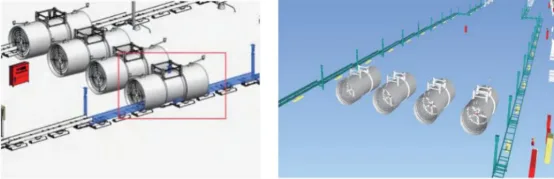
Furthermore, BIM’s visualization and informatization features are utilized in the integrated design of bridge traffic engineering. By creating a 3D model of the traffic engineering components, the layout of pipelines and equipment spaces within various subsystems can be analyzed and optimized during the design phase. This approach effectively addresses issues such as pipeline conflicts and insufficient spatial allocation, as illustrated in the image above.
















Must log in before commenting!
Sign Up