
BIM, or Building Information Modeling, has various international definitions. The most widely accepted one describes BIM as a digital representation of the physical and functional characteristics of buildings. It integrates essential information for building engineering, facility management, and more, based on three-dimensional (3D) technology. Simply put, BIM serves as a database that stores both geometric and non-geometric engineering data, allowing all relevant stakeholders throughout the project lifecycle to access accurate, real-time, consistent, and reliable information.
The shared resource information provided by BIM spans the entire lifecycle of a project, starting from its inception. This foundation helps address complex engineering challenges and prevents frequent rework caused by discovering issues only after construction is completed. Essentially, BIM is a data model powered by 3D digital technology that encompasses fundamental infrastructure design and project data for the entire lifecycle. Additionally, BIM facilitates communication and data exchange between independent systems and software, broadening its application across the industry.
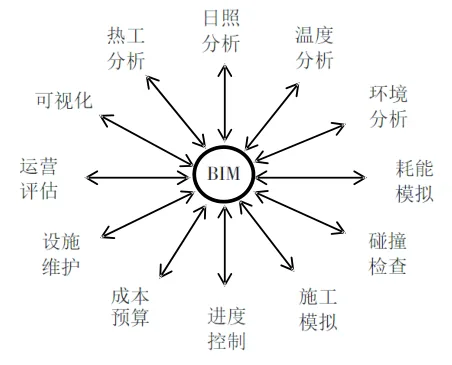
Throughout a project’s lifecycle, multiple stakeholders from various disciplines participate across several key stages. When connecting these different disciplines and phases, conflicts may arise due to differences in expression or implementation standards. To address this, project management must foster collaboration among all parties, encouraging communication, problem-solving, and alignment on common and acceptable standards. This approach ensures smooth project progress and maximizes overall benefits.
As illustrated above, BIM technology creates a comprehensive building information model that integrates data from multiple disciplines. Potential issues encountered throughout the project lifecycle are coordinated and resolved within this digital model, with timely feedback provided to all stakeholders. This enables participants to quickly input and access necessary information at any project stage. Through platform-based communication and feedback, teams can discuss and solve problems promptly, collaborate efficiently, and exchange information seamlessly—ultimately enhancing the quality and efficiency of project construction. This is the core advantage of applying BIM technology.
















Must log in before commenting!
Sign Up