
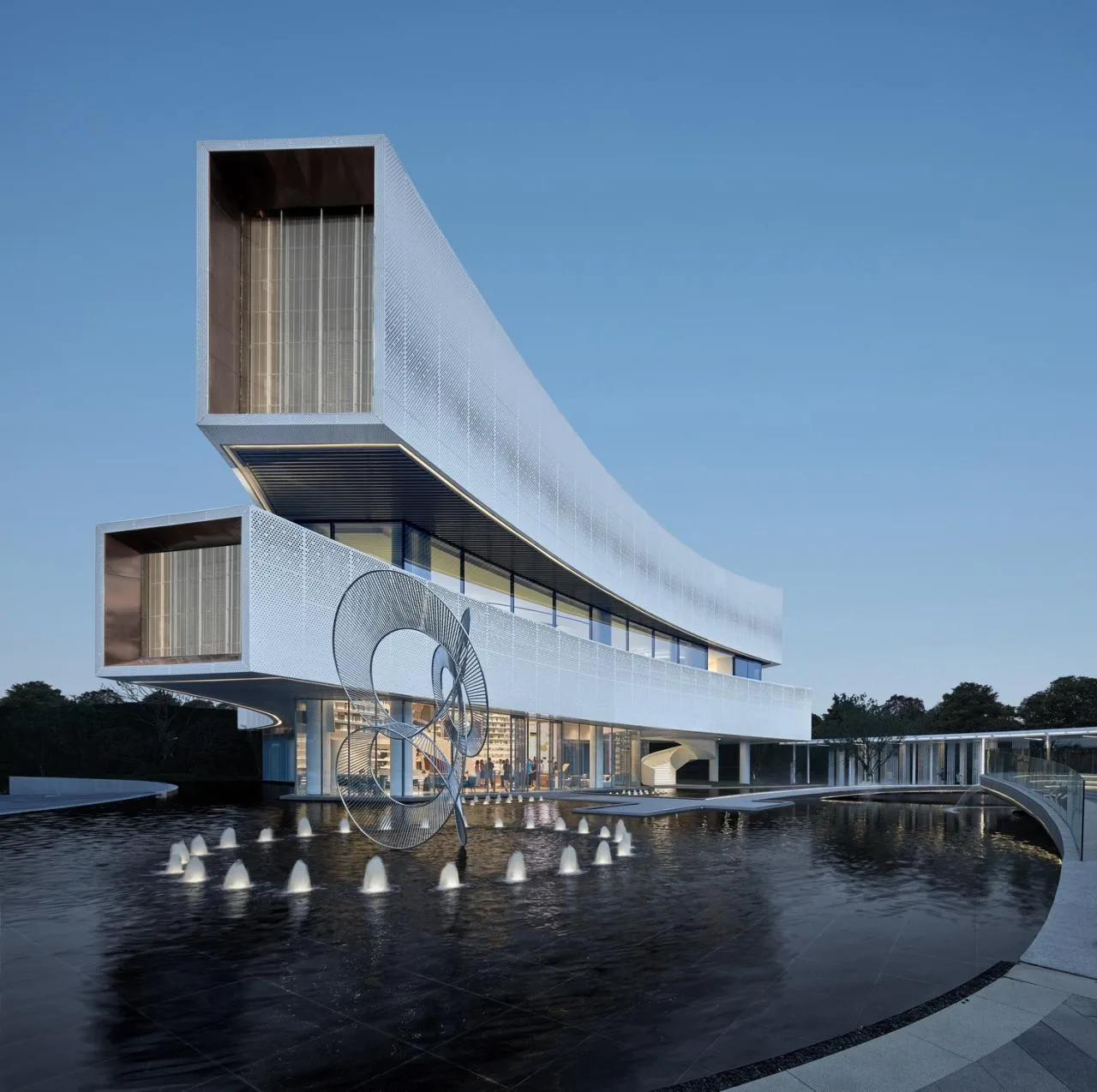
The perception of a building’s temperature is deeply connected to its response to the evolving urban environment.
As the Sansheng Group’s first project in Xuzhou, the Sansheng Zhongcheng Exhibition Center is strategically located near well-established commercial districts, planned residential areas, and supporting commercial streets, offering excellent transportation access. The center’s role extends beyond showcasing—it embodies image, relevance, and originality to express Sansheng’s brand concept of “warmth.”
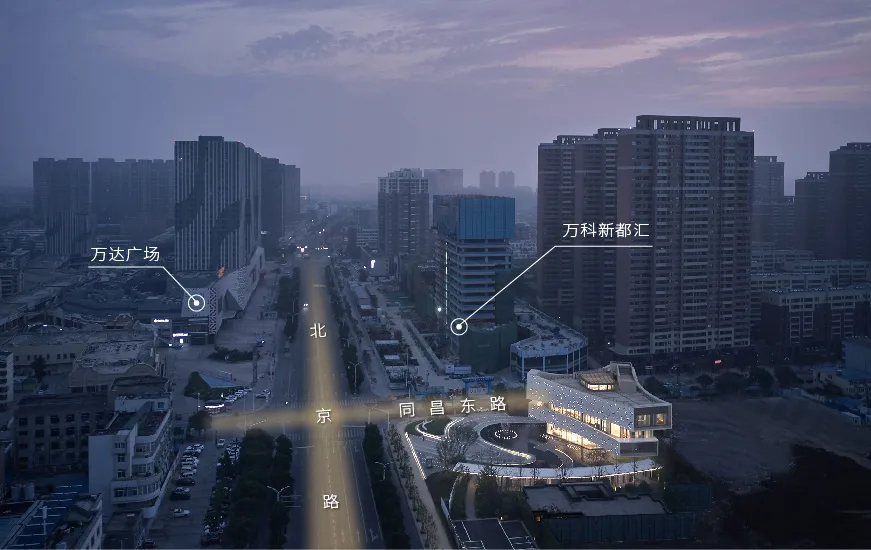
△ Project location and surrounding context © Pure point
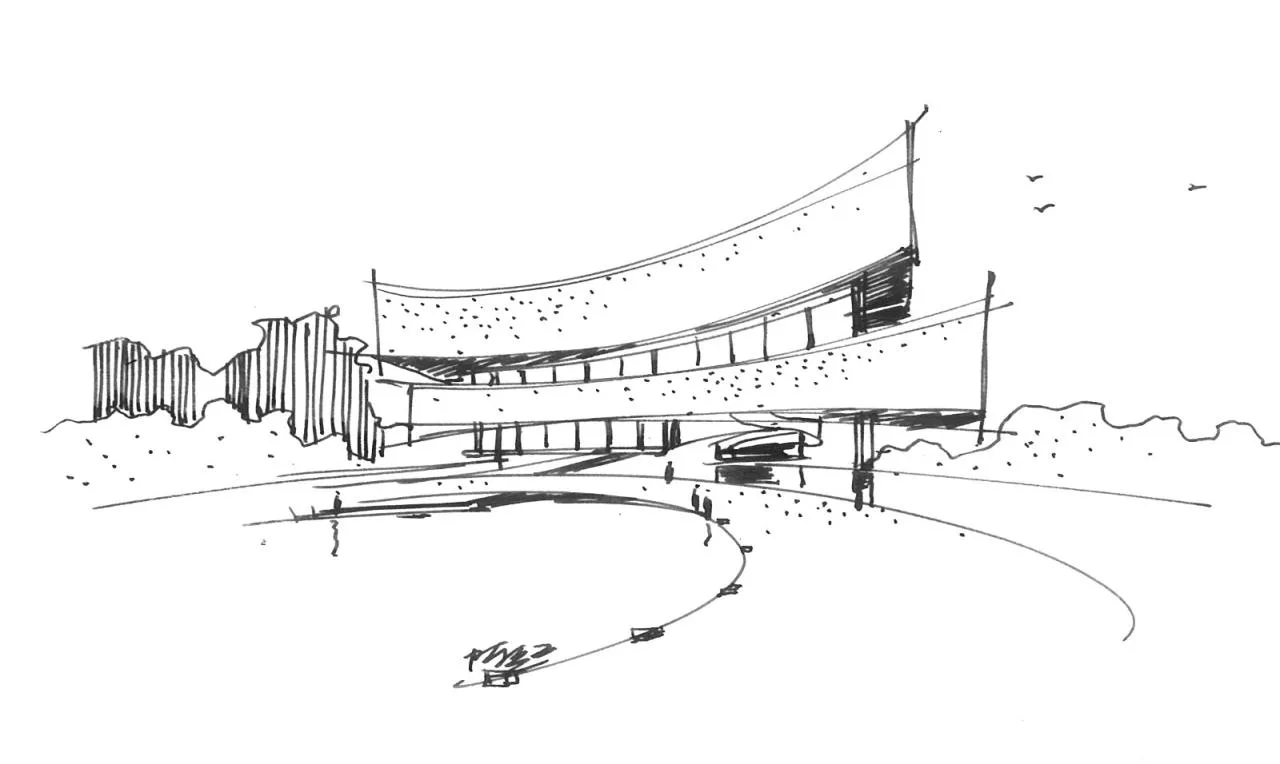
△ Exhibition Center hand-drawn concept
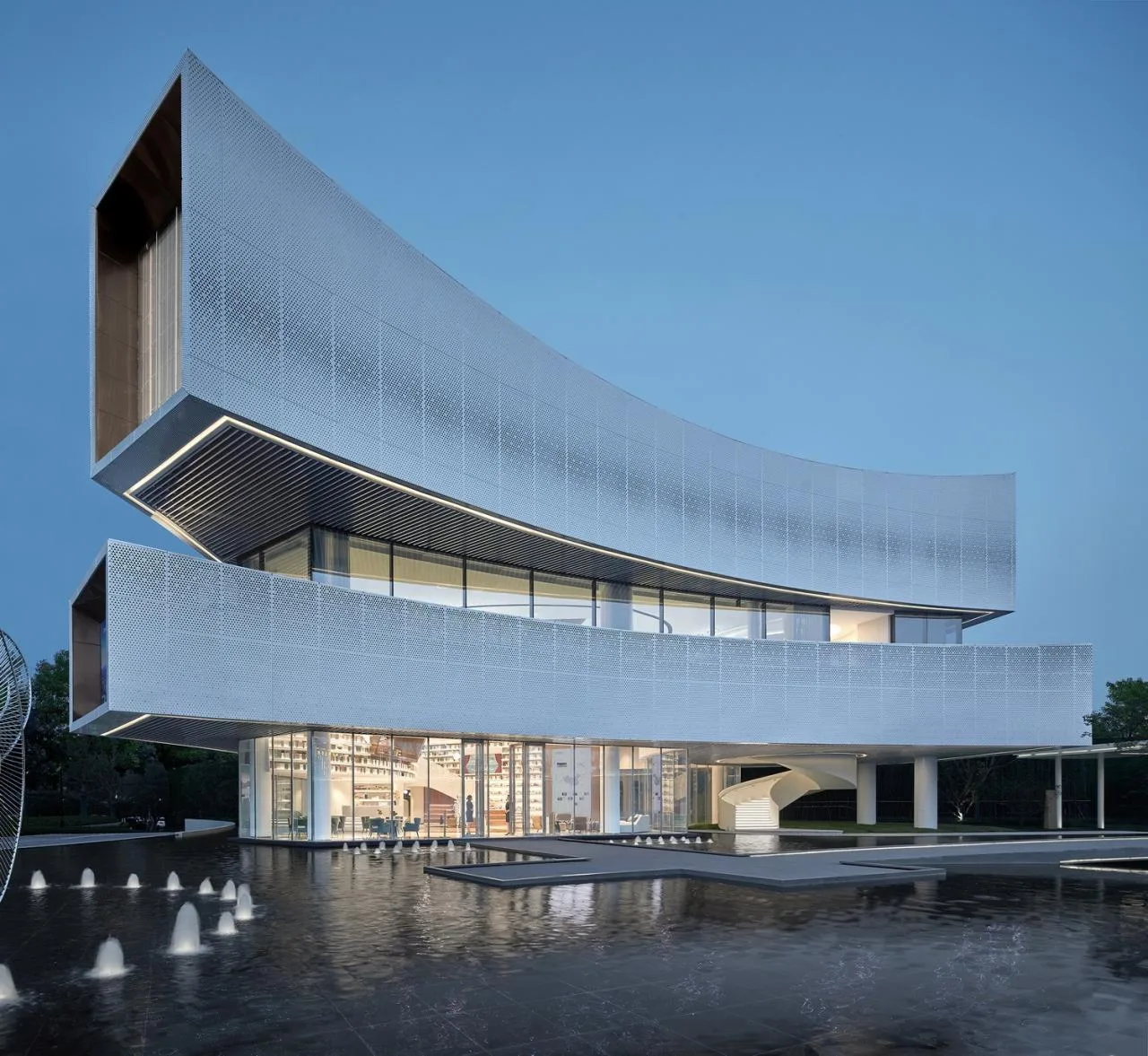
△ Display Center realistic scene © Pure point
Thanks to its historically significant location, the design grants the project an identity that is both open and culturally rich, interpreting its function and organizing the narrative around this distinctive character.
Revitalizing the Native Environment Through User-Centered Design
Reconstructing Culture and Space
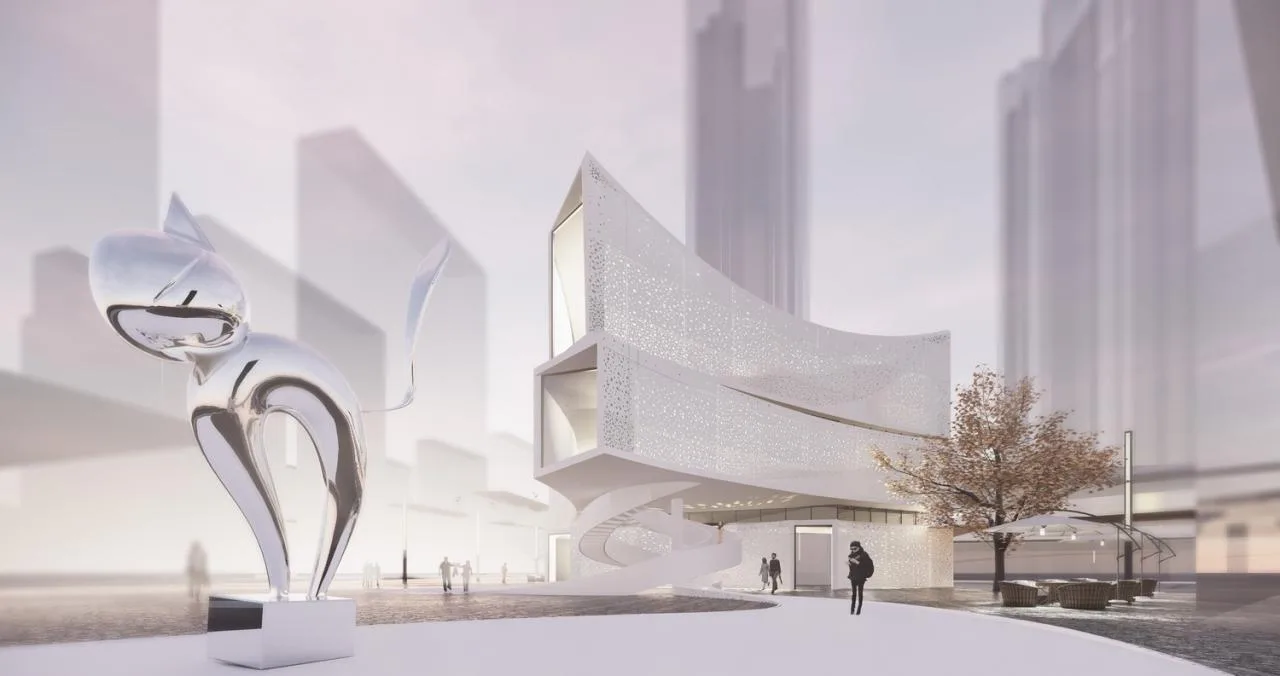
The design begins by examining user needs and the natural daily development of the city. By analyzing pedestrian flow patterns, it derives a triangular plan concept, which evolves into a three-dimensional spatial form emphasizing key locations.
The Evolution of Triangular Forms from a Plan View
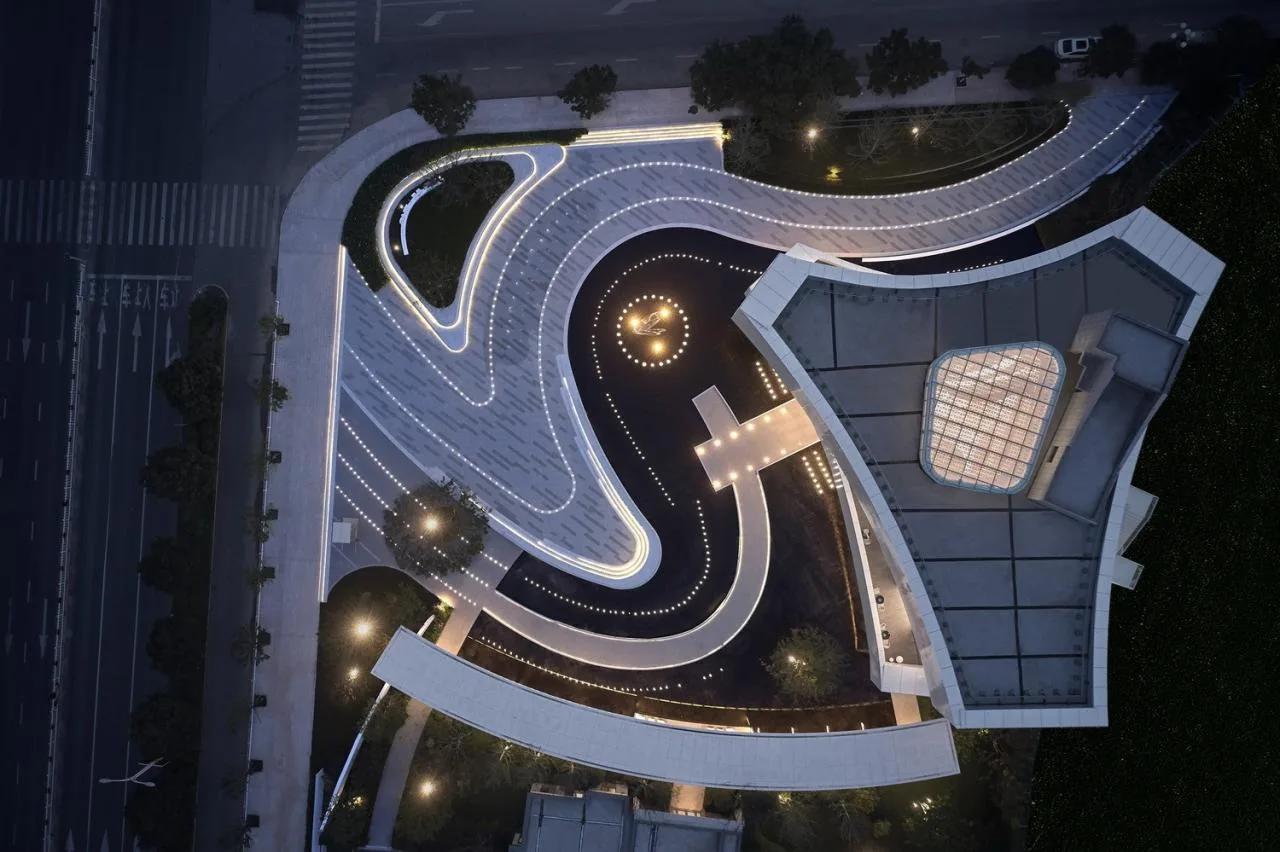
△ Planning response to urban pedestrian flow © Pure point
A detailed analysis of pedestrian movement around the site from three sides inspired the concept of “three flowers converging at the top,” forming a triangular architectural space that serves as a visual and spatial focal point. The design maximizes the urban interface along the street facade, while optimizing the acute triangular area into a distant viewing space. This approach reflects a “user-first” planning strategy, creating a vibrant center for the entire site.
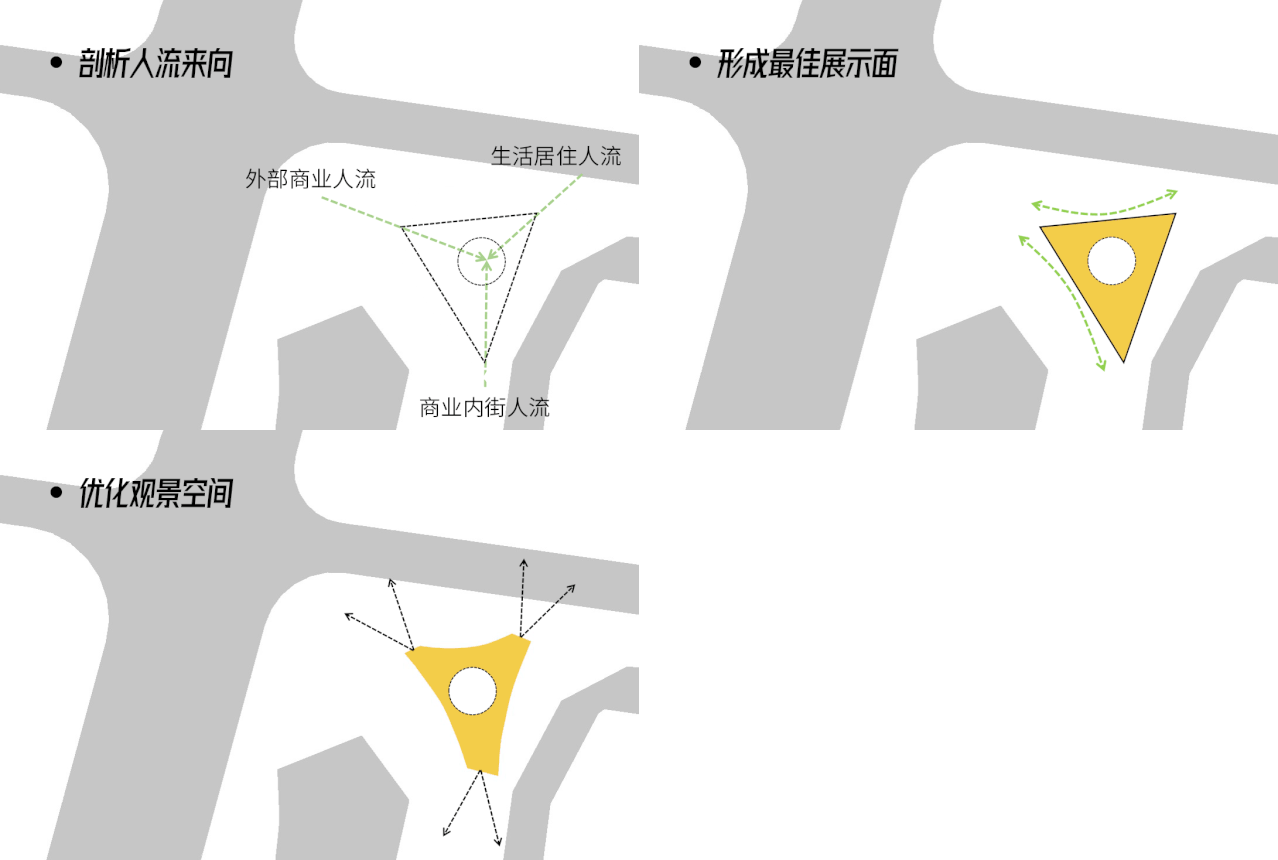
△ User perspective planning analysis
Defining the Three-Dimensional “Three View” Interface
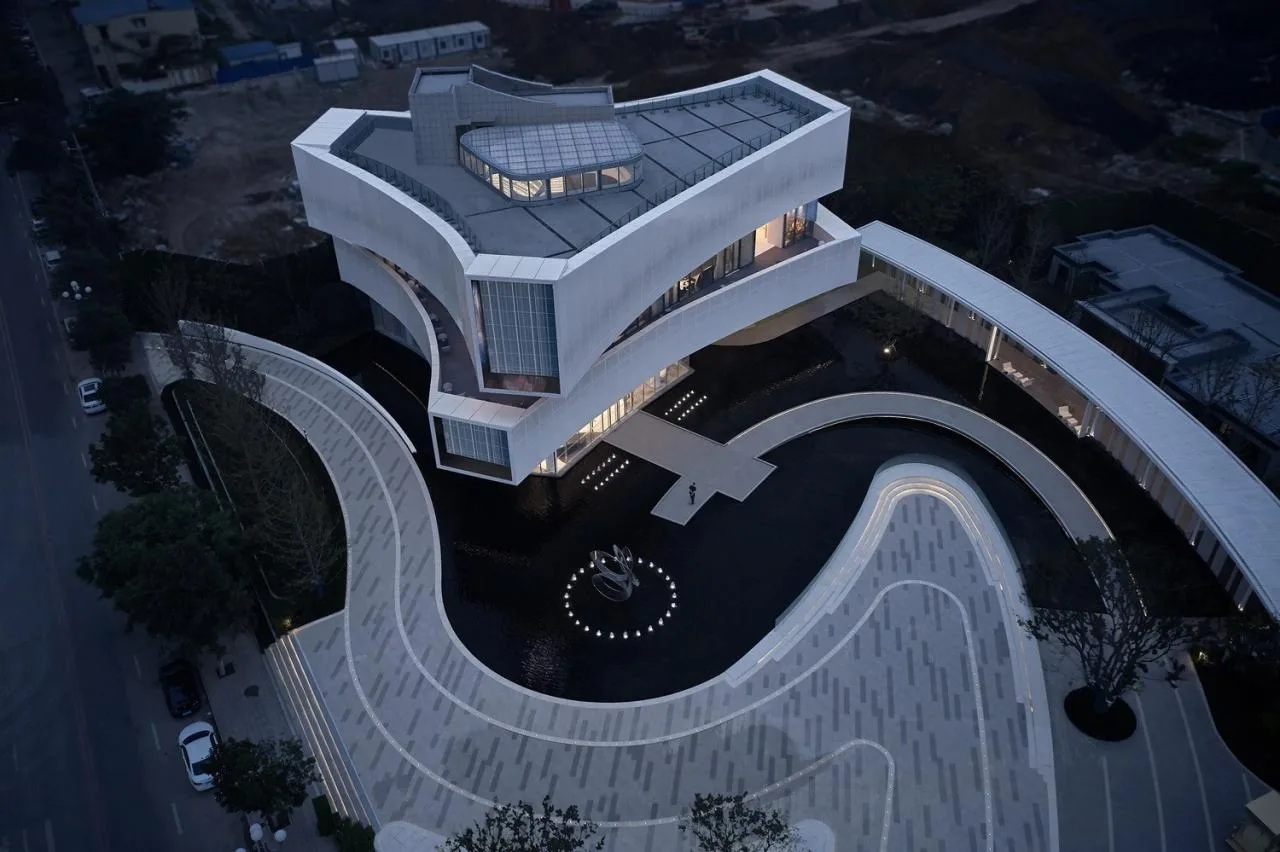
△ Detailed rendering of the three-view interface at the design level © Pure point
Building on the planning analysis, the design compresses and offsets the original building blocks to create a “three view surface” that responds to the site. This strategy also opens up large green and viewing areas that promote airflow and visual connectivity, establishing a landmark building within the block.
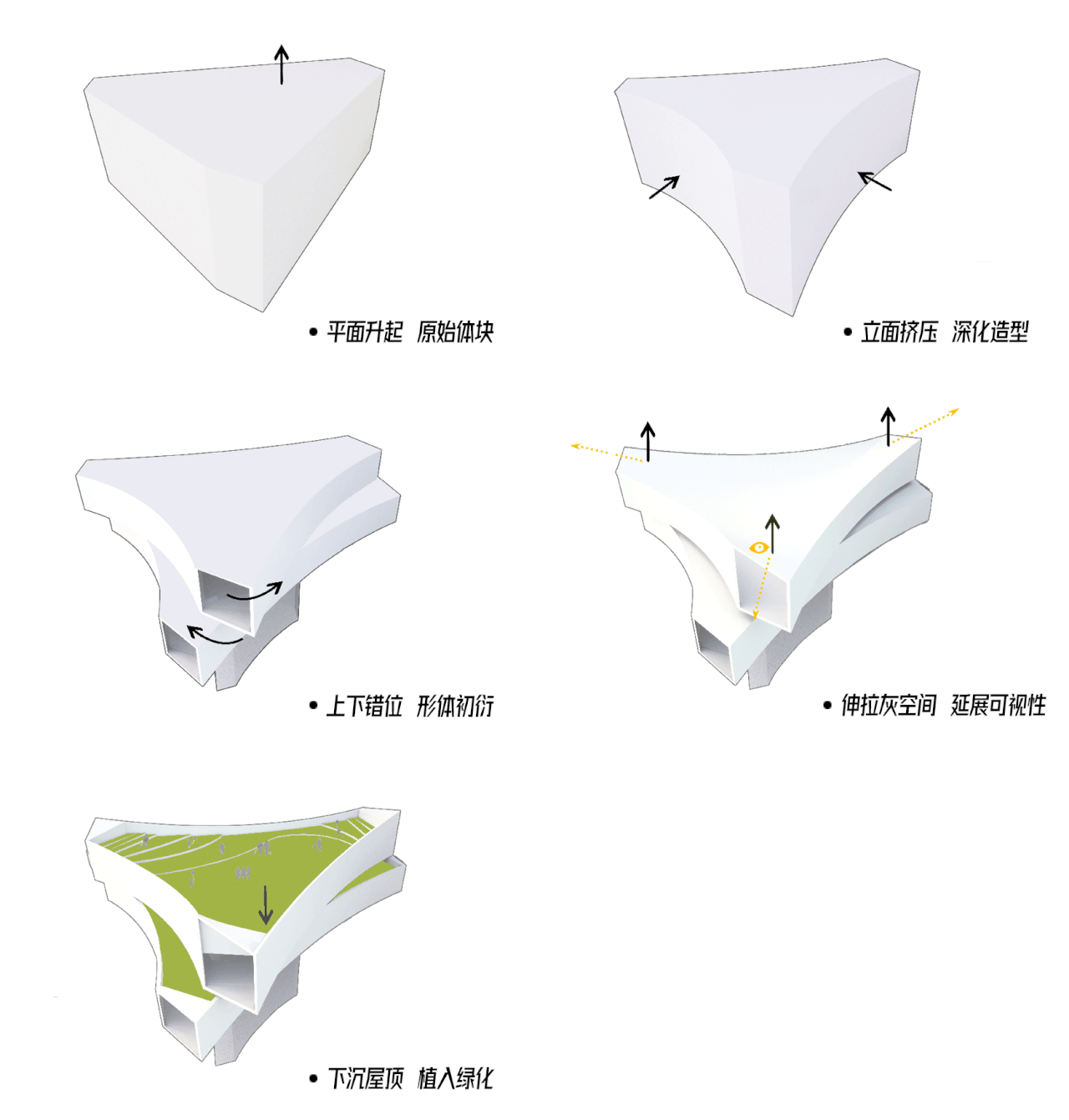
△ Diagram illustrating the formation of triangular shapes
Harmonizing Form and Function in Spatial Experience
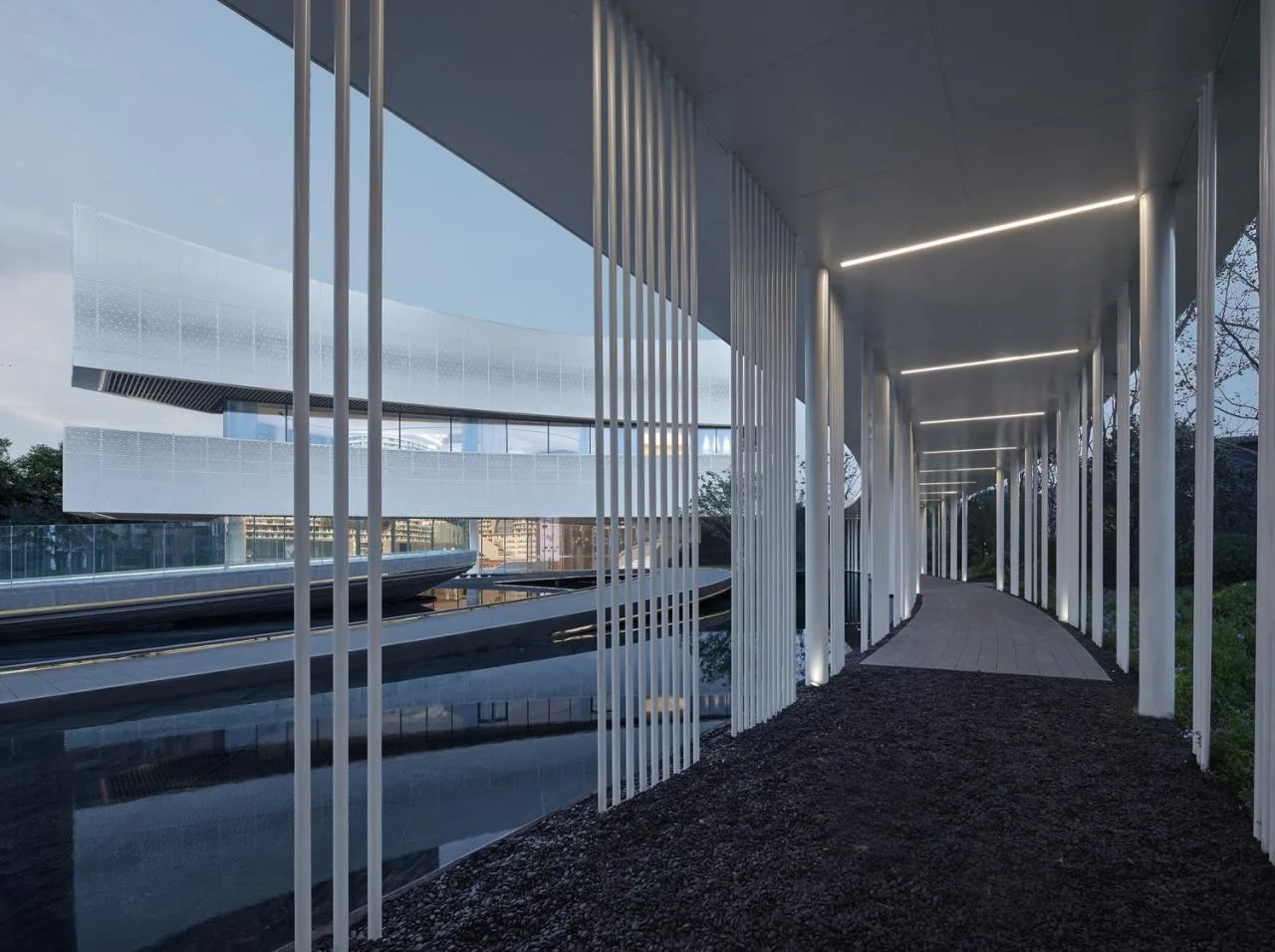
△ The spatial level reflects everyday scenarios © Pure point
The displacement of forms creates a tactile design of grey spaces that enrich fluidity and shape arc-shaped, interconnected zones between layers. These borderless communication areas enhance interaction with the outside environment and foster more engaging experiences.
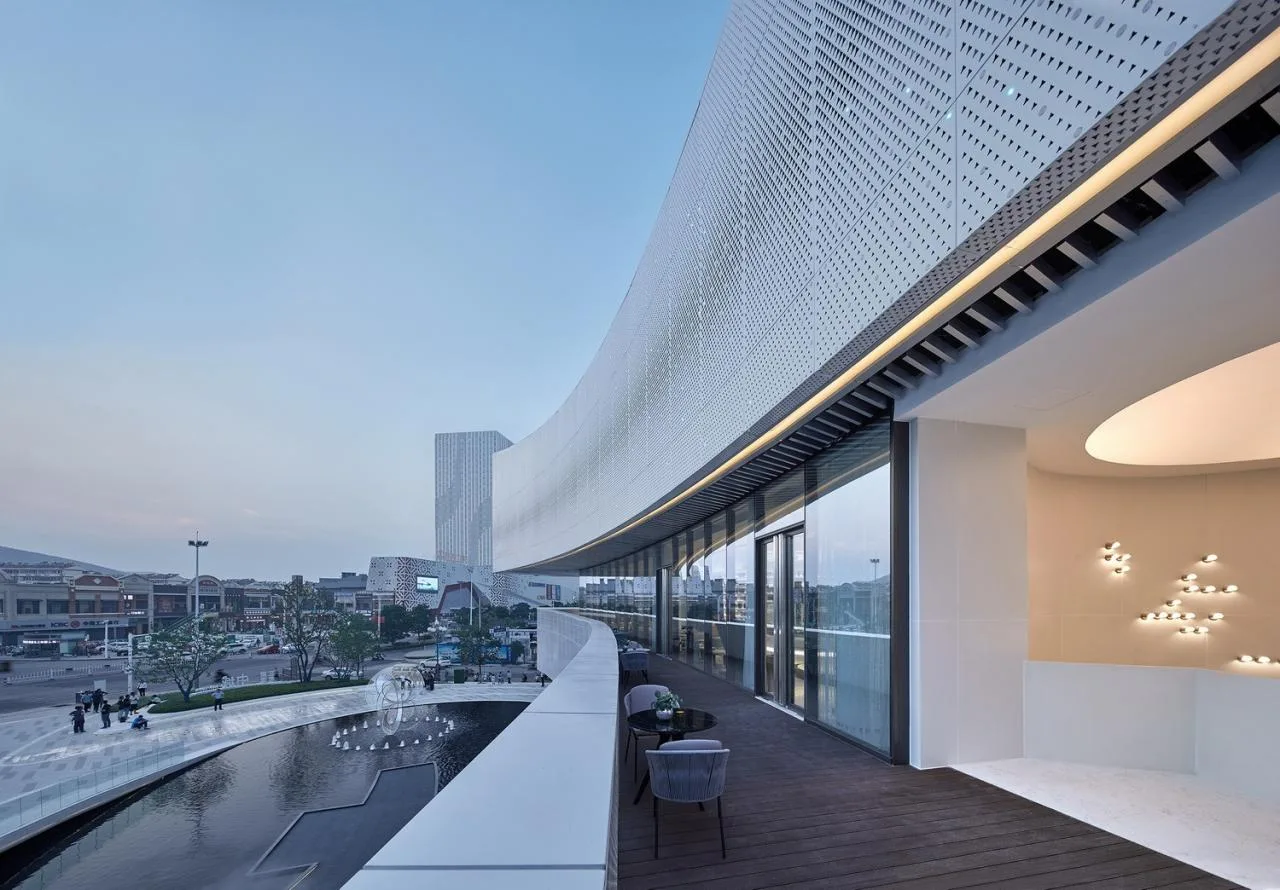
Realistic scene of grey space in layered design © Pure point
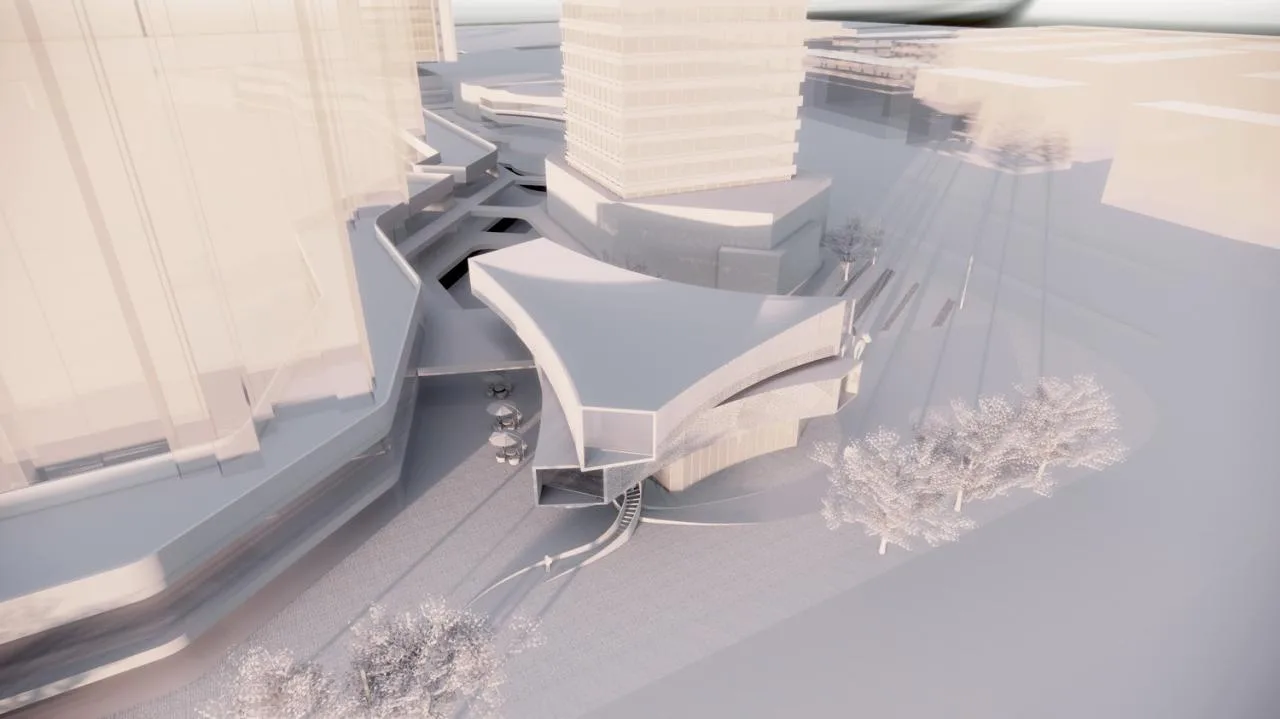
Diagram illustrating effective connectivity between grey spaces and surroundings
The spiral staircase connects the spatial flow from the exterior to the interior. Penetrating the main building from outside, it serves as a key link in the three-dimensional circulation, bridging horizontal and vertical spaces. The staircase’s pure white baked paint finish enhances its visual impact.
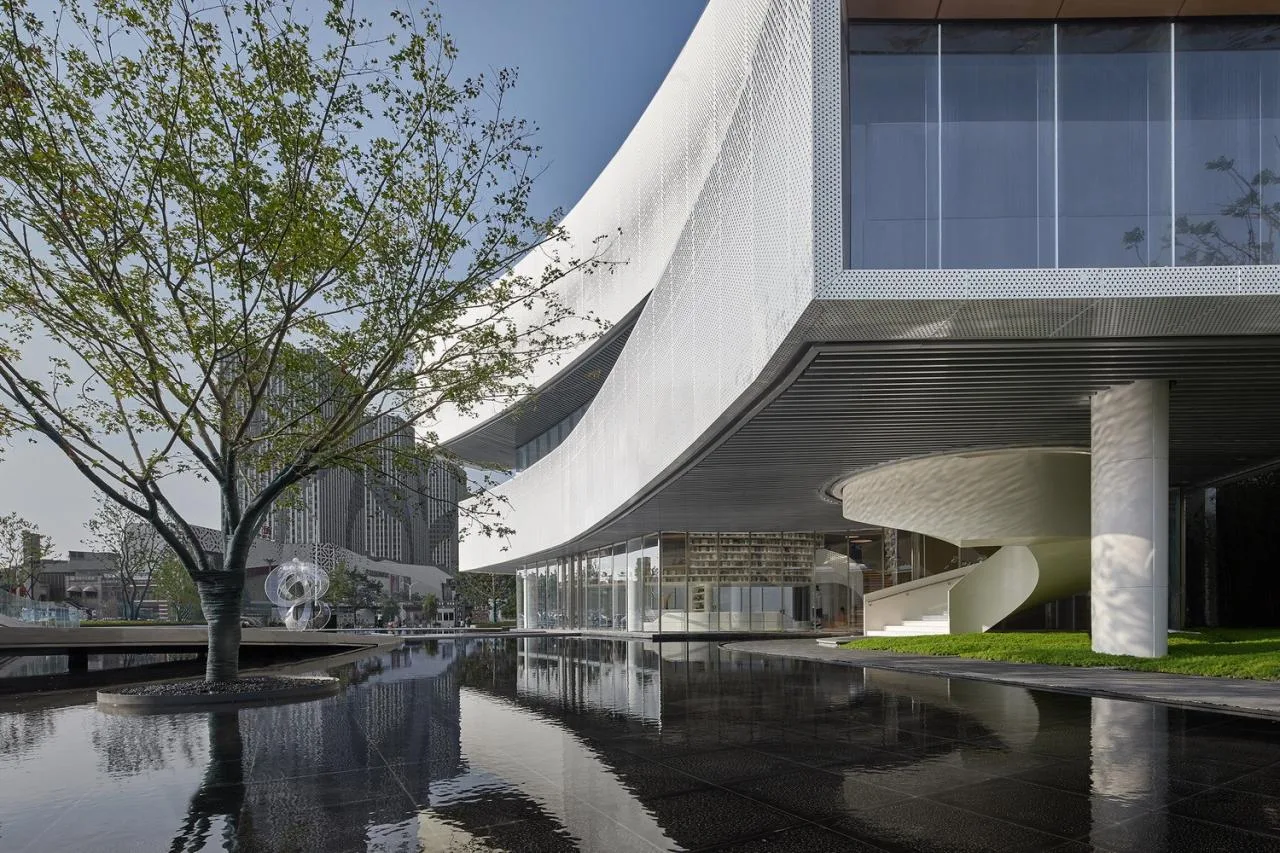
△ Spiral staircase integrating with the main building exterior © Pure point
The design also carves out layers and uses the spiral staircase alongside light and shadow to connect unrelated planes. This spatial arrangement, designed from the user’s perspective, allows visitors to experience the cultural confidence embedded within this modest building.
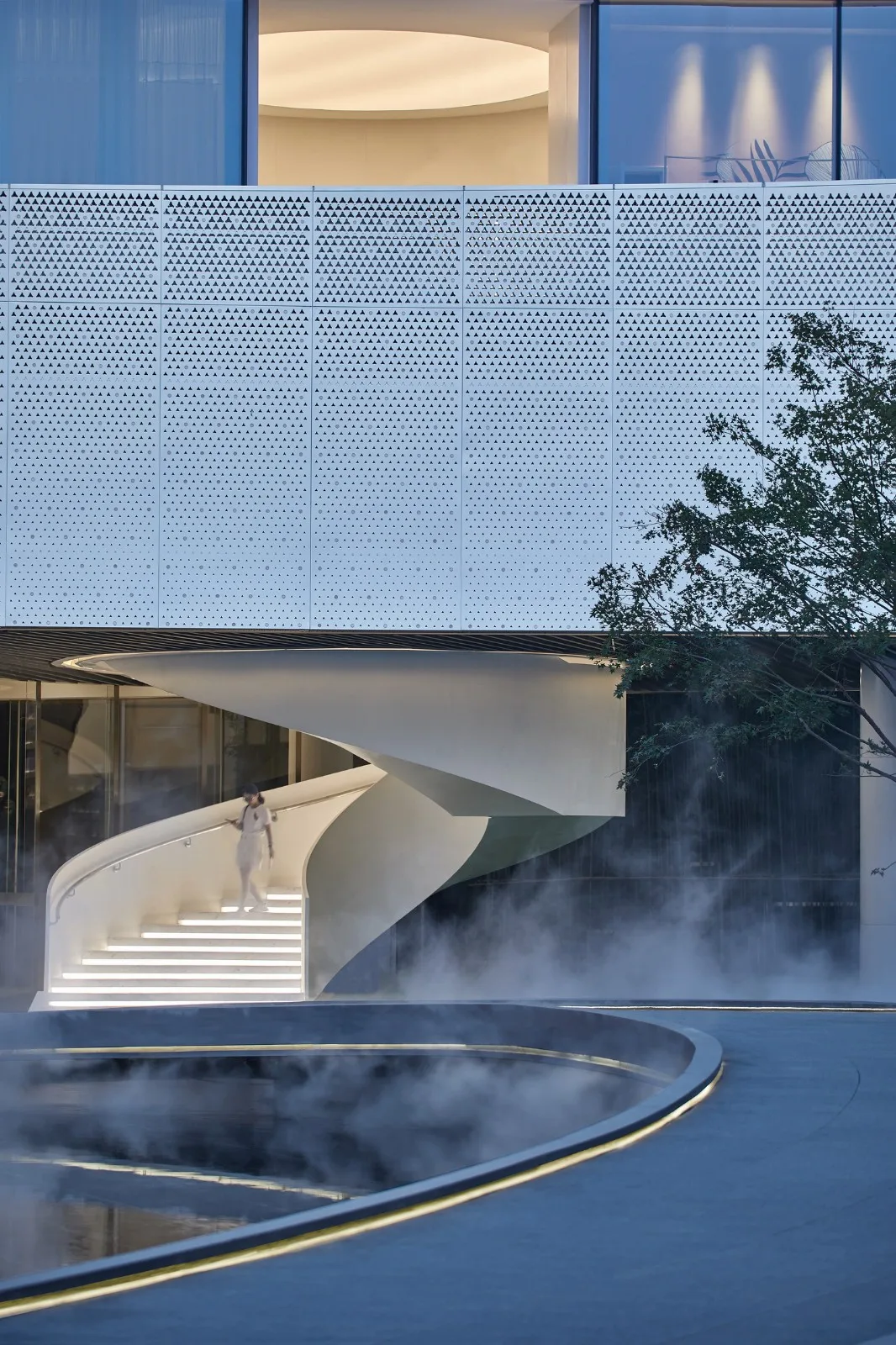
△ Spiral staircase and light-shadow connected planes © Pure point
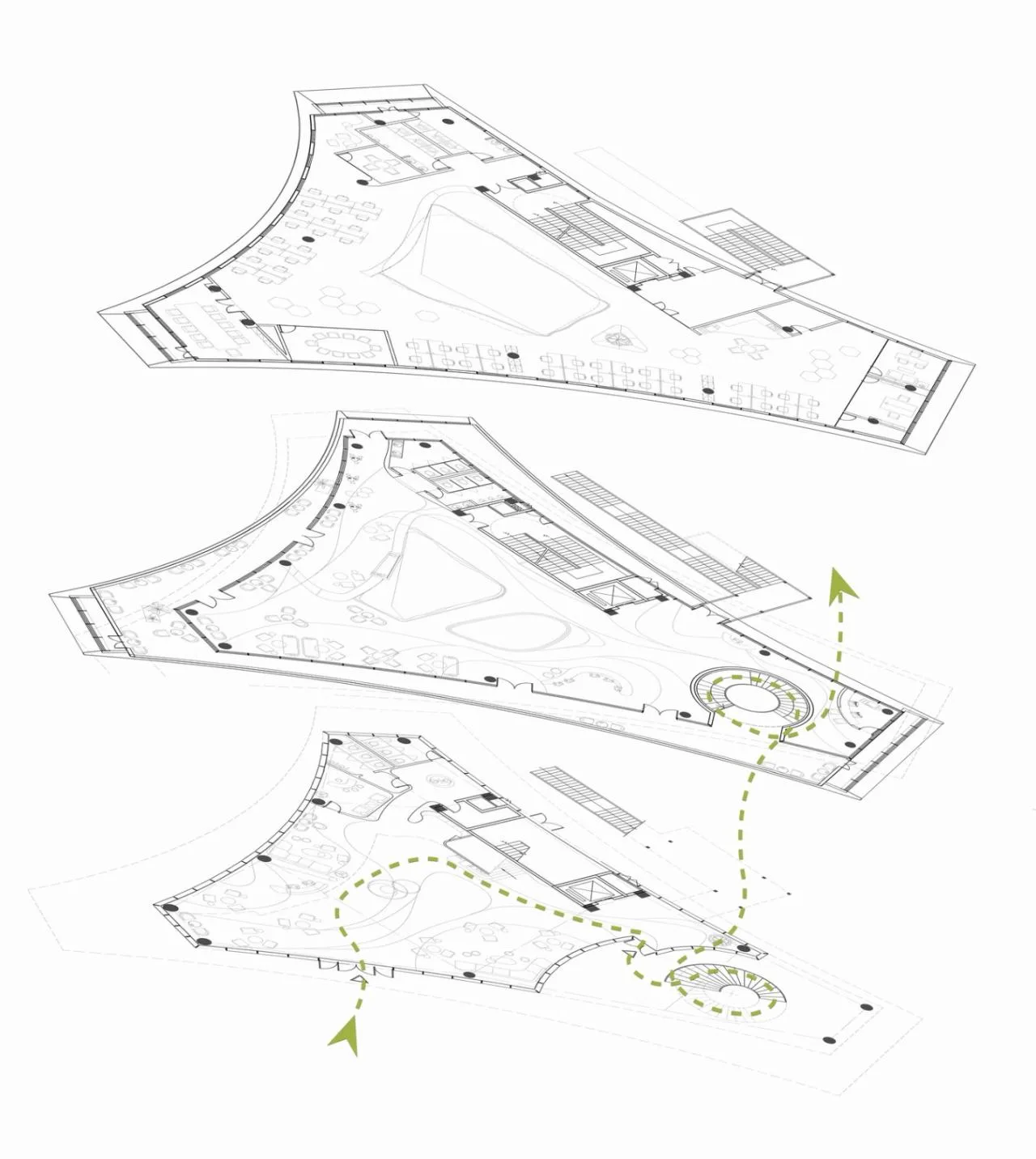
The three-dimensional experience path formed by the spiral staircase © Pure point
The column-free design allows each floor to feature wall-to-wall bookshelves, creating a strong cultural atmosphere that highlights the building’s main function: cultural display. The layered, “weightless” visual effect of the bookshelves also helps conceal the building’s volume.
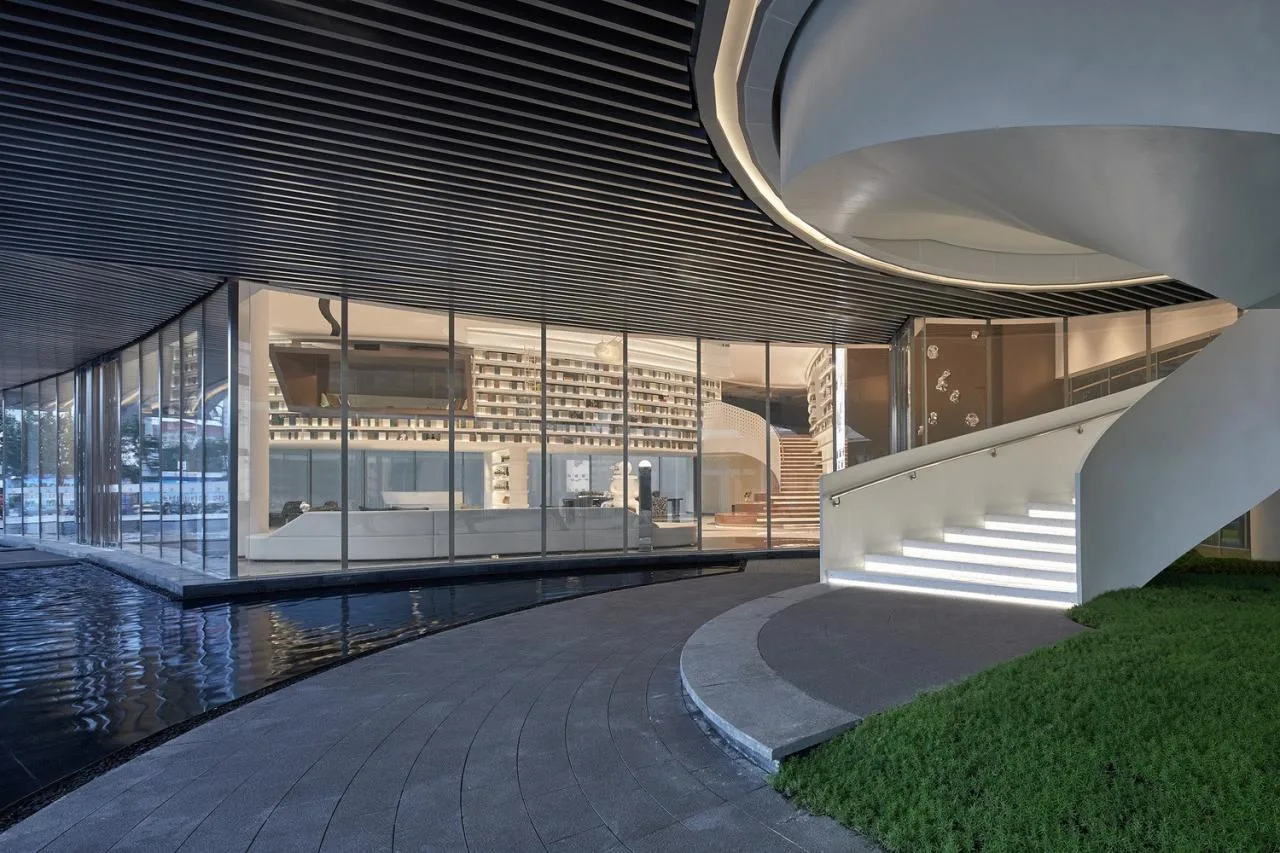
Indoor book walls visually soften the architectural volume © Pure point
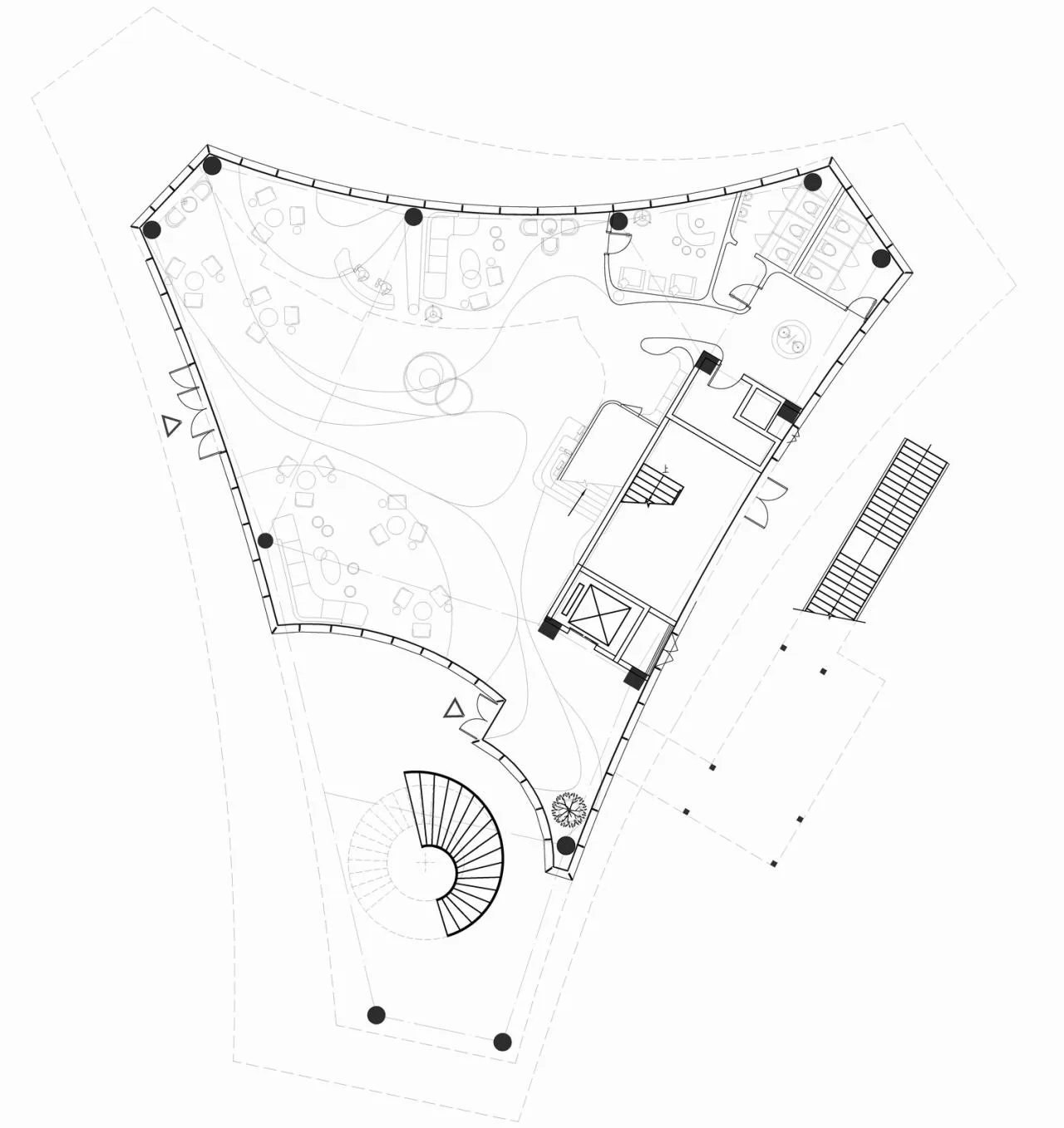
△ First floor plan
The fifth facade captures atrium light through a glazed skylight designed with a “raised center and gently sloping edges.” This design not only illuminates the transparent atrium but also proactively addresses issues like skylight dust and water accumulation.
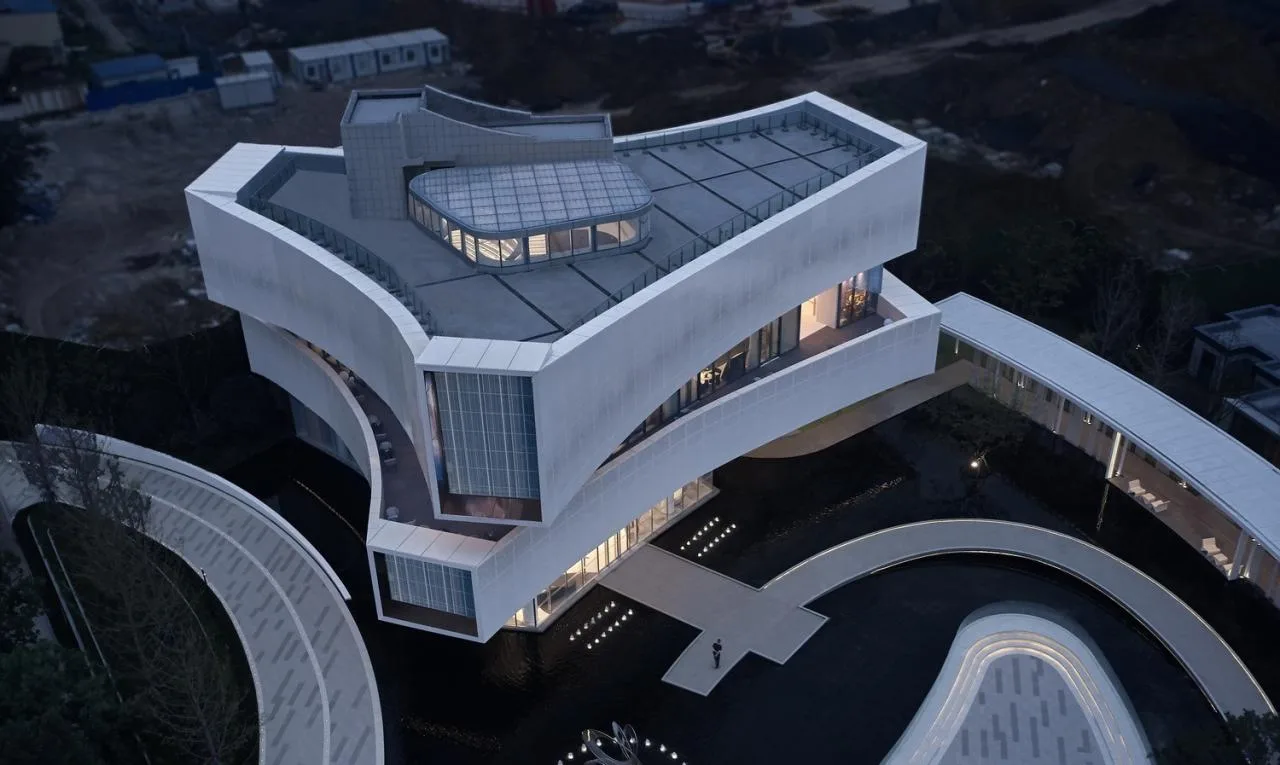
△ Realistic view of the transparent atrium’s fifth facade © Pure point
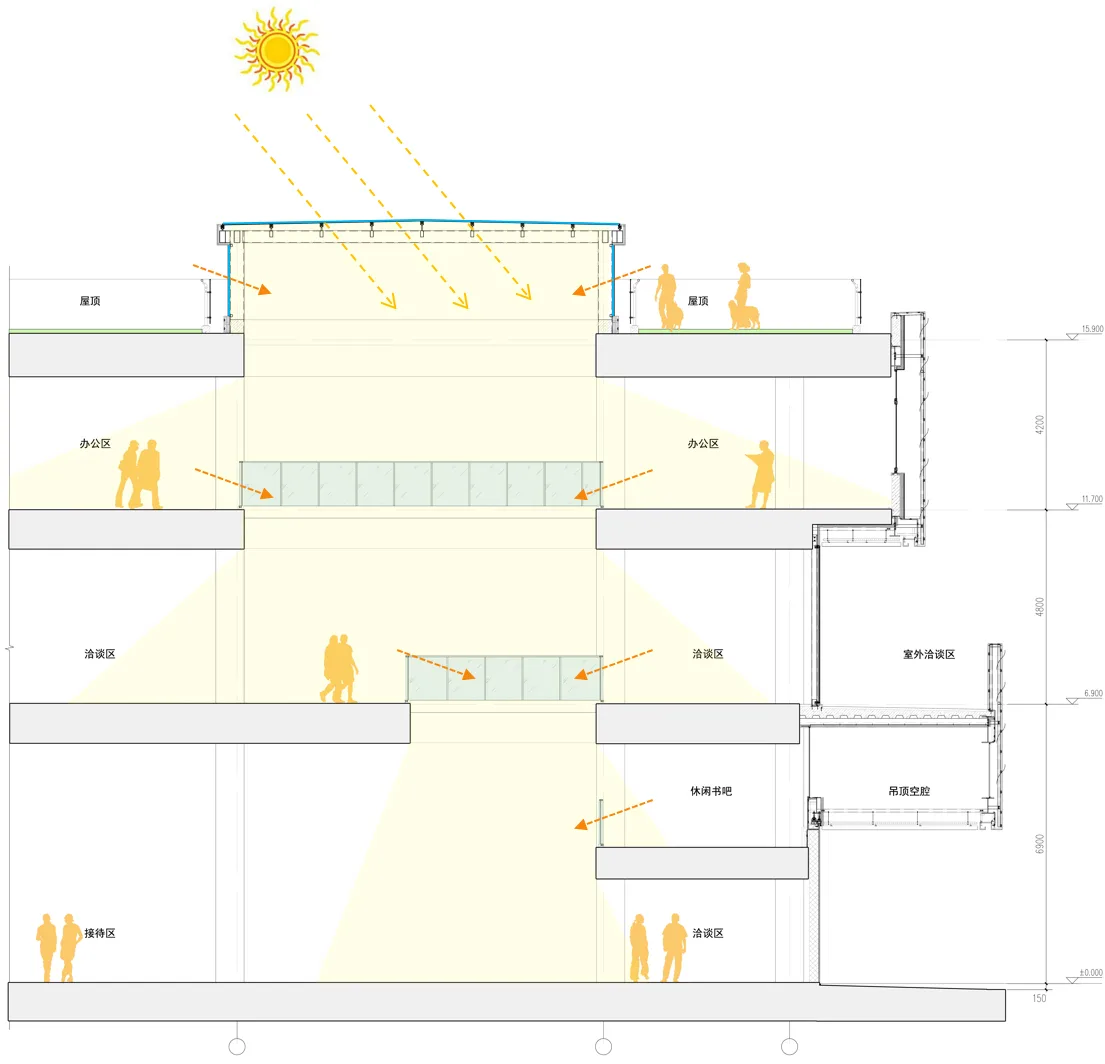
△ Courtyard lighting section diagram
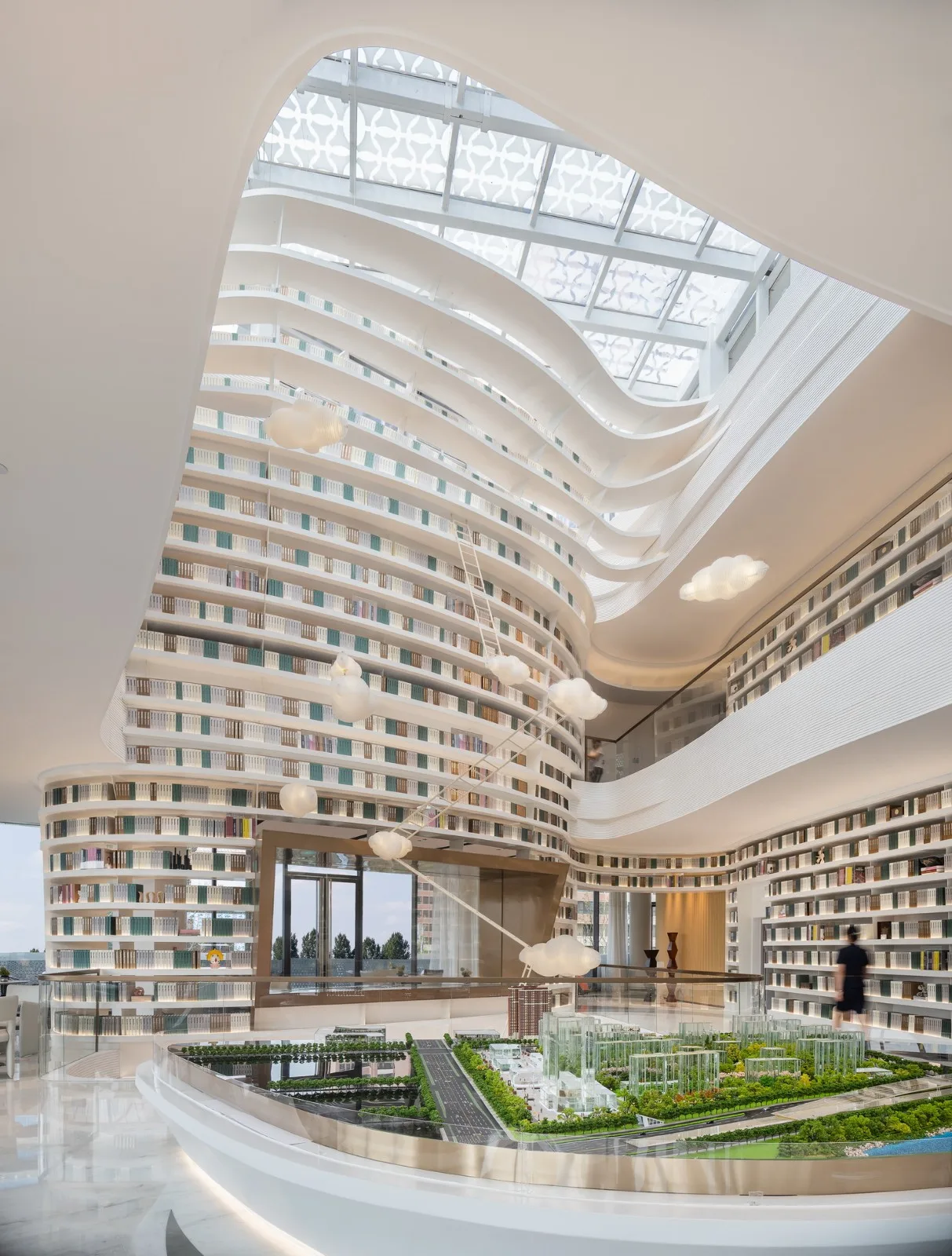
△ Beams of light shine through the skylight into the indoor atrium © Shanghai Liansi Architectural Design
Achieving High-Fidelity Realization Through Precise Control
Material and Form Rebirth
Following a detailed analysis of materials needed to realize the design, the team incorporated ultra-white glass to create a suspended bottom layer. The combination of modular iridescent perforated aluminum panels with LED lights brings dynamic light and shadow effects to the main curtain wall throughout day and night. Additionally, photoelectric curtain walls in the display windows engage with the rhythms of urban life.
Ultra-White Glass Creates a Suspended Effect
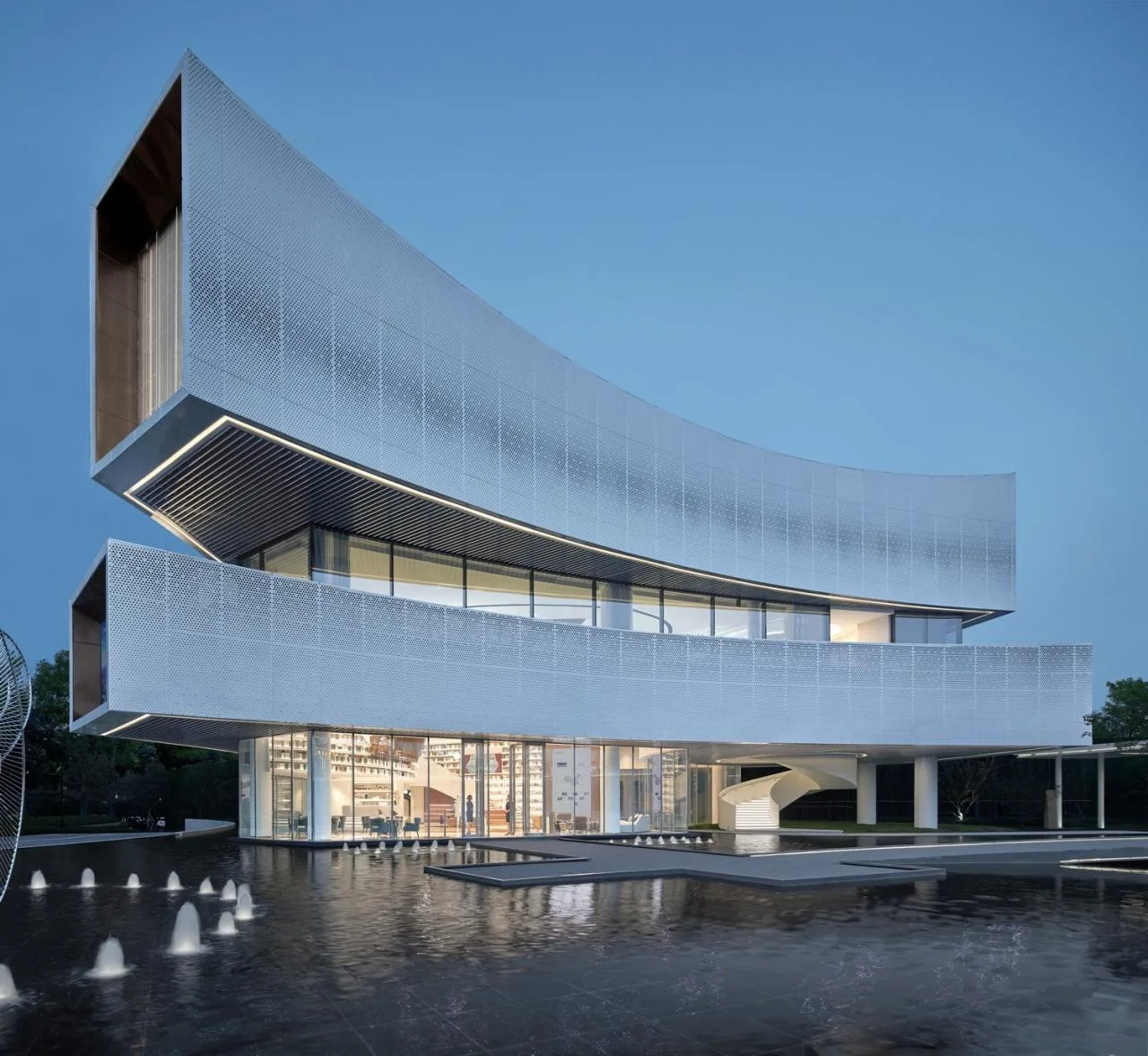
△ Transparent and suspended main visual interface © Pure point
The design features a layered height reaching up to 6.9 meters, using ultra-white glass to blend with water features, producing a floating effect for the building.
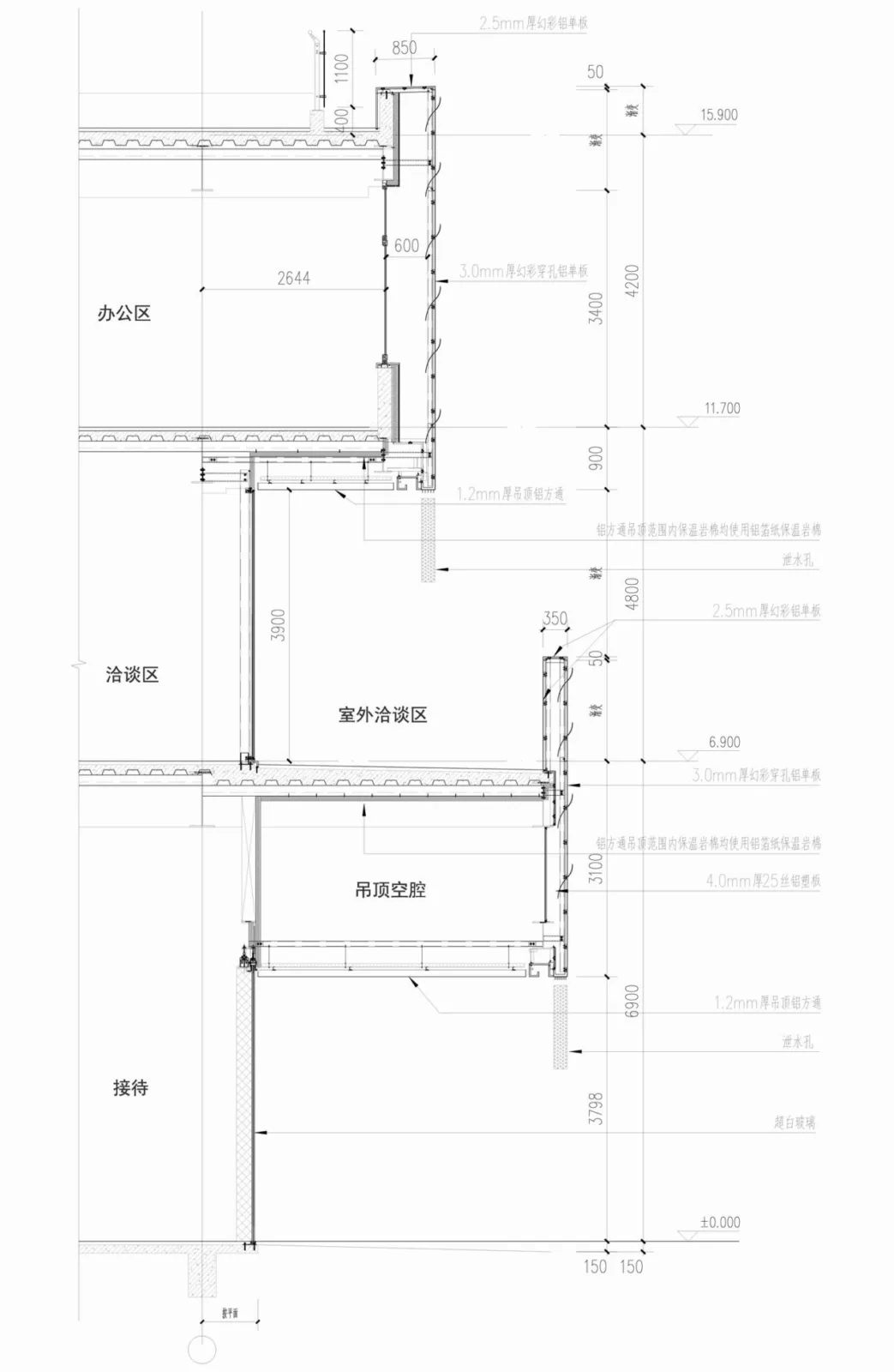
△ Profile detail
Colorful Perforated Aluminum Panels Express Rhythmic Changes
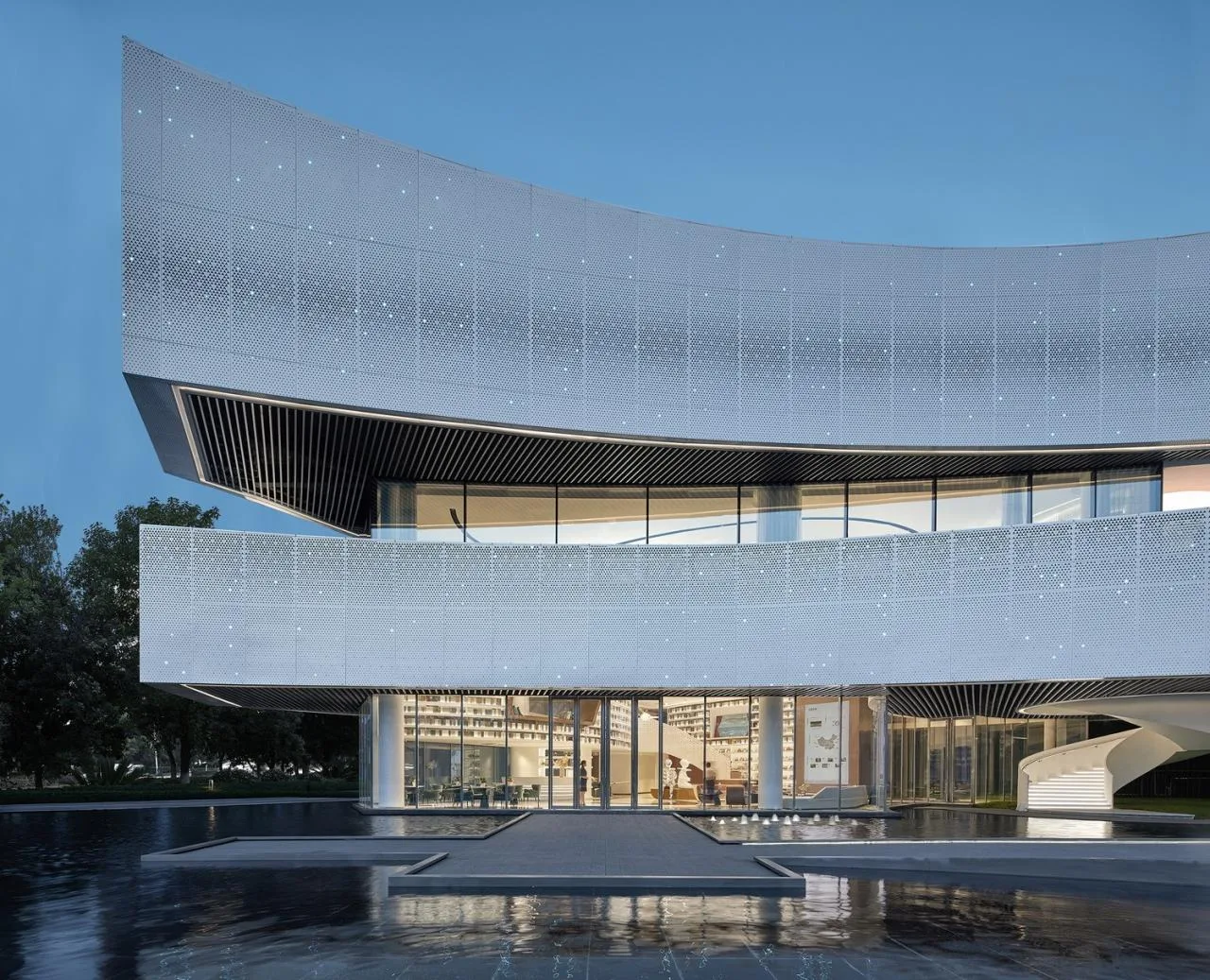
△ Night view of illuminated star-point curtain wall © Pure point
The main curtain wall employs iridescent perforated aluminum panels with a large-scale gradient pattern, where perforations increase from top to bottom and vice versa on upper and lower panels. This creates dynamic light and shadow effects that satisfy the demand for visual richness.
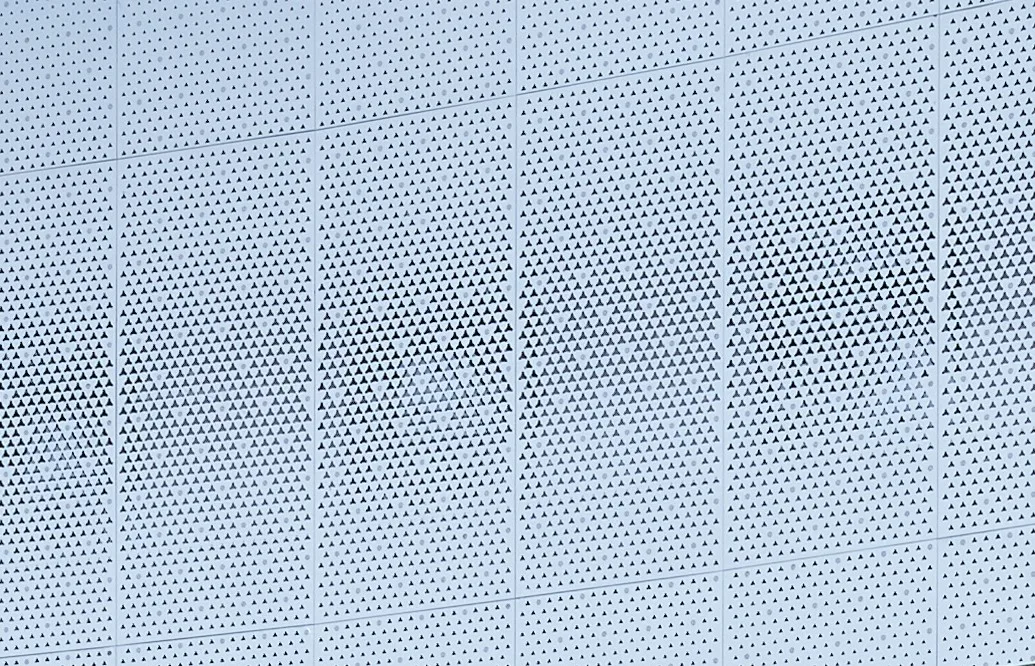
△ Close-up of aluminum panel perforation gradient © Pure point
At a smaller scale, the aluminum panels are modularly designed based on the building’s basic plane shape, fostering originality and unity while establishing a strong visual identity. Embedded irregularly flashing LED lights add sparkling highlights, infusing warmth into the curtain wall.
△ LED flashing effect
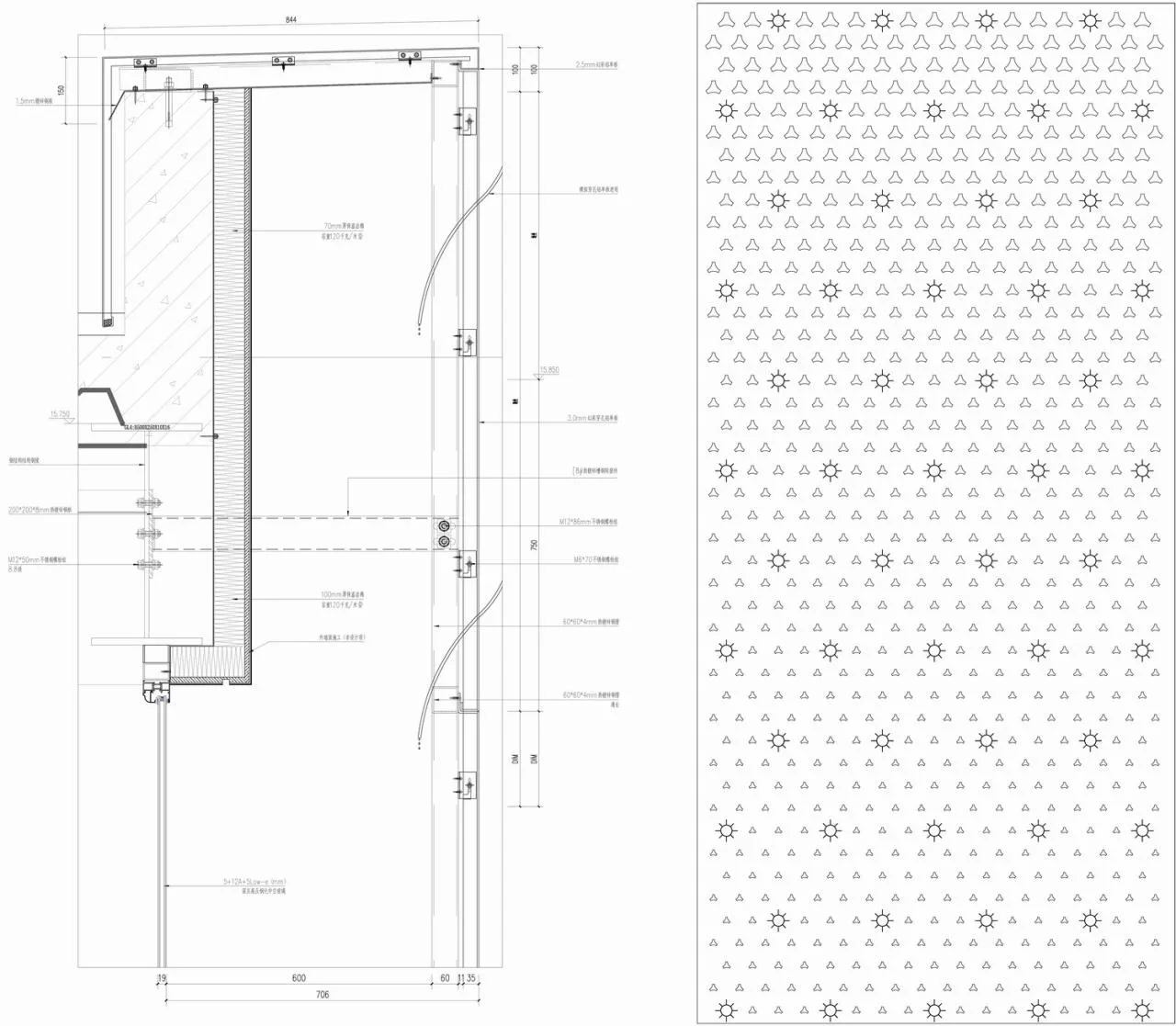
Diagram showing perforated aluminum panel section and modular LED integration
Photoelectric Curtain Wall Reveals a Cultural Window
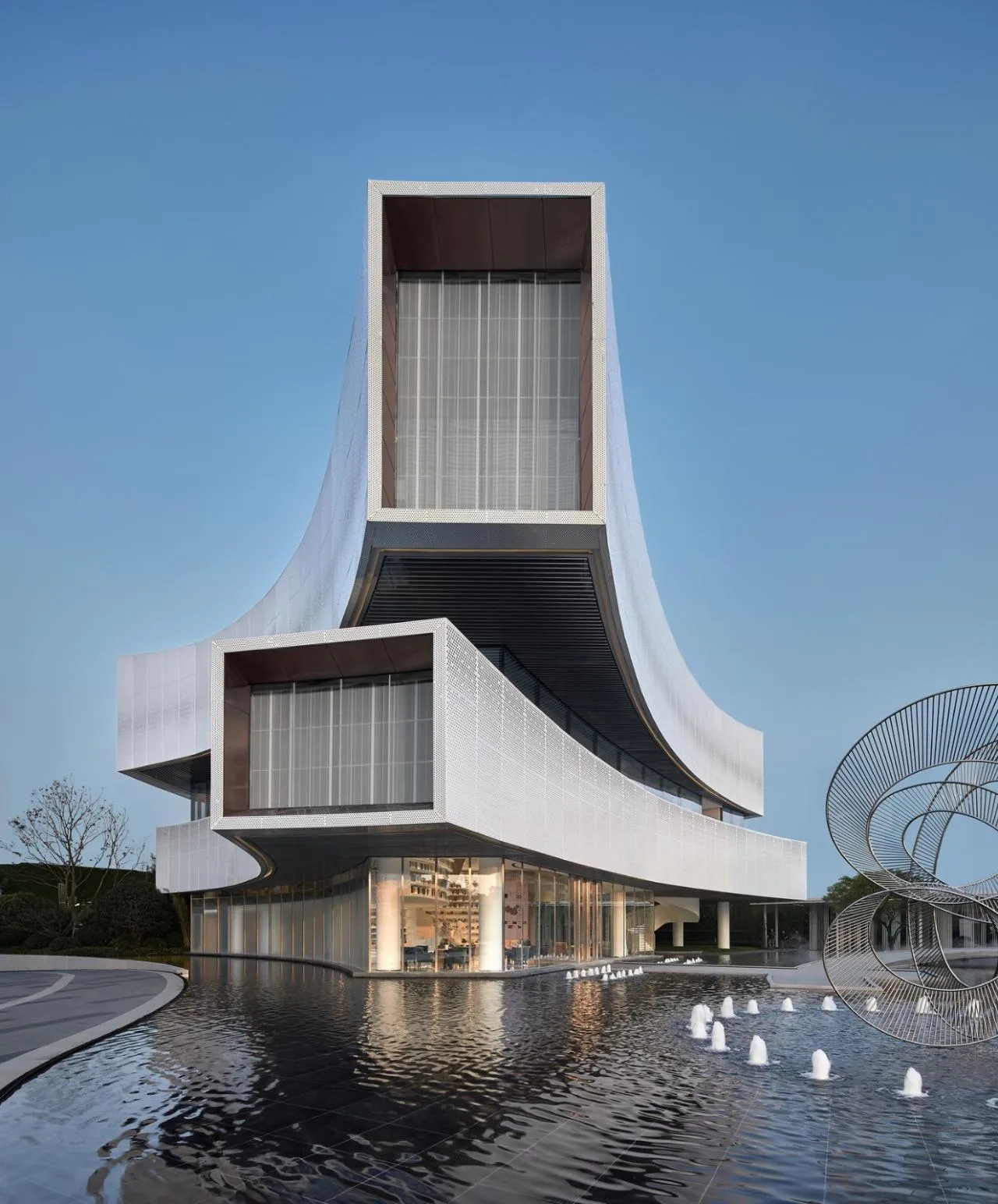
The main display window’s photoelectric curtain wall © Pure point
This cultural “window” adopts a photoelectric curtain wall facing the intersection, engaging with every moment of natural urban life.
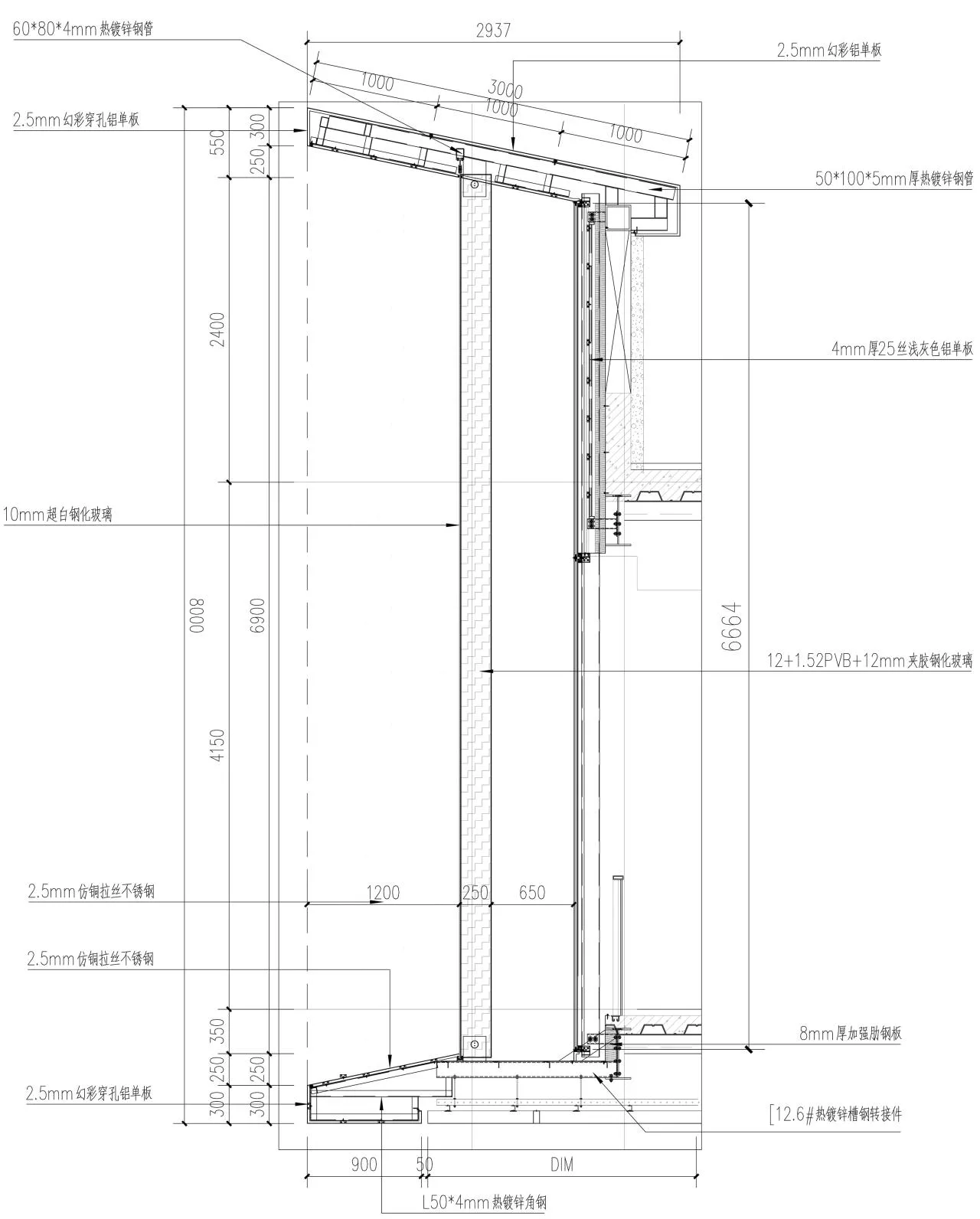
△ Photoelectric curtain wall detail
Extending Texture to Preserve Warmth
As a material expression of Xuzhou’s cultural style, the project not only narrates the current story of the venue but also continues the historical texture, bridging past and present. It aspires to be a lasting memory, preserving warmth across the continuum of history.
Project Information
Building Type: Exhibition Center
Building Area: 2,380 square meters
Developer: Sansheng Group
Architectural Design: UA You’an Design
Location: Xuzhou, Jiangsu, China















Must log in before commenting!
Sign Up