
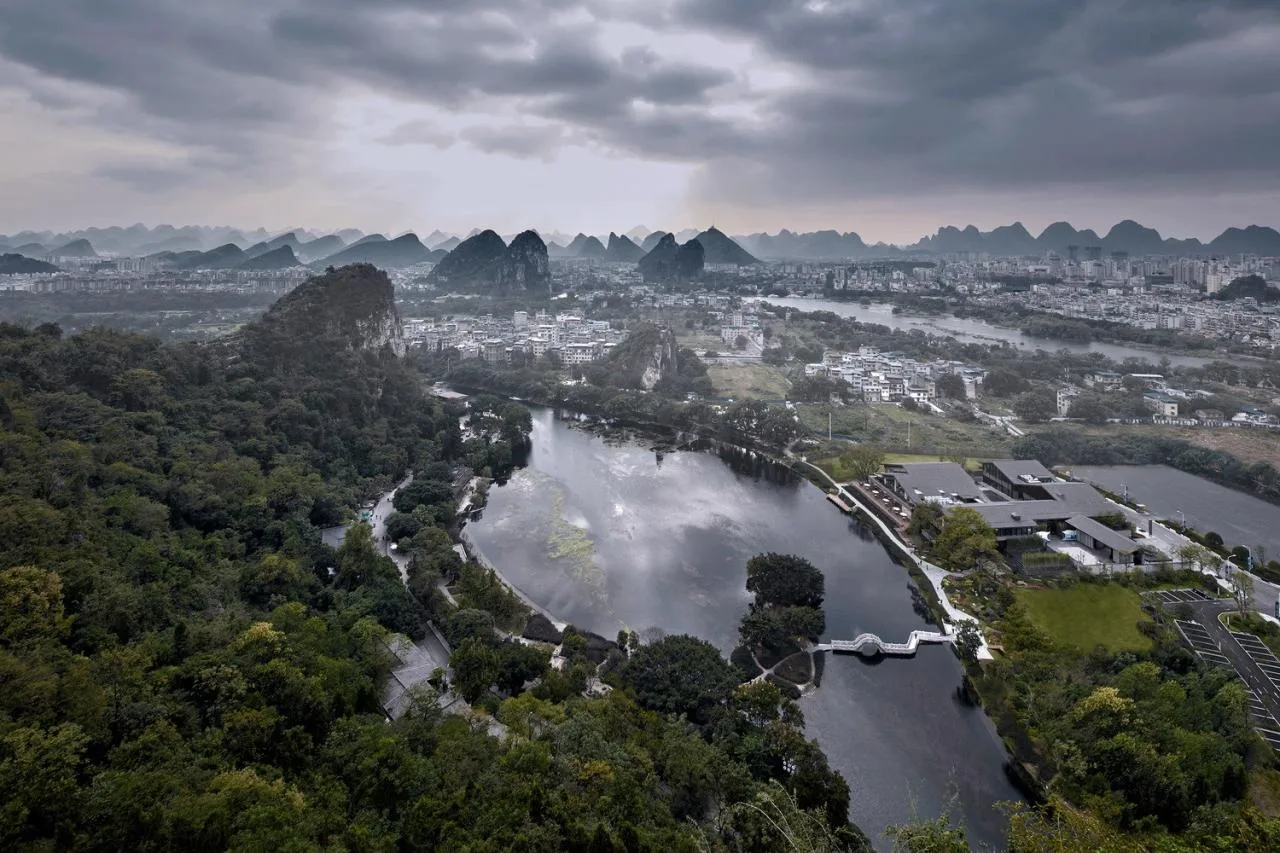
If you want something to have value in existence, you must first consult with nature before beginning the design process.
—— Louis Kang
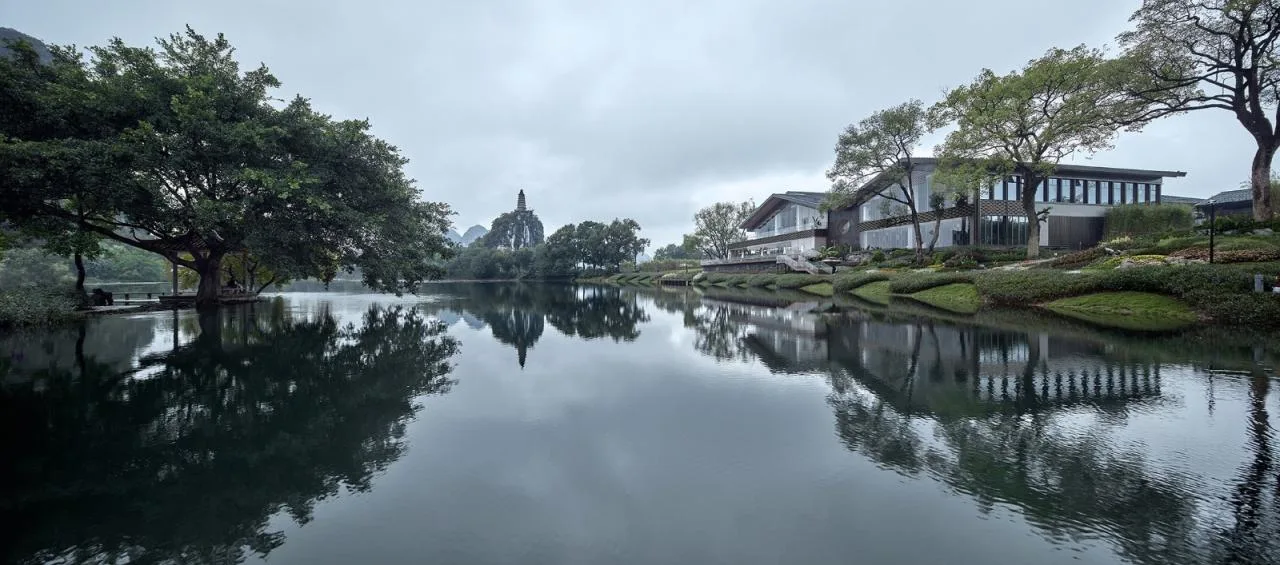
The Tashan Guild Hall nestled among mountains and waters © Xia Qiang
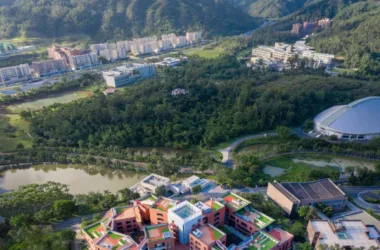
Located in the heart of Guilin’s scenic area known as “Tashan Qingying,” the Tashan Guild Hall is bordered by Chuanshan Mountain to the east and Tashan Mountain to the south. This setting offers a stunning blend of mountains and rivers, a natural landscape too precious to disrupt.
The project serves multiple functions, including planning exhibitions, cultural displays, art shows, and conferences for the Lijiang Cultural Tourism Resort. Its design focuses on balancing the building’s functionality with environmental harmony.
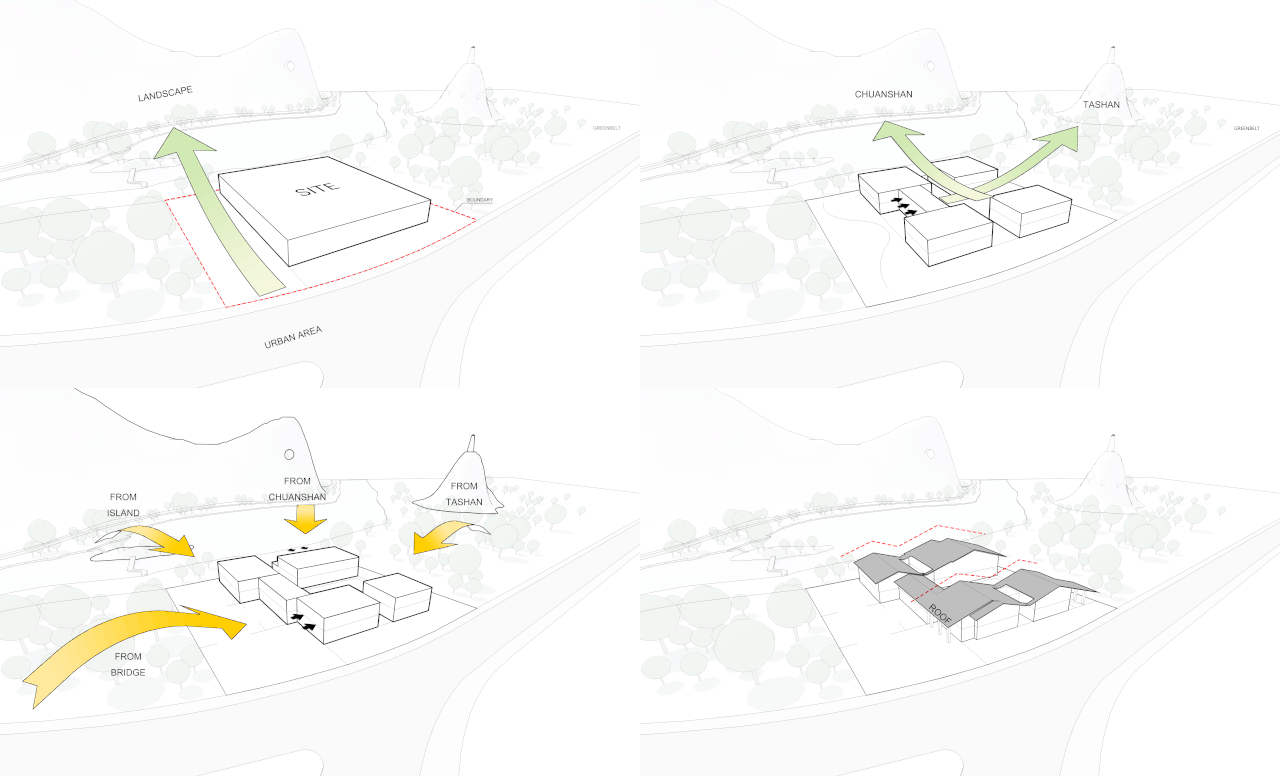
△ Negative Space Technique
After extensive site research, the design team adopted a “non-disturbance” approach, aiming to preserve the original principle of prioritizing the natural scenery. Using the technique of negative space, the architecture is designed to neither overshadow nor obstruct the landscape, resulting in a “hidden” structure that seamlessly integrates with the surrounding mountains and waters.
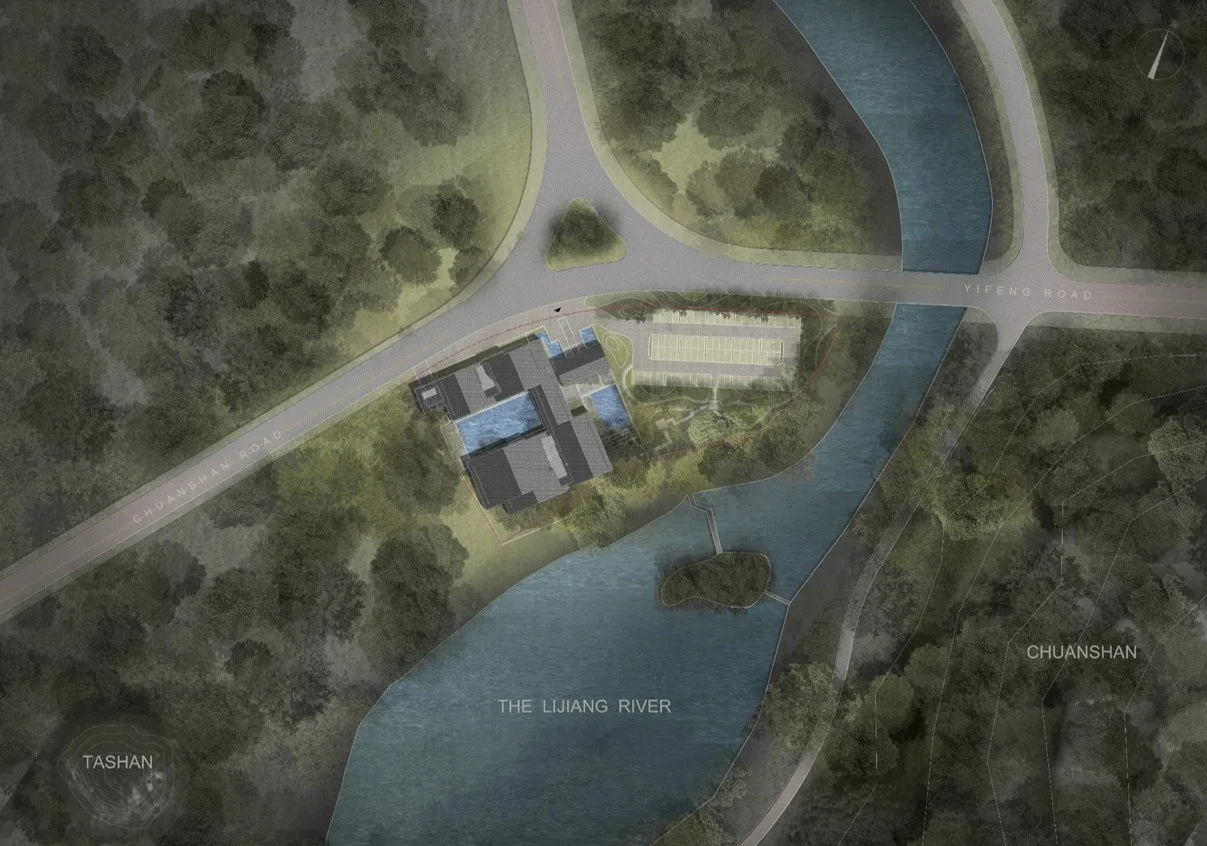
△ General Layout Plan
Spatial structure represented as a diagram
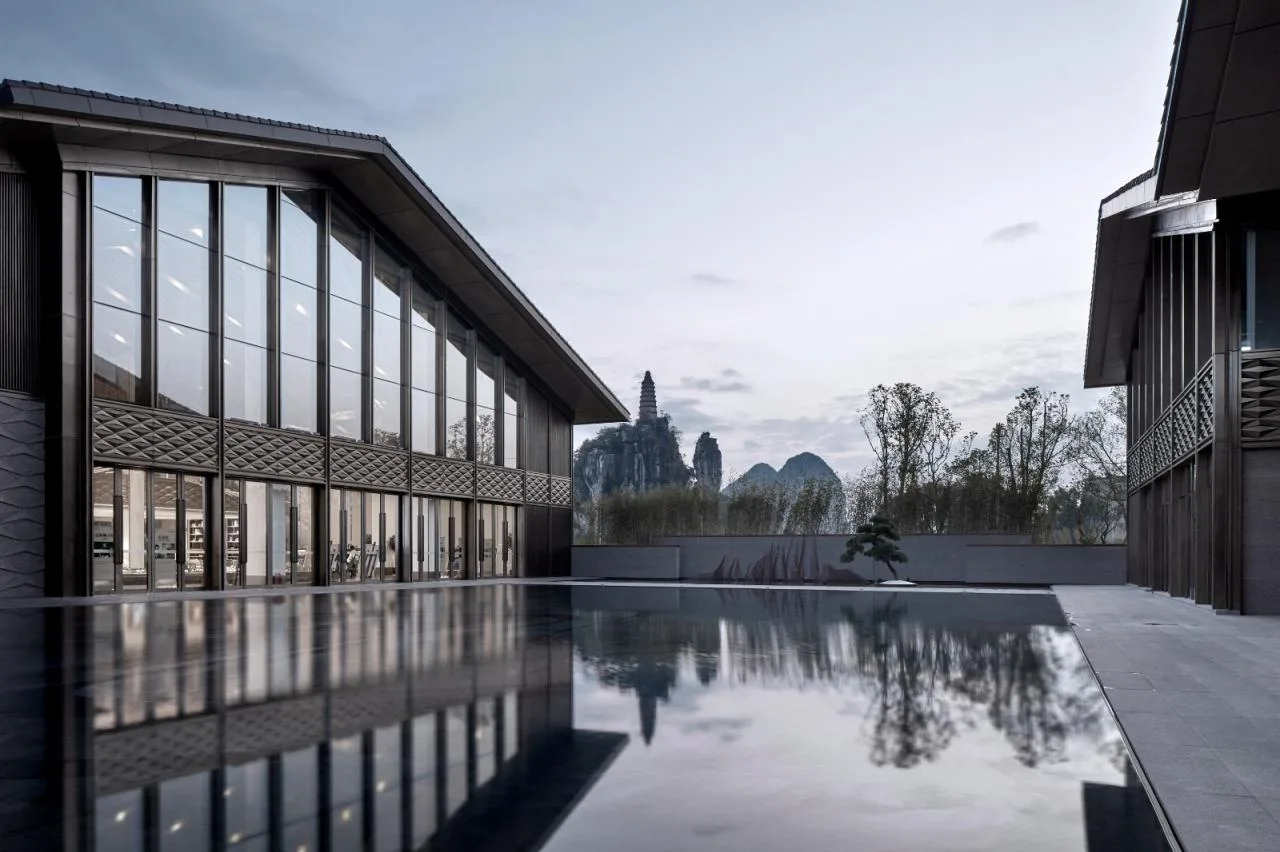
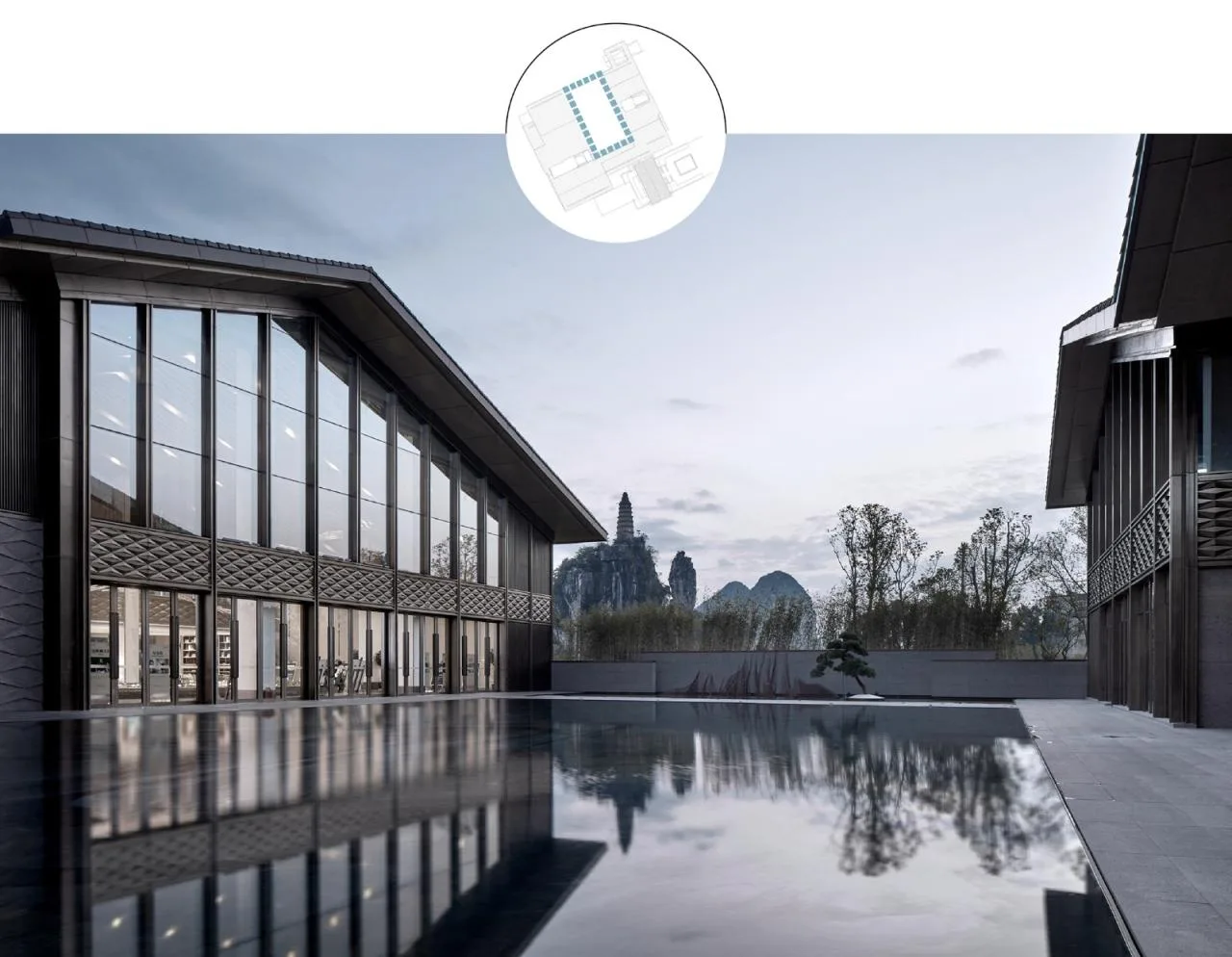
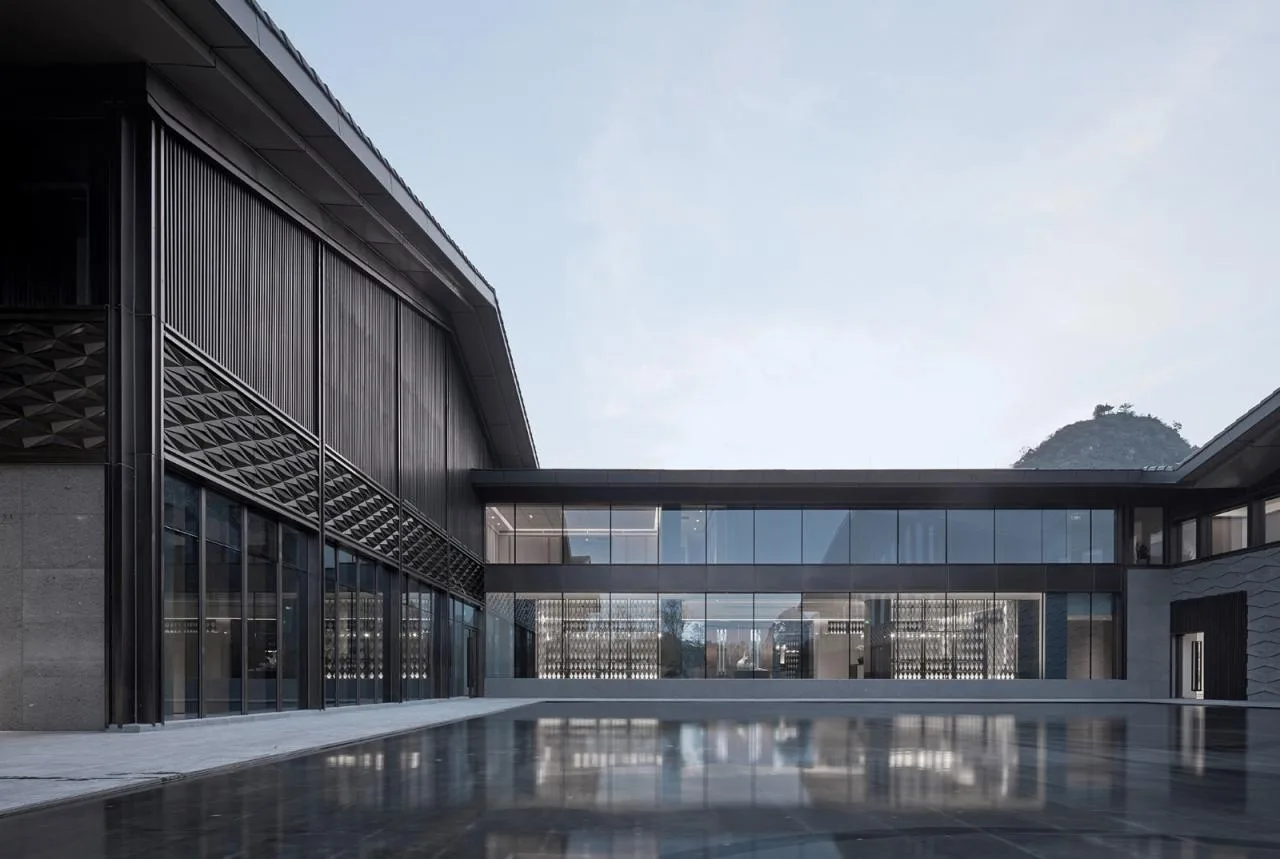
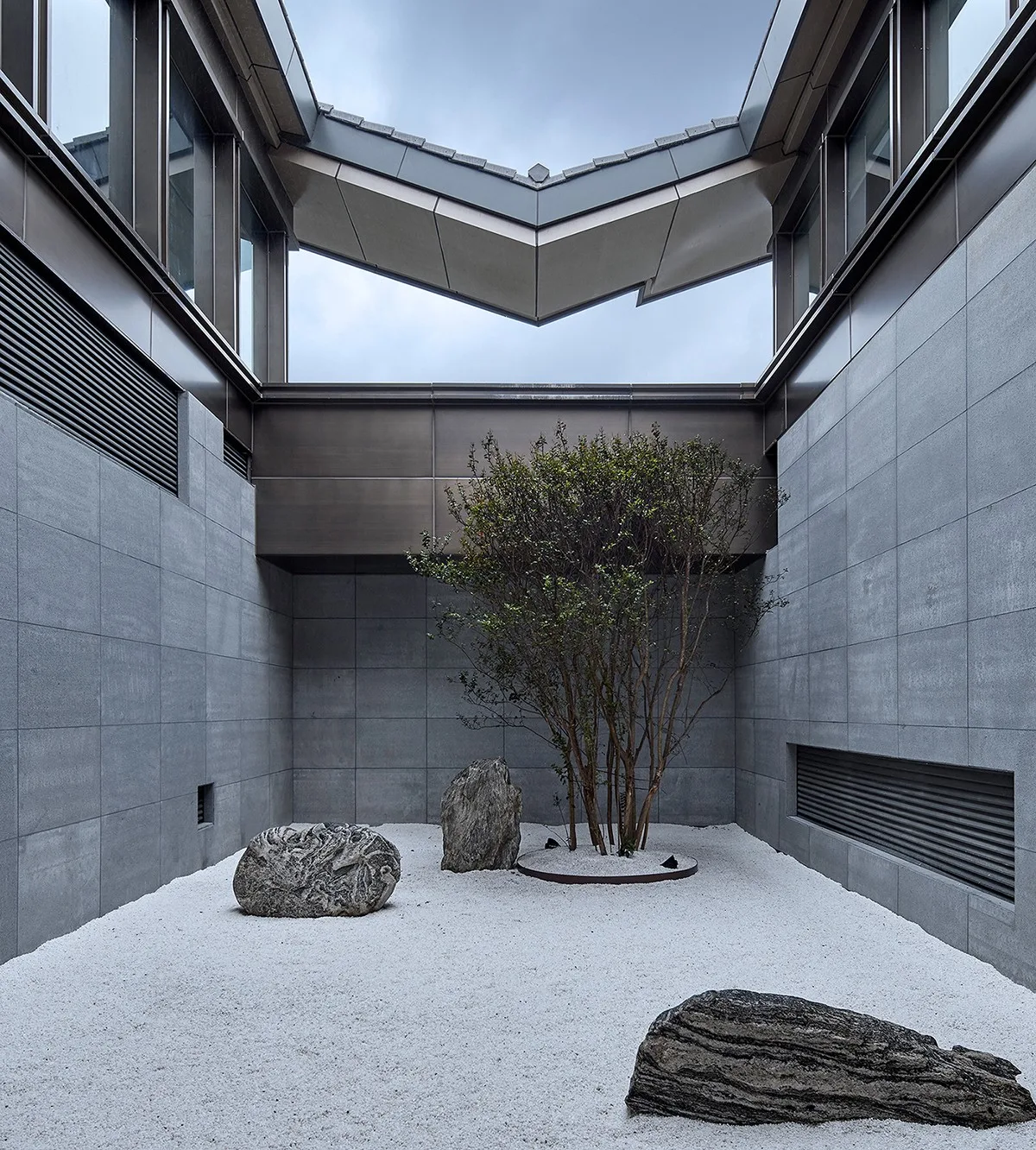
△ Tranquil Courtyard © Xia Qiang
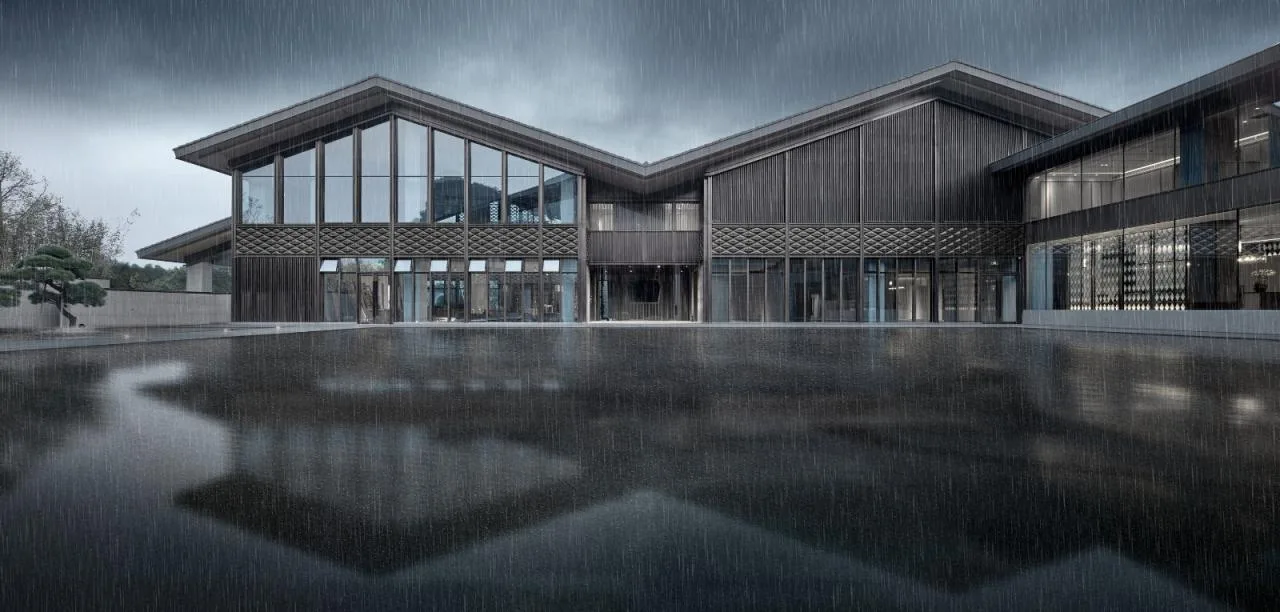
A soulful ‘negative space’ is created within the site—a peaceful courtyard that invites visitors to immerse themselves in the landscape and appreciate the serene views of the Li River. This courtyard offers a space to admire nature, while itself becoming an integral part of the architectural scenery.
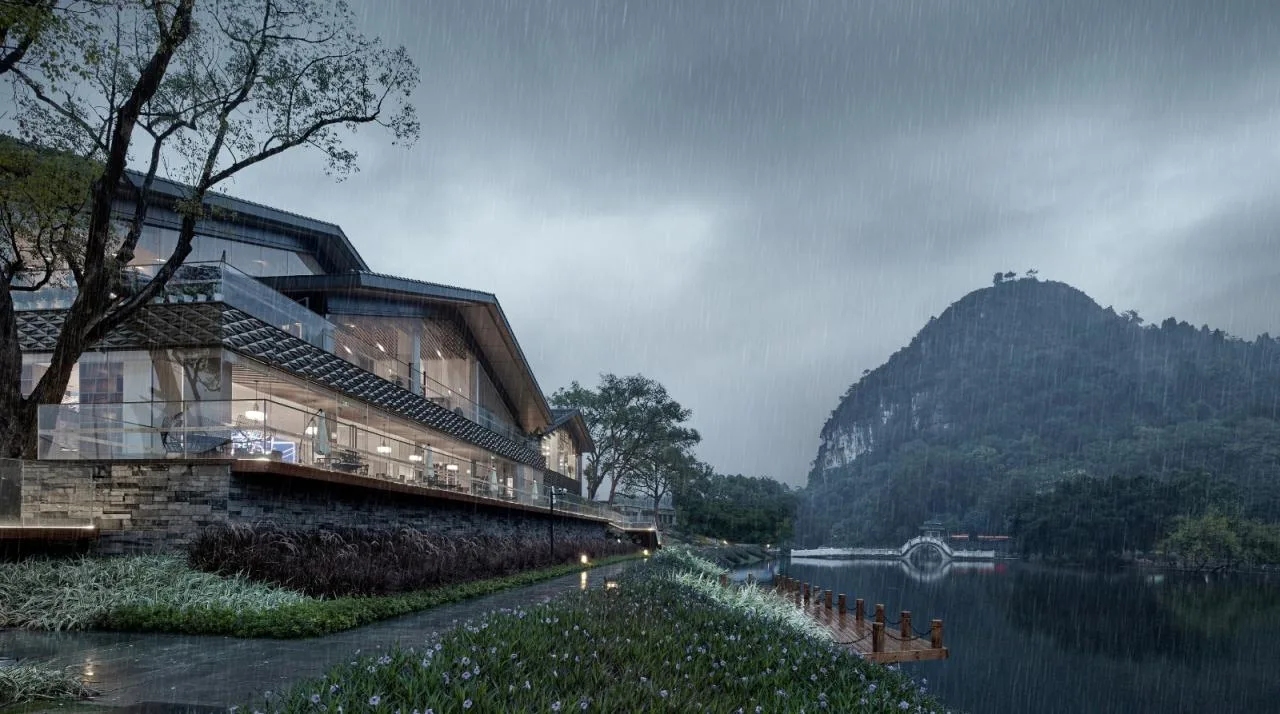
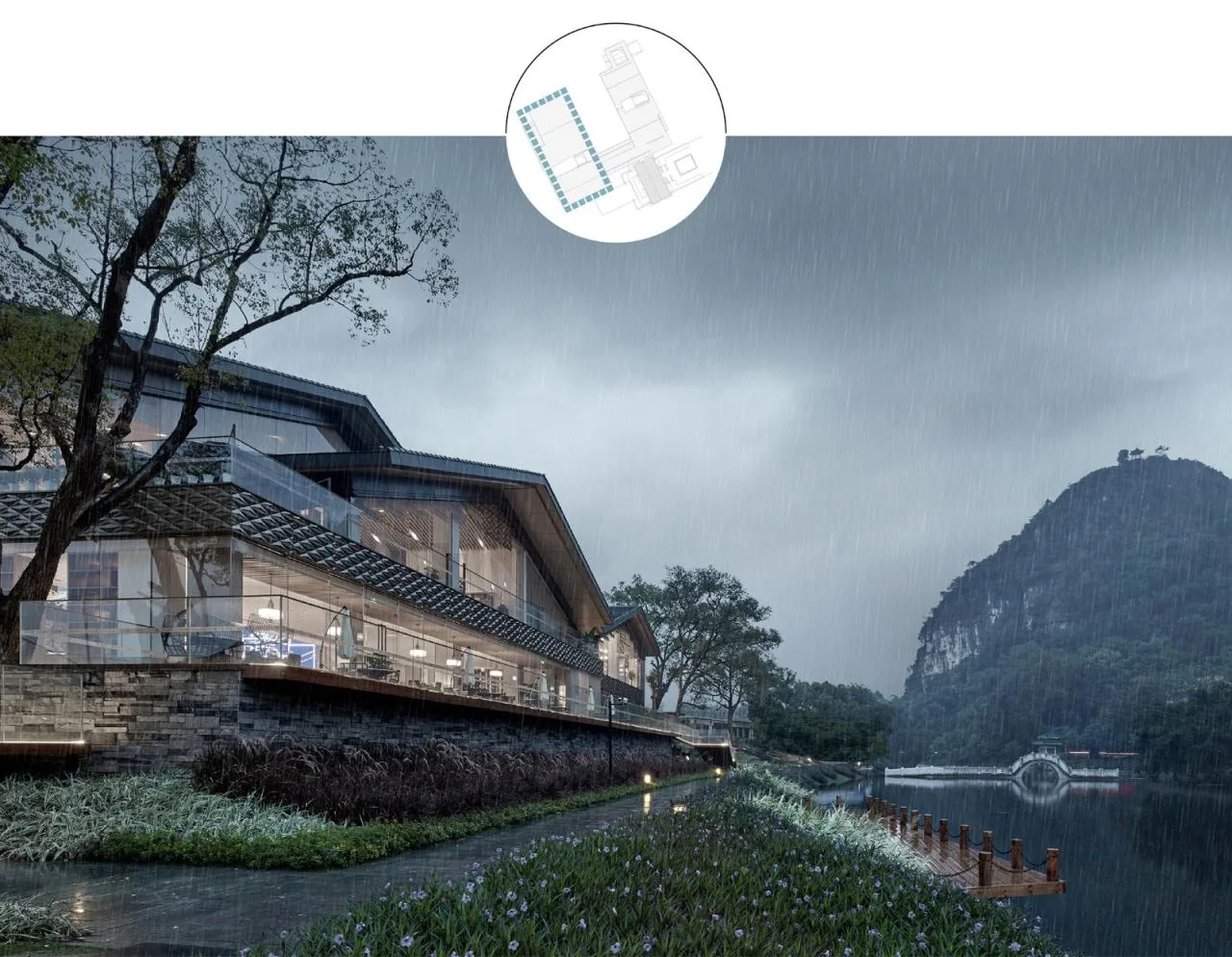
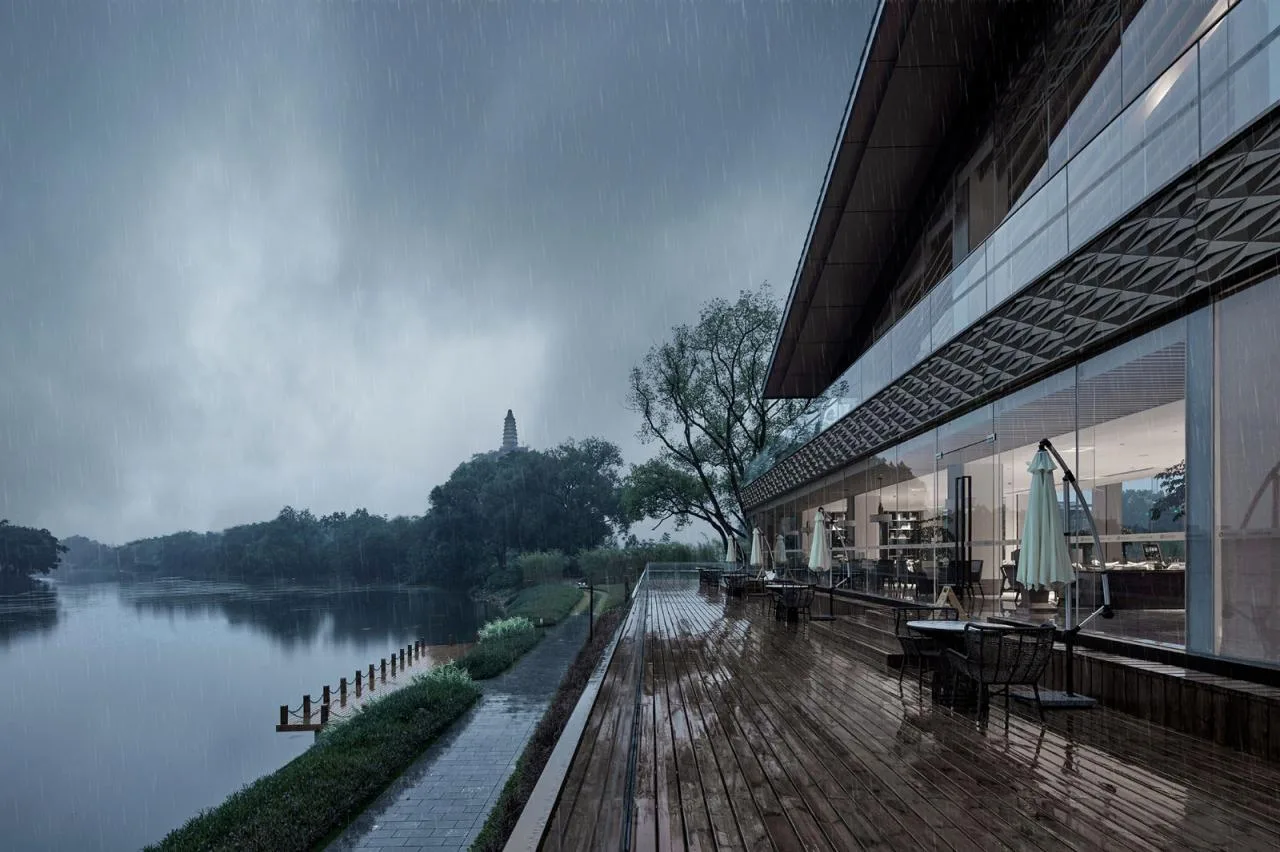
△ Enjoying the calm and graceful mountains in the rain © Xia Qiang
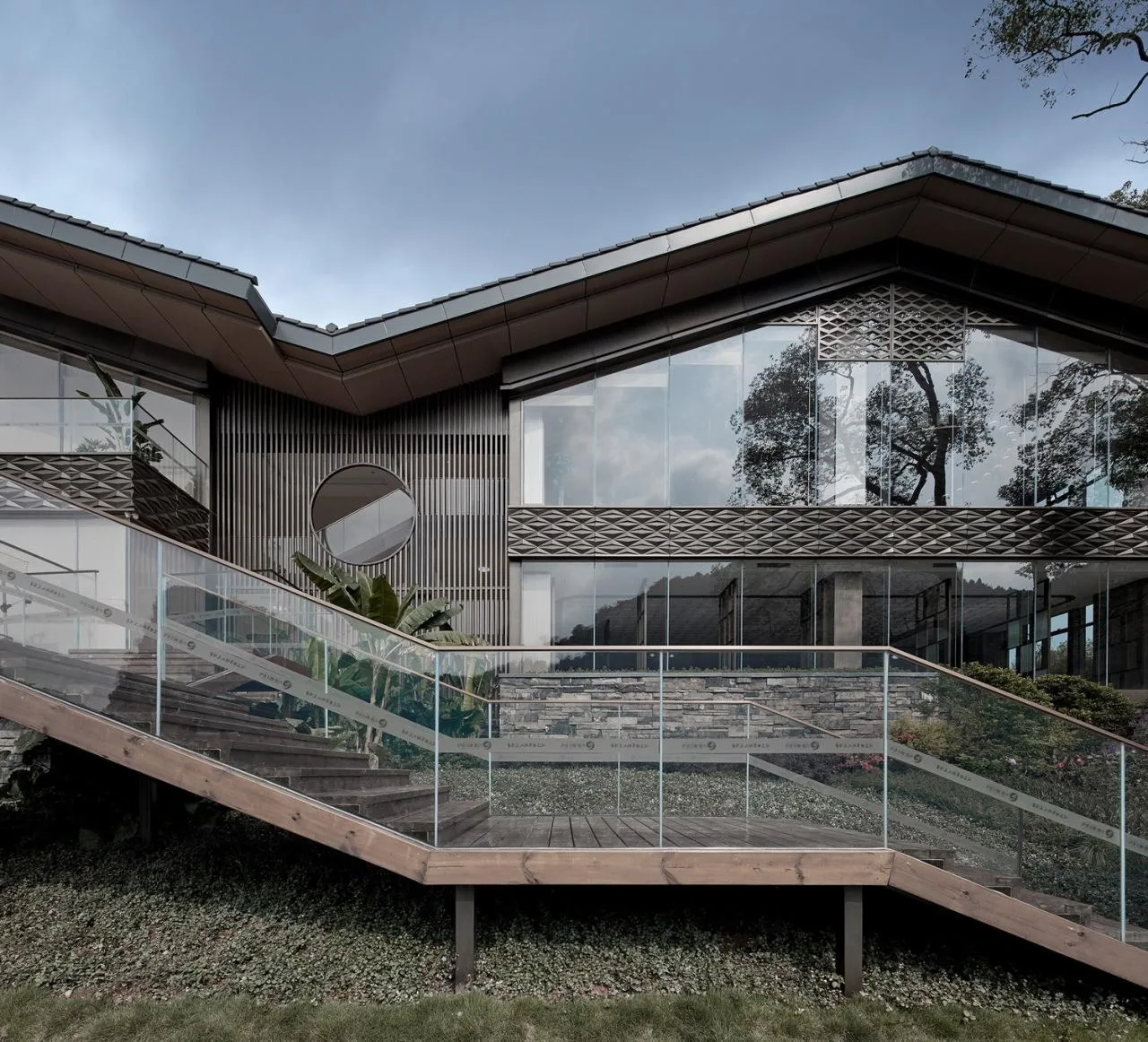
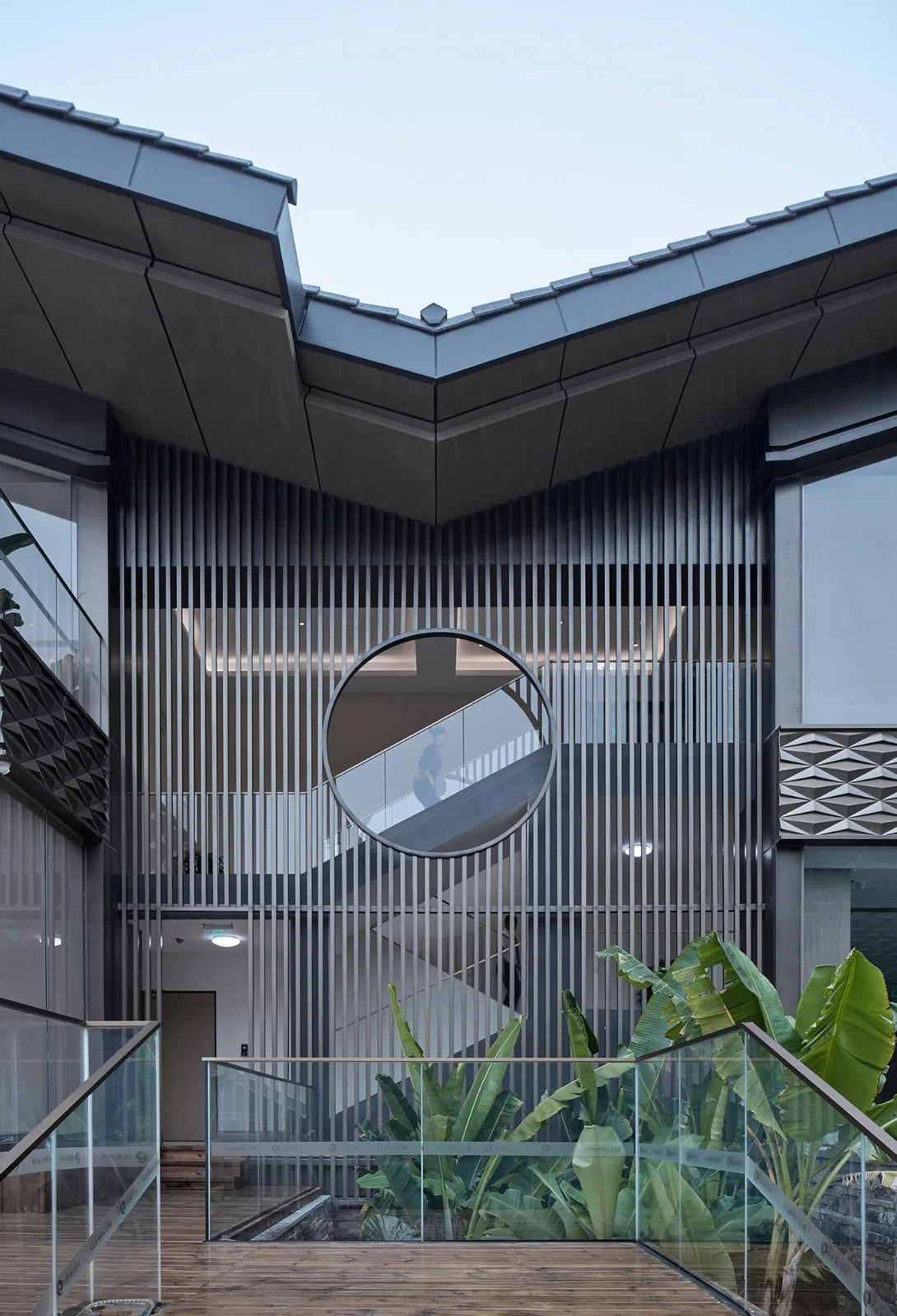
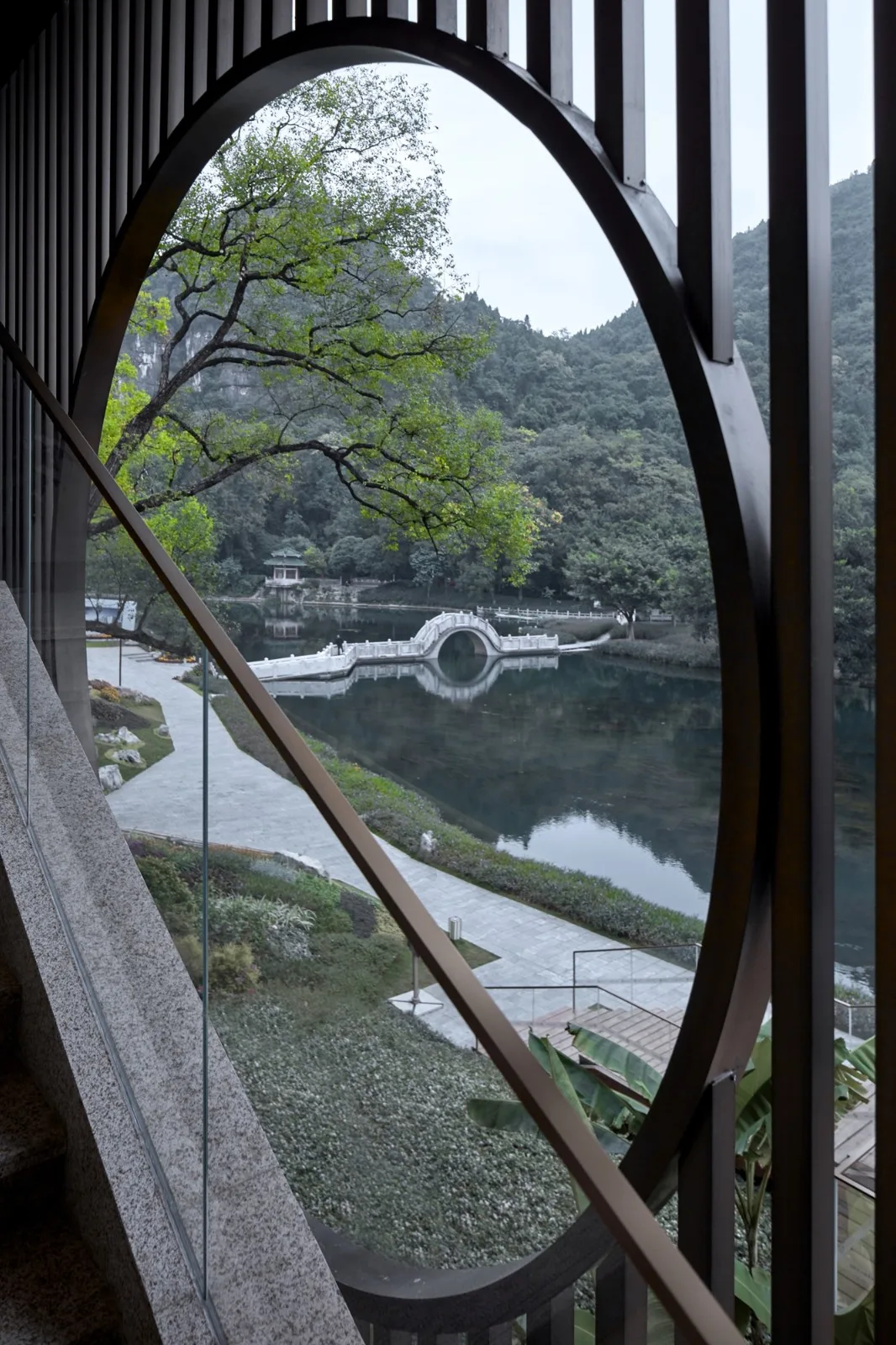
△ Chinese garden design techniques connect the main exhibition hall and restaurant © Xia Qiang
Surrounding the courtyard, the main exhibition hall and restaurant are positioned along the riverbank, allowing visitors to engage intimately with Chuanshan, Tashan, and the Li River. This harmonious interaction between architecture and landscape breathes new life into both the built environment and the natural setting.
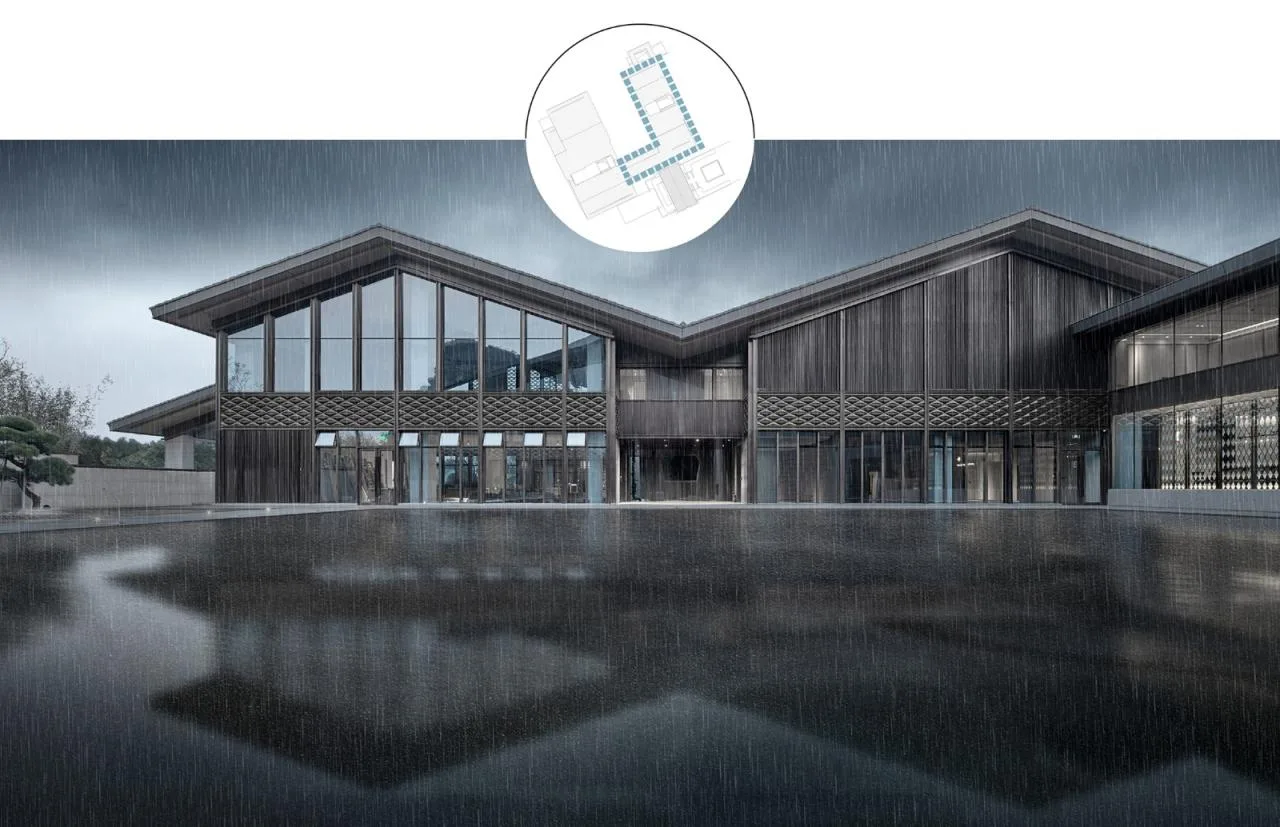
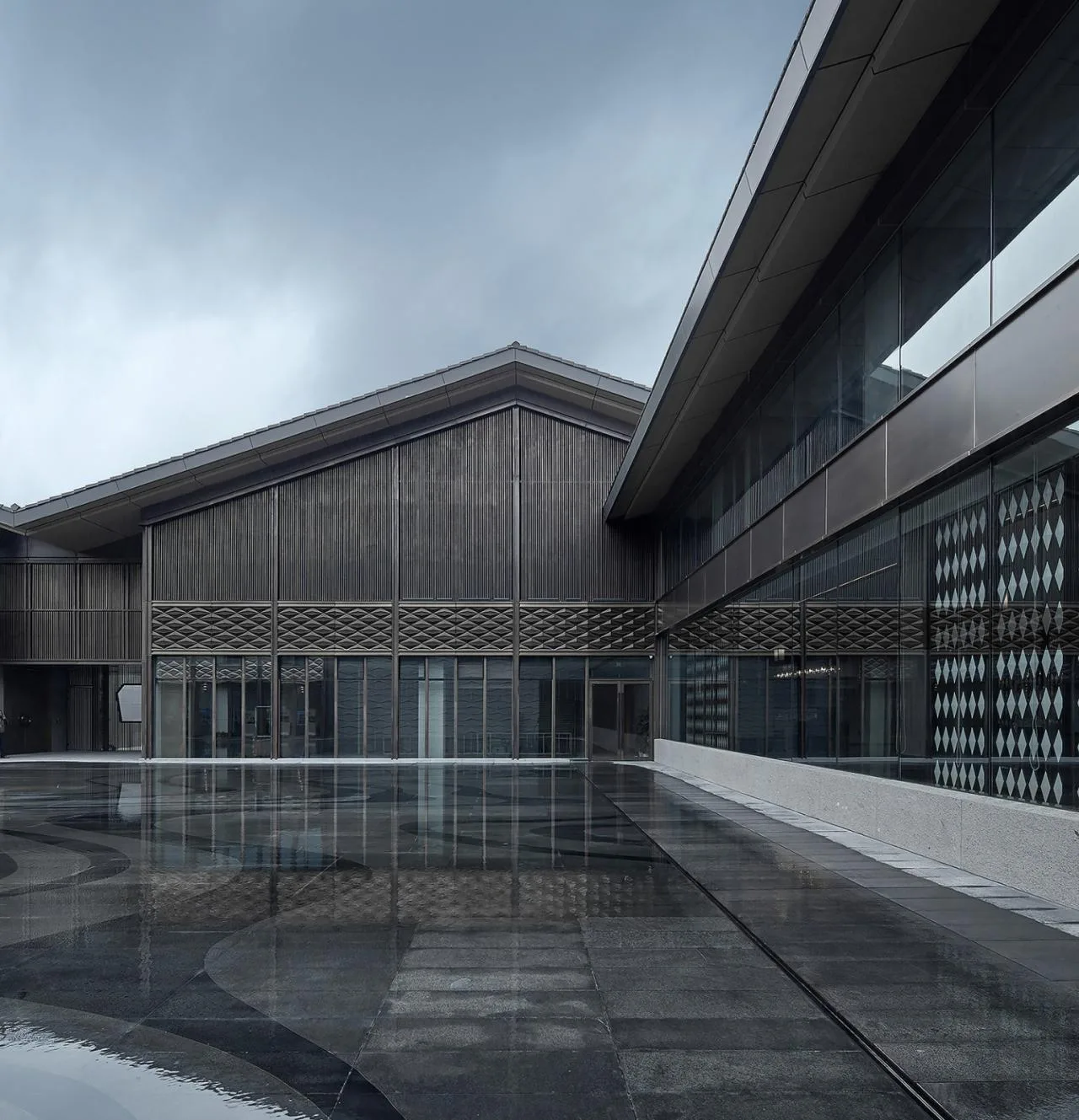
△ Creating enclosed spaces with buildings © Xia Qiang
Secondary exhibition halls and logistics rooms are arranged along the urban side of the courtyard, also offering views of Chuanshan and Tashan. These buildings form an enclosure that both frames the scenery and becomes an integral part of it.
Echoing the volume and disappearance of mountains and waters
Drawing inspiration from local research and traditional Guilin residential architecture, the building volumes are carefully controlled in three dimensions: vertical scale, horizontal scale, and architectural form. This approach helps the structures blend into the natural environment.
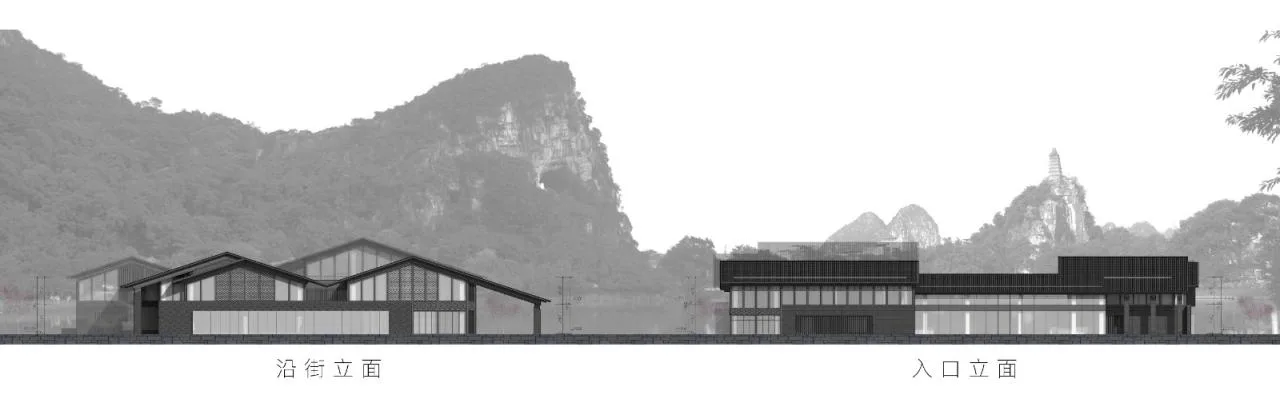
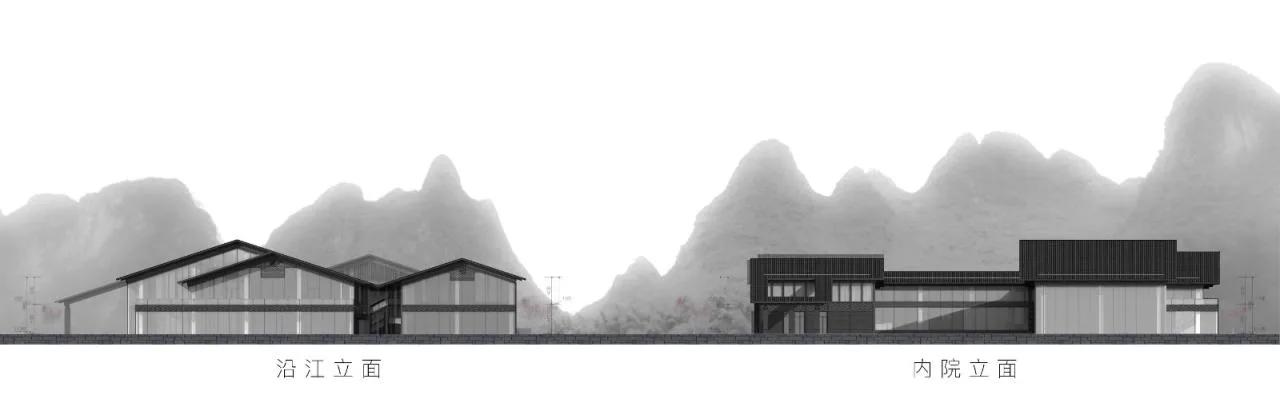
Vertical control to harmonize with the environment
Considering visual connections between the site and its surroundings, the design splits the building mass along the river into two groups, matching the height of existing vegetation to blend naturally. The building bases are crafted from Guilin’s unique betel nut stone, integrating seamlessly with the earth and landscape.
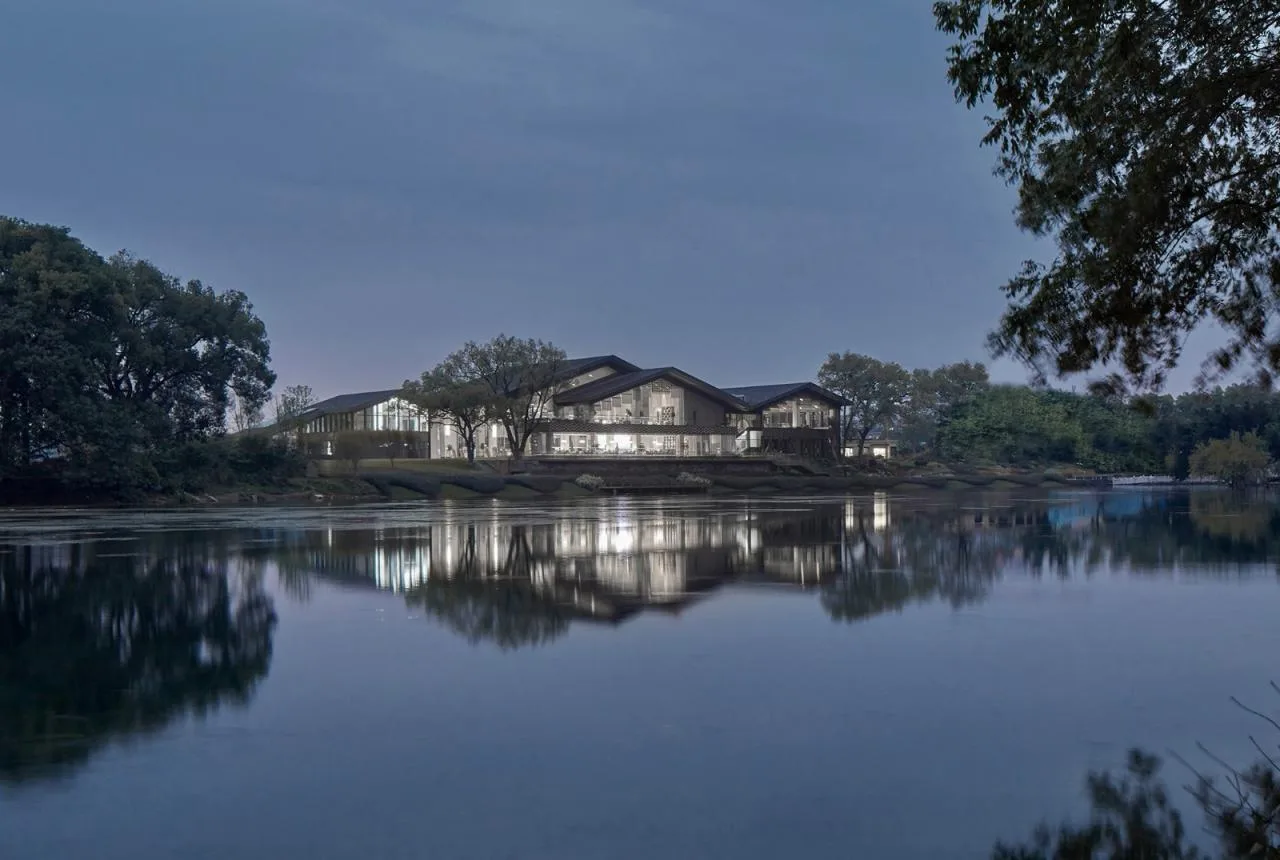
△ Building heights align with existing trees and plants © Xia Qiang
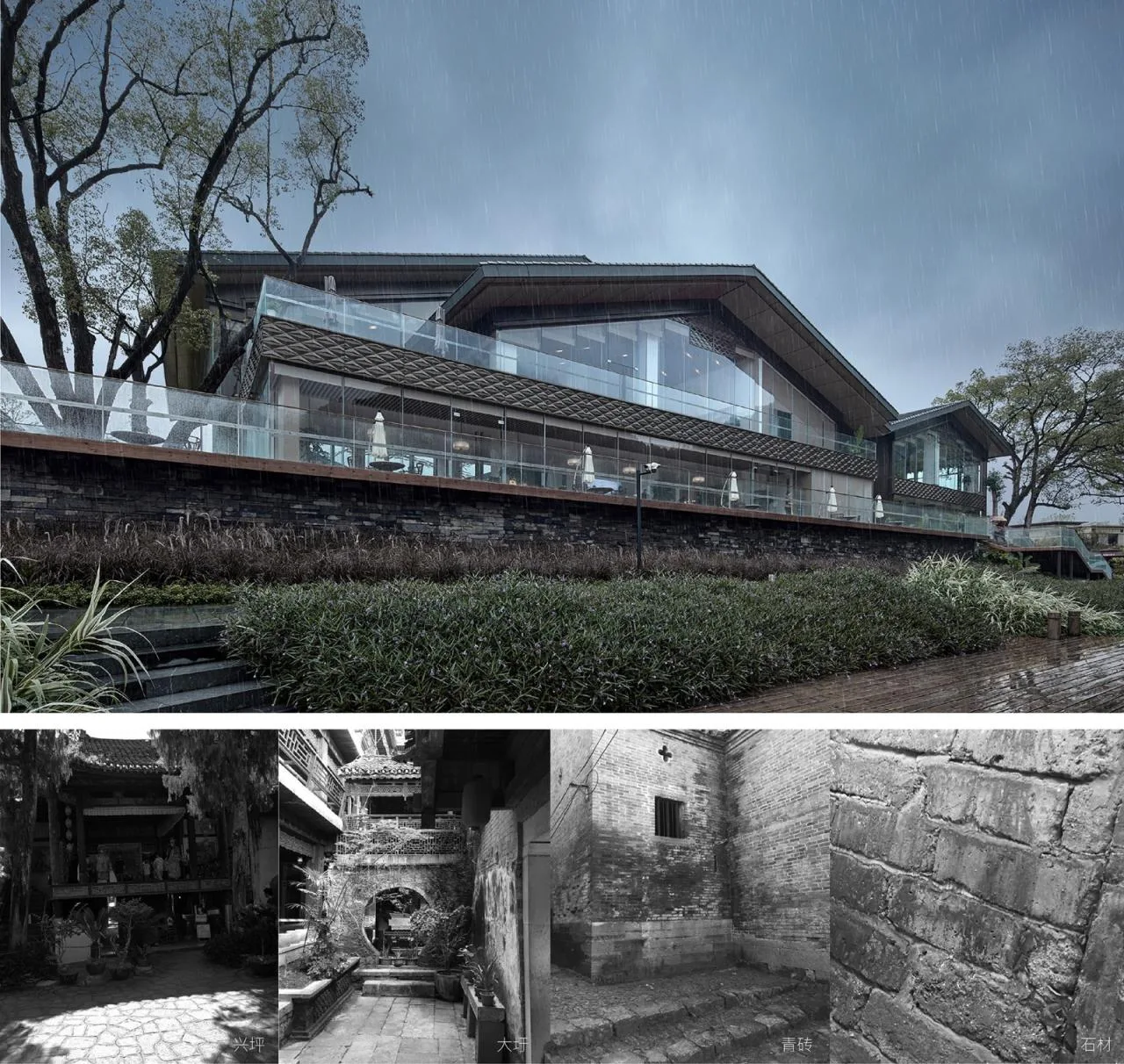
△ The building base constructed from Guilin’s distinctive betel nut stone © Xia Qiang
Horizontal limitation with curved sloping roofs
Inspired by Guilin’s traditional residential architecture, curved sloping roofs connect different functional areas. Designed with intentional gaps, these roofs allow landscape elements to permeate through, with staggered front and back sections that mimic the continuous flow of water.
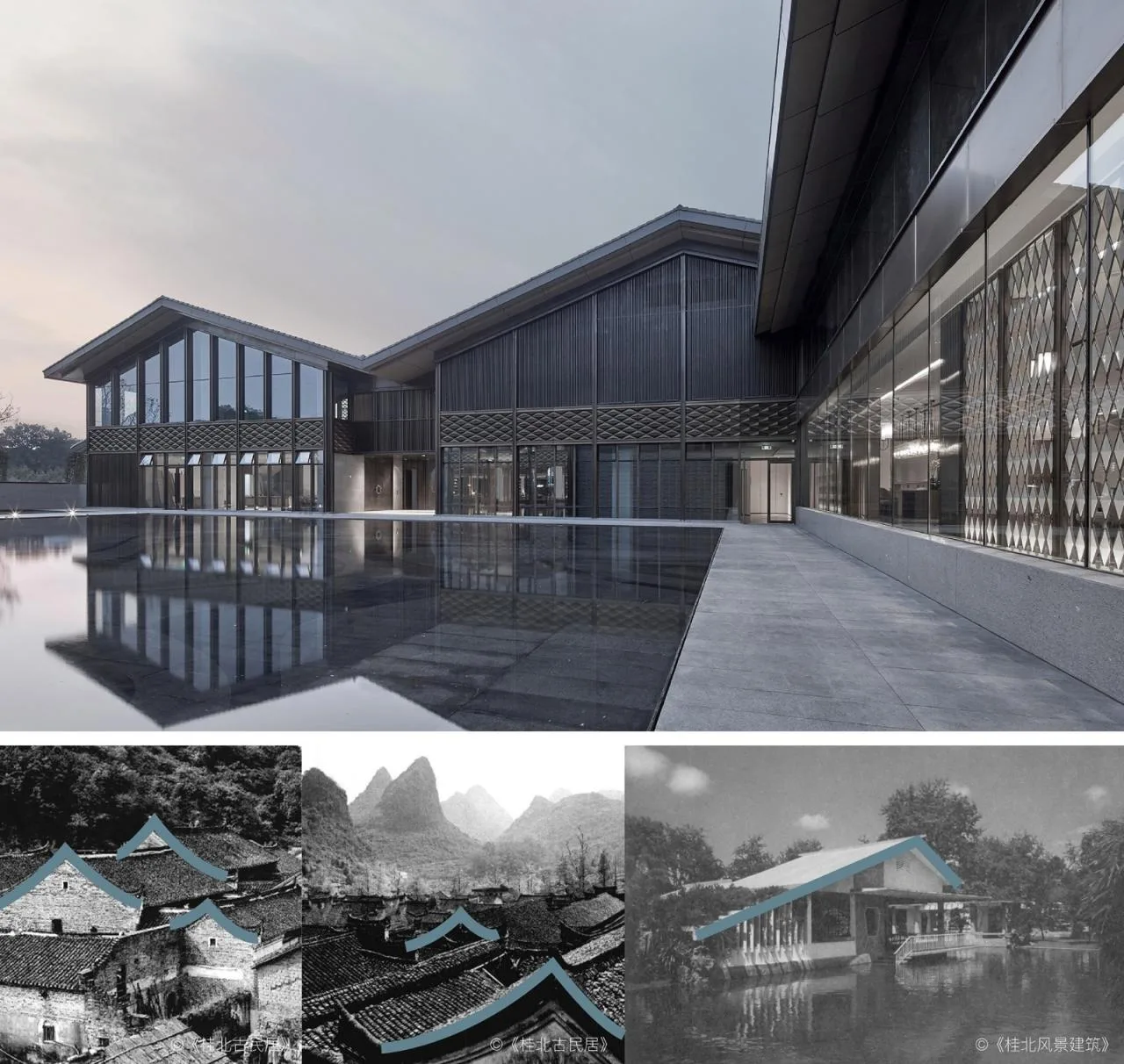
△ Curved sloping roofs inspired by Guilin’s residential architecture © Xia Qiang
△ Views framed through roof gaps © Xia Qiang
Extending the form of natural space
The second floor of the main exhibition hall along the river features a large horizontal terrace that is integrated with an ancient tree room, preserving space for the mature trees. This architectural courtesy fosters a deep connection between nature and the built environment, inviting visitors to engage more intimately with their surroundings.
△ Large horizontal terrace © Xia Qiang
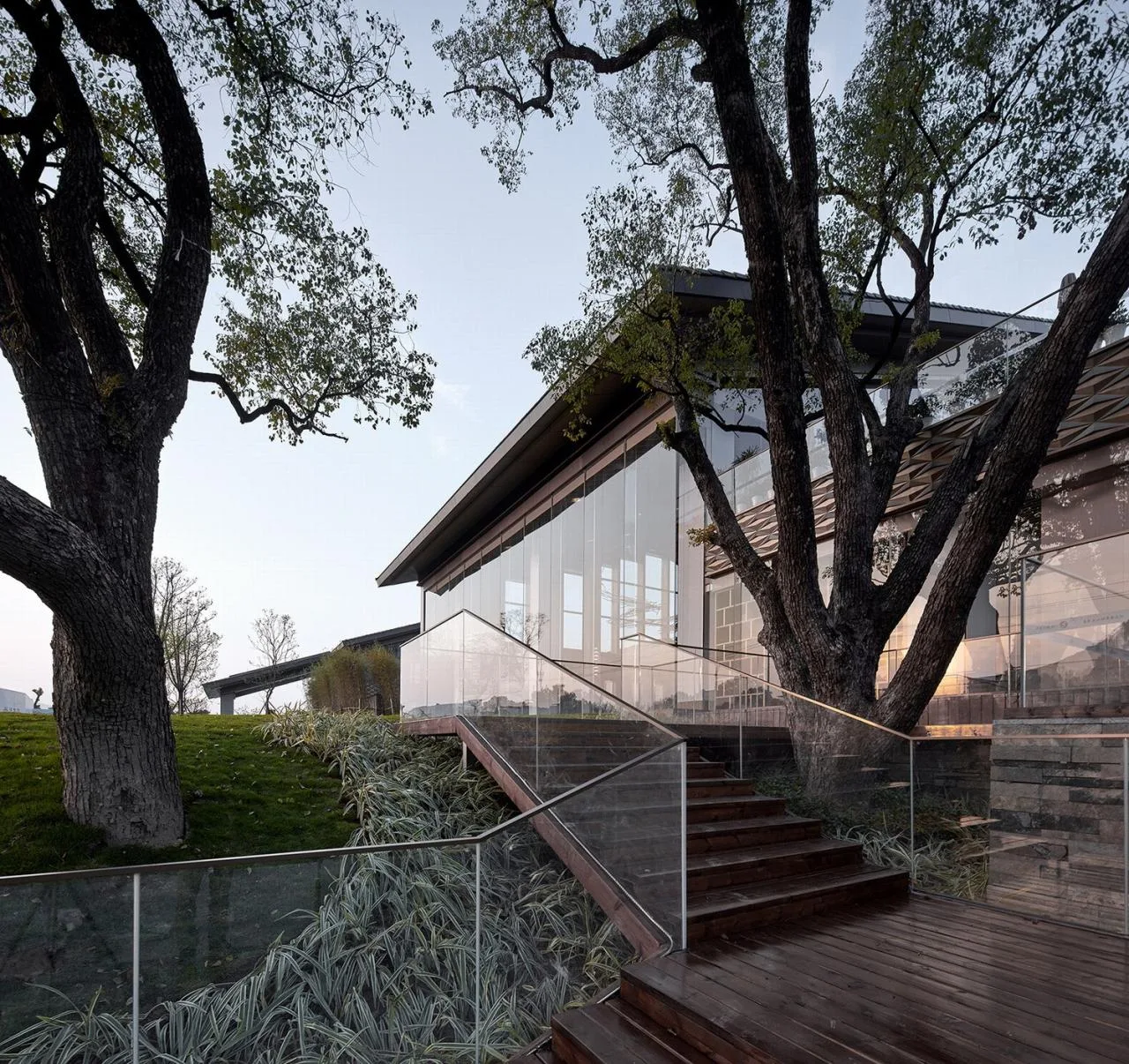
Seamlessly blending building spaces with the natural environment © Xia Qiang
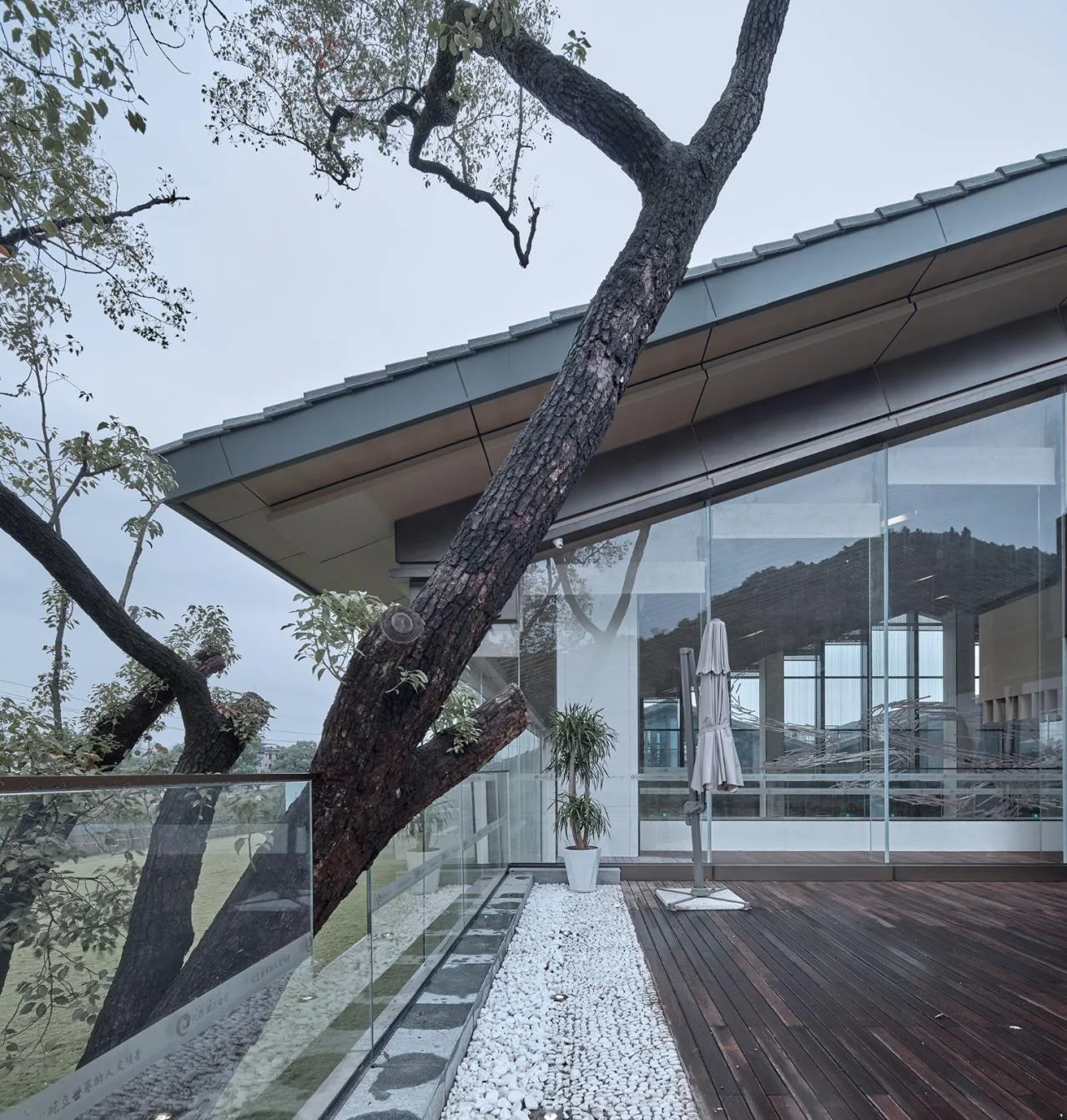
△ Reserved space for the growth of ancient trees © Xia Qiang
Returning to precise architectural execution
The architecture echoes the artistic spirit of mountains and waters through its form, drawing detailed inspiration from Guilin’s landscapes and the abstract essence of nature.
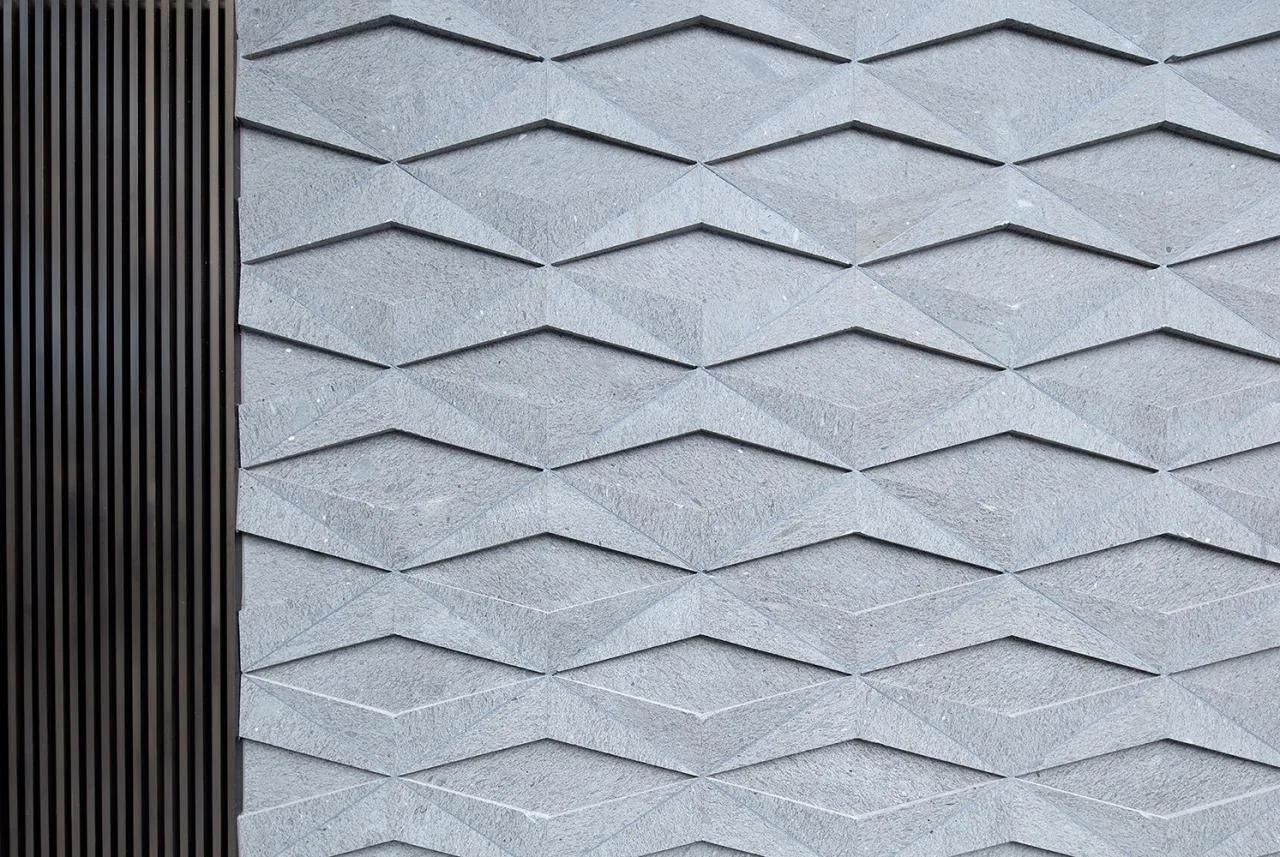
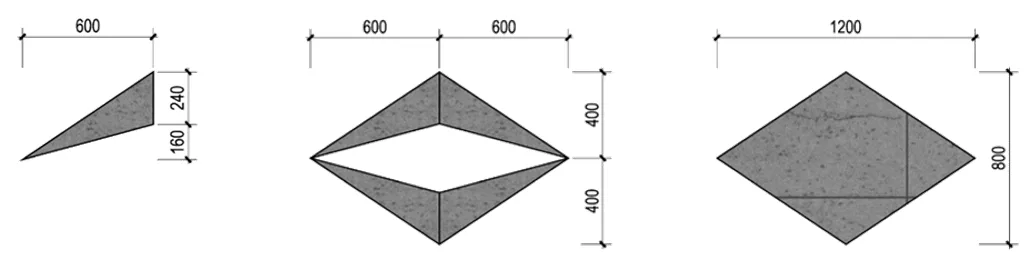
Texture Analysis of △ Layered Abstract Color Patterns
The combination of stone, metal, and ultra-white glass creates a striking contrast within a minimalist form. These materials harmonize with the environment, light, and shadow to craft a vibrant and dynamic scene. Through meticulous construction details and wall node control, the design vision is precisely realized.
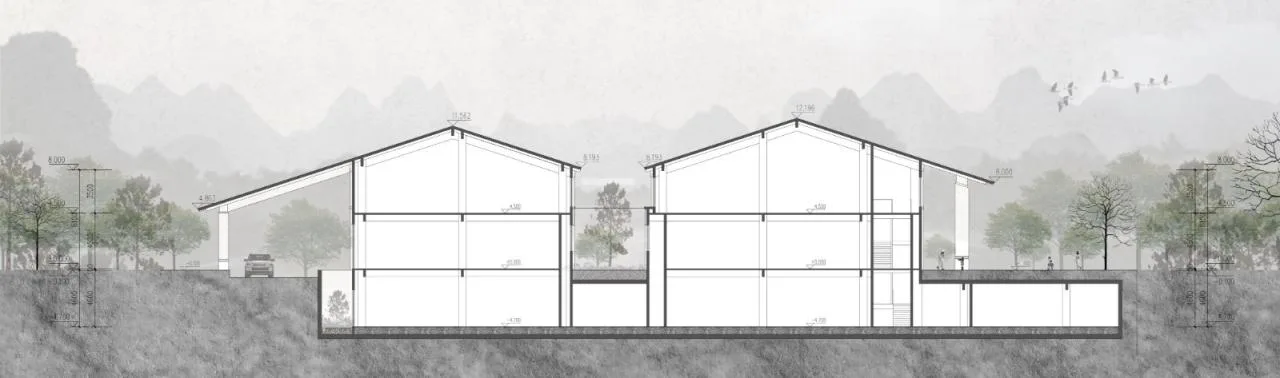
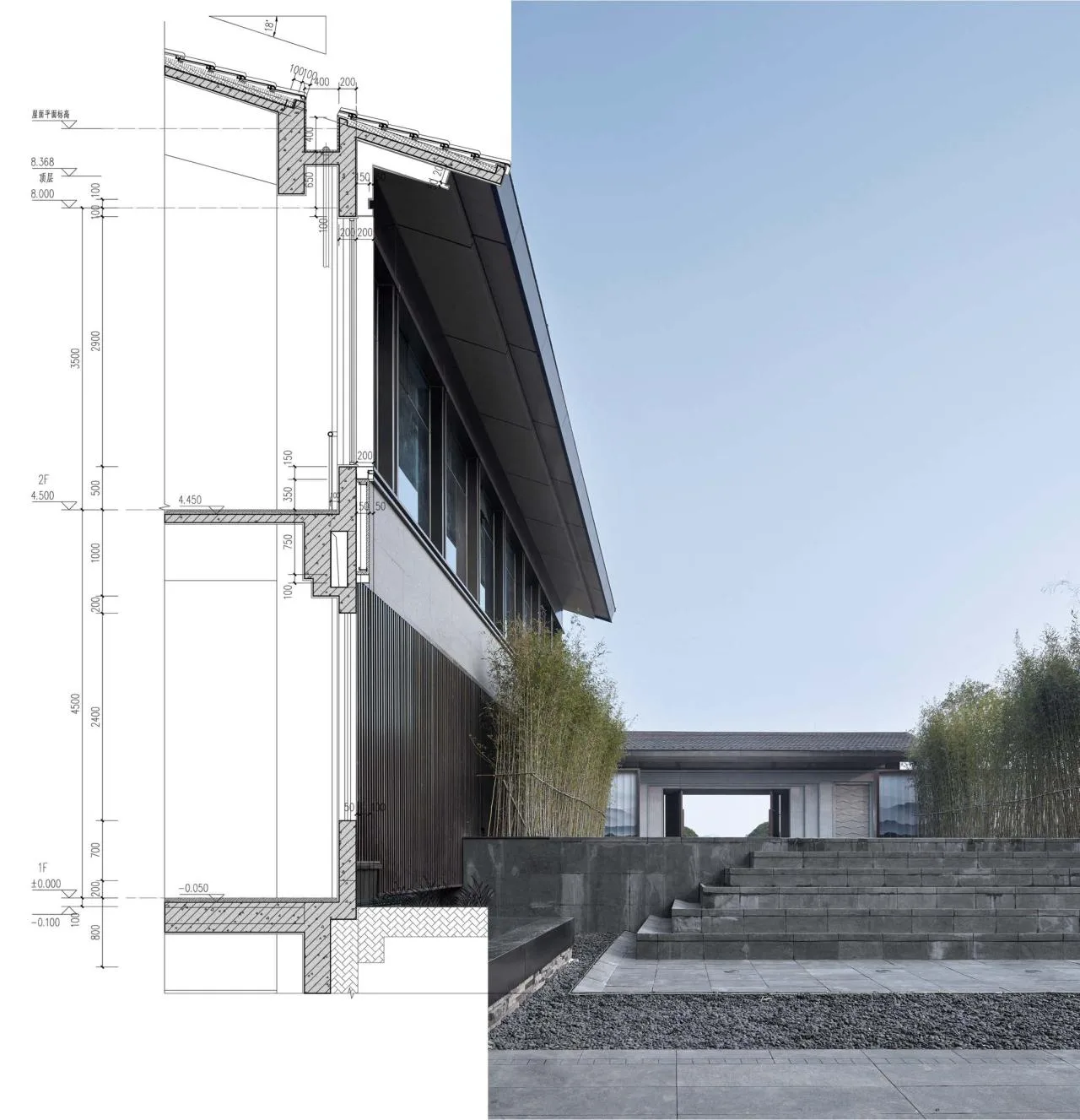
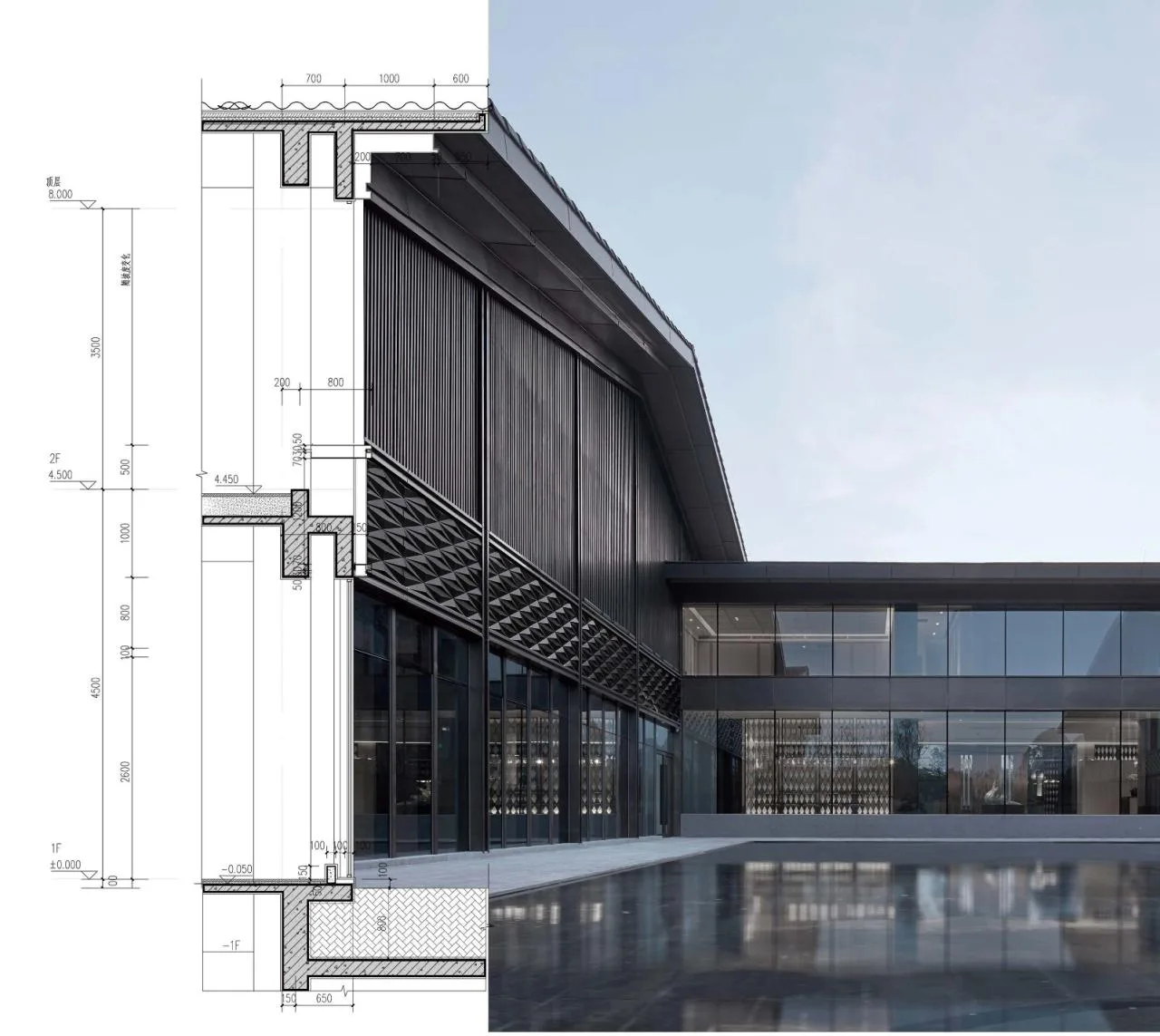
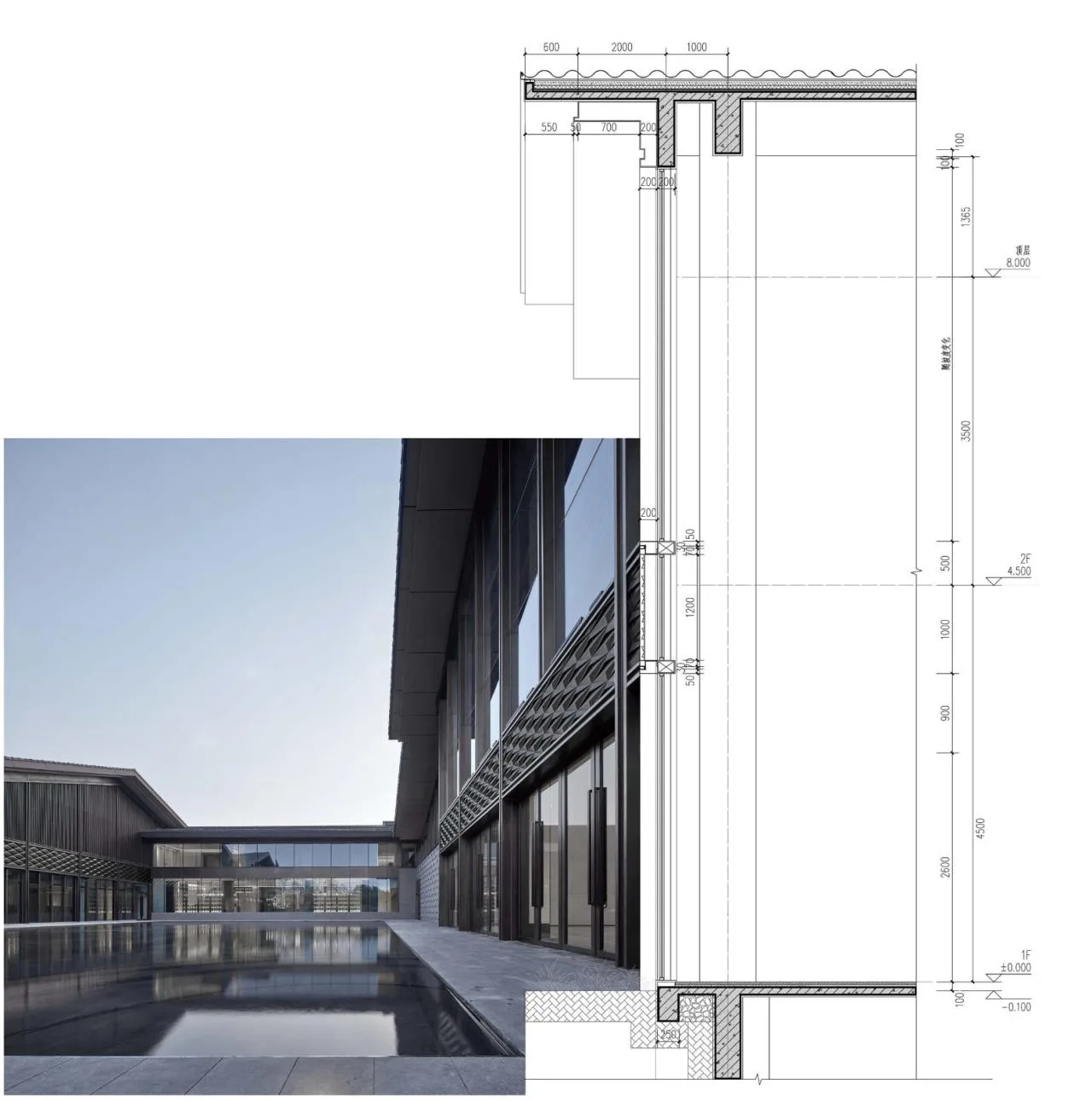
△ Sectional Node Diagram
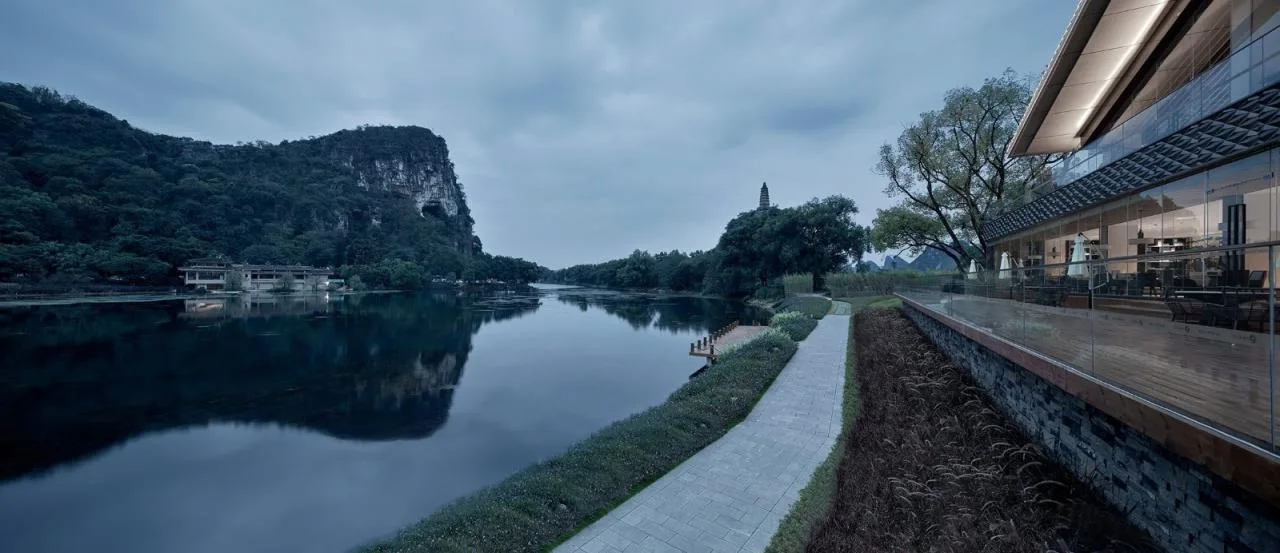
Harmony with nature and mutual coexistence
In this natural resort landscape, the architecture’s role is to support the expression of artistic vision and provide space for interaction between people and nature. The Tashan Guild Hall fulfills its functional roles while allowing for natural breathing and immersion in the environment. Each frame captures the essence of traditional Chinese landscape living, translated through a modern architectural language.
Project Information
Building Type: Cultural Architecture
Building Area: 9,600 square meters
Developer: Xingjin Group
Architectural Design: UA Youan Design














Must log in before commenting!
Sign Up