
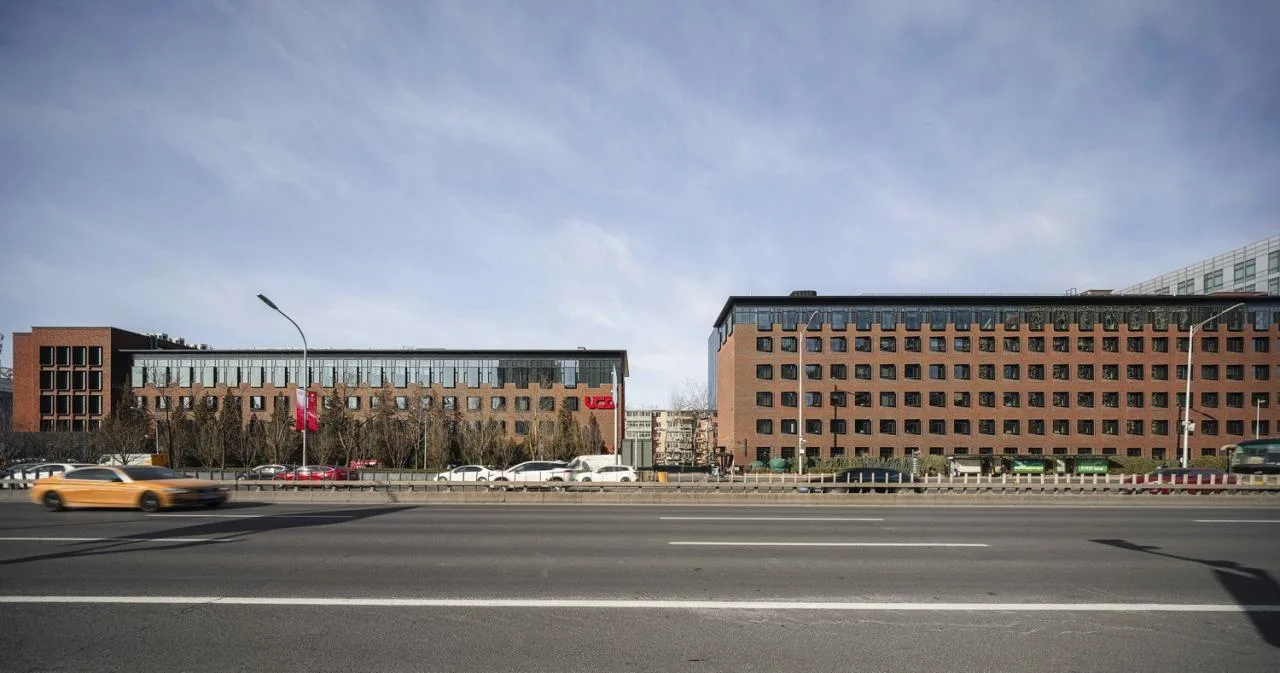
△ Overall view of the building © UK Studio
1. History: Starting from a River
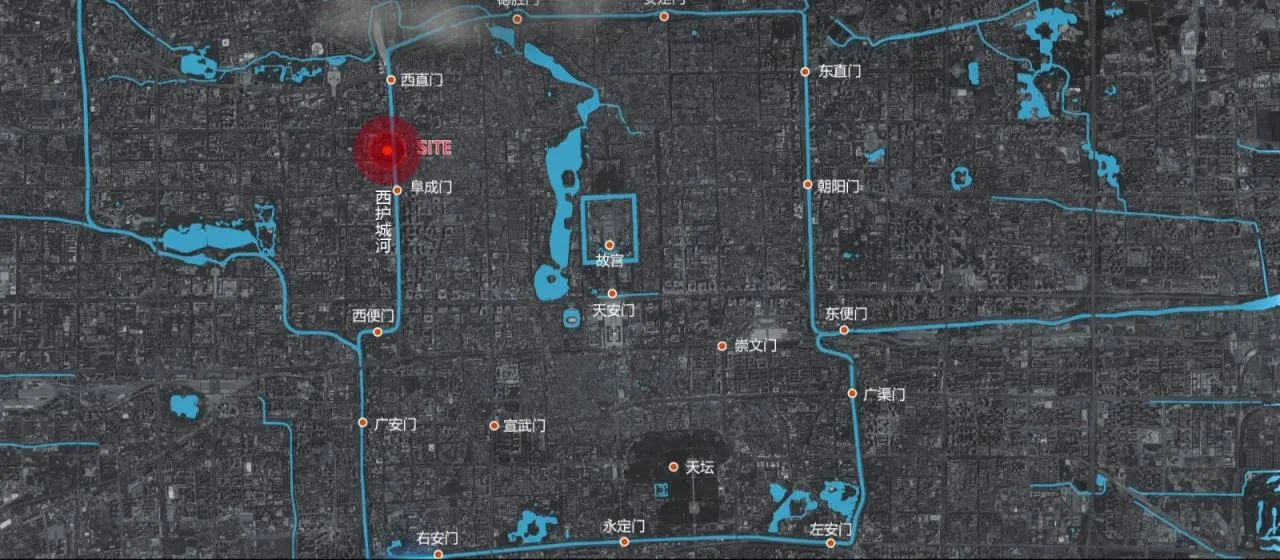
Location of Beijing moat and project site © Ge Guodong
Since ancient times, moats have played a crucial role as defensive barriers and defining features of cities. While modern urban moats have largely lost their original protective functions, their presence still lingers in the corners and memories of the city. Beijing’s moat carries the city’s history and development, preserving many invaluable cultural memories.
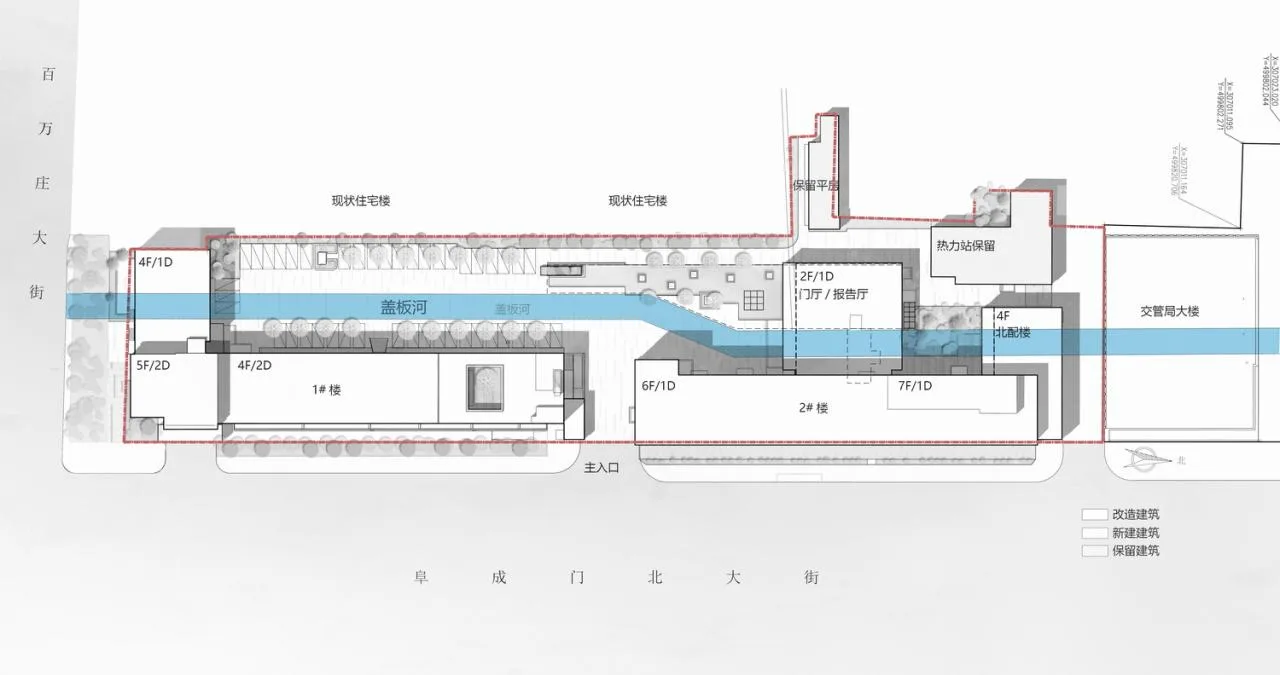
Location of the underground river within the site © Ge Guodong
In the 1970s, the old Beijing West moat was diverted within the project’s boundaries and transformed into a covered underground river. To this day, it continues to play a vital role in flood control and drainage. The western moat is both a constraint and a precious historical relic for this project. Protecting, utilizing, and showcasing the western moat is a key theme throughout the renovation.
Rivers and water, with their fluid forms, profoundly influence urban transformations, building renovations, and the lives of residents. A major goal of this project is to rekindle people’s memories and emotional connections to this river.
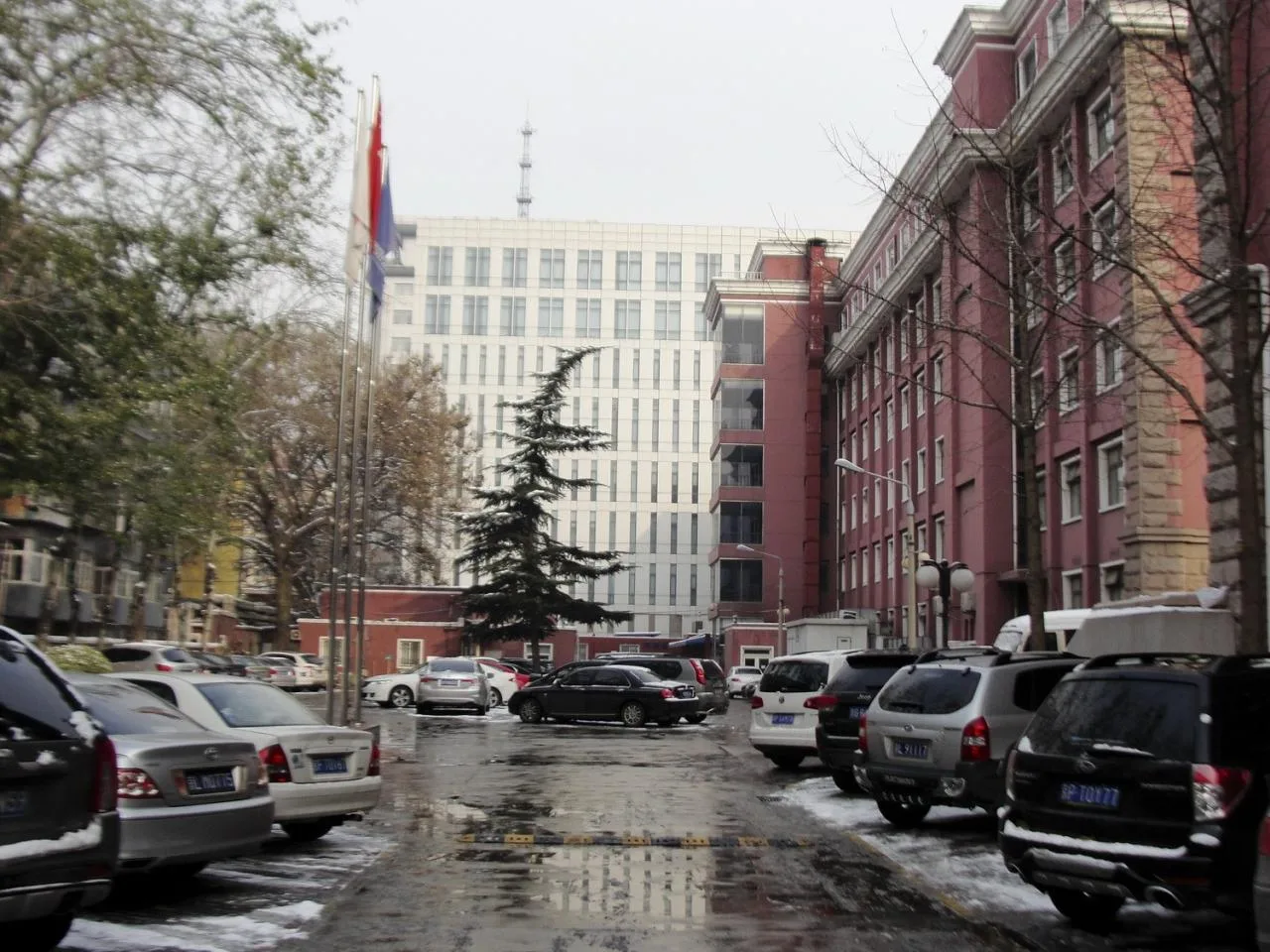
△ Inner courtyard before renovation © Ge Guodong
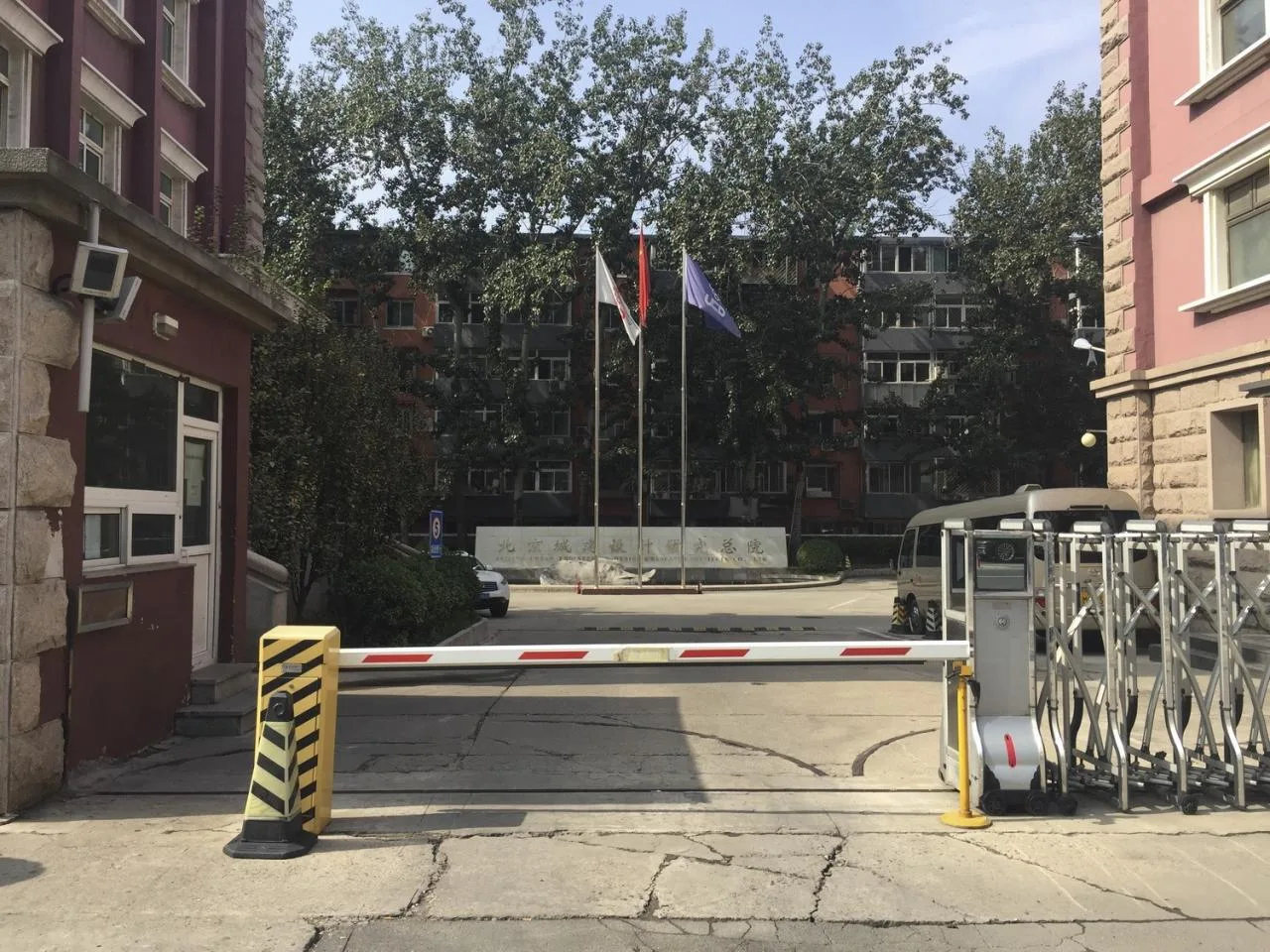
△ Main entrance perspective before renovation © Ge Guodong
The Beijing Urban Construction Design and Development Group Headquarters Office building, located at No. 5 Fuchengmen North Street, was built in the 1970s. Having survived the Tangshan earthquake, it has been in continuous use for over 40 years. Over time, safety concerns have made it clear that this building, rich with memories, urgently requires modernization.
The site contains two main office buildings facing east and west. The southern boundary is adjacent to residential buildings at a close distance, causing some conflicts with residents’ daily lives. Additionally, the buildings underwent a facade renovation in the 1990s that resulted in an eclectic style, which no longer aligns well with the corporate image or the urban environment.
2. The Historical Continuity of Facade Language
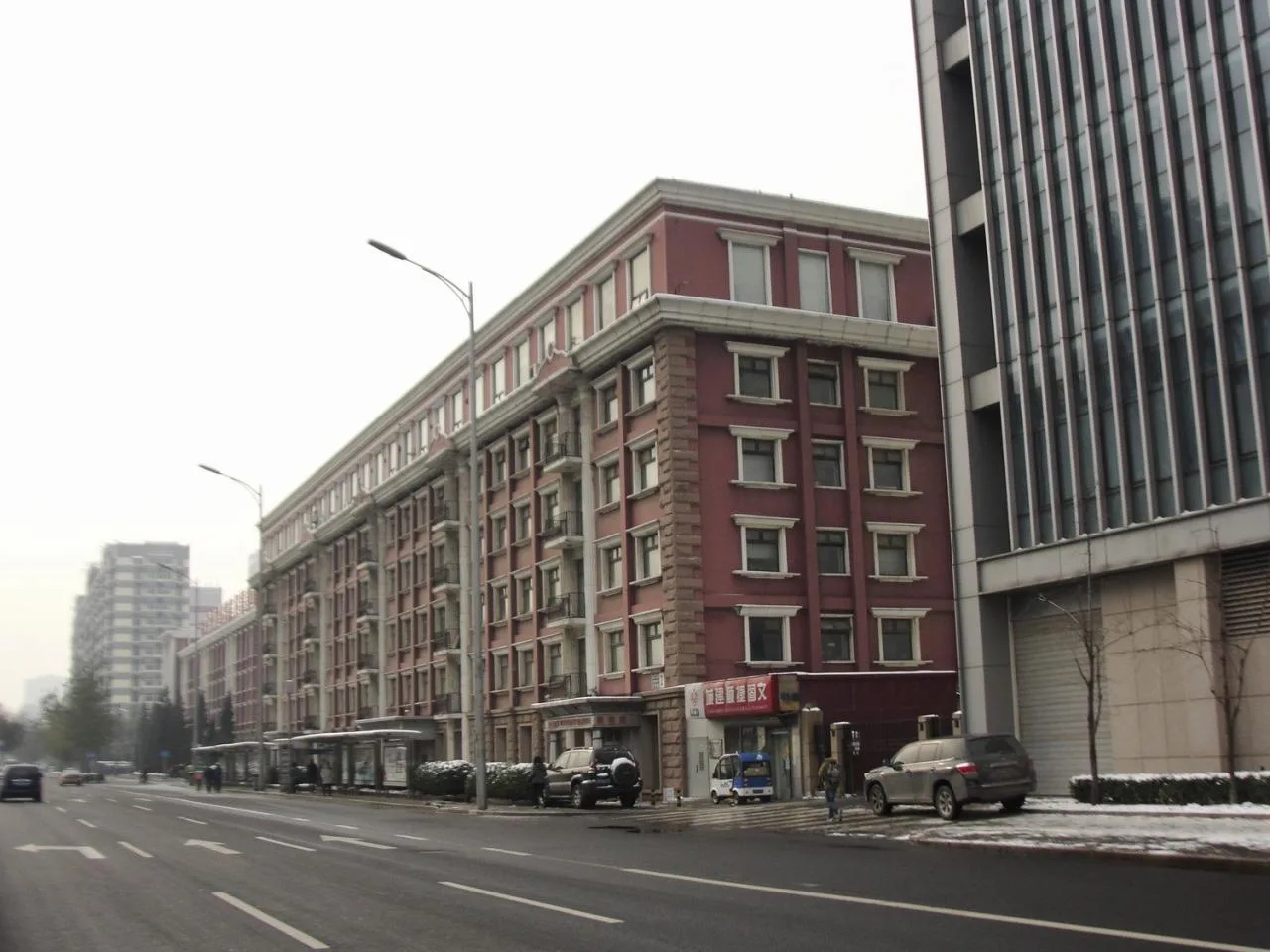
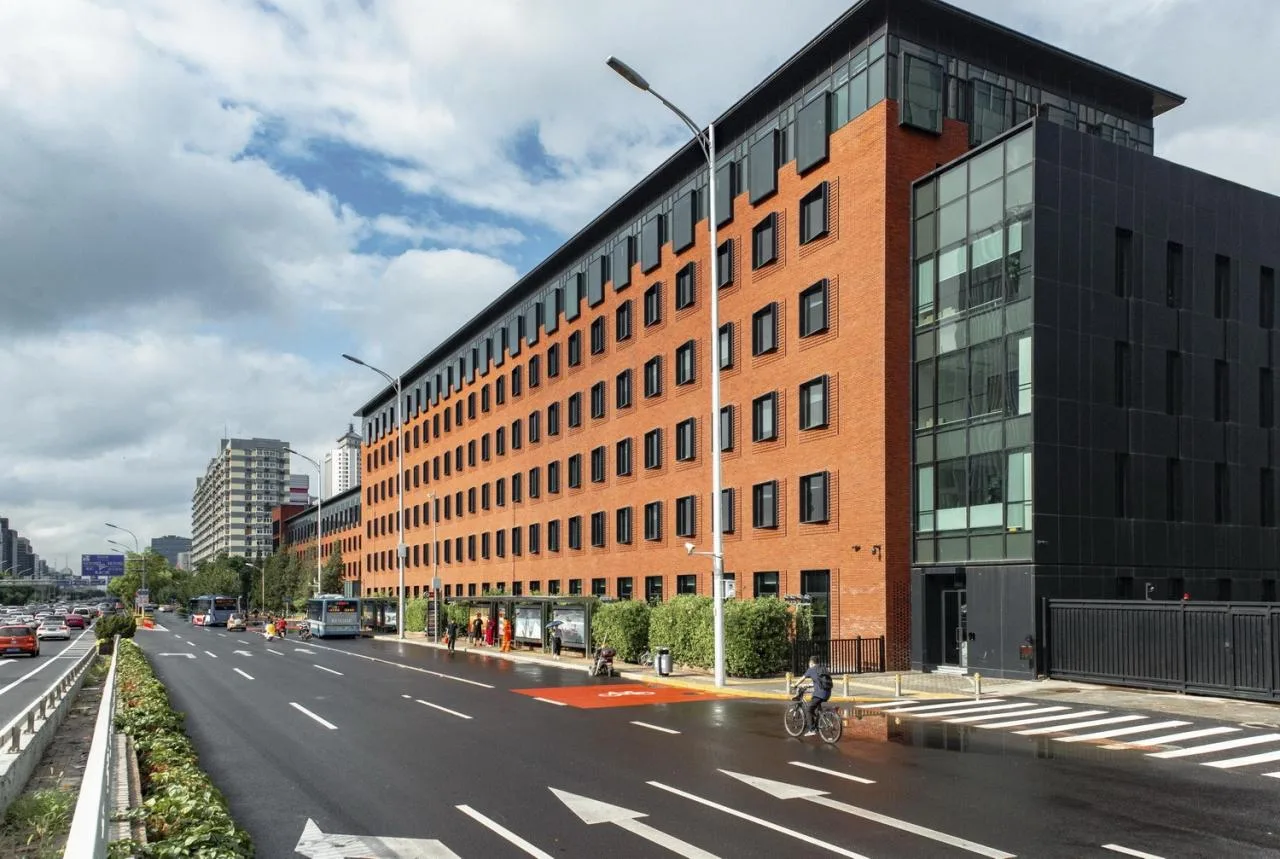
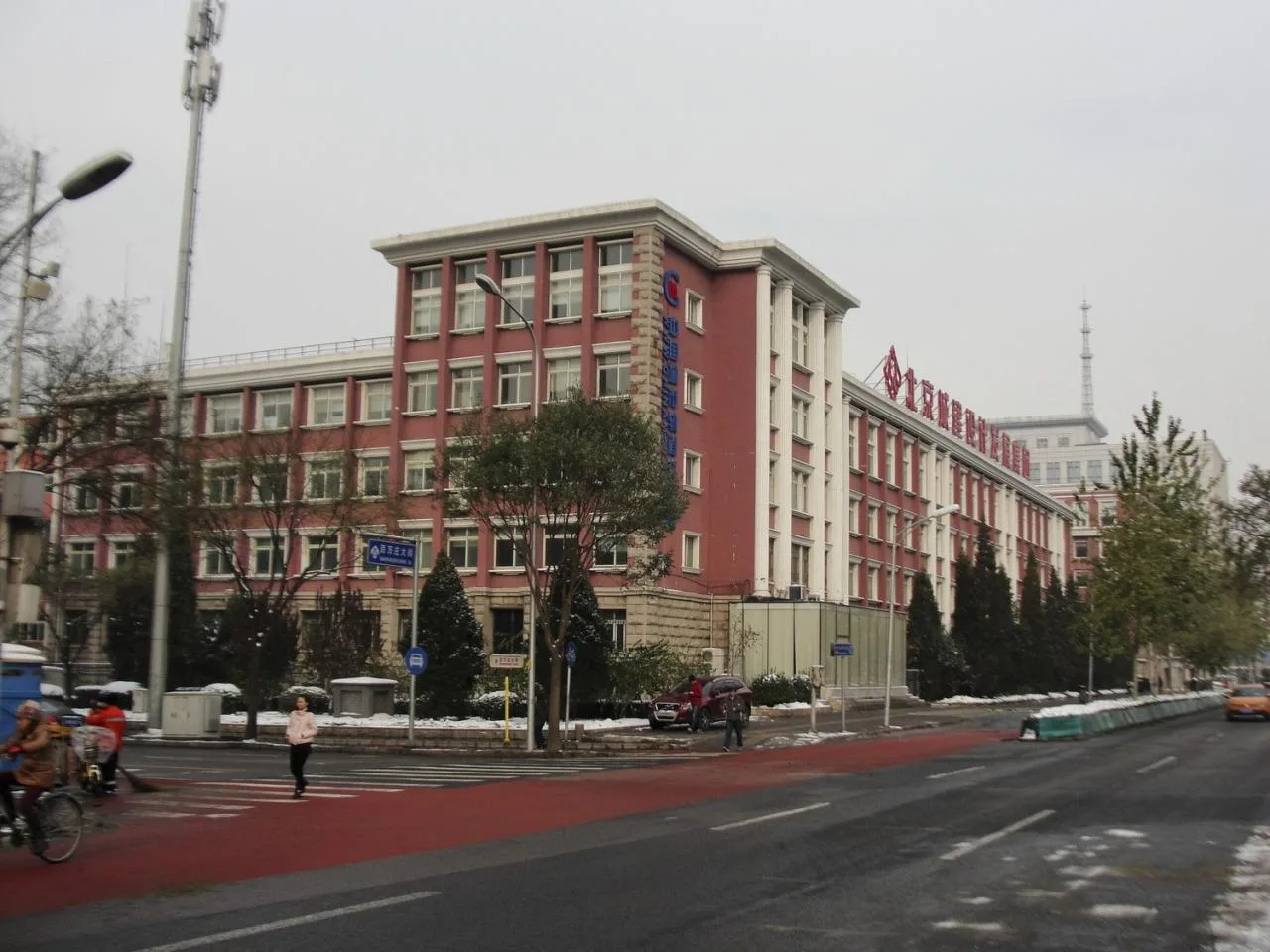
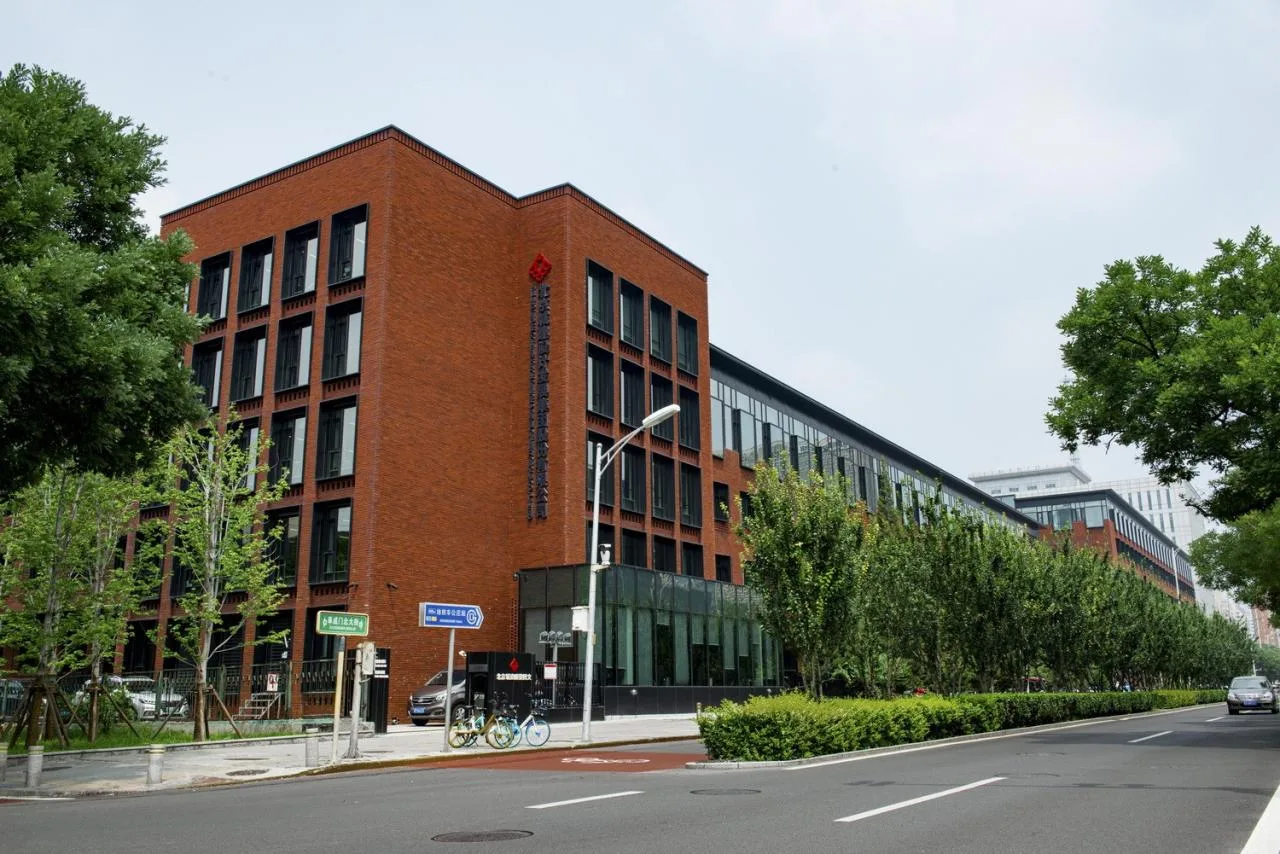
△ Front and rear facades before and after renovation © Ge Guodong
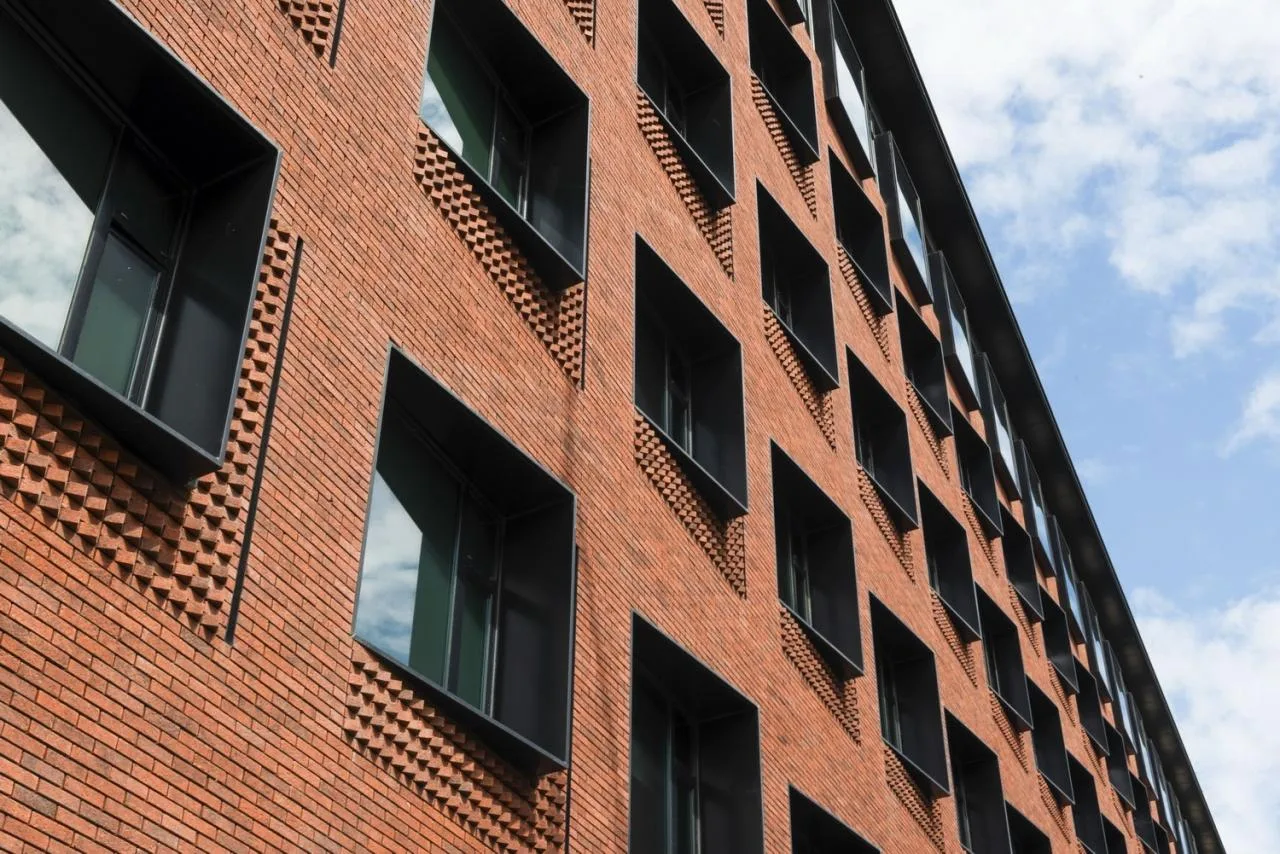
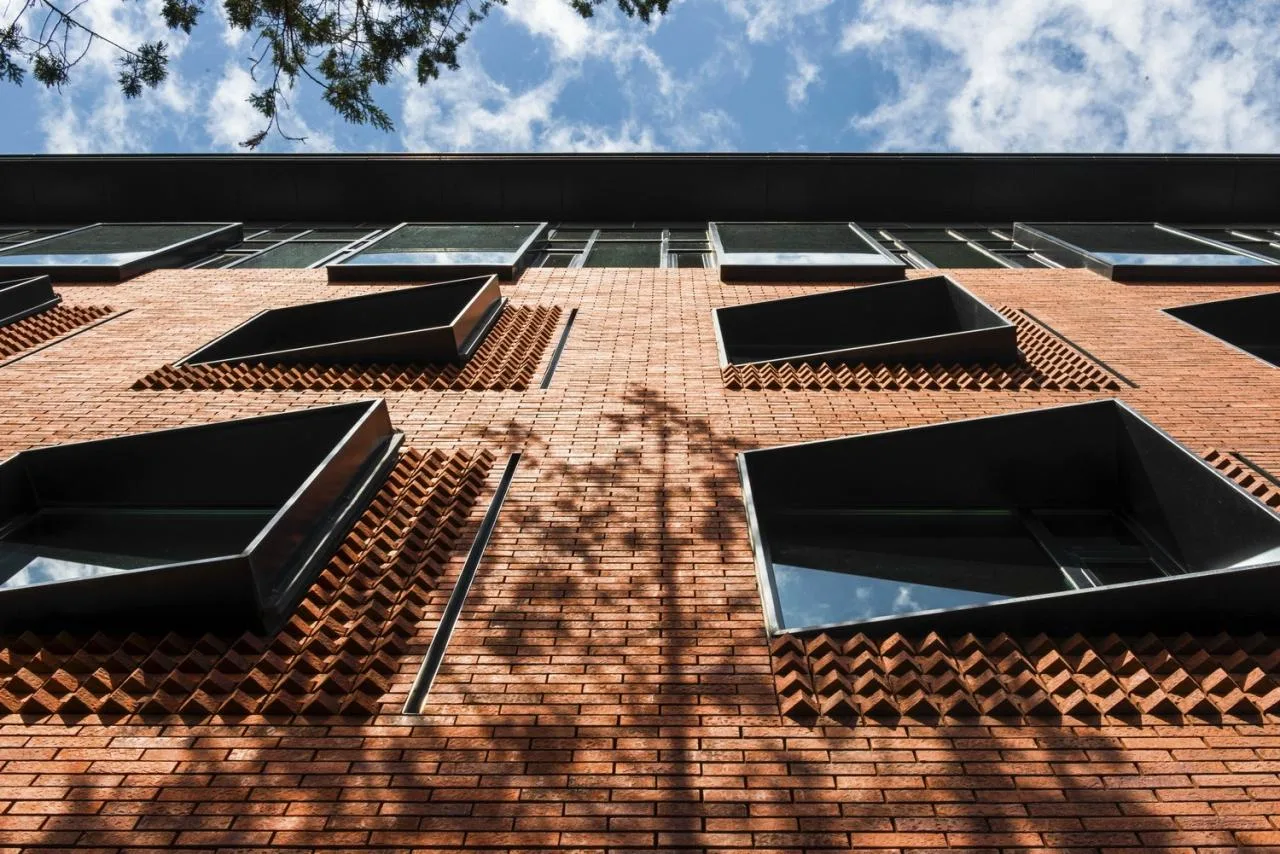
△ Facade tiles © Liao Chen
Following renovation, the building’s exterior has been fully transformed by replacing the former eclectic facade with a red clay brick facade, paying tribute to the original brick construction. The renovation strictly preserves the building’s original form. Windows have been meticulously restored to match the original sizes, enhancing natural shading and maintaining historical integrity.
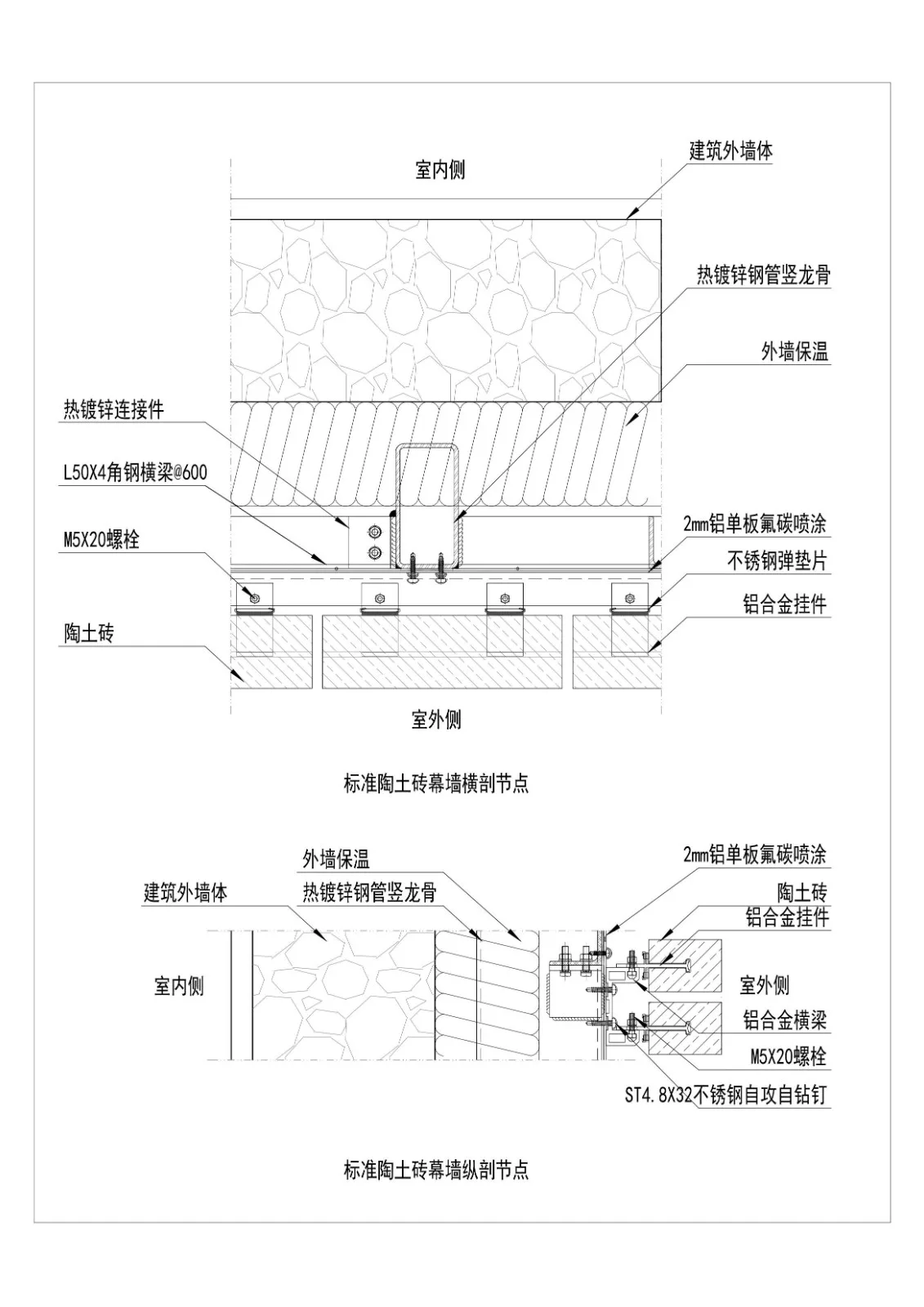
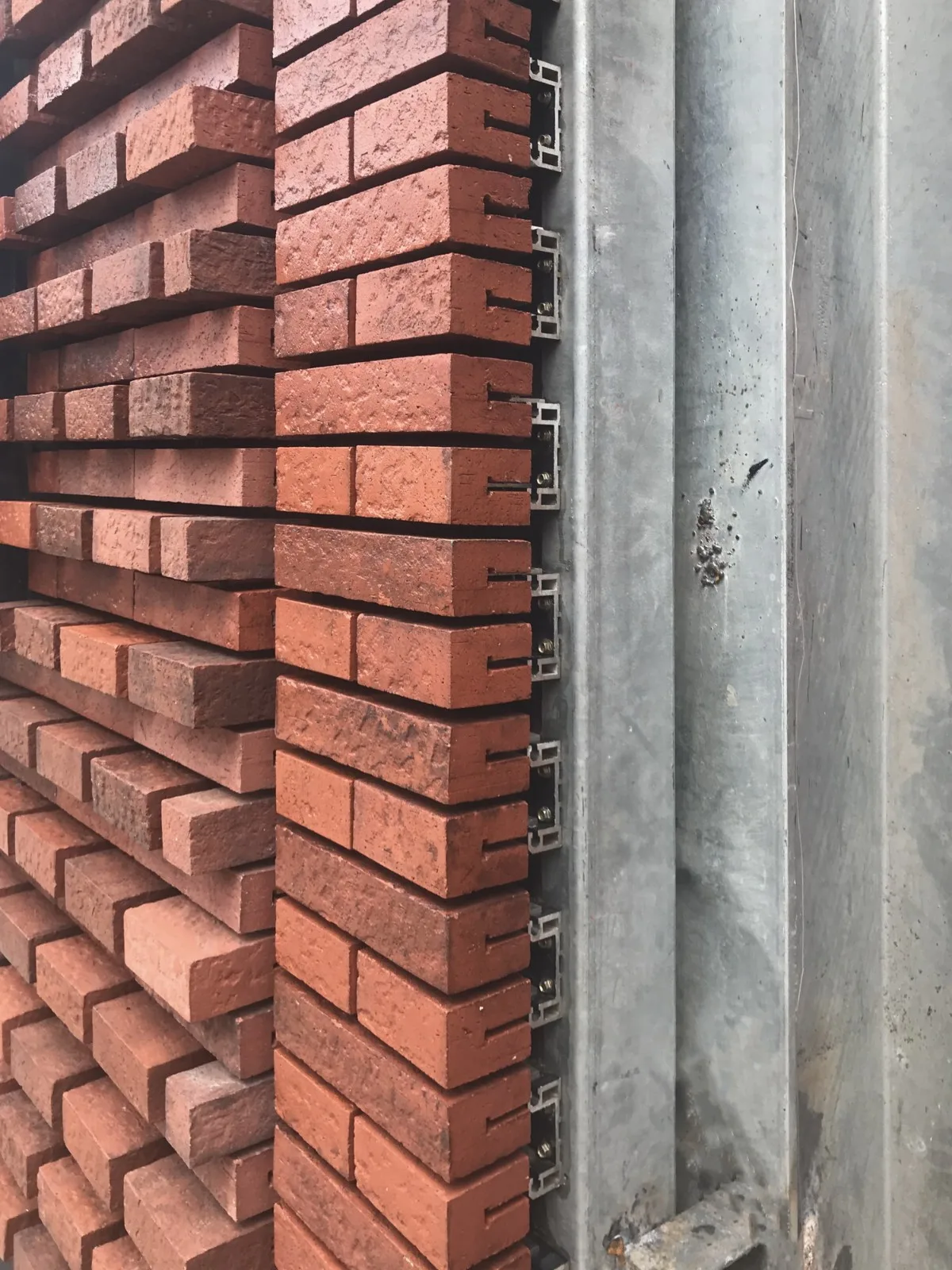
△ Curtain wall detail diagram © Ge Guodong
The clay brick curtain wall serves as both homage and technological innovation. After extensive 1:1 mock-ups, a dry-hanging clay brick open curtain wall system was selected to prevent alkali contamination that mortar joints might cause. Each brick, fired manually, has unique color and texture variations. Five colors are randomly alternated in dry hanging to express the authentic patina of time. Sixty-five modules were used to create diverse masonry patterns. From production to installation, the ceramic brick curtain wall involved dozens of manual steps, honoring traditional craftsmanship and embodying the spirit of artisanal excellence.
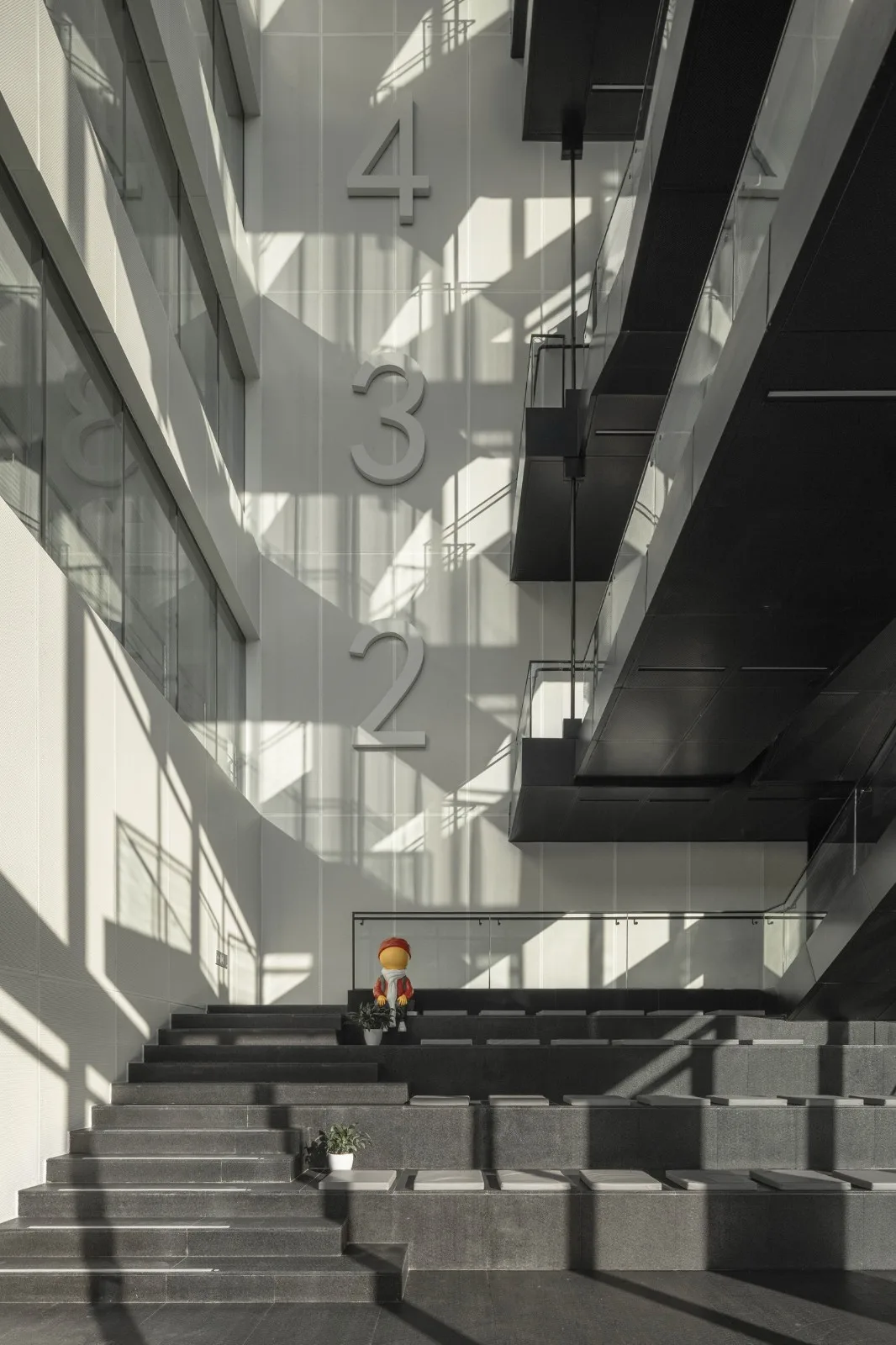
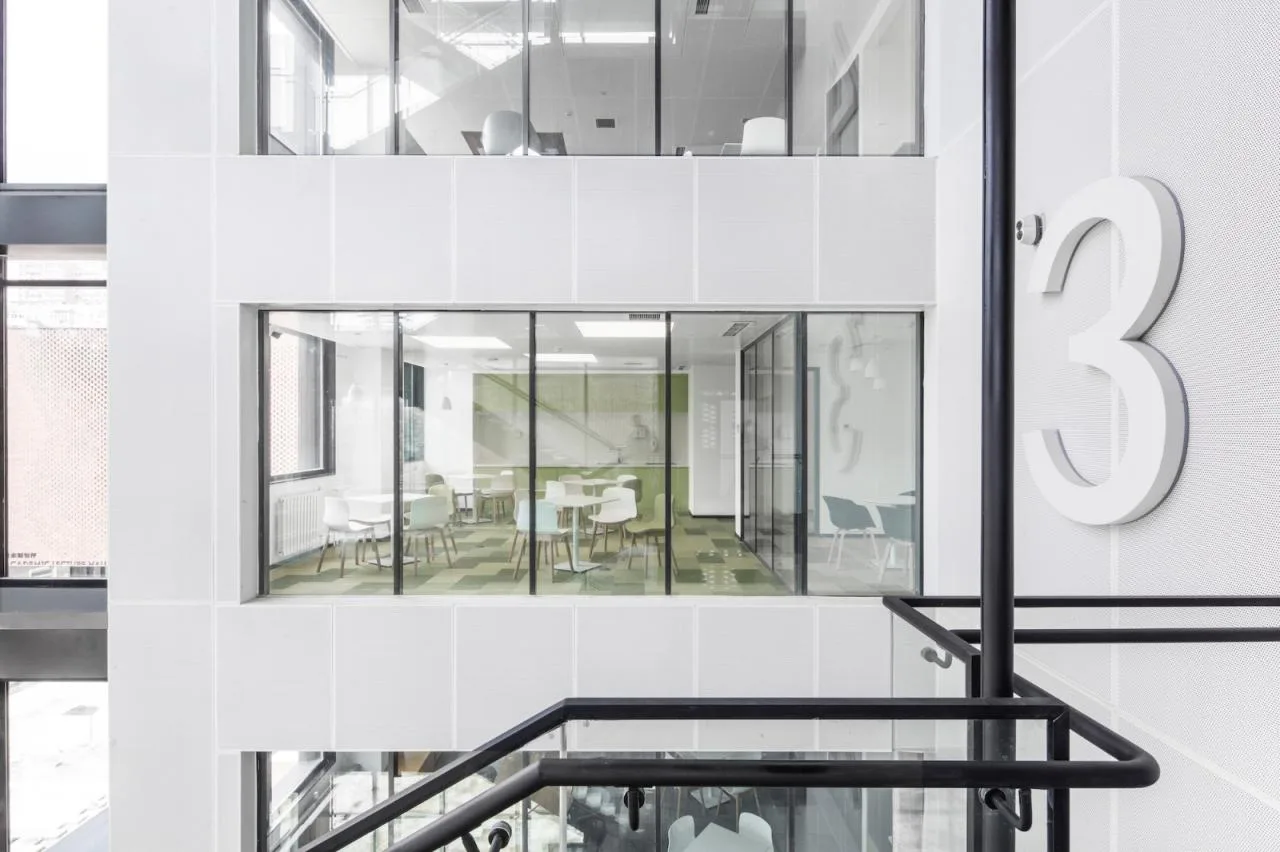
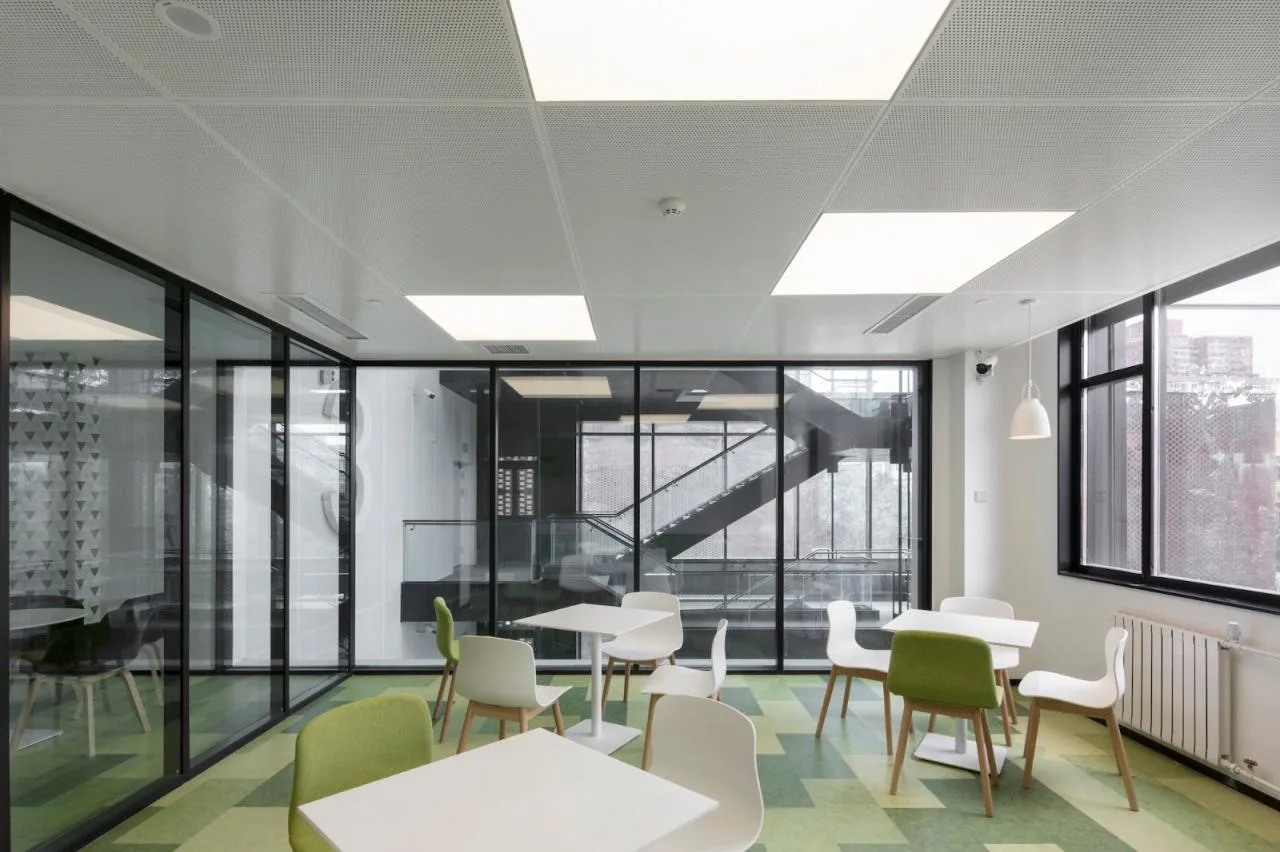
The glass box staircase creates a unique connection between the building’s exterior and interior © UK Studio (1) © MAT (2) © Liao Chen (3)
At the office park’s main entrance, a corner staircase embodies both openness and enclosure, serving as a transition from the facade into the building’s interior. This transparent glass box, designed at the expense of some floor area, innovatively functions as a fire-resistant staircase and acts as a distinctive architectural feature that extends the facade’s language inside.
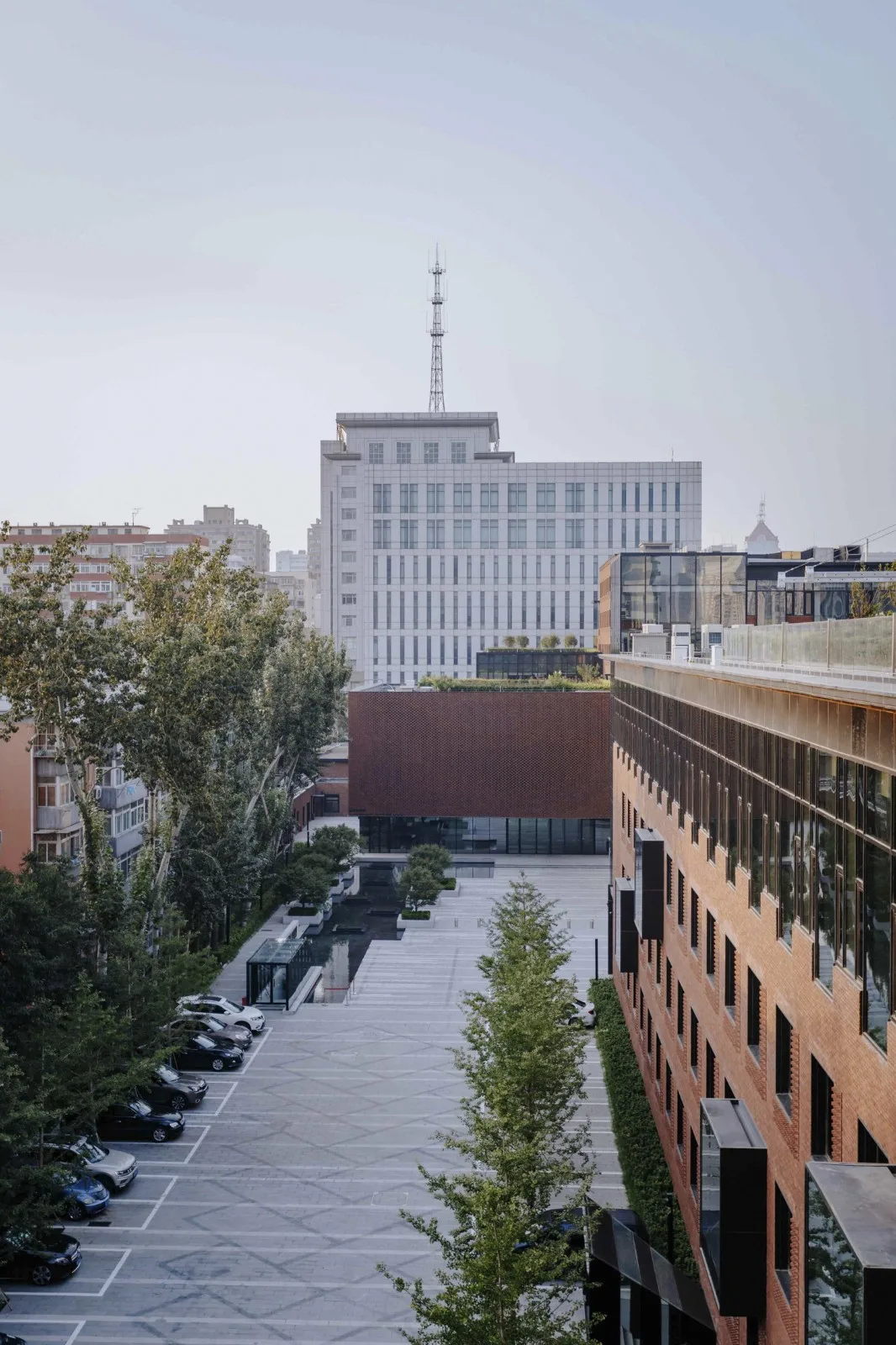
Architecture’s relationship with the site © Liao Chen
Revitalizing a building from the exterior to the interior is essential to reenergizing the site. Preserving memory goes beyond mere restoration; architecture exists in a continuous timeline. Using modern materials and techniques, this project leaves a mark of its era while respecting historical context. The facade reexamination combines materiality, form, and history, achieving a harmonious blend of form, function, and technology.
3. Human-Centered Spatial Planning
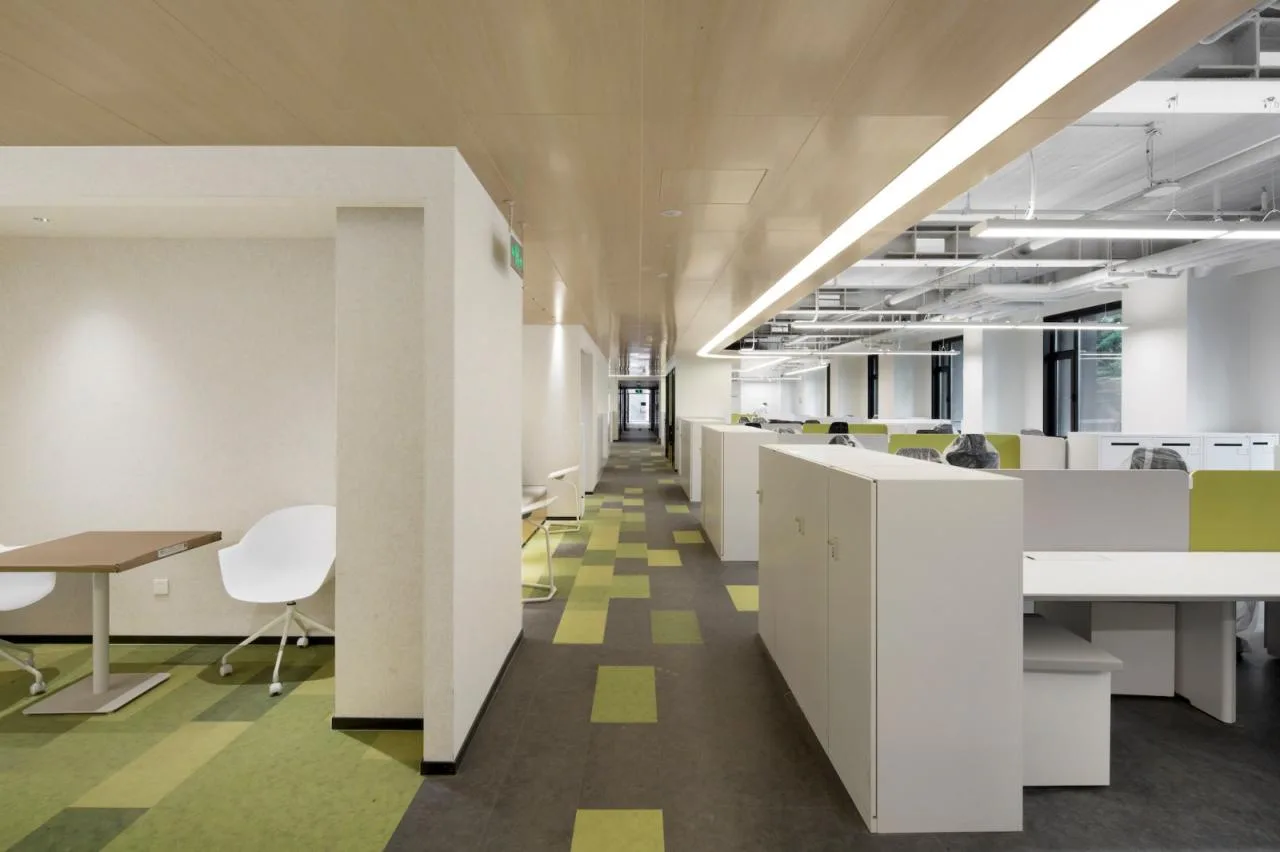
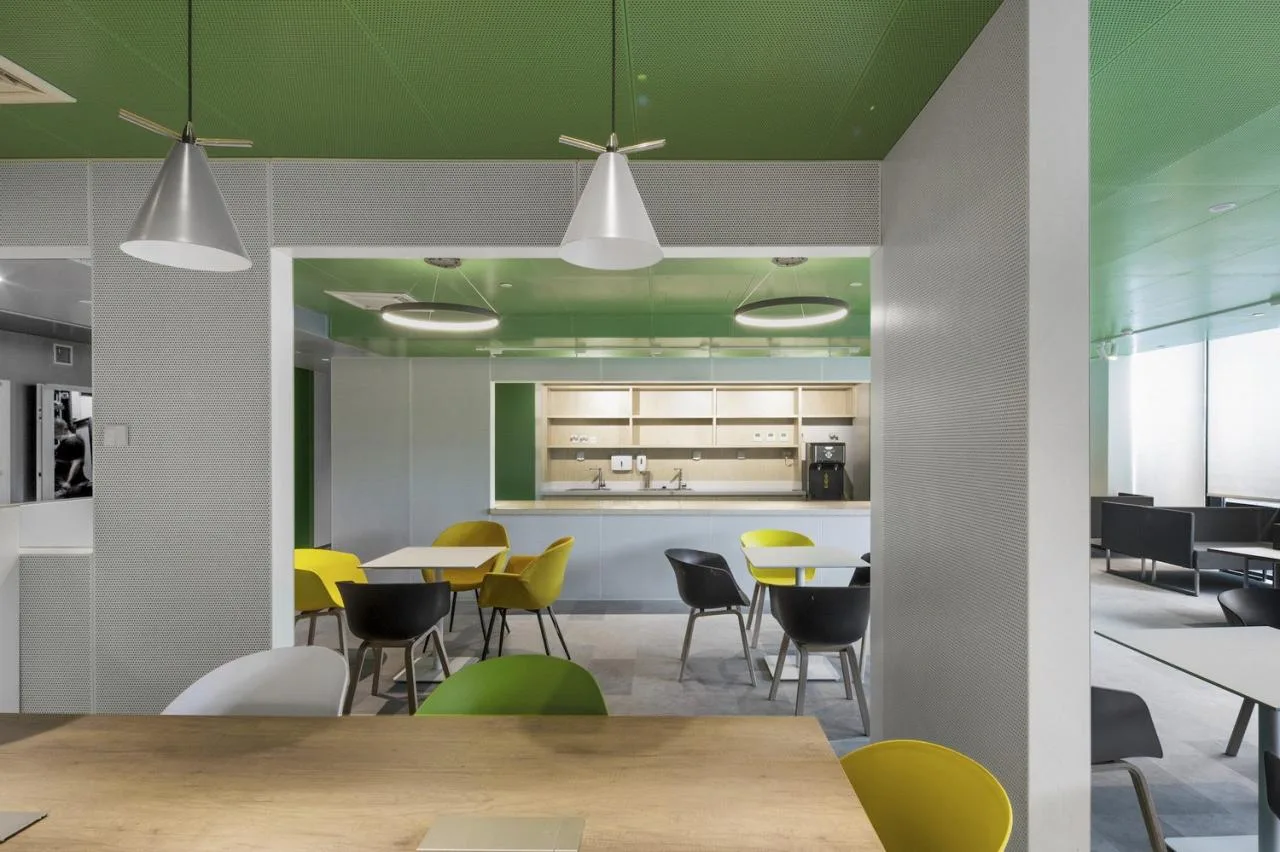
△ Office areas and leisure spaces © MAT
The primary users of the office are employees. This renovation introduces numerous new functions designed to create a comfortable, welcoming workspace. Every area aims to enhance the employee experience.
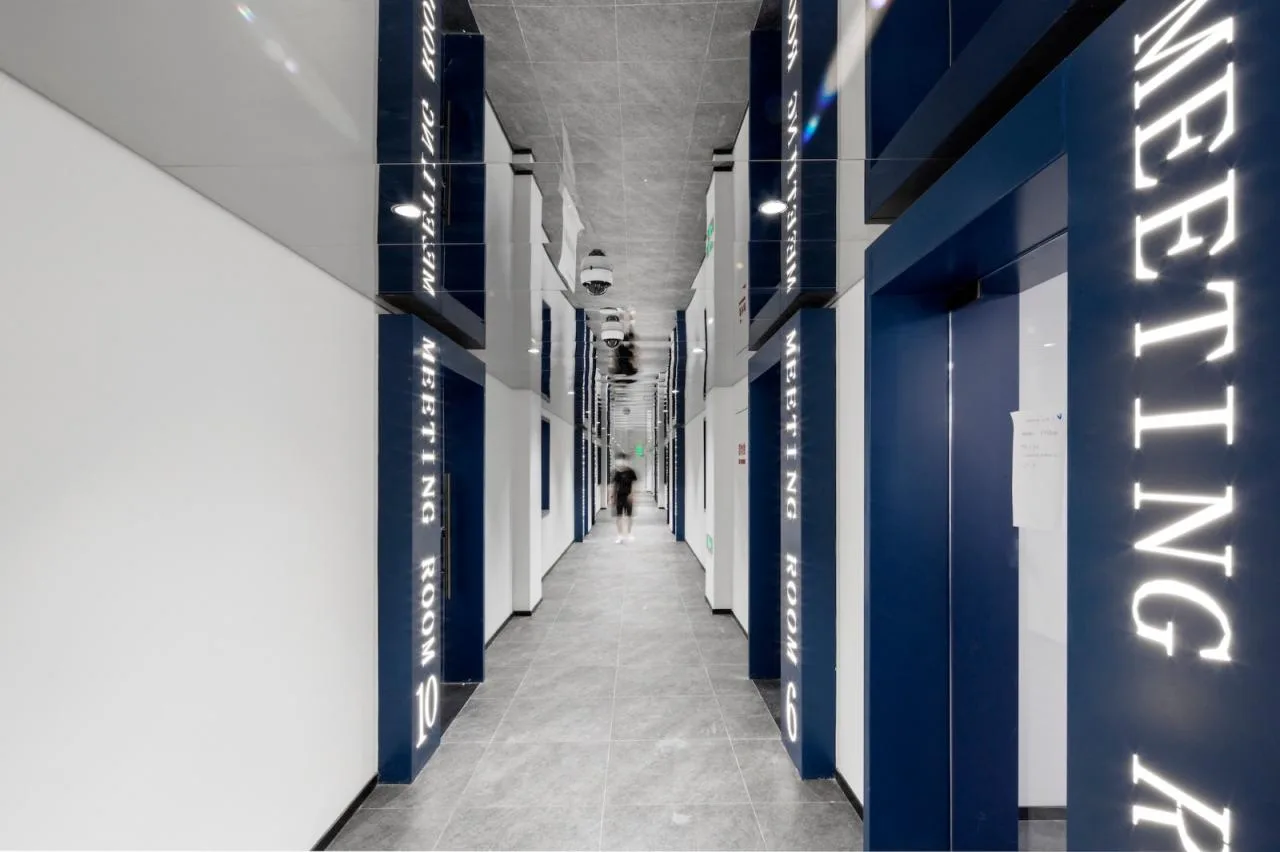
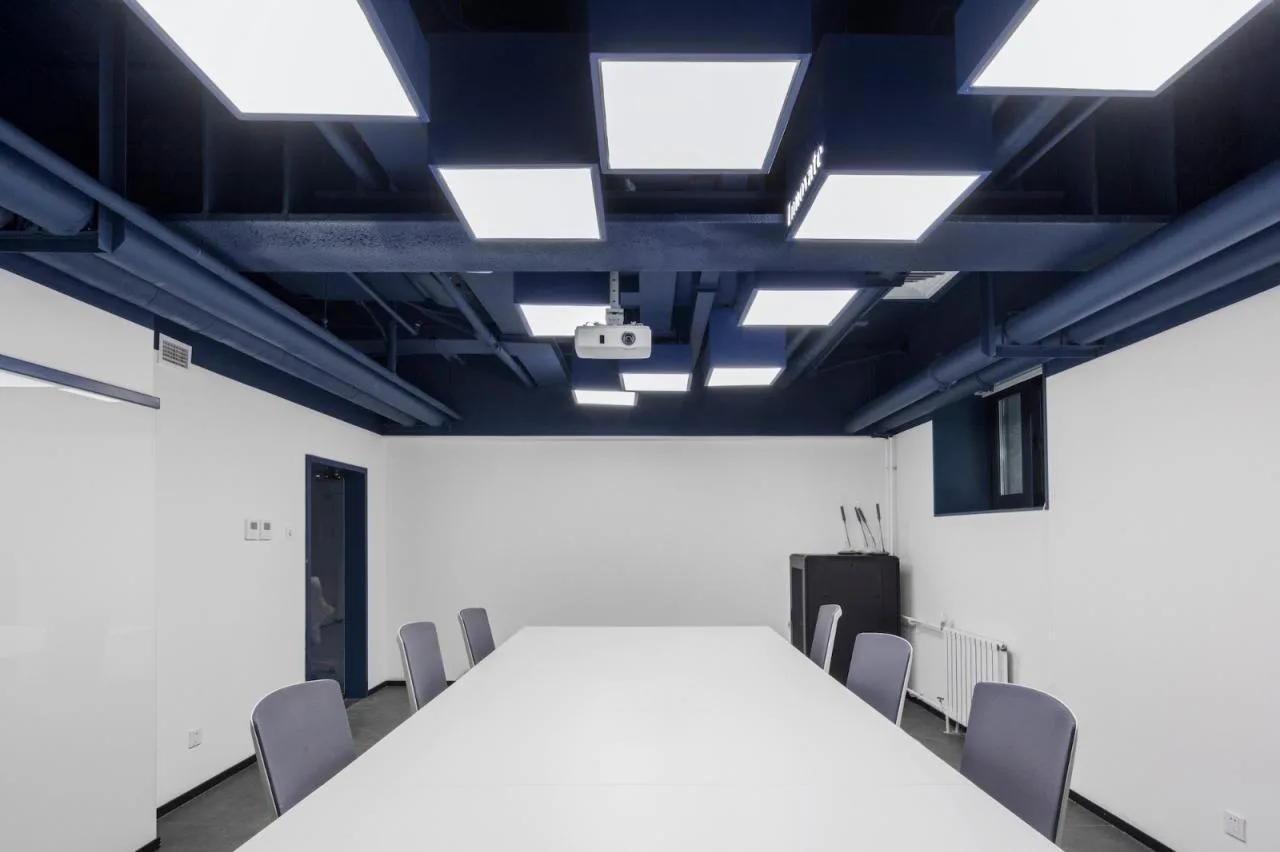
Underground lecture hall corridor and conference rooms © MAT
The original underground civil air defense shelter has been preserved and reinforced. A steel frame was constructed above it, while the original brick and concrete above-ground structure was dismantled. The small bay spaces were converted into an open-plan office suited for modern use.
This renovation enriches the building with diverse new functions, including a gym, multifunctional hall, coffee shop, exhibition hall, library, and lecture hall, providing flexible support for employees’ well-being. The office spaces include private phone rooms, small discussion rooms, medium-sized conference halls, leisure water bars, and island-style booths, catering to varied working scenarios.
4. Maximizing Courtyard Landscapes
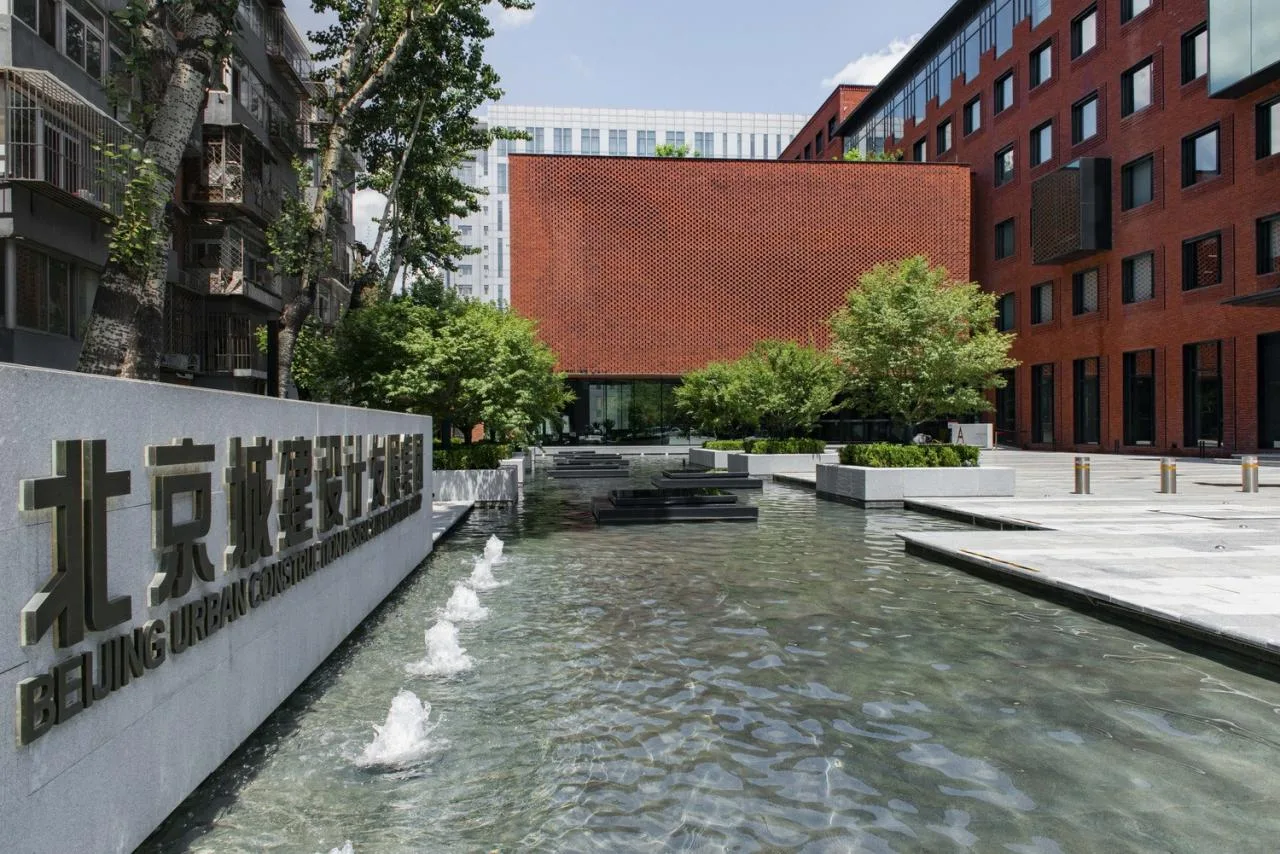
△ Courtyard © Liao Chen
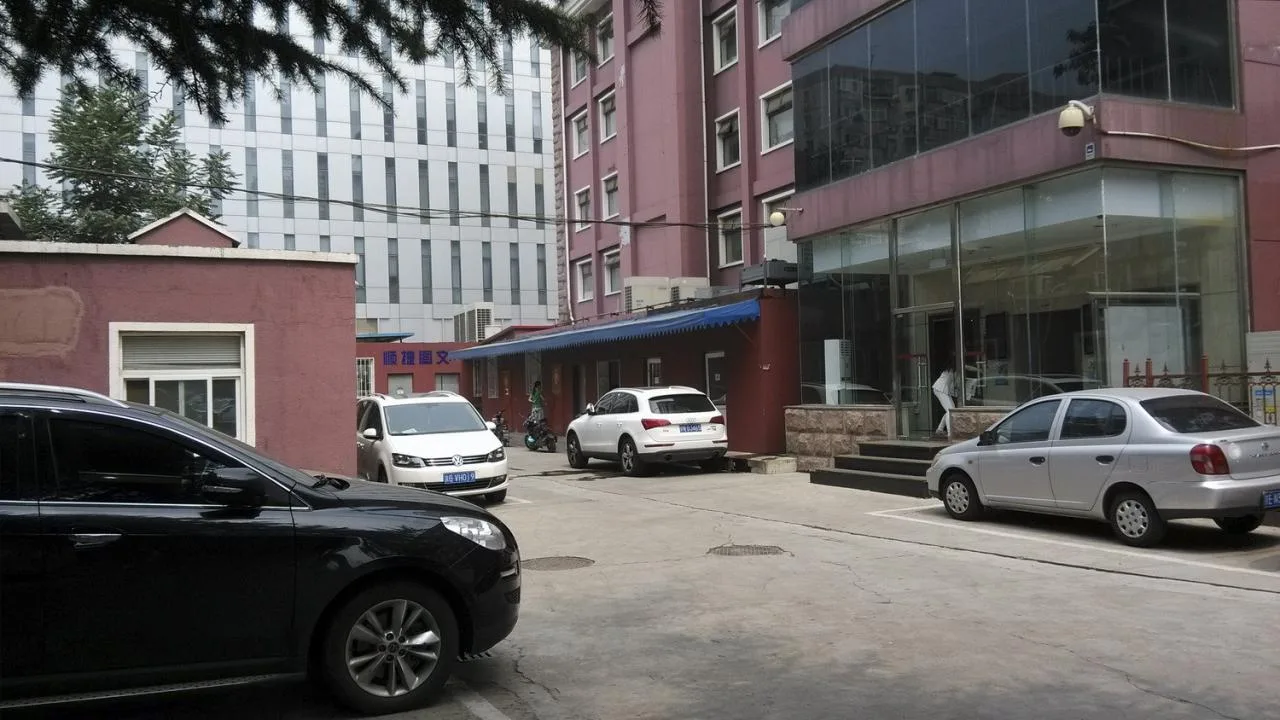
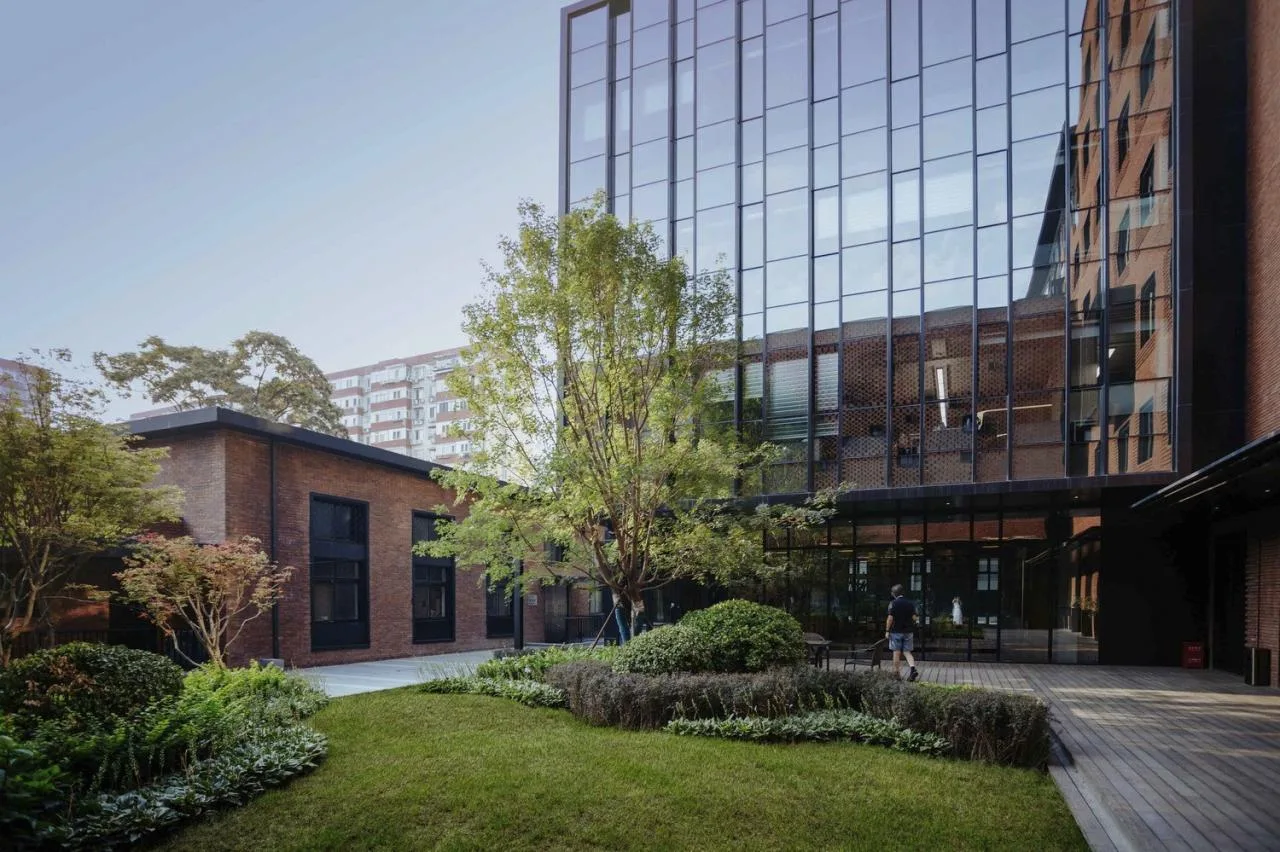
△ Courtyard before and after renovation © Ge Guodong (Part 1) © Liao Chen (Part 2)
The courtyard is a hallmark of traditional Chinese architecture. In modern urban settings surrounded by high-rises, courtyards are a rare luxury. This renovation brings back the landscape courtyard to the site. Since the office buildings are situated very close to neighboring residences, the renovation reduces parking spaces to create a landscaped area that offers a comfortable outdoor gathering space while providing a buffer to nearby homes.
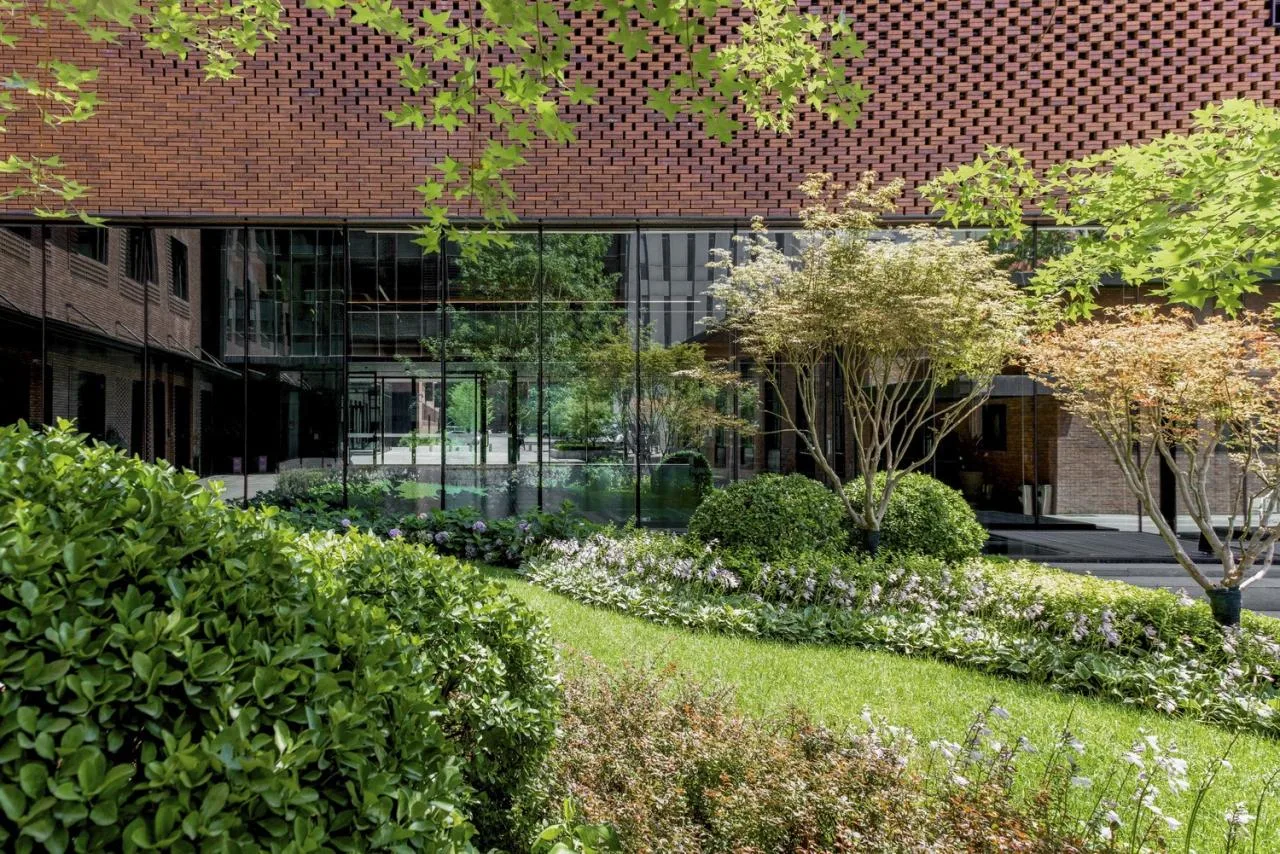
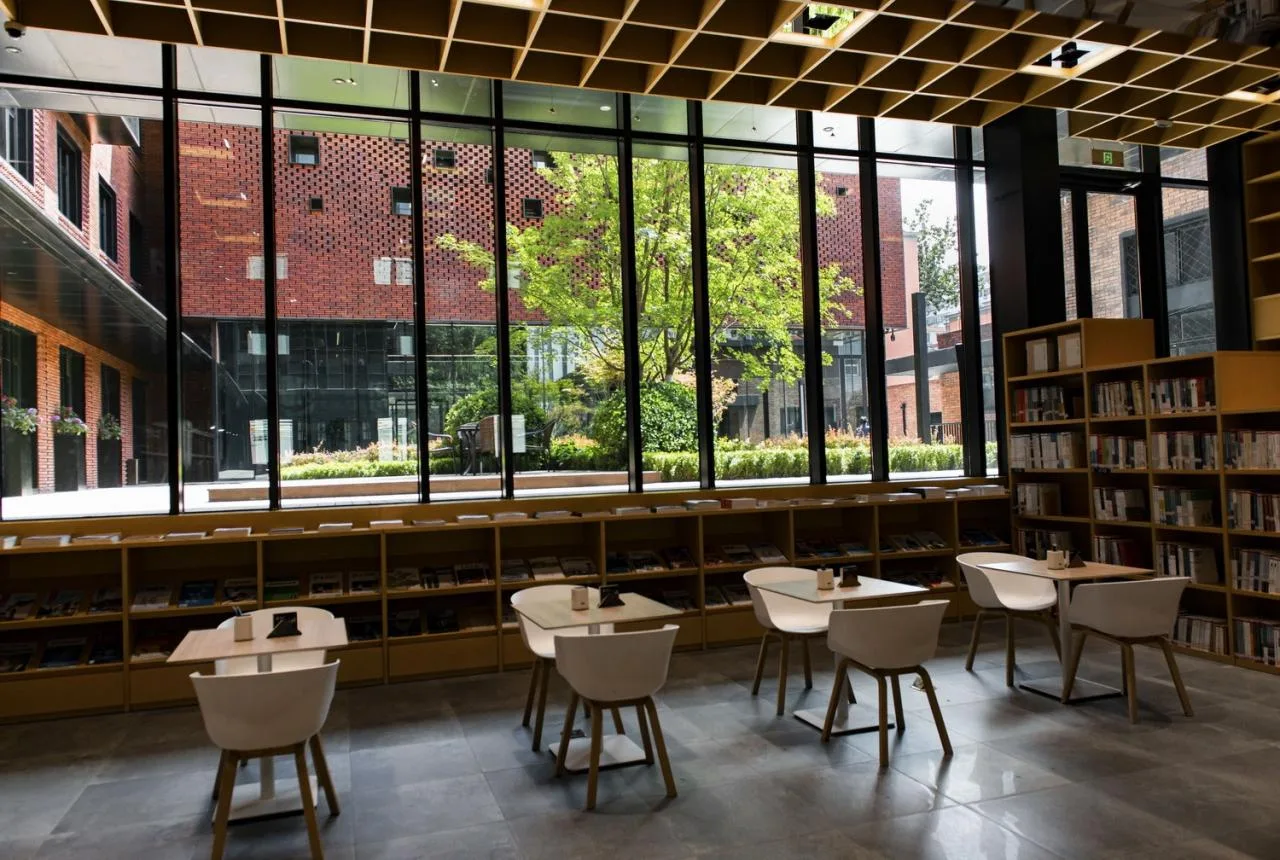
△ Relationship between inner courtyard and library landscape borrowing © Liao Chen
From the building’s main entrance hall, visitors can see a serene internal courtyard that extends the entrance view and offers a borrowed view of the northern library. Though modest in size, the courtyard allows clear perception of seasonal changes. The spatial connection continues indoors through glass curtain walls, seamlessly blending interior and exterior landscapes.
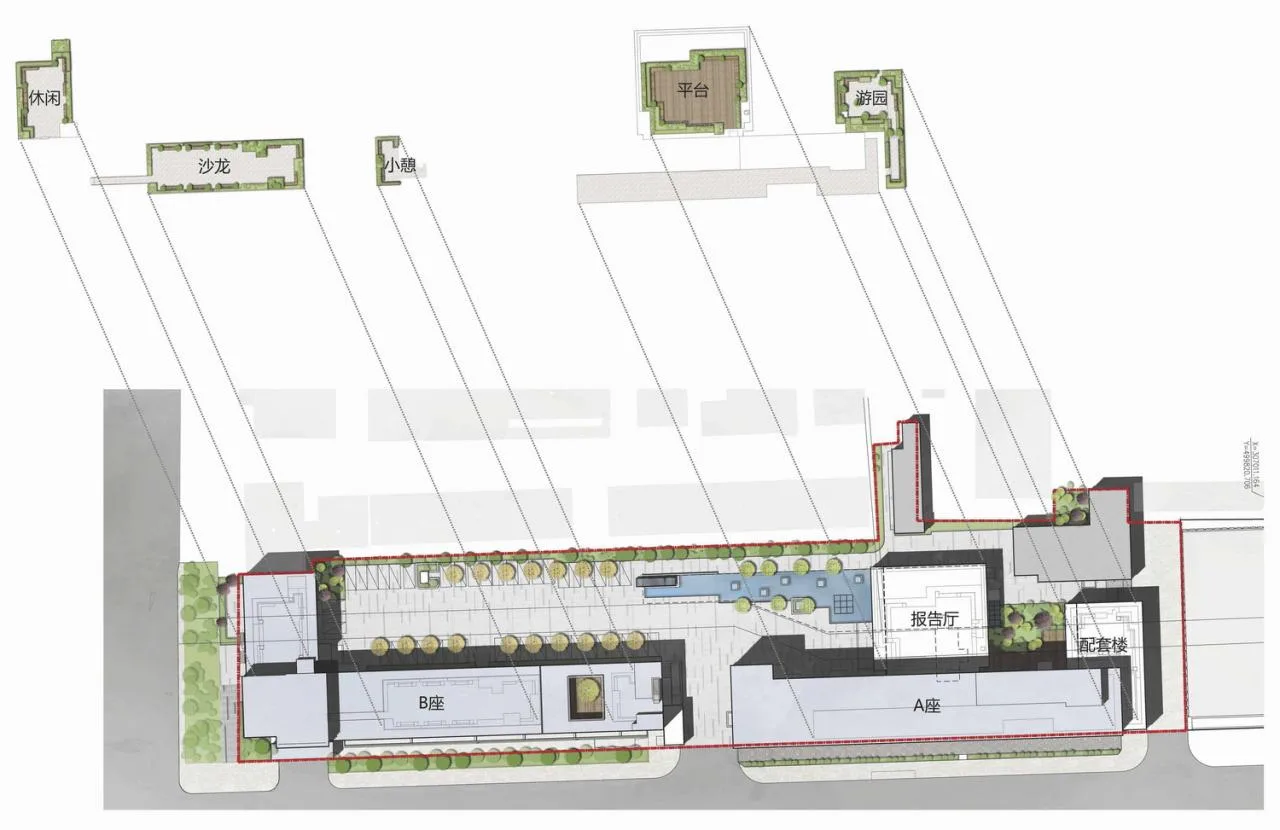
△ Landscape analysis diagram © Ge Guodong
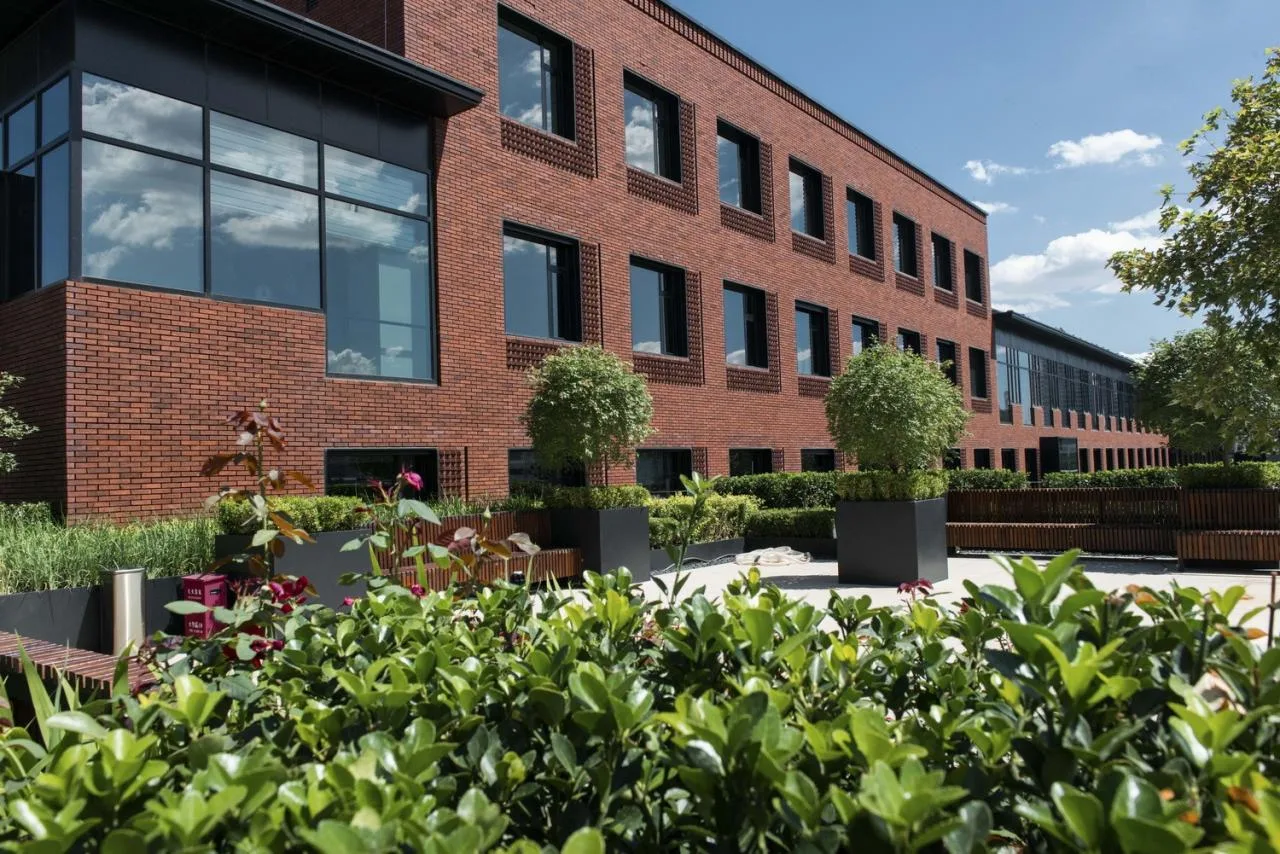
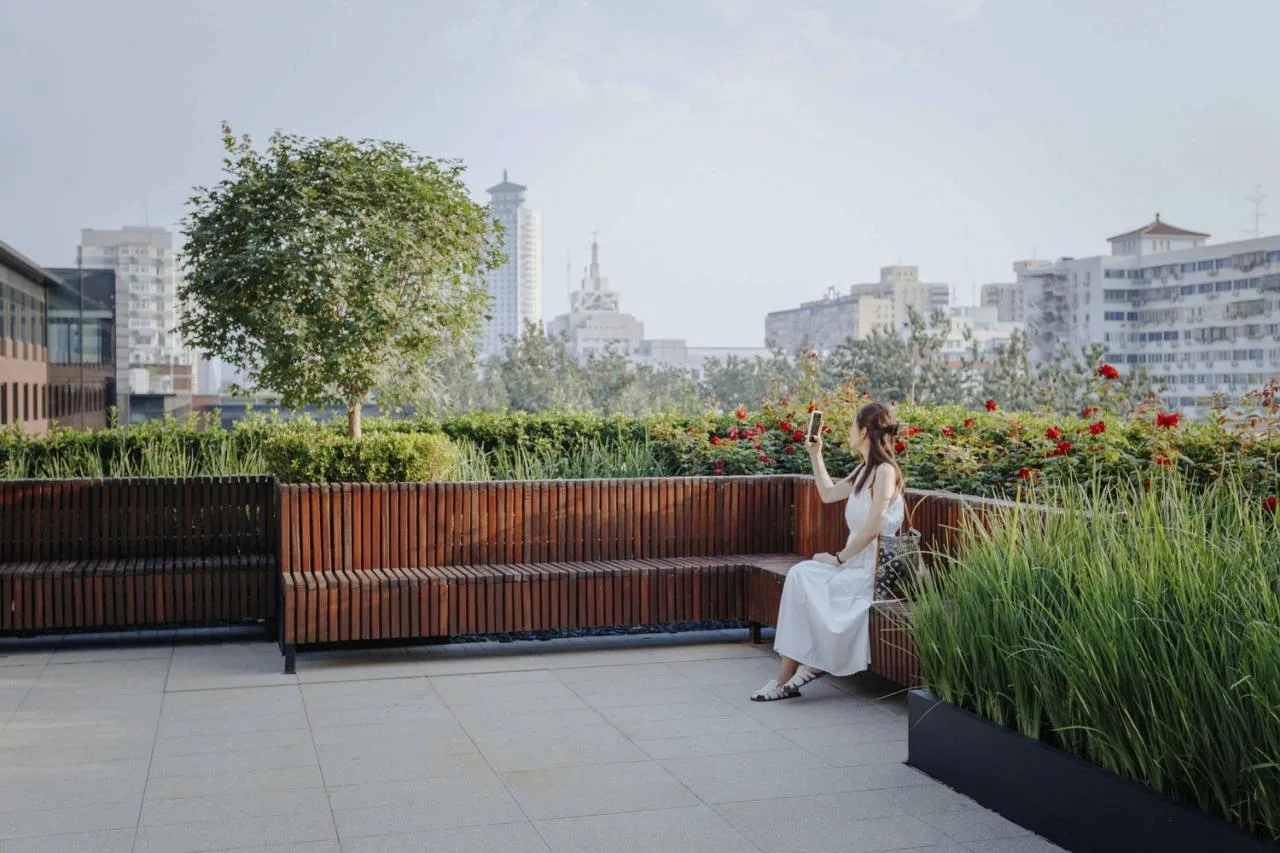
△ Roof sky courtyard © Liao Chen © Li Yumin
Every available space is maximized for landscaping. The roof has been partially opened to create an aerial courtyard. Staggered flower boxes with ornamental plants form a rooftop retreat where employees can relax both physically and mentally. This design also buffers the noise from the nearby West Second Ring Road, creating a peaceful urban oasis.
5. Creating Urban Art Museums
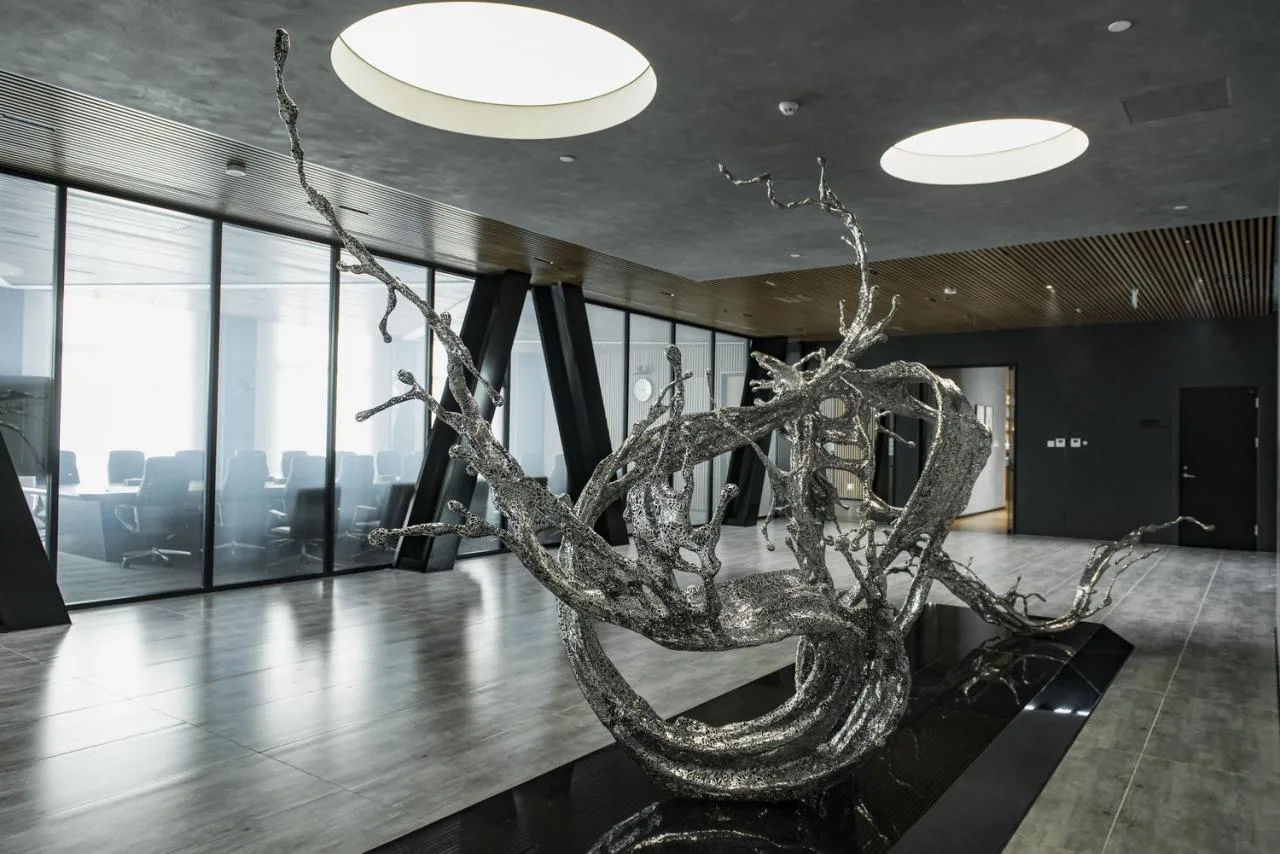
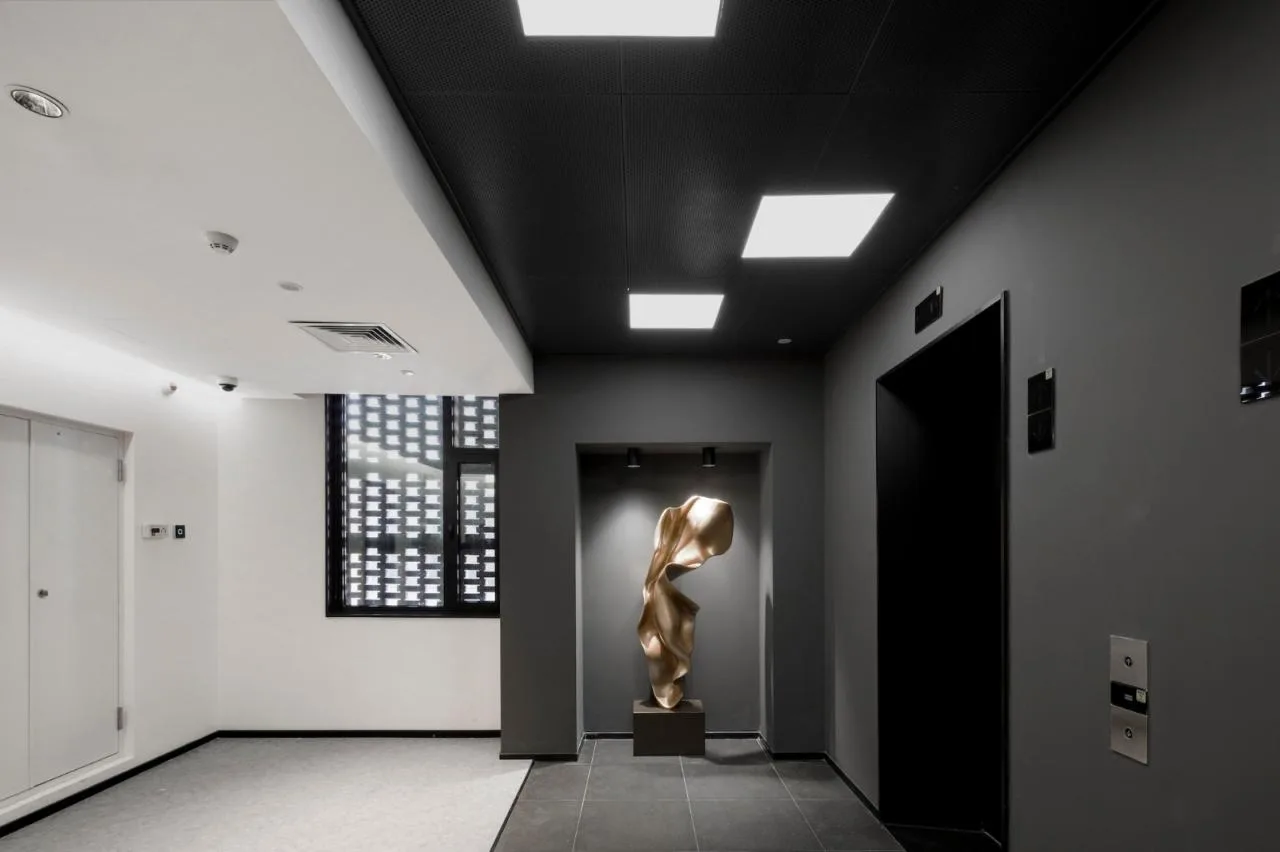
△ Space and artworks © Liao Chen © MAT
This architectural renovation, part of the urban renewal wave, goes beyond updating buildings and spatial functions. It aims to reflect contemporary humanistic values. Architecture is not only functional but also a platform for artistic expression. Thus, the renovation is titled “UCD Art Museum.” Several interior spaces were left intentionally blank to accommodate art installations tailored to the spatial context, turning a walk through the building into an immersive art experience.
6. Continuity and Coexistence of Water
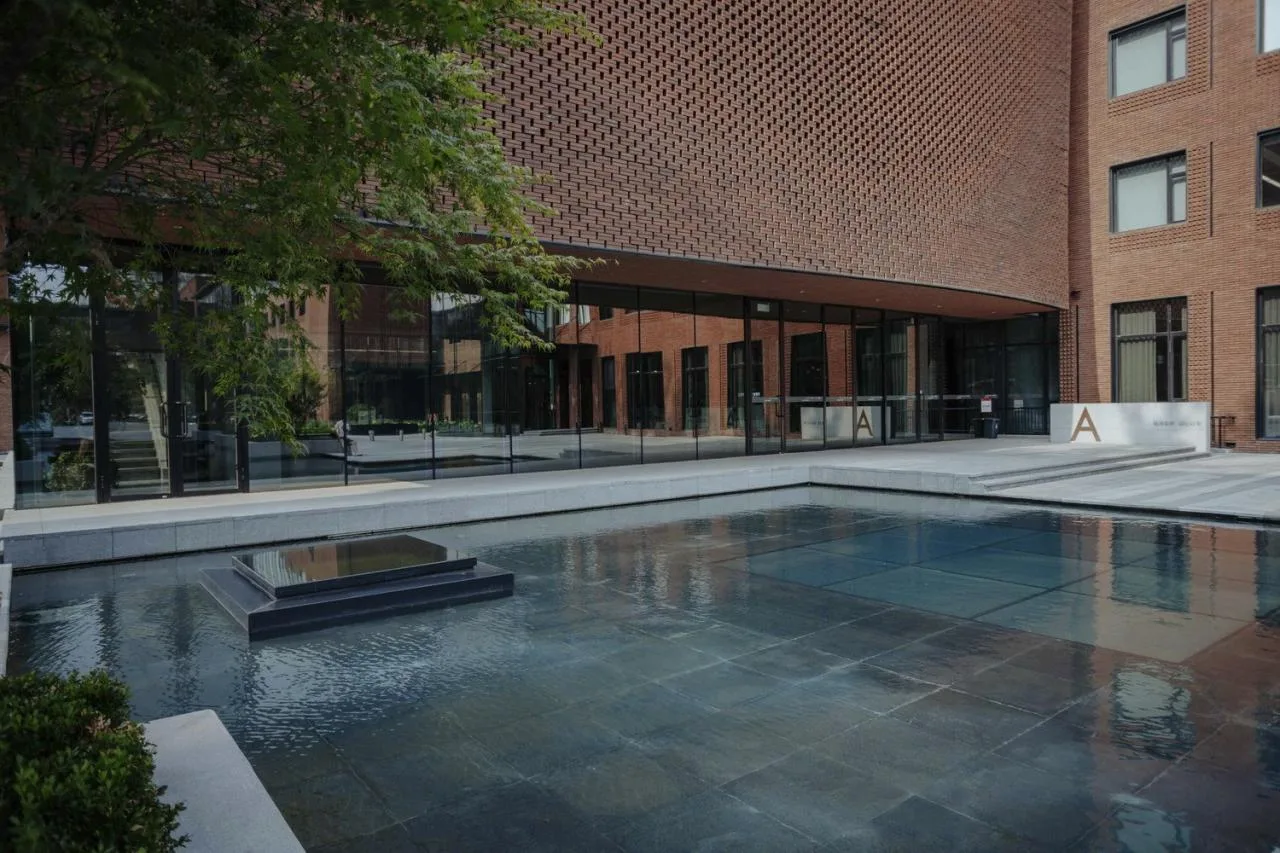
The relationship between water, urban renewal, and the site © Liao Chen
Water is the most spiritual element on site, flowing through history and time, carrying warmth and deep memories. The underground restaurant closely follows the “moat” layout, shaping the space’s outer contour around the river. Above the restaurant on the west side of the moat, a water feature has been installed to reintroduce water and highlight the underground moat’s presence.
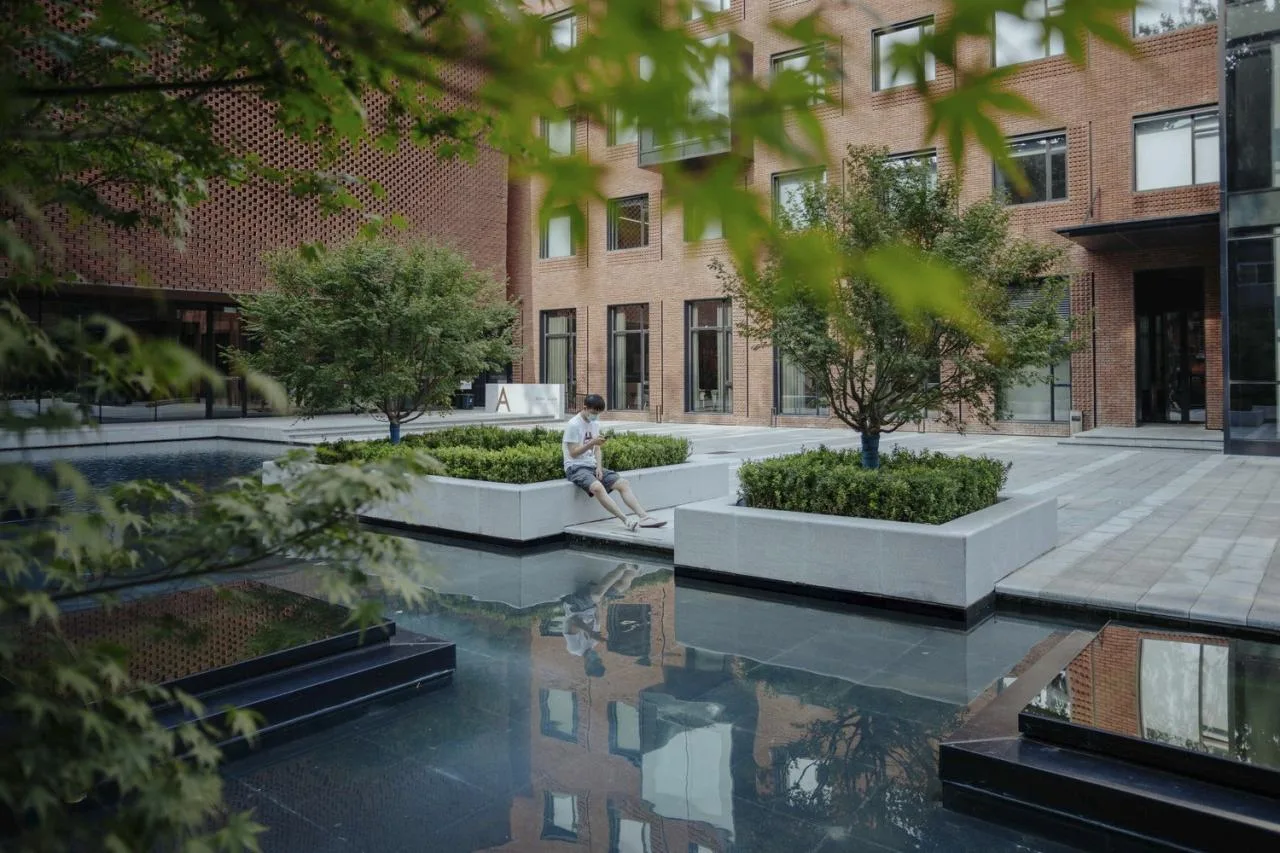
The relationship between water and the restaurant skylight © Li Yumin
The restaurant’s skylight lies beneath the water surface. As sunlight filters through, the rippling water creates a stunning play of light and shadow inside, illuminating the underground dining area with a bright, poetic atmosphere.
The main entrance hall spans over the moat, designed without columns to avoid disturbing the underground river. The flowing water continues quietly in its original course. The floor at the entrance is adorned with wave patterns aligned with the moat’s location, accompanied by four inscriptions narrating the moat’s historical evolution from the Yuan Dynasty to today. This seamless transition of water—from concrete to abstraction, underground to above ground—celebrates the enduring spirit of water coexisting with architecture across eras.
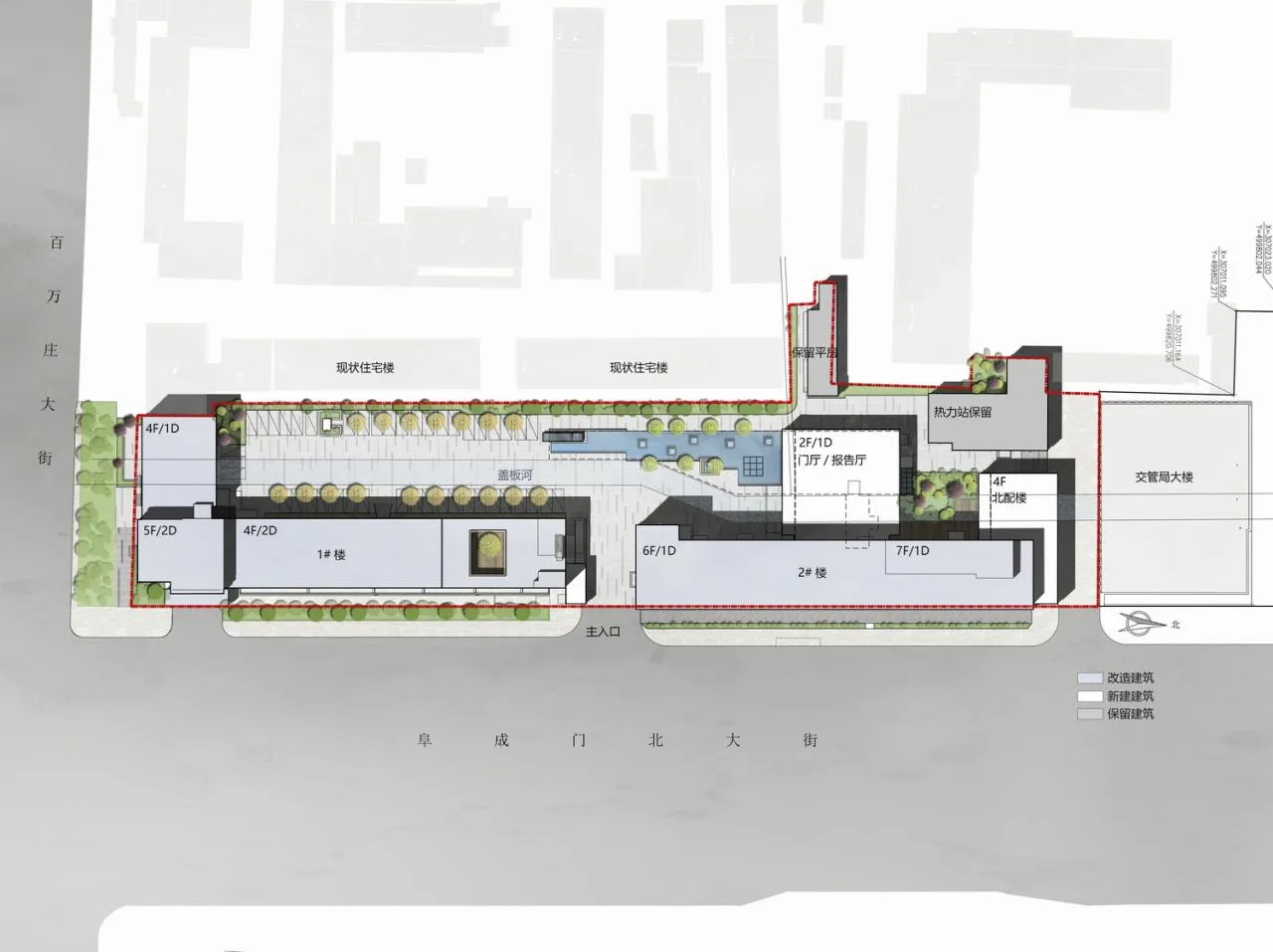
△ Overall plan after renovation © Ge Guodong
Project Information
Project Name: Renovation of Beijing Urban Construction Design and Development Group Headquarters Office Building
Location: No. 5 Fuchengmen North Street, Xicheng District, Beijing
Developer: Beijing Urban Construction Design and Development Group Co., Ltd
Design Firm: Beijing Urban Construction Design and Development Group Co., Ltd
Lead Architect: Shen Jia
Design Team: Ye Fei, Xu Ning, Ge Guodong, Jin Yunfei, Liu Xu, Qu Dan, Qin Xiaojing, Wang Yujie, Zhao Lu, Wan Li
Land Area: 9,912 square meters
Building Area: 22,788 square meters
Design Period: 2015–2017
Completion Date: November 2020
Photography: UK Studio, MAT, Ge Guodong, Liao Chen, Li Yumin
Written by: Liu Yu















Must log in before commenting!
Sign Up