
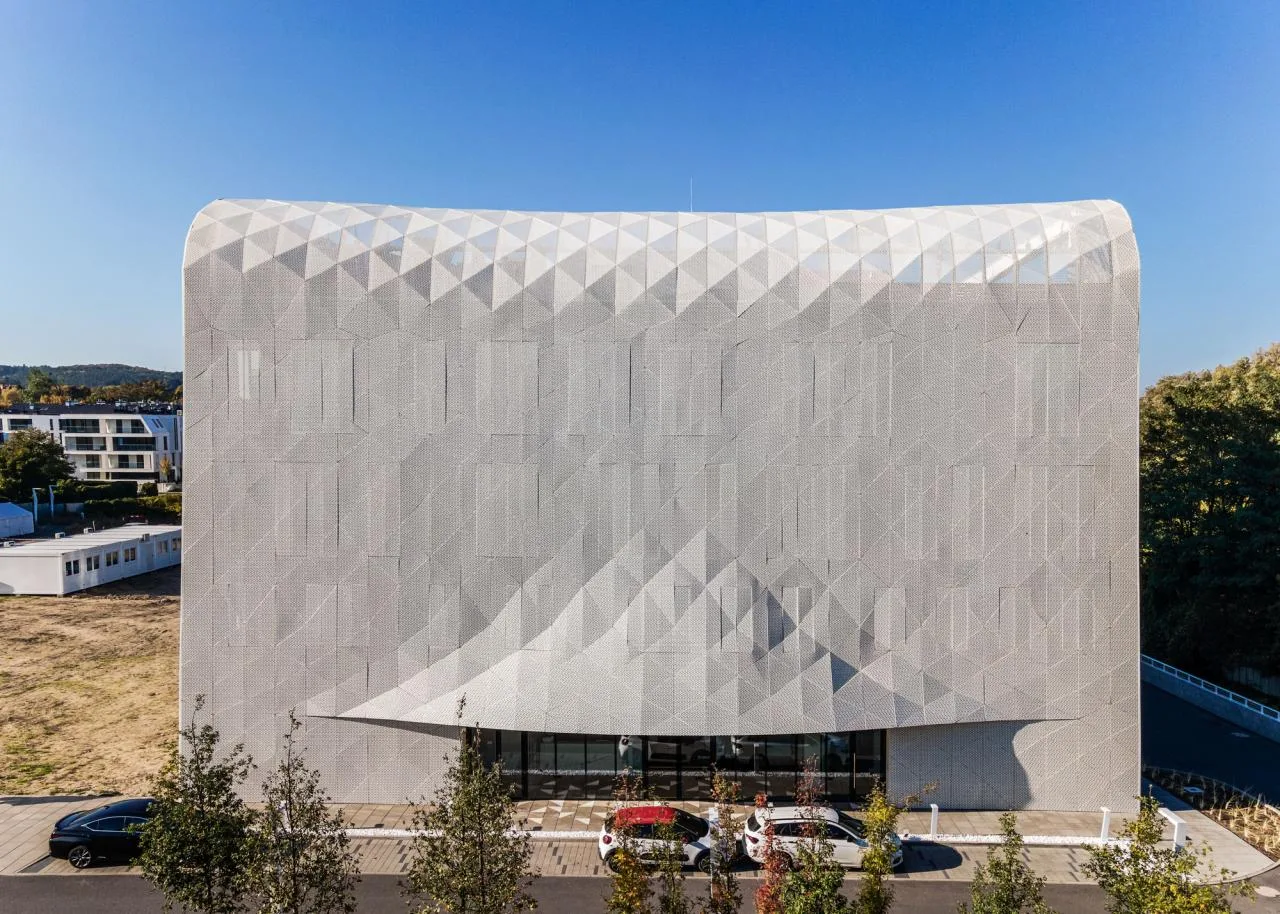
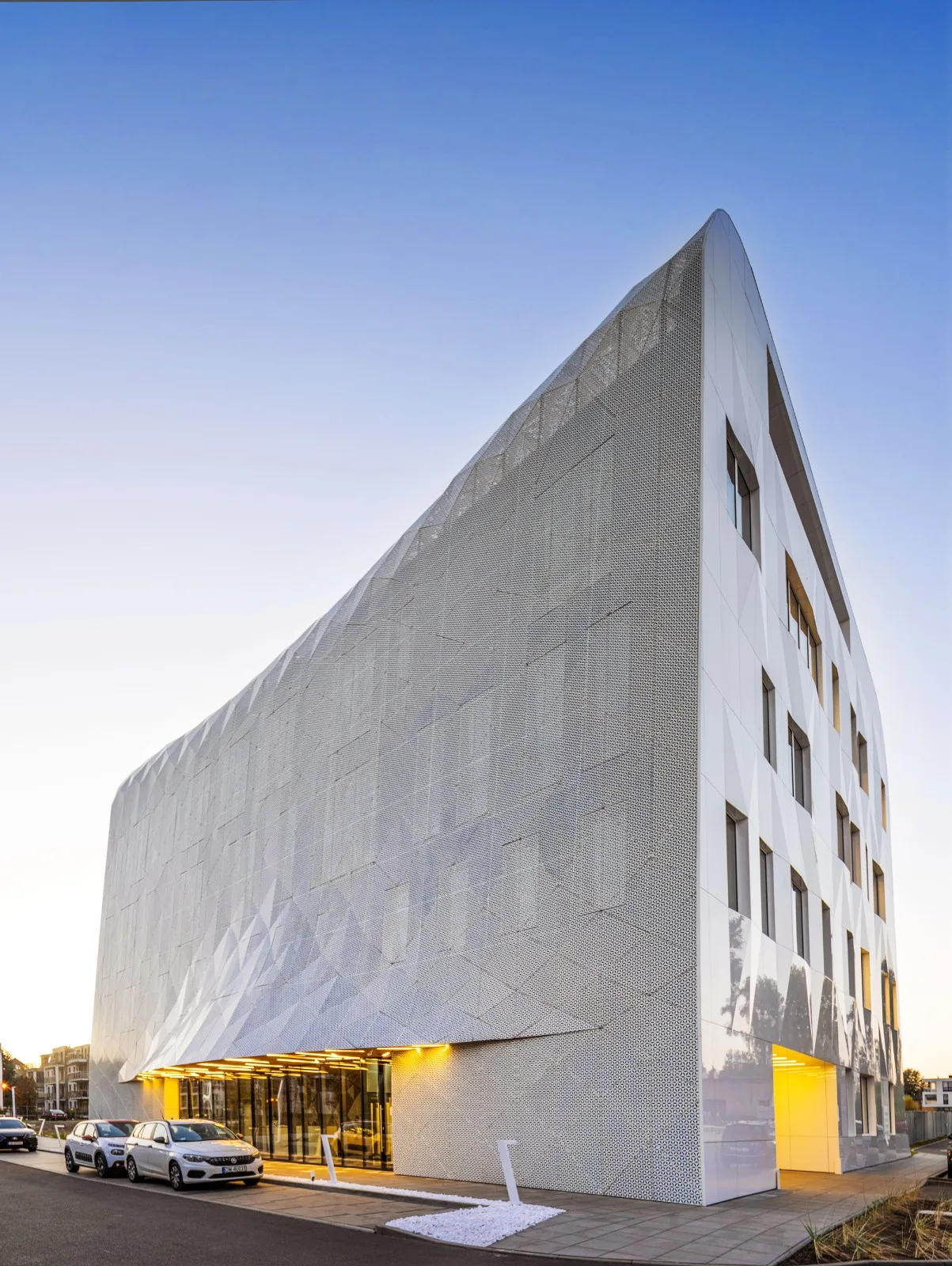
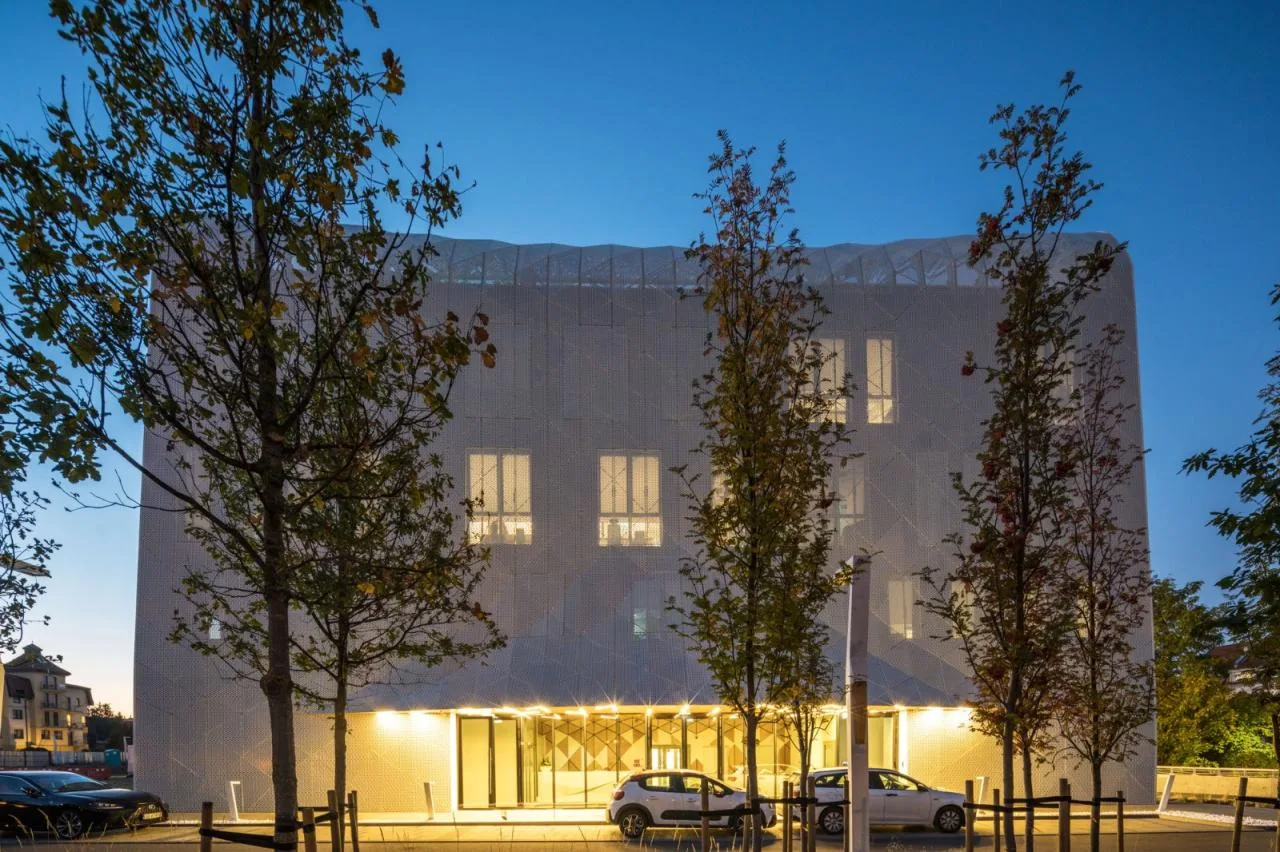
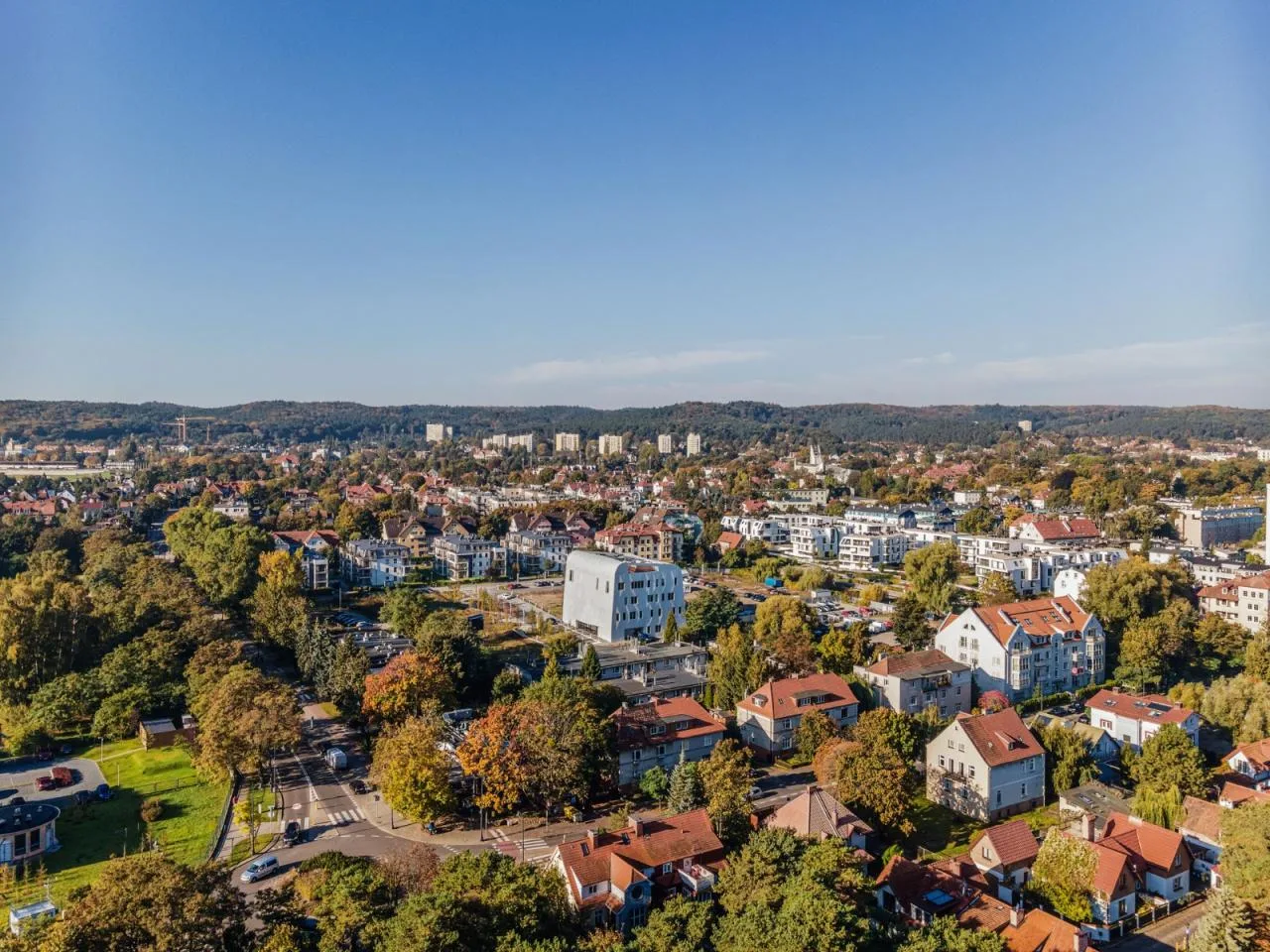
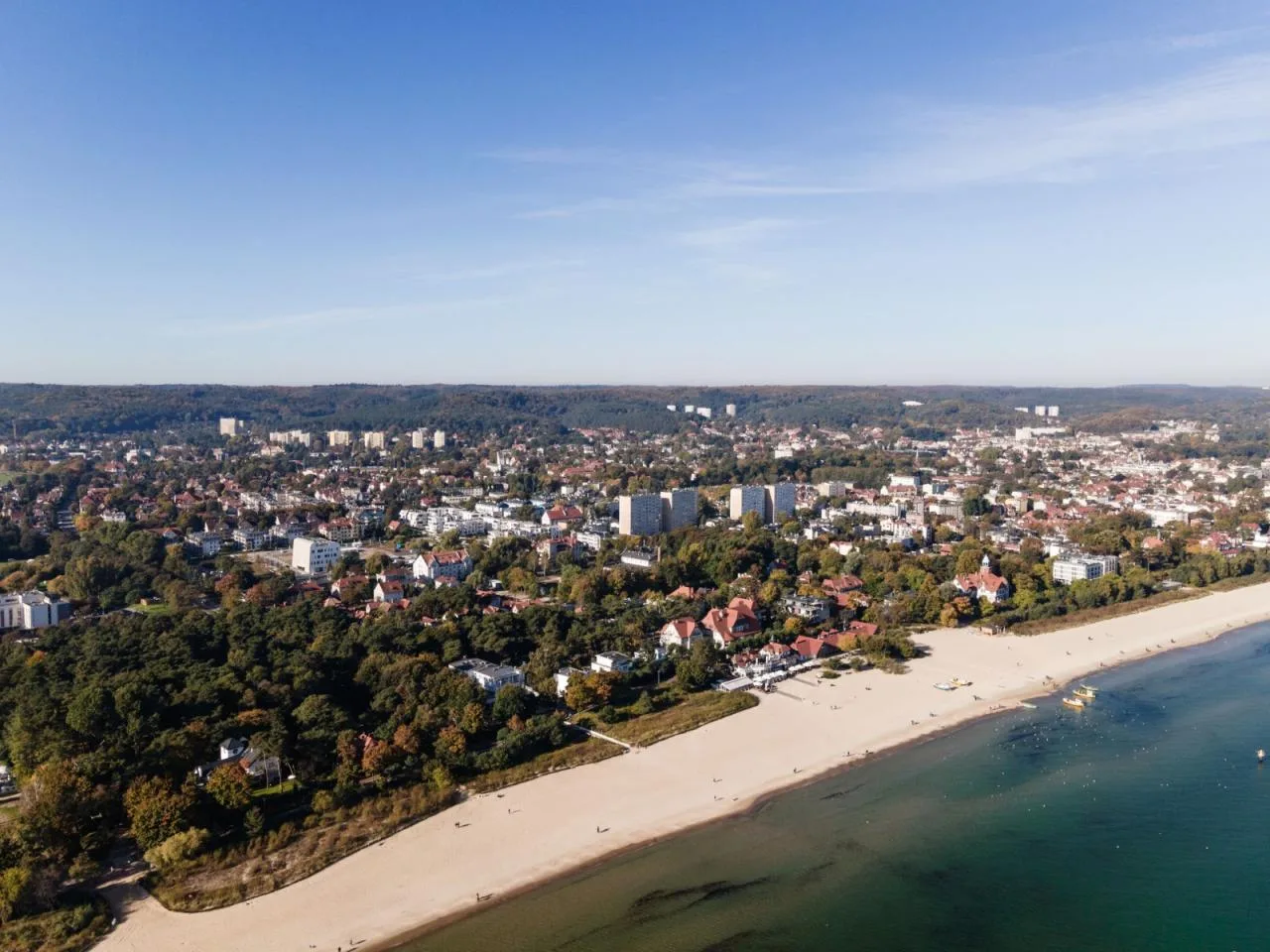
The “Wave One” building, part of the European Center for Families ECR Group, is situated just 400 meters from the Baltic Sea in a historically renowned health resort town. The architectural concept draws inspiration from the intricate forms of waves and the local traditional carving details found on facade elements. This led the architects to design a site with distinctive wave-like features, comprising five interconnected buildings.
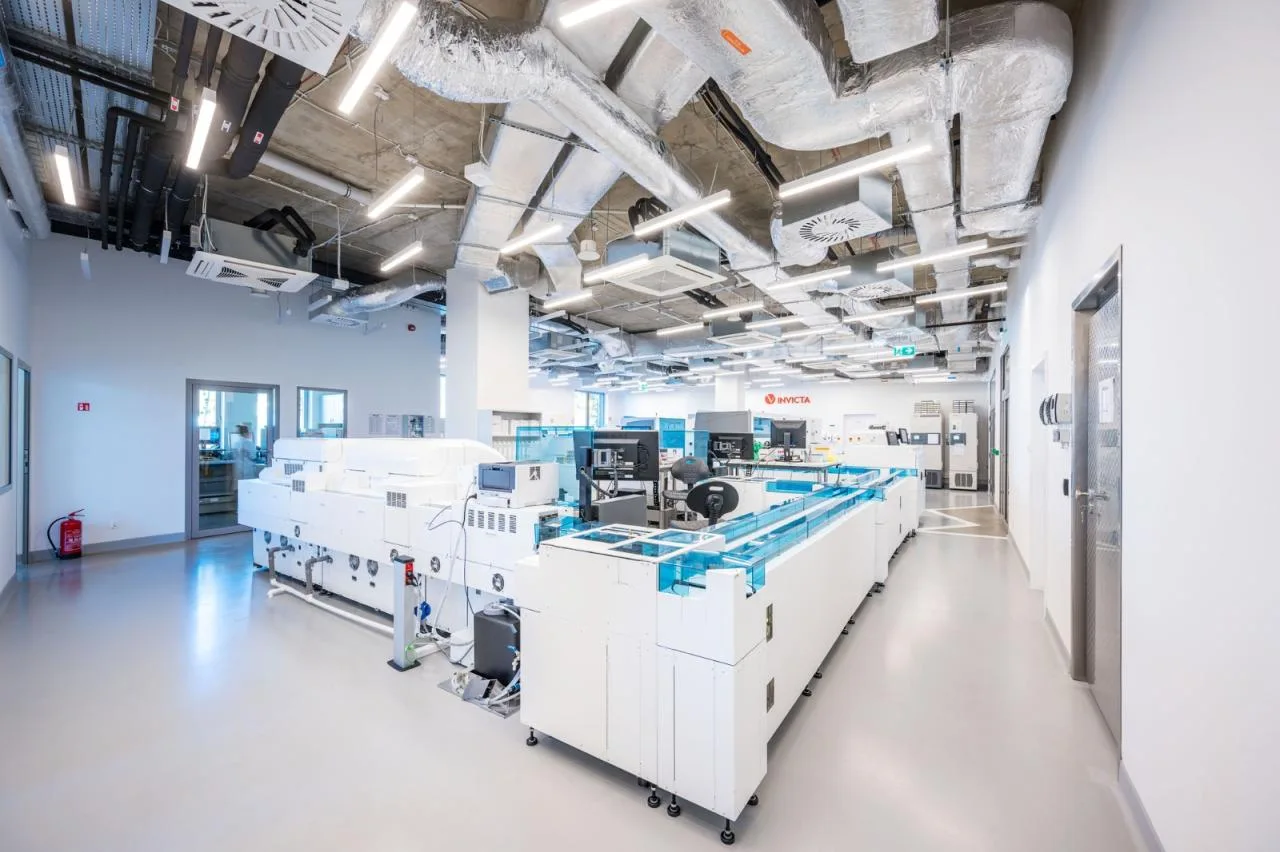
Wave One is the first structure completed after an extensive design and construction process, housing specialized medical laboratories including a SARS-CoV-2 detection lab, an R&D center, and administrative offices.
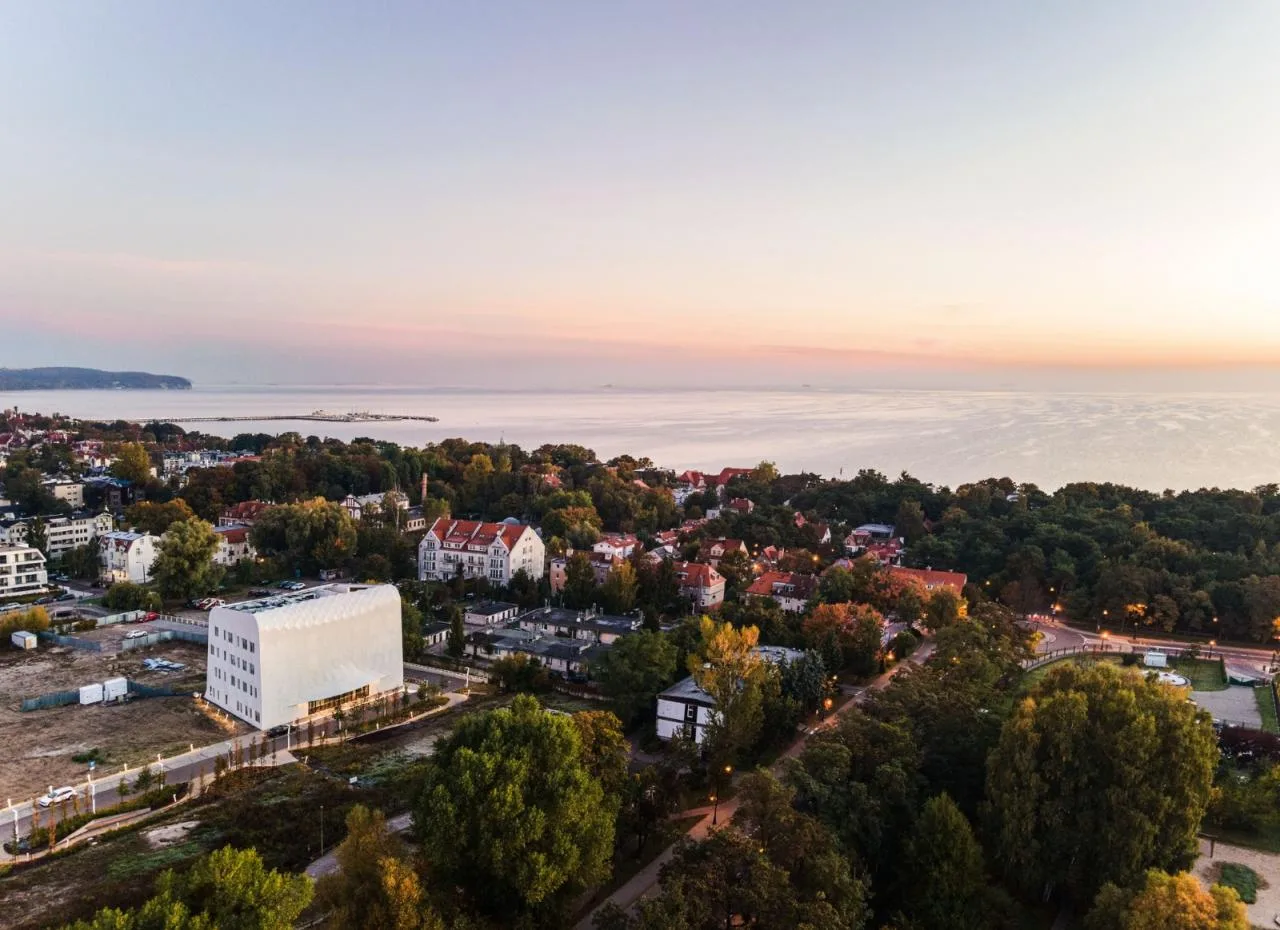
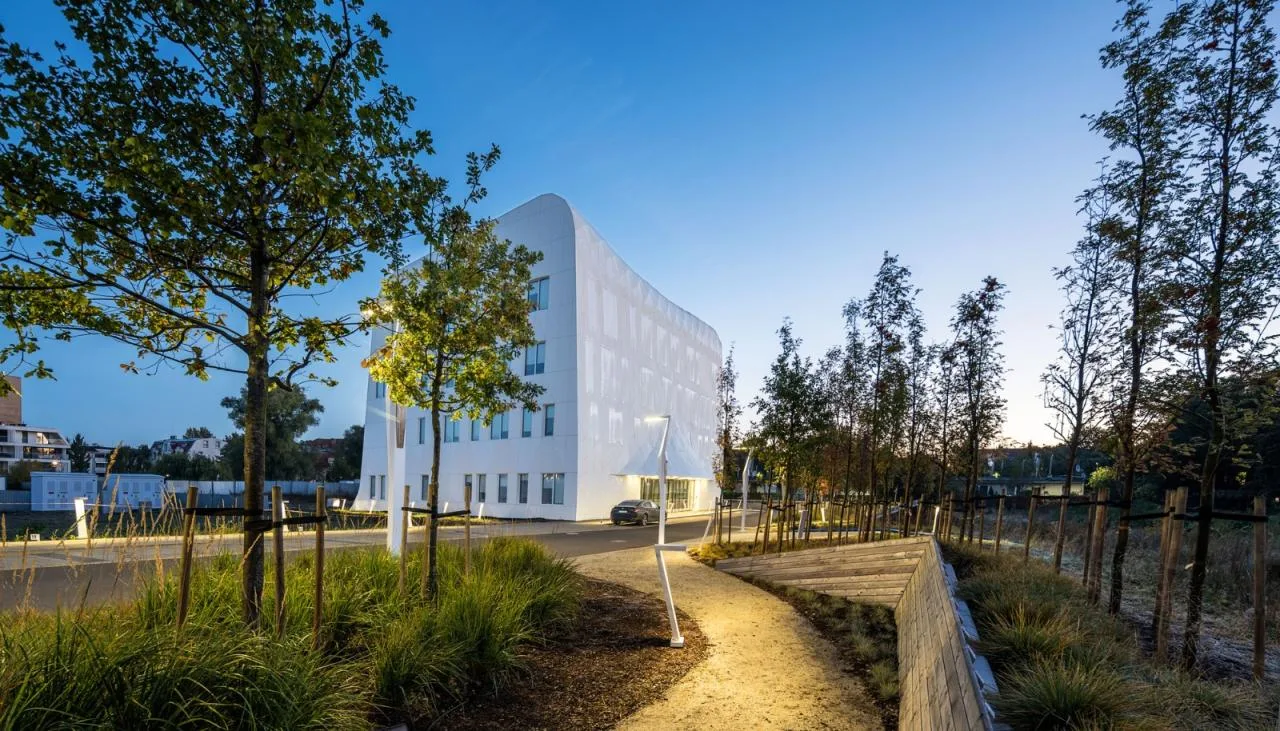
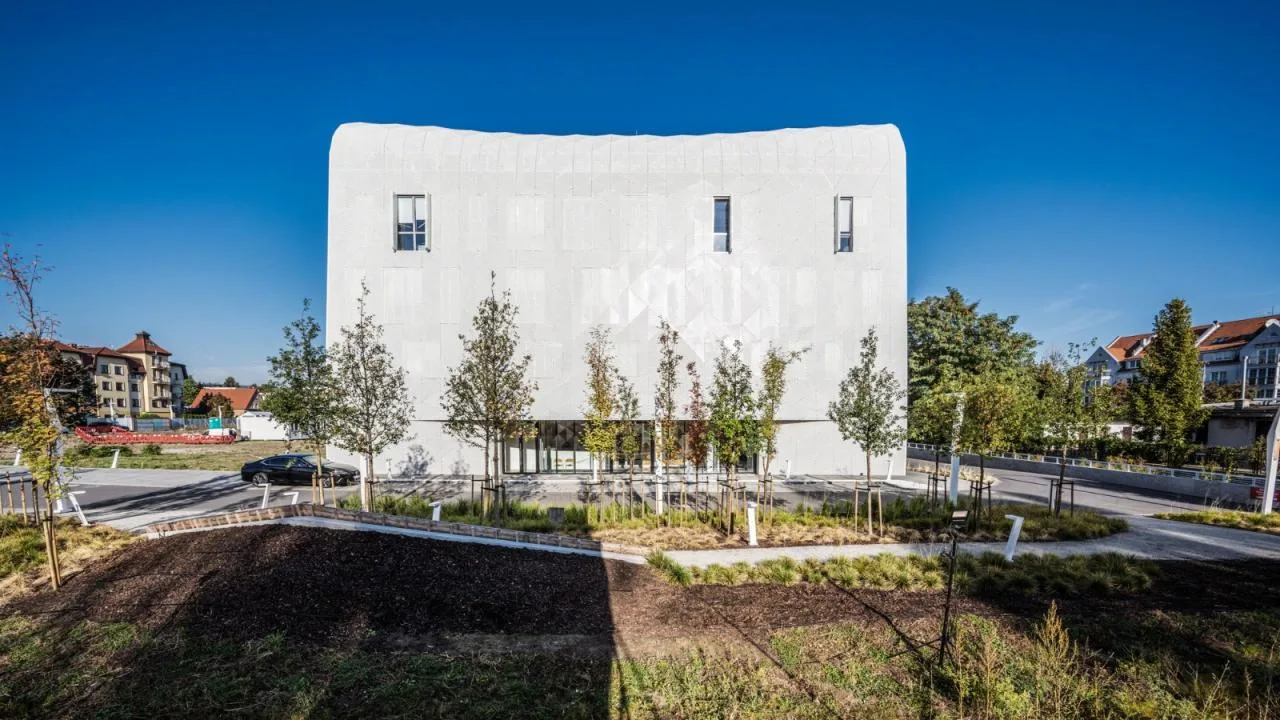
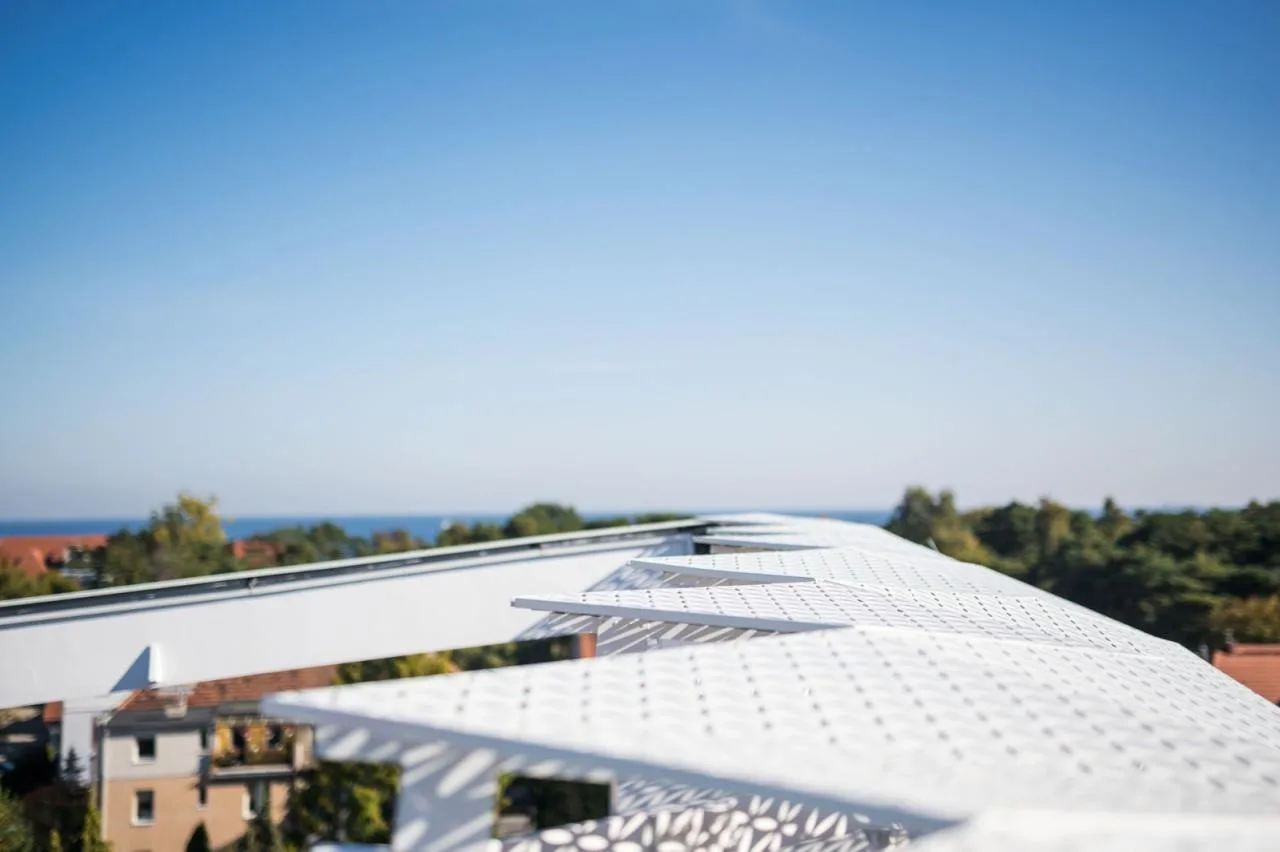
The building’s white perforated facade was inspired partly by a series of photographs titled “Aqua Viva” by French artist Pierre Carreau. The architects studied the geometric complexity of the waves captured in these images. The arched, three-dimensional contours—frozen in time—were transformed into an architectural language that shapes the building’s final form.
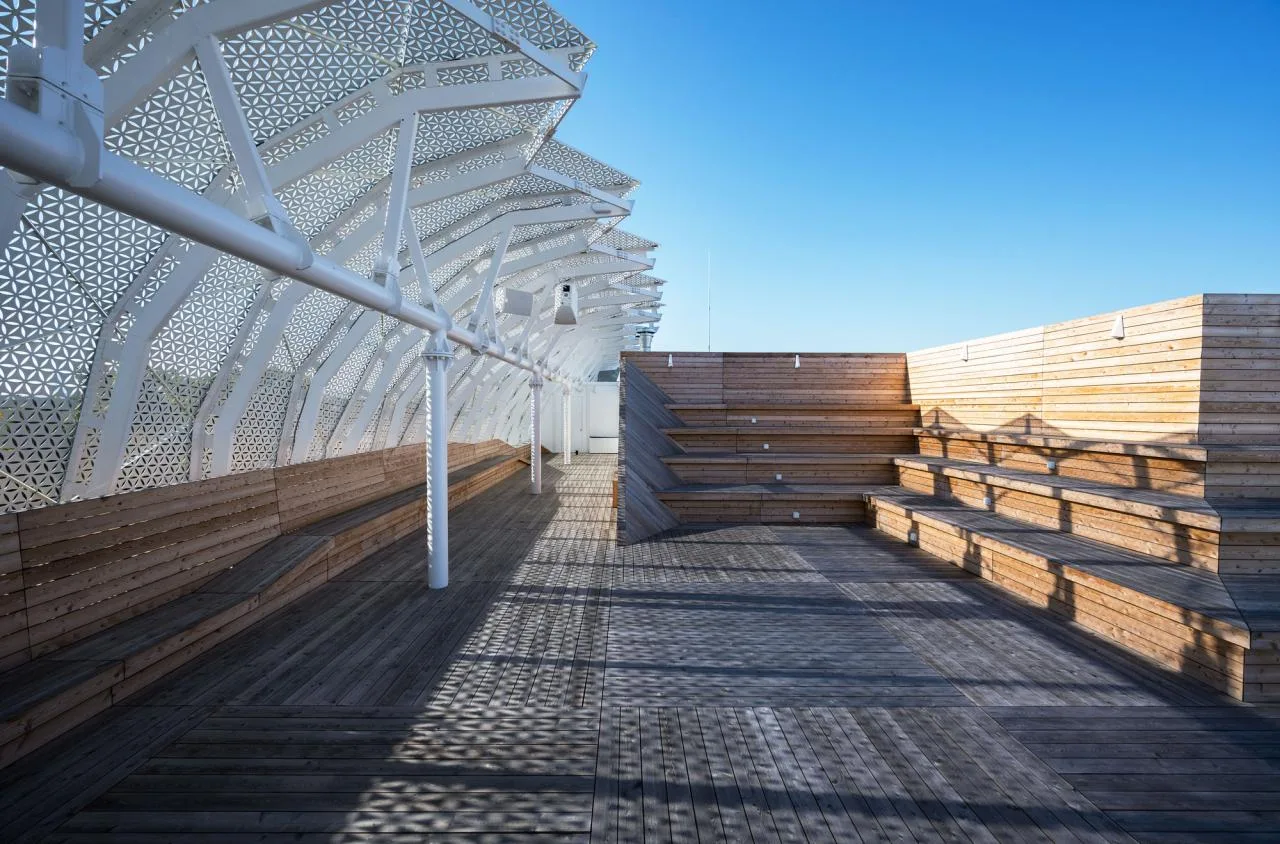
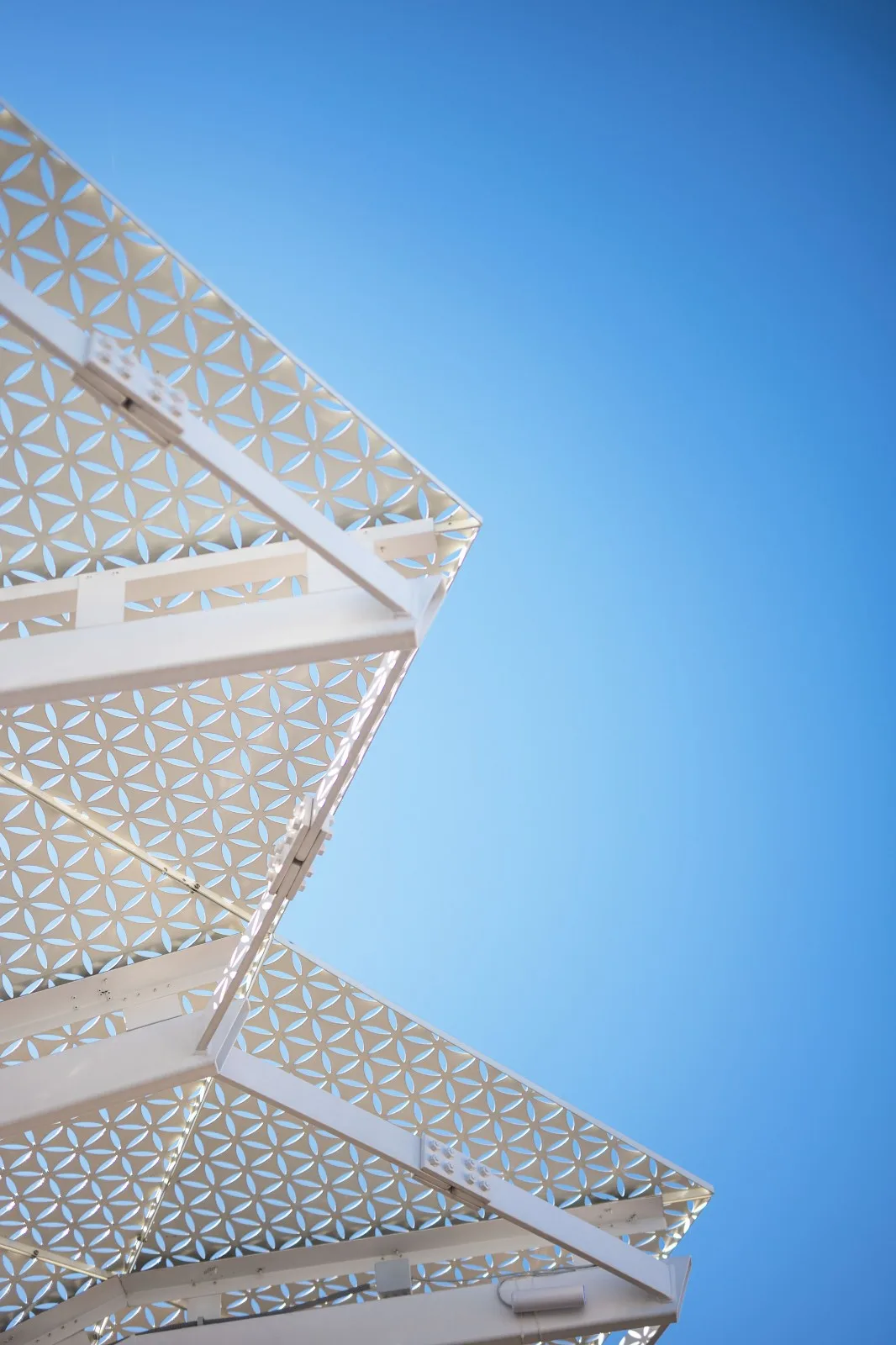
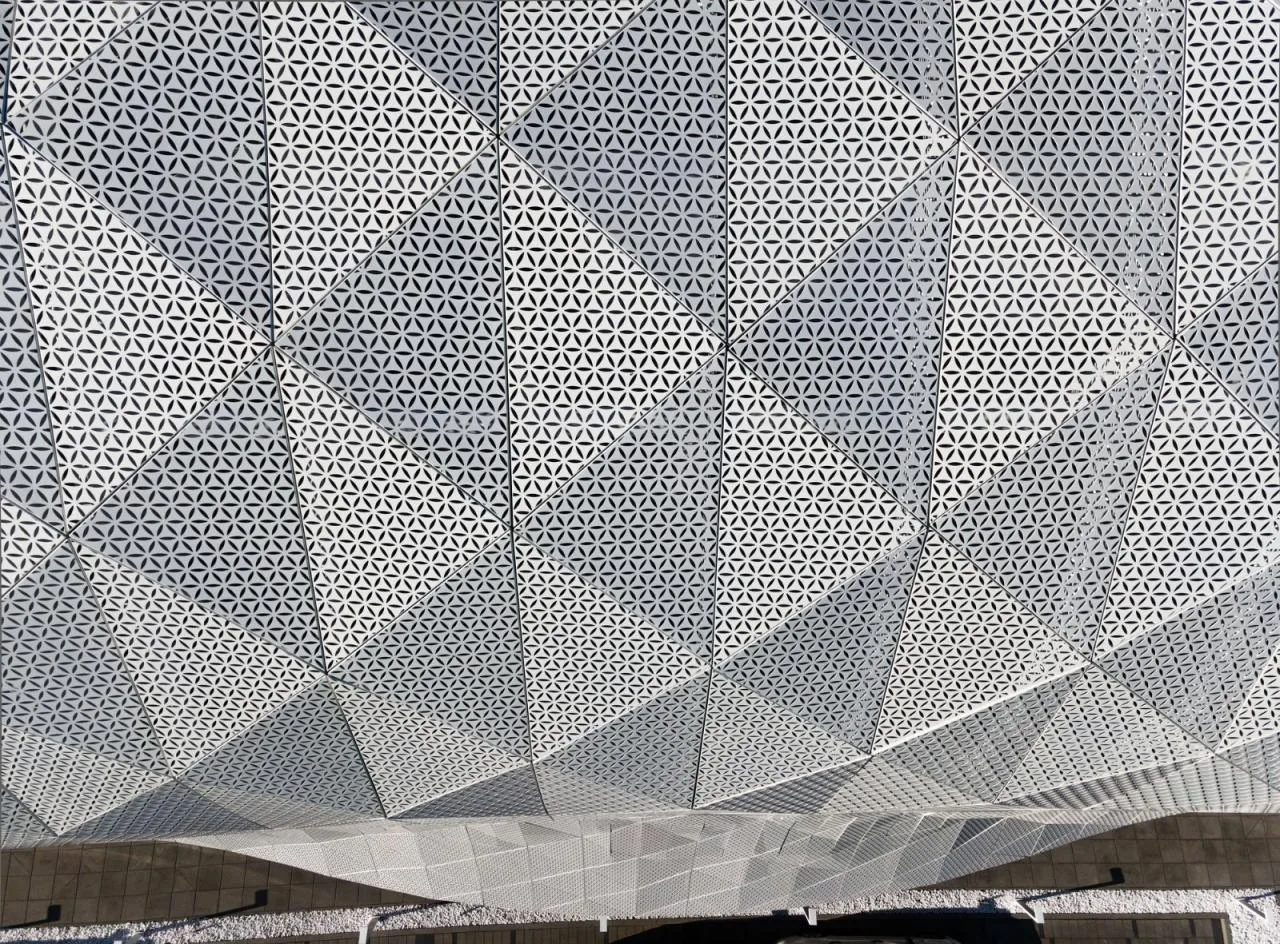
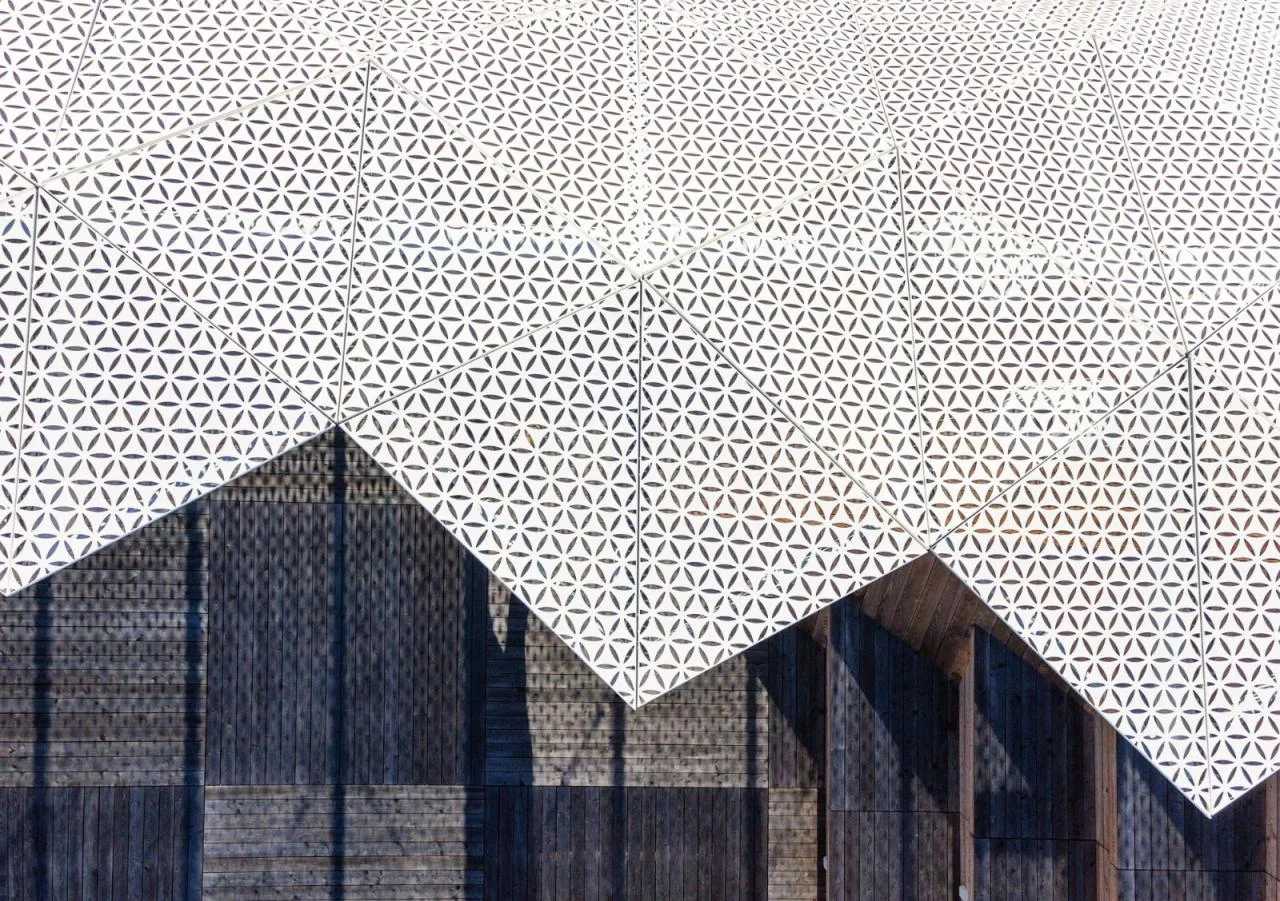
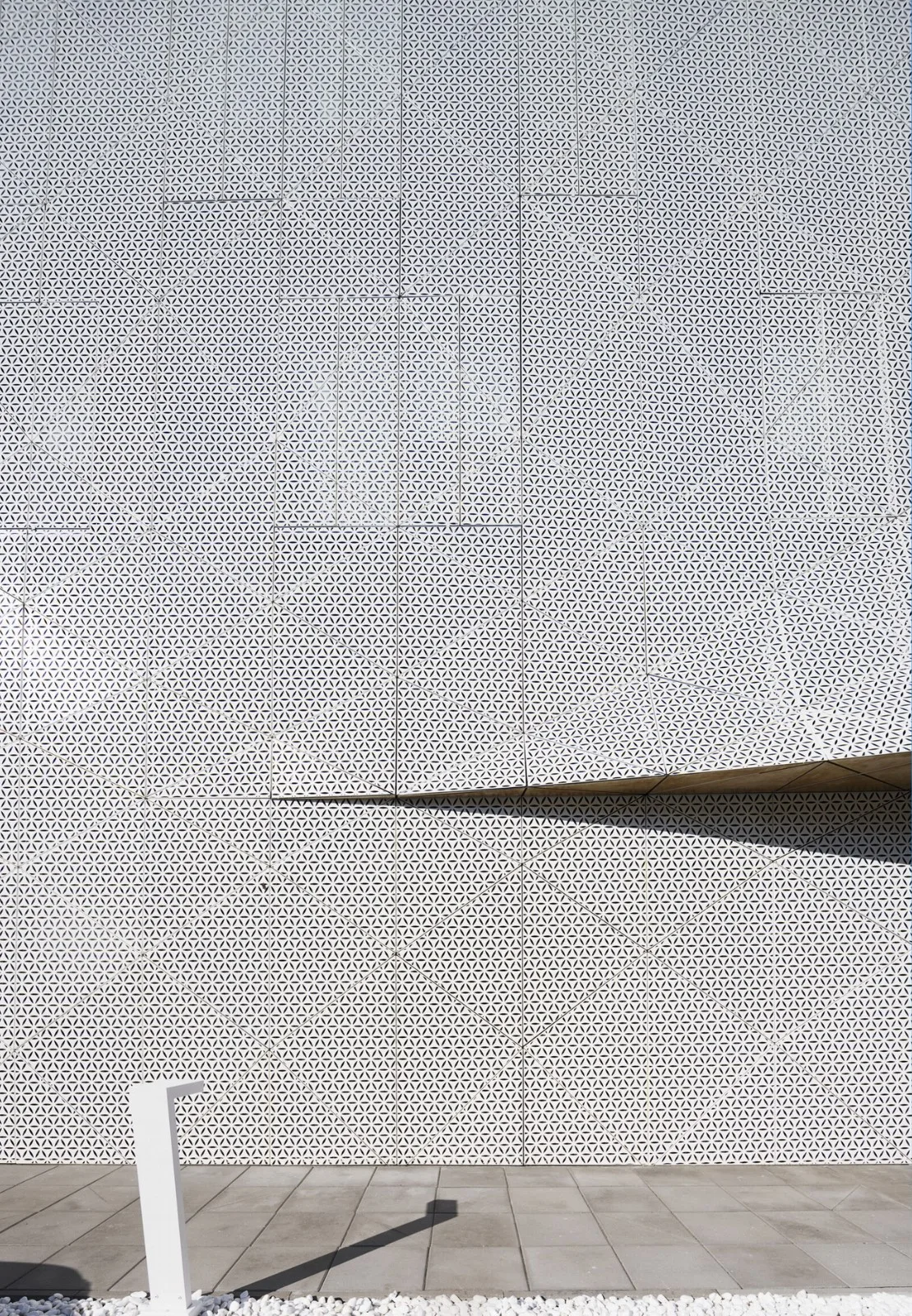
The facade features 1,362 perforated triangular panels, with the building’s roof curving gracefully like a cresting wave.
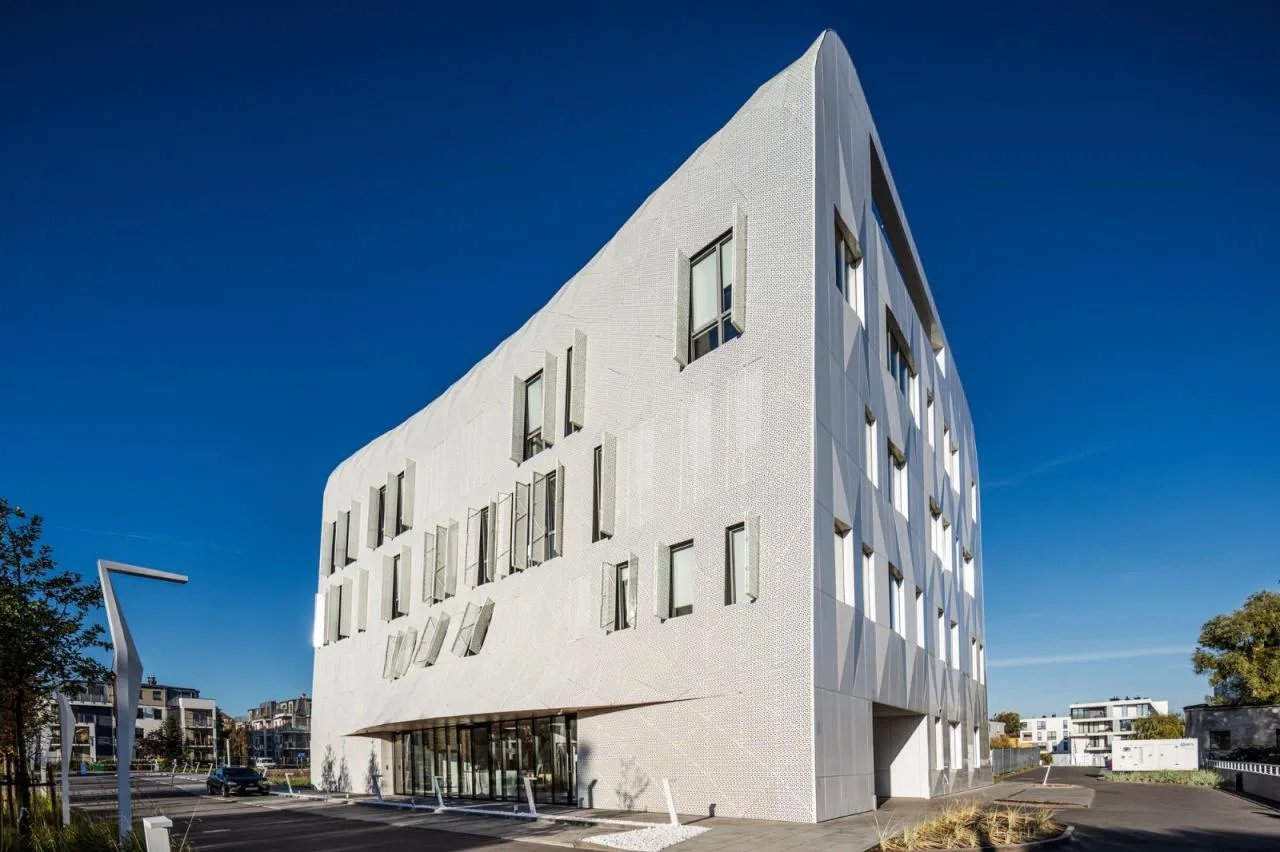
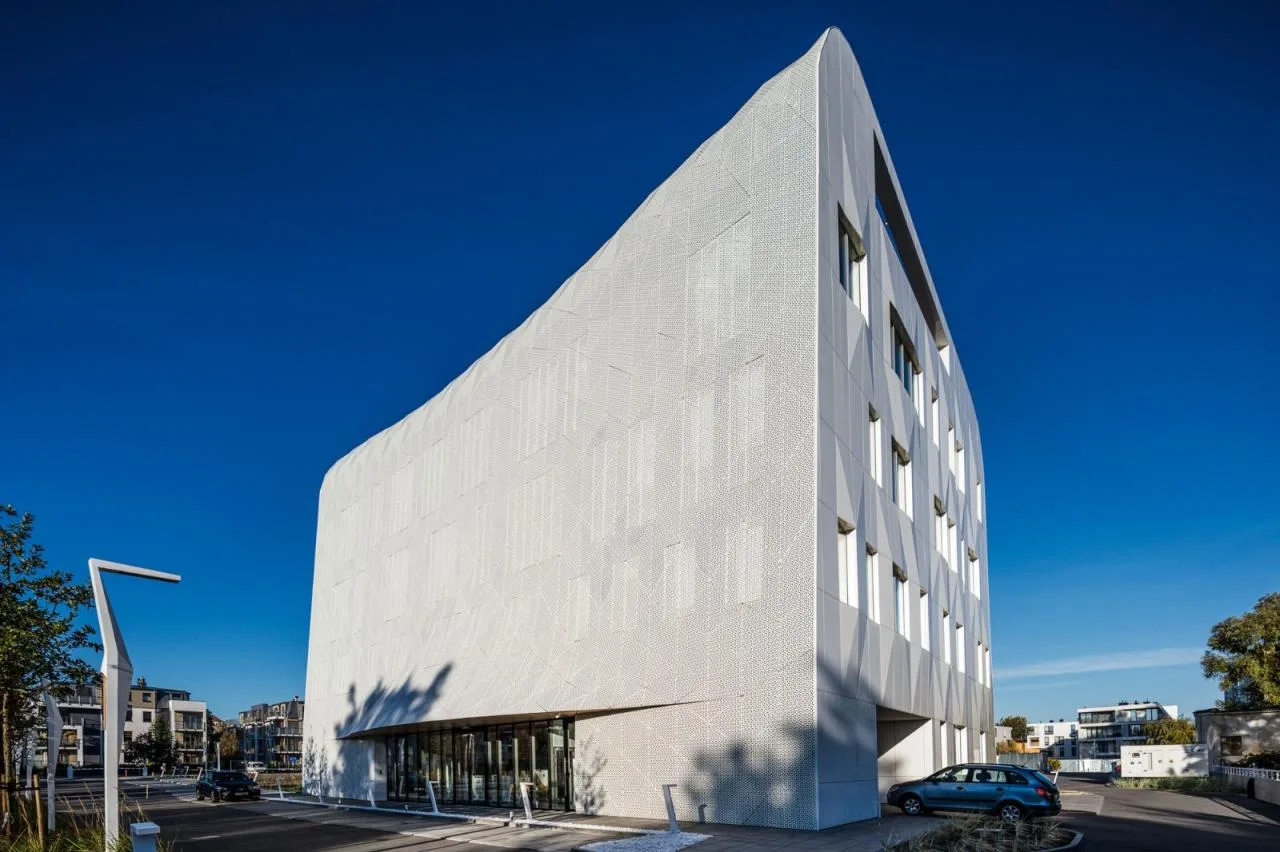
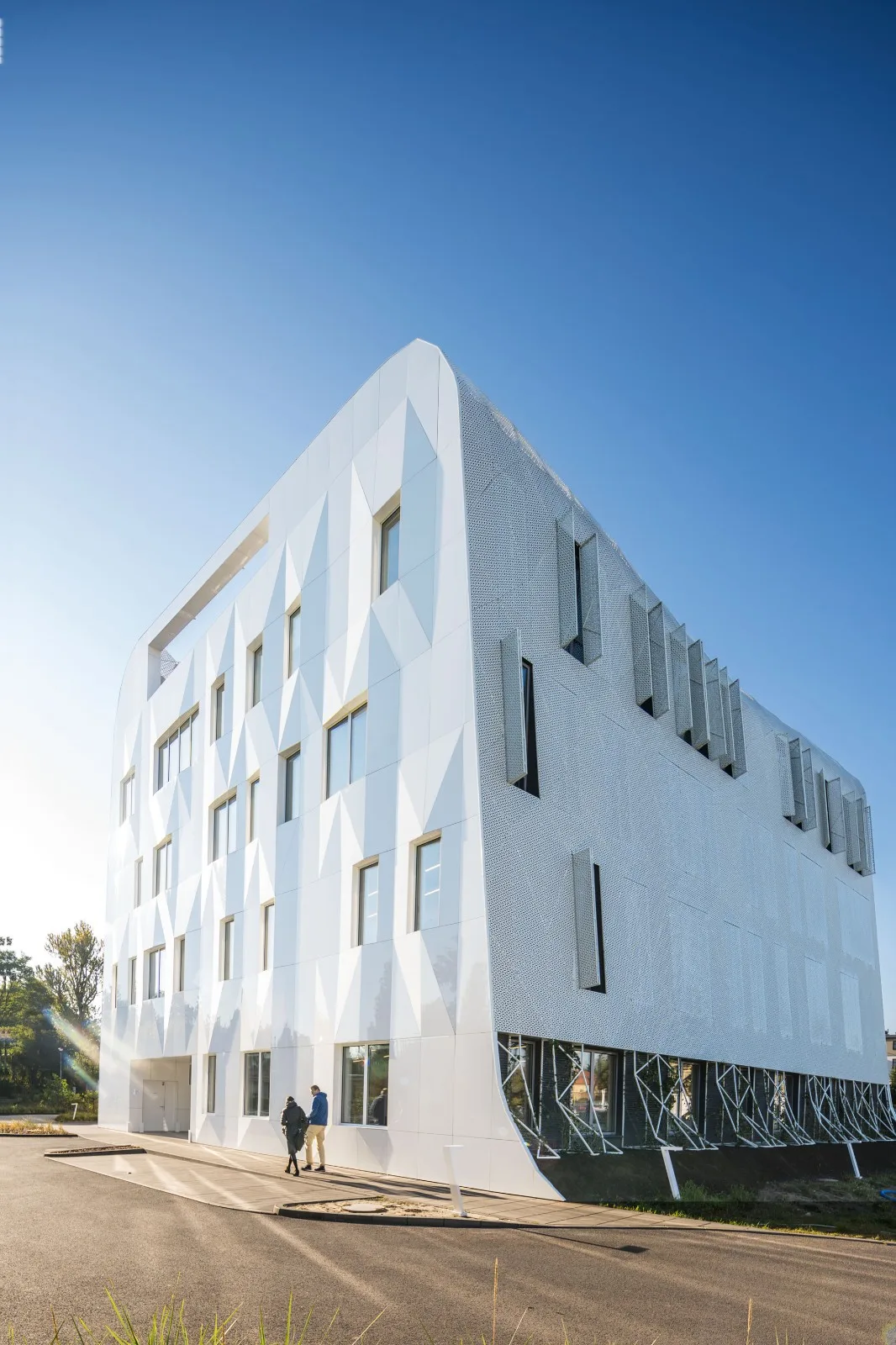
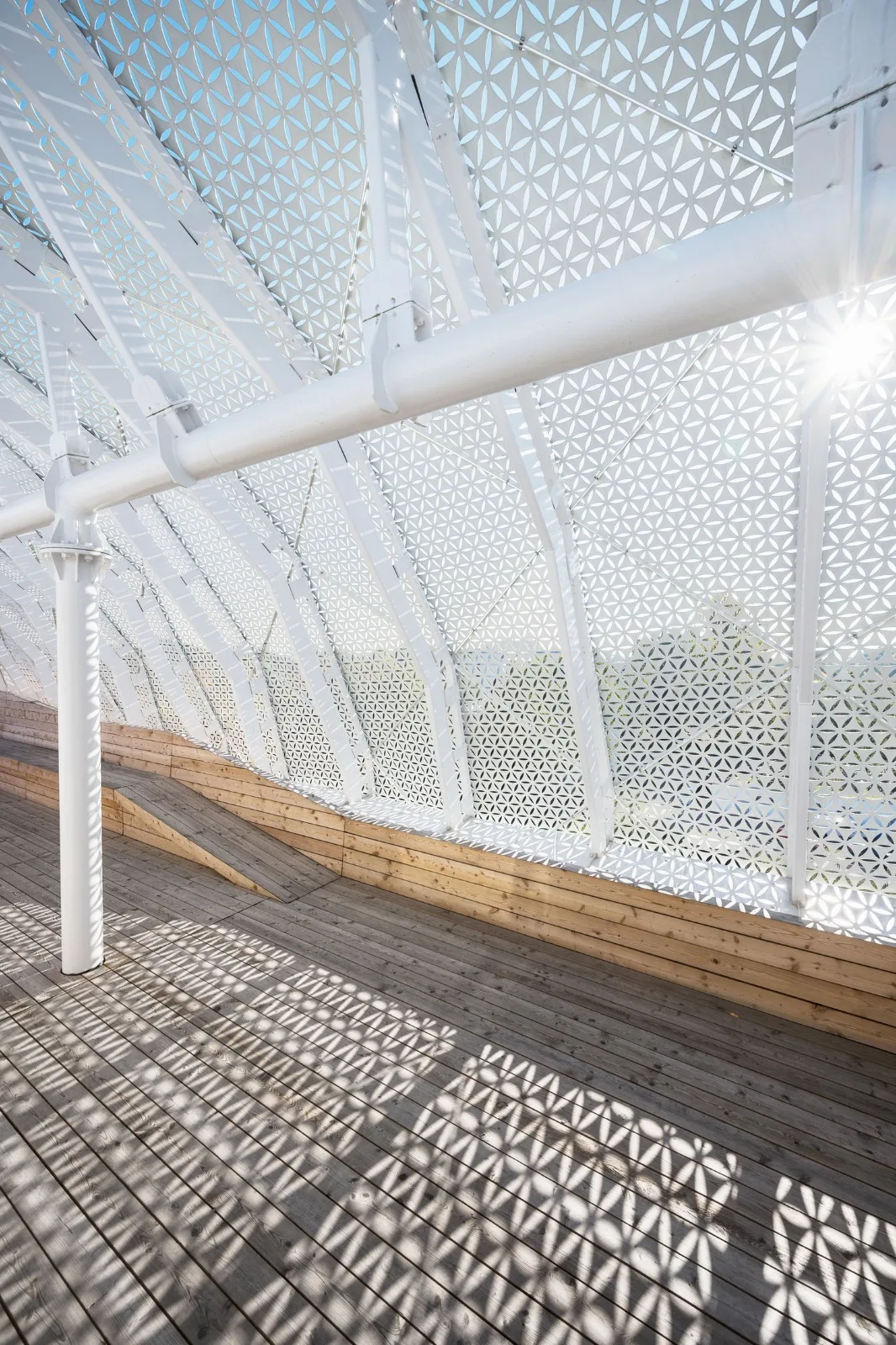
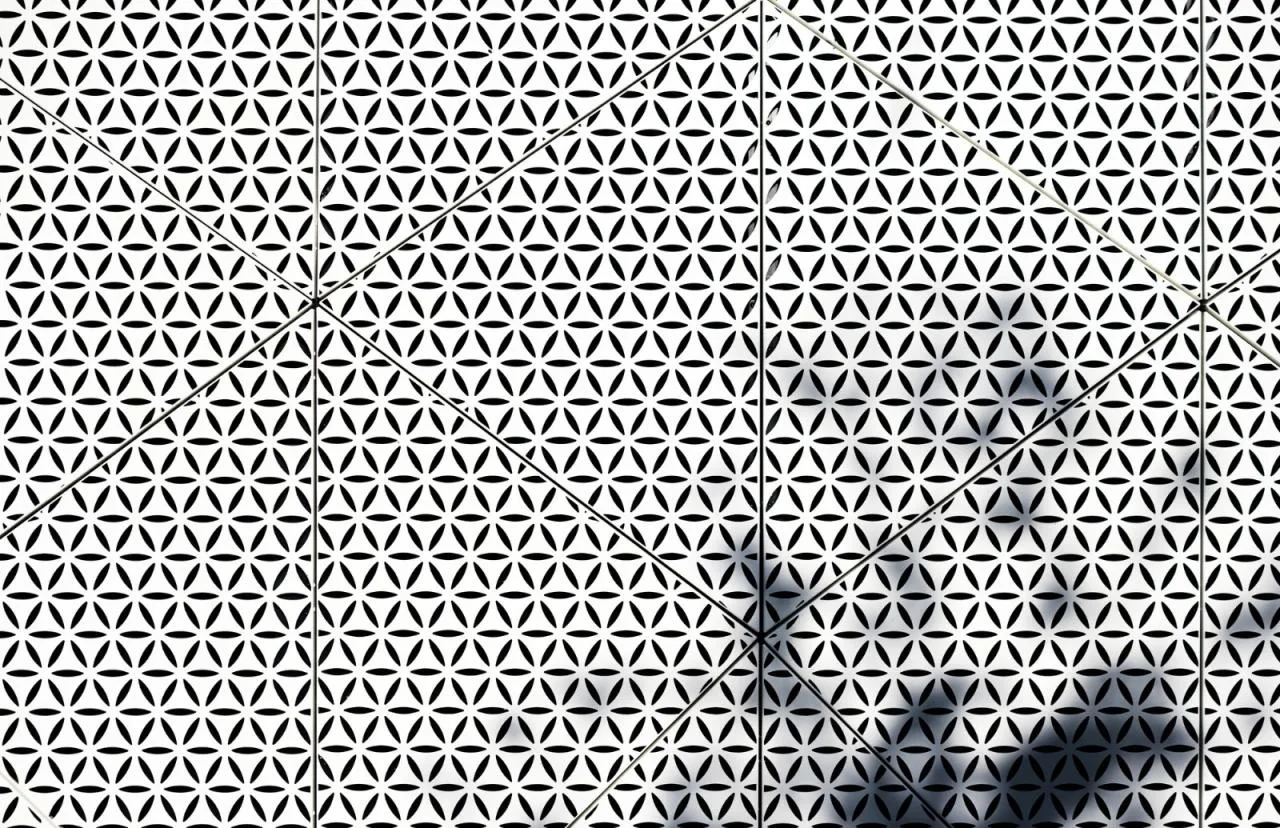
The perforated pattern on each panel carries symbolic significance, referencing two key elements: first, the local tradition of wood carving decorative details found on exterior walls; and second, the “Flower of Life,” an ancient pattern believed to possess healing powers, aligning with the healthcare brand identity of the investor.
These perforations also allow the building to “breathe,” creating a dynamic sense of space, especially prominent in the upper sections of the facade.
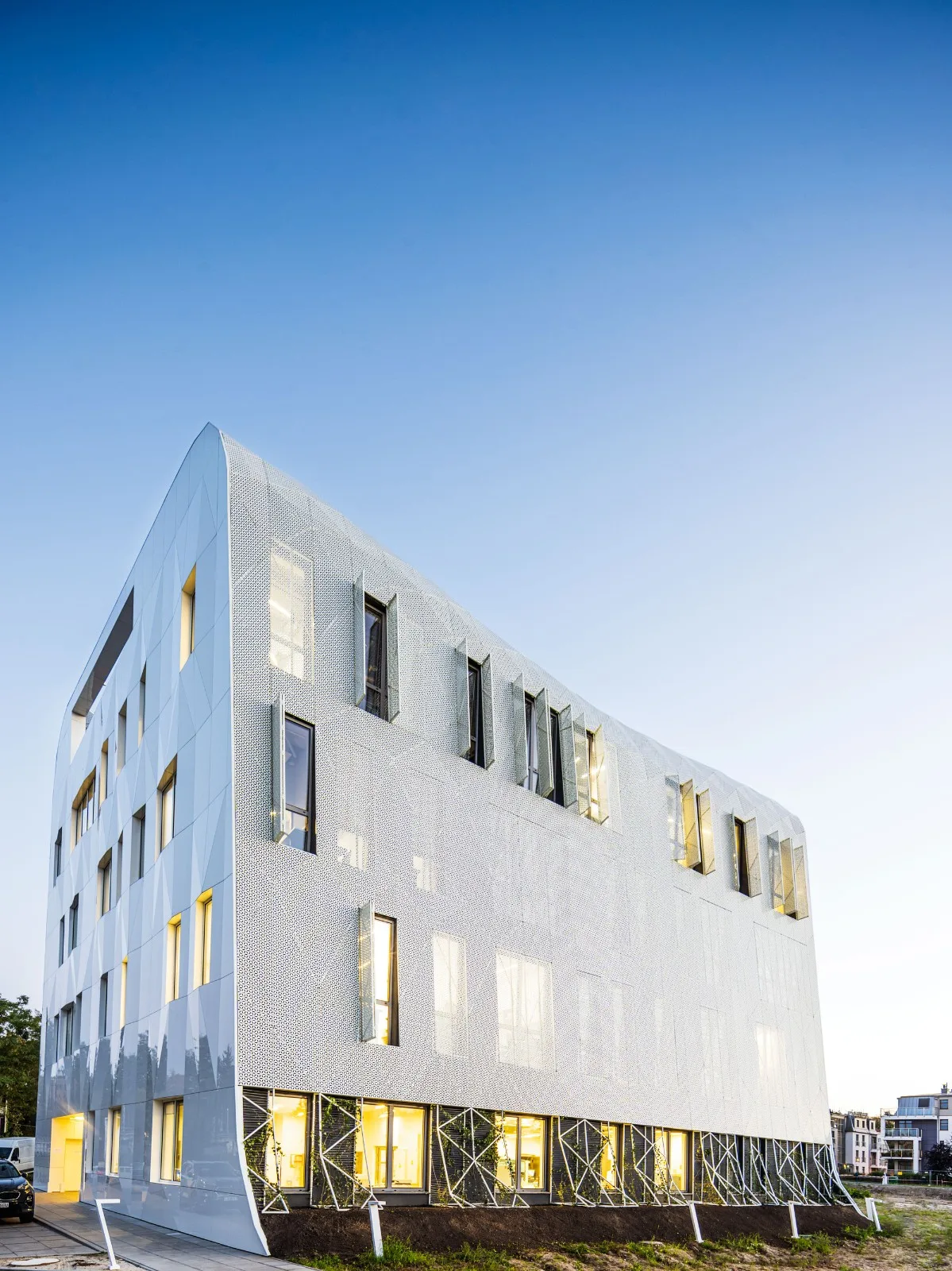
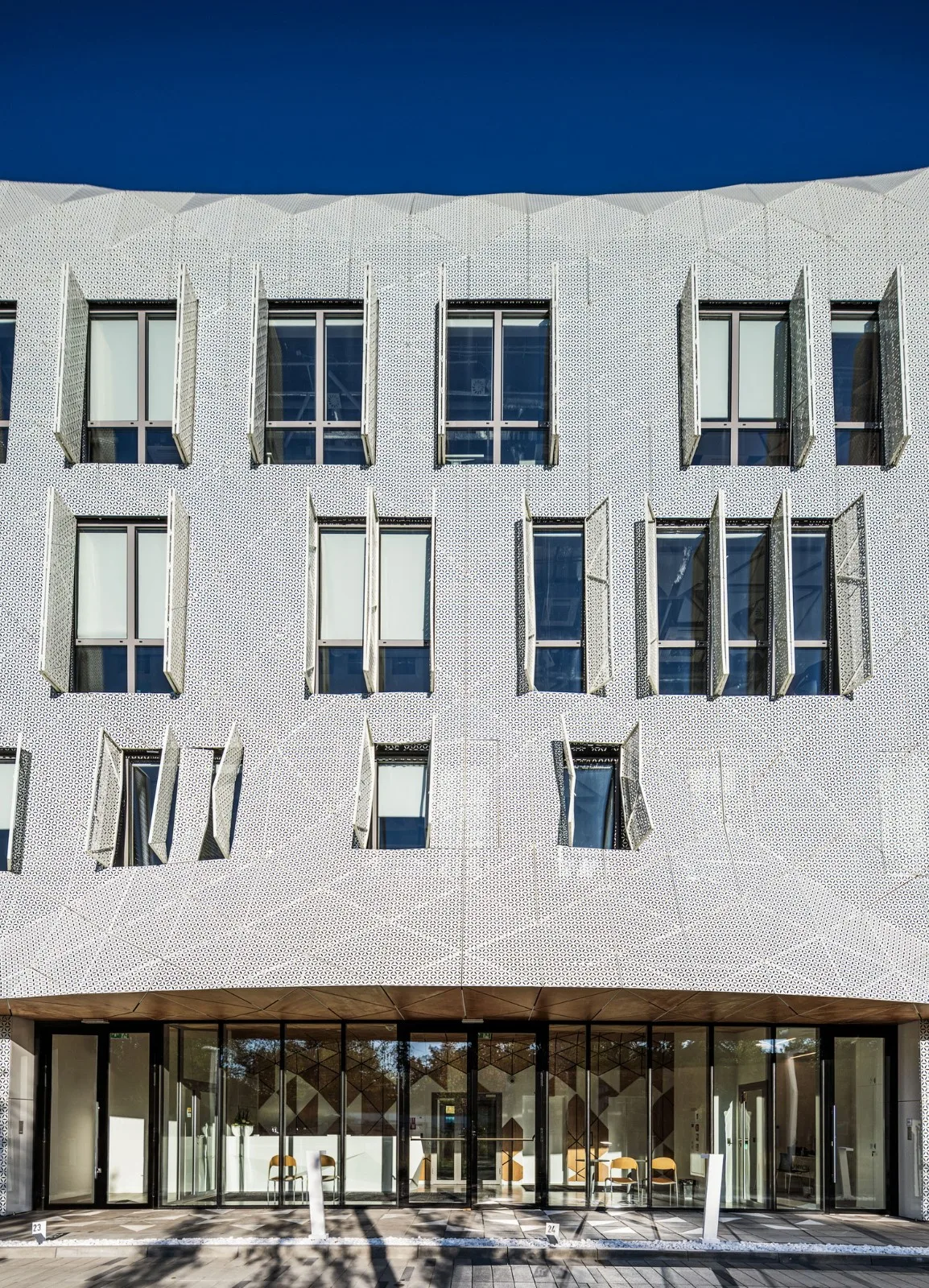
The east and west facades are clad in sintered white ceramic triangular panels, each with one corner slightly tilted outward. This design creates a three-dimensional effect while also reflecting sunlight onto the adjacent road, adding a lively detail that enriches the building’s surroundings.
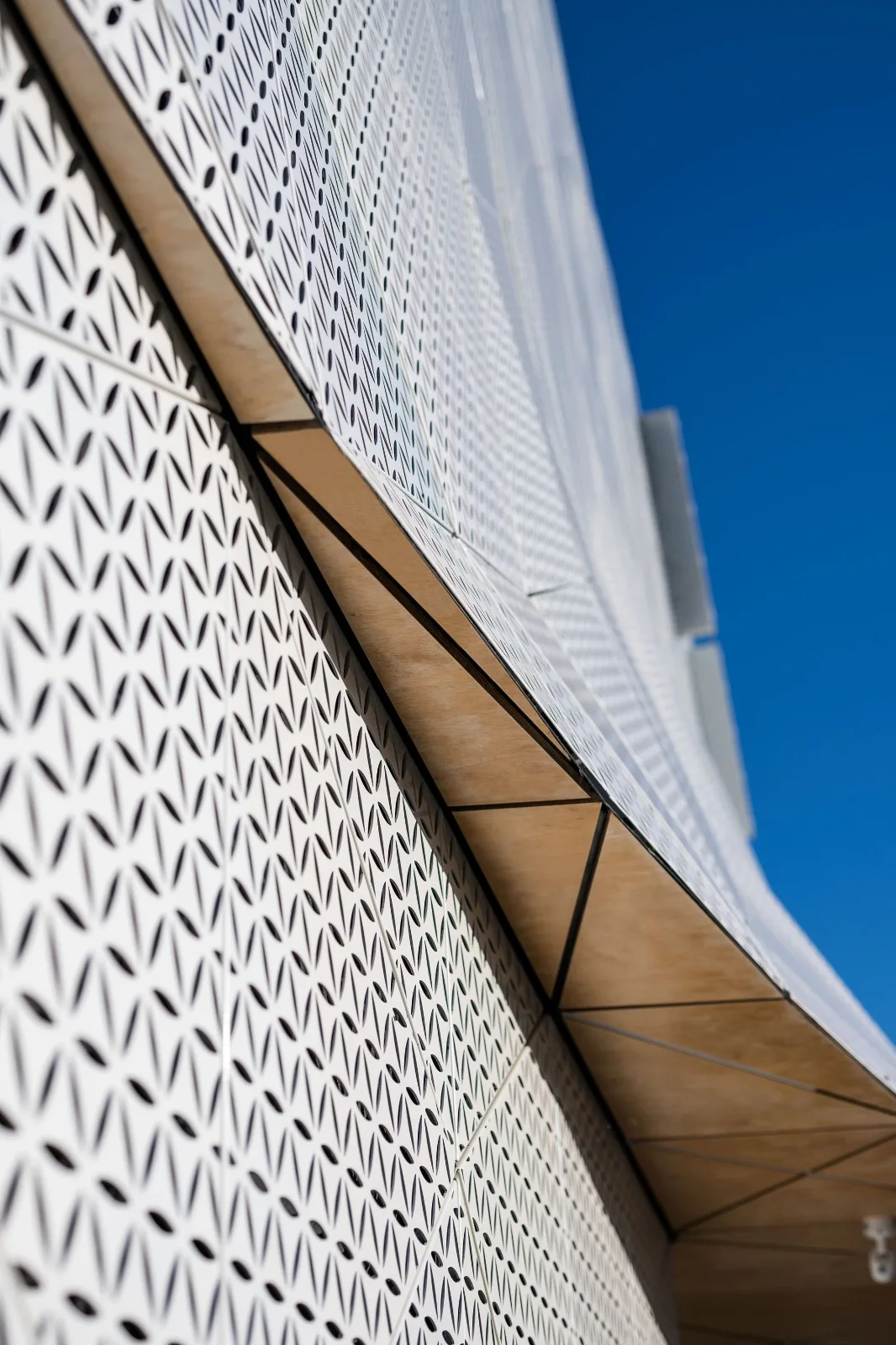
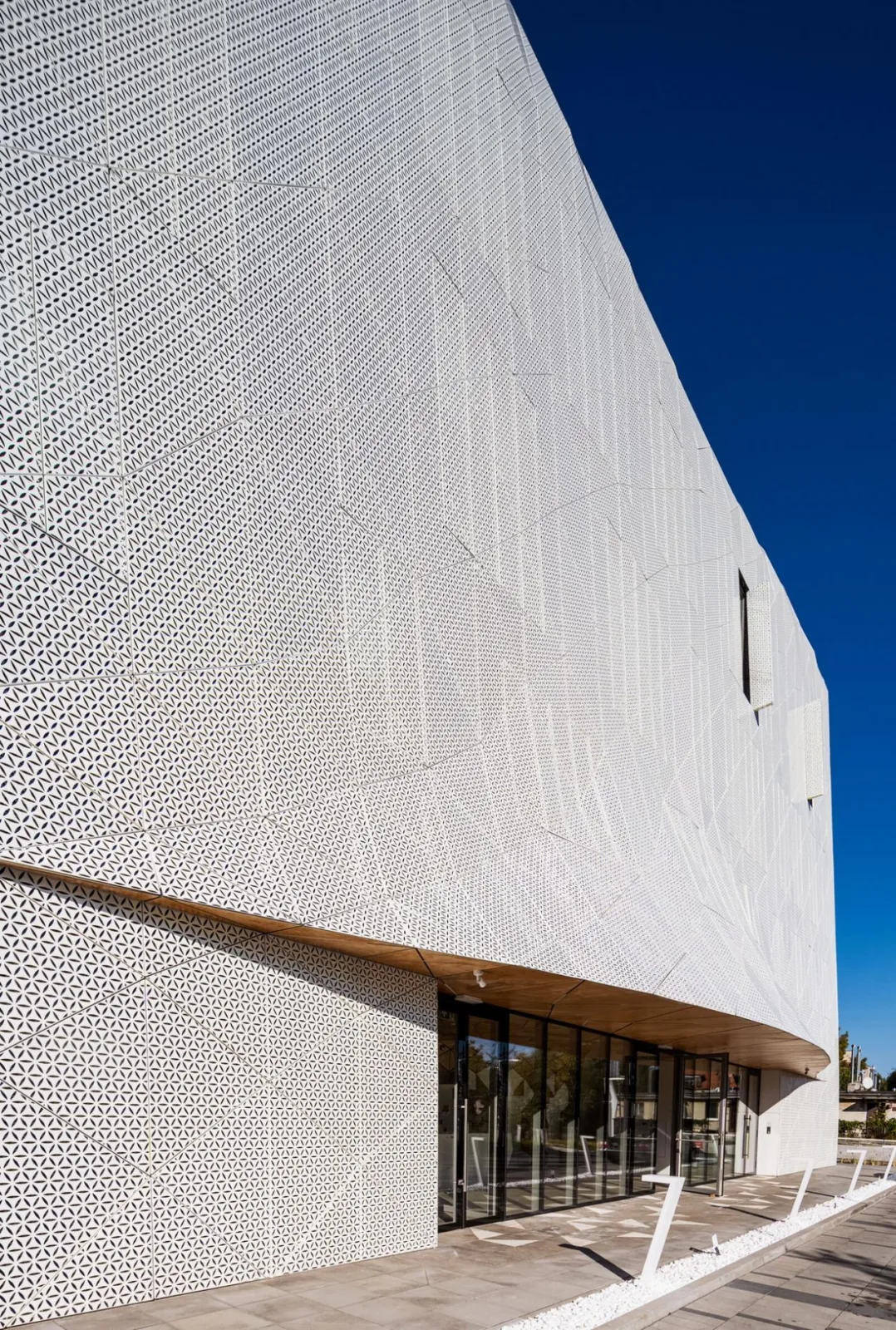
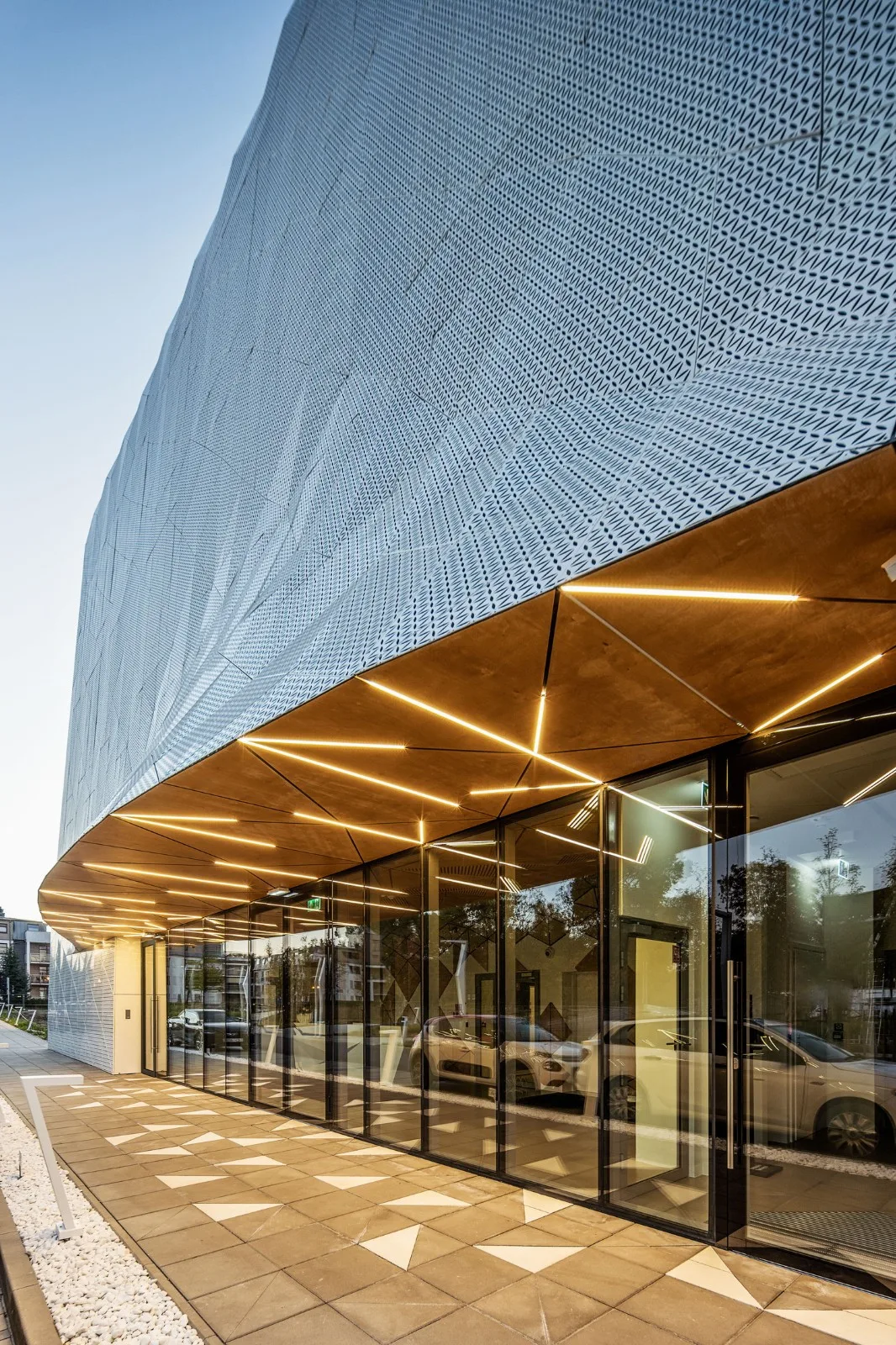
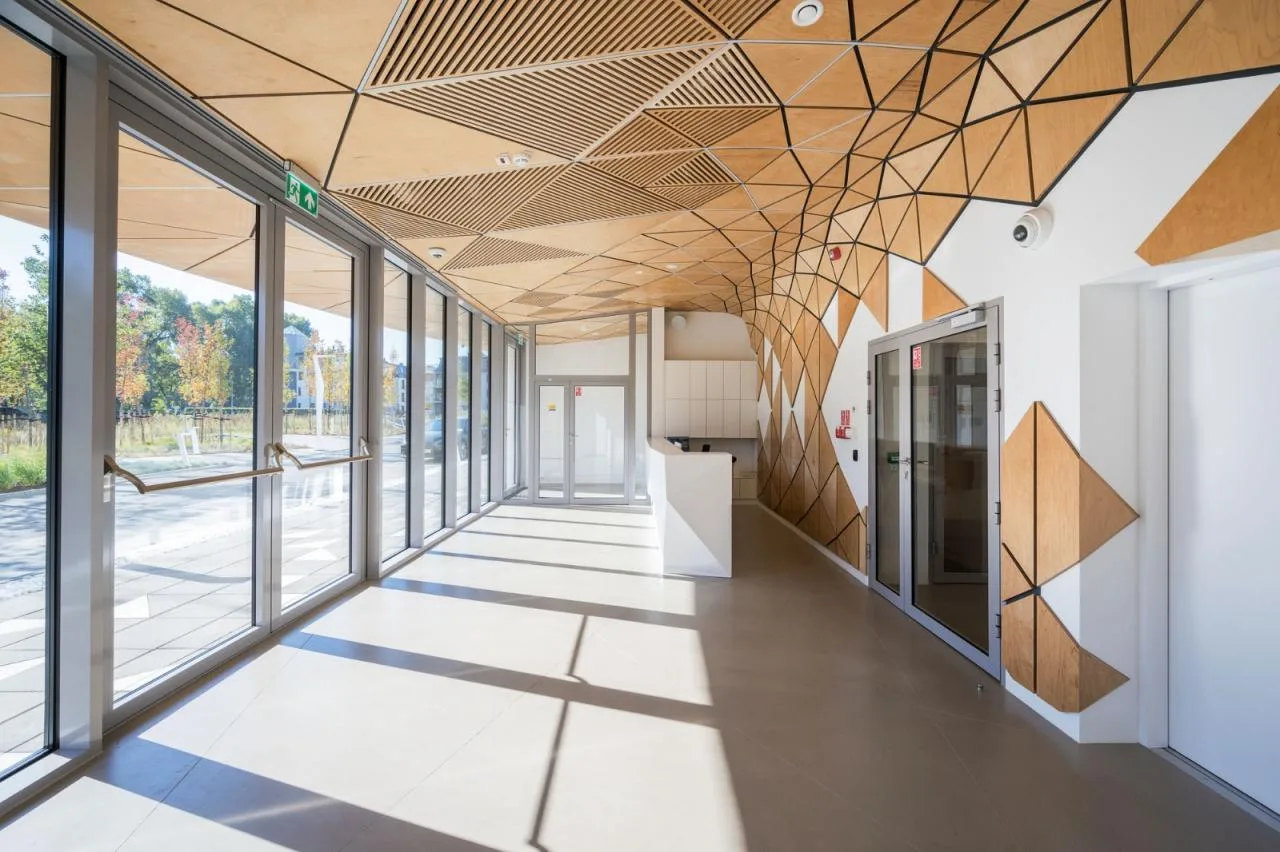
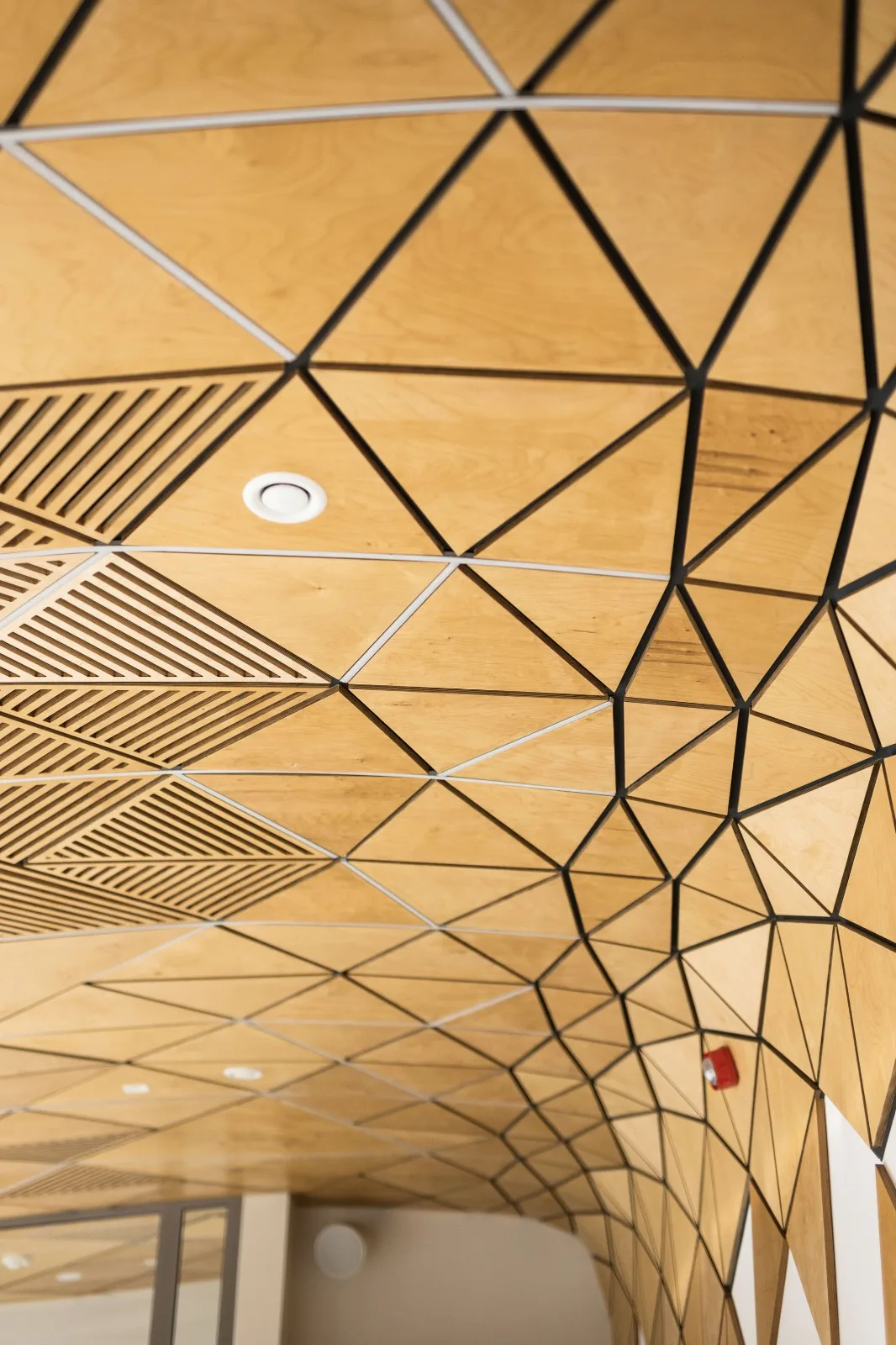
Some curves in the building’s design reference the concave shapes formed as waves descend after reaching their peak, inspiring the overall volume of the structure. The architect developed a digital 3D model for the curved canopy above the south entrance and collaborated with a local contractor to create a full-scale physical model.
To ensure seamless connections between adjacent panels and maintain the fluidity of the perforated pattern, careful adjustments were made during on-site installation. This process was particularly challenging due to the curvature layout and vertical deviations occurring along two facade axes, combined with the presence of movable louvers.
Project Drawings
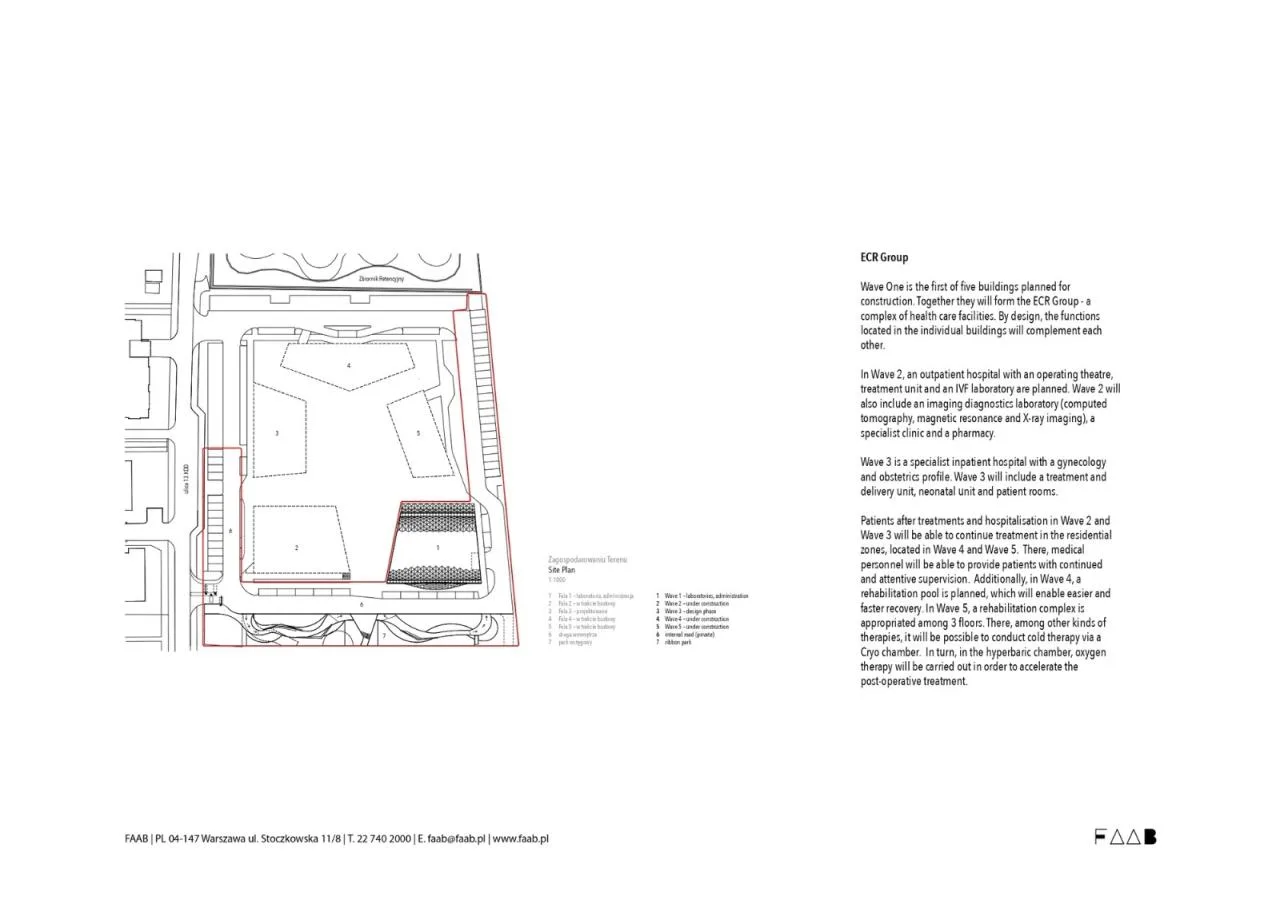
△ General Layout Plan
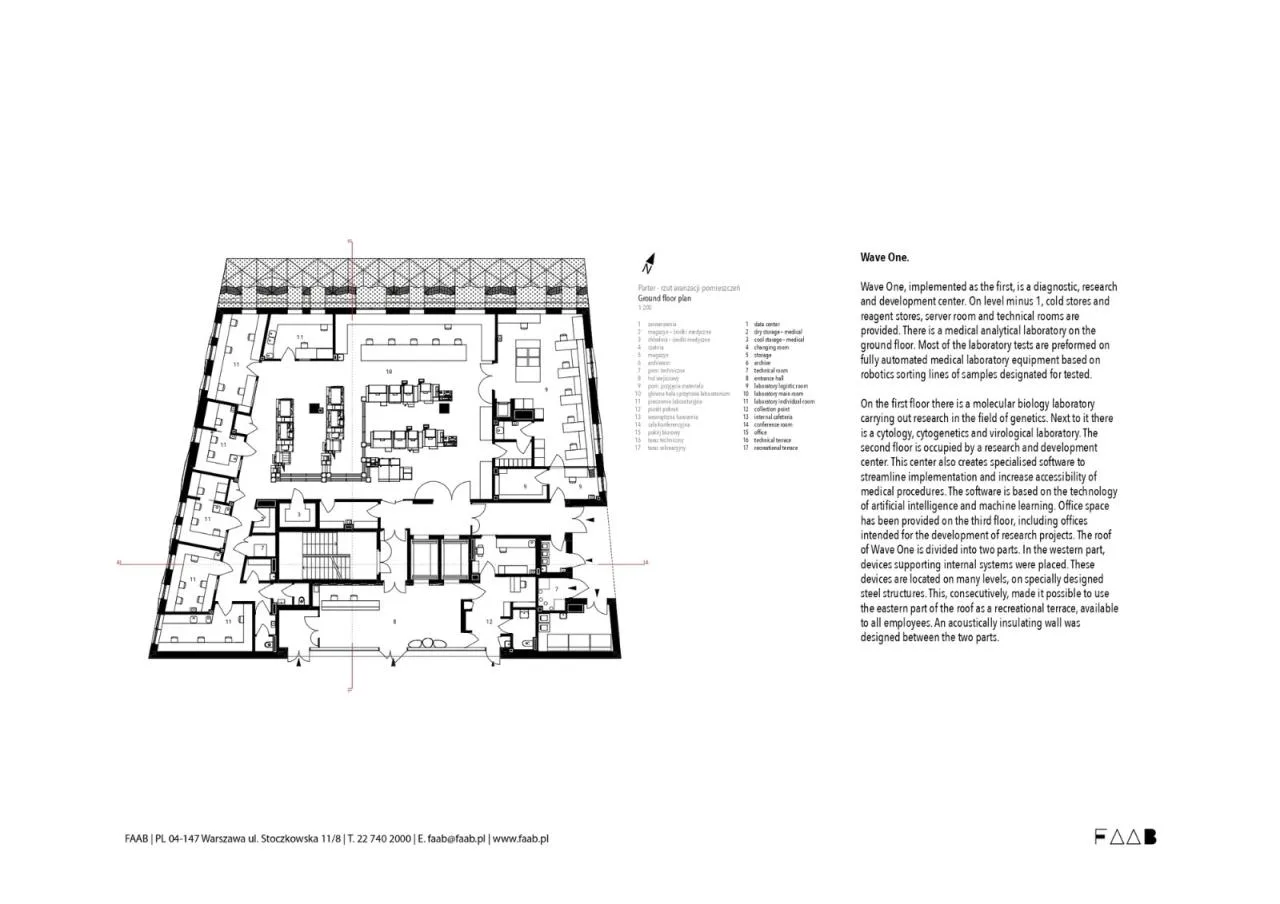
△ First Floor Plan
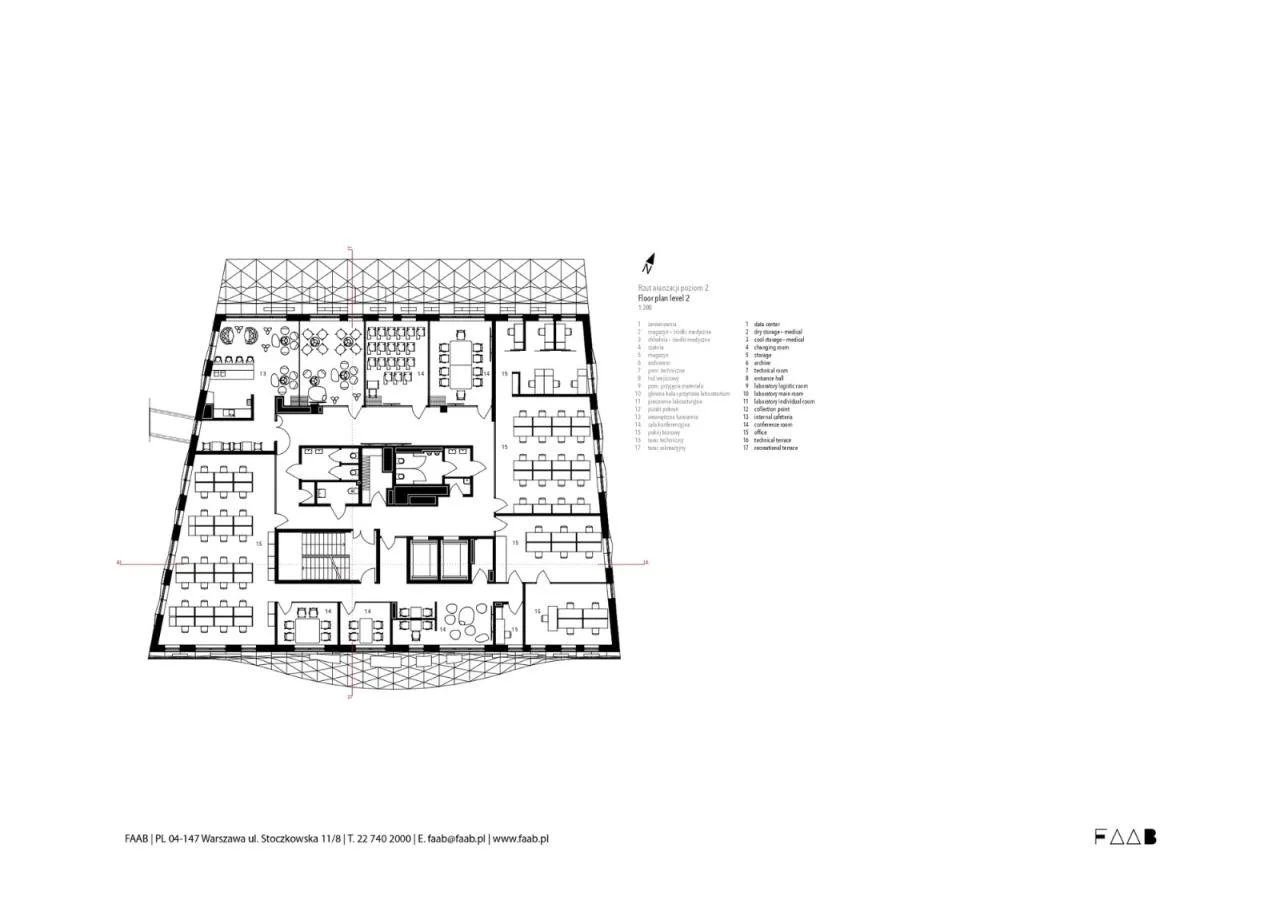
△ Second Floor Plan
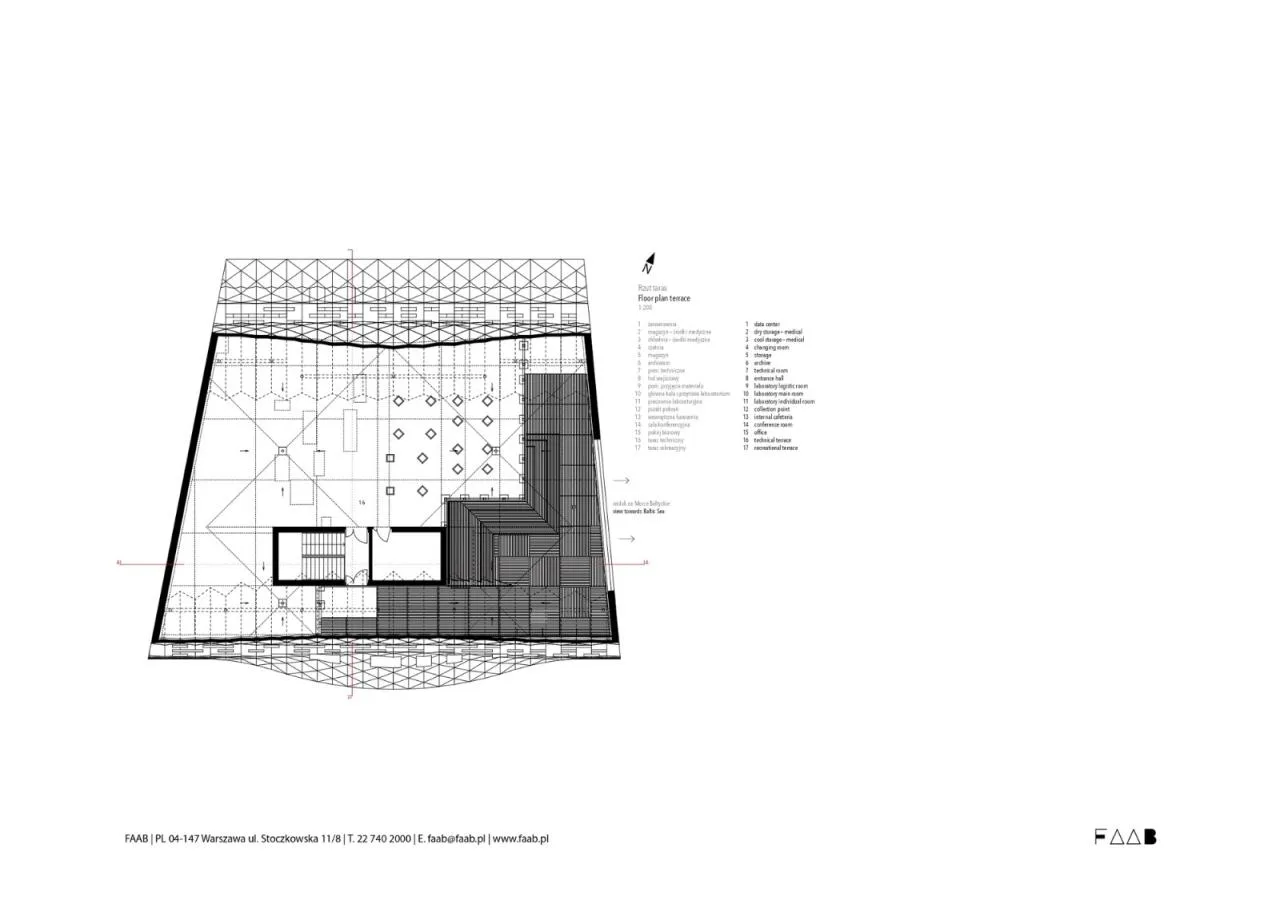
△ Third Floor Plan
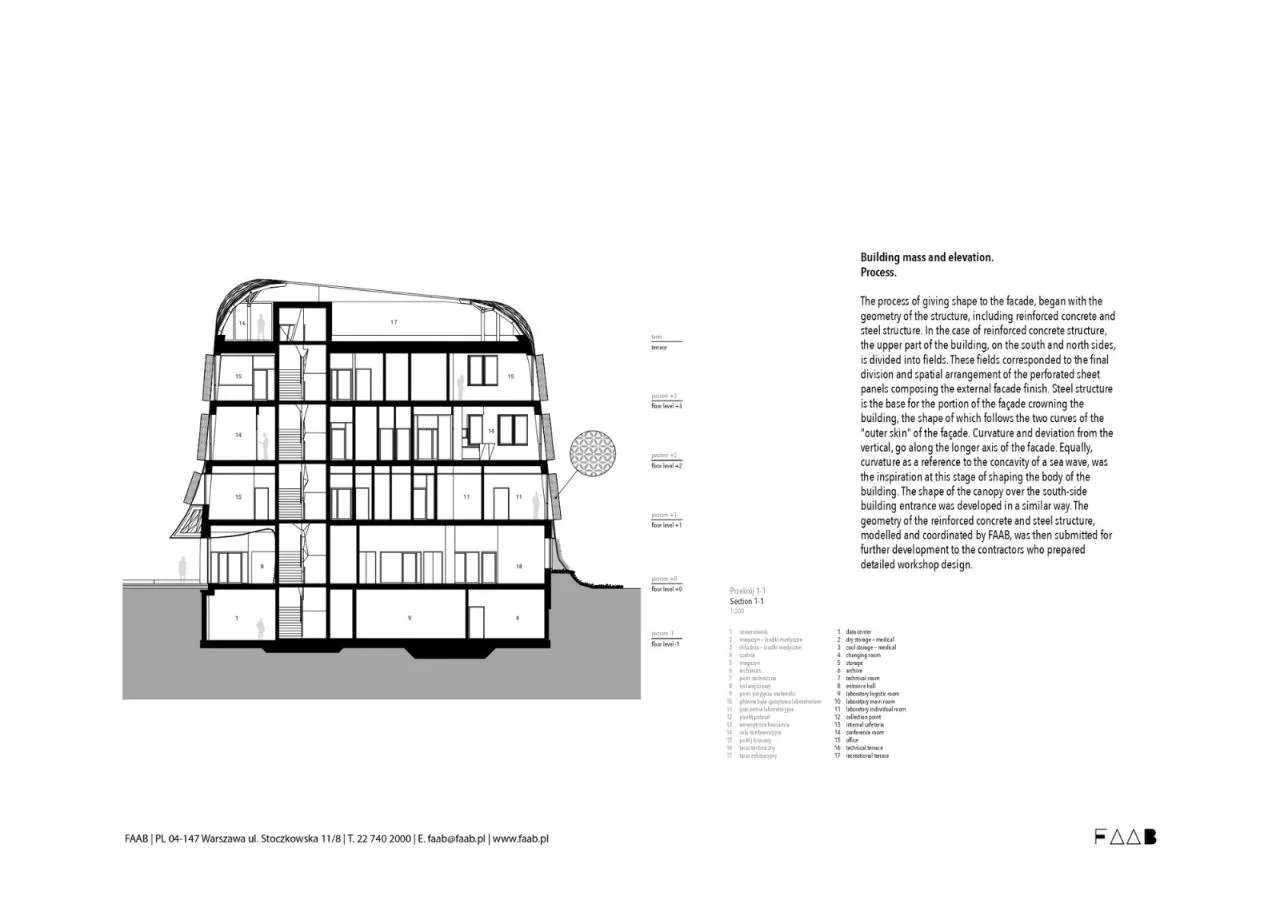
△ Section Diagram
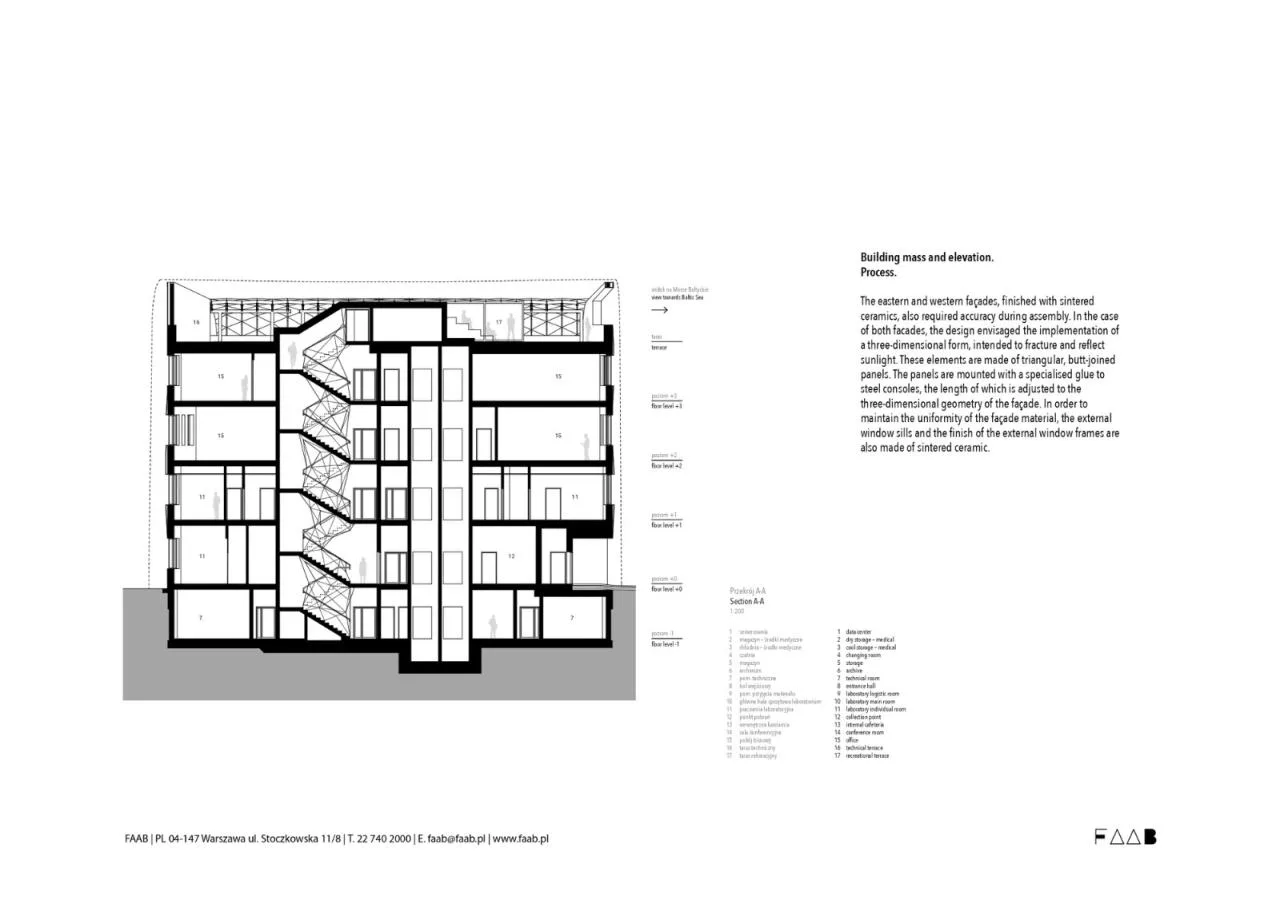
△ Section Diagram
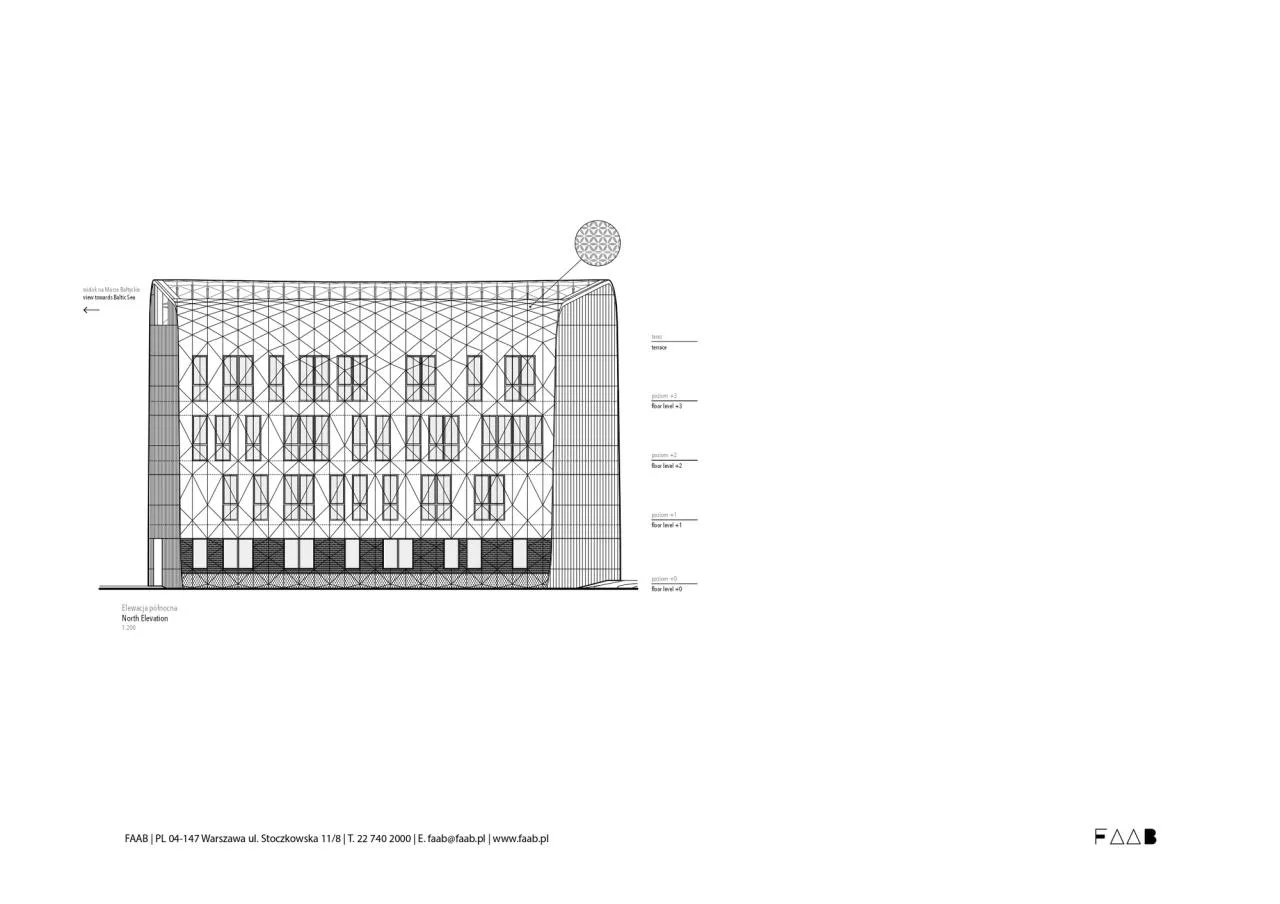
△ Elevation Drawing
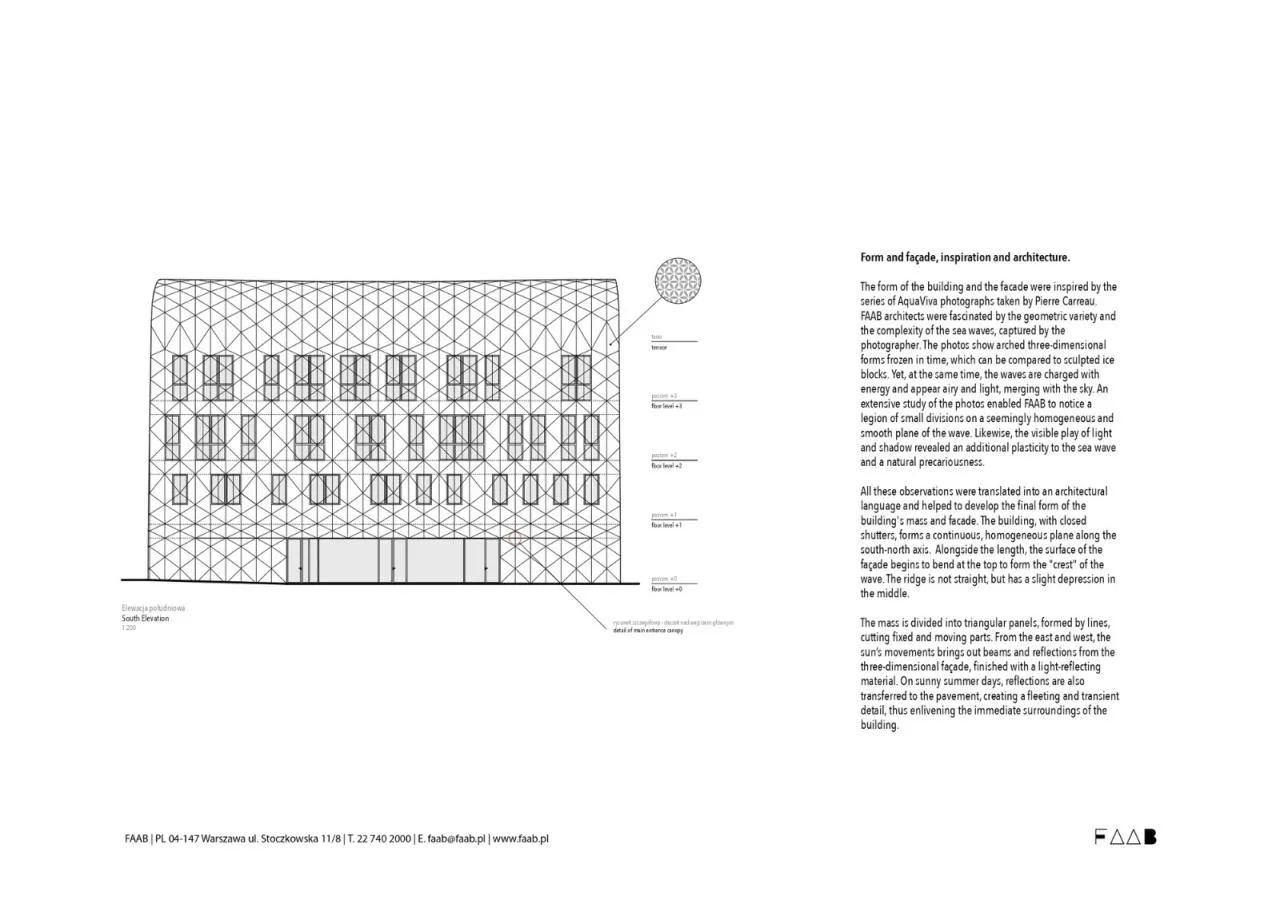
△ Elevation Drawing
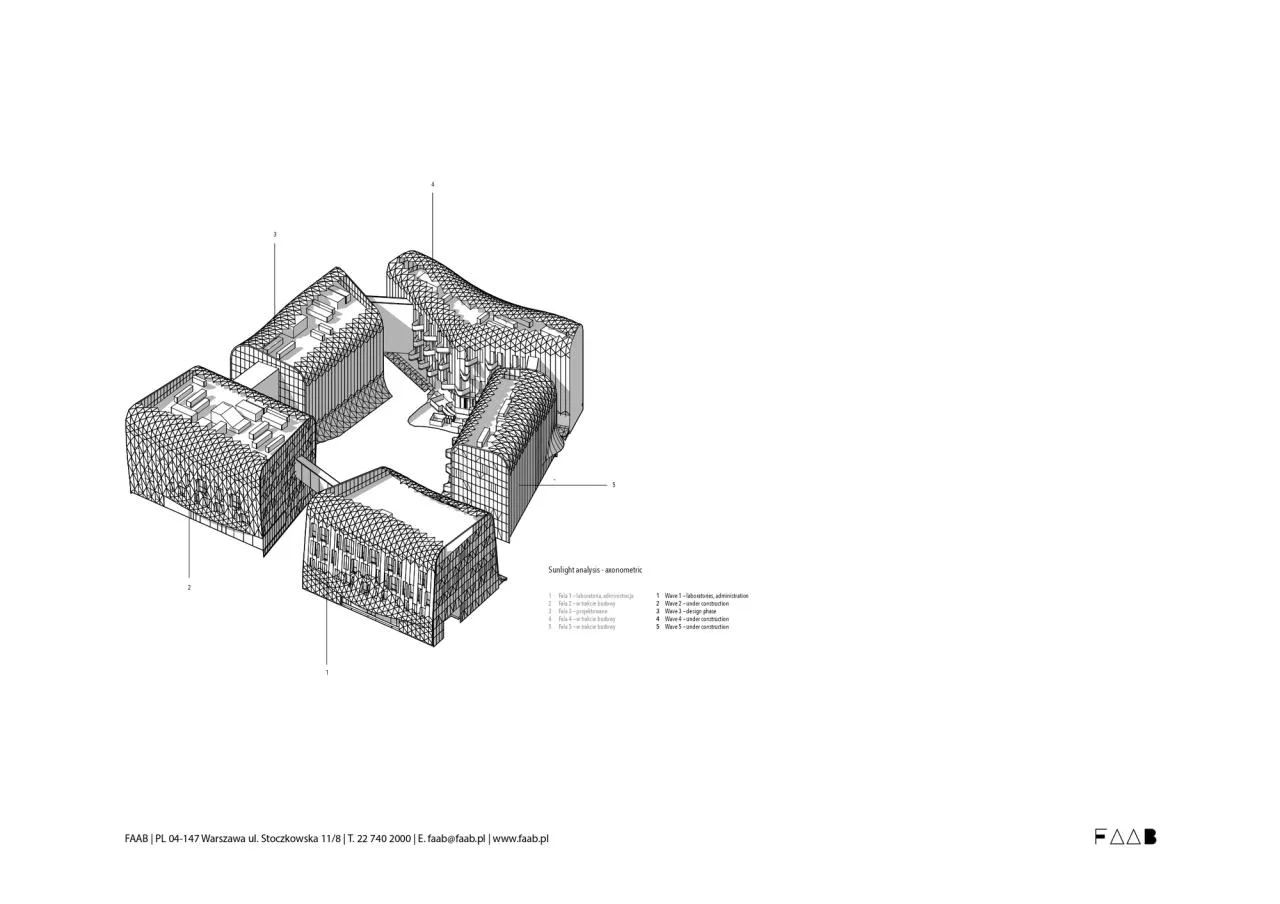
△ Axonometric Diagram
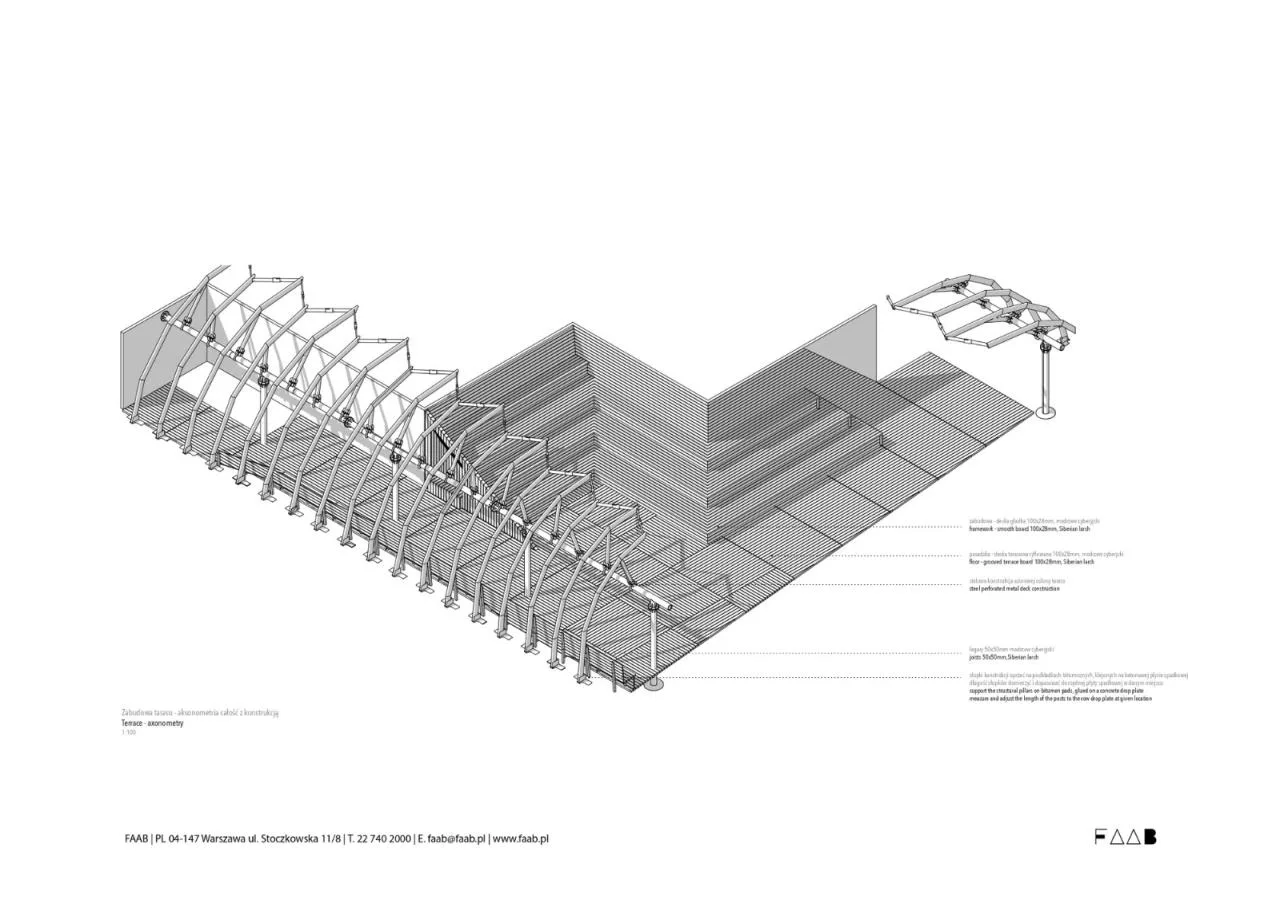
△ Analysis Chart
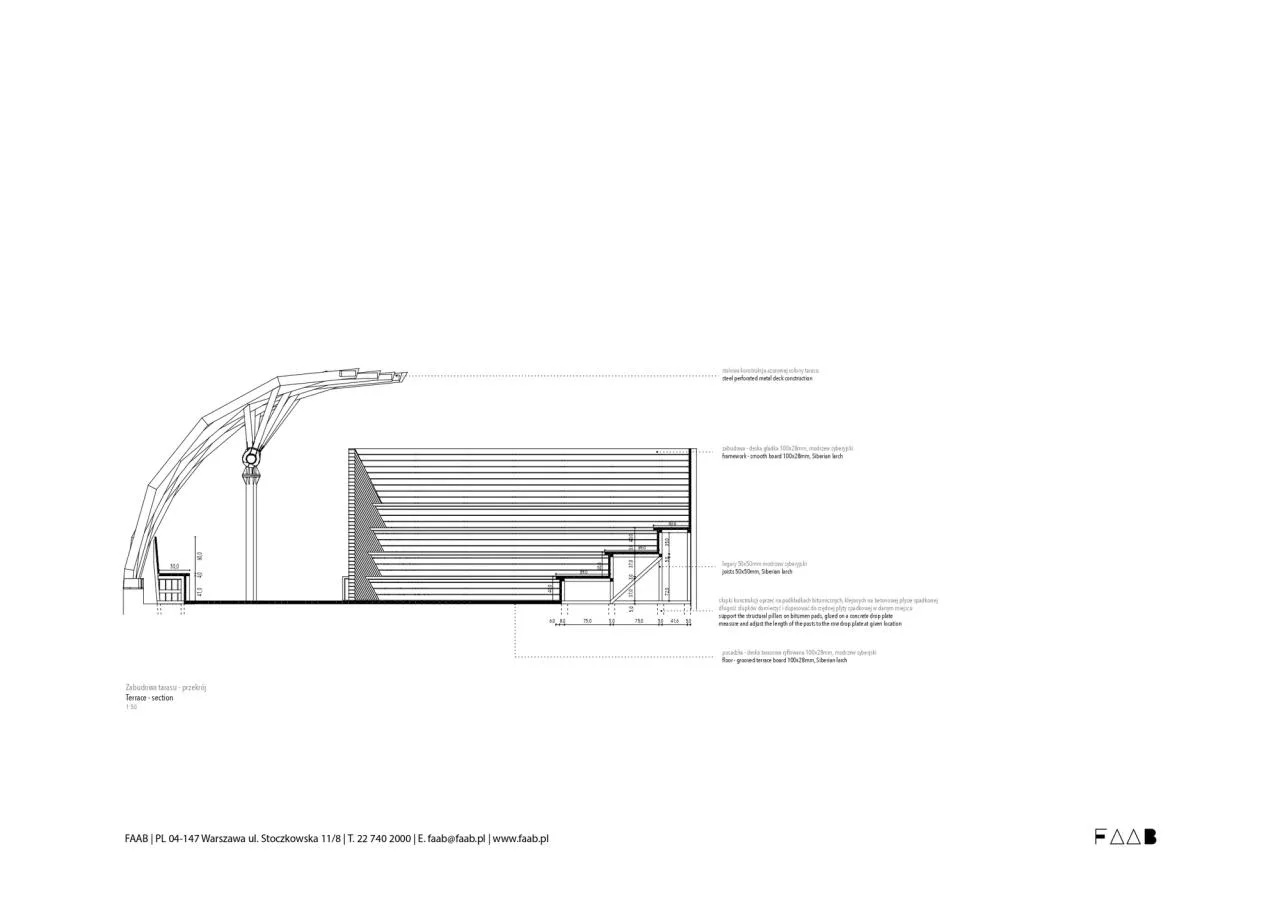
△ Analysis Chart
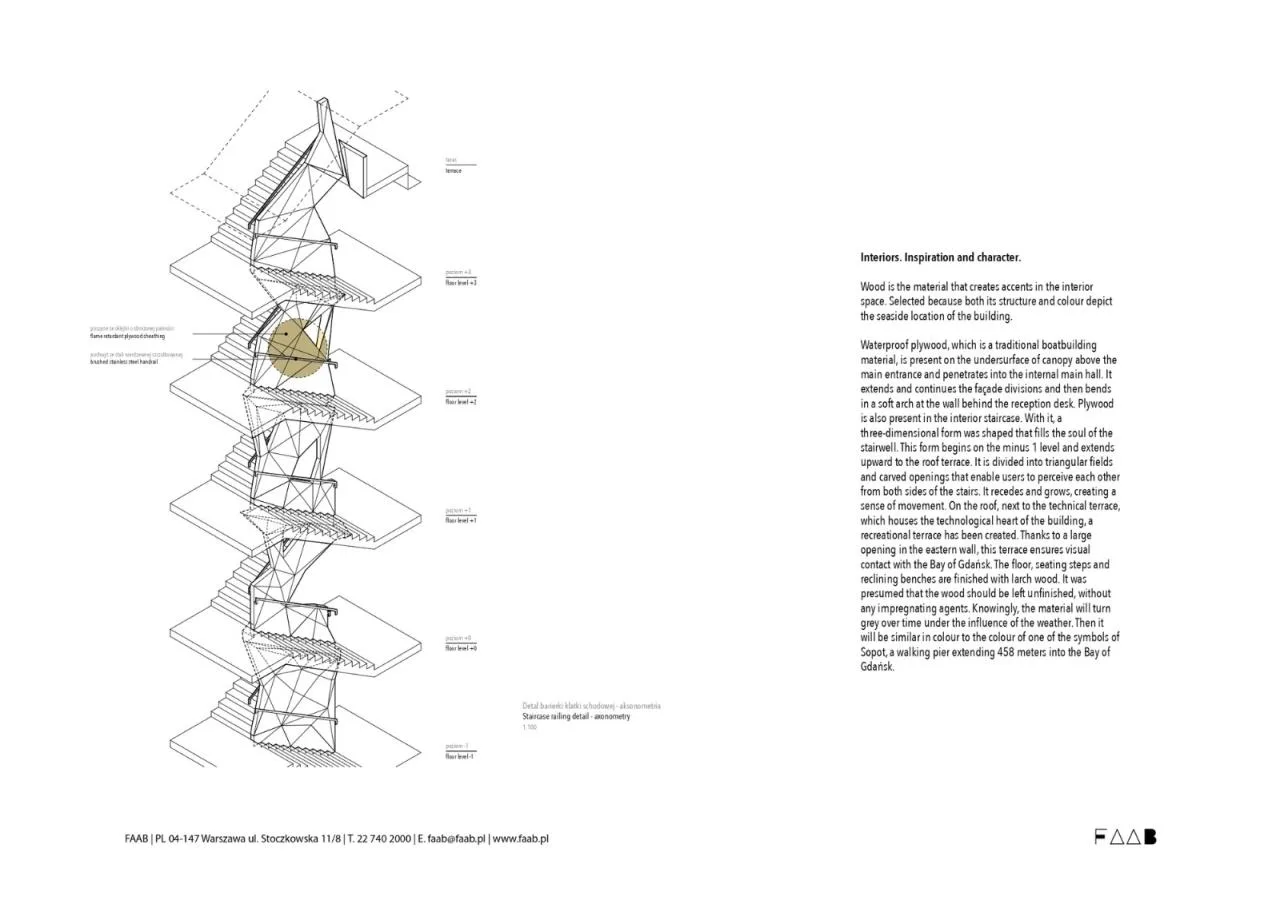
△ Analysis Chart
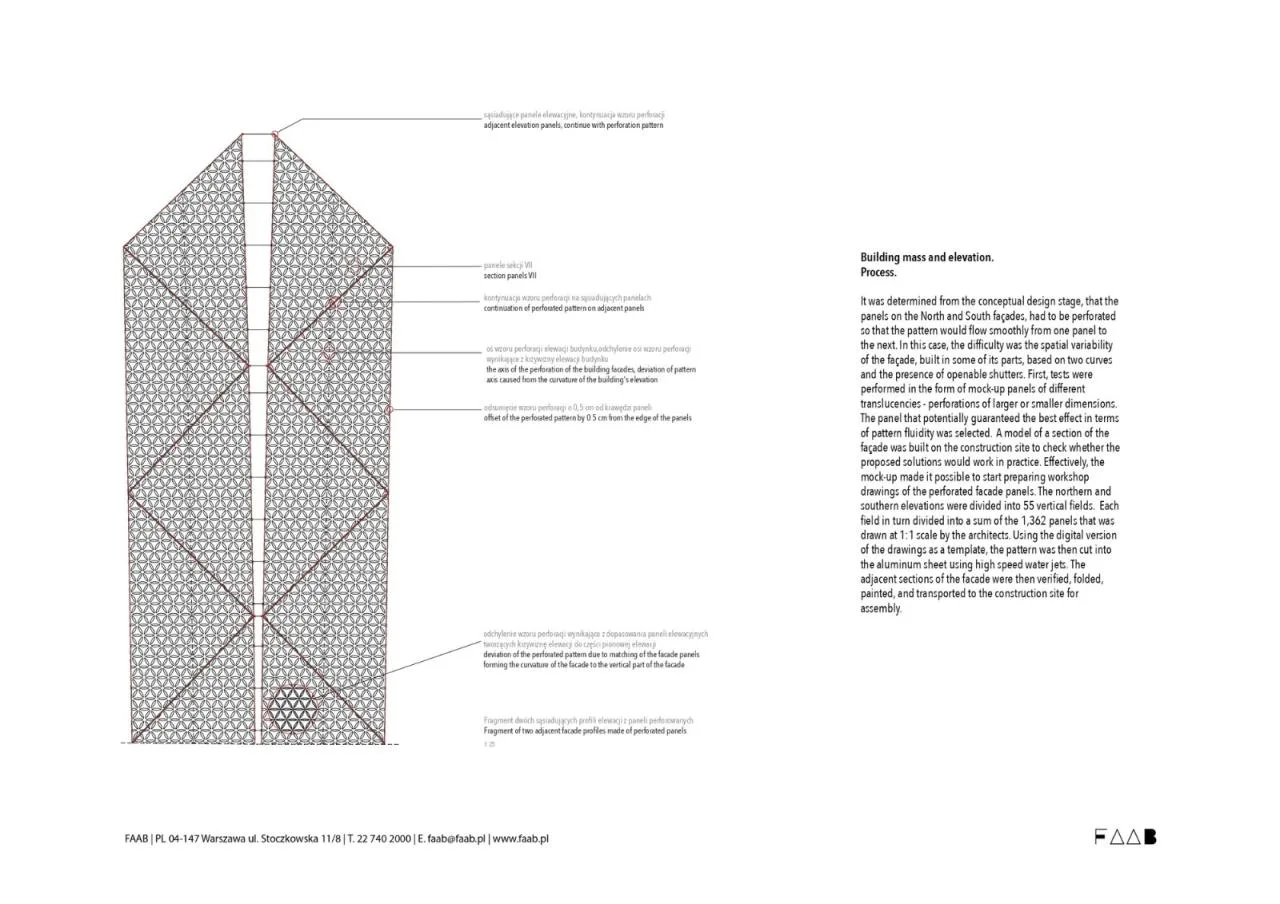
△ Analysis Chart
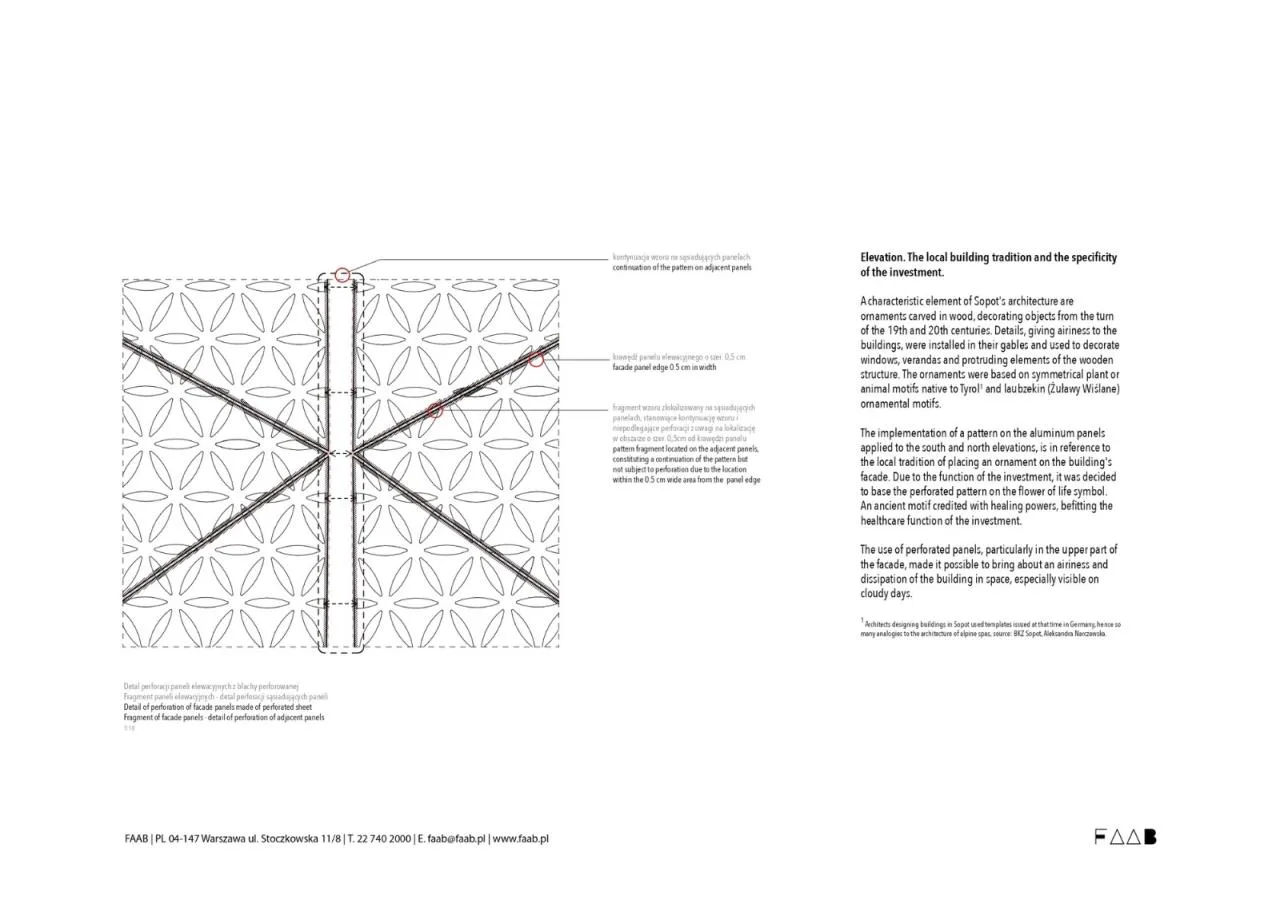
△ Analysis Chart
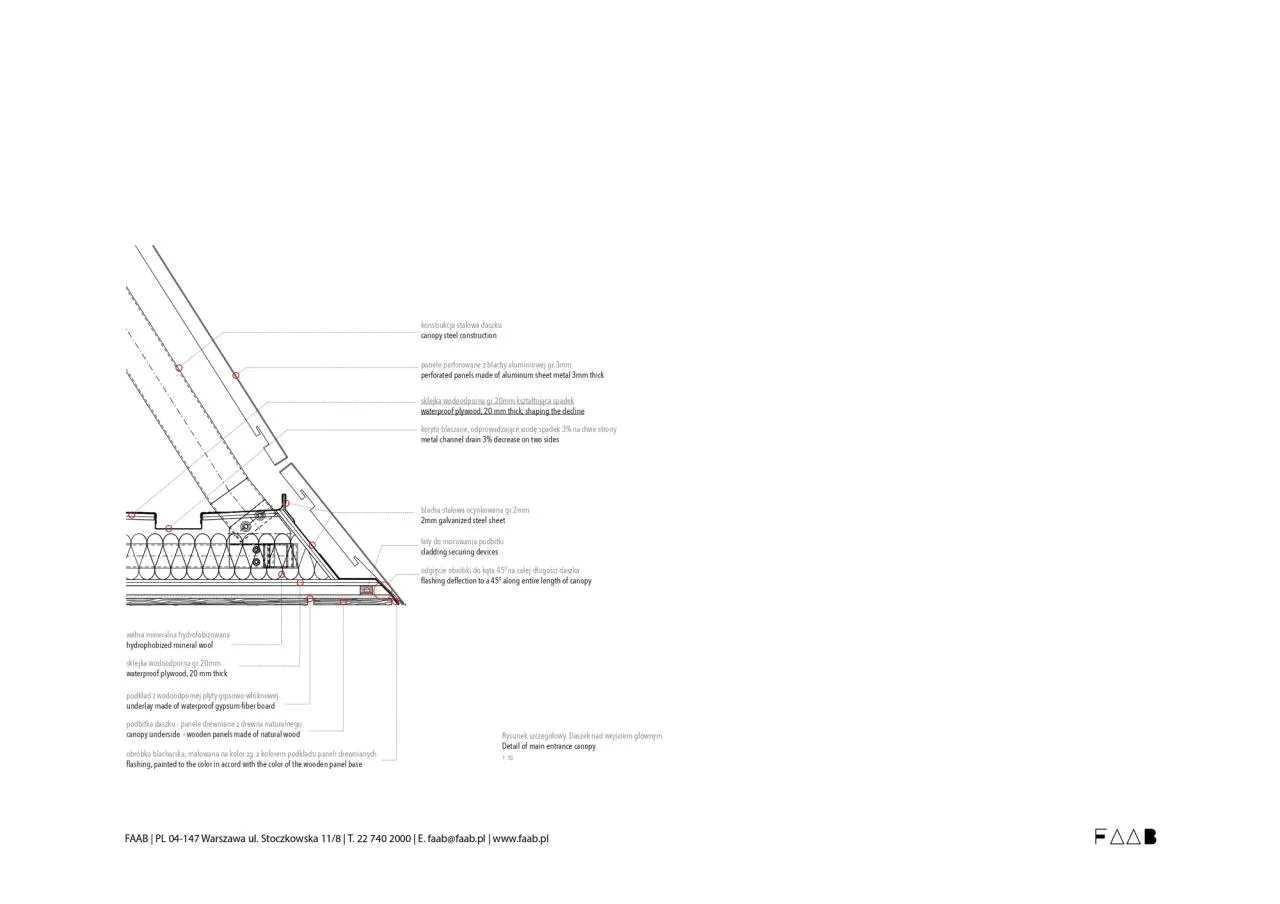
△ Analysis Chart
Project Information
Architectural Design: FAB
Area: 3,160 m²
Project Year: 2022
Photographer: Maciej Lulko
Suppliers: Aluprof, Audac, Bel Aqustic, HanseGrand Krystyna Bayer, Isinac, Koło Geberit Group, Laminam, Lira Lighting, Mosa, PURE, Paged, Polbruk, Sika, Swan luminaire bollard, Tarkett, Teknos
Architects: Adam Białobrzeski, Adam Figurski, Maria Messina, Anna Miłosz, Mikołaj Szewczyk
Construction Management: Michał Buturla
Construction Project Management: Tomasz Olkowski
Location: Sopot, Poland













Must log in before commenting!
Sign Up