
1. Project Origin: Planning for the Protection and Renovation of Characteristic Villages and Towns
This project focuses on preserving and enhancing the unique characteristics of rural areas in Guanzhong, Shaanxi Province, within the broader context of rural revitalization. Centered on Weinan Nanjiao Village, the initiative is part of the “13th Five-Year Plan” key R&D cooperation project titled “Characteristic Village and Town Functional Enhancement Technology from the Perspective of Industrial Development Mutual Promotion.” Rooted in the village’s natural endowments and distinctive traits, the project delves deeply into historical and cultural heritage to create engaging rural activity spaces.
Alongside cultural preservation, the project addresses essential infrastructure improvements such as village waterlogging ponds and drainage channels. Employing a collaborative construction model of resident designers + rural infrastructure teams, it leverages local materials and traditional techniques to raise the quality of the rural living environment, establishing a demonstrative example for rural revitalization.
The nation’s 14th Five-Year Plan emphasizes the importance of rural construction in socialist modernization, prioritizing optimized production and living ecological spaces, improved village aesthetics, and better living conditions to build beautiful and livable villages. In response to common challenges faced by Guanzhong rural areas—such as lack of distinctive features, insufficient public spaces, incomplete infrastructure, and poor living environments in Nanjiao Village—the design integrates local materials with villagers’ functional needs, harmonizing historical preservation, cultural inheritance, and functional enhancement. This approach serves as a valuable practice for rural revitalization in the Guanzhong region.
2. Introduction to Nanjiao: A Rural Area Rich in Historical Heritage
Nanjiao Village is situated in Xinyi Street, Economic Development Zone, Weinan City, Shaanxi Province. Historically, the Jiao family ancestors migrated here from Nanbalijiao Village, Licheng County, Jinan, Shandong Province, to escape wars during the late Yuan and early Ming Dynasties. The village is home to a 300-year-old locust tree and significant cultural relics including Guanyin Temple, a stone memorial archway, an ancient well, and the Jiao family courtyard. Unfortunately, due to inadequate protection and utilization, many of these relics have fallen into neglect, with some overtaken by weeds and farmland, and have faded from villagers’ collective memory.
Culture functions as a powerful tool to evoke nostalgia, establish shared emotions, rebuild community pride, and foster common beliefs, allowing everyone to partake in cultural value and joy. It is essential for rural revitalization. Moreover, a well-preserved rural landscape connects history and collective memory. Exploring and passing down unique historical and cultural genes in contemporary rural development adds great value to enriching rural cultural landscapes.
Nanjiao Village boasts abundant natural and cultural resources that can be further leveraged. The renovation adopts the philosophy of “small and beautiful is better than large,” focusing on rural micro-renewal through creating small scenes and targeted repairs to enhance the village’s overall value. This micro-update approach aligns with rural developmental patterns, is easier to manage, and avoids disruptive large-scale changes to existing rural spaces and living environments (notably respecting homestead usage rights). Since rural residential land is sacred and inviolable, priority is given to enhancing village public spaces such as small squares, streets, alleys, and surrounding historical relics. The challenge lies in creatively using small spaces, clever techniques, and low investment to craft captivating small scenes.
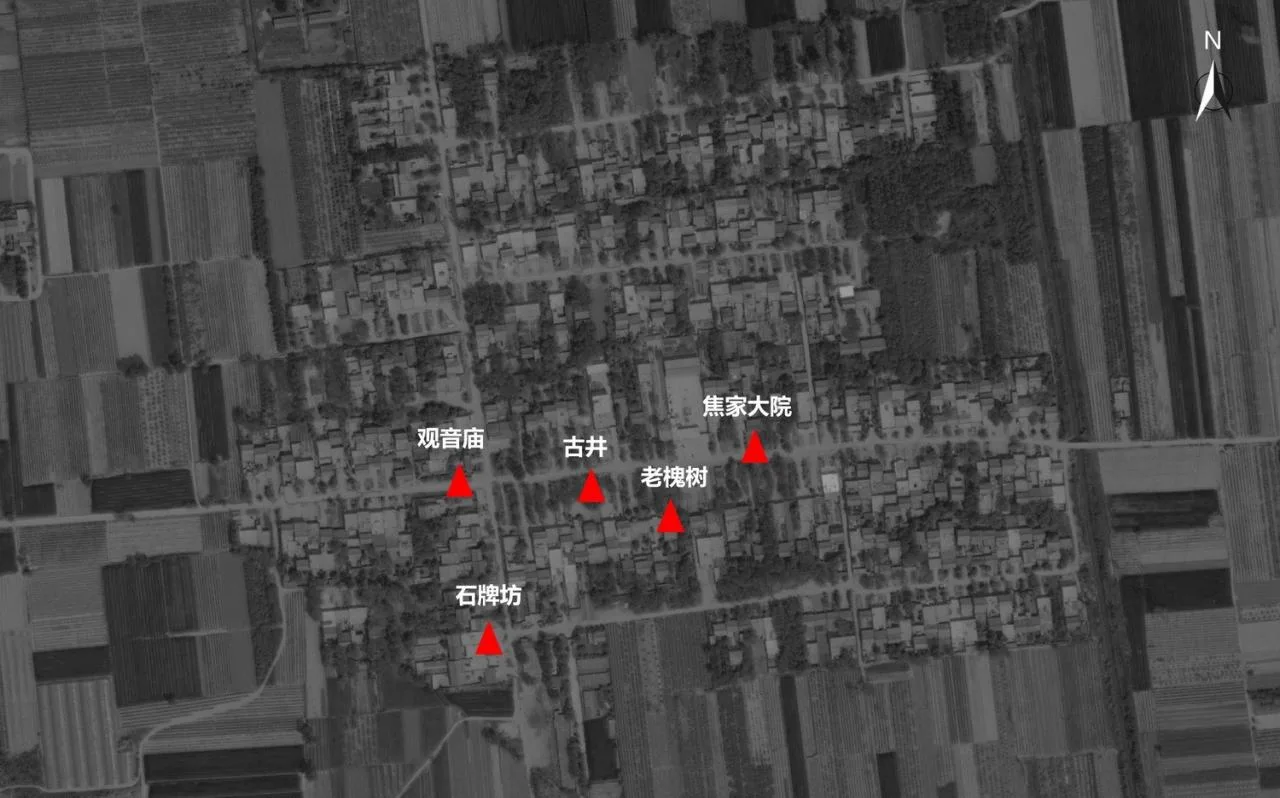
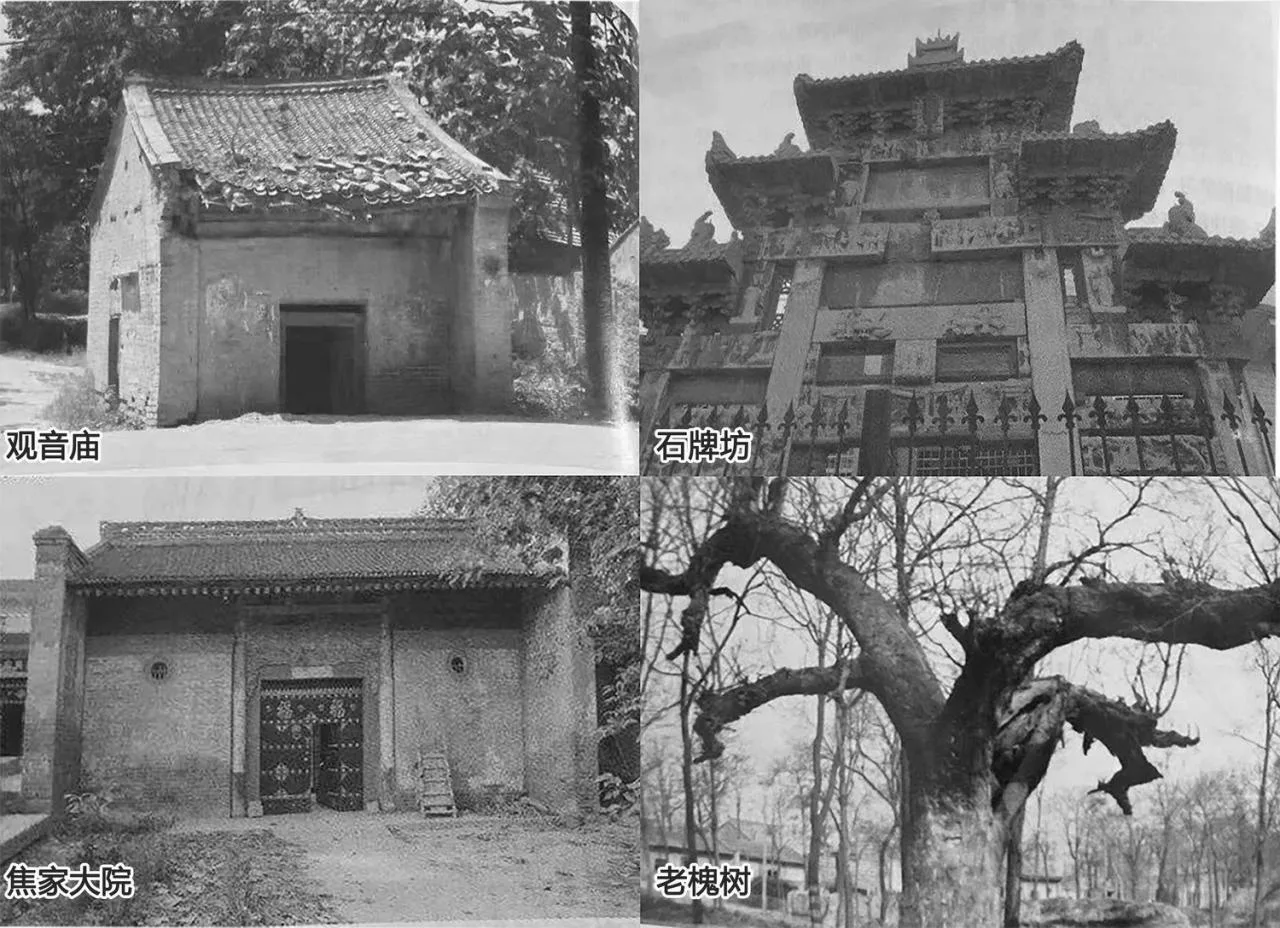
△ Historical and cultural elements of Nanjiao Village
3. Humanistic Space: Exploring Historical and Cultural Elements to Create Rural Public Spaces
1. Guanyin Temple: Front and Back Areas
Guanyin Temple, built during the Qing Dynasty’s Tongzhi reign, is well preserved despite several reconstructions. However, the front and rear external spaces are cluttered— the backyard serves as a garbage collection site, and adjacent courtyard walls are severely damaged.
The design divides the external space into a worship area in front of the temple and a village activity area behind it. The front offers a place for reflection on Buddhist principles and self-clarity, while the rear promotes benevolence, self-restraint, and propriety. These spaces are framed by walls and ground surfaces, blending organically with planting and greenery. Continuous landscape walls serve as carriers of local cultural information such as merit monuments and etiquette culture, while also acting as slope protection between neighboring residences, effectively managing the site’s height differences.
The walls are constructed with locally sourced red bricks and blue tiles, consistent with traditional rural architecture. The flooring replaces traditional cement with red brick vertical paving and sand-filled dry paving techniques, allowing for permeability and breathability. Additionally, three preserved mulberry trees are integrated with brick seating to create relaxing spots for villagers.
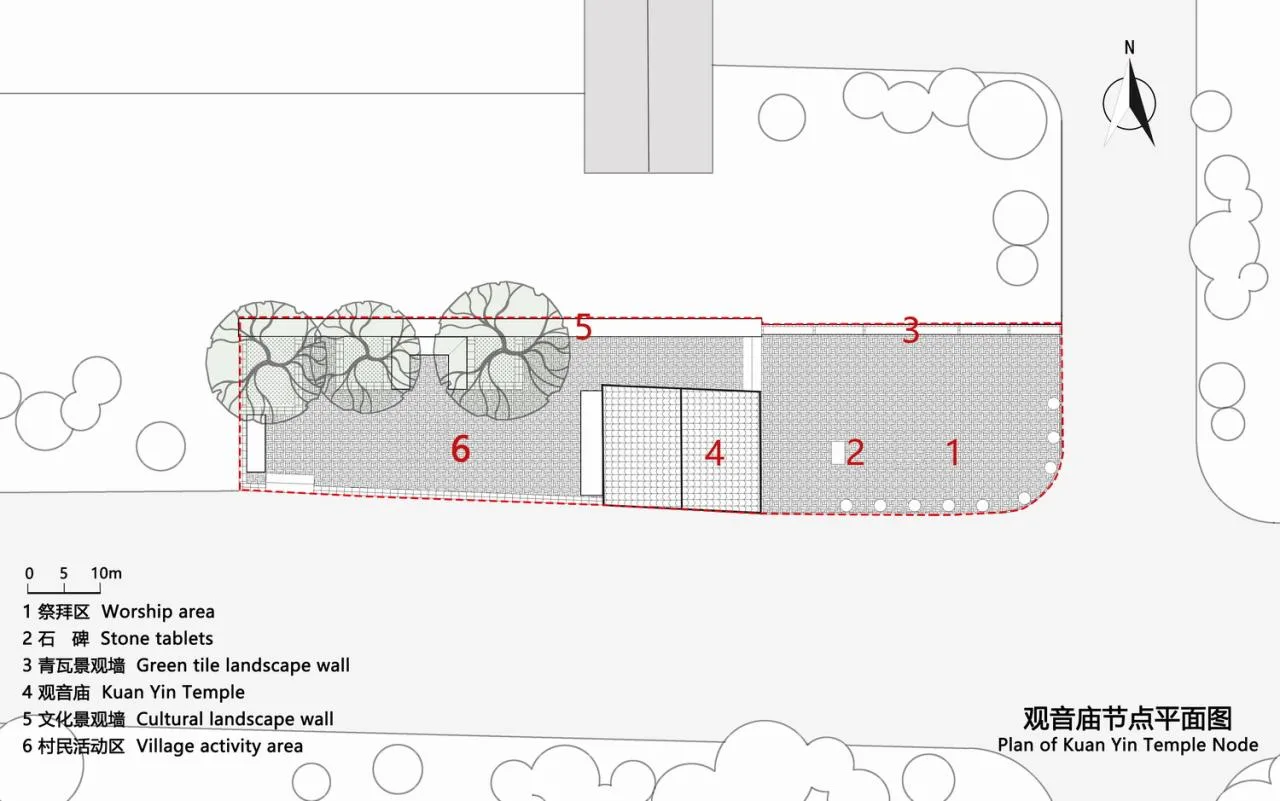
△ Guanyin Temple Node Plan
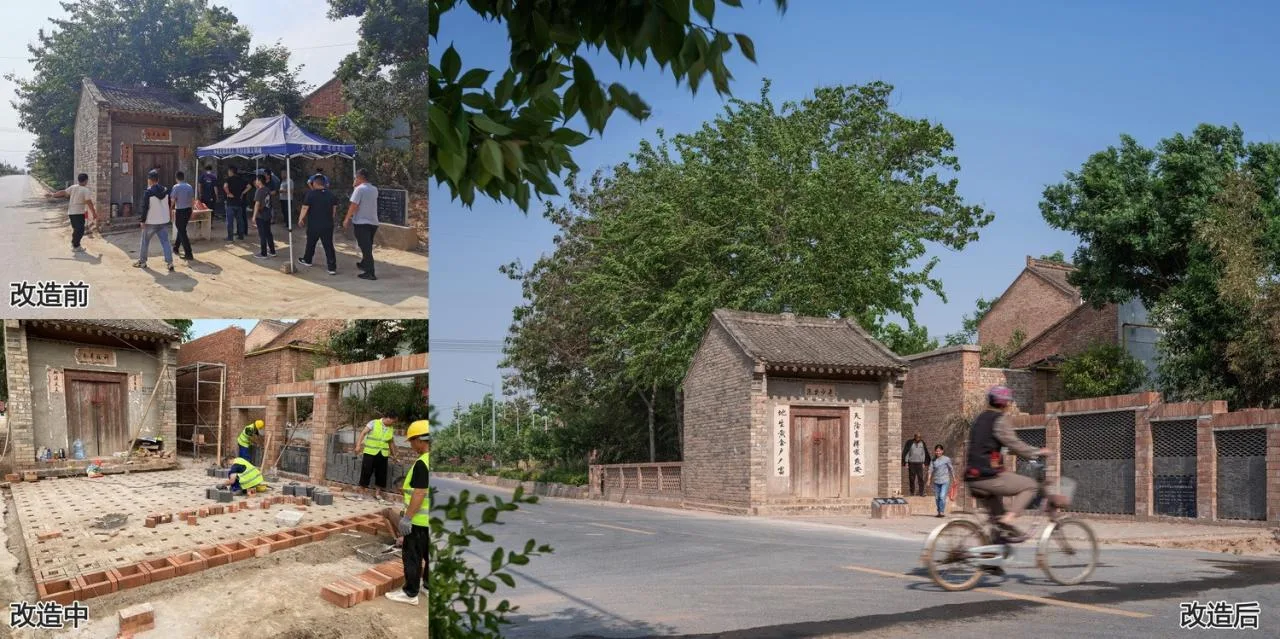
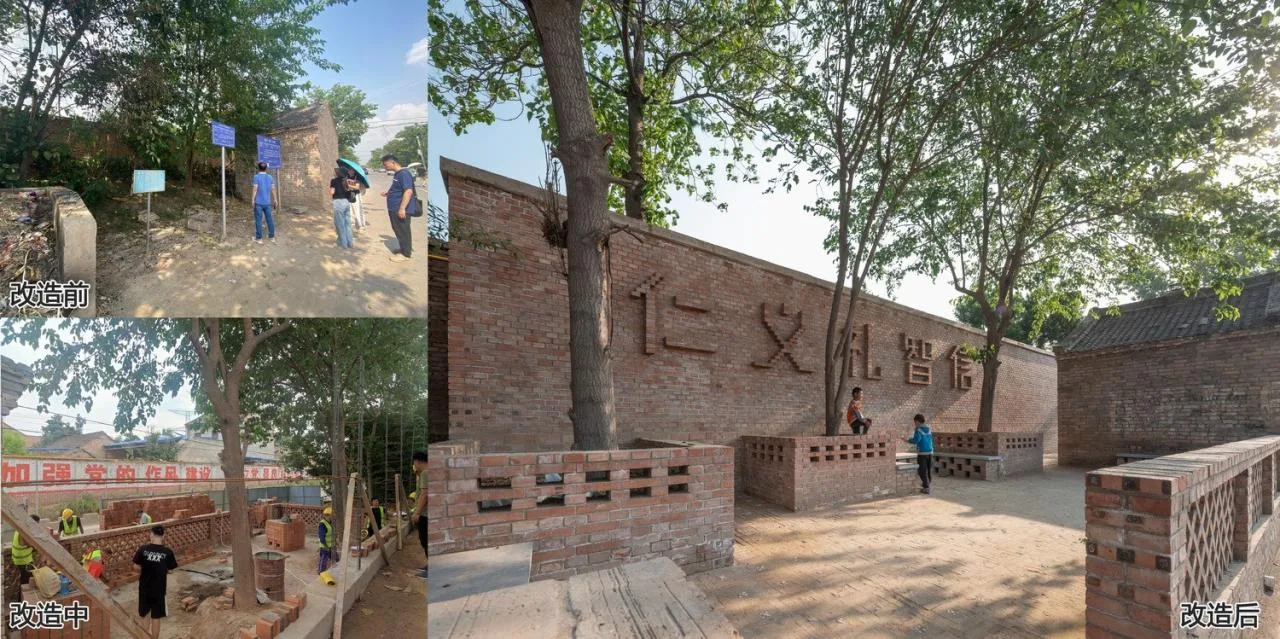
△ Transformation process
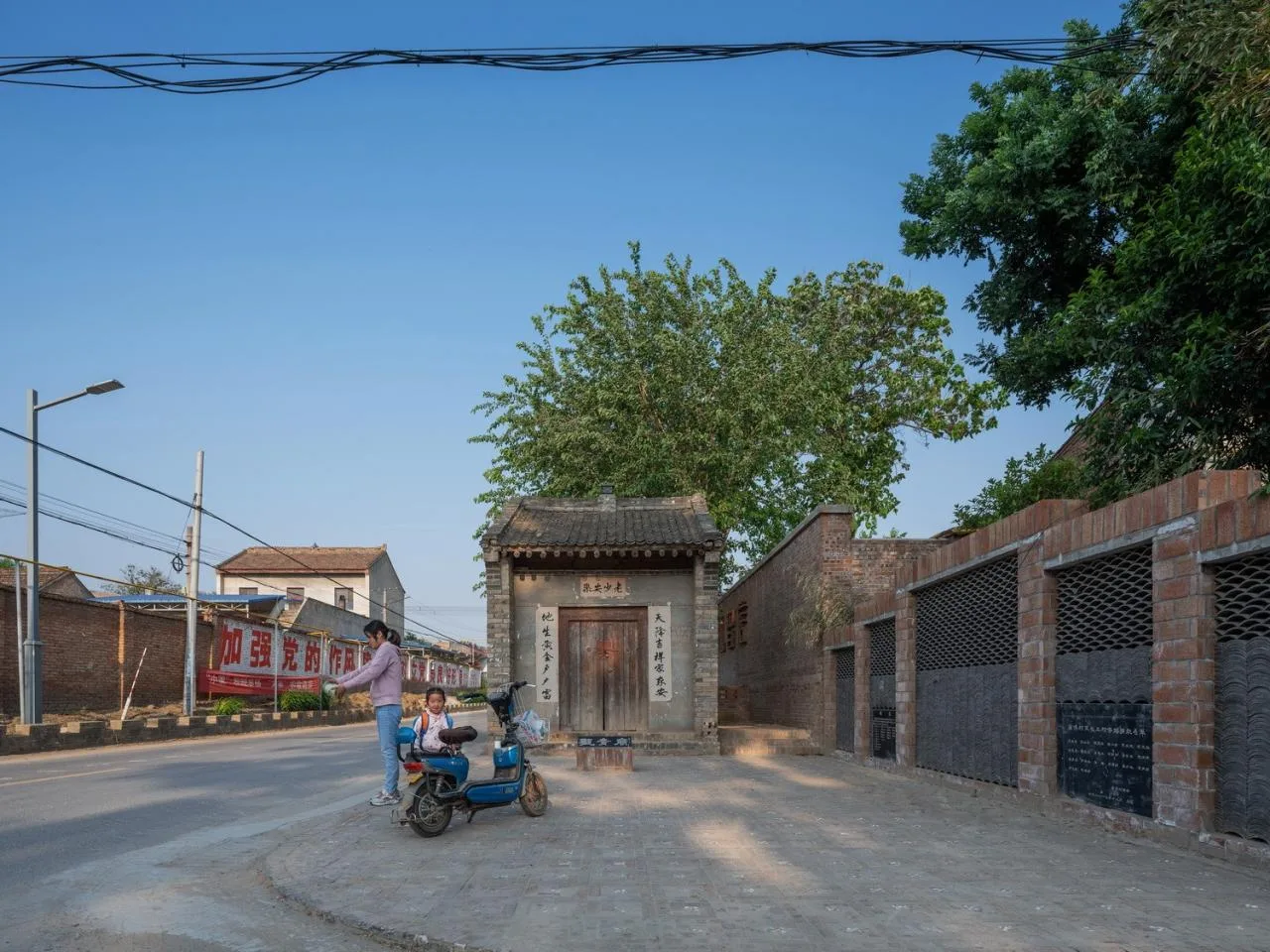
△ Temple front worship area
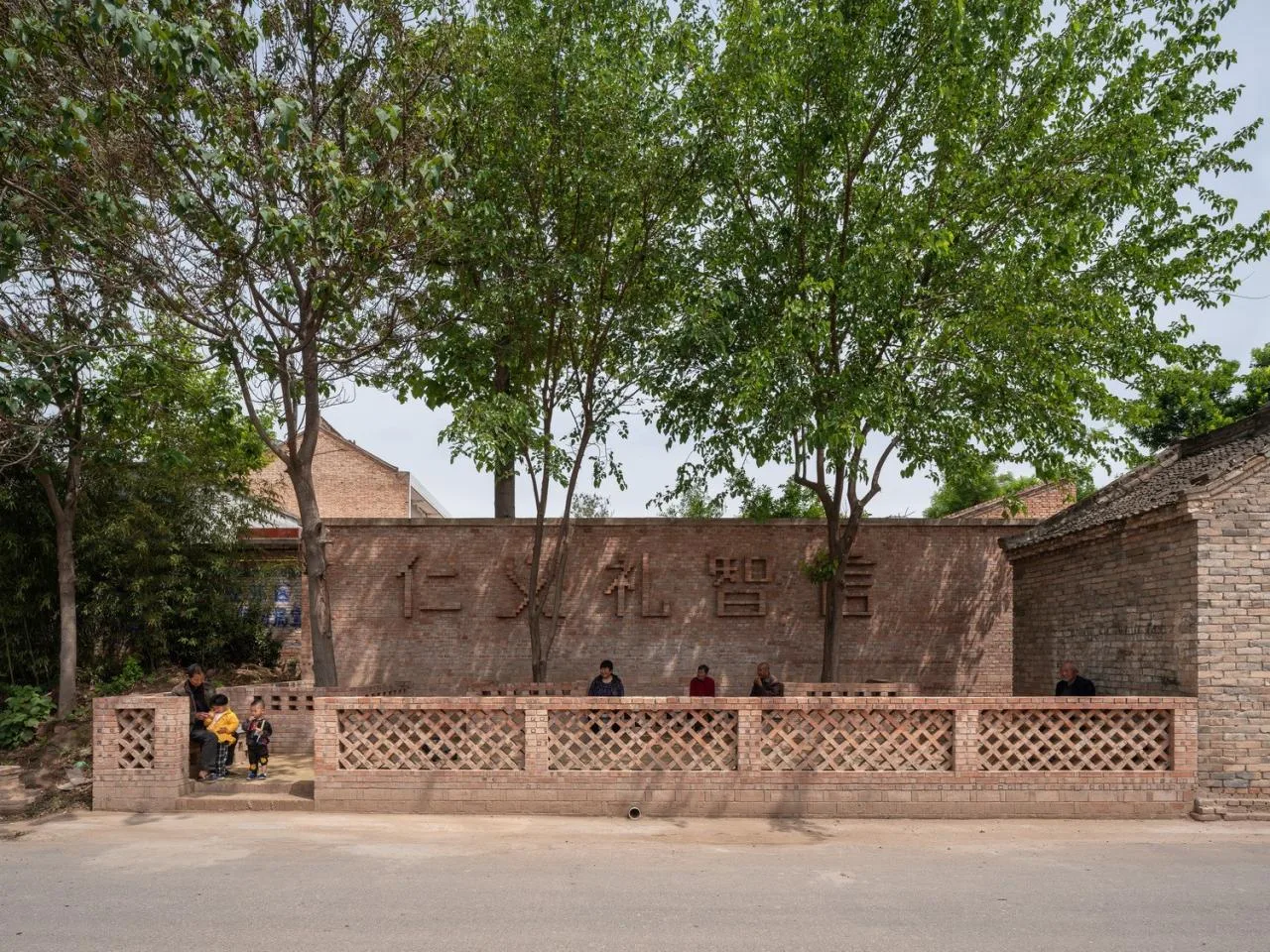
△ Activity area behind the temple
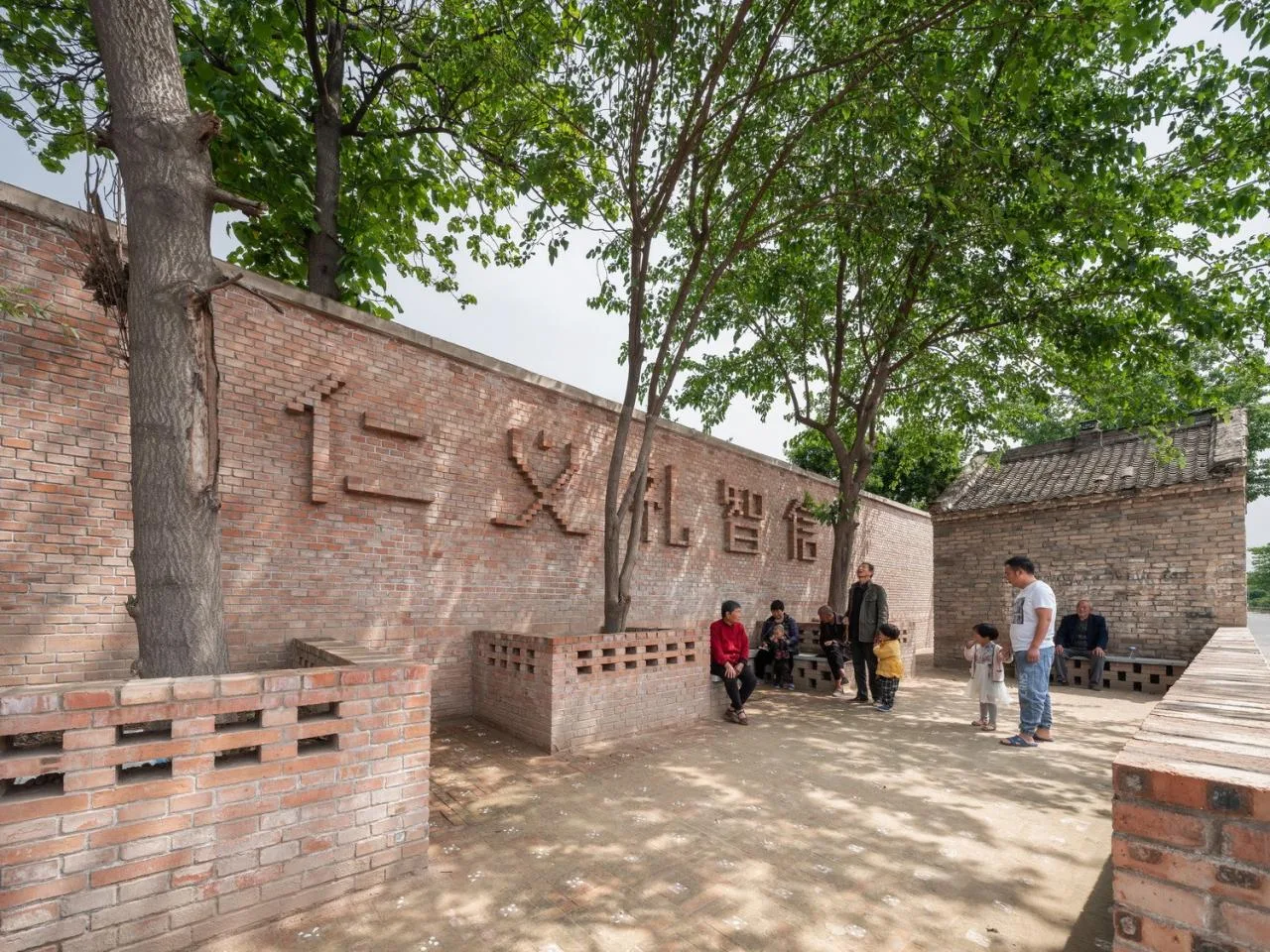
△ Leisure and cooling space
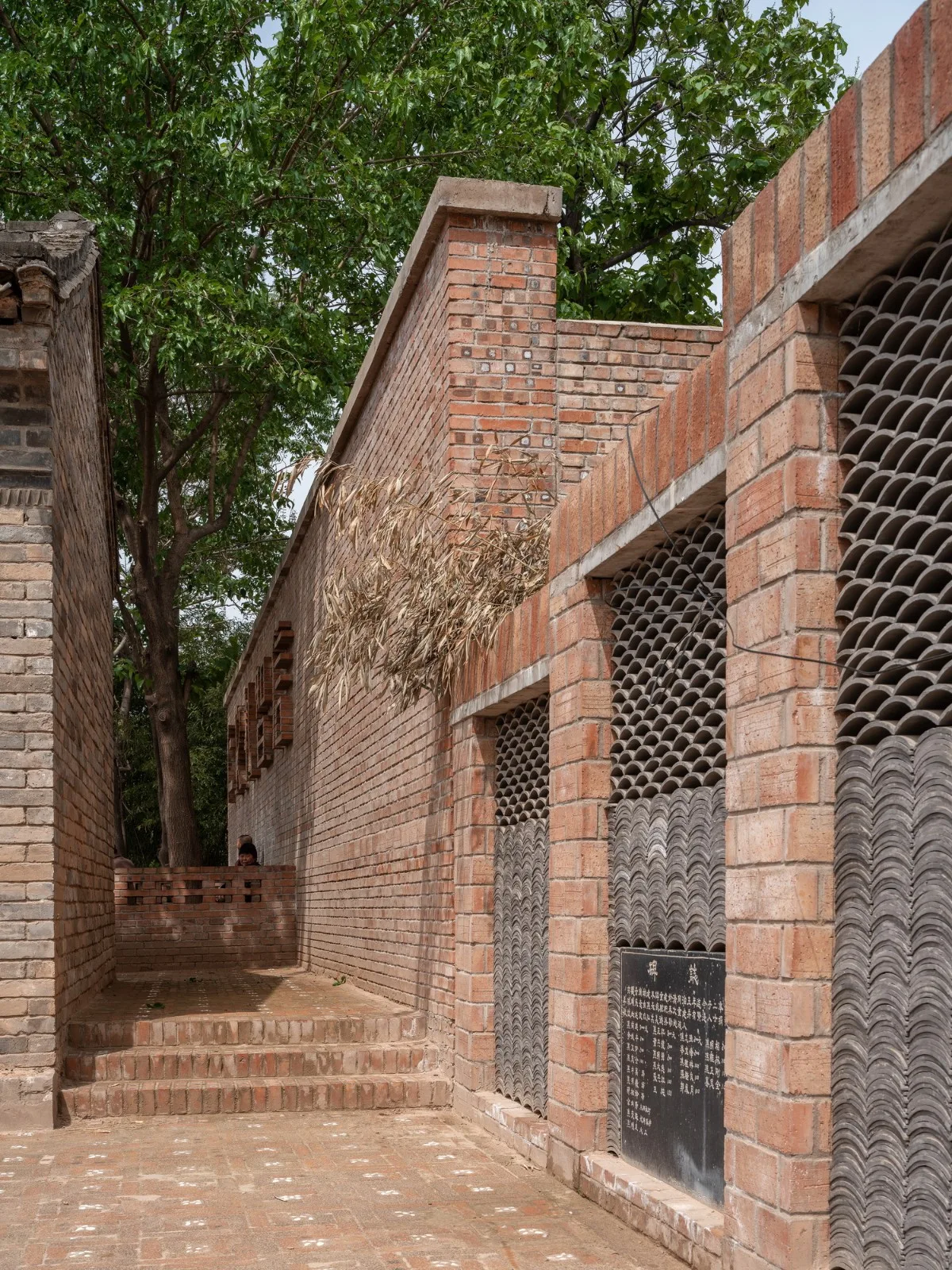
△ Terrain elevation difference processing
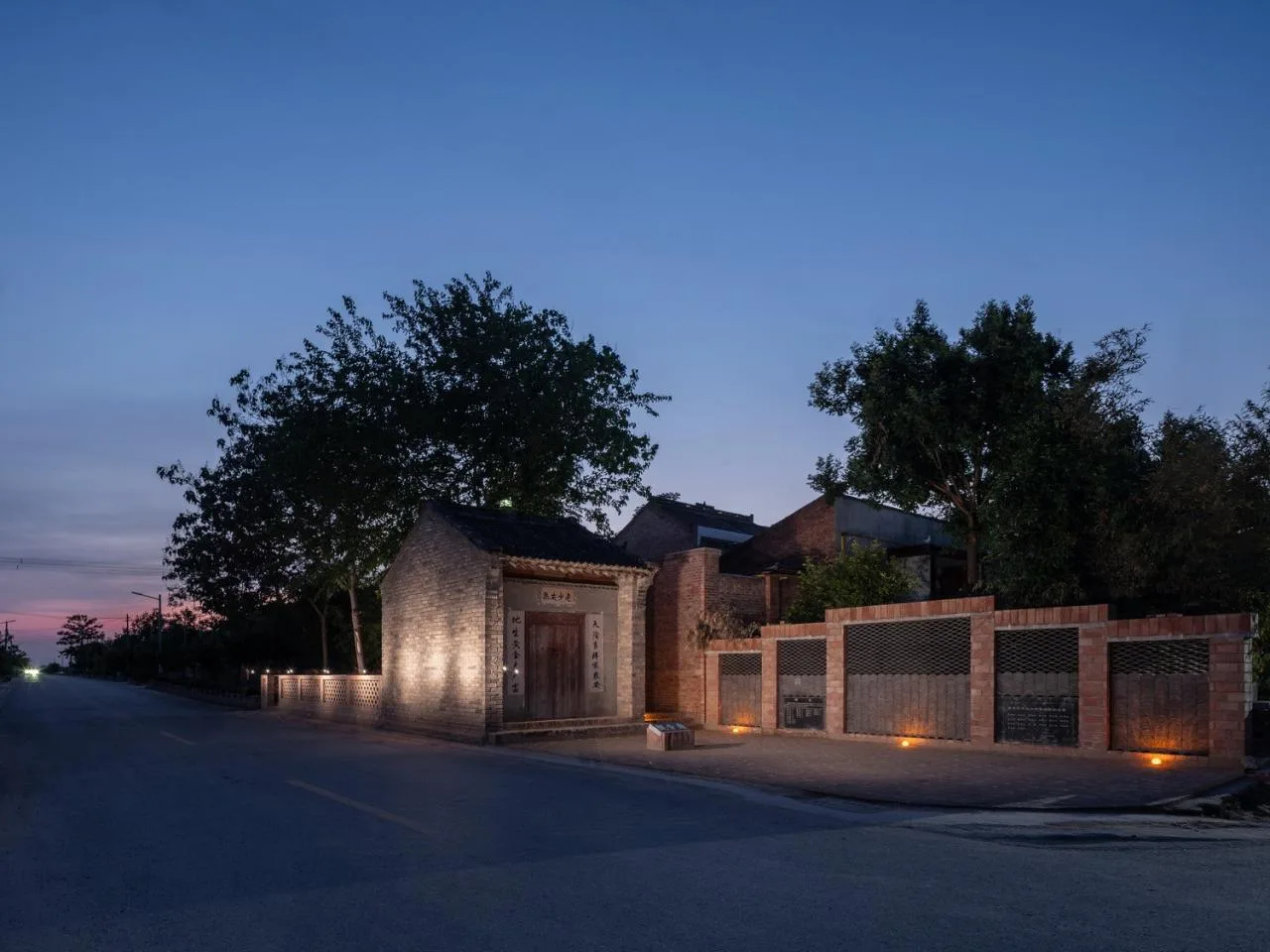
△ Night view of Guanyin Temple
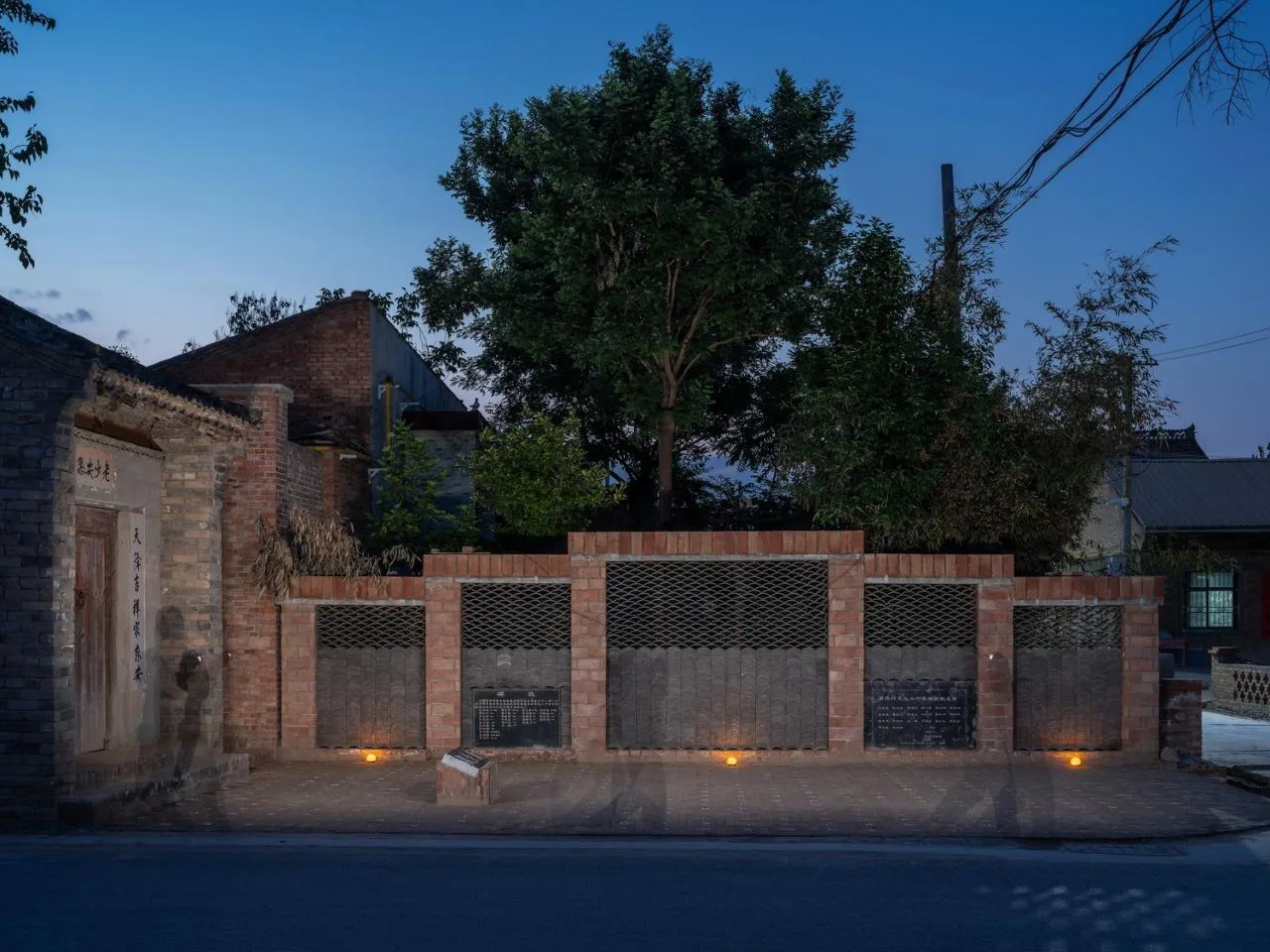
△ Night view of the worship area
2. Memorial Archway Landscape Axis
The village features a stone memorial archway dating back to Emperor Guangxu’s reign during the Qing Dynasty. This stone structure has four columns, three couplets, and a wooden architectural style with three stories, overlapping eaves, and overhanging corners. It stands approximately 8 meters tall, 6.5 meters wide overall, with side widths of 1.5 meters and a middle width of 2.6 meters. Its door opening reaches 2.9 meters in height. The first and second floors feature three and six groups of wooden architectural arches, respectively.
The memorial archway was traditionally erected to honor meritorious deeds, scientific achievements, good governance, loyalty, filial piety, and righteousness. It serves emotional, commemorative, and symbolic functions. Although the archway sits on a highland, its surrounding space is limited and does not currently provide an atmosphere befitting its significance.
The landscape redesign opens the formerly closed narrow space along the village’s main road, establishing a clear axis that highlights the archway as a key node. The design minimizes the visual impact of surrounding residential buildings, emphasizing the archway’s prominence. Plaques, couplets, sculptures, and paintings on the archway convey cultural meanings and aesthetic values through neat, elegant, and resonant inscriptions.
To further engage villagers with their history, the design projects the archway’s beam-column structure and inscription carvings onto the square’s ground, offering a tangible way to reinterpret the monument through landscape.
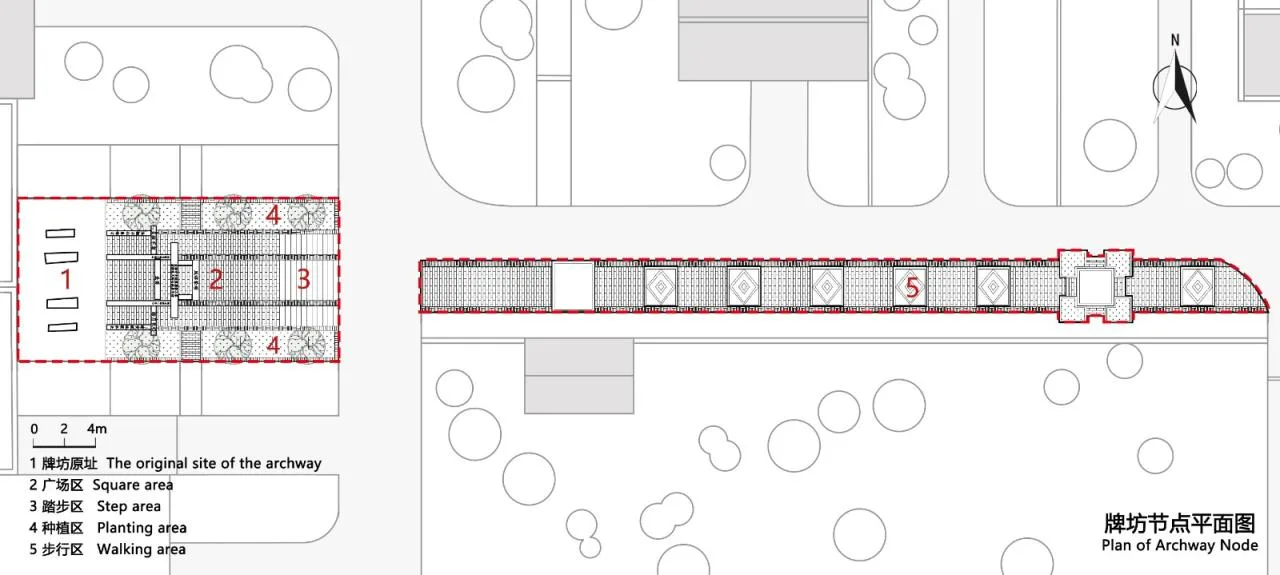
△ Memorial archway node plan
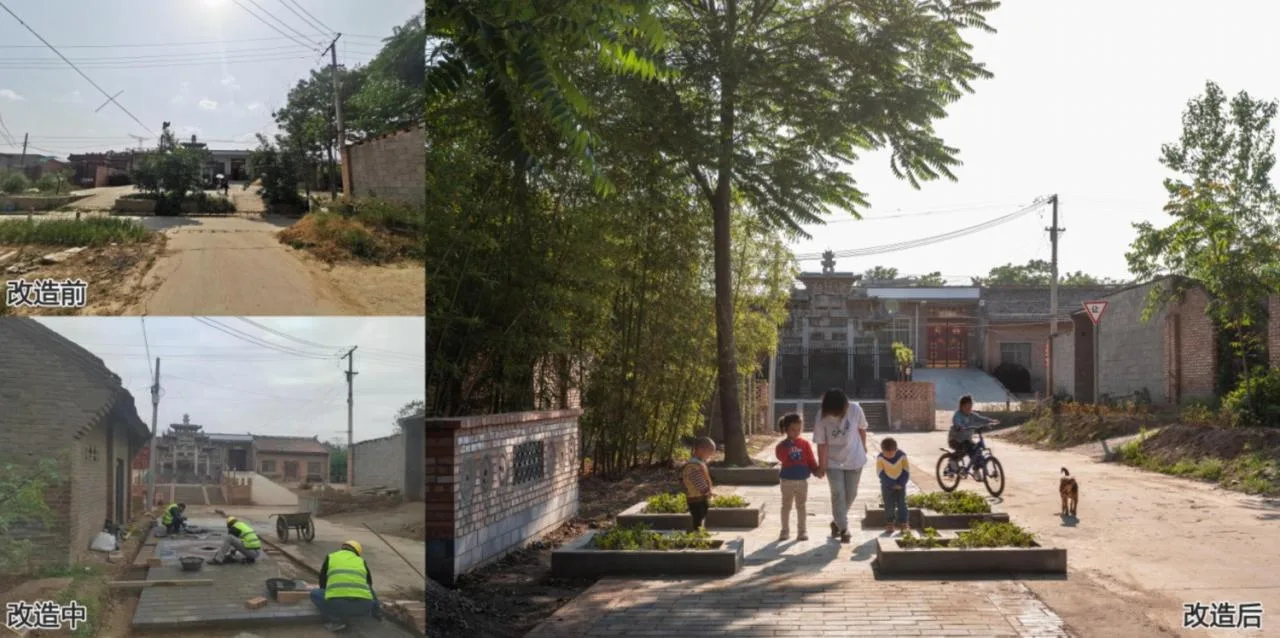
△ Transformation process
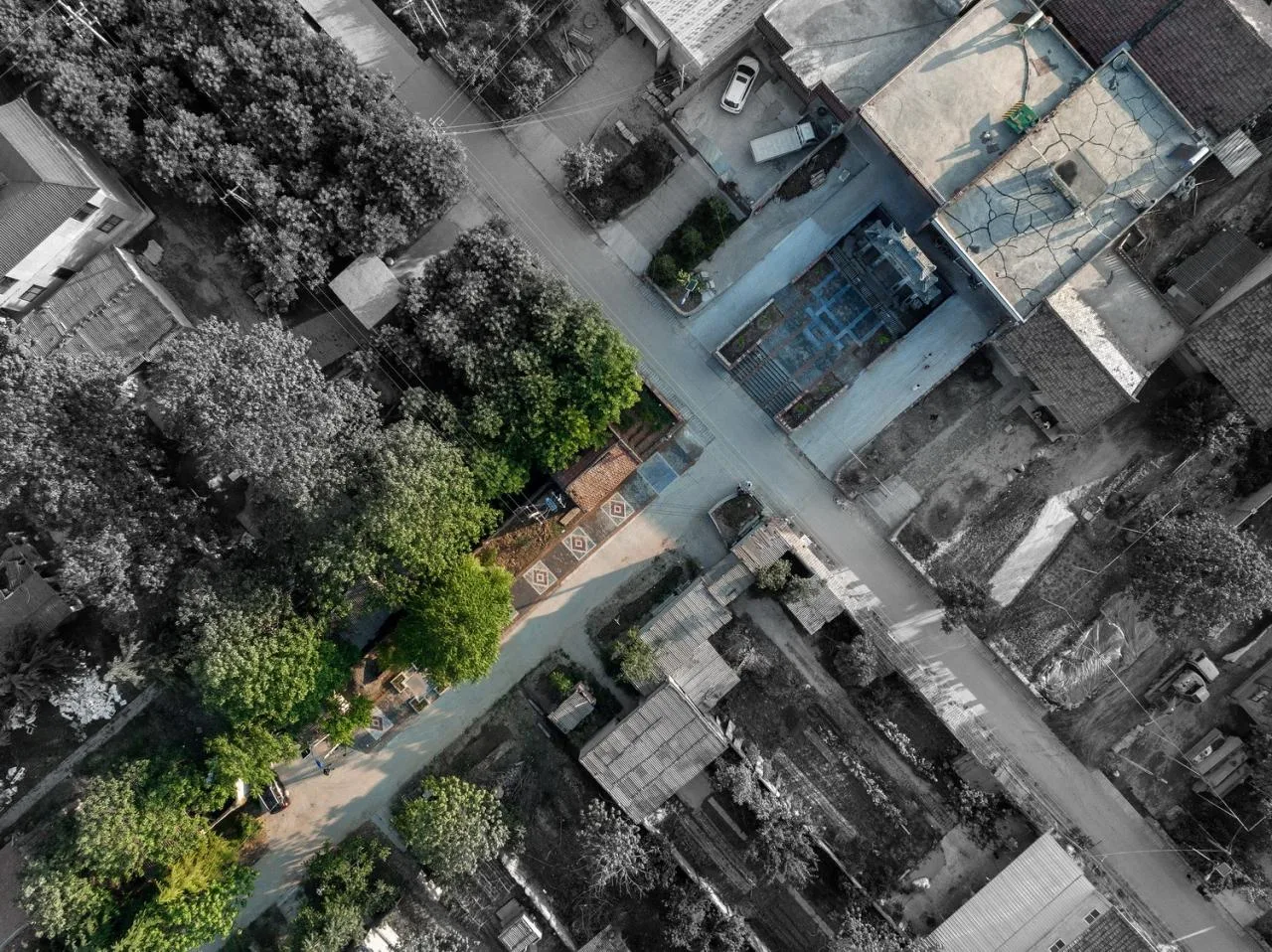
△ Axis sequence
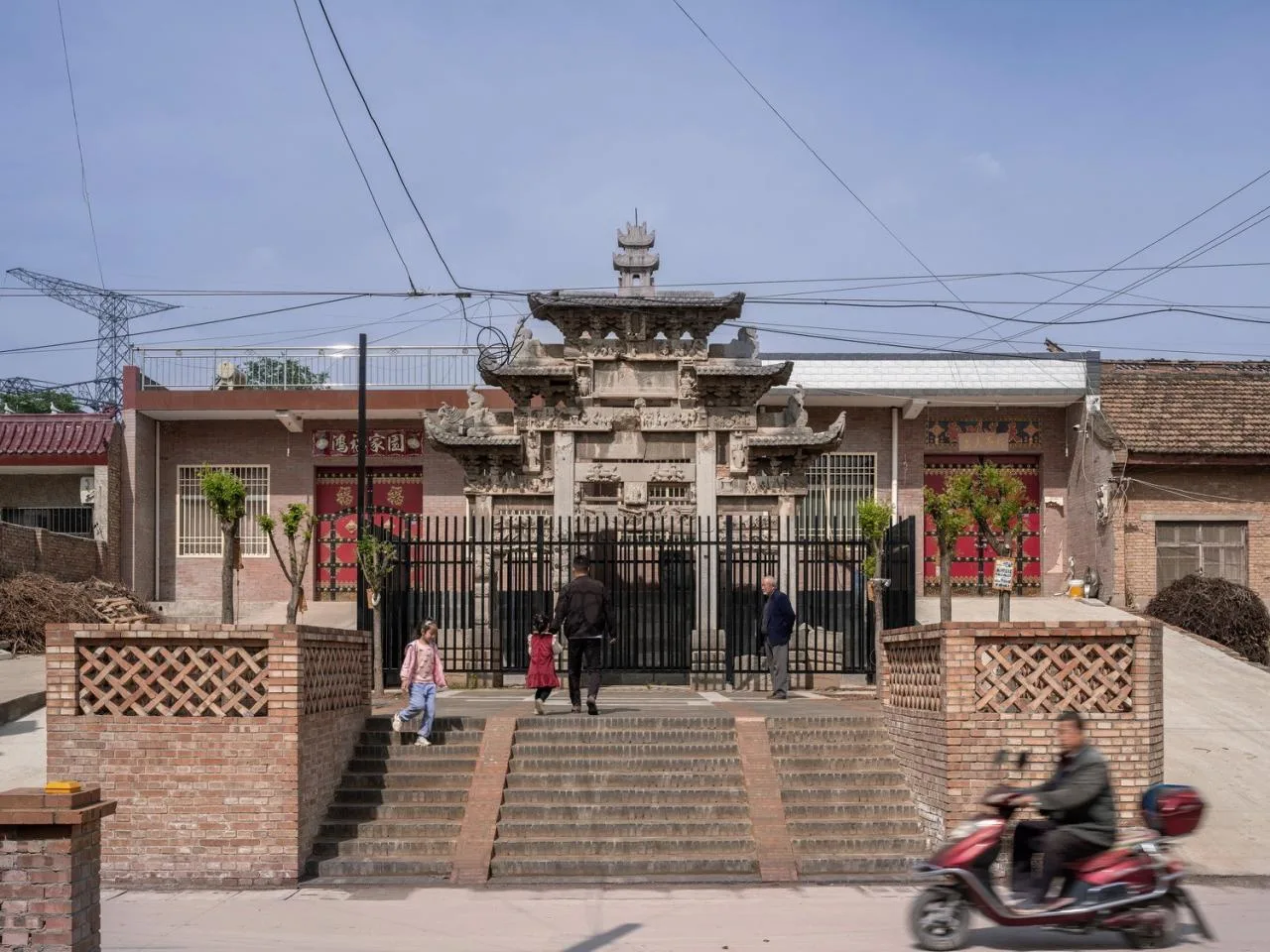
△ Square area
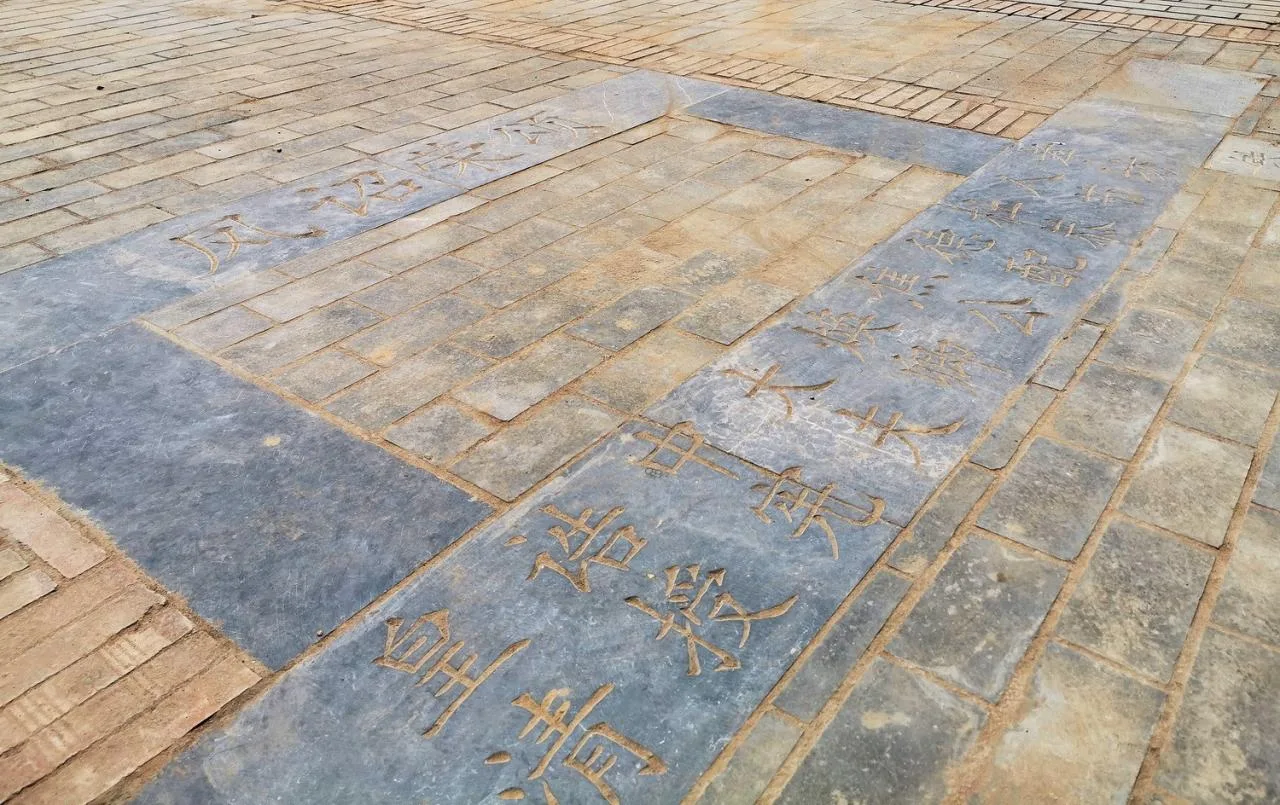
△ Beam column structure and plaque inscription carving projection
3. The Ancient Well Area: Rediscovering Lost Heritage
The concept of “common culture” here refers to city-centered culture, including citizens’ lifestyles, language, diet, and social interactions. Historically, five sacred sites existed—Sihai, Dachuan, Mingyuan, Yuanze, and Jingquan. Water wells, like mountains and rivers, symbolize grand blessings and reverence. According to village history, an ancient well once stood in Nanjiao but has since disappeared without a trace. After extensive research and consultation with village elders, its original location was identified in a vegetable garden in front of a residential yard, though it was overgrown and difficult to recognize.
The first step was to bring the ancient well back into public awareness. Reviving memory sparks revitalization, and a well symbolizes a microcosm of the world. This node space design includes the ancient well, parking, mobile areas, exhibition zones, and resting spots, preserving rural historical relics while accommodating villagers’ daily activities.
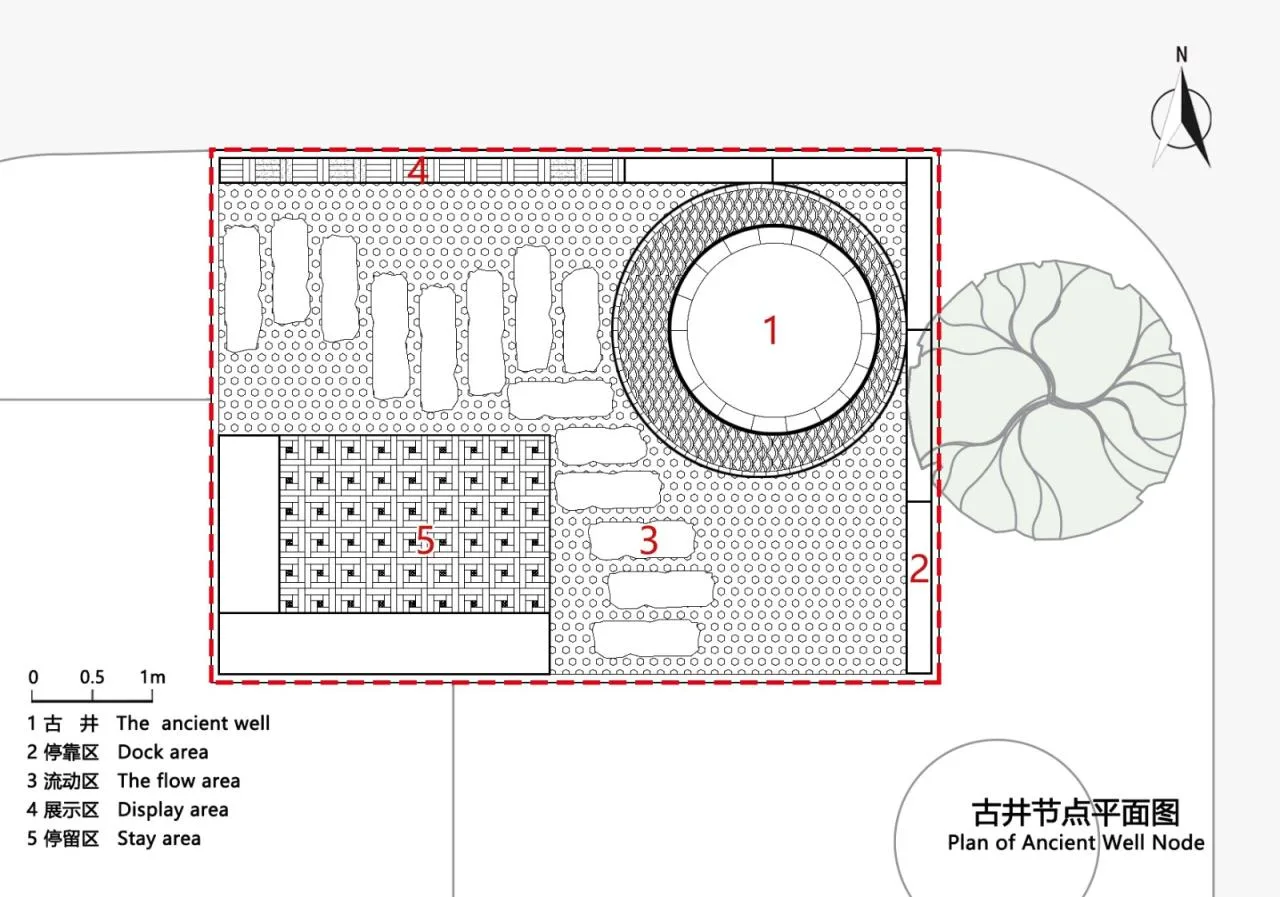
△ Plan of Ancient Well Nodes
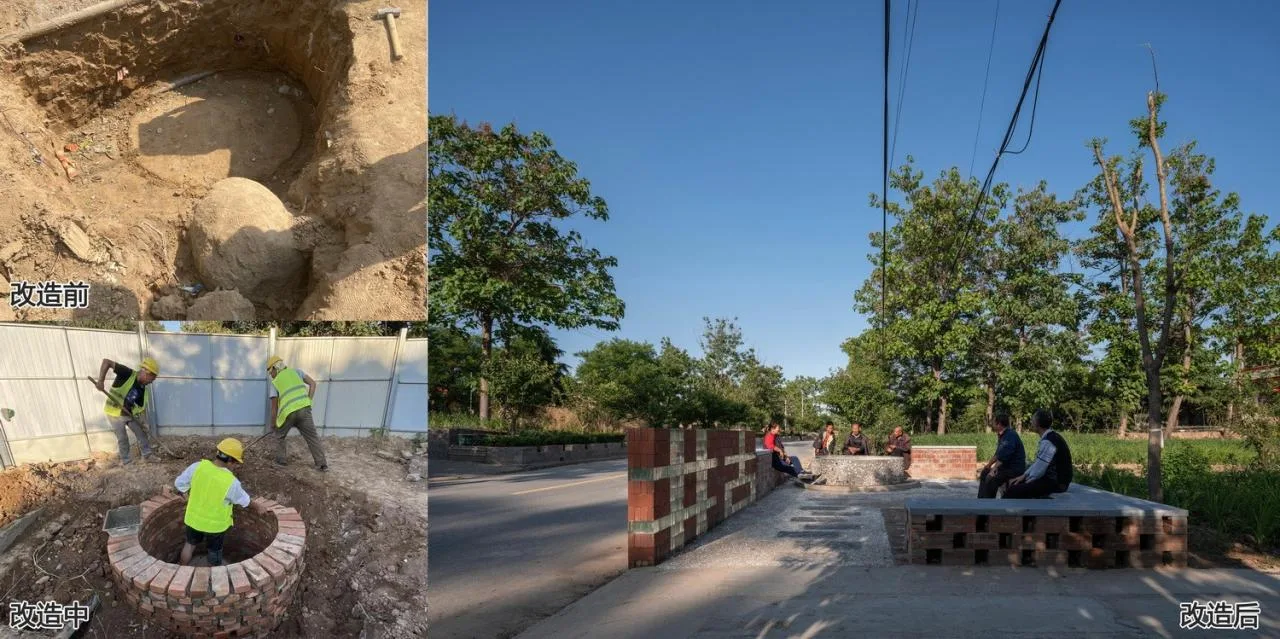
△ Transformation process
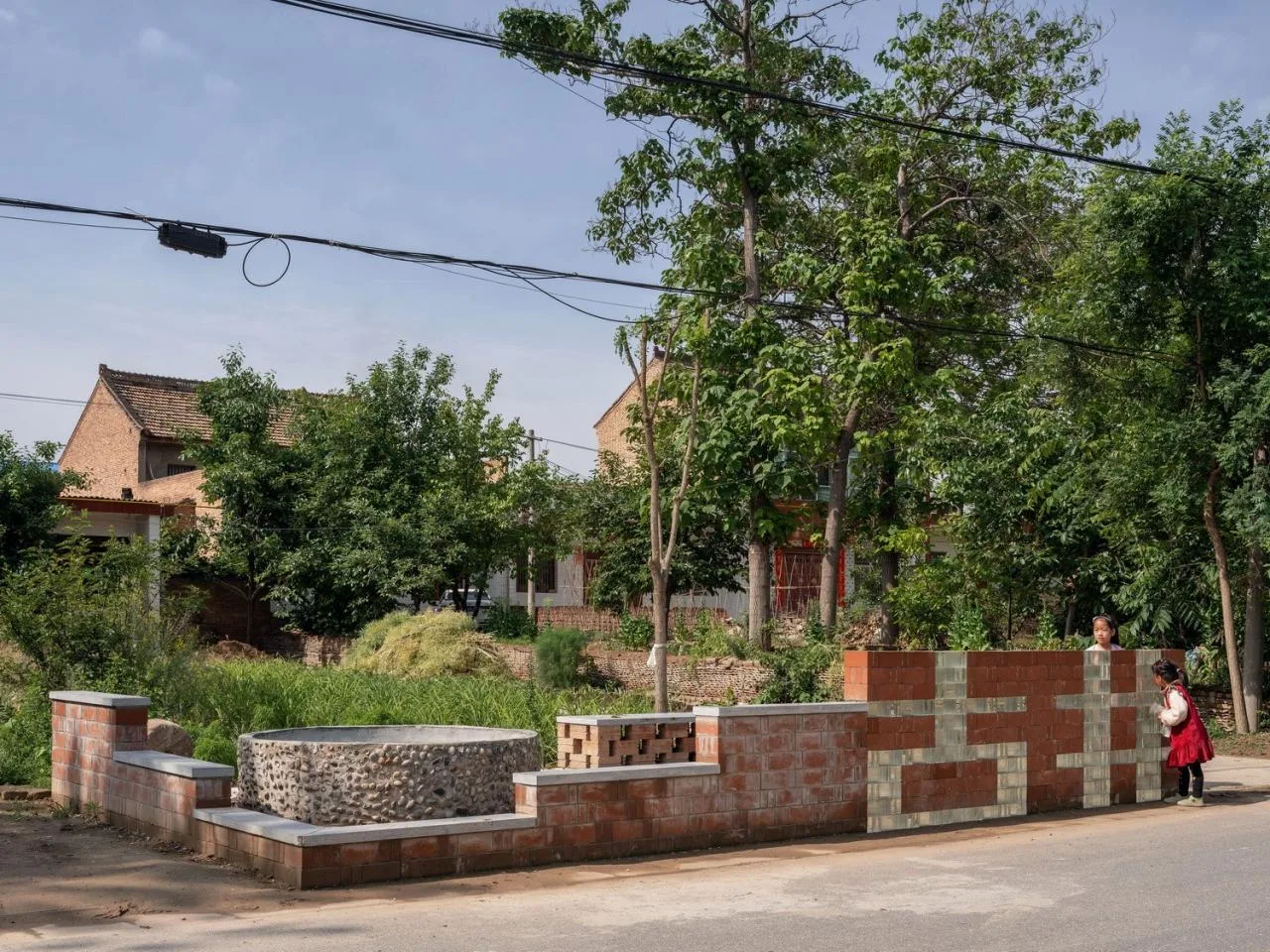
△ Ancient Well Node
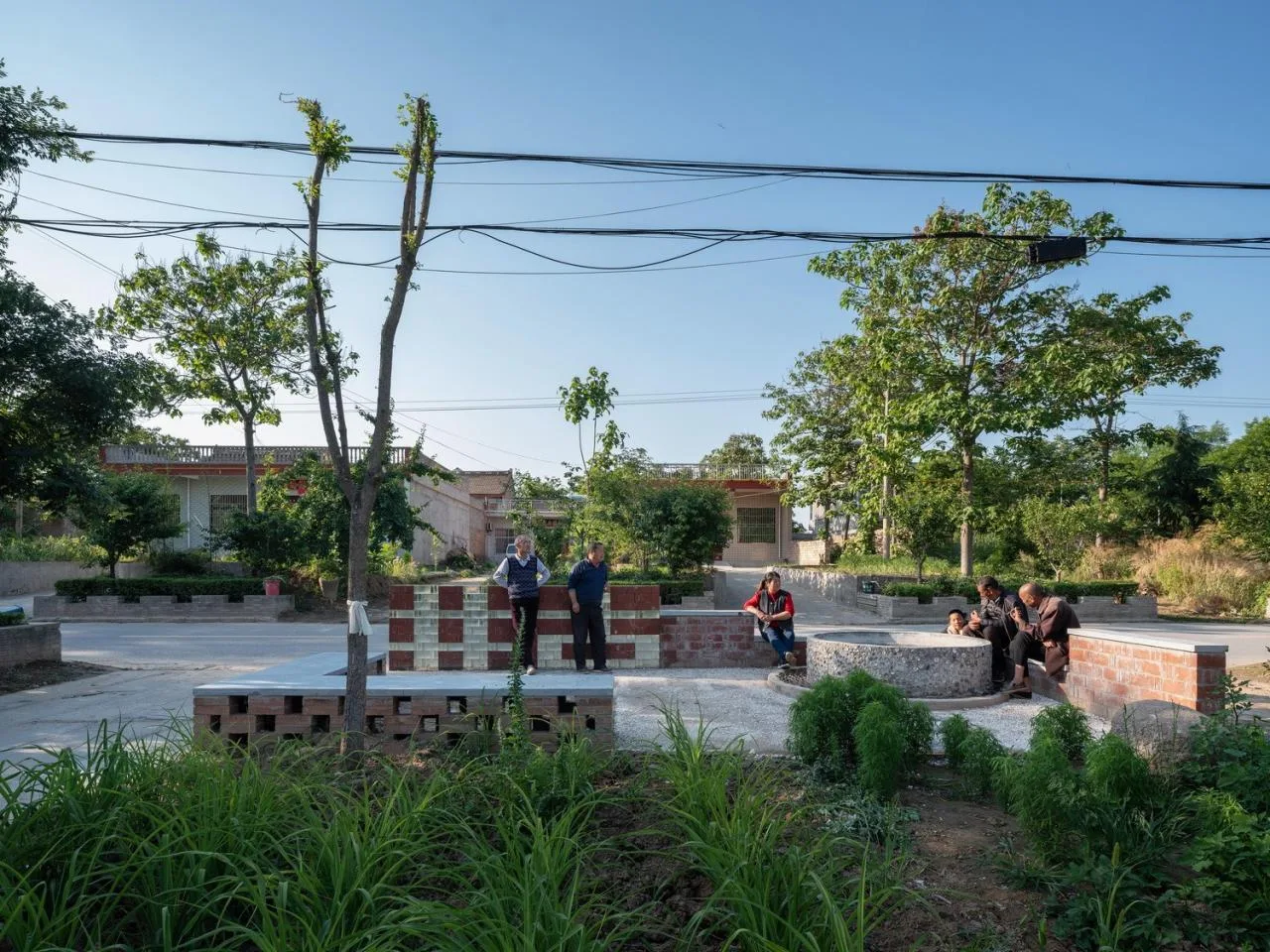
△ Villager Rest Area
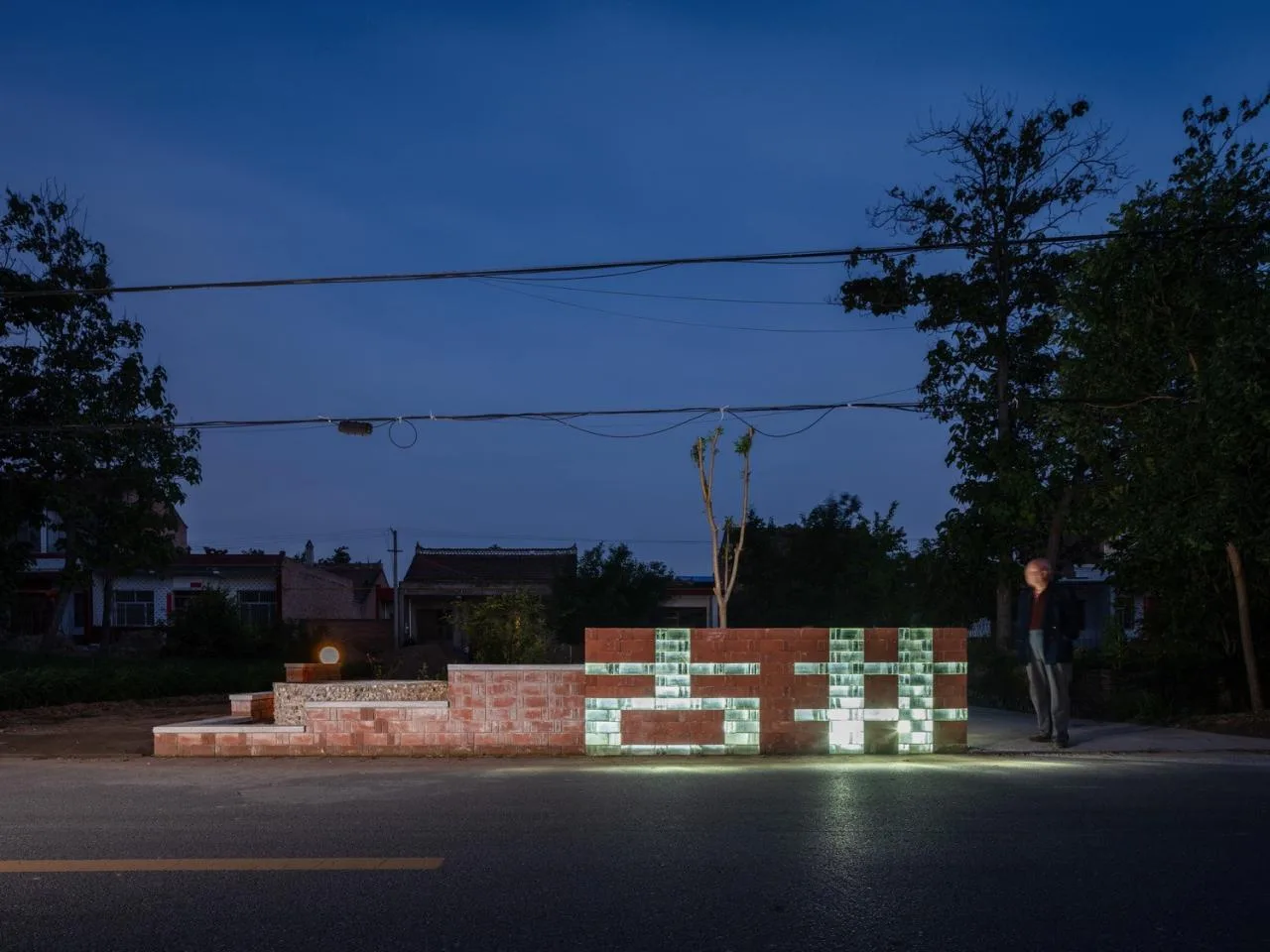
△ Night view of Gujing
4. Under the Old Locust Tree
An ancient locust tree in the village, over 300 years old before partially collapsing in 2002, still stands resiliently with most of its branches thriving. Its story has been passed down for generations, symbolizing endurance through hardships and the forces of nature.
The area around the old locust tree includes a tree pool, activity space, and guidance zone, with an emphasis on creating an inviting space beneath the tree. The design replaces an open courtyard drainage system with buried pipelines to maintain residents’ living functions while enhancing environmental quality. Ground textures featuring shadows and fallen leaves highlight the intimate connection between the tree and the earth.
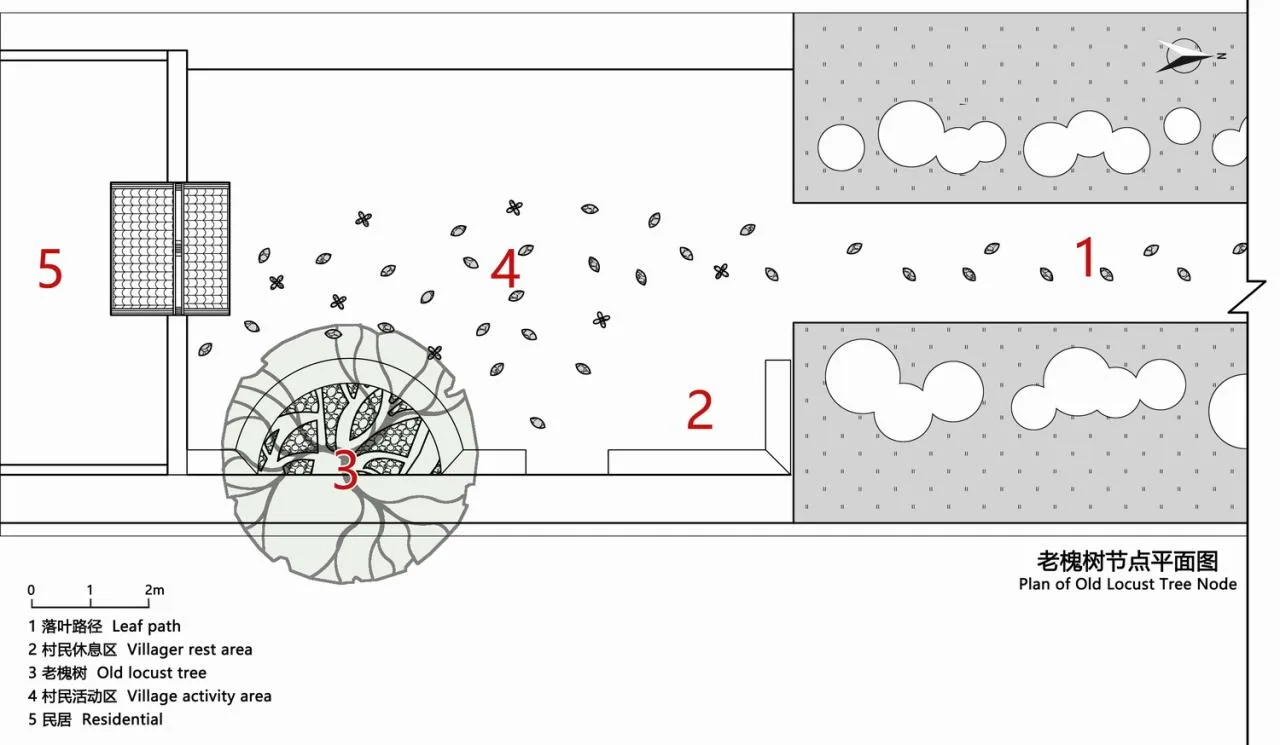
△ Plan of nodes in the old locust tree
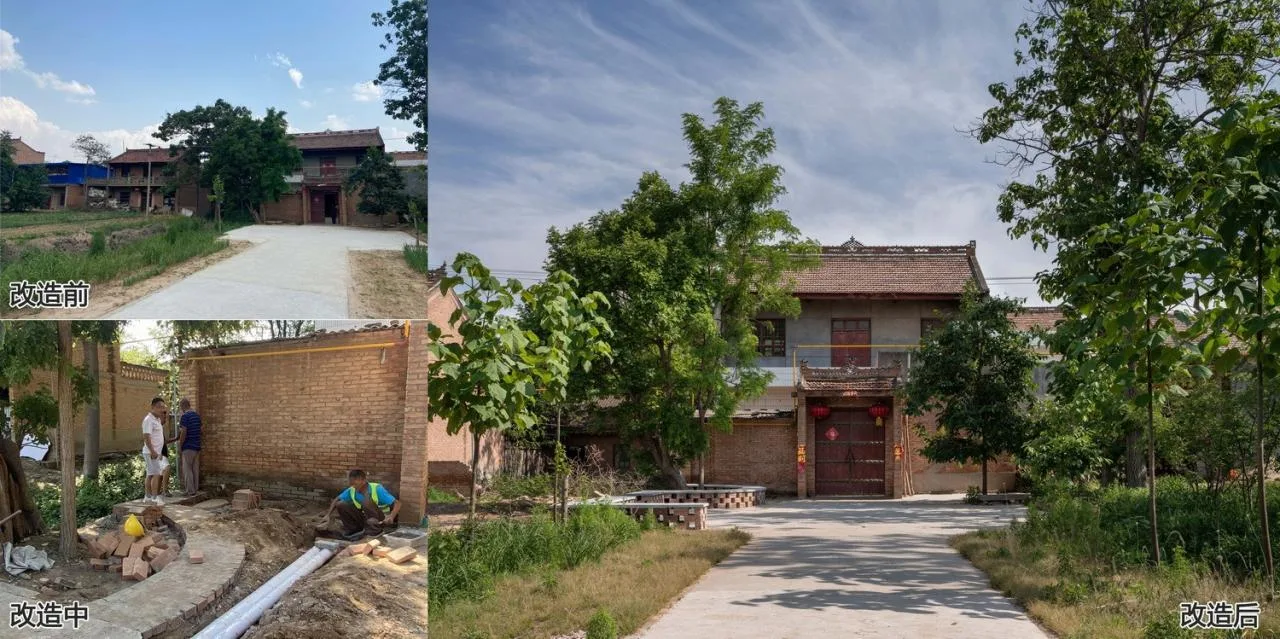
△ Transformation process
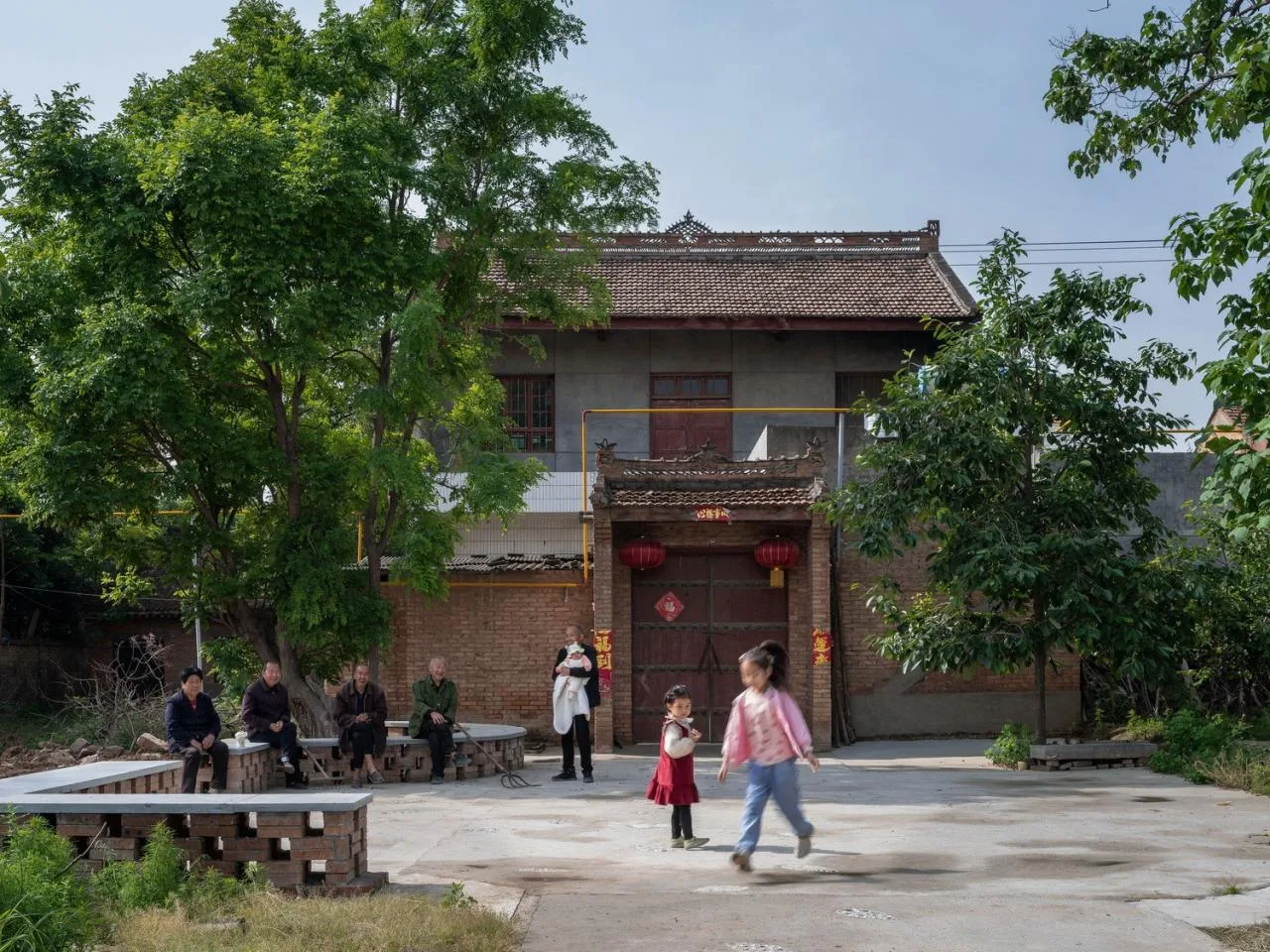
Children playing under the tree
5. The Deep Mansion Courtyard
The village still preserves a Jiao family courtyard built during the Qing Dynasty’s Tongzhi period. Originally composed of nine courtyards, only one remains well-preserved, although its front yard is overgrown and lacks signage. The renovation design opens up the spacious front yard to create a village activity square, featuring a tree pool and stone paving to provide villagers with a welcoming space for leisure and social gathering.
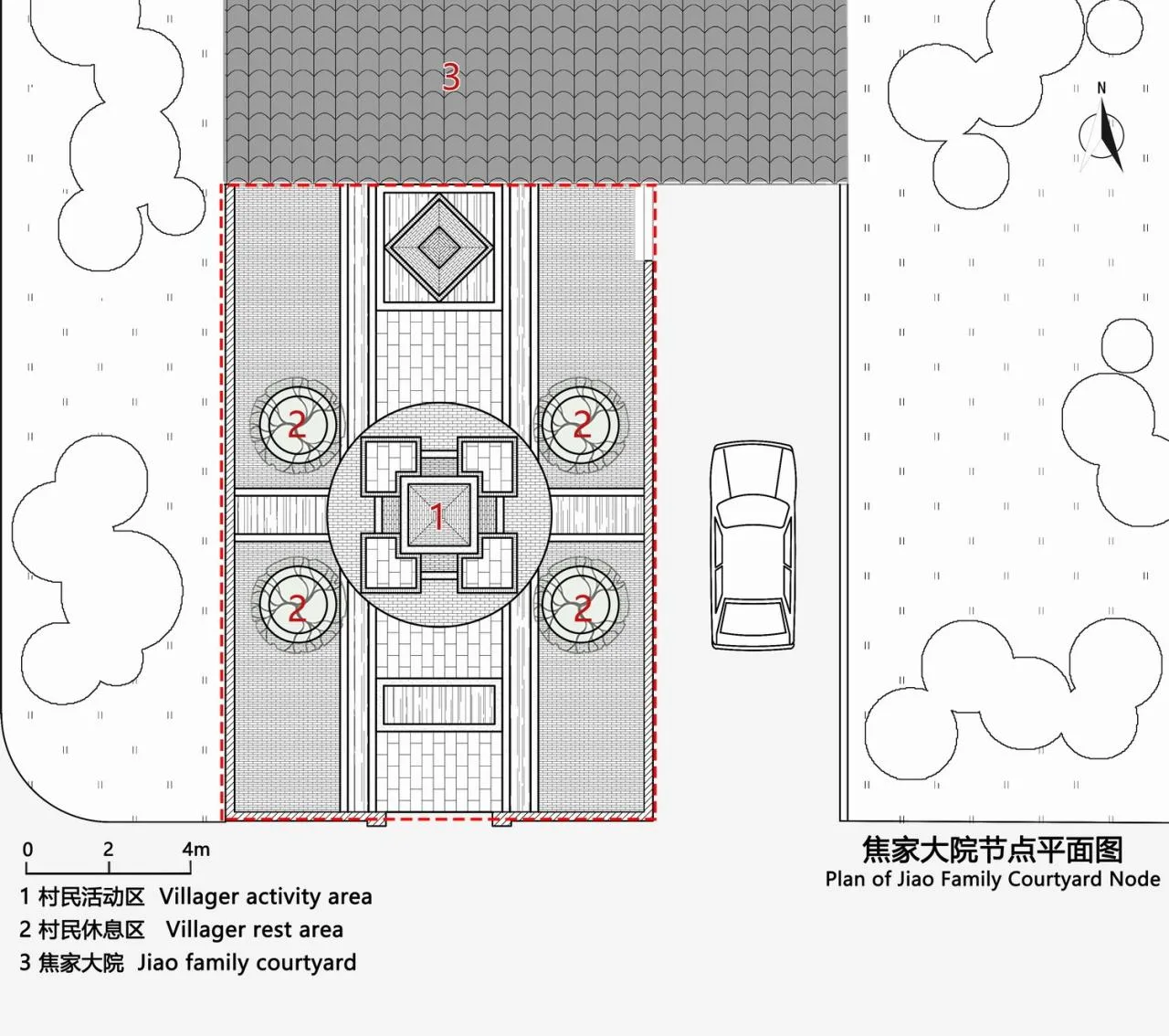
△ Plan of Nodes in Jiaojia Courtyard
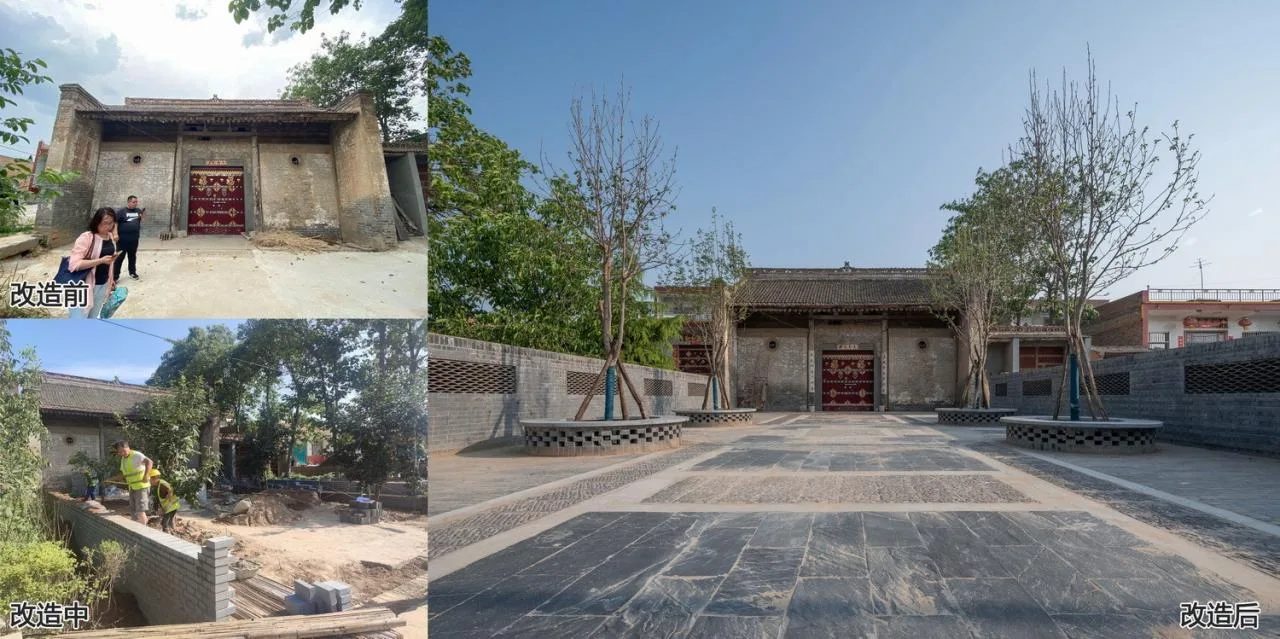
△ Transformation process
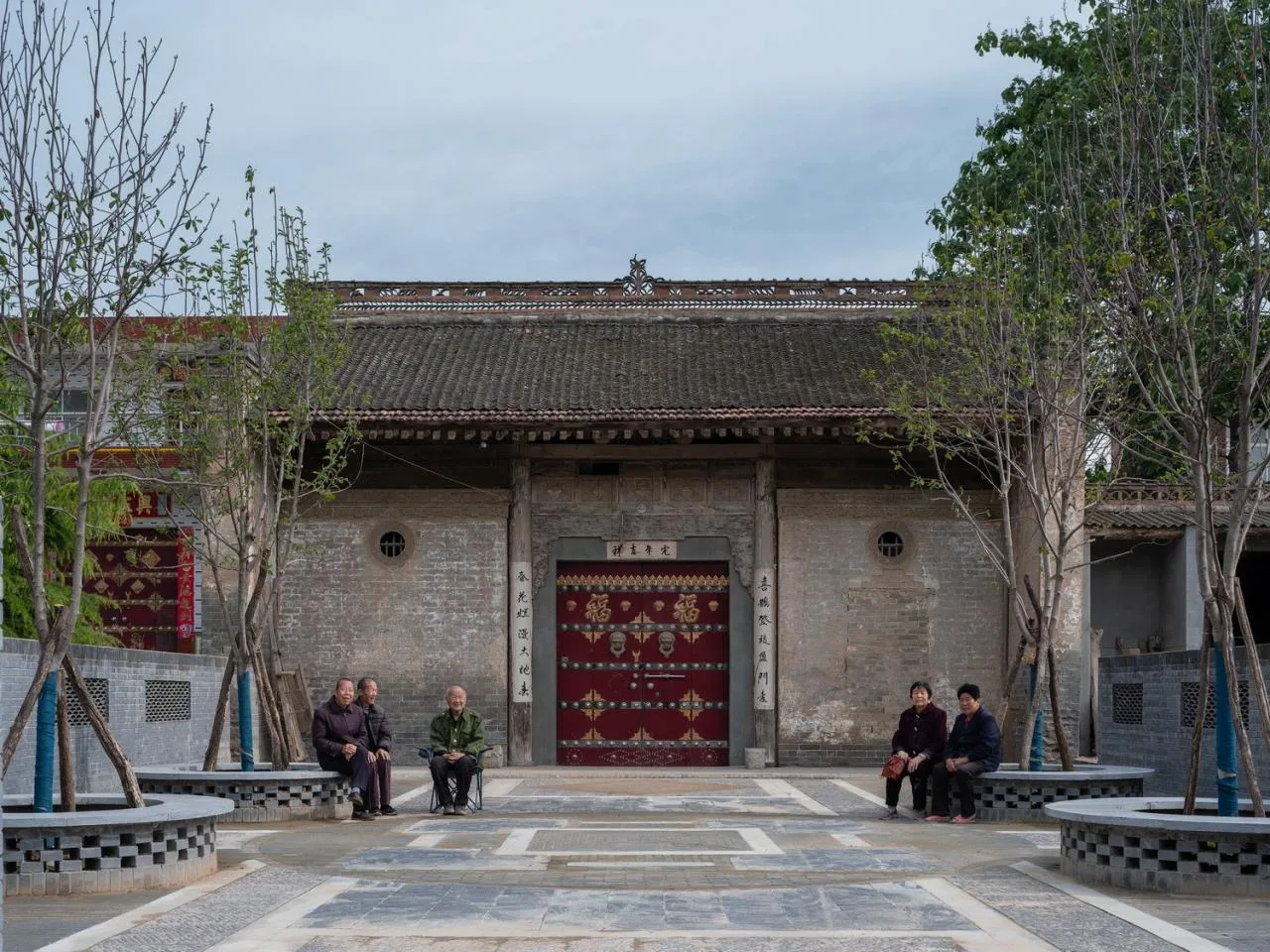
Jiao Family Courtyard
4. Infrastructure: Enhancing Rainwater Utilization and Improving Rural Living Quality
Field investigations revealed that Nanjiao Village’s original drainage and waterlogging systems were inadequate, leading to poor environmental quality. The absence of sufficient drainage channels caused roads to become muddy and sewage to overflow during rainy seasons, severely impacting sanitation and village appearance.
Rainwater utilization is crucial for addressing water shortages and flood control issues in villages north of the Wei River. Waterlogging ponds serve as key facilities for managing rainwater and floods in this area. The drainage system includes waterlogging ponds, equipment rooms, buried sewage treatment units, regulating ponds, drainage pipelines, and covered culverts arranged along both sides of main village roads.
Collected mild domestic sewage and rainwater flow through drainage pipes to regulating ponds and buried sewage treatment equipment. After treatment to meet standards, the water discharges into flood ponds. Four new flood ponds have been constructed within the village. To protect the rural environment and regional river water quality, the underground sewage treatment equipment complies with Class A standards as specified in the “Pollutant Discharge Standards for Urban Sewage Treatment Plants” (GB18918-2002).
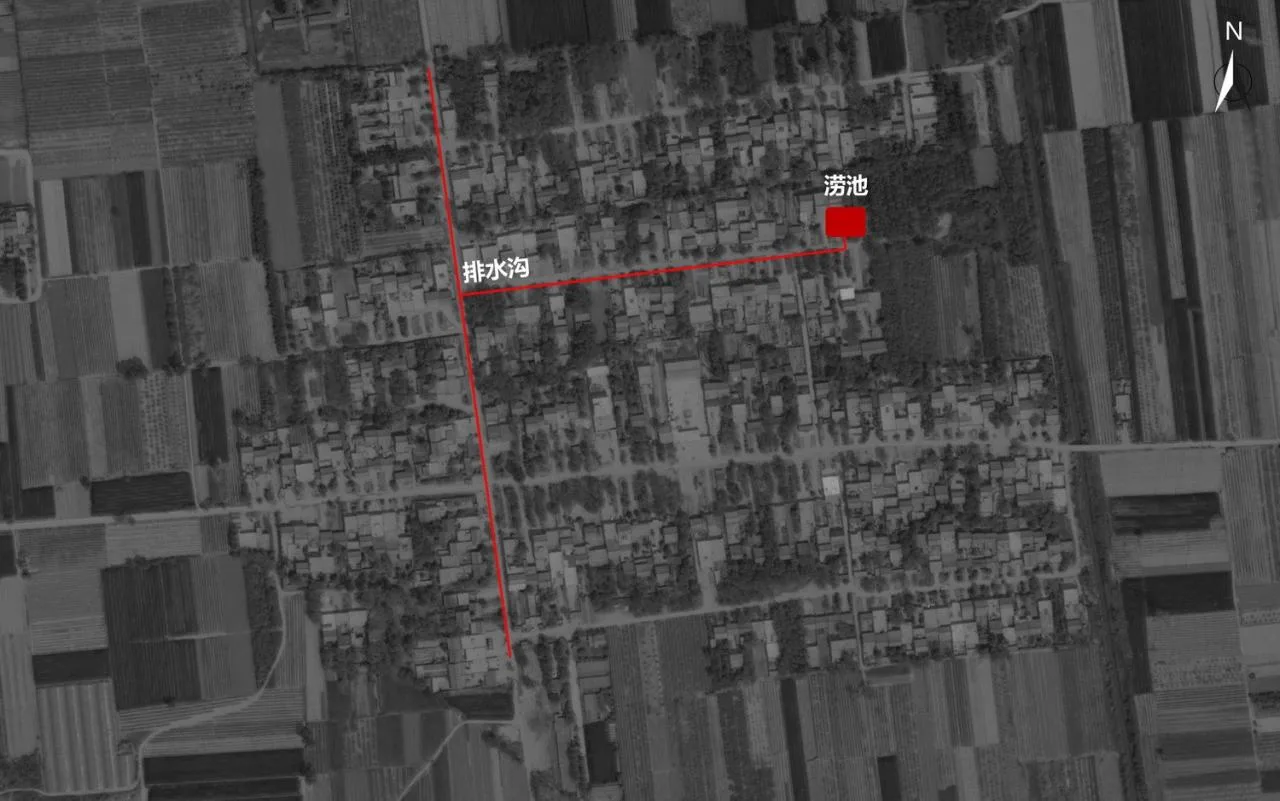
△ Drainage system planning
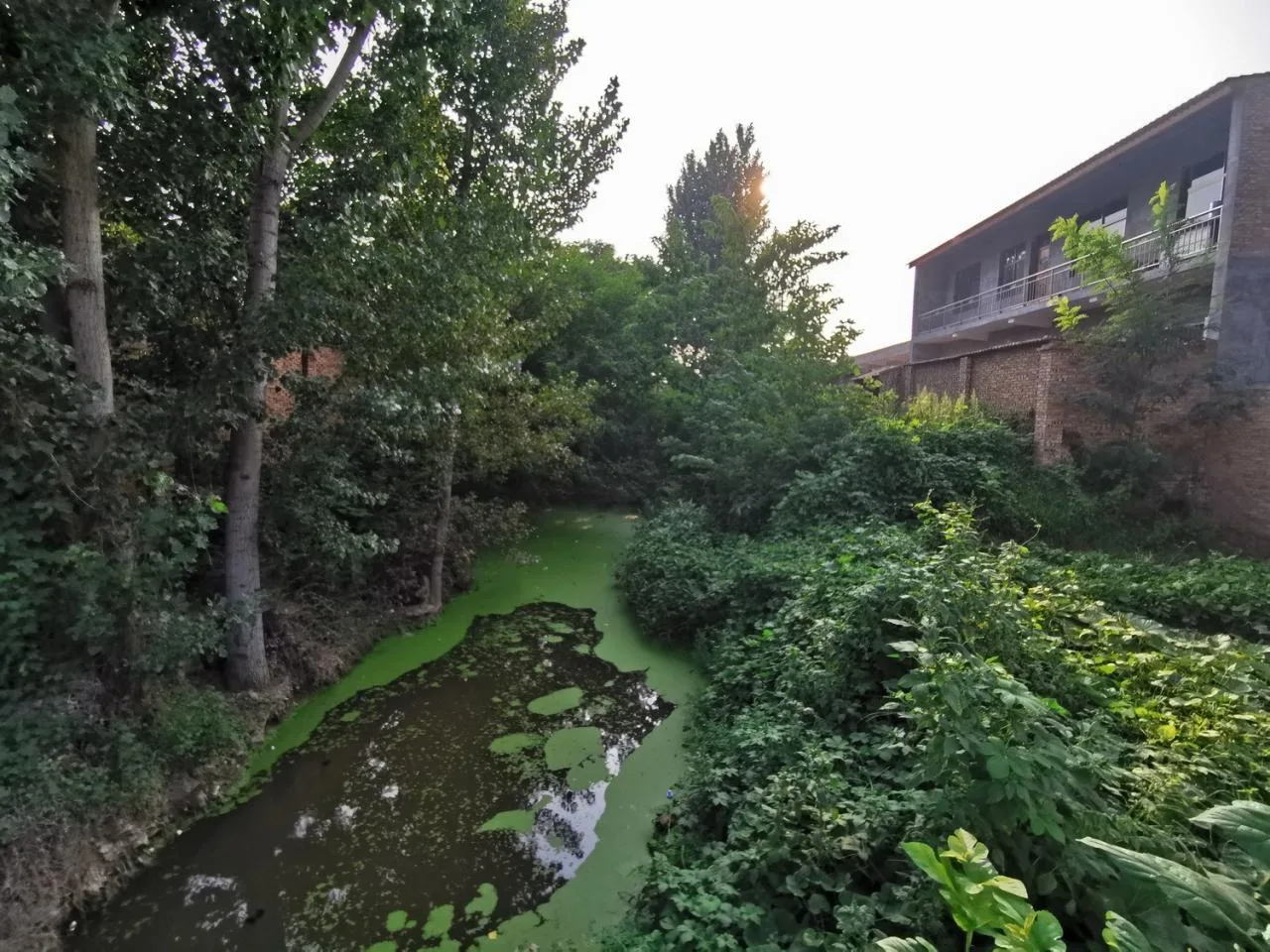
Before renovation
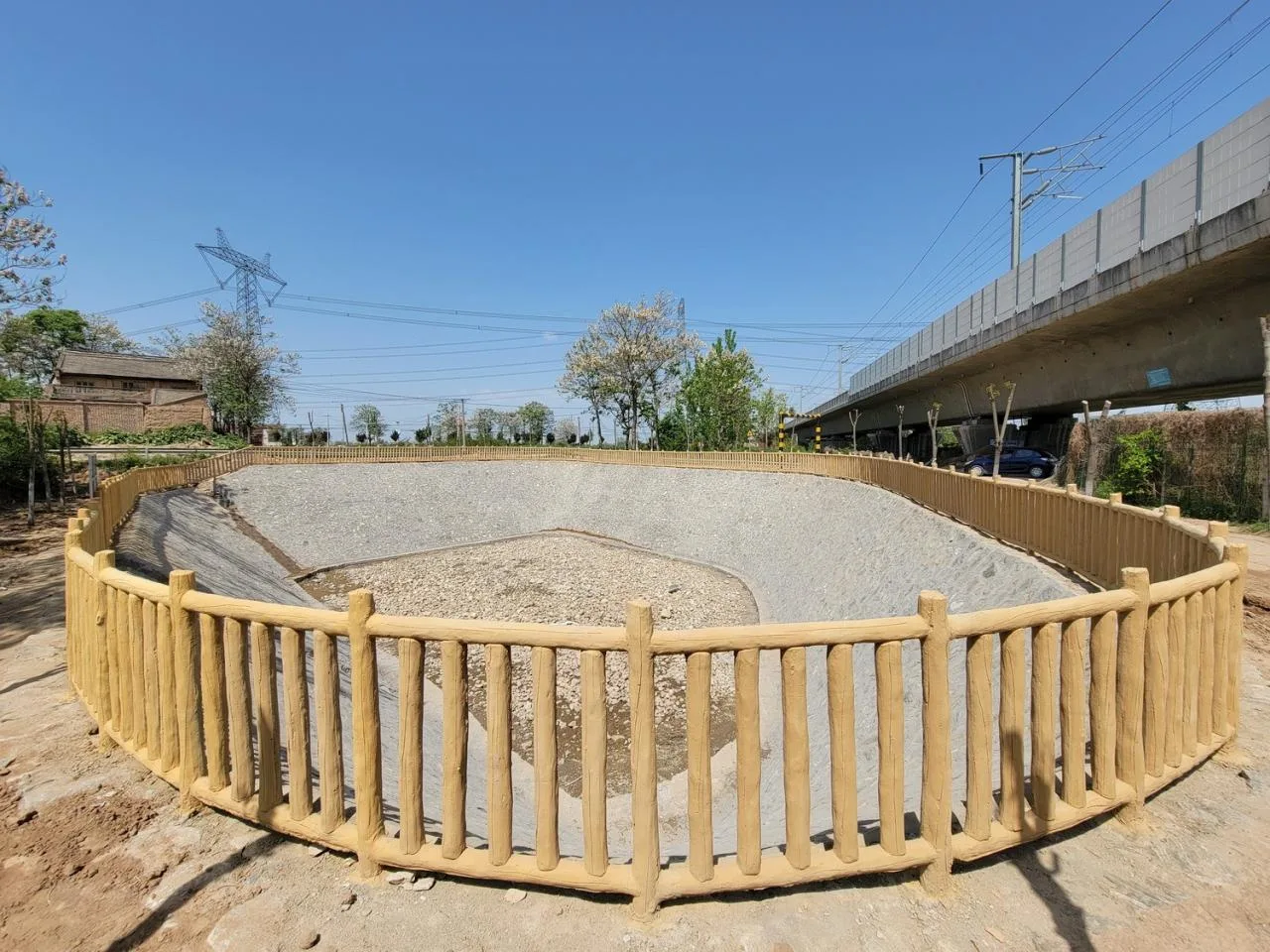
△ After renovation
5. Rural Construction Model: Resident Designer + Rural Infrastructure Team
This project adopts a collaborative construction model combining resident designers and rural infrastructure teams. Architecture graduate students are stationed in the village to guide design, working alongside local craftsmen. This partnership utilizes local materials to reduce costs while respecting traditional culture and craftsmanship, avoiding urban landscape imitations, and nurturing rural cultural pride.
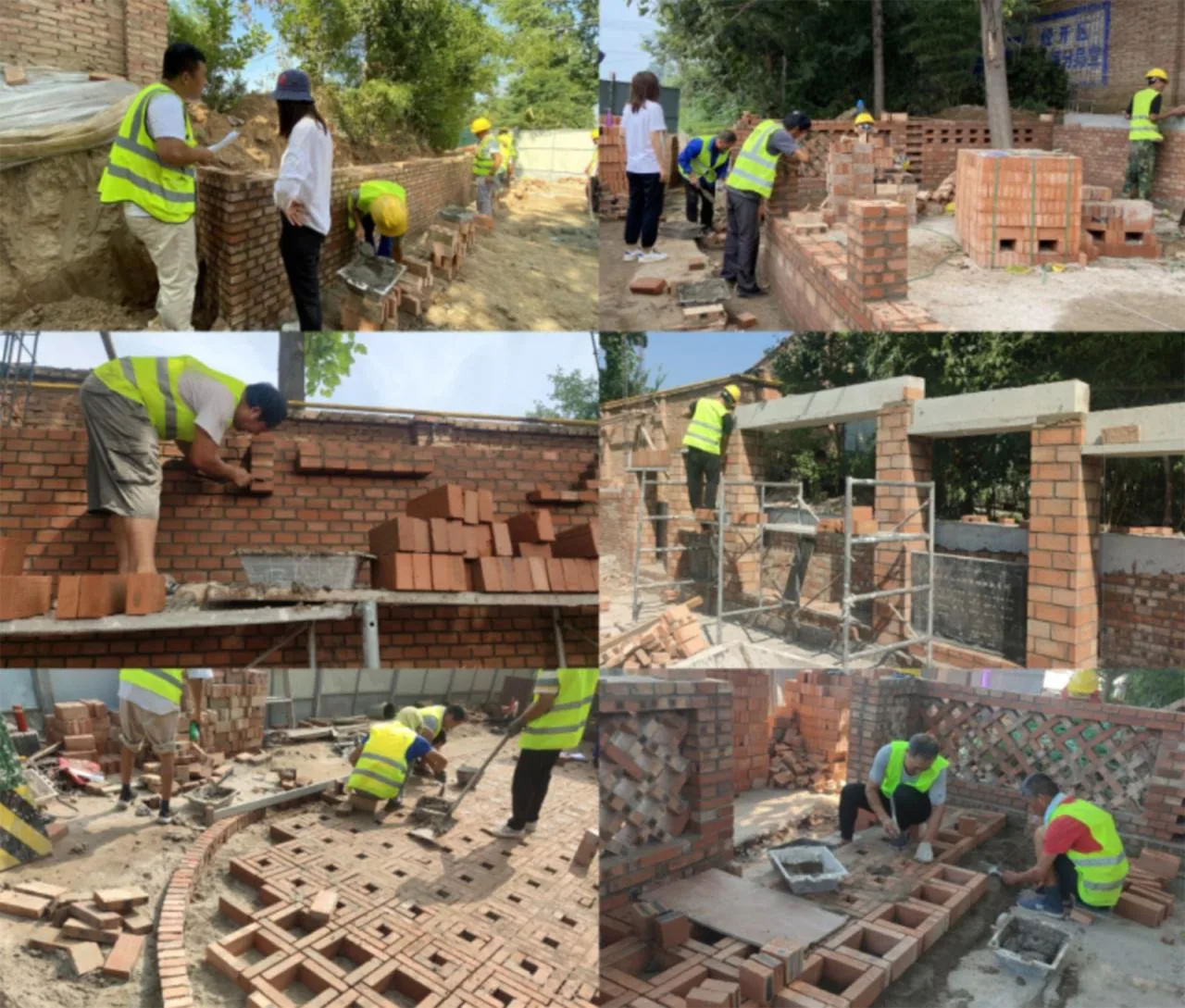
Resident designer + rural infrastructure team
Design follows the principle of on-site adaptation: respecting local conditions, combining the expertise of designers and local craftsmen, using local materials, implementing quickly, and minimizing costs. The project identifies unique rural genes and applies artistic treatment to update and transform small-scale spaces, creating distinctive nodes that connect points and surfaces. This approach fosters vibrant, creative rural public spaces and builds a network of rich and colorful small-scale rural spaces. Such catalytic interventions have a significant impact on driving rural development.
Project Information
Project Name: Demonstration of Rural Function Enhancement and Transformation Based on Characteristic Gene Inheritance – Nanjiao Village, Weinan
Designers: School of Architecture, Xi’an University of Architecture and Technology; Shaanxi Municipal Architectural Design Institute Research Institute Co., Ltd.; Shaanxi Construction Fifth Construction Group Co., Ltd.
Project Design & Completion Year: May 2021 & October 2021
Main Creator: Gao Bo
Design Team: Gao Bo, Li Zhimin, Zhang Wanlong, Wang Rong, Yao Yuanshu, Yang Mengjiao, Shang Luxuan, Zhai Xin, He Sijing, Wang Yumeng, Shi Chufan, Bi Xinya, Xu Jinghua, Wang Xiaojie, Meng Qingmin, Xu Fangyuan, Zheng Yifan, Zhang Qiao, Wang Lu, Yang Runpeng, Yang Zan
Project Address: Nanjiao Village, Xinyi Street, Economic Development Zone, Weinan City, Shaanxi Province
Photography Copyright: Zhang Xiaoming
Client: Weinan Economic Development Industry Investment Co., Ltd.















Must log in before commenting!
Sign Up